Anchovy Broth
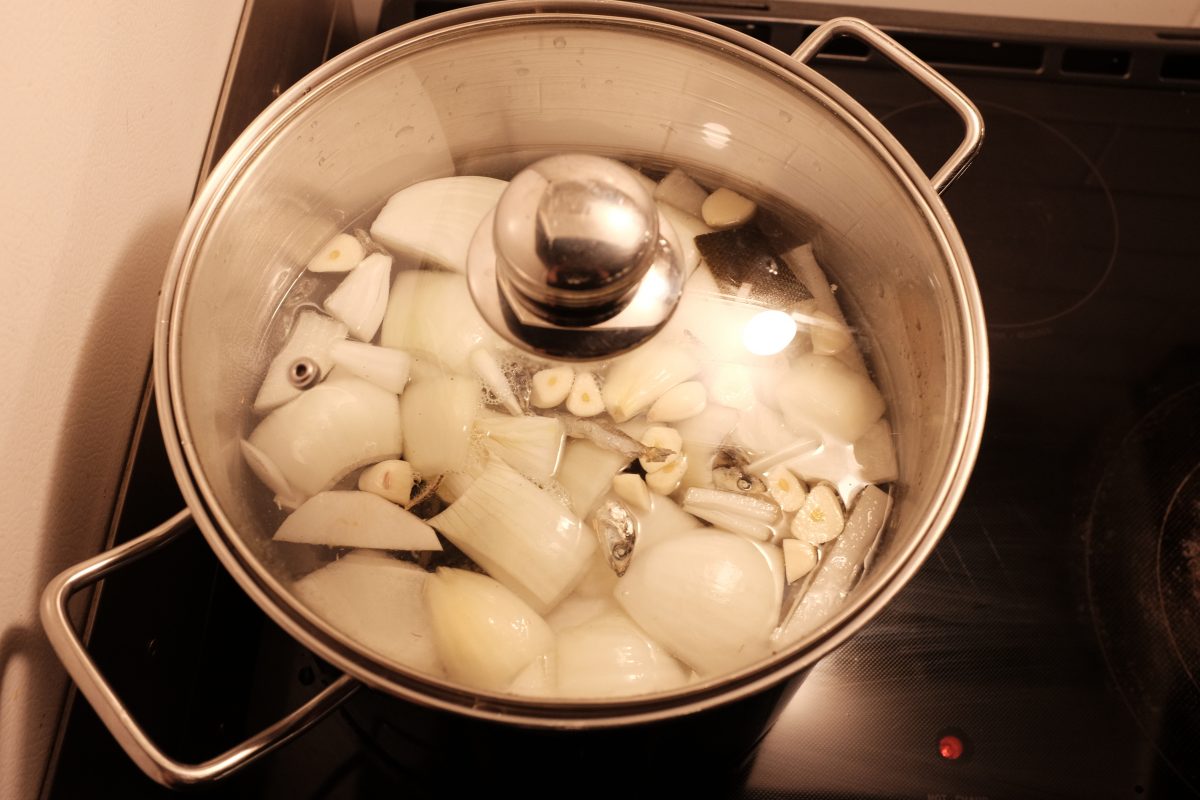
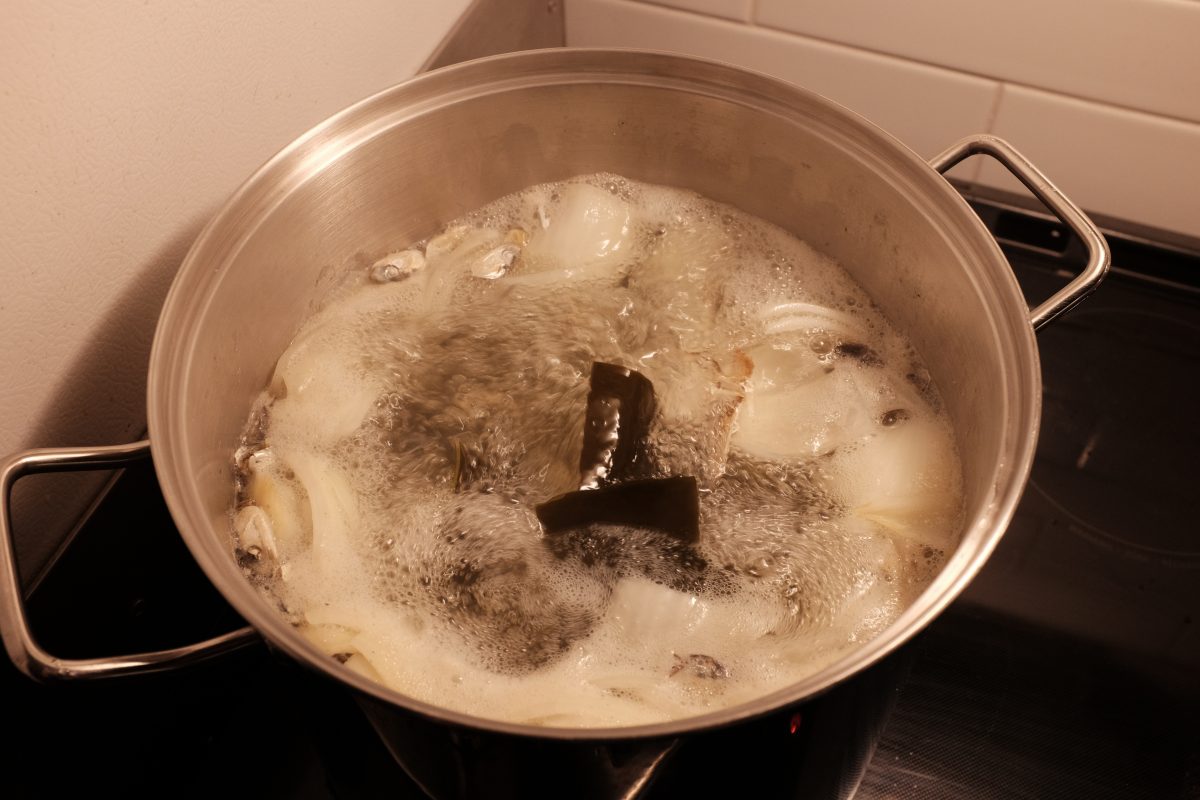
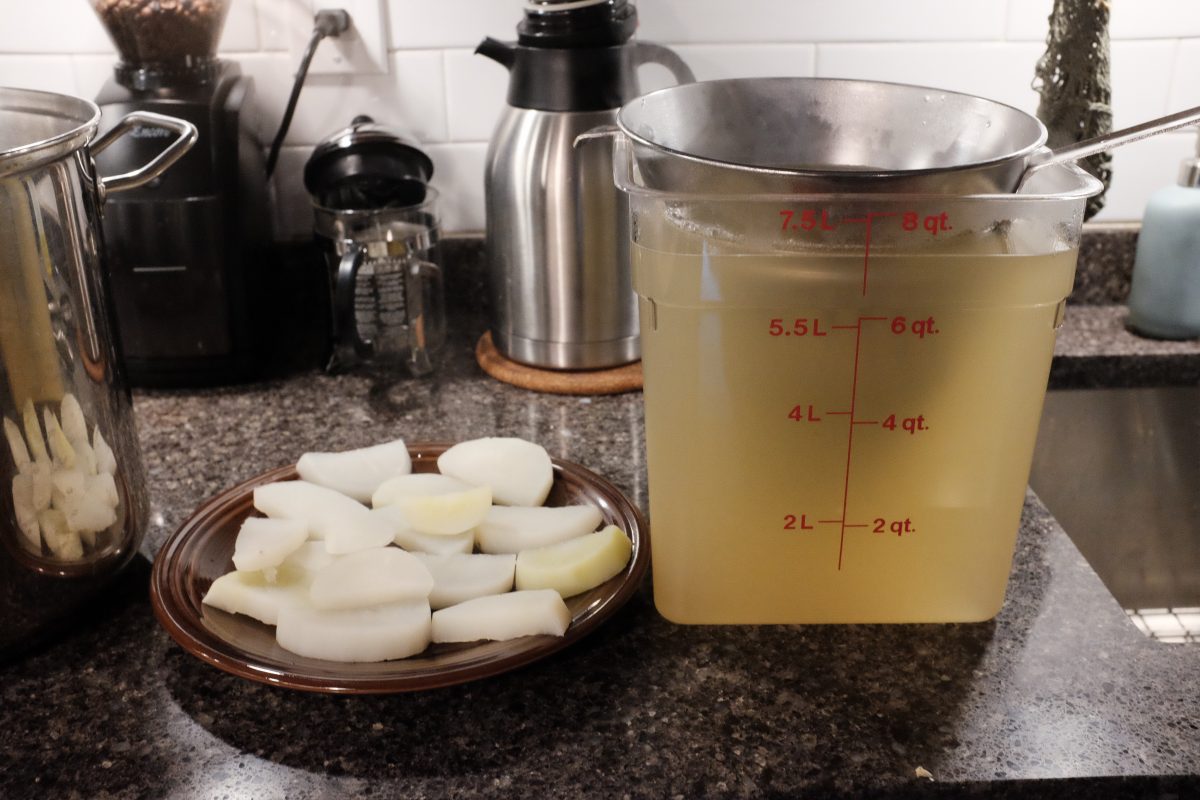
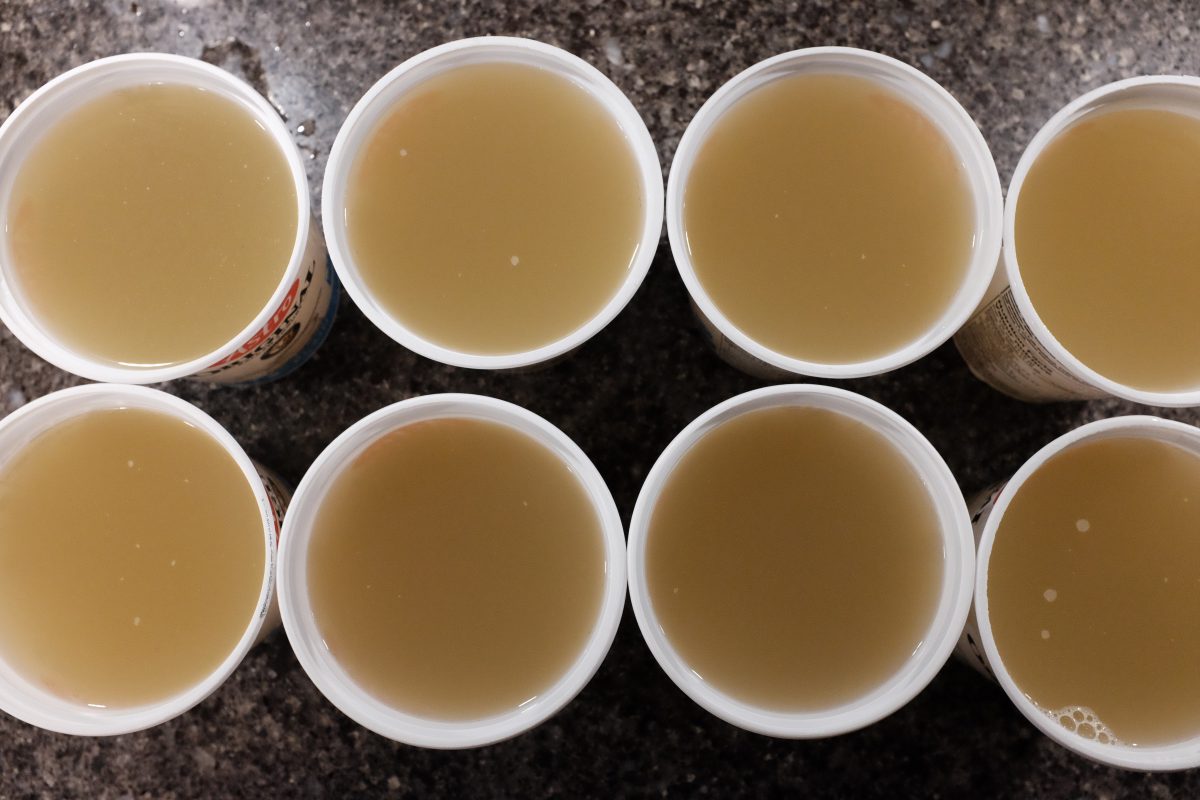
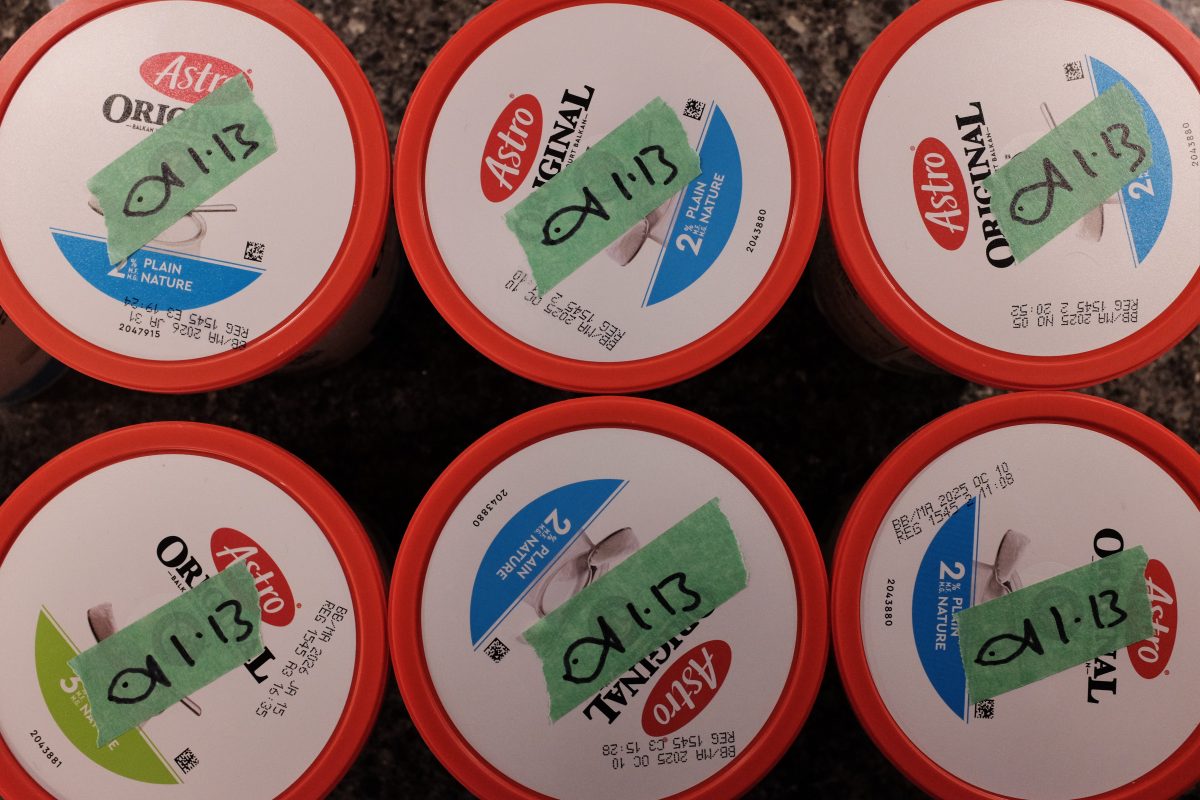
Anchovy broth or myeolchi yuksu (멸치육수) is a basic fish stock. It is an essential base for many Korean dishes. It is very easy to make, has endless uses and large batches can be frozen in single use containers to use later on. The recipe can be as simple as just anchovies and water or it can incorporate a number of aromatic vegetables or even seaweed and dried mushrooms. The recipe below uses anchovy, kelp and just a few other ingredients to make a delicious stock. This recipe gives you about 8 litres / 2 gallons of stock. If this seems too big, just half or quarter all of the ingredients.
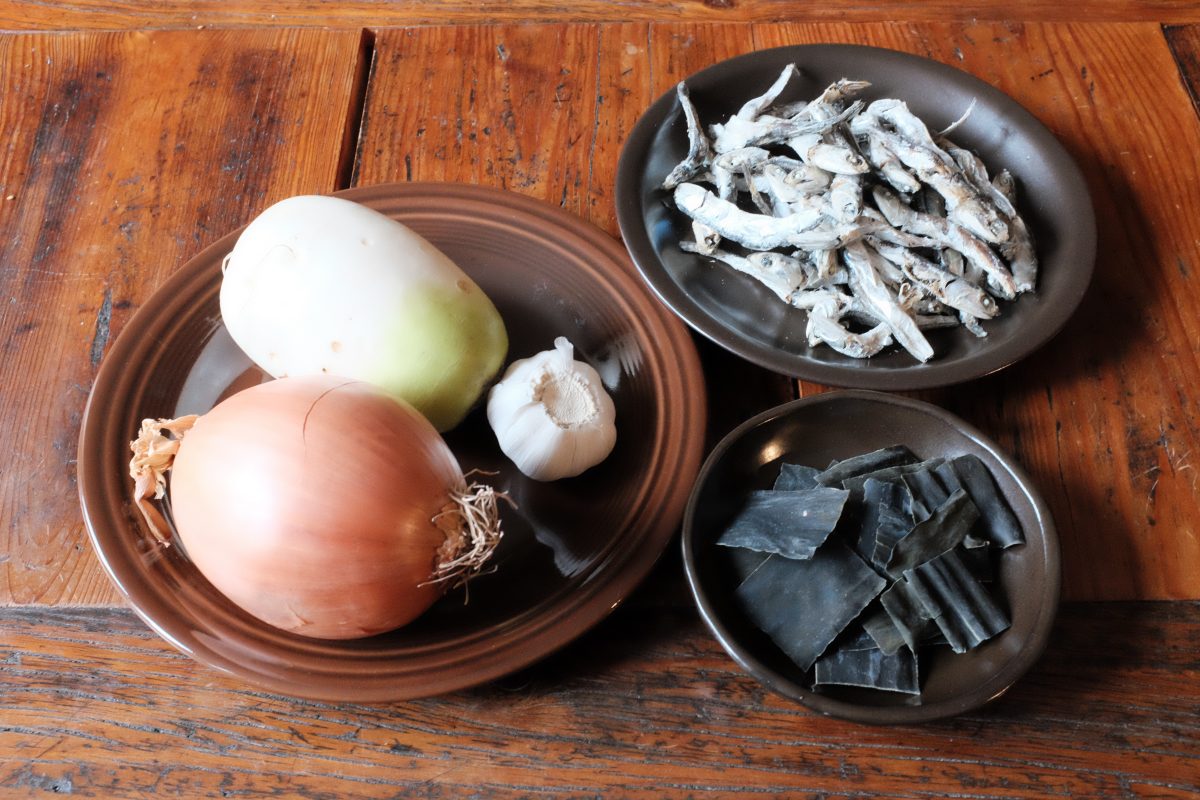
Ingredients:
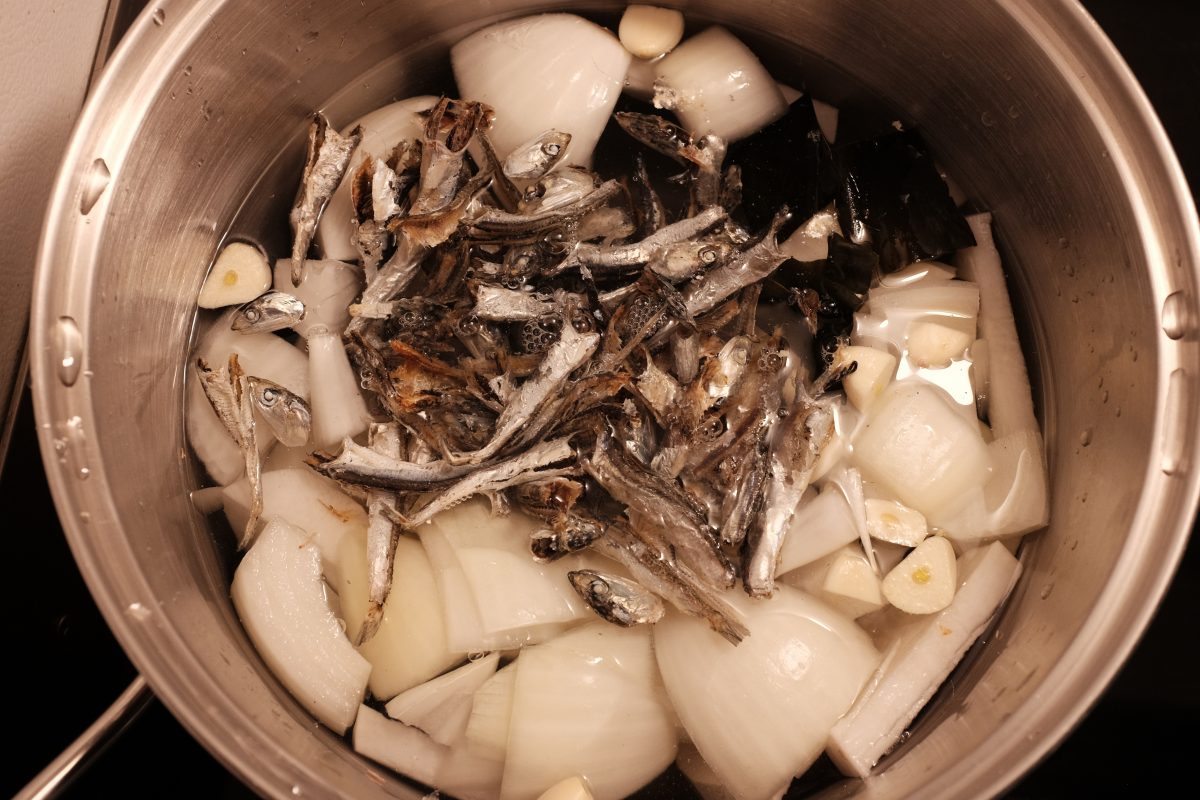
- 8 litres / 2 gallons of water
- 40-50 medium large dried anchovies (around 100 grams)
- 8-10 small squares of dashima seaweed aka kombu (around 10-15 grams)
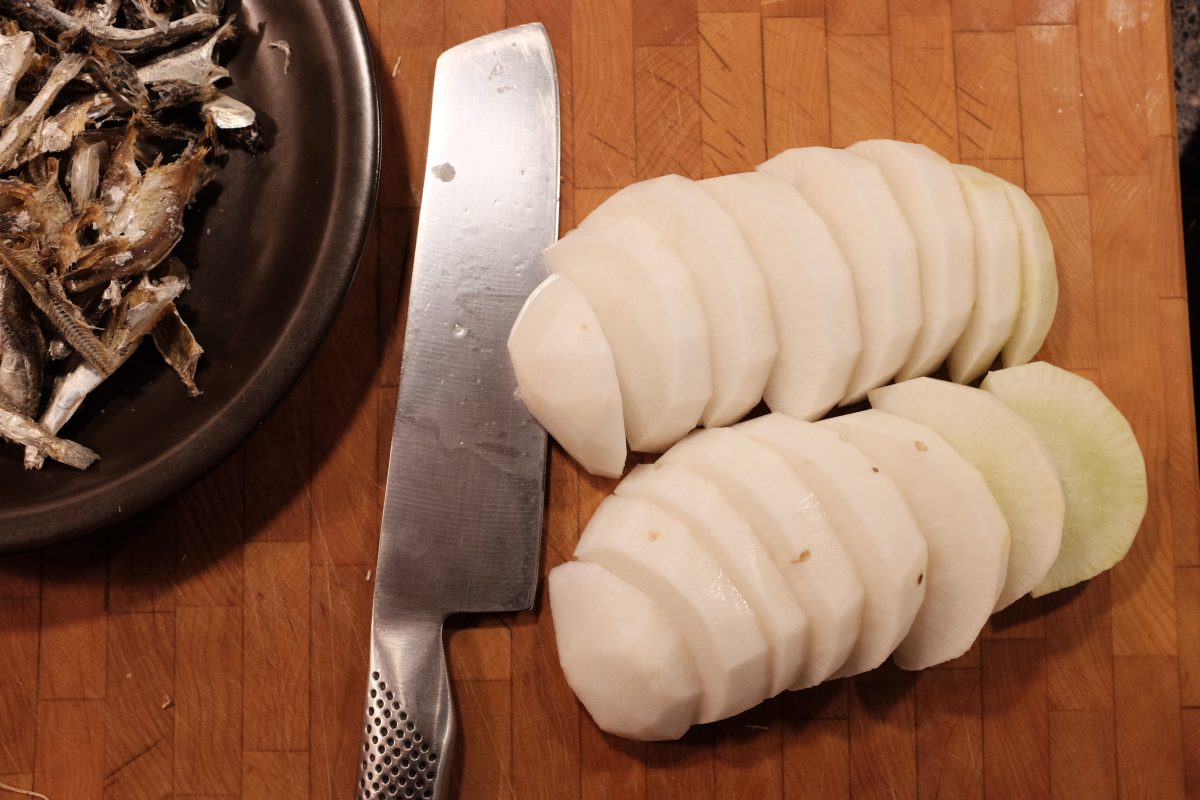
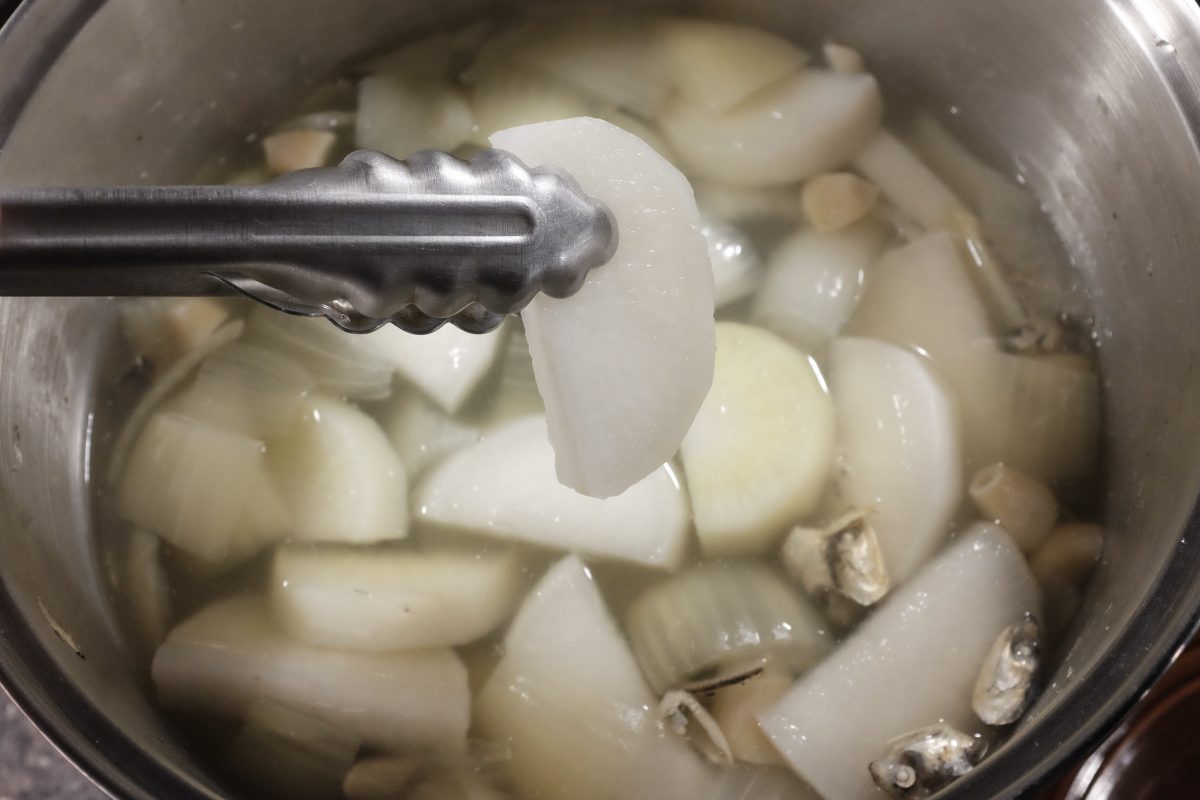
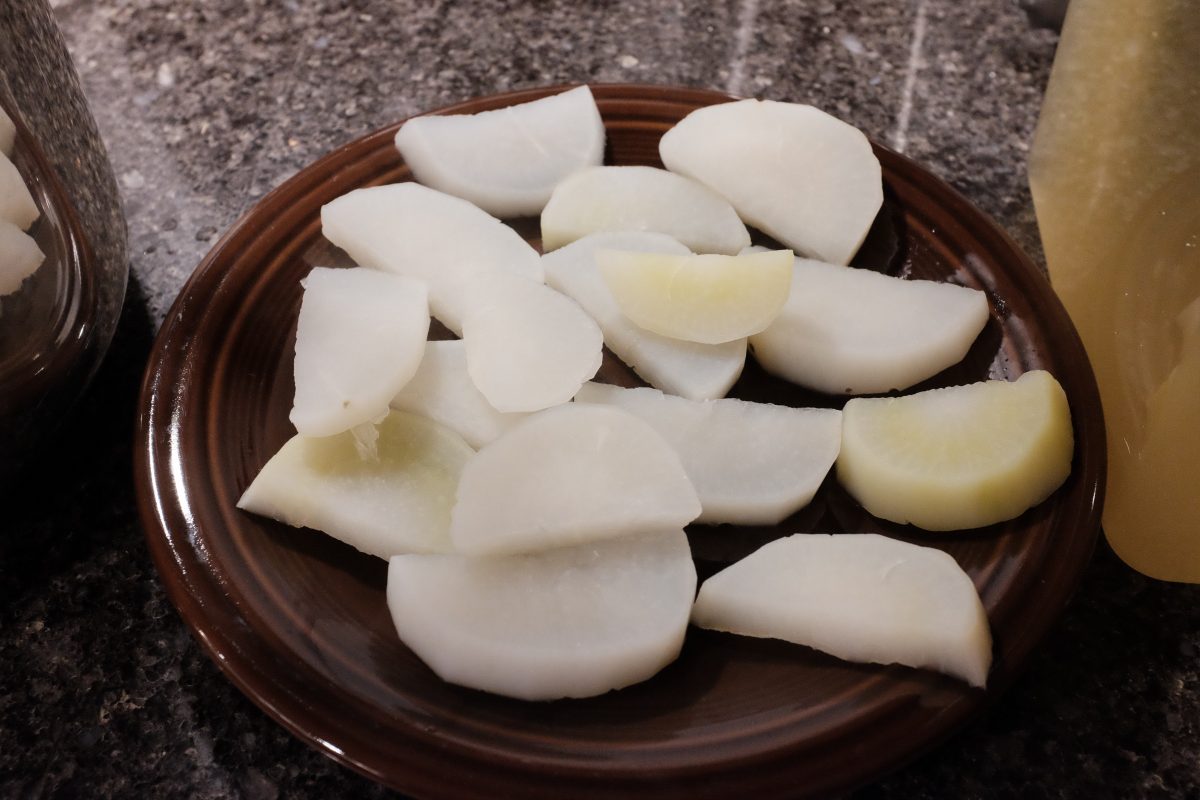
- 500 grams Korean radish
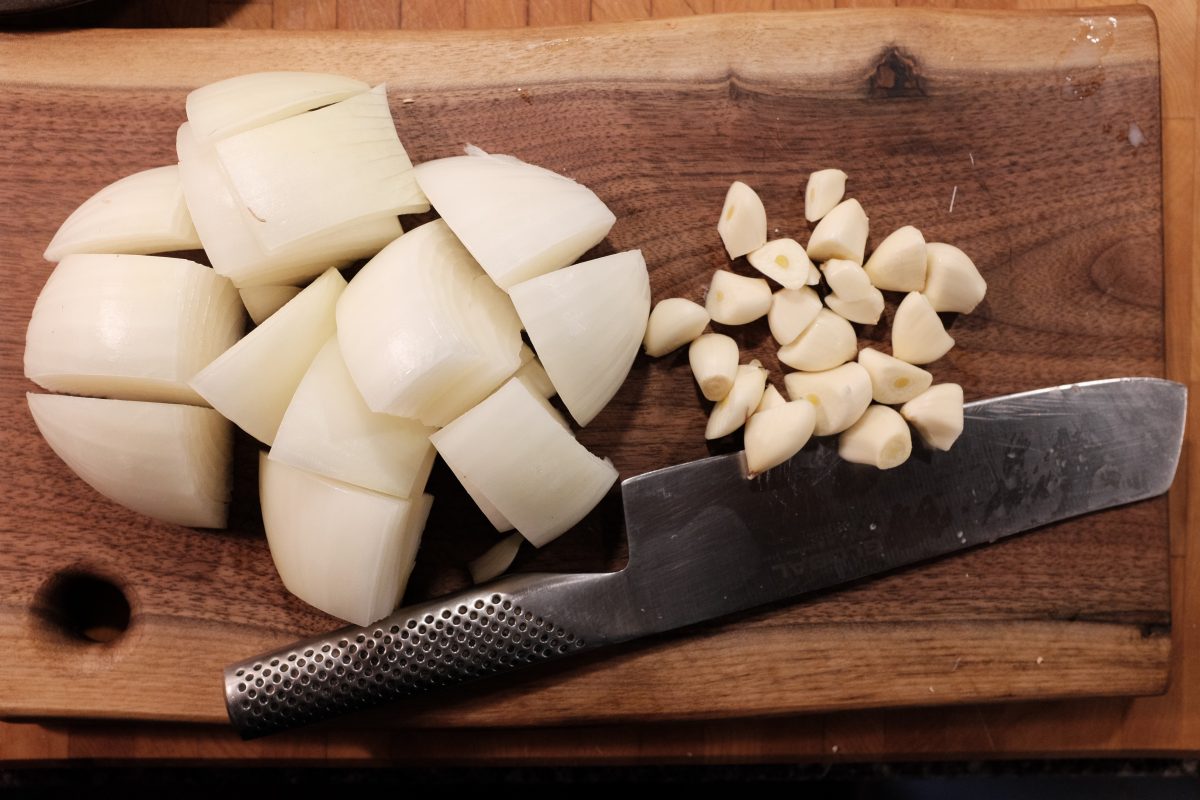
- 1 large onion
- 12 cloves of garlic
Dried anchovies can be found at Asian grocery stores. They come in a few different sizes from very tiny (1 cm) to fairly large (about the length of a finger). The ones I am using are on the larger side.
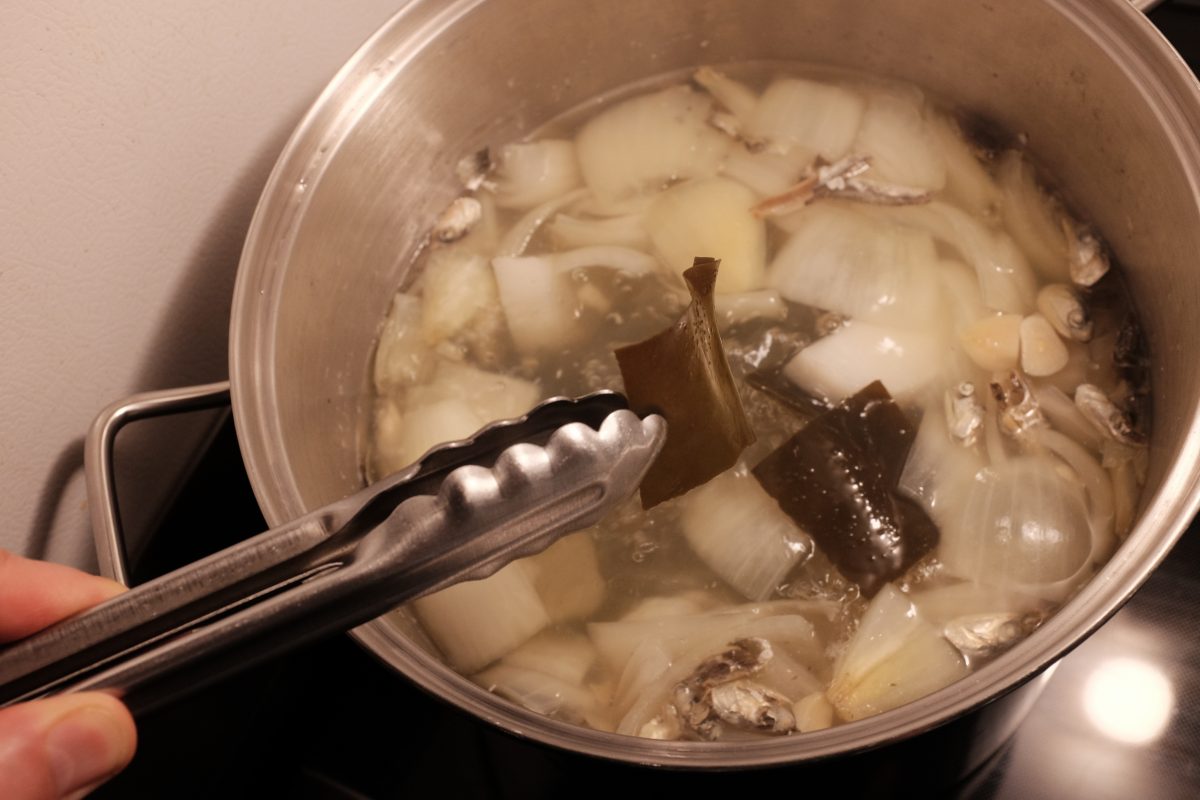
Dashima is thick, rigid and sometimes powdery looking dark green seaweed. You can find it in the dry goods section of Asian grocery stores in big long strips or a smaller bag of pre-cut squares. Either work fine. I prefer the little squares just because they are easier to work with in smaller recipes. There are lots of different dry seaweeds on the shelf. The one we are using here will say Dashima / 다시마 or Kombu if it is from Japan.
Process:
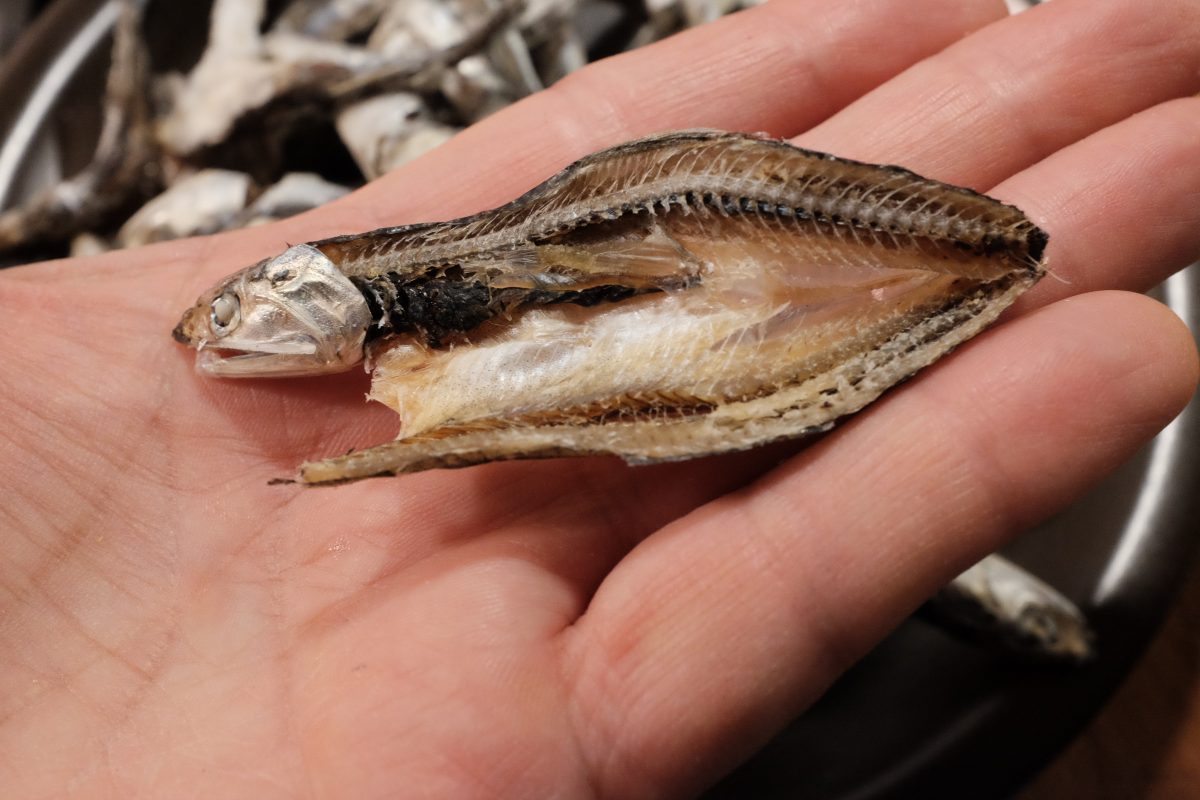
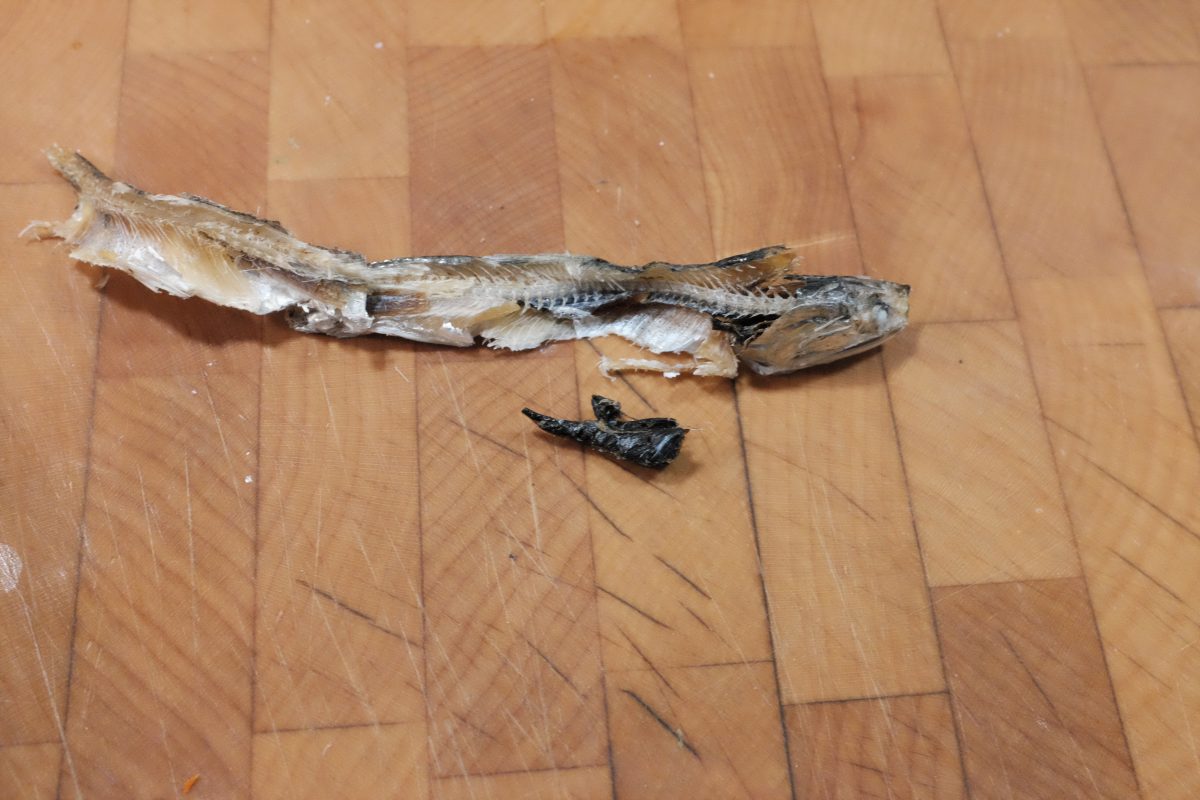
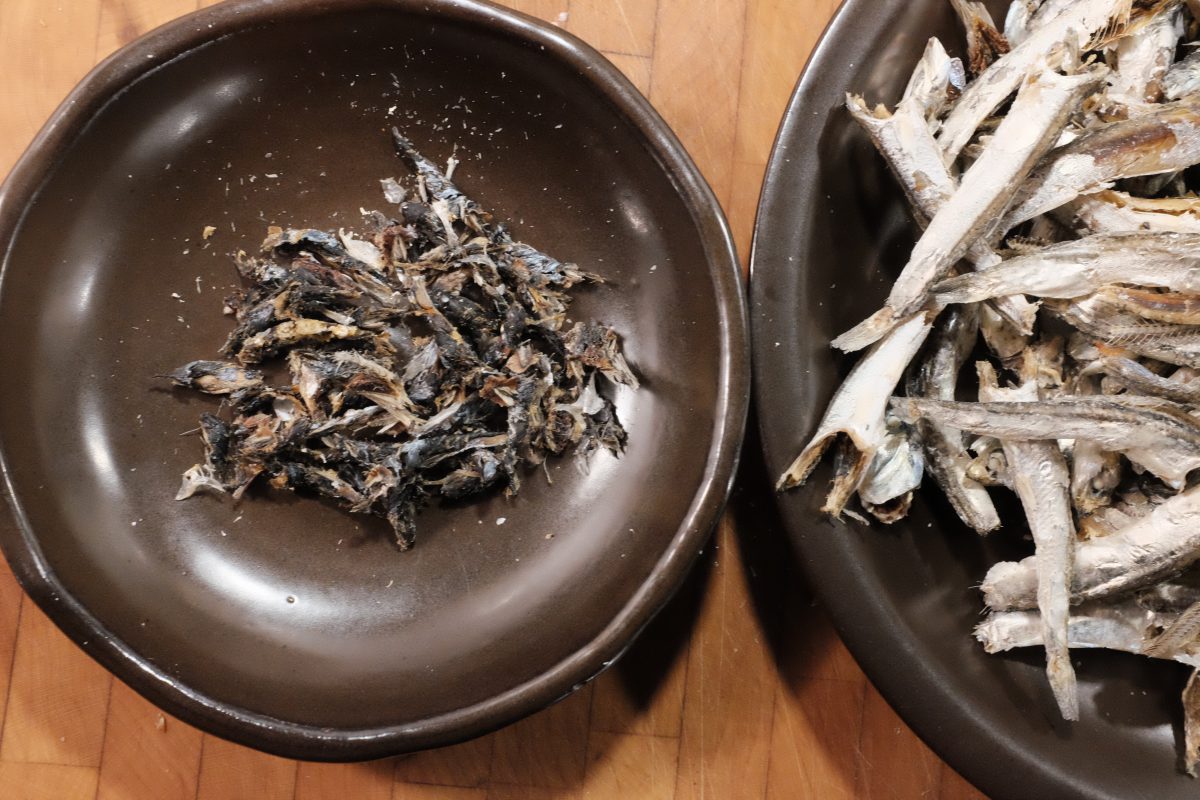
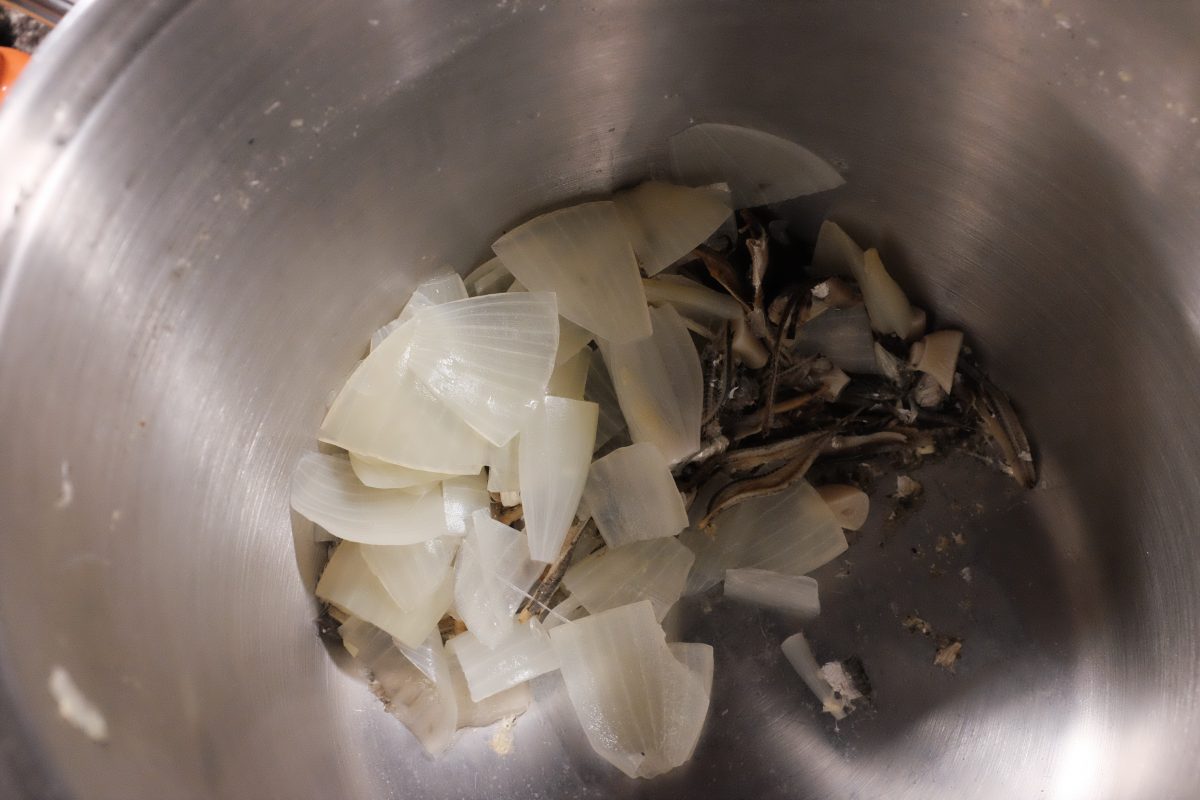
Remove the guts from the anchovies.
Uses:
This stock is the base for many Korean dishes including sundubu jiggae, kimchi jiggae, noodle soups, etc. In almost any savoury recipe that calls for water, substitute with this stock to make it extra delicious. Dishes like Tteokbokki reach new heights of tastiness when made with a good strong anchovy stock.
In the heat of summer, I will even drink this stock ice cold as is. It is that delicious and refreshing!
If you have any questions, comments or suggestions, please leave them below. I am always happy to hear from you. If you enjoy the content and would like to contribute towards website maintenance and development, you can make a donation here. Thank you for reading TigerSalad : )