Natural Spotlighting
***your phone will crush all the details in these photos. It is better to view this on a bigger screen***
Facing East
Every morning I make coffee and then sit at an old table to study or write. My cat hops up, curls into a ball, and sleeps beside me while I work and listen to chill music. This is my favourite time of day. At the opposite end of the room there are a few tall and narrow windows that let in the bright morning sun. This warm light filters in through the trees, slowly circles the room, and then gradually disappears. This scene changes a little bit every day and every season brings a new variation. I never get tired of looking at it. In the picture below, you can see what I see on a summer morning…
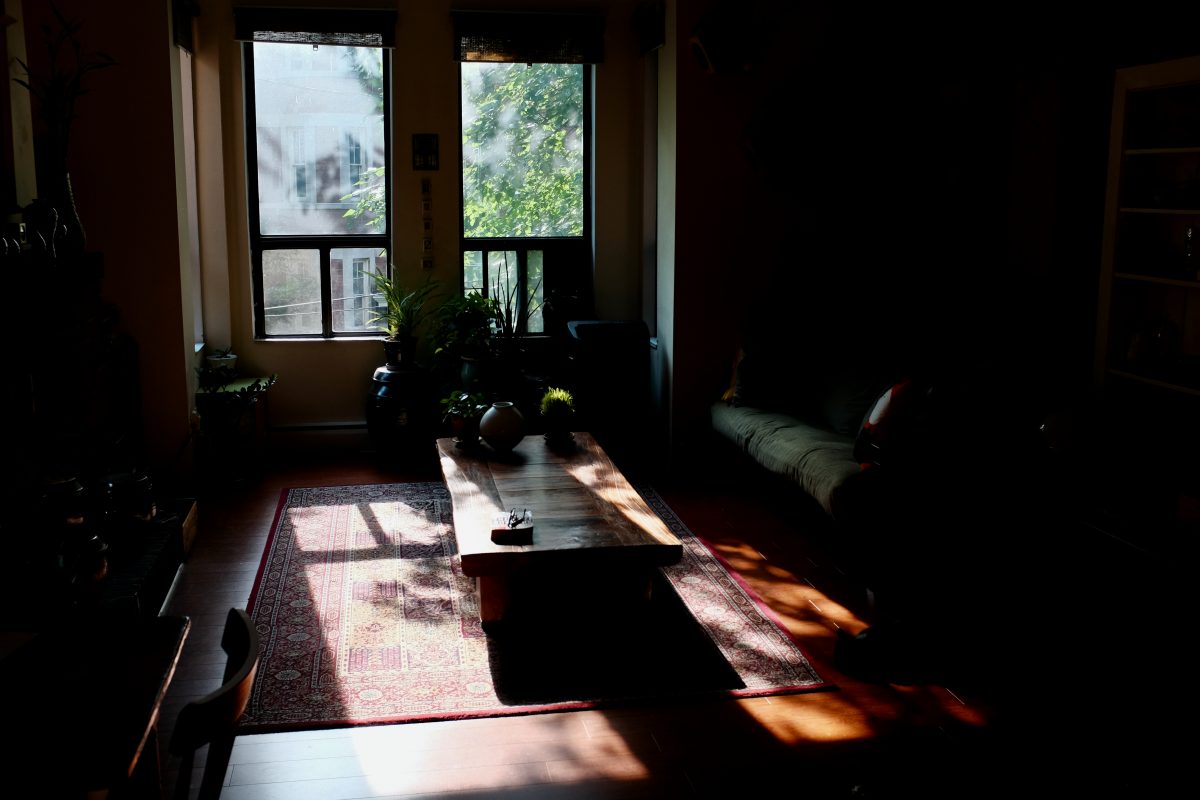
Natural Spotlighting
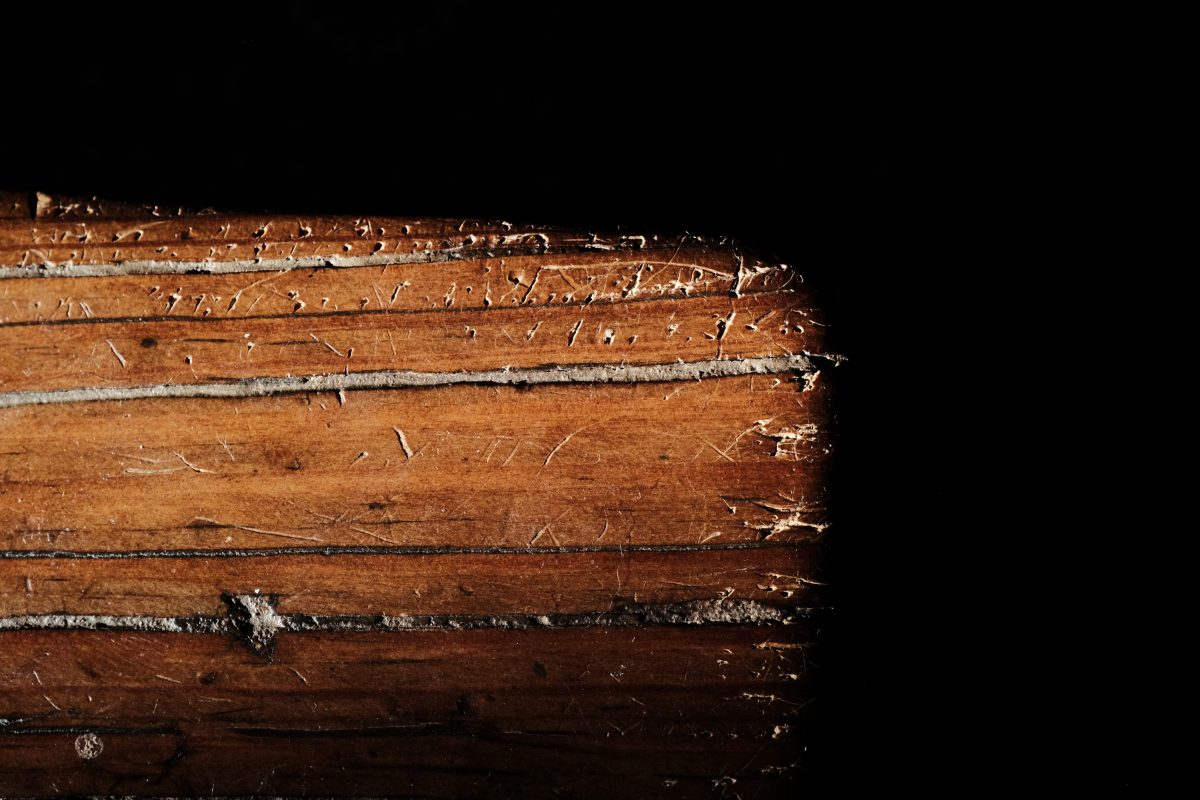
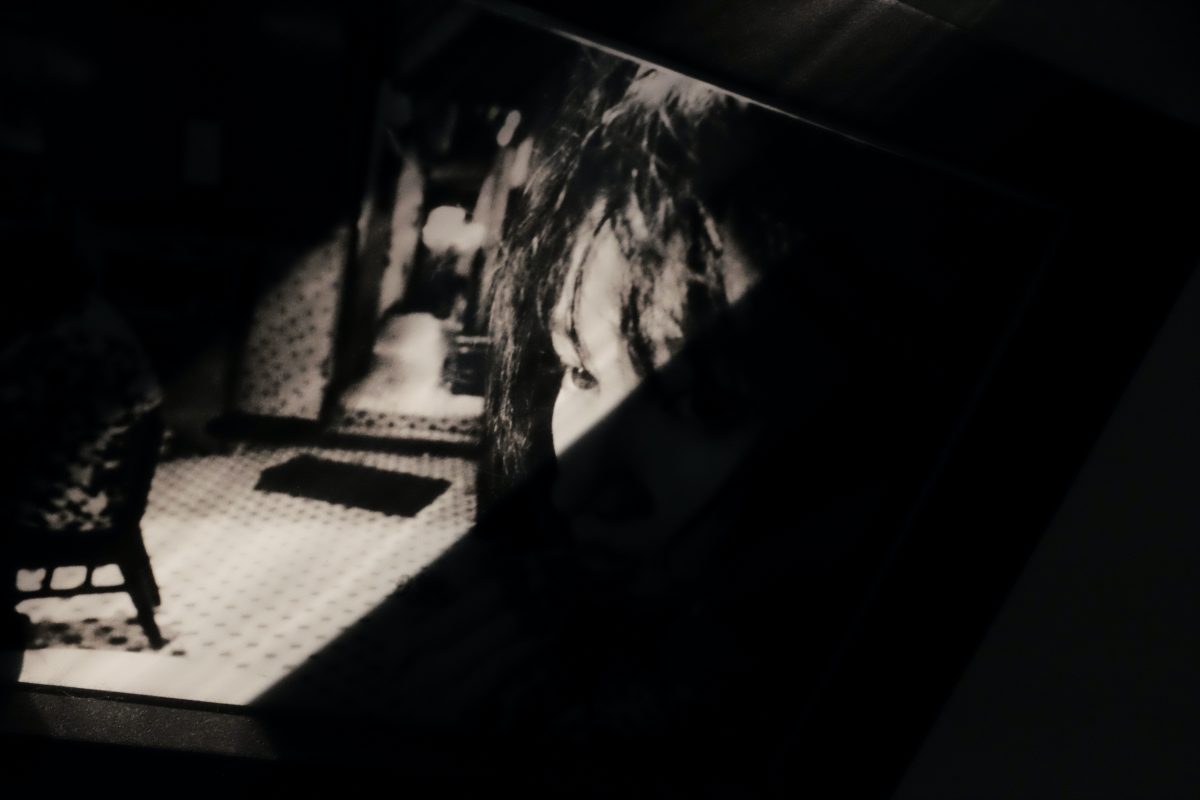
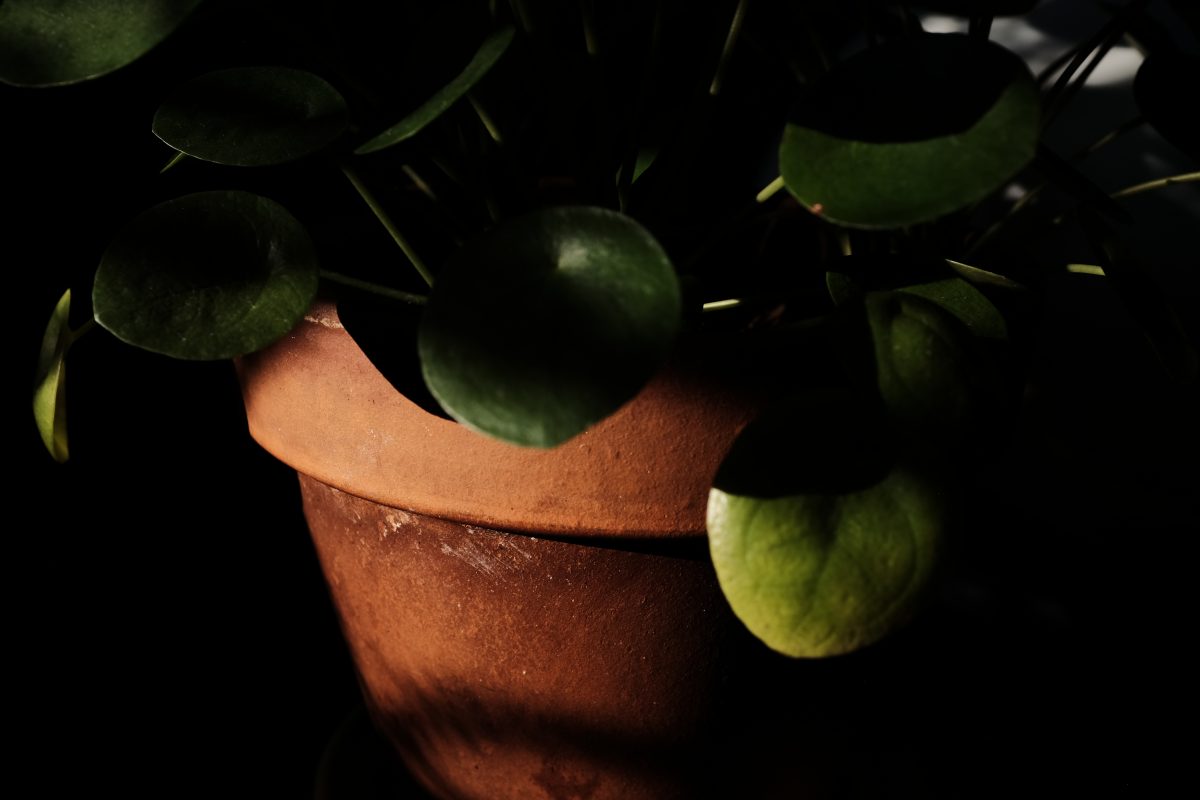
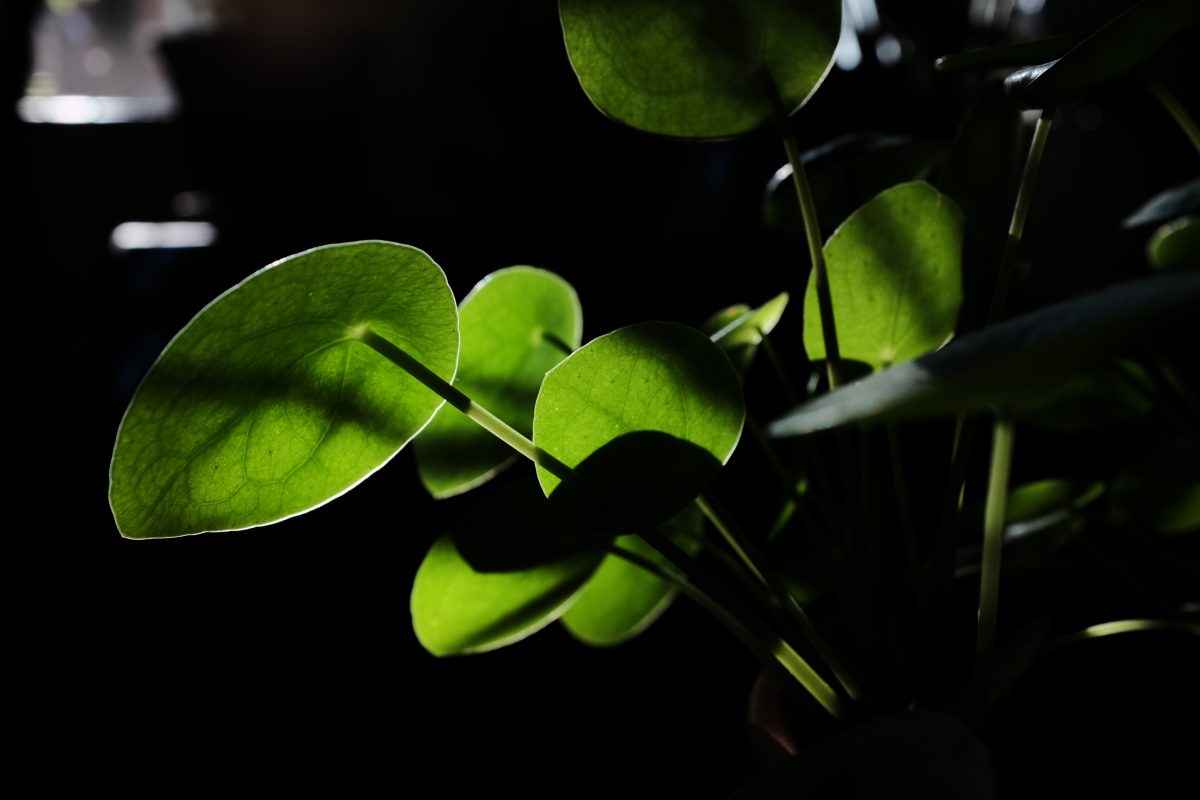
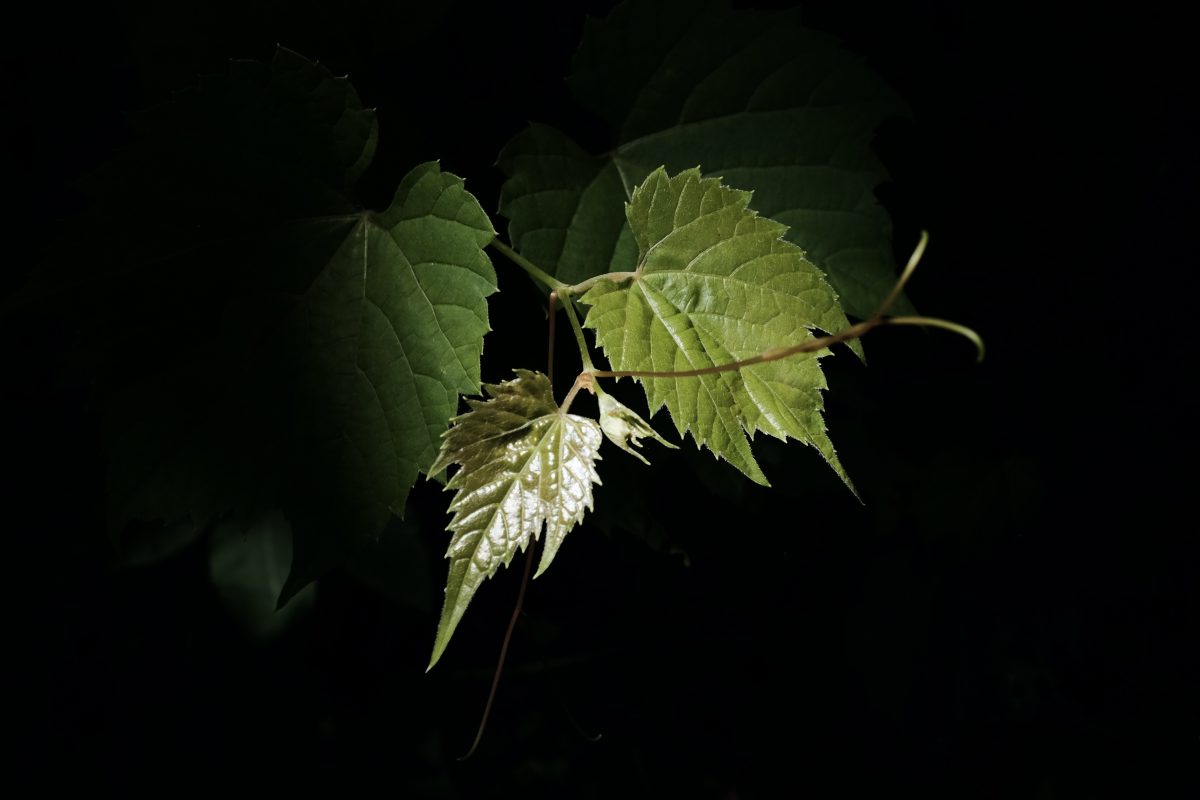
I began to notice moments when a ray of morning sun would pass through gaps between leaves and illuminate some small part of the room as if to say: “look at this!”. Whatever it touched would glow in this focused light. It reminded me of a spotlight on a dark stage, but made of sunlight. It was kind of a natural spotlight. I wondered if there was some way to capture this in a photograph. I was pretty sure that it wouldn’t be easy.
Technical Difficulties
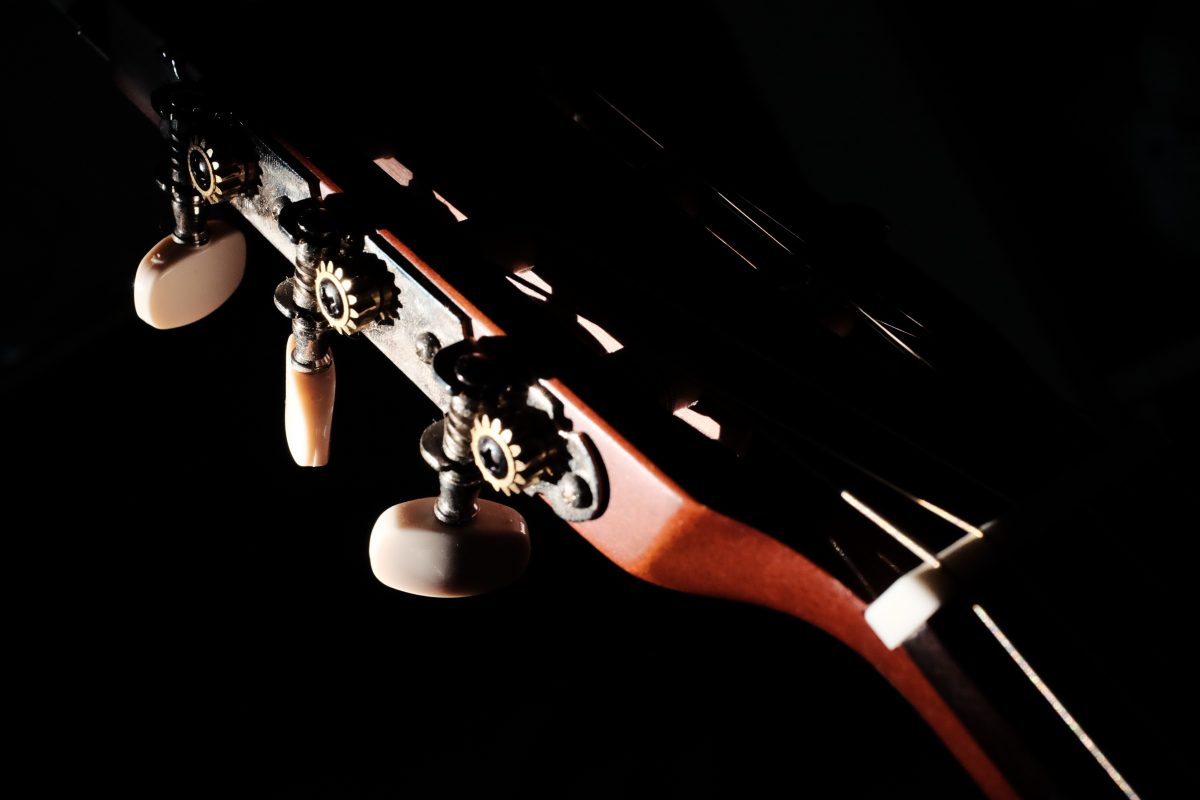
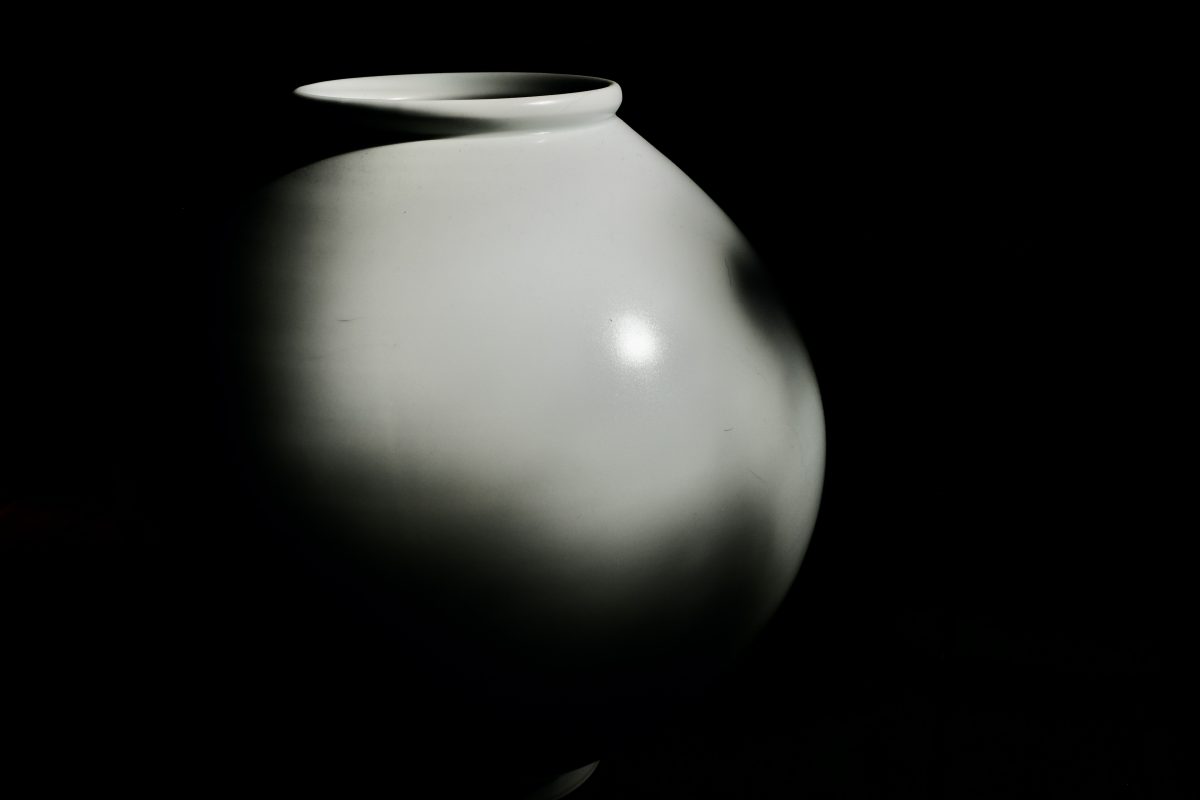
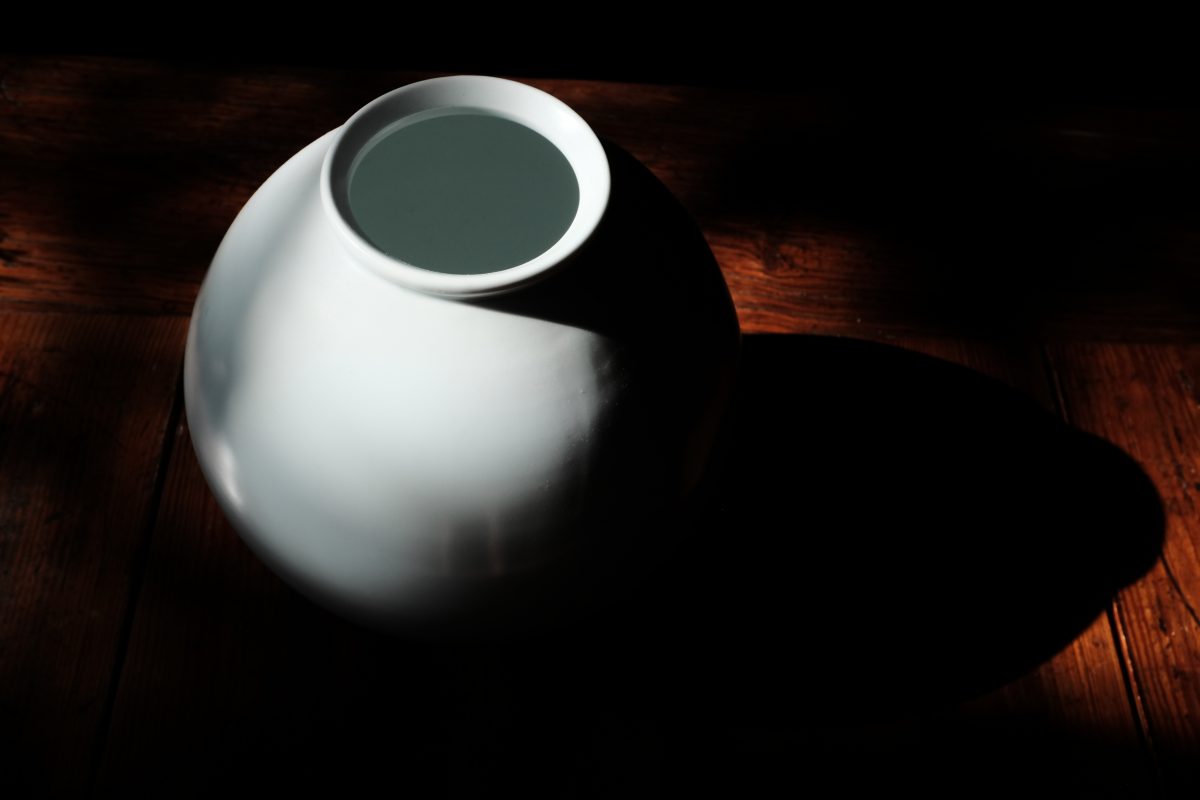
When I set out to make these photos, I decided that I wouldn’t move things into a spot of light. The scenes would just have to happen on their own and it was my job to notice them and to try to capture them with my camera.
One problem was that the weather had to provide hard contrast between areas of light and shade. All of the photos below had to be taken from a shady area pierced by a strong beam of bright sunlight. Less than a big-blue-sky sunny day wouldn’t work for any of these pictures.
The bigger problem was getting my camera to see what I was seeing in my imagination. It took hundreds of photos and nearly two months to figure it out. The main subject is intensely lit, but because the photos are shot on very bright days, even the shade is full of light, So, if I exposed the spotlit subject accurately, the background would still creep into the photo.
Most of the problem was solved when I experimented with severely underexposing all of the shots (like 2 to 3 stops of underexposure!). This caused the shadows to fade to black and, as a bonus, added rich colour saturation to the main subject. This underexposure usually worked to produce the photos that I was imagining.
The Photographs


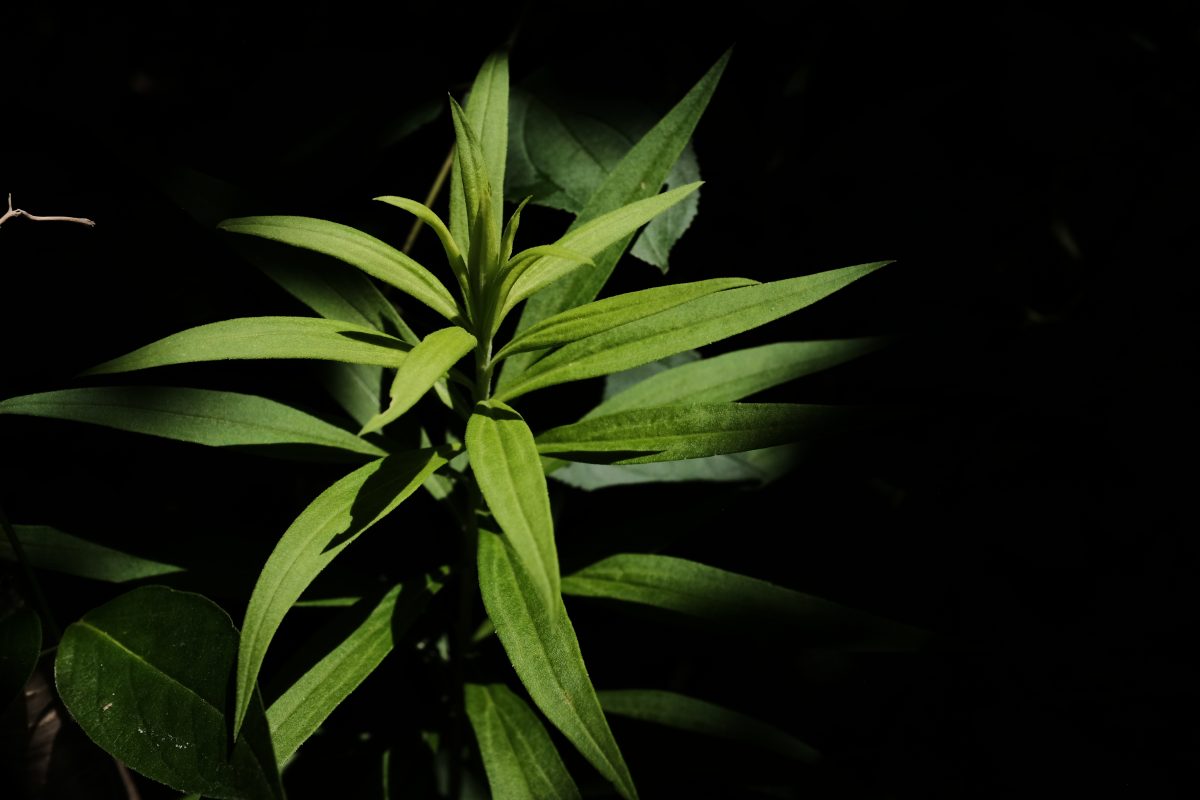
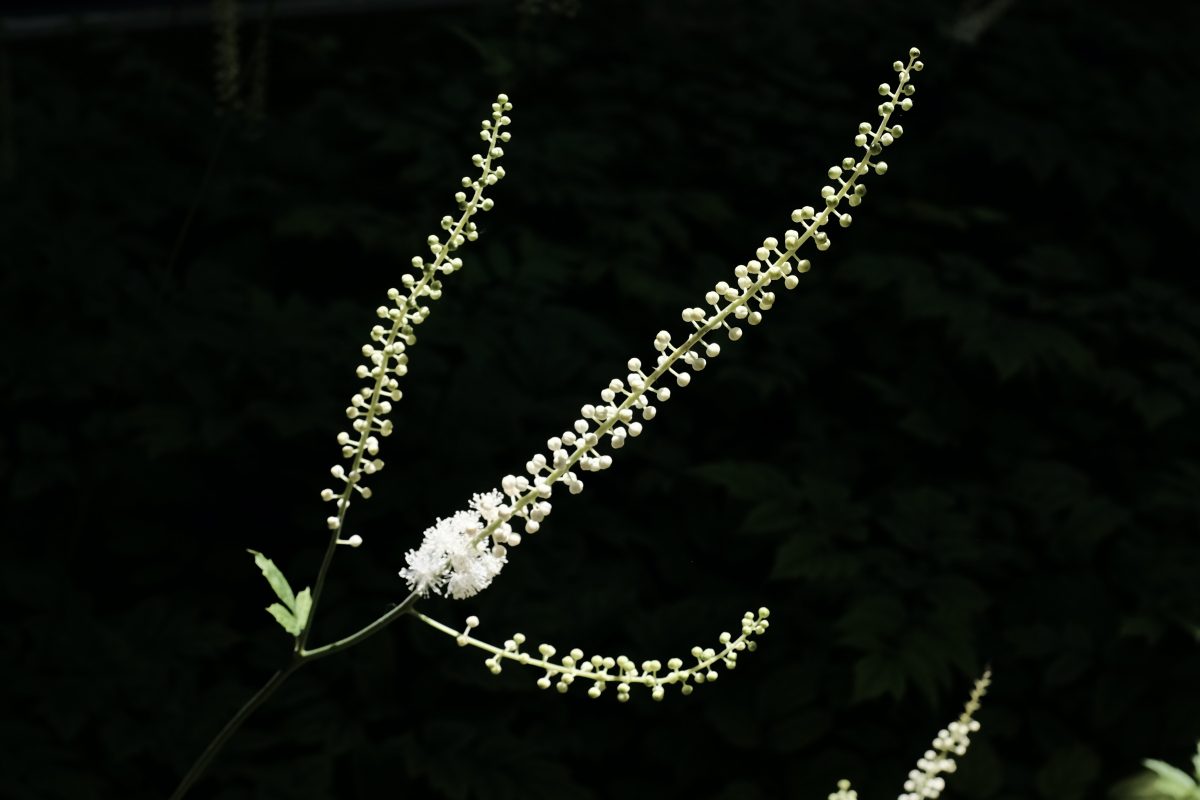
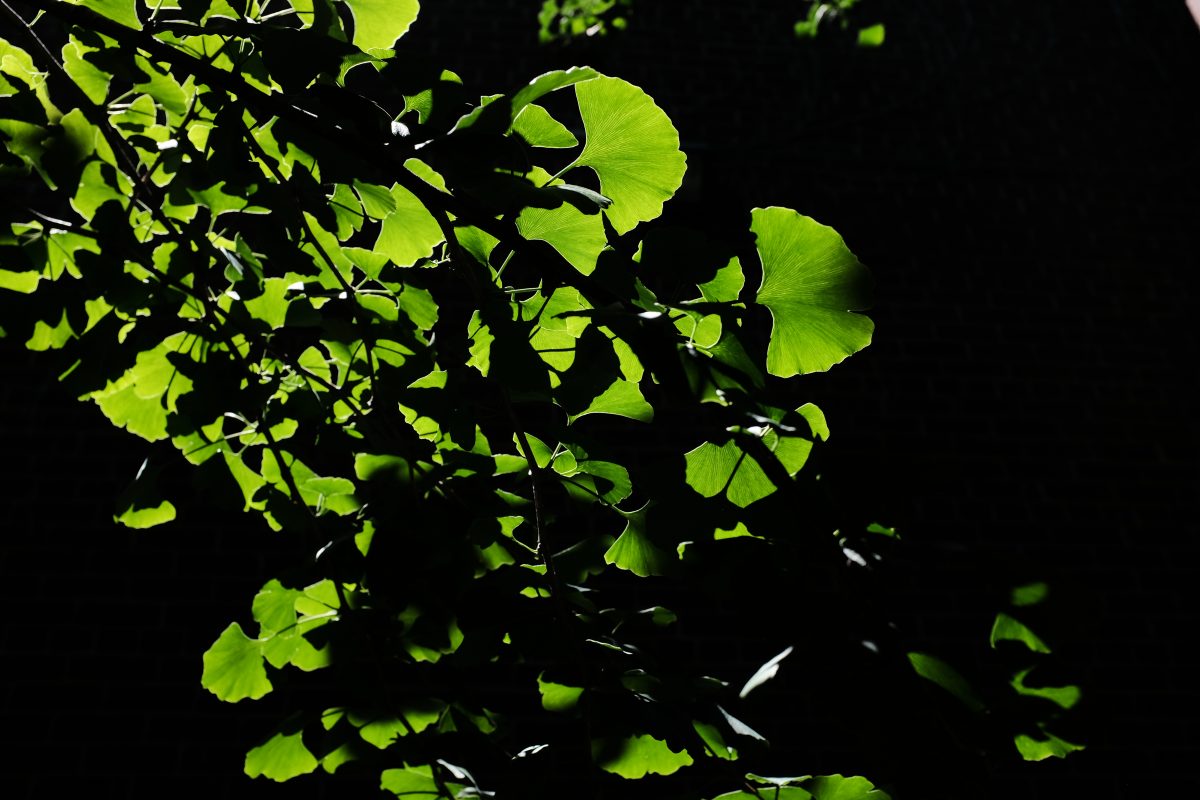
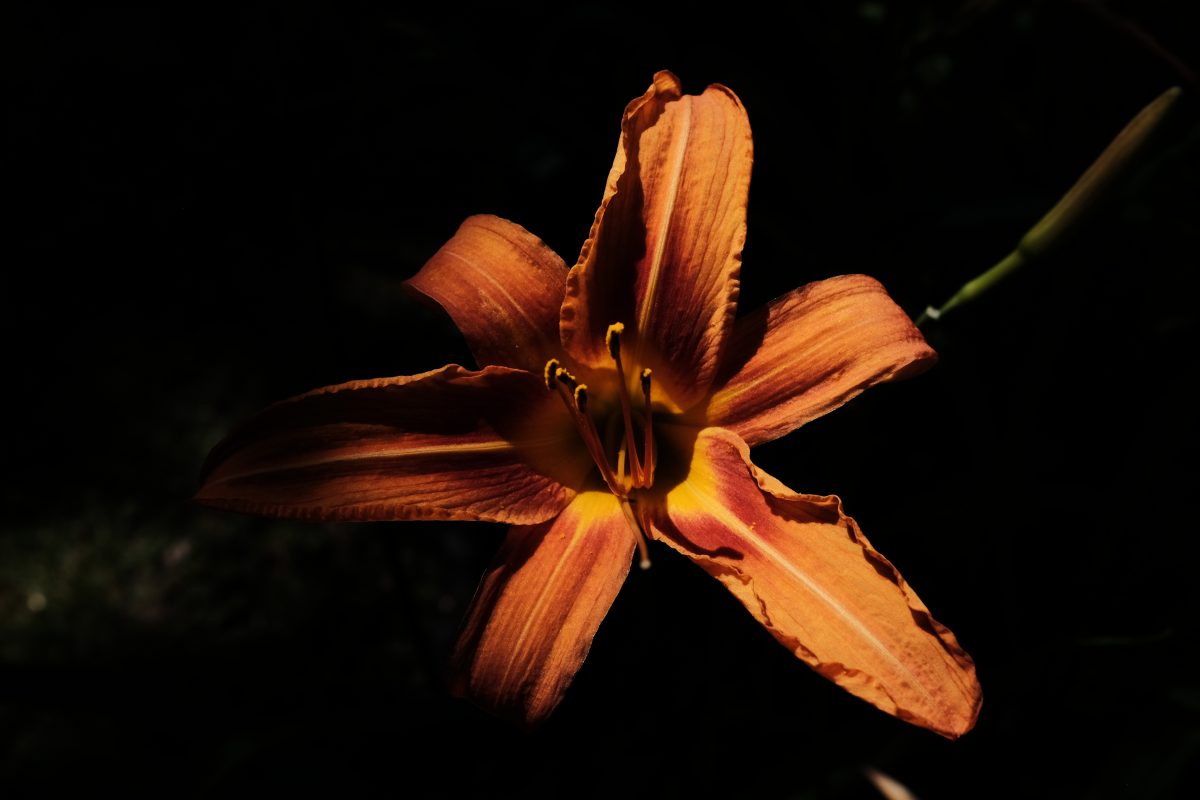
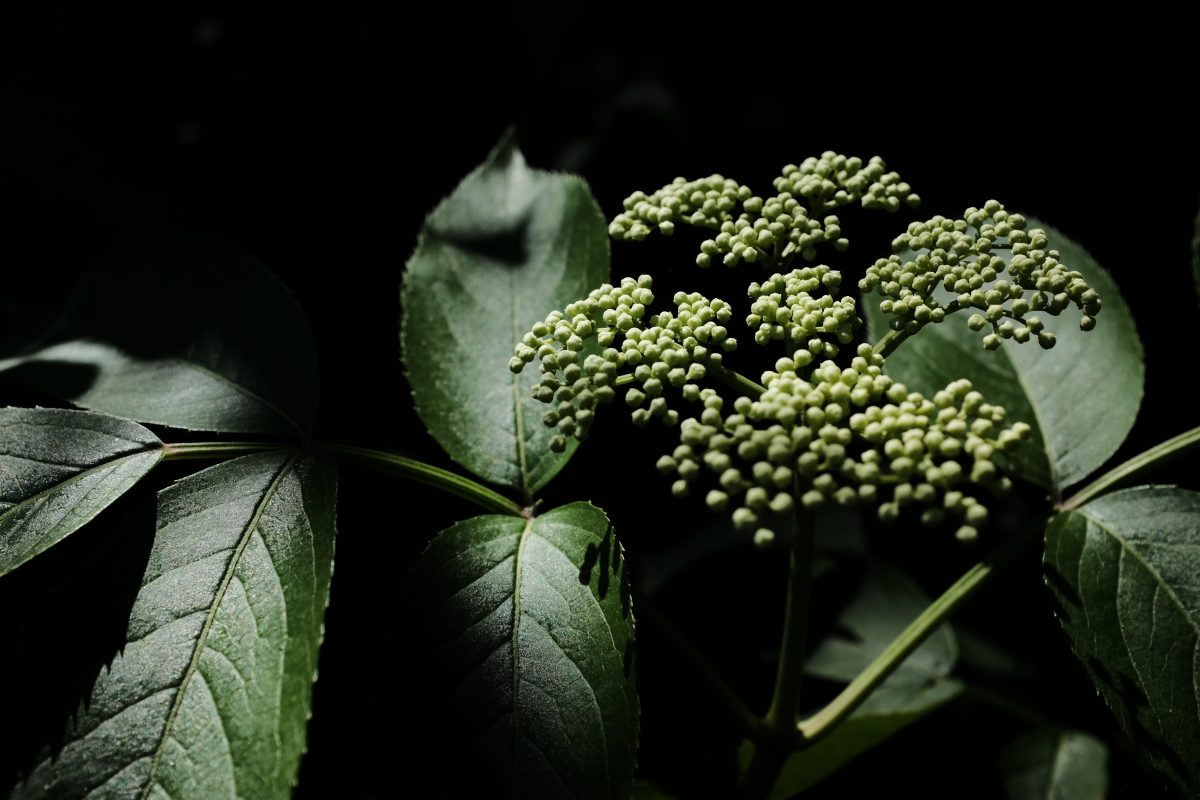
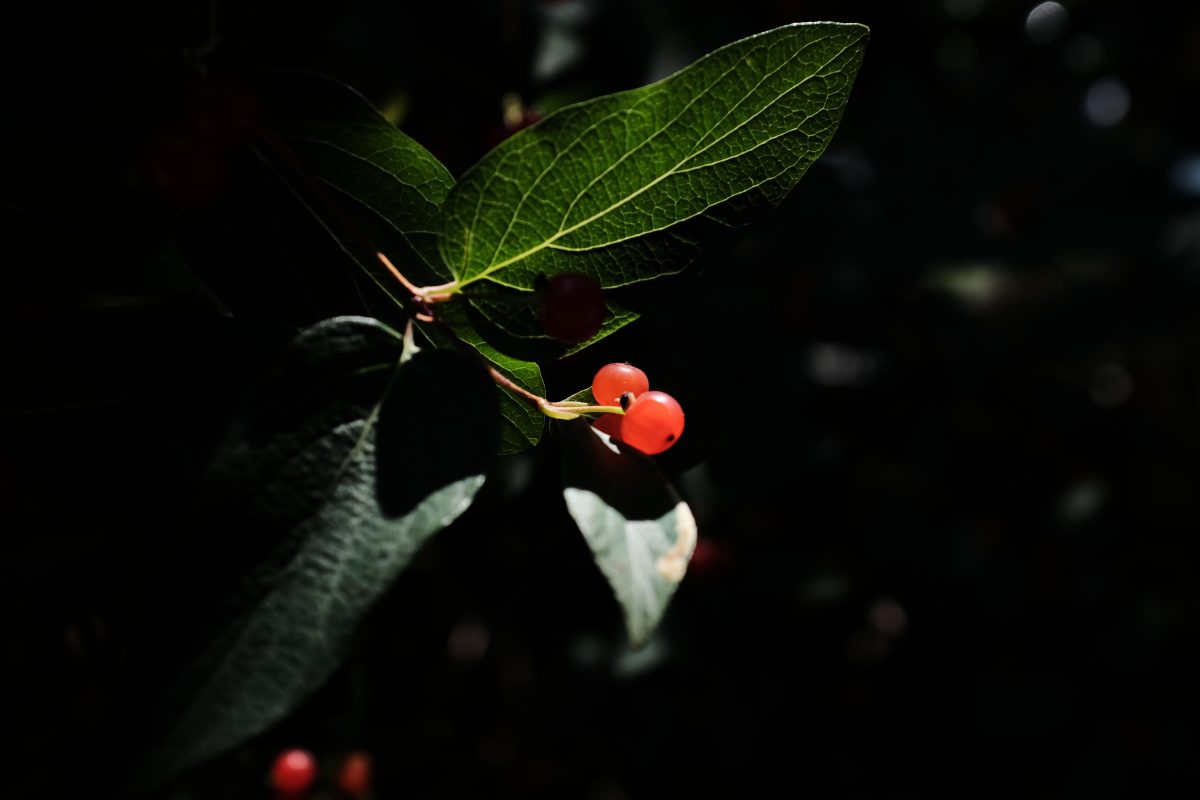
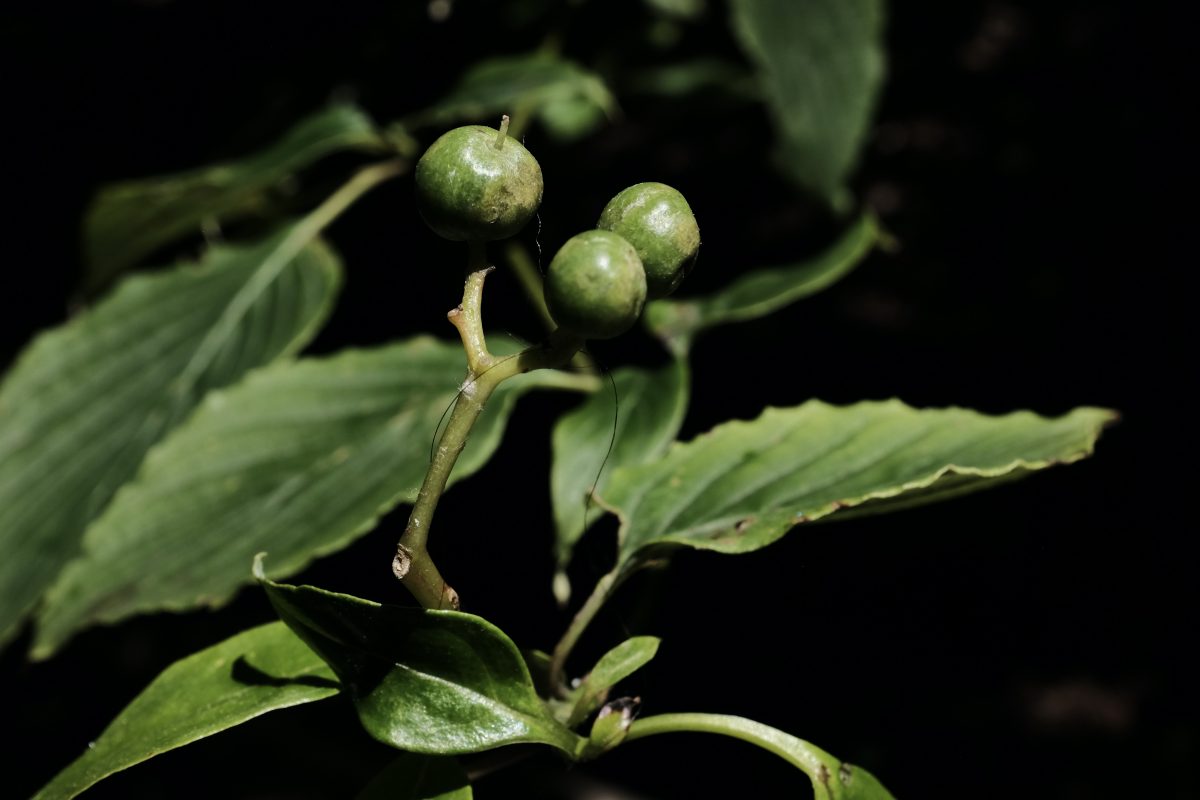
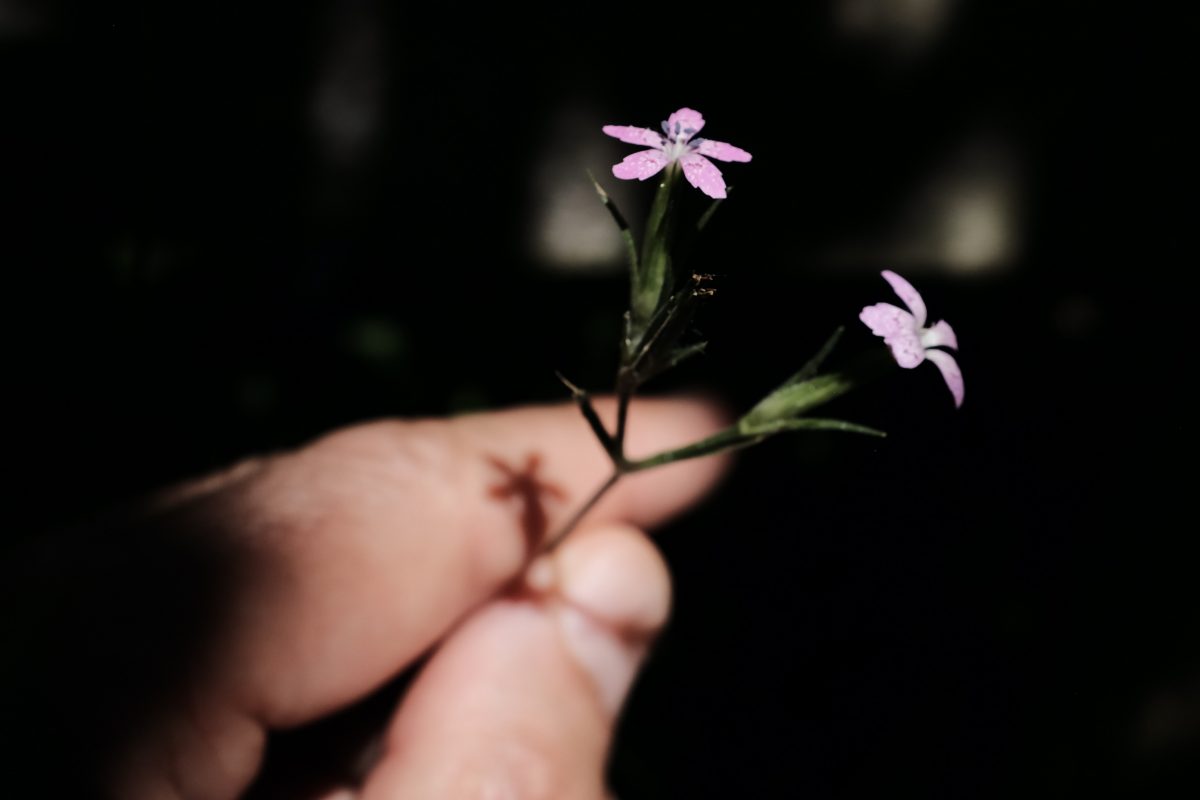
What John Irving said…
I once read an interview with the novelist John Irving where he said that his approach to writing is to start with the ending and then figure out how to get there. That’s where the hard work is. My approach to some photography projects is similar. I start with a specific mental image of a finished photograph and then figure out how to work with natural light and the camera to get there. This is never easy but I usually end of with something unique, something I haven’t seen before. If you are interested in seeing a couple of older photo projects that came about in the same spirit as this one, have a look here and here.
The images above are simple but making them was a challenge and I am happy with the way they turned out. I don’t do any photo editing other than some slight cropping sometimes. I try to get the photos that I want directly out of the camera. It’s not that i think that there is anything wrong with post-processing. It is just a different kind of photography and I don’t enjoy doing it.
I hope you liked these photos. If you have any questions or comments or if you know the names of any of the plants up above, please feel free to leave a message in the space below. I always look forward to hearing from you.
If you enjoy the content and would like to contribute towards website maintenance and development, you can make a donation here. Thank you for reading TigerSalad.
It does look good on my PC! Awesome photos
Thanks Max!