In it’s simplest form kombucha is black tea fermented by a symbiotic culture of bacteria and yeast (SCOBY) in the presence of sugar. There are probably thousands of good articles out there that explain this process in great detail…so I won’t add to the pile. In this article, I only want to provide a simple recipe with a clear process for myself and anyone else who might want to try making kombucha.
Why kombucha?
In addition to having a long and mythical history, kombucha is purported to have many health benefits (the final ferment contains live probiotic bacteria). I make it because it is fun, it makes my kitchen smell interesting and funky and it is delicious and refreshing. It is a terrific substitute for soda when you are eating anything heavy or greasy. It’s great with pizza and burgers but even works with more delicate flavours like sushi and sashimi.
Ingredients:
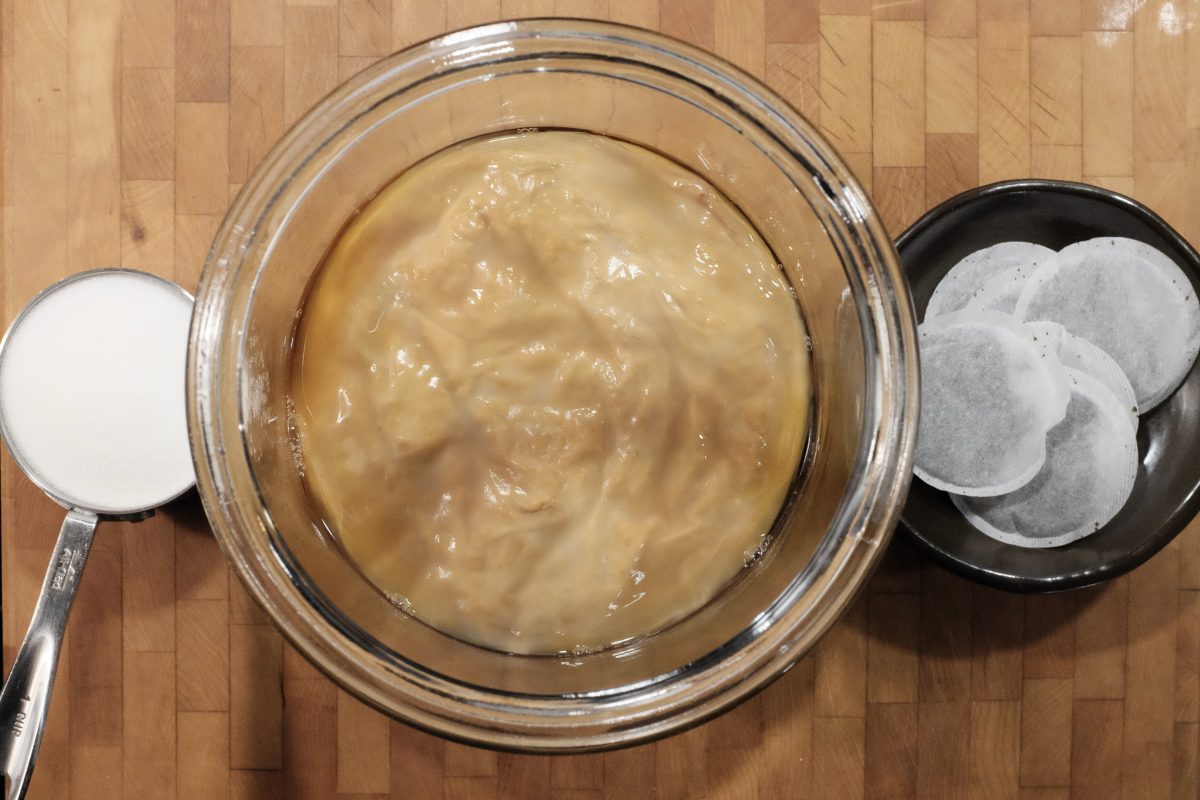
1 SCOBY
6 black tea bags (I am using orange pekoe)
1 cup regular white sugar
12 cups of water
You can’t really “make” a SCOBY. You will have to buy one online or get one from someone who is brewing. Once you have one, it will grow with every batch and you can peel off layers to share with fellow brewers. I got mine from my lovely downstairs neighbour.
You can just use cheap everyday tea bags. I am using orange pekoe bags from the grocery store. Use black tea and avoid anything flavoured (for now). I like these round Tetley brand ones…they are very strong and brew up to a nice colour and aroma.
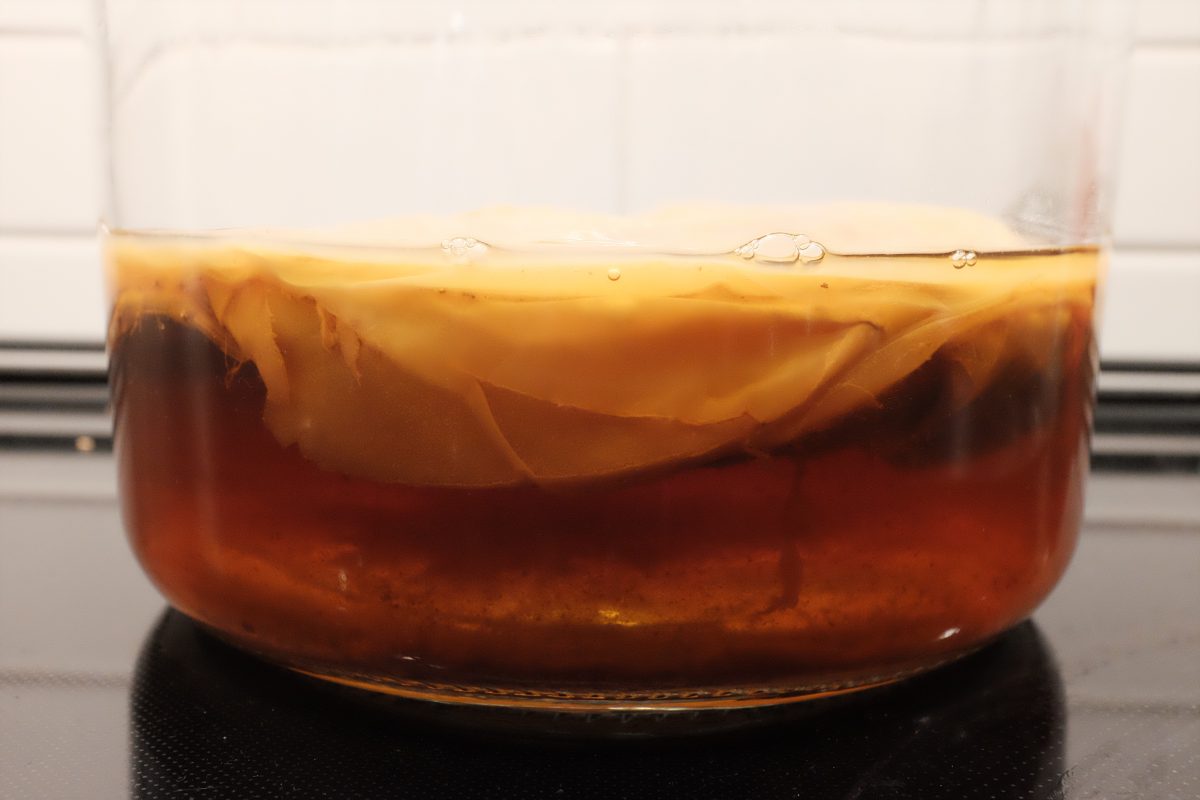
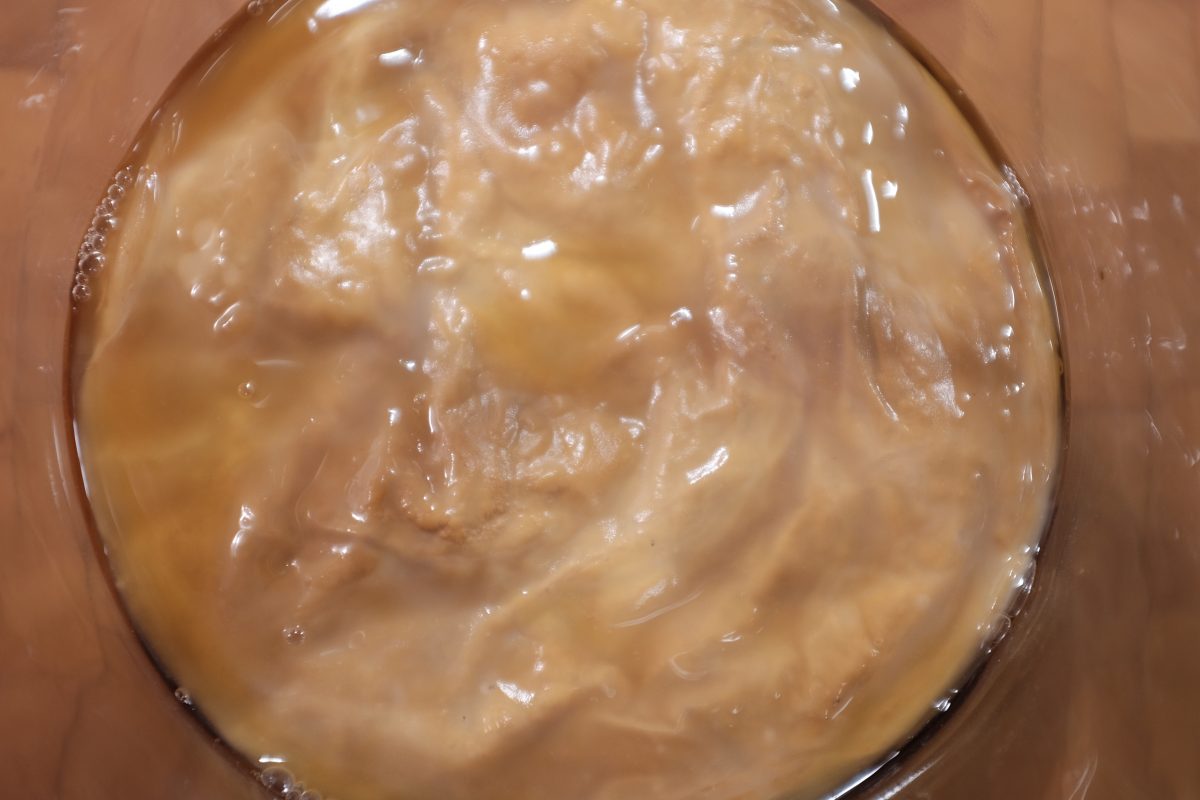
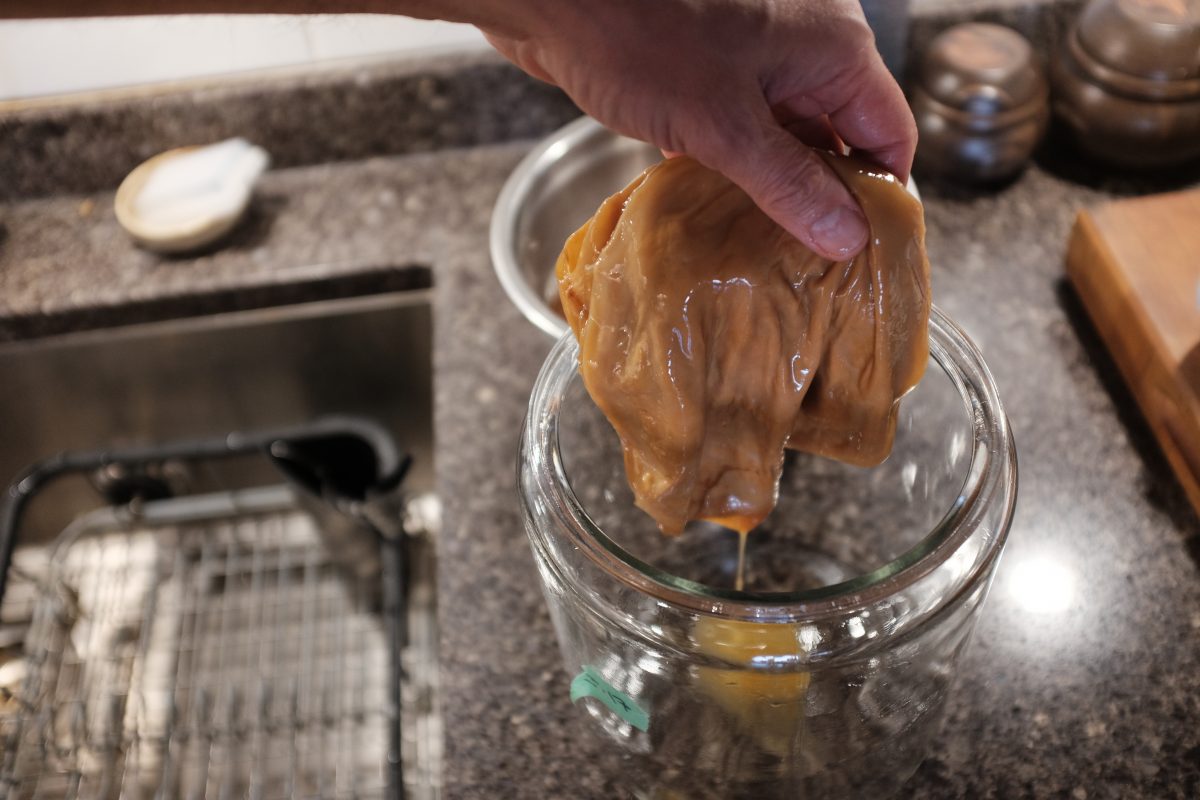
Sugar, SCOBY, cheap tea bags….a simple recipe for fermentation magic.A side view of my SCOBY. It is a jellyfish-like collection of bacteria and yeast suspended in a mat of cellulose. You can see a few layers here. Every time you brew, a new layer forms.Top view. I keep my SCOBY in a round wide-mouthed storage jar. The SCOBY will grow into the shape of whatever container you keep it in. I think it looks like the planet Venus.
Process
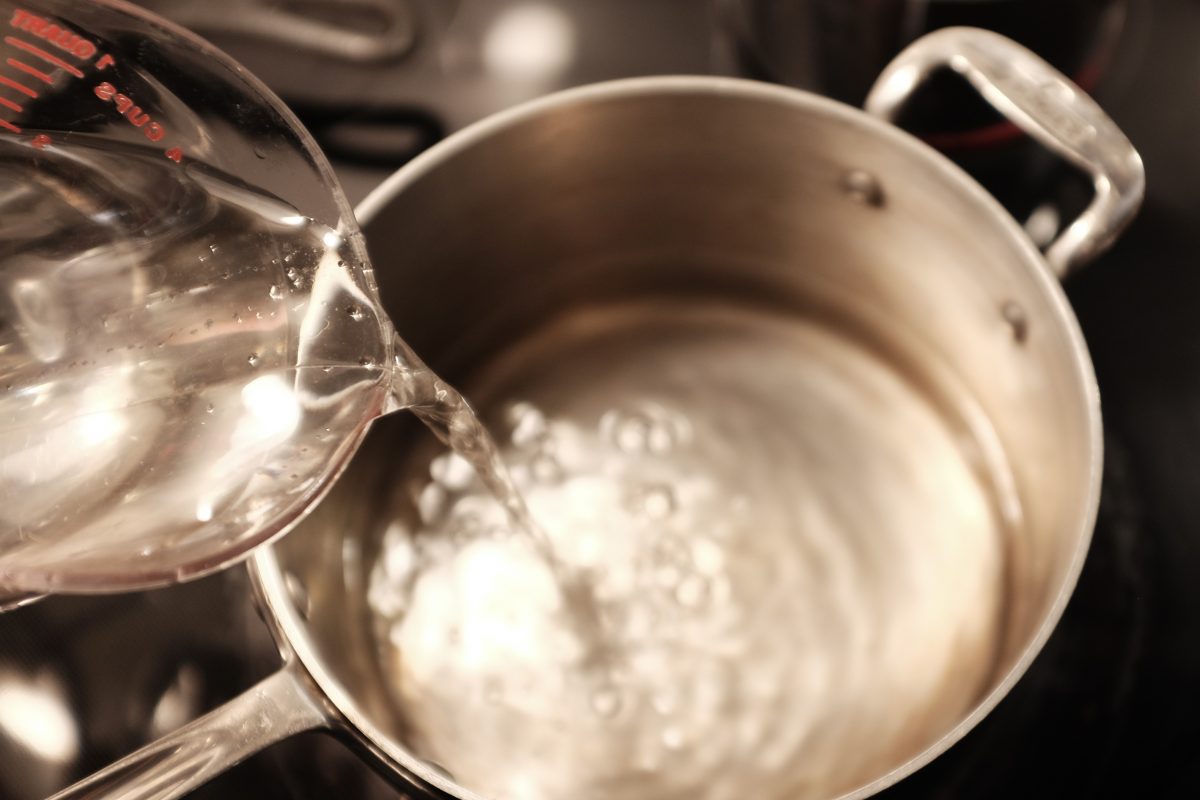
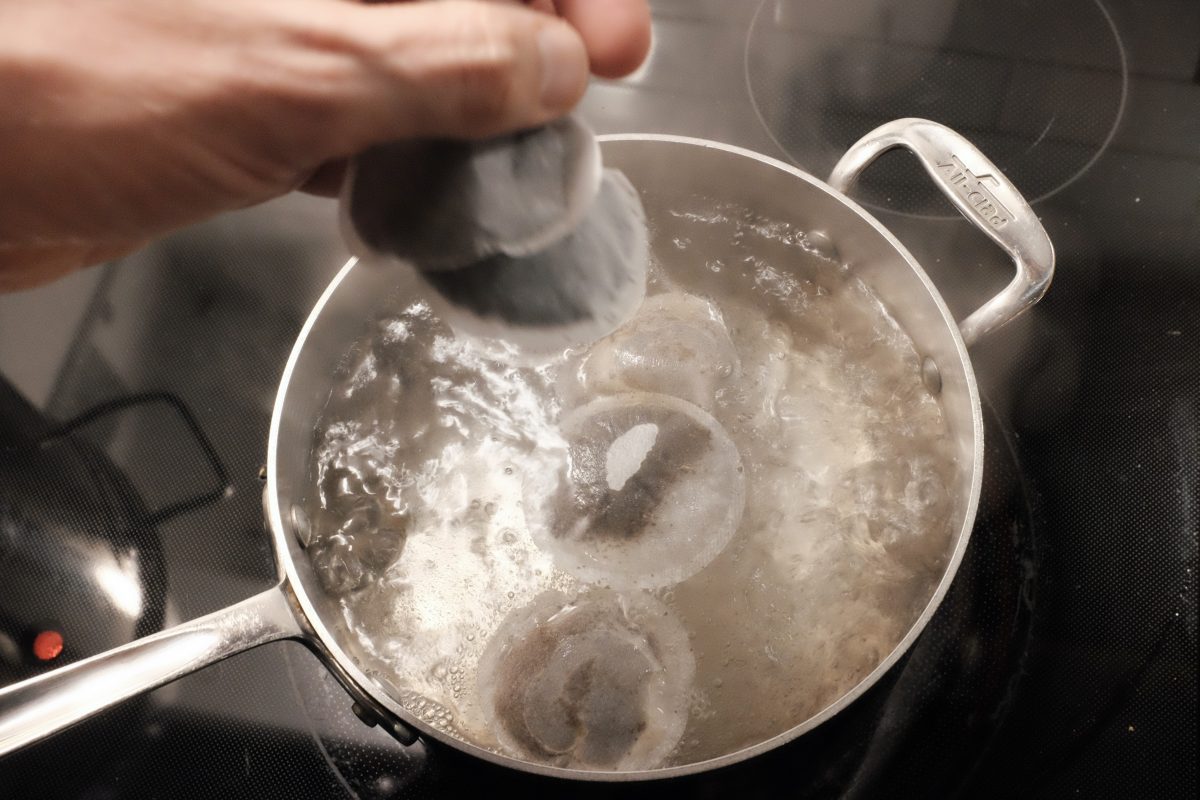
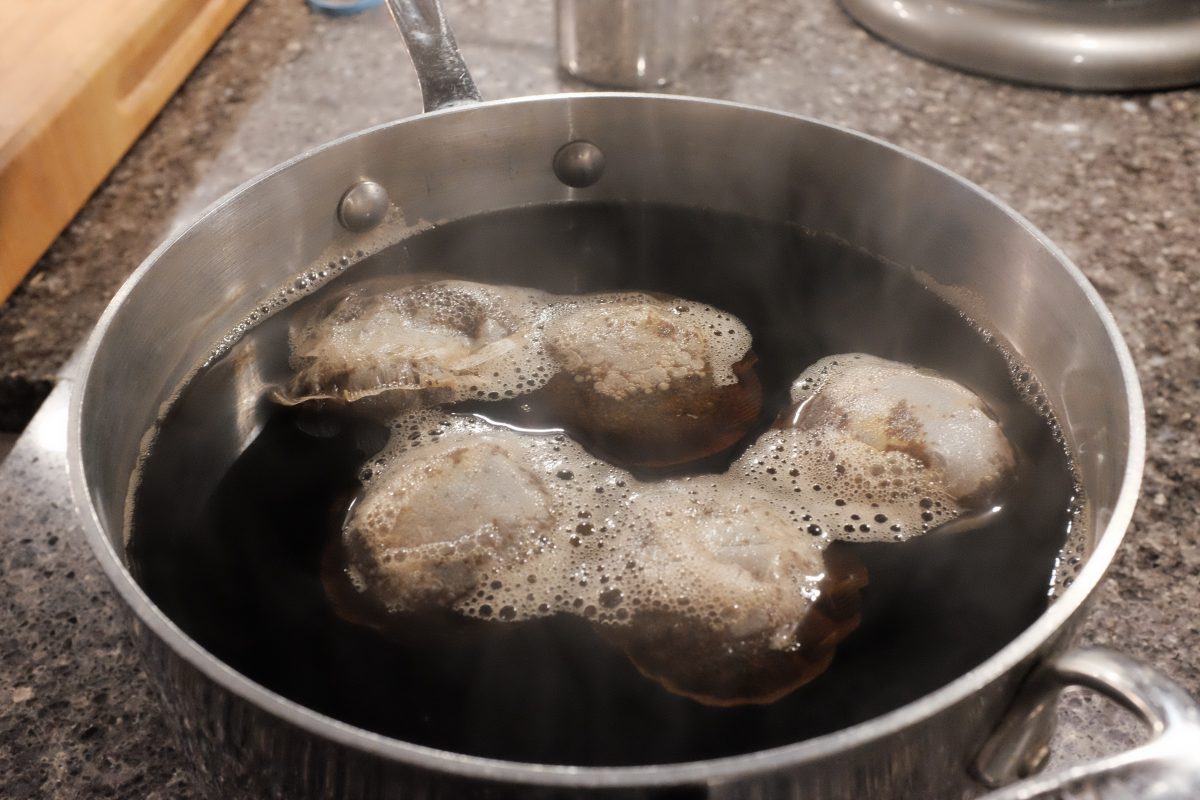
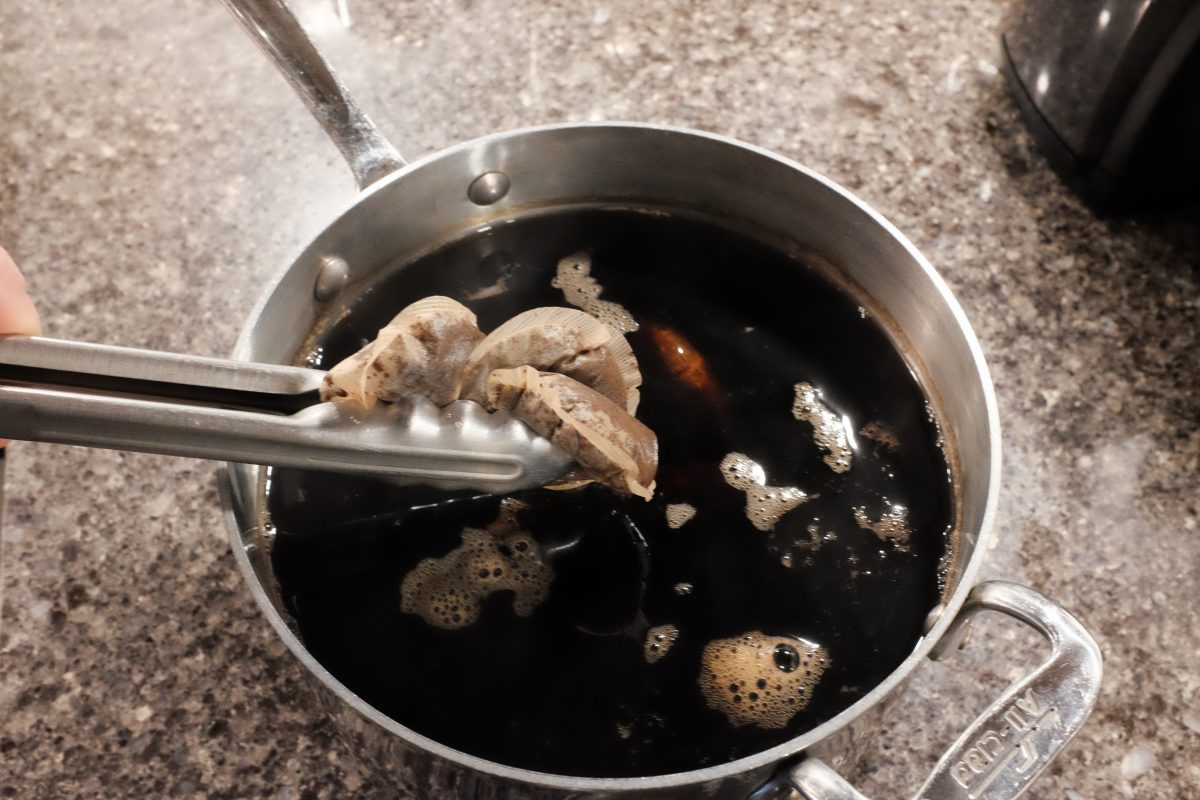
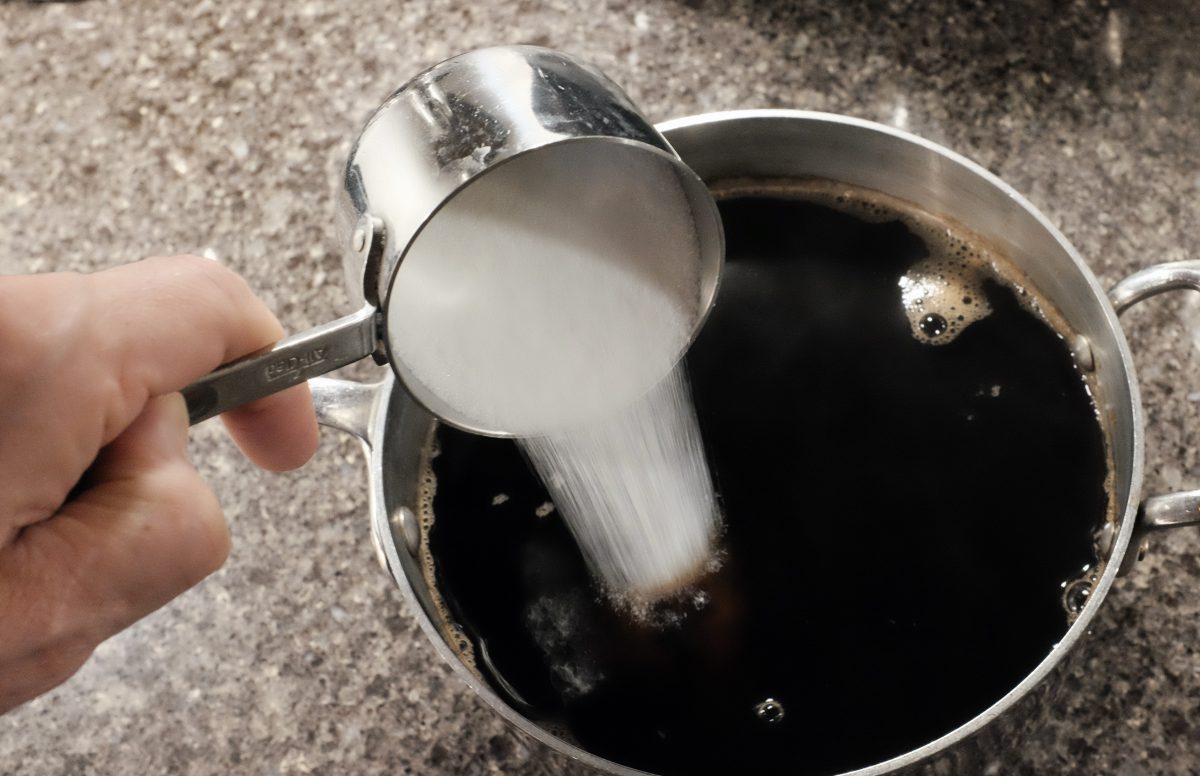
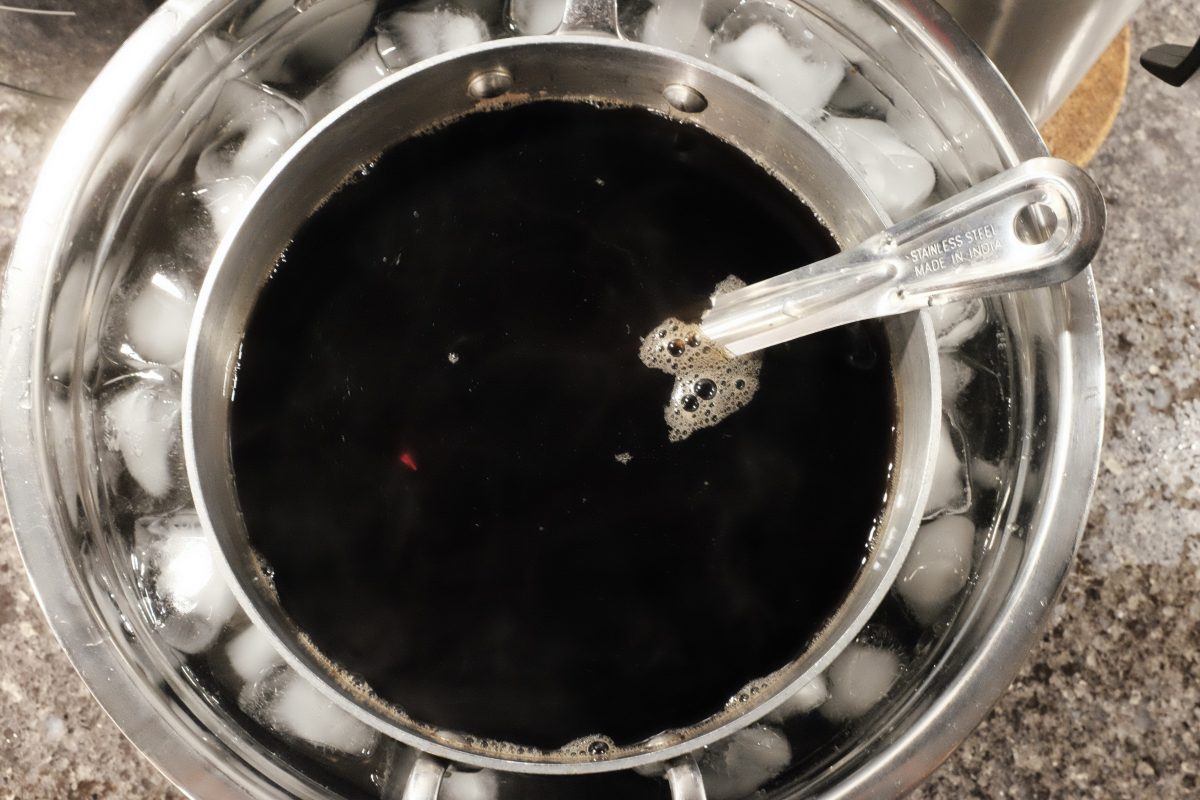
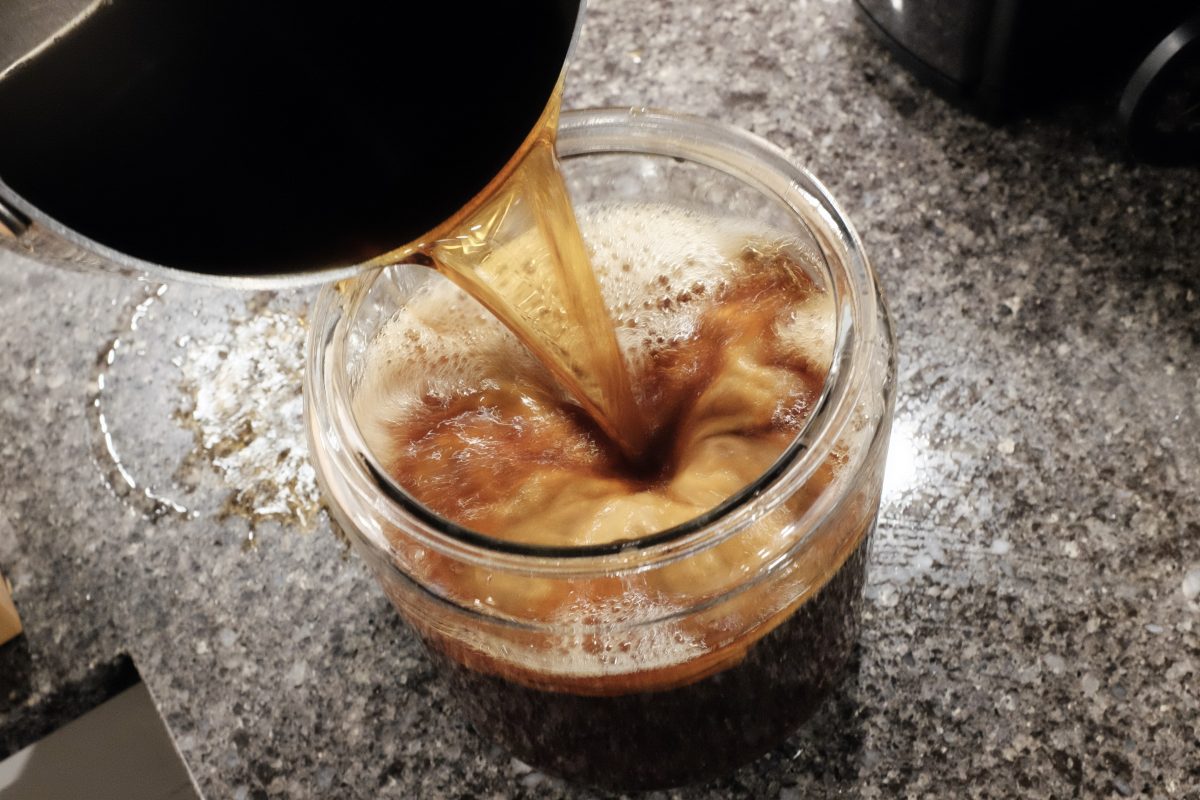
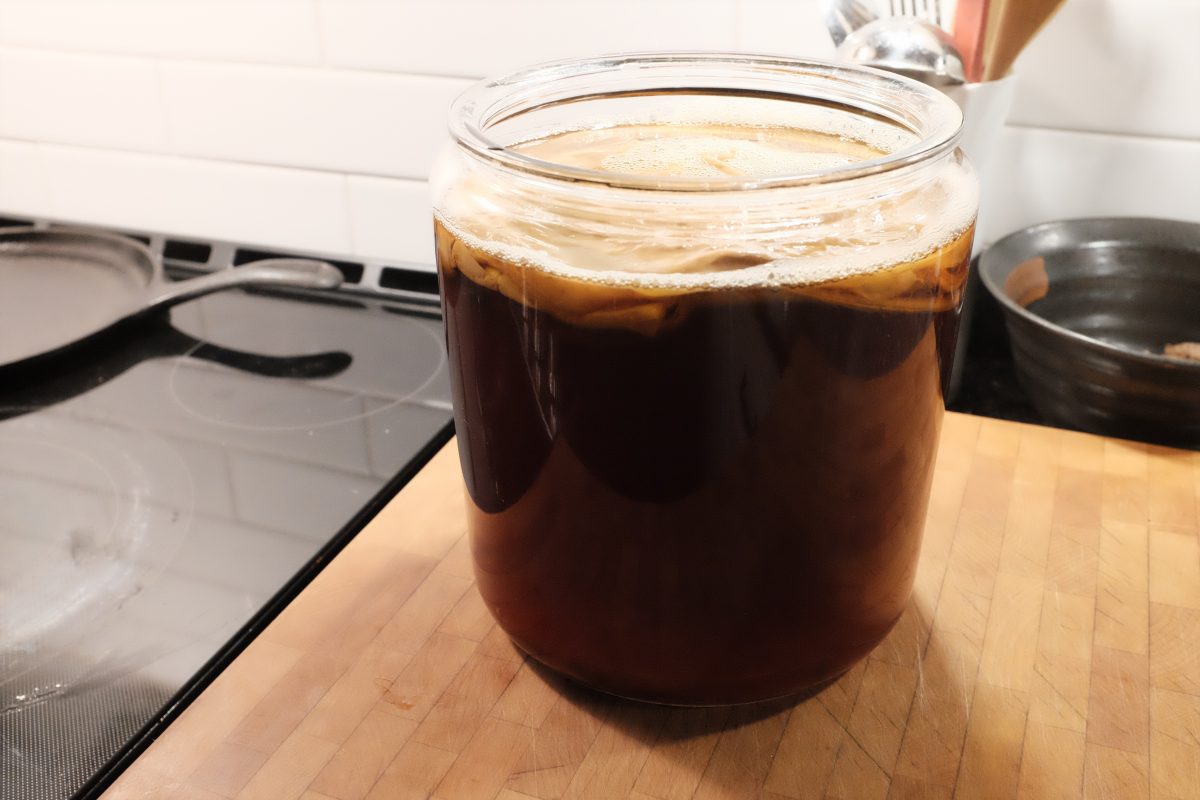
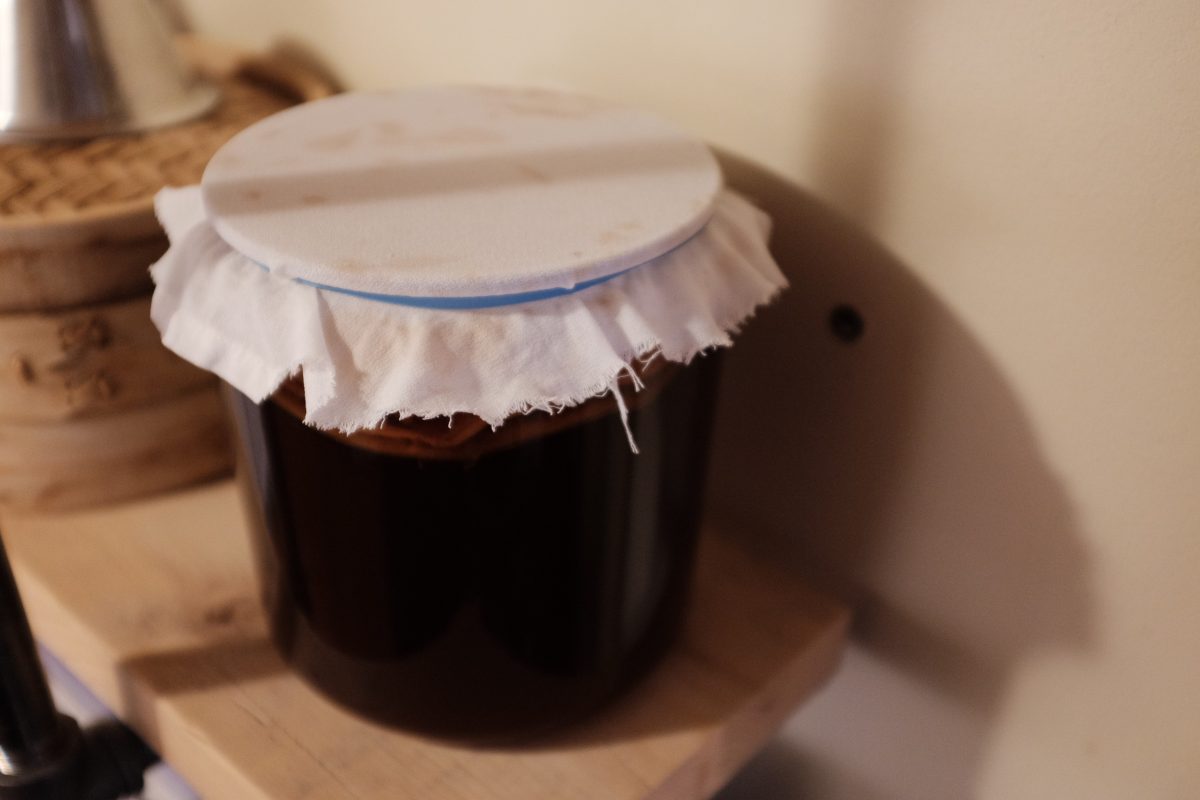
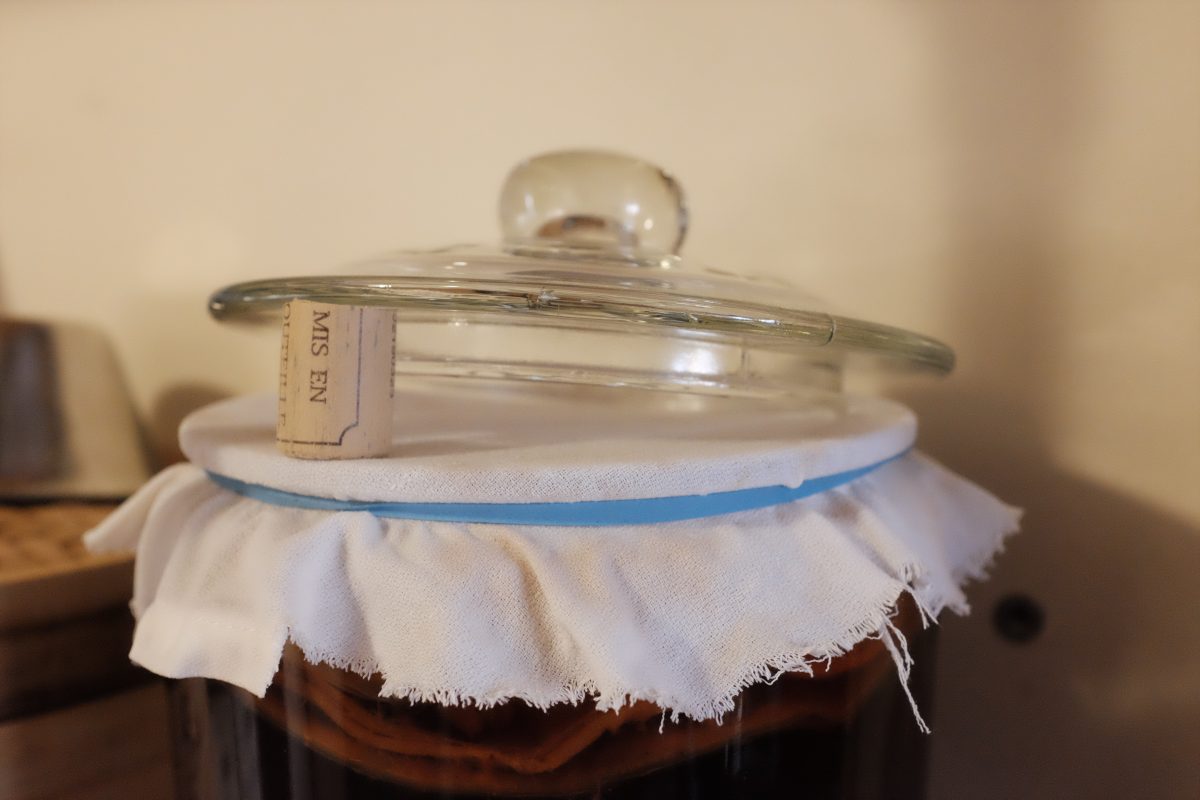
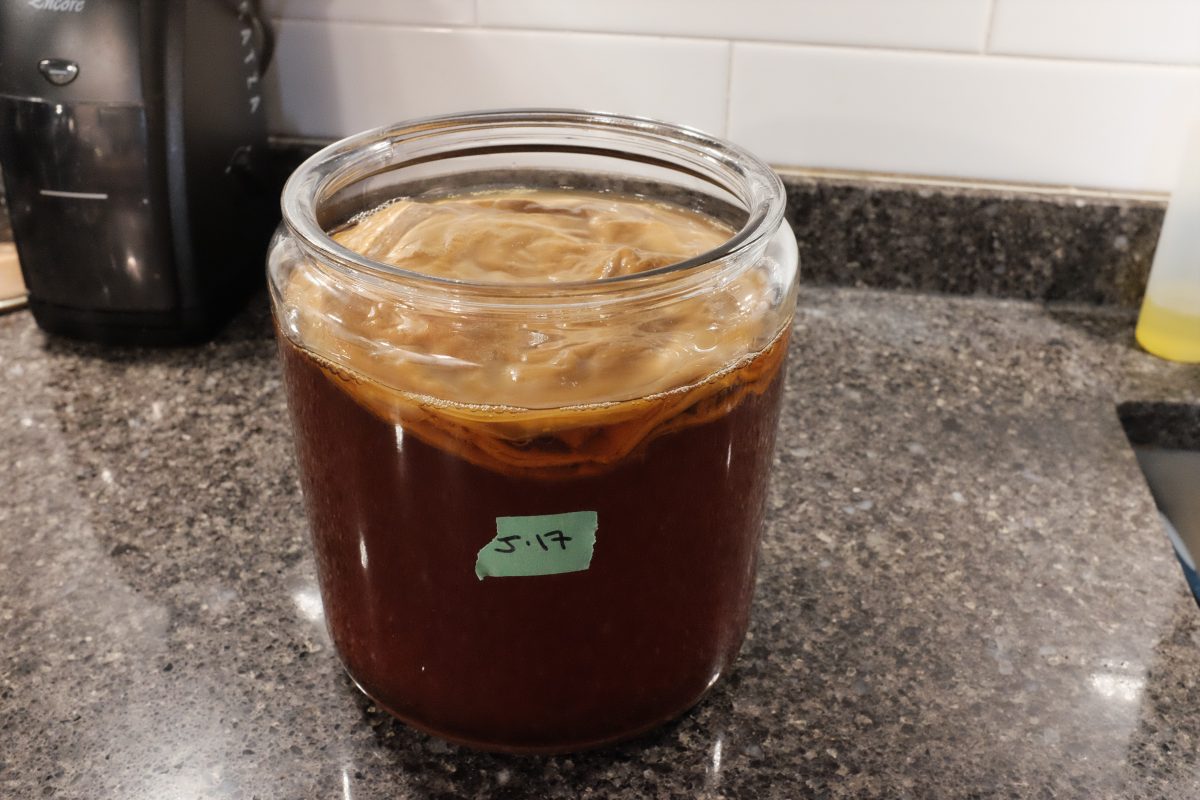
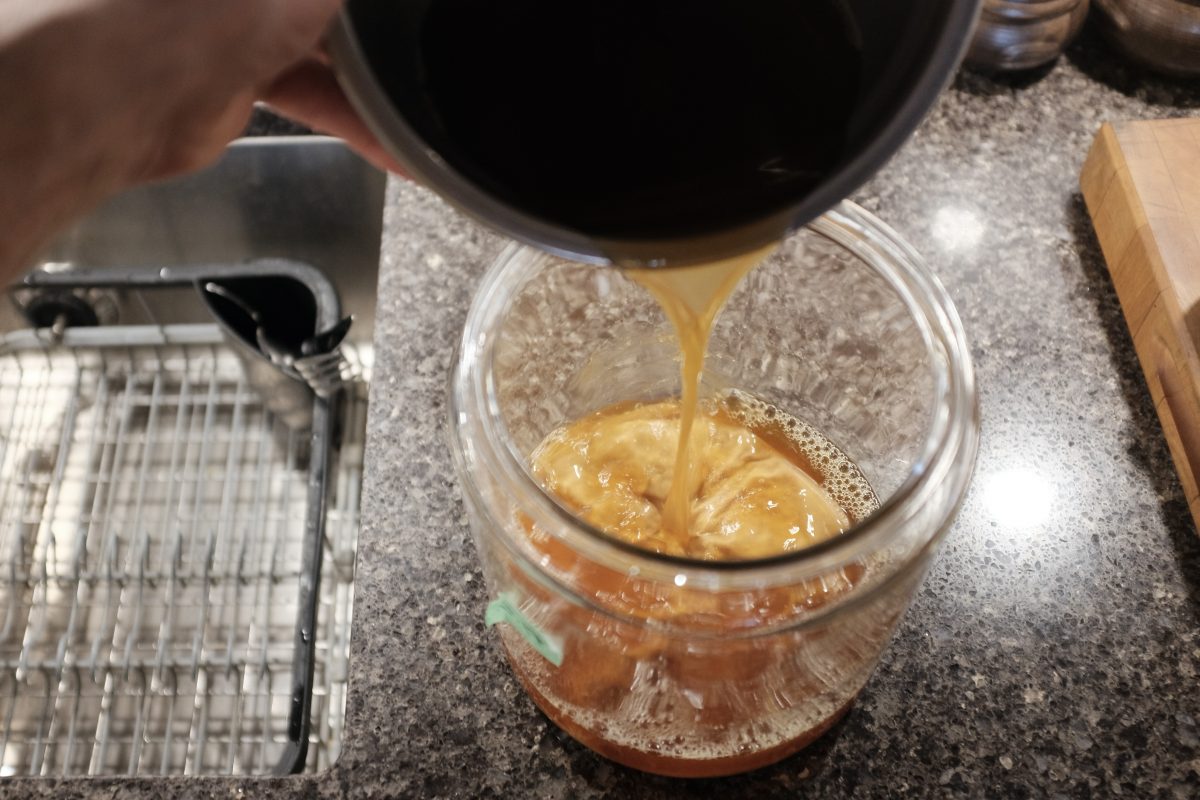
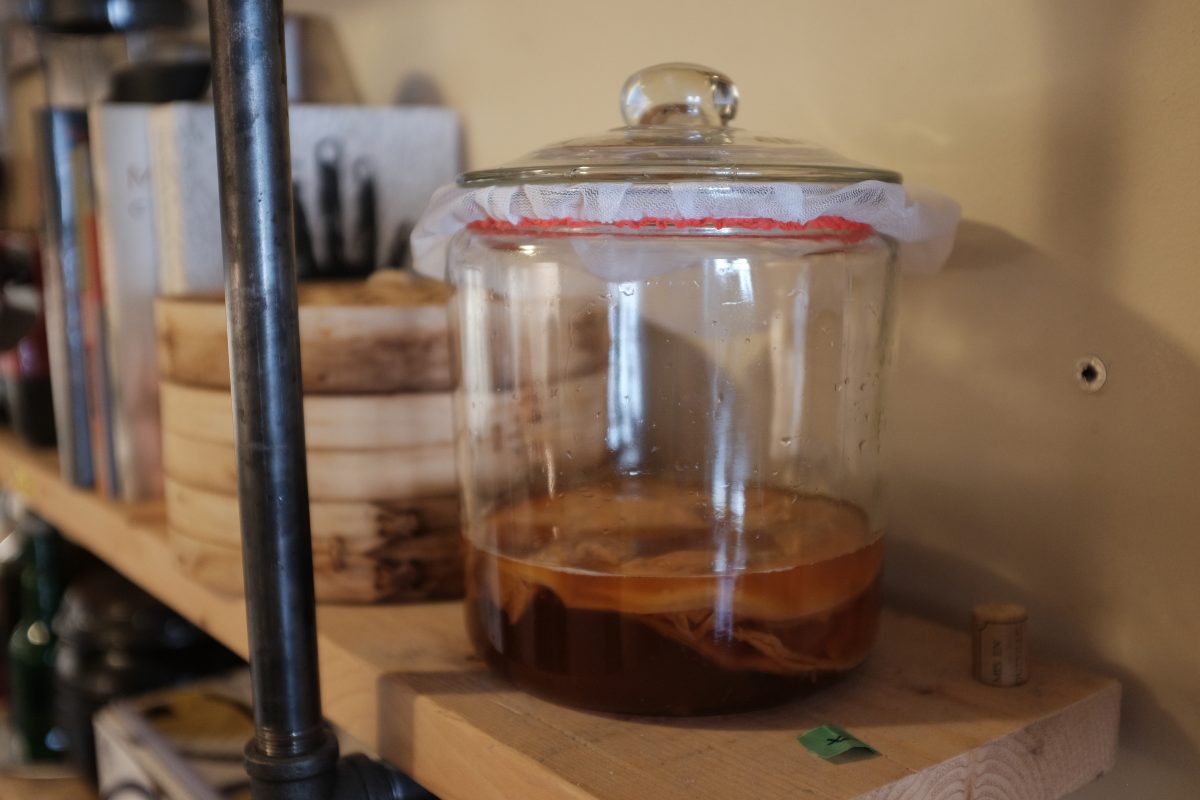
In a clean pot, bring 12 cups of water to a rolling boil.Once the water is boiling, drop in the tea bags.Turn off the heat and let the tea brew for 15 minutes. It will be quite dark.After 15 minutes, remove the tea bags and discard.Add sugar and stir well to dissolve. This brew needs to cool down to room temperature. Now is a good time to fold the pile of laundry in the corner of your room, call your mom or take a nice long walk until the brew cools off completely. If you don’t have time or patience to let this happen naturally, you can use an ice bath like I did above.Once cool, pour the sweet tea into a fermenting container (usually the one in which the scoby lives).Here it is…scoby meets sweetened tea.Cover with a breathable net or piece of fabric. Secure it with an elastic band to keep out insects. As with any ferment, insects (especially fruit flies) will be interested in launching a full investigation.Make sure that the ferment can breathe. I use a cork to keep this lid open and circulate air. You don’t have to use a lid at all. I just happen to have one around. Let your kombucha rest for a week and then start to taste it daily. When you can barely taste the sugar and it has a slight tart flavour, it is ready for bottling. My apartment is cold in the winter so this usually takes around 2 weeks. If the environment is warmer, it will ferment faster. Taste it!
Time to bottle
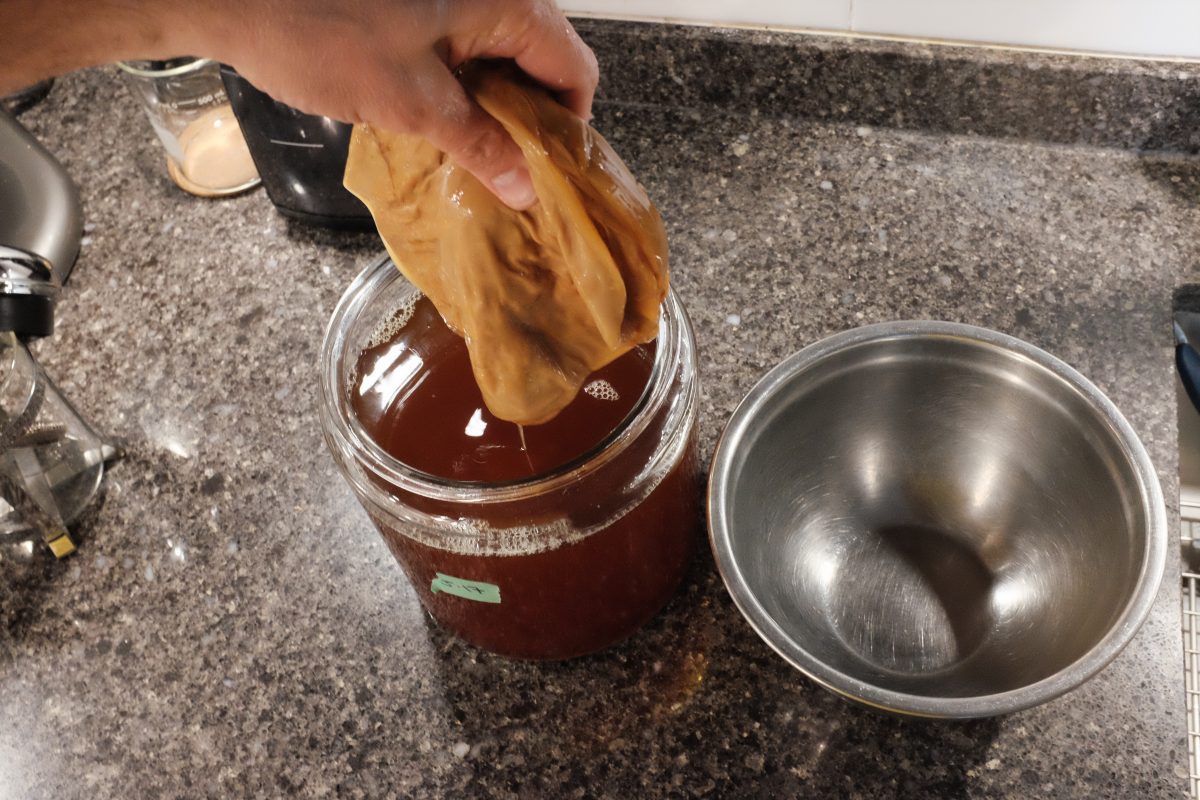
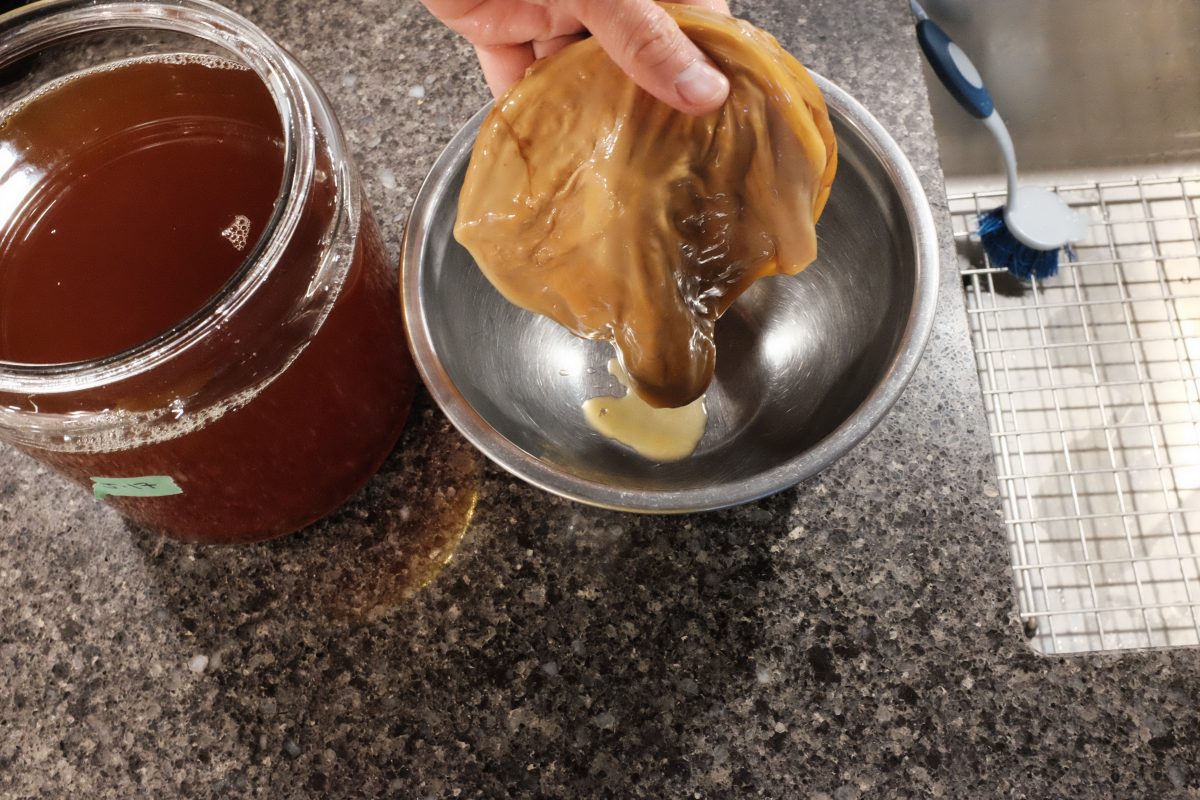
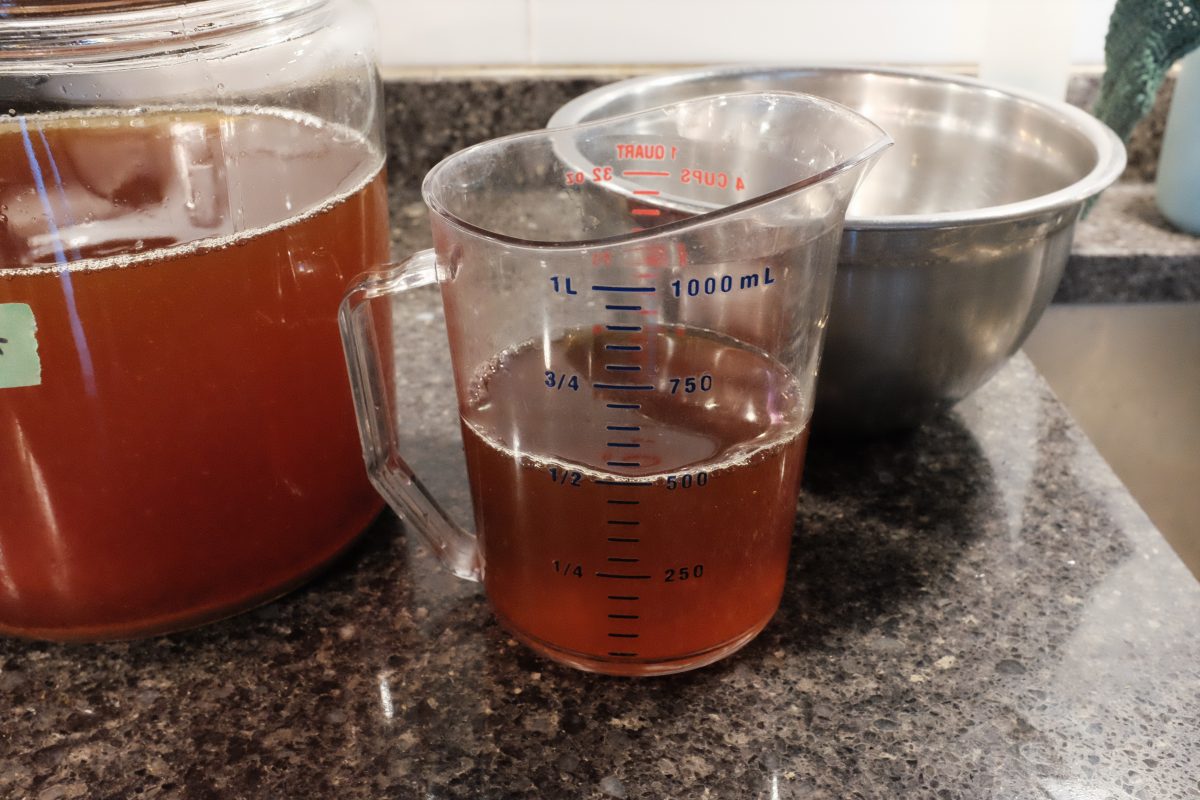
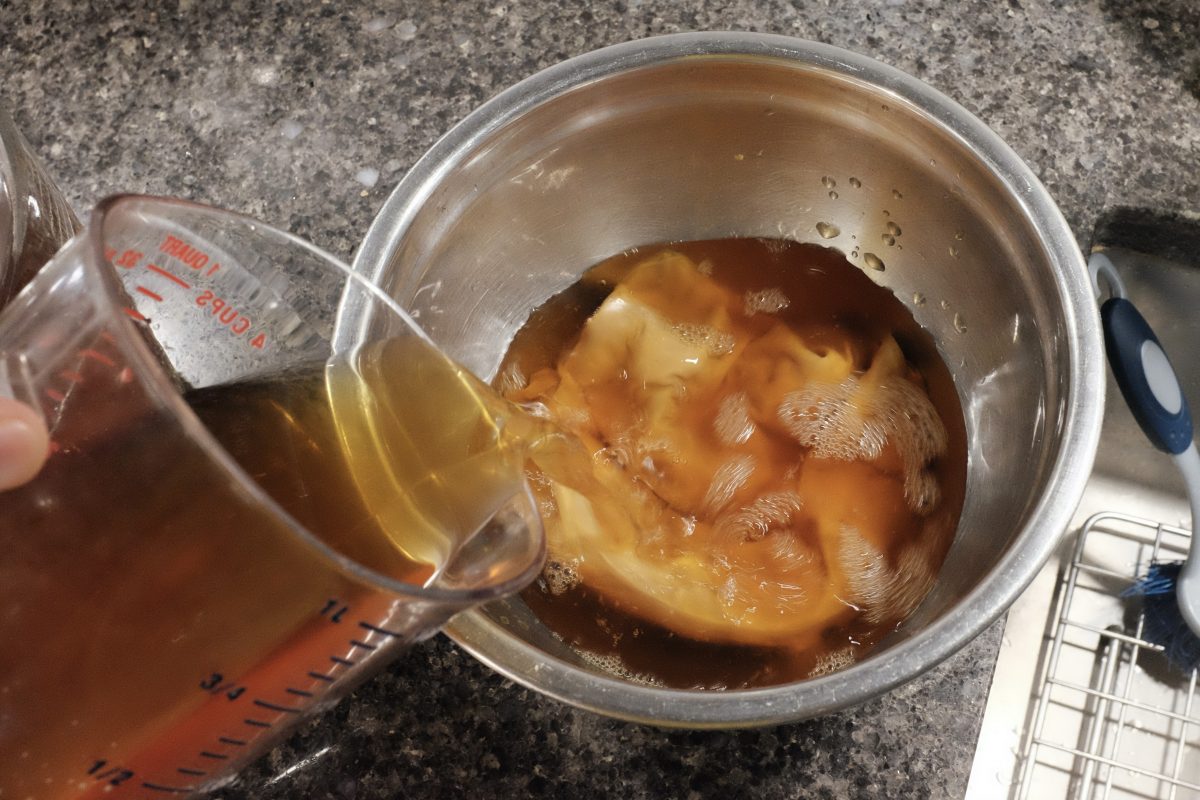
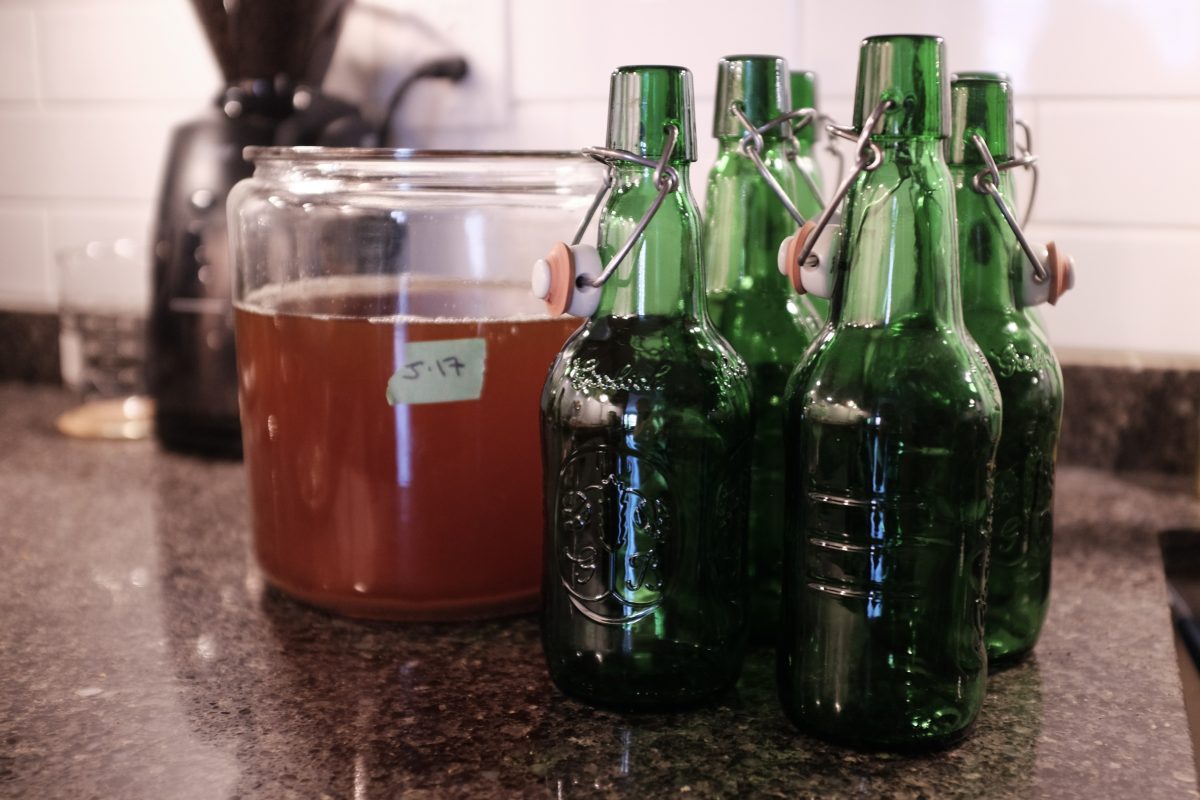
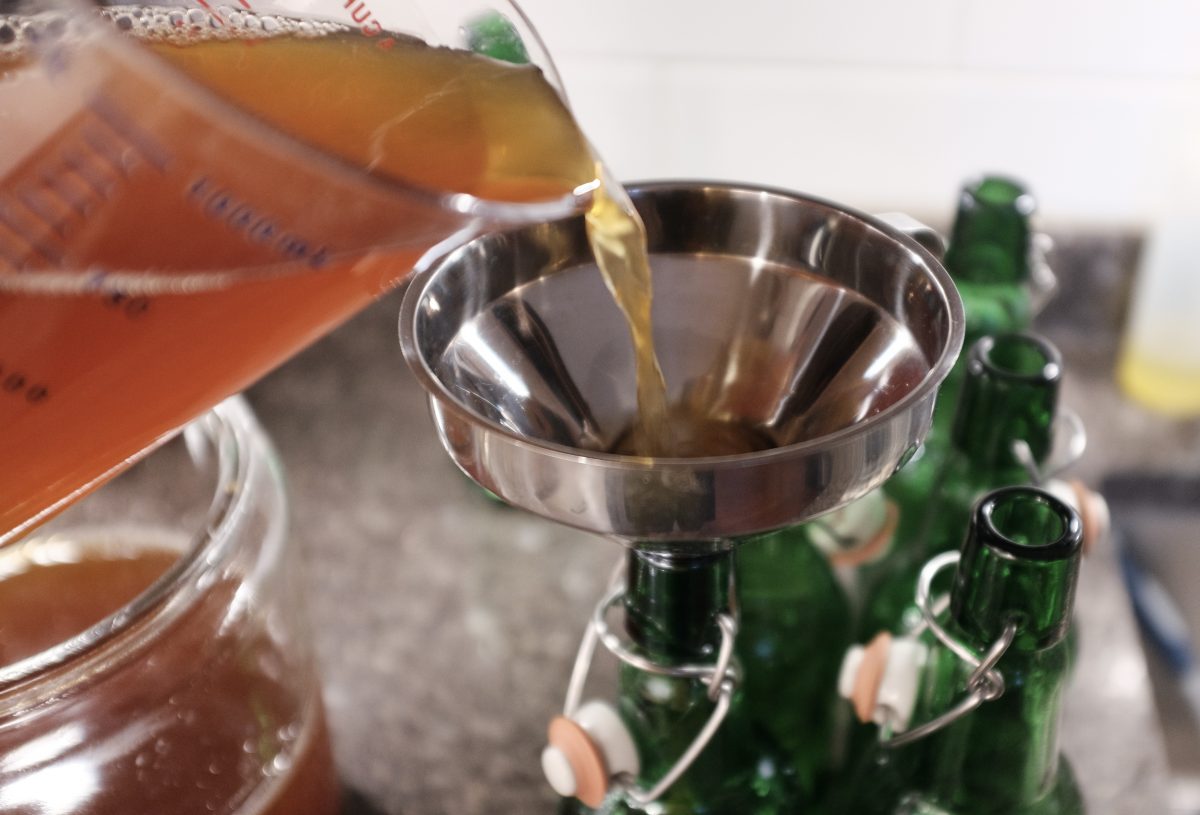
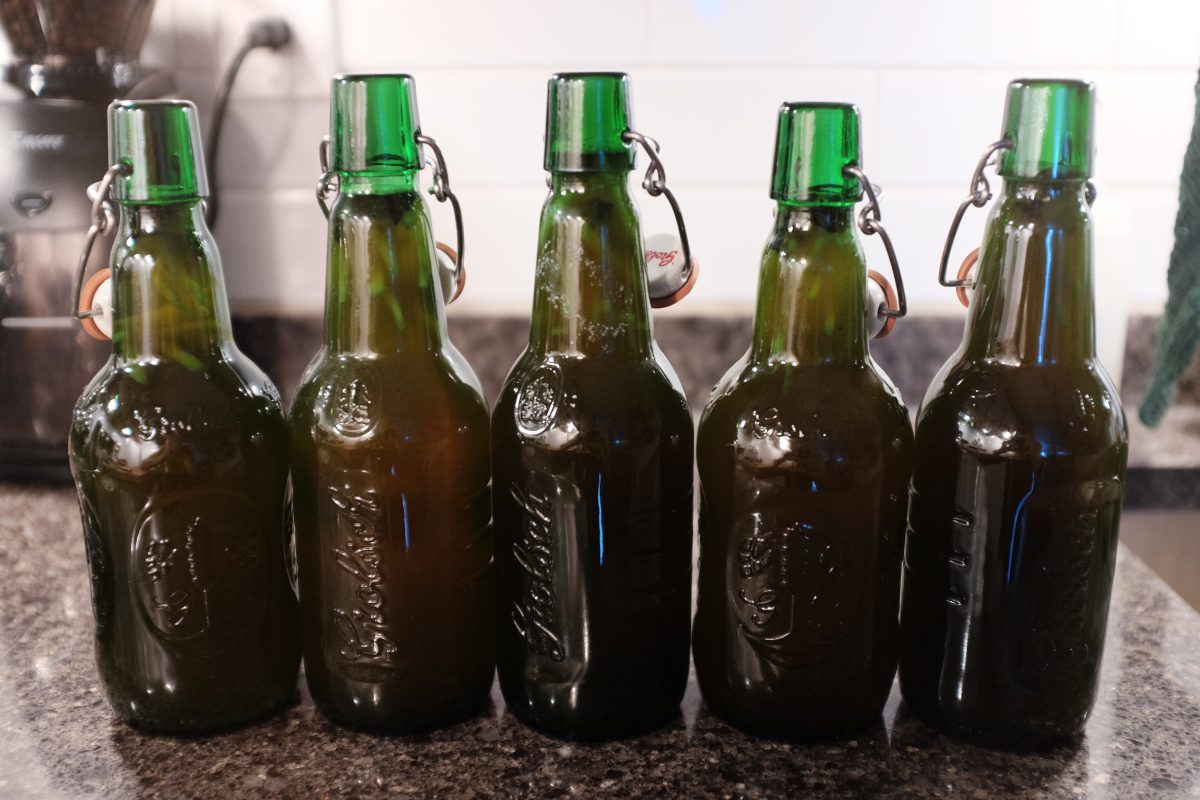
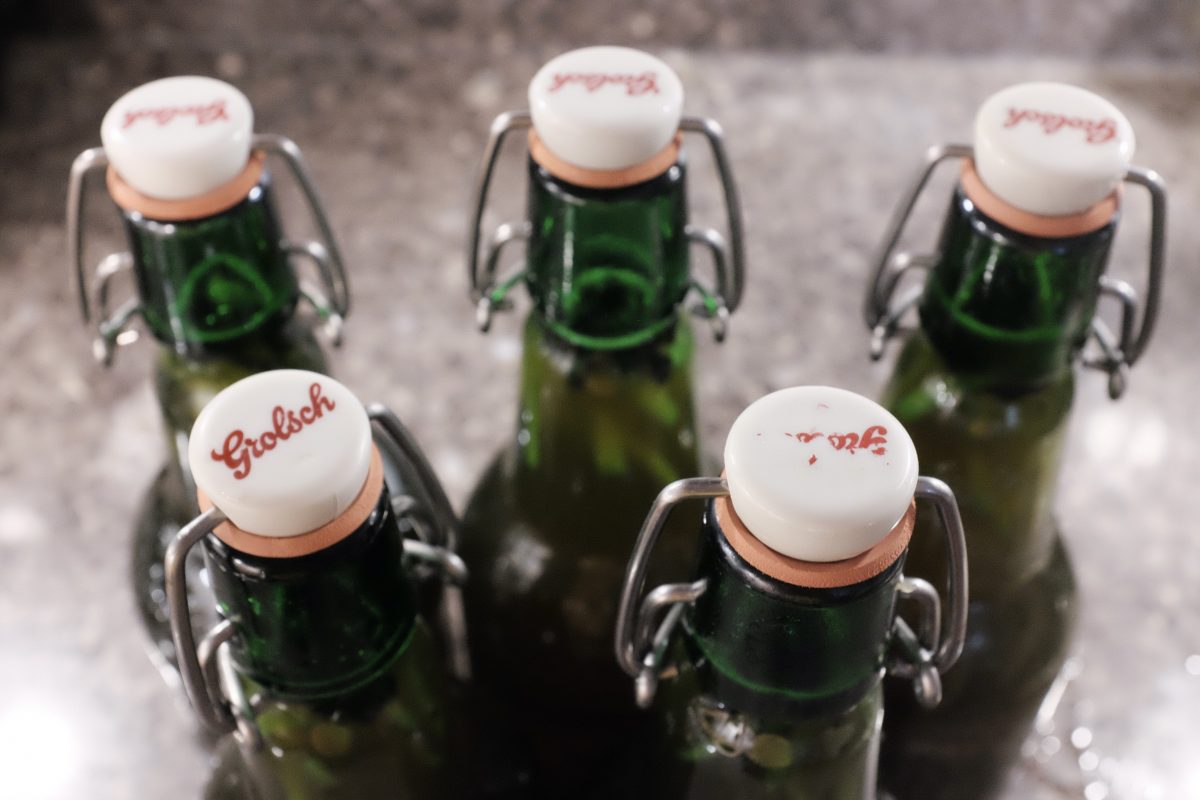
Mine did take exactly two weeks….This tastes and smells a little sweet and a little sour.Remove the SCOBY. Make sure you wash your hands and that your bowls etc are clean. This is a very robust collection of beneficial microbes…you don’t need to sanitize everything but make sure it is freshly washed with soap and water.Drop the SCOBY into a clean bowl.Measure out about 500ml (2 cups) of the fermented tea from the brew. This is the SCOBY’s home. It will need to be in this liquid to survive.Add the 500ml tea back to the SCOBY and set aside for now.Prepare clean bottles for the brew. I am using glass, but plastic soda type bottles are probably safer. I know that my brew will likely not ferment much more in the bottle. Not enough to break glass anyways. If your brew has more residual sugar than mine, it may continue to actively ferment in the bottle and cause it to burst. If you do choose to use glass, these swing top beer bottles are designed to withstand a certain amount of pressure.
Additional Ingredients / Second Ferment
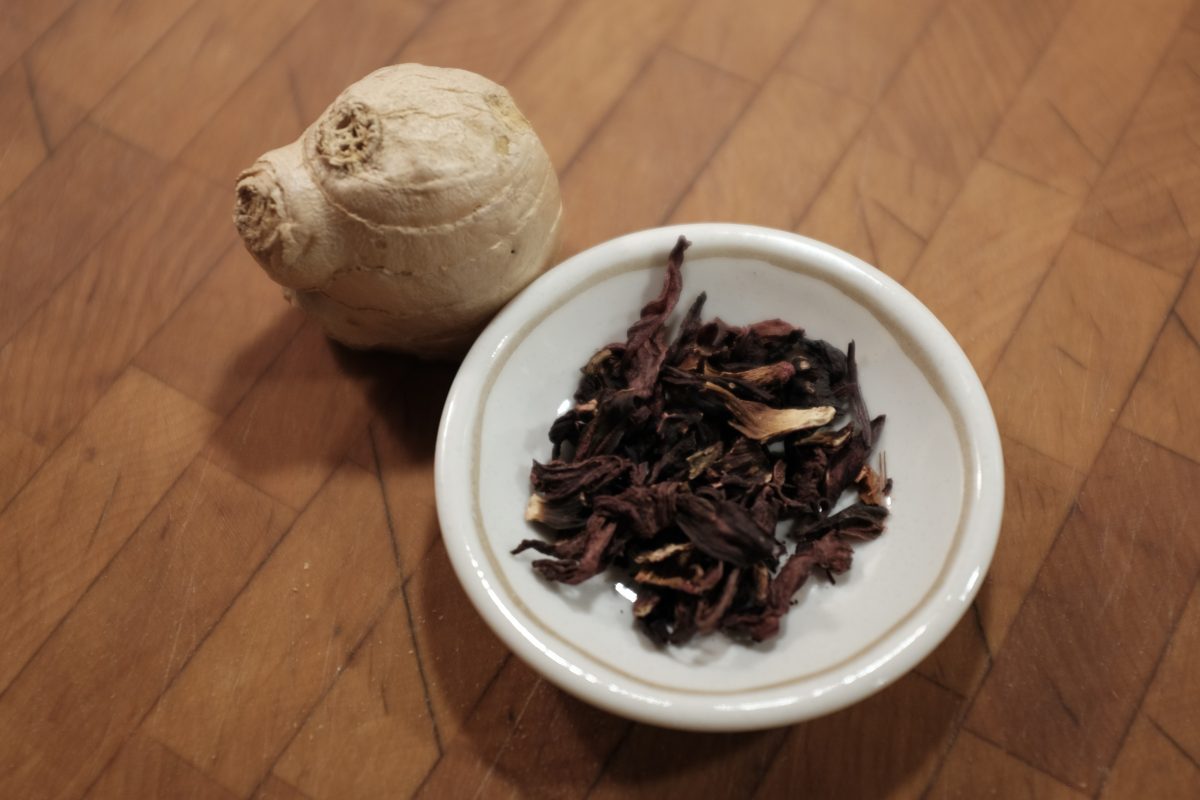
You can bottle your fermented tea just as it is. It will be delicious. Or, if you like, you can also add some aromatics as you bottle. I almost always add fresh ginger and dry hibiscus flowers to mine. The ginger adds a little sweet snap to the brew and the hibiscus add a little tang and a beautiful rosey colour.
Over the years I have tried citrus peels, cinnamon sticks, all kinds of herbs and spices and I always come back to ginger and hibiscus. It is a winning combination with the fermented tea. You can usually find whole dried hibiscus flowers in any spice shop, asian grocery store or Mexican grocery (where it is called Jamaica). It may also be under the name Rose of Sharon. It is all the same thing and definitely worth seeking out.
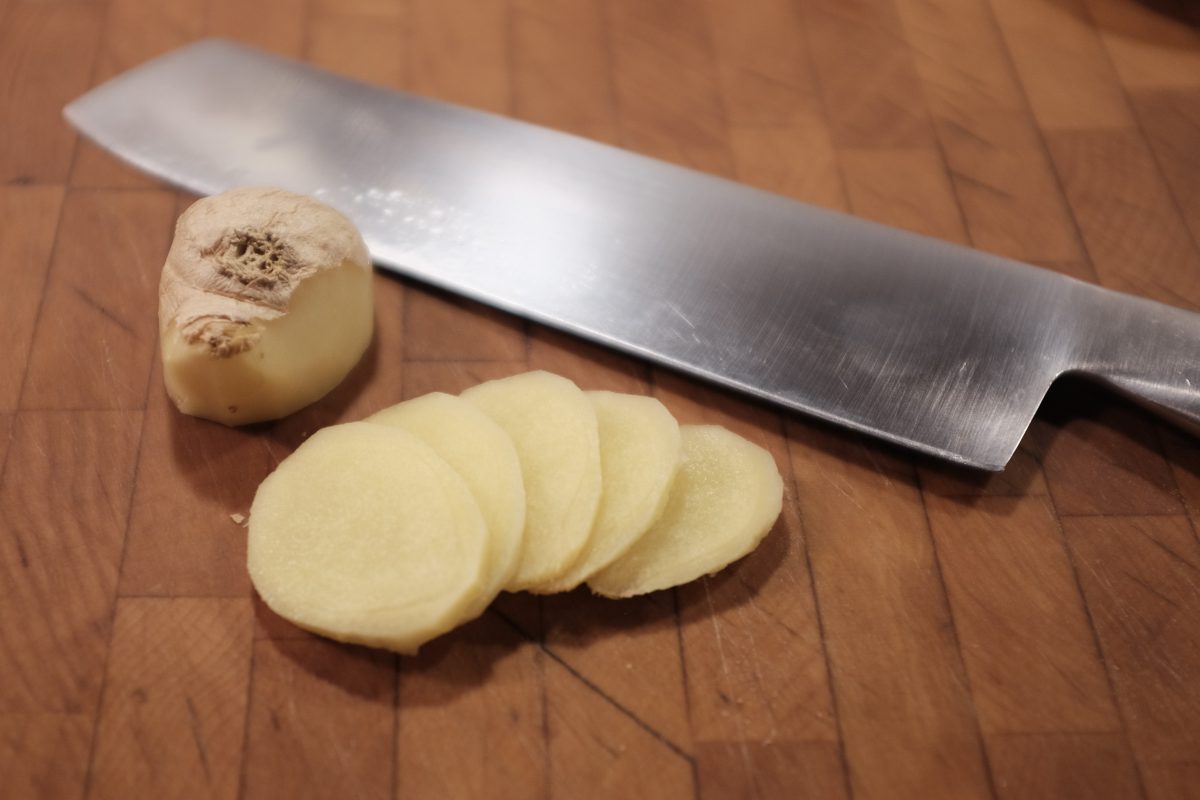
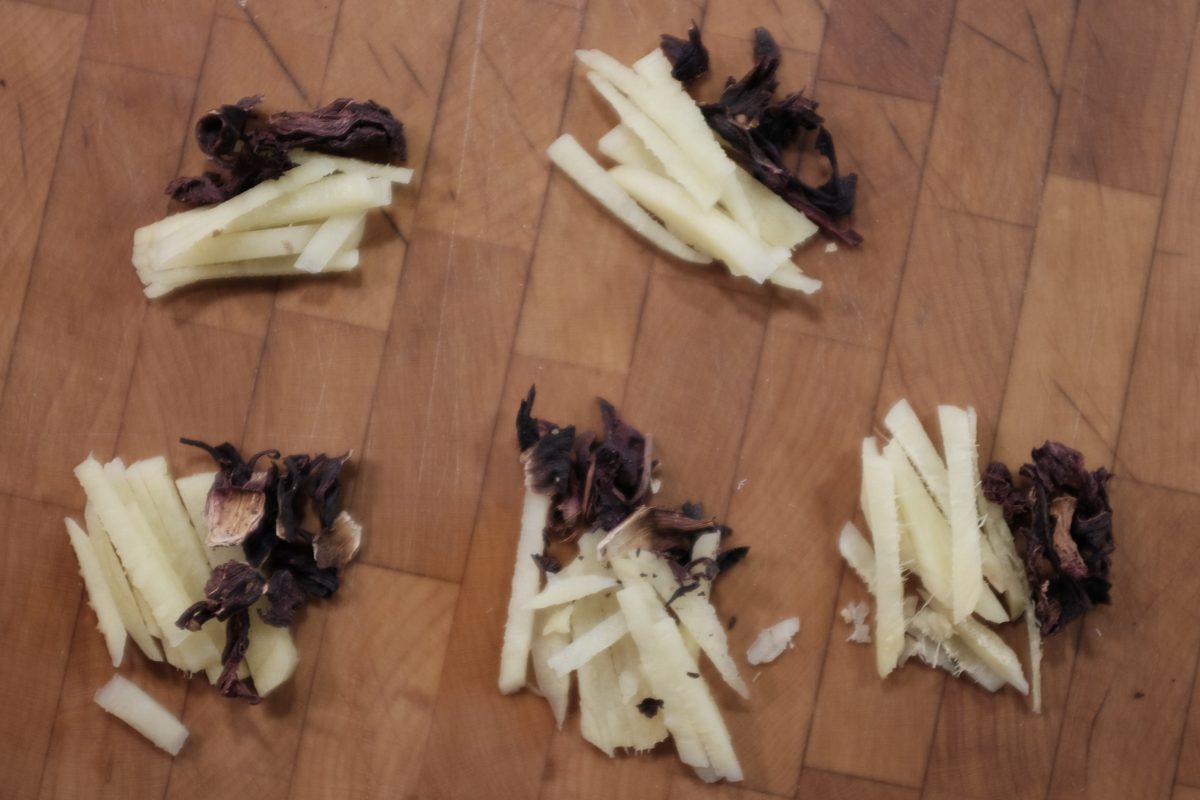
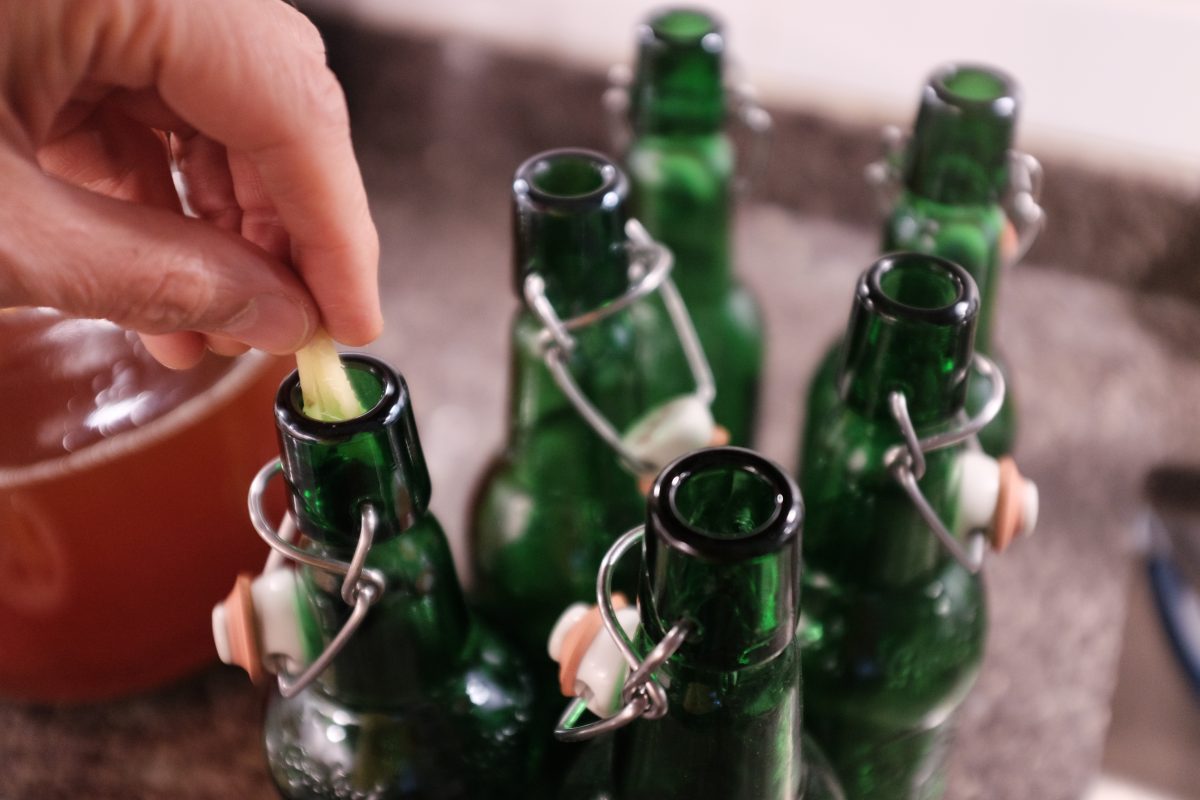
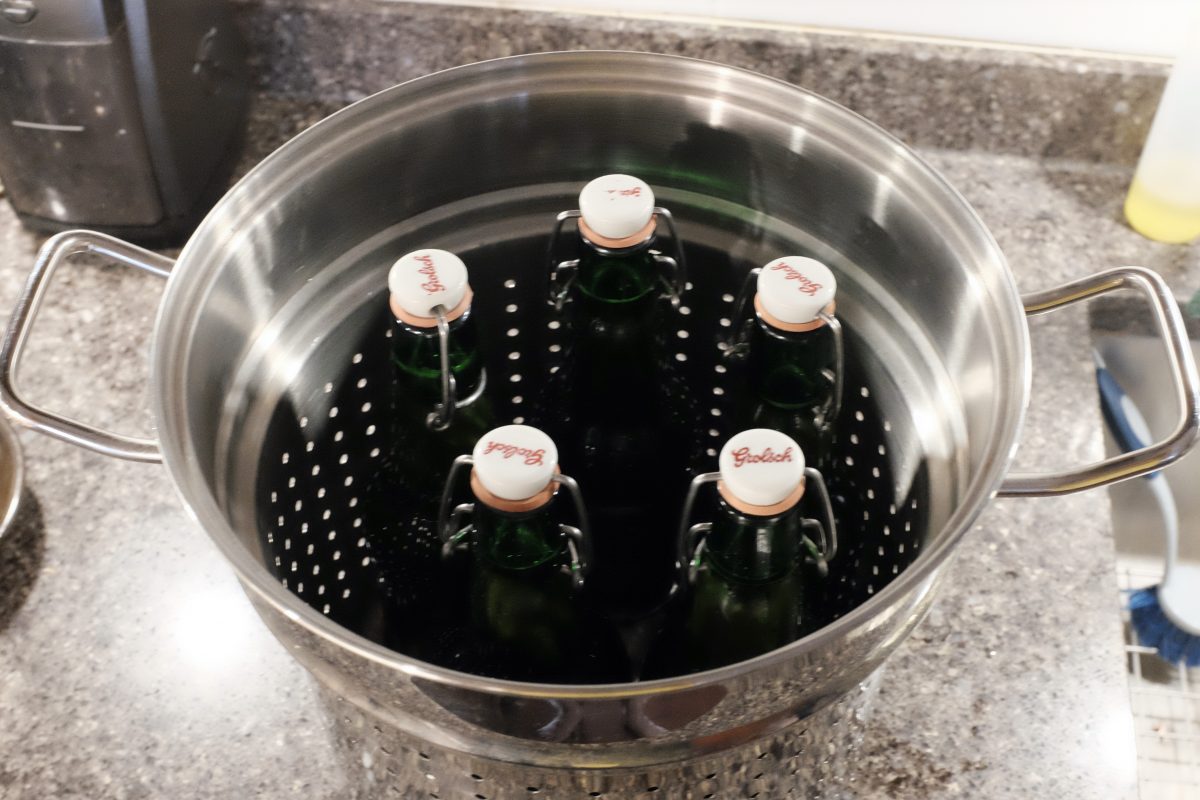
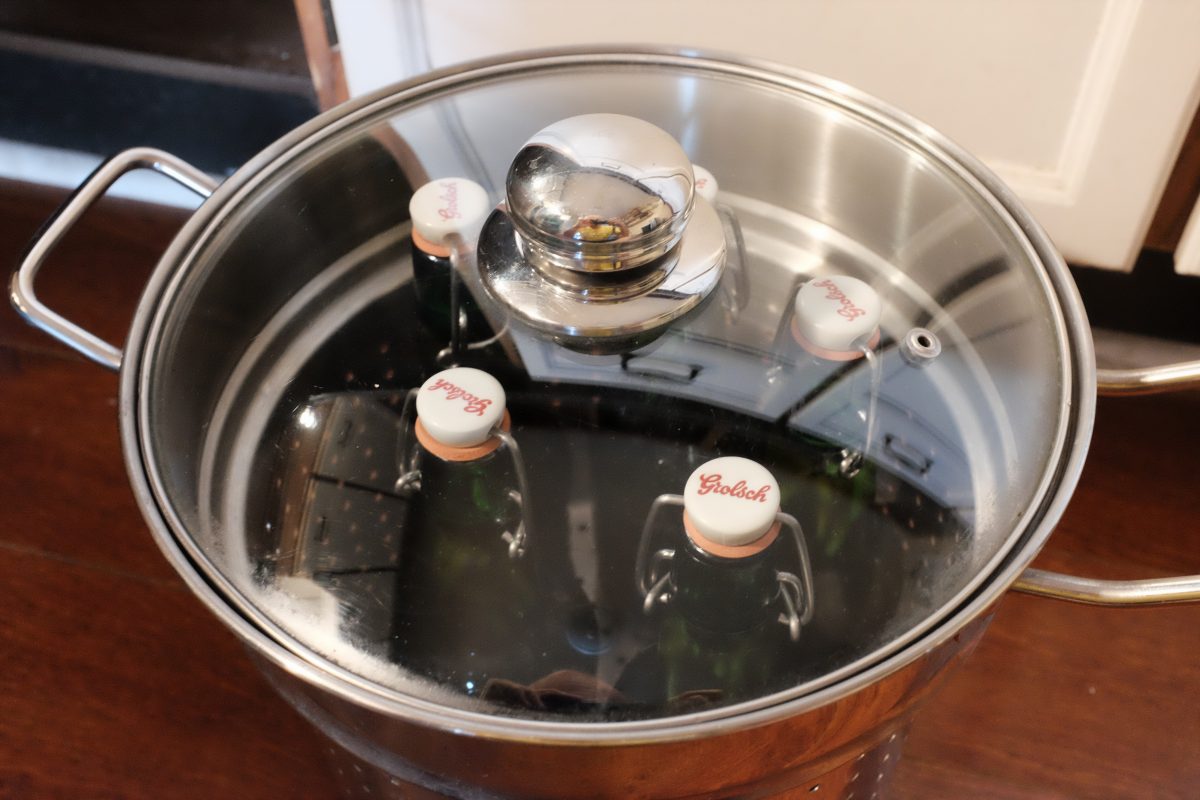
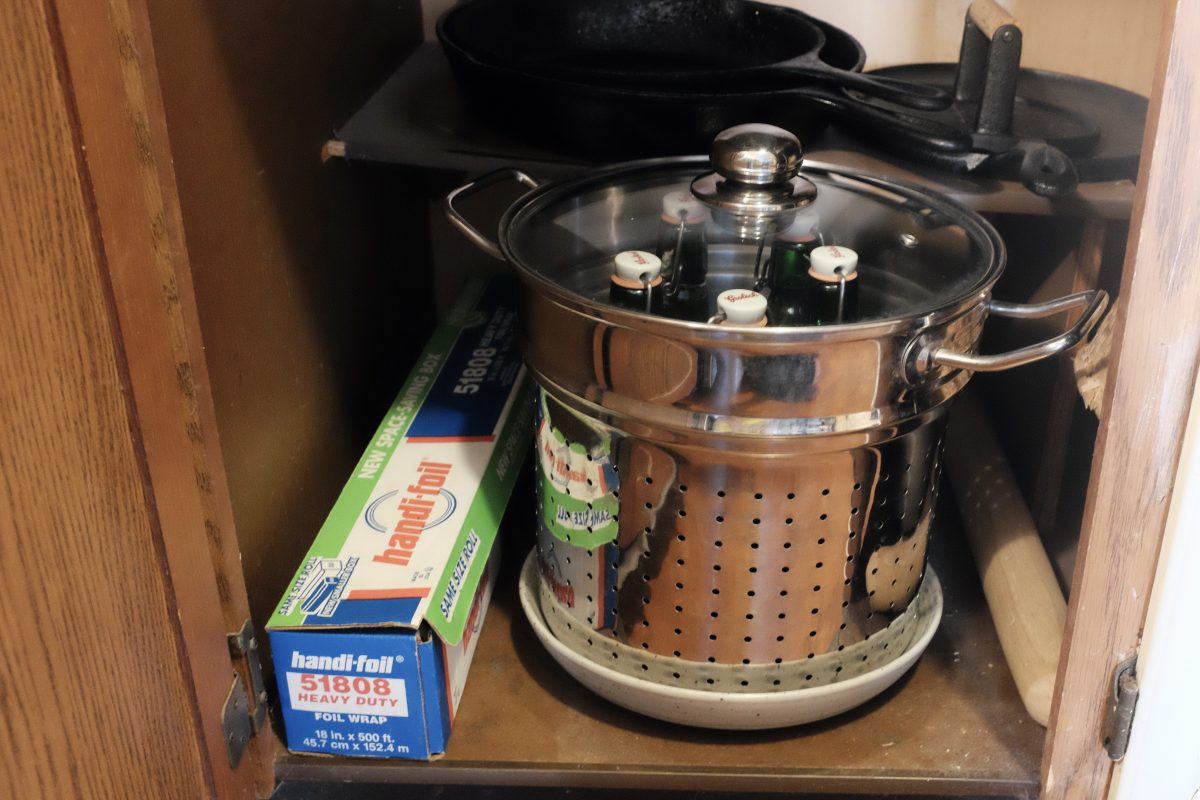
Fresh ginger and dried hibiscus flowers.Peel and slice the ginger. One thick slice per bottle (around a teaspoon).Cut the ginger into matchsticks. It is much easier to get it into and out of the bottles in this shape. I have enough brew for around 5 bottles so I like to sort my aromatics into 5 piles to make sure they are more or less evenly distributed.Place the aromatics into the empty bottles.Fill each bottle leaving a little space at the top.Like this…Make sure caps are clean and tight. These bottles are going to stay at room temperature for another 3 days. During that time, the sugar in the ginger or any residual sugar in the brew will reinvigorate the ferment to some degree. Because I am using glass, I keep my bottles in this deep metal steamer basket just in case one bursts.Cover on too, just in case. There is not much of a risk of a bottle rupturing but, if one of them is chipped or cracked, it is possible. And it makes a huge mess.Store in a cool place…I keep mine in a lower kitchen cabinet out of the way. You might consider setting a reminder in your phone calendar so you don’t forget about them. Mine will stay in here for 3 days or so.
Scoby Storage
Give the fermenting jar a good wash with hot soapy water, dry it and put the SCOBY back in.Add back the 500ml of fermented tea from the brew.Cover and store at room temperature. I usually brew at least once a month. At that rate, the SCOBY stays happy and healthy at room temperature. If you are going to leave it for longer, brew up a small amount of sweet tea to refresh the liquid every 4 to 6 weeks.
3 days later…
After 3 days in the bottle at room temperature, place the bottles in the fridge. The brew is done.
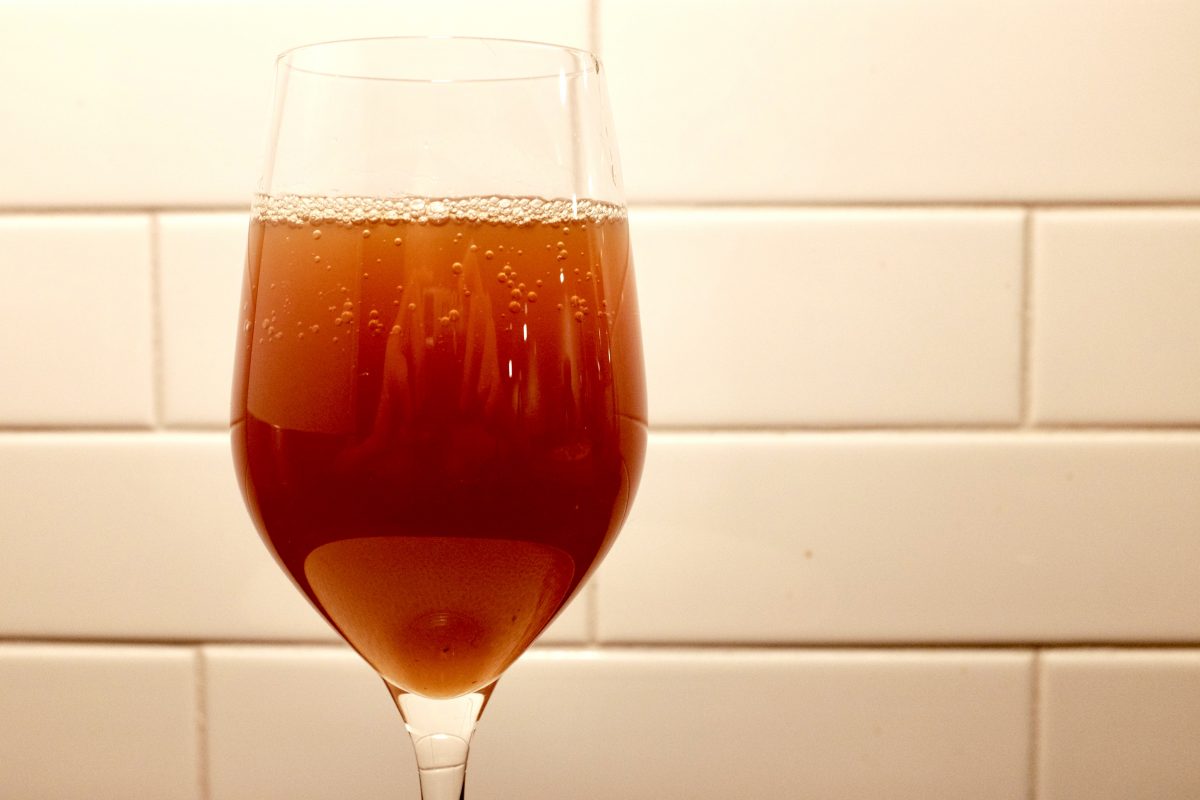
This turned out well. The colour is a nice rosy amber, it smells sweet and tart and the flavour is potent but also refreshing. It’s just a little fizzy. I am not the type of maniac to drink kombucha out of a wine glass, but these are the only clear glasses i have to show off the colour.
The finished brew is perfect as is but, feel free to add a squeeze of lemon or a few drops of honey or anything else you might want to try. If the flavour is too intense, you can cut it with bubbly water. I often do this if I am drinking this with more subtle flavoured foods.
If you have any questions, comments or suggestions, please leave them below. I always look forward to hearing from you. If you enjoy the content and would like to contribute towards website maintenance and development, you can make a donation here. Thank you for reading TigerSalad.