Posts Tagged: japan
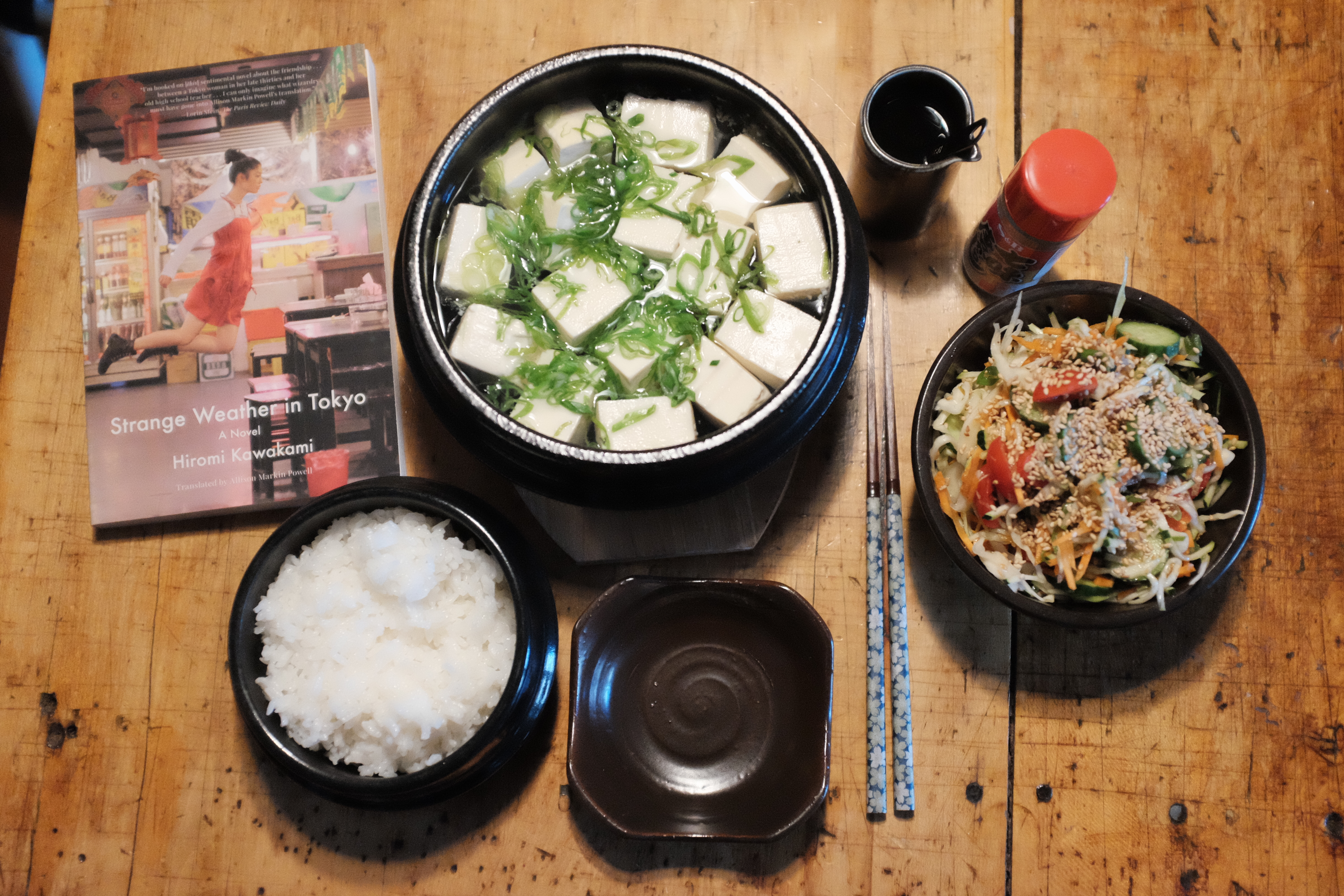
Yudofu (Japanese Hot Tofu)
Strange Weather in Tokyo
I first heard of yudofu while reading a book by Hiromi Kawakami called “Strange Weather in Tokyo”. The main characters are an elderly, retired professor and his former student (now in her late-30s). These two lonely people meet by chance and, over time, they develop a close friendship. Tsukiko and “Sensei” tend to spend a lot of time in small neighbourhood bars drinking and eating. It is here that yudofu comes up over and over (maybe it is one of the author’s favourite snacks?). They seem to enjoy it so often that I wanted to try it myself, as if i was sitting on the barstool next to them and listening in to their conversations.
Japanese Cooking
I have been a professional chef for most of my life. During that time I have had the opportunity to see some elements of Japanese-fusion cooking while working in fine-dining kitchens. And, of course, I witnessed the late 90s/early 2000s sushi boom in North America. But, apart from that, this cuisine always seemed kind of mysterious to me. I was learning to cook at a time when big, bold flavours were en vogue and high-intensity was paramount. So the more subtle and straightforward flavours of Japanese cuisine were much less familiar.
My Japanese Kitchen
During one period in my own restaurant, through a mix of circumstances (many working-holiday visas and increased eligibility for permanent residency if you were a cook), I ended up hiring a kitchen brigade of mostly Japanese cooks. At the same time, the front-of-house ended up with a large number of temporary Japanese support staff, running food and clearing tables. We had so many workers from Japan that, on more than one occasion, I had to ask them to please speak English (instead of Japanese) so that I could keep up with what was going on in my own kitchen! haha
The most inexperienced cook I have ever hired worked so hard that she quickly became the best and most reliable cook I have had through the kitchen. As my second in command, Ayuko brought weird and wonderful specials to the night menu: ethereal jelly dishes, made to order fresh spring rolls: so popular that it may have been the first time I ever heard her swear in English (“oh fuck..more fucking spring rolls?!? fuck”) Happy days!
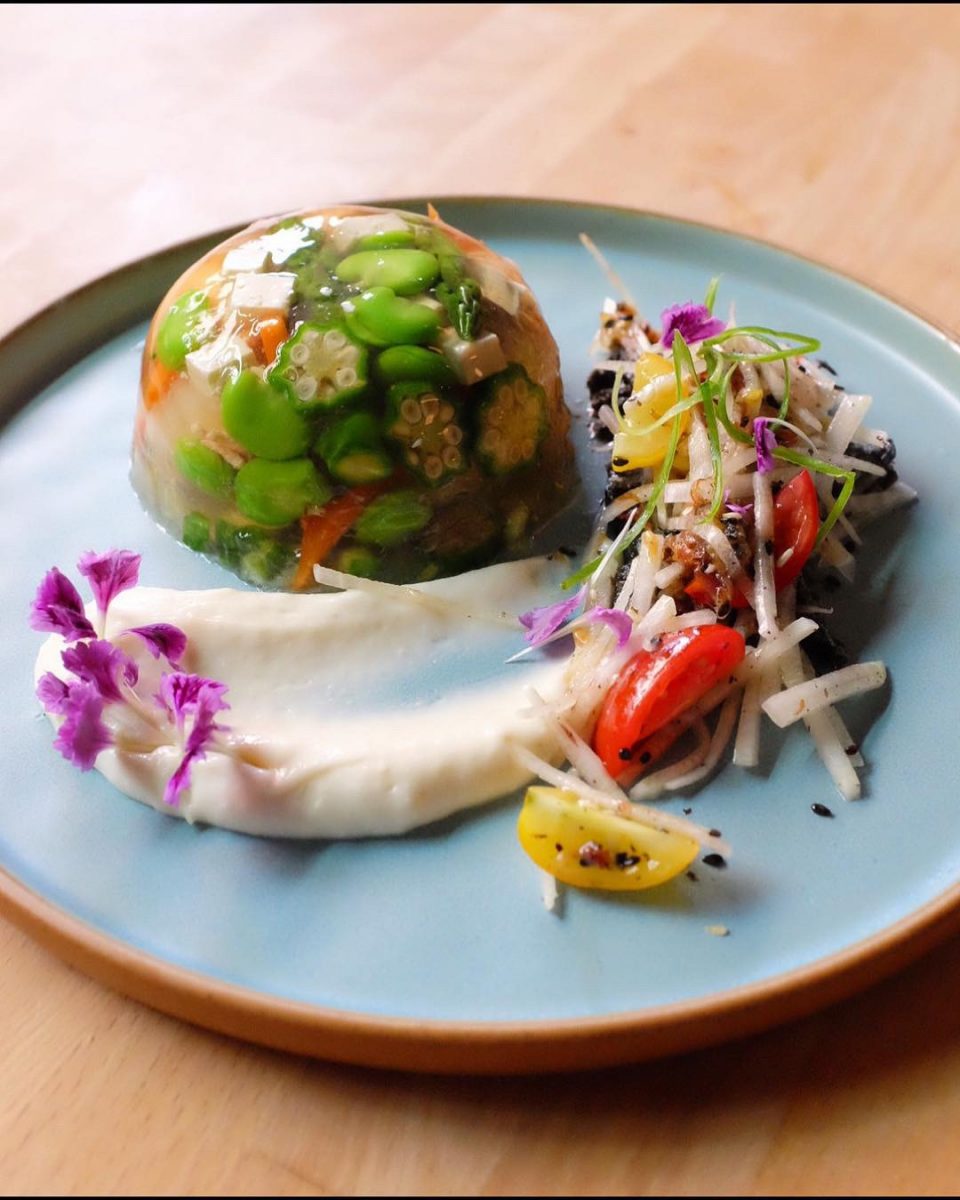
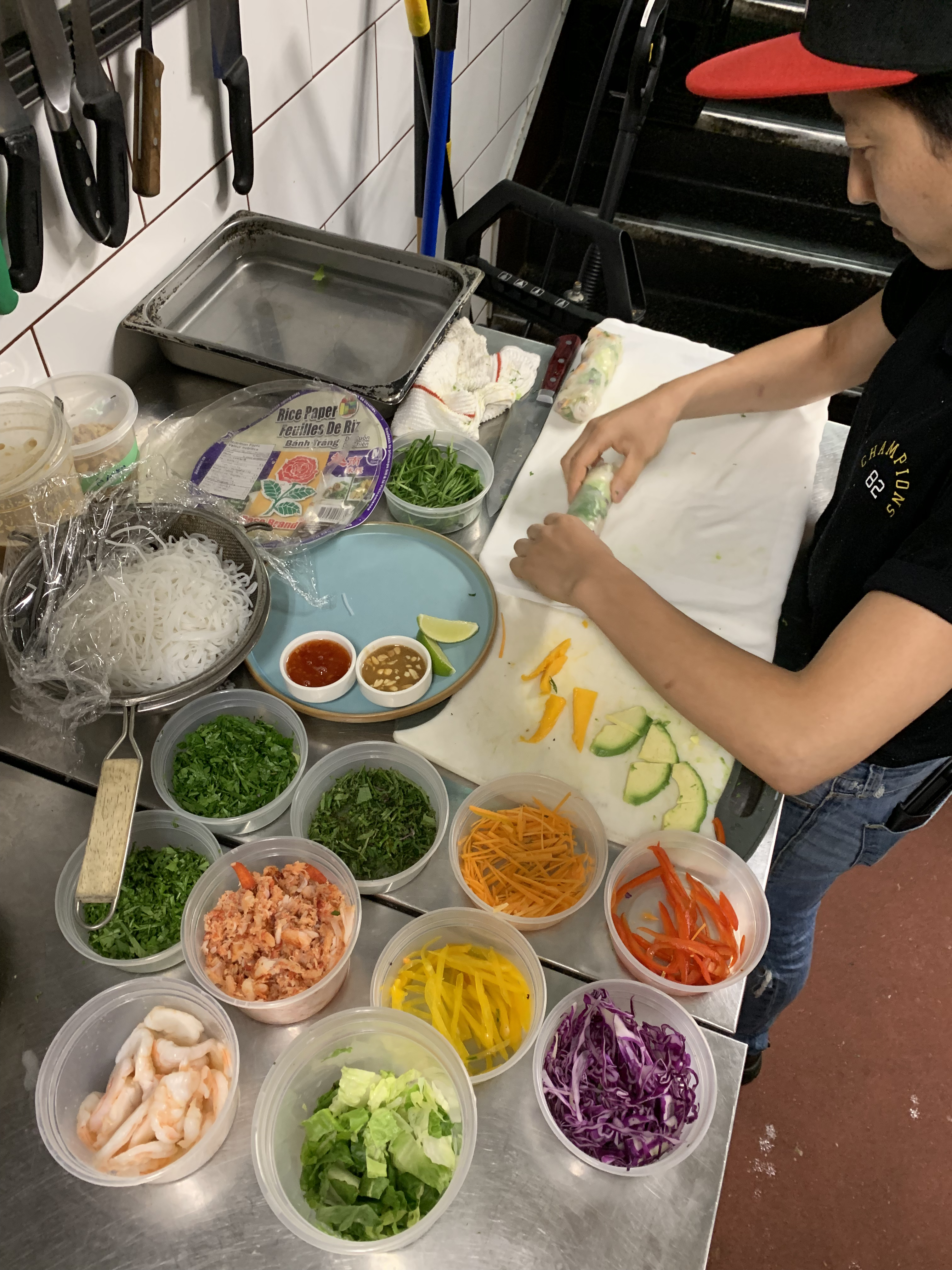
As a chef, these were some of the most happy, relaxed and productive days I have ever spent running a kitchen. The food was cooked with pride and precision. The plating was clean and beautiful. Everyone worked hard together as a supportive team to produce the best plates possible everyday. And all with no pushing needed from me. What a dream! On top of this, the staff meals the cooks produced were outstanding. It was here that I first tried things like ochazuke (rice with green tea) or really premium grilled onigiri (rice balls). It opened my eyes to how something subtle but still delicious could be made with just a few fresh ingredients.
Where to find good Japanese recipes in English
Considering how popular Japanese cuisine has become, it is surprisingly difficult to find good sources for recipes (for English speakers anyways). So, I was happy to discover the website Just One Cookbook. This is a wonderfully organized site with picture-heavy directions (just like mine) and logical, step-by-step recipes for hundreds of Japanese dishes.
There are not many cooking sites that I would personally recommend but, this one is truly outstanding. The recipe I am posting here is adapted from their website. The sauce is almost identical. All credit to Just One Cookbook. I am posting my recipe here because I eat it so often and want to make it part of my own personal recipe collection. Go check out their website. There is so much to learn and so many good things to eat!
Yudofu recipe
This is a very straightforward recipe, the one I make all the time. It is very easy and quick and delicious.
Ingredients:
- 1 block (around 400gr) silken tofu
- 3-4 small squares of kombu
- 1 teaspoon diamond kosher salt
- 2 tablespoons sake
- 1 or 2 green onions
- 500ml water (or enough to cover tofu in pot)
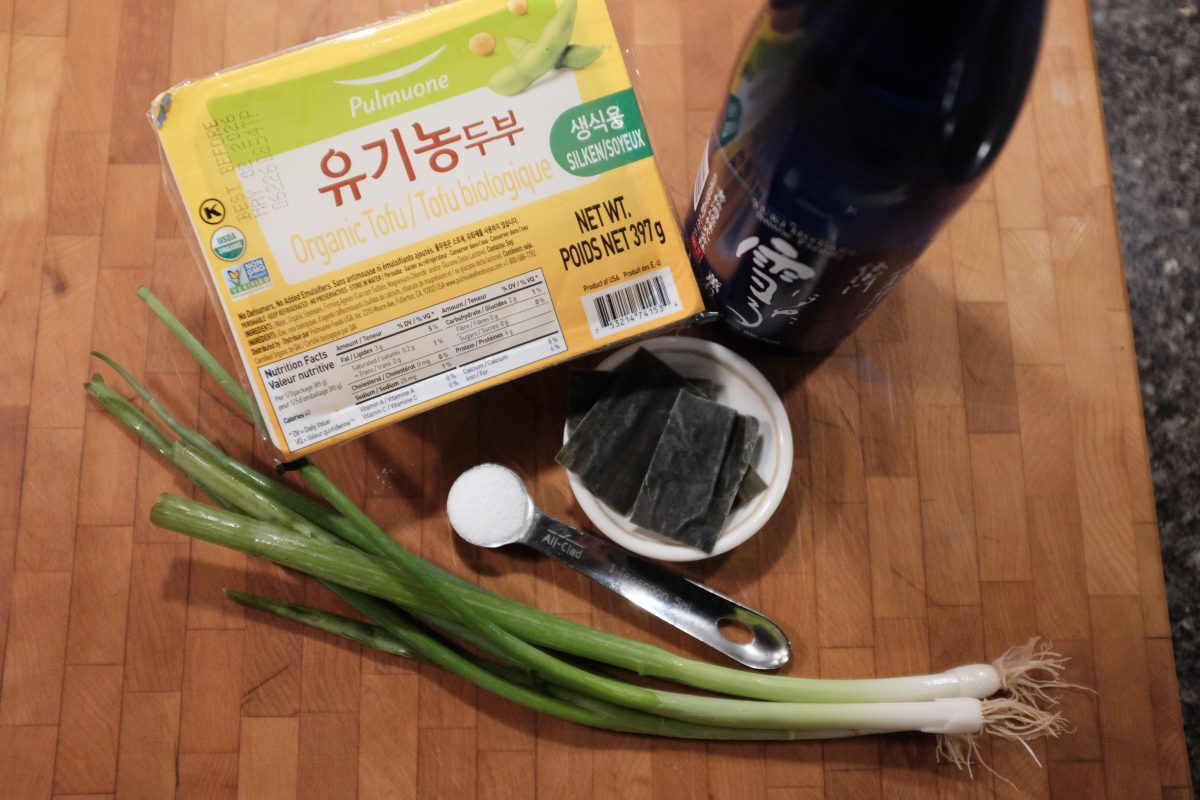
I like the texture of silken tofu and, if handled carefully while preparing, it won’t fall apart. Once it is cooked in the broth it firms up enough so that I can easily pick it up with chopsticks. If you can’t find silken tofu or if you like a firmer tofu, you can use that instead. Experiment with different brands and find one you like. I use this organic Pulmuone tofu which I can get easily at the local Korean grocery. They also make a “sprouted tofu” which is slightly sweeter with more nutrients and protein. It is worth trying too if you can find it.
Leave out the green onion or substitute it with another herb if you like. I have tried flat-leaf parsley and minari (korean watercress) which are both very good in this recipe. I have also tried mitsuba (Japanese parsley) which was delicious but hard to find and expensive.
Kombu is dried kelp. You can find it in little squares or big sheets in any Asian grocery store.
Process:
To make the broth, soak the kombu in around 500ml of fresh cold water for about 2 hours. If you are short on time, you can also make this by dropping the kombu into barely simmering water for 15 minutes or so.
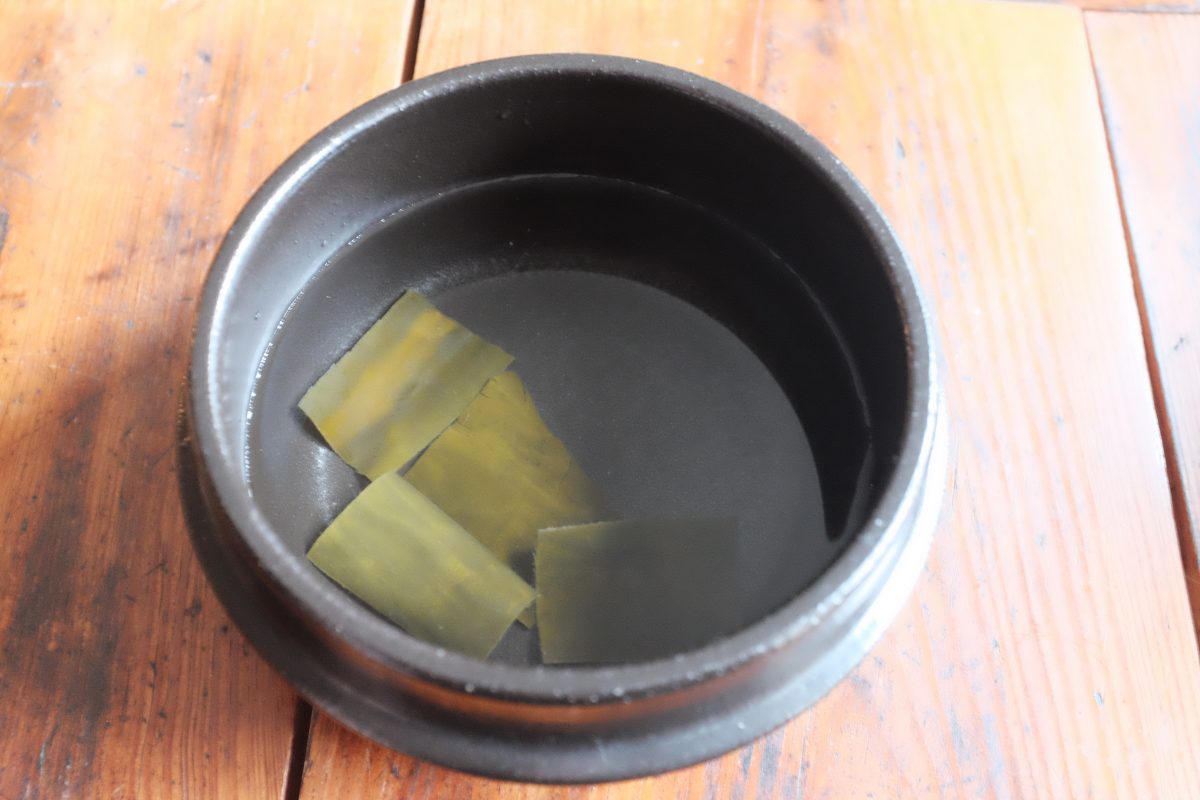
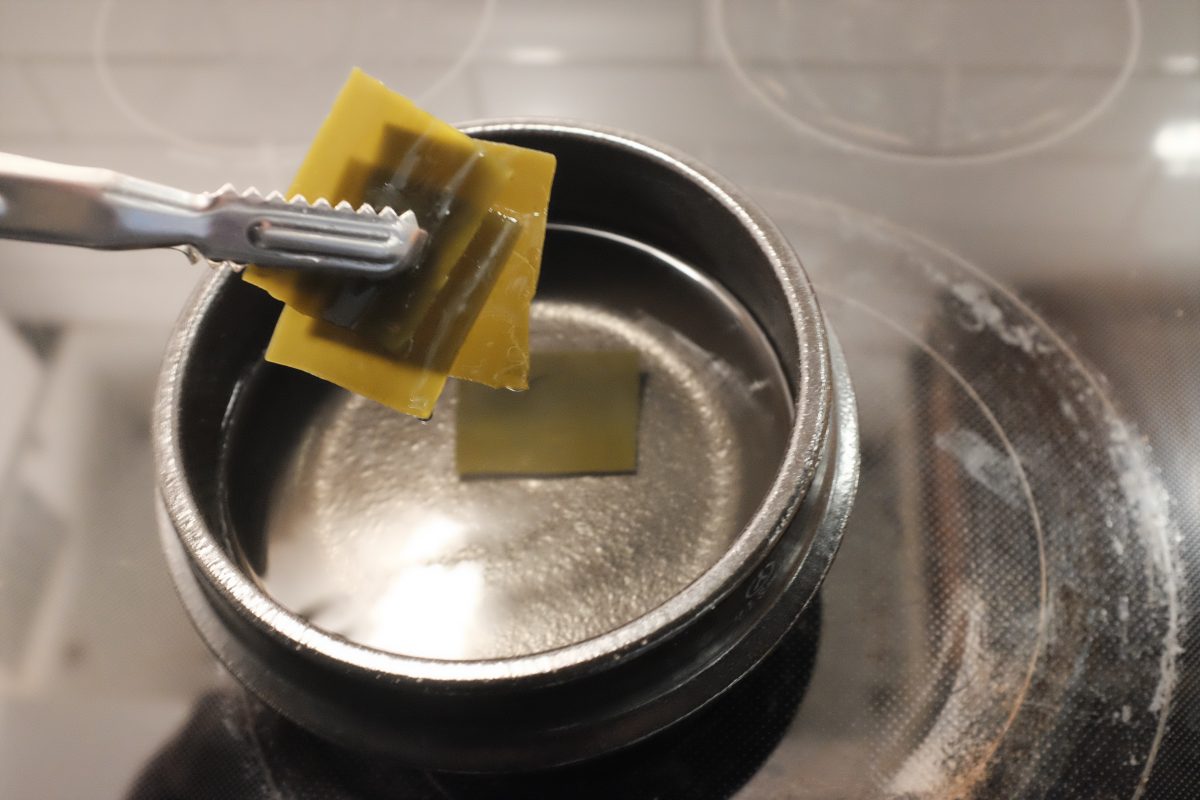
After the cold or warm steeping time, remove the kombu…
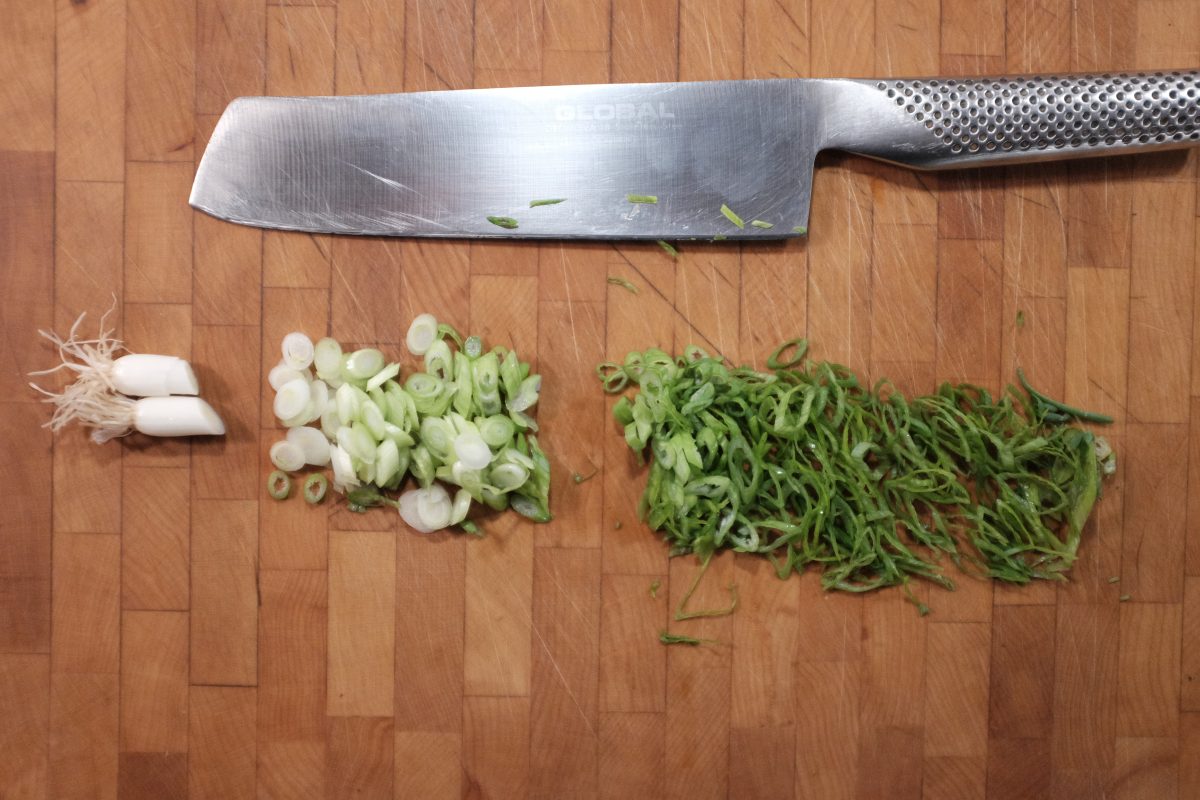
Chop green onions
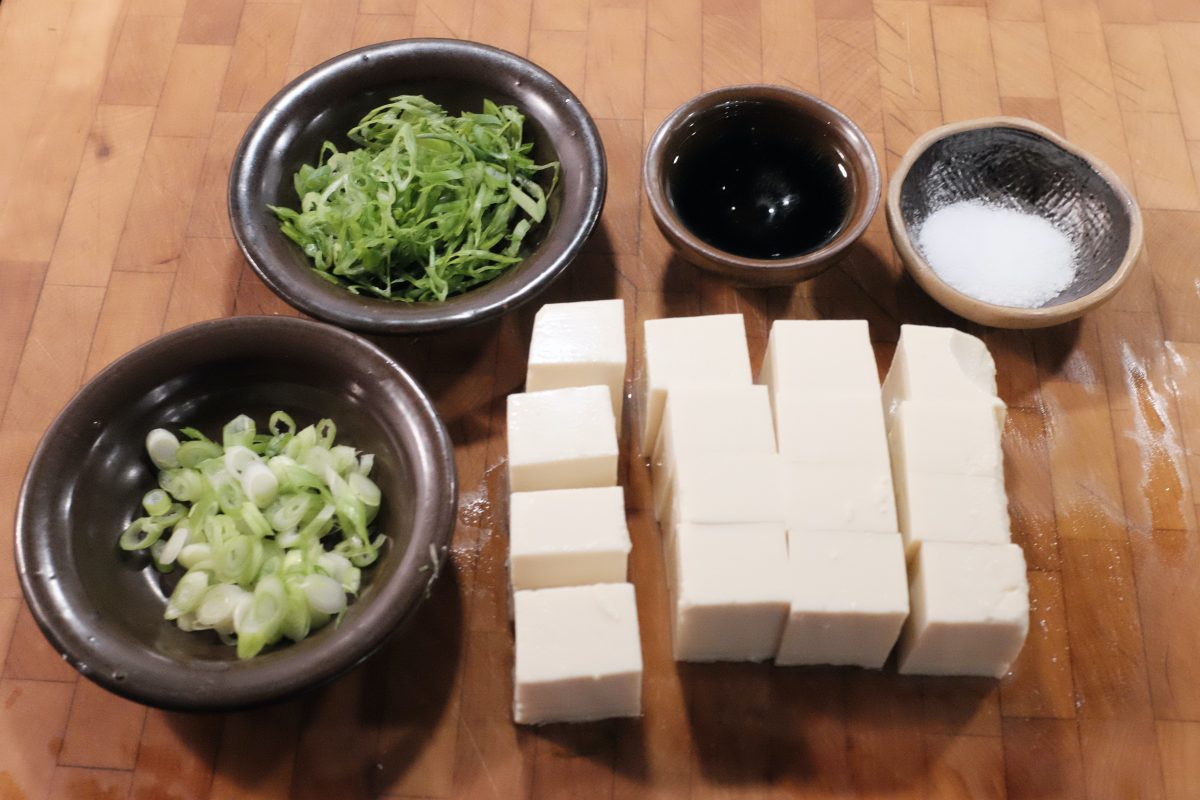
Green onions, sake, salt and tofu. I like my tofu in bite sized pieces that I can pick up with chopsticks but you can cut it any way you like. You can even cook the whole block of tofu and scoop it out with a spoon later.
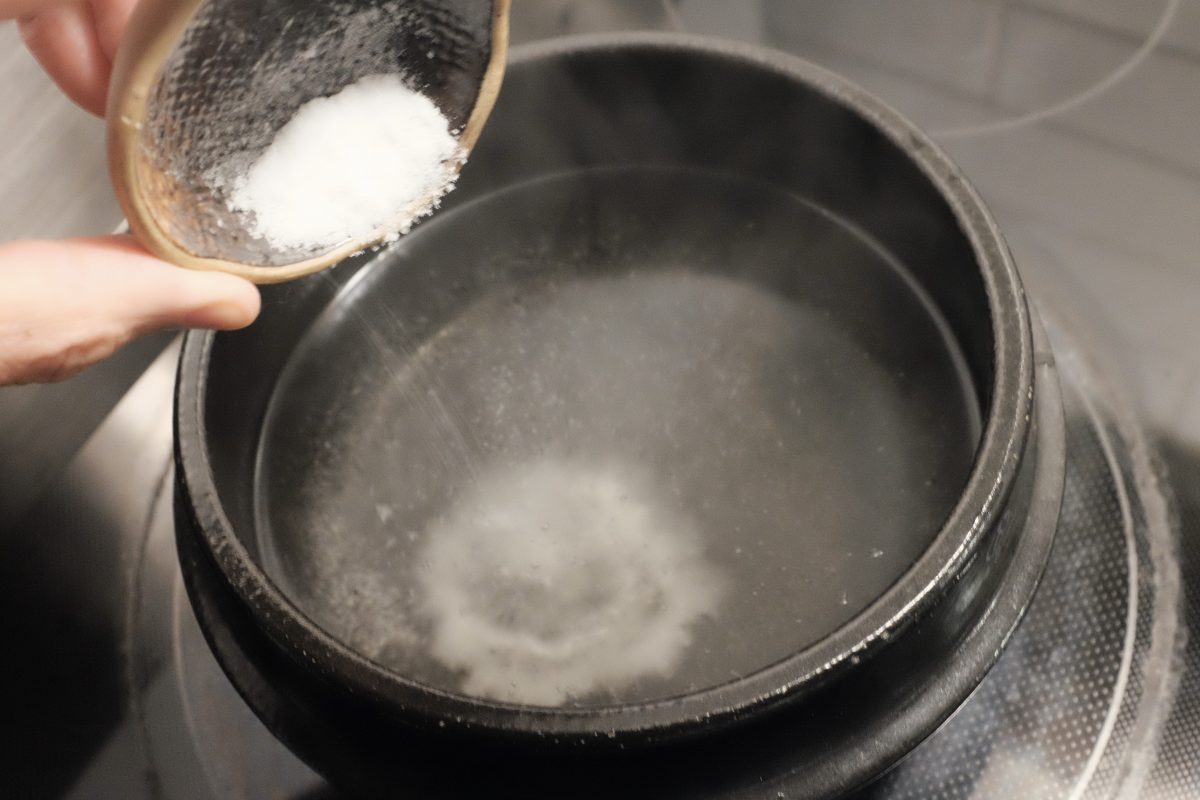
Heat the broth until just boiling then add 1 teaspoon kosher salt
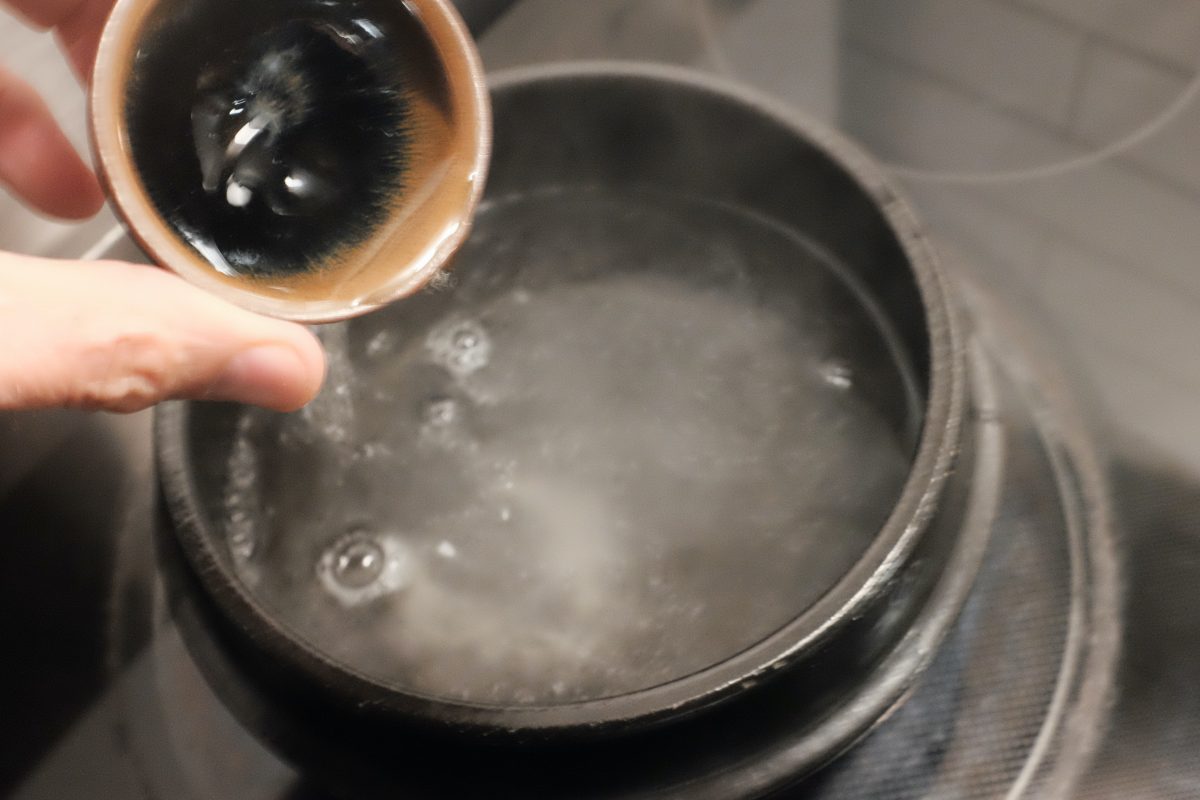
Add 2 tablespoons sake
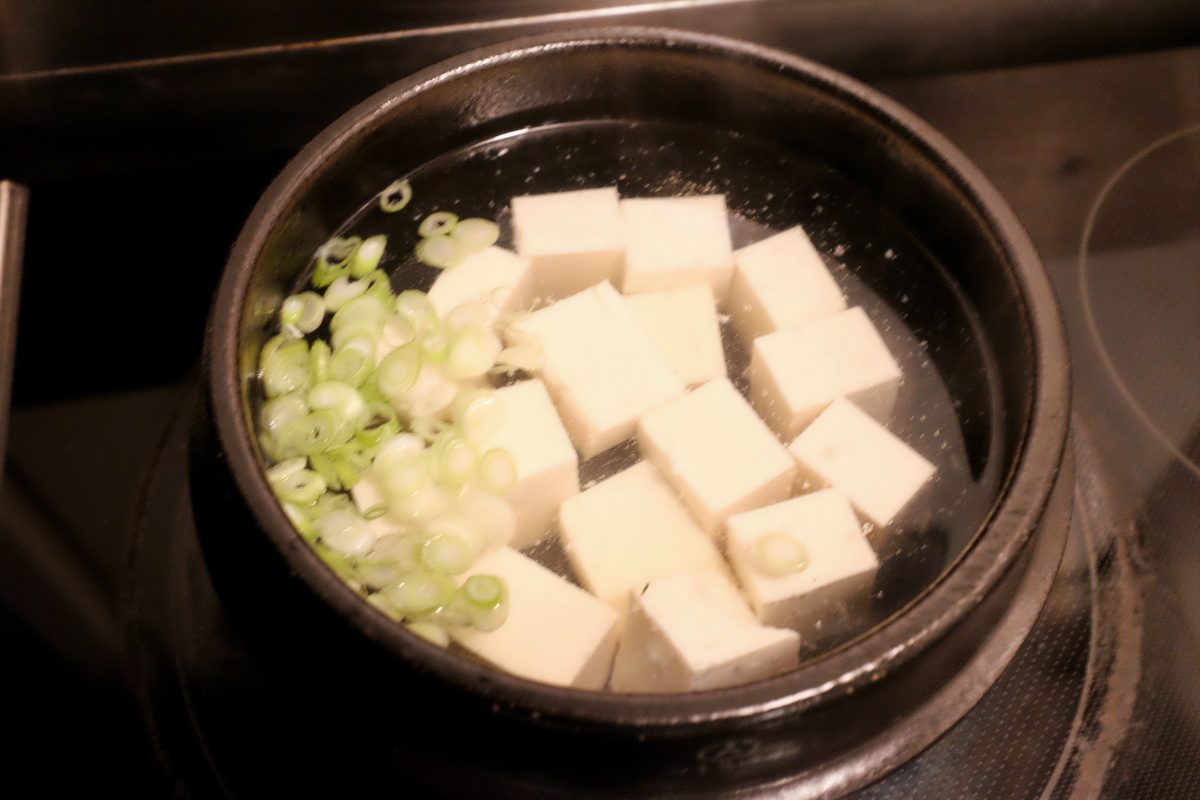
Add tofu and green onion white parts. Turn the heat down to medium low and let it go until tofu is warmed through. With the tofu I am using, it usually swells up a little and starts to float to the top.
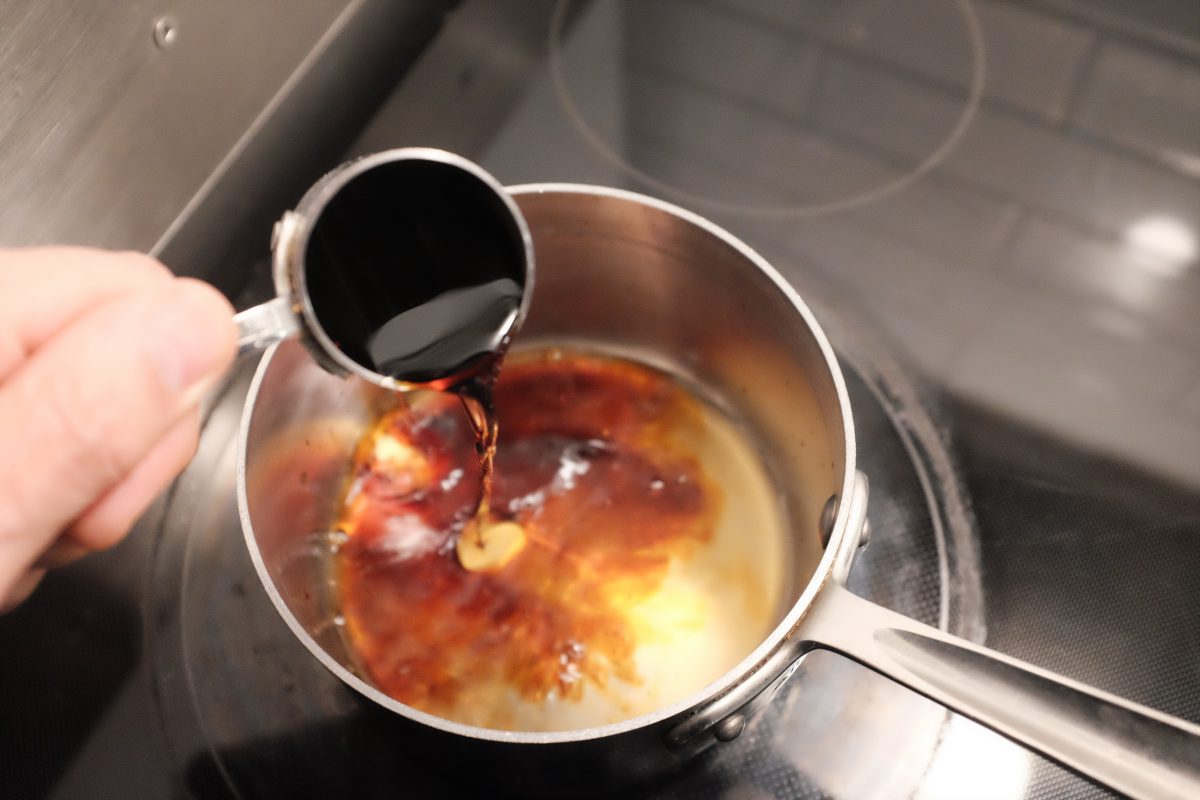
While you are warming your tofu, you can make the sauce. This can also be made ahead of time and stored airtight in the fridge for a long time. You won’t use the whole recipe for one tofu block so store the leftover sauce for next time.
The Sauce
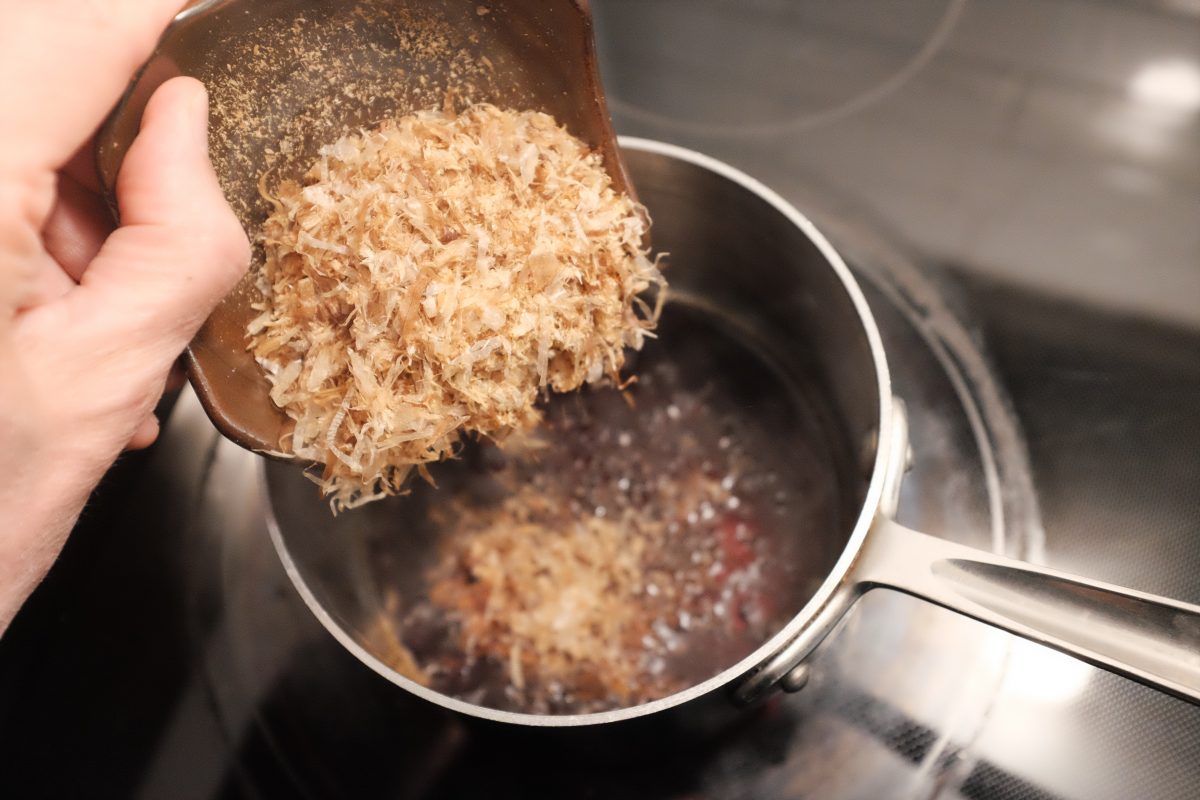
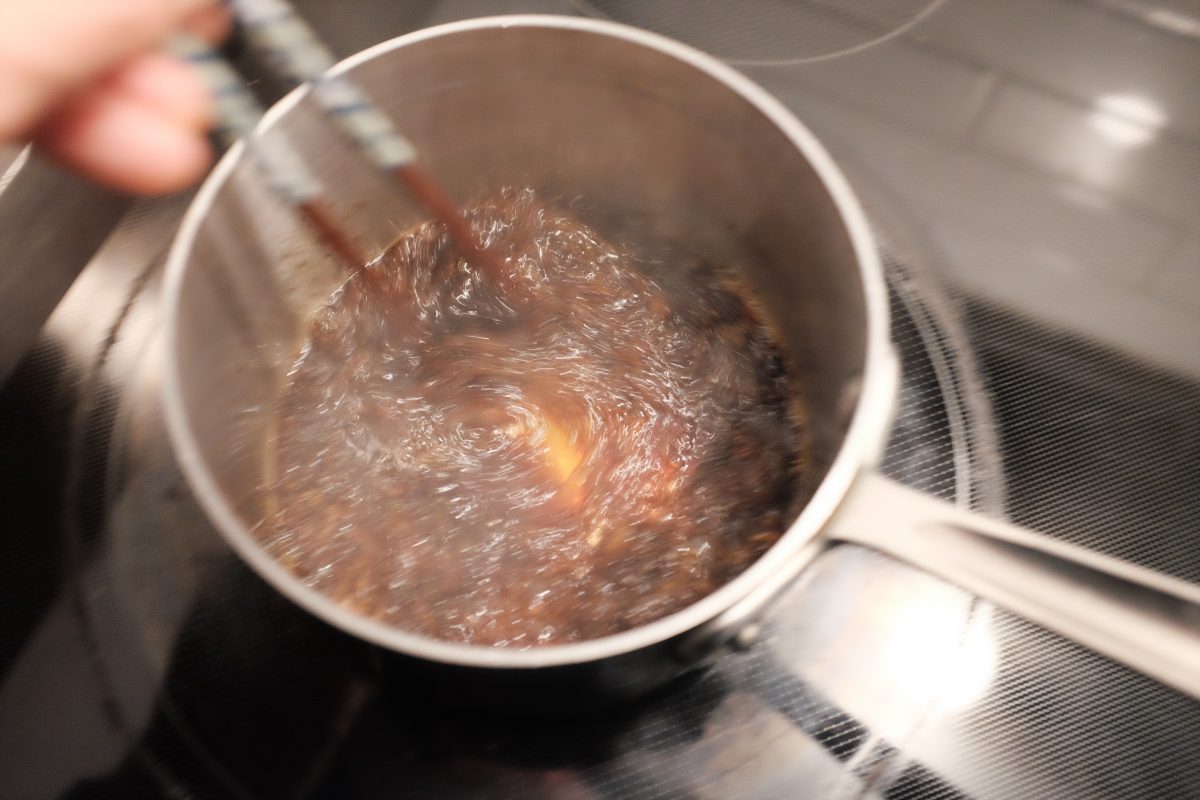
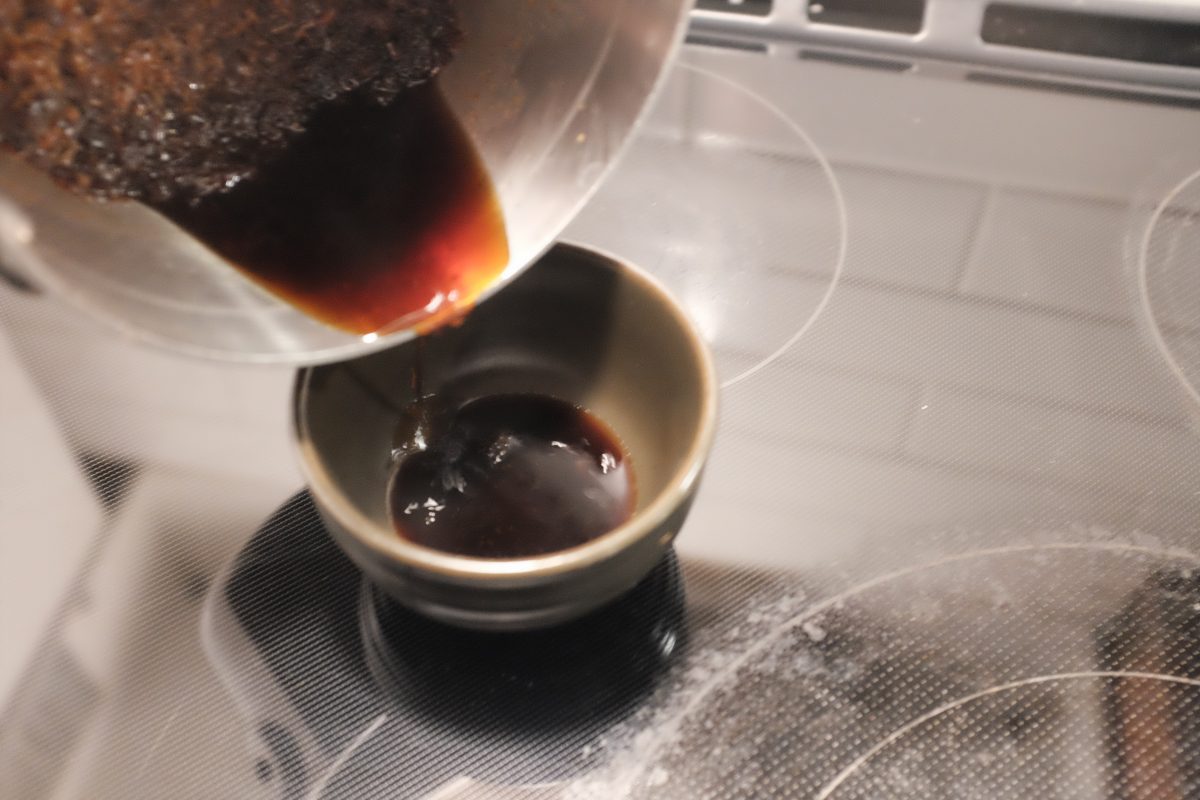
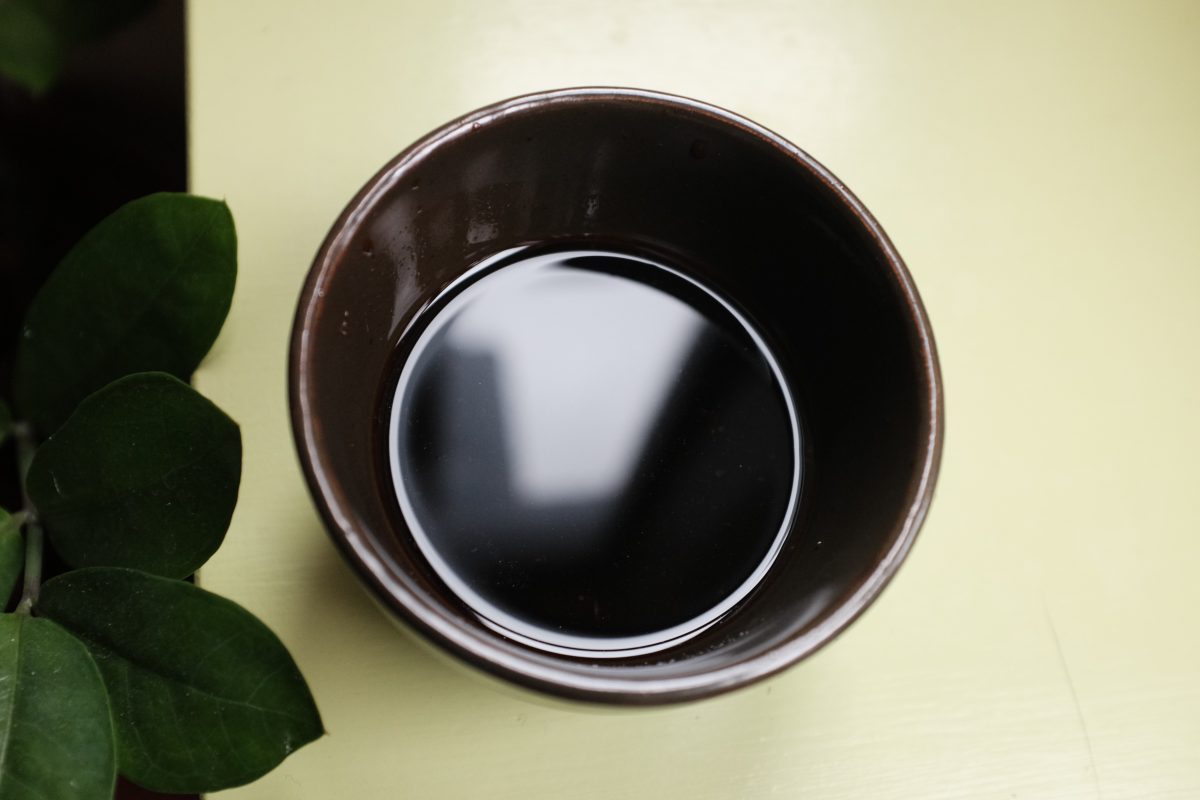
This is the sauce recommended on Just One Cookbook and it is a perfect accompaniment for this hot tofu. I add just a bit more mirin…
Sauce ingredients:
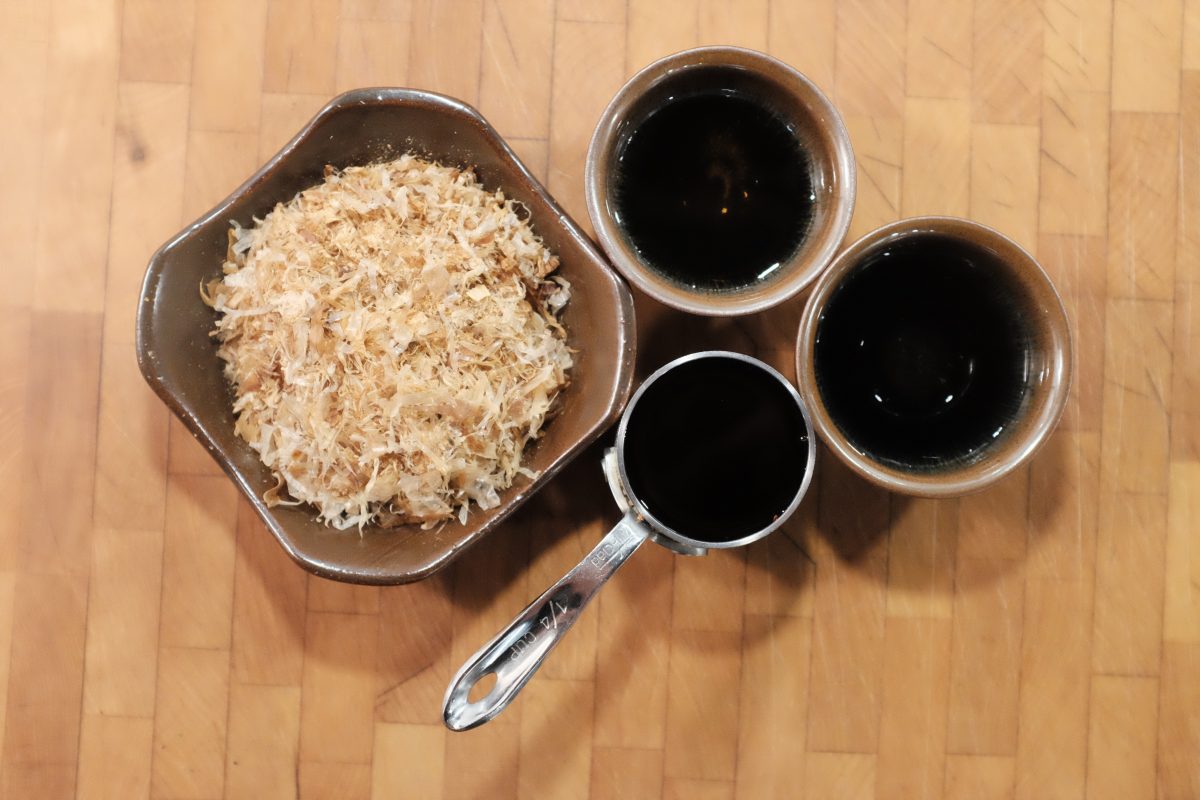
- 1/2 cup bonito flakes (katsuobushi)
- 1 tablespoon (15ml) sake
- 1 tablespoon (15ml) mirin
- 1/4 (60ml) cup soy sauce
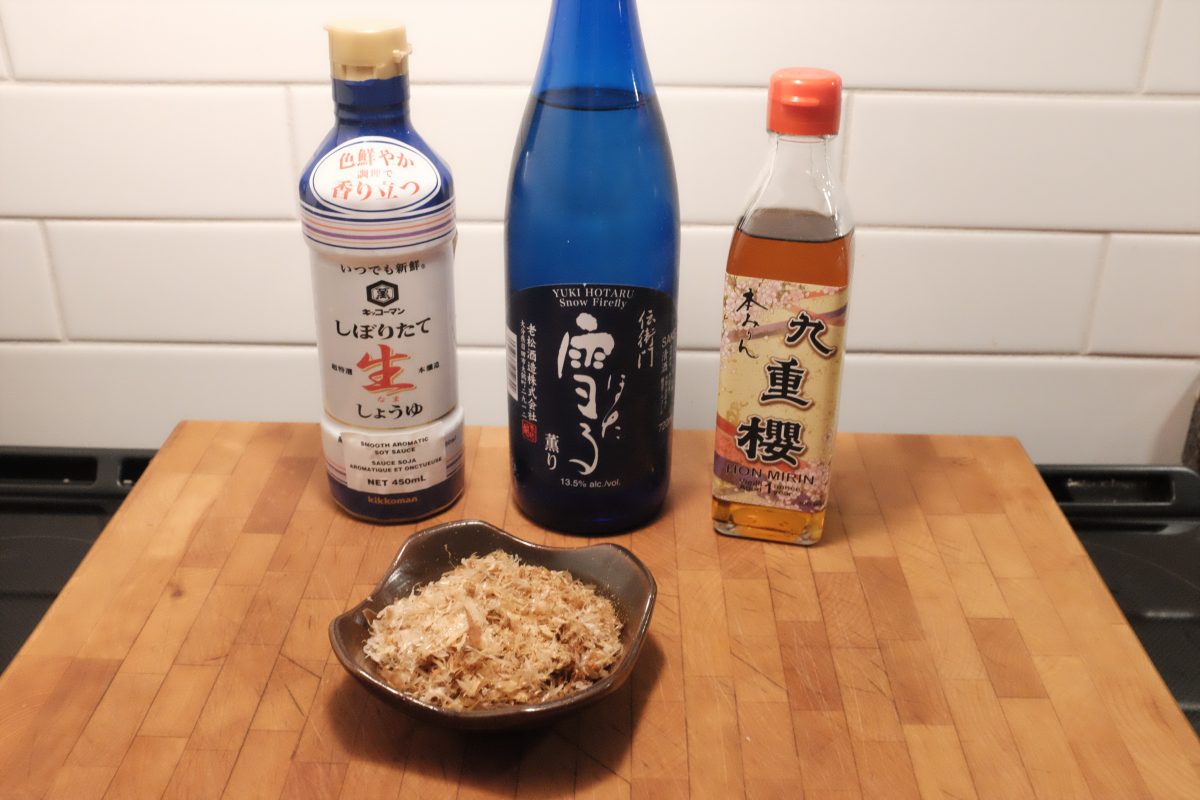
Use a good quality Japanese soy sauce. I like this made-in-Japan Kikkoman for cooking. It is very tasty and not too expensive. The sake I used is a little fancy for cooking but my local booze shop was out of the cheaper one that I normally use. Avoid using “cooking sake” which is salted and tastes well…bad. If you wouldn’t want to drink it, I would avoid cooking with it. I would say the same thing about wine in Western cuisine.
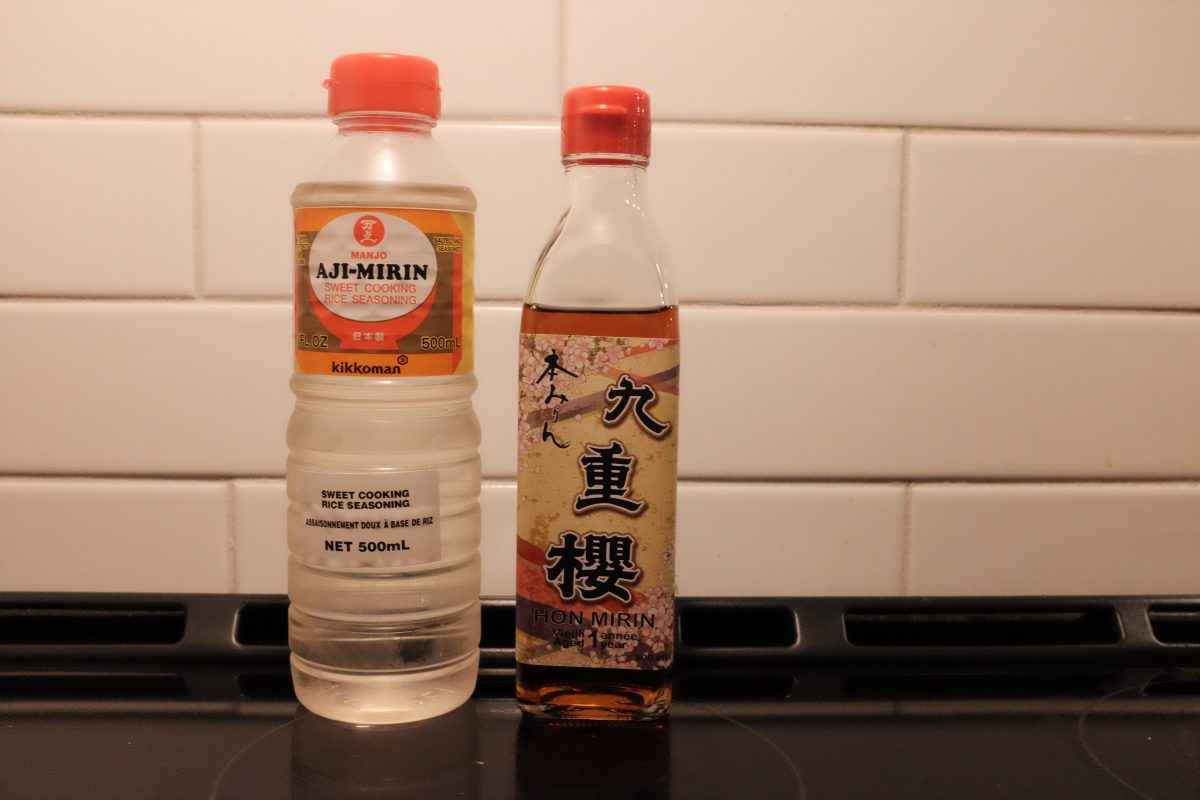
about mirin…
At least around me, good mirin is very hard to find. Hon-mirin is a real fermented rice wine. It is delicious as it is and is great to cook with but…nearly impossible to find and expensive. Aji-mirin is in most grocery stores. This is a cheap cooking alcohol, sweetened with corn syrup and flavoured to taste something like mirin. It is not ideal but it is most often the only one around. If there is no alternative it works fine here.
Sauce process
Serve with your favourite sides…
I am having yudofu with a side of fresh salad and white rice. Sauce is in the little pitcher and togarashi spice for a touch of heat.
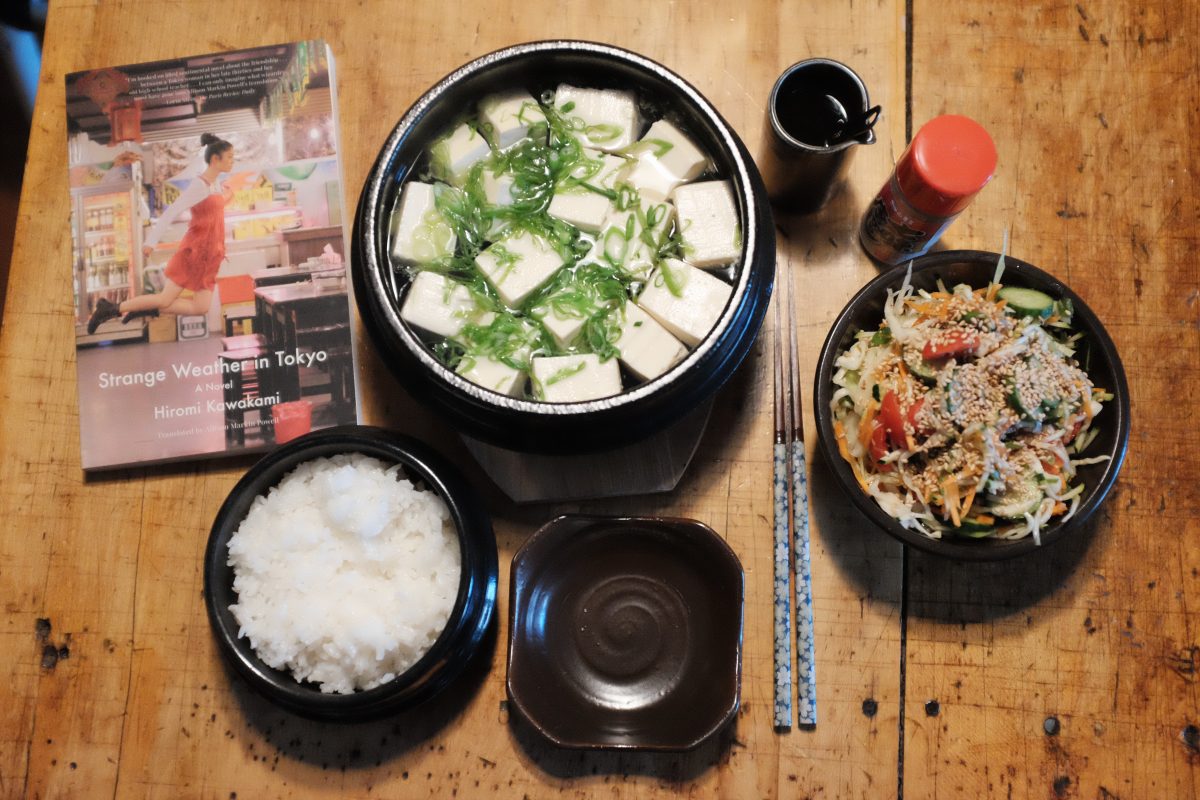
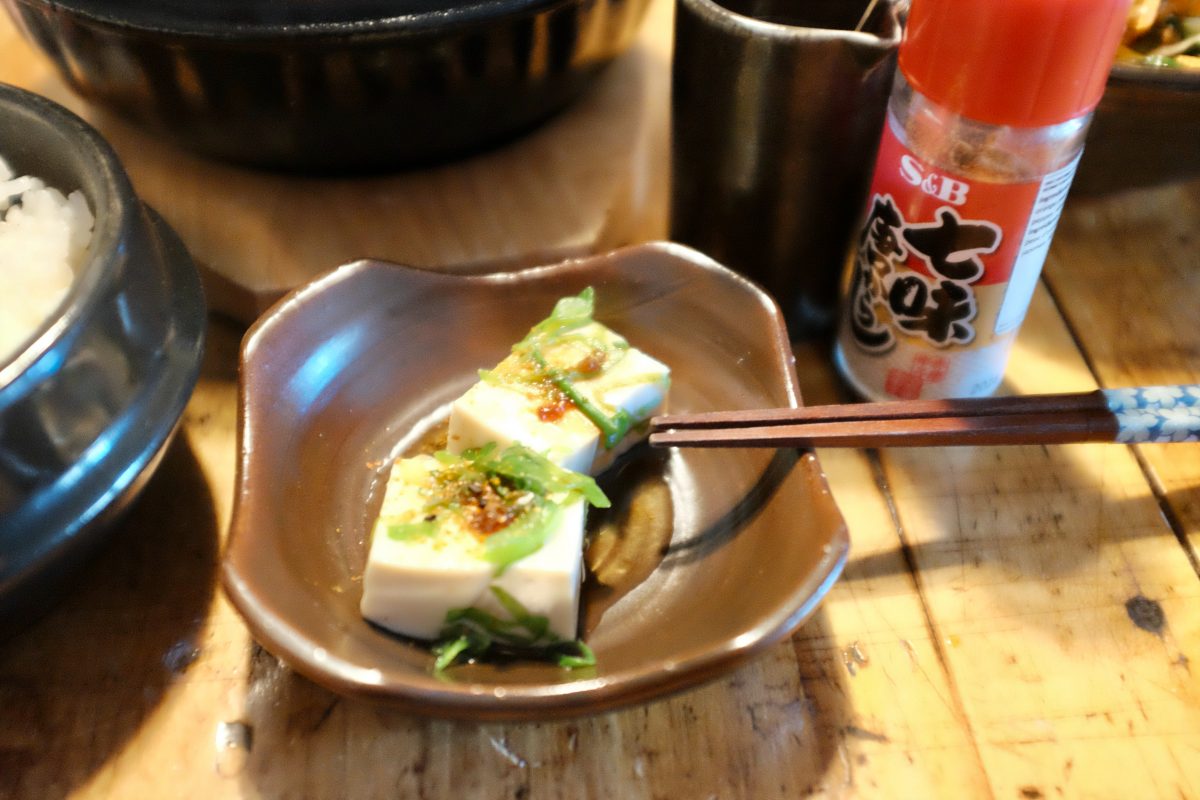
When I eat tofu, it is usually as a side or as a minor ingredient in a bigger dish. This yudofu is the only time that I really enjoy tofu as the centre of the dish. The warm and creamy texture with the savoury salt of the bonito and soy sauce is incredibly satisfying. I eat this almost once a week these days.
If you have any questions or comments please feel free to leave them in the space below. I always look forward to hearing from you. If you want to know where I found real mirin in Toronto, send me a message through the contact form.
If you enjoy the content and would like to contribute towards website maintenance and development, you can make a donation here. Thank you for reading TigerSalad.
Haku ハク。
Who is Haku?
In 2019 Osaka Japan, four young women met at a vocational school club that teaches instruments to high school students. One of their advisors suggested that they join up to form a band and Haku was born. The circle punctuation mark at the end of Haku’s name in Japanese reflects these roots, symbolizing the “circle” where they first met. (these types of clubs are referred to as “circles” in Japan)
Haku released their first single in 2020 and by 2021 they had won the grand prize at a Kansai prefecture talent contest. Attention in Japan started to grow as the band released more music and played live shows. Haku hosts an annual “Haku Day” on August 9th, inviting their favourite musicians to play with them in Japan, drawing inspiration from their fellow artists.
Recently, at the request of fans outside of Japan, Haku has begun playing international shows. They played their very first overseas show in Korea. Singapore was next and, in September 2025, Haku made their North American debut in Toronto, Canada as part of the Next Music From Tokyo showcase.
Releases
In their seven year career, Haku has released a steady stream of singles, EPs and two albums.
- Blue Girl single, 2021
- 本物 / honmono, single, 2021
- ワタシ / watashi, single, 2021
- 収録曲 / hitonatsu, single, 2021
- ふたり基地 / hutari kichi, single, 2021
- 若者日記 / wakamono nikki, mini-album, 2022
- ナイーブ女の子 / naive girl, single, 2022
- 無題 / mudai, single, 2023
- 直感way, chokkan way, single, 2023
- 僕ら / bokkura, EP, 2023
- 僕らじゃなきゃだめになって / Bokurajanakyadameninatte, single, 2023
- 自由のショート / jiyuu no short, single, 2023
- 僕らじゃなきゃダメになって / Bokurajanakyadameninatte, album, 2023
- dedede, single, 2024
- 頭の中の宇宙 / The Universe of my Mind, single, 2024
- あいっ! / Ai!, single, 2024
- Catch, EP, 2025
- 南新町 / minami shinmachi, single, 2025
- それしか言えない / soreshika ienai, single, 2025 (***this marks Haku debut on major label Toy’s Factory)
- 夢中猫 / Patapata Cat, single, 2025
- ふわ輪 / Fuwa Rin, single, Feb 2026
- 世界 / Sekai, EP, March 4th, 2026
Just Released! :
Digital Single “宇宙船ハート号” / “The Spaceship Heart”, June 3rd, 2026
***first full length album on major label Toys Factory set for September 9th, 2026.
Physical Copies (CDs) of Haku Releases
If you are outside of Japan, you can now order directly from Tower Records. Fill in search bar as normal and you should get a pop-up for “WorldShopping”. This is a 3rd party shipping service associated with Tower Records in Japan. Shipping rates are surprisingly reasonable.
Haku lineup:
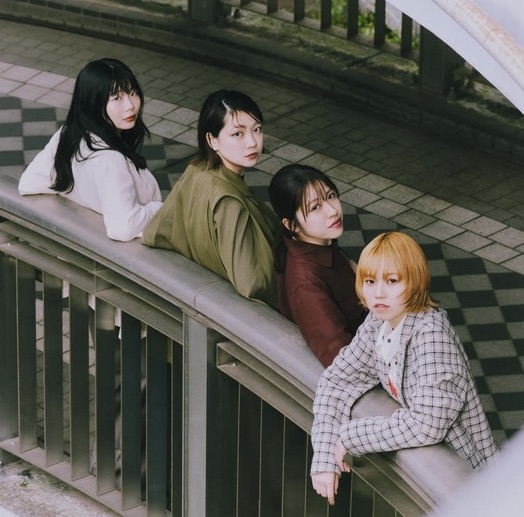
- Nazuna (なずな) – Lead Guitar
- Kano (カノ) – Bass and Backing Vocals
- Mayu (まゆ) – Drums
- Ai (あい) – Lead Vocals and Rhythm Guitar
Haku everywhere!
Largely unknown outside of Japan, Haku became famous globally with their cover of Mono No Aware’s かむかもしかもにどもかも! The catchy nonsense-lyric tongue twister was released on YouTube in Haku’s trademark vertical frame practice-session format. The popularity of the video sparked a massive social media following and requests from fans around the world for overseas live shows. Local Haku shows also began to attract foreign fans who were travelling in Japan. Fans started sending them videos of themselves mimicking Ai’s groovy dance. Below is the original video of Haku covering the Mono No Aware song. As of this writing, it has over 16 million views.
Next Music from Tokyo vol 17
Late this summer, Haku made their North American debut in Toronto, Canada at Next Music From Tokyo Volume 17.
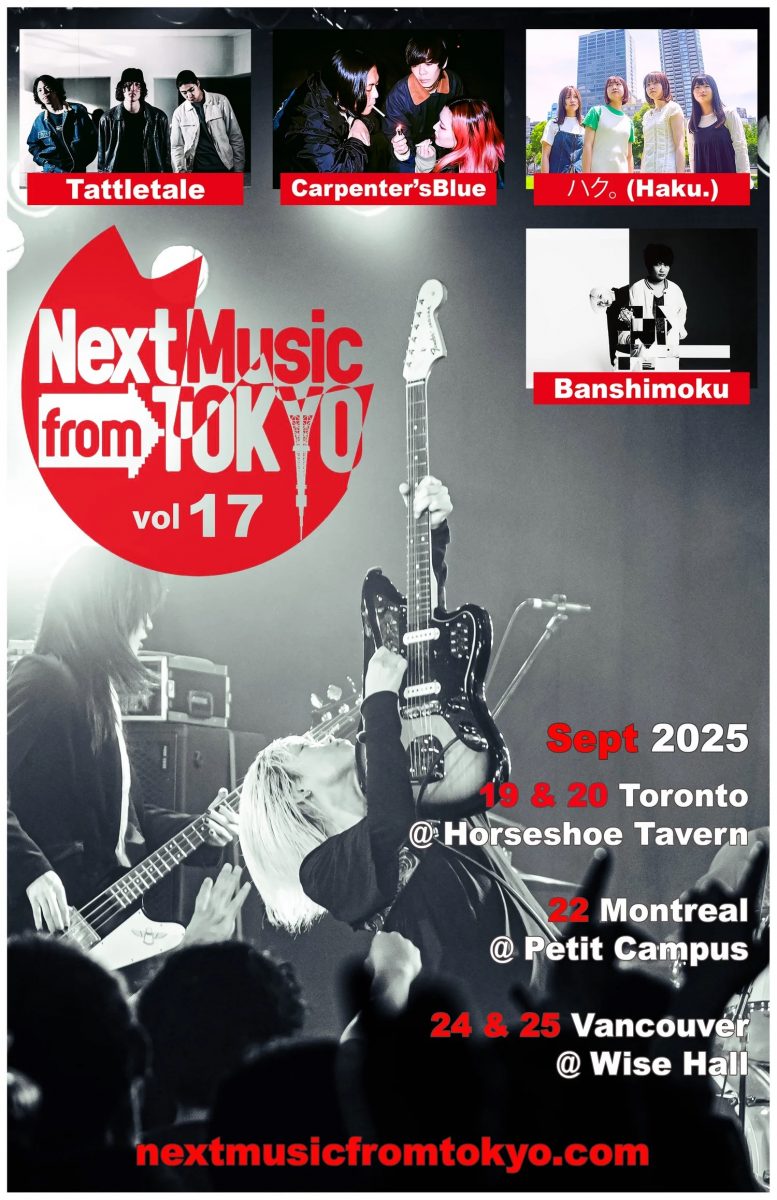
Next Music from Tokyo is an annual showcase of young Japanese indie bands put together by Toronto anesthesiologist Steven Tanaka. Each year, Tanaka handpicks a group of bands to tour three cities in Canada over 10 days and it is always a fantastic scene. The bands give everything they have and the crowds happily take it all in, dancing and crowd surfing (Steve too)!
This year when the NMFT line-up was announced, I was surprised to see that it featured Haku. The website even issued a warning that since the massively popular band is coming, tickets will sell out faster than usual. This got my attention and I started listening to their back catalog as well as newer releases. I was happy to find that, although the viral video clip is cute and obviously popular, Haku’s original music is even better.
Haku live at the Horseshoe Tavern in Toronto, Canada
Around a year ago, Haku performed on NHK Japan and talked about influences and future goals. Ai expressed that although they were a band of 4 young girls, they did not want to be bound by the expectations of being a “girl band”. They hoped to show a more aggressive sound in live shows and to write songs that would have a broad appeal to fans of all genders and ages. With that statement in mind, it was fun to witness their first North American show in person.
From the very first song, the band delivered an energetic and gritty sound. The crowd, made up of men and women of all ages in equal number, responded with enthusiastic dancing and clapping. Surprisingly, many of their fans were singing along in Japanese to Haku’s originals. If their goal was to win over a broad spectrum of fans with high-intensity live versions of their original songs I think it was accomplished with great success. I loved the show and I was immediately sorry I didn’t buy tickets for both nights in Toronto.

THIS JUST IN !!!
Haku will be back in Canada this September for Next Music From Tokyo vol 18
Haku will be returning to Toronto, Montreal and Vancouver this September for Next Music From Tokyo vol 18. Toronto dates Sept 18 and 19, Montreal on Sept 21 and Vancouver Sept 23 and 24. They are joined by SYAYOS, pudelhunds and yureruwayurei. More information and ticket links at Next Music From Tokyo website.
Haku original music
For a band whose members are probably somewhere in their early 20s, Haku has released a good volume of music. The early singles and first mini album (Wakamono Nikki) sound like a young band still developing their identity and musical style but the playing is solid and the songwriting is good. The second full length album, Bokurajanakyadameninatte, is where the band really starts to shine and the most recent EP titled Catch showcases the fully developed Haku at their best.
The songs are bright and energetic with memorable vocal melodies and guitar hooks. They manage to sound fresh and original but somehow familiar at the same time. In the NHK interview, Ai talked about how many older fans have said that Haku’s music takes them back to their youth. She attributes this to the influence of 90s US and UK indie on Haku songwriting. These 90s flavours blended with modern J-pop and J-rock influences give Haku their defining sound and broad appeal.
Recipe for Success
Ai’s vocals are full of catchy melodies and fun cadence. Her lyrics (all in Japanese) touch on the universal topics of love and relationships with others, as well as her relationship with the world at large. Ai takes centre stage as the main vocalist and delivers crunchy rhythm playing on her 70s Telecaster Custom. She hopes to write songs that “stand the test of time” and from the enthusiasm of the live audience and the fact that they knew most these songs by heart, I think she is on the right track.
Nazuna’s guitar playing is mostly clean with an unmistakable Stratocaster chime. She sometimes doubles the rhythm guitar but more often wanders away on her own with melodic single-note lines. At NHK, she said that she wanted to invent guitar phrases that “linger in your ear”. I think that Nazuna’s guitar lines are just as catchy as Ai’s vocals and the two together create melodies that are hard to forget.
Kano is a creative bass player never lingering very long on a single note. Bass lines bounce along with the drums, counter guitar lines, experiment with harmonies and always add to the overall big energy of the song. Kano is also the second voice for doubling or vocal harmony and, in interviews, stands out as the most outgoing spokesperson for the band.
Mayu keeps it all together with breezy style, creative fills and lots of happy energy. She is a great drummer now but I think her ambition to learn and improve will sharpen her skills even more in the future.
Each player in the band brings their own unique style but it is definitely the combination of these four talents that gives Haku it’s appeal. The musicianship is undeniable and their obvious close friendship just adds to their charm.
Gear:
Haku uses some interesting guitars. Ai is playing a 70’s style Telecaster Custom and Nazuna’s Stratocaster is the same vintage. Both have 3 bolt neck plates used mainly on 70s Fenders. I think Fender Japan reissued these sometime in the 90’s so it is possible these 2 guitars are from that era. Either way, they are unusual instruments. Ai runs her Tele through a Marshall half-stack and Nazuna is using a Jazz Chorus 120.
In recent videos Ai is using a new red, maple neck standard Telecaster. The white Jaguar that was given to her by Fender at their Shibuya flagship store performance has also made it to the live stage recently.
As for pedals, Ai’s main sound seems to be Telecaster, JHS Morning Glory, Marshall amplifier. She switches out dirt pedals often: Ibanez Tube Screamer, Anasouds Savage (Klon Centaur clone), Animals Pedal Surfing Bear Overdrive (cute Japanese made tube screamer variant), NYC Big Muff fuzz have made the rounds.
Nazuna has a big pedal board which includes a Strymon Big Sky and Timeline, JHS Double Barrel, JHS Charlie Brown (cool and uncommon), Boss Turbo Distortion, Triangle Big Muff, Suhr Jack Rabbit Tremolo, Digitech Whammy as well as a Maxon Stereo Chorus.
Kano is running a Fender Precision Bass though a solid state head and Ampeg cabinet (at least at live shows). This deep, punchy Precision bass through a big cabinet is my favourite electric bass sound.
At least in their practice space, I have seen Mayu using a 4-piece gold sparkle Tama drum kit. Beyond that, I am not sure. Unless they are popular enough to carry their whole kit around, drummers usually just travel with their snare and cymbals so…hard to say.
Where to find Haku:
You can stream Haku in all the usual places.
Haku is also active on Instagram and YouTube. Click here for the Haku official website.
Haku is rumoured to be returning to Canada for Next Music From Tokyo Volume 18! Keep an eye on the NMFT website for details.
For a list of all upcoming live shows look here.
Here is the song Ai! from the Catch EP….it is a great record. Look it up on your favourite streaming platform.
A great song and video from Bokurajanakyadameninatte….
The latest release Sekai…
If you have any questions or comments or if I spelled anesthesiologist or anything else wrong… please share in the space below.
What’s your favourite Haku song? Leave it in the comments!
If you enjoy the content and would like to contribute towards website maintenance and development, you can make a donation here.
Tiara Girls in Shibuya Scramble
Smartphones and Social Media: Today’s Popular Photography
These days, everyone everywhere has a camera in their pocket. Smartphone cameras have filters, AI and editing tools that give everyone the ability to take a decent photograph. Publishing photos has also become effortless. Anyone can post their images publicly on social media platforms like Instagram, and image posts get feedback through “likes” and “comments”. This is satisfying and motivating. It is a fun way to share your images with a huge audience.
Social media gives people the motivation to take photographs and smartphone technology makes it easy. The result is that millions of personal documentary style photos are being published everyday. Photo based apps have become a worldwide tool for communication and self expression. But while casual social media snaps are by far the most common type of photography, there are still other types of photographs to consider: images that are able to draw and hold your attention, freezing unique and surprising moments in time. There is a kind of magic in them. They are rare and difficult to capture.
Because these types of photos are so elusive, netting them requires some planning and skill but mostly persistence and luck. Of the thousands of pictures I took on a recent trip to Japan and Korea, I managed to capture only one such image.
The 1/250th of a second miracle

1/250th of a second…that’s how much time is captured here. We are in a huge crowd of people swarming through Shibuya Scramble Crossing in Tokyo. I am quickly walking forward taking pictures from waist level without looking through my camera. The girls are walking quickly towards me headed in the opposite direction. For this fraction of a second, we are facing each other. We are less than 2 metres apart and my finger happens to push the camera shutter. We pass each other and the moment is gone. Forever. One fraction of a second before or after and it would not exist. It is pure luck.
The intimate angle, the fact that the image is in focus and exposed so well and the emotion on display coming together in this tiny moment is almost a miracle. To put it into context, I tried the same technique in the same crosswalk for over two hours and took over 400 pictures. Out of 400 shots, maybe 6 or 7 were usable. Of those few, this was the only one that stood out as something truly special. It made the whole process worthwhile and went beyond all my expectations. It is one of my favourite pictures that I have ever taken.
What sets this image apart?
Emotion.
Photographs that express strong emotion are the ones that draw me in . And, the most captivating images are candid photos, where the emotion is pure and unaffected, where the subject has no sense that they are being photographed.
Tiara Girls in Shibuya Scramble glows with the energy of youth: freedom, rebellion, optimism are all on display. School uniform collars are unbuttoned and ties are pulled loose. Determined eyes are gazing directly and fearlessly into the future.
The princess tiaras, the body language and the smiles on their faces hint at the kind of friendship that can only bloom when you are young and free and open hearted. It makes me think of this short story passage:
“The most important people turned up surprisingly early in life. After a certain point, she found it difficult to turn even the first page of relationships that her younger self would’ve entered with relative ease. People locked their hearts at some point in their lives, as if everyone had agreed to do so. Then they made acquaintances outside those locks, with people who would never hurt them or be hurt by them”. Choi Eunyoung “Sister, My Little Soonae”
Some of our closest and most impactful friendships are forged when we are very young: before we have had our hearts bruised enough times to start hiding them away from others. This photograph captures that time.

Candid photography and telephoto lenses (spy photography)
Are there easier ways to get this kind of picture? Why not just sit up on a staircase above the crossing with a long lens and fire away..like taking bird pictures? The answer is that if you are not down in the crowd using a lens that is close to human vision perspective, you will not capture the kind of emotion that you see here. It just won’t work. The photos will look like spy camera photos, flat and lifeless. Kind of like when they show snaps of cop surveillance photos on tv shows. You need to be inside the image. When you are photographing from a distance, the photo will feel distant.
Check out my original post about Shibuya Scramble Crossing if want to see a few more pictures from this day.
If you have any questions or comments, please leave them below. Knowing you have been here gives me the motivation to keep it up. Thanks always for stopping by : )
If you enjoy the content and would like to contribute towards website maintenance and development, you can make a donation here.