Posts By Martin
Bossam Leftovers: Pork and Vegetable Udon
Bossam Part 2:
Earlier I put up a recipe for a simple bossam. Towards the end, I mentioned that if you go easy on the salt in the braising liquid, you can use it to make another delicious pork dish. This is what I have done with the leftover braising liquid from that recipe: Pork and Vegetable Udon. This recipe made one huge portion but could very easily make 2 portions by adding more noodles.
Ingredients:
- Leftover braising liquid from Bossam recipe
- Leftover pork meat (if any) thin slices
- 1/2 onion sliced thin (the other half of the onion from the Bossam recipe)
- 3 cloves garlic sliced thin
- 2 green onions/scallions chopped
- 1 fresh green chilli pepper sliced into thin rounds
- 1/2 zucchini sliced thin
- 1/2 package of enoki mushrooms
- 1 cup green cabbage sliced thin
- 1 or 2 portions frozen udon noodles
I am using vegetables that I have in my refrigerator at the moment. You can substitute just about any vegetable you would normally put in a soup. You can use different mushrooms too. Different noodles could work as well. I like these Udon noodles. I usually find them at the neighbourhood Asian grocery store in the freezer section. They are convenient because they are frozen in single portions. If you don’t have leftover pork meat, don’t worry. The braising liquid has plenty of delicious pork flavour on it’s own. Sub in some extra mushrooms. I had enokis on hand but sliced king oyster mushrooms are even better!
Process


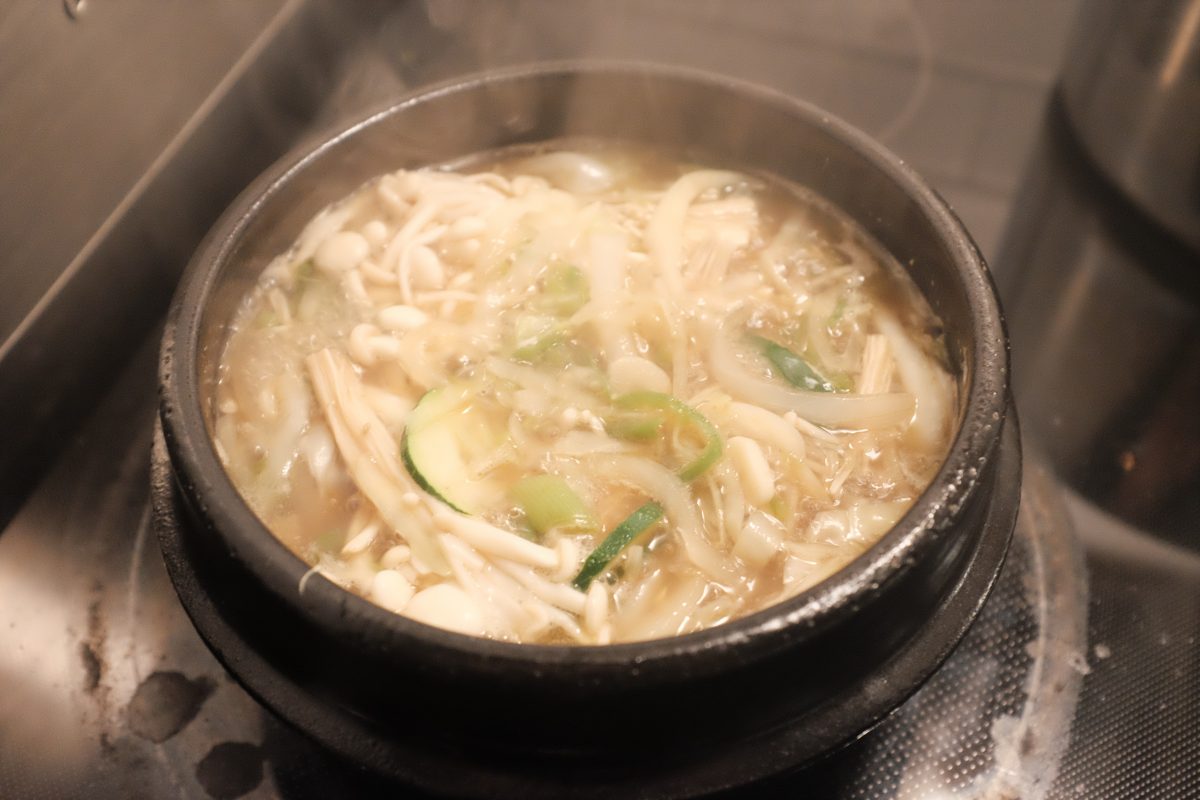


This took almost no time at all…
I think this probably took around 15 minutes to make. The leftover braising liquid from the bossam recipe is a perfect, rich and complex broth to cook vegetables and noodles in. This was a delicious meal that used up every last leftover from the previous night.
If you have any questions, comments or other ideas please leave them below. I always look forward to hearing from you.
If you enjoy the content and would like to contribute towards website maintenance and development, you can make a donation here.
Bossam Braised Pork Belly
This is a very basic version of bossam. The main event here is the meat. Fresh pork belly is braised in a liquid made with strong aromatics to flavour the meat and to soften some of the gamey aroma of the pork.
It can be served with kimchi and various sides, wrapped in a leaf of cabbage, perilla or lettuce.
There are a couple of good recipes here and here which include all the components for a more traditional Korean preparation with pickled Napa cabbage leaves and spicy shredded radish. This is a delicious way to eat it but I am going to do something a little different with things I already have in the refrigerator.
Ingredients for Braised Pork
- 1 kg (around 2.5lb) pork belly
- 1 small chunk (25gr) fresh ginger sliced
- 12 garlic cloves roughly chopped
- 1/2 onion
- 2 green onions roughly chopped
- 30ml / 2 tablespoons doenjang
- 15ml / 1 tablespoon instant coffee
- 1 tablespoon whole black peppercorns
- 1.5 litres / 6 cups water
Other Ingredients:
Once the pork is done, you will need something leafy to wrap it in. You may also want to add other fillings to your pork wraps. This can be anything from kimchi to fresh crunchy veggies. Sometimes I even like a little bit of nice mustard in them. This time around, I will use:
- red leaf lettuce, washed, dried and separated into leaves
- perilla leaf (kkaennip) washed and dried
- napa cabbage kimchi
- Korean radish kimchi or (kkakdugi)
- pan fried anchovies with peanuts (myeolchi bokkeum)
Process


Serving
Serve the pork slices with sides of your choice and leaves to wrap it with.


What about the leftover braising liquid?
Store any leftover meat in the braising liquid. Reheat it covered in the liquid as well.
The first time I made this, I noticed that the leftover braising liquid is actually very tasty. You can’t really notice the coffee as a distinct flavour. The liquid is just a warm and delicious pork and doenjang flavour. The only problem is that it is a little too salty.
The next time I made it, I decided to remove extra salt from the recipe, using doenjang only as the main seasoning. The meat is still delicious and can be salted a little after cooking if you think it needs it. But, keep in mind, you are also eating this with kimchi or maybe salted shrimp or other well seasoned add ons so very salty meat is not so necessary.
Once you reduce the salt, you are left with a delicious pork soup base. When the meal is done, I usually strain out all the solids and refrigerate it. The next day I combine it with shredded cabbage, the other half of the onion, mushrooms and frozen udon noodles, a little of the leftover pork and chopped scallions. It is surprisingly delicious! Find that recipe here.
If you have any questions or comments, please leave them below. Look forward to hearing from you.
If you enjoy the content and would like to contribute towards website maintenance and development, you can make a donation here.
Beef Bone Broth Version 1: Low and Slow
Broth vs Stock
I am calling this a “Beef Bone Broth” only because it seems to be the name that everyone is using these days. It makes a perfect base liquid for any number of soup or sauce recipes although it also has many other uses.
In professional cooking, a “broth” is a usually a lighter, thinner, and often salted liquid made by boiling vegetables and/or meat for a relatively short time. A “stock”, in contrast, is made from bones and their connective tissue, simmered for a very long time, sometimes with vegetables and aromatics, usually without salt. A broth is a thin and flavourful liquid while a stock is a thick, gelatinous and relatively flavourless liquid (until it is seasoned).
So..as you will see, what we are making here is nothing like a broth. It is a very simple beef stock.
Long, Low and Slow vs Hard and Fast
This recipe is for a long, low and slow method that cooks until the bones have nothing left to give. The end result is a mostly clear, slightly brown stock. It is thick and gelatinous, even slightly sticky. If you added mirepoix (say onions, celery, carrot) to this later in the process, you would end up with something like a Western white veal/beef stock.
The second one (click here for other version) is a hard boil and relatively fast stock (for beef bones). It will still take several hours but, it will result in a milky white broth with a nutty flavour and slightly thinner consistency. This is what you will often see in Seolleongtang or Mandu Guk (dumpling soup) in Korean restaurants.
Ingredients
You can make this as large or small as you like. I have made a recipe that fits into my biggest stock pot which holds around 12 litres / 3 gallons. Just make sure that the pot is big enough to keep bones submerged plus a little water on top.
- 4 kg / 8lb cut beef hip bones (this is usually a mix of marrow bones and knuckle bones)
- 1.5 kg / 3lb cut cow foot
- fresh cold water to cover them
My local Korean grocer keeps bags of cut beef bones in the freezer section all the time. And, there is a butcher near me that usually has frozen whole cow feet as well. Any butcher shop should be able to get you beef hip bones for stock. The cow foot is optional but it is made of of mostly connective tissue and this will add body and richness to your finished stock. If you can’t get cow foot, just omit or replace with regular hip bones.
Process
Wash and Soak


Initial Boil (blanching)


Simmering the stock


32 hours later….


Cooling and Storage

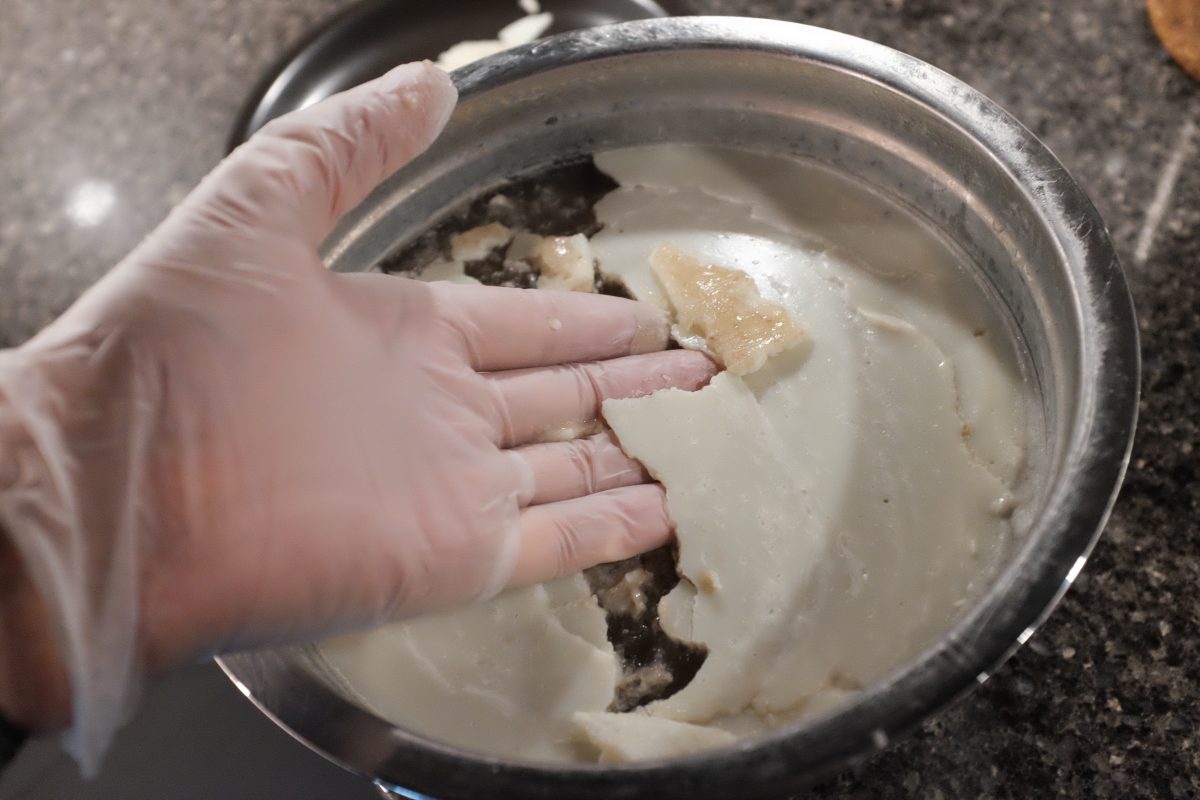


How to use your Beef Bone Broth
Simmer any combination of meat/vegetables/mushrooms in it for a delicious soup. Add your favourite noodles to it. Or, you can simply warm it up and add rice and seasoning. You can even drink it as is for a deeply nutritious and filling liquid snack.
This beef bone broth (stock) is a liquid rich in body and texture that is mostly neutral in flavour…a base for almost anything you can imagine. Soup, stew, sauce, smoothie…anything goes. If you have any recipe that has water as an ingredient, replace it with this stock to improve the flavour and the nutritional value. As I cook with this new stock, I will post up ideas as I make them.
If you enjoy the content and would like to contribute towards website maintenance and development, you can make a donation here.