Posts Tagged: soup
Beef and Radish Soup: Muguk
Korean beef and radish soup, or sogogi muguk, is a flavourful and nutritious soup which is easy to make quickly. There are only a handful of ingredients and everything is cooked in one pot.
Ingredients
- 150gr (5-6oz) beef brisket point sliced thinly against the grain
- 250gr (8oz) Korean radish
- 15ml (1 tablespoon) sesame oil
- 5 or 6 cloves garlic sliced thin or minced
- 15ml (1 tablespoon) Korean soup soy sauce (gukgangjang)
- 2 or 3 green onions (scallions)
- 750ml (3cups) water approximately
- salt and pepper
I used beef brisket in this recipe because I can get it easily and I like that it is lean and tender at the same time. If you can’t get brisket, you can use almost any other good cut of beef. Lean cuts from the round will be a little chewier but still delicious: cut them thin. If you want to put premium steak cuts in here, go right ahead. I have even made this with ground beef in a pinch.
Don’t use regular soy sauce. Korean gukganjang or soup soy sauce can be found at any Korean grocer. Regular soy sauce is a poor substitute. If you can’t find soup soy sauce, substitute with a good quality fish sauce.
The meat to radish proportion can vary. This one I am making has a pretty generous amount of meat. Feel free to use a little less or, even more if you want to load up on protein.
Process


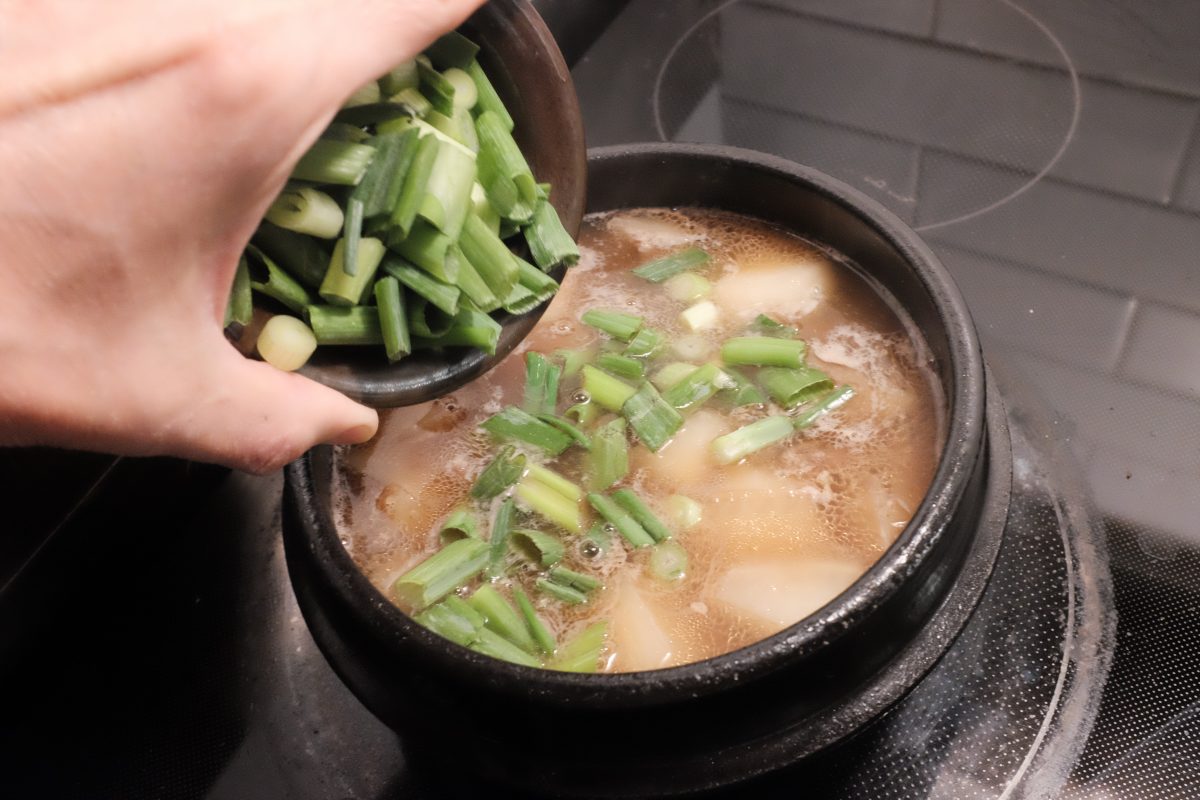

I like to eat this with a bowl of rice and a couple of sides. Today I am having home made kimchi and a cucumber salad. I made kkakdugi yesterday but it is not quite ready yet. Otherwise I would eat it with this dish : )
This recipe will make enough for two medium portions or one very large portion.
If you have any questions or comments, please leave them below. I love to hear from you.
If you enjoy the content and would like to contribute towards website maintenance and development, you can make a donation here.
Dried Pollock Soup Bukeoguk
The start of a long relationship with Korean food
Years ago I hired a new cook who had recently arrived from Korea on a work visa. I soon started to notice them struggling a little with physical demands and mental focus. Everyday, they worked diligently and did an excellent job, never complaining once. But they were mentally exhausted and physically depleted by the end of every day. After a few weeks, they finally admitted to me that they were having a hard time eating North American food without feeling ill. On top of homesickness, they were basically….hungry all the time. And because they were hungry, they were exhausted.
The only way I could think of to make this situation better was to feed them. I asked them what they would eat if they could choose anything. The answer was Bukeoguk.
I knew nothing about Korean cooking and I had never heard of it. But, I searched for recipes and went to a Korean grocer for the first time and bought all the ingredients I needed. The next day, I made my first Korean food. And, for the few years that this cook worked for me, I continued to feed them one new dish a day. I gradually became a pretty good Korean cook and they gradually became healthier and happier.
They eventually moved on, as all cooks do. But my love for Korean food and cooking has remained with me. And for the last 10 years I have continued to learn methods and ingredients. By now, I must have made a hundred different dishes (probably more), even making my own doenjang, ganjang and gochujang from scratch. Makgeolli too.
Since that fateful meeting, I have cooked and eaten everything I can get my hands on. I have traveled to Korea many times and I have made many friends, even learning to speak the language at a basic level (so far). This story is a long one, too long to write here….and it’s not over yet! For now, I’ll just say “Thank you: 만나서 반가워요”
Ingredients:
- 60 grams (one big handful) dried Alaskan Pollock (bukeo) 북어
- 1 cup peeled and rough chopped Korean radish
- 4 cloves of garlic minced or sliced thinly
- 2-3 green onions (scallions)
- 1 tablespoon sesame oil
- 1 tablespoon Korean Soup Soy Sauce (guk ganjang) or fish sauce
- 1 egg beaten
- salt and pepper
- water (4-6 cups)
The amounts above are guidelines. This preparation is very simple and there is no delicate balance to upset here. If you like more fish, use more fish. If you like more radish put in more radish. The important thing is that everything is underwater and that it is seasoned well with salt or soy sauce/fish sauce. If you do follow the recipe exactly it will make a good soup. 2 smaller portions with rice and sides or one big portion.
Raw ingredients:

Process:
Soak dried pollock for 15 minutes or so in warm water until it softens up enough to cut or tear apart. Keep the soaking water…we will add it in later.

Chop or tear soaked fish into bite size pieces. Sometime there are a few little bones in the meat and tearing it by hand will help you find and remove them.

Cook the fish pieces in sesame oil for a few minutes until it is hot and aromatic

Add garlic. I like to slice my garlic thin but I think minced garlic is more common. Up to you!

Add chopped radish and cook for a few minutes until warm

Pour back the soaking water, enough to cover everything plus a few centimetres.

Soup soy sauce goes in. This stuff is not the same as regular soy sauce. It is much saltier and funkier. You should be able to find it easily at a Korean grocer but, if not, you can substitute fish sauce.
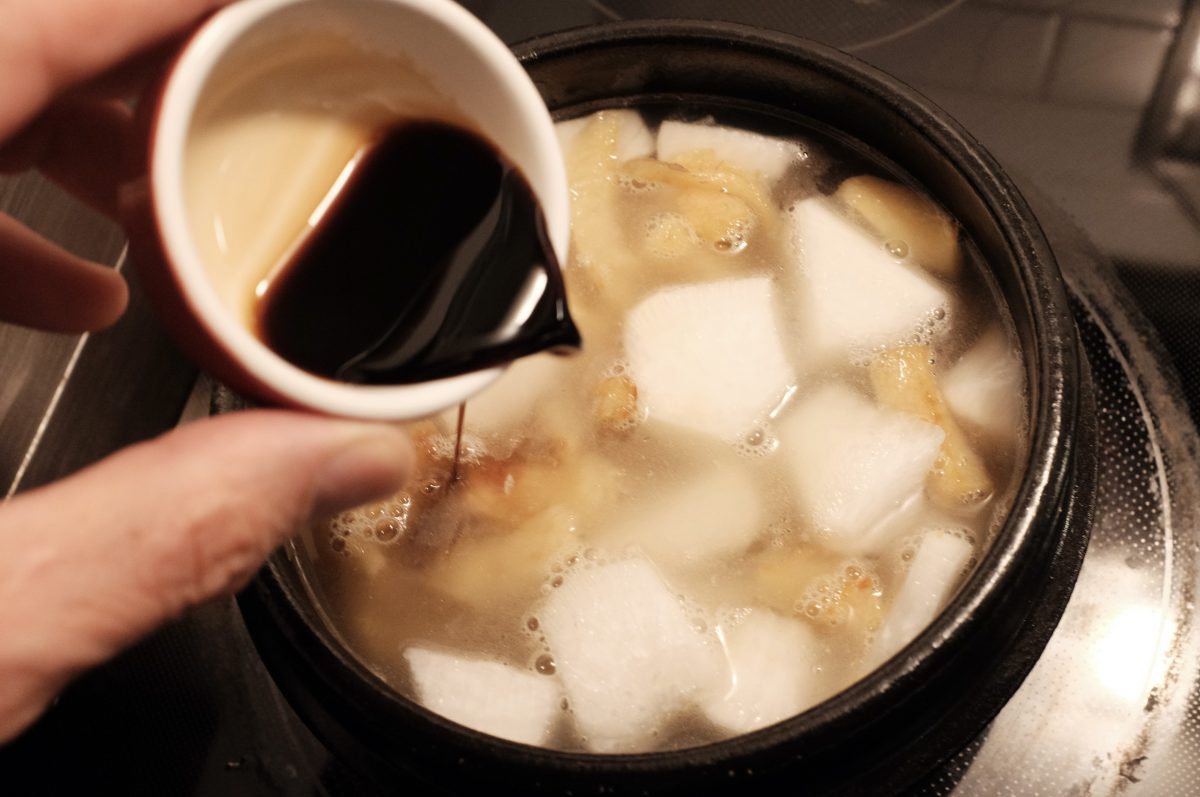
Bring to a boil and simmer for 15-20 minutes or until radish is cooked through. Now is a good time to add salt if needed. The dried fish contains salt, the soy sauce is very salty and the radish will release a lot of water. So I prefer for all these ingredients to cook completely before adding salt. Now is the perfect time to taste and adjust. Add salt if needed. Pepper too if you like.

Green onion goes in

Pour in egg and remove the pot from the heat. Wait until a raft of egg floats up before stirring it in.

Time to eat!

Bukeoguk is nutritious and easy to digest (also why it is known as a good “hangover soup”). It is simple and quick to make with only a few ingredients. I like to eat it with fresh white rice and a little homemade kimchi. Whenever I make it now, I can’t help but remember the first time I made it and the hungry person who got me started on my Korean cooking adventures.
If you have any questions or comments please leave them below. I am always happy to hear from you.
If you enjoy the content and would like to contribute towards website maintenance and development, you can make a donation here.