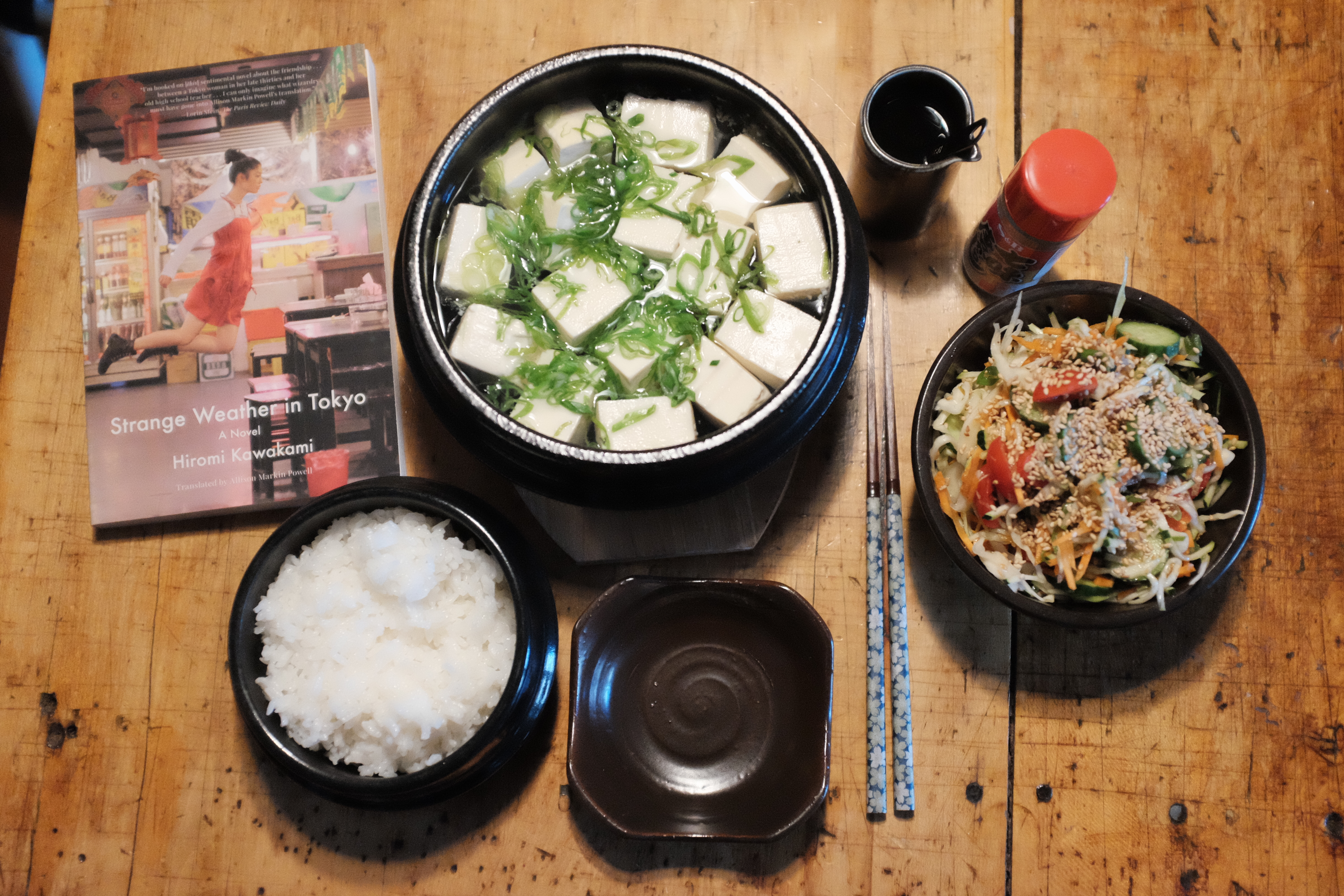
Yudofu (Japanese Hot Tofu)
Strange Weather in Tokyo
I first heard of yudofu while reading a book by Hiromi Kawakami called “Strange Weather in Tokyo”. The main characters are an elderly, retired professor and his former student (now in her late-30s). These two lonely people meet by chance and, over time, they develop a close friendship. Tsukiko and “Sensei” tend to spend a lot of time in small neighbourhood bars drinking and eating. It is here that yudofu comes up over and over (maybe it is one of the author’s favourite snacks?). They seem to enjoy it so often that I wanted to try it myself, as if i was sitting on the barstool next to them and listening in to their conversations.
Japanese Cooking
I have been a professional chef for most of my life. During that time I have had the opportunity to see some elements of Japanese-fusion cooking while working in fine-dining kitchens. And, of course, I witnessed the late 90s/early 2000s sushi boom in North America. But, apart from that, this cuisine always seemed kind of mysterious to me. I was learning to cook at a time when big, bold flavours were en vogue and high-intensity was paramount. So the more subtle and straightforward flavours of Japanese cuisine were much less familiar.
My Japanese Kitchen
During one period in my own restaurant, through a mix of circumstances (many working-holiday visas and increased eligibility for permanent residency if you were a cook), I ended up hiring a kitchen brigade of mostly Japanese cooks. At the same time, the front-of-house ended up with a large number of temporary Japanese support staff, running food and clearing tables. We had so many workers from Japan that, on more than one occasion, I had to ask them to please speak English (instead of Japanese) so that I could keep up with what was going on in my own kitchen! haha
The most inexperienced cook I have ever hired worked so hard that she quickly became the best and most reliable cook I have had through the kitchen. As my second in command, Ayuko brought weird and wonderful specials to the night menu: ethereal jelly dishes, made to order fresh spring rolls: so popular that it may have been the first time I ever heard her swear in English (“oh fuck..more fucking spring rolls?!? fuck”) Happy days!
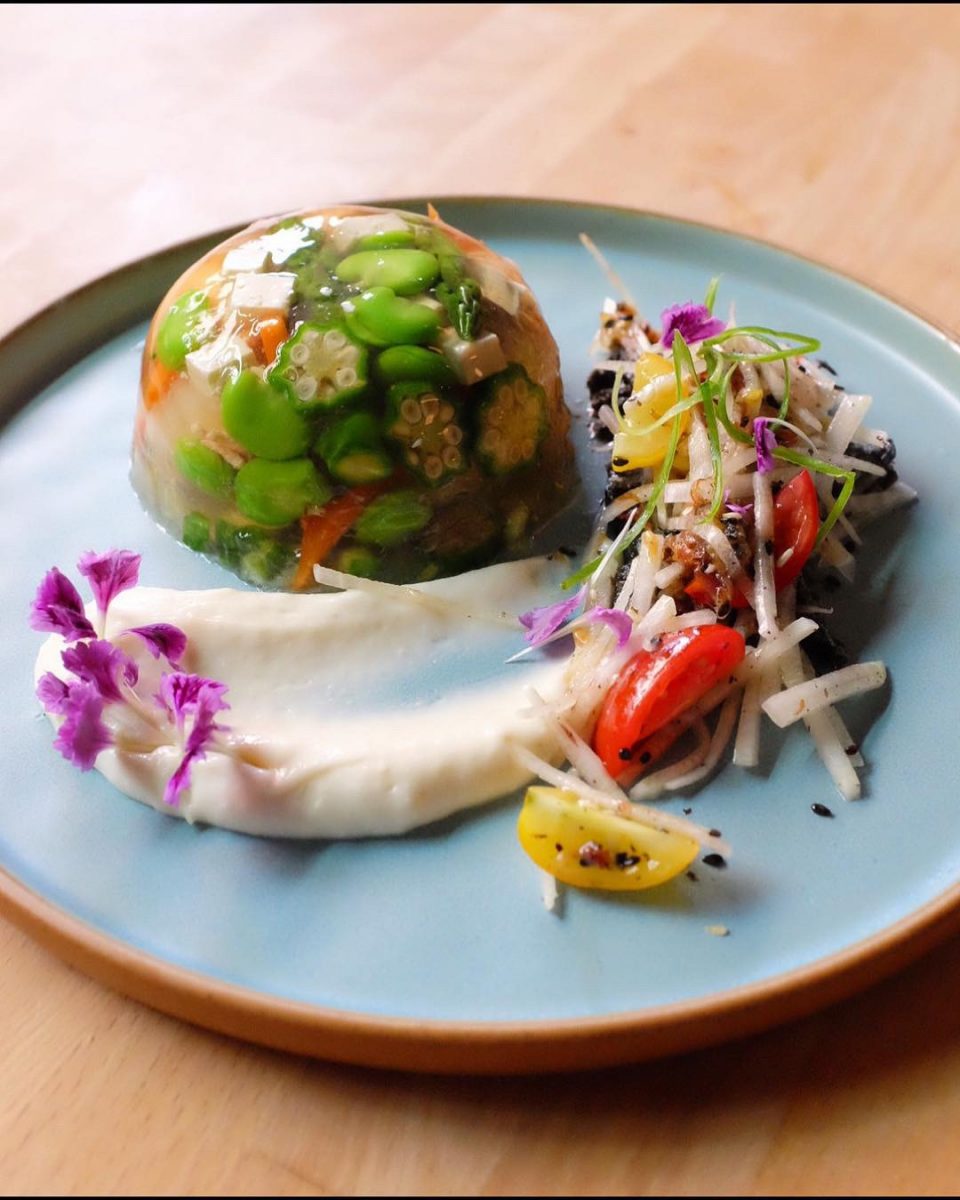
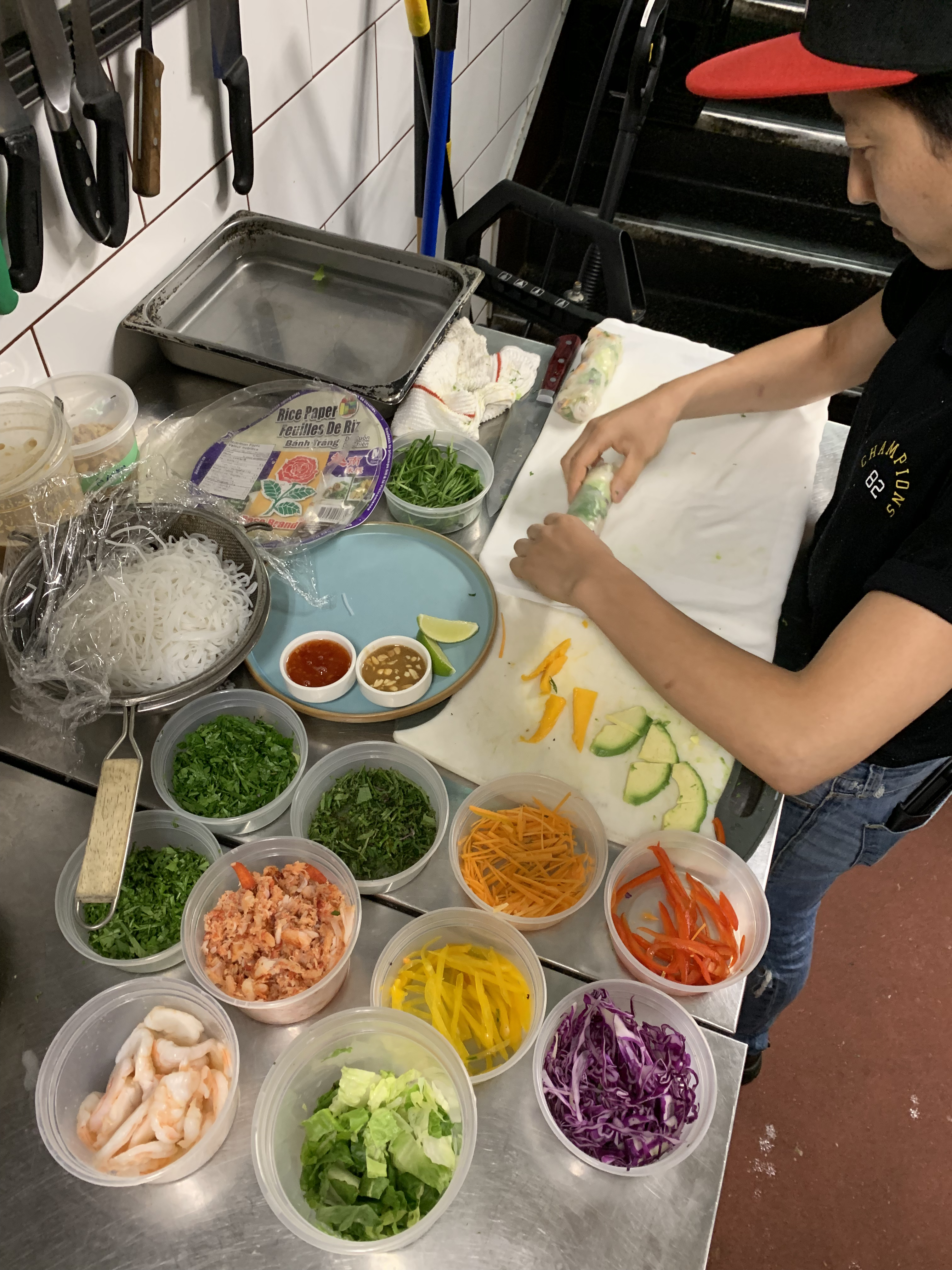
As a chef, these were some of the most happy, relaxed and productive days I have ever spent running a kitchen. The food was cooked with pride and precision. The plating was clean and beautiful. Everyone worked hard together as a supportive team to produce the best plates possible everyday. And all with no pushing needed from me. What a dream! On top of this, the staff meals the cooks produced were outstanding. It was here that I first tried things like ochazuke (rice with green tea) or really premium grilled onigiri (rice balls). It opened my eyes to how something subtle but still delicious could be made with just a few fresh ingredients.
Where to find good Japanese recipes in English
Considering how popular Japanese cuisine has become, it is surprisingly difficult to find good sources for recipes (for English speakers anyways). So, I was happy to discover the website Just One Cookbook. This is a wonderfully organized site with picture-heavy directions (just like mine) and logical, step-by-step recipes for hundreds of Japanese dishes.
There are not many cooking sites that I would personally recommend but, this one is truly outstanding. The recipe I am posting here is adapted from their website. The sauce is almost identical. All credit to Just One Cookbook. I am posting my recipe here because I eat it so often and want to make it part of my own personal recipe collection. Go check out their website. There is so much to learn and so many good things to eat!
Yudofu recipe
This is a very straightforward recipe, the one I make all the time. It is very easy and quick and delicious.
Ingredients:
- 1 block (around 400gr) silken tofu
- 3-4 small squares of kombu
- 1 teaspoon diamond kosher salt
- 2 tablespoons sake
- 1 or 2 green onions
- 500ml water (or enough to cover tofu in pot)
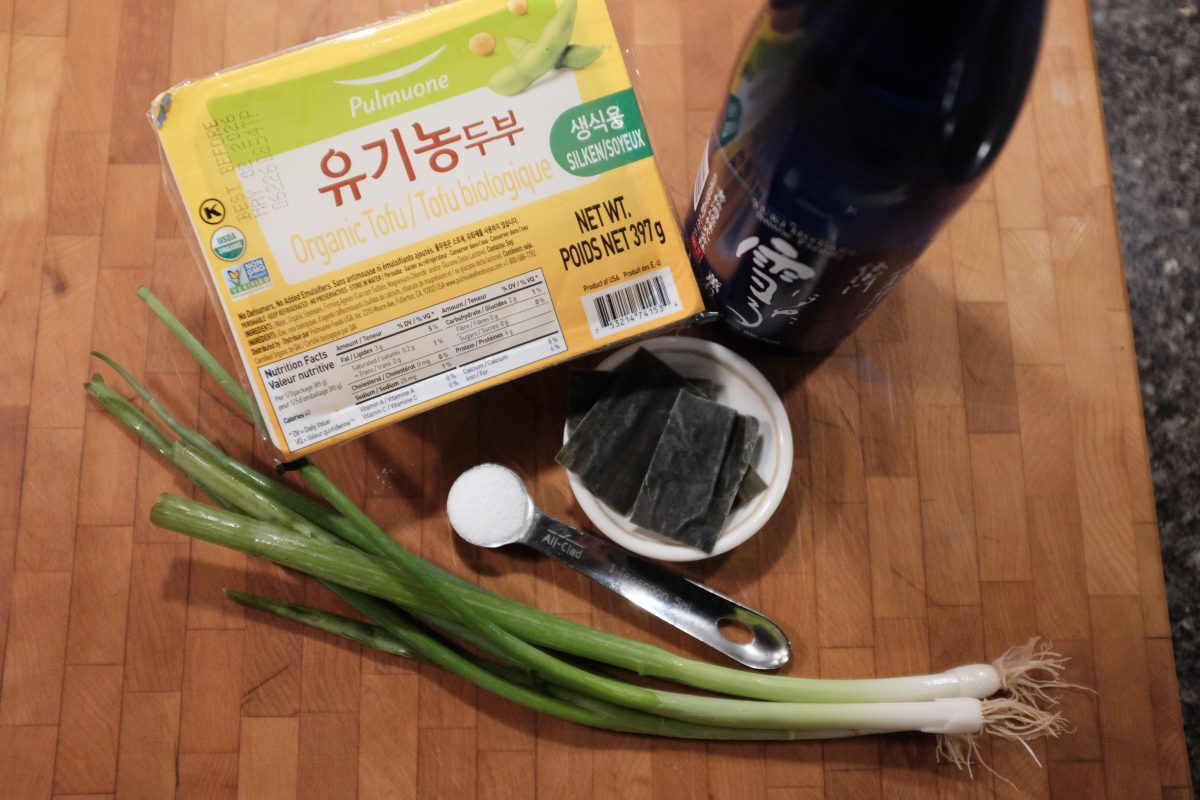
I like the texture of silken tofu and, if handled carefully while preparing, it won’t fall apart. Once it is cooked in the broth it firms up enough so that I can easily pick it up with chopsticks. If you can’t find silken tofu or if you like a firmer tofu, you can use that instead. Experiment with different brands and find one you like. I use this organic Pulmuone tofu which I can get easily at the local Korean grocery. They also make a “sprouted tofu” which is slightly sweeter with more nutrients and protein. It is worth trying too if you can find it.
Leave out the green onion or substitute it with another herb if you like. I have tried flat-leaf parsley and minari (korean watercress) which are both very good in this recipe. I have also tried mitsuba (Japanese parsley) which was delicious but hard to find and expensive.
Kombu is dried kelp. You can find it in little squares or big sheets in any Asian grocery store.
Process:
To make the broth, soak the kombu in around 500ml of fresh cold water for about 2 hours. If you are short on time, you can also make this by dropping the kombu into barely simmering water for 15 minutes or so.
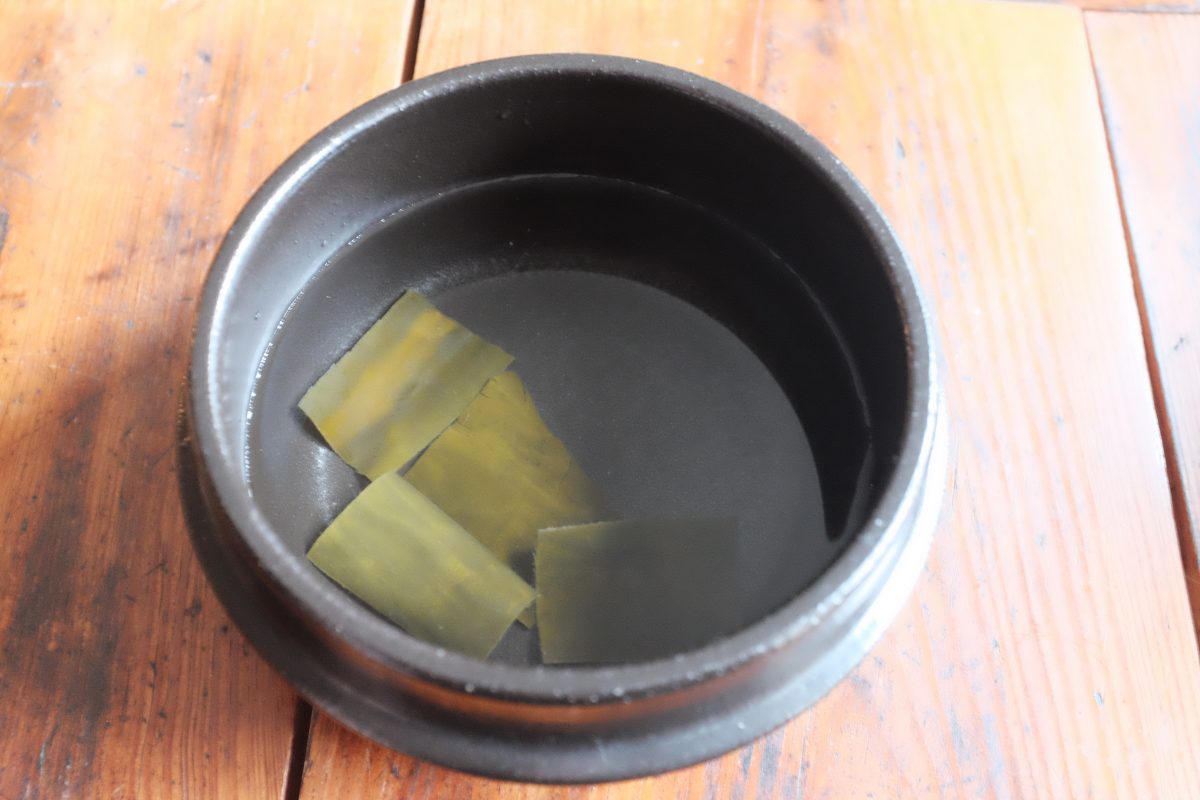
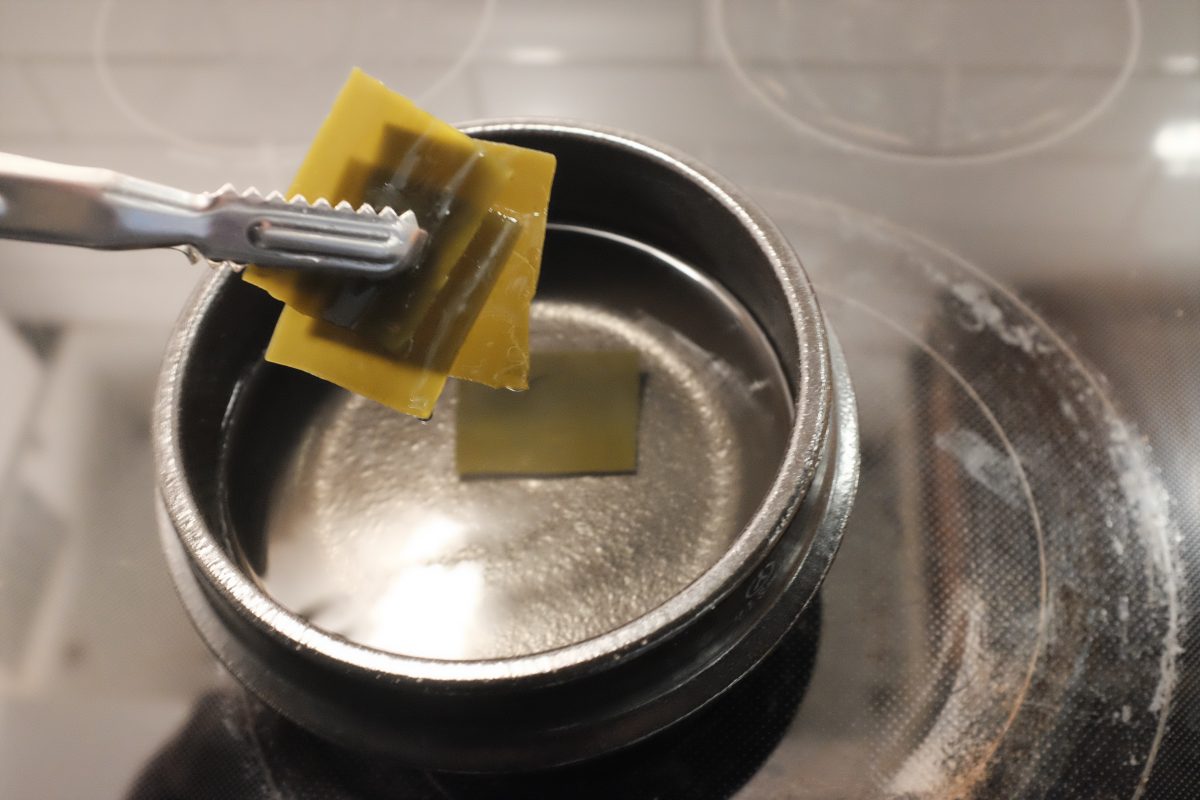
After the cold or warm steeping time, remove the kombu…
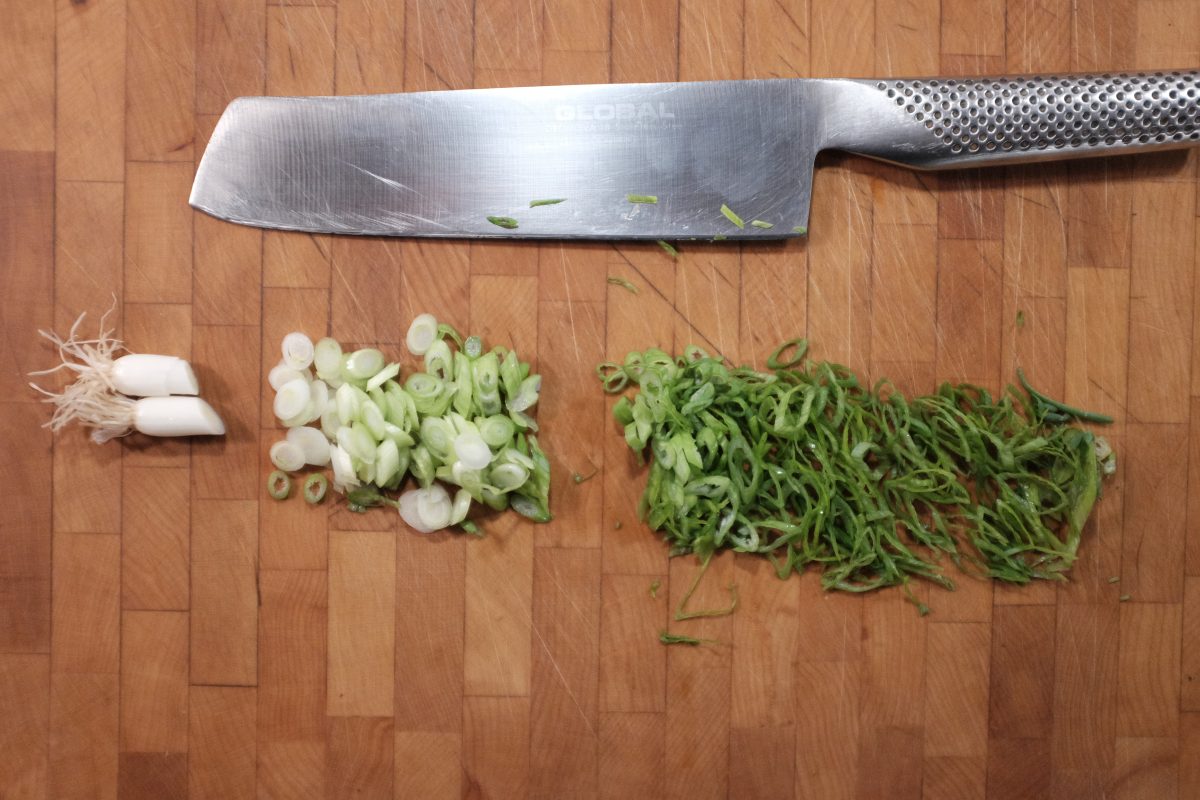
Chop green onions
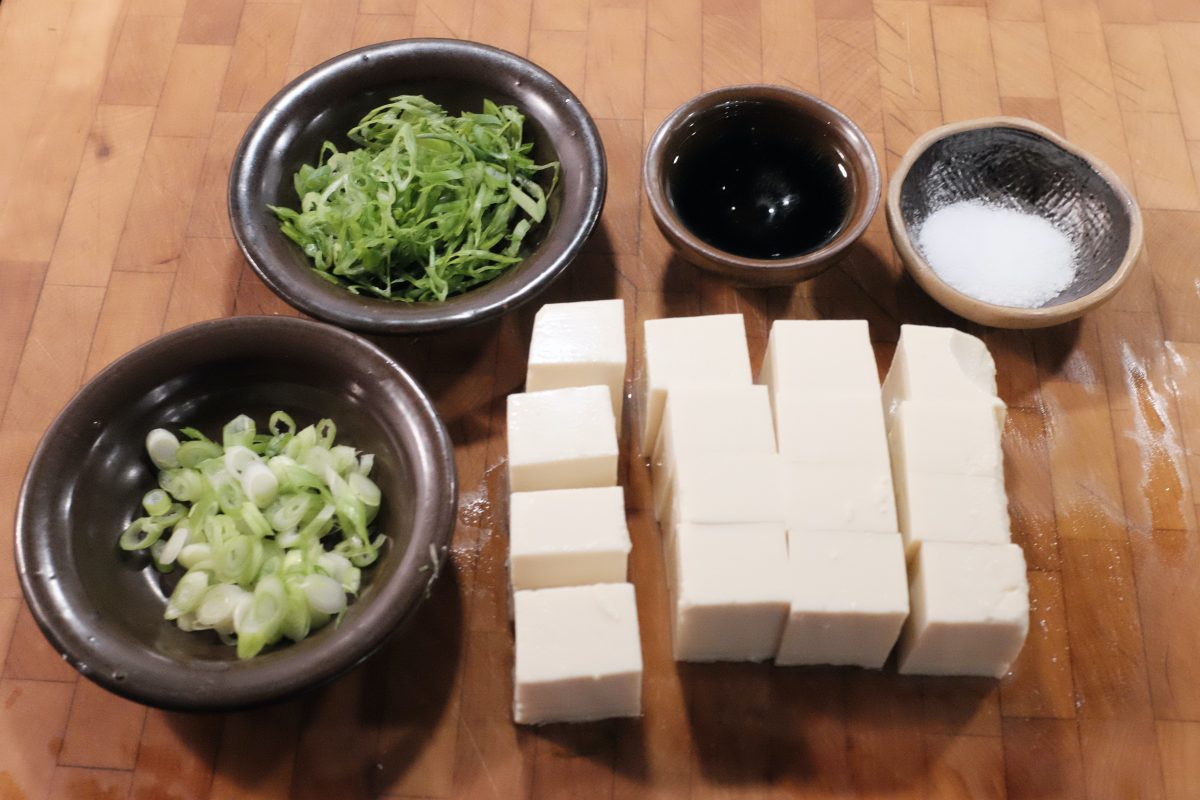
Green onions, sake, salt and tofu. I like my tofu in bite sized pieces that I can pick up with chopsticks but you can cut it any way you like. You can even cook the whole block of tofu and scoop it out with a spoon later.
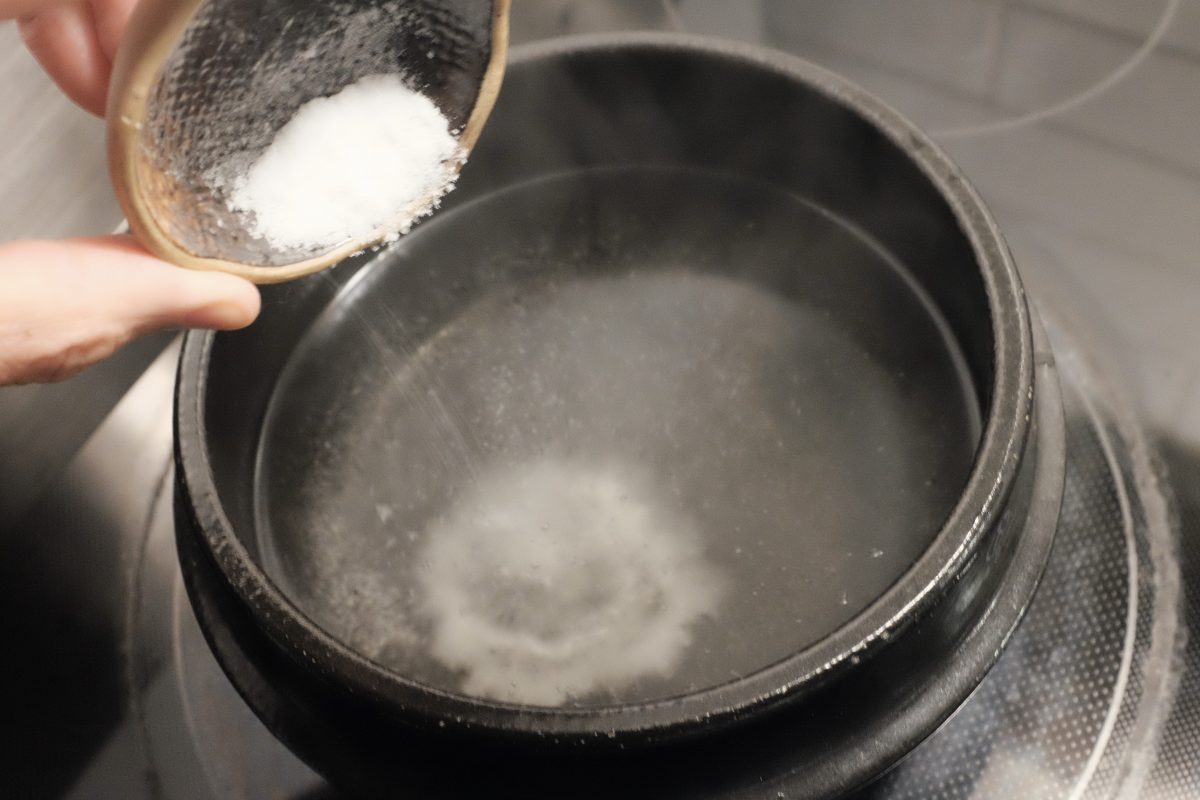
Heat the broth until just boiling then add 1 teaspoon kosher salt
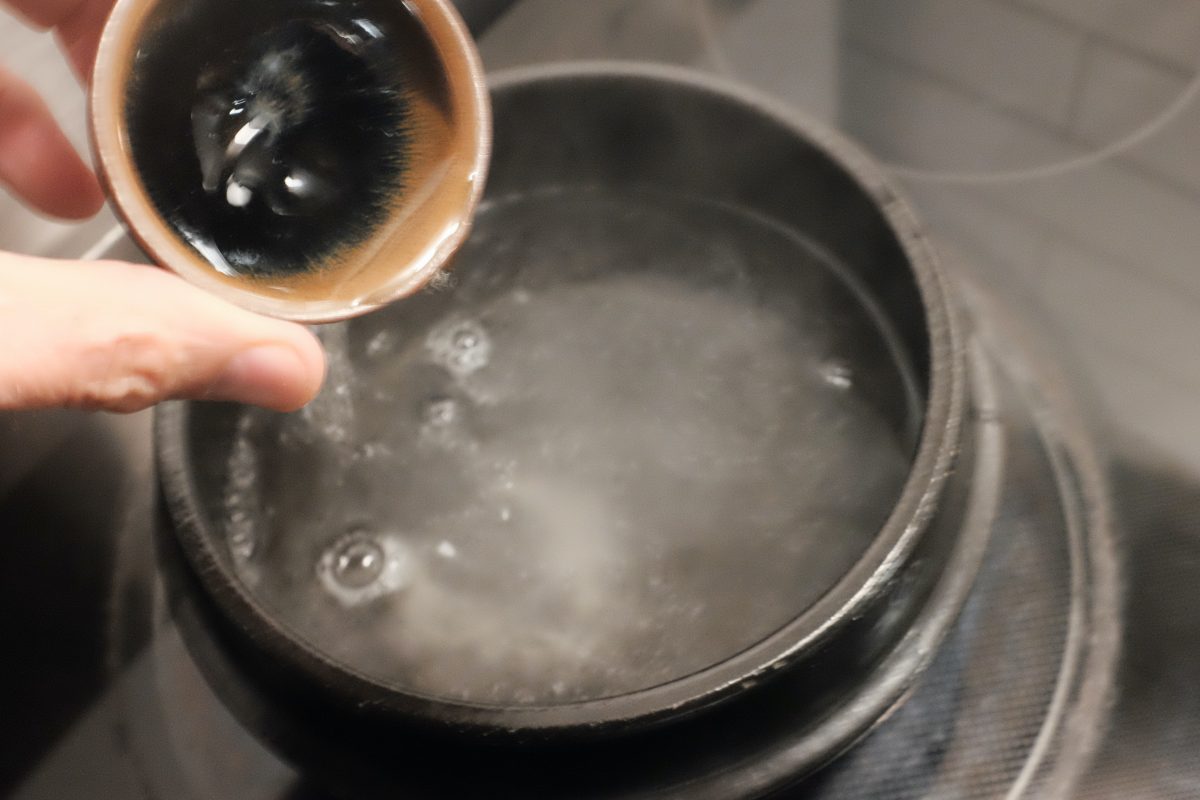
Add 2 tablespoons sake
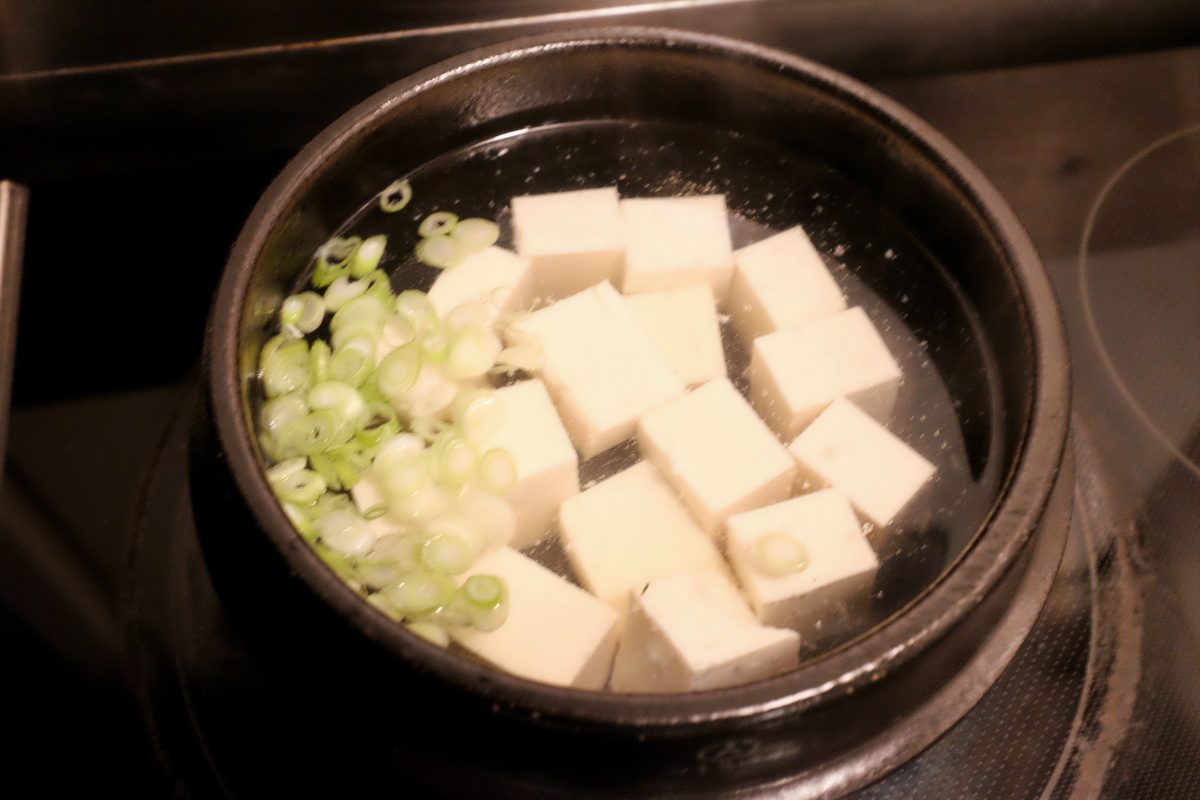
Add tofu and green onion white parts. Turn the heat down to medium low and let it go until tofu is warmed through. With the tofu I am using, it usually swells up a little and starts to float to the top.
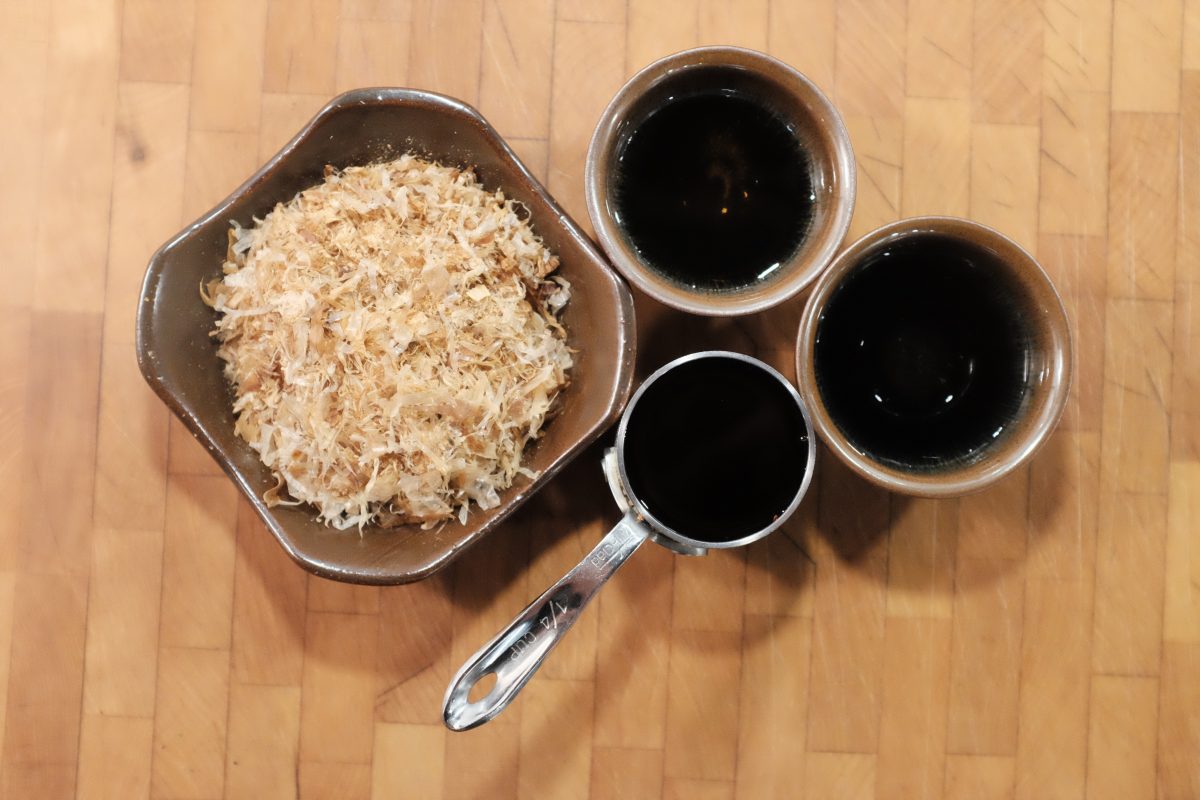
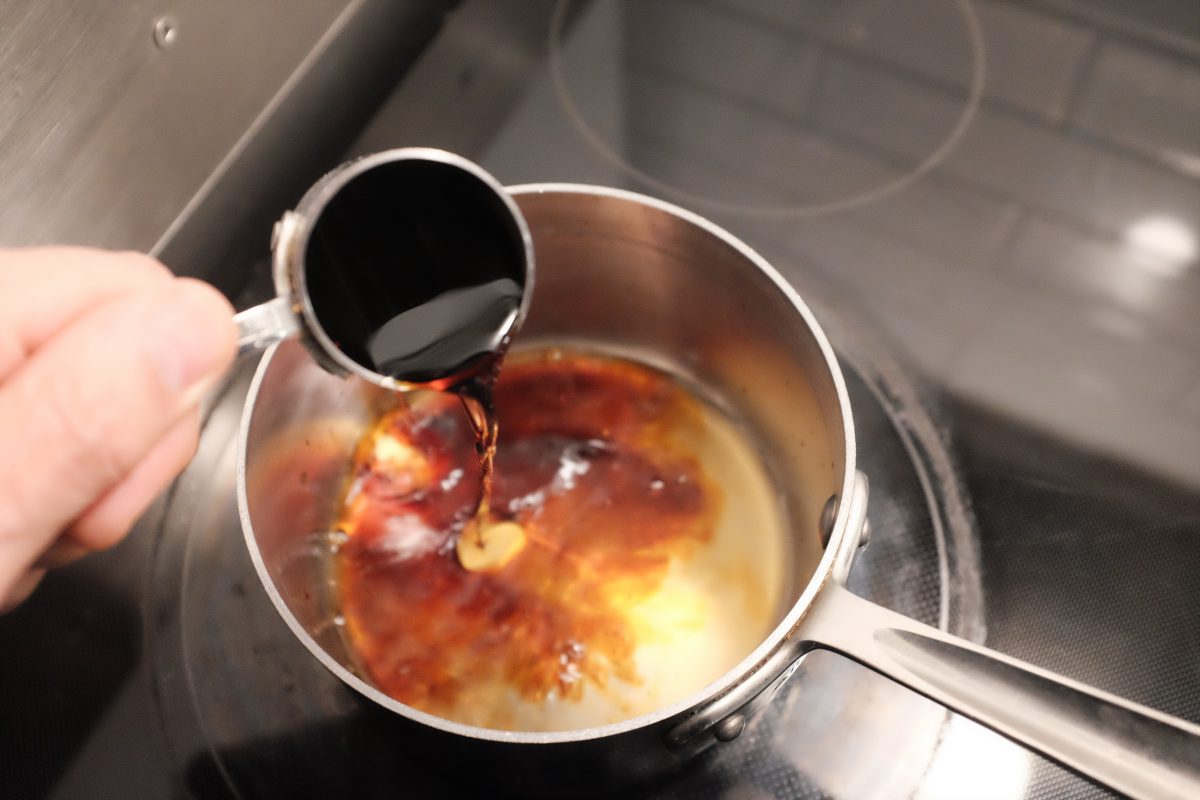
While you are warming your tofu, you can make the sauce. This can also be made ahead of time and stored airtight in the fridge for a long time. You won’t use the whole recipe for one tofu block so store the leftover sauce for next time.
The Sauce
This is the sauce recommended on Just One Cookbook and it is a perfect accompaniment for this hot tofu. I add just a bit more mirin…
Sauce ingredients:
- 1/2 cup bonito flakes (katsuobushi)
- 1 tablespoon (15ml) sake
- 1 tablespoon (15ml) mirin
- 1/4 (60ml) cup soy sauce
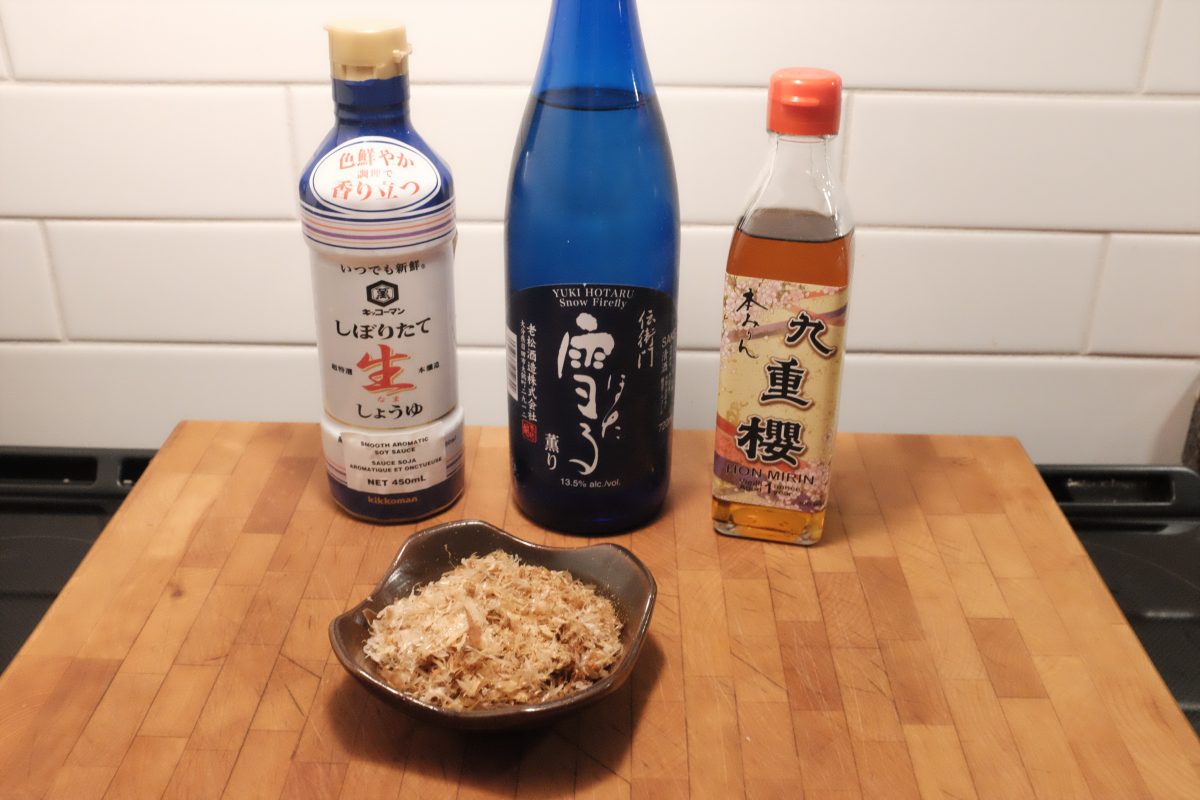
Use a good quality Japanese soy sauce. I like this made-in-Japan Kikkoman for cooking. It is very tasty and not too expensive. The sake I used is a little fancy for cooking but my local booze shop was out of the cheaper one that I normally use. Avoid using “cooking sake” which is salted and tastes well…bad. If you wouldn’t want to drink it, I would avoid cooking with it. I would say the same thing about wine in Western cuisine.
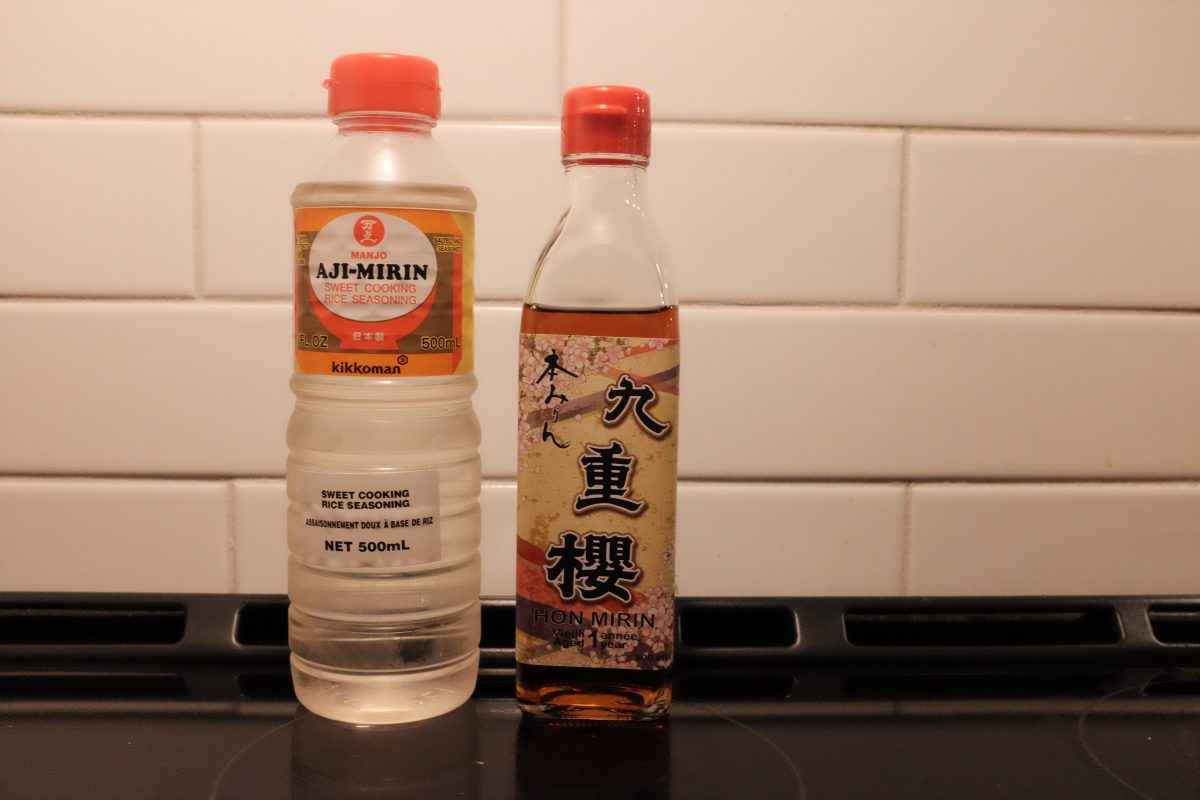
about mirin…
At least around me, good mirin is very hard to find. Hon-mirin is a real fermented rice wine. It is delicious as it is and is great to cook with but…nearly impossible to find and expensive. Aji-mirin is in most grocery stores. This is a cheap cooking alcohol, sweetened with corn syrup and flavoured to taste something like mirin. It is not ideal but it is most often the only one around. If there is no alternative it works fine here.
Sauce process
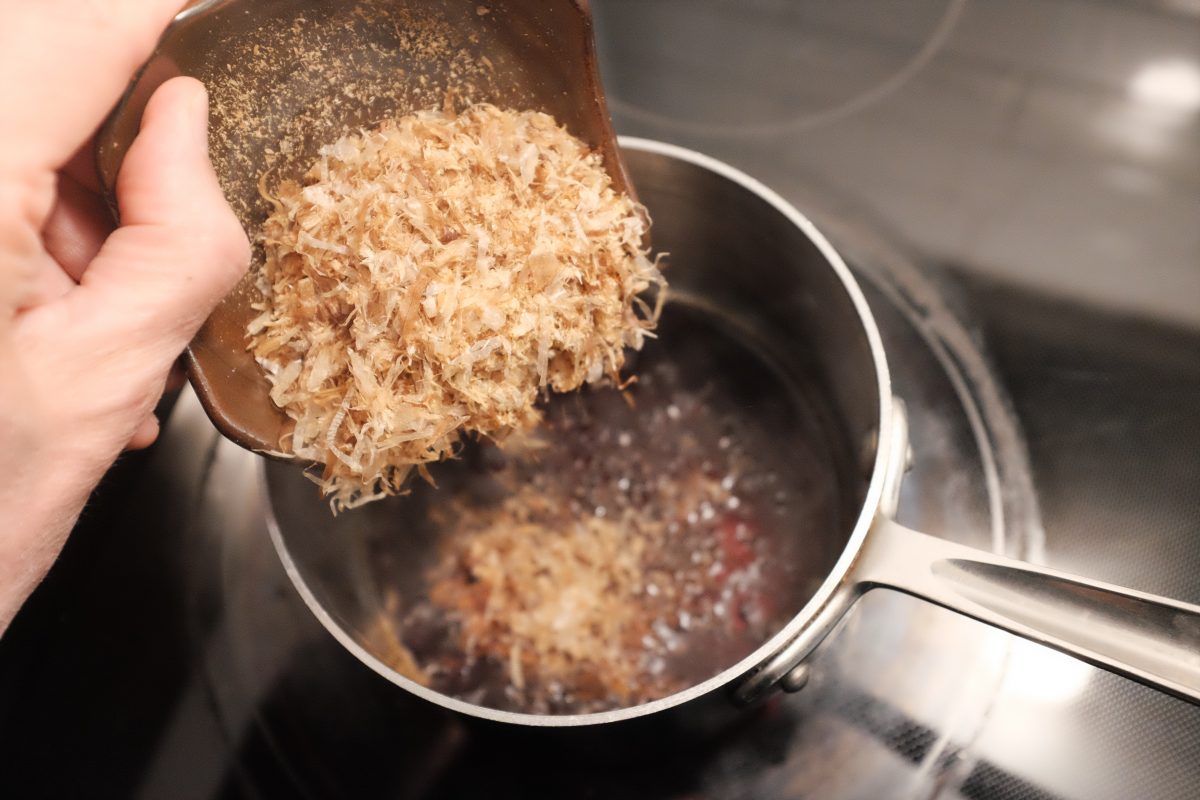
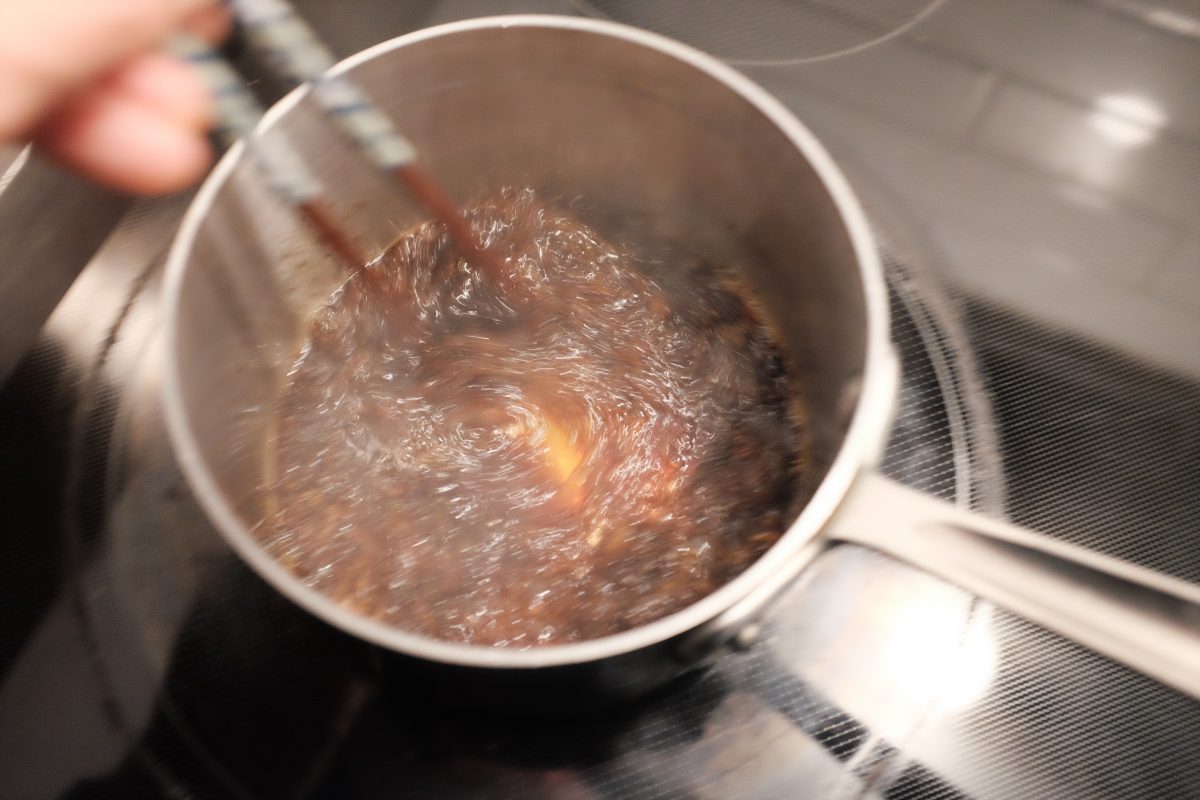
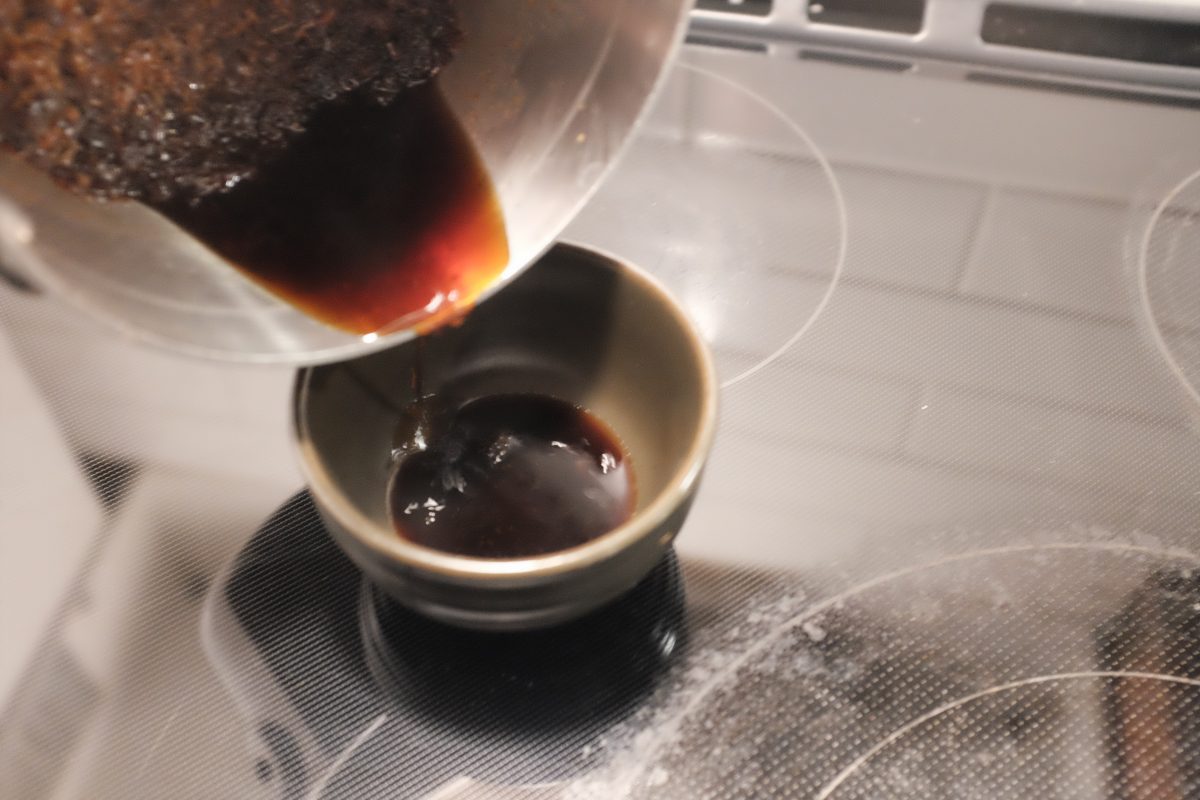
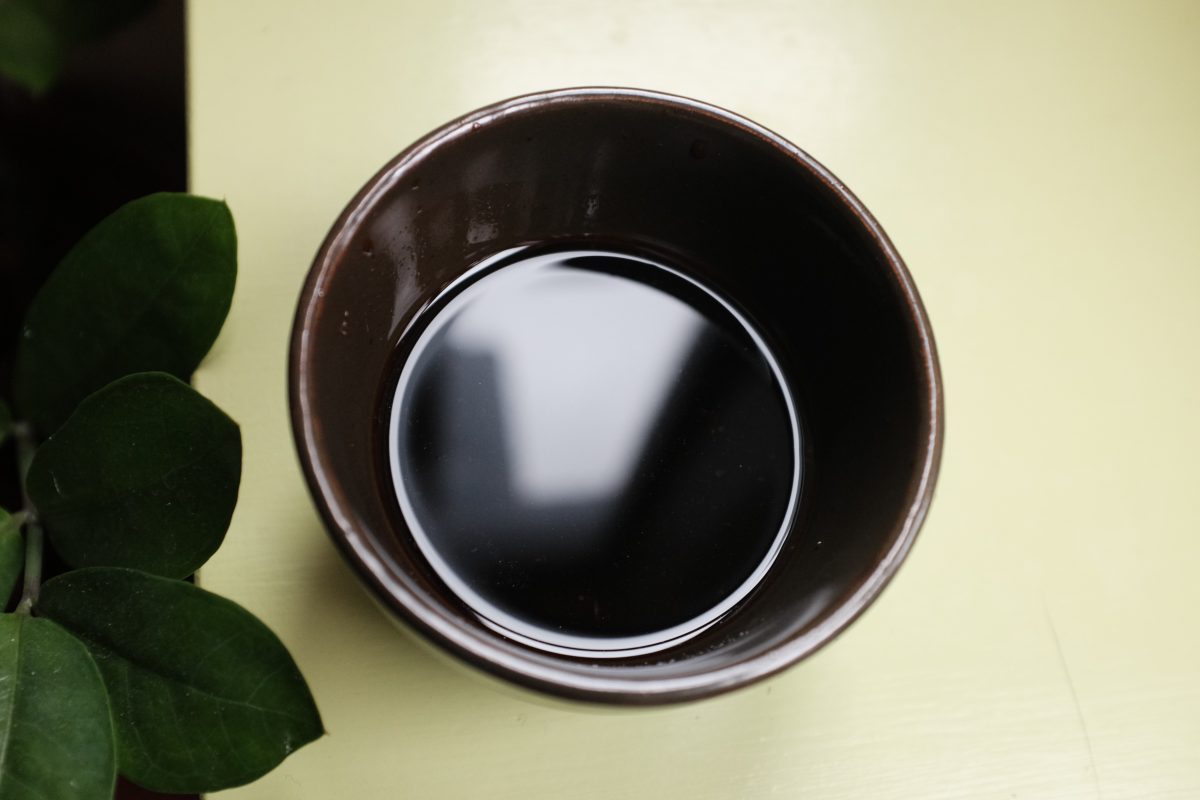
Serve with your favourite sides…
I am having yudofu with a side of fresh salad and white rice. Sauce is in the little pitcher and togarashi spice for a touch of heat.
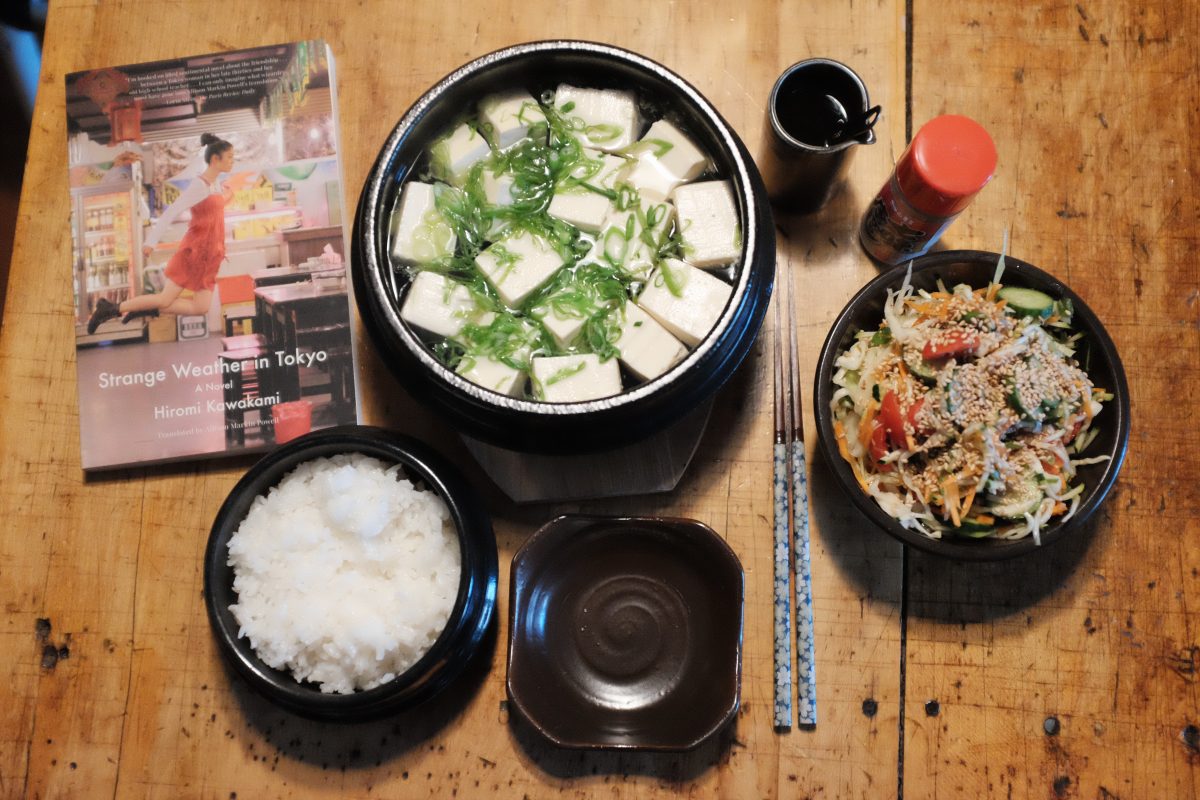
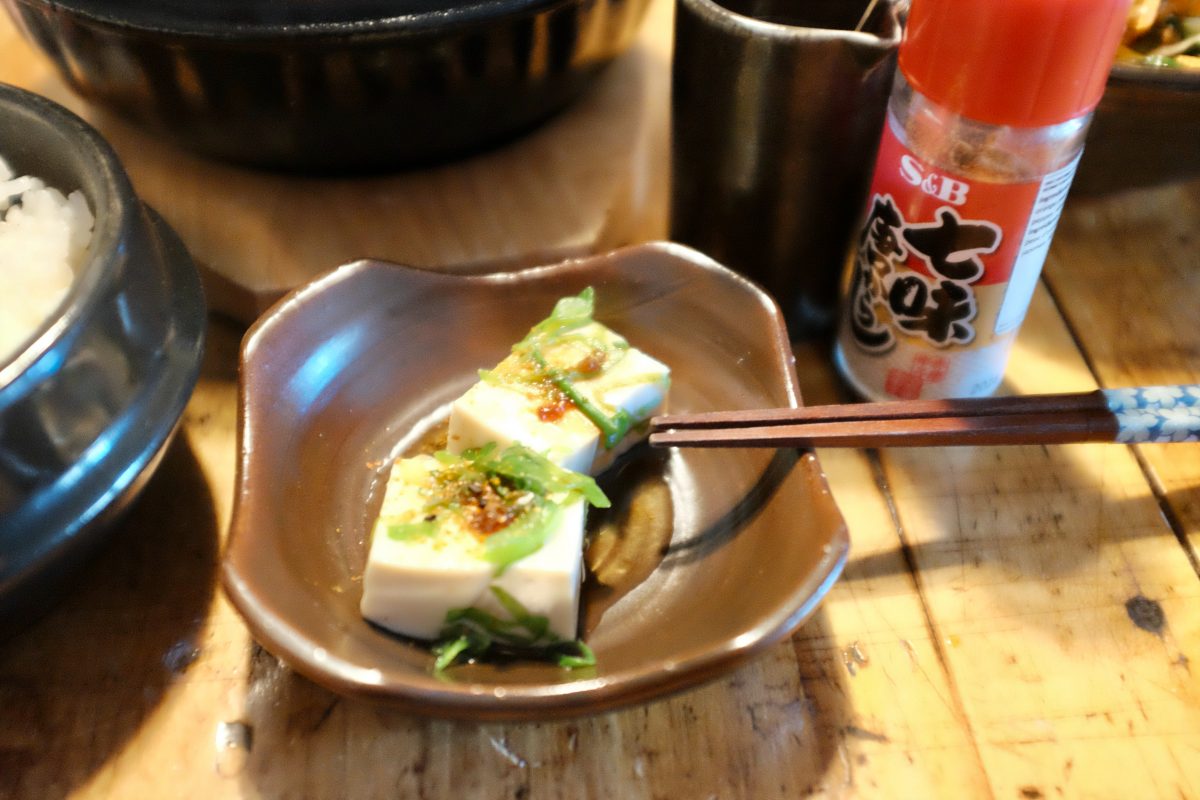
When I eat tofu, it is usually as a side or as a minor ingredient in a bigger dish. This yudofu is the only time that I really enjoy tofu as the centre of the dish. The warm and creamy texture with the savoury salt of the bonito and soy sauce is incredibly satisfying. I eat this almost once a week these days.
If you have any questions or comments please feel free to leave them in the space below. I always look forward to hearing from you. If you want to know where I found real mirin in Toronto, send me a message through the contact form.
If you enjoy the content and would like to contribute towards website maintenance and development, you can make a donation here. Thank you for reading TigerSalad.
Expensive Pencil
I like to write with a pencil.
I like the way a pencil feels warm between your finger tips and resting in the crook of your thumb. When I write with a pencil, I feel resistance. Pencils push back a little. They let you know that you are not alone in your writing or sketching. They are right there with you.
In contrast, ball point pens feel slippery to me, like walking on wet ice. My writing is naturally sloppy so a pencil slows me down enough to keep the letters a little more legible. I also think pencils smell good and I enjoy sharpening them to a fine point.
There is a lot to like about a pencil.
Stationary Shops
I find it hard to walk by stores that sell writing tools without going in to have a quick look around. Even though the feature displays of high end fountain pens are beautiful, I immediately gravitate towards the pencils. And sharpeners. And erasers with all their different materials and colours and stickinesses. White polymer is my favourite. It cleans up my messes the best and it has a chewy texture that I like, softer than the raspy pink ones.
Today I found myself in the Junction area of Toronto where I was surprised to find 3 well stocked stationary and art supply stores within 2 blocks. They all had a great selection of writing tools and very little overlap between them.
In the last shop I visited, I found a pencil that I had to bring home. It’s this one:
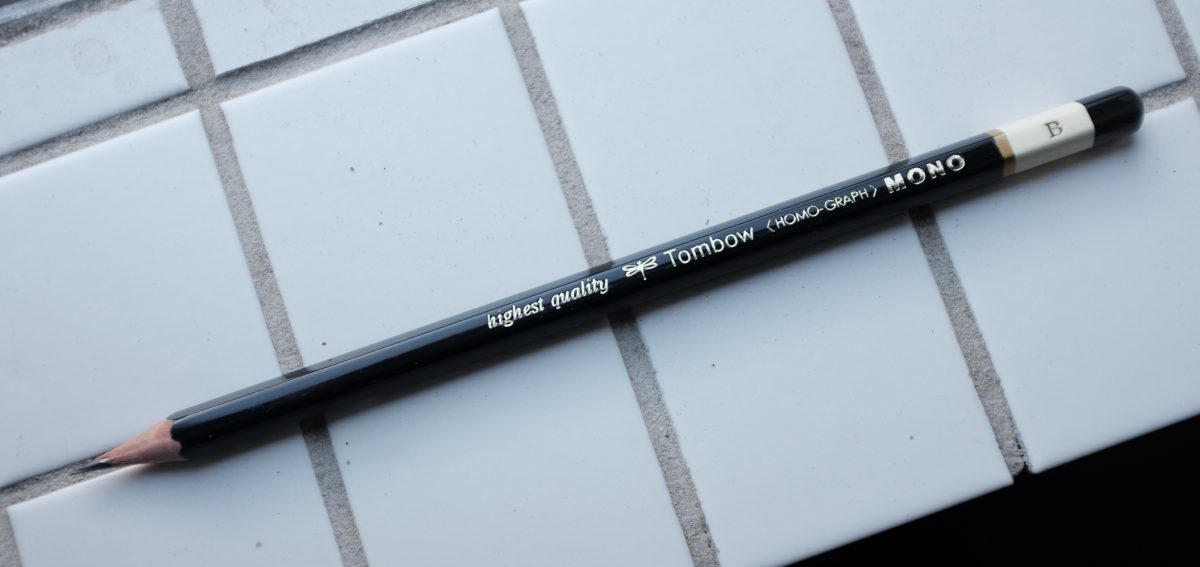
There wasn’t a price on it so I brought it up to the cash register to see. I found out that it cost around 2 dollars. TWO DOLLARS!! This is a Tombow brand pencil, made in Japan by a small factory. The barrel is cedar, the graphite core is the highest quality, and it is finished with more than a few coats of rich black lacquer. There is even a cute silver dragonfly embossed onto the barrel (Tombow means dragonfly in Japanese). This pencil is a skillfully made tool and it is a pleasure to write with. It makes rich, dark and consistent lines without excessive pressure. It is perfect. And it costs 2 dollars!
Think about what else you can buy for 2 dollars…
Nothing…you can’t buy anything for 2 dollars. Not even a bag of chips. Not even at the “dollar” store.
I left the stationary shop with my brand new shiny black-lacquered Japanese-made super-high quality cedar-barrelled premium graphite-stuffed cute dragonfly-embossed pencil feeling pretty good about myself. I knew that I got an amazing deal.
What can you do with a 2 dollar premium-grade pencil?
- draw a picture of your cat.
- write down something that you know you will forget (make a memory out of paper, as an elementary school teacher once told me).
- write a poem about something that took your breath away.
- write a love letter to a person you have been thinking about non-stop to the point that the rest of your life has ground to a complete halt.
- take out a pad of paper and write a message to the person sitting next to you on the subway…you KNOW that they are reading over your shoulder. Make them smile.
- leave a note to your partner (or your parents!) before you leave the house telling them how important they are to you.
- write a paper letter to someone. Nothing in the digital world can touch the intimacy of pencil (or ink) on paper. Instant gratification in nearly every aspect of our lives has all but erased the joy of discovery, the excitement of anticipation. Imagine the thrill and surprise of finding a handwritten letter addressed to you in your mailbox.
- make a list of things that you want to do…things that will make your life richer.
- make of list of things you never want to do…this kind of list is also surprisingly helpful.
- you could write a long letter to someone explaining why you have to leave them. A pencil can break somebody’s heart too.
- the list goes on and on
That seems like a lot of joy, a lot of potential, a lot of power for 2 dollars…
Yes, of course, you can do a lot of these things on your computer or phone BUT…they will soon get lost and forgotten among all the other junk on there.
A warning I found on the Tombow Pencil website:
I think this is a direct translation from Japanese:

In elementary school I seem to remember more than one kid that got stabbed in the hand with a pencil by a pissed off classmate. Maybe it was just my school… maybe Tombow knows something about this too. Anyways…boys will be boys etc…
Tombow Pencil Company Limited seems to recognize the power of their product…. here is a link to their website if you want to check out their super-pencils.
A scientific case for pencil use
I recently read a study that looked at dementia in very old people. Specifically, it looked for commonalities among seniors who have managed to maintain perfect brain function even though they are well on their way to 100 years of age. Across all cultures, across all socio-economic backgrounds, looking at everything from education to physical fitness to diet, there was only one thing that all of these sharp minded ancient people had in common: Every single one of them wrote by hand, everyday. Diaries, letters, notes…whatever. Pencil or pen on paper. Thoughts and ideas…flow through complex muscle movements in the arms and hands coordinated with vision to make written language on paper. Powerful.
Happy writing!
If you would like to visit the shop where I got this pencil, check them out here: Articulations.
If you enjoy reading this stuff or find the recipes useful and would like to contribute towards website maintenance and development, you can make a donation here. Thank you for reading TigerSalad.
Farewell JW


This morning I received a message telling me that a person I worked with a long time ago had taken his own life. I had not seen this person in many years but I actually thought about him quite often. JW was one of the most unique people I had ever met. He was at least as tall as me and skinny as a rail. He had some of the biggest and wildest hair I have ever seen. And an unforgettable face. A movie star face…a face that always looked handsome in photos. Like Adrian Brody, or Daniel Day-Lewis. A face that would have looked perfect on the back cover of a best selling novel. A face that would have made sense in a visual dictionary next to the word “poet”.
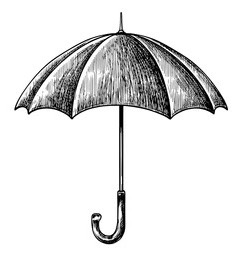
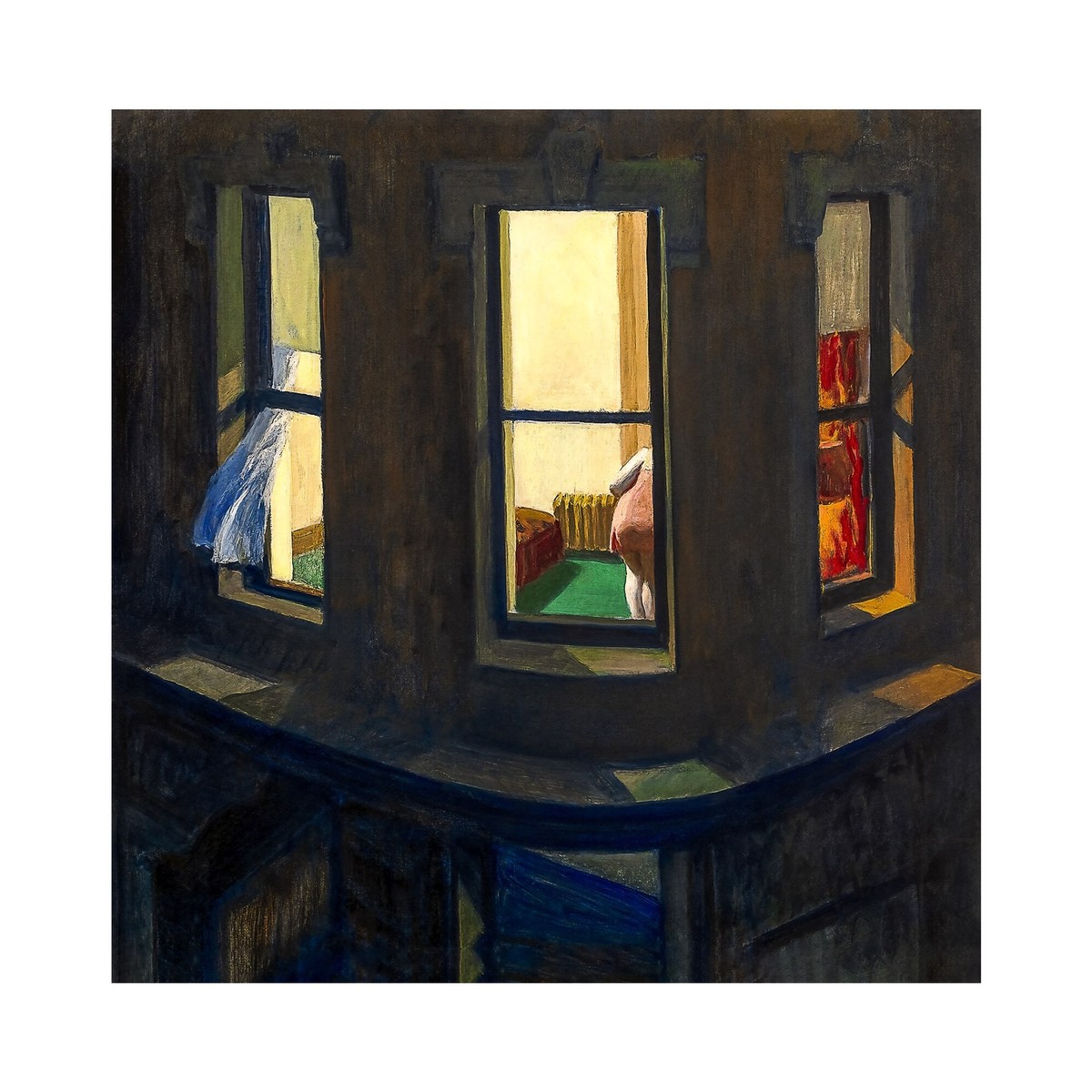
JW was outwardly sarcastic and funny and sometimes a little mean in a harmless big-brotherly way. But, he was also tender and sensitive and deeply caring. I always liked him and I always enjoyed his company when we worked together. I remember that he liked bicycles and umbrellas and had a tattoo of at least one of those. He liked Edward Hopper paintings, especially the ones depicting night windows from outside.
Rabelais and Don Quixote
A few days ago, I unknowingly read his last instagram post…the one he wrote on the day he died. He talked about how many times he had tried and failed to get through reading Rabelais. I was surprised because, other than myself, he is the only person in my whole life that I had ever heard mention that book.
We already had some kind of literary thread between us. I knew that Don Quixote was his favourite book and I loved it too. I had read that book in my 20s, the same age JW was when we worked together. And, in this case too, he was the only other person I knew who had read it.
When I think about JW and Don Quixote now, it makes so much sense. He was an idealist. I think he always had poetic and romantic notions of how the world should be. I think he believed that people were capable of kindness, of courtesy to strangers, of chivalrous acts. That they should strive towards that ideal and had a responsibility to do so. JW was quixotic, through and through.
I bring up his last instagram post about Rabelais for this reason: I think I saw it very early in the morning, right when I woke up. I remember smiling to myself and thinking “Only you JW…would try so many times to read and understand that impossible book”. I wanted to write to him in the comments about how I had also struggled so many times to read it and always met with failure. I think he would have laughed. Instead…I slid out of bed and started my day. I thought that I would get back to it later but..I didn’t.
If I had left him that comment, would it have made any difference? Probably not…but possibly. It may have given him the idea that some distant friend still thought about him. He may have been surprised and smiled at that. It may have gotten him through that one day. And in that one day…something else might have happened to get him through the next day…and so on. Who can say? All I know for sure is that my words had zero impact because I didn’t say them. Maybe it was already too late.
Thank you JW. I feel fortunate to have known you while I did. I was happy to work with you at such a special place and time. When I first read your Rabelais post..i paused for some reason..and I felt…something…maybe it was already your absence. Knowing what I know now, I feel your absence all the more. Even though we had not talked in a long time, I thought about you often.. especially when I was out walking at night peering into the lit windows of houses I passed by. I promise I will keep doing so. I wish I had told you these things when you were around to hear them.
This is yet another reminder for me that tomorrow is not promised. If you are thinking about someone, tell them. If you care about someone, let them know. If you are worried about someone, get in touch. No harm can come of this…it costs you nothing. But it may make all the difference to someone else…maybe just for one hour or one day…but maybe for a lifetime. Don’t wait too long.
February 17th, 2026
Today was JWs funeral. I won’t say much about the service itself. It was sad..and more difficult than I thought it would be. Not so much at the service itself where I was surrounded by other people.. but more so when I was walking home alone through the city, and later that night as I lay in bed reflecting on what I had seen, unwilling to close my eyes.
It took around two and a half hours to walk home from the cemetery. The route was familiar but the weather was strange. The entire city was obscured by a weird yellowish fog, the air was thick with humidity and the sun was a weak halo of light buried in layers of cloud. I have never really seen that kind of weather here before. I thought that JW would be happy to know that on the day of his funeral, the weather was so gloomy and dramatic. I think he would like that.