Posts By Martin
Winter Solstice
The shortest day
December 21st is the shortest day of the year. Daylight shrinks to barely 9 hours with sunrise just before 8 am and sunset just before 5 pm. I know I am not the only one who feels the weight of this time of year. Many people I know seem to enter some kind of seasonal depression, sometimes (but not always) tempered by Christmas festivities.
Toronto is a lovely city for the three warmer seasons but not so much in winter. From now until spring the sun rarely shines and the occasional bright morning inevitably turns to gloom by the afternoon. Most years, there is not much snow in the city and winter temperatures tend to fluctuate above and below the freezing point. Snow quickly melts into salty, grimy pools that later freeze into sheer ice. Sometime in the new year, Toronto enters a deep freeze that lasts anywhere from a few weeks to a couple of months. These cold days can bring sunlight but it doesn’t last for long and the city soon sinks back into murky grey.
When traveling, sometimes people ask me what Toronto winter is like. I am sure they are imagining crisp cold air and bright blue skies meeting a sparkling white horizon. I am always a little sad to tell them that, at least where I live, it is mostly salt crusted dirty streets, grey days and long dark nights.
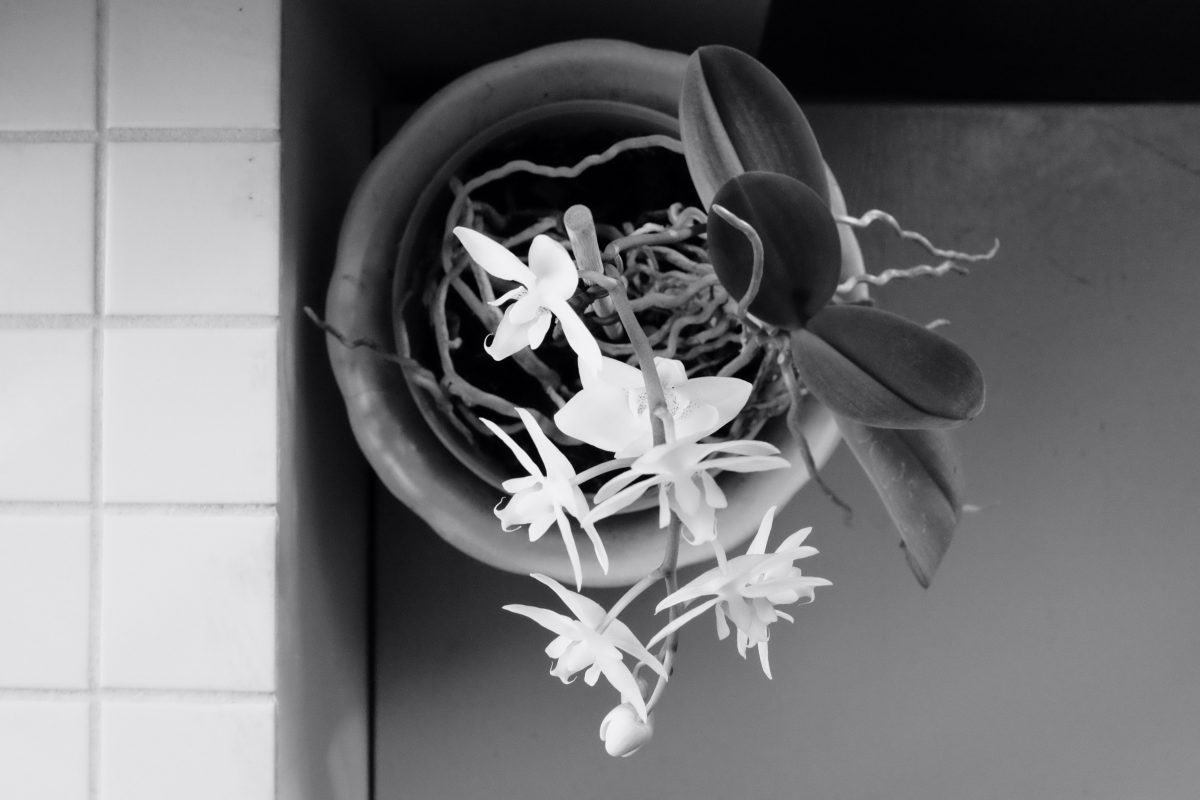

Winter Blues (except when it snows)
Even though I live in this colourless city, I can still enjoy winter. The cold doesn’t bother me, and of all the natural phenomenon in the world, I am always deeply moved by the magic of a big snowfall. Every time. I love the way it mutes the city noise and how it transforms the urban landscape into something soft and beautiful. I can’t think of too many things that make me happier. Unfortunately, it doesn’t usually last very long before the next melt cycle.
Deep in the typical gloom of Toronto winter, I have a hard time seeing anything that I want to photograph and writing becomes a lot more difficult. Creativity shrinks back. I tend to retreat into reading books, watching films, listening to and learning music and language studies. A lot of input, not much output.
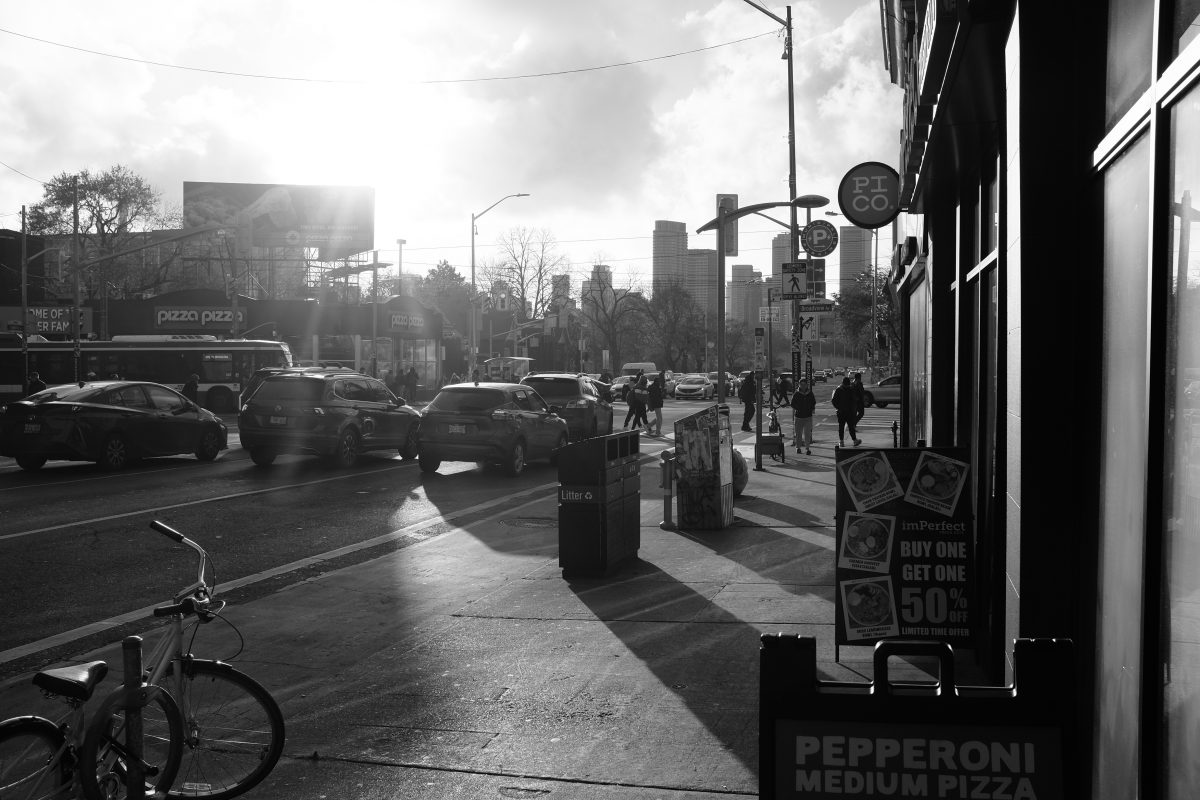
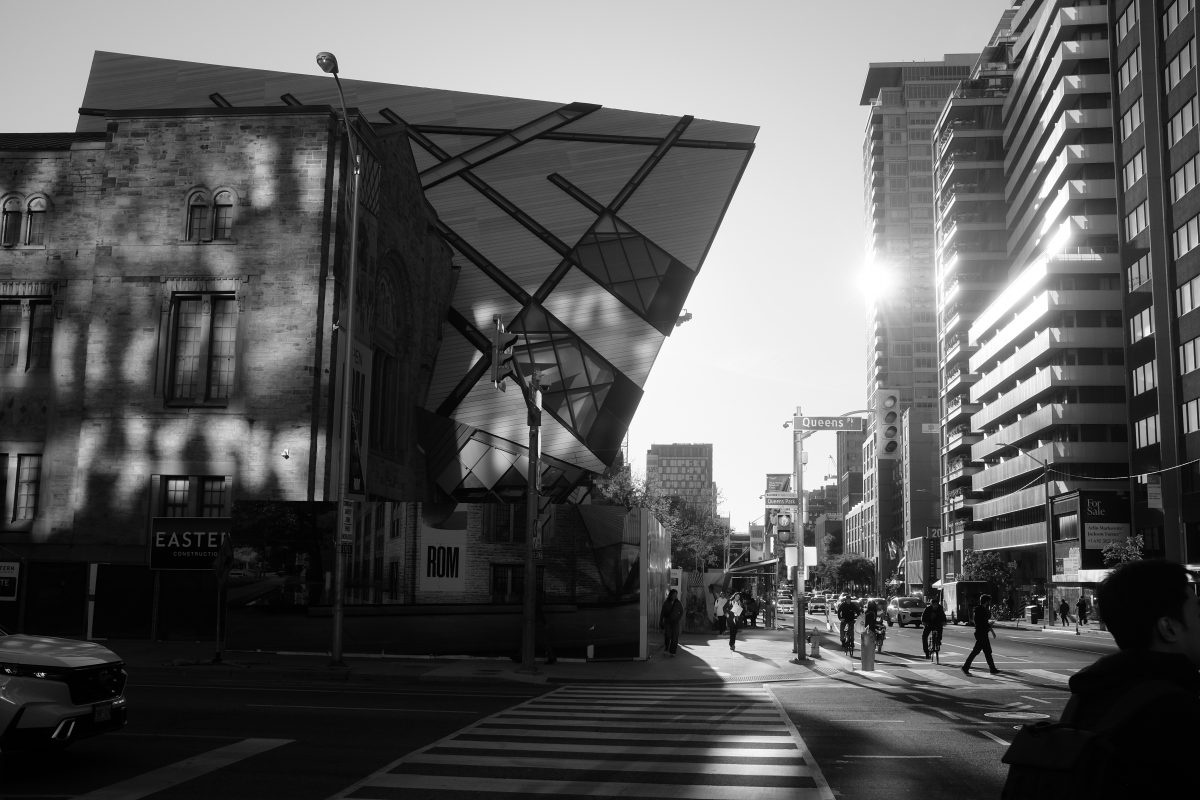
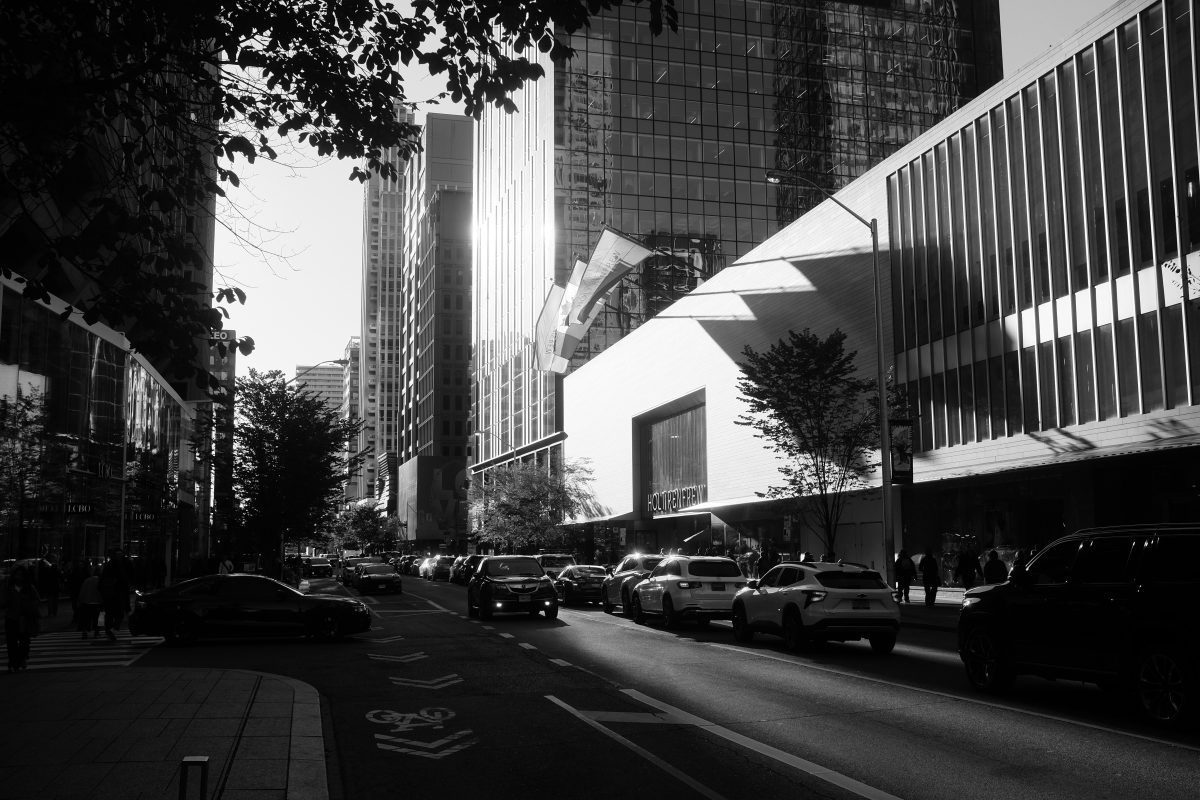
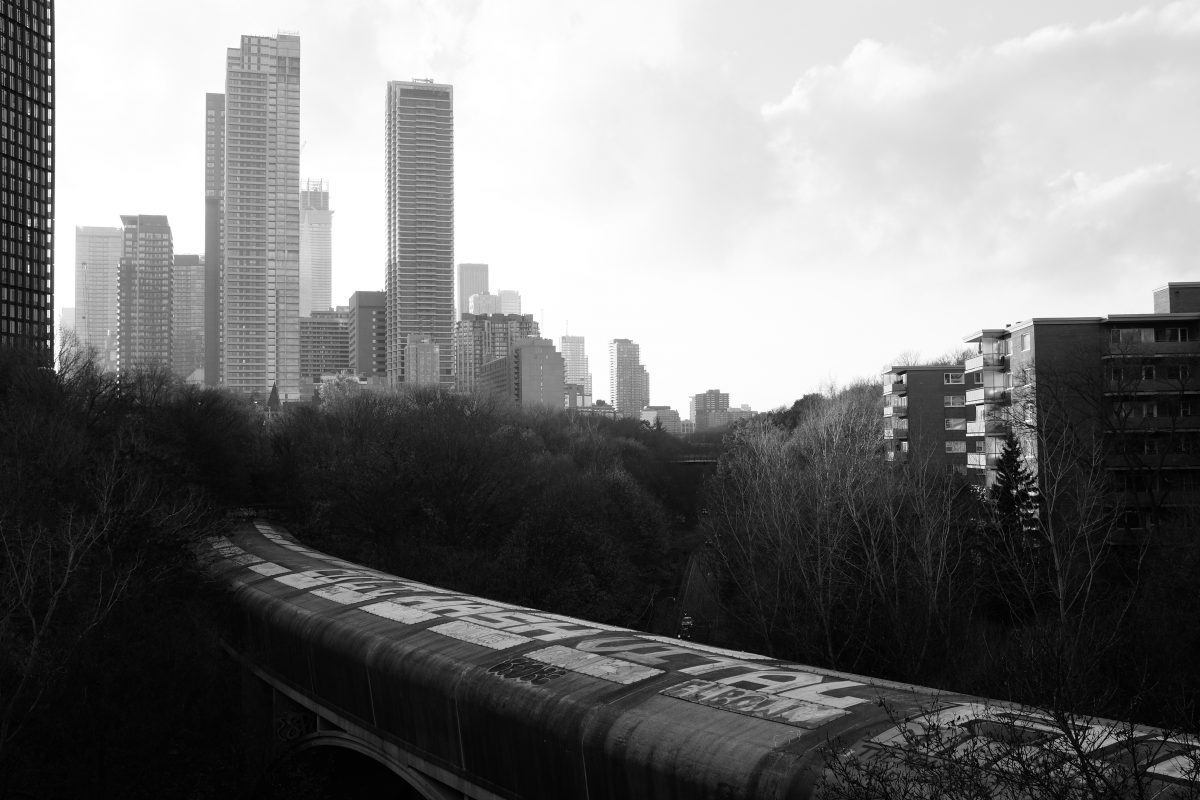
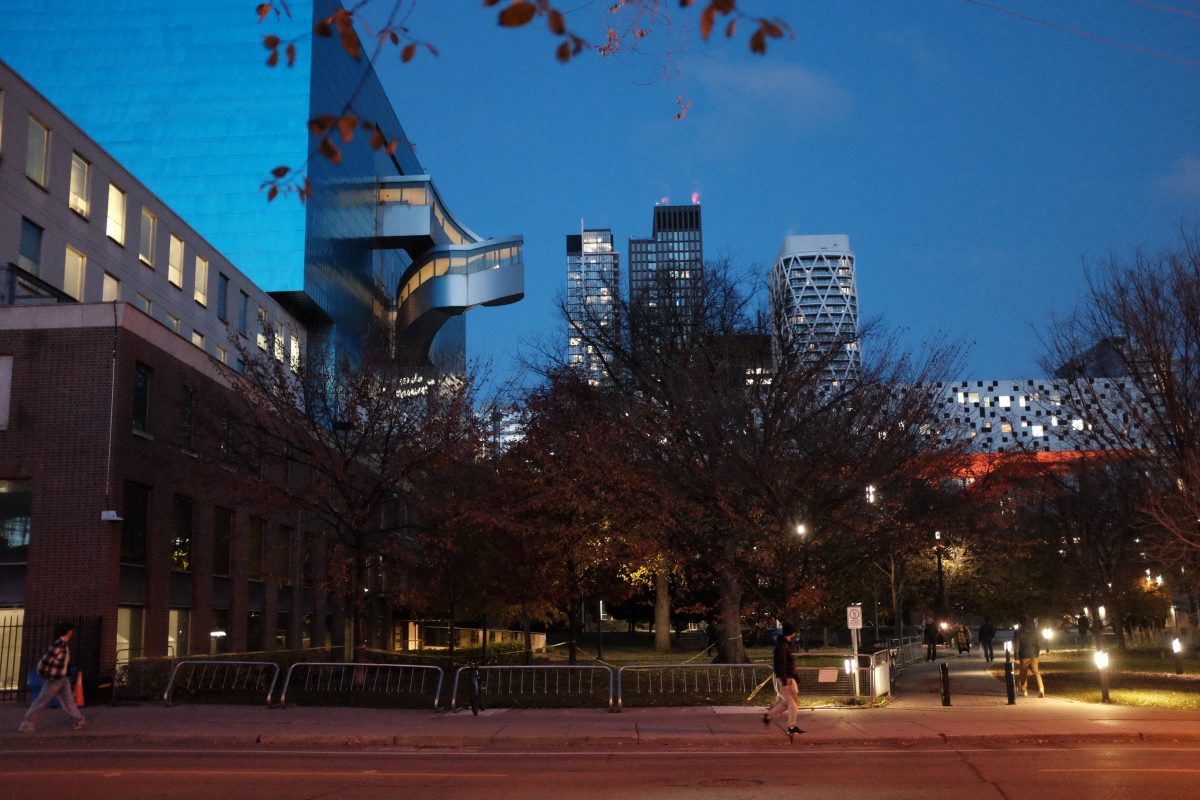
From spring to fall I was writing on here at least once every two weeks and I had so many pictures that I sometimes had trouble organizing them. Lately I have been doing less creative writing. And I have not wanted to pick up my camera as much but, I have taken a few pictures that I like. I will post them up here with no other purpose than sharing a few good, mostly unrelated, shots.
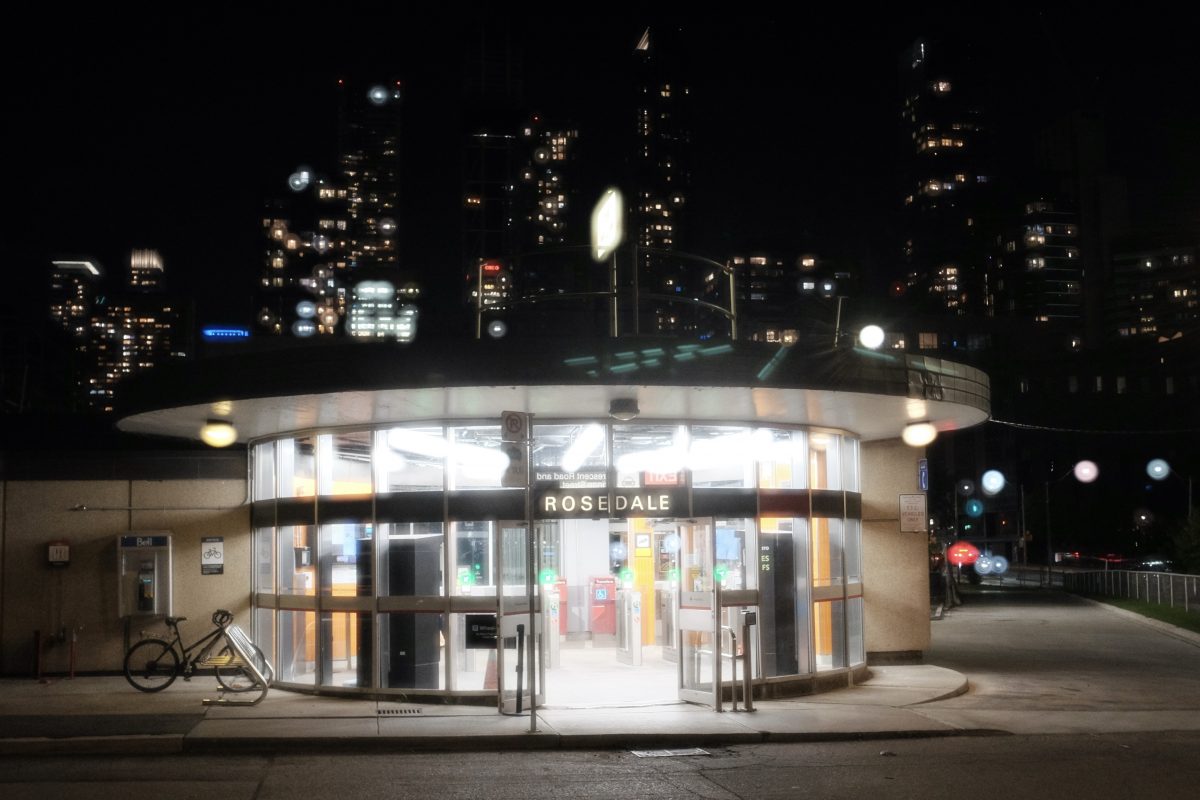

2025 in review
For a long time, I had planned to take a year off from work and 2025 was it. Originally I thought I would get right into planning my next career move but, instead, I was flooded by the desire to create and to learn. Not in any organized way…just to follow threads as they appeared and to accept and act on ideas and inspiration without any resistance and with the least amount of judgement possible. The result was a ton of writing.
This website started as a travel diary for an early spring trip to Japan and Korea that I took with my daughter. Sick of all the trash and advertising on social media, I thought this would be a fun alternative. In the end, it became something I loved doing and something I am quite proud of. I still revisit the trip quite often. The photos are good and the articles are fun and pretty well written.
When I got back, I wanted to keep writing and TigerSalad became a place for me to document photo projects, recipes, articles, ideas and sounds…all things I used to dump (in some compromised way) onto social media. On here, I rarely involve my phone and I can write as much or as little as I like. To date, I have written over 70 articles.
Surprisingly, TigerSalad has done ok. I get a decent amount of traffic and I know that the people who are visiting are interested in what I am doing rather than getting directed here by some stupid algorithm . I don’t link ads or pop-ups and so, I make zero income from it. Fine with me! Instead, I have a discreet donation link where people can send me some dollars which I put into website maintenance if they enjoy the articles. Even though I had zero expectations, a few generous amounts came through in the first few days. Thank you!!
On top of those 70 or so website entries, I have been doing other writing on the side. I have started some long form fiction (in other words, a book). Whether or not it ever gets finished or sees the light of day is not so important to me. I just enjoy writing it and learning about the inner lives of my characters as they unfold. I like the people in the story. They make me laugh and I care about them and I want to know what happens next. That is enough for now.
In the last few months, I have also picked up a few paid jobs doing copy writing: captions for social media projects and website copy. I really enjoy this work. I will labour for hours choosing the sharpest word, the most effective sentence, the most concise and economical phrase where necessary. To me it is like solving a puzzle. I love it. And, I do it all facing my big windows with a hot coffee and a sleeping cat on my desk. It is like a dream and I wish I could keep doing it. Let’s see what happens…

Christmas is coming…
I have a few close friends who are sincere Christians with a strong connection to their church and community. Christmas has a deep spiritual meaning for them. It is a time for celebration. The effort and joy that they put into this season is awe inspiring. It is fun to witness and some of their energy definitely rubs off on me.
As for me, I was mostly raised without any religion. Czechs, along with Japanese and Chinese are among the worlds least religious people. My family never went to church and religion was never a topic of conversation. Christmas was important but it centered entirely around family.
When I was very young, my parents (barely 20 years old) were new immigrants to Canada with no family here at all. I don’t remember too much of those days. I think our Christmases were probably more like house parties with lots of music, drinking and smoking with me sleeping in a pile of fur coats on a bed somewhere. But, over the next few years, my family began to grow as my parents began sponsoring their brothers and sisters to move to Canada.
At some point in my early adolescence, our family was suddenly huge. Aunts, uncles, cousins, friends, everyone gathered at our house for the Christmas season. For around a week between Christmas and New Years Day, our house was packed with aunties cooking and baking and uncles smoking and drinking and talking non stop. Food was everywhere. People slept over and stayed for days. One meal would blend into the next. Endless packs of cigarettes would burn to ash over hours and hours of card playing and laughter. To me, it was heaven. I can’t remember a time when I felt more warmth and happiness.
Of course, as years pass, time takes its toll and my once huge family Christmas has all but disappeared. Death, disease, divorce and relocation for work have all played a part in chipping away at the giant celebration of the past. These days, Christmas is always coloured with a little sadness. I miss that huge family made up of the people I have loved the most. I especially miss my uncles who have died, the ones who worked awful jobs and had nothing, but would still manage to tuck a few hundred dollar bills into my pocket every Christmas. XOXOXOXO.
These days, my family is very small. Still… we have our Christmas rituals, we eat our turkey dinner, exchange a few gifts and enjoy the love and warmth of the season. We are lucky to be able to do so. Although Christmas arrives with a little sadness and a little loneliness, I still look forward to it and feel fortunate to spend the hours with people that I love. Merry Christmas!
Best Christmas Song: “The Christmas Song” Nat King Cole (chestnuts roasting on an open fire..)
Best Christmas Food: Turkey (brined)! Stuffing (must have bacon or sausage)! Cranberries!
Best Christmas Movie: “2046” Wong Kar Wai. Not exactly a Christmas movie but a lot of its key moments happen at Christmas. It is really my favourite movie. I watch it once a year at night on the 25th.
Upcoming Projects
Although I haven’t posted up anything lately, I have been busy photographing and documenting a few fermentation projects. My apartment is cool in winter so it is a perfect time for long ferments. I have a batch of 2 stage makgeolli (Korean rice alcohol) that is almost done. A detailed recipe with tons of pictures and sounds will go up soon. I will also be fermenting pears, first into alcohol and then into vinegar. This will take well over a month but it is in the works.
TigerSalad has a fair amount of recipes and I use them all the time. Originally, I had recipes scribbled down all over the place on loose paper and the backs of receipts etc… I started putting the recipes on here because I wanted to make an online cookbook for myself so I can have everything in one place. I really dislike cooking from videos, and most online recipes have too much filler and way too many ads and pop ups. My recipes are designed to be clear and logical, with lots of photos to make even complicated things doable. Try them…they work.
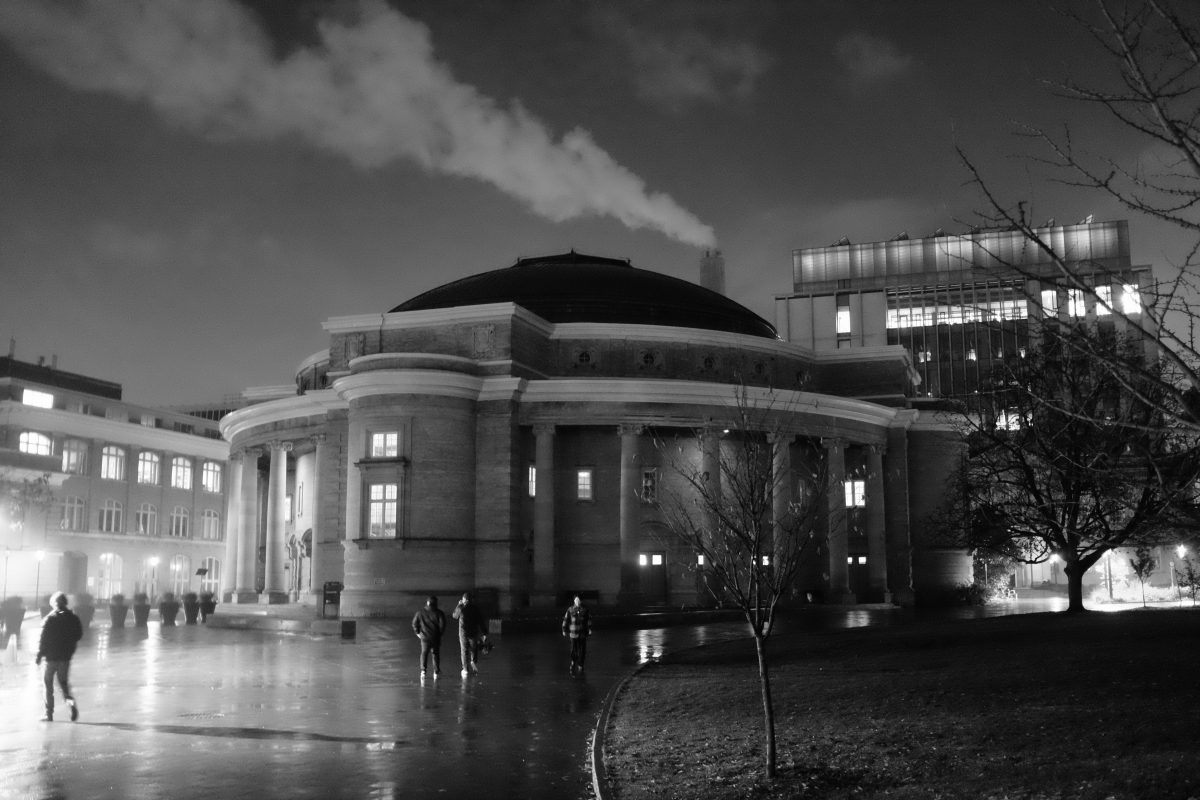

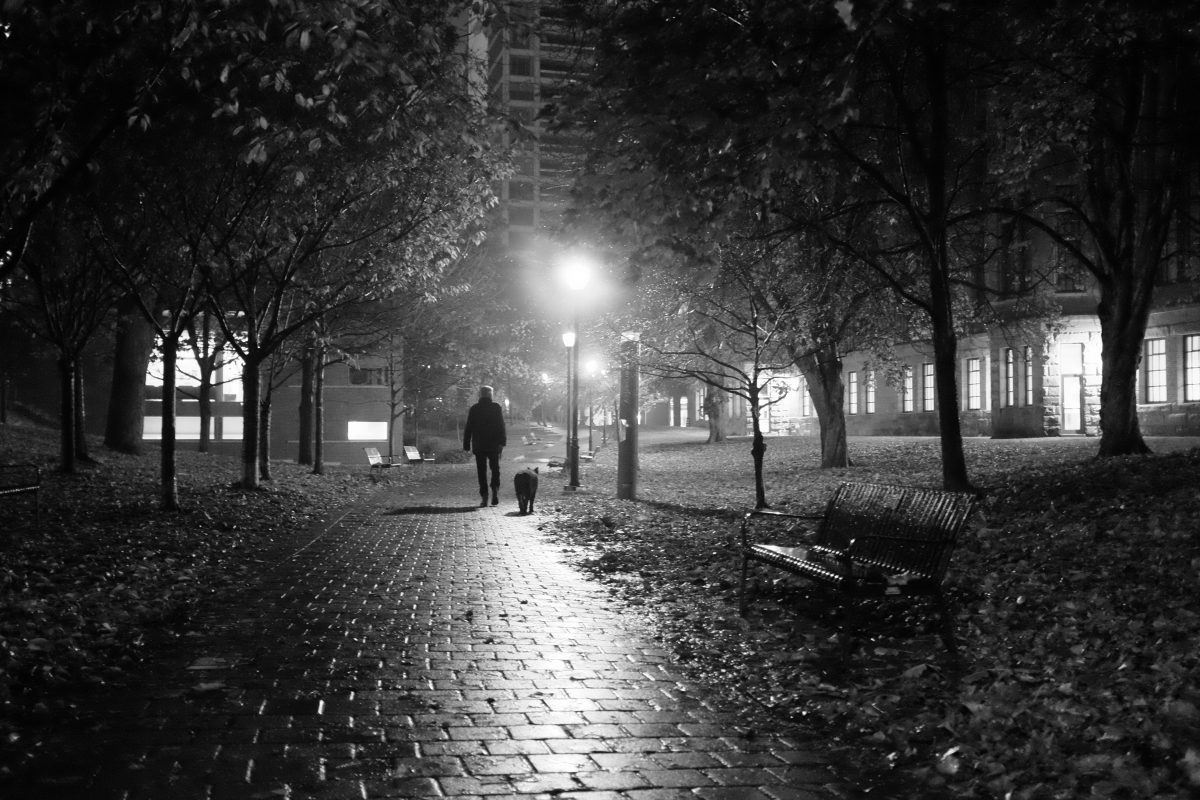
Winter Photos
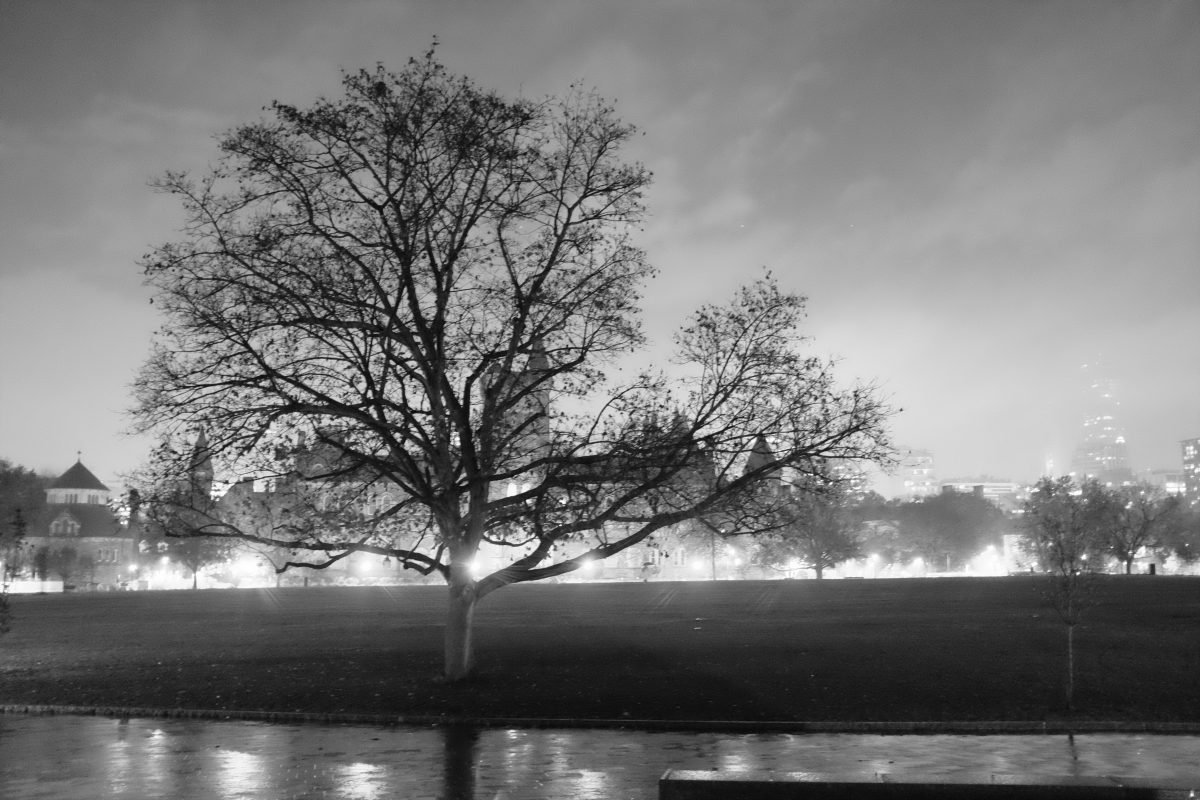
I hope it snows soon. Big snow. Lots of it. I am looking forward to getting out in the city with my camera and capturing Toronto in some of its handsome winter moments. Like this one in St James Town last year:

Big City Winter Survival Tips:
1-Go outside! It’s not as cold as you think and the more you go out the more you will get used to it. There is lots of oxygen and less pollution in heavy cold winter air. It is energizing.
2-Don’t try to look cool or fashionable in winter. Just dress up in warm layers of clothes. Unless you are very wealthy, it is hard to be warm and look cool at the same time. Just give up!
Happy holidays from TigerSalad! See you soon with a home made booze recipe just in time for New Years!
If you have any comments, questions or suggestions please leave them below. I look forward to hearing from you. It is the only way I know you have been here…other than vague stats from Google : )
If you enjoy the content and would like to contribute towards website maintenance and development, you can make a donation here.
Samgyetang
What is samgyetang?
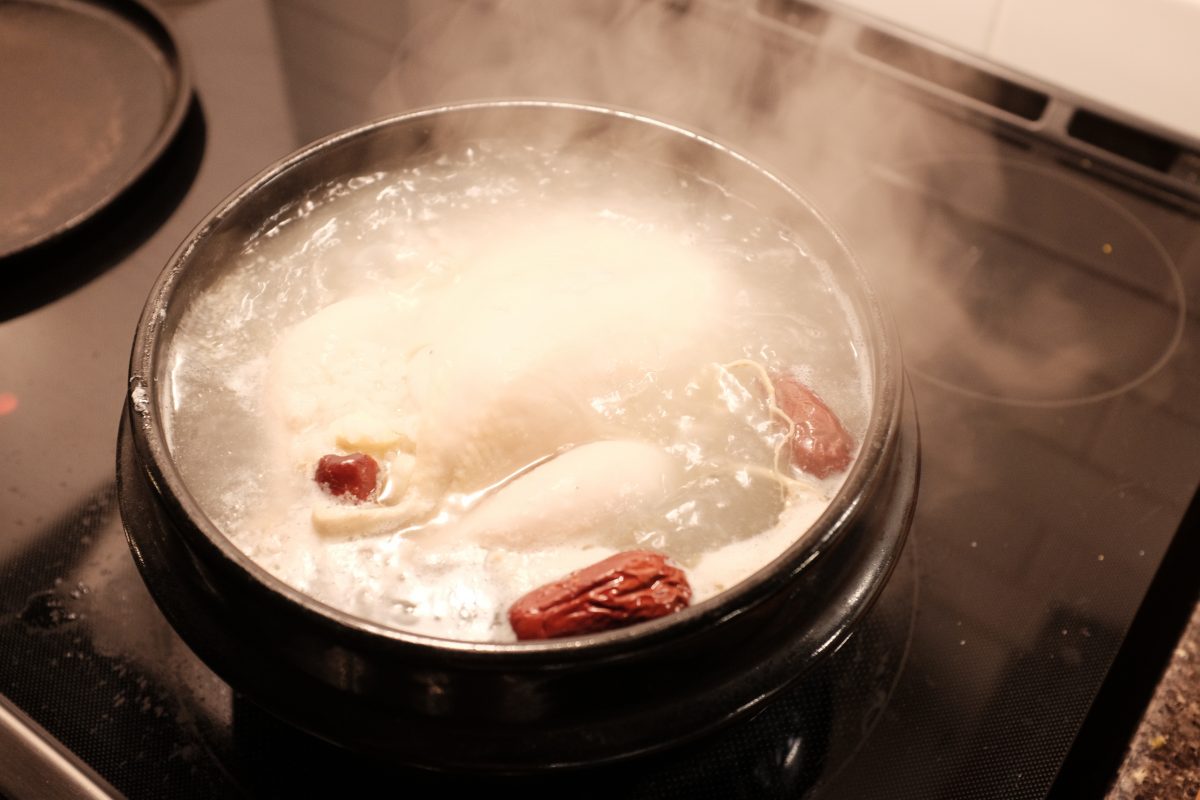
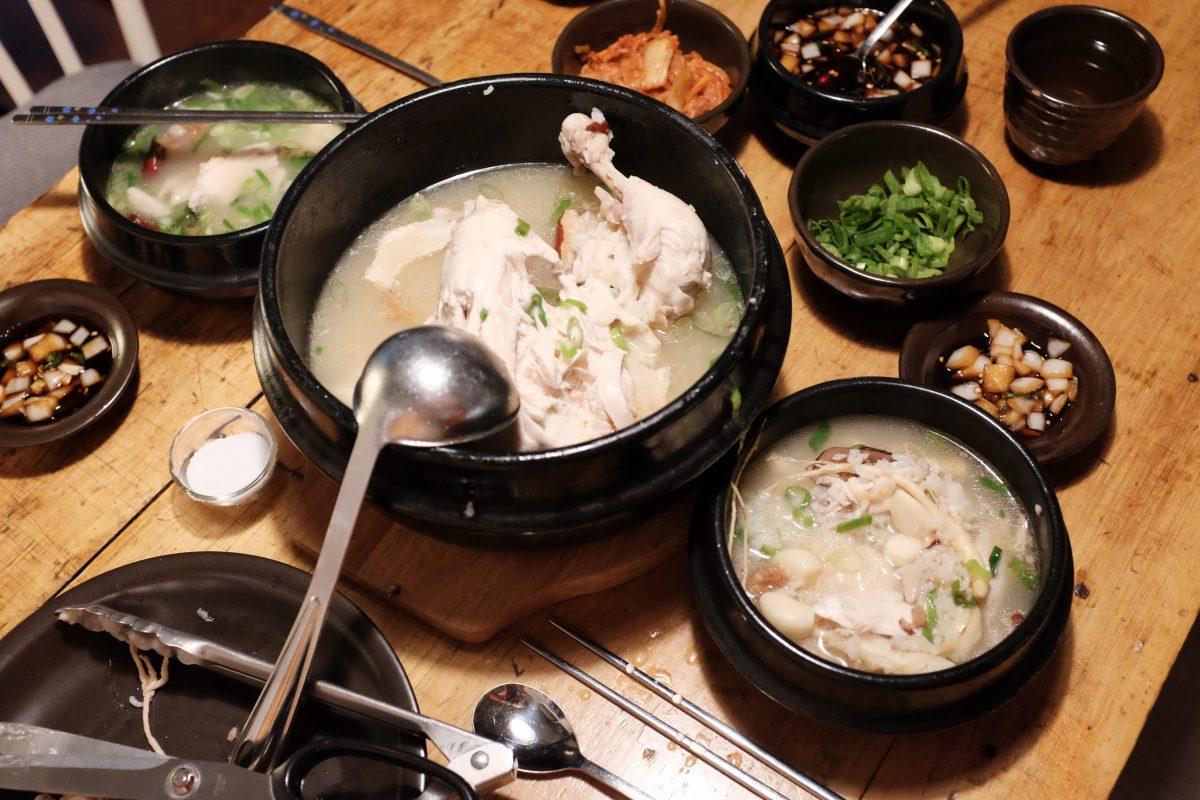
Samgyetang is ginseng chicken soup. “Sam” for insam (인삼), the Korean word for ginseng; “gye” refers to chicken; “tang”(탕) is a soup. It is a hearty and delicious soup that tastes great during chilly months. It is also surprisingly popular during the hottest days of the year in Korea where eating steaming hot food is believed to have a cooling effect on the body.
My first time…
The first time I ate this soup was on a chilly afternoon in Seogwipo City on Jeju Island. Hungry and cold, I was wandering around an area known for restaurants. It was the off-season so many restaurants were closed and most others were serving Jeju black pig samgyeopsal, something that is difficult to eat on your own. Feeling defeated, I decided to go to a nearby convenience store to at least buy some kimbap. On my way I spotted a small house with a sign that simply said “삼계탕” (samgyetang) but this little house didn’t look like a restaurant at all.
When I cracked the door open to peek inside, I was surprised to see an older woman sitting on the floor in front of her sofa, watching TV. I quickly apologized and tried to leave, but she got up and gestured for me to come inside. Hardly knowing any Korean, I simply said “samgyetang”? She nodded and gestured for me to sit on the sofa. She unfolded a small square table in front of me and then disappeared. I sat alone in this room, watching TV and silently wondering if I had made some kind of a mistake. But, a few minutes later, she came back smiling and put 2 or 3 dishes of simple banchan on the table in front of me. And, a little after that, she came back with a steaming black earthenware bowl containing a single small chicken in a bubbling broth.
I ate this delicious steaming meal as fast as I could without burning my mouth. The woman seemed pleased when she saw all the empty plates. I gestured to pay, she accepted my money with a nod and a smile and I was on my way.
That meal seems like a mystery to me to this day. Was it really a restaurant? Was it a dream? It seemed like some kind of a magical chapter in a book. Someday I will return to investigate. These are the best kinds of travel experiences. There is something deeply lonely about traveling by yourself, but I think that it also opens many doors that may not have otherwise materialized at all. Like the door to this little house where I first ate samgyetang on a chilly afternoon on Jeju Island, perched on the edge of a sofa watching TV.
Ingredients
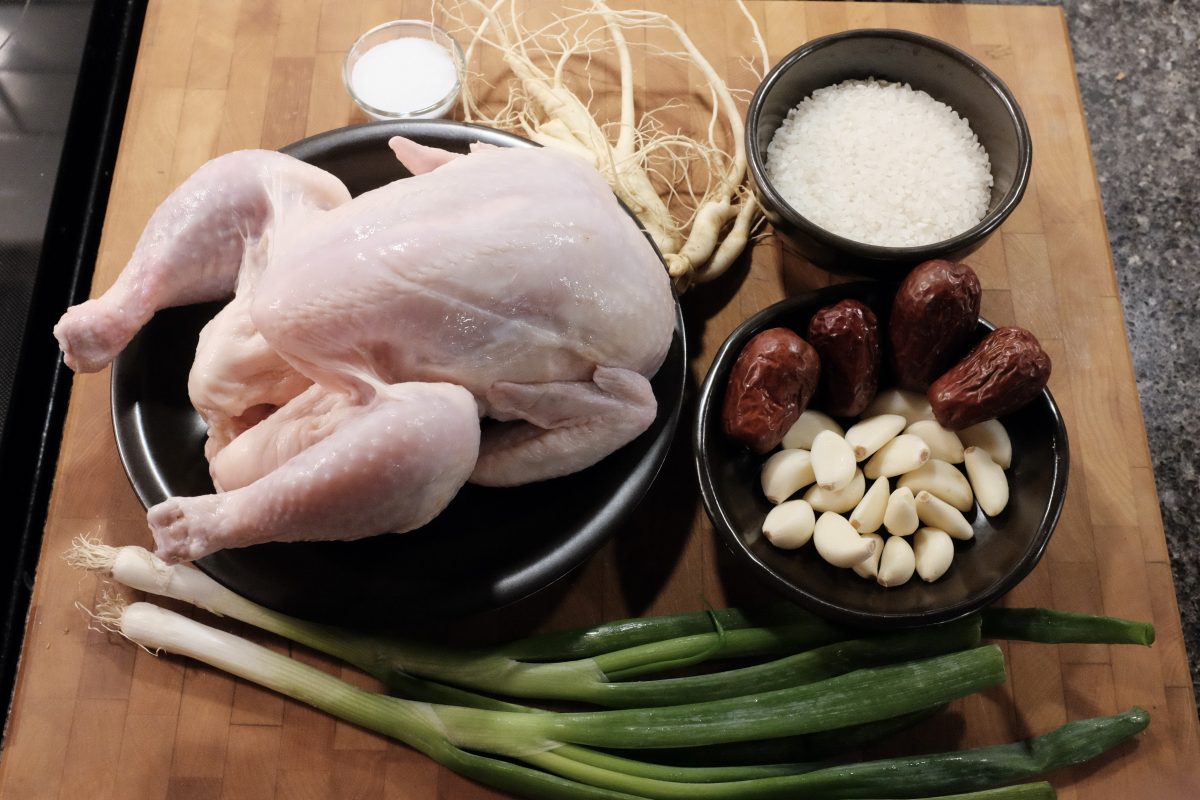
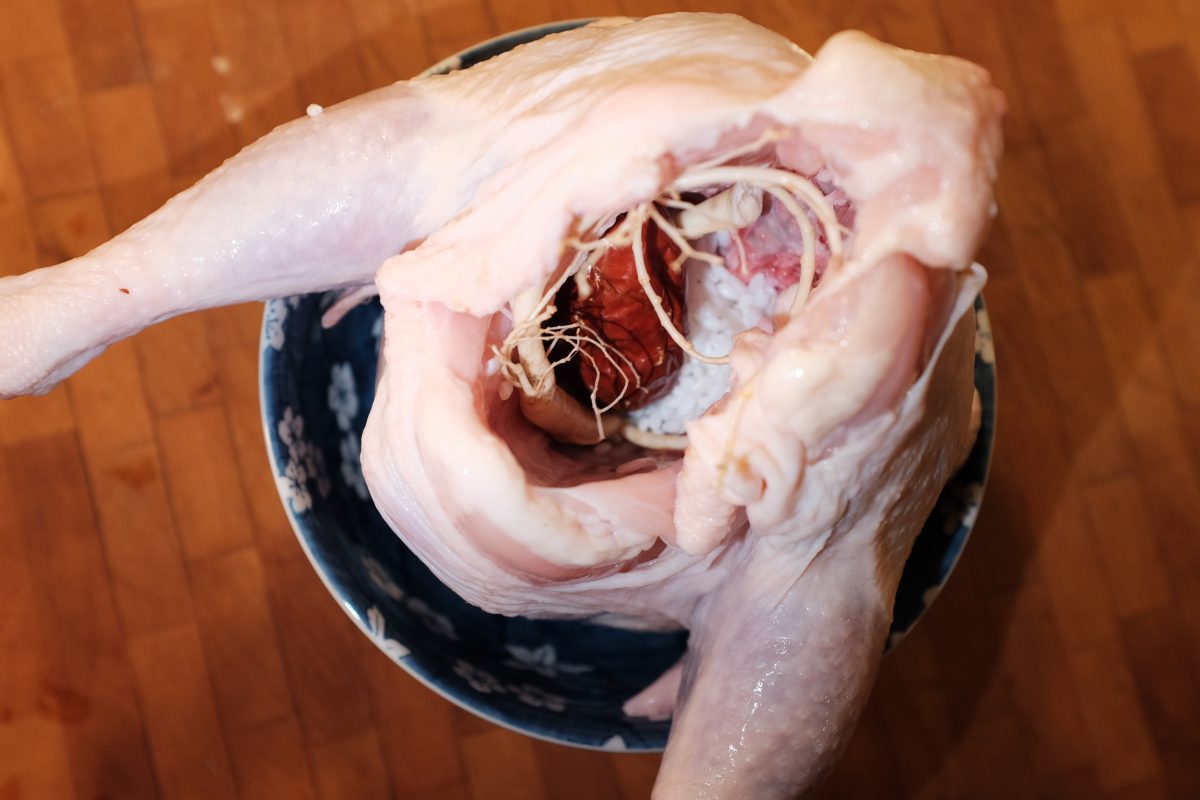
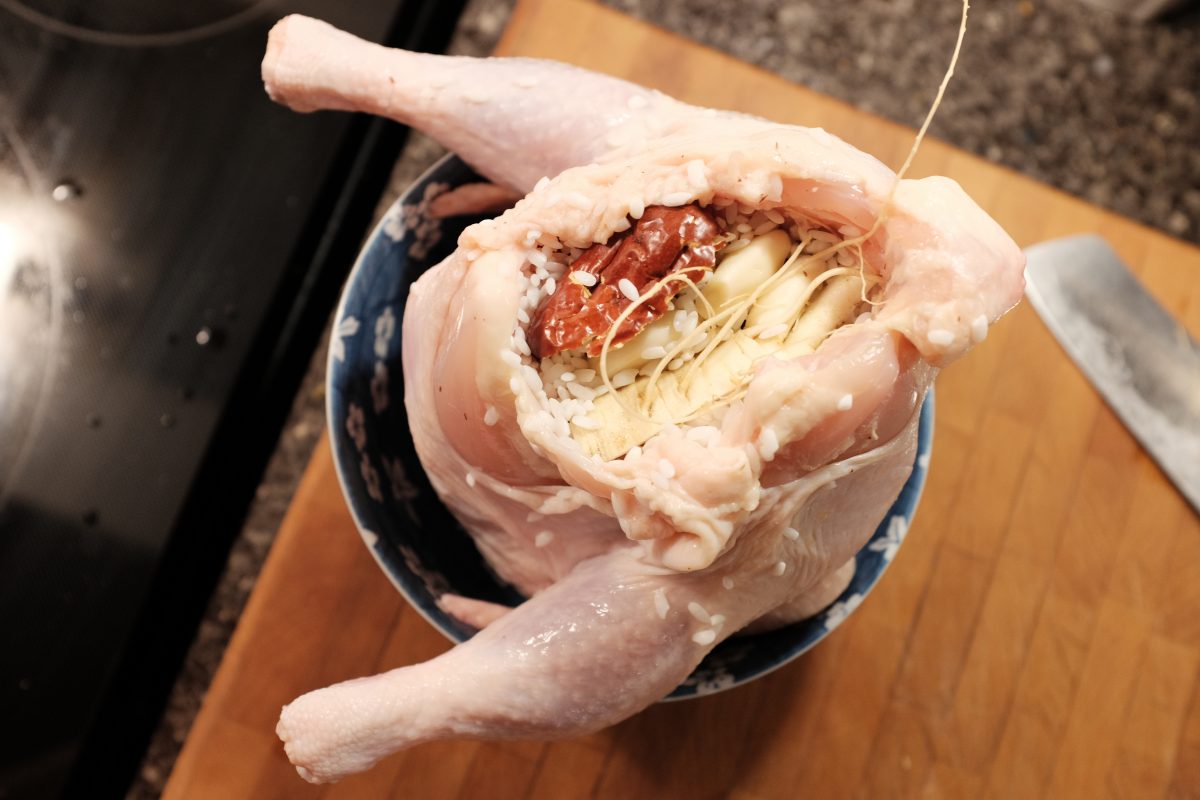
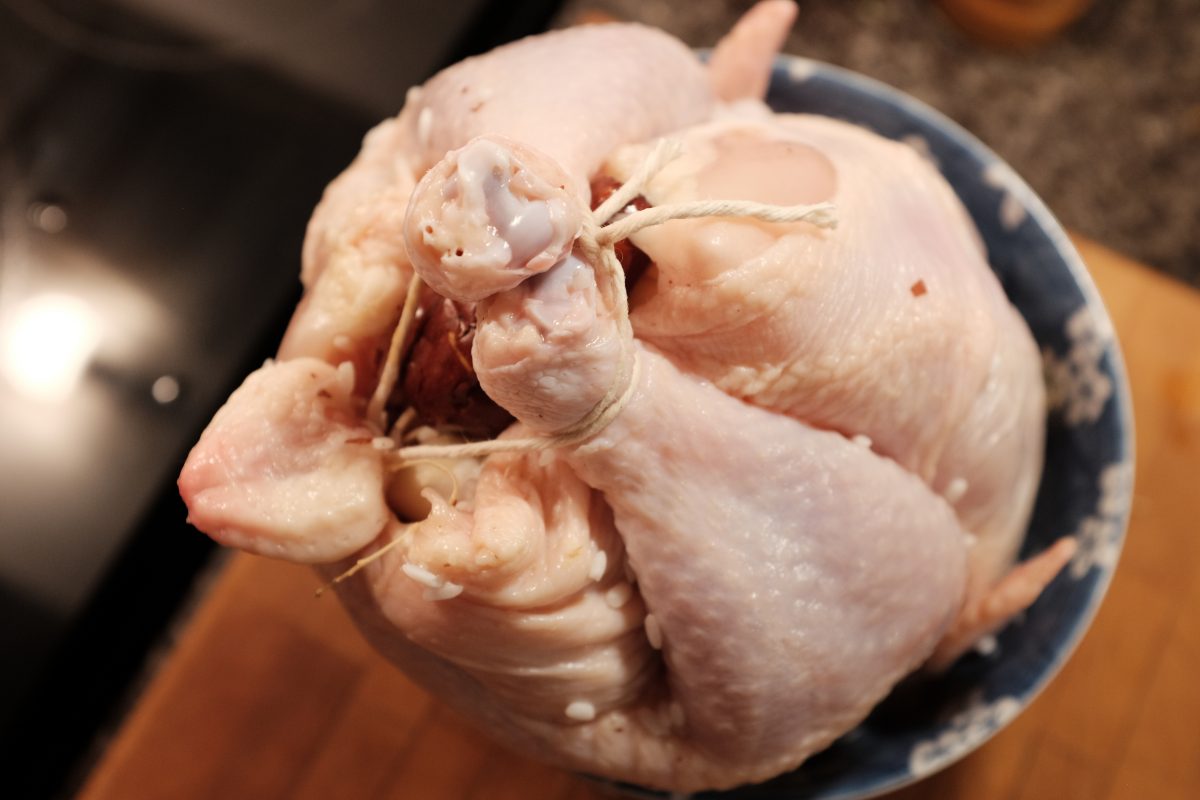
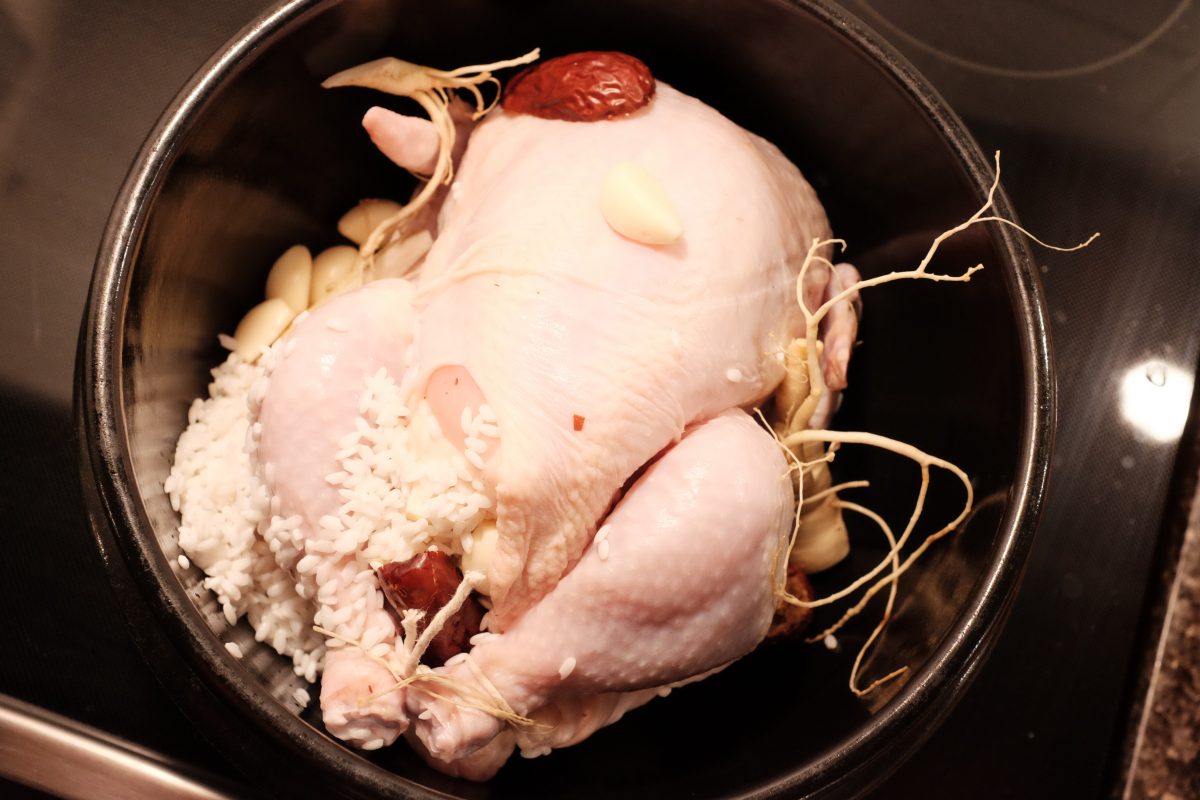
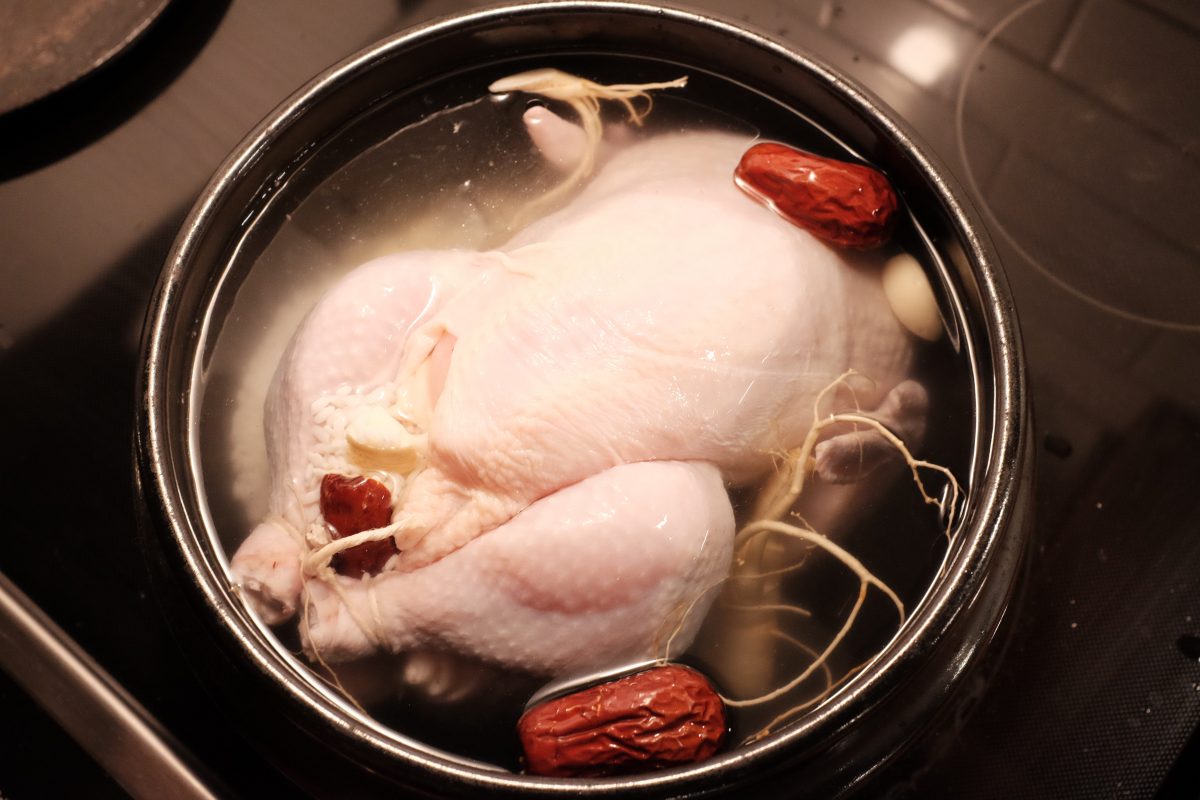
I made this recipe in a single large pot with a small whole chicken to eat family style. If you prefer, you can also make 2 separate portions out of this using the same amount of ingredients and 2 Cornish hens instead. It looks prettier when you serve each person their own whole bird and it is a lot less messy. Chickens are quite a bit less expensive and easier to find than Cornish hens so this is what I usually use.
- 1 small to medium chicken (or 2 cornish hens)
- 15-20 whole cloves of garlic
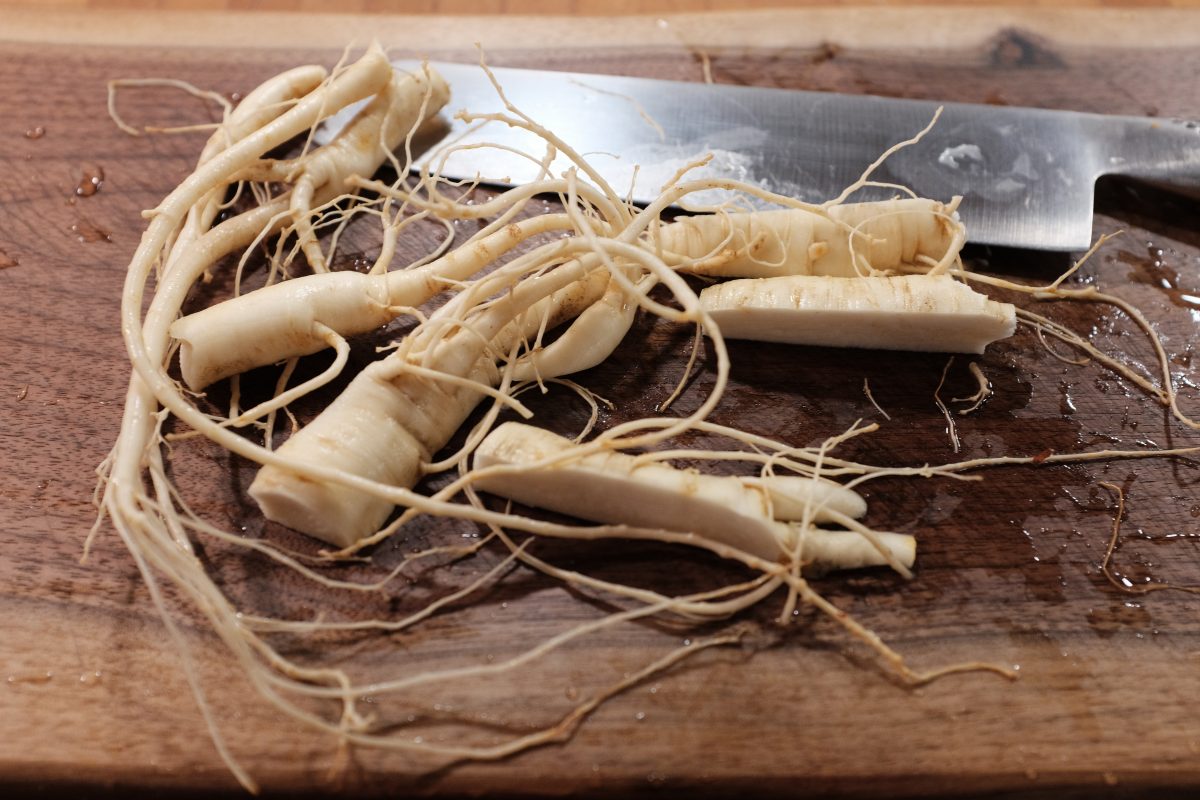
- 2 fresh ginseng roots
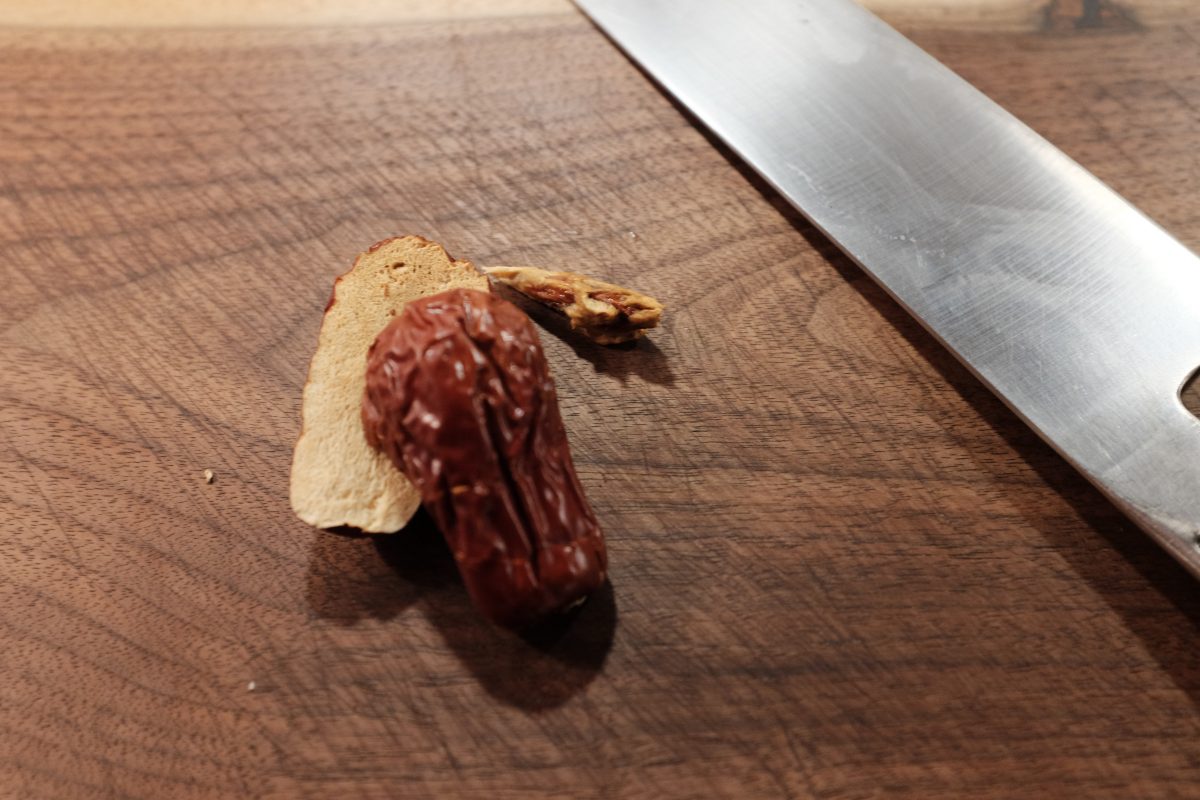
- 4 dried red dates (jujubes/daechu)
- 1 cup short grain rice (you can substitute with glutinous rice/chapssal)
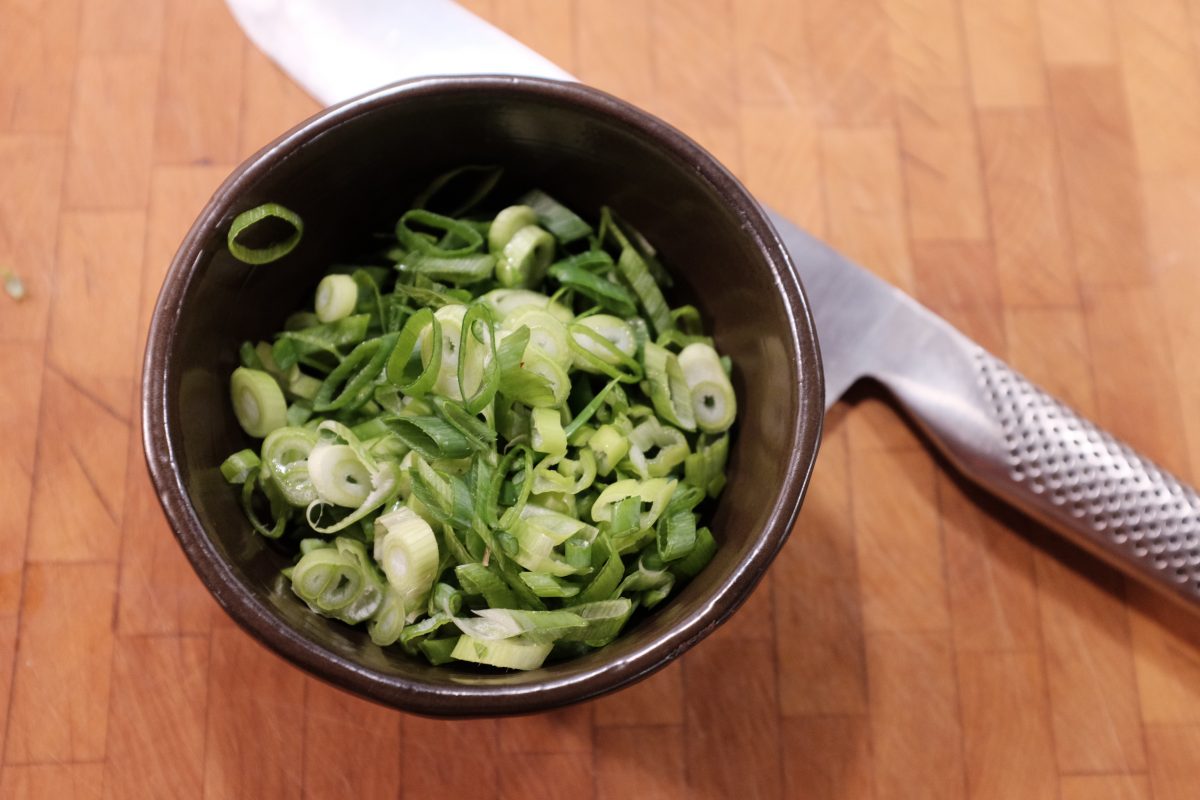
- 2 green onions
- salt and pepper
I am always able to find fresh ginseng at Asian grocers. Same goes for red dates: you may see these called Chinese red dates, jujubes or daechu (대추).
***At the end of the soup recipe there is a recipe for dipping sauce to go with it. Scroll to the bottom for that one. You can make it while your chicken is cooking.
Process
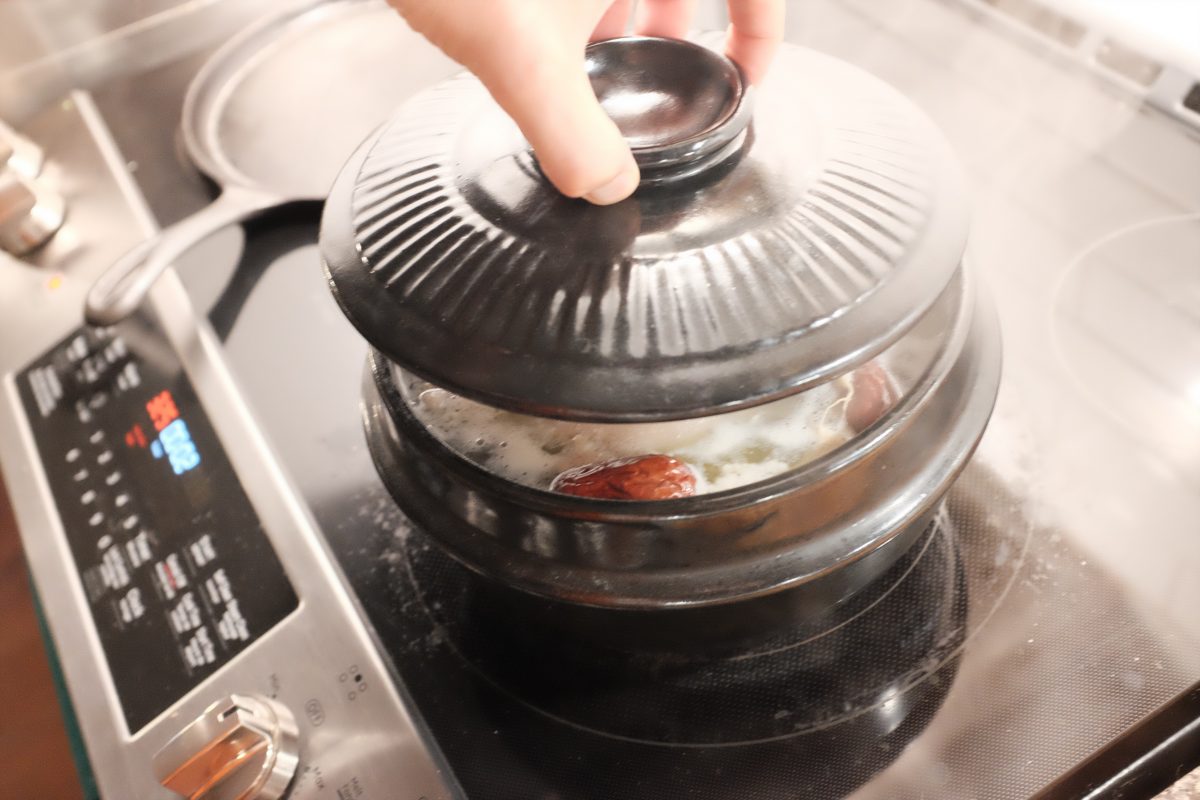
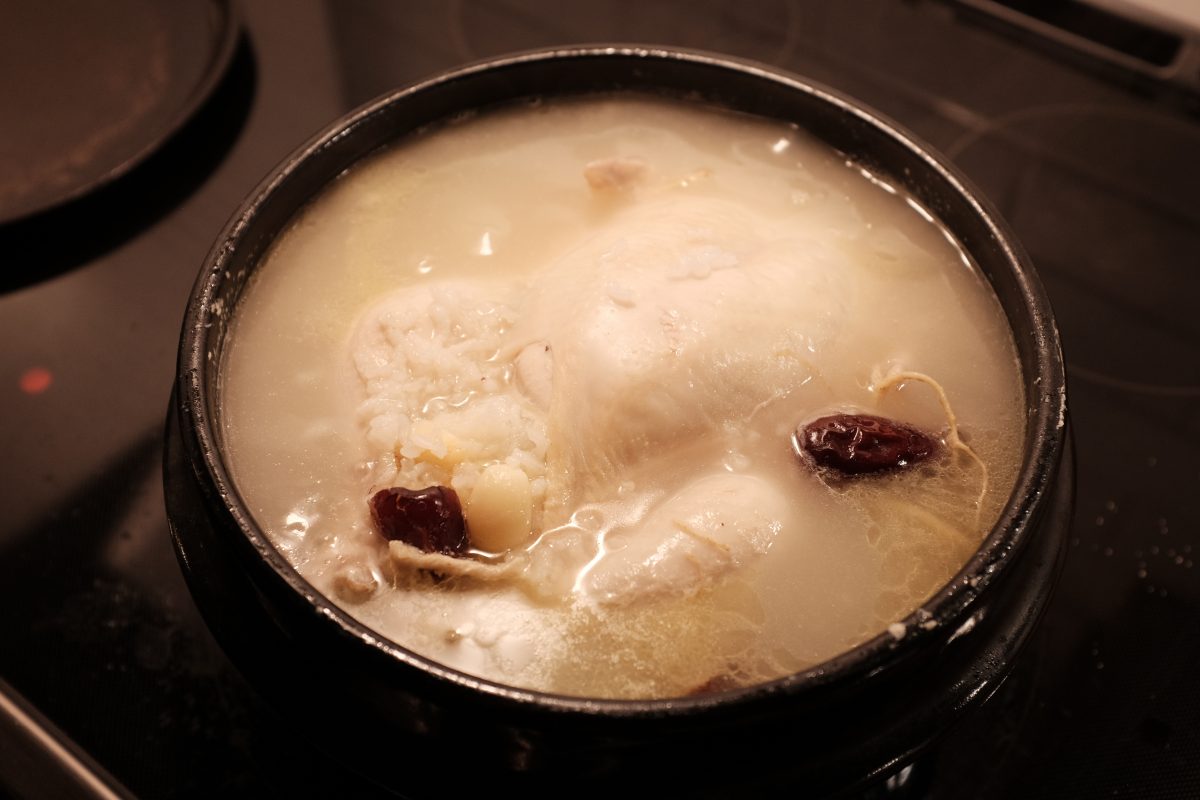
Serving
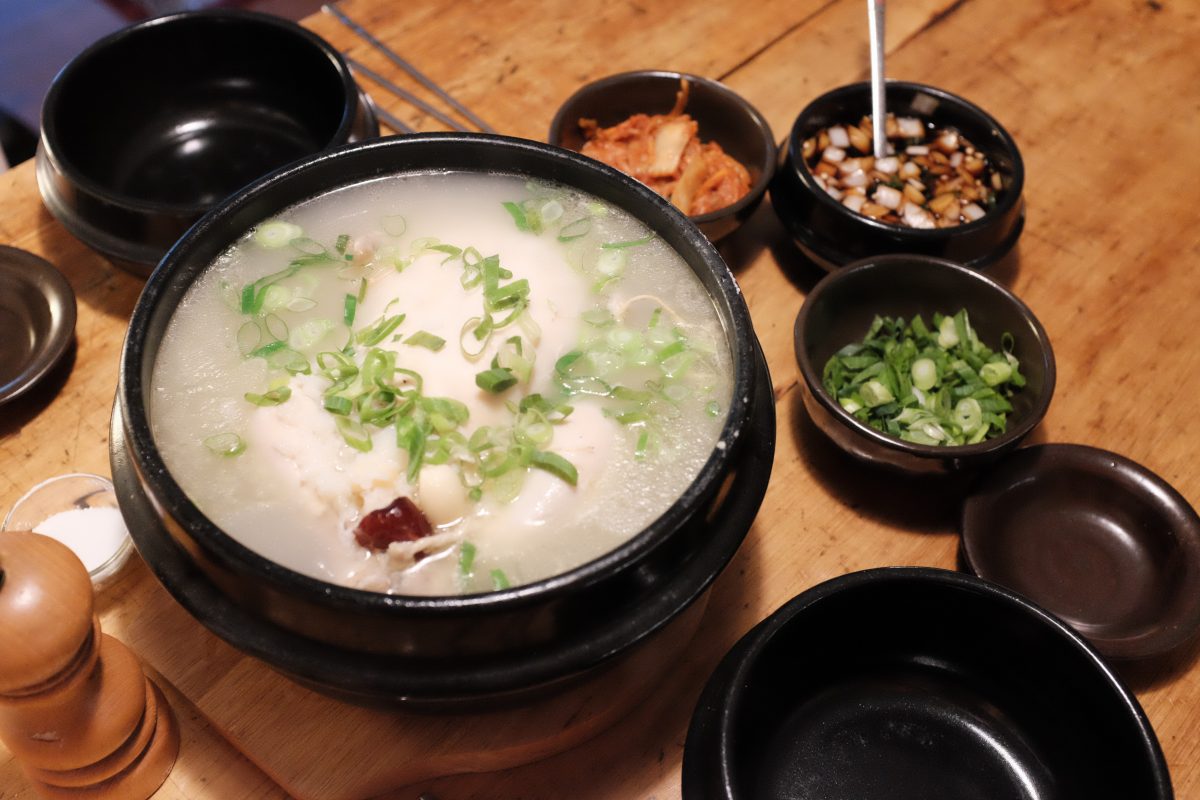
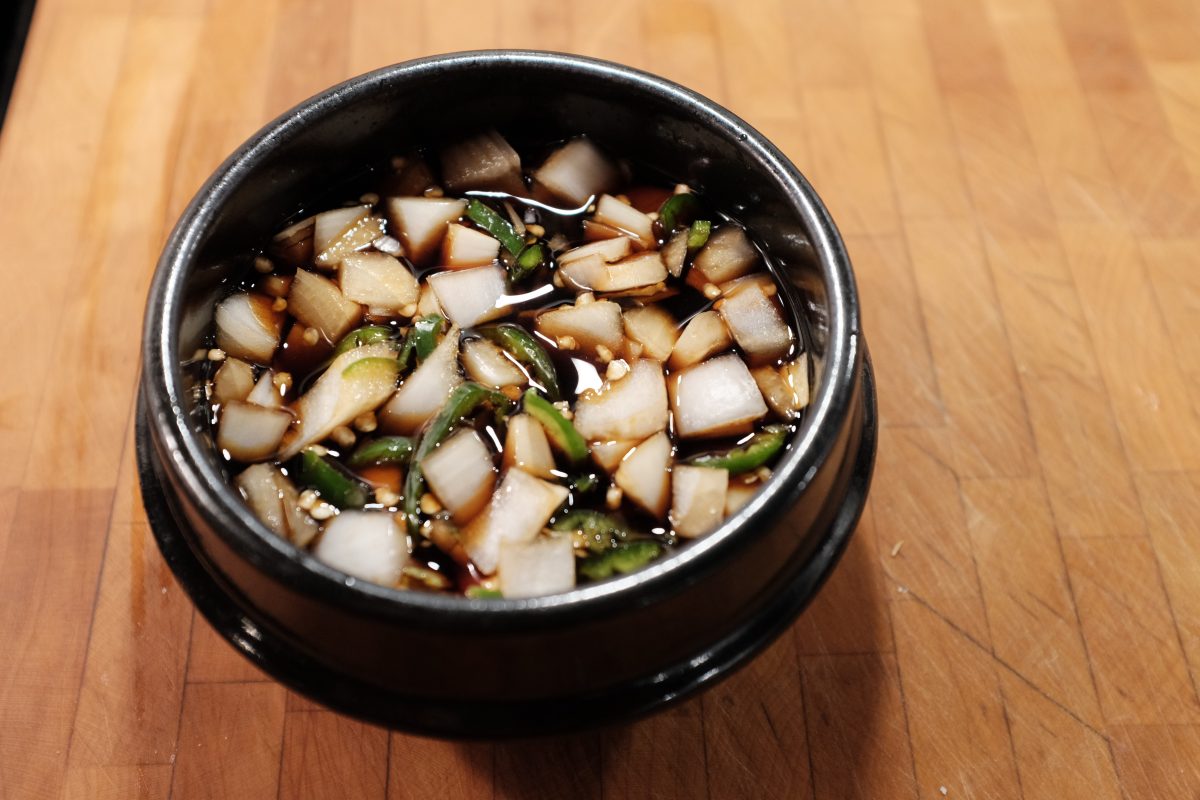
Soy and vinegar dipping sauce
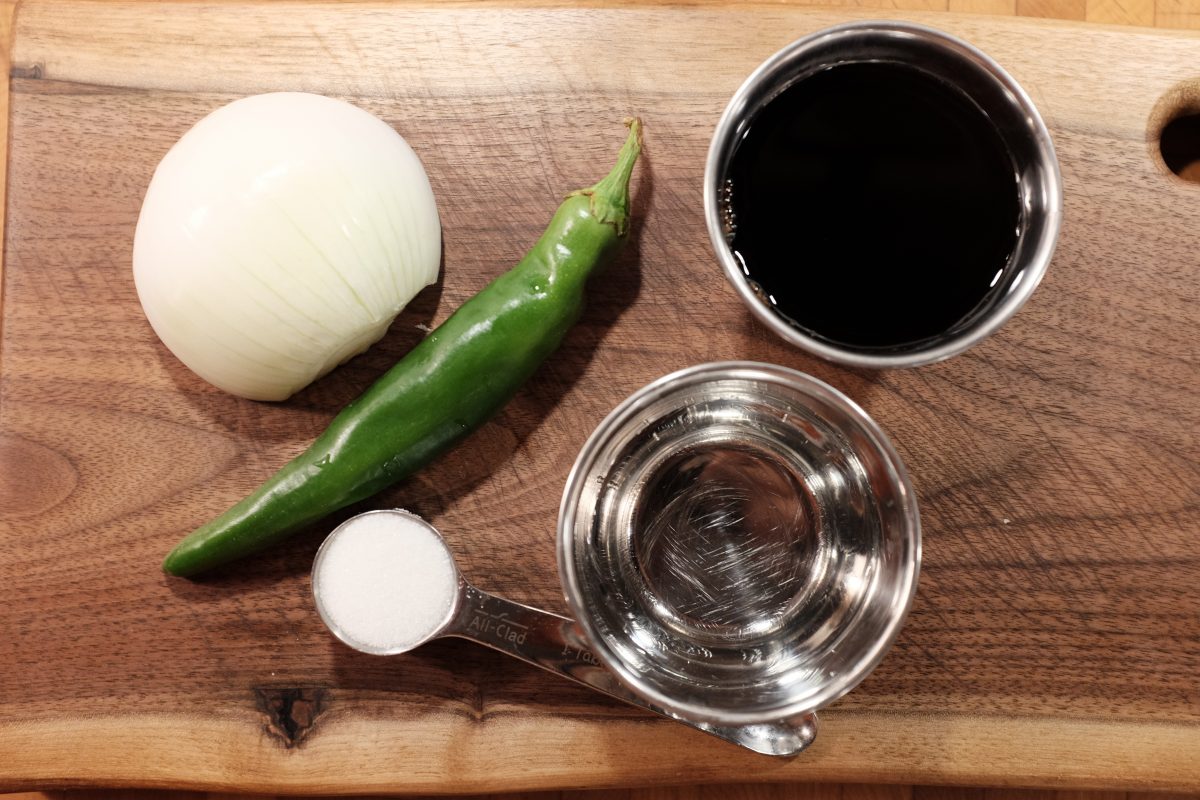
Ingredients
- 100ml (around 6 tablespoons) brewed soy sauce
- 50ml (around 3 tablespoons) white vinegar
- 12-13gr (1 tablespoon) white sugar
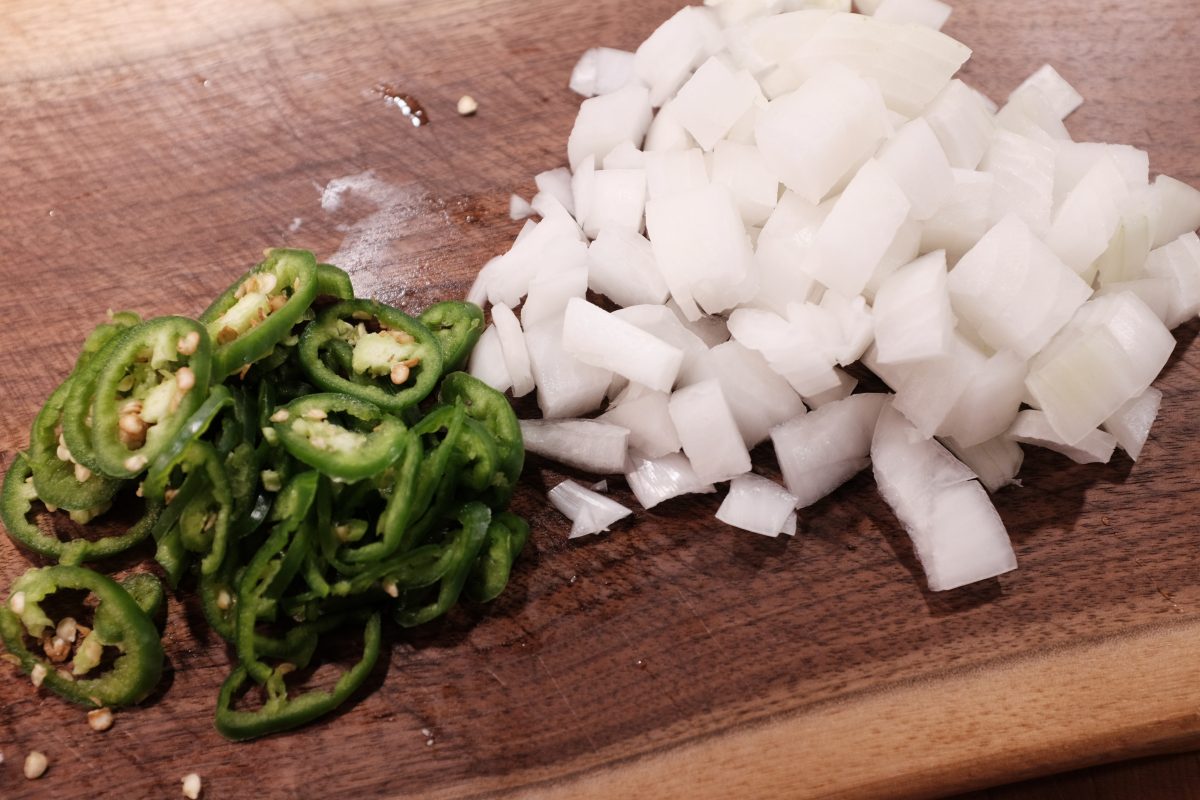
- 1/2 medium white onion
- 1 green long chile or jalapeño
I like regular harsh white vinegar for this recipe. You can substitute rice vinegar or apple cider vinegar but I would avoid using wine vinegars. Use regular brewed (Japanese style) soy sauce, not Korean soup soy sauce. Use an equal amount of honey if you prefer it over white sugar. You can leave out the chili altogether but, I would recommend just taking the seeds out if you don’t want any spice. The “greenness” of the chili adds alot of flavour here.
Process
This is one of my favourite soups. Hot and satisfying, it is especially good when you are feeling a little sick or run down. It is one of those meals that seems to instantly fortify the body much like my other favourite seolleongtang.
If you need a homemade kimchi recipe to go with any of your Korean cooking, click here.
If you have any comments or questions, please leave them below. Thanks for reading.
If you enjoy the content and would like to contribute towards website maintenance and development, you can make a donation here.
Vegan Napa Cabbage Kimchi
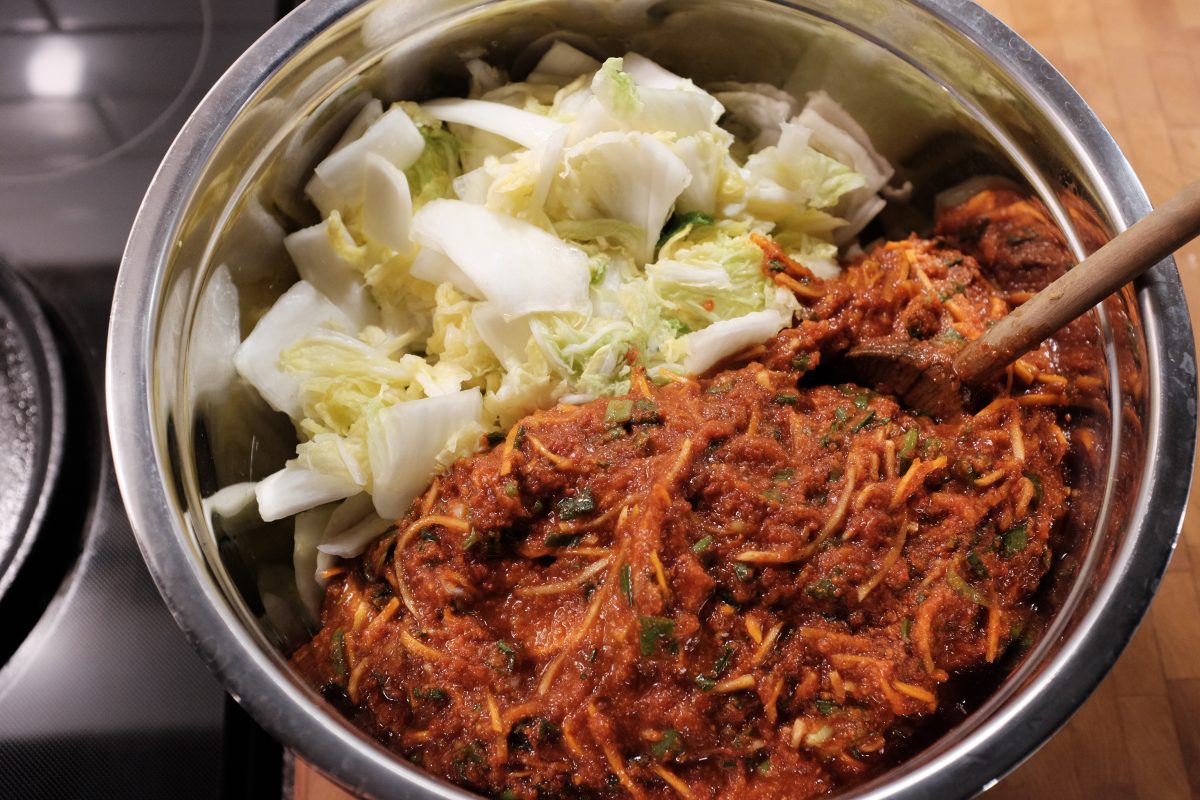
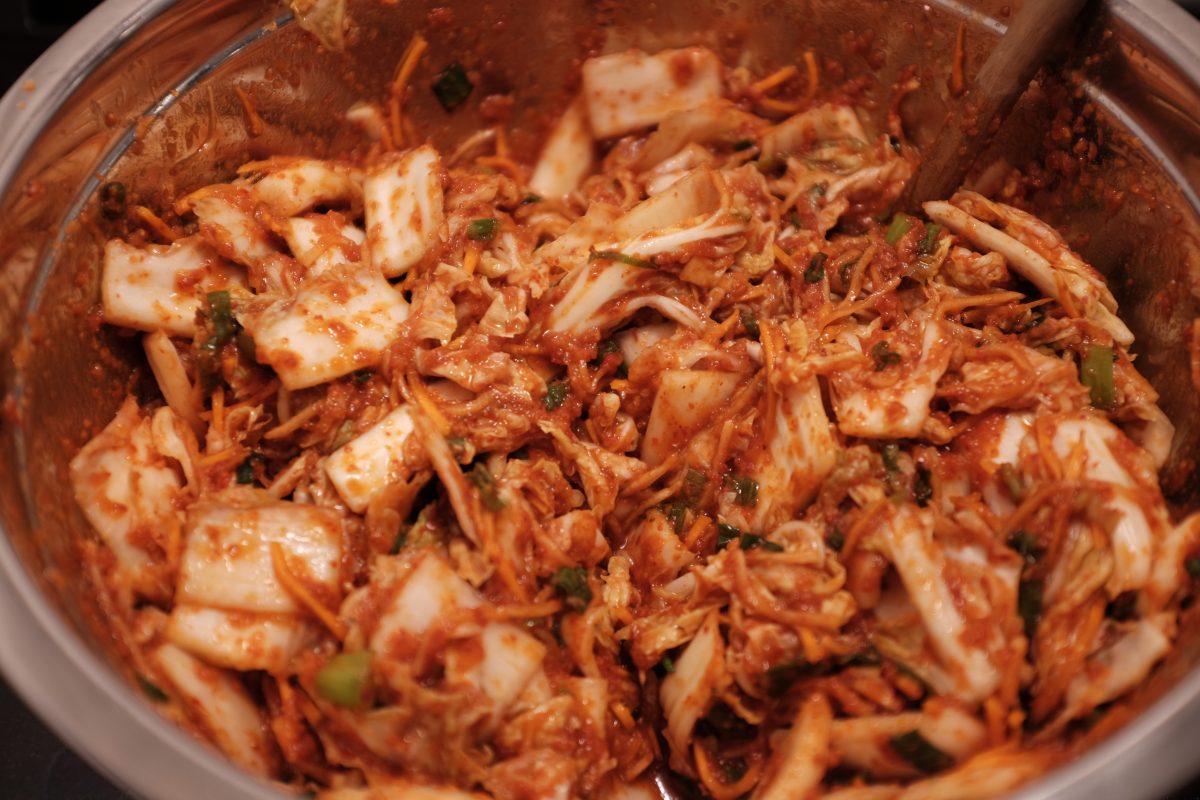
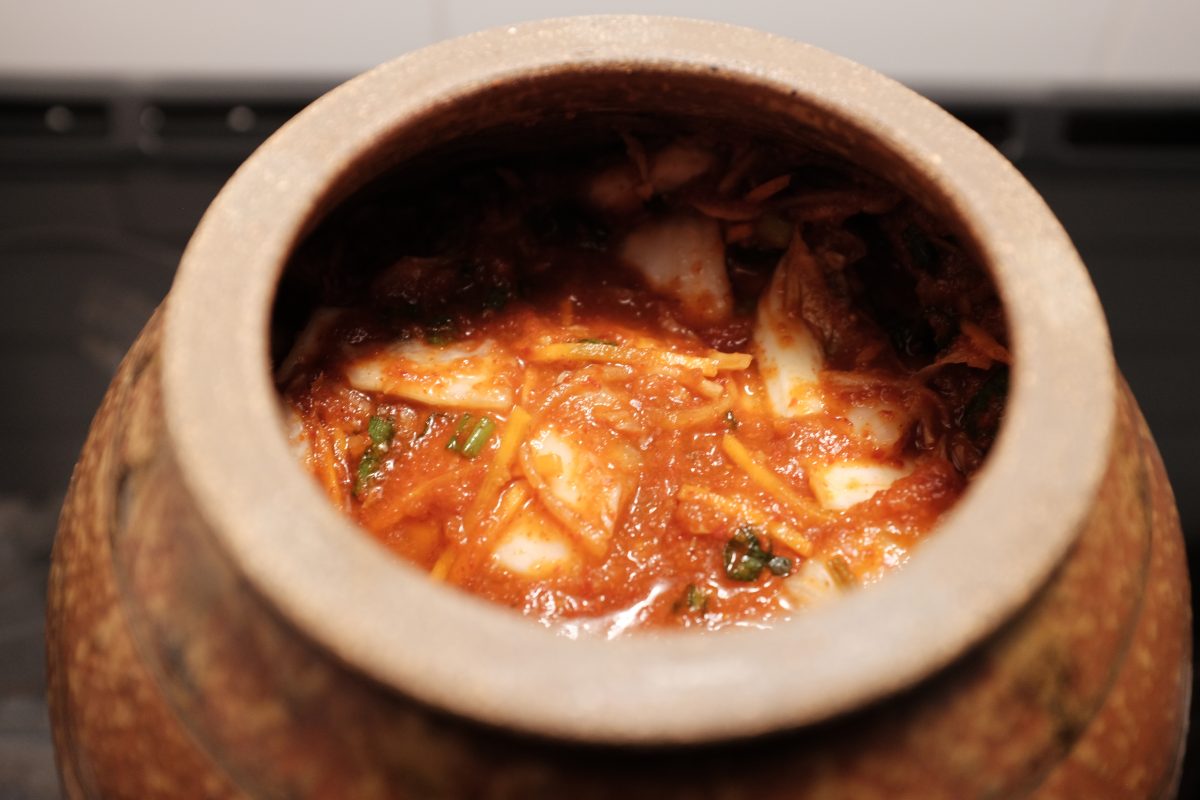
This is a tested recipe for anyone who does not eat meat, anyone with shrimp allergies or anyone who does not like the fishy taste of fish sauce. Once this recipe ferments, you will have a tasty vegan kimchi that you can use just like any other kimchi. It is a variation on a cut kimchi recipe that I posted previously. If you are interested in making a kimchi with all the seafood included or if you are interested in more information about kimchi in general, you can find that by clicking here.
Ingredients
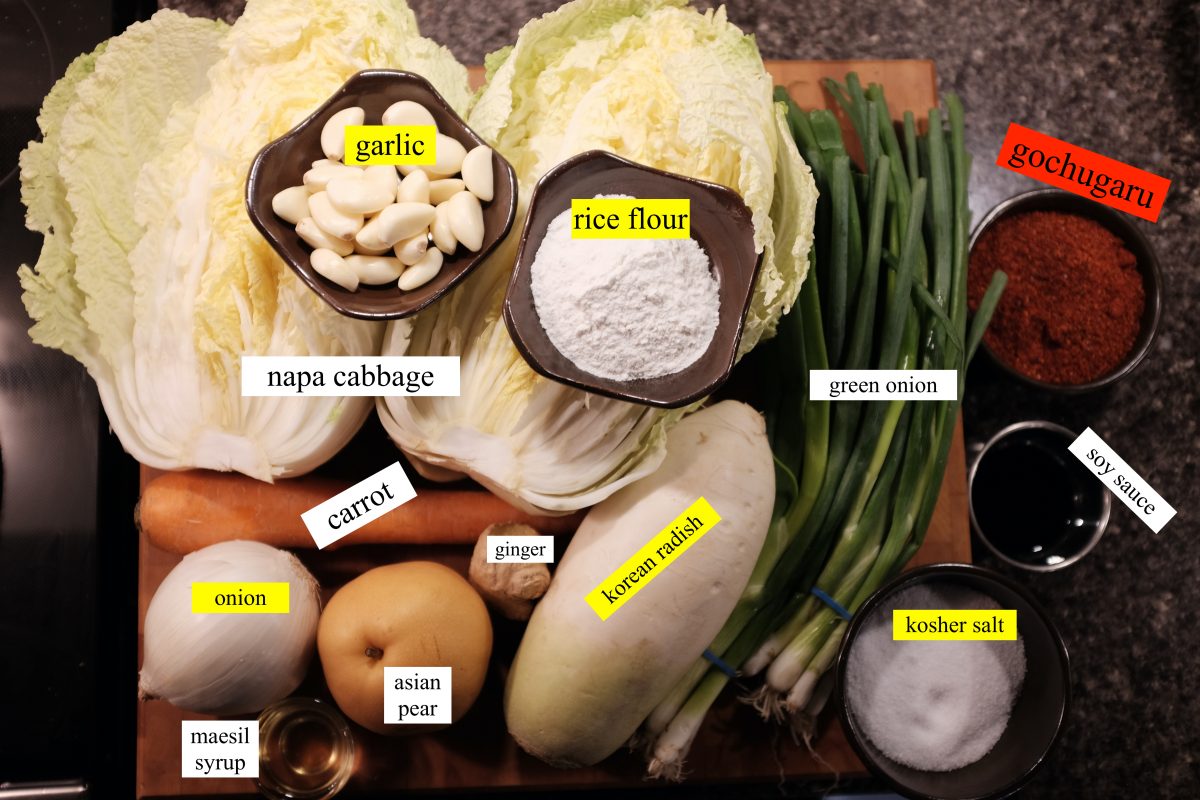
- 1 large (2kg) Napa Cabbage
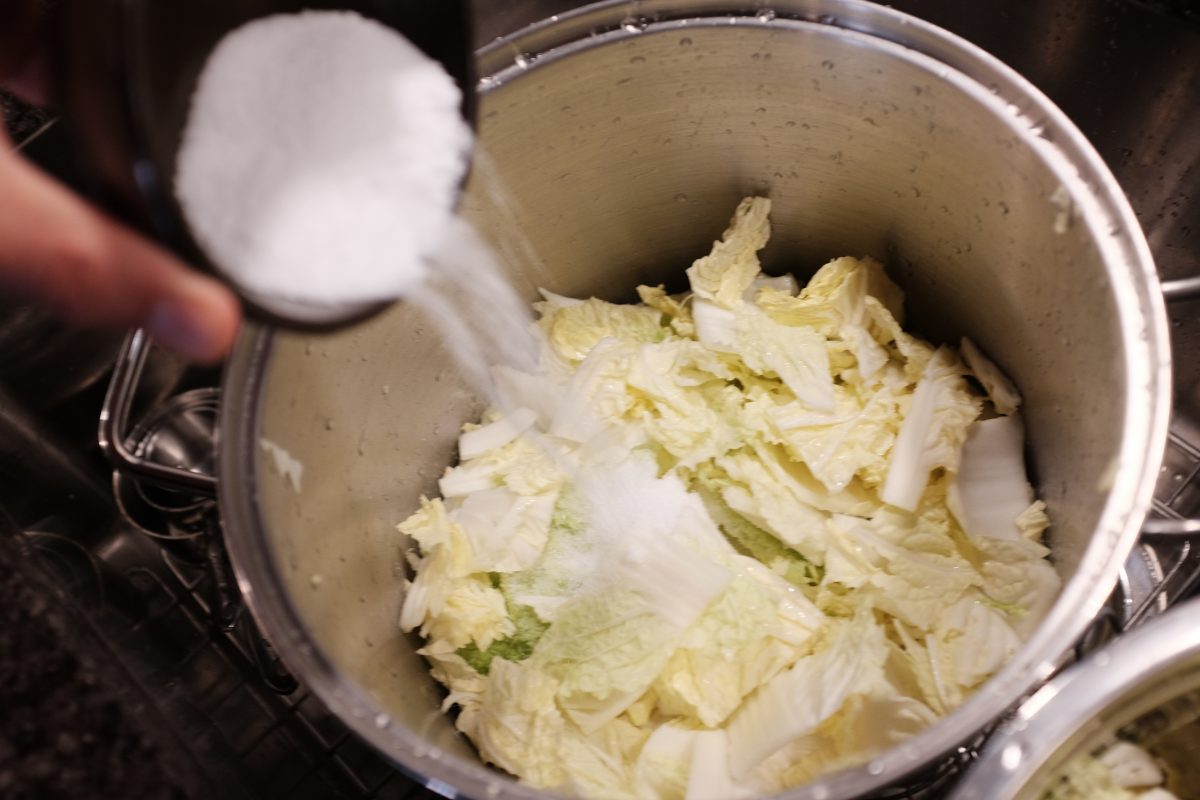
- 80 grams/3oz (around 1/2 cup) Diamond Kosher Crystal salt for brining
- up to 2 Tablespoons kosher salt for seasoning (not for brining…save this for later)
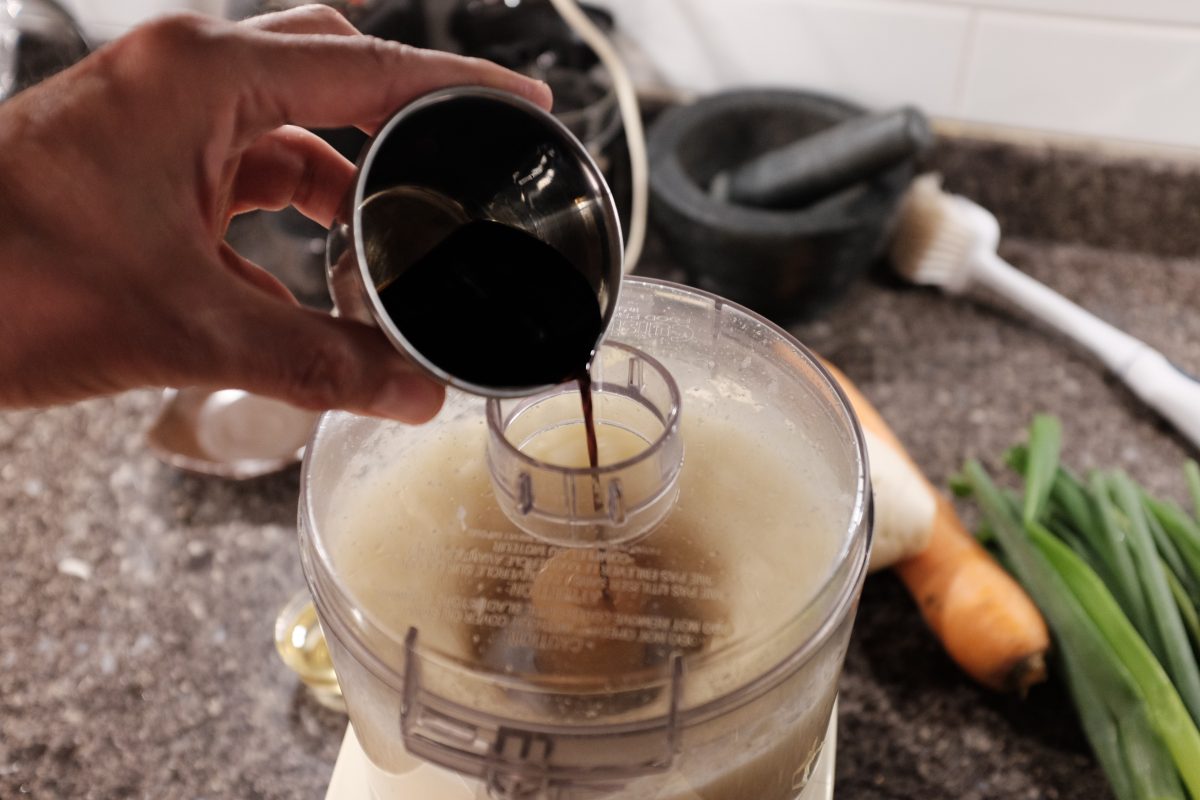
- 1 tablespoon soy sauce
- 275ml (1 1/2 cups) water
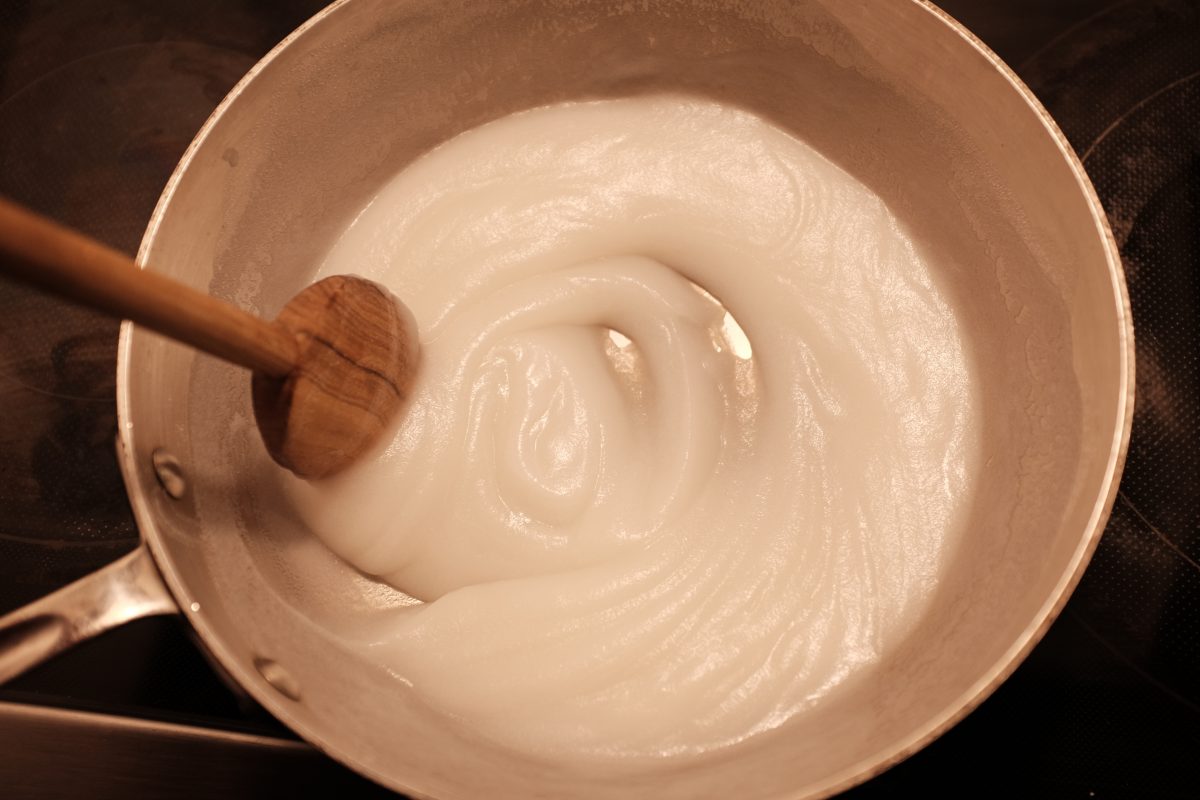
- 1/4 cup rice flour
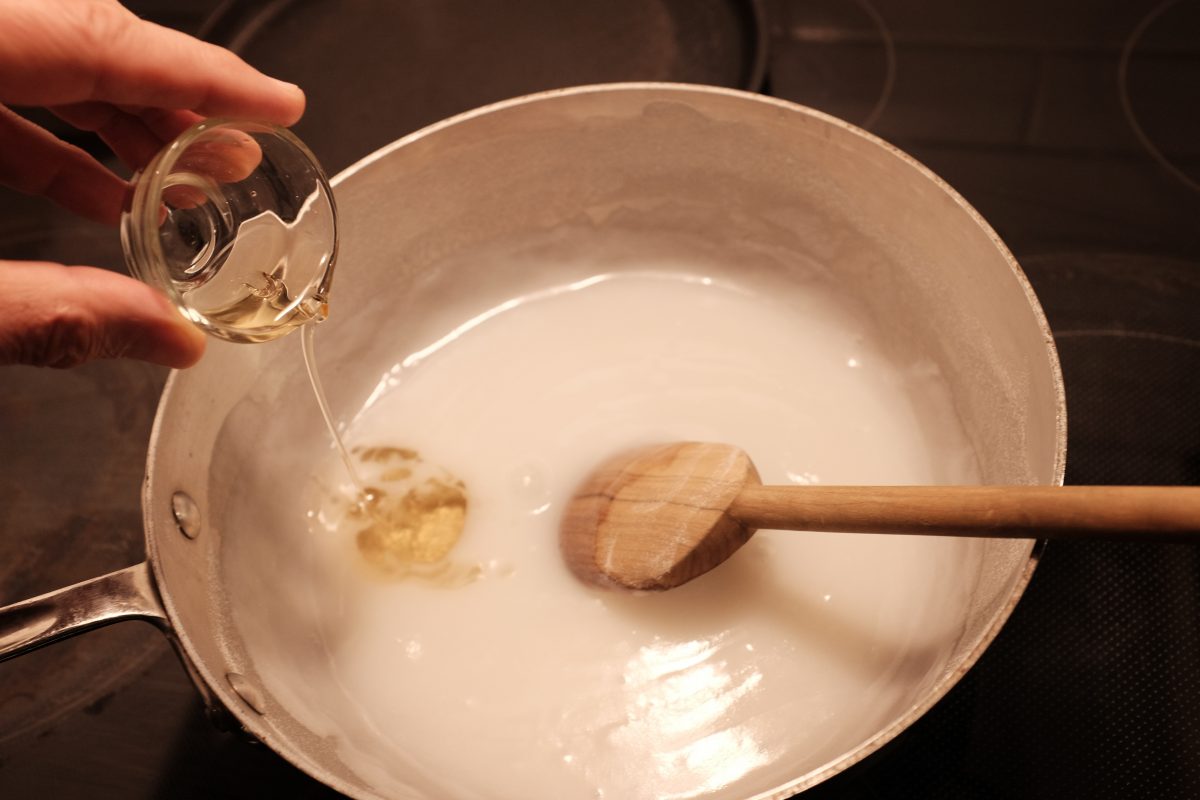
- 1 tablespoon white sugar or maesil plum syrup
- 1/2 cup peeled garlic cloves (around 20)
- 1 tablespoon ginger peeled and sliced
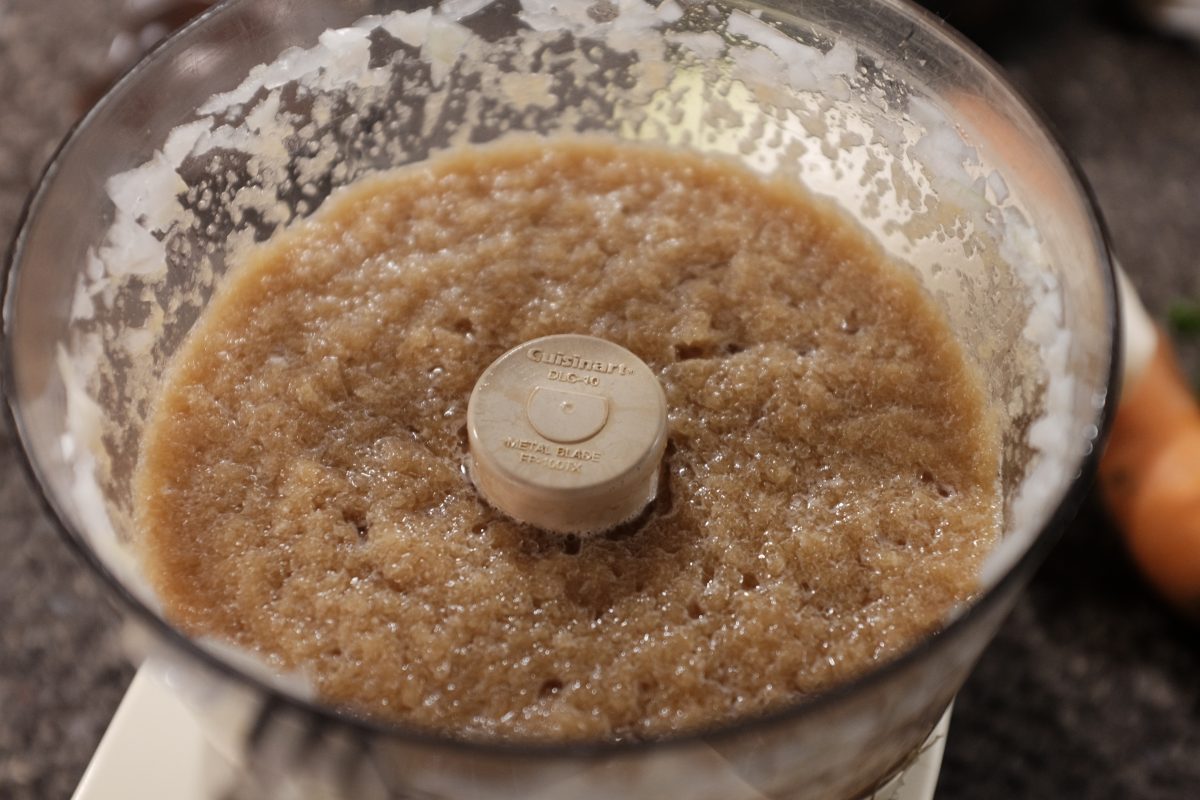
- 1 white onion peeled and chopped
- 1 asian pear or apple peeled and chopped
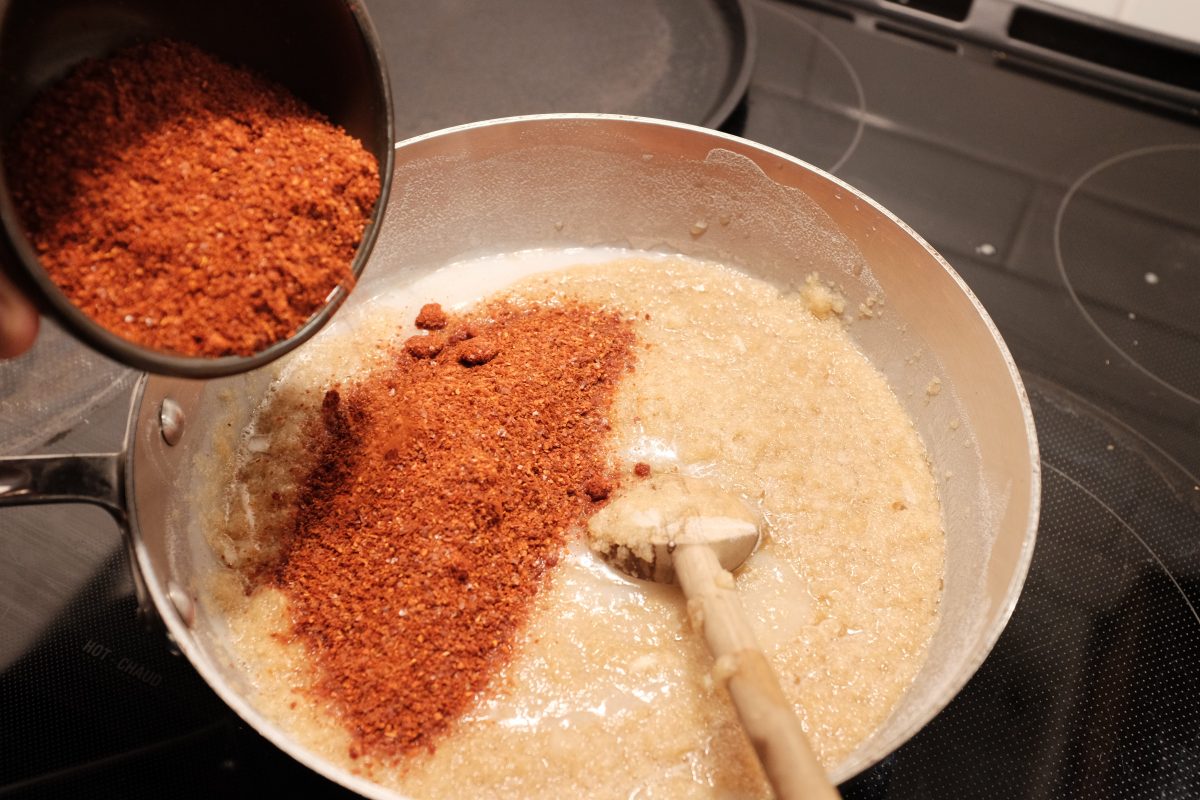
- 1/4 up to 1 cup (30-120 grams) korean chili flakes (gochugaru)
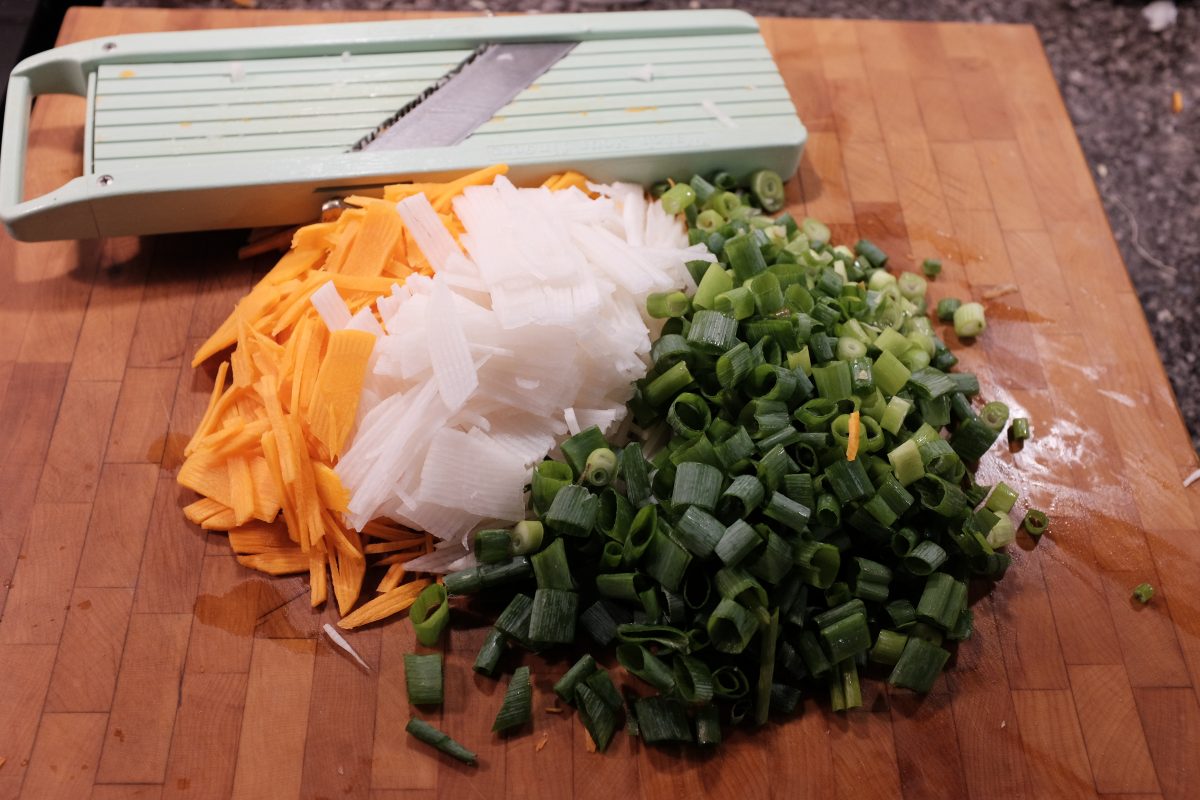
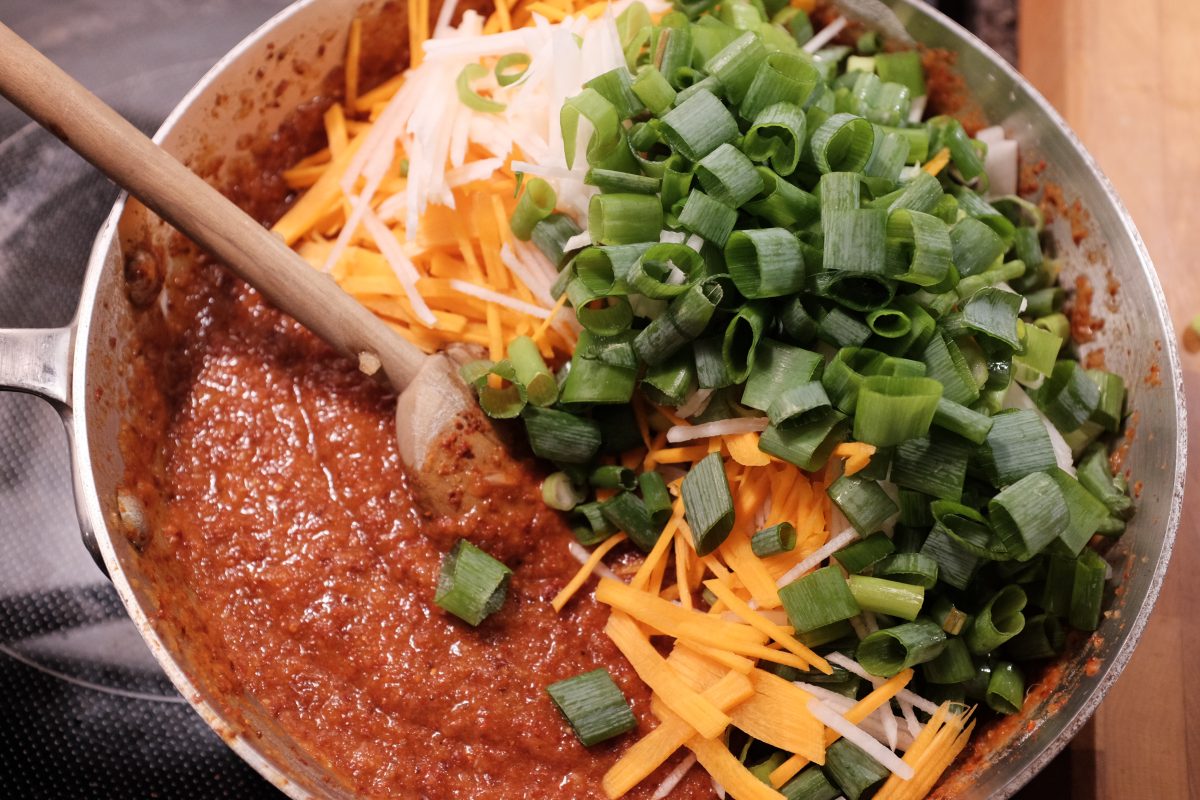
- 2 bunches (12 or so) green onions sliced
- 1 cup carrot matchsticks
- 1 cup korean radish matchsticks
Try to weigh your salt rather than measuring by cups. Diamond Kosher is a popular salt in my area. If you live in the US, you may be using Morton’s. This salt is much saltier by the cup. Same goes for sea salt if this is what you are using. Whichever salt you use, it is better to weigh it. Avoid using table salt.
Rice flour/rice powder is just finely ground sweet rice. Mochiko is a popular brand but any brand will work.
Korean chili flakes are all very different from batch to batch. Some are mild and fruity and some are sharp and very spicy. It is better to start with less, taste, and then add more if you want it spicier.
Process
Cabbage preparation
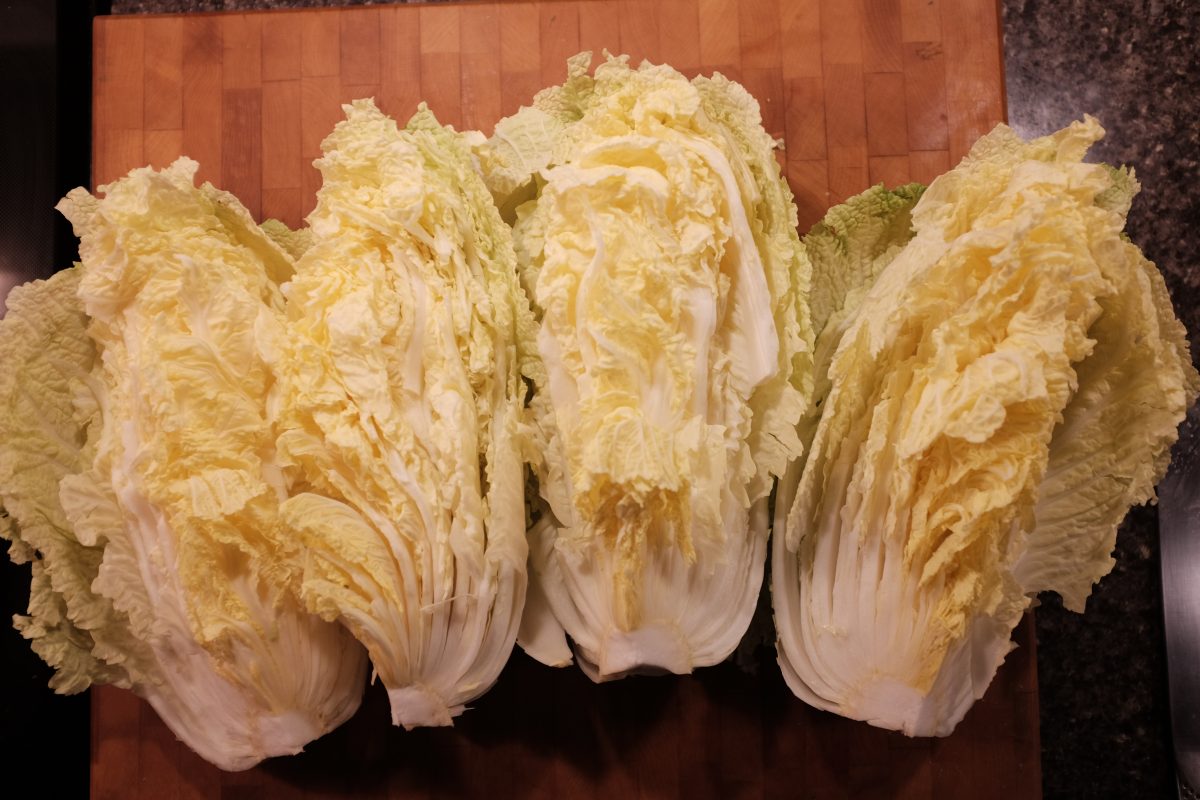
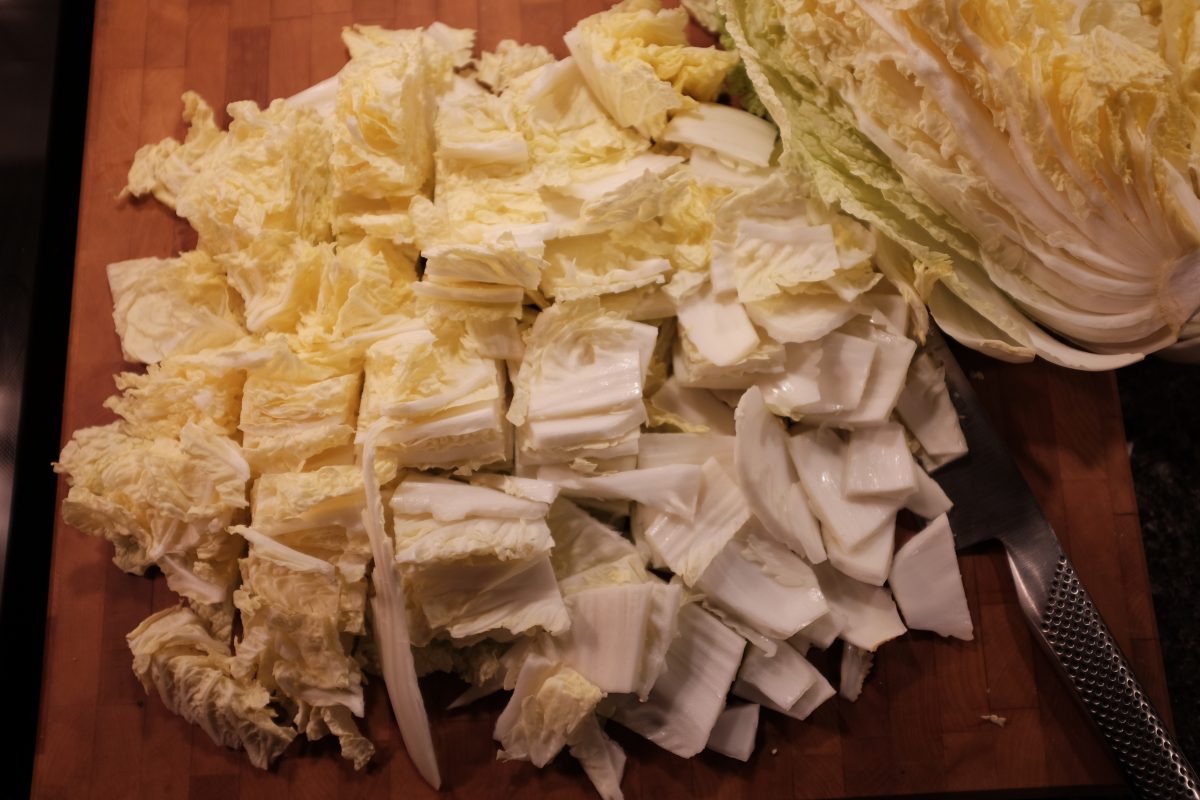
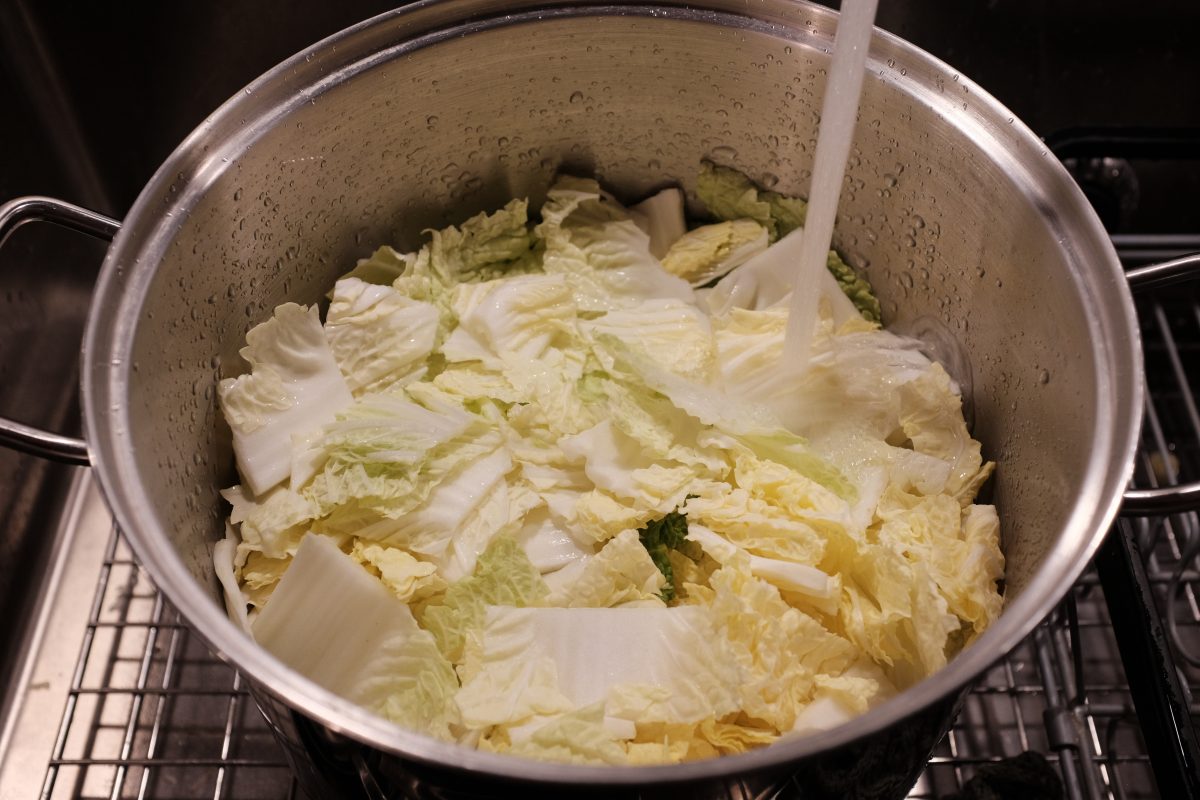
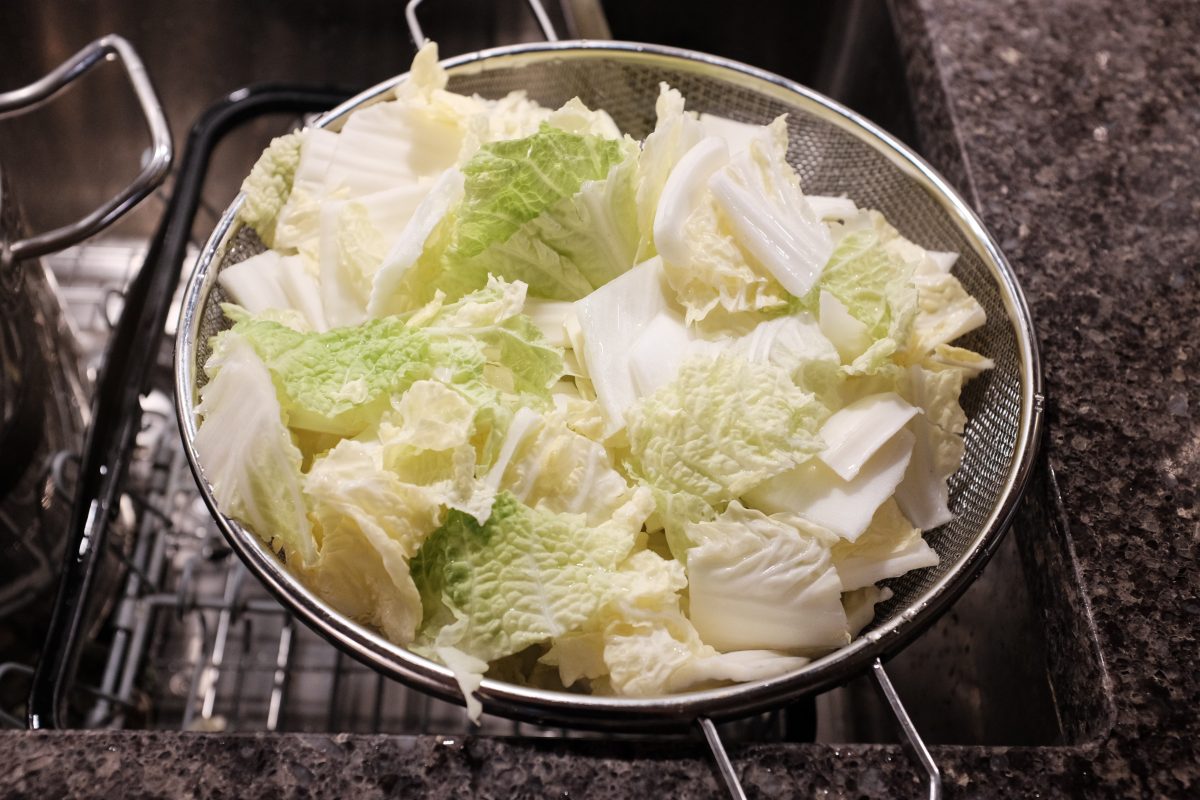
Brining
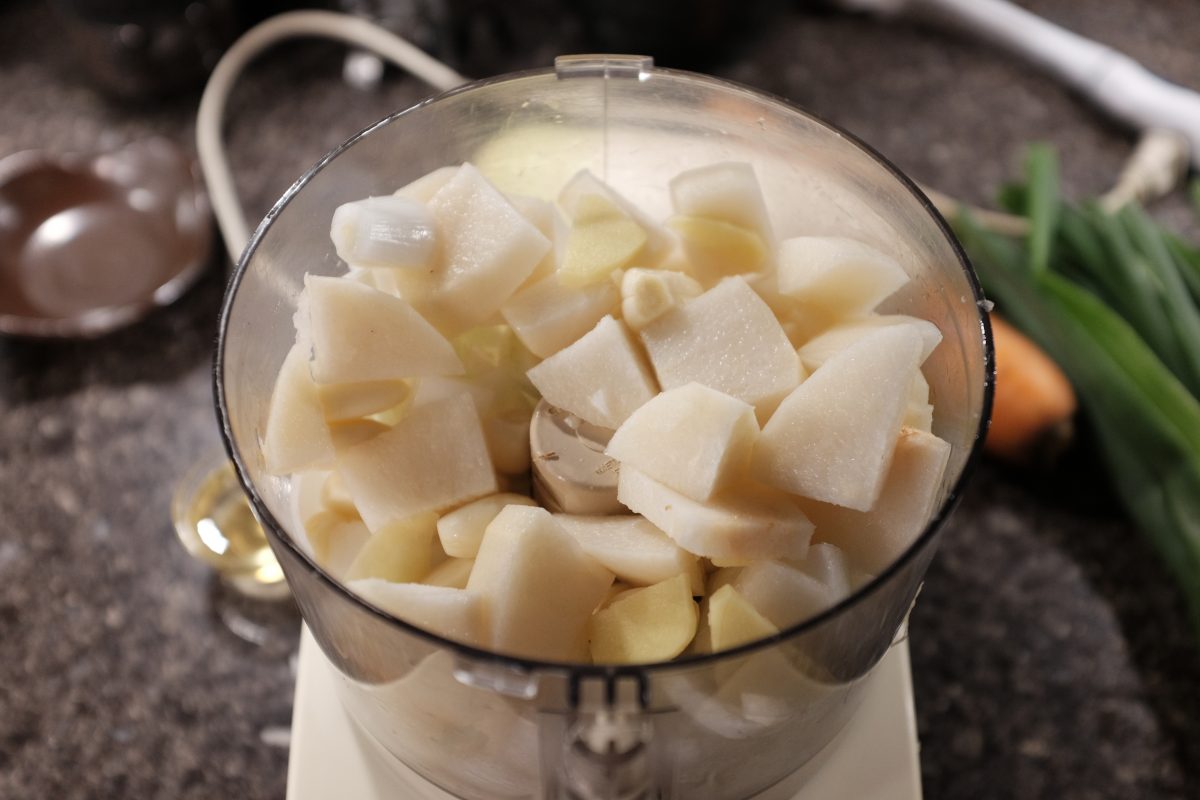
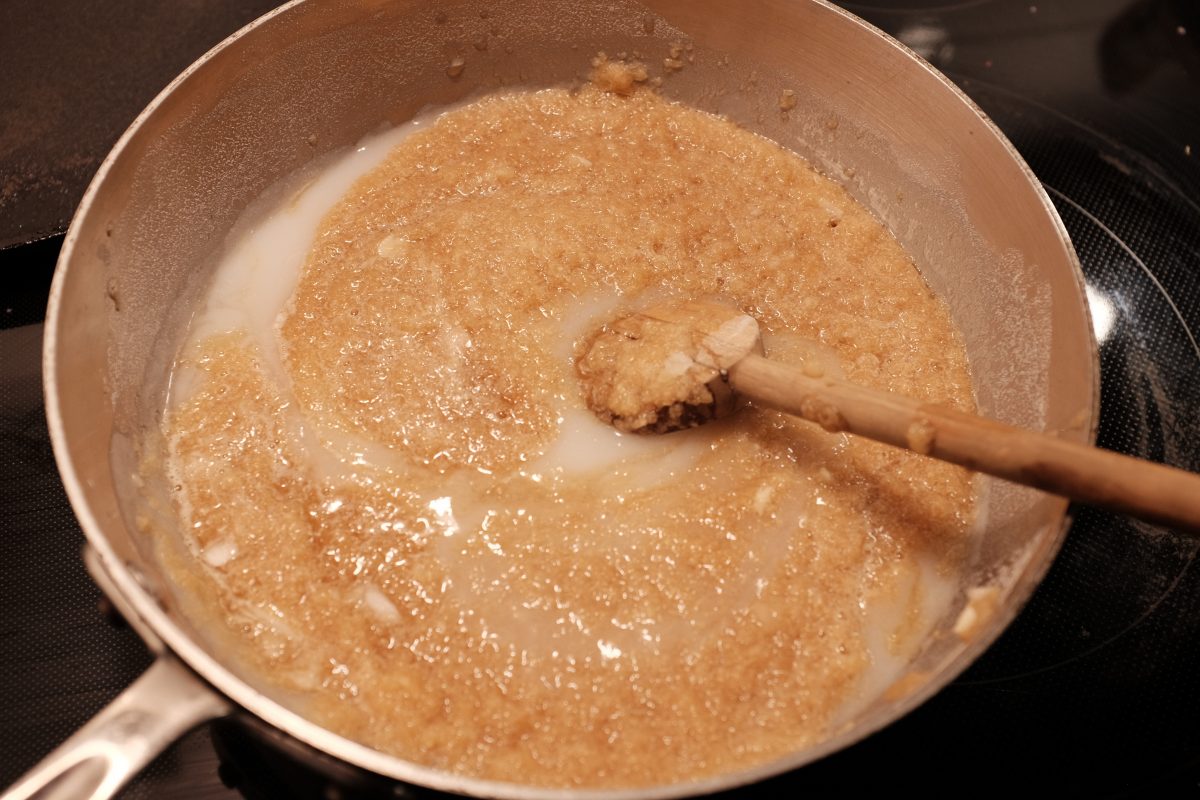
Making the kimchi paste
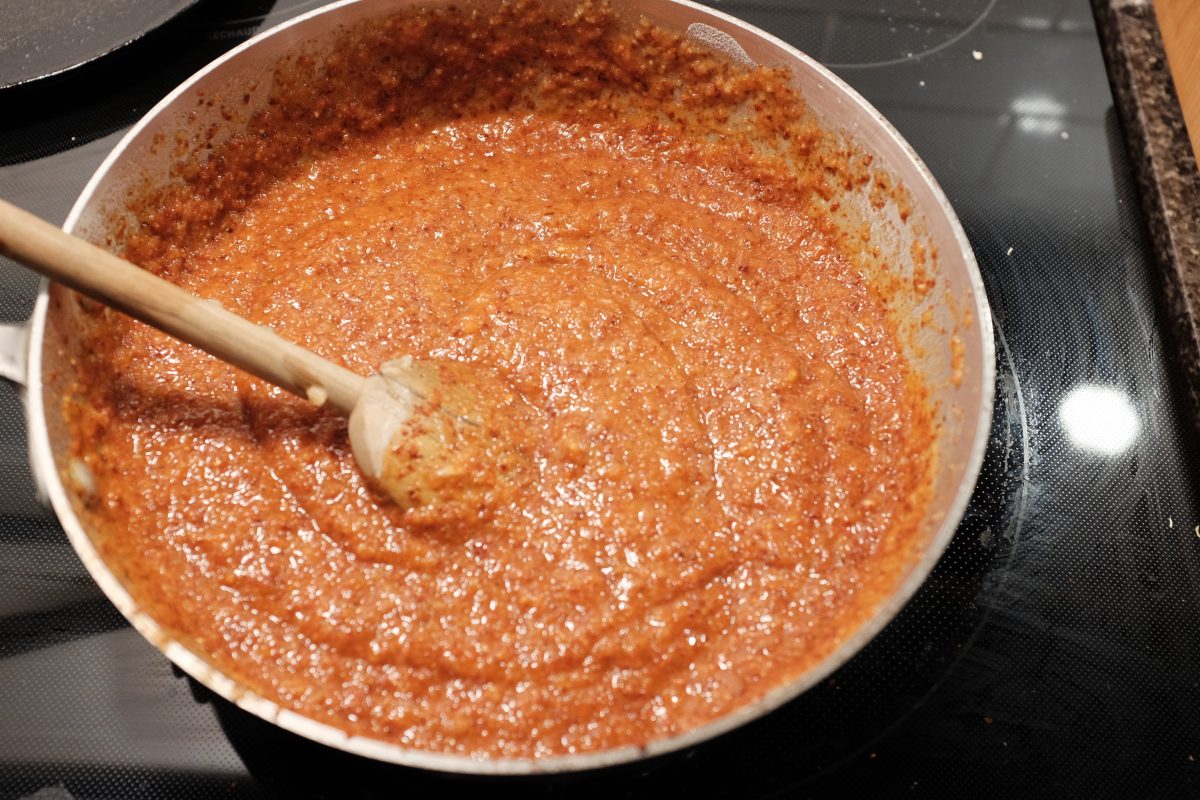
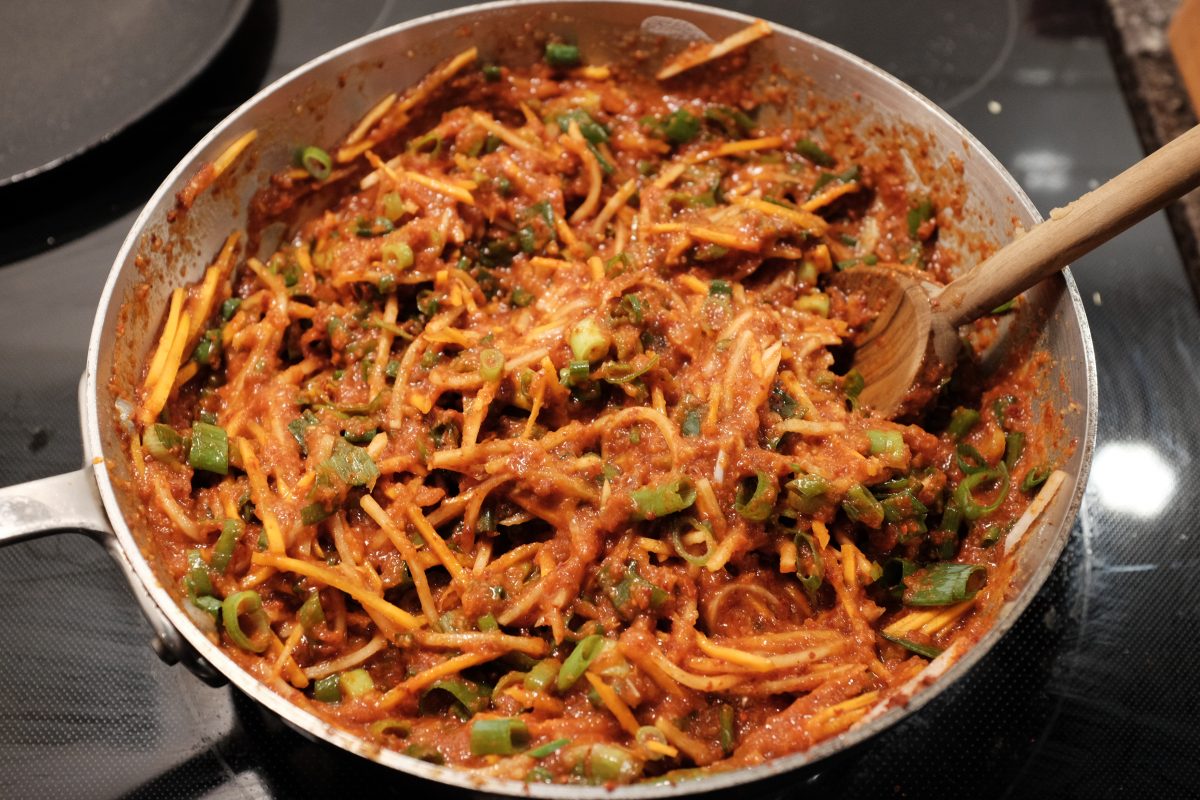
While the cabbage is brining, make the kimchi paste:
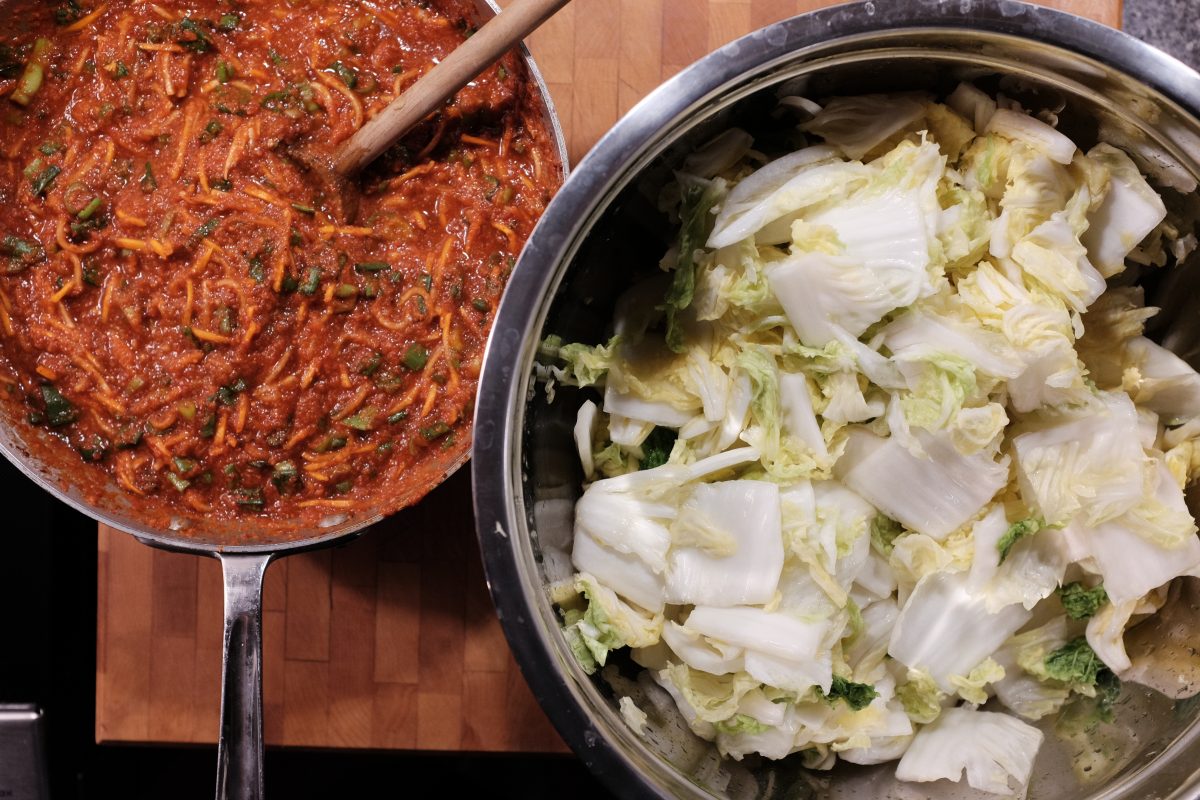
Put it all together
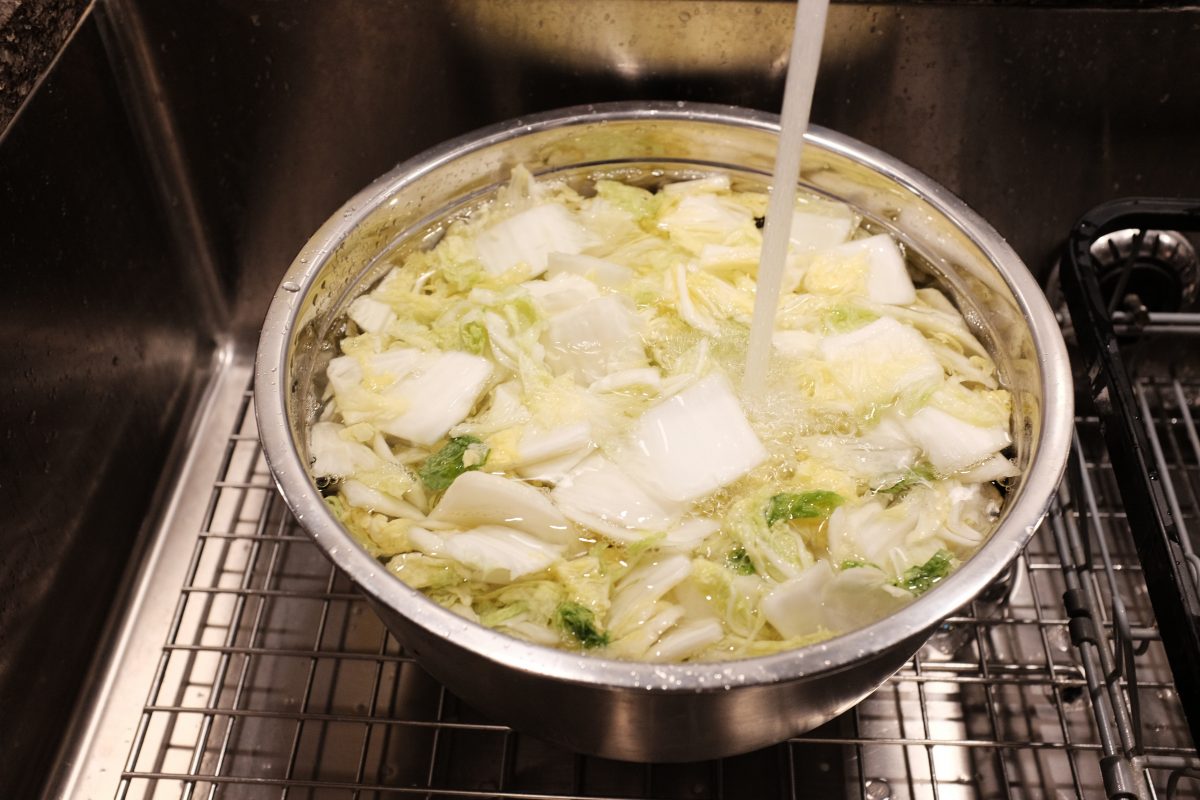
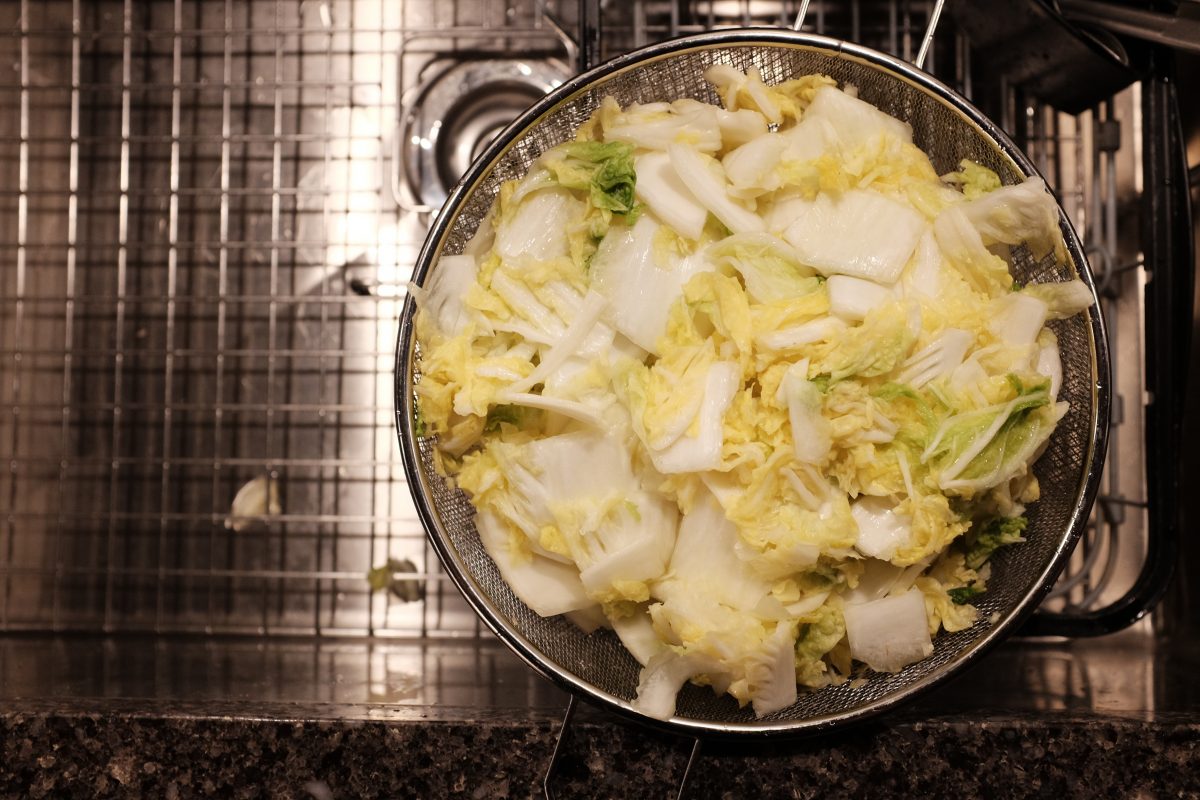
Now what?
For ideas on what to do with your kimchi take a look at this post.
If you have any questions or comments, please leave them below. I am always happy to hear from you.
Thanks for reading!