Posts in Category: Cooking
Kimchi Jjigae with Tuna
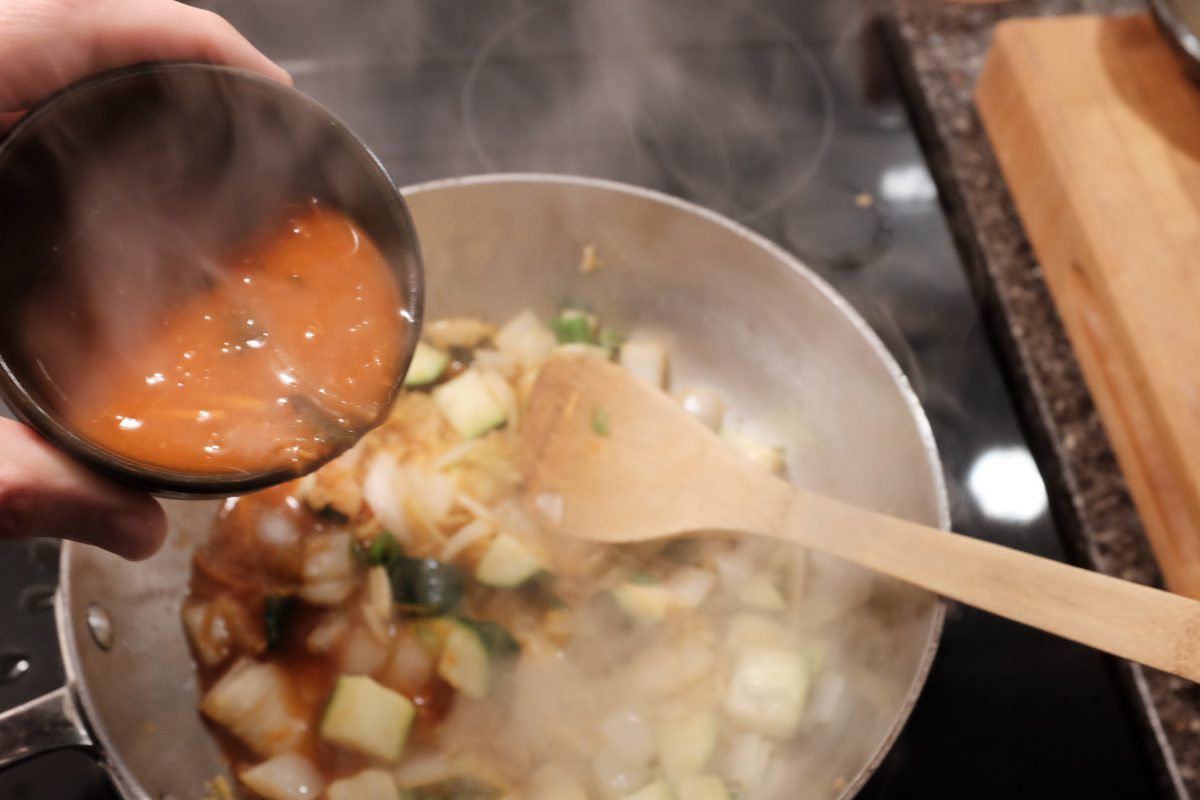
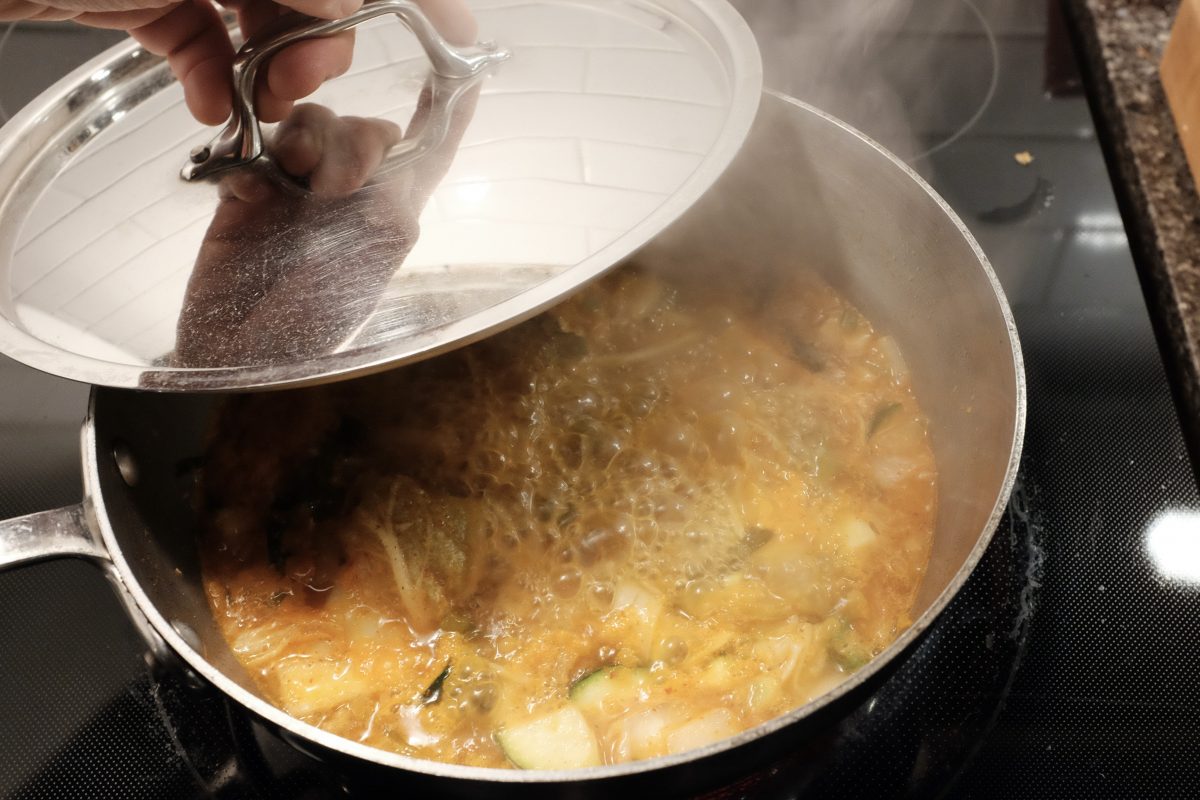
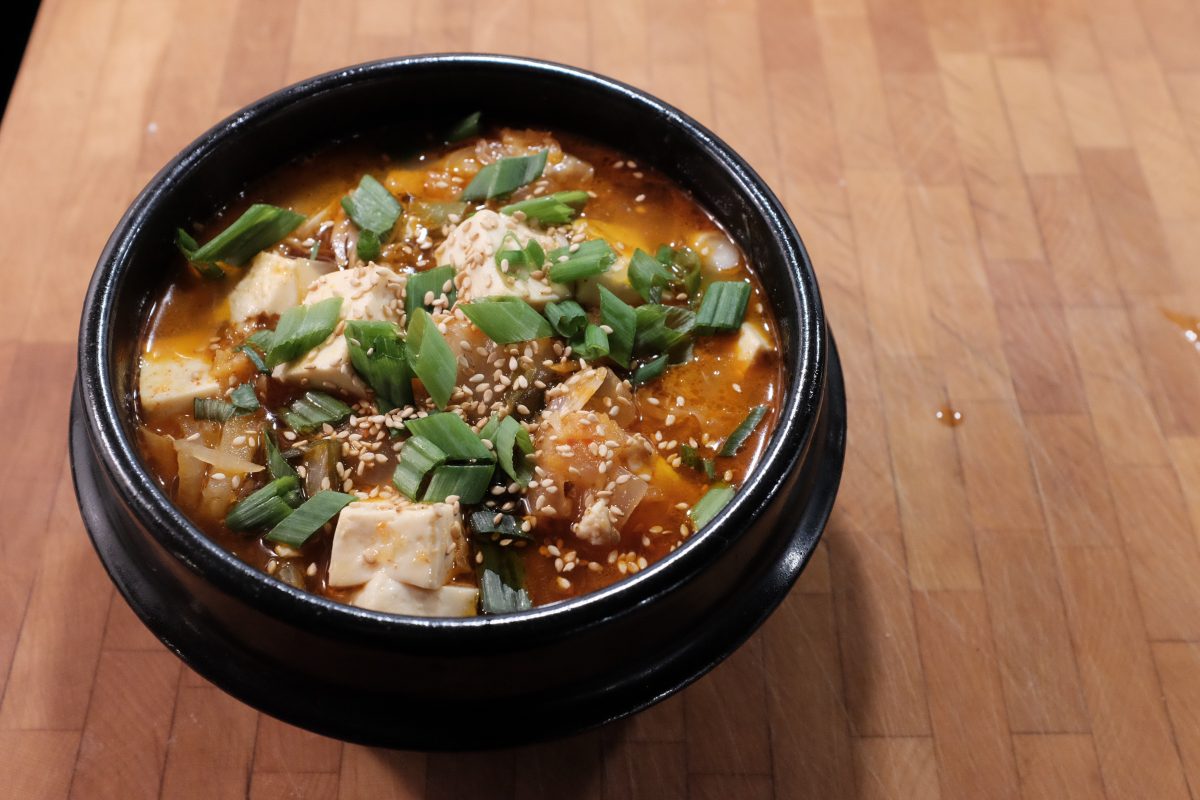
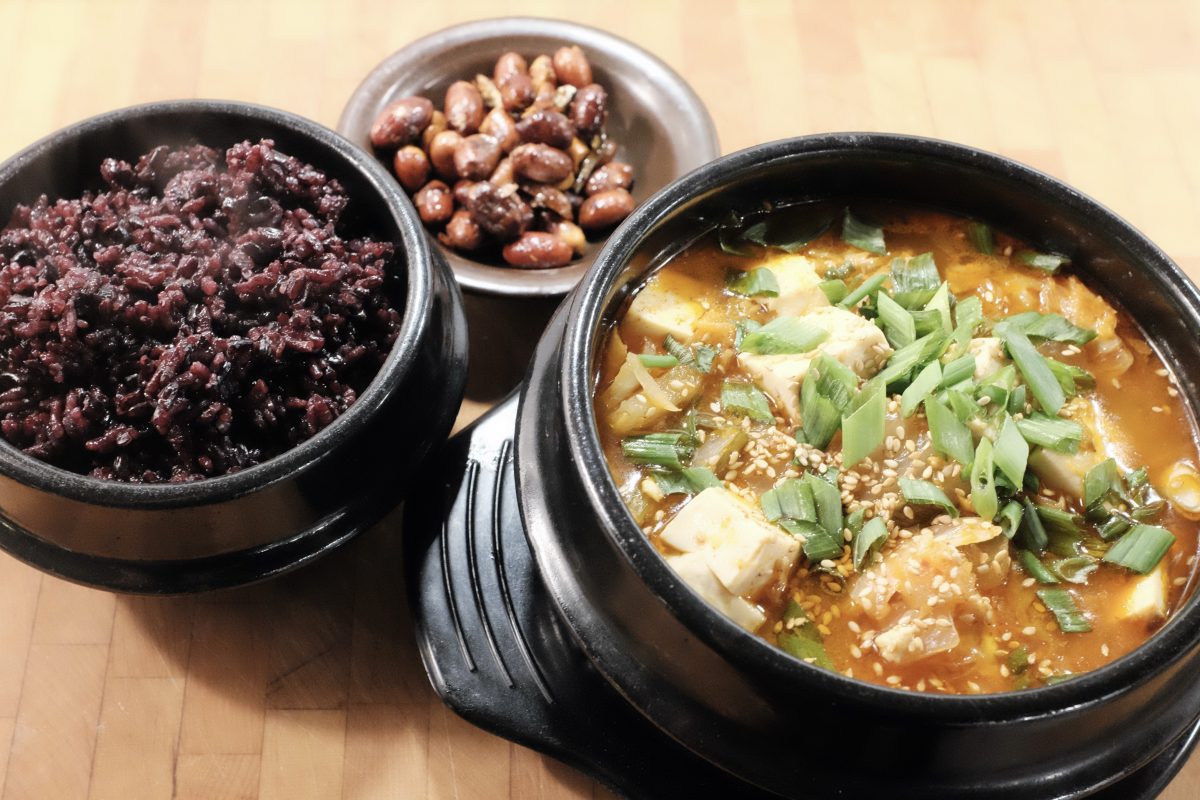
Kimchi jjigae with tuna (참치김치찌개) is a hot and satisfying dish that you can put together in a few minutes with as little as two or three ingredients. Below is a list of ingredients that I like to use but really, almost anything goes. Feel free to add different vegetables or leave out anything you don’t like. This recipe will make two smaller portions or one very large portion.
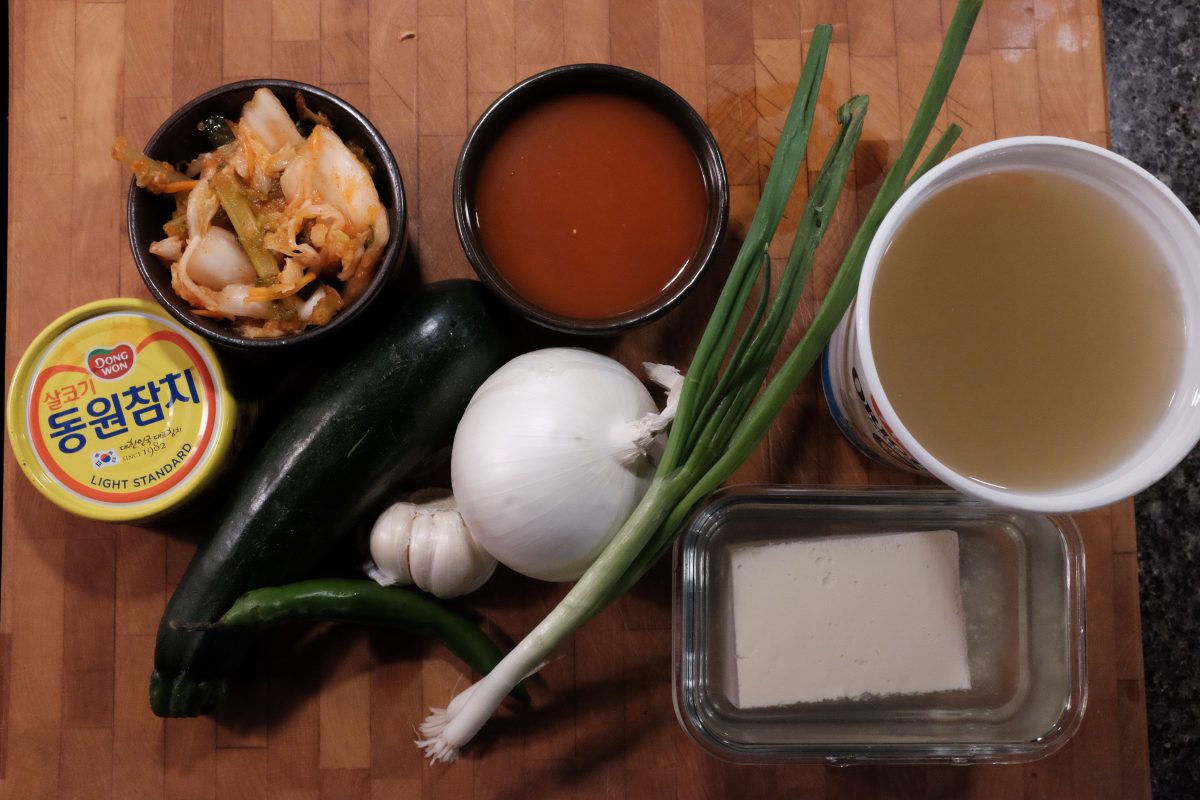
Ingredients:
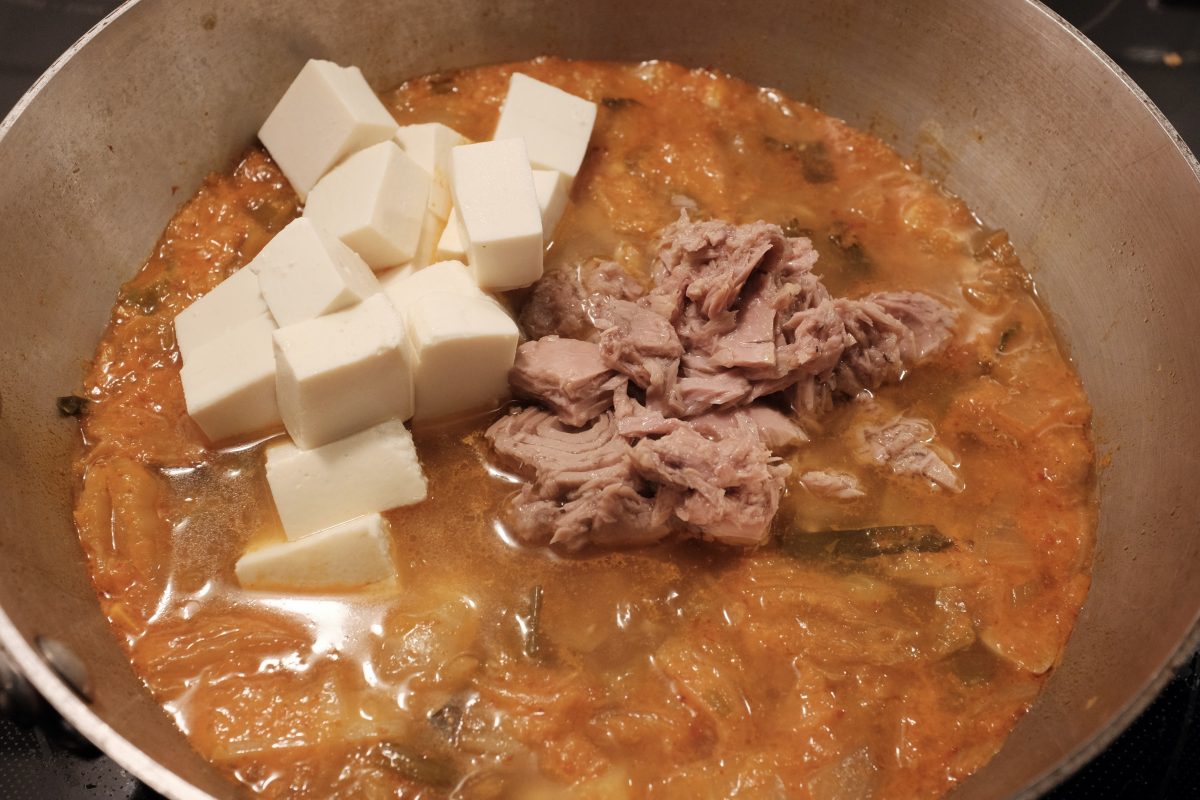
- 1 can of tuna in oil
- 1 cup sour kimchi
- 1/2 cup kimchi juice
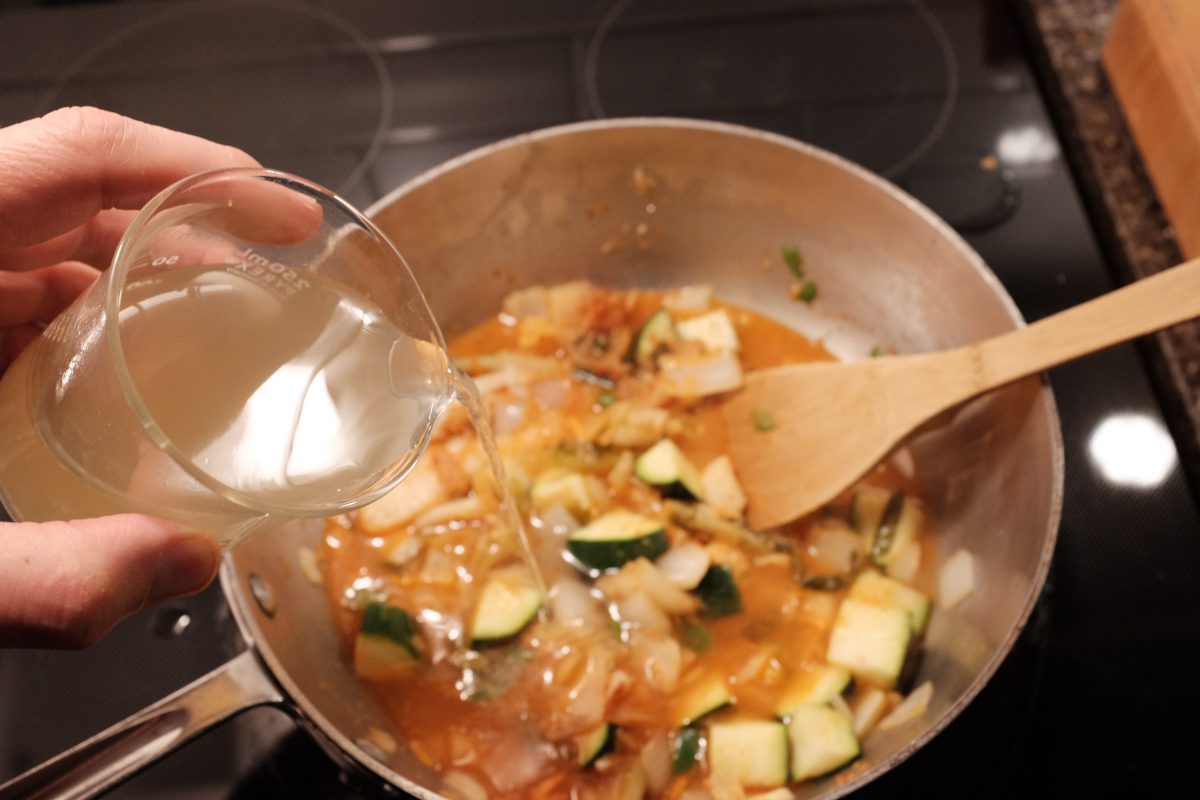
- 1 cup anchovy broth (or water)
- 1/2 zucchini
- 1 korean green chili pepper
- 1 cup diced tofu
- 1/2 onion
- 3 cloves garlic
- 2 green onions
- sesame oil
- salt
- sugar
The ingredients in bold are essential. Everything else is optional. I am using veggies I have in the fridge. You can add or subtract anything you like. As long as you have some fermented kimchi and a can of tuna, you can make this. I like it with extra veggies and especially with tofu.
Use canned not fresh tuna. It is not the same. I am using Korean tuna in oil but any canned tuna is fine.
There is a link in the ingredients to a recipe for anchovy broth. You don’t need it but, it adds a lot of depth to dishes like these if you use it in place of water.
Process
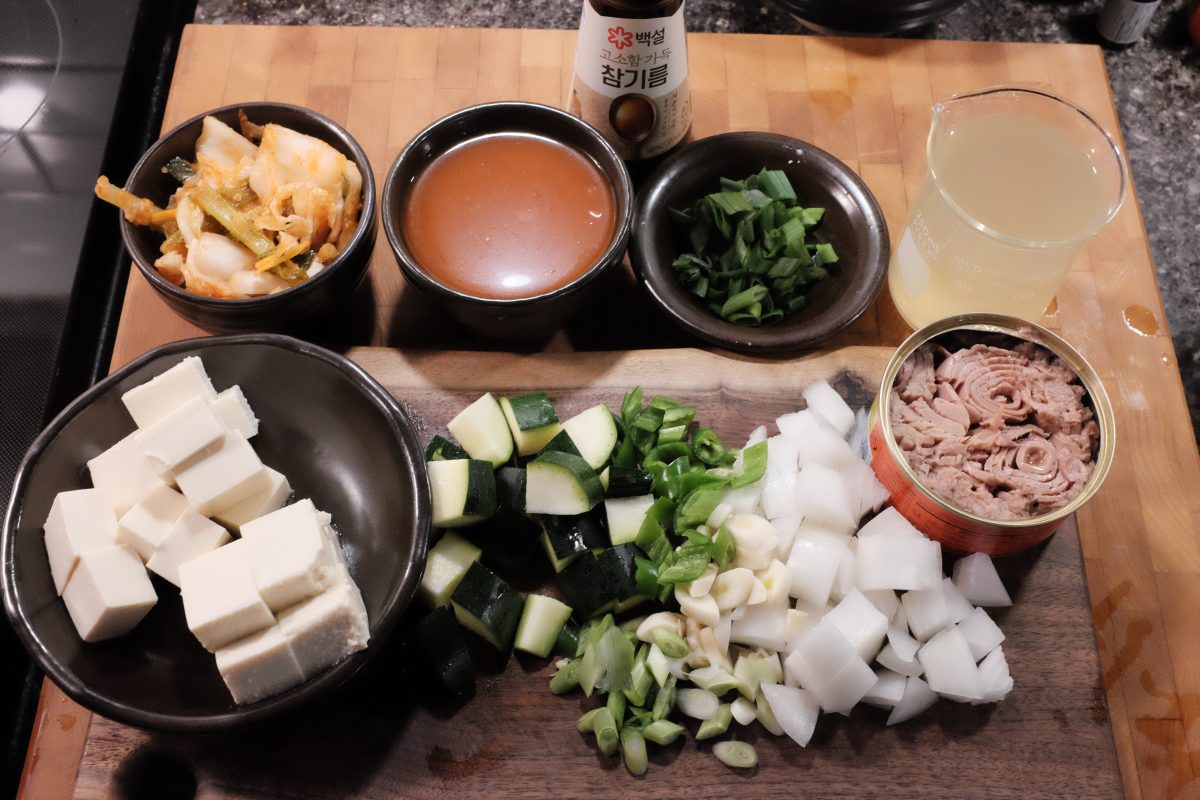
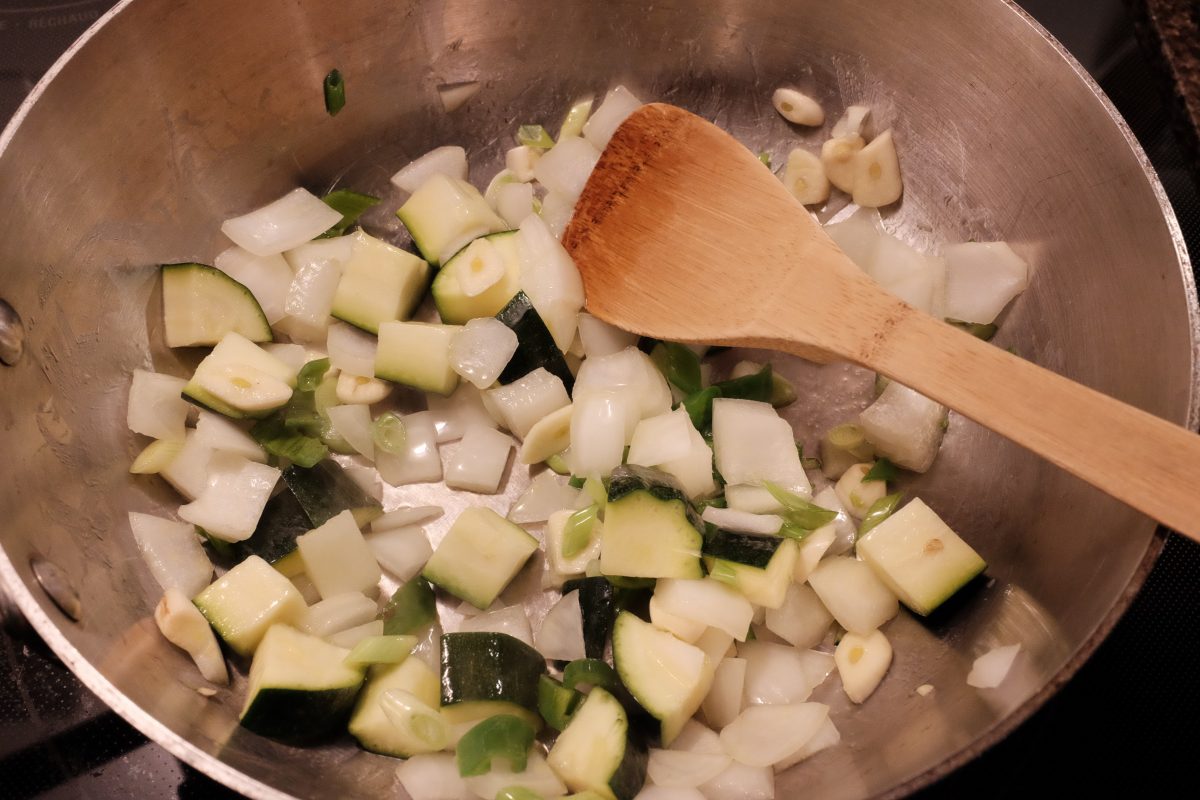
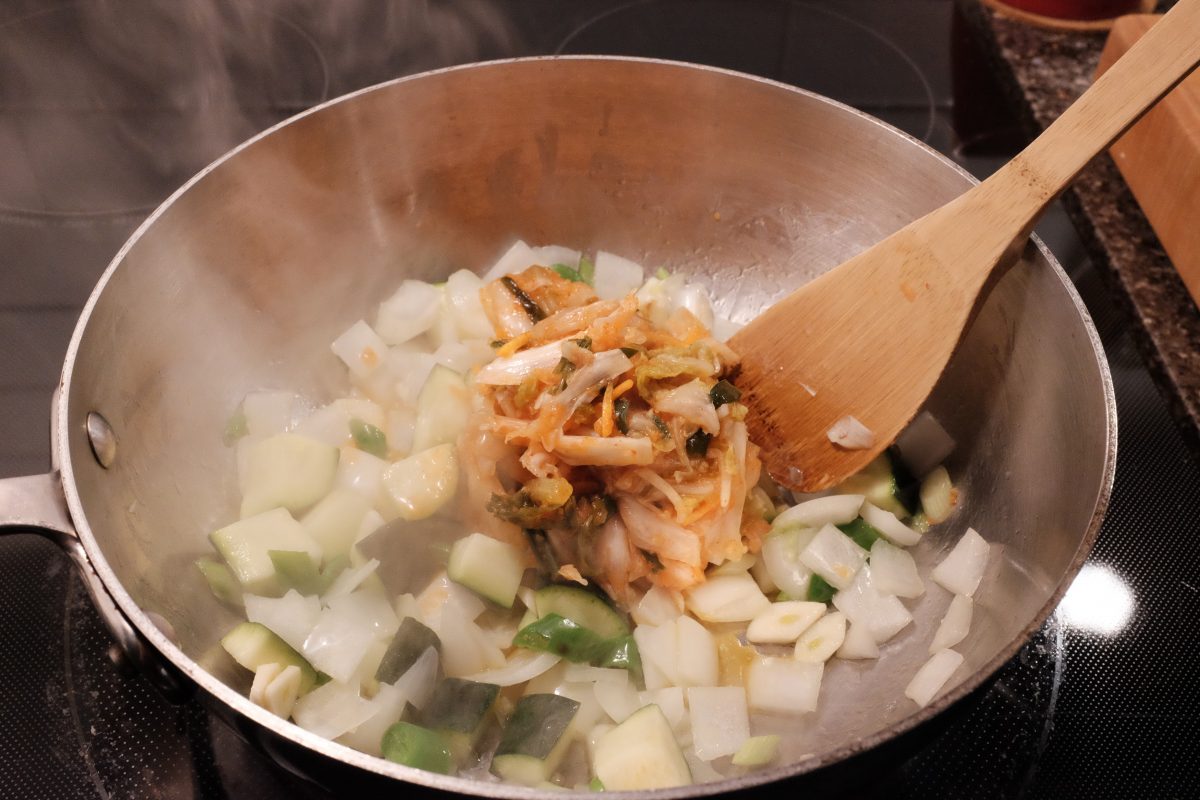
Variations
As I mentioned at the start, you can put just about anything you want into this dish. There is no definitive recipe for kimchi jjigae. Aged sour kimchi and a can of tuna are the only must haves. Experiment with all kinds of veggies. I also love smoky bacon in this dish. Fry it up with your veggies at the start.
If you are using water instead of kimchi juice, you can stir in a little gochujang for extra colour, flavour and spice if you like.
If you do not have anchovy broth but you do have anchovies and kelp on hand: take a square of kelp and a few dry anchovies and tie them in a little sack of cheesecloth. Add them to the simmering jjigae at the start. This will give you a similar flavour to anchovy broth. Just pull them out and discard after 15-20 minutes.
For a good recipe for homemade kimchi have a look HERE.
If you have any questions or comments or suggestions, please leave them below. I always look forward to hearing from you. If you enjoy the content and would like to contribute towards website maintenance and development, you can make a donation here. Thank you for reading TigerSalad!
Anchovy Broth
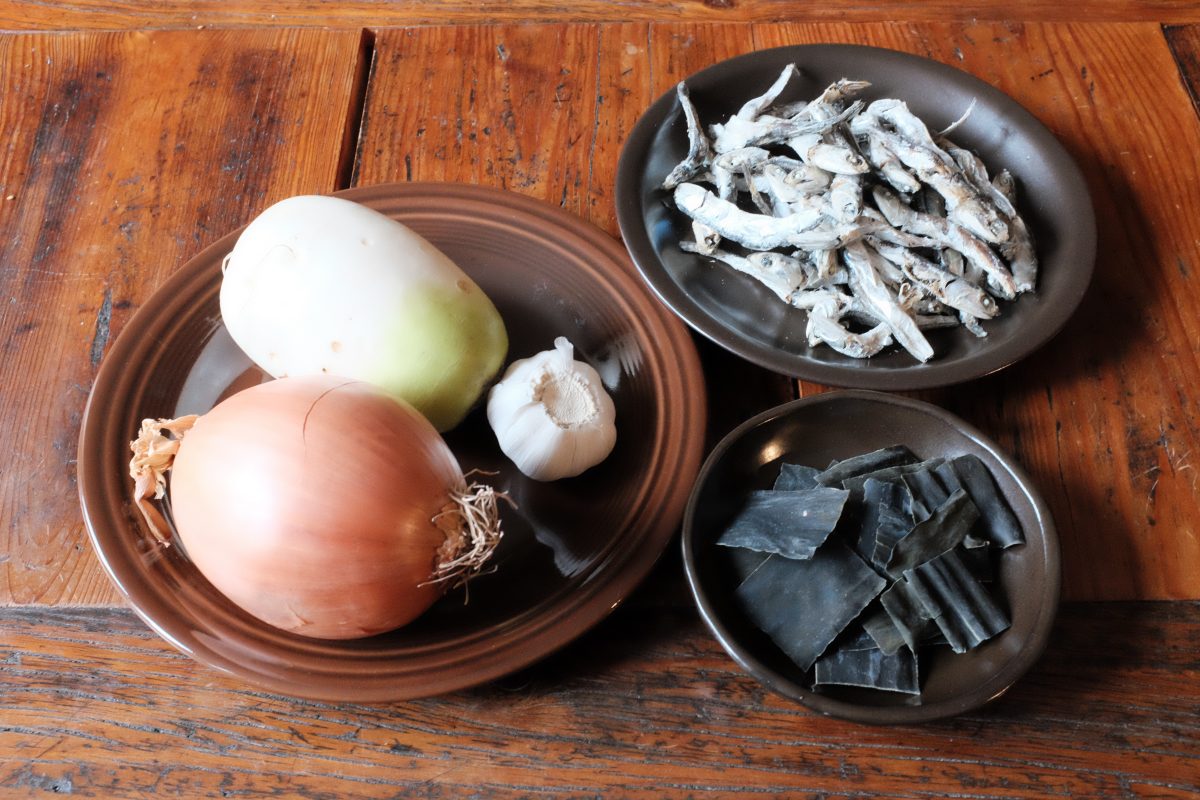
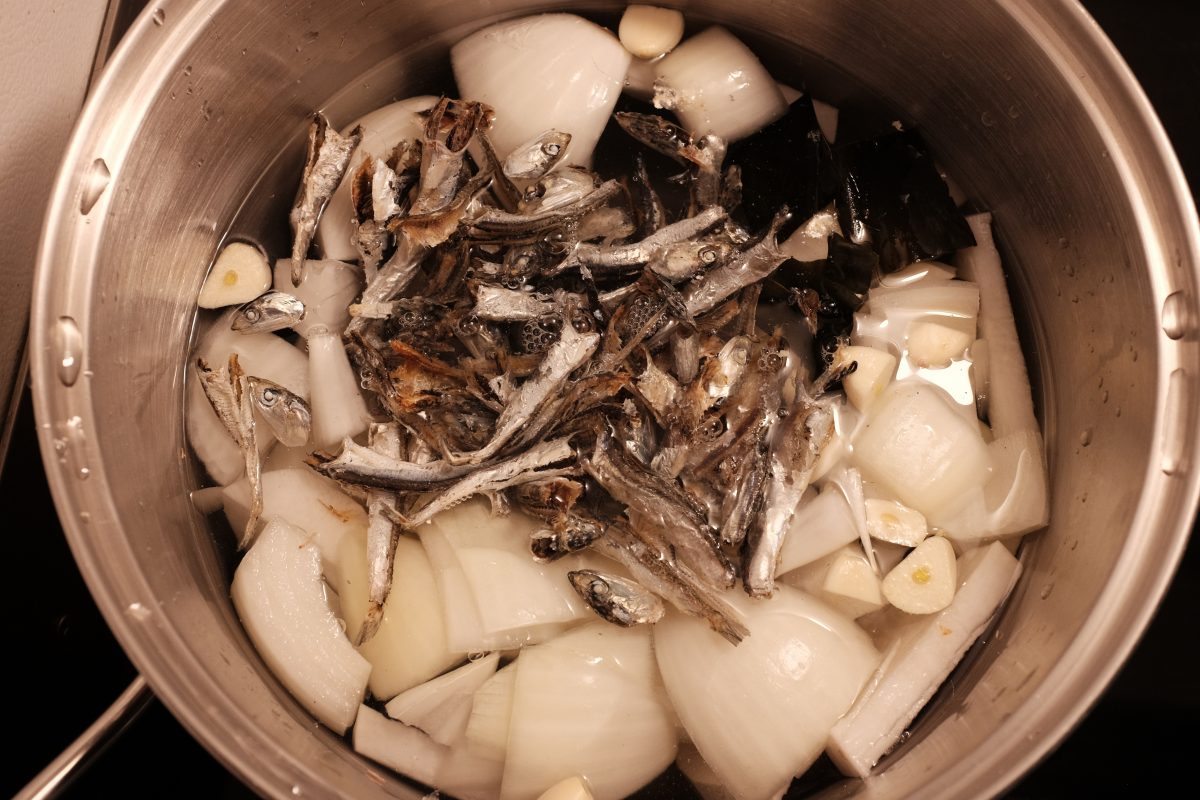
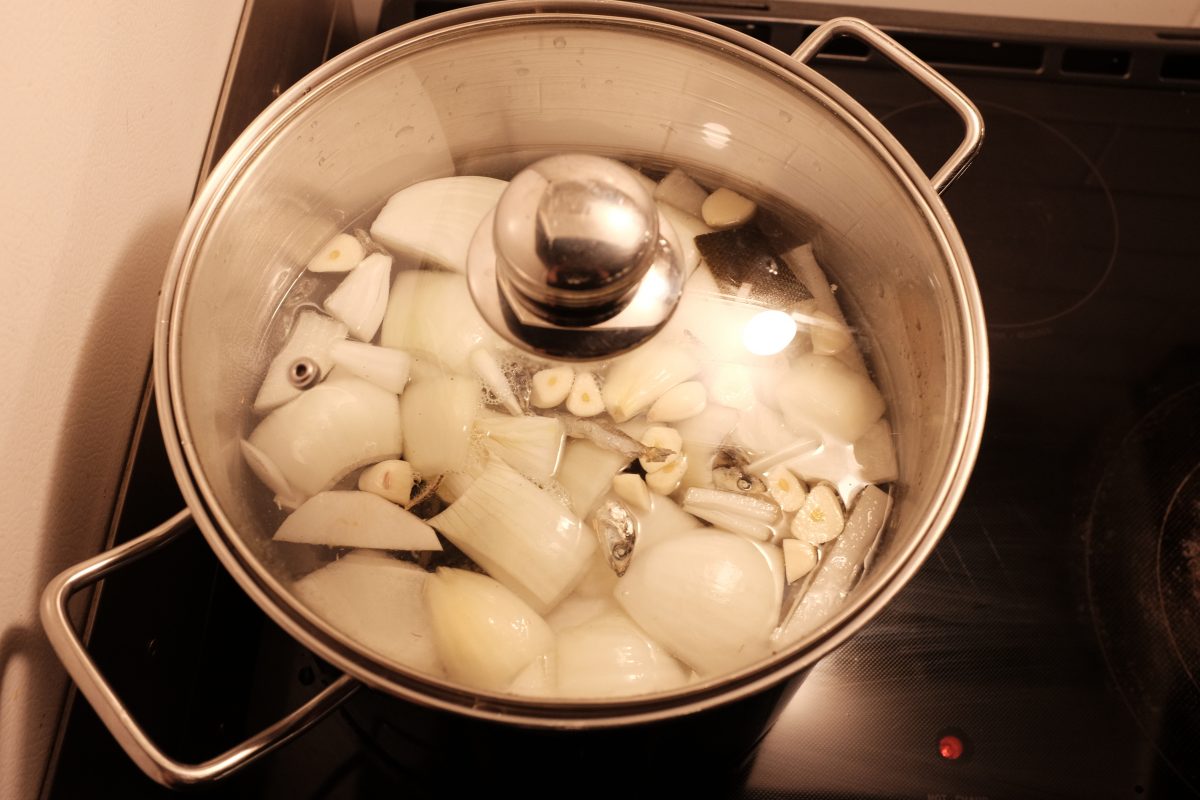
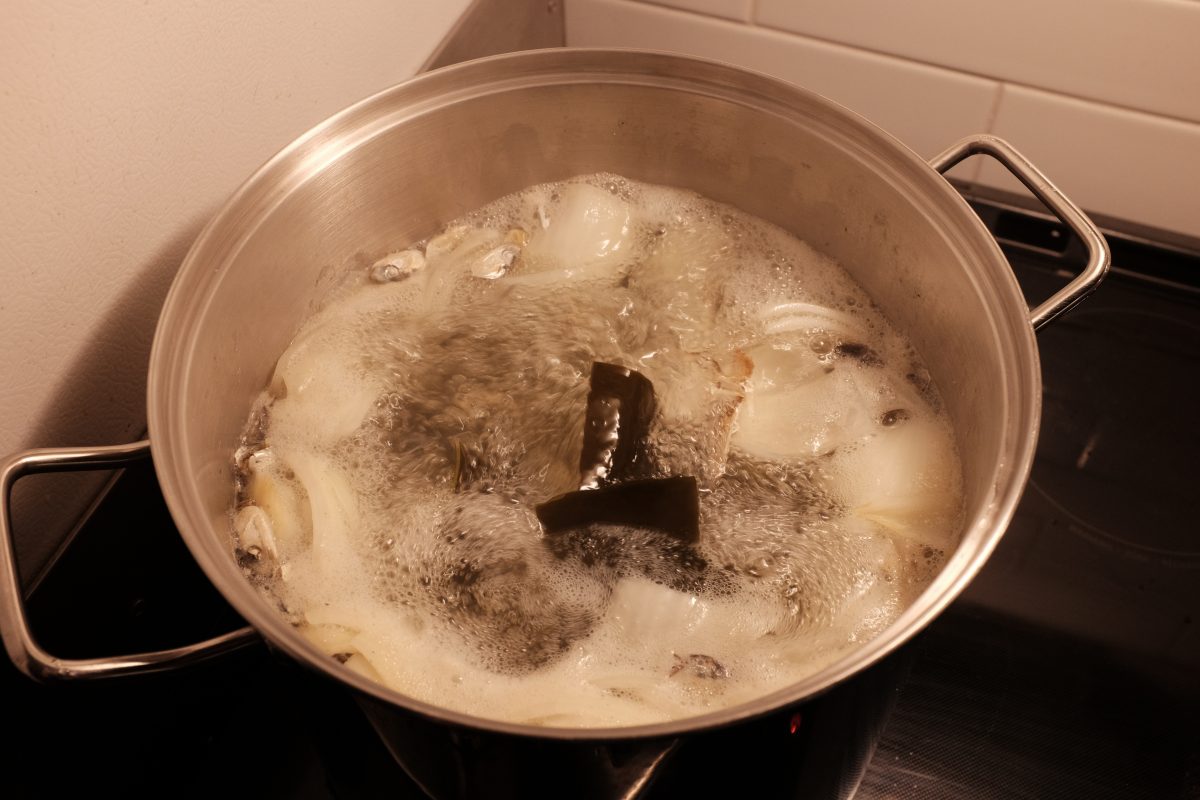
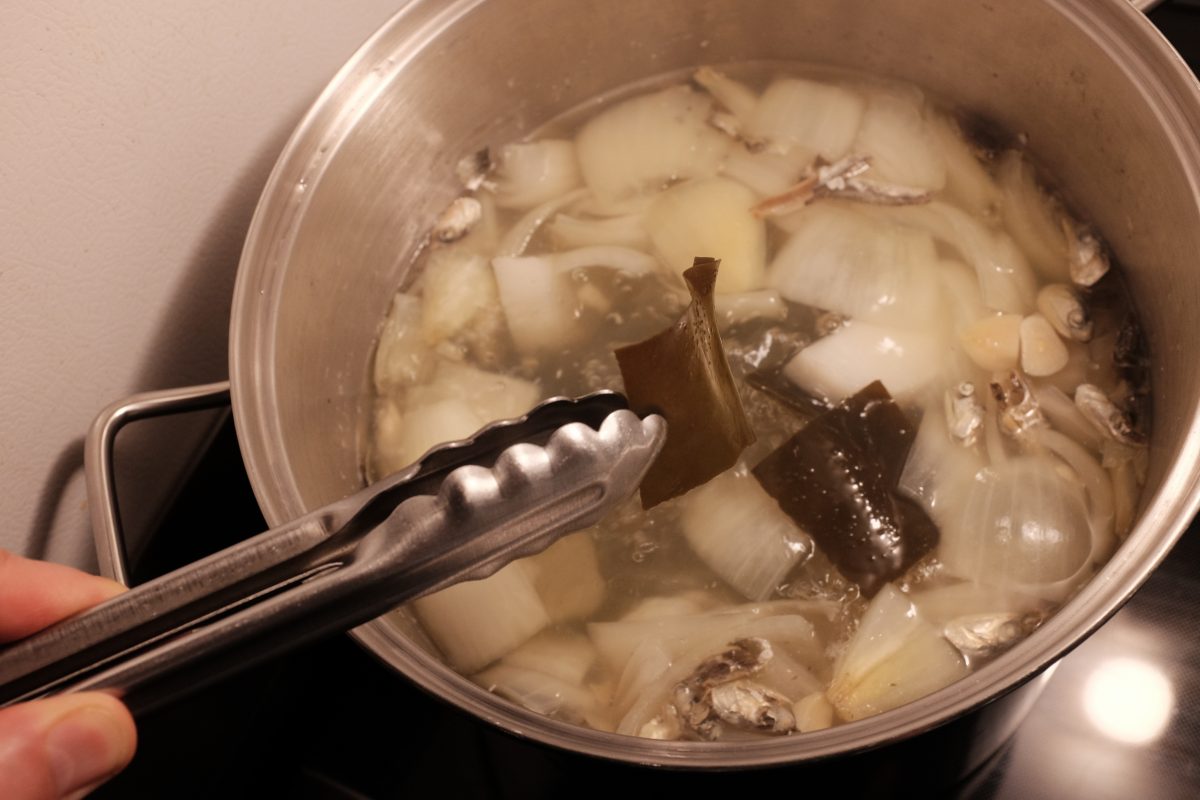
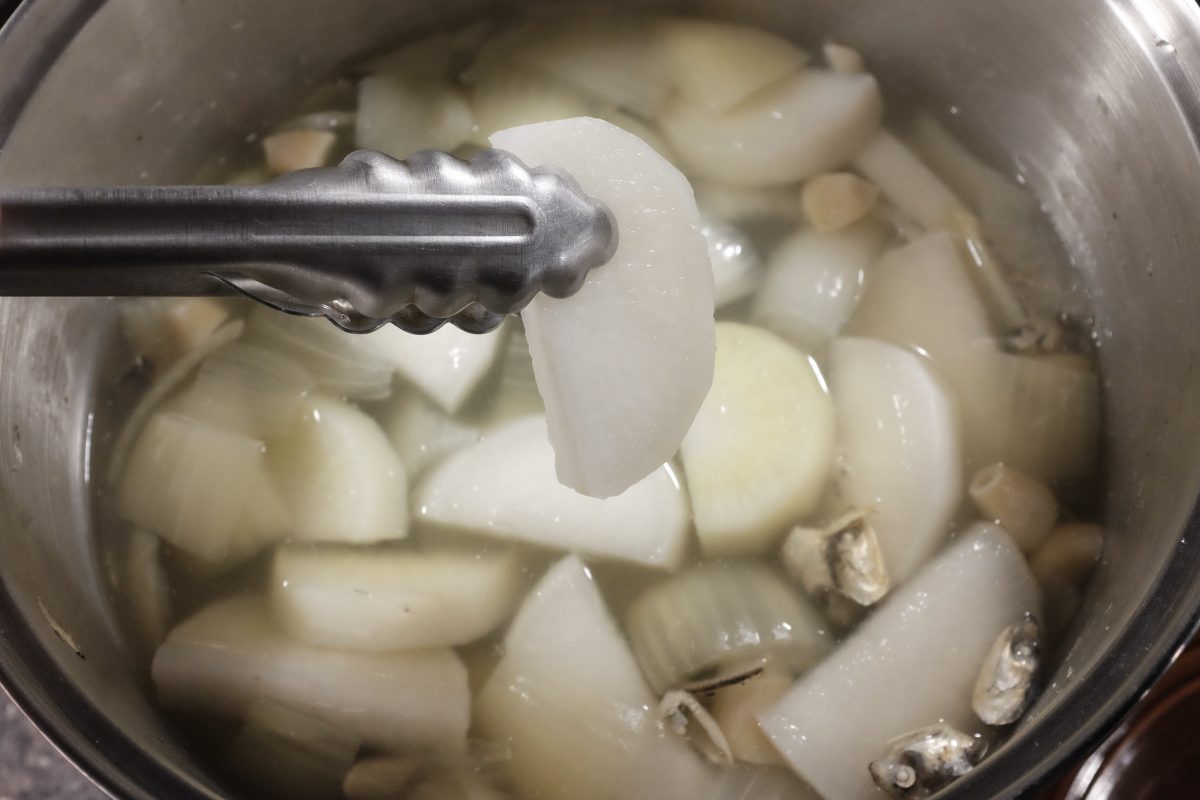
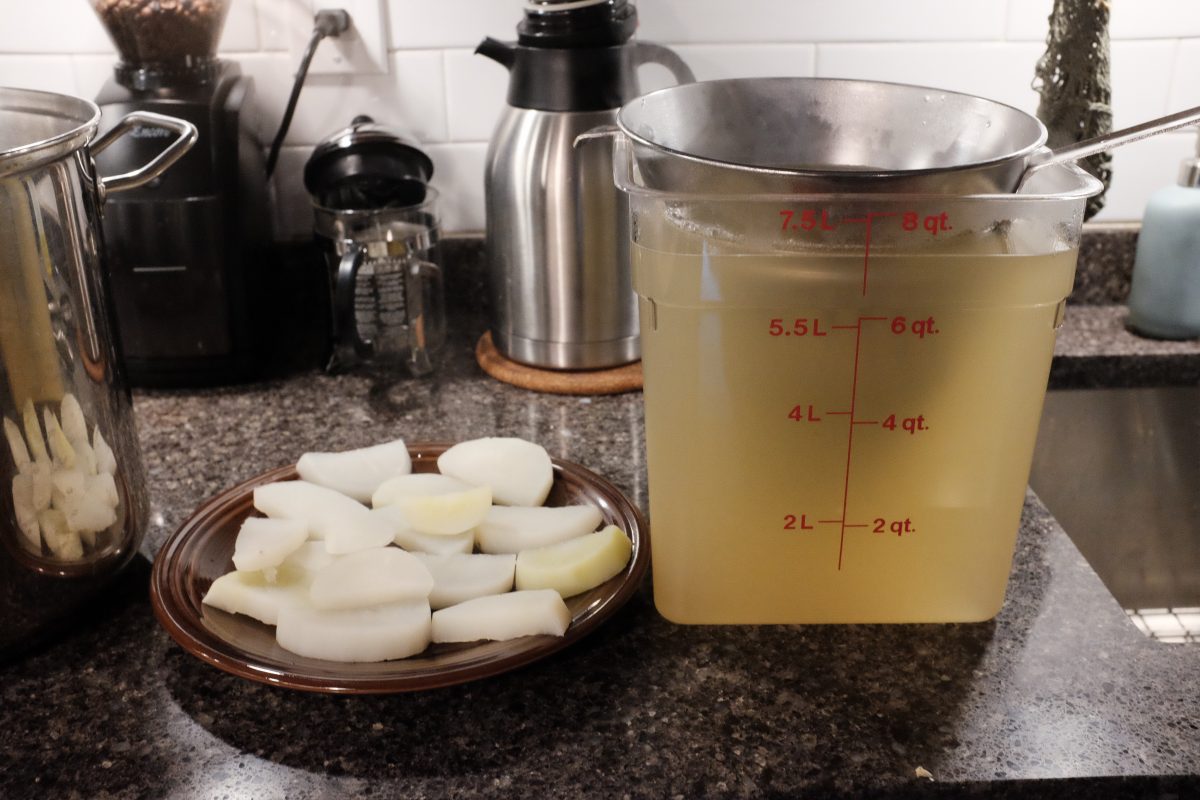
Anchovy broth or myeolchi yuksu (멸치육수) is a basic fish stock. It is an essential base for many Korean dishes. It is very easy to make, has endless uses and large batches can be frozen in single use containers to use later on. The recipe can be as simple as just anchovies and water or it can incorporate a number of aromatic vegetables or even seaweed and dried mushrooms. The recipe below uses anchovy, kelp and just a few other ingredients to make a delicious stock. This recipe gives you about 8 litres / 2 gallons of stock. If this seems too big, just half or quarter all of the ingredients.
Ingredients:
- 8 litres / 2 gallons of water
- 40-50 medium large dried anchovies (around 100 grams)
- 8-10 small squares of dashima seaweed aka kombu (around 10-15 grams)
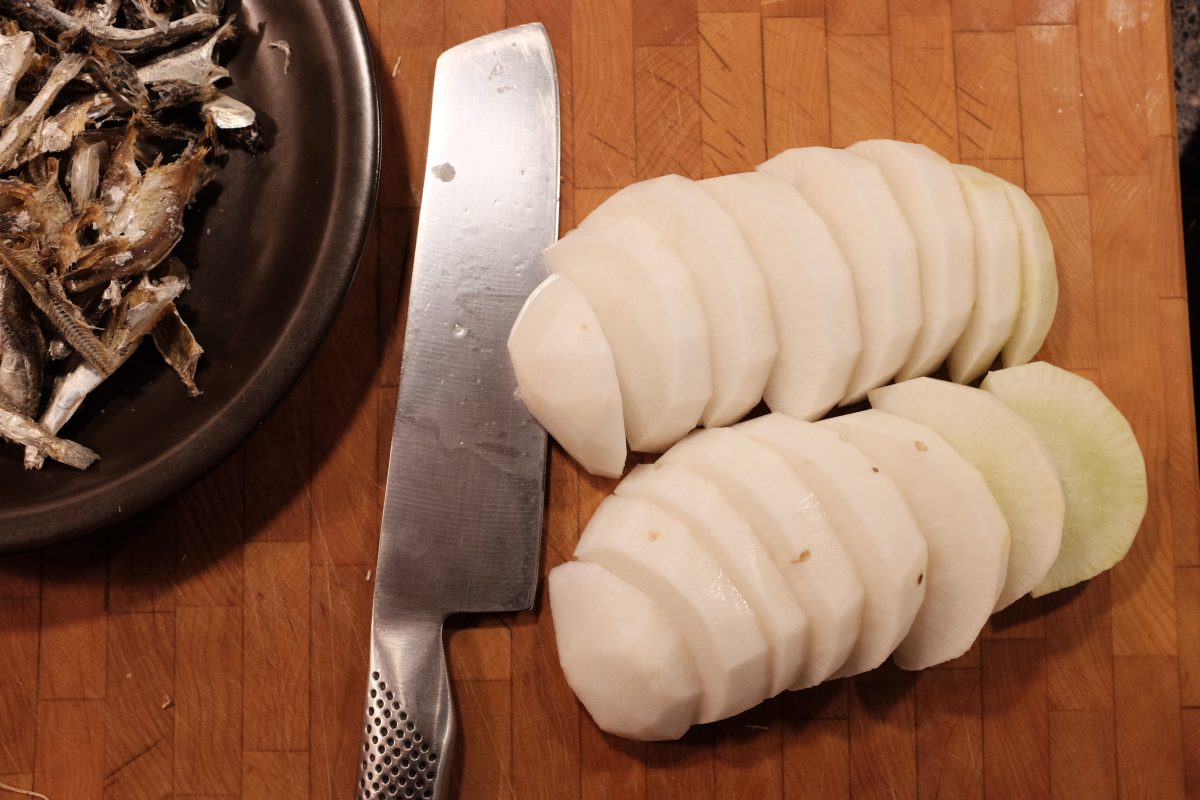
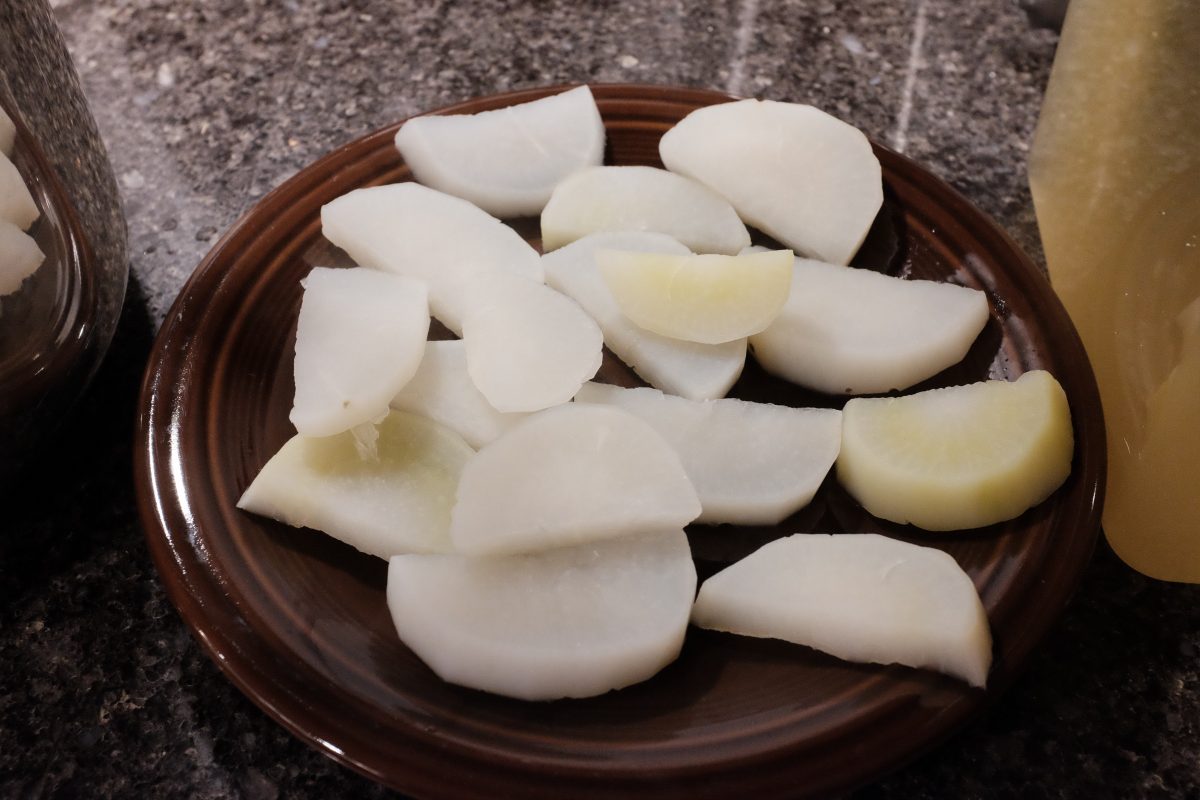
- 500 grams Korean radish
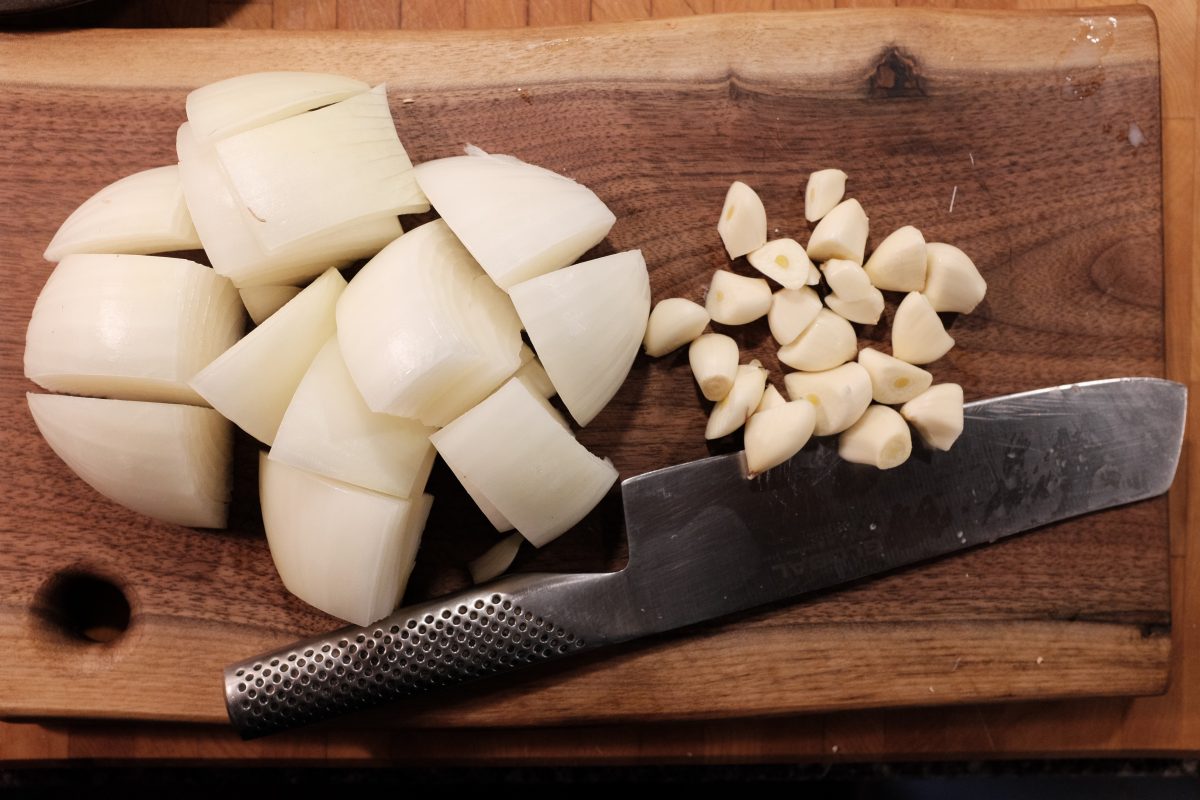
- 1 large onion
- 12 cloves of garlic
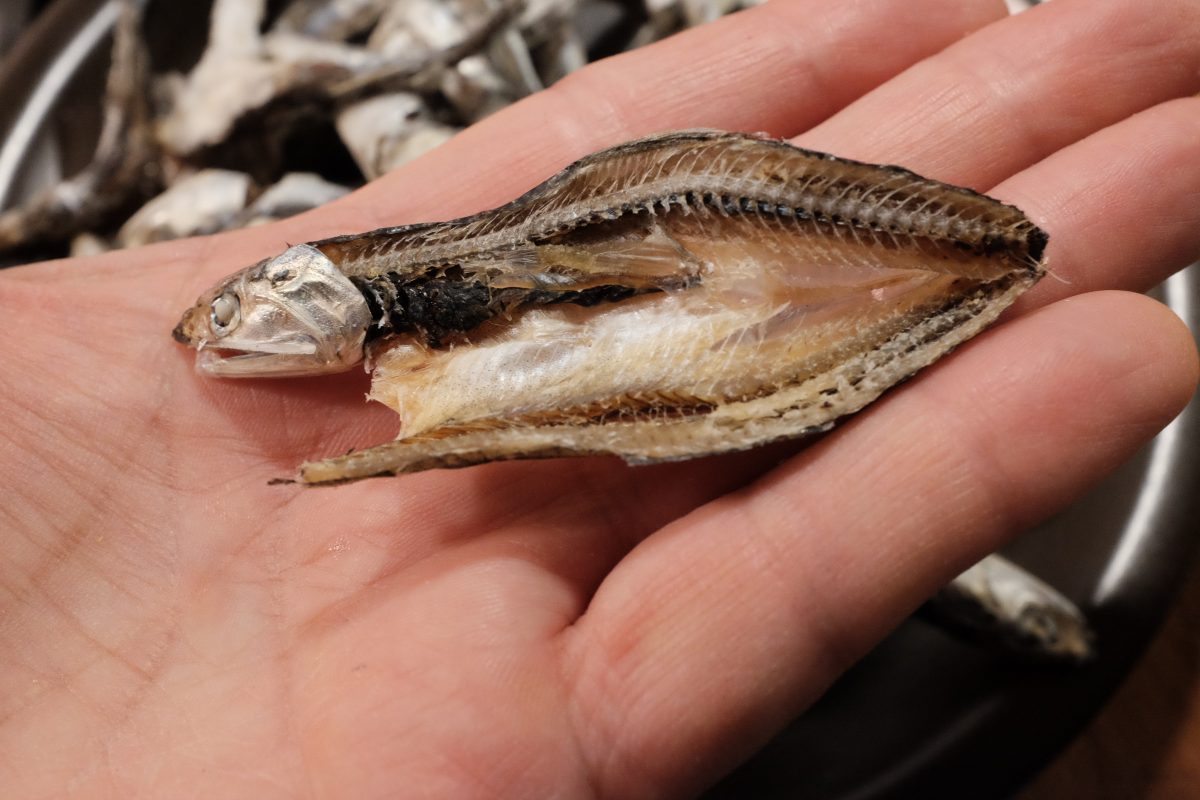
Dried anchovies can be found at Asian grocery stores. They come in a few different sizes from very tiny (1 cm) to fairly large (about the length of a finger). The ones I am using are on the larger side.
Dashima is thick, rigid and sometimes powdery looking dark green seaweed. You can find it in the dry goods section of Asian grocery stores in big long strips or a smaller bag of pre-cut squares. Either work fine. I prefer the little squares just because they are easier to work with in smaller recipes. There are lots of different dry seaweeds on the shelf. The one we are using here will say Dashima / 다시마 or Kombu if it is from Japan.
Process:
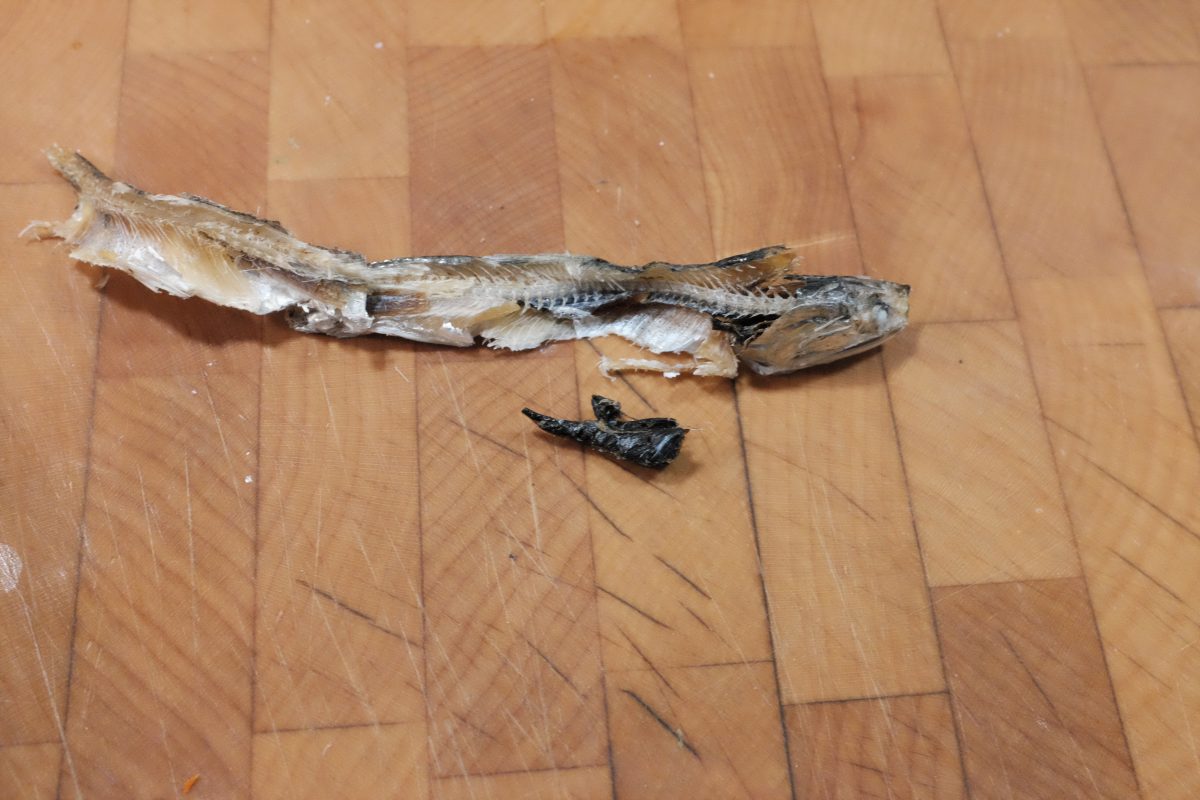
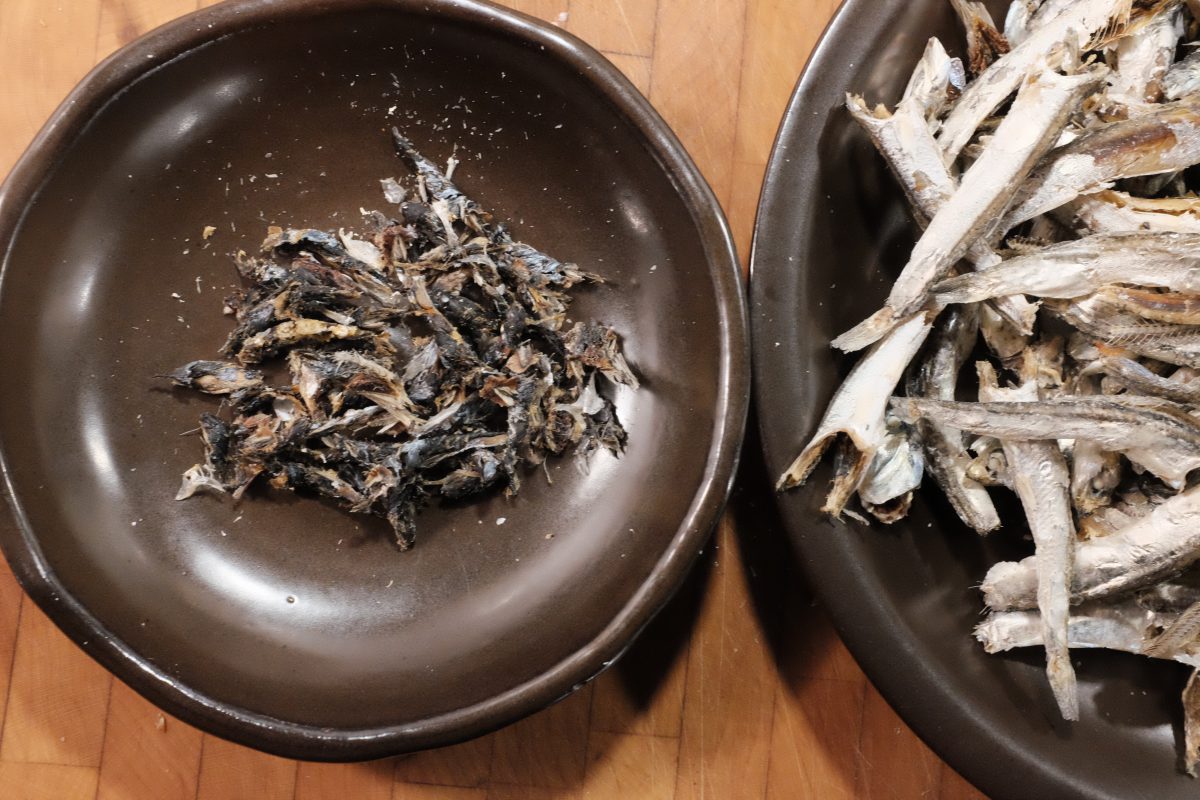
Remove the guts from the anchovies.
Uses:
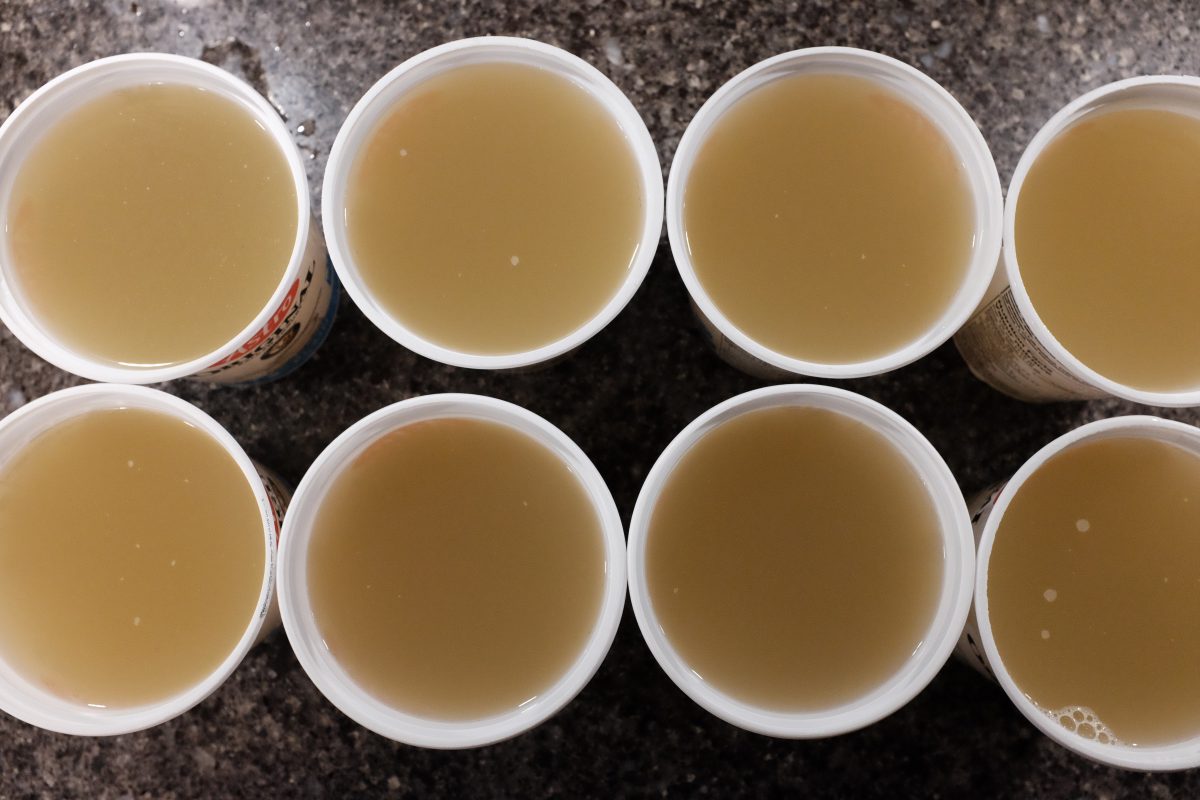
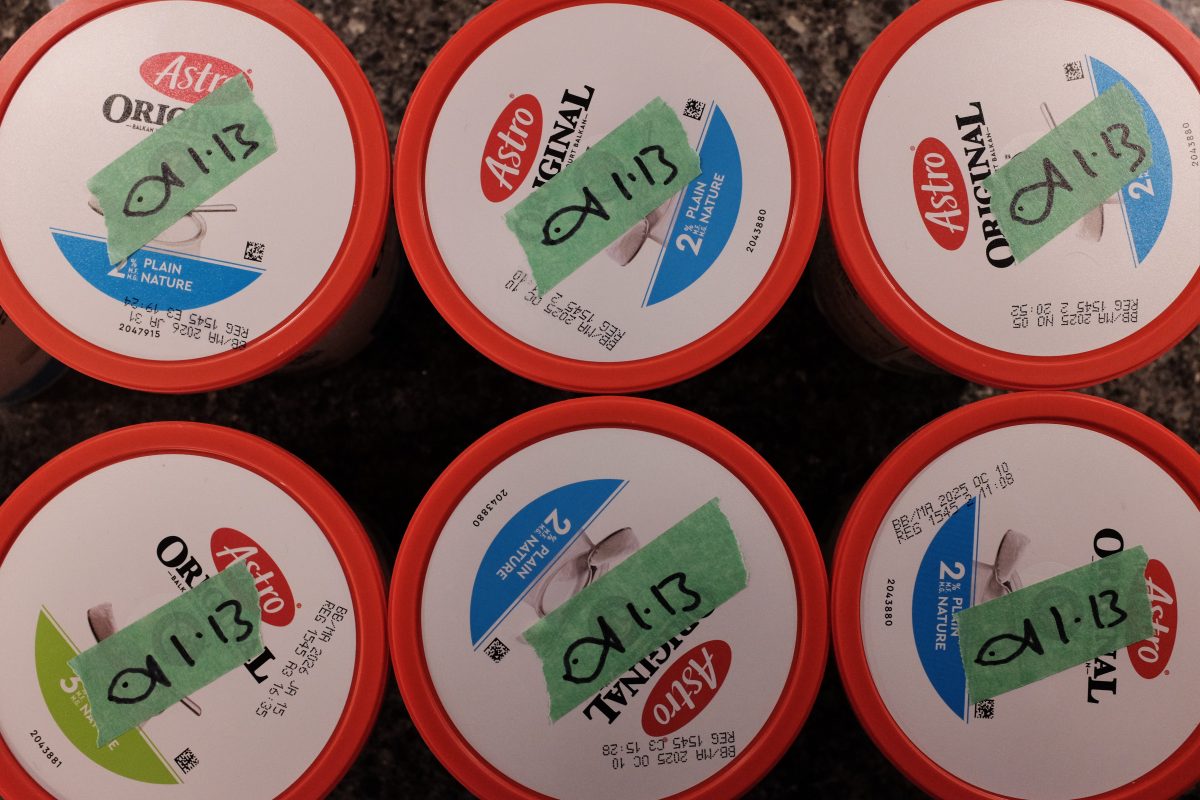
This stock is the base for many Korean dishes including sundubu jiggae, kimchi jiggae, noodle soups, etc. In almost any savoury recipe that calls for water, substitute with this stock to make it extra delicious. Dishes like Tteokbokki reach new heights of tastiness when made with a good strong anchovy stock.
In the heat of summer, I will even drink this stock ice cold as is. It is that delicious and refreshing!
If you have any questions, comments or suggestions, please leave them below. I am always happy to hear from you. If you enjoy the content and would like to contribute towards website maintenance and development, you can make a donation here. Thank you for reading TigerSalad : )
How To Make Vinegar
How does fruit become vinegar?
If you throw a bunch of sweet fruit into a container, natural yeasts already present on the skins will eventually consume the sugar in the fruit and produce alcohol. This alcohol will then get consumed by acetic acid bacteria in the environment and produce vinegar. Nature does all the work.
The problem with letting natural yeast go wild is that it is hard to know what flavours will result (good or bad), how much time it will take, and how much alcohol will result. Because the final acidity of the vinegar depends on the alcohol content, it is worthwhile to use a yeast with a known strength and flavour profile.
As for conversion of the alcohol into acetic acid, we could just leave a jar of fermented fruit juice covered with a cloth and allow naturally occurring acetic acid bacteria in the environment do the work. The problem here is that it takes a long time…several months at least. To shorten this time, we can inoculate our alcoholic fruit juice with a splash of live culture vinegar to get it started and provide it with a steady supply of oxygen via an air pump.
Making pear vinegar at home
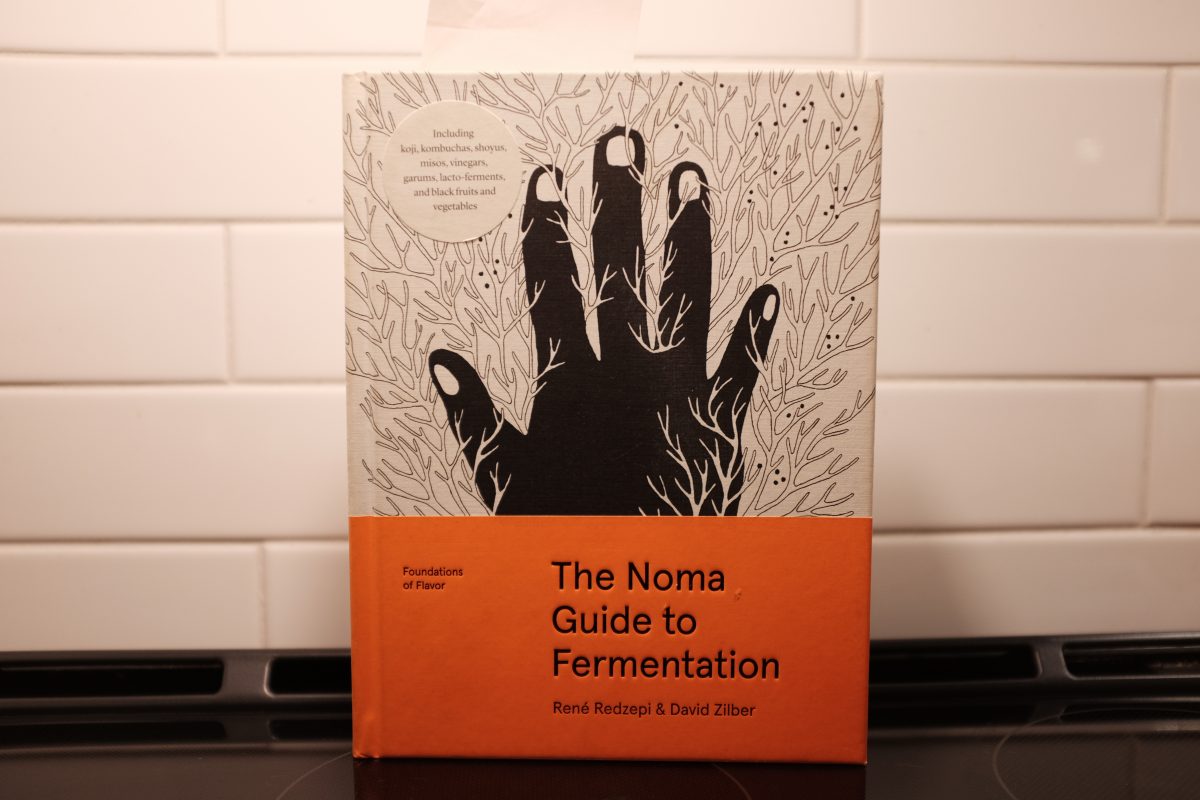
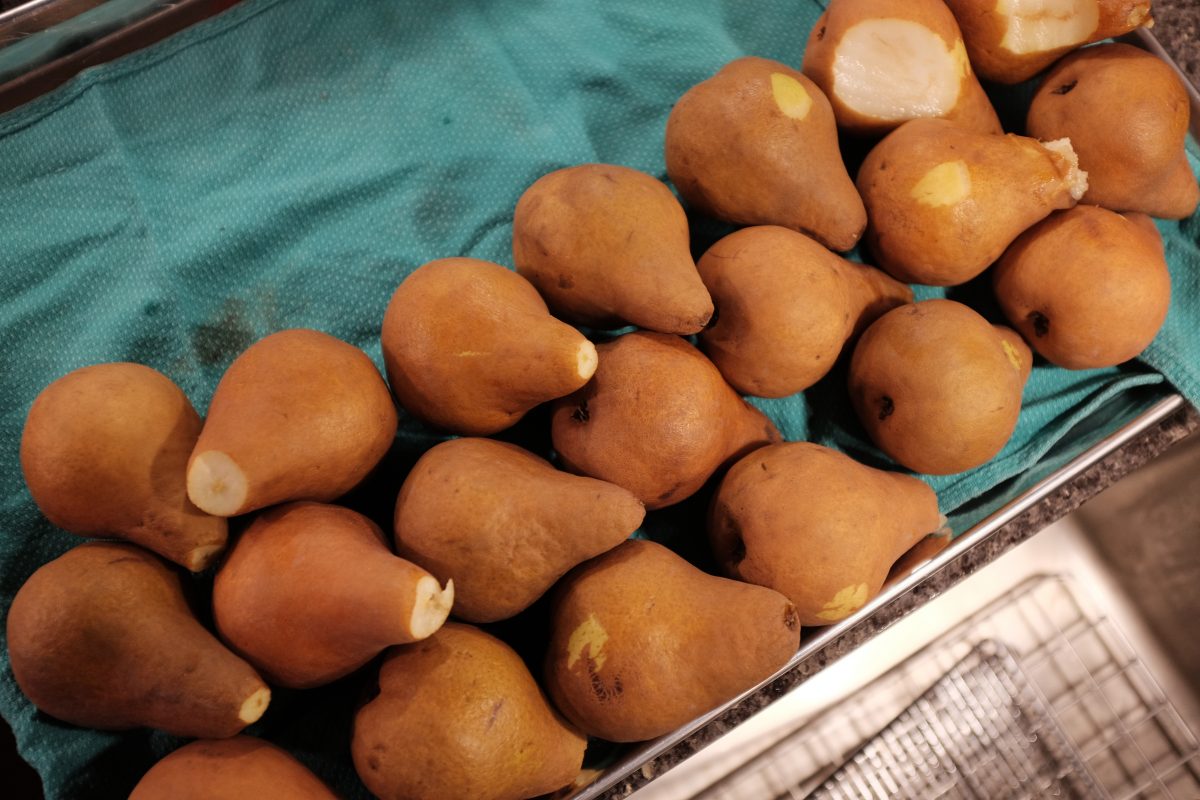
In this recipe we will take ripe bosc pears and, over a month or so, ferment them into pear vinegar. I am mostly following a recipe from this excellent book by Rene Redzepi and David Zilber:
Ingredients:
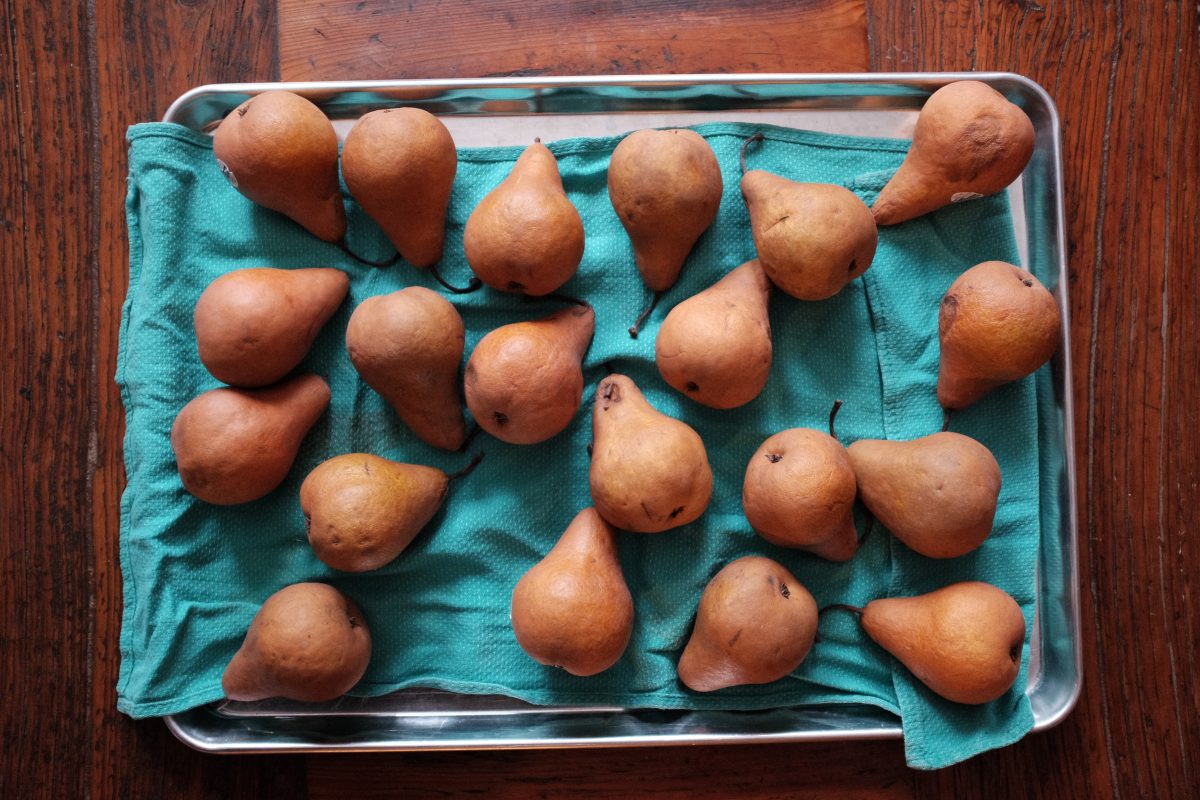
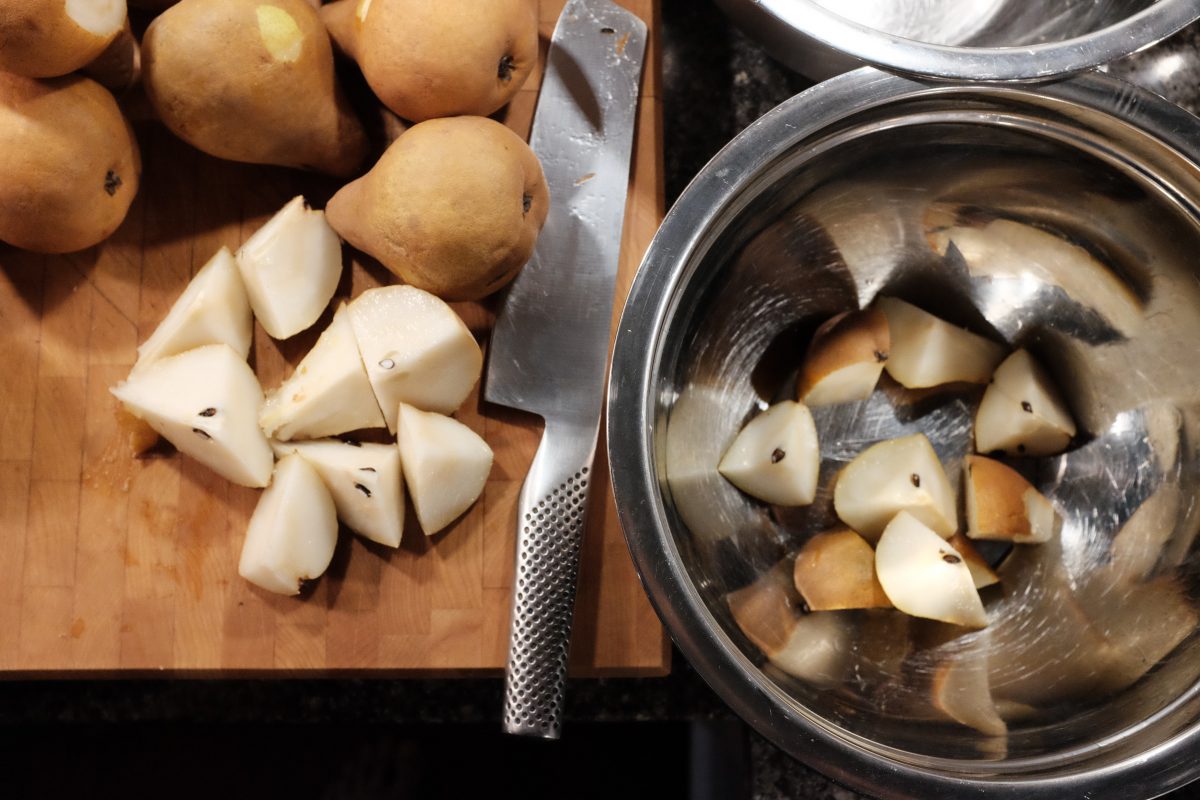
- 4 kilograms ripe pears
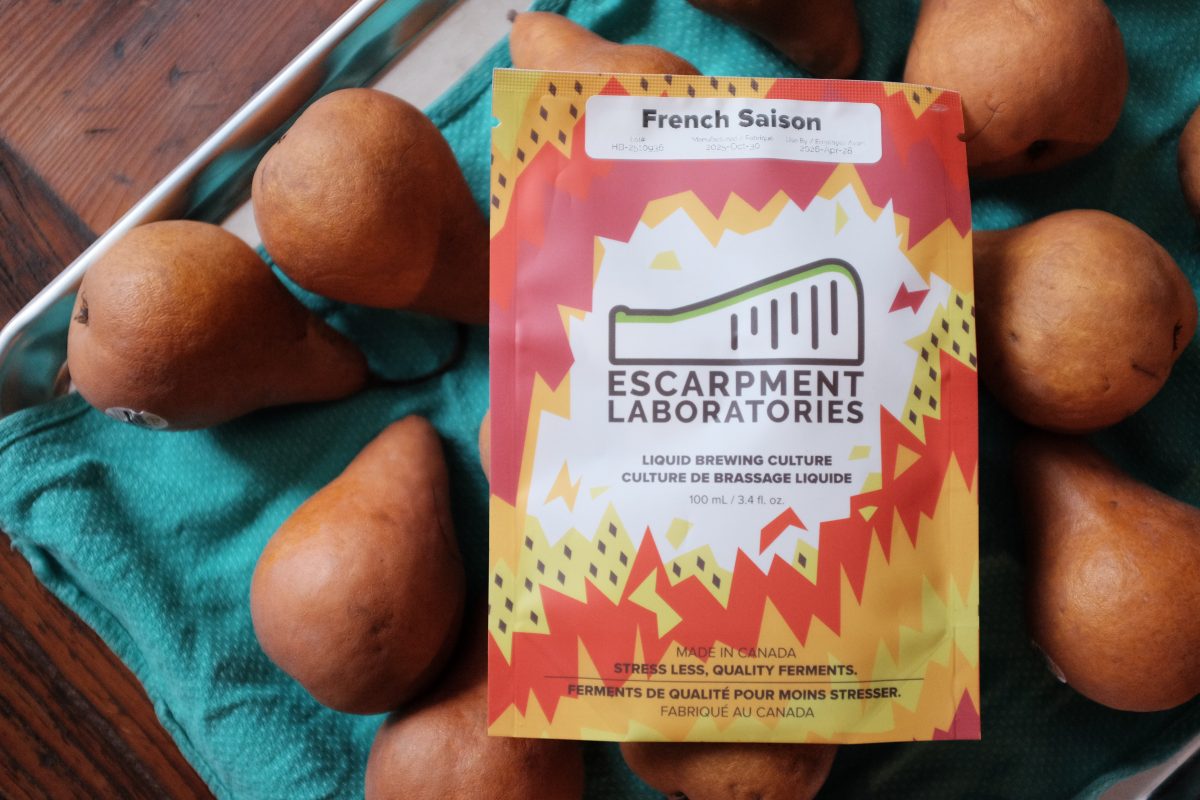
- 35 millilitres liquid saison yeast (or another brewers yeast)
- live culture (“contains the mother”) pear or apple cider vinegar for inoculation
Equipment:
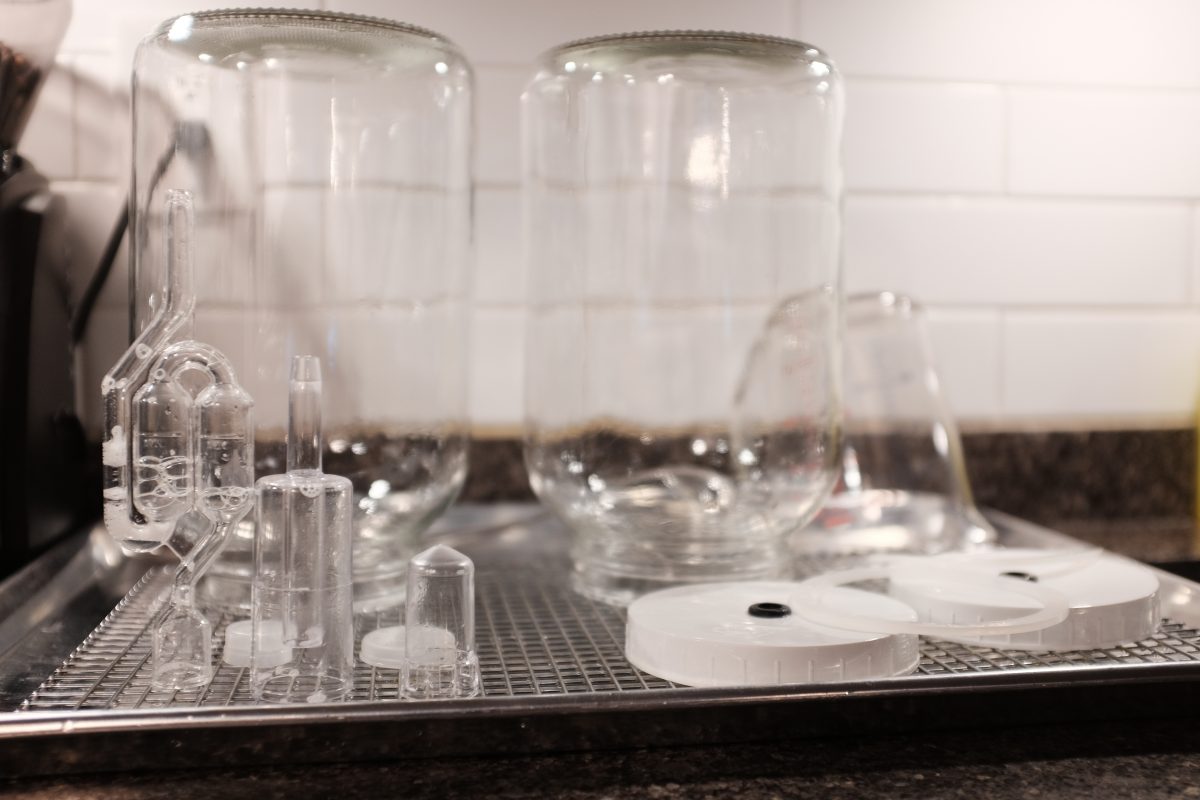
- A container large enough to hold your pears and leave at least 25% extra space. For this recipe I will be using two separate 4 litre / 1 gallon glass jars with lids and airlocks.
- A tight lid and a brewers airlock (more on this below) for each container.
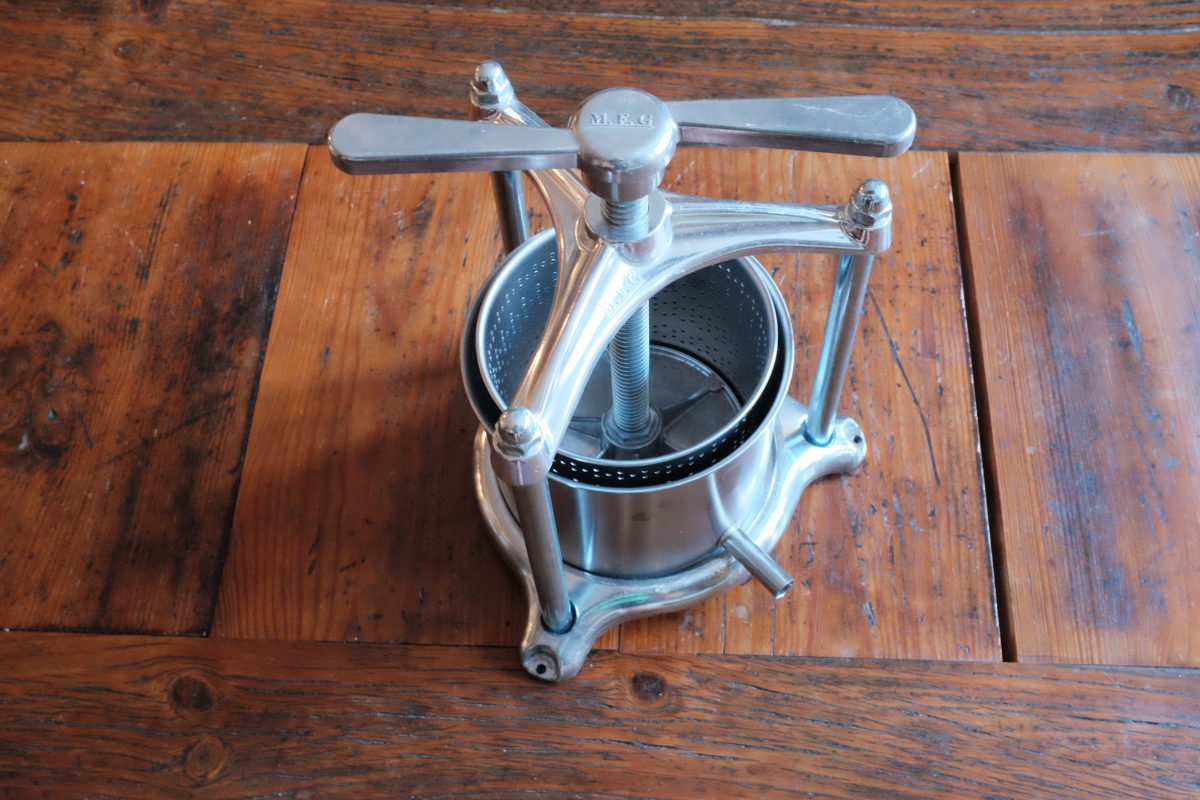
- a strainer or fruit/cider press
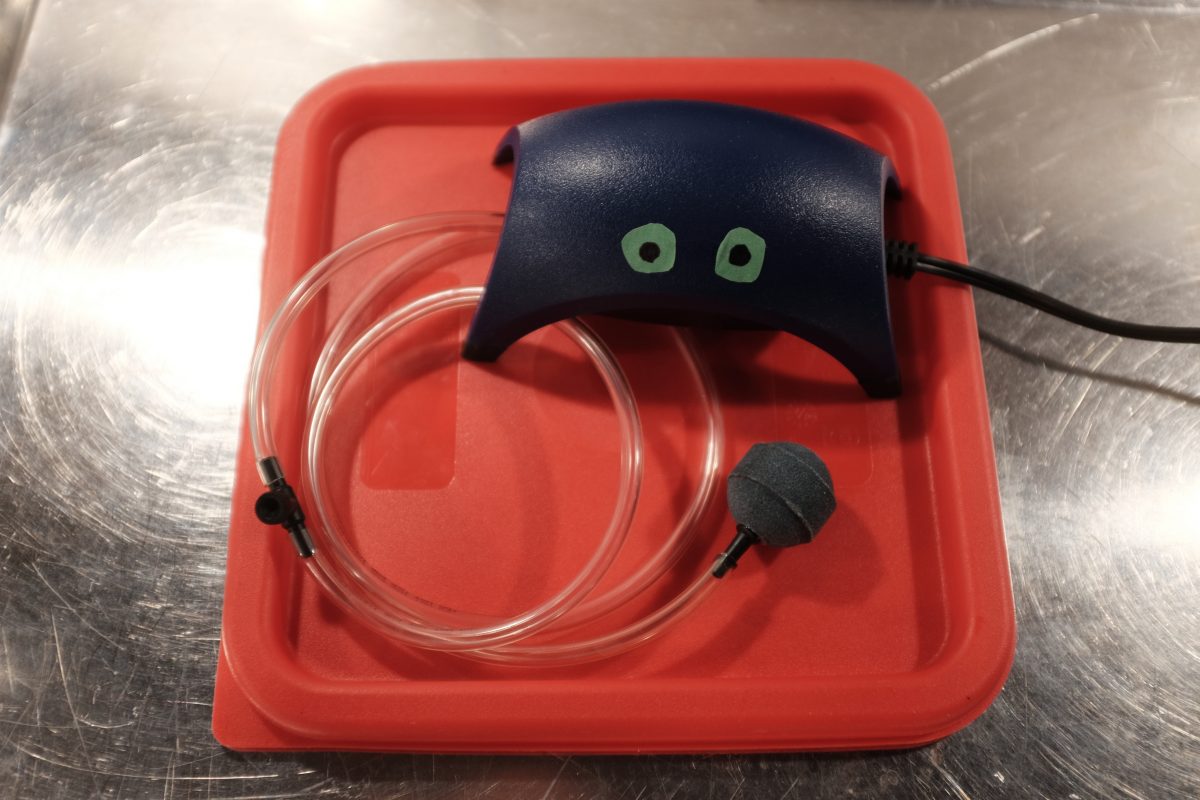
- a small aquarium air pump, hose and air stone (any pet shop will have these)
- a blender or food processor is helpful but not necessary
Sanitizing Equipment:
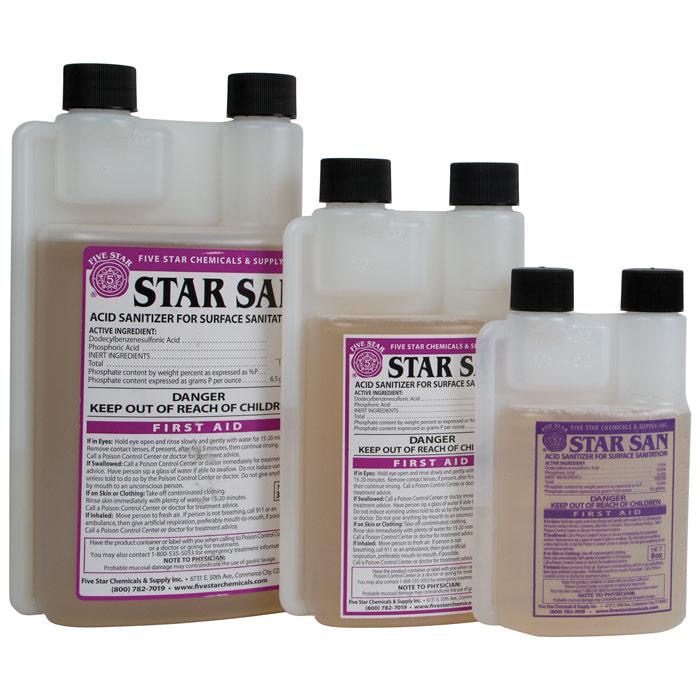
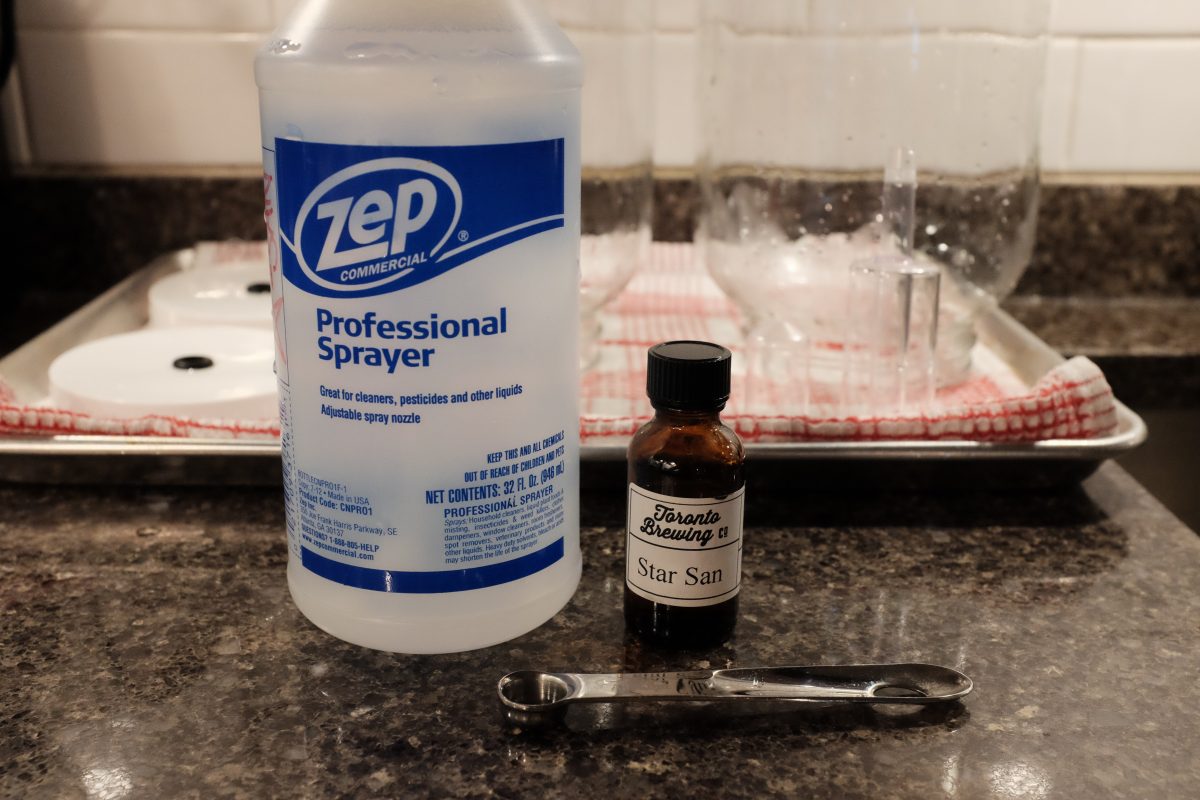
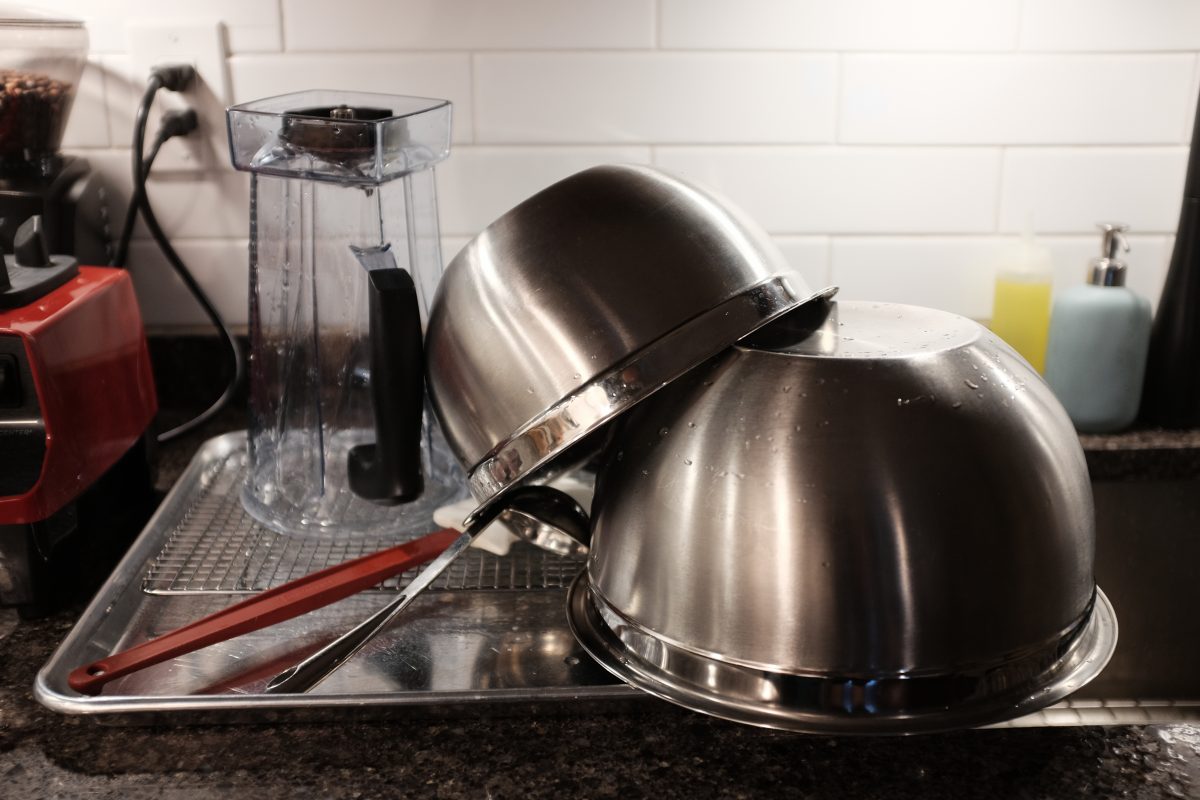
Everything that comes in contact with this brew should be sanitized. Wash everything with soap and hot water, then sanitize whichever way you find convenient. Boiling, steaming and weak bleach solutions will work, but for convenience, I use a sanitizer called Star San.
Star San is available at home brew shops or online. You can mix a tiny amount with fresh water in a spray bottle for very effective and easy sanitizing. My local home brew supplier sells tiny bottles. Unless you are brewing huge amounts with massive equipment, a small bottle will last forever. I dilute it at about 2.5 millilitres per litre of water…that’s around 1/4 teaspoon per spray bottle…a tiny amount. This makes more than enough sanitizer for this whole process. It comes in a few different sizes and looks like this:
Process:
This recipe is divided into 2 parts. In part 1, we make alcohol. In part 2, we make vinegar.
Part 1: making alcohol
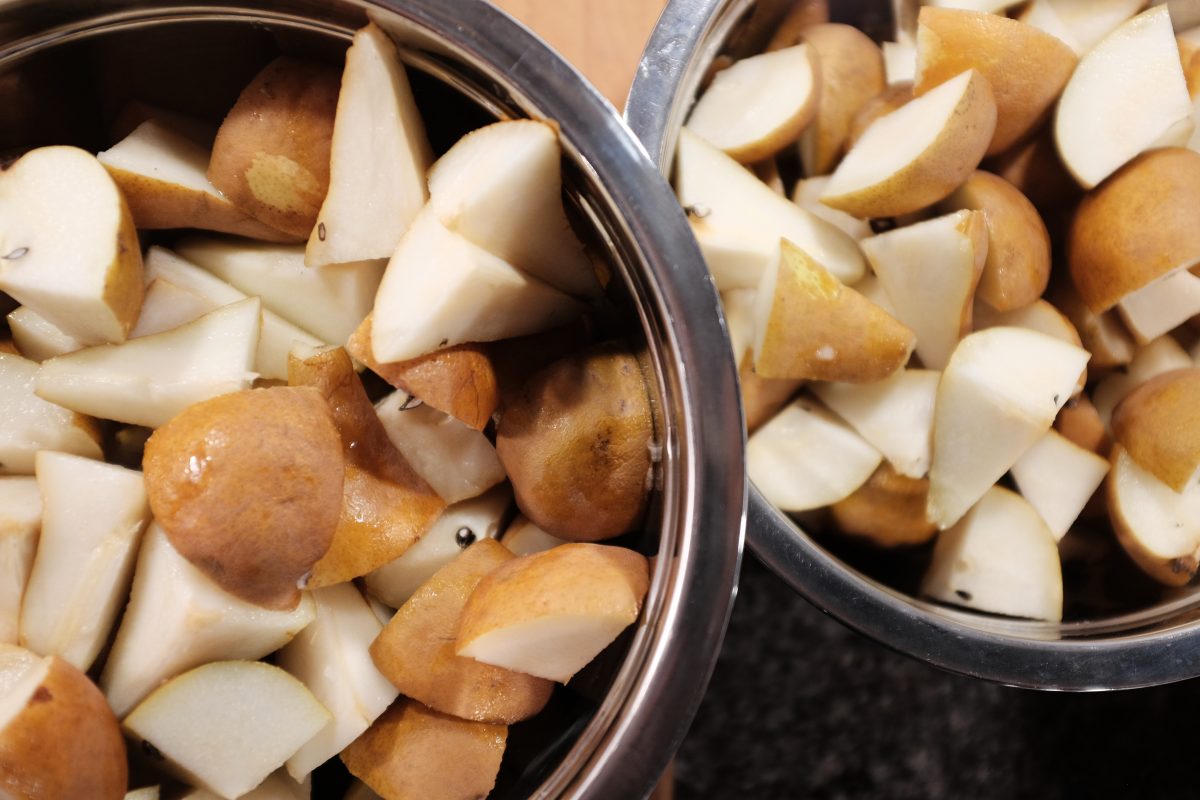
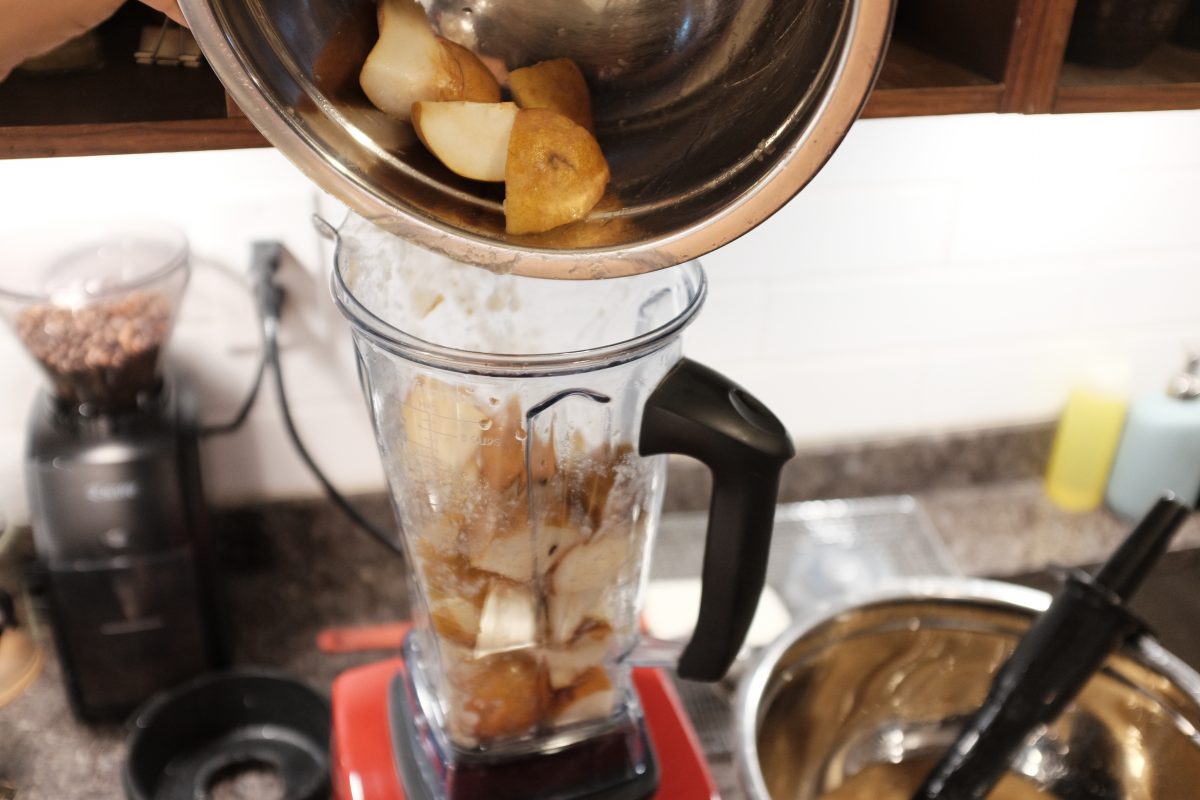
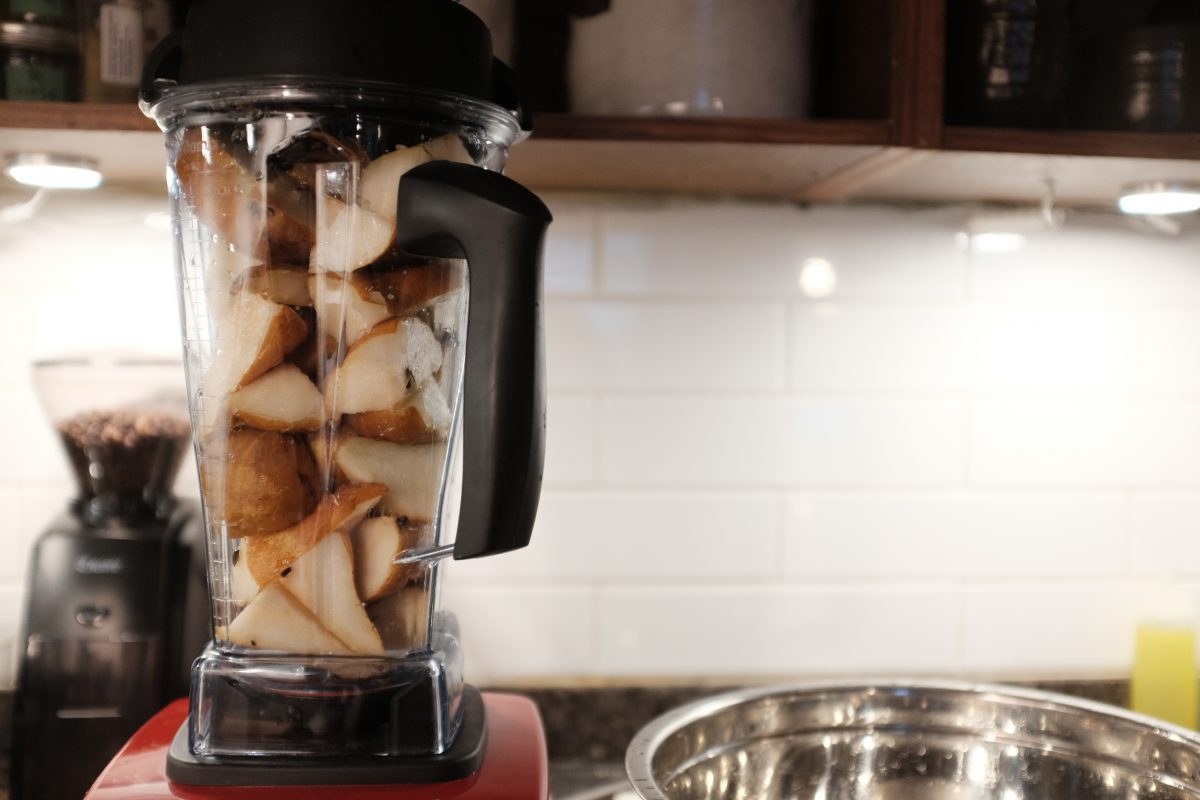
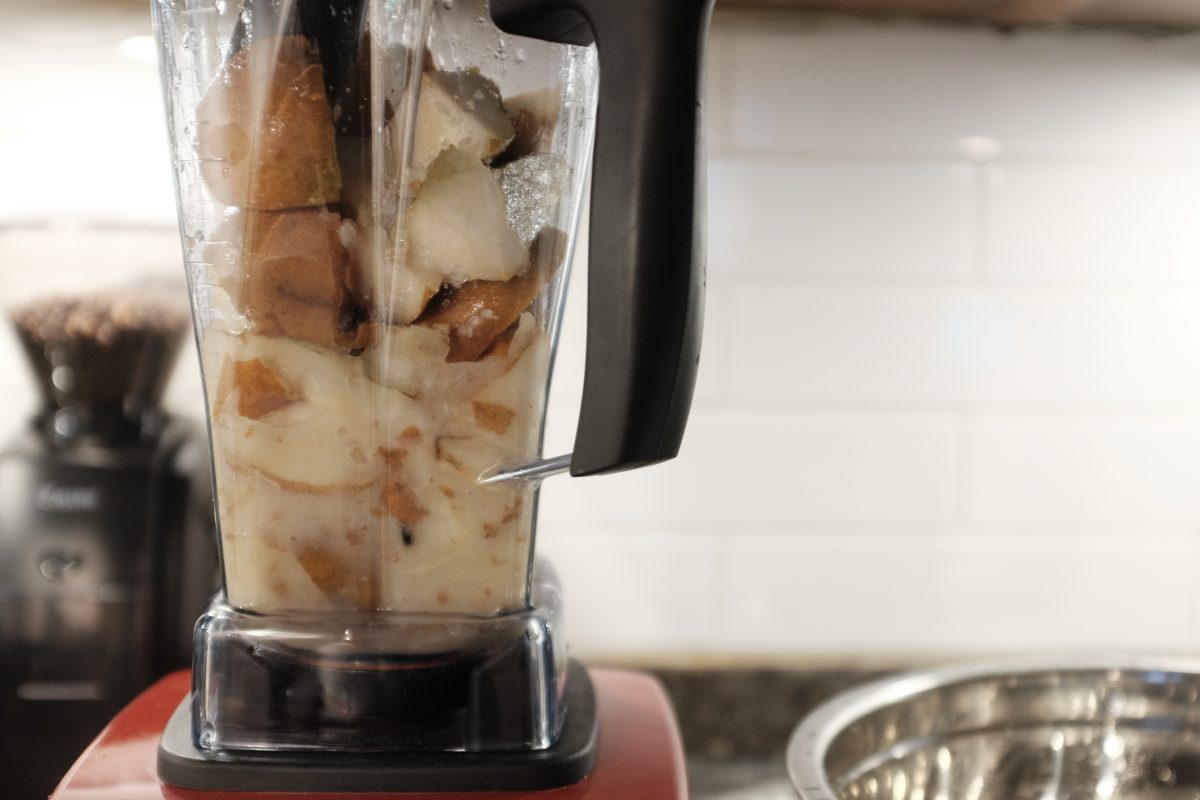
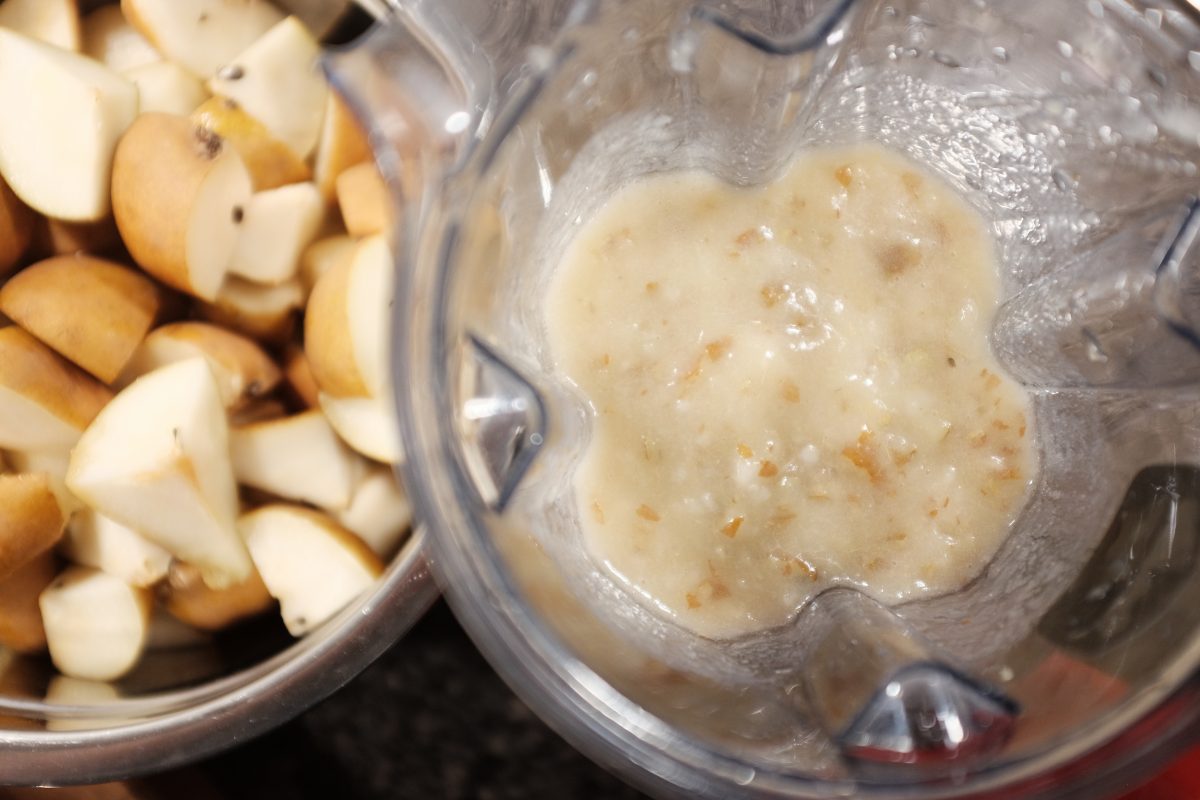
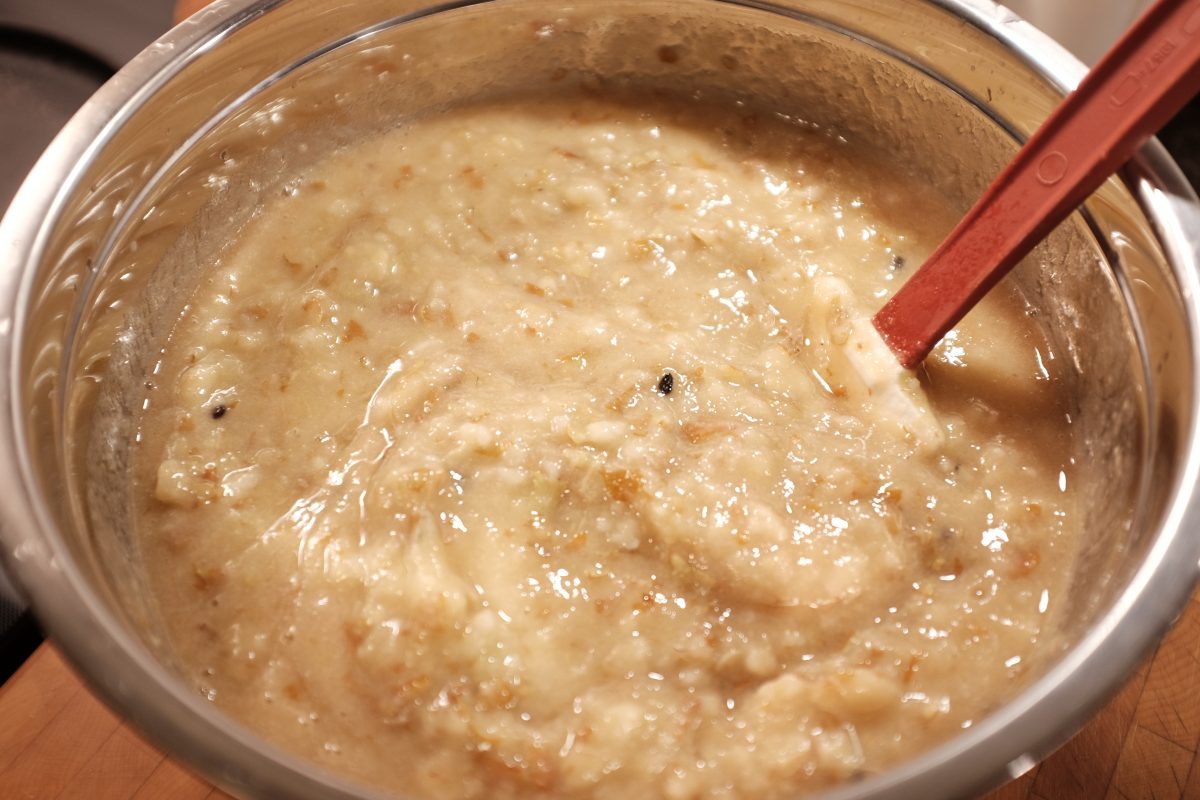
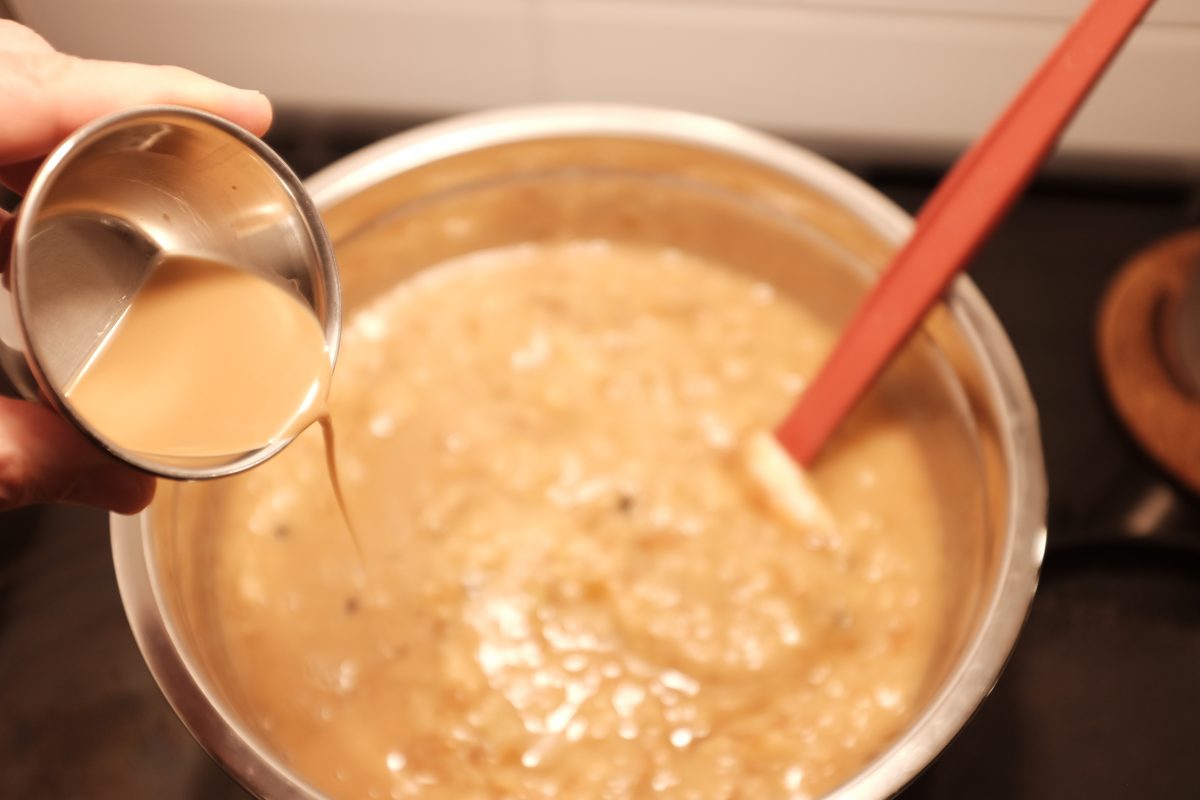
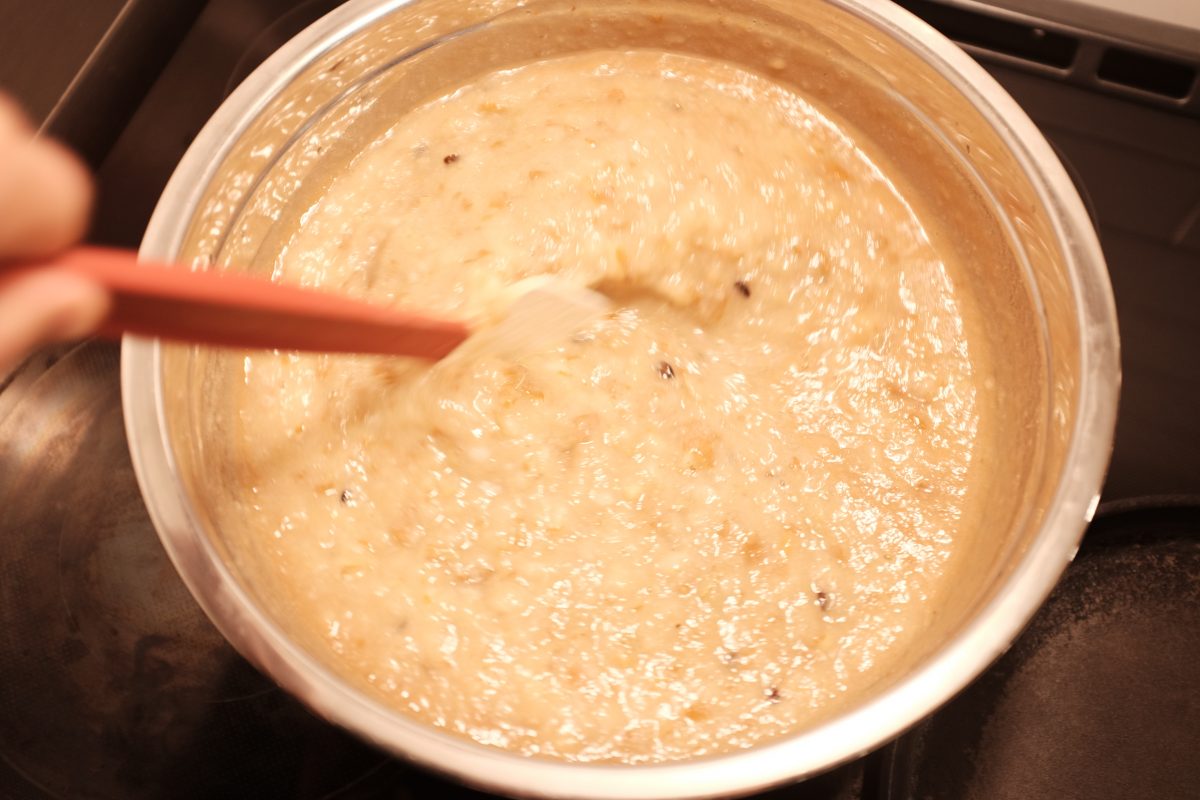
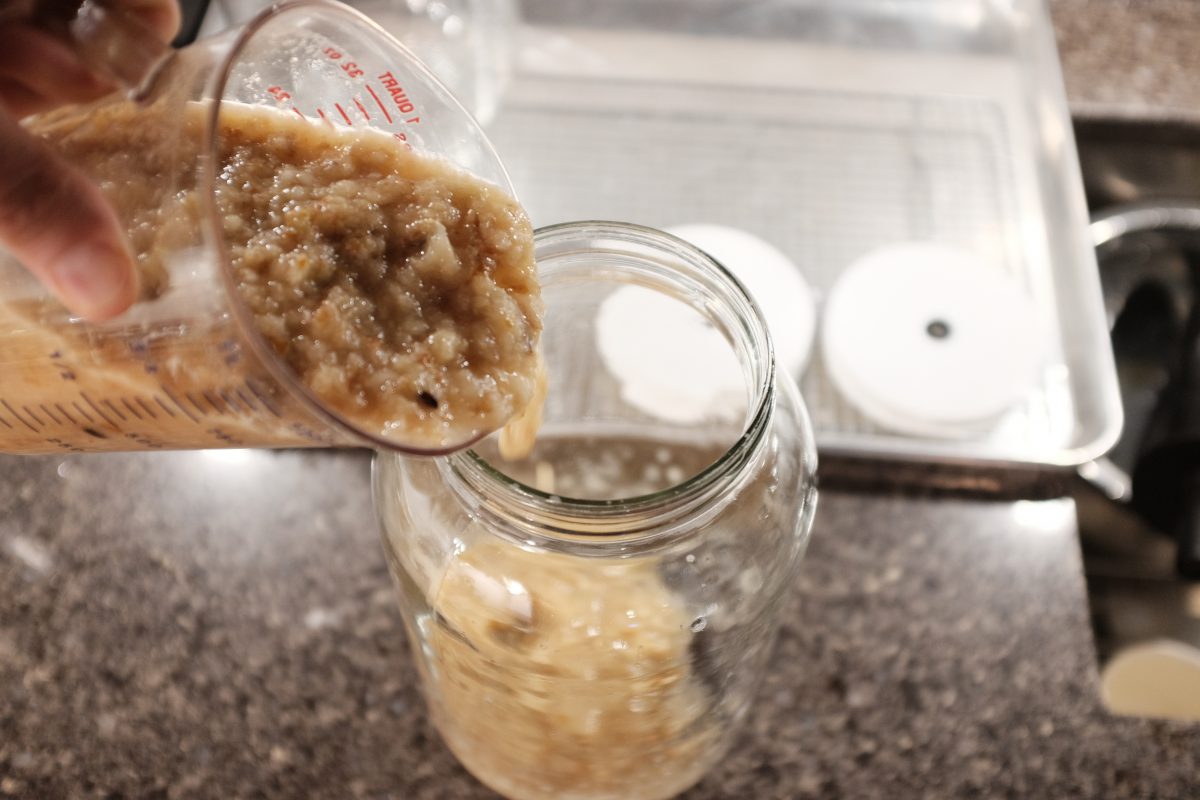
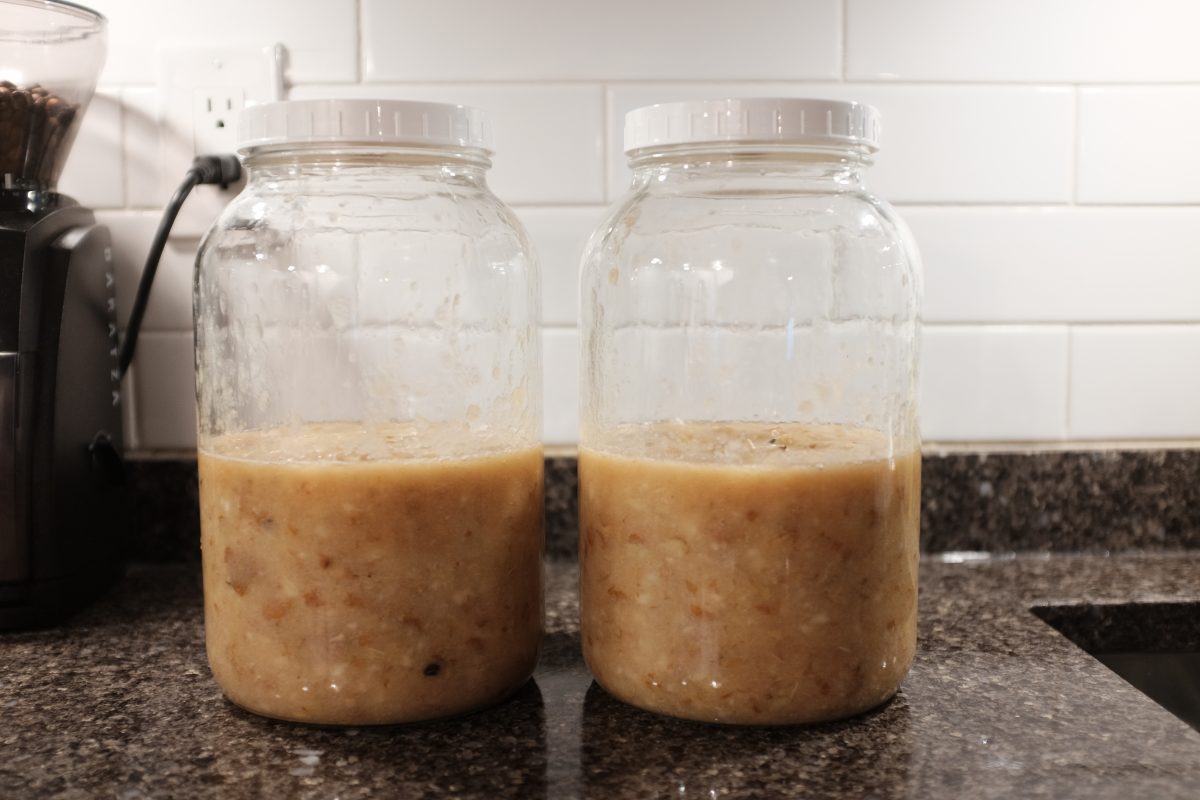
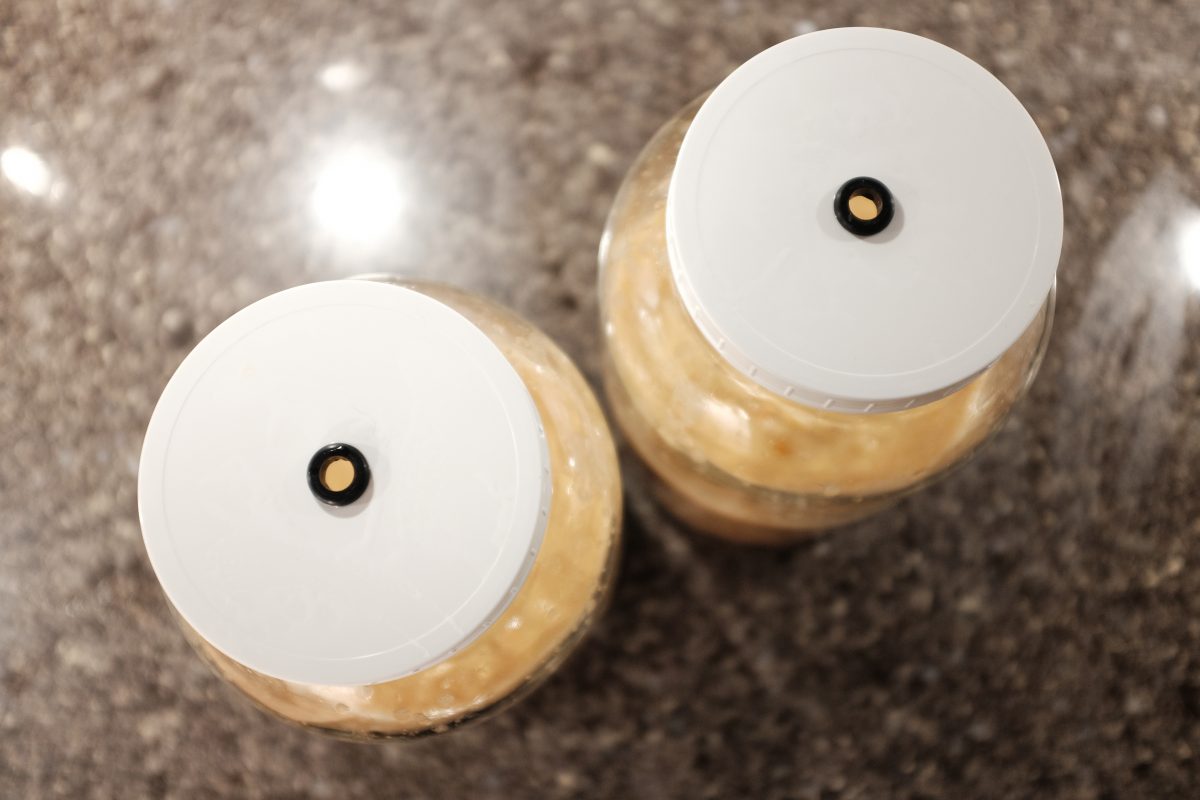
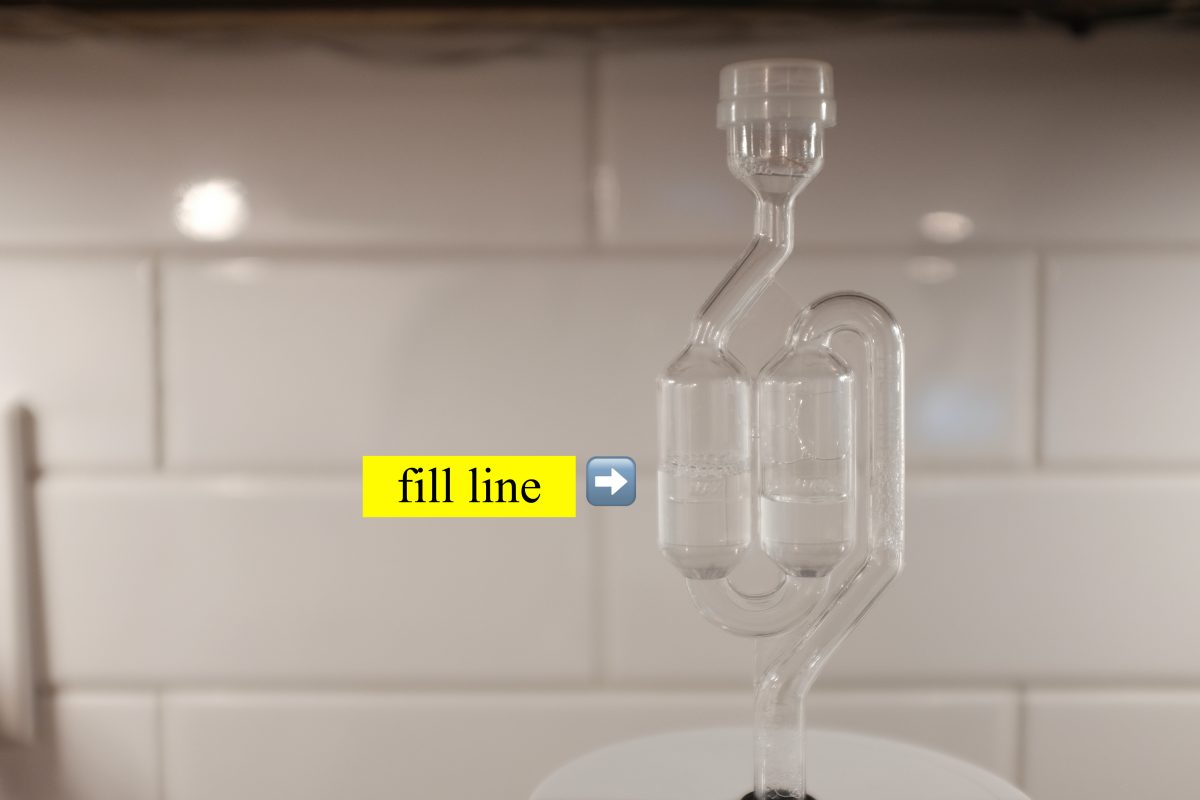
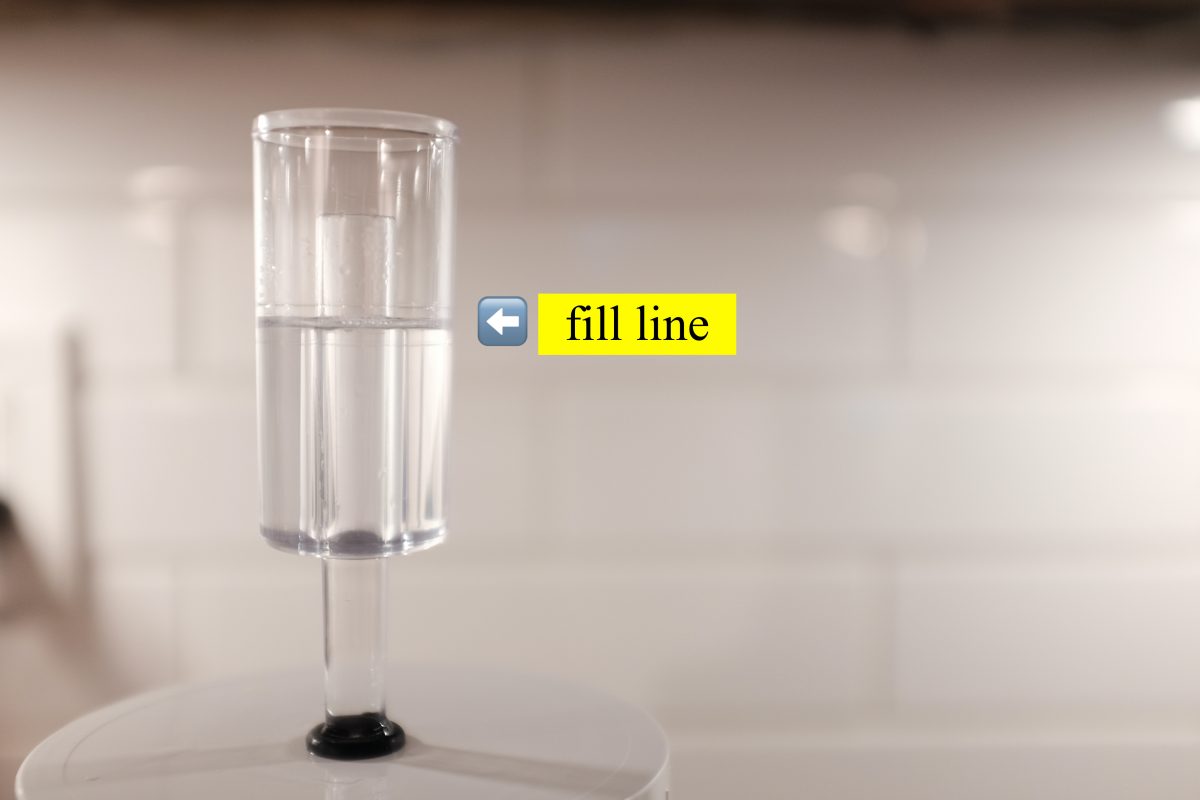
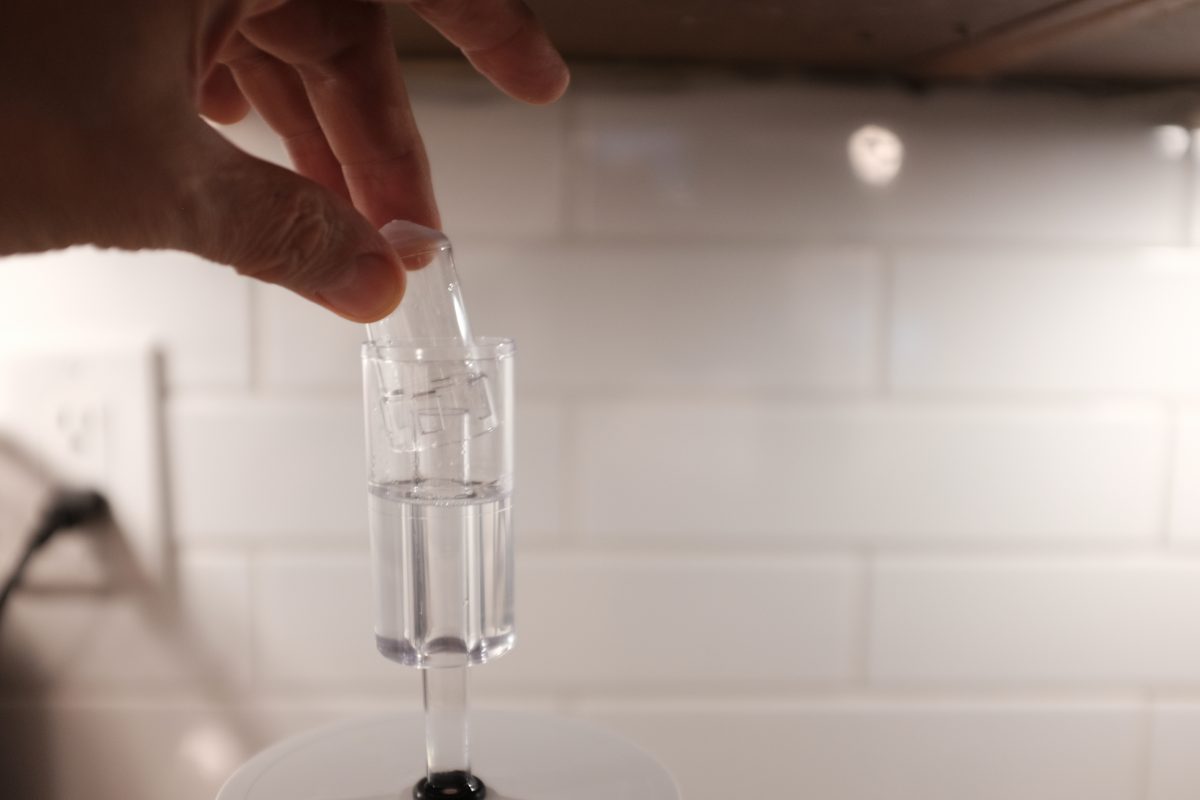
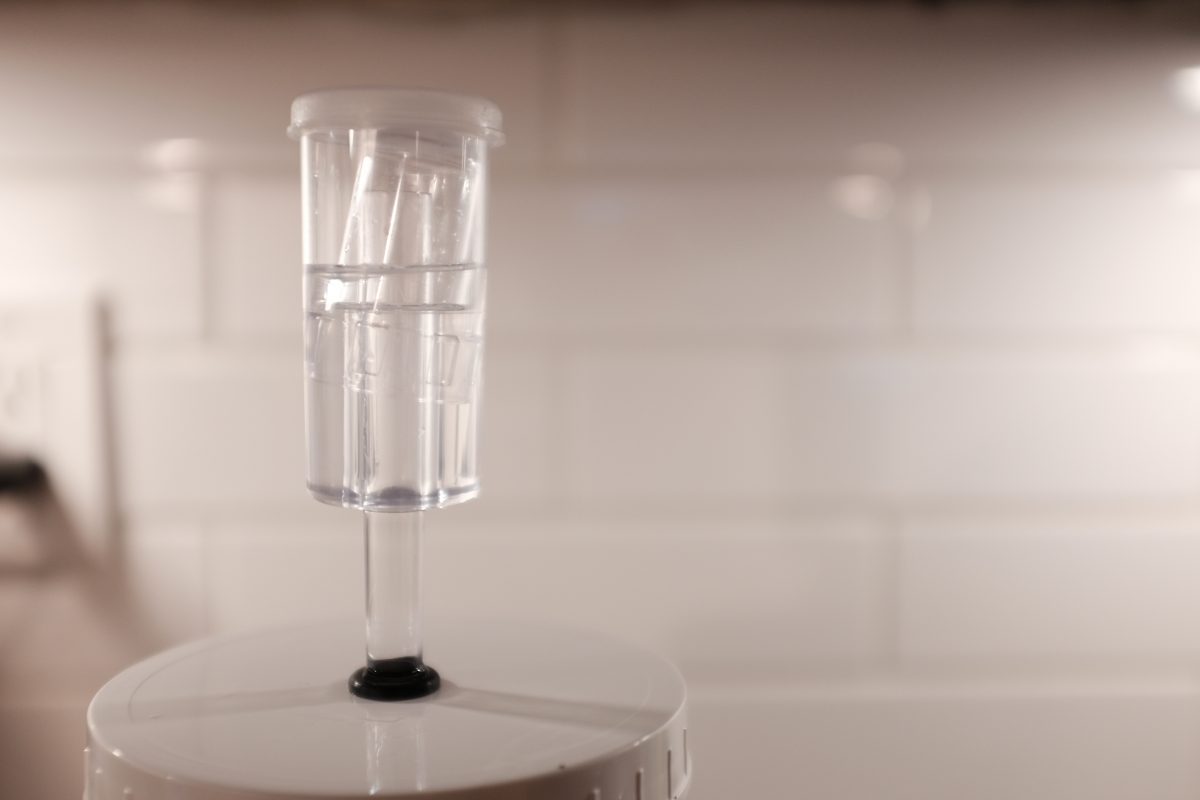
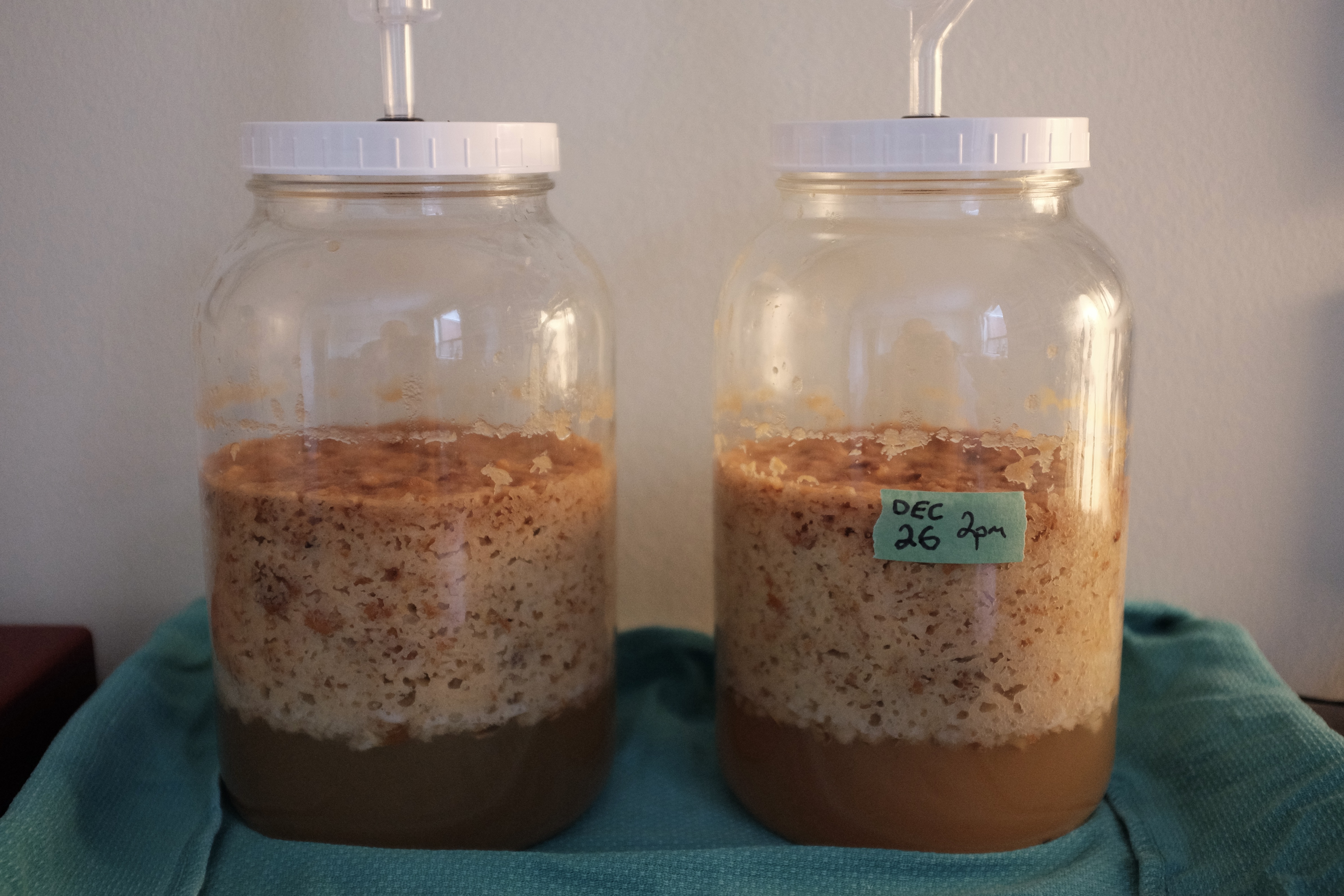
Once the jars are filled, the lids are on tight, and the airlocks are assembled…move them to a spot that is not in bright light and is at a cool room temperature. Around 20 Celsius or even a little cooler is ideal. Sometimes a basement works, or a garage. I have one or two poorly insulated outside walls which stay at a perfect 18-20 degrees in the winter so that is where I do my fermenting.
First Signs of Life
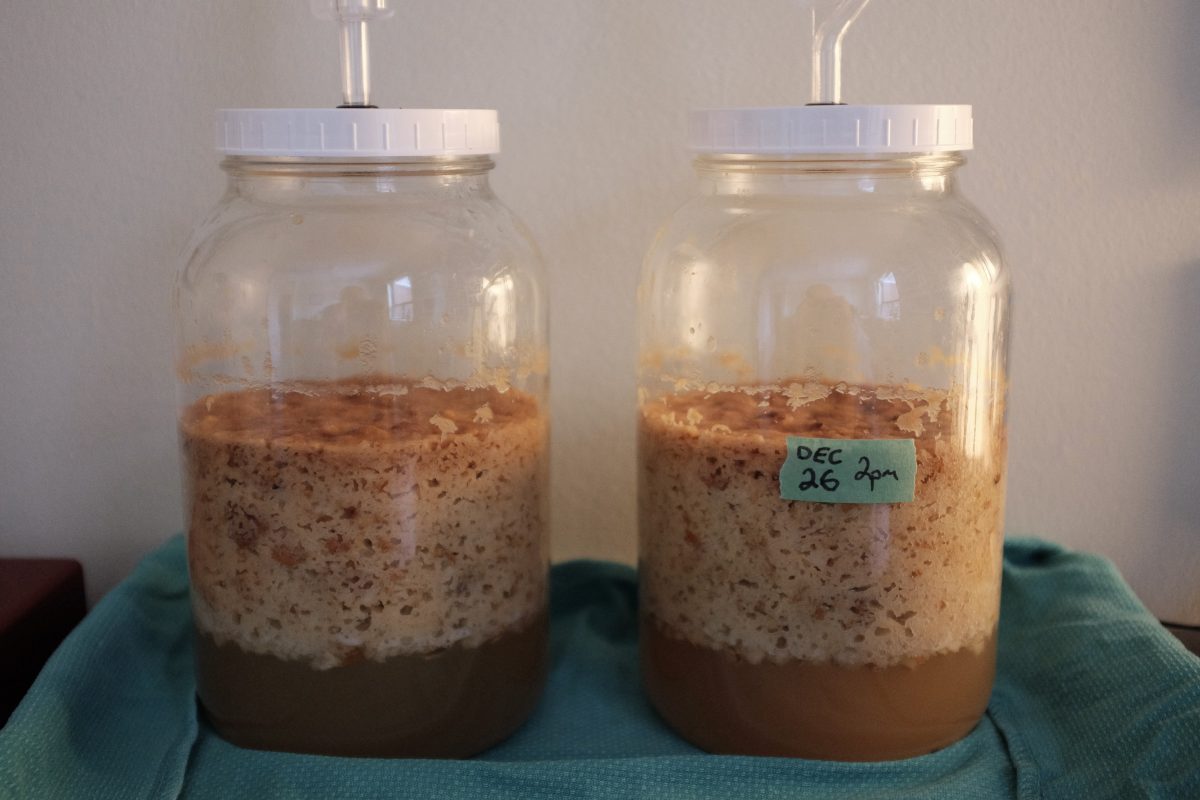
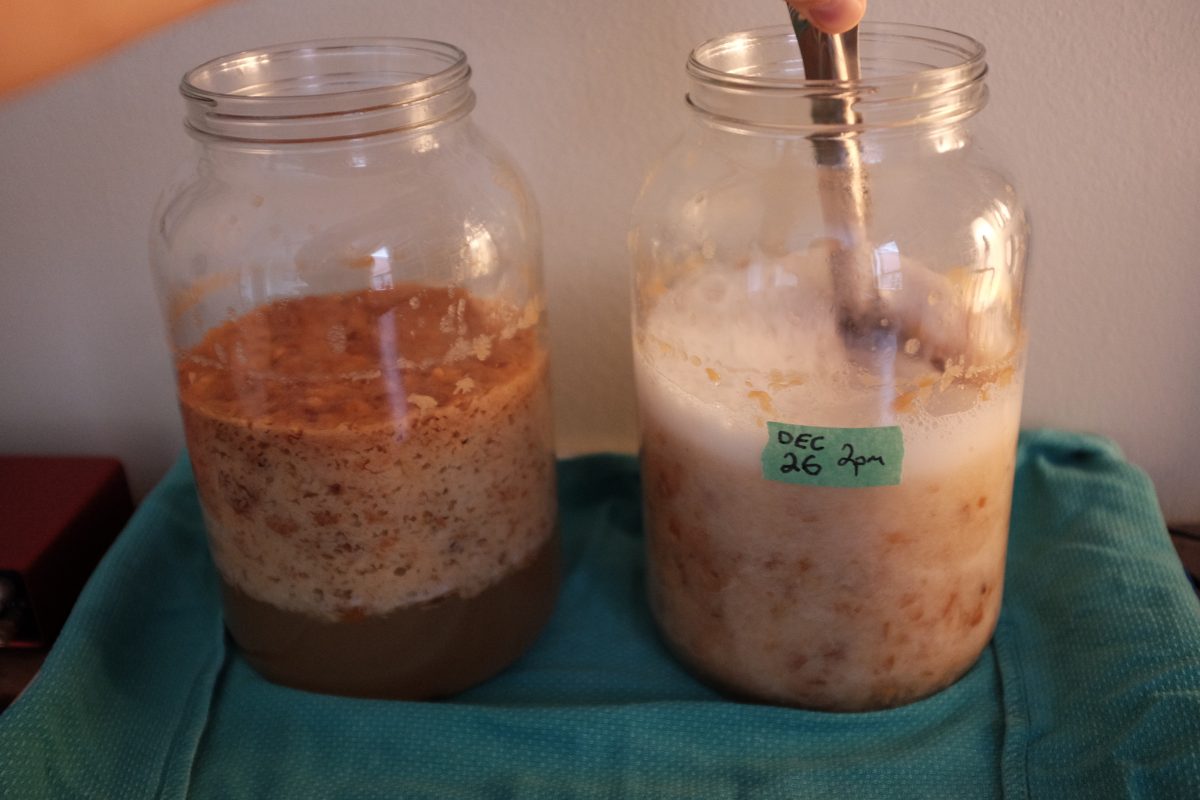
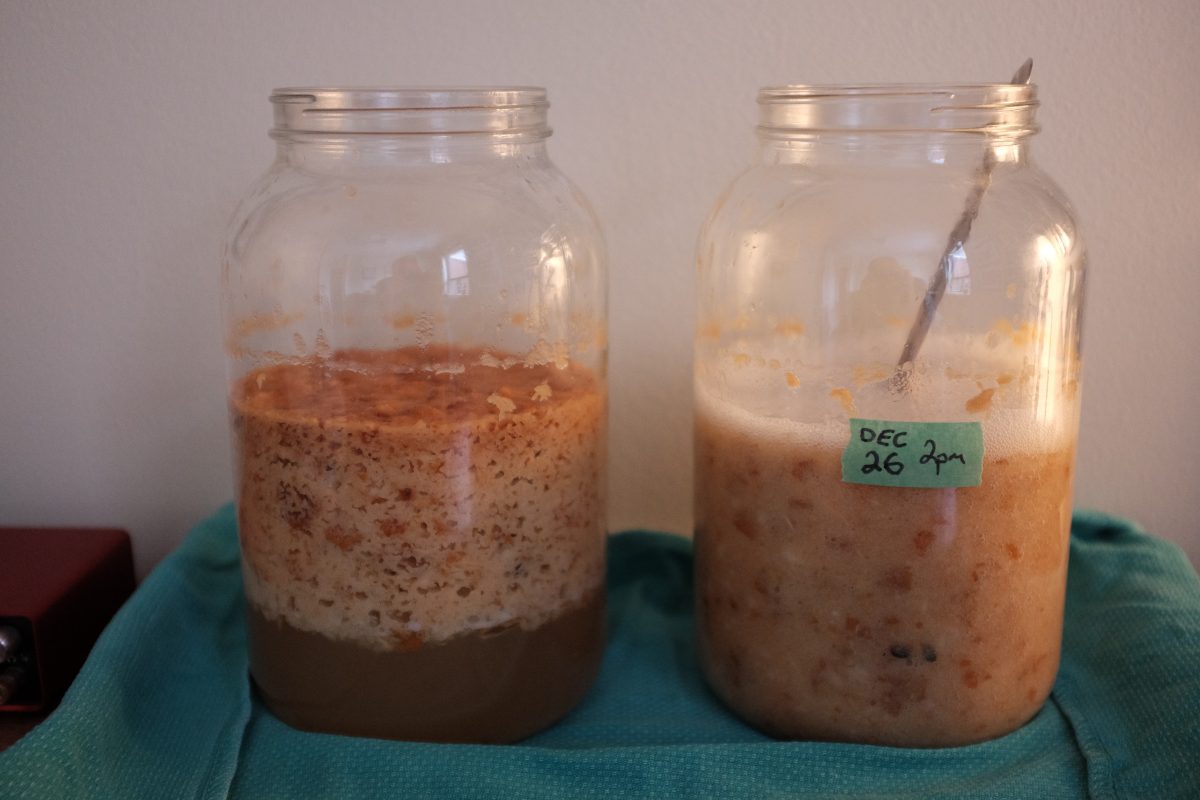
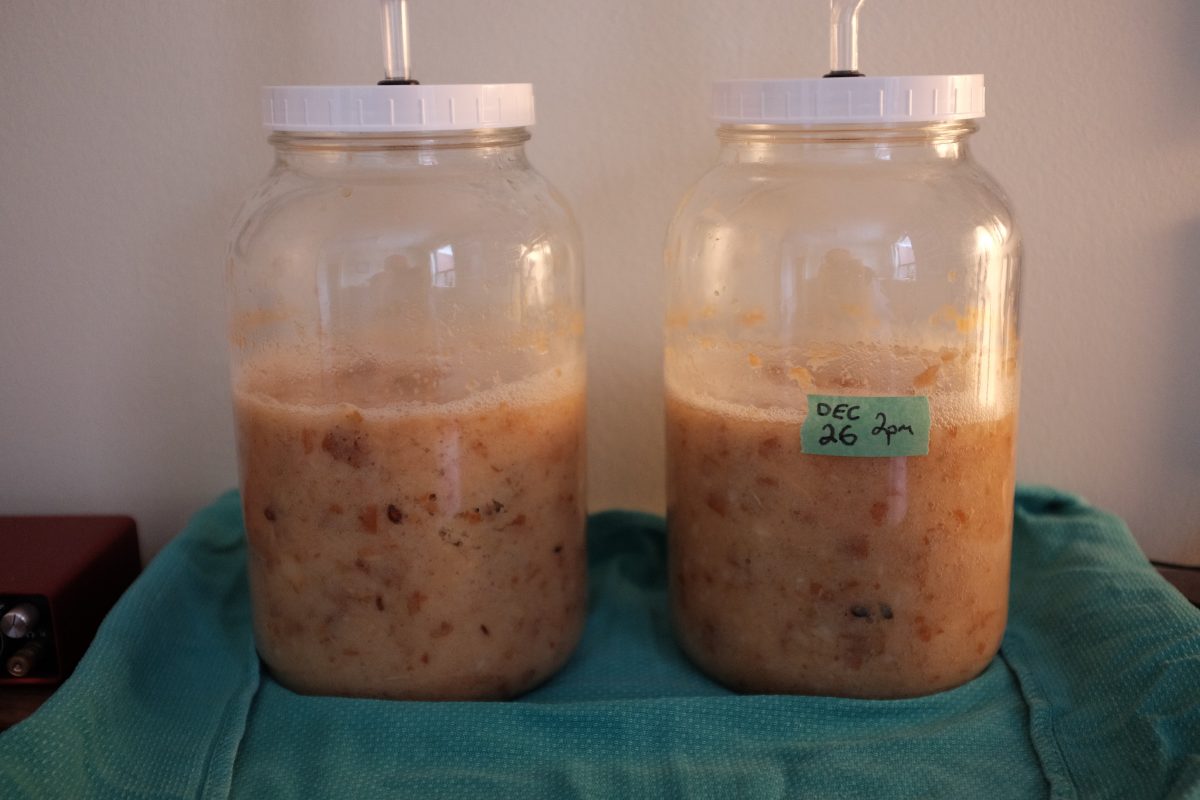
Fermentation slows down…
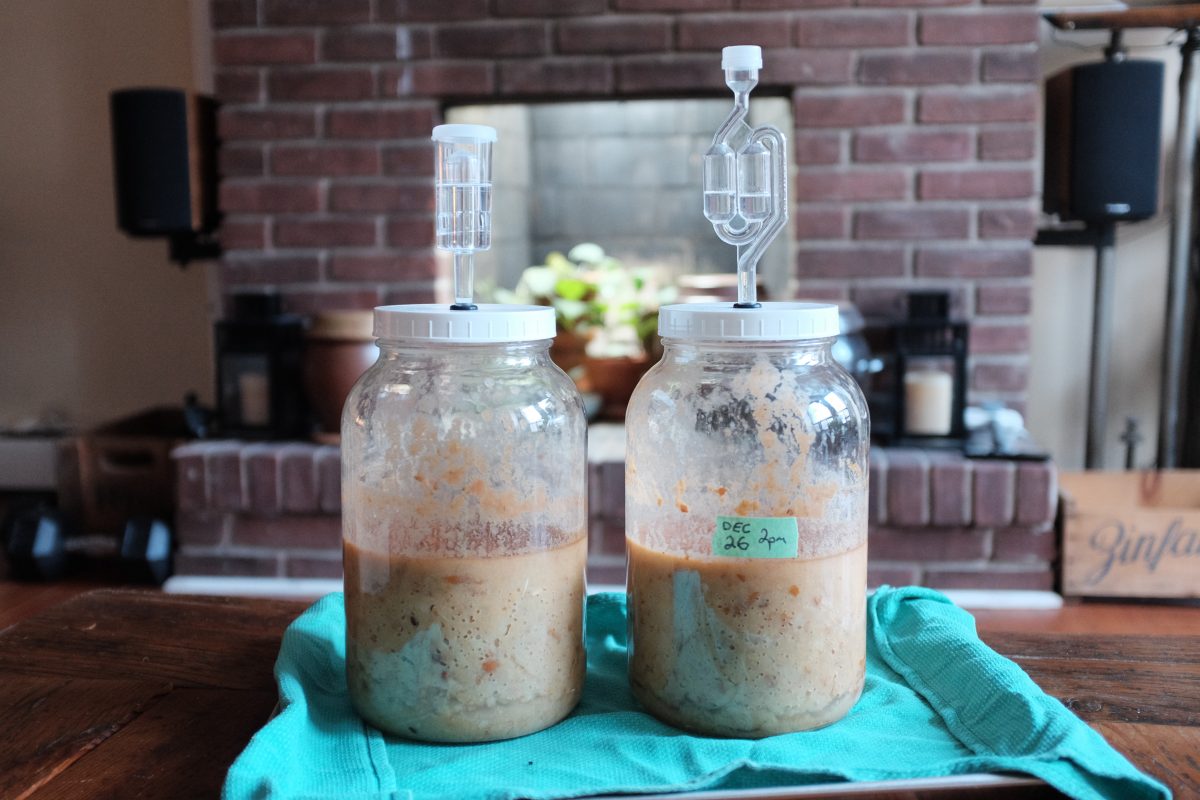
For the first 2 days, fermentation was very active with both airlocks bubbling constantly. Towards the end of the second day the fermentation has slowed noticeably. The airlocks will bubble up a couple of times a minute at most. There is less fizzing when stirring and there is a slight taste and smell of alcohol on the spoon. By day 3, fermentation was very slow. Apparently, this very active initial fermentation followed by a very slow and steady period is characteristic of “saison” yeast. If you are using a different brewers yeast, the fermentation may be more consistent over time.
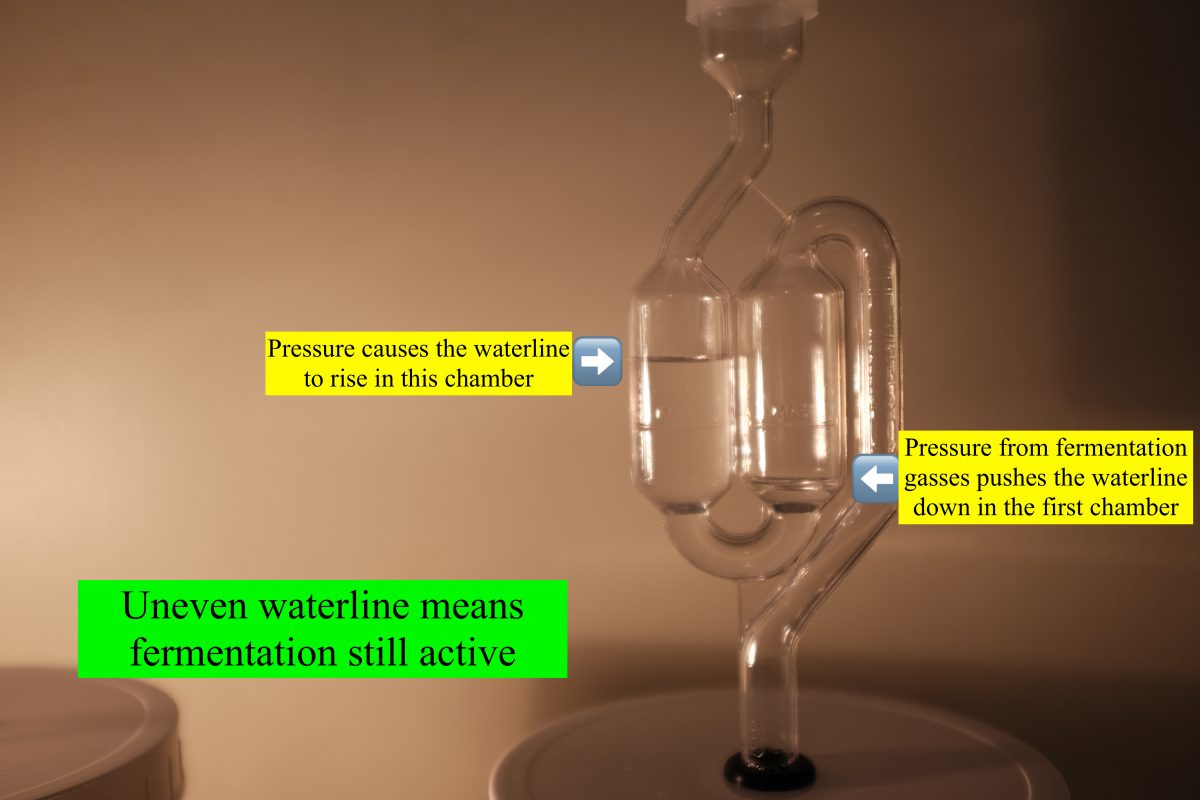
Keep stirring once a day, tasting for sugar and alcohol balance. Monitor activity at the airlocks.
Day 7:
By the 7th day, there is little to no detectable fermentation happening…no bubbling, no sounds, and the pressure in the S-airlock is equalized with both chambers showing the same water level. The mash tastes and smells of alcohol but the sweetness and perfume of pears is still there. This is perfect. It is time to strain the mash and move on to vinegar fermentation.
Straining the Mash
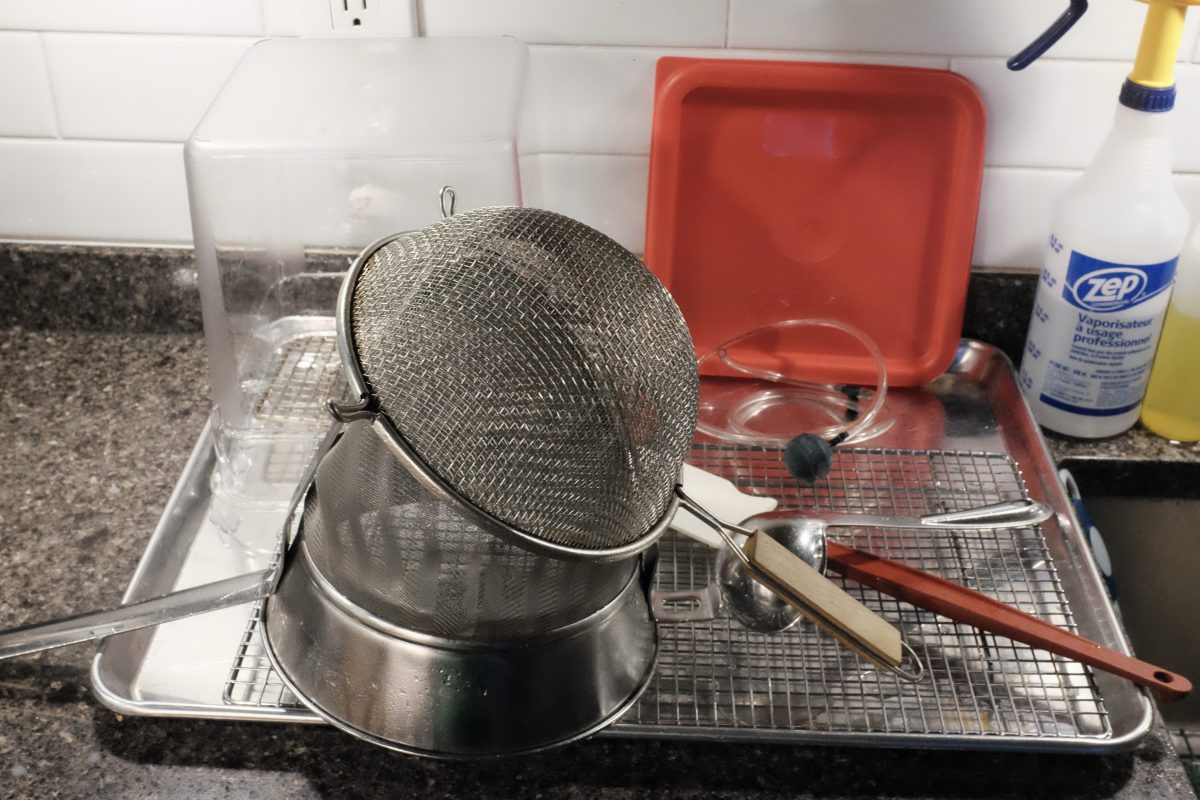
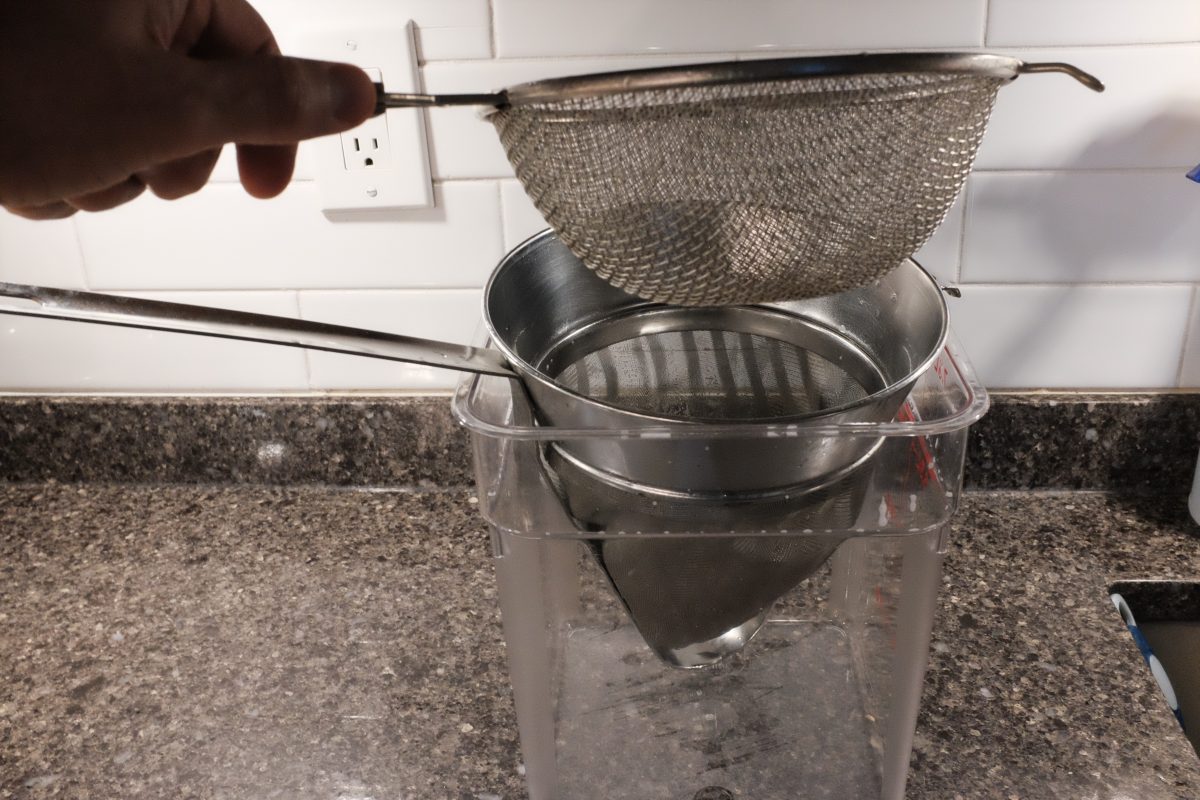
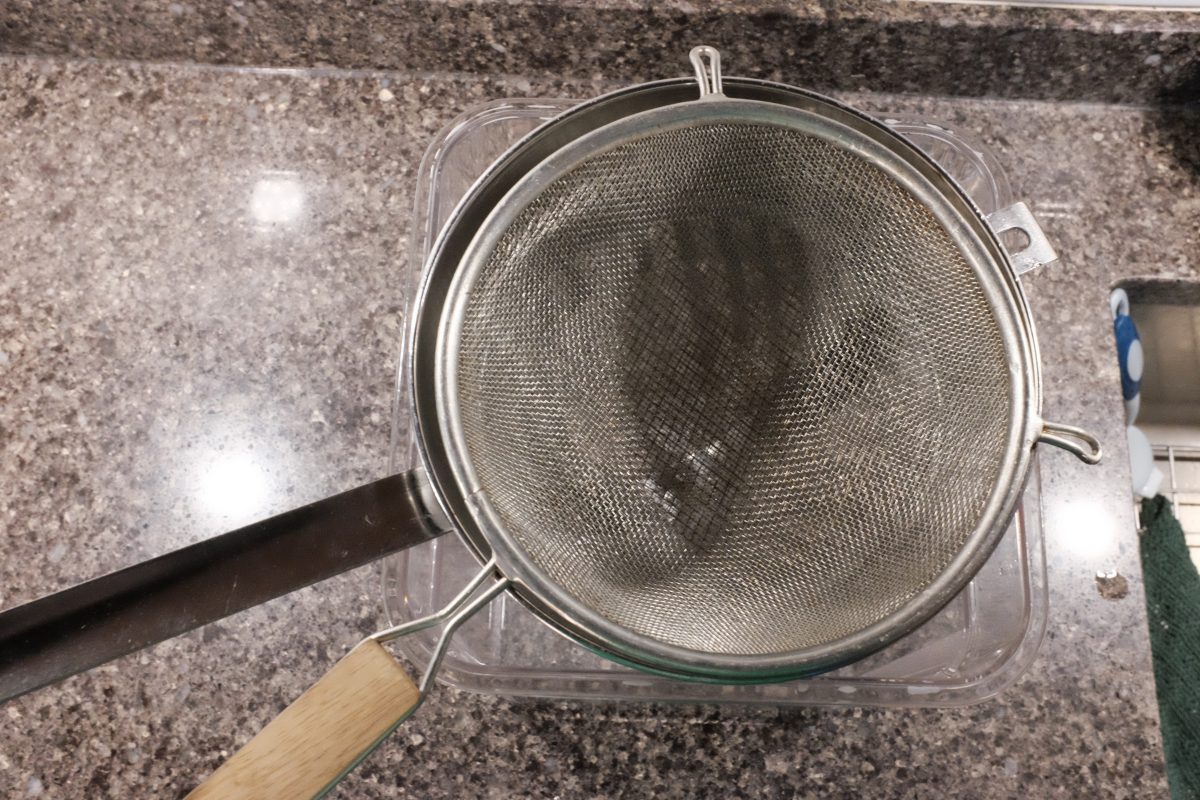
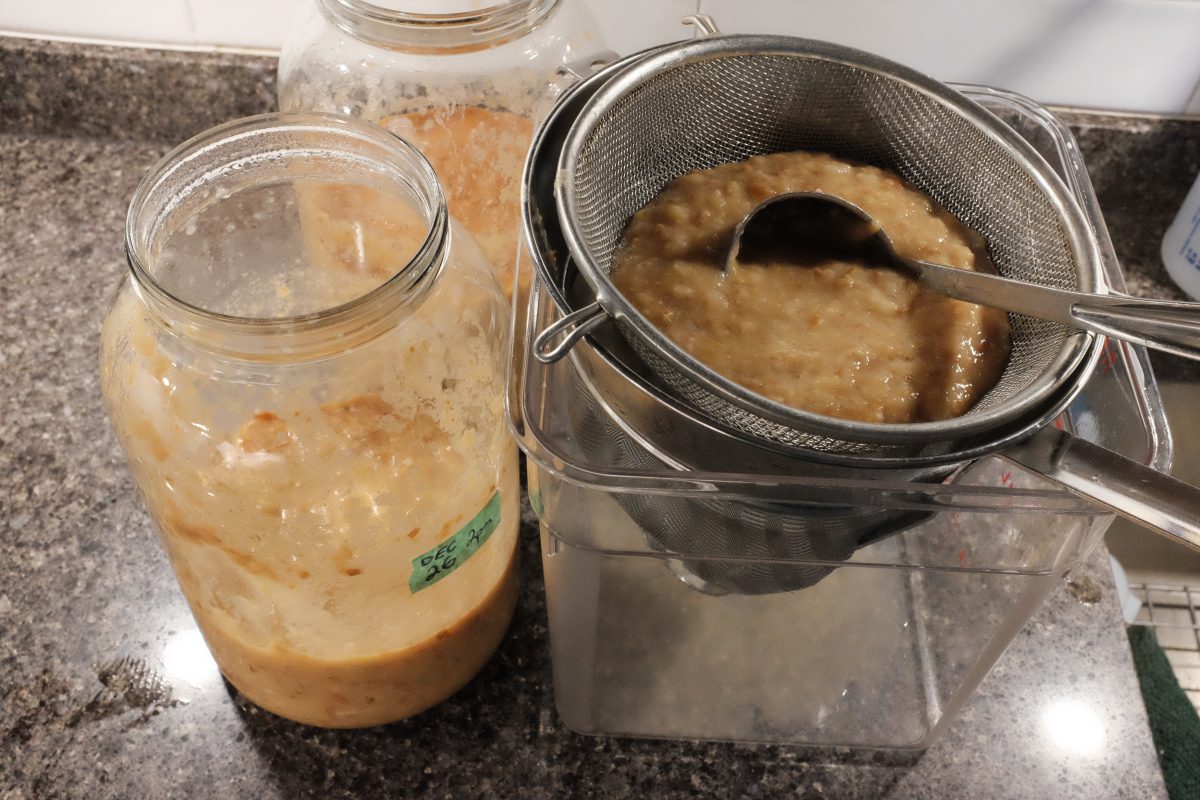
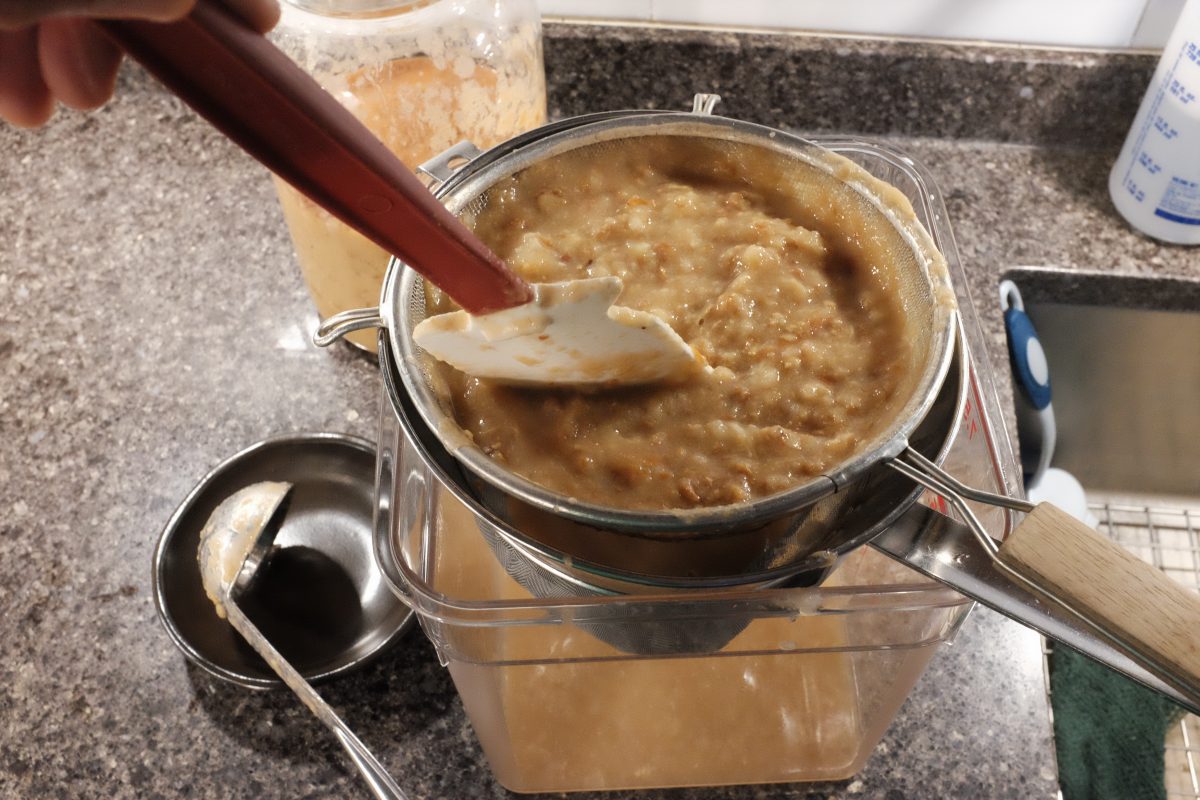
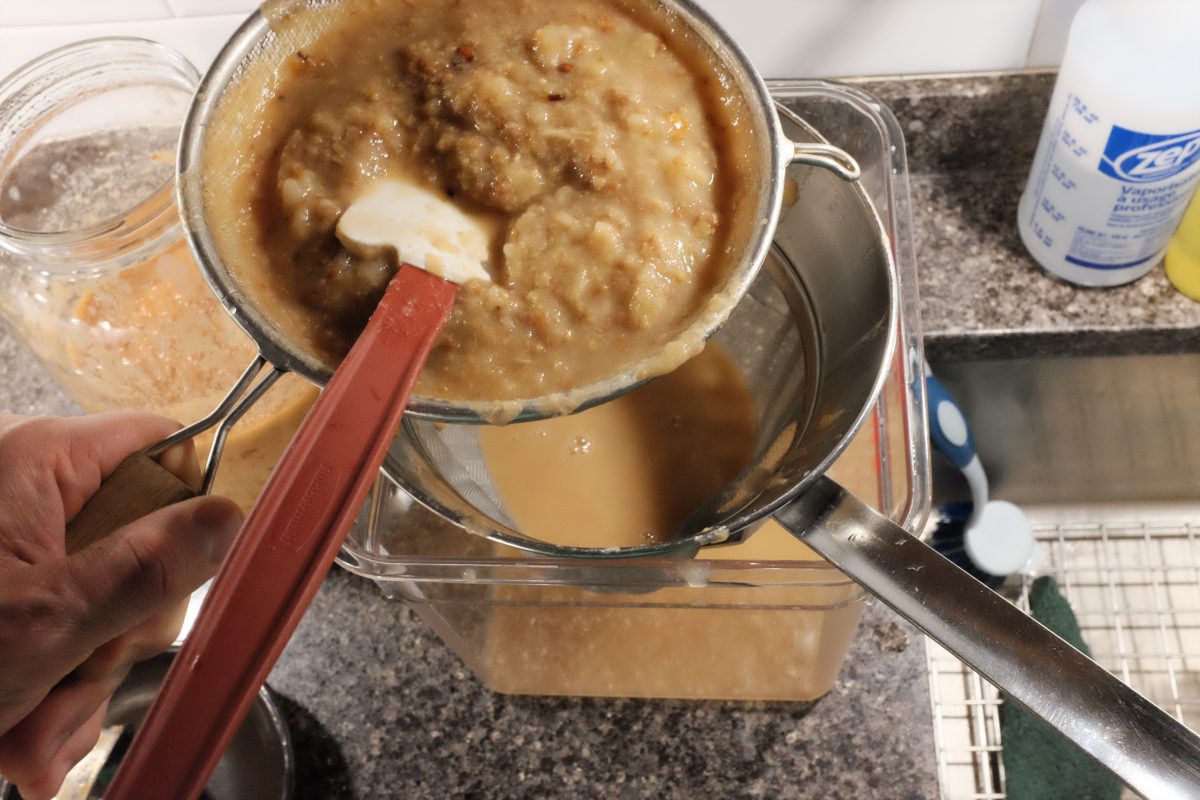
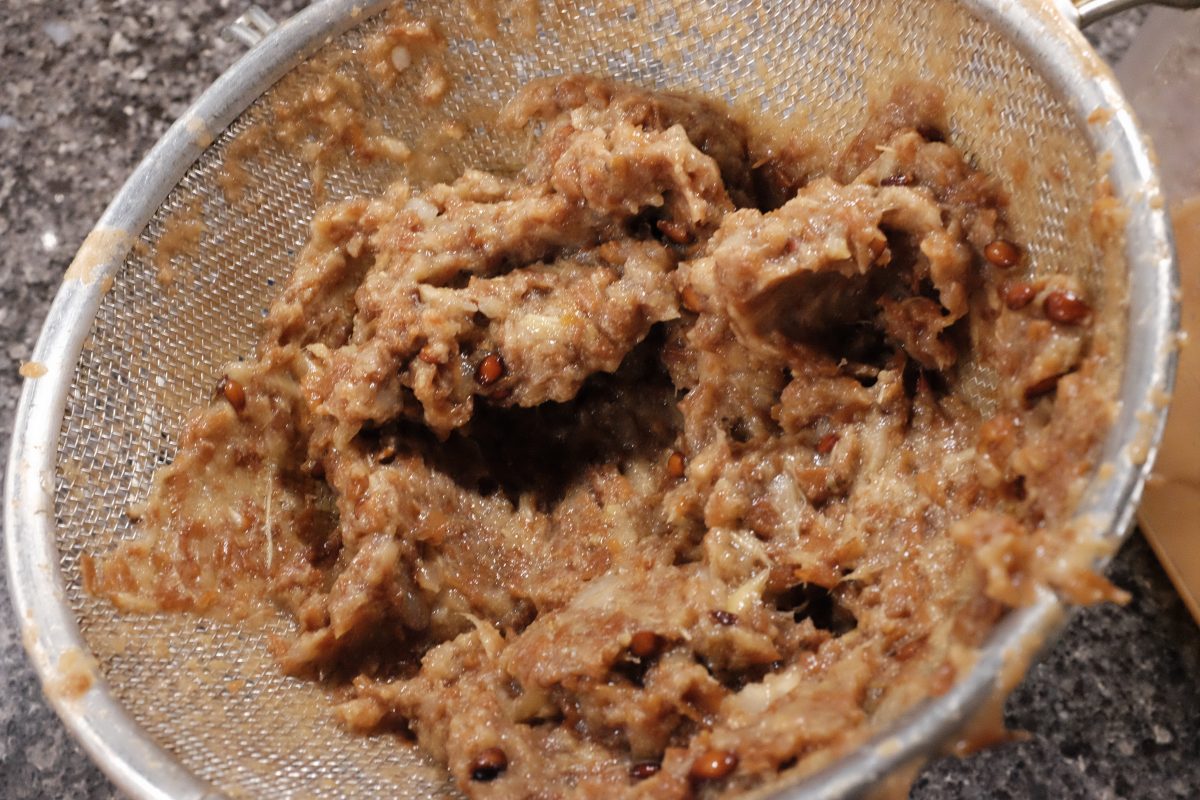
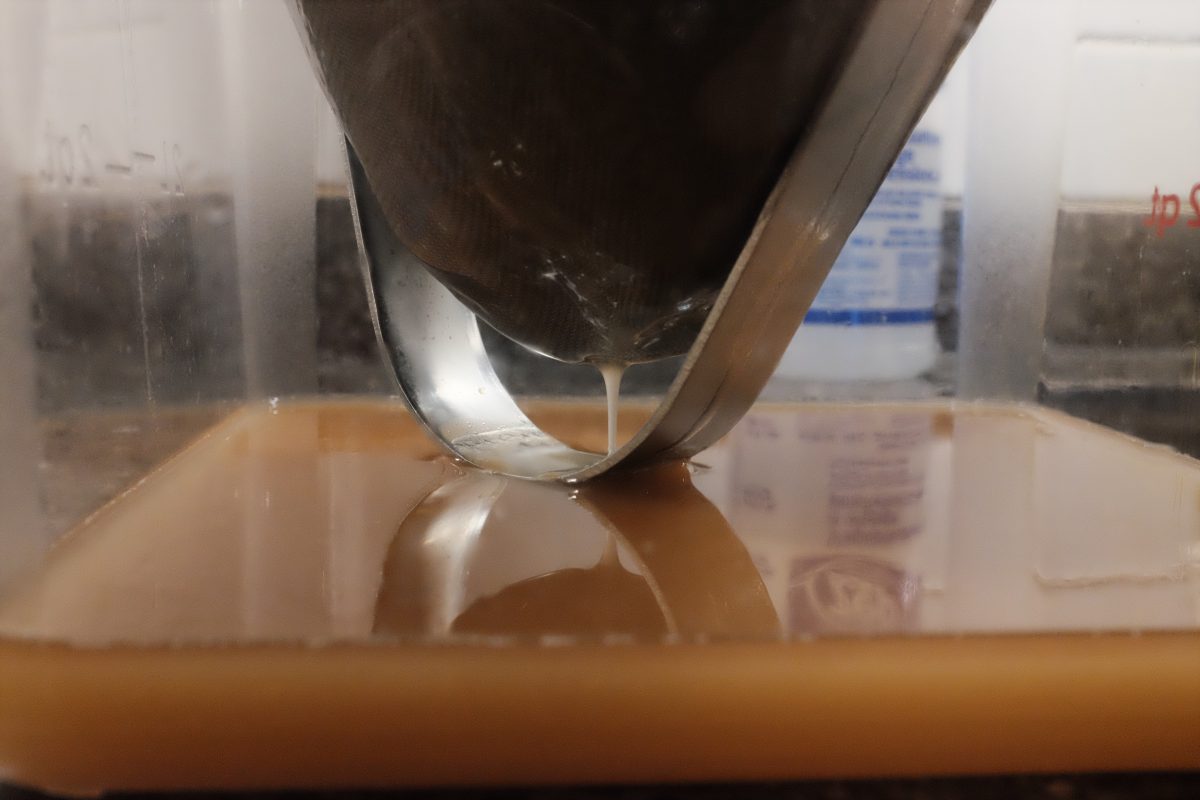
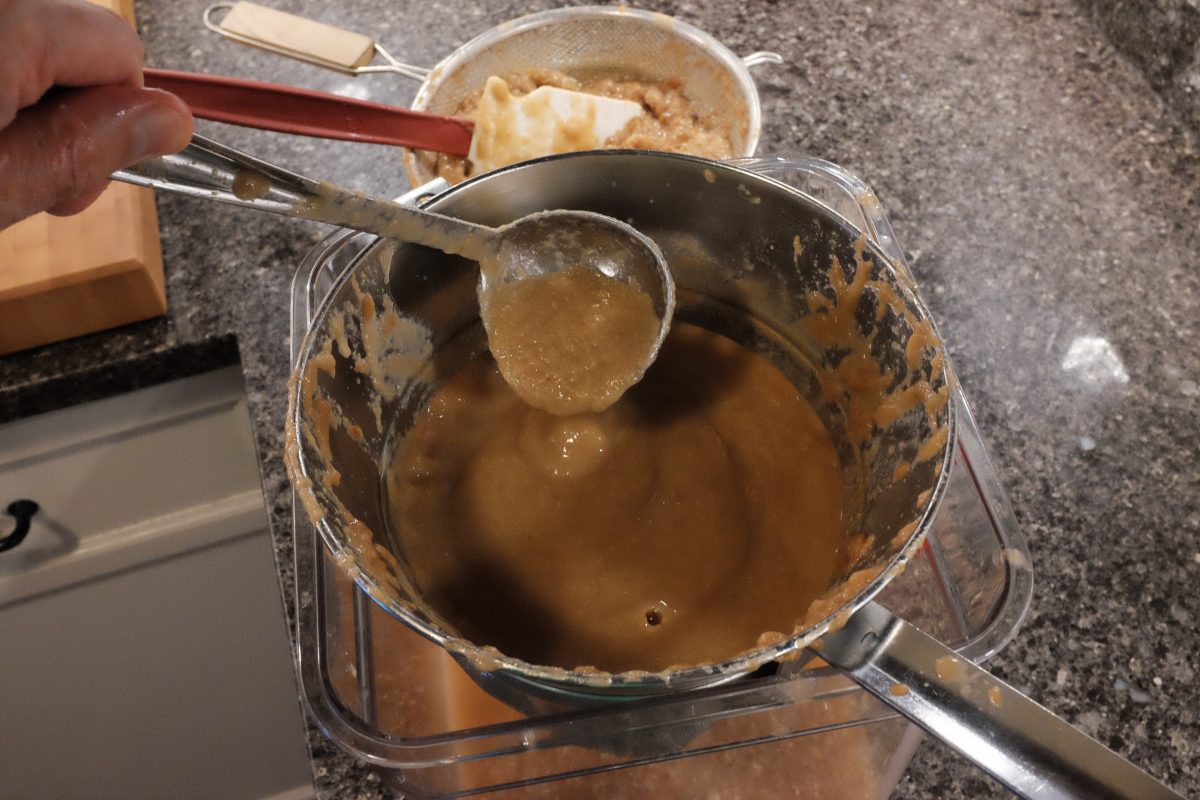
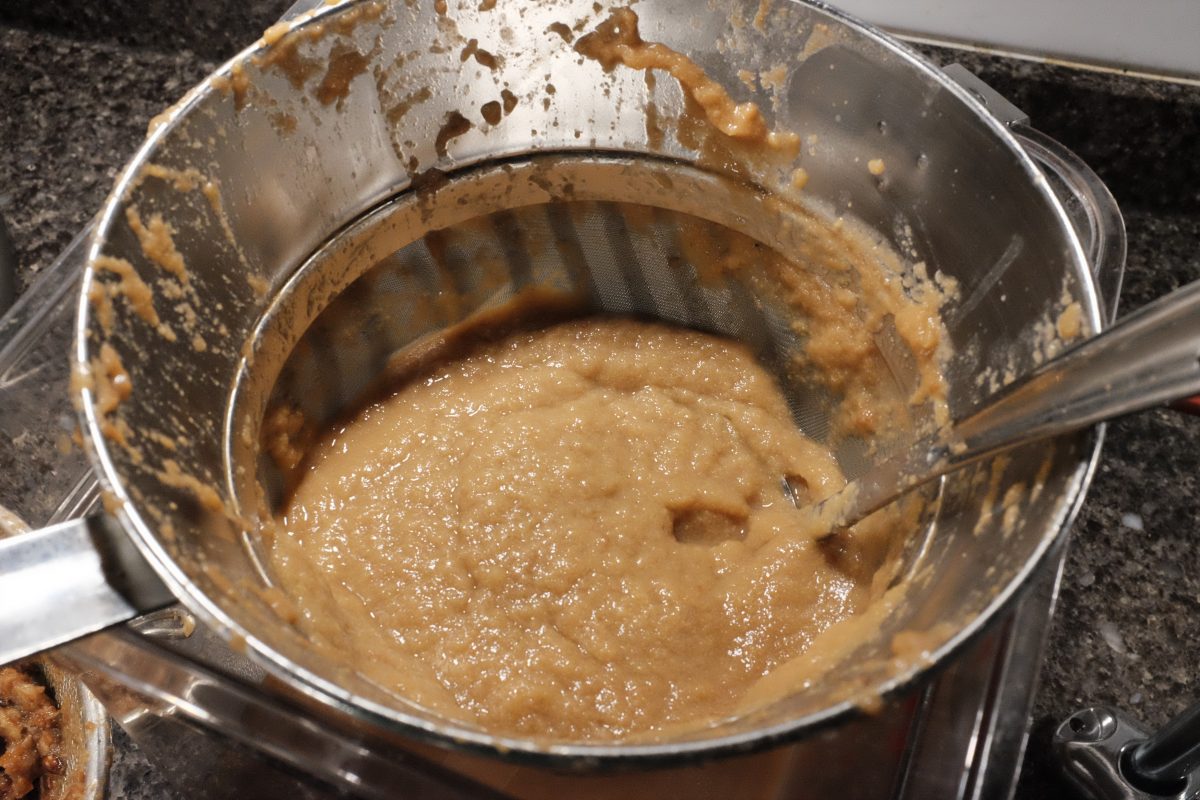
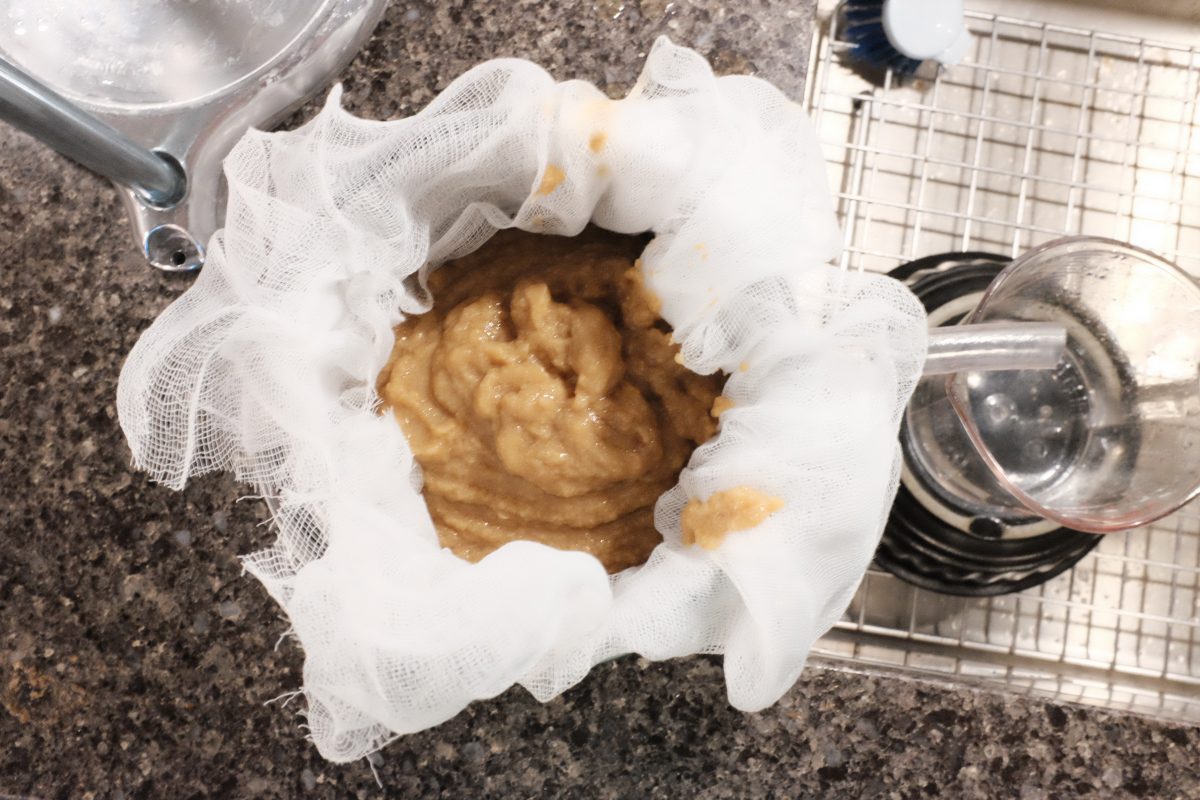
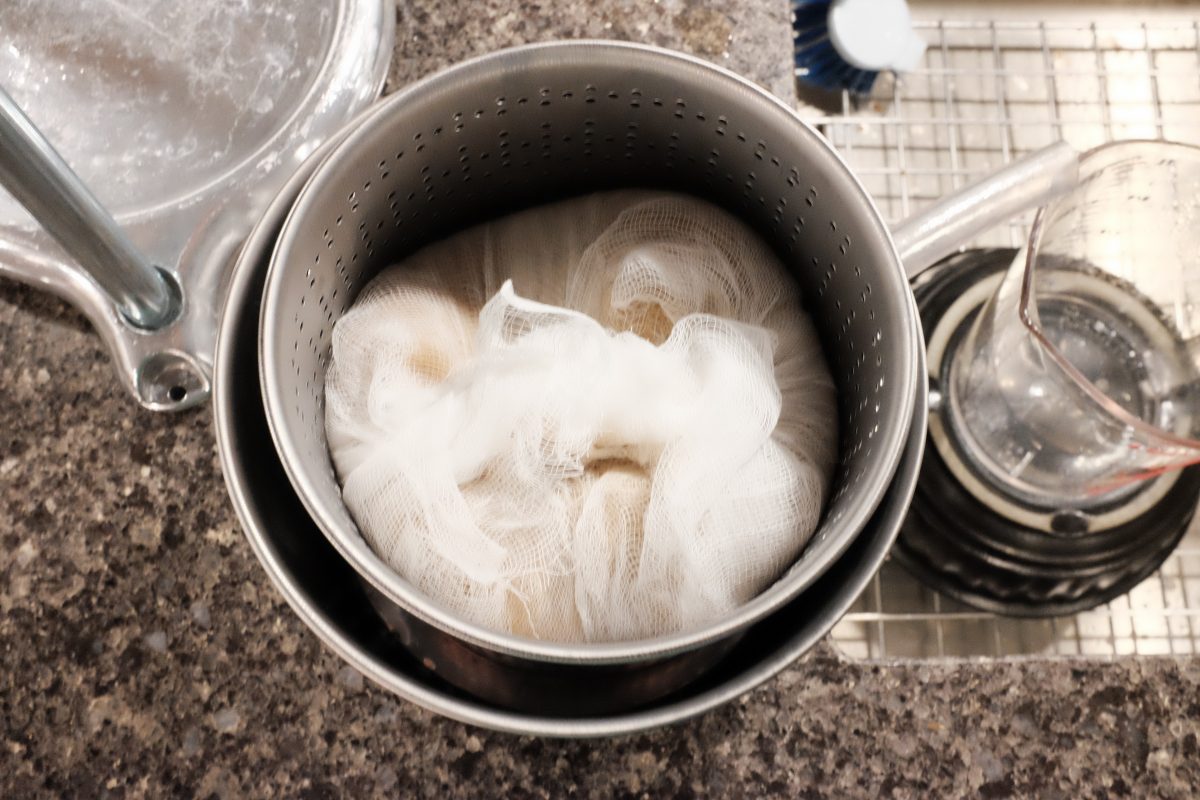
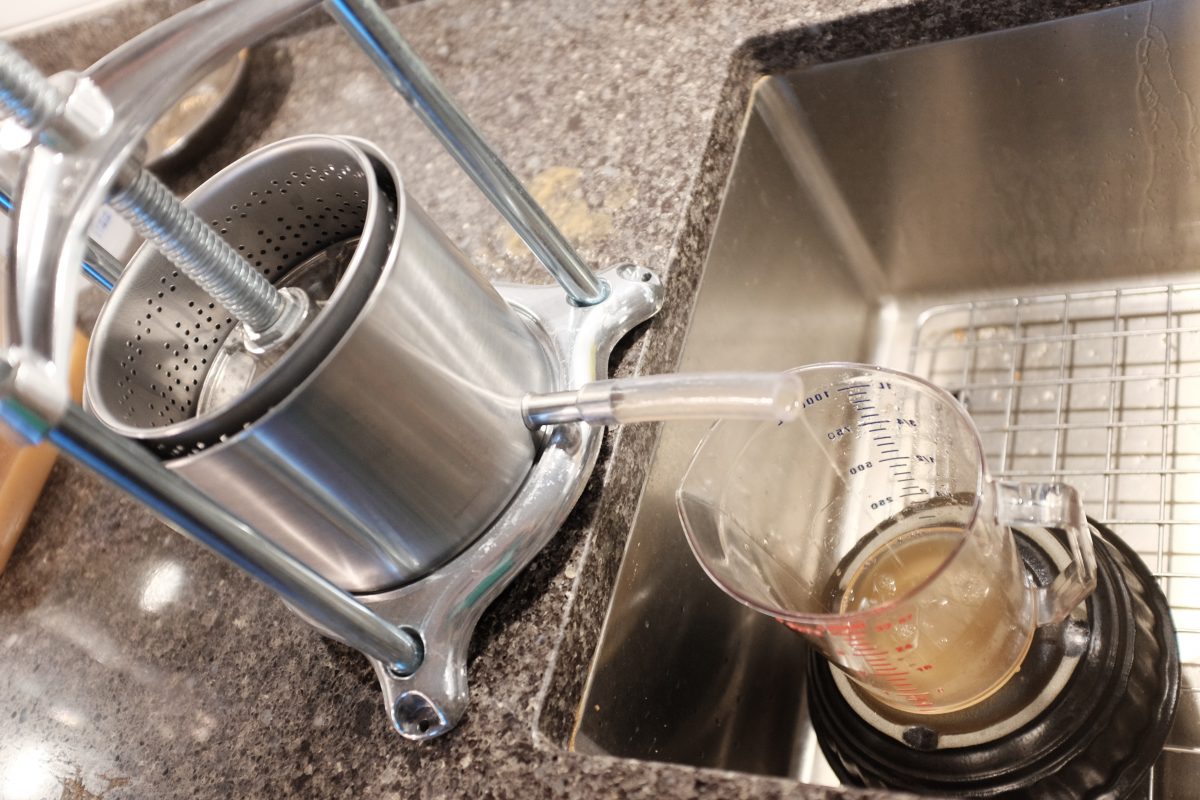
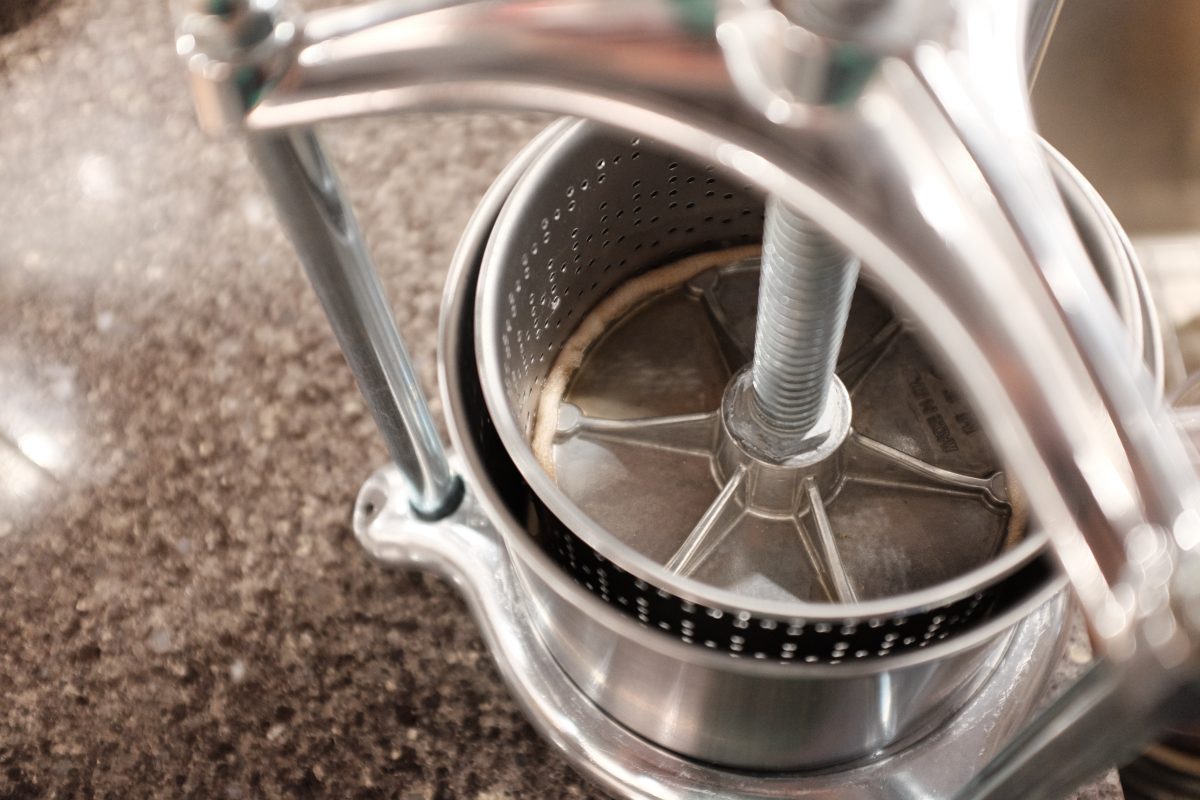
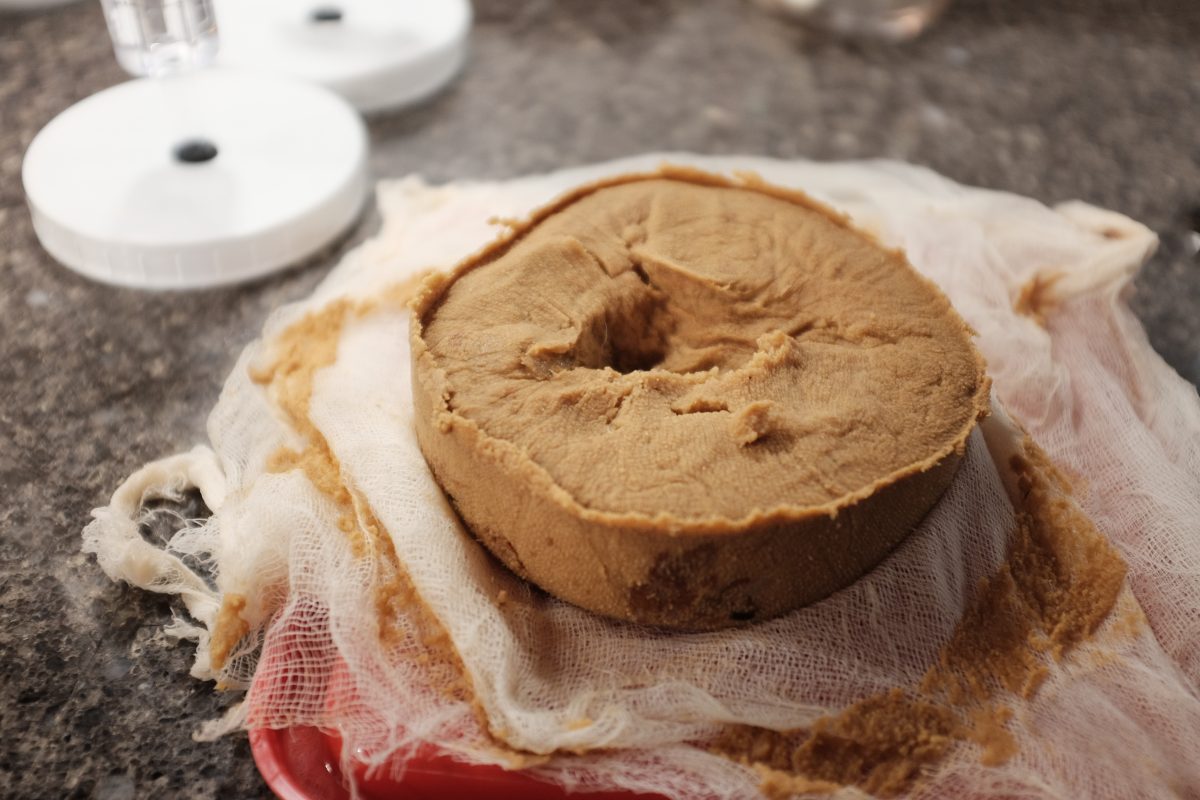
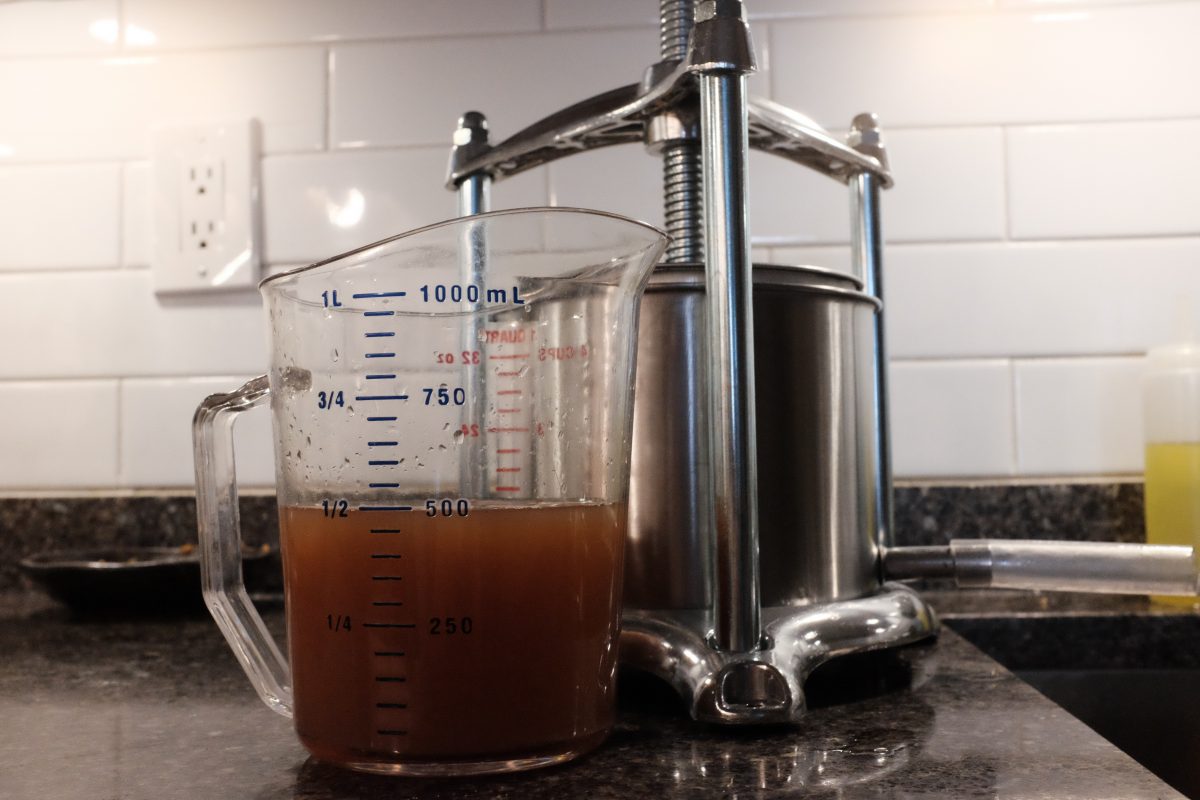
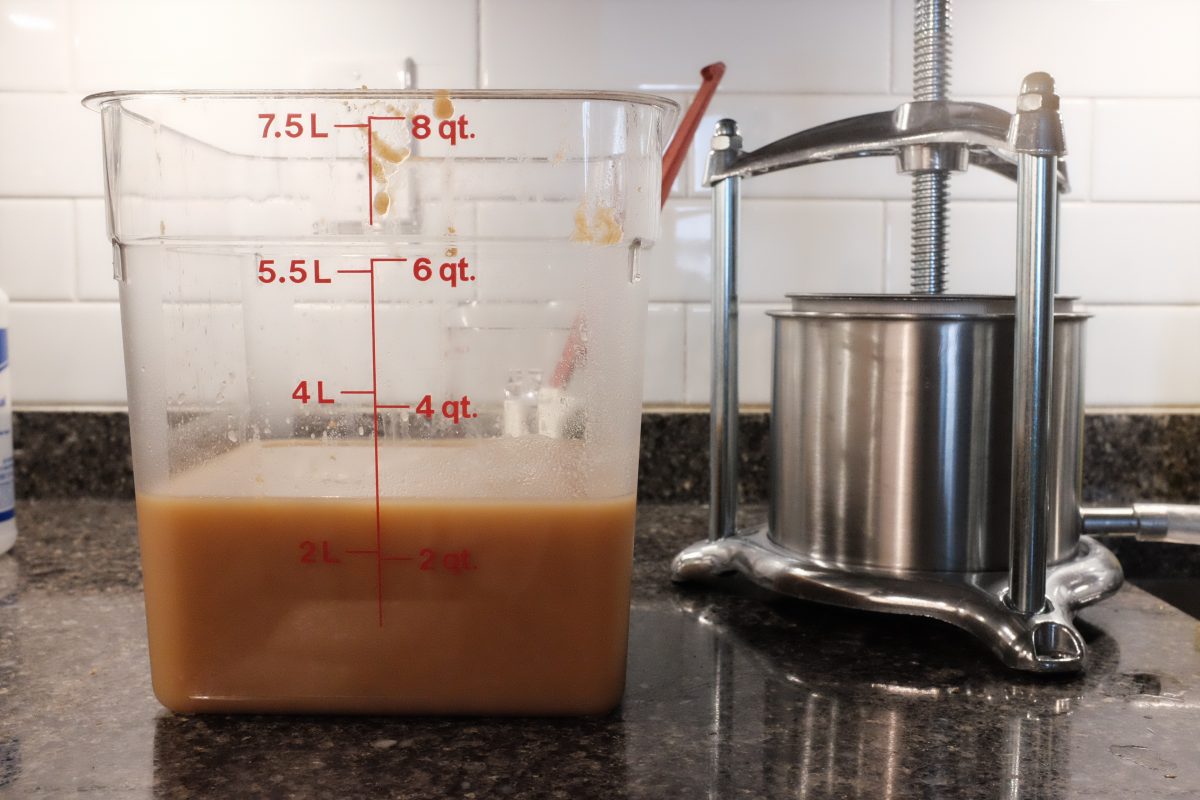
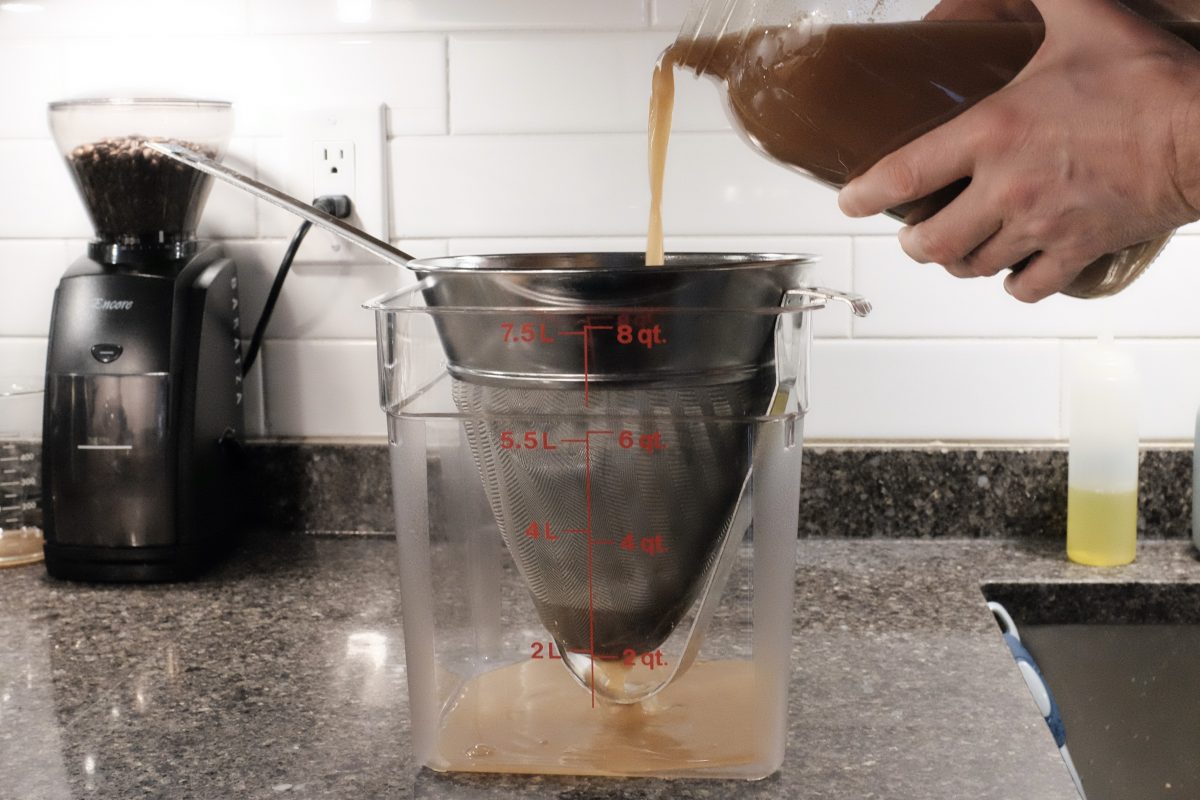
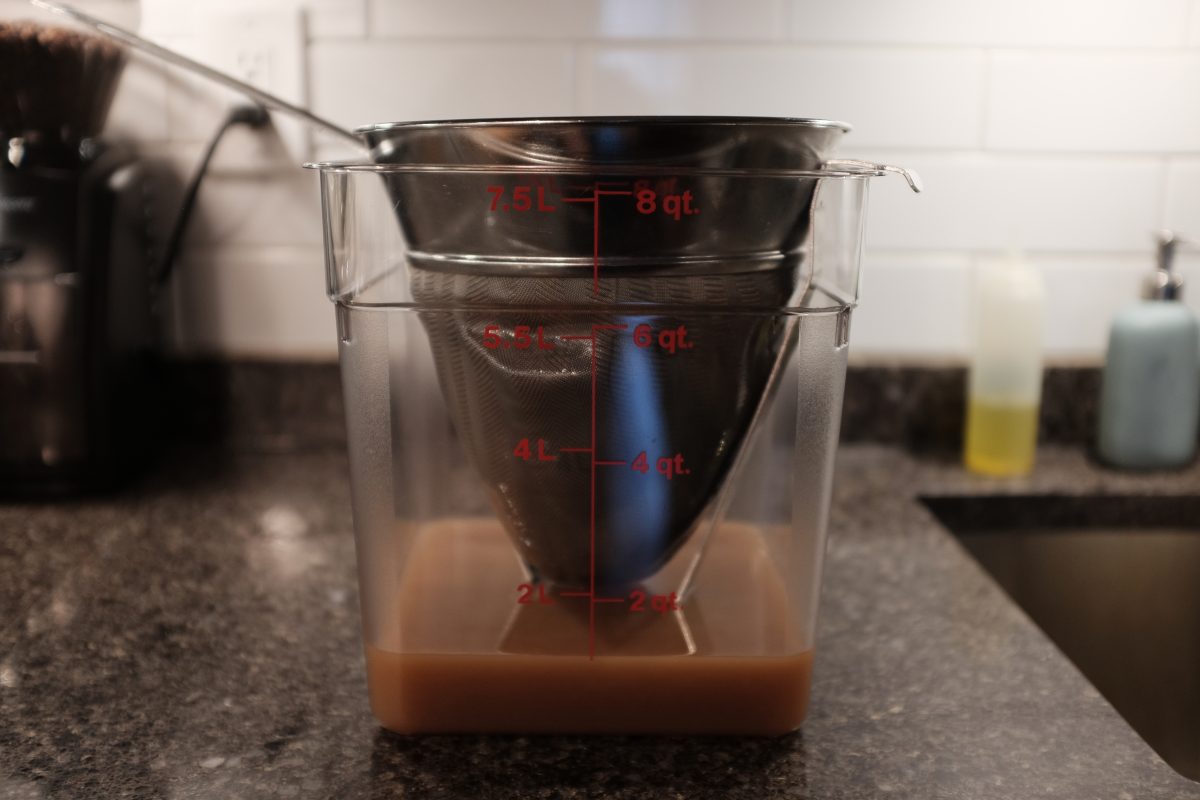
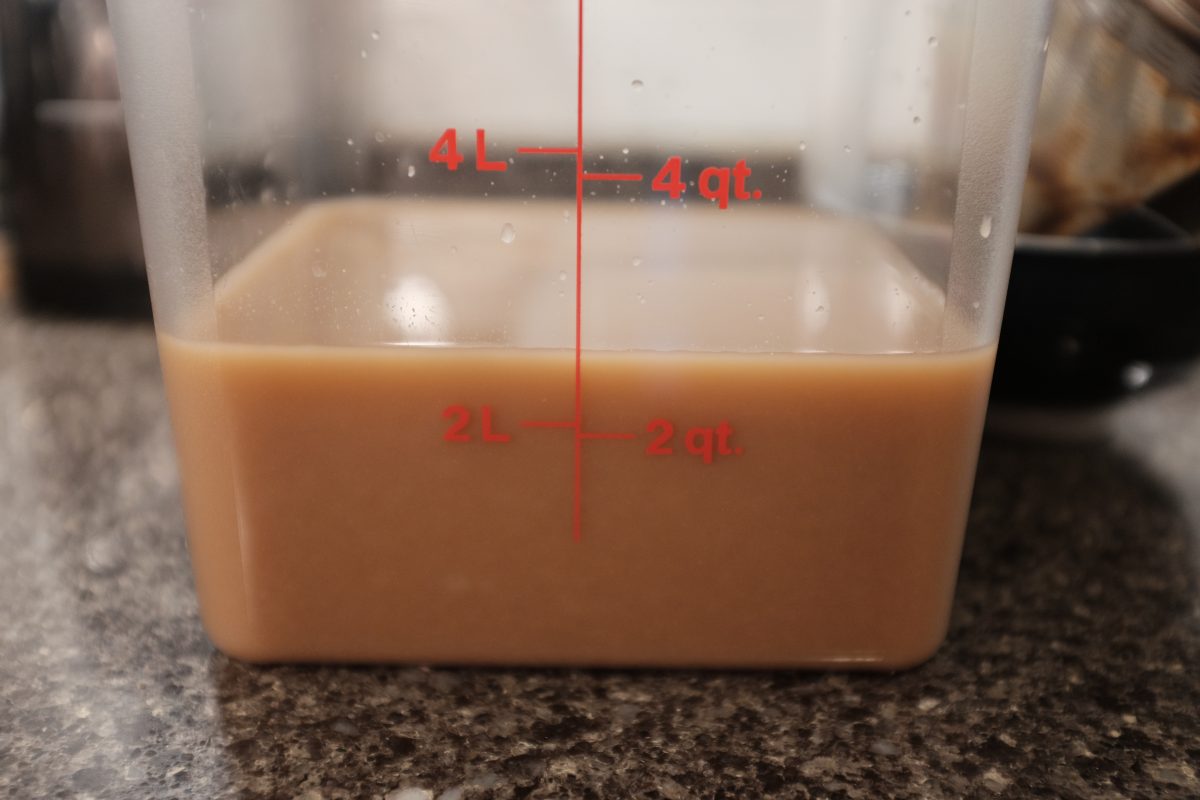
This is probably the most difficult part of this whole process. After doing this a few times, what you see below is the method I prefer but, it is not the only way. The goal is to separate the fibrous parts of the mash from the liquid so as long as you accomplish this, any method is fine.
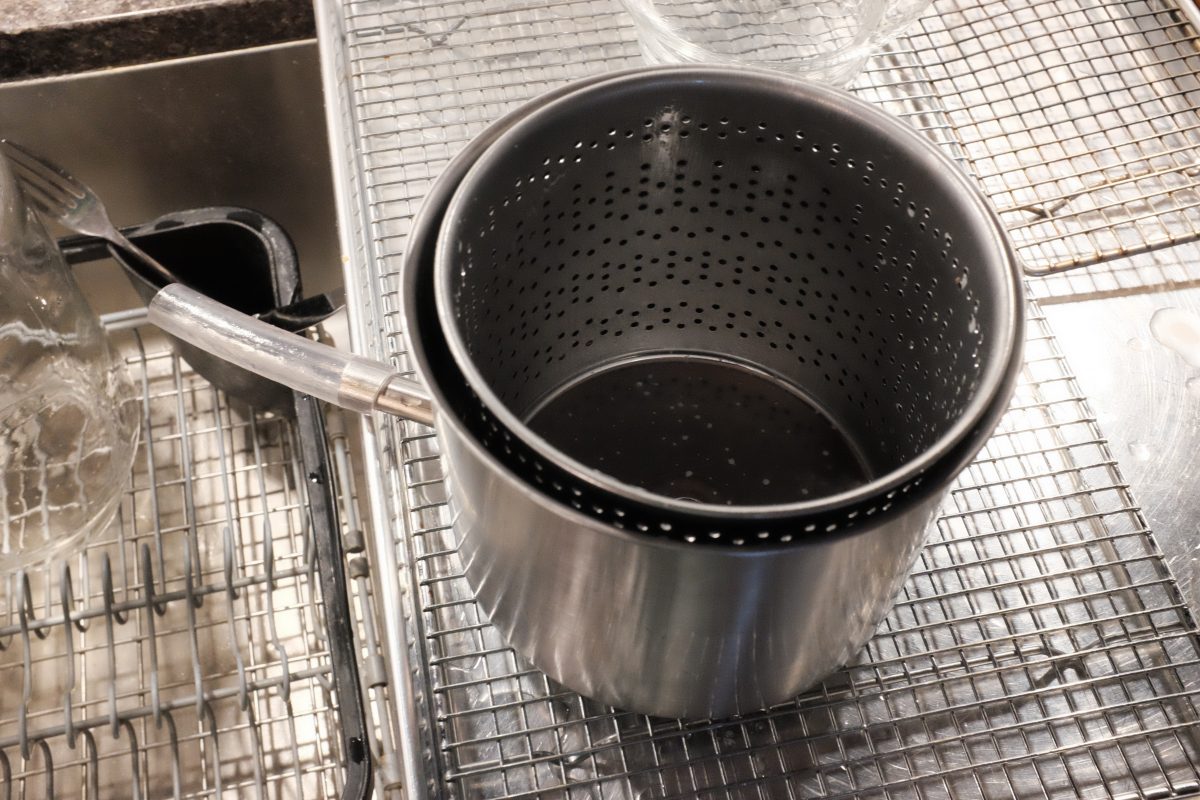
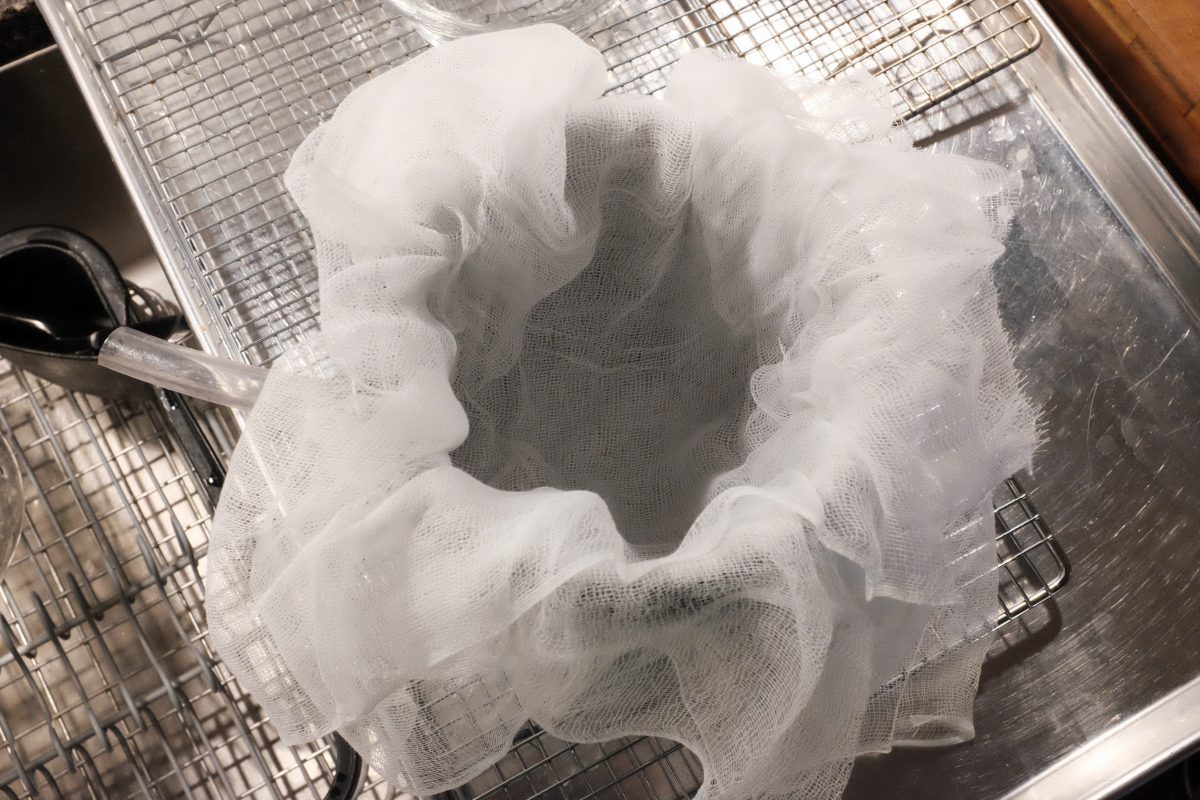
The Fruit Press
If you don’t have a fruit press, don’t worry. Take your strained juice and skip down to “Neutralizing the Brewers Yeast”. If you have a fruit press or if you are interested in how one works , please read on…
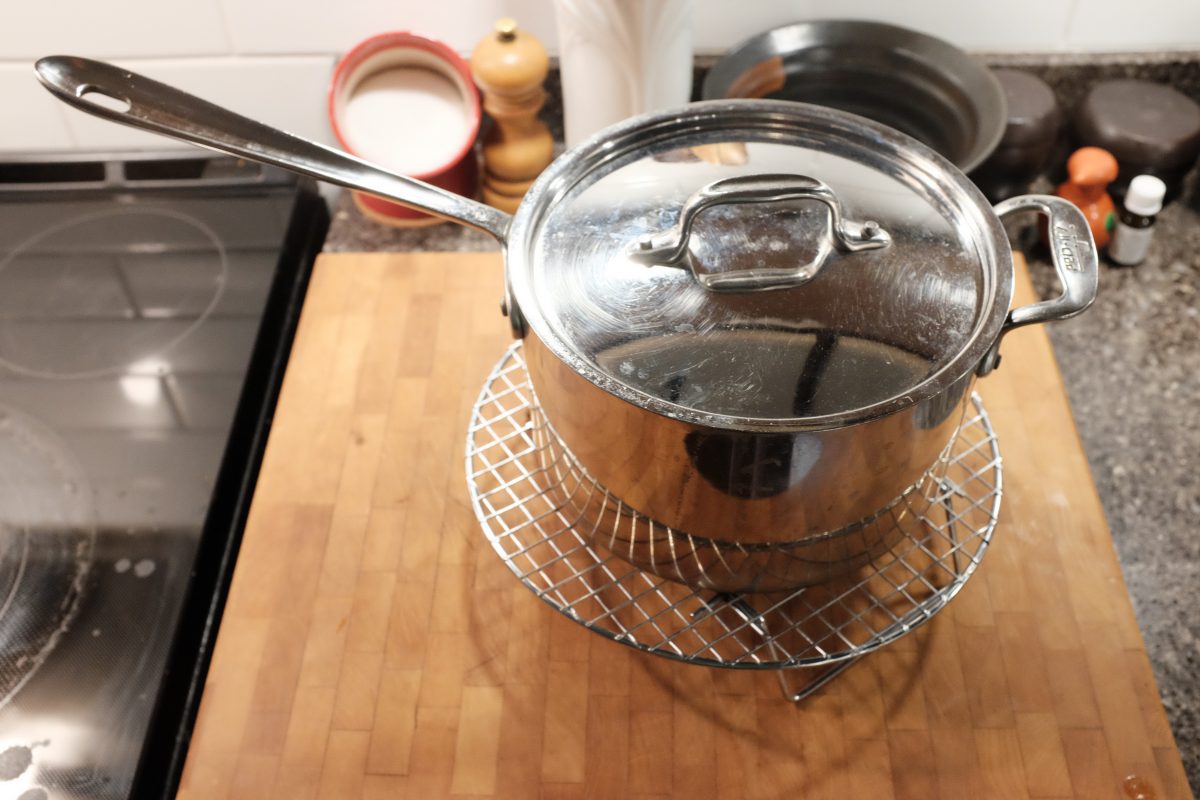
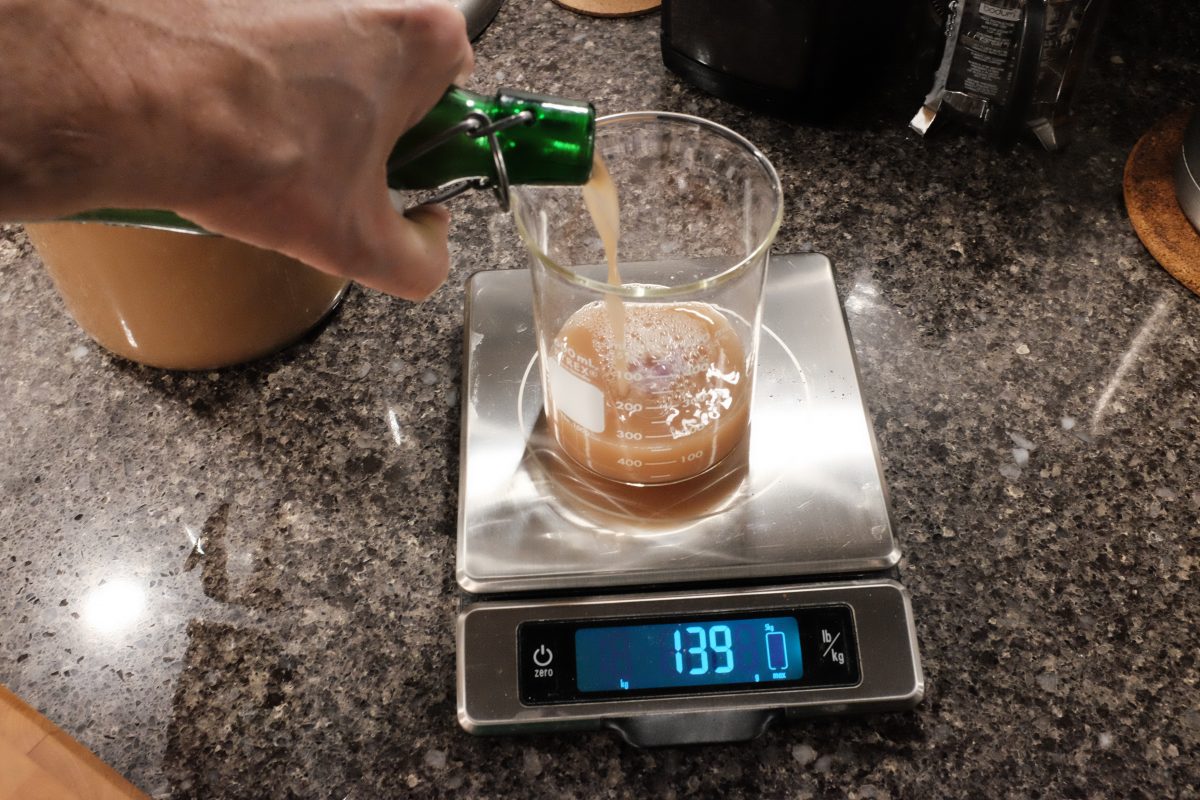
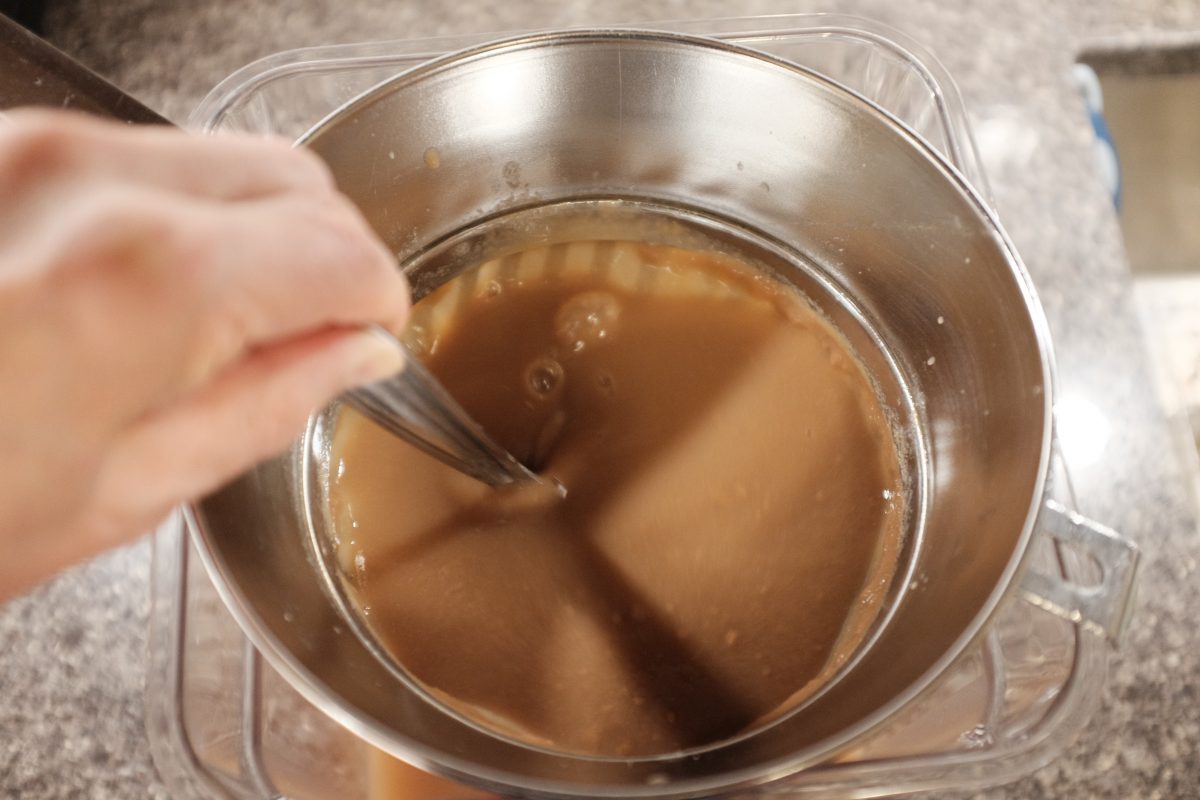
Neutralizing the brewers yeast
Part 2: Making Vinegar
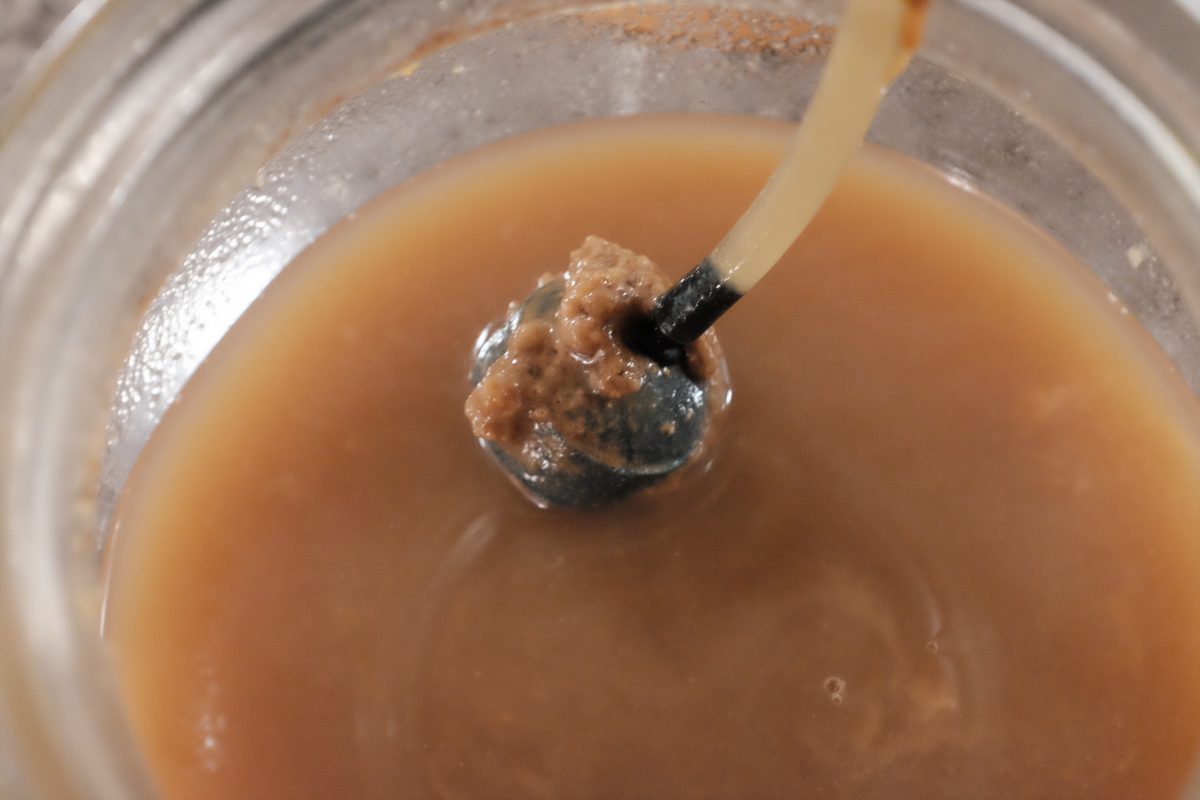
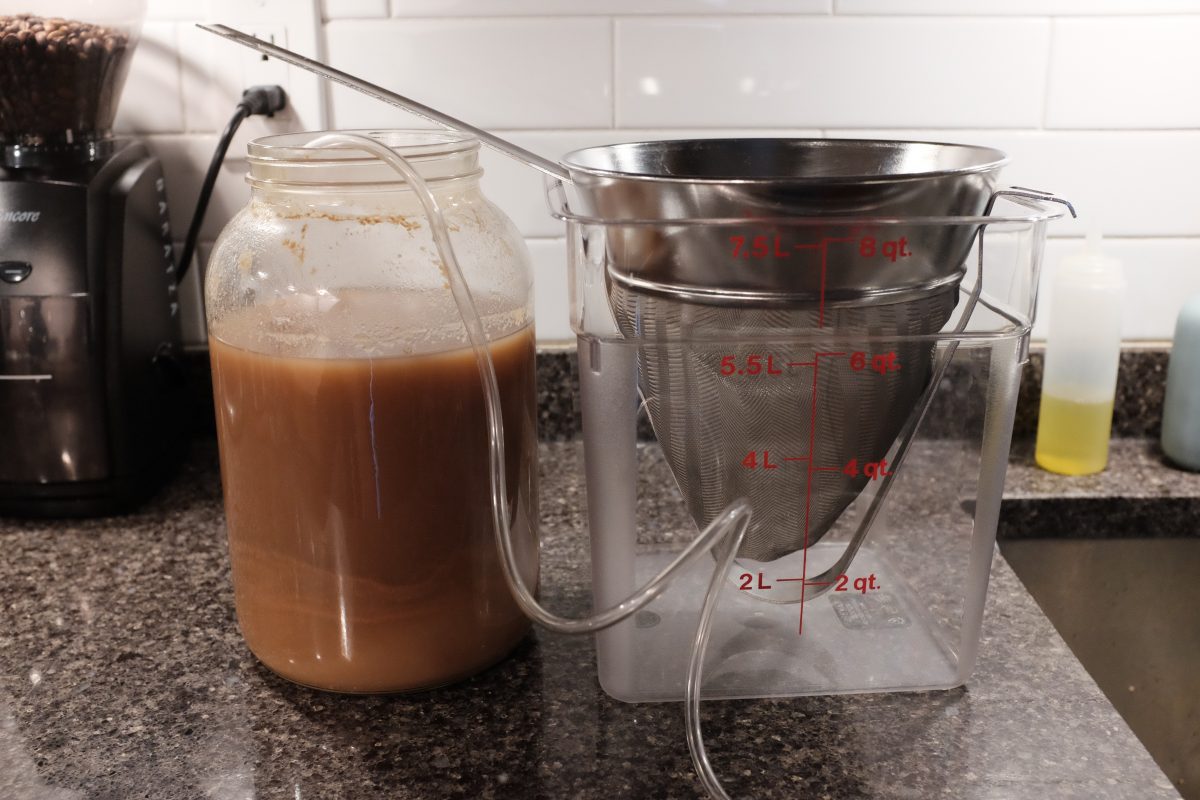
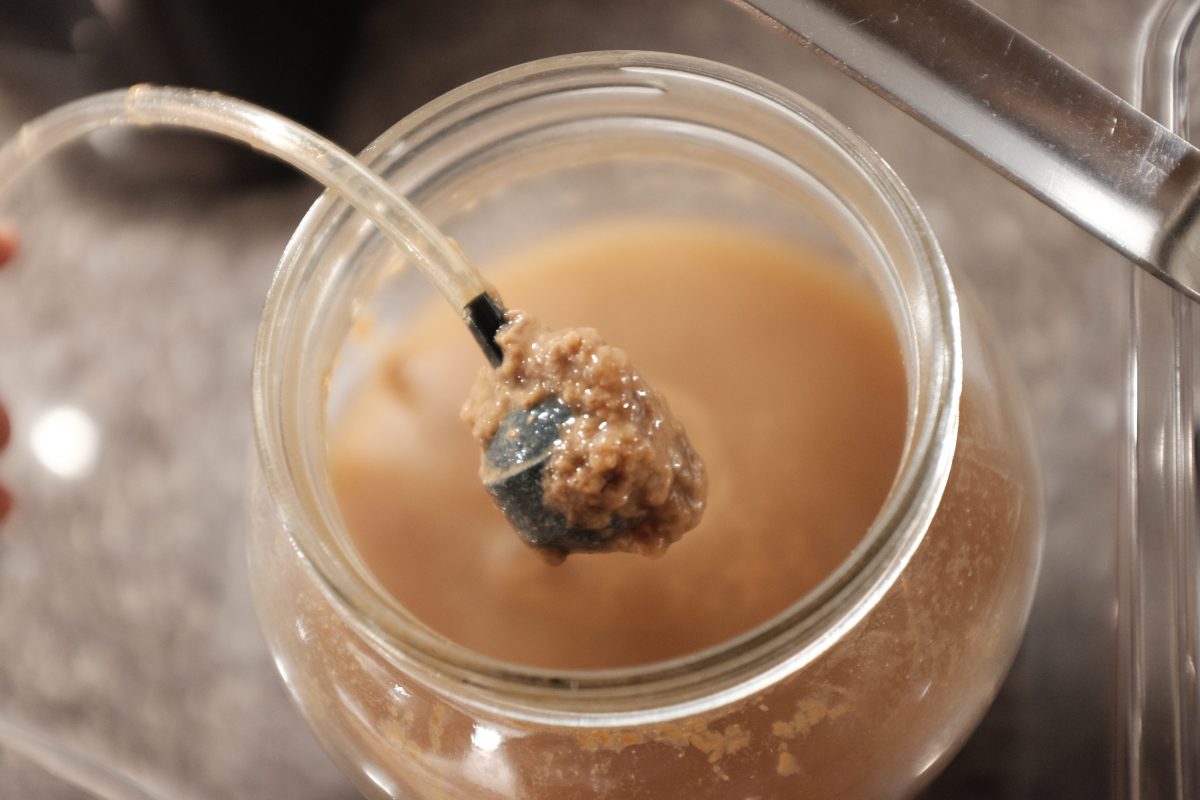
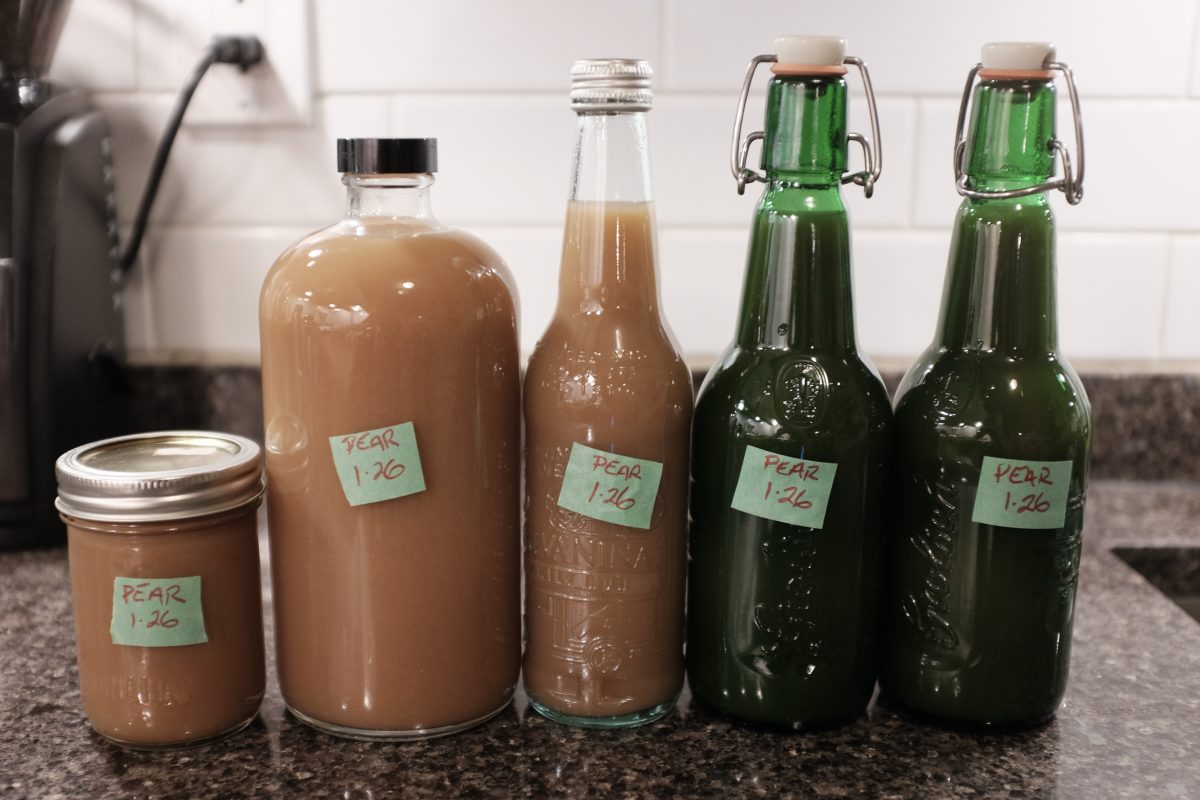
In this second part of the recipe, the pear alcohol will ferment into vinegar with the help of acetic acid bacteria (AAB). We will kick start the fermentation with some live culture vinegar and then aerate it with a pump and air stone until it reaches a pleasant level of acidity.
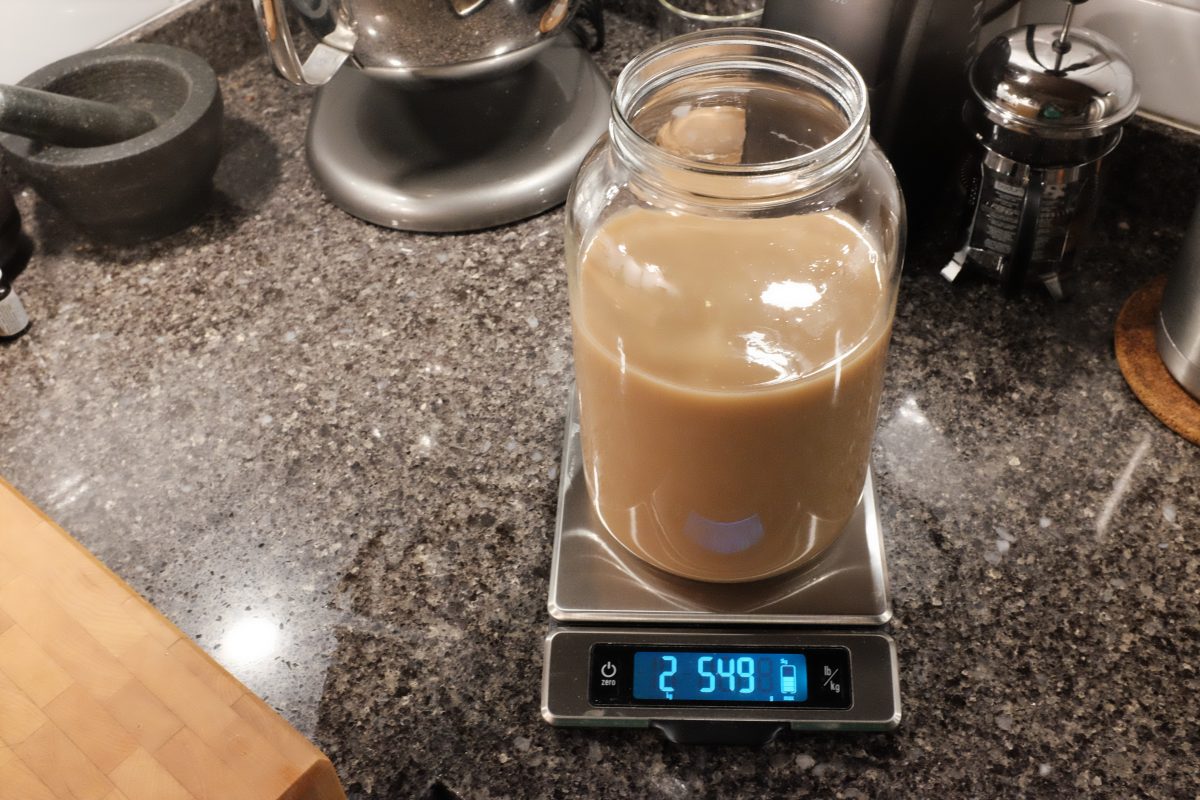
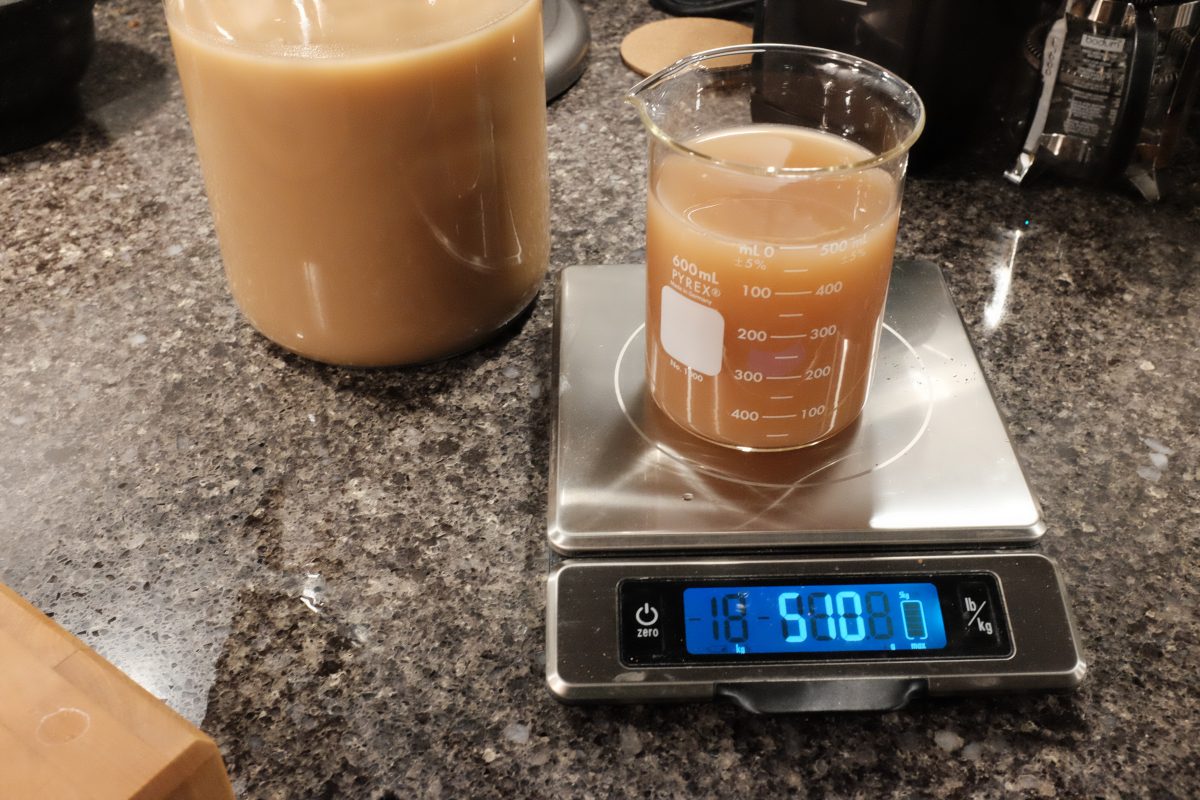
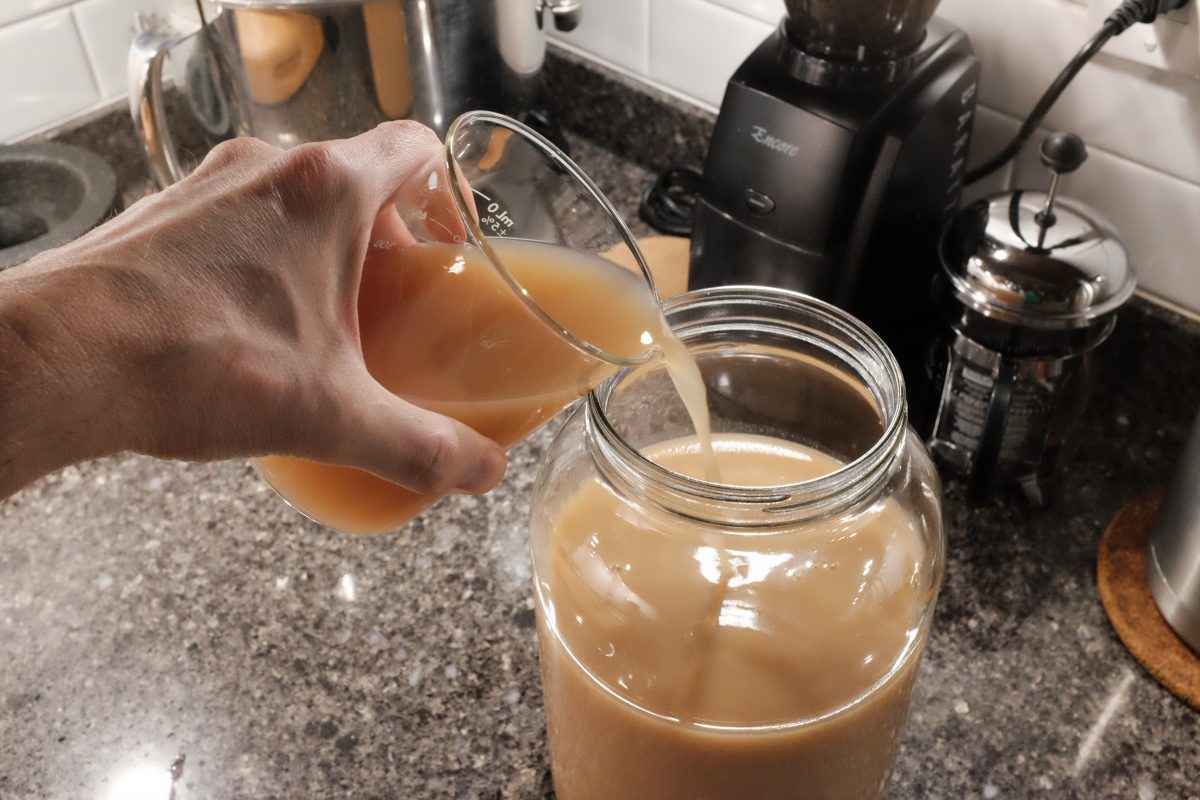
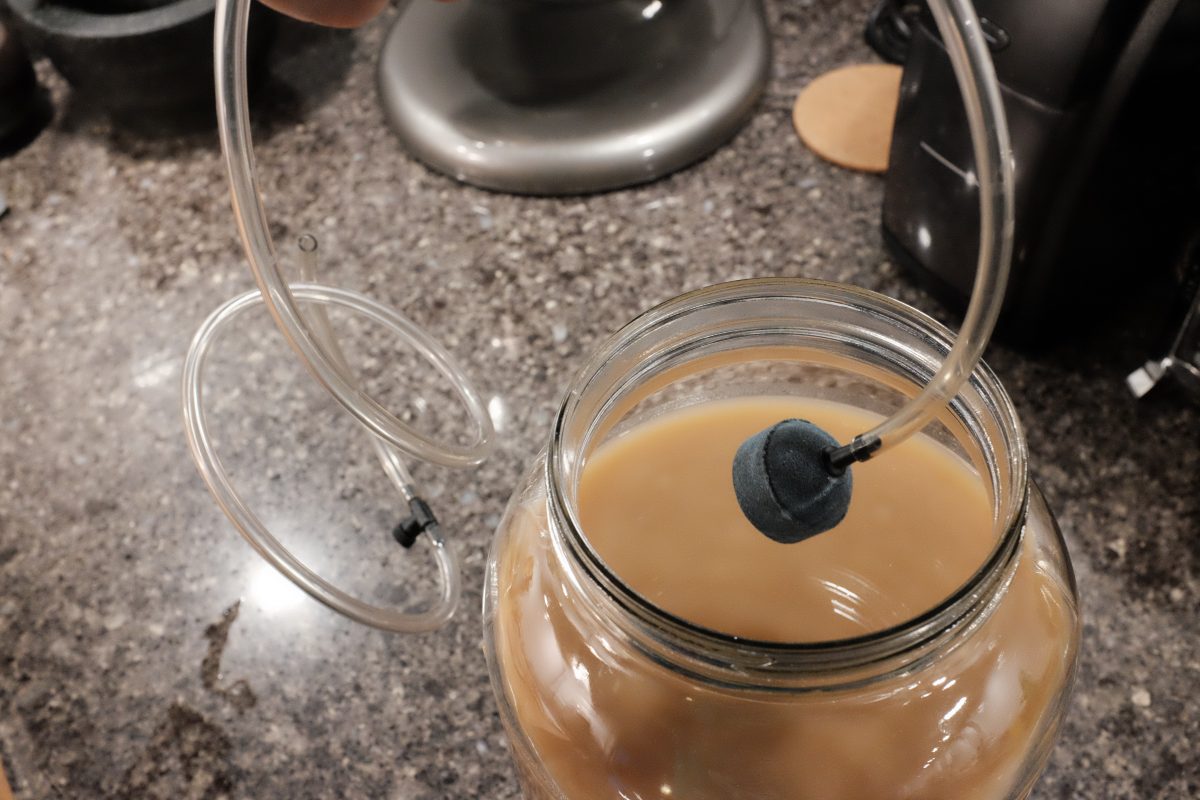
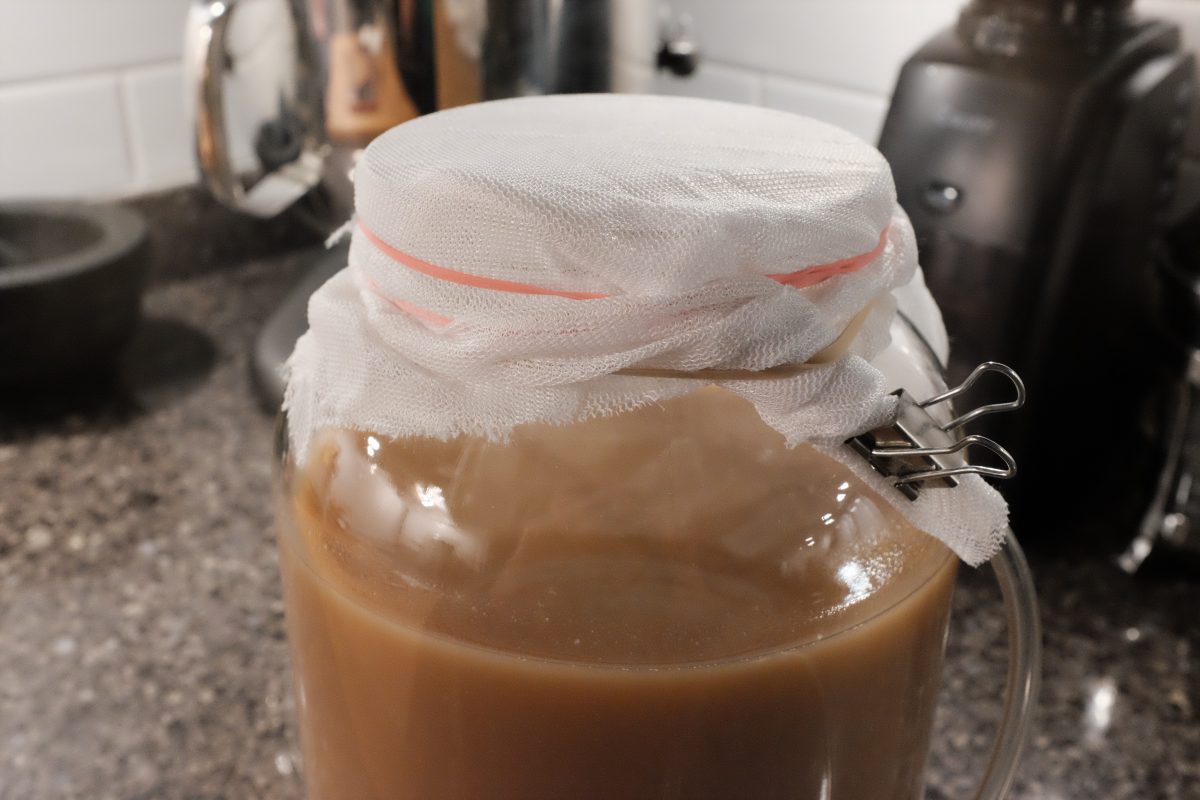
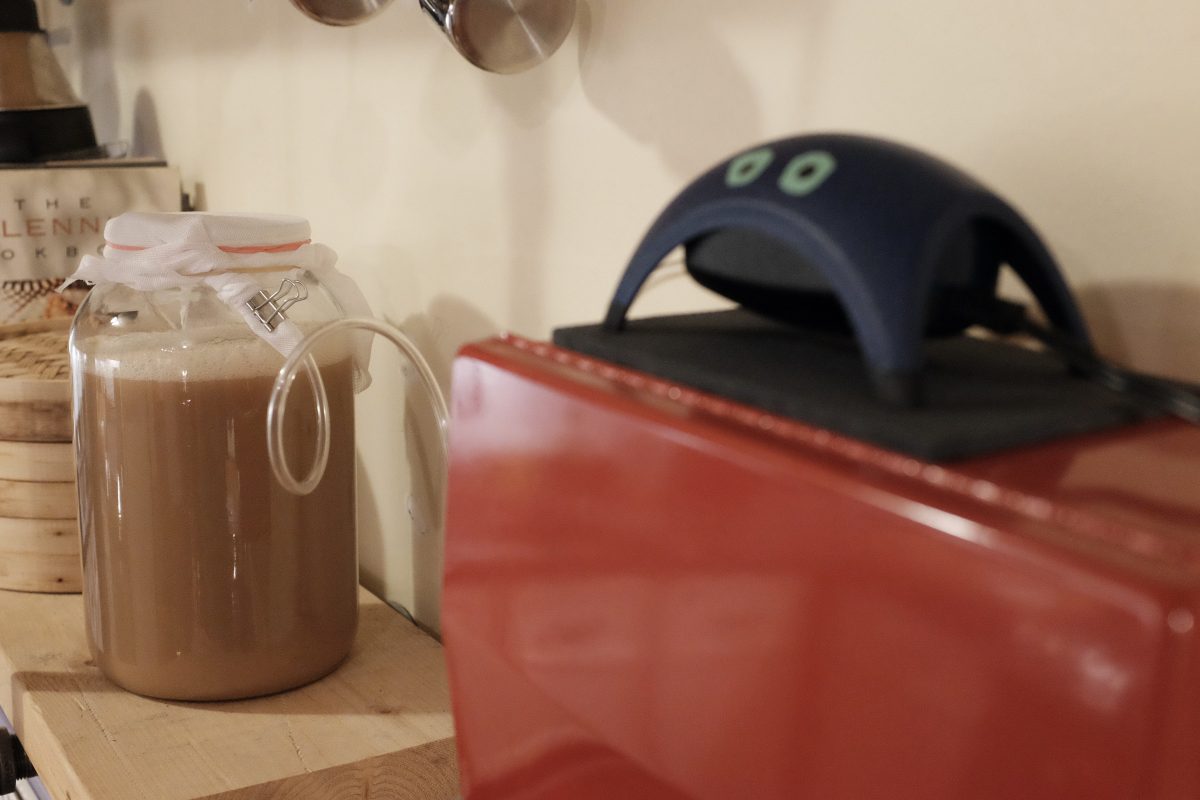
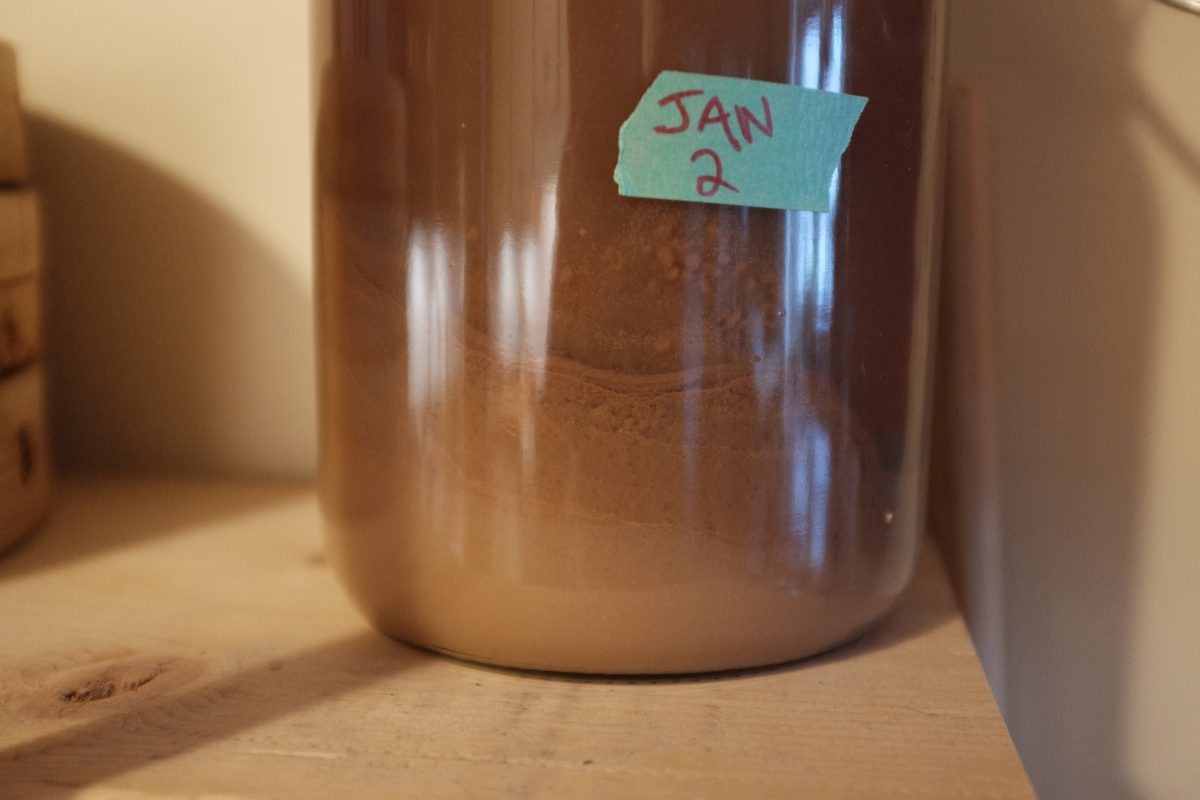
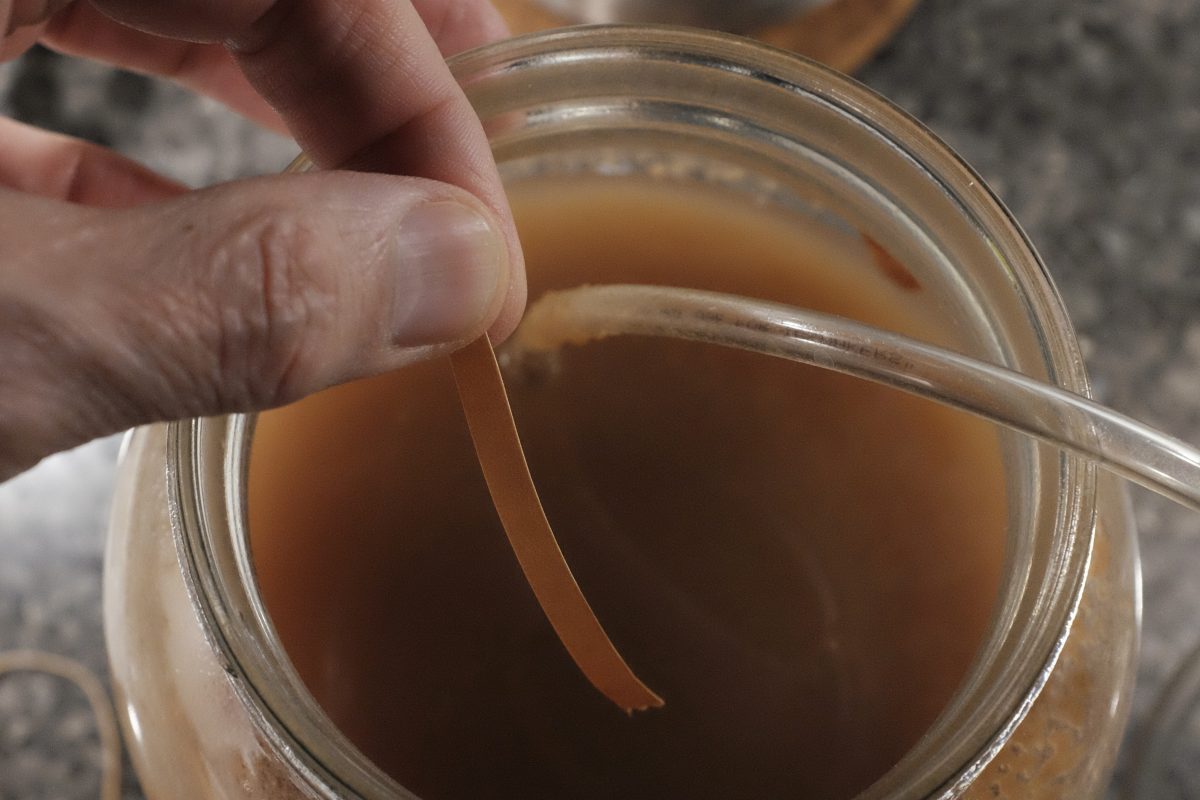
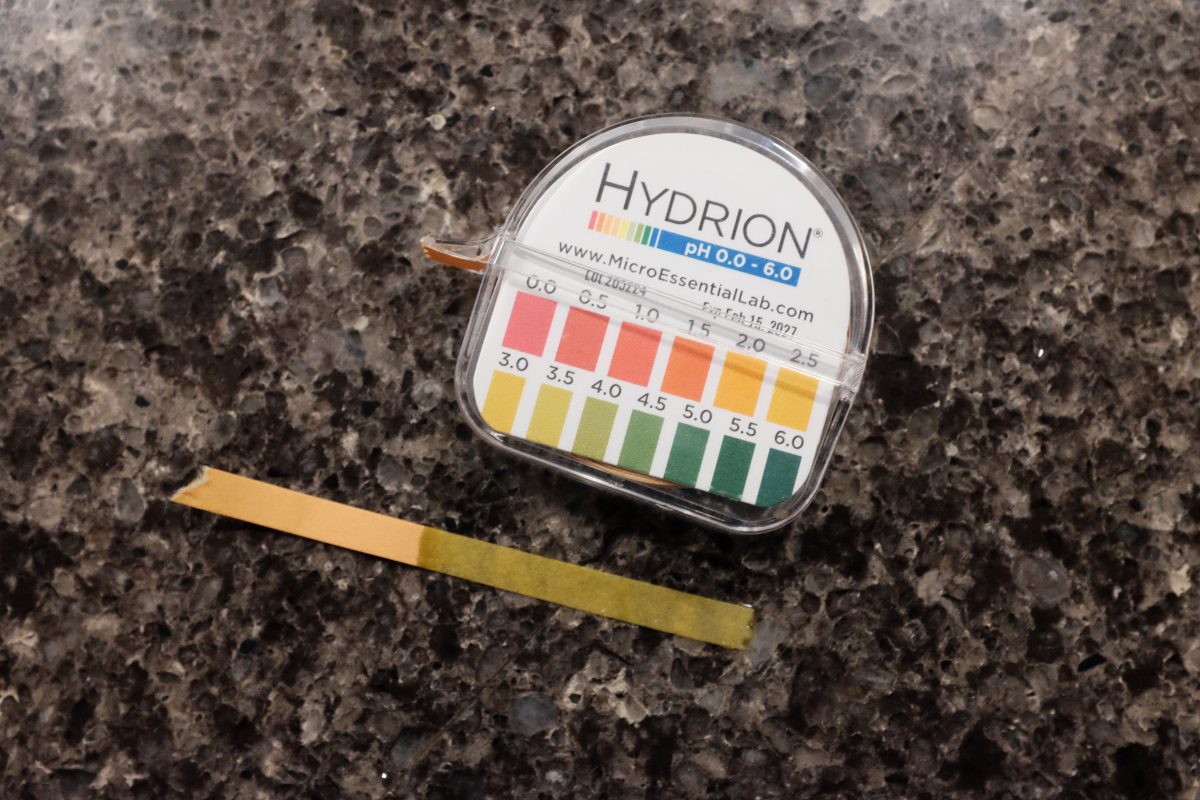
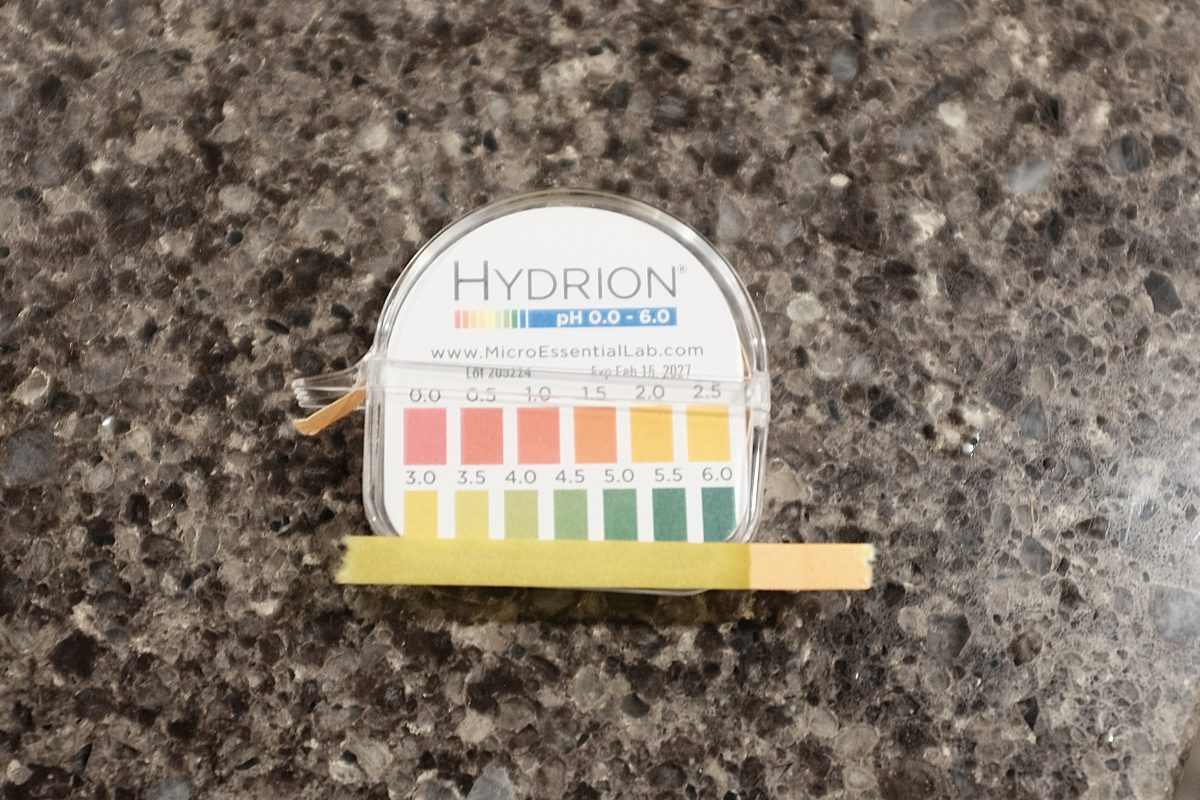
The alcohol should turn to vinegar within 2 weeks. I will leave this bubbling away for a full week before I taste it. In the meantime, I will give it a good sniff everyday to see how the acidity is developing. Once it begins to smell like mild vinegar, I will open it up once a day for a taste.
Now what?
Compared to most store bought vinegars, homemade vinegar is surprisingly delicious. Use it on salads, spritz it over cooked veggies, use it in sauces…it will brighten up almost any dish. You can even drink it straight up or put a few splashes into soda water for a refreshing and healthy drink.
This is a truly fun and fairly easy fermentation project. There is a small initial investment for a little bit of specialized gear but once you have it, it can be used over and over. Just about any sweet fruit can be made into vinegar using this process. In the past I have made vinegar out of ripe persimmons and it was also delicious. I think I will try plum vinegar next, berries in the summer.
If you have any questions, comments or suggestions please leave them below. I am always happy to hear from you. If you enjoy the content and would like to contribute towards website maintenance and development, you can make a donation here. Thanks for reading TigerSalad!