Posts in Category: Fermentation
Simple Kombucha Recipe
What is kombucha?
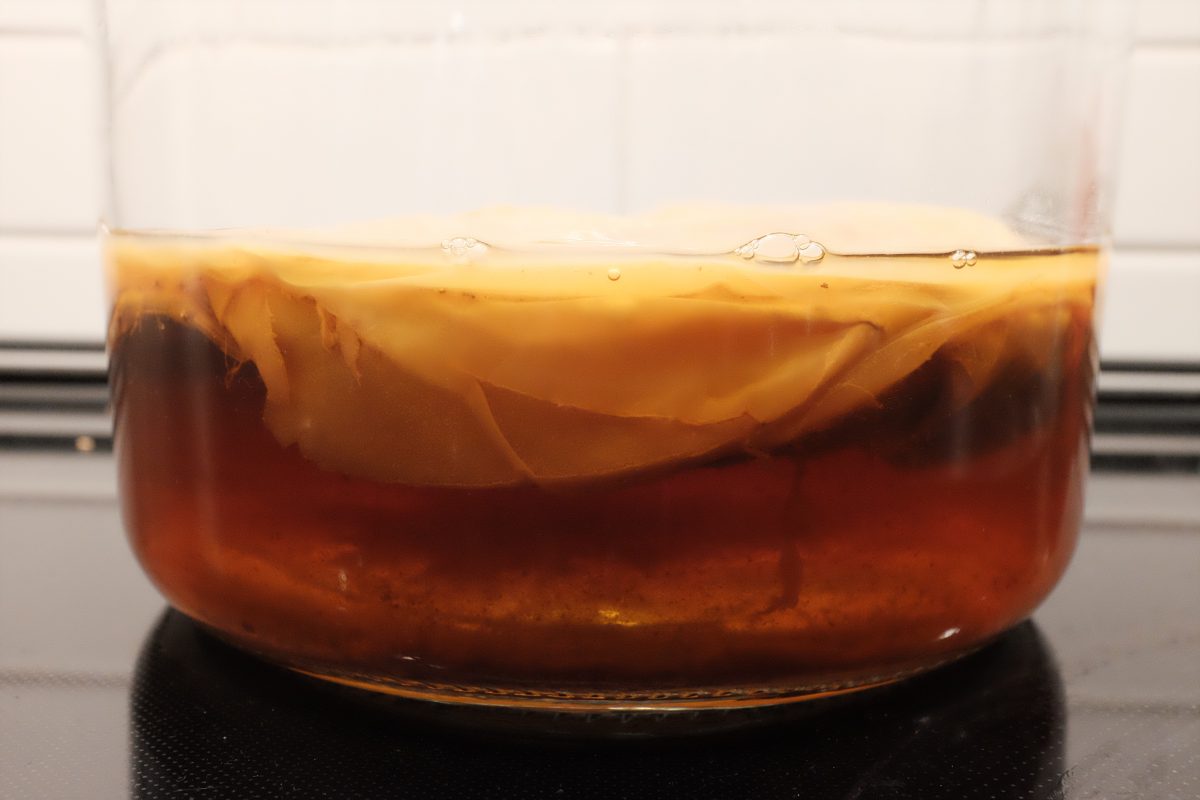
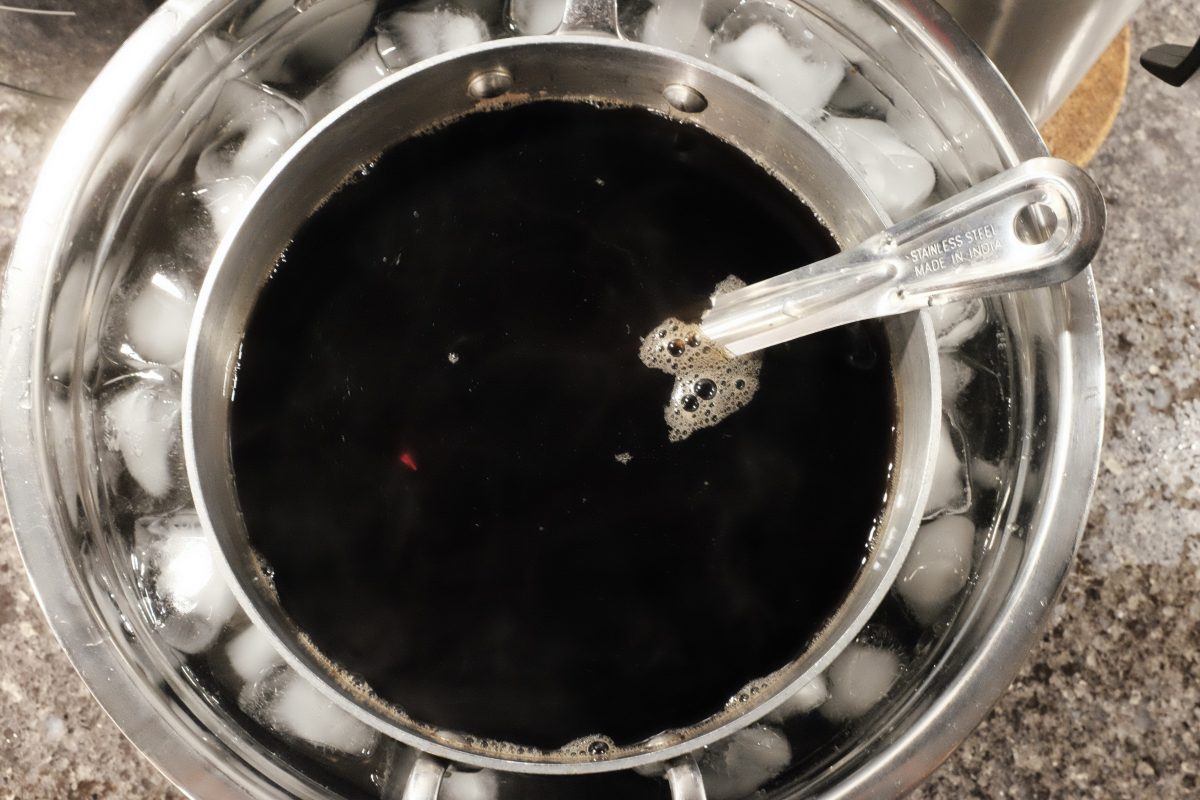
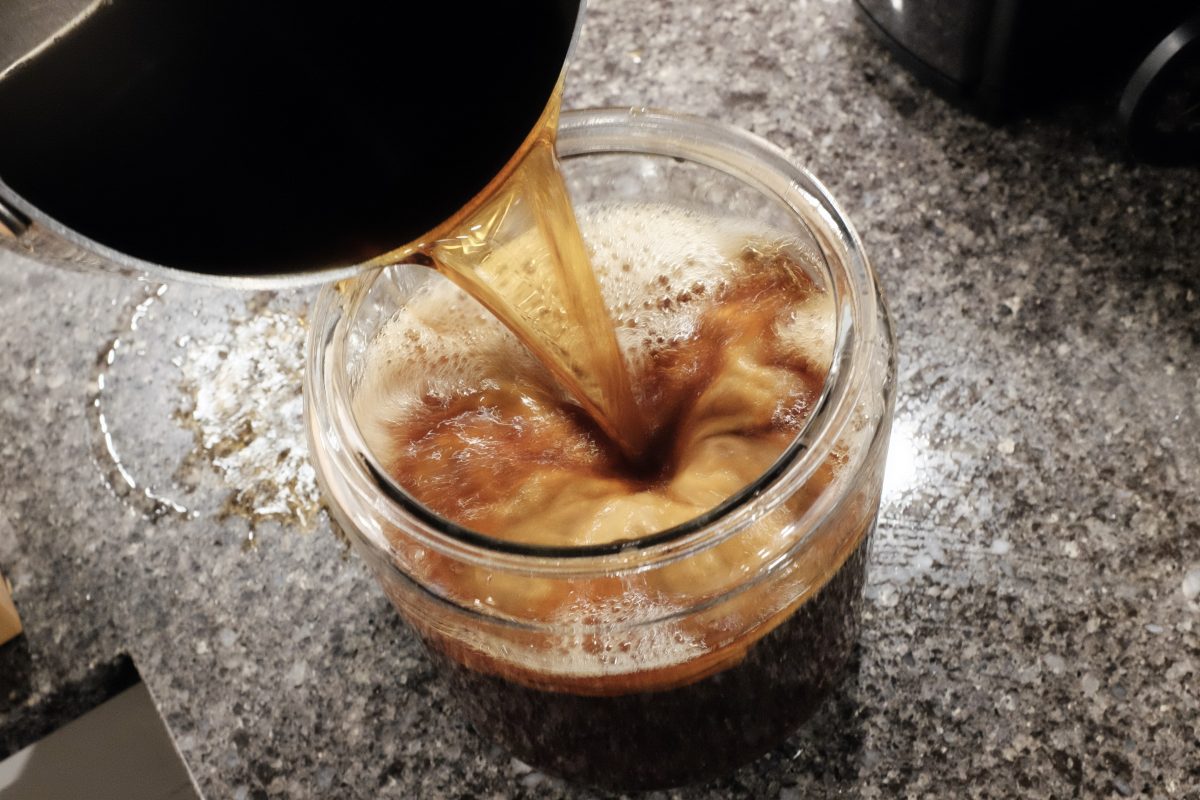
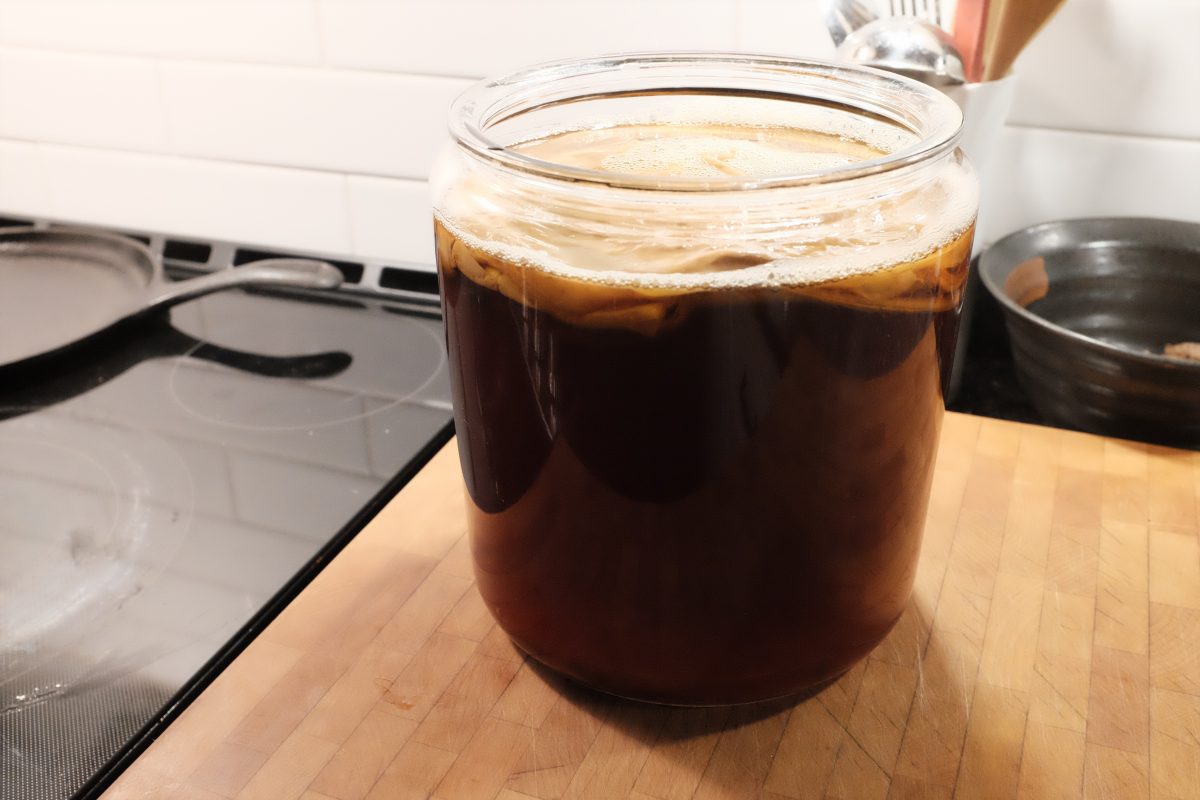
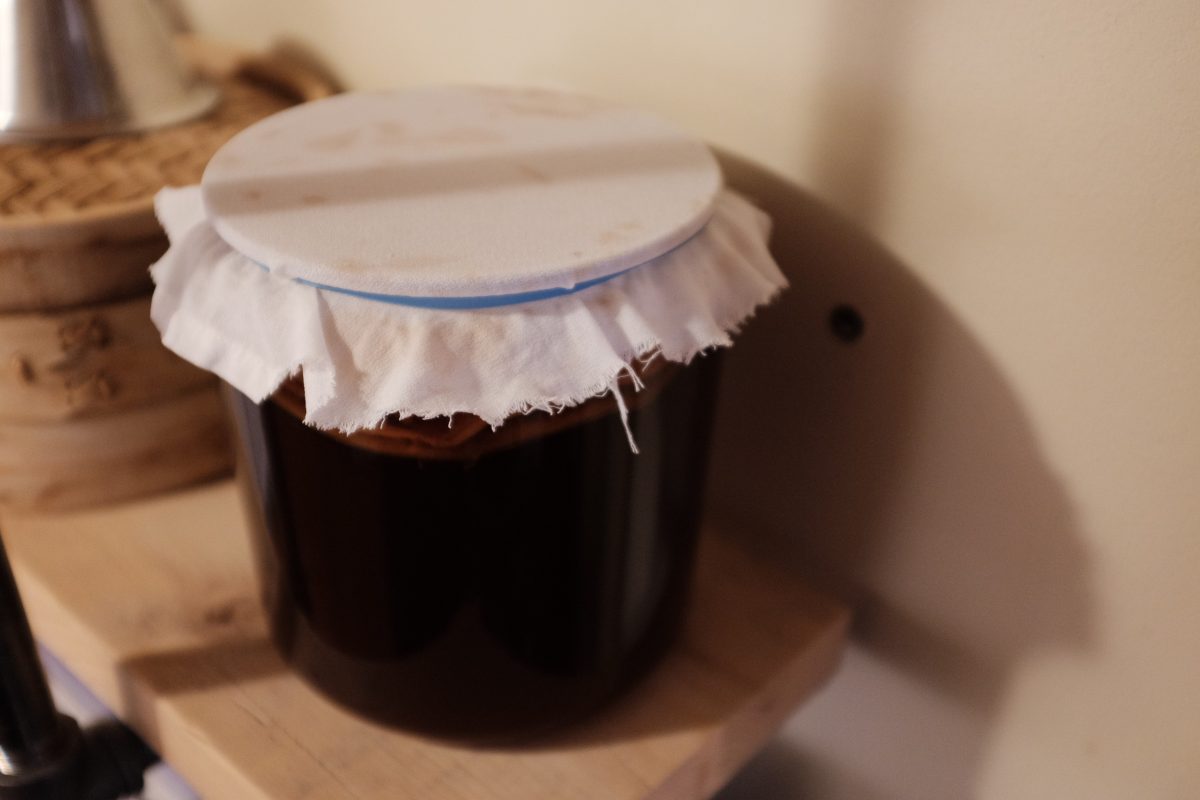
In it’s simplest form kombucha is black tea fermented by a symbiotic culture of bacteria and yeast (SCOBY) in the presence of sugar. There are probably thousands of good articles out there that explain this process in great detail…so I won’t add to the pile. In this article, I only want to provide a simple recipe with a clear process for myself and anyone else who might want to try making kombucha.
Why kombucha?
In addition to having a long and mythical history, kombucha is purported to have many health benefits (the final ferment contains live probiotic bacteria). I make it because it is fun, it makes my kitchen smell interesting and funky and it is delicious and refreshing. It is a terrific substitute for soda when you are eating anything heavy or greasy. It’s great with pizza and burgers but even works with more delicate flavours like sushi and sashimi.
Ingredients:
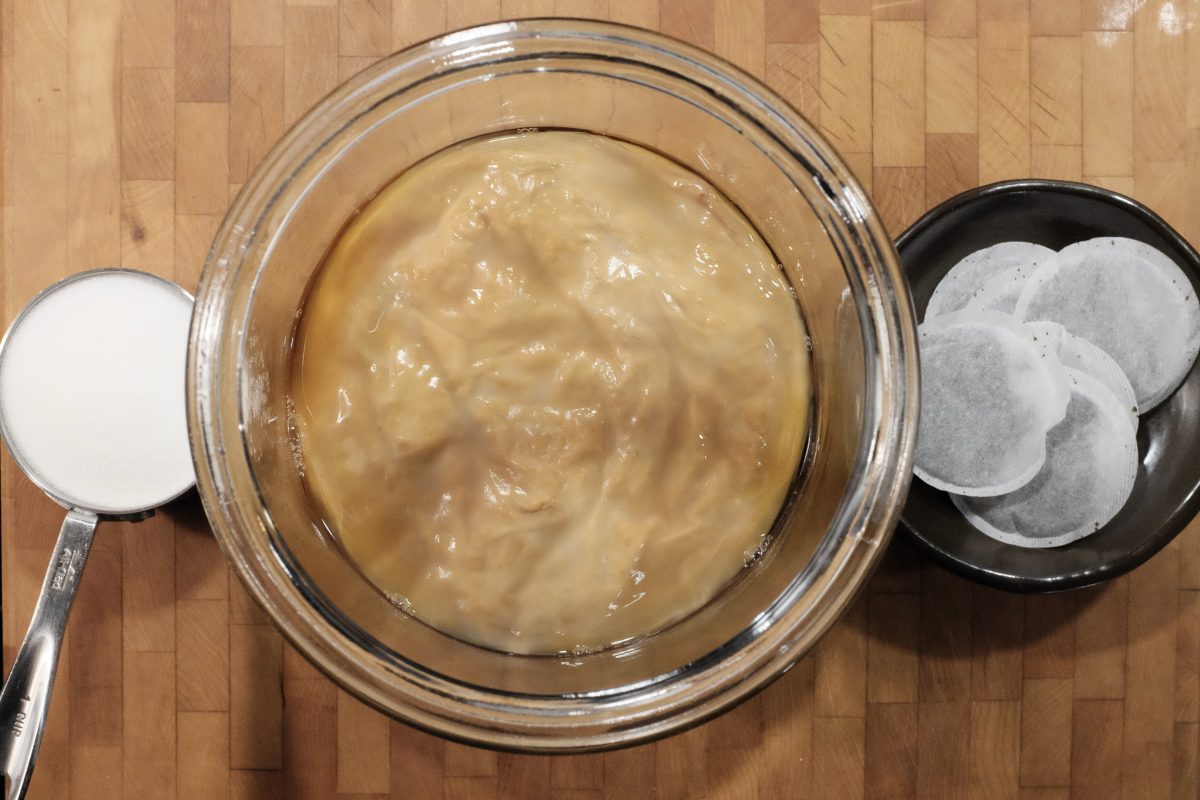
- 1 SCOBY
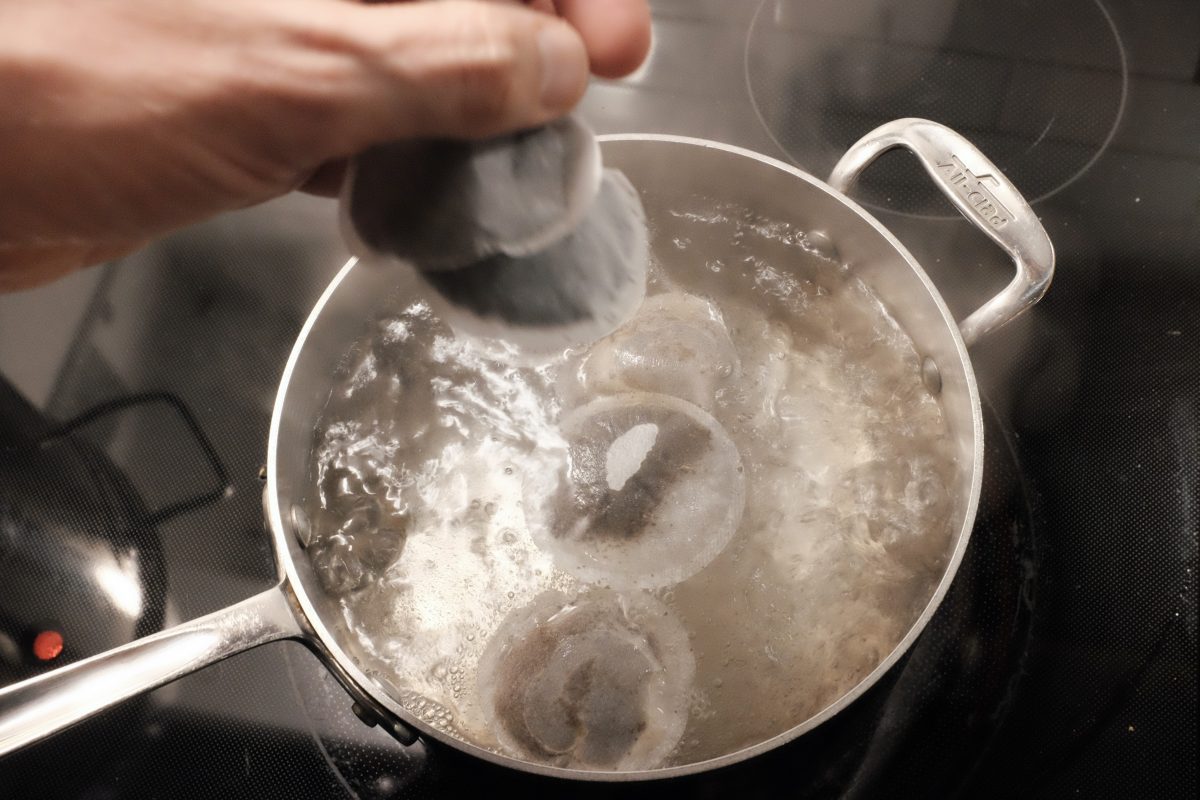
- 6 black tea bags (I am using orange pekoe)
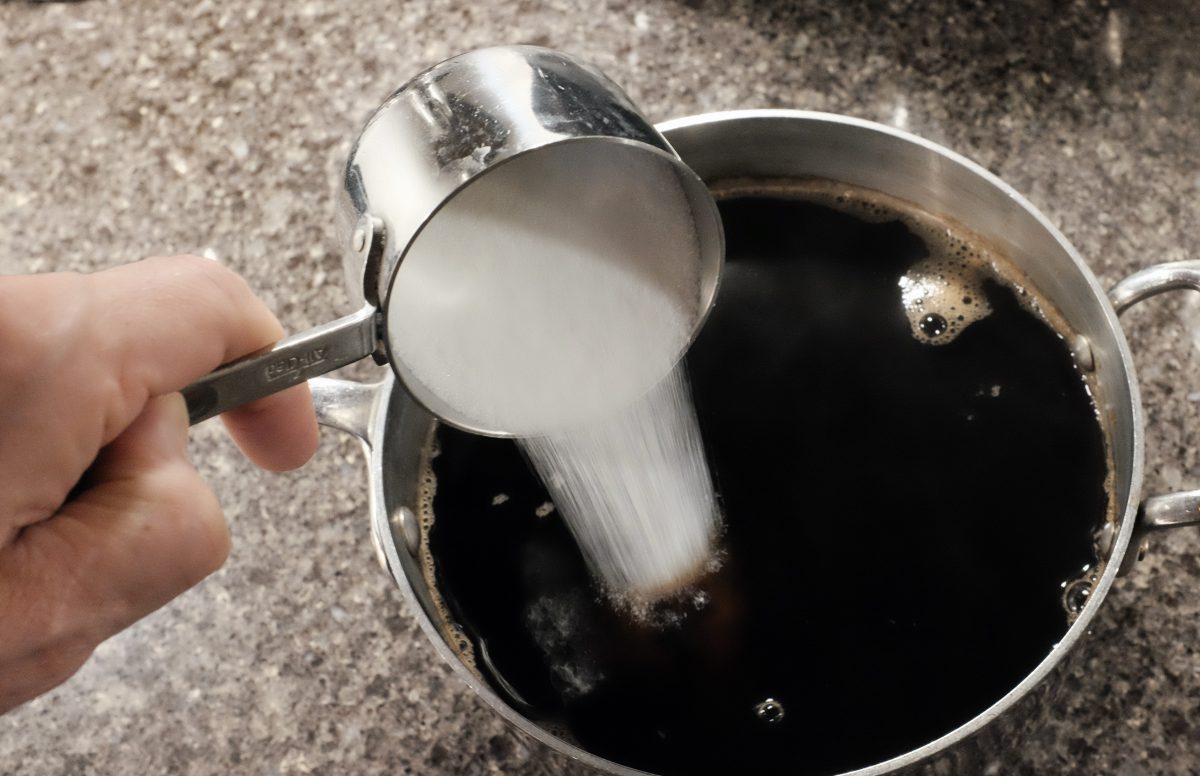
- 1 cup regular white sugar
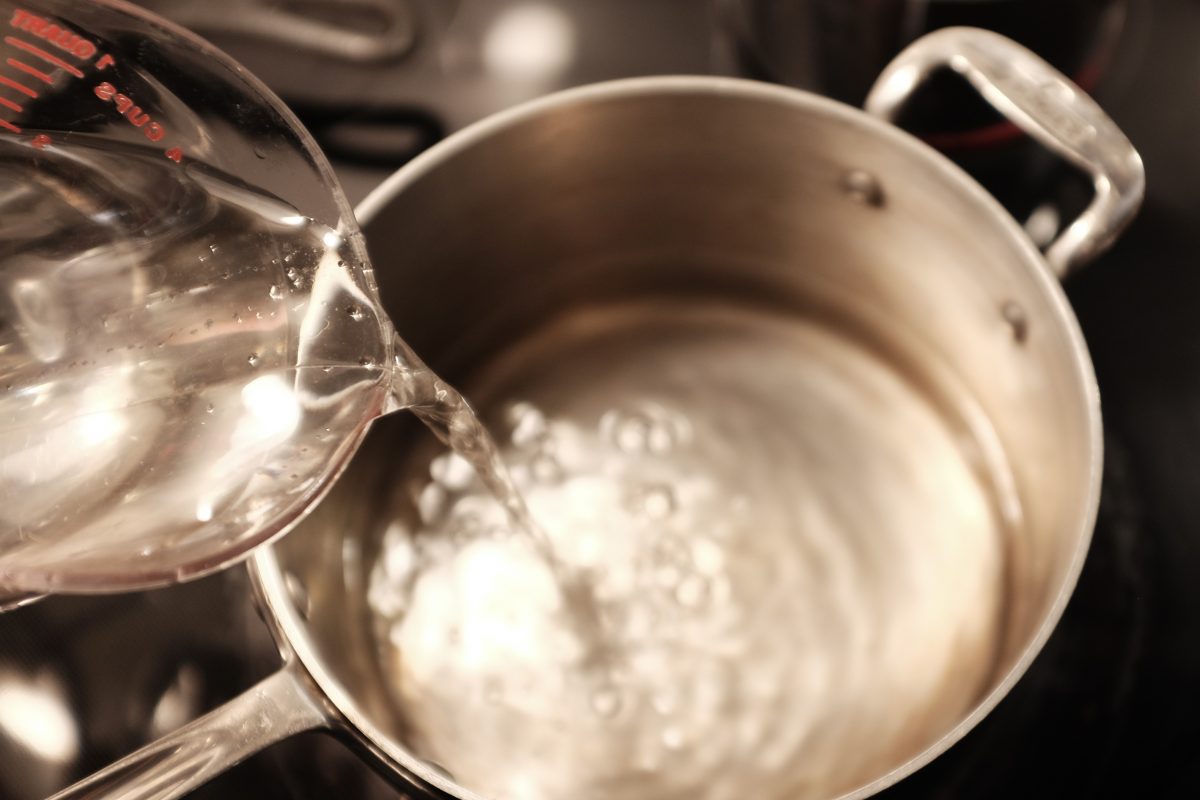
- 12 cups of water
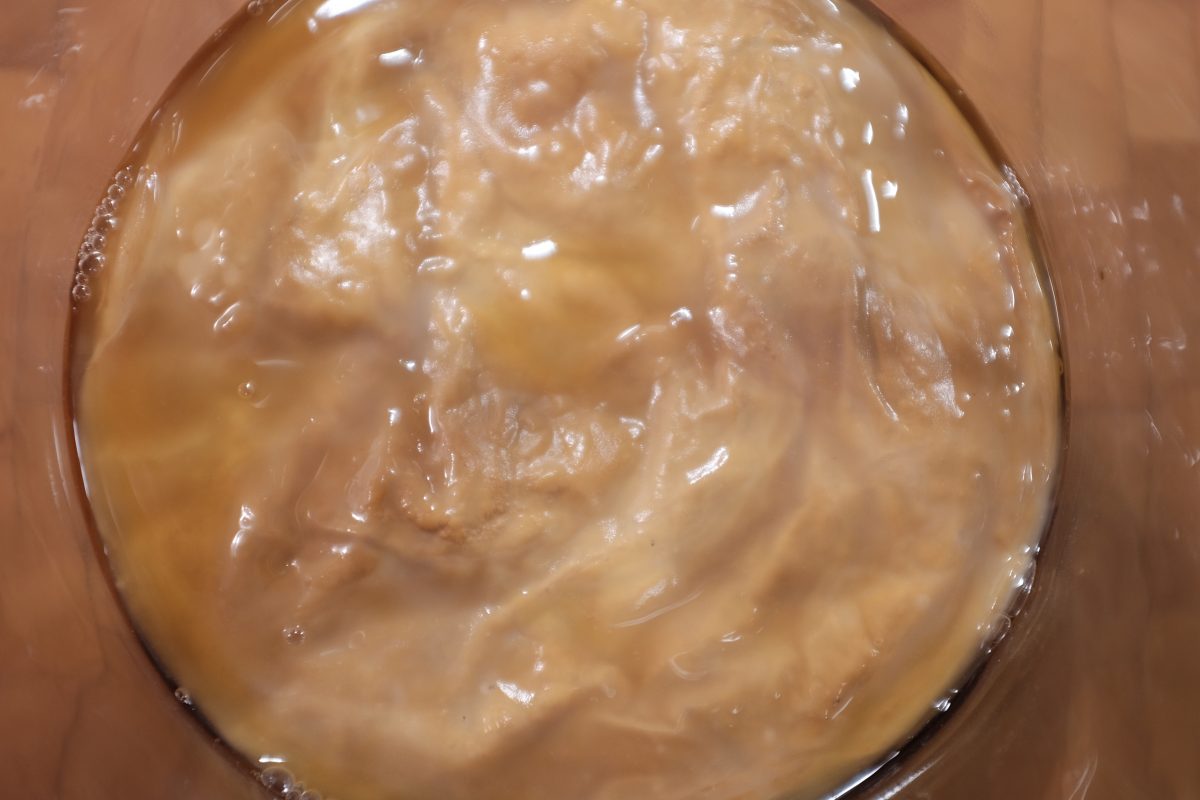
You can’t really “make” a SCOBY. You will have to buy one online or get one from someone who is brewing. Once you have one, it will grow with every batch and you can peel off layers to share with fellow brewers. I got mine from my lovely downstairs neighbour.
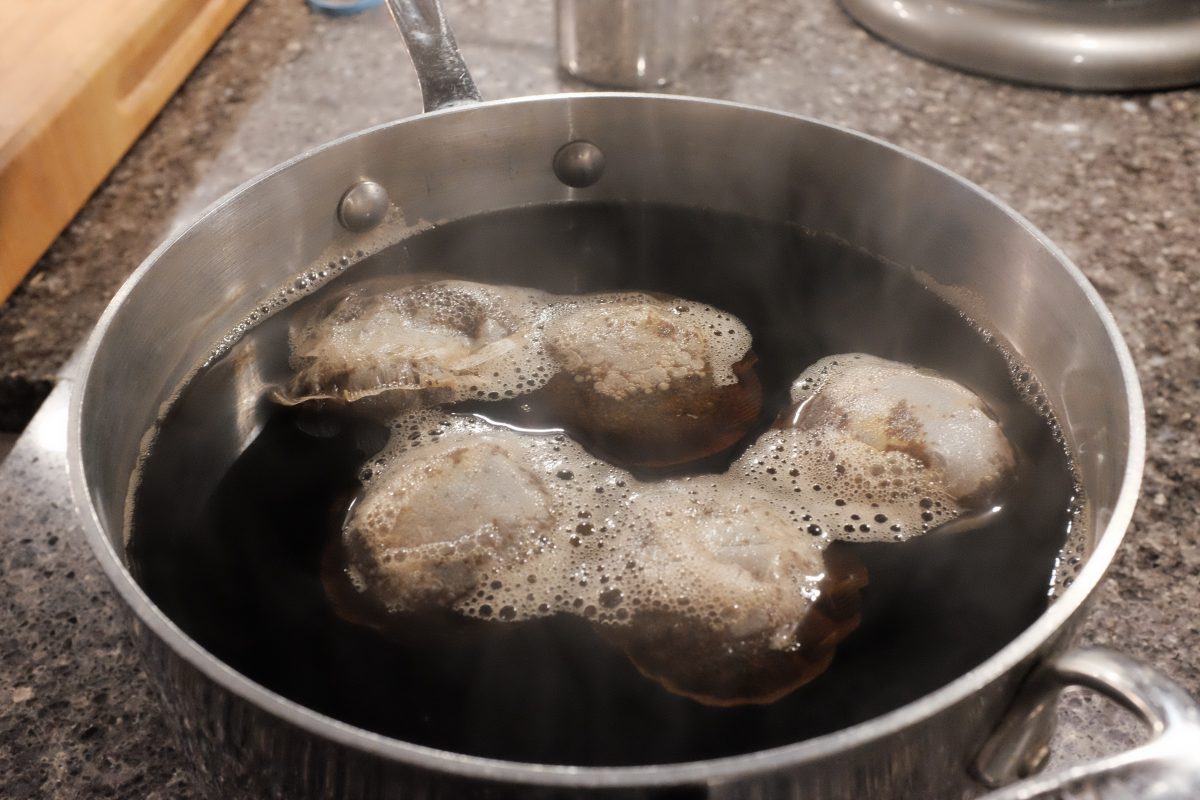
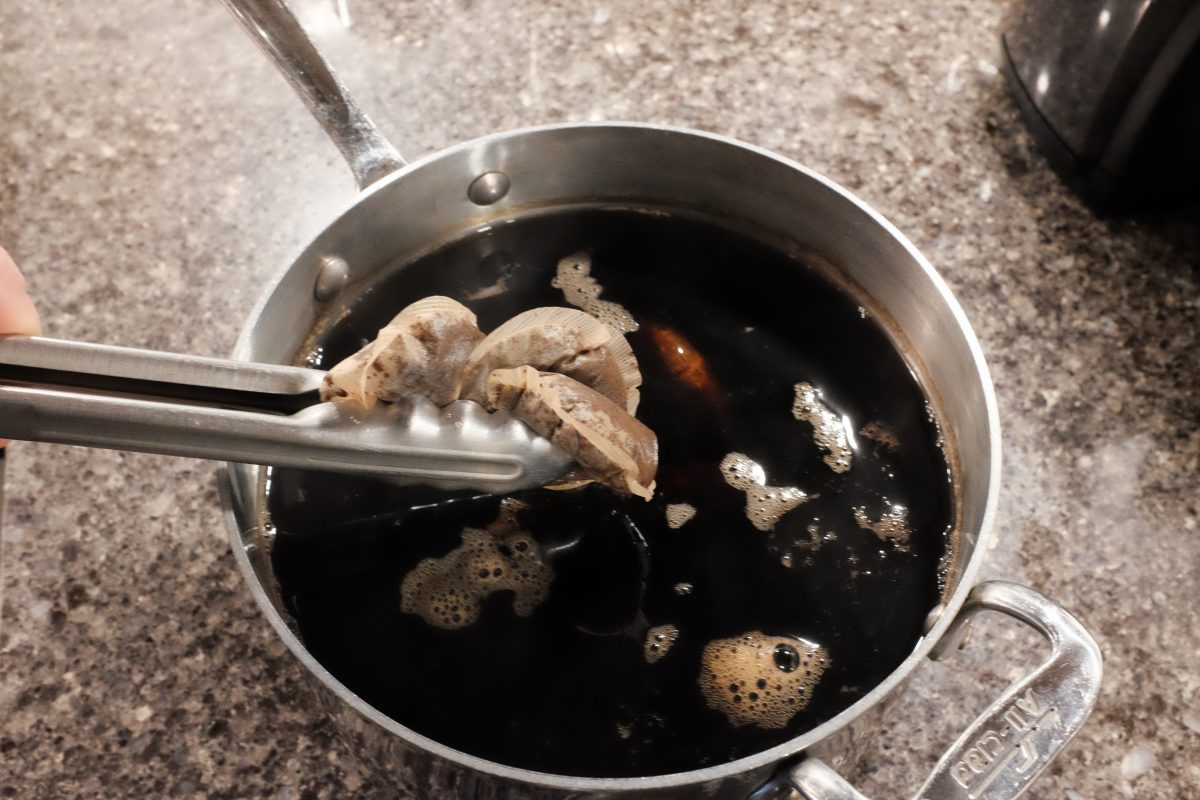
You can just use cheap everyday tea bags. I am using orange pekoe bags from the grocery store. Use black tea and avoid anything flavoured (for now). I like these round Tetley brand ones…they are very strong and brew up to a nice colour and aroma.
Process
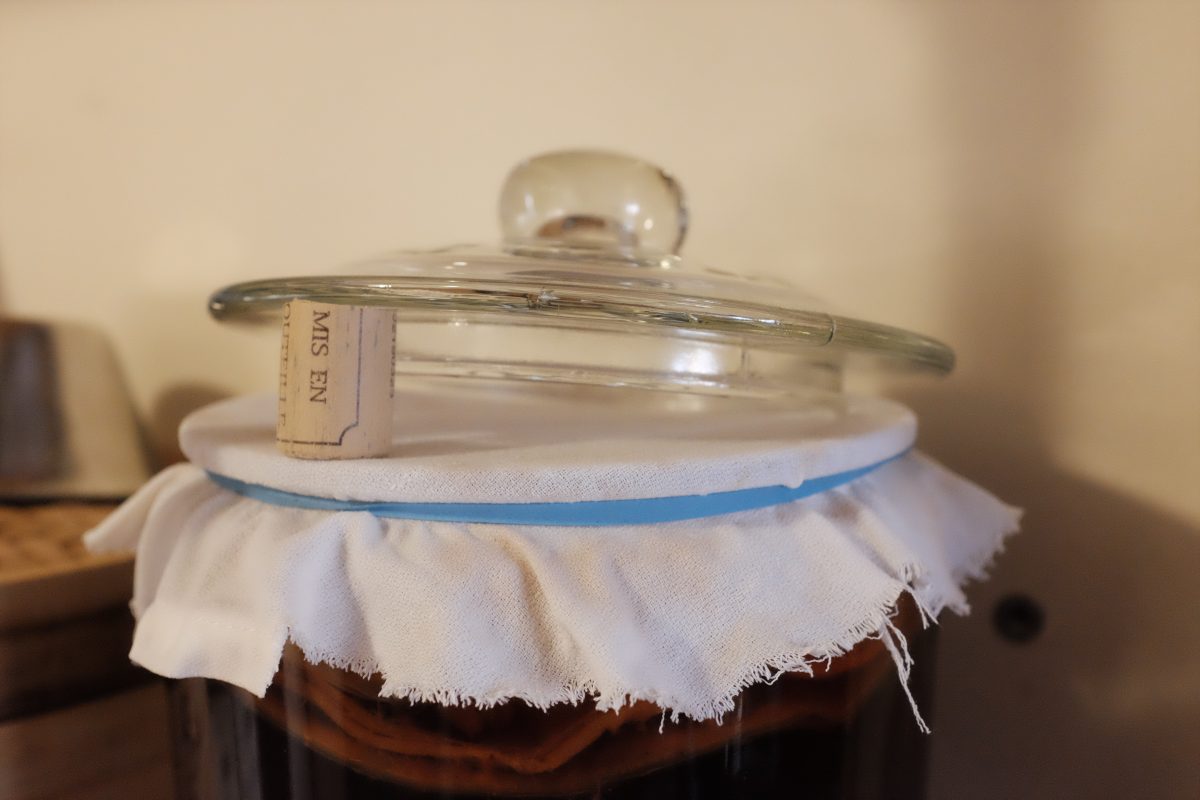
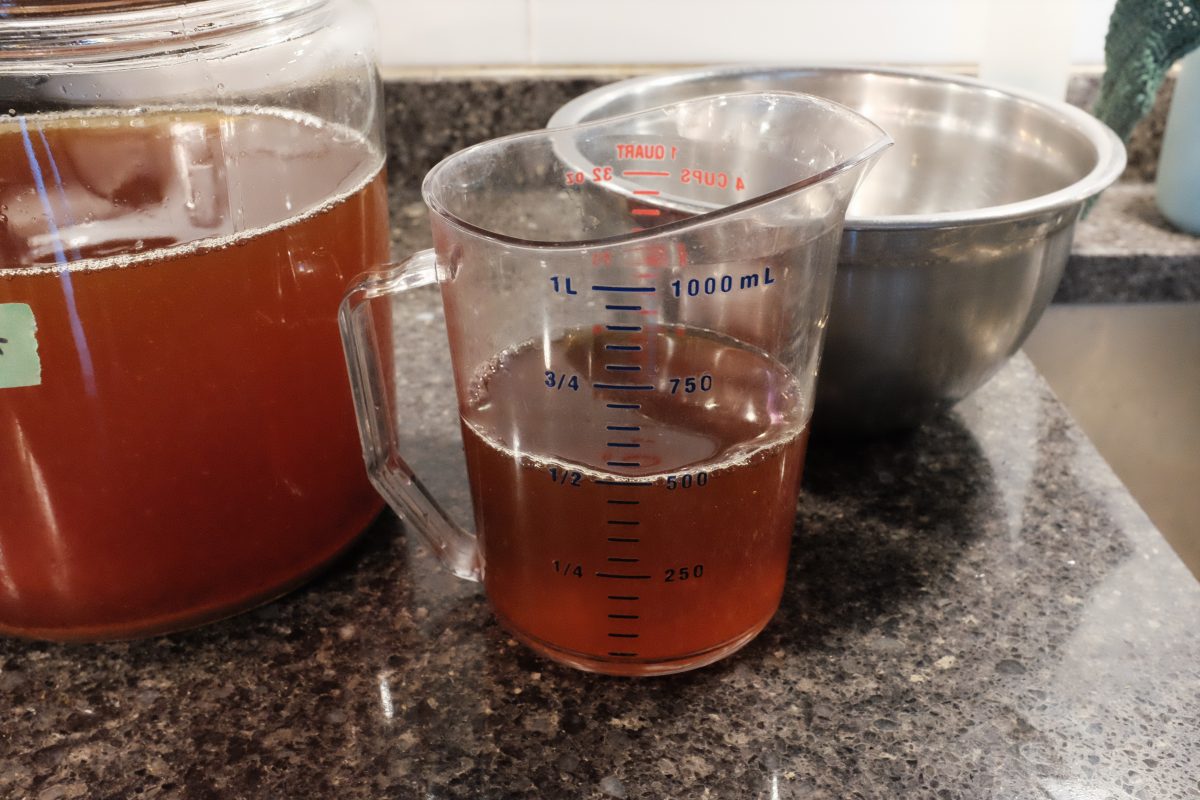
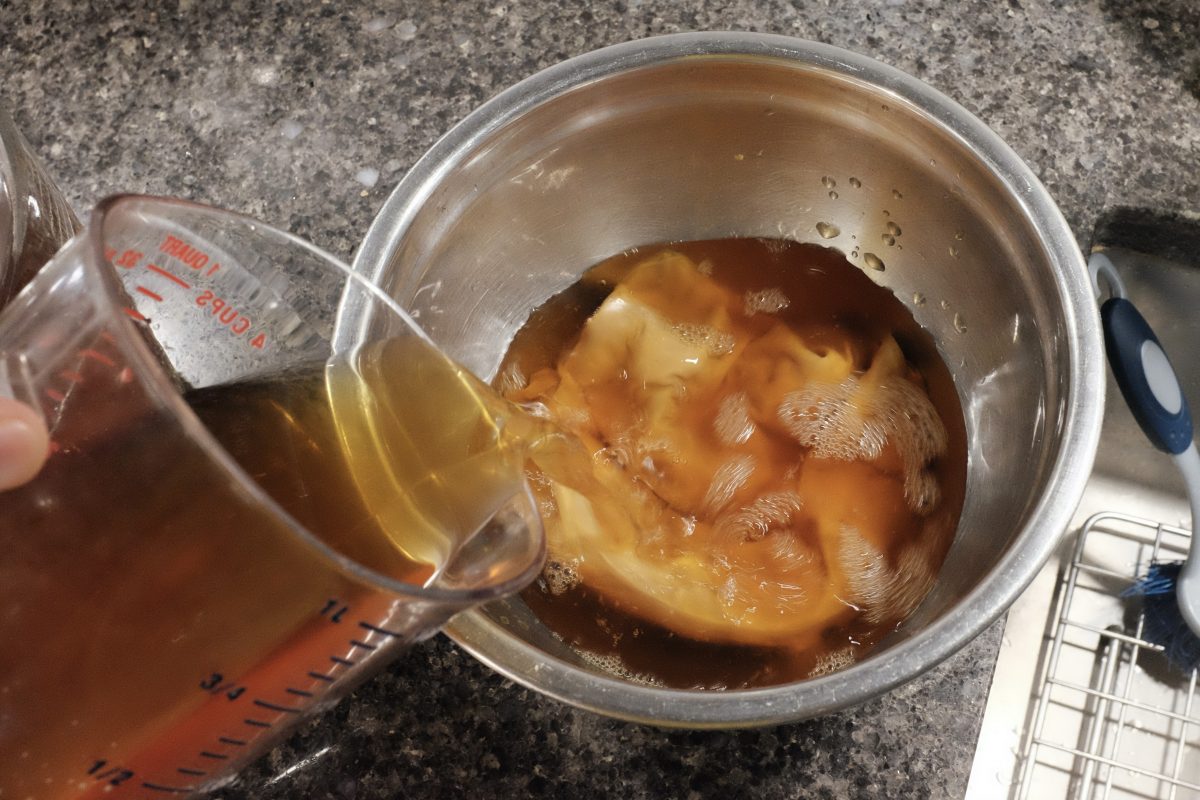
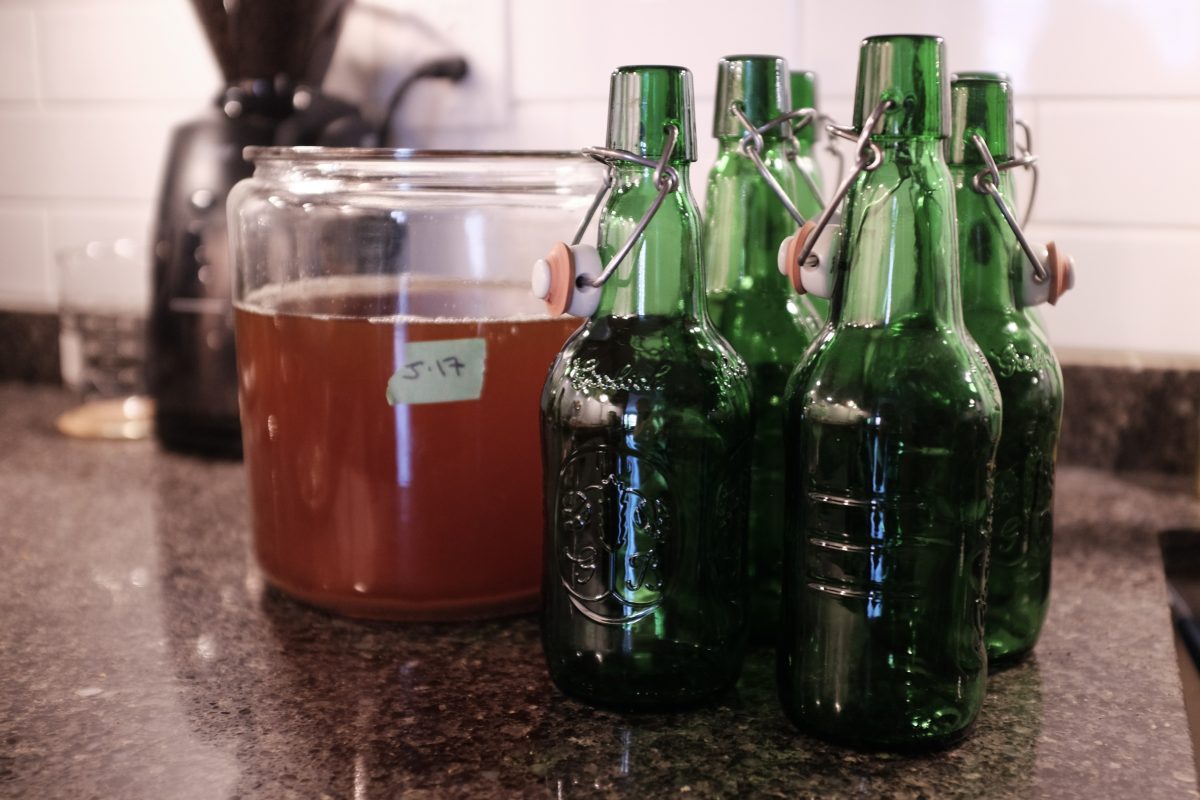
Time to bottle

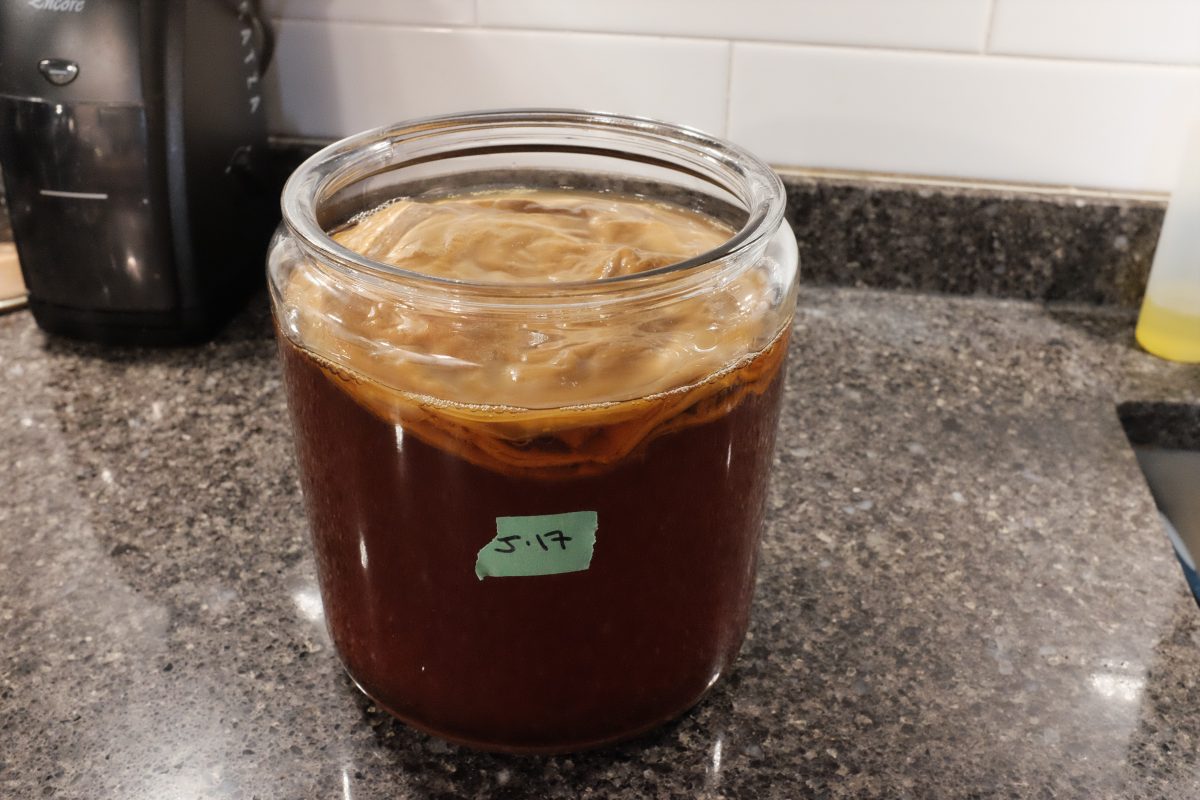
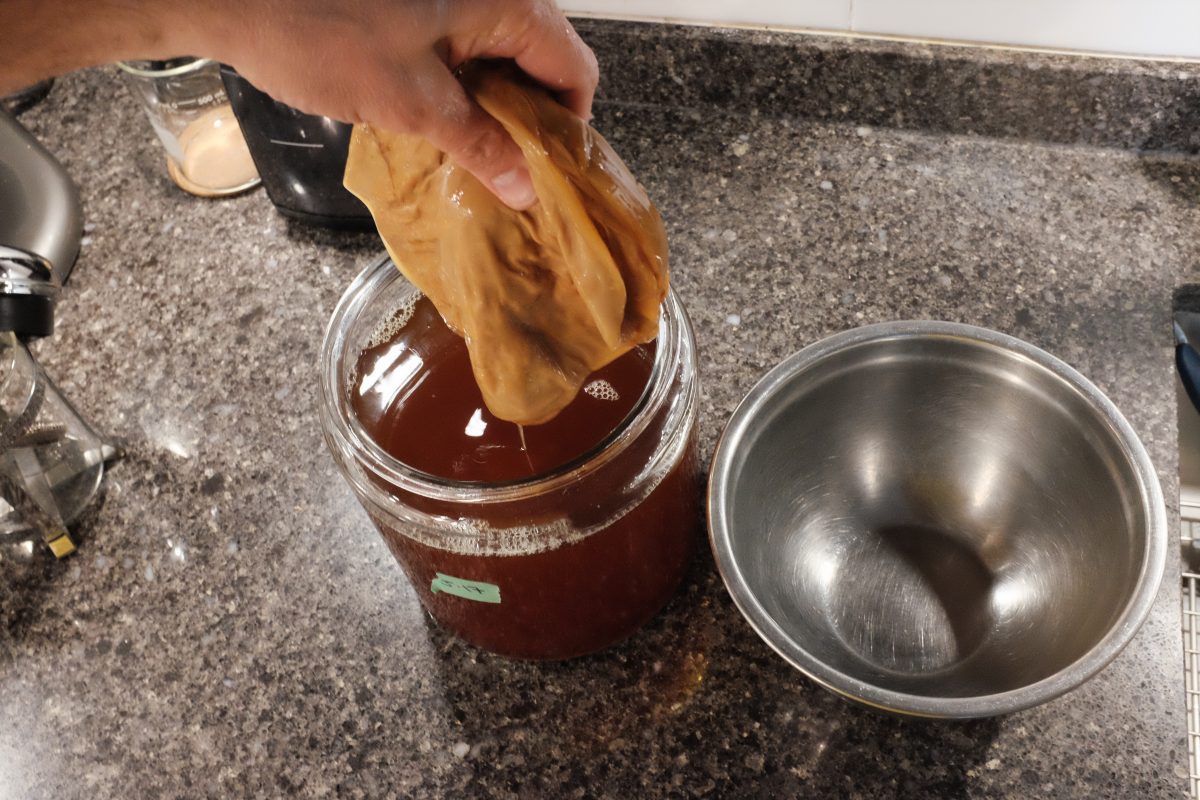
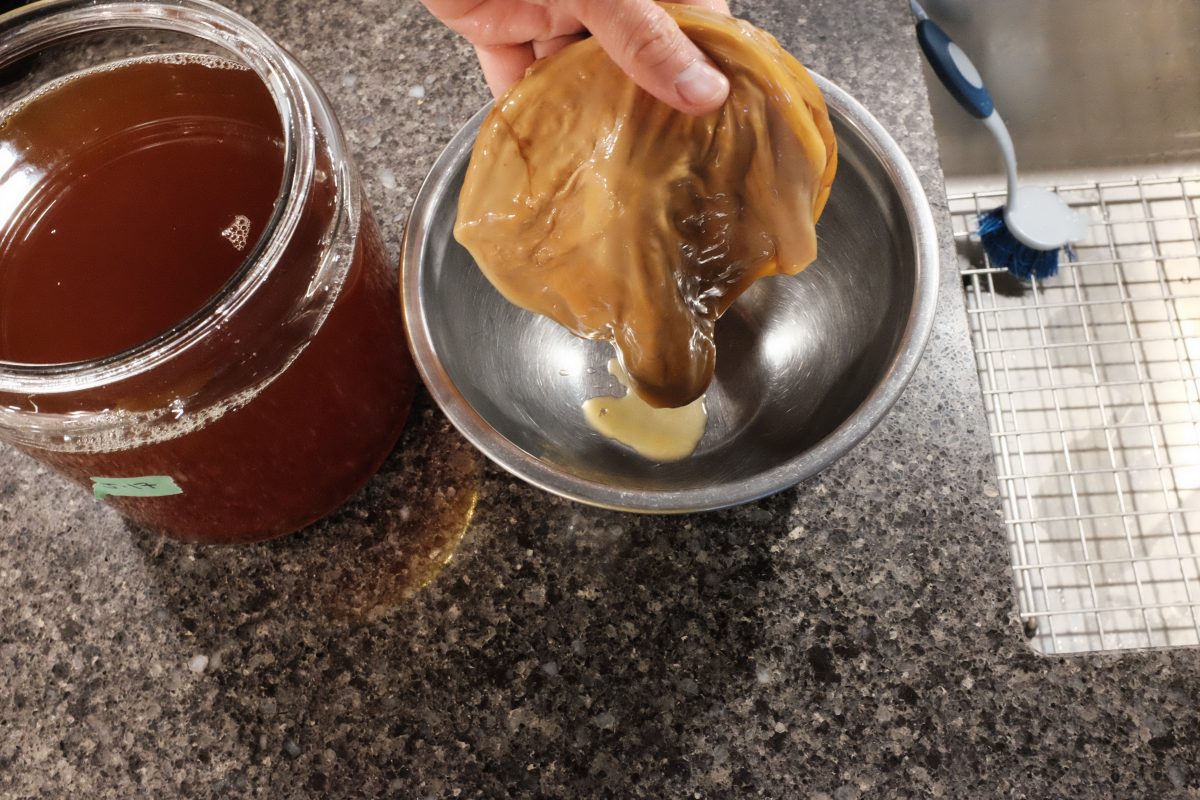
Additional Ingredients / Second Ferment
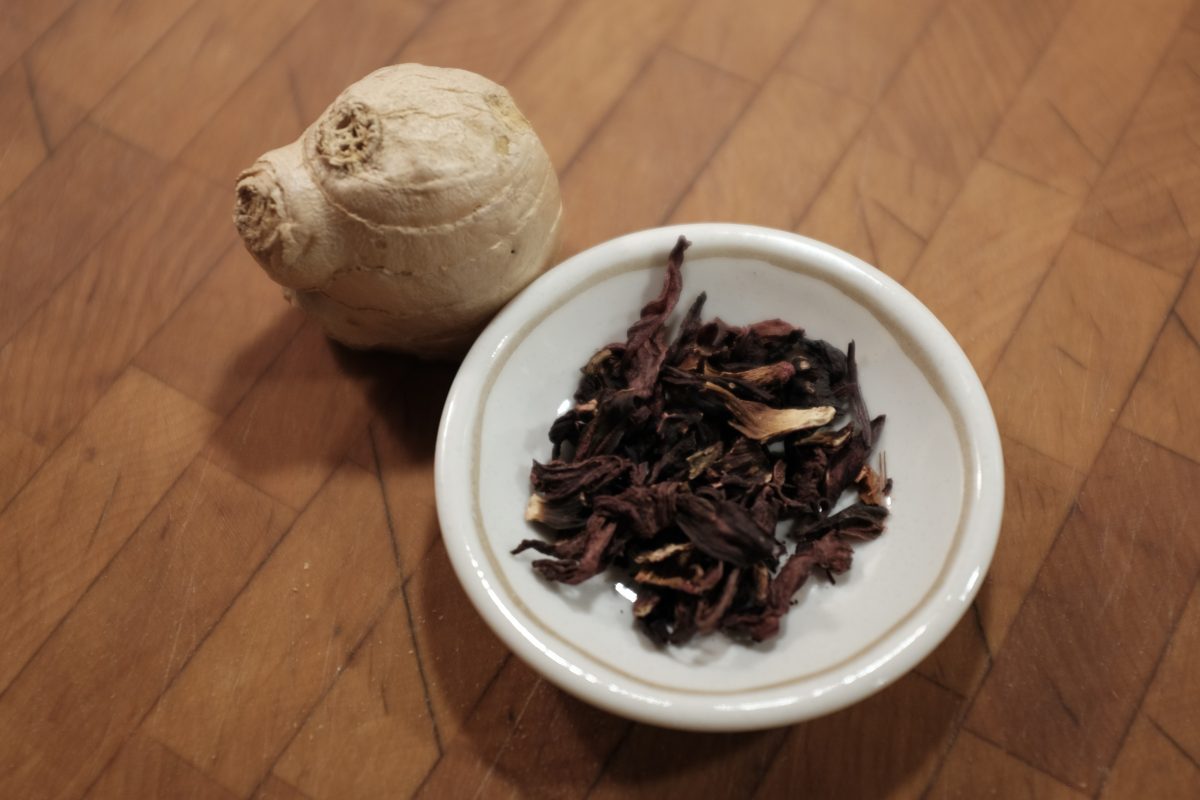
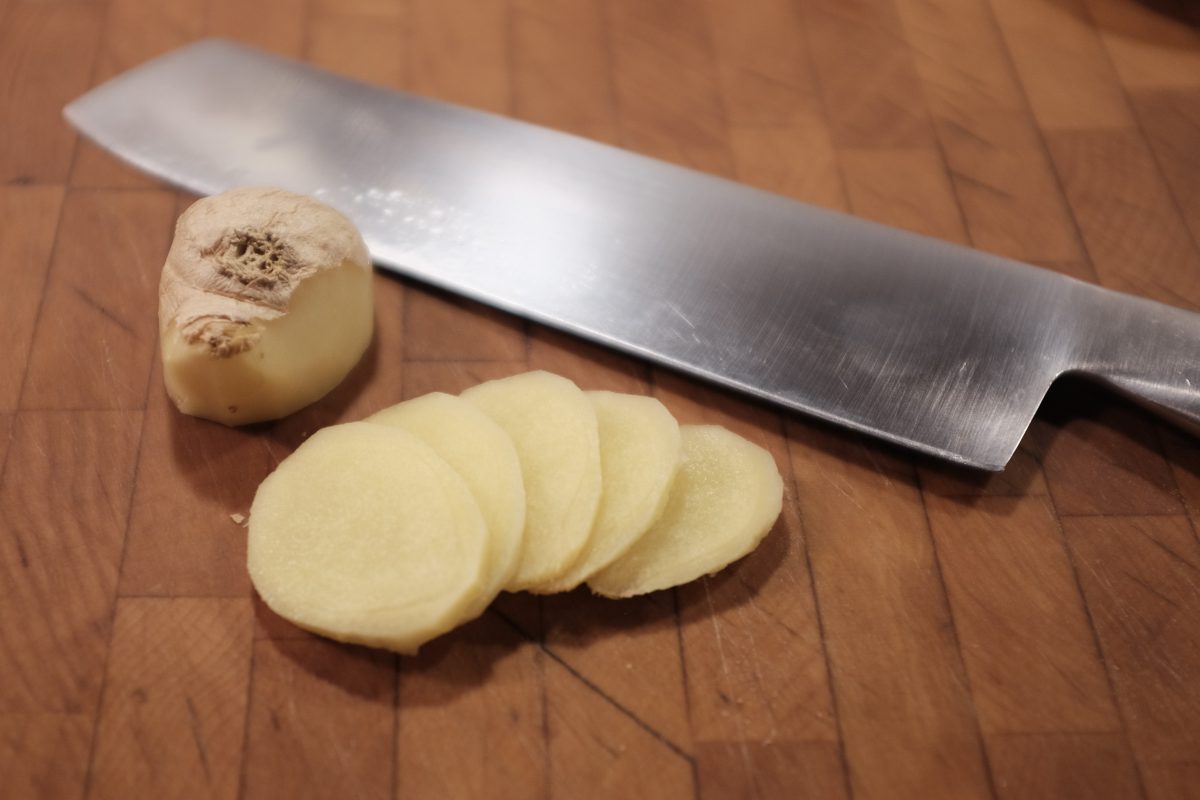
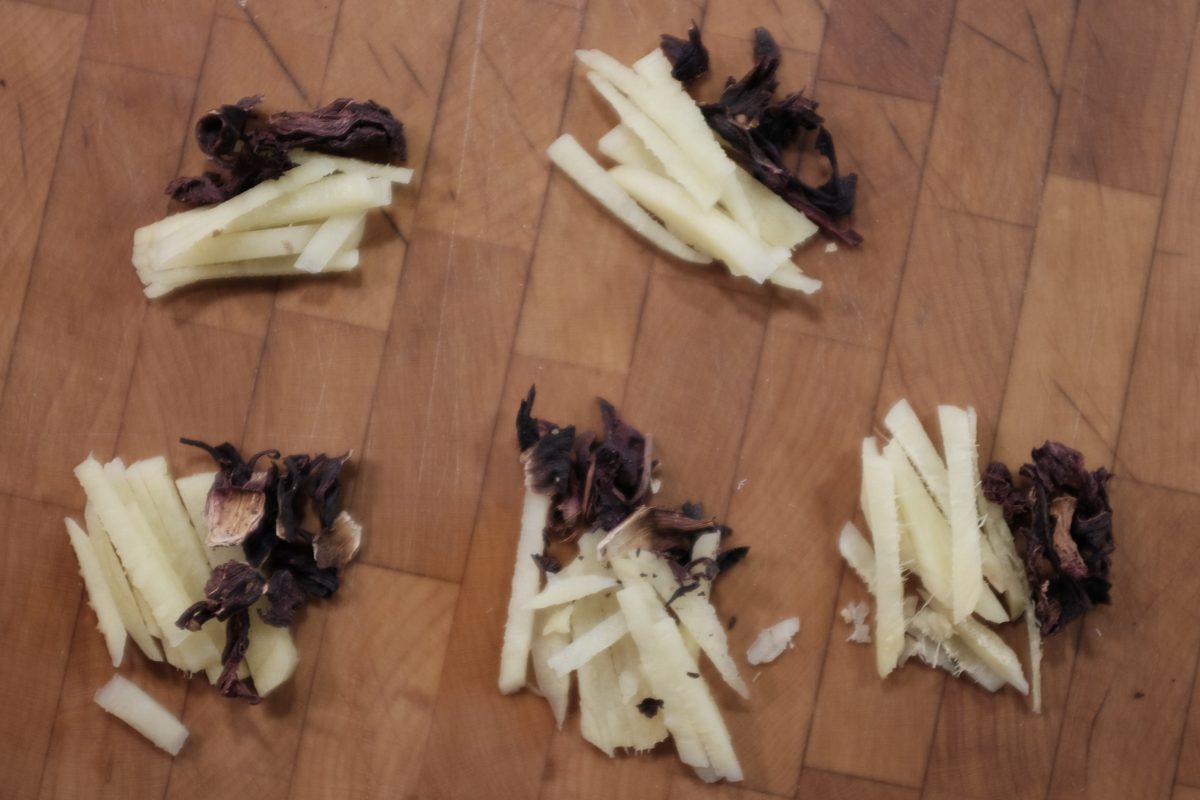
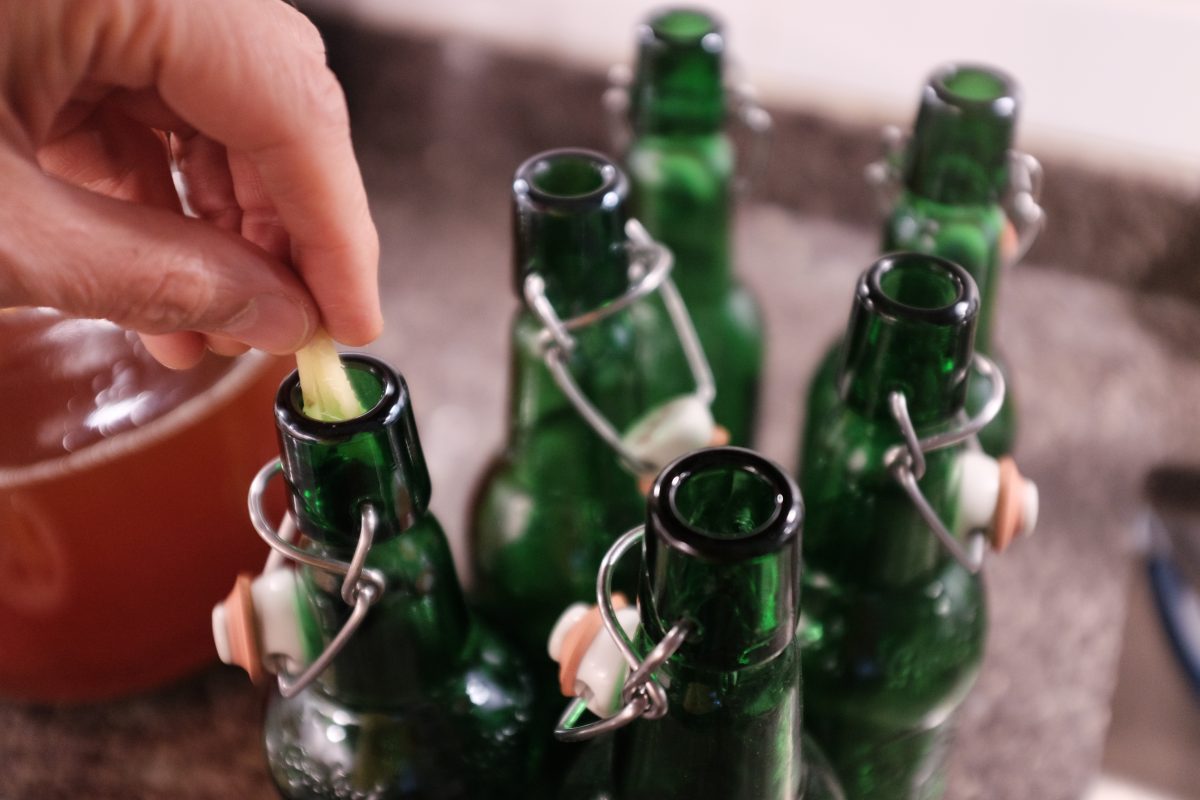
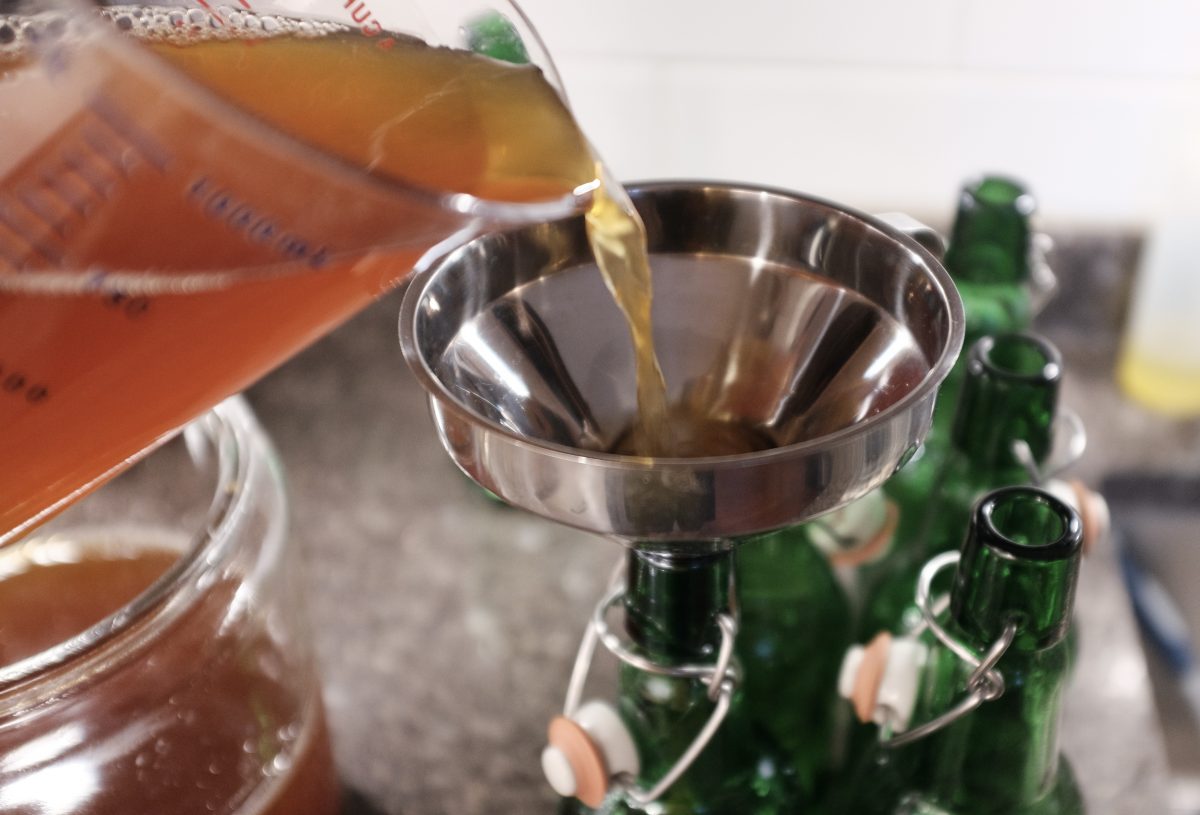
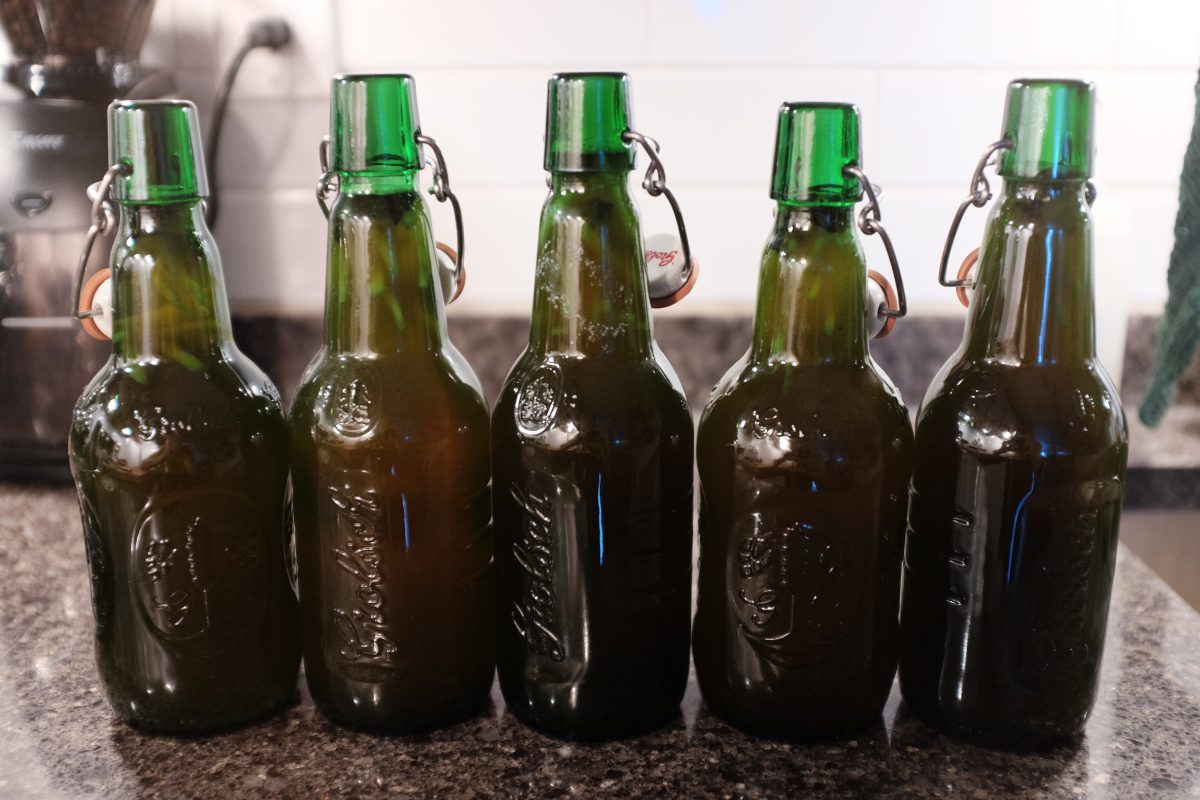
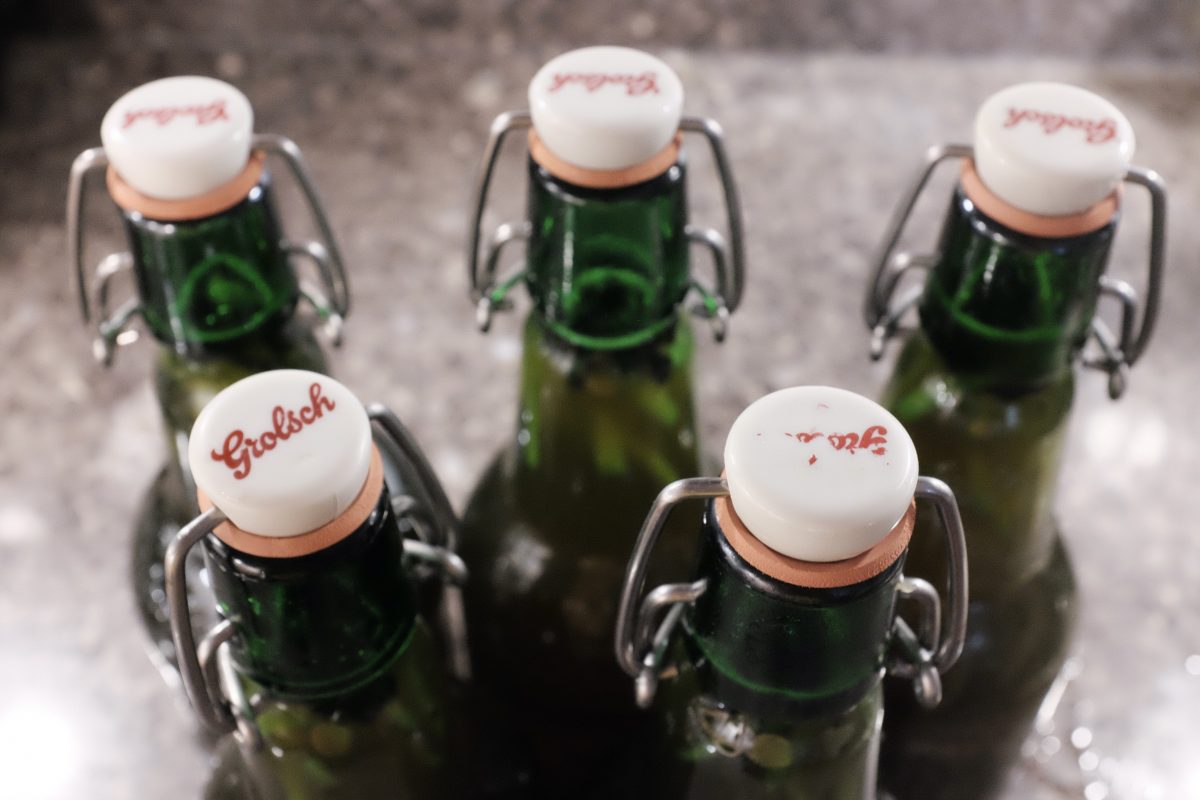
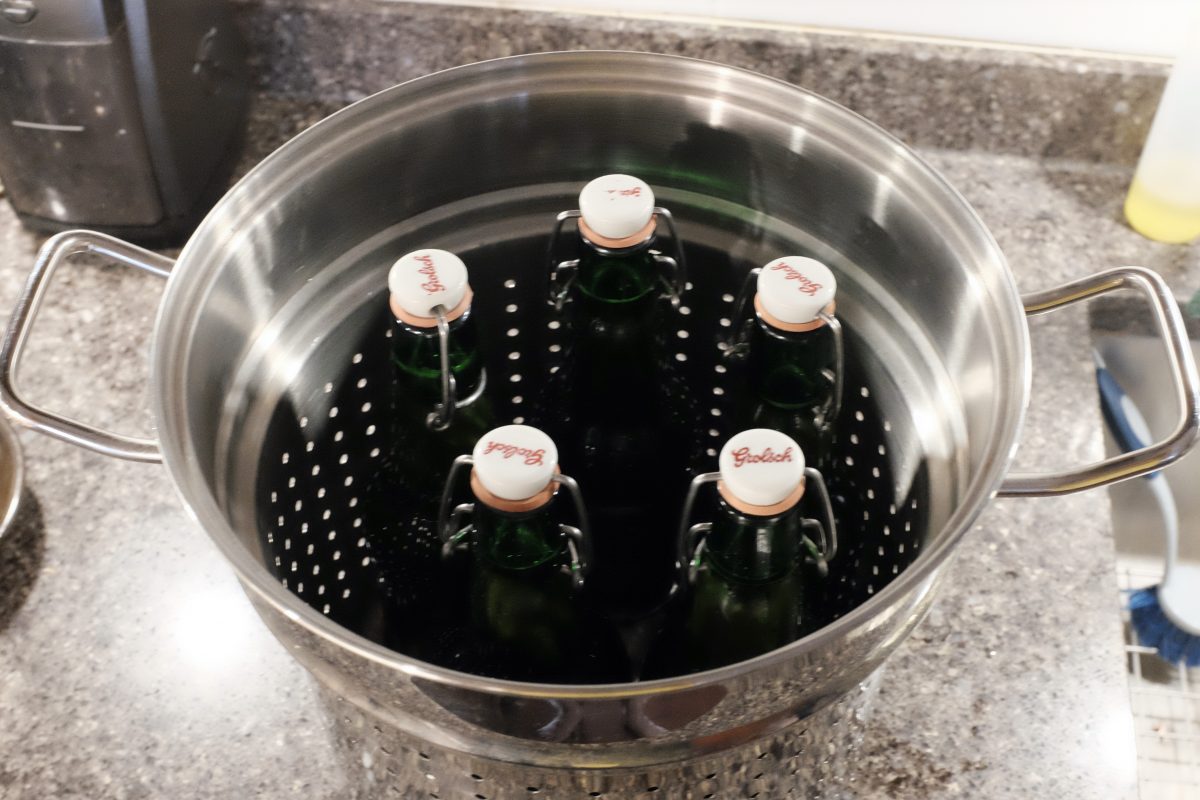
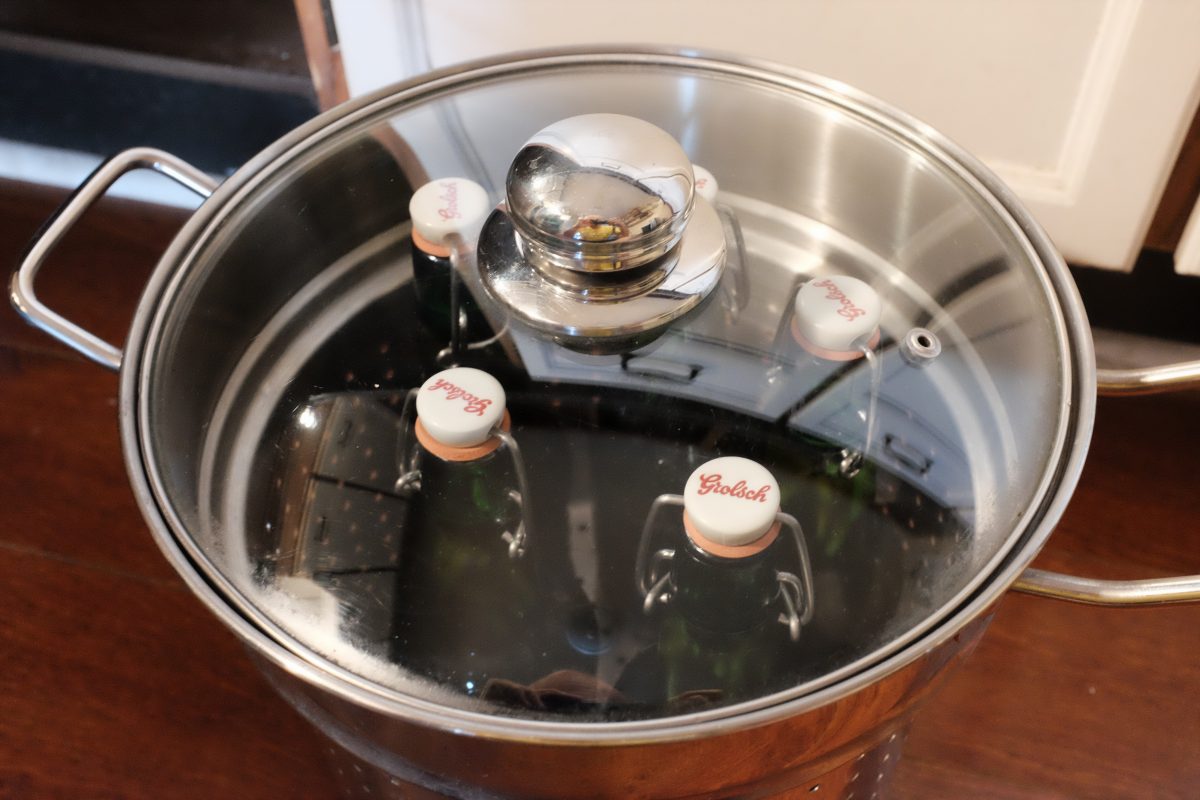
You can bottle your fermented tea just as it is. It will be delicious. Or, if you like, you can also add some aromatics as you bottle. I almost always add fresh ginger and dry hibiscus flowers to mine. The ginger adds a little sweet snap to the brew and the hibiscus add a little tang and a beautiful rosey colour.
Over the years I have tried citrus peels, cinnamon sticks, all kinds of herbs and spices and I always come back to ginger and hibiscus. It is a winning combination with the fermented tea. You can usually find whole dried hibiscus flowers in any spice shop, asian grocery store or Mexican grocery (where it is called Jamaica). It may also be under the name Rose of Sharon. It is all the same thing and definitely worth seeking out.
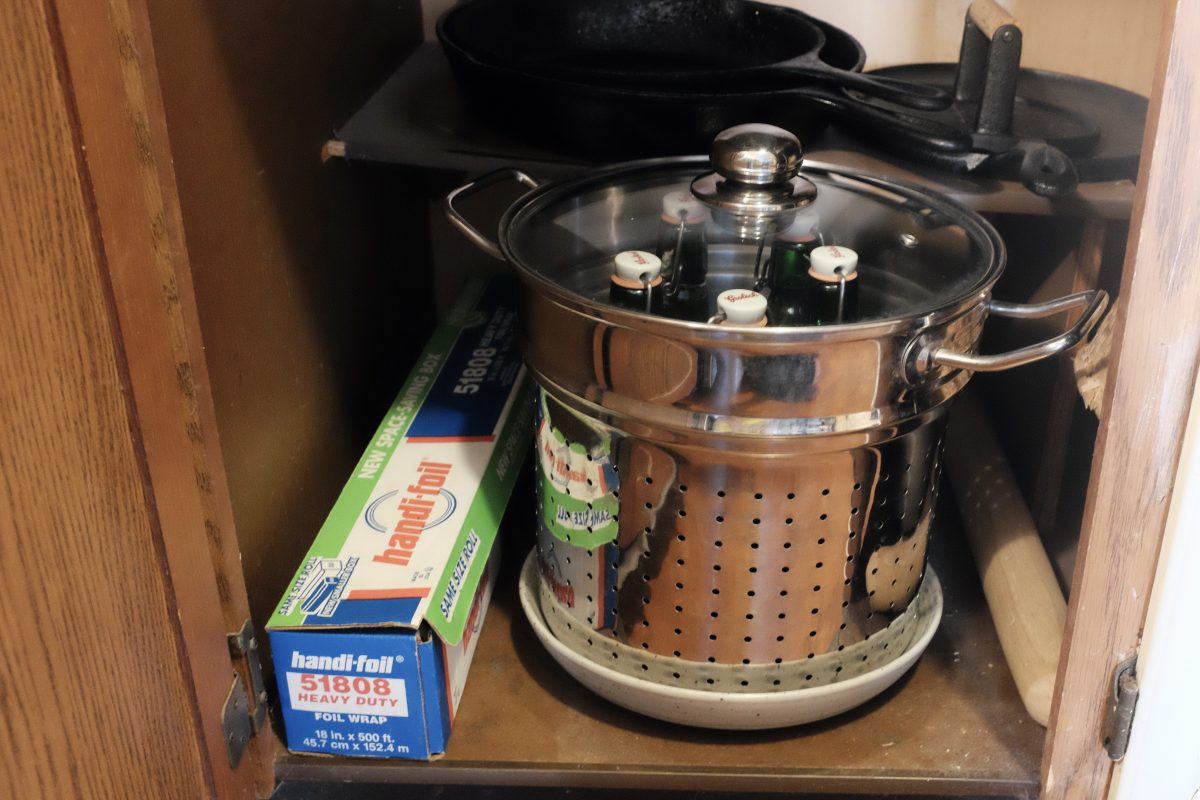
Scoby Storage
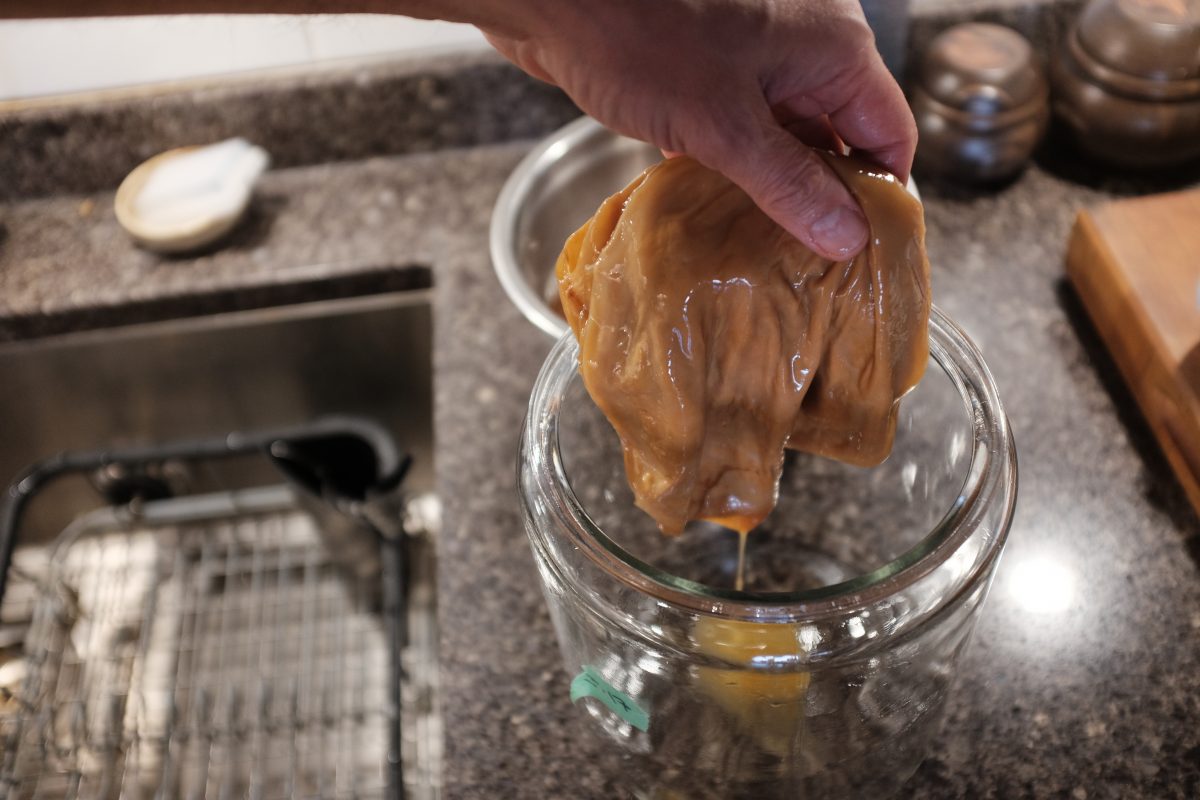
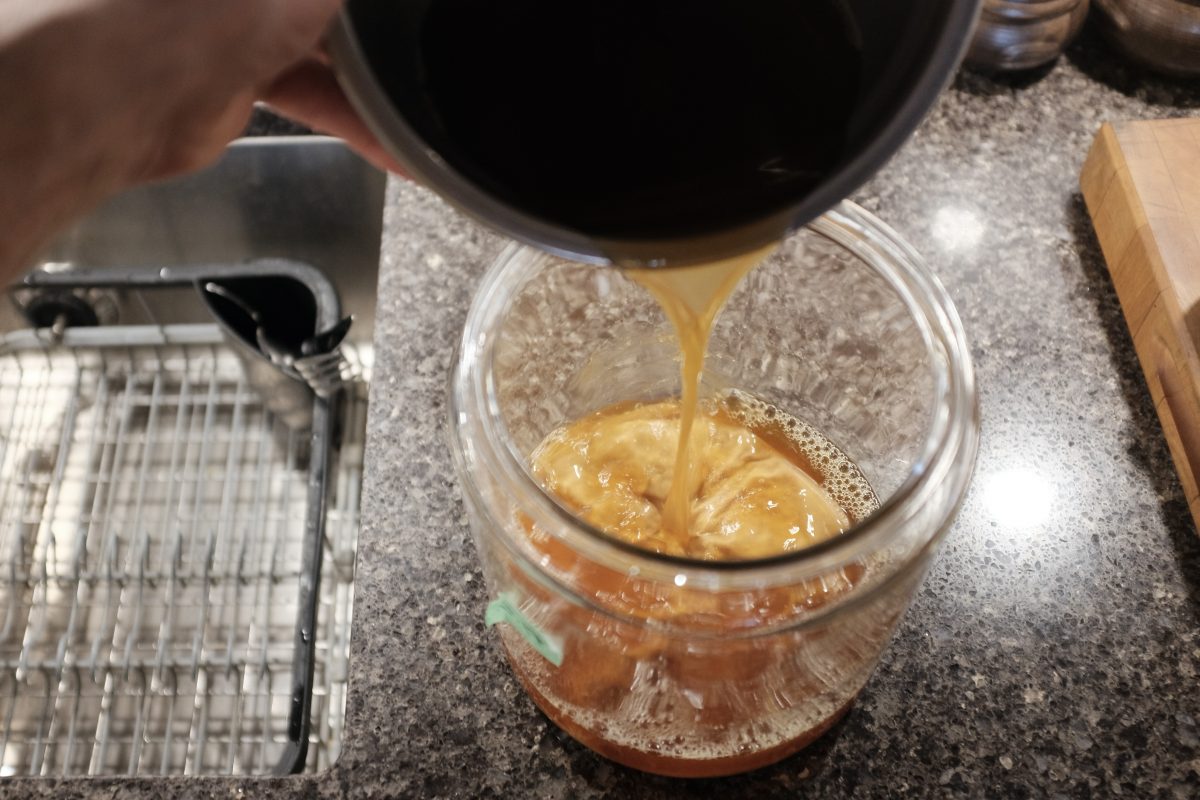
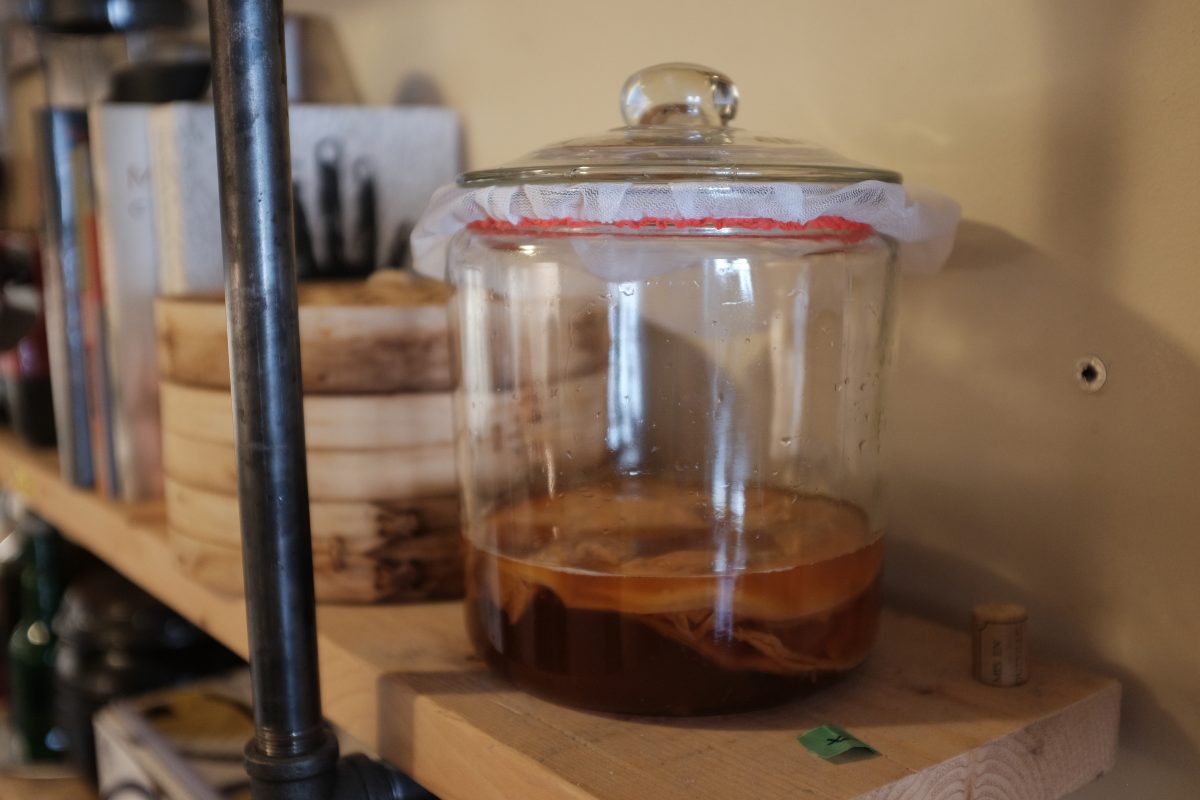
3 days later…
After 3 days in the bottle at room temperature, place the bottles in the fridge. The brew is done.
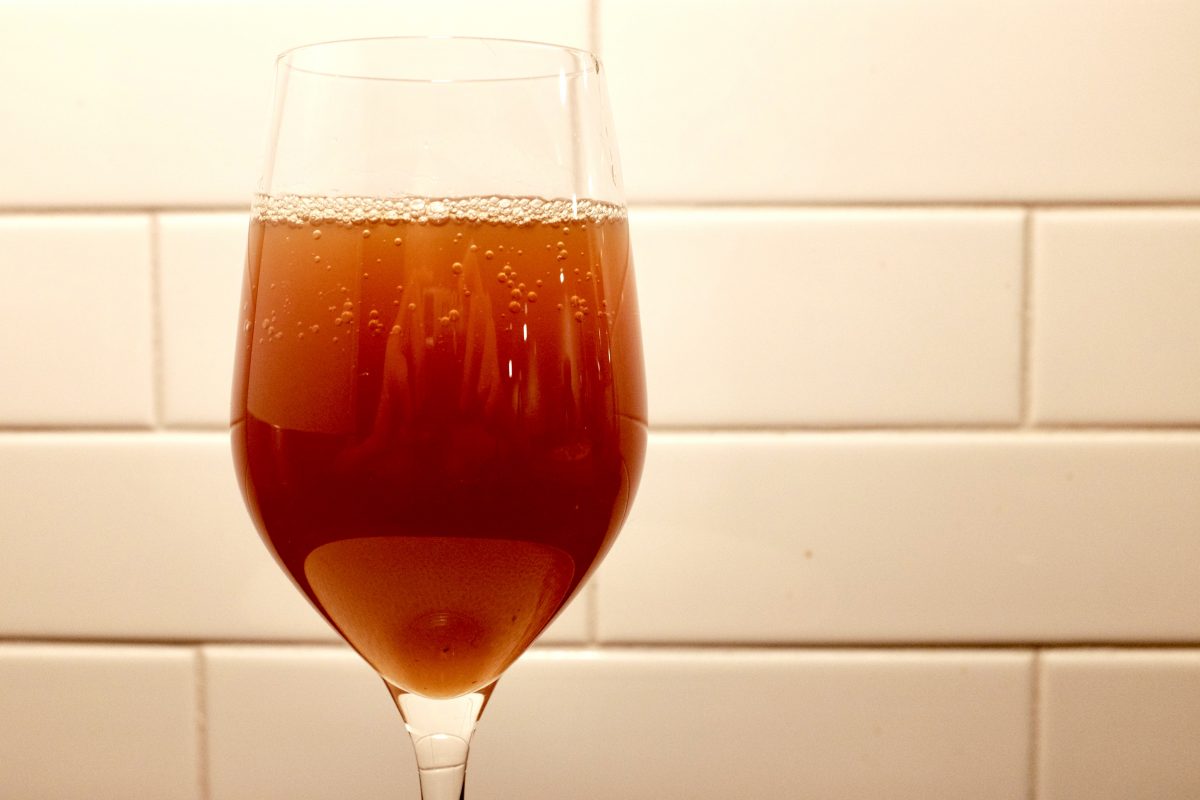
The finished brew is perfect as is but, feel free to add a squeeze of lemon or a few drops of honey or anything else you might want to try. If the flavour is too intense, you can cut it with bubbly water. I often do this if I am drinking this with more subtle flavoured foods.
If you have any questions, comments or suggestions, please leave them below. I always look forward to hearing from you. If you enjoy the content and would like to contribute towards website maintenance and development, you can make a donation here. Thank you for reading TigerSalad.
How To Make Vinegar
How does fruit become vinegar?
If you throw a bunch of sweet fruit into a container, natural yeasts already present on the skins will eventually consume the sugar in the fruit and produce alcohol. This alcohol will then get consumed by acetic acid bacteria in the environment and produce vinegar. Nature does all the work.
The problem with letting natural yeast go wild is that it is hard to know what flavours will result (good or bad), how much time it will take, and how much alcohol will result. Because the final acidity of the vinegar depends on the alcohol content, it is worthwhile to use a yeast with a known strength and flavour profile.
As for conversion of the alcohol into acetic acid, we could just leave a jar of fermented fruit juice covered with a cloth and allow naturally occurring acetic acid bacteria in the environment do the work. The problem here is that it takes a long time…several months at least. To shorten this time, we can inoculate our alcoholic fruit juice with a splash of live culture vinegar to get it started and provide it with a steady supply of oxygen via an air pump.
Making pear vinegar at home
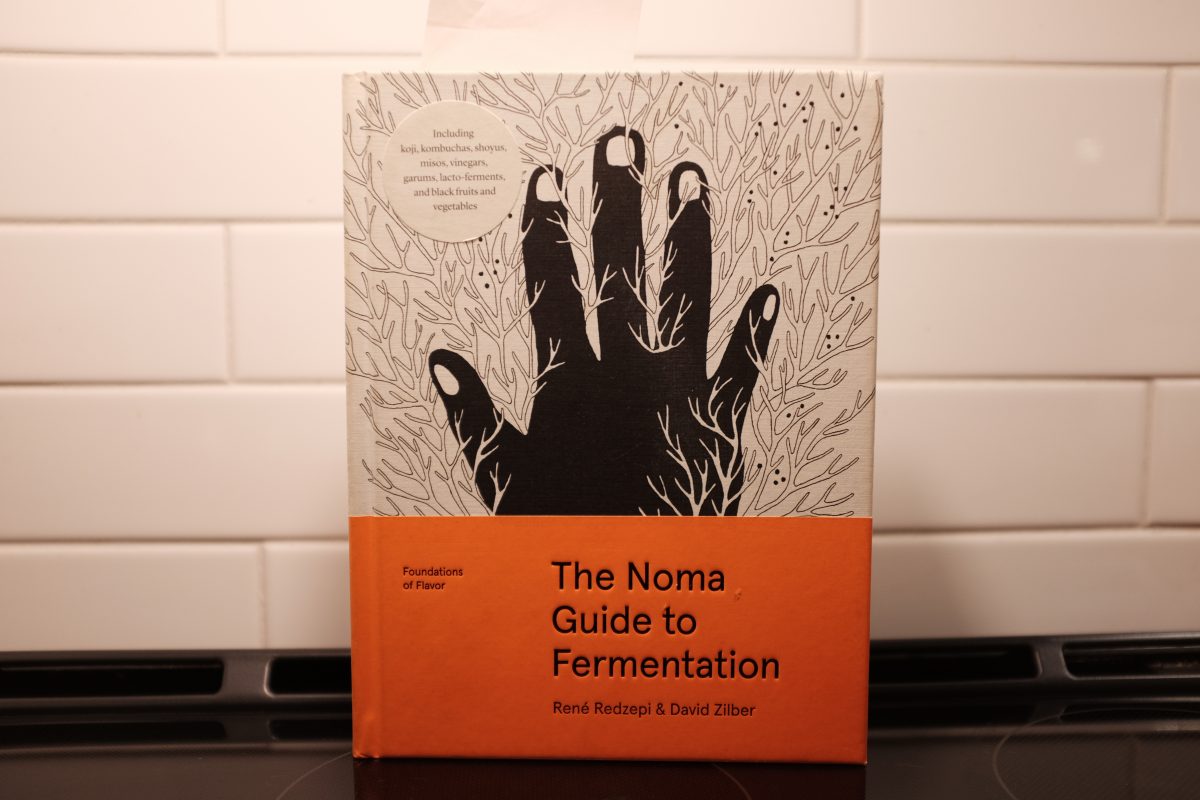
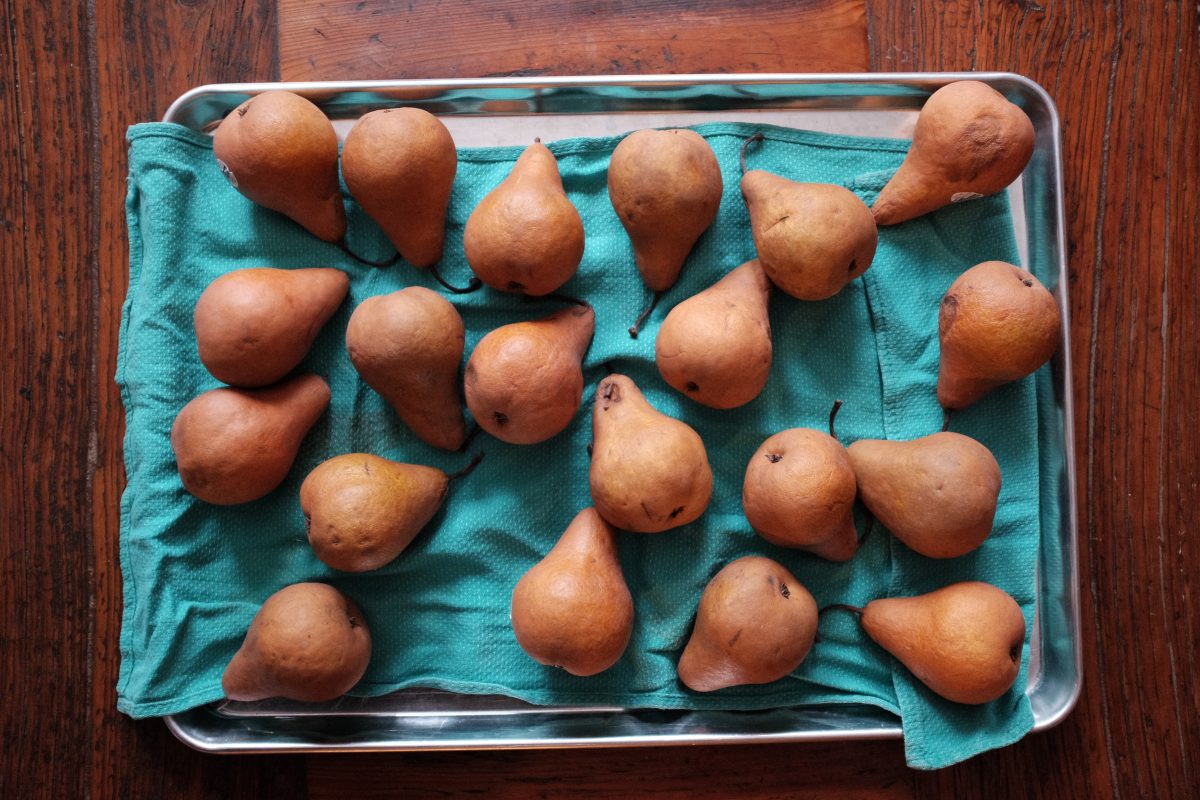
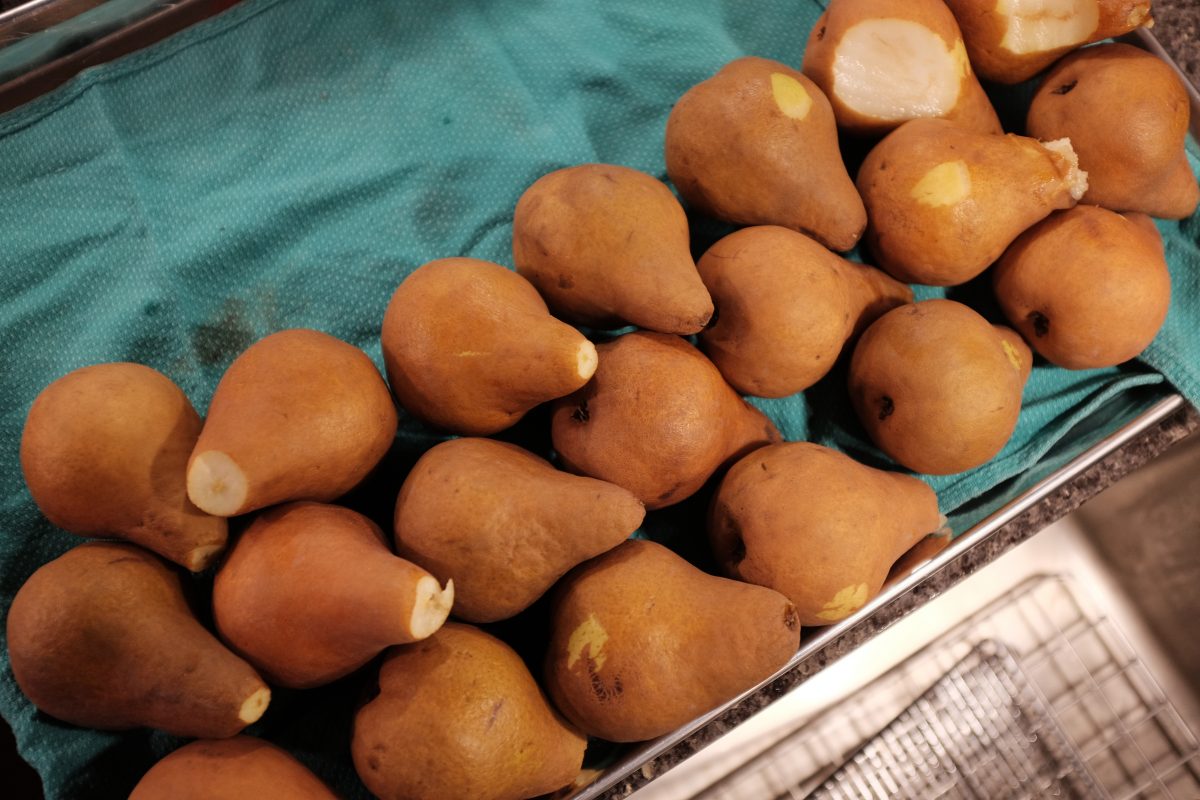
In this recipe we will take ripe bosc pears and, over a month or so, ferment them into pear vinegar. I am mostly following a recipe from this excellent book by Rene Redzepi and David Zilber:
Ingredients:
- 4 kilograms ripe pears
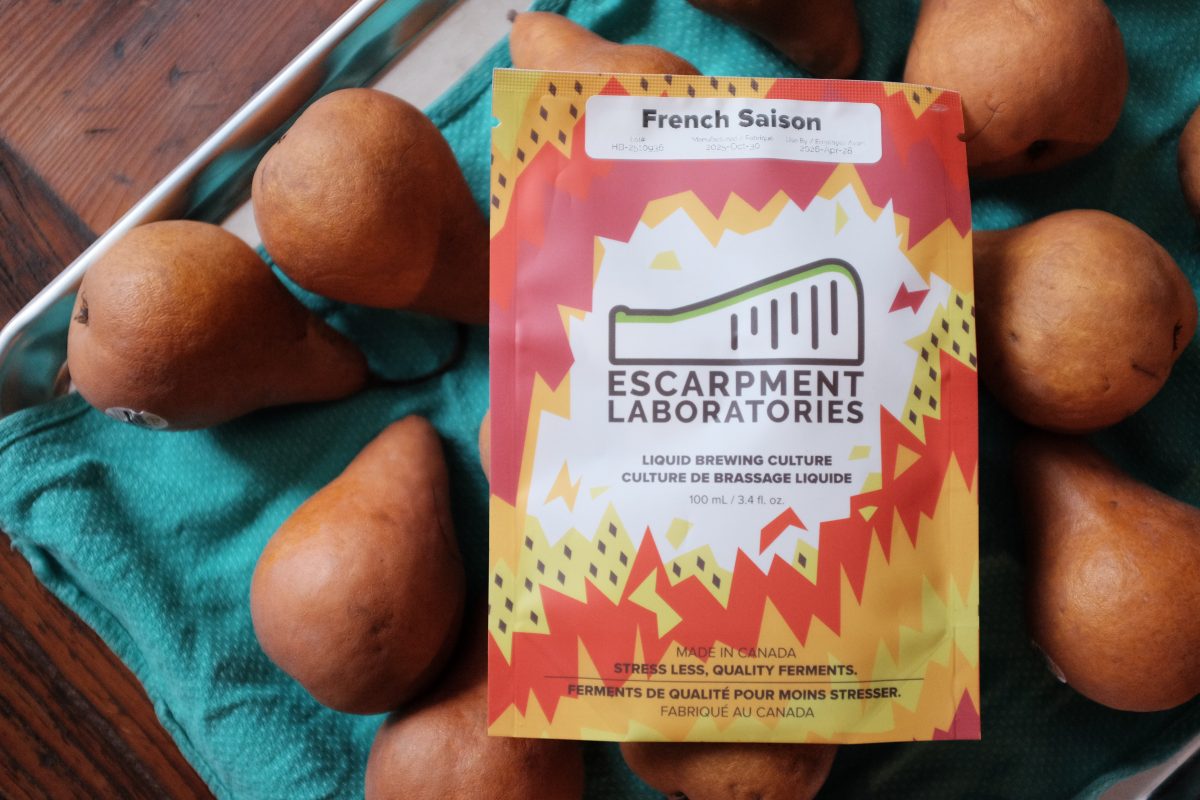
- 35 millilitres liquid saison yeast (or another brewers yeast)
- live culture (“contains the mother”) pear or apple cider vinegar for inoculation
Equipment:
- A container large enough to hold your pears and leave at least 25% extra space. For this recipe I will be using two separate 4 litre / 1 gallon glass jars with lids and airlocks.
- A tight lid and a brewers airlock (more on this below) for each container.
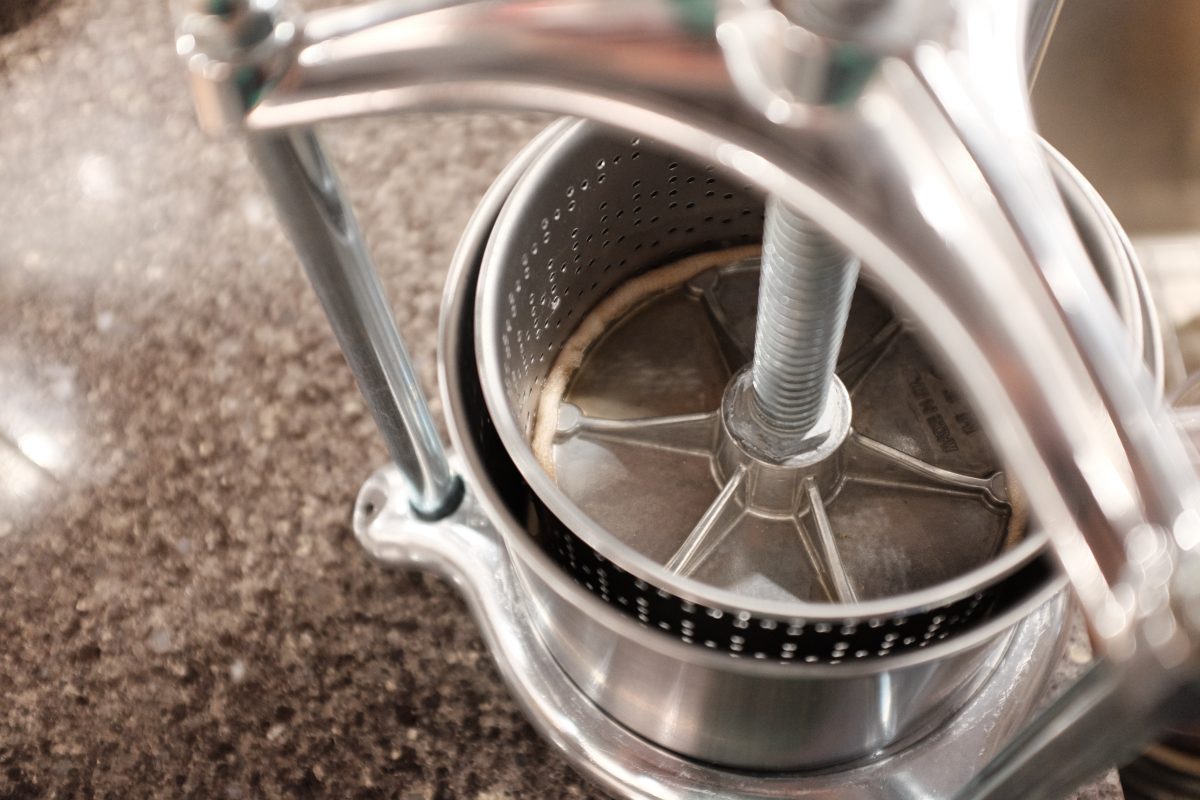
- a strainer or fruit/cider press
- a small aquarium air pump, hose and air stone (any pet shop will have these)
- a blender or food processor is helpful but not necessary
Sanitizing Equipment:
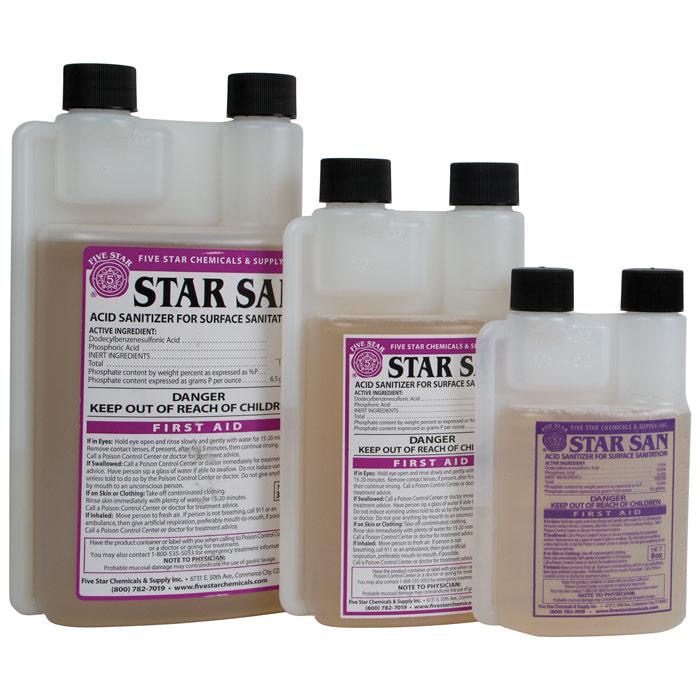
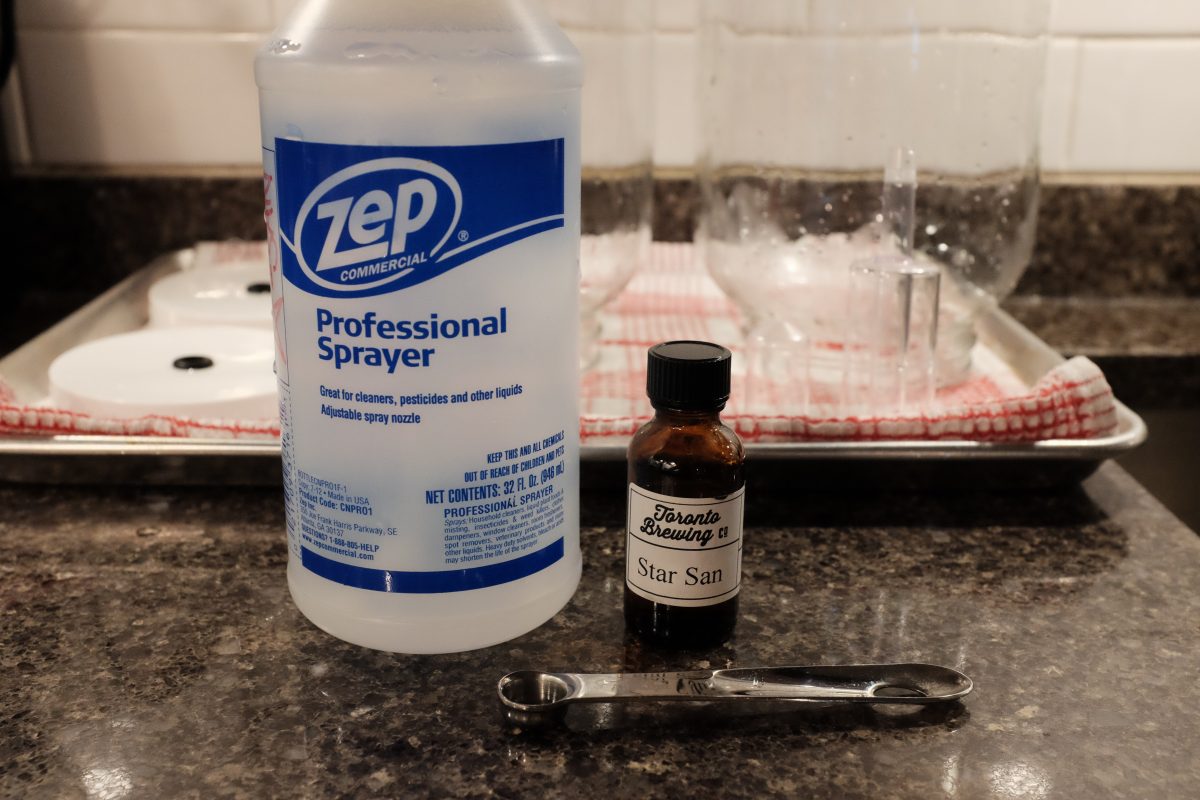
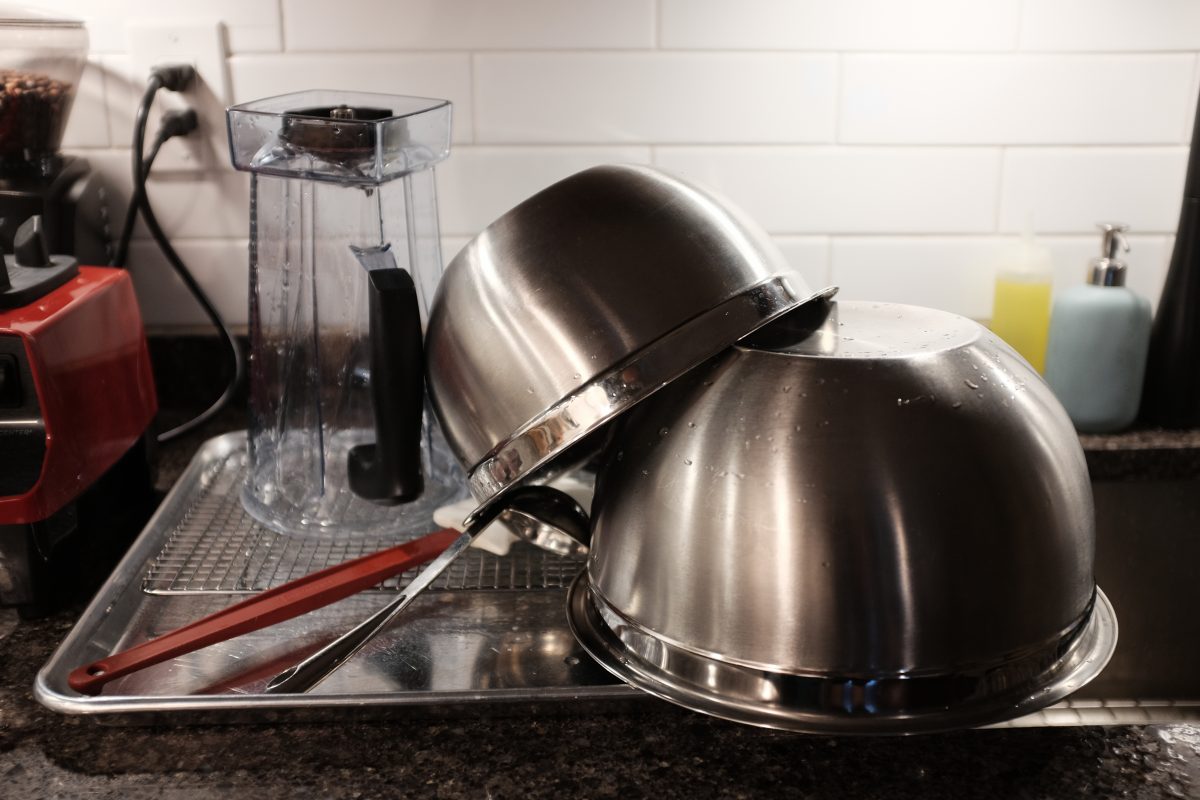
Everything that comes in contact with this brew should be sanitized. Wash everything with soap and hot water, then sanitize whichever way you find convenient. Boiling, steaming and weak bleach solutions will work, but for convenience, I use a sanitizer called Star San.
Star San is available at home brew shops or online. You can mix a tiny amount with fresh water in a spray bottle for very effective and easy sanitizing. My local home brew supplier sells tiny bottles. Unless you are brewing huge amounts with massive equipment, a small bottle will last forever. I dilute it at about 2.5 millilitres per litre of water…that’s around 1/4 teaspoon per spray bottle…a tiny amount. This makes more than enough sanitizer for this whole process. It comes in a few different sizes and looks like this:
Process:
This recipe is divided into 2 parts. In part 1, we make alcohol. In part 2, we make vinegar.
Part 1: making alcohol
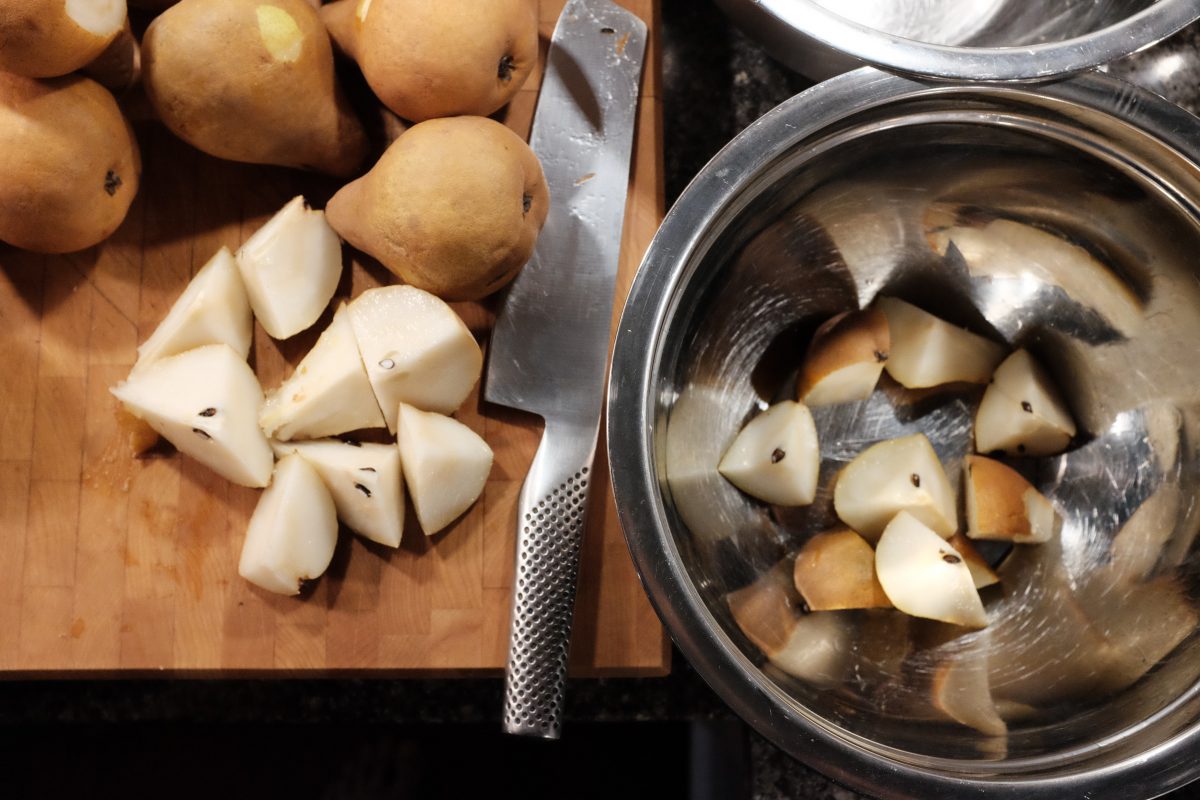
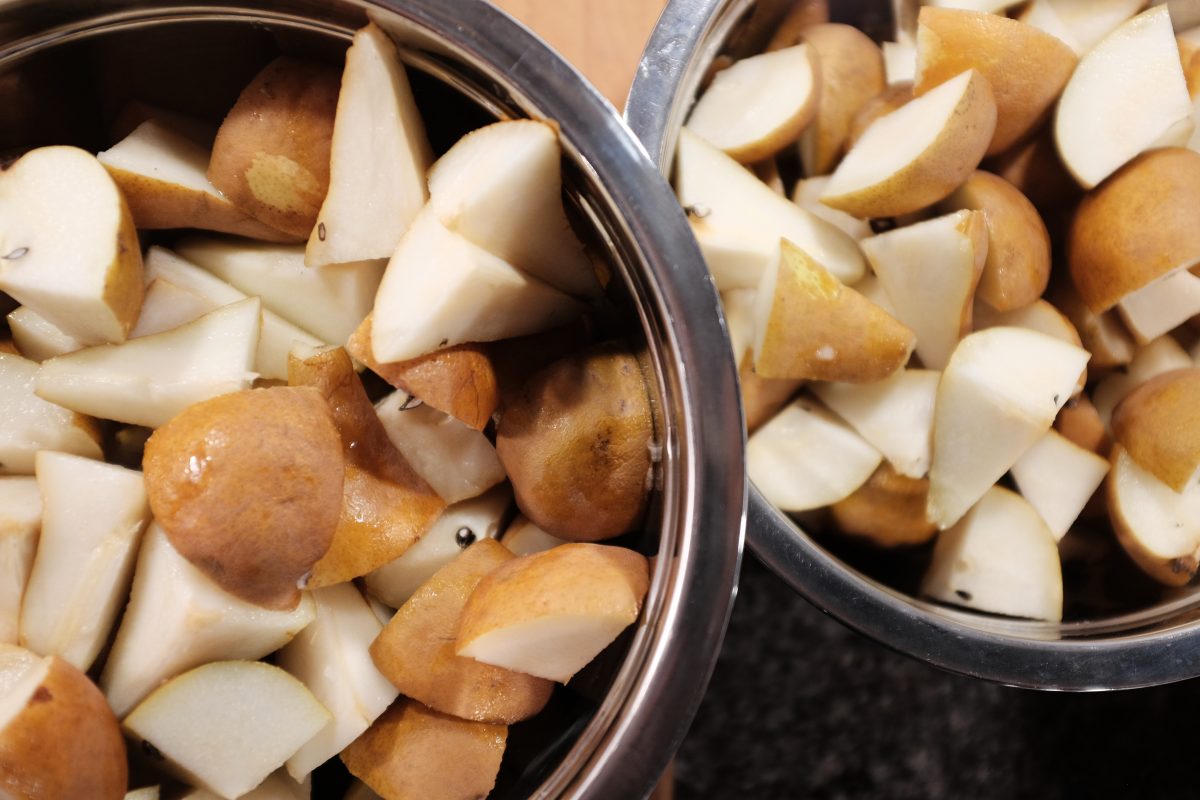
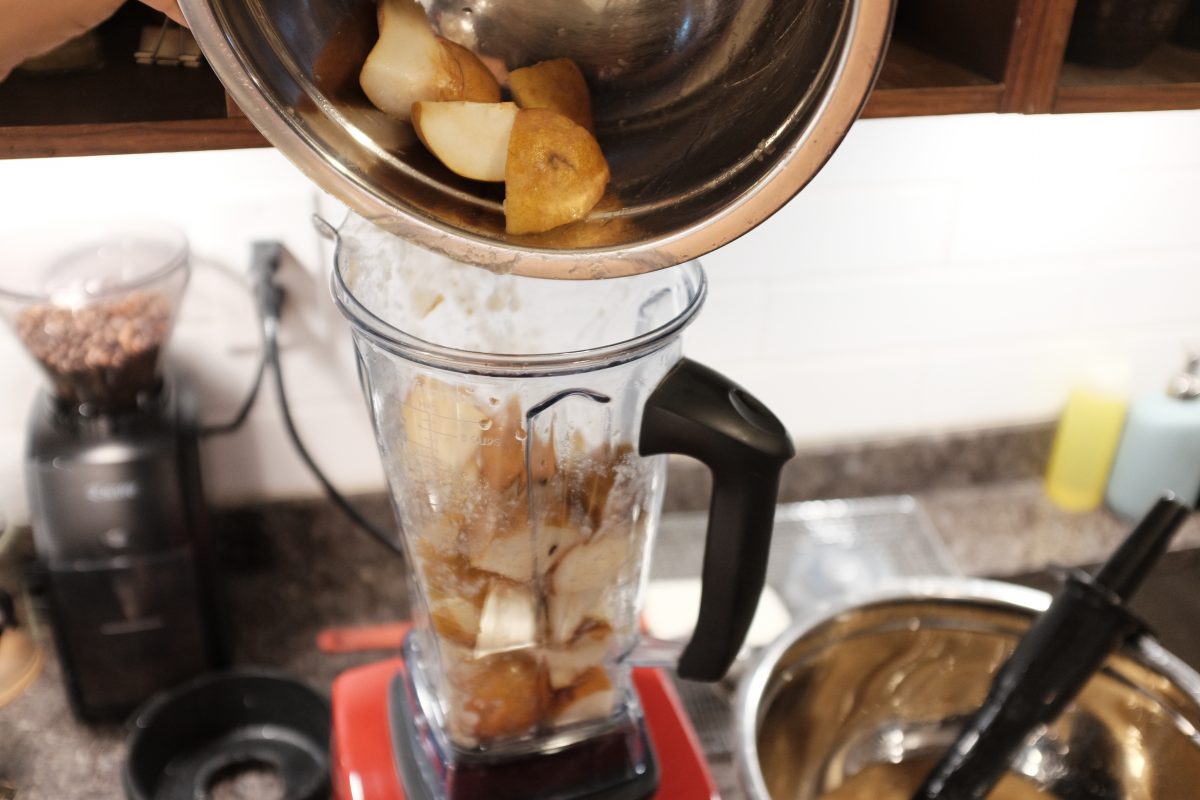
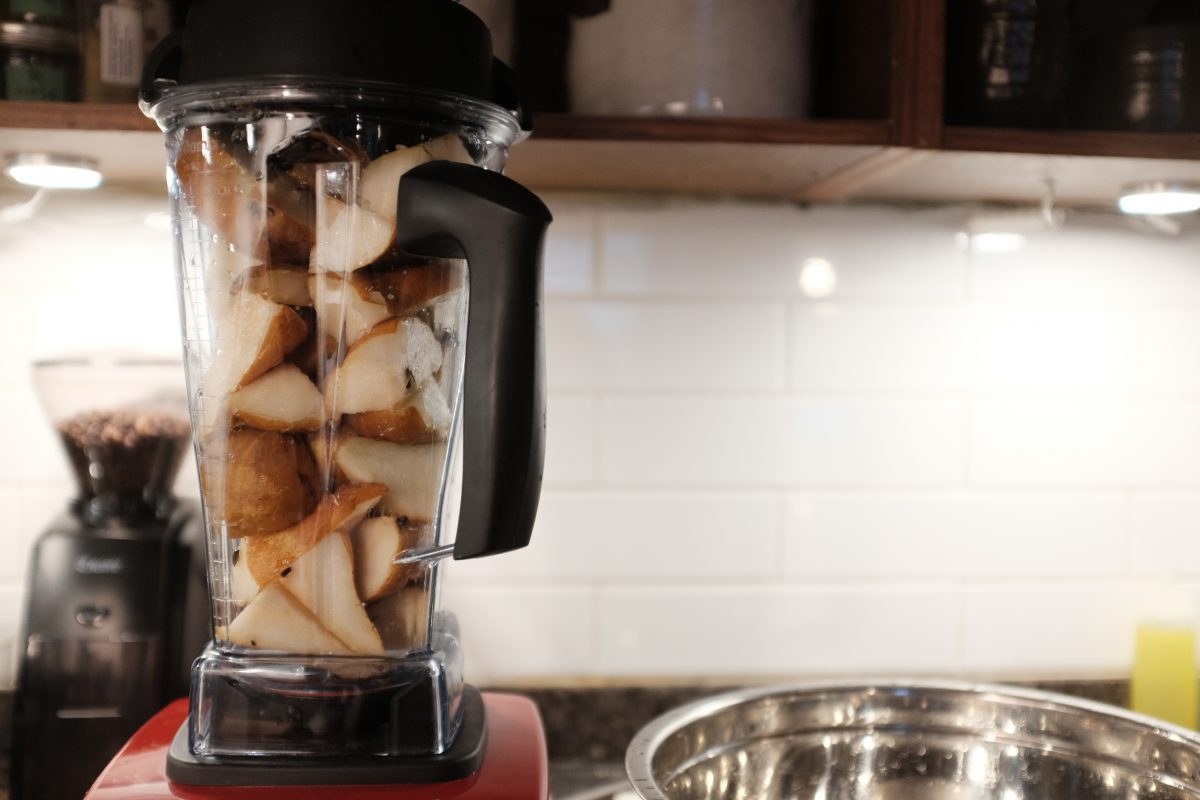
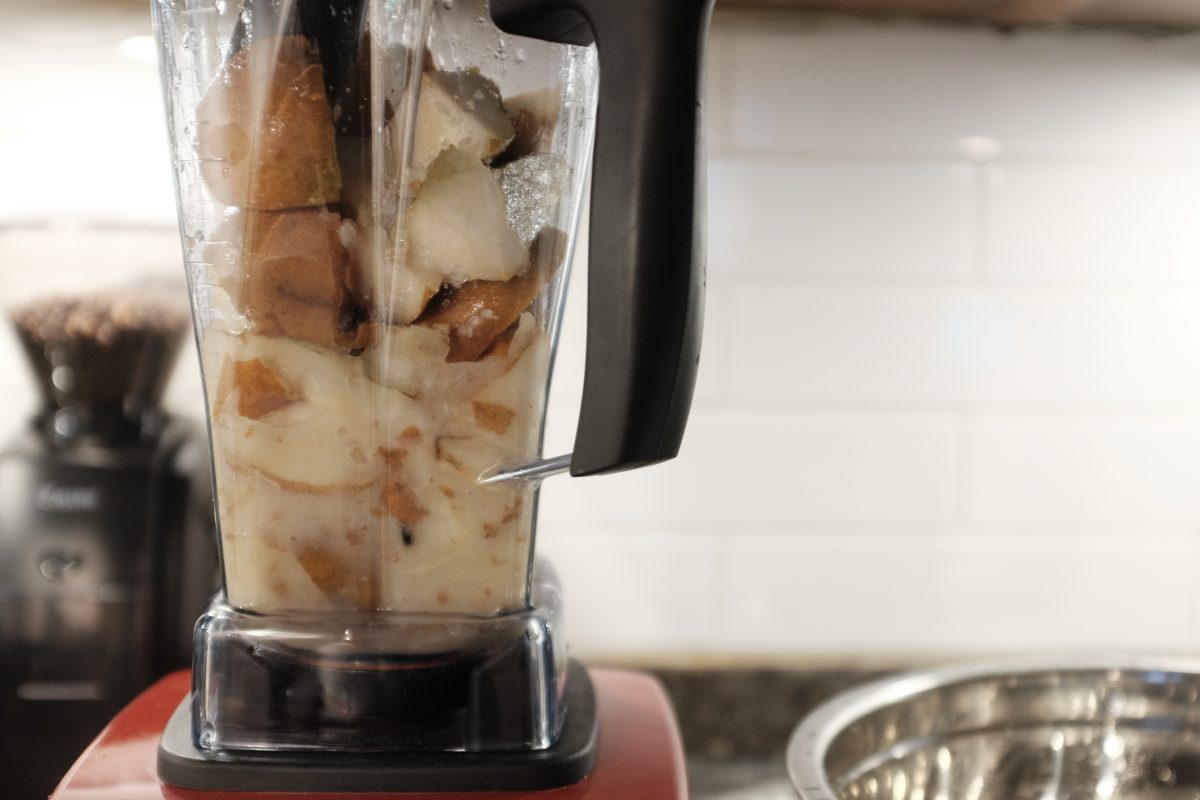
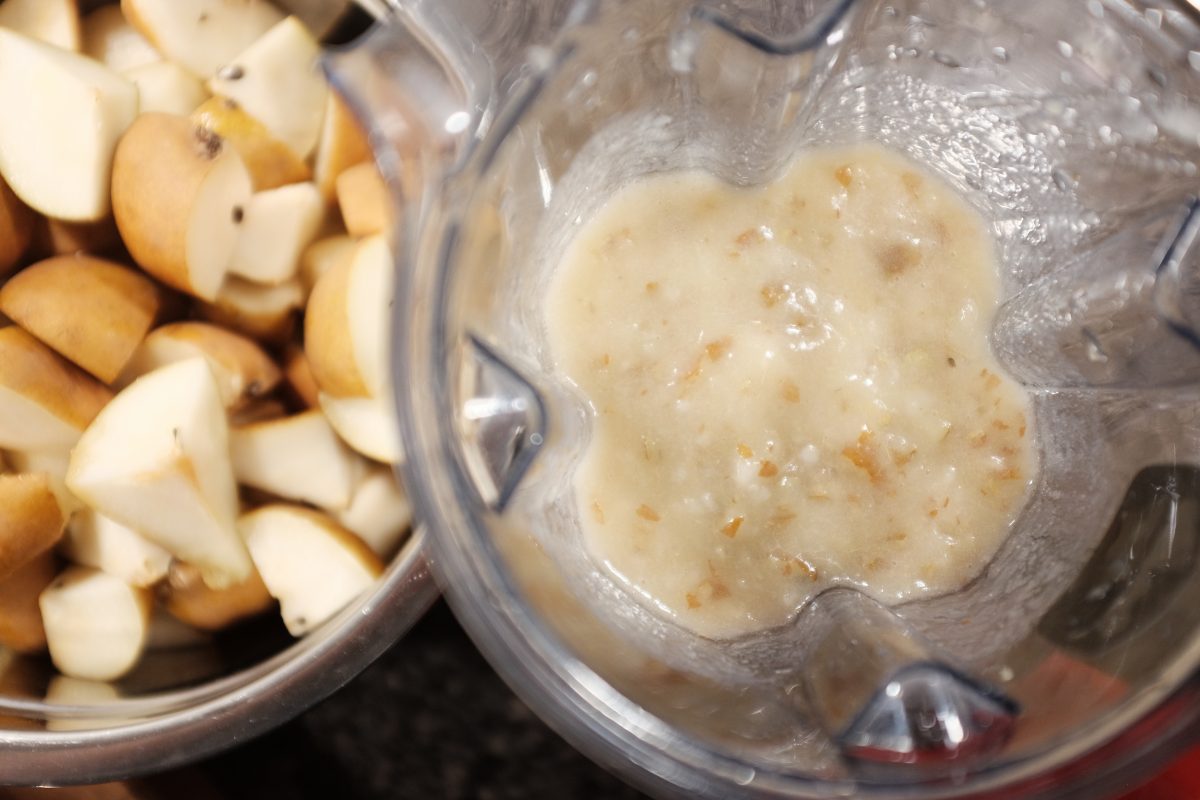
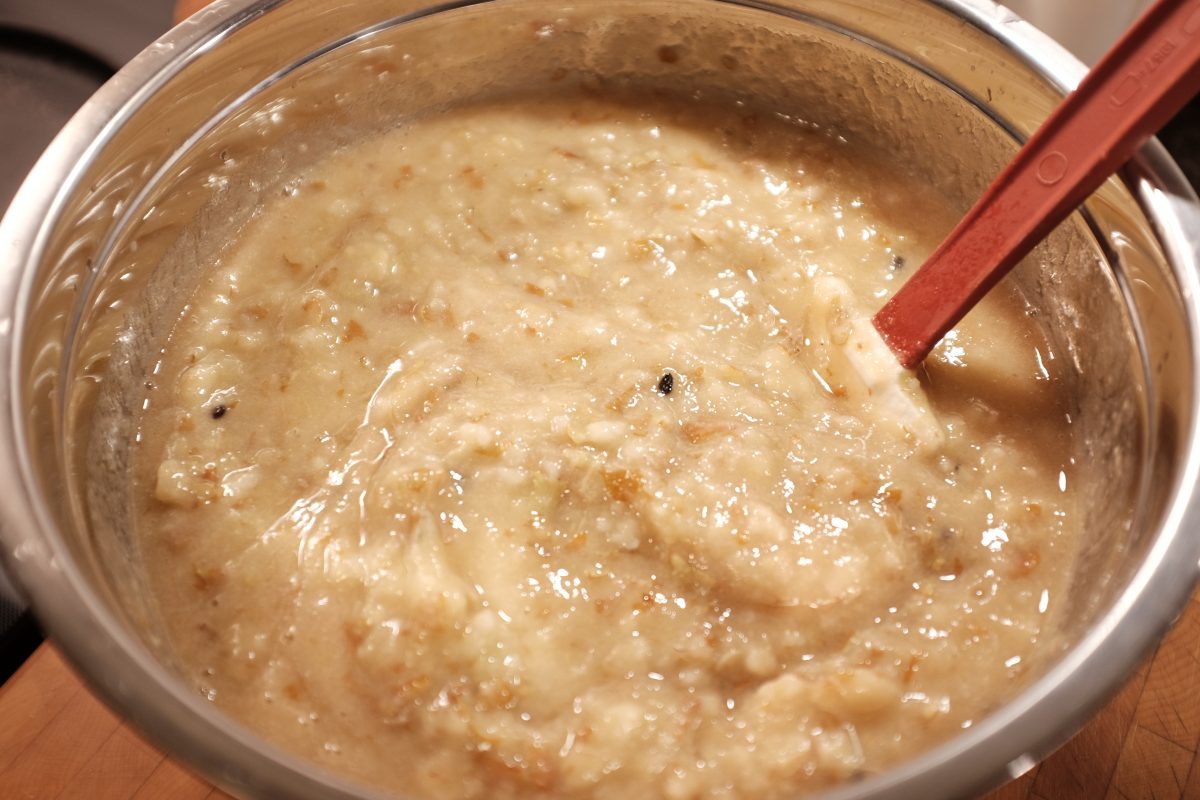
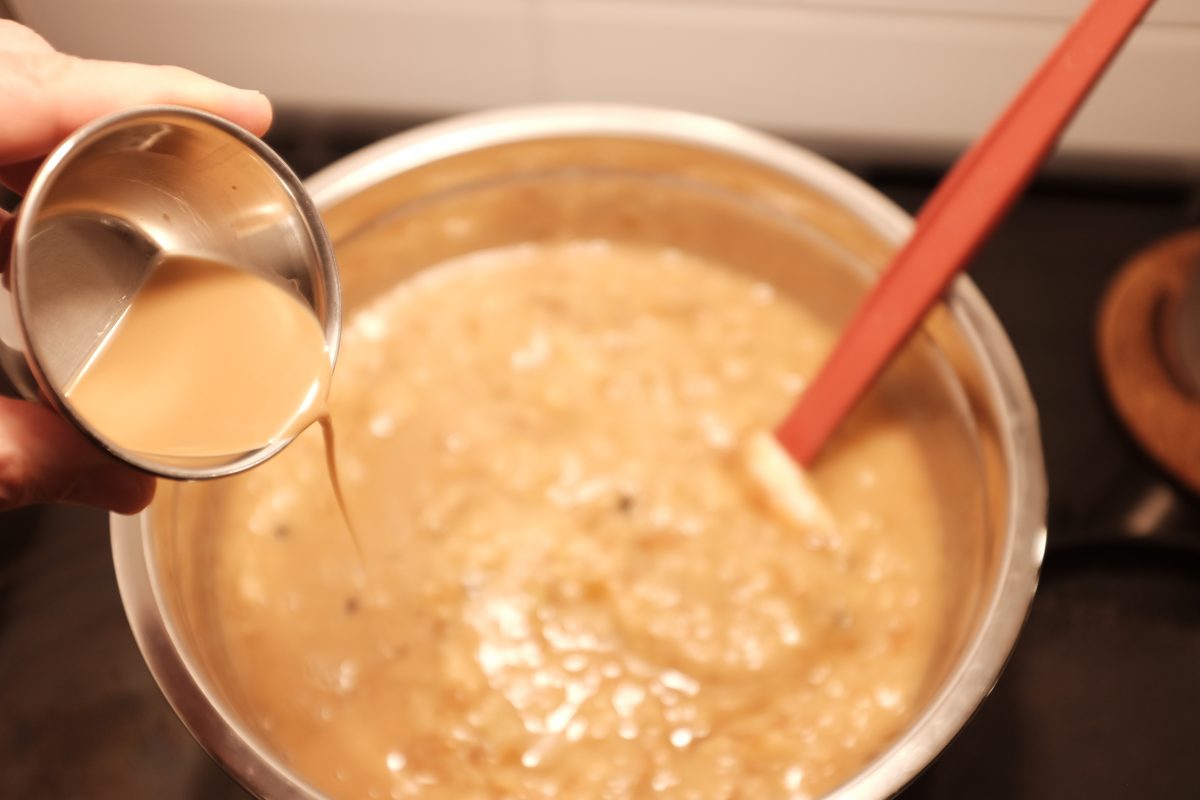
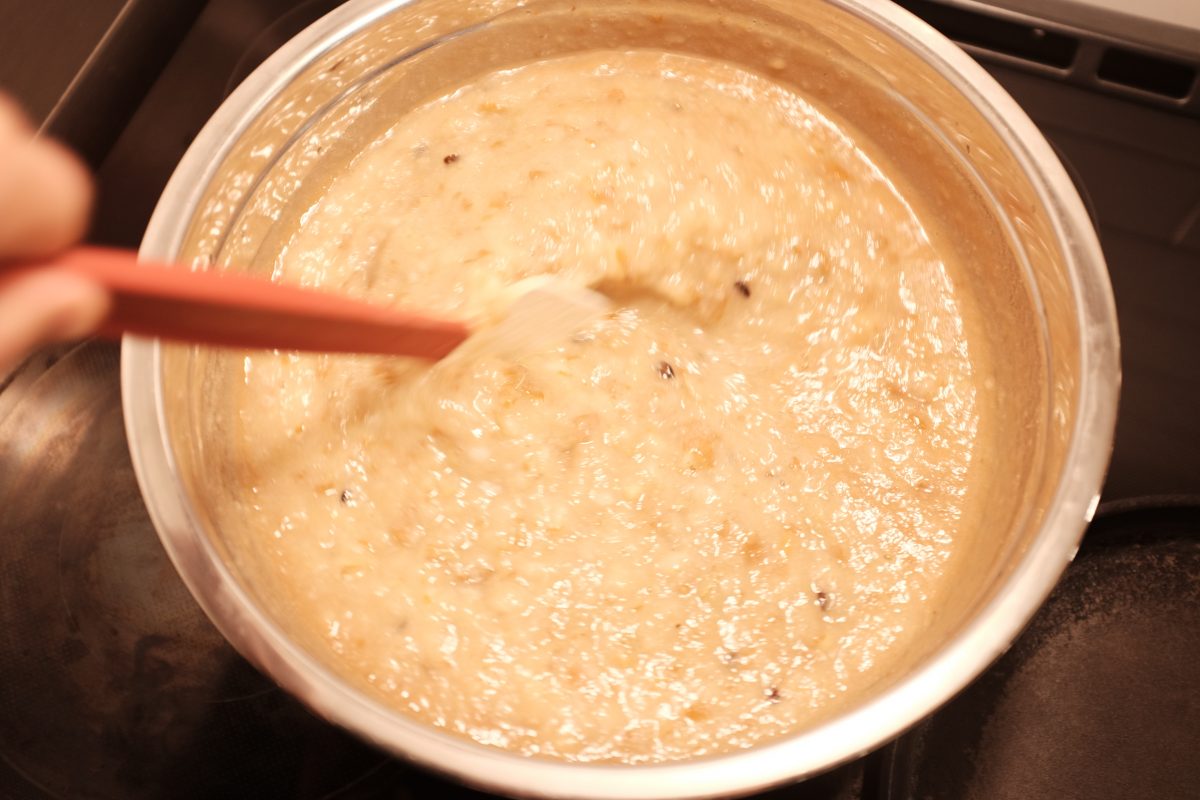
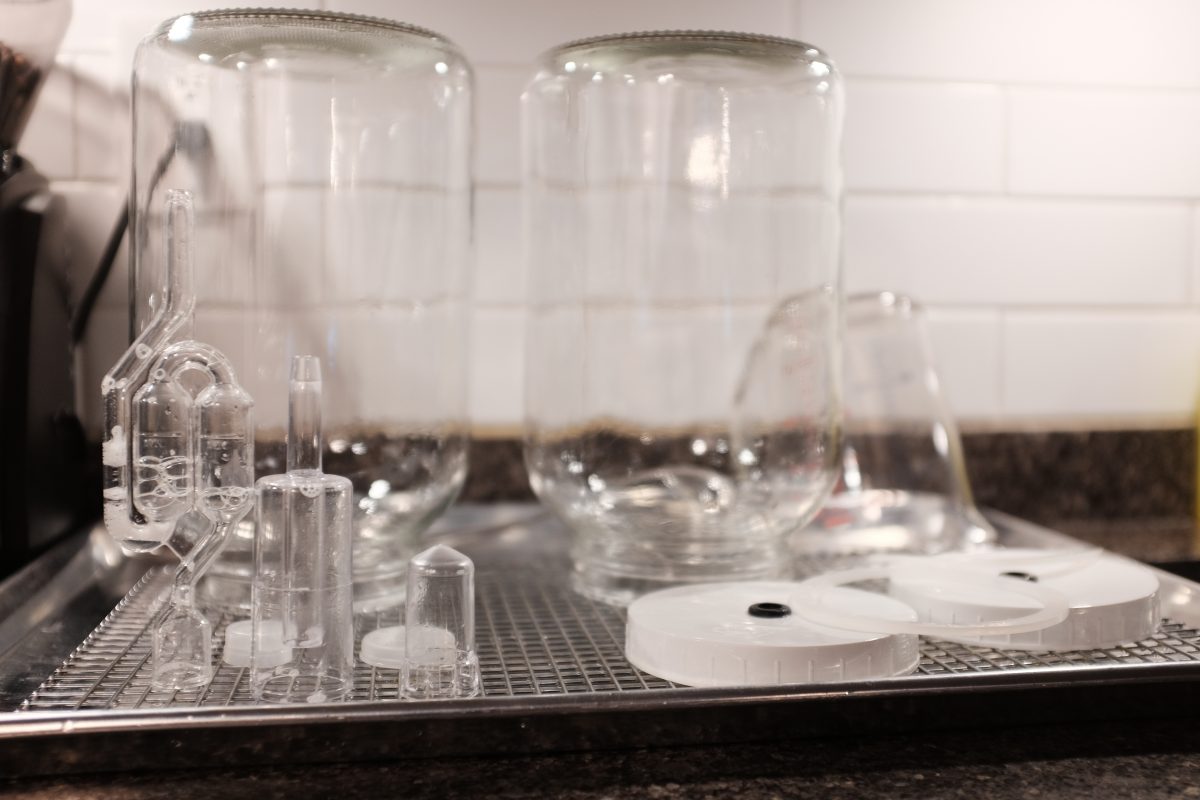
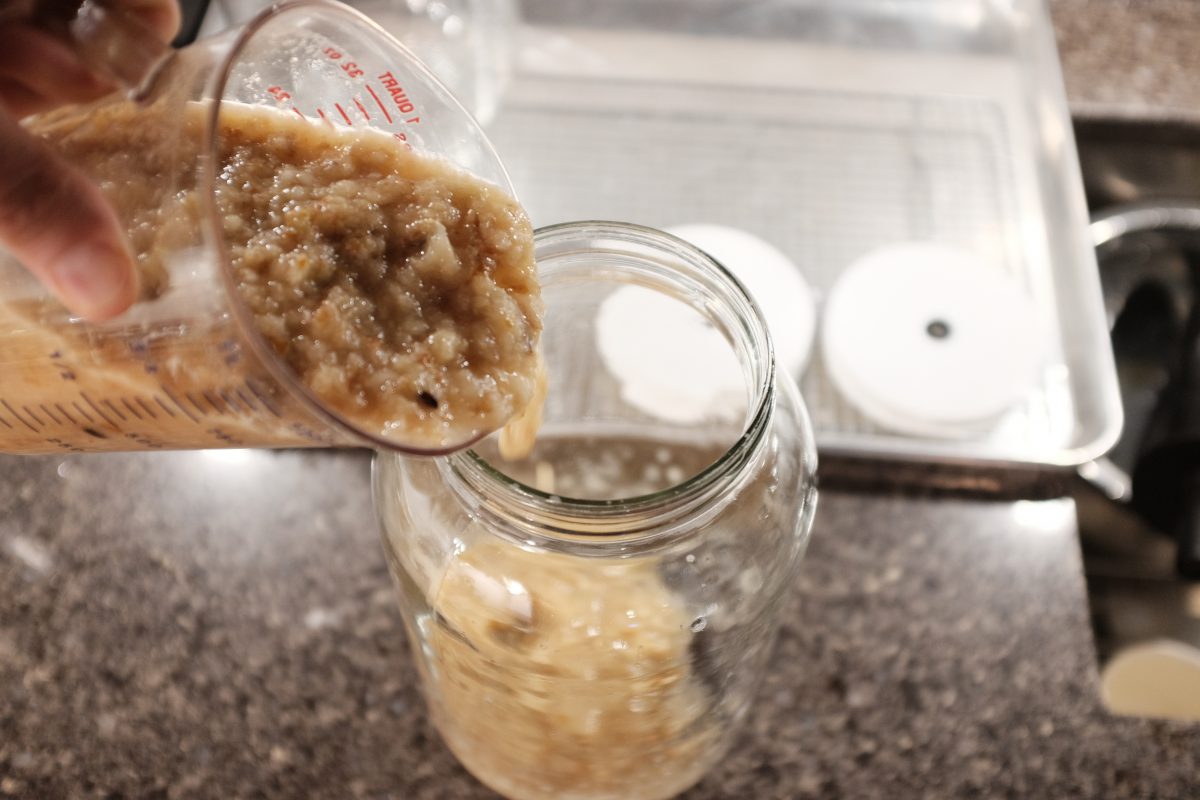
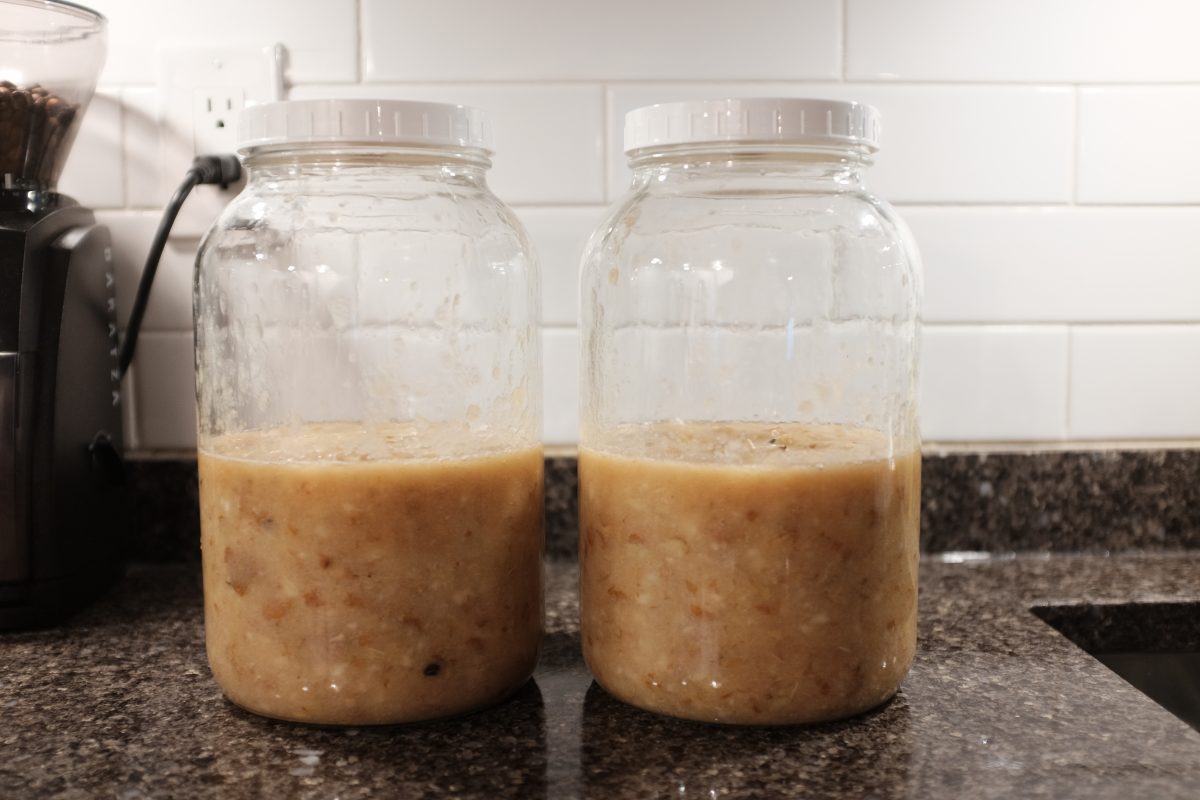
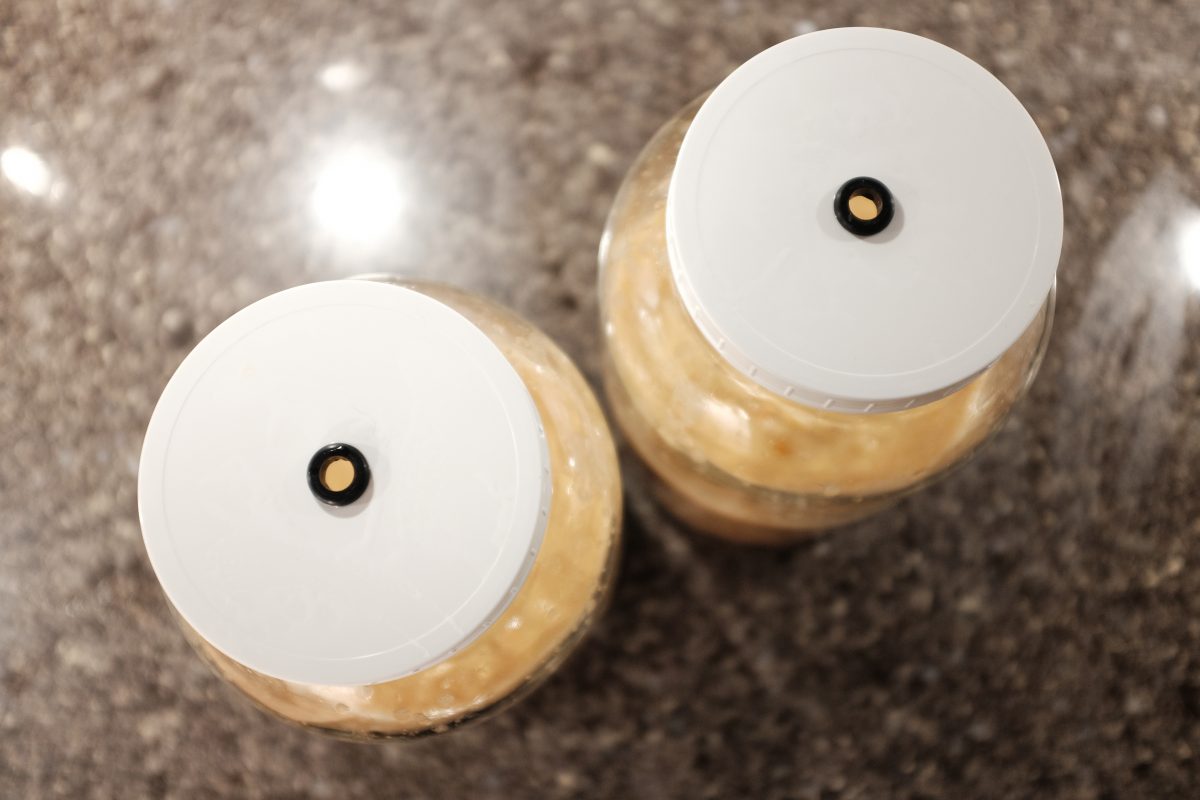
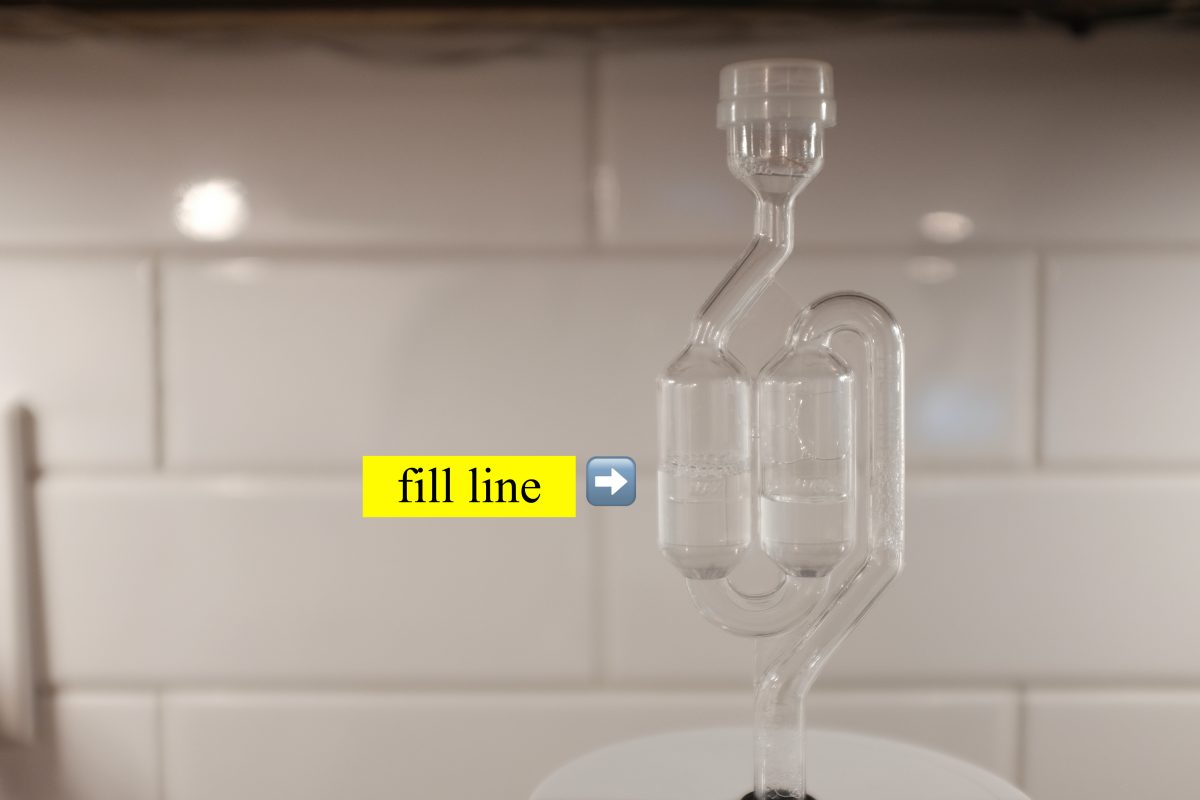

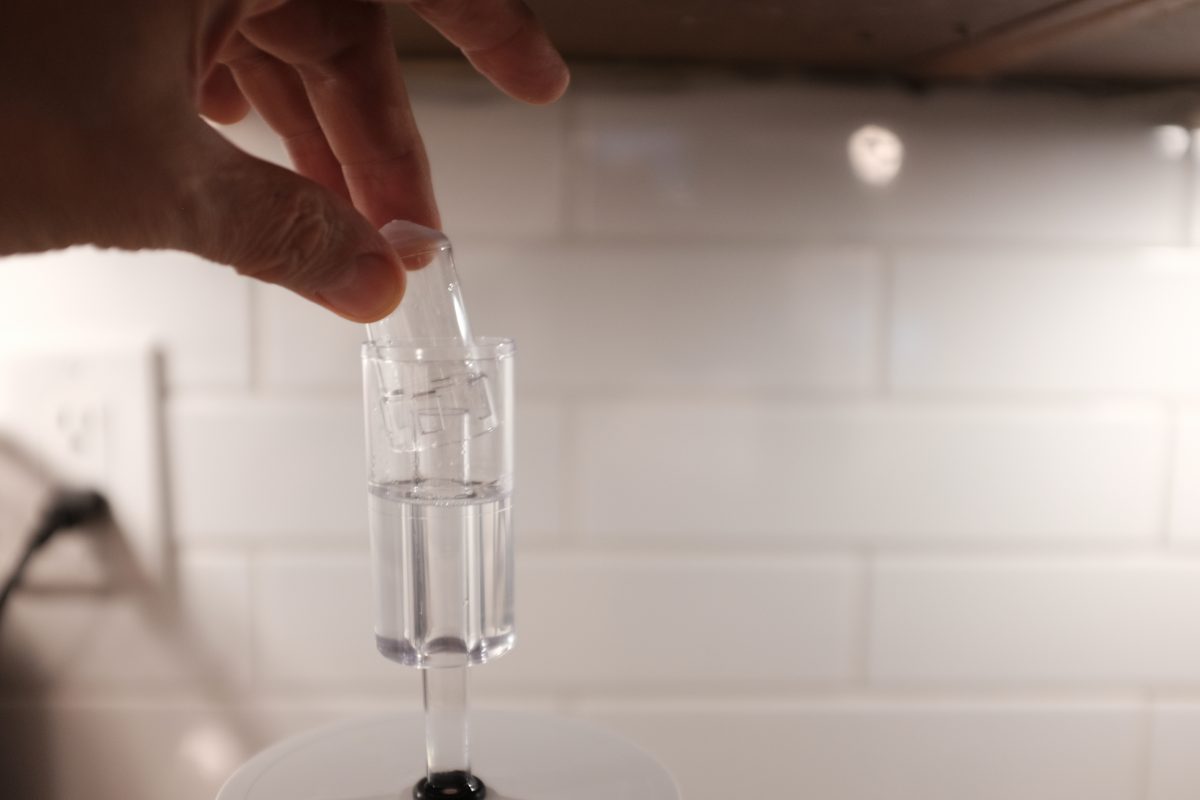
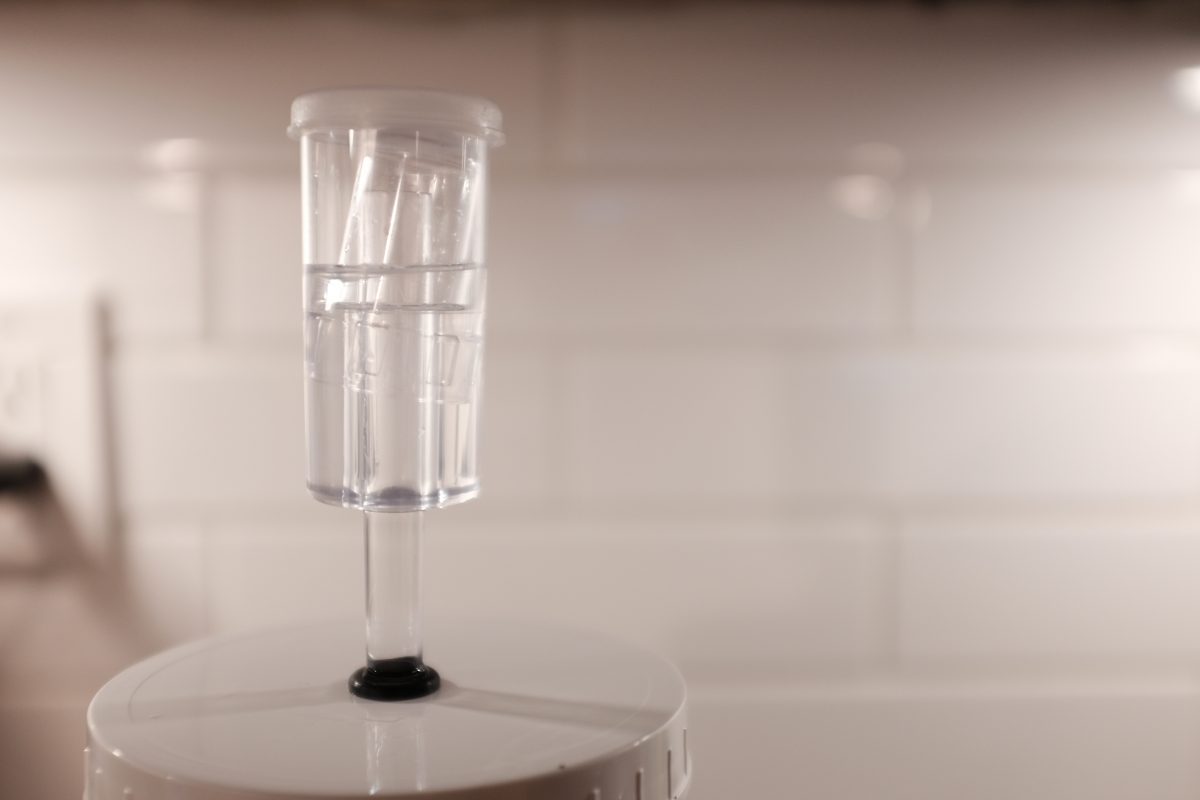
Once the jars are filled, the lids are on tight, and the airlocks are assembled…move them to a spot that is not in bright light and is at a cool room temperature. Around 20 Celsius or even a little cooler is ideal. Sometimes a basement works, or a garage. I have one or two poorly insulated outside walls which stay at a perfect 18-20 degrees in the winter so that is where I do my fermenting.
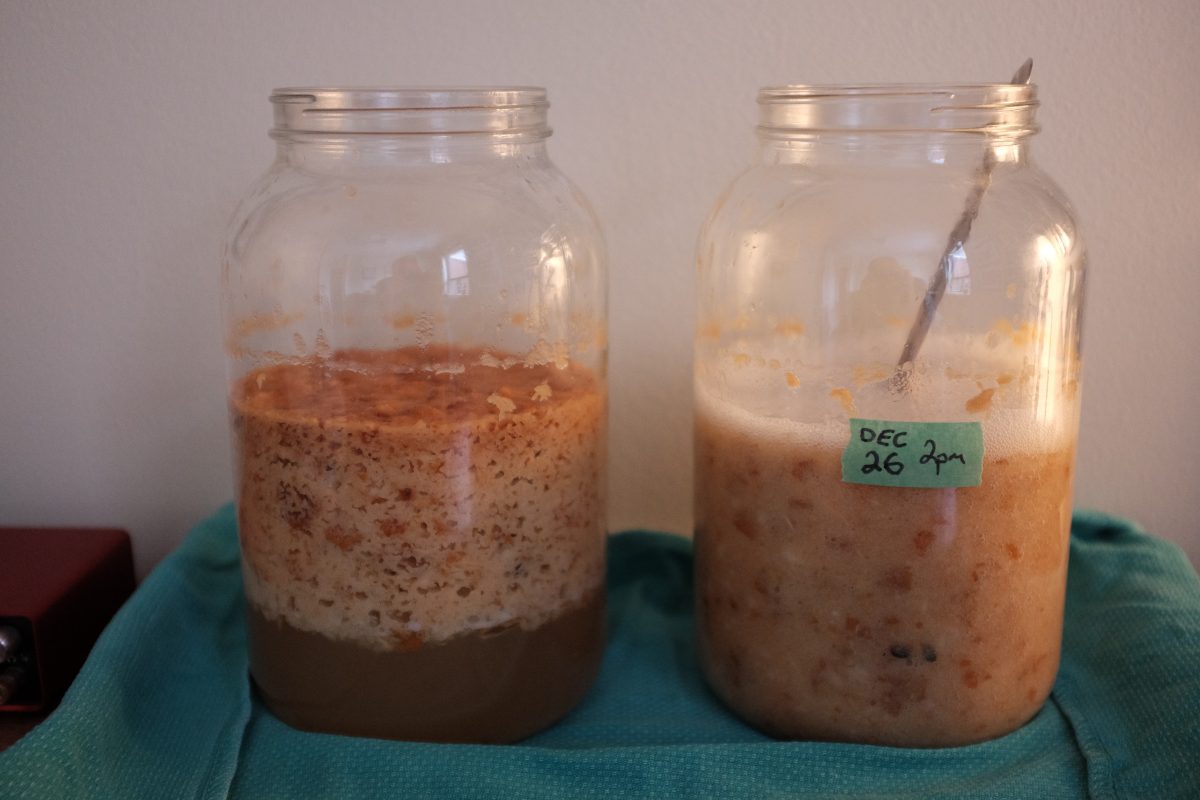
First Signs of Life
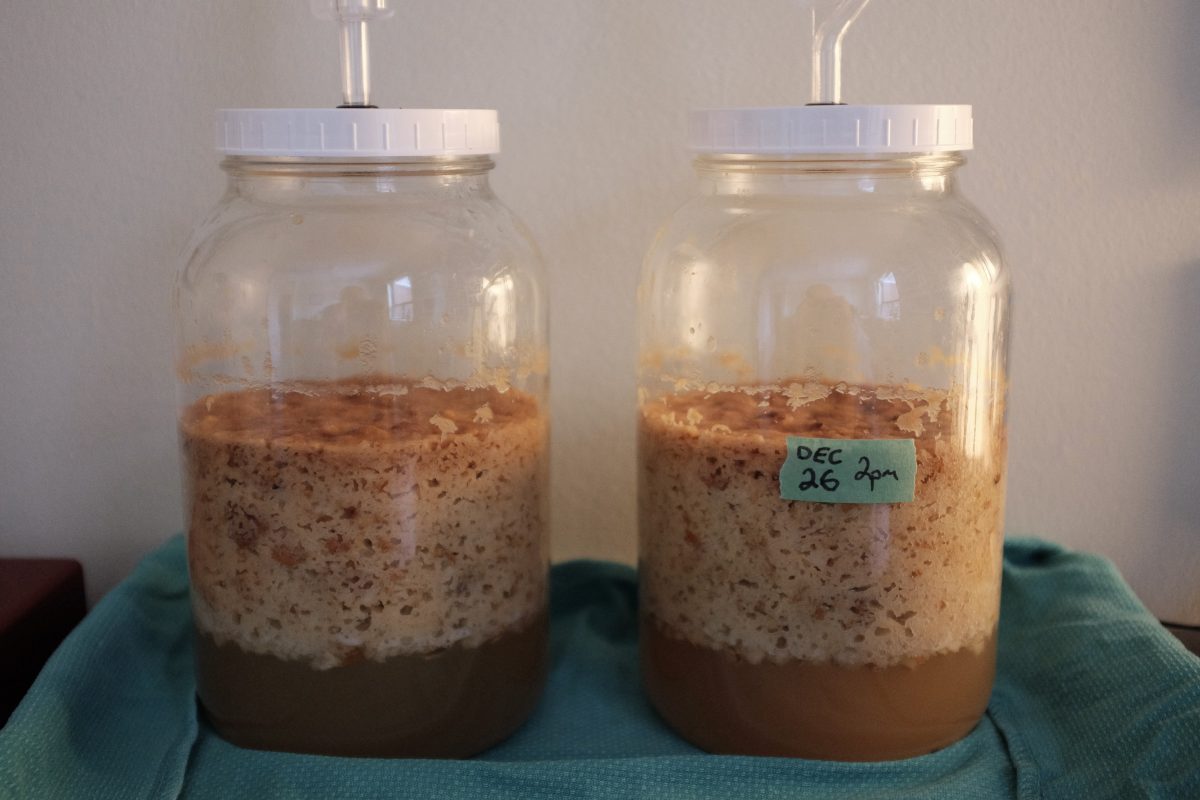
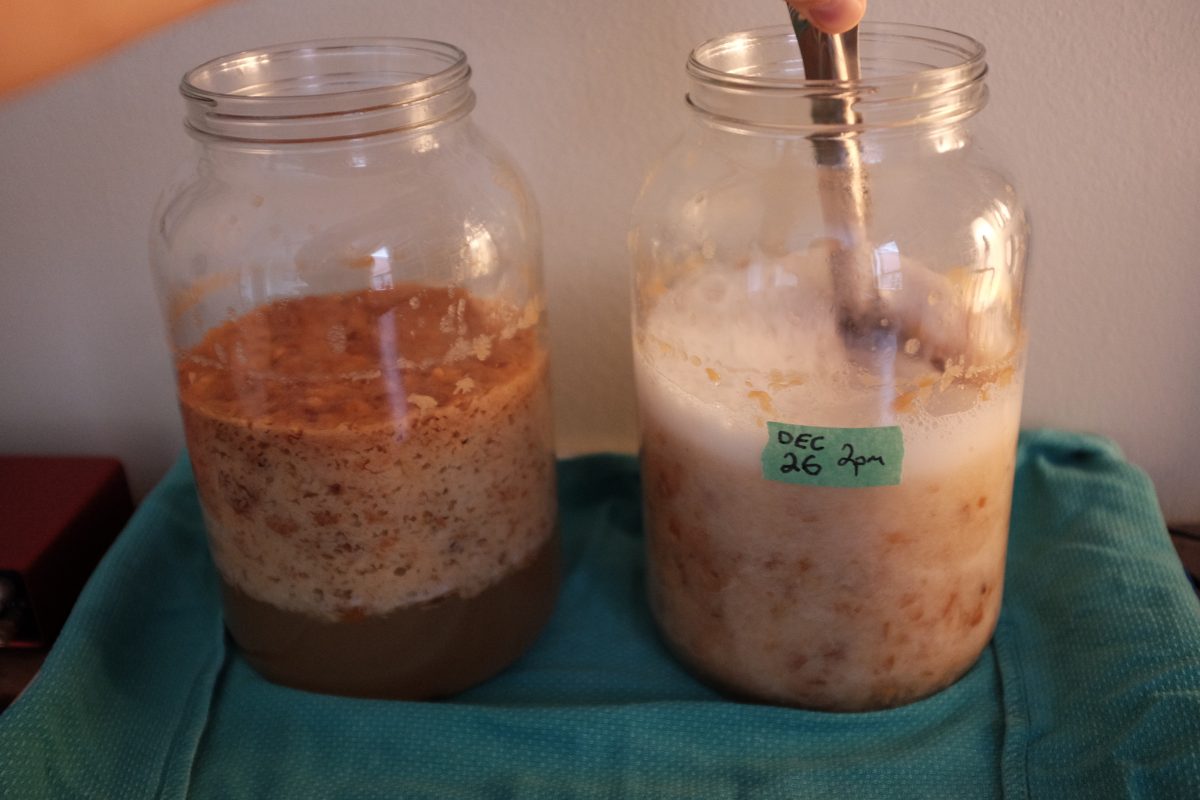
Fermentation slows down…
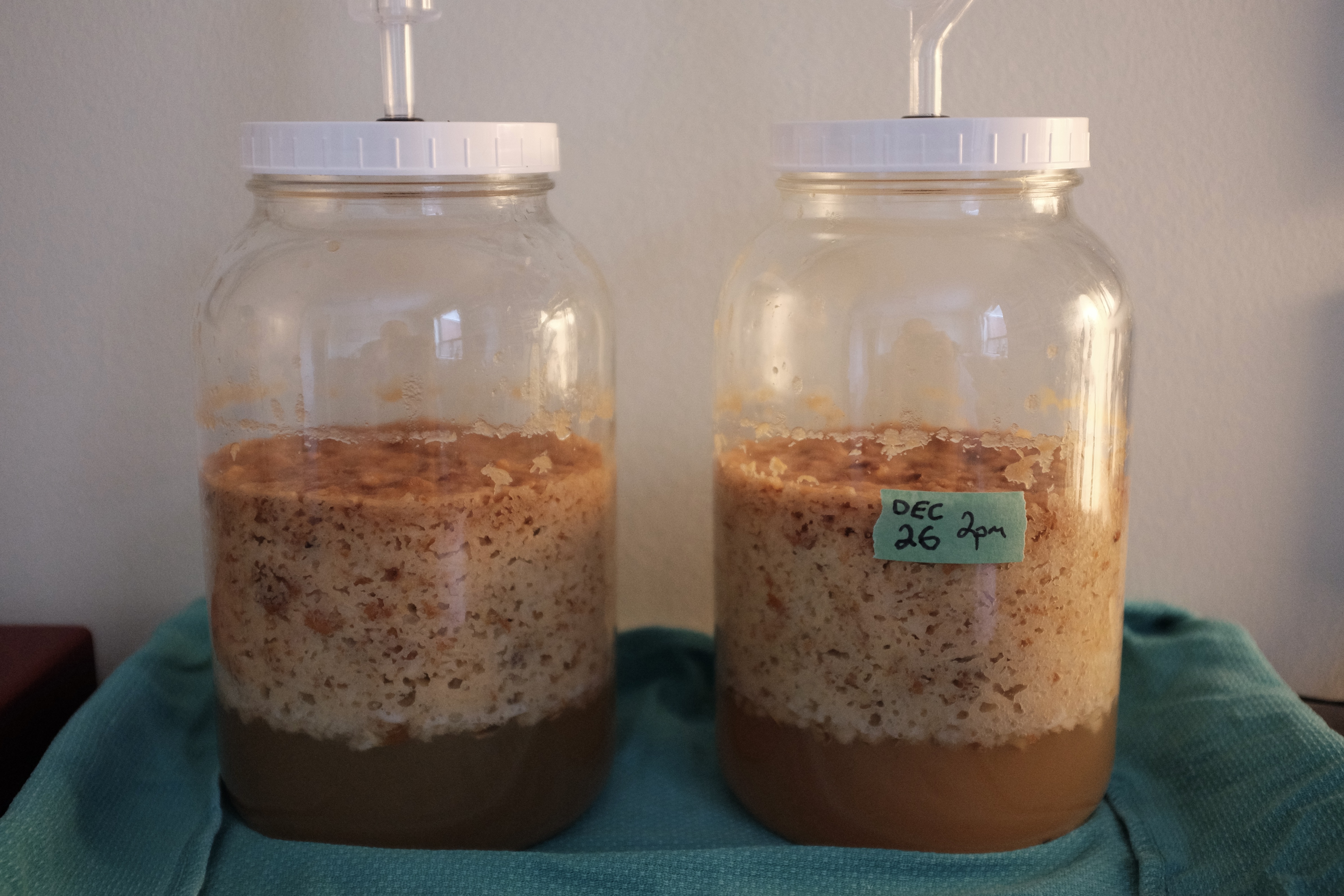
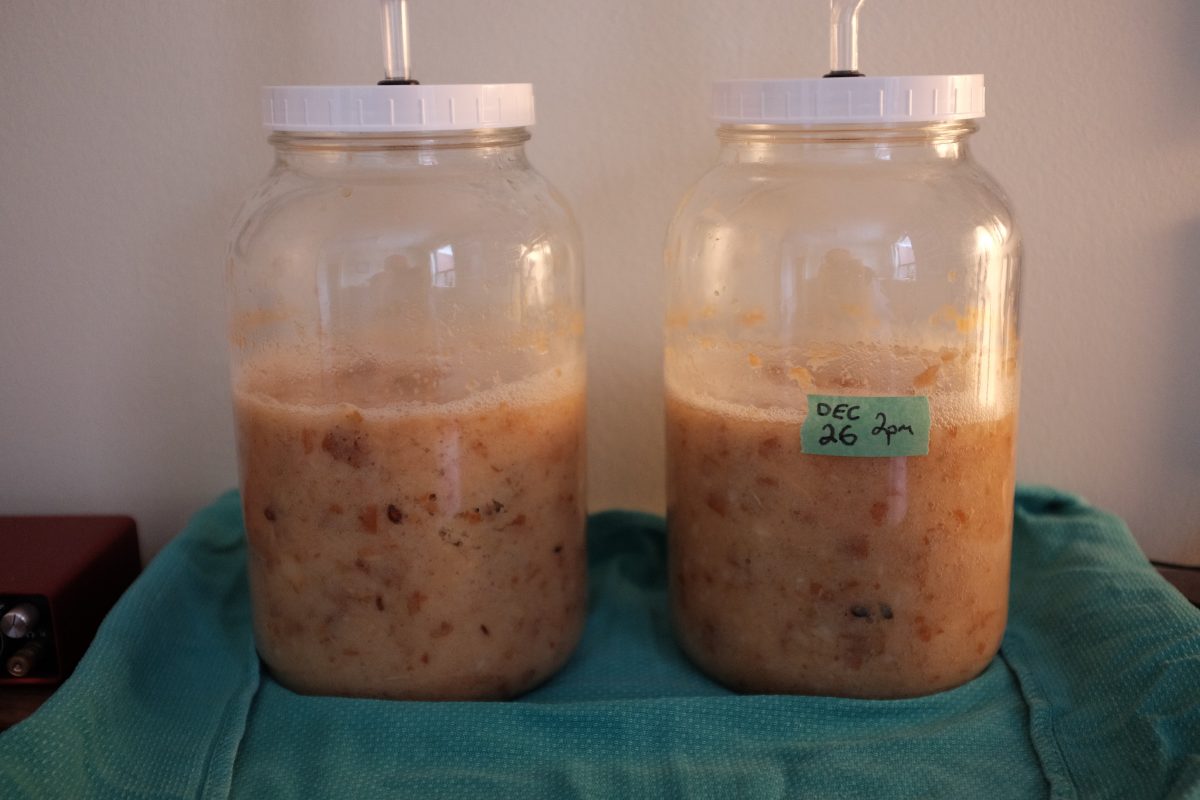
For the first 2 days, fermentation was very active with both airlocks bubbling constantly. Towards the end of the second day the fermentation has slowed noticeably. The airlocks will bubble up a couple of times a minute at most. There is less fizzing when stirring and there is a slight taste and smell of alcohol on the spoon. By day 3, fermentation was very slow. Apparently, this very active initial fermentation followed by a very slow and steady period is characteristic of “saison” yeast. If you are using a different brewers yeast, the fermentation may be more consistent over time.
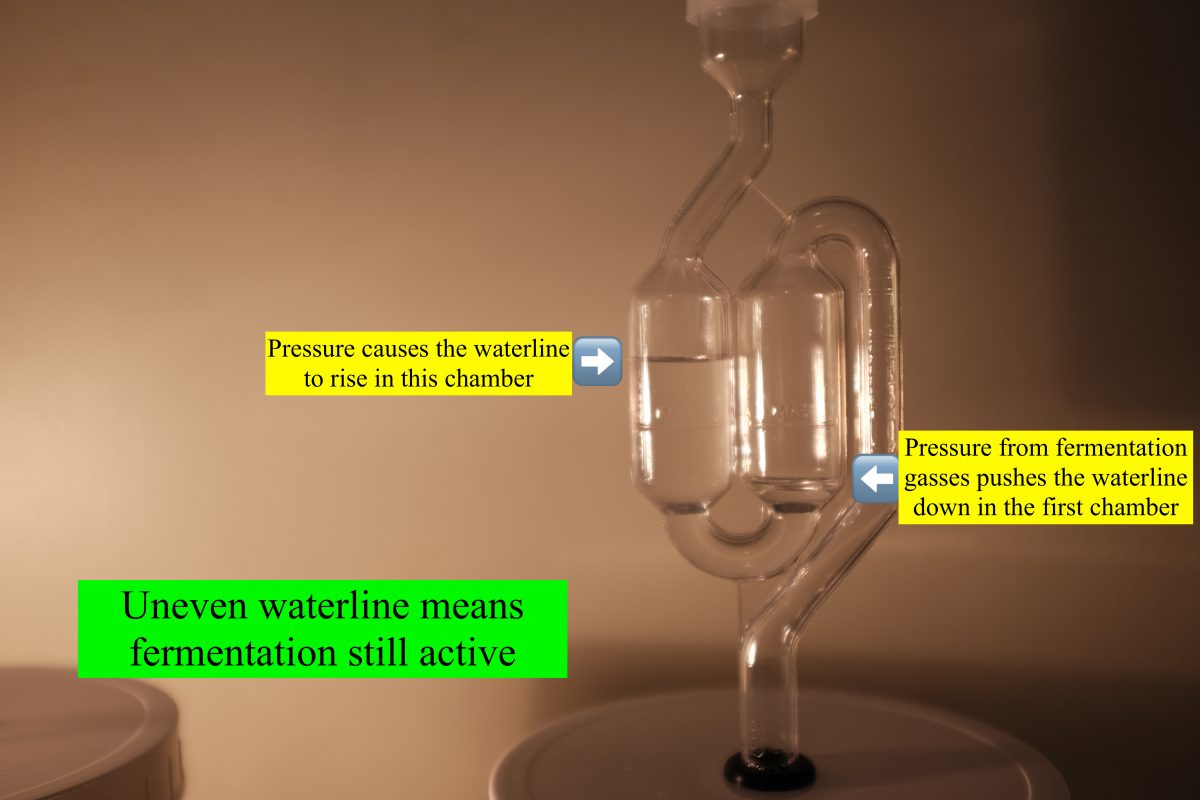
Keep stirring once a day, tasting for sugar and alcohol balance. Monitor activity at the airlocks.
Day 7:
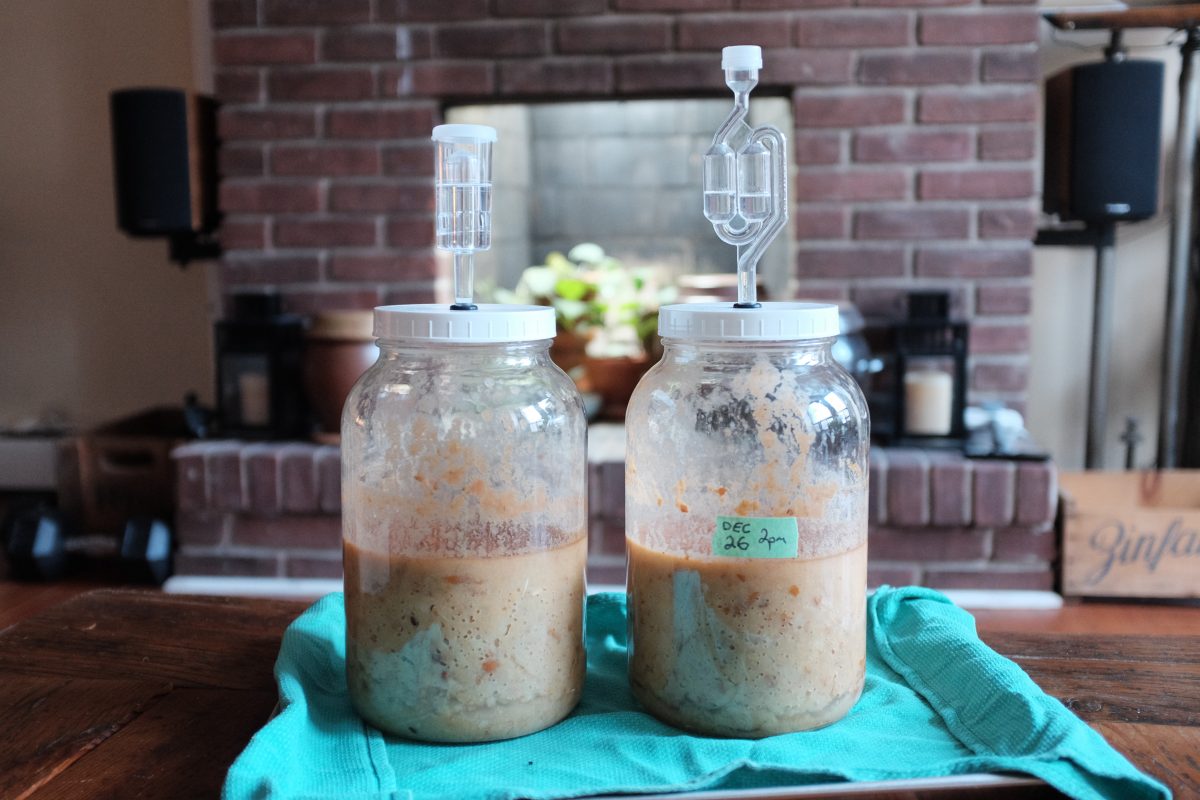
By the 7th day, there is little to no detectable fermentation happening…no bubbling, no sounds, and the pressure in the S-airlock is equalized with both chambers showing the same water level. The mash tastes and smells of alcohol but the sweetness and perfume of pears is still there. This is perfect. It is time to strain the mash and move on to vinegar fermentation.
Straining the Mash
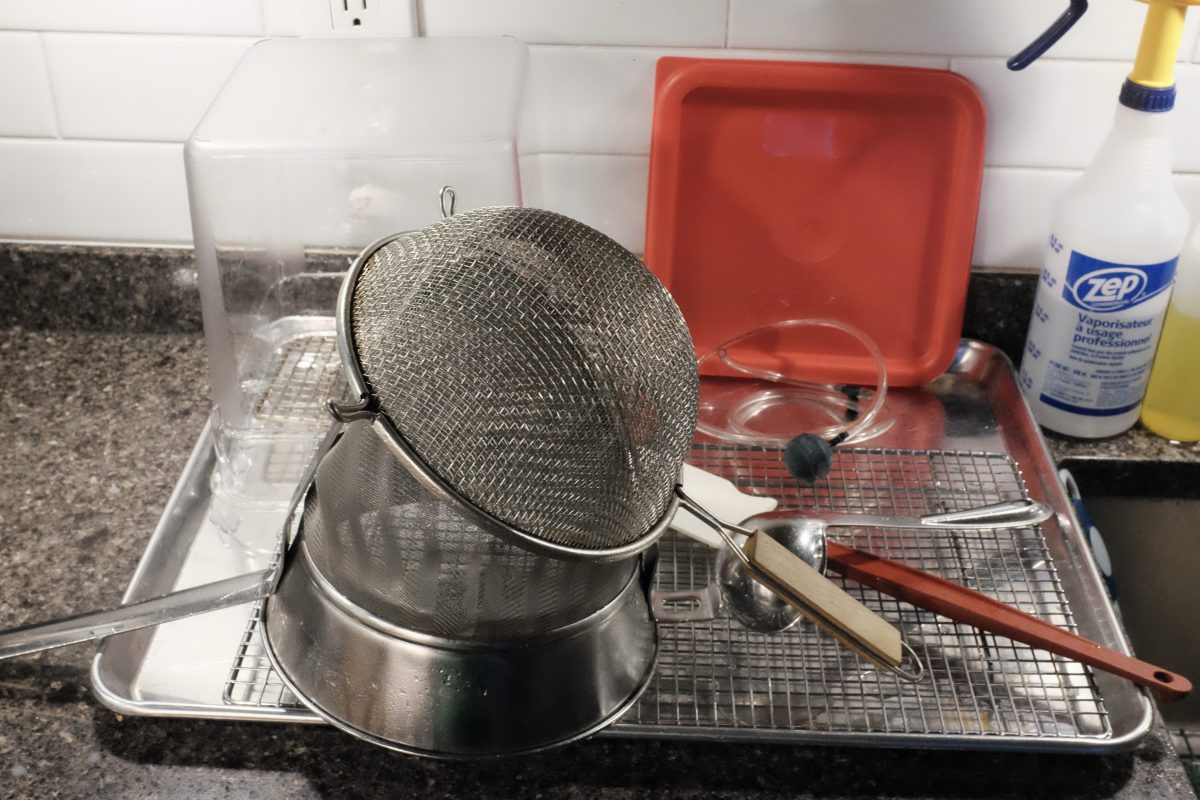
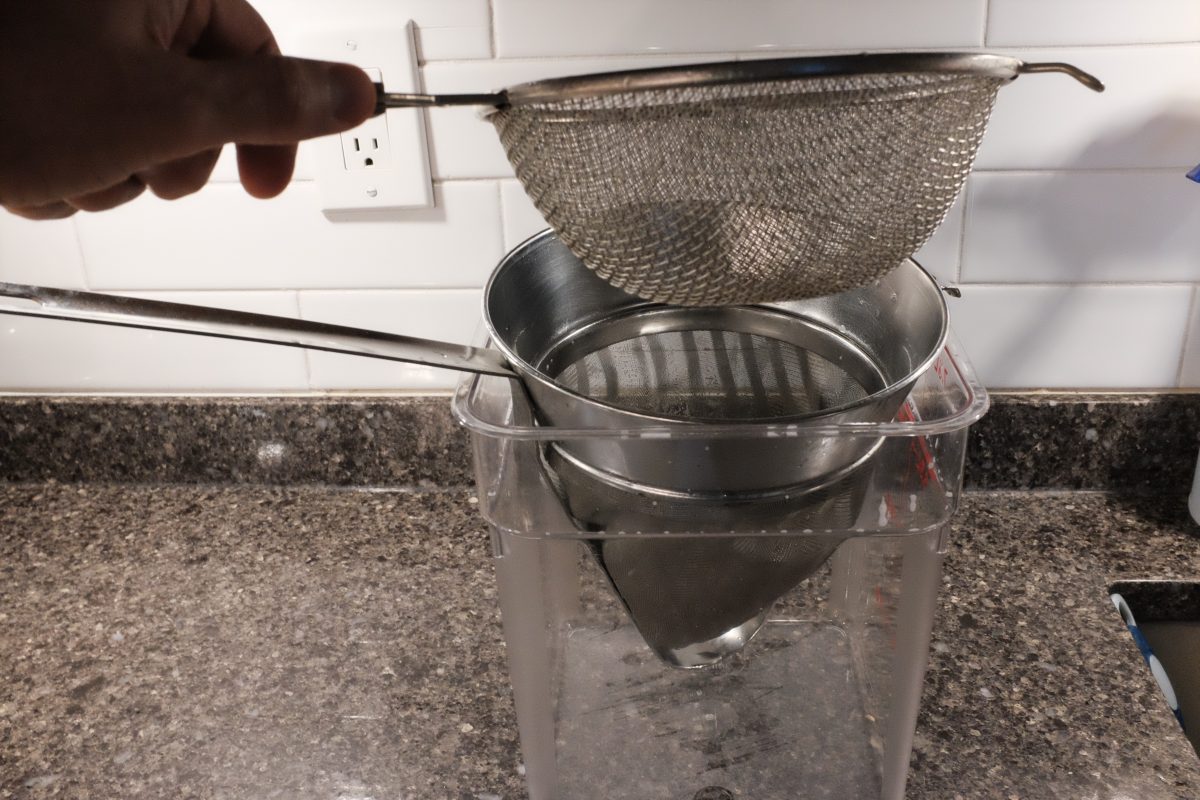
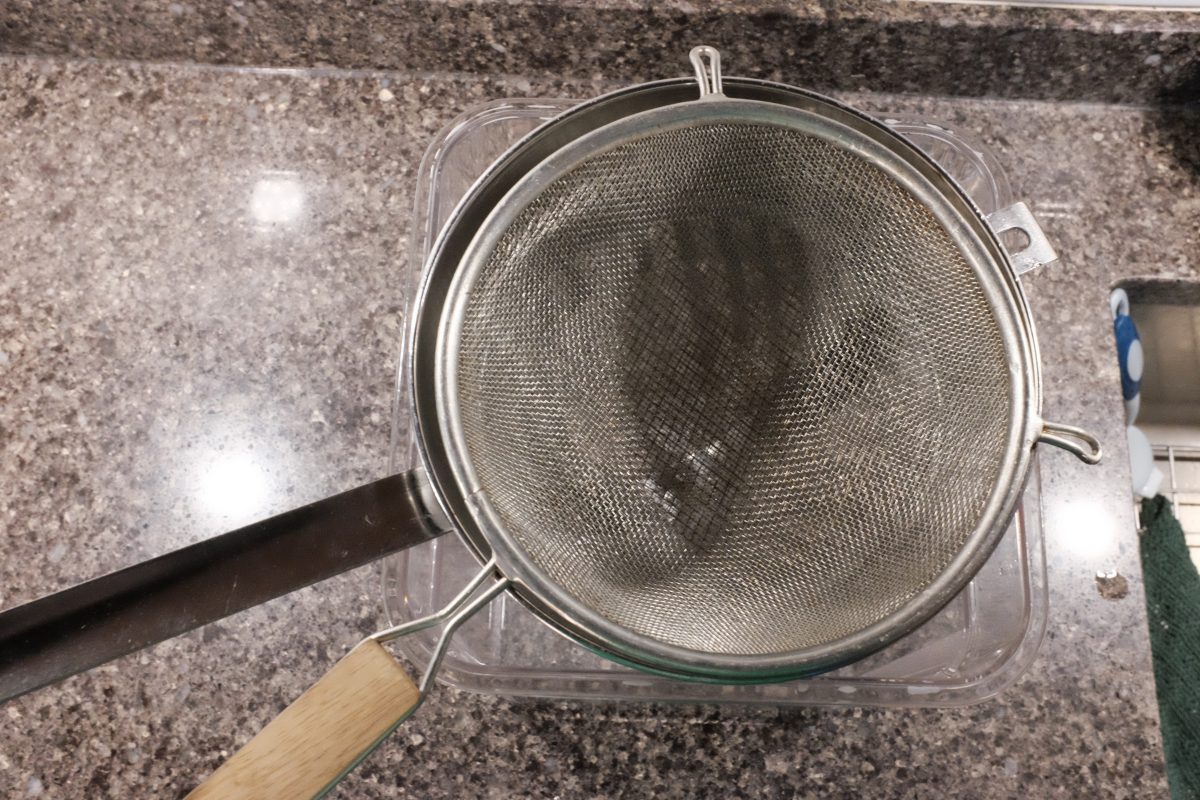
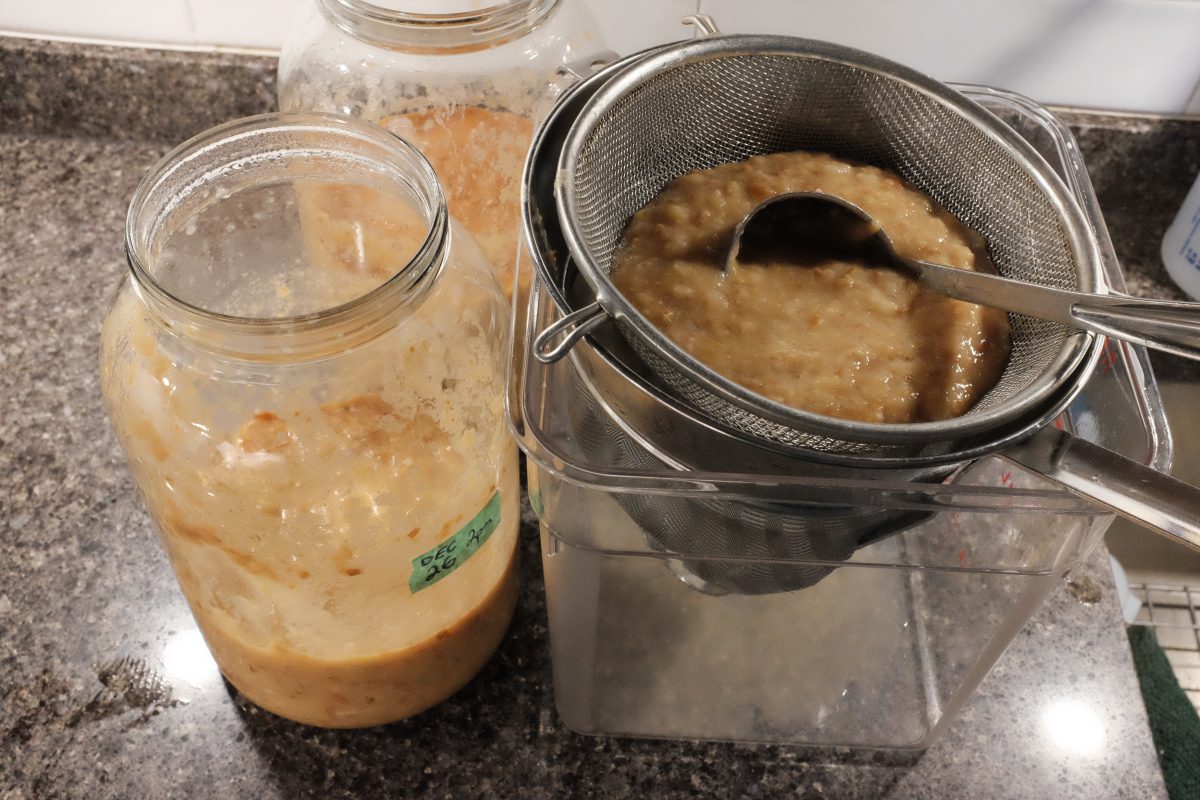
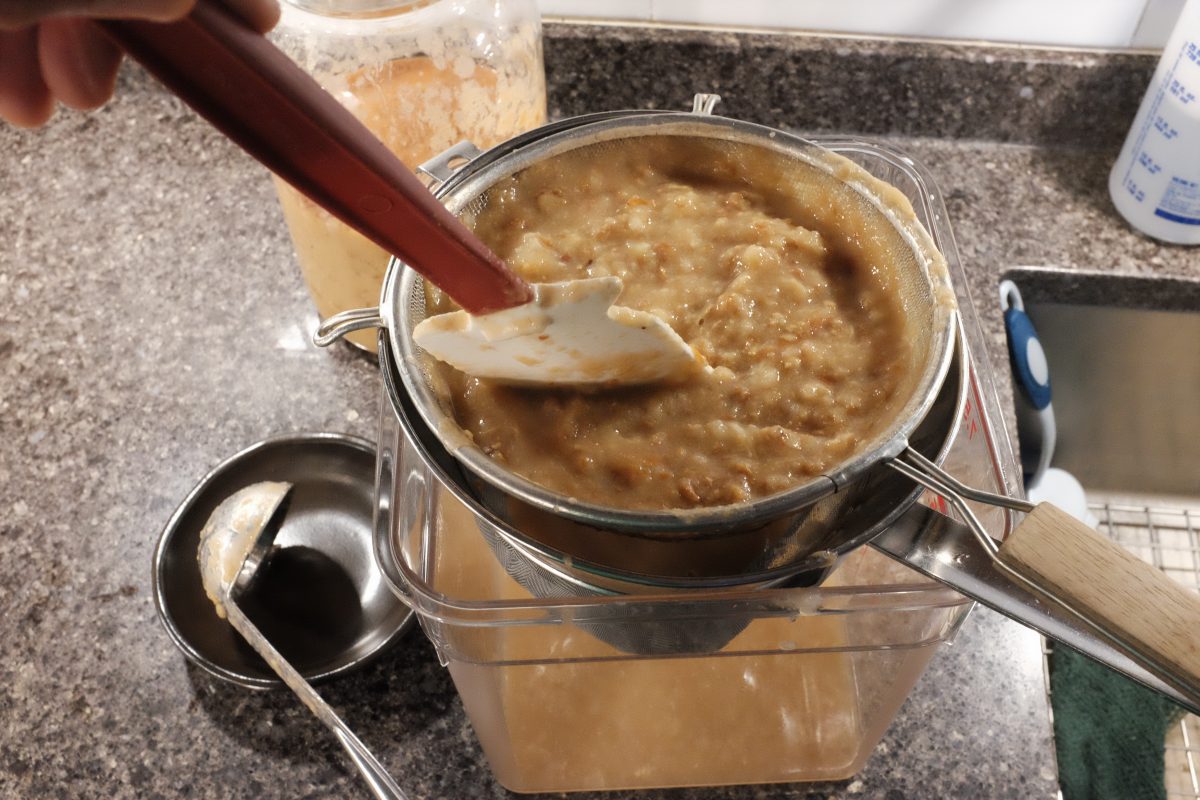
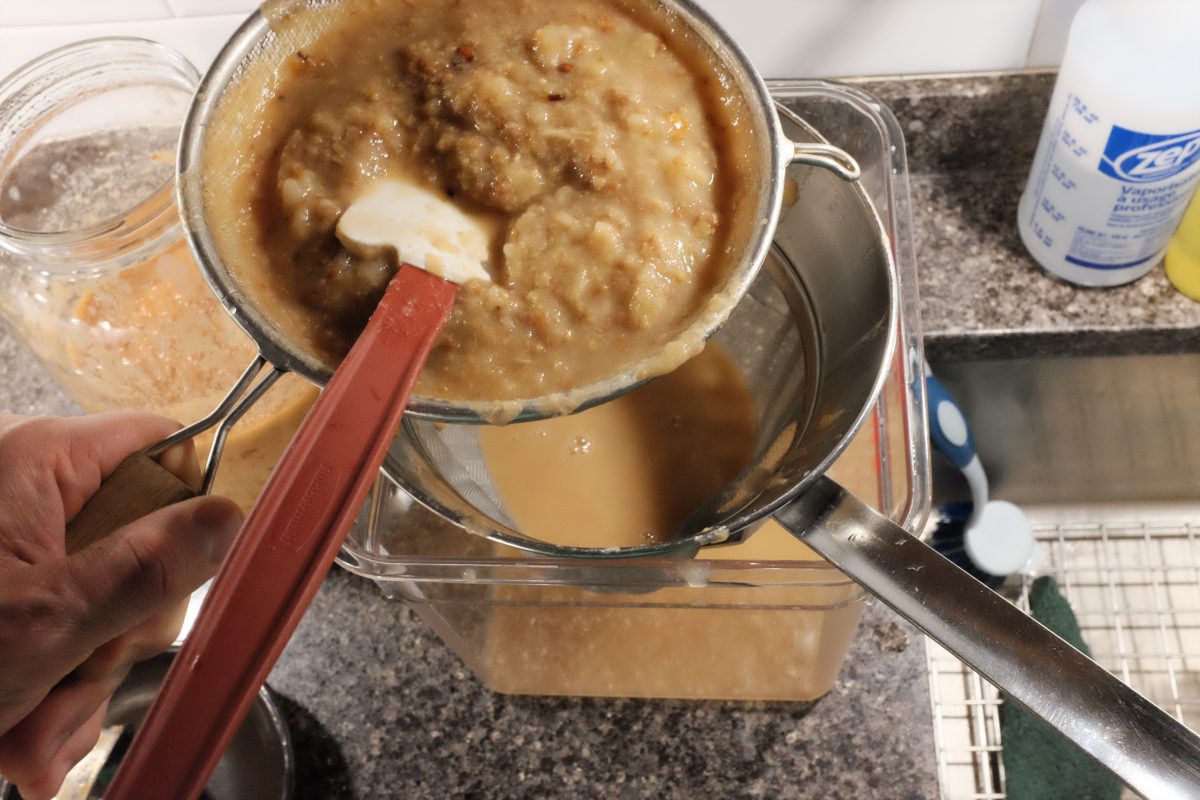
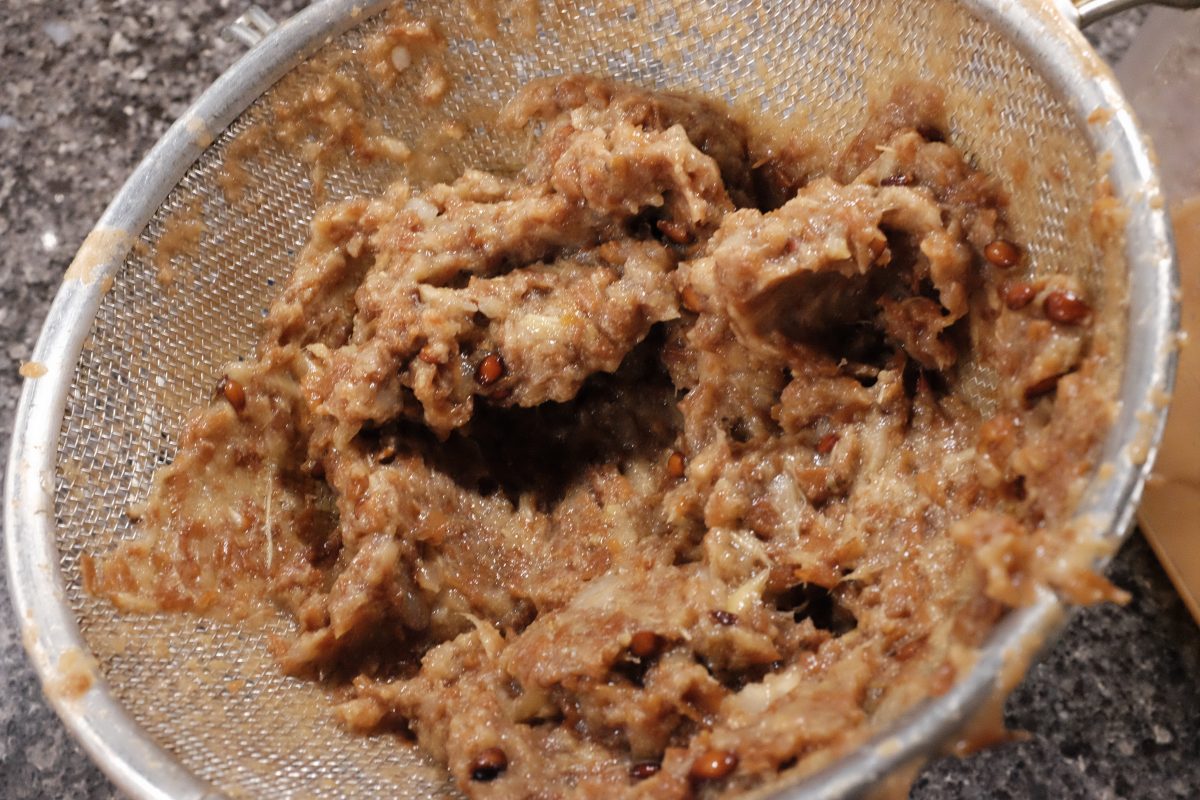
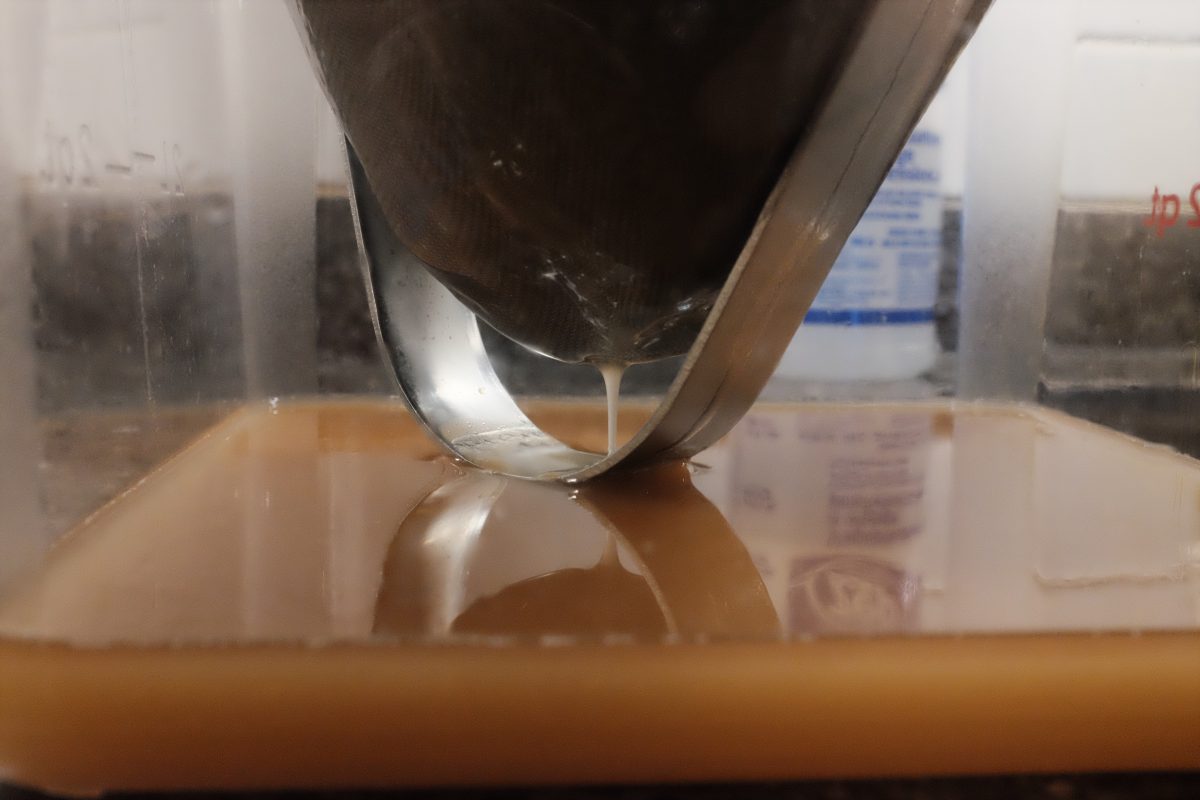
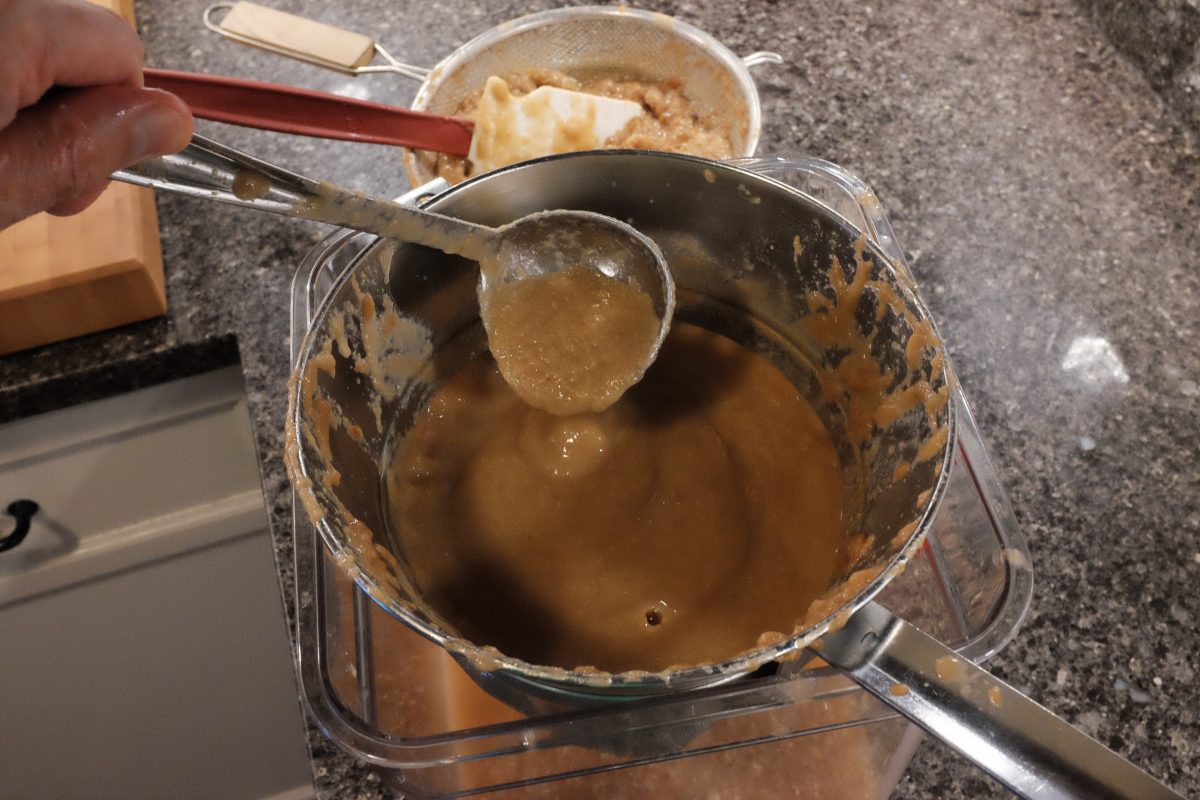
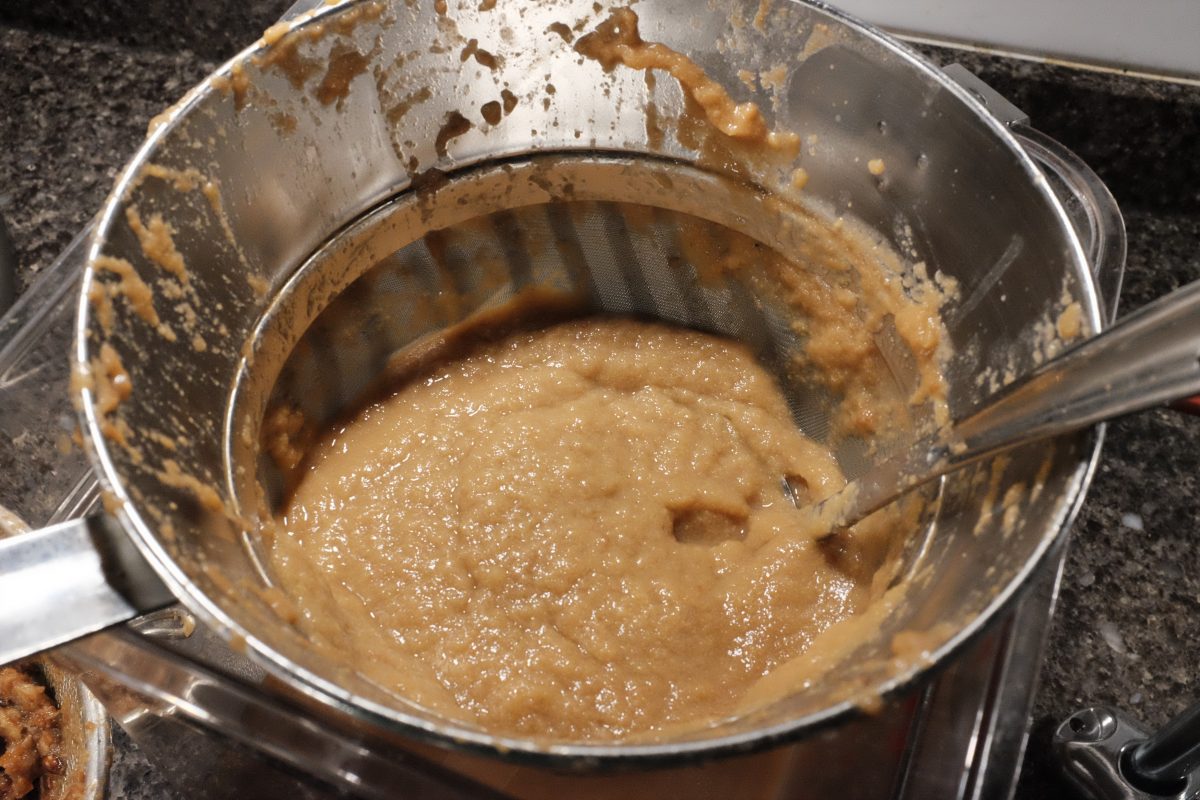
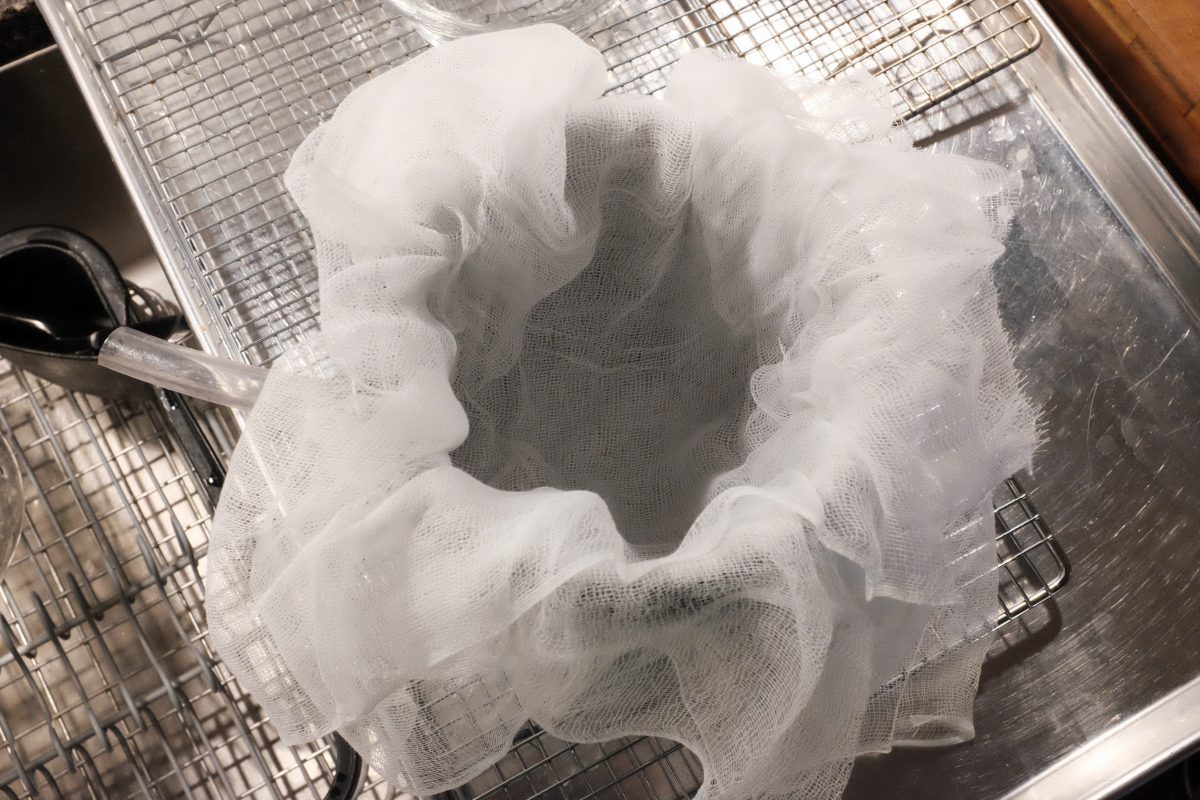
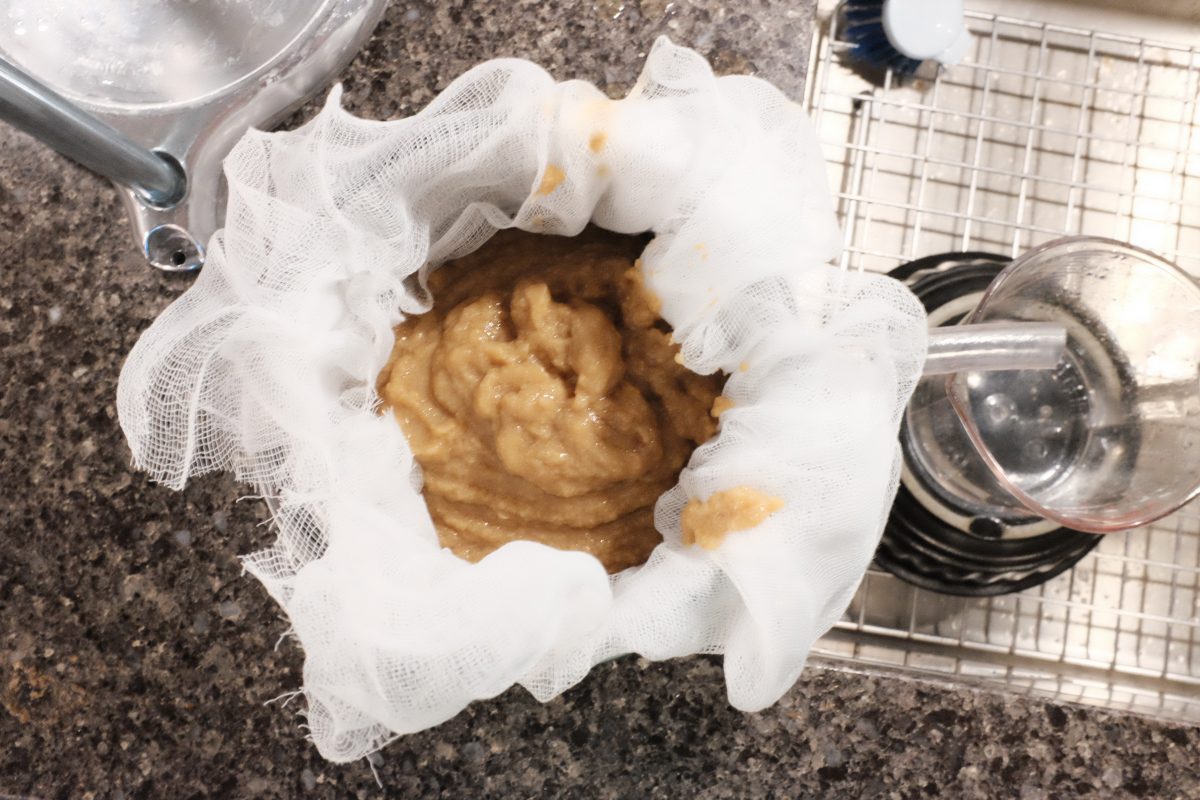
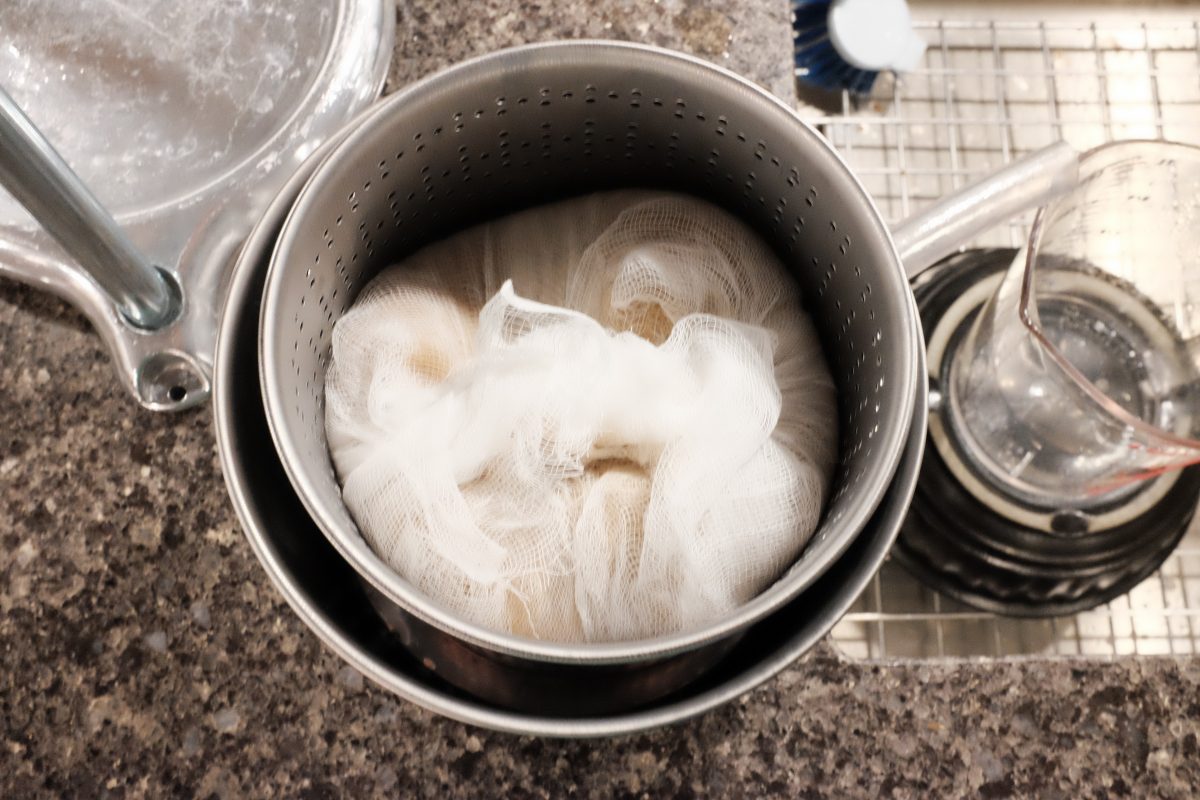
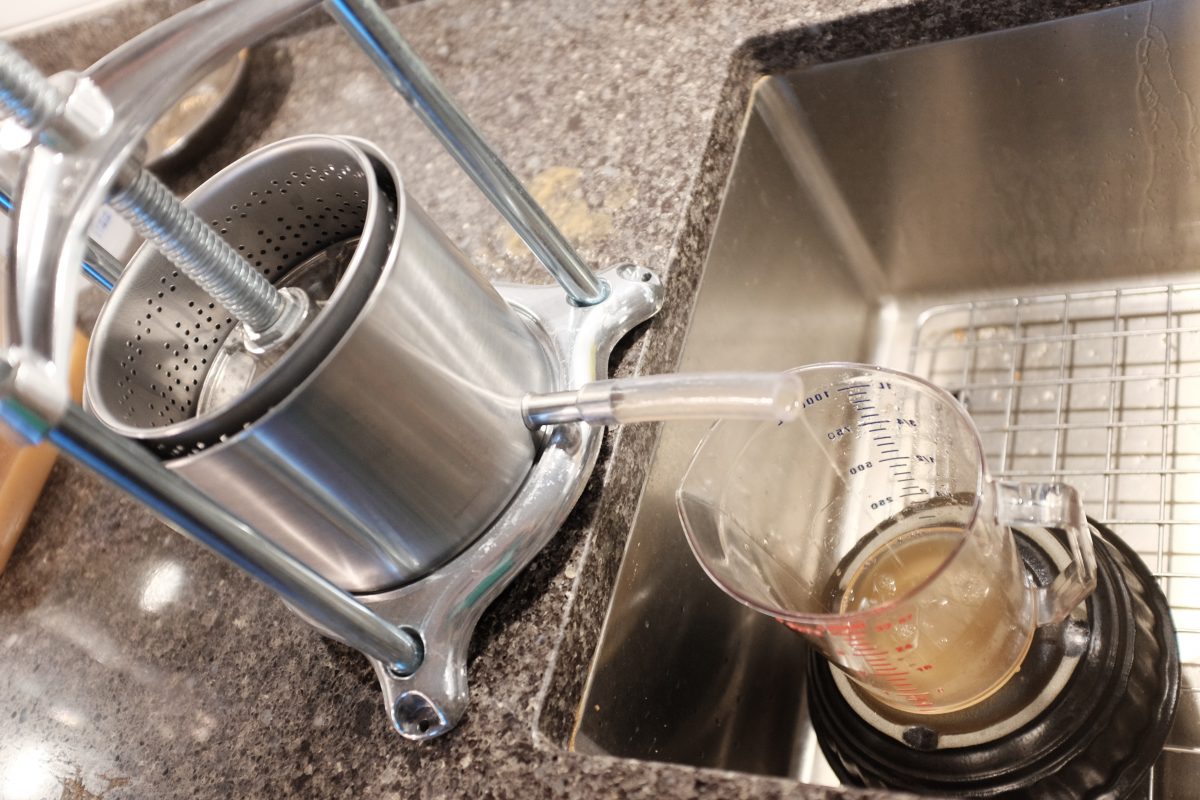
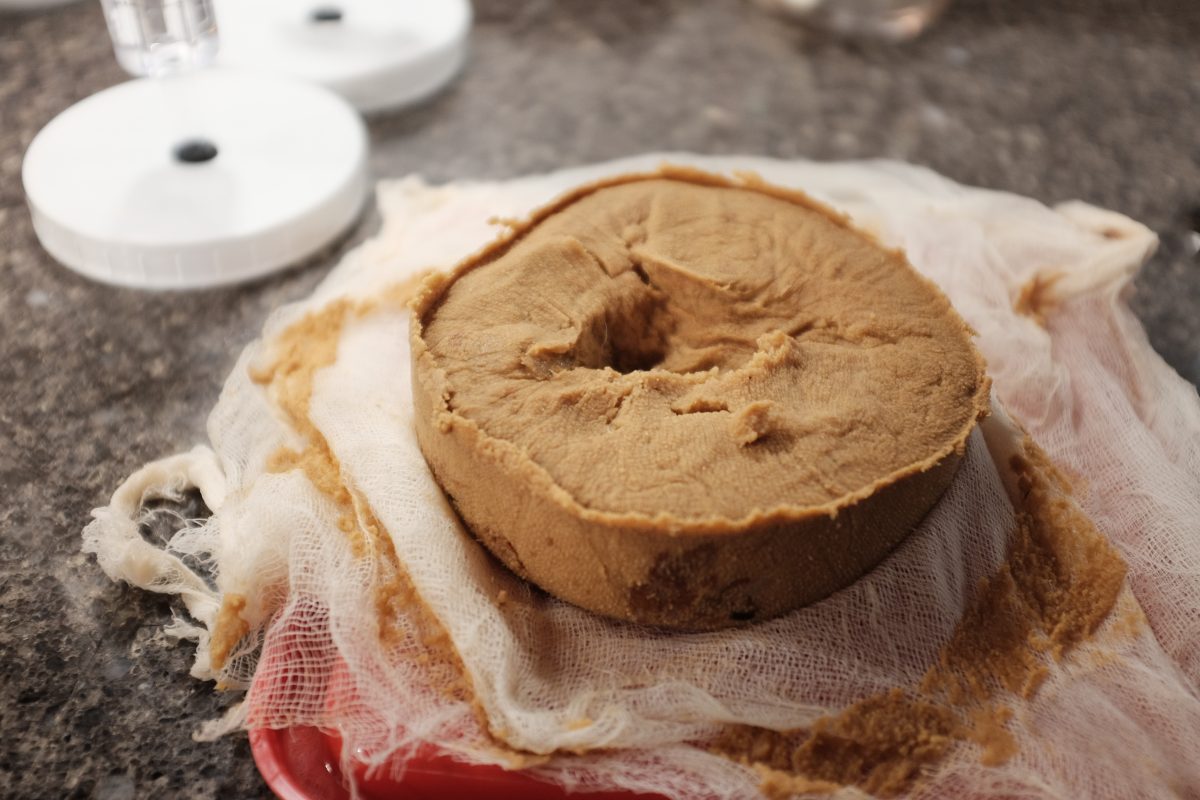
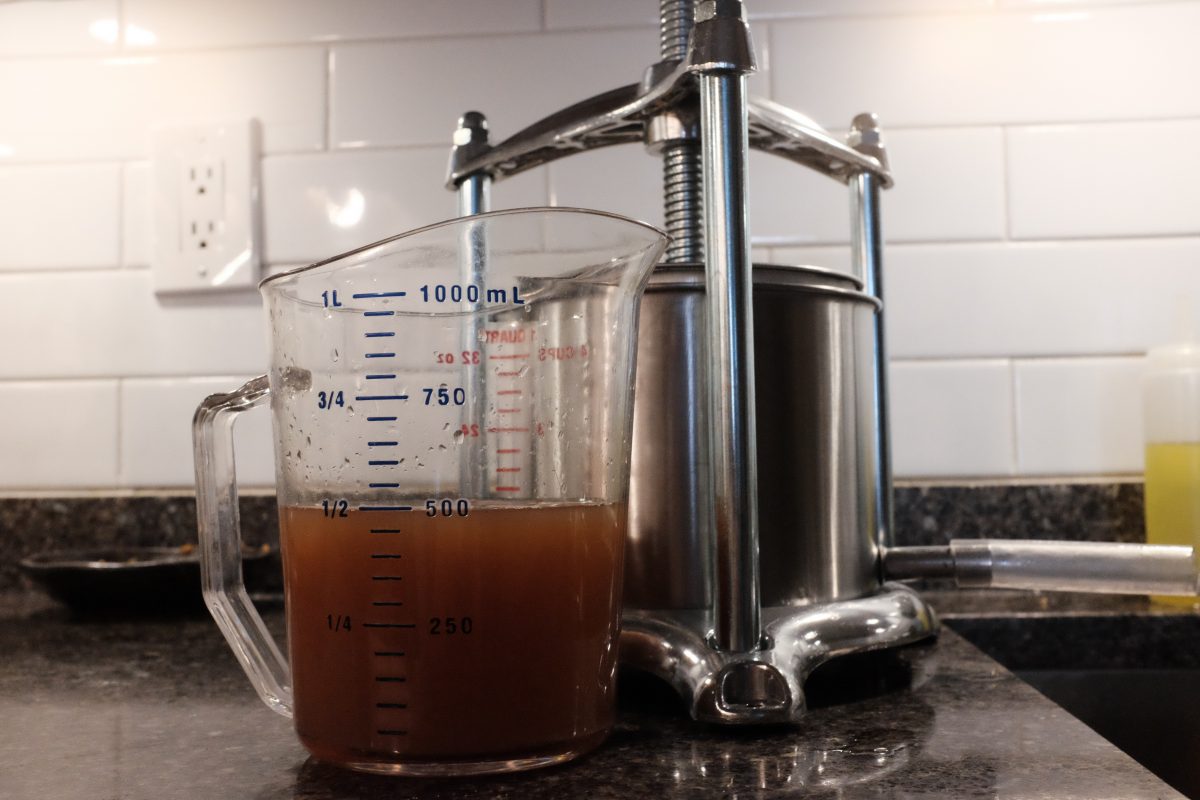
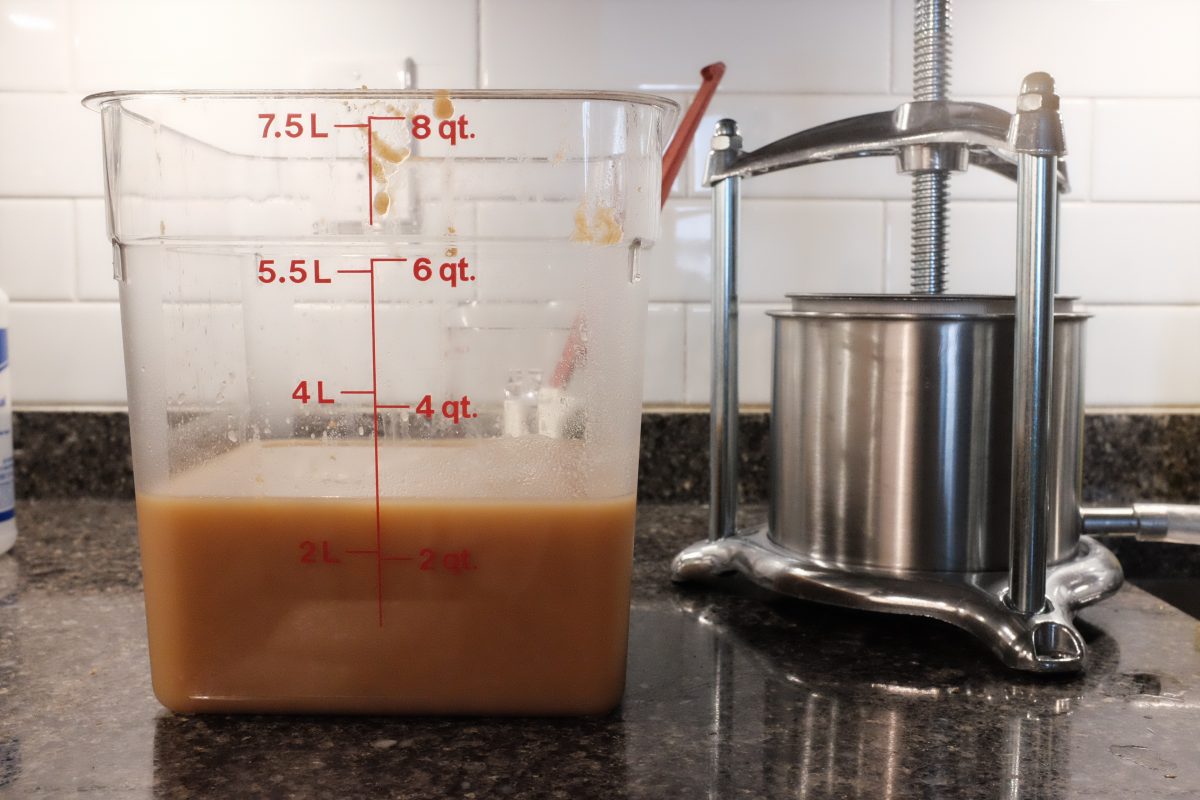
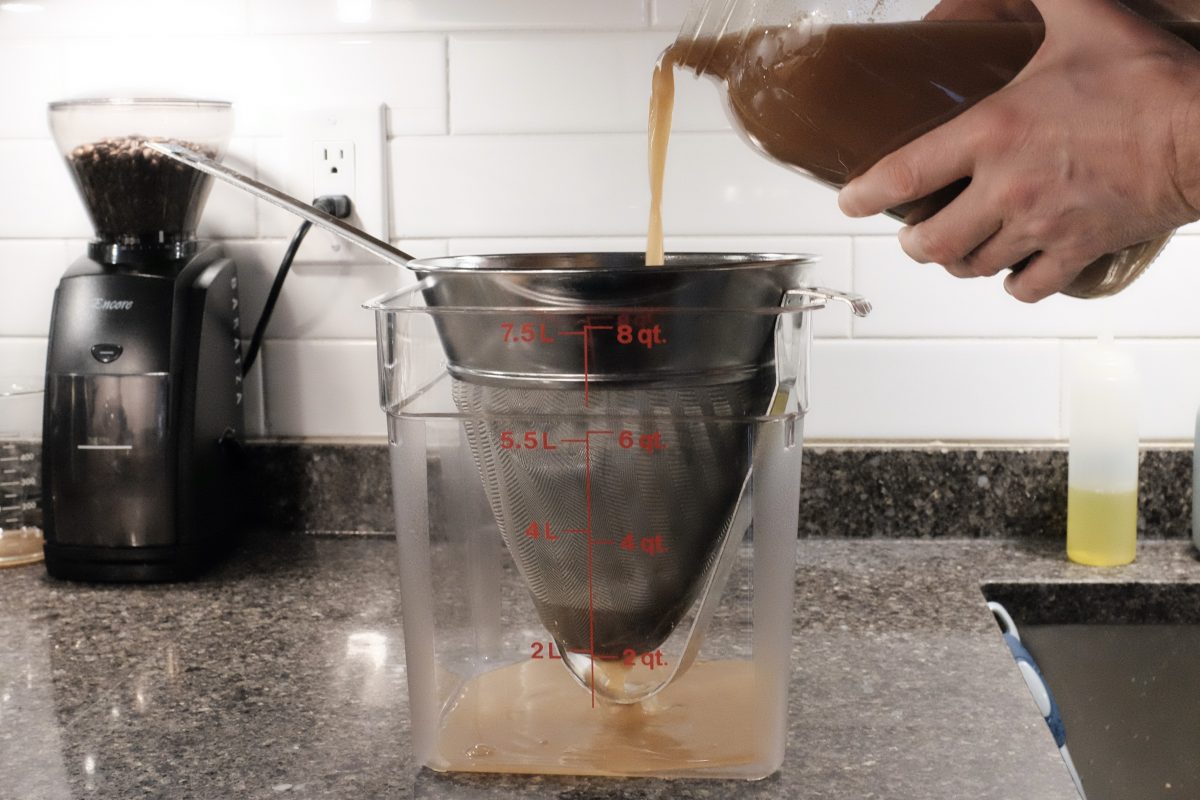
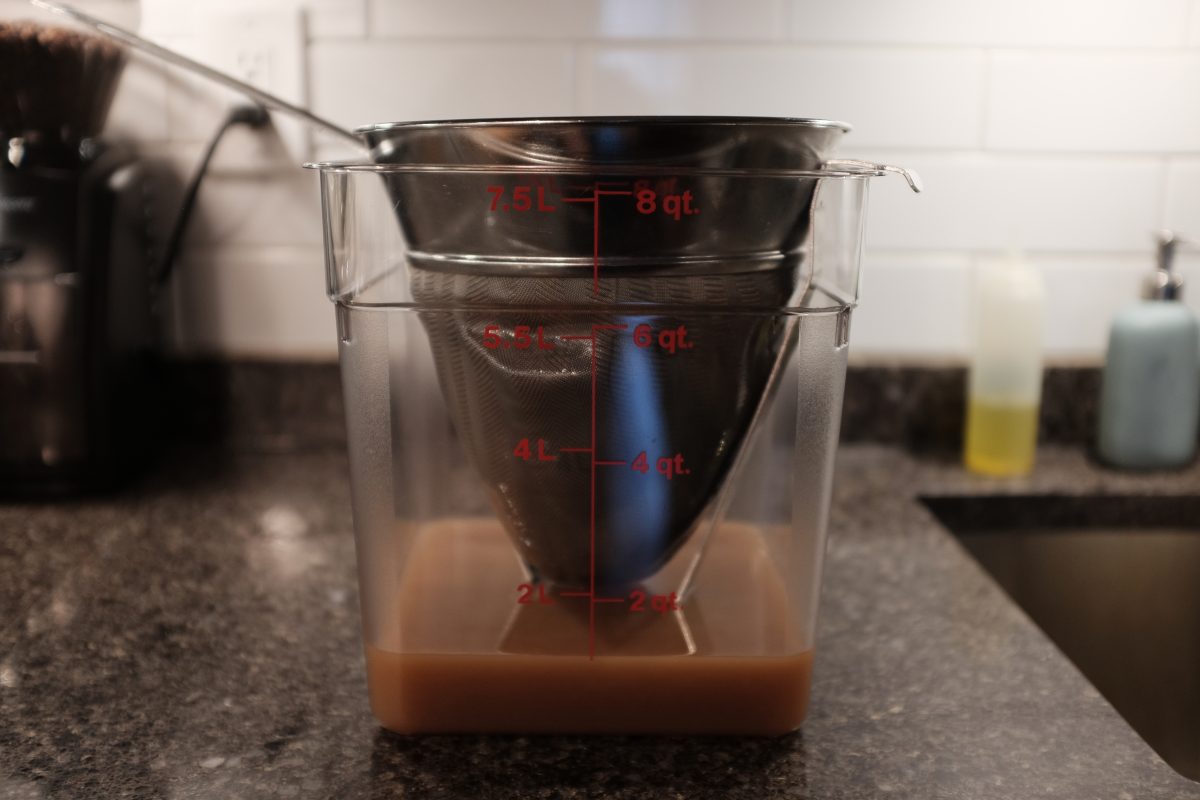
This is probably the most difficult part of this whole process. After doing this a few times, what you see below is the method I prefer but, it is not the only way. The goal is to separate the fibrous parts of the mash from the liquid so as long as you accomplish this, any method is fine.
The Fruit Press
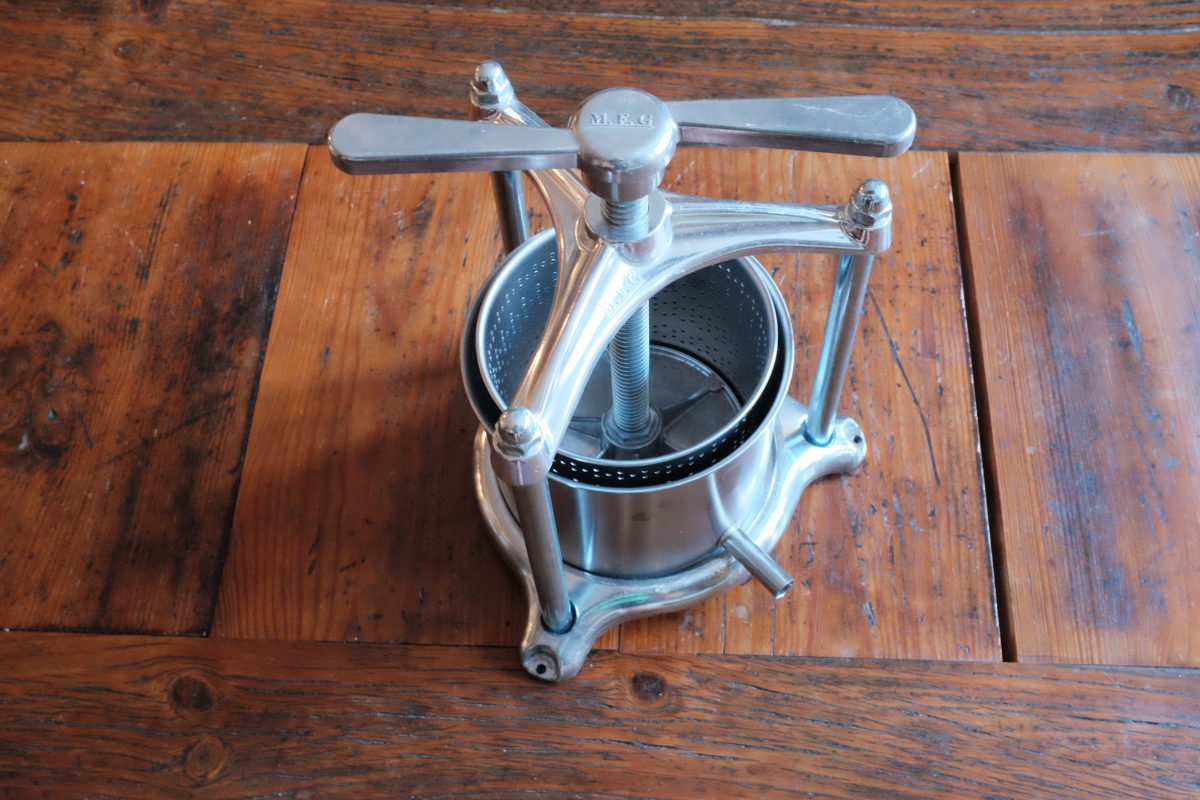
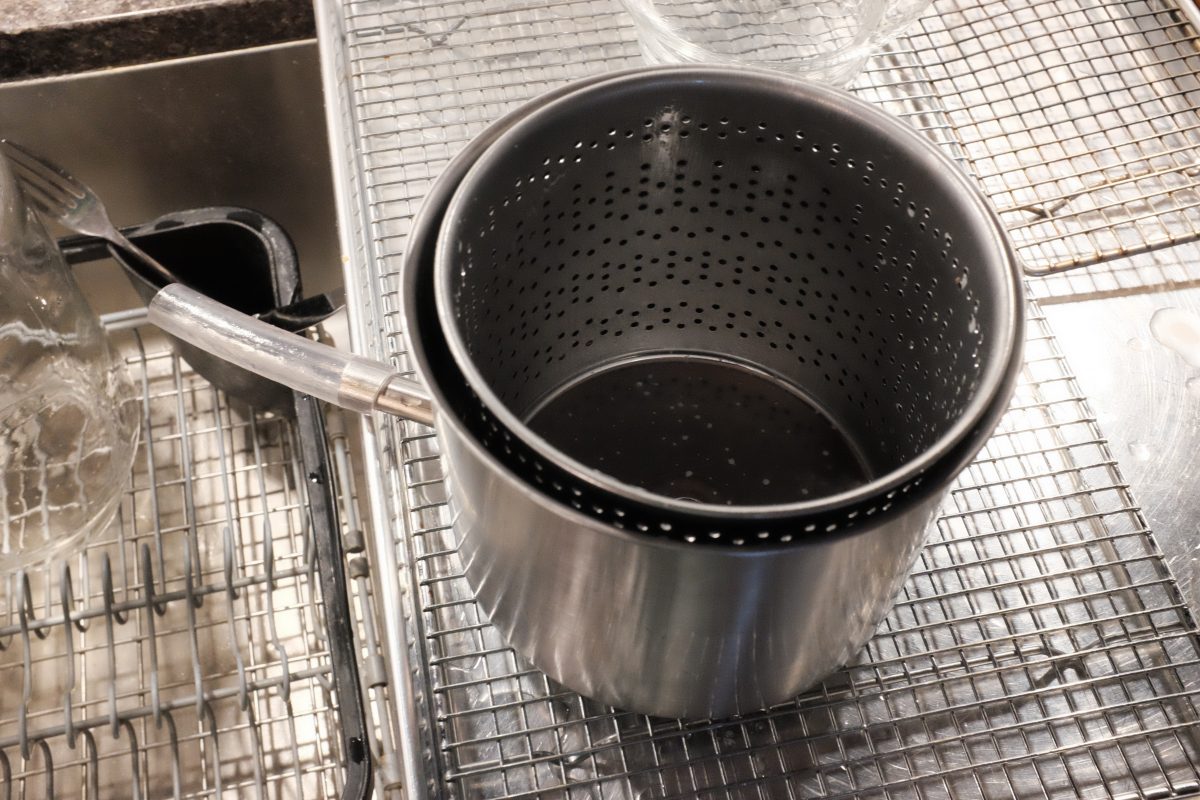
If you don’t have a fruit press, don’t worry. Take your strained juice and skip down to “Neutralizing the Brewers Yeast”. If you have a fruit press or if you are interested in how one works , please read on…
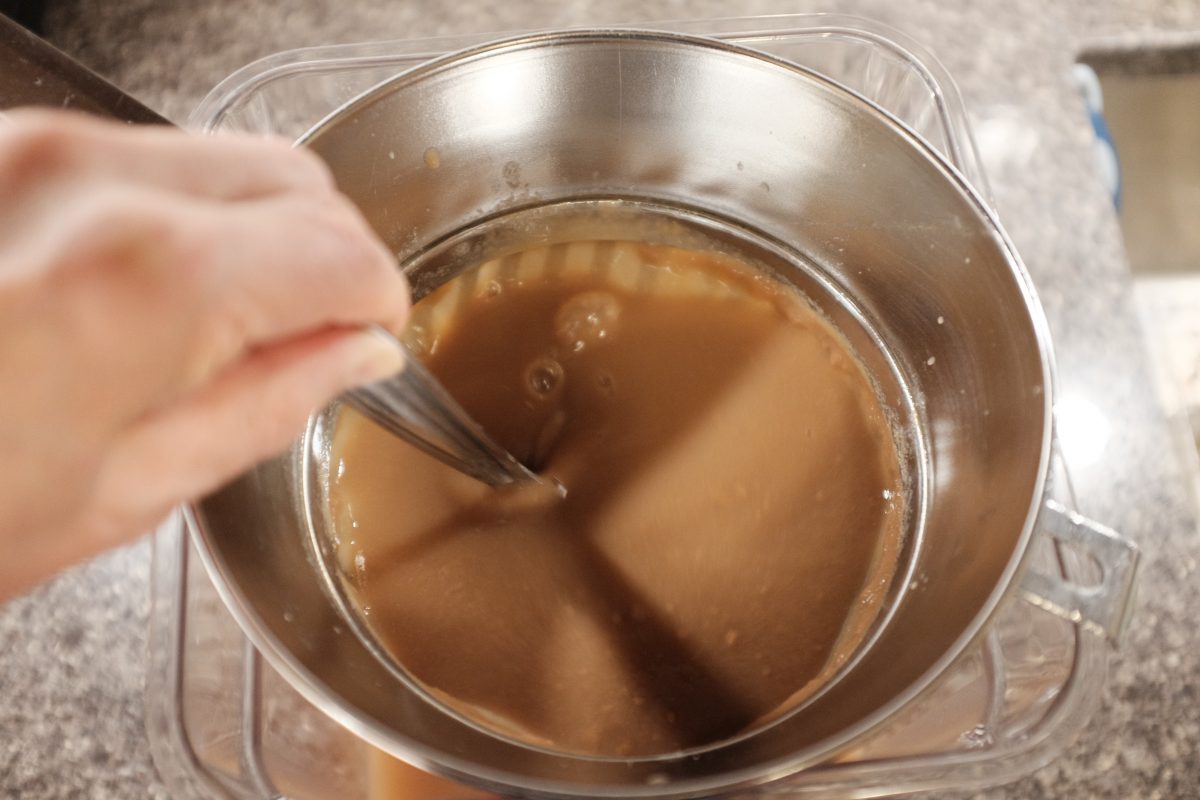
Neutralizing the brewers yeast
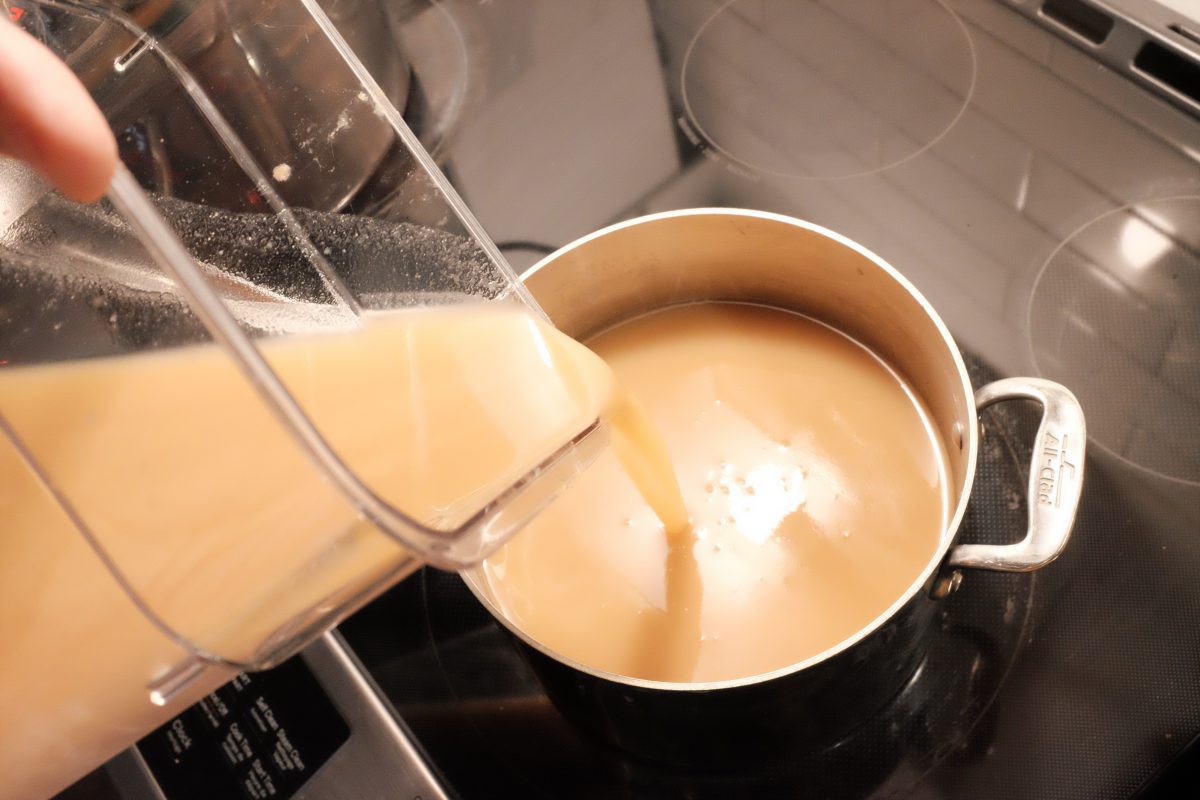
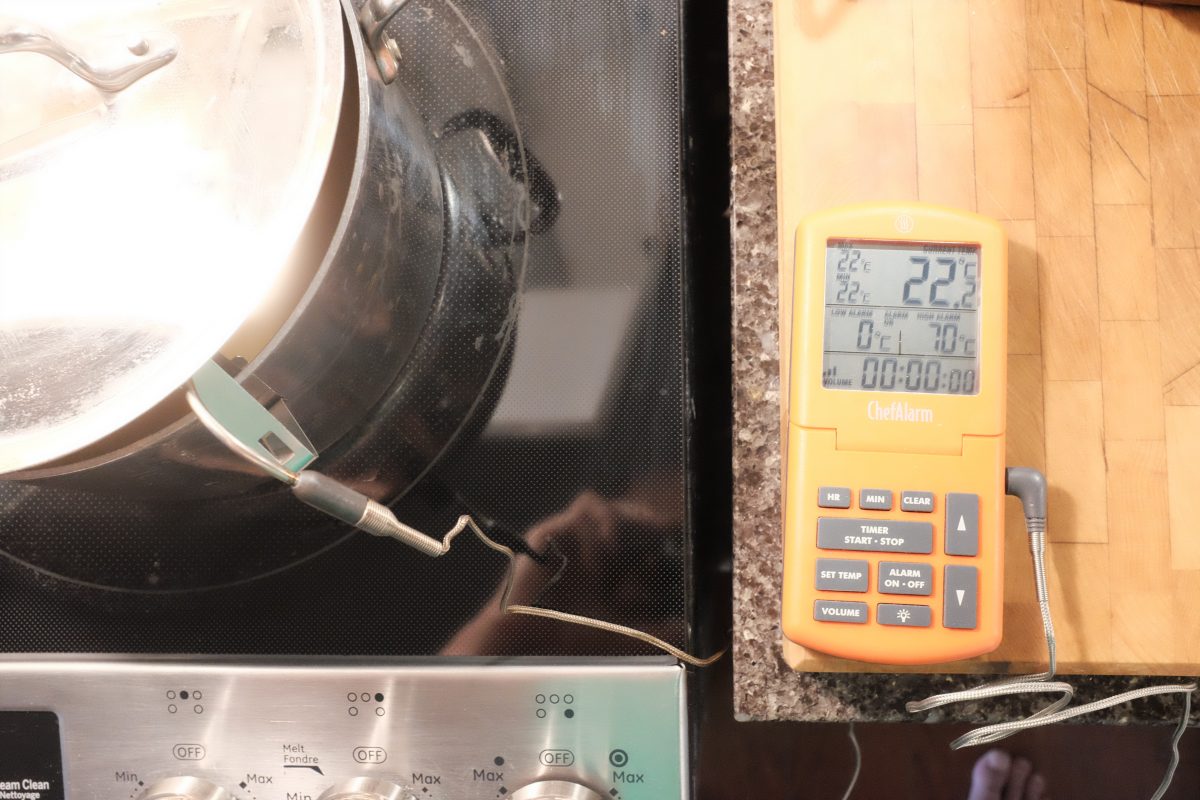
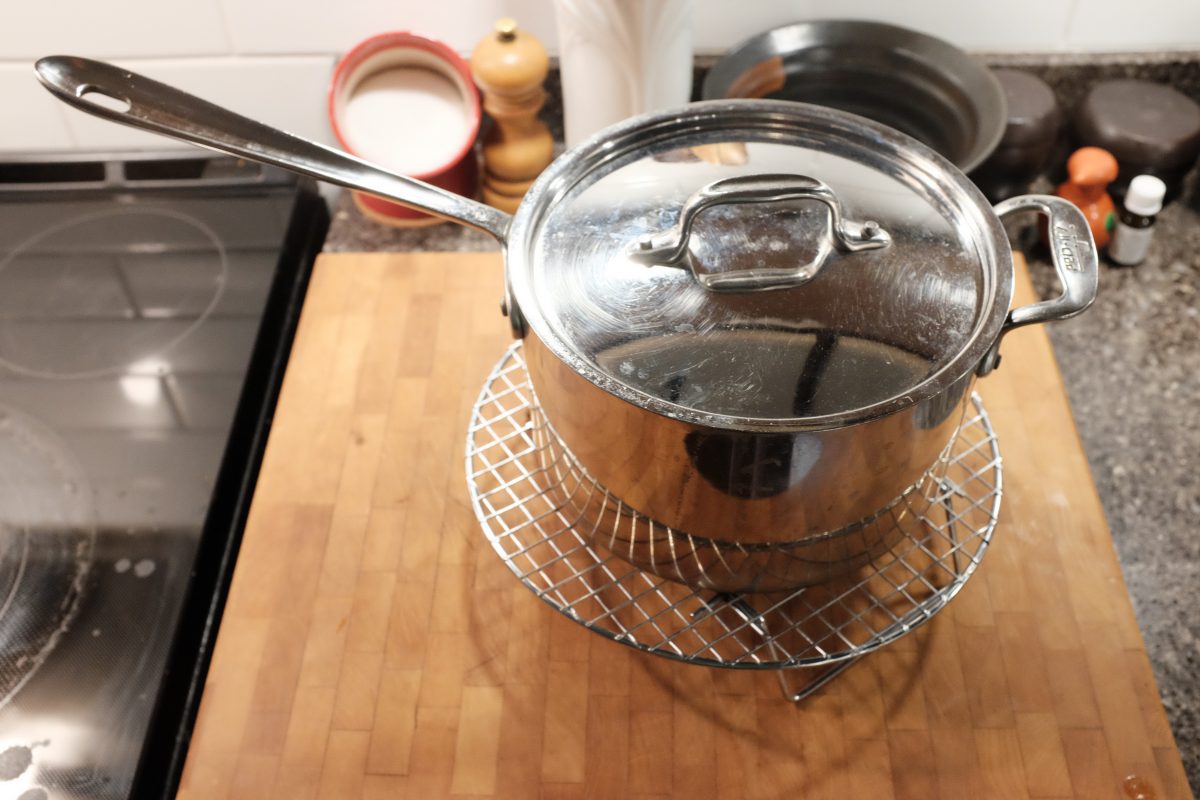
Part 2: Making Vinegar
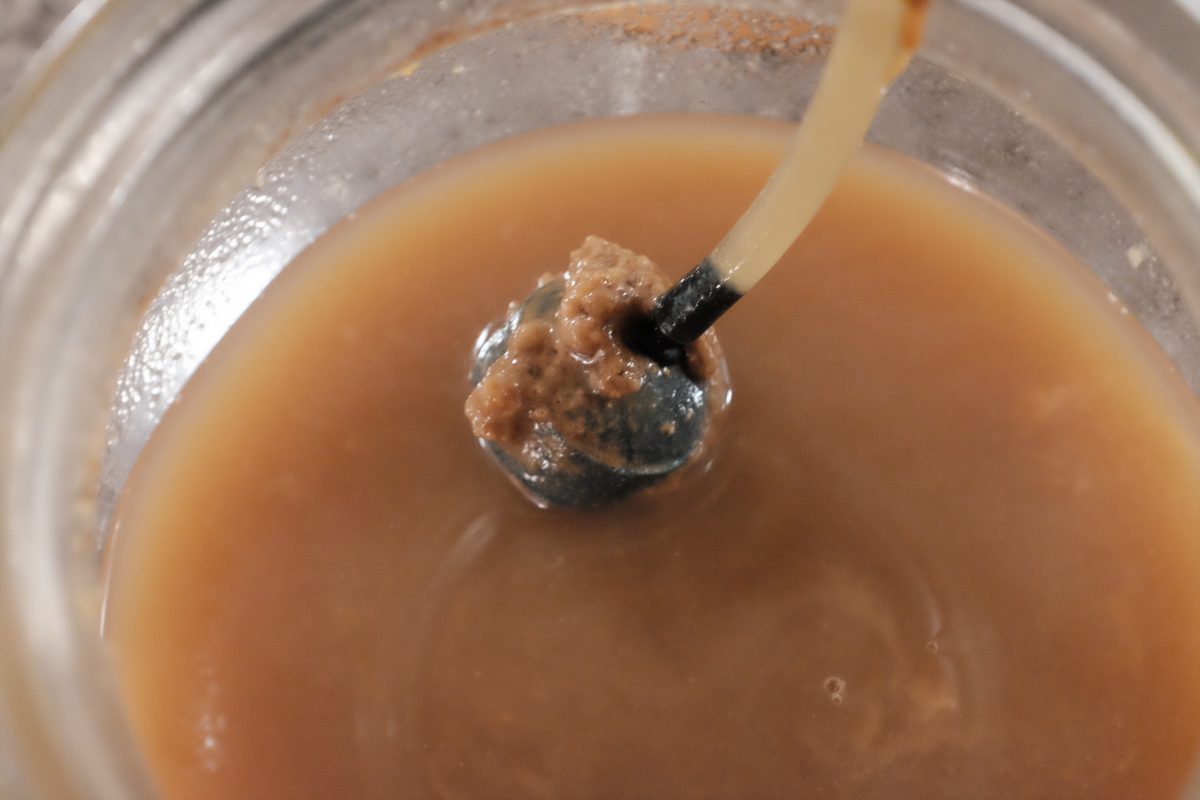
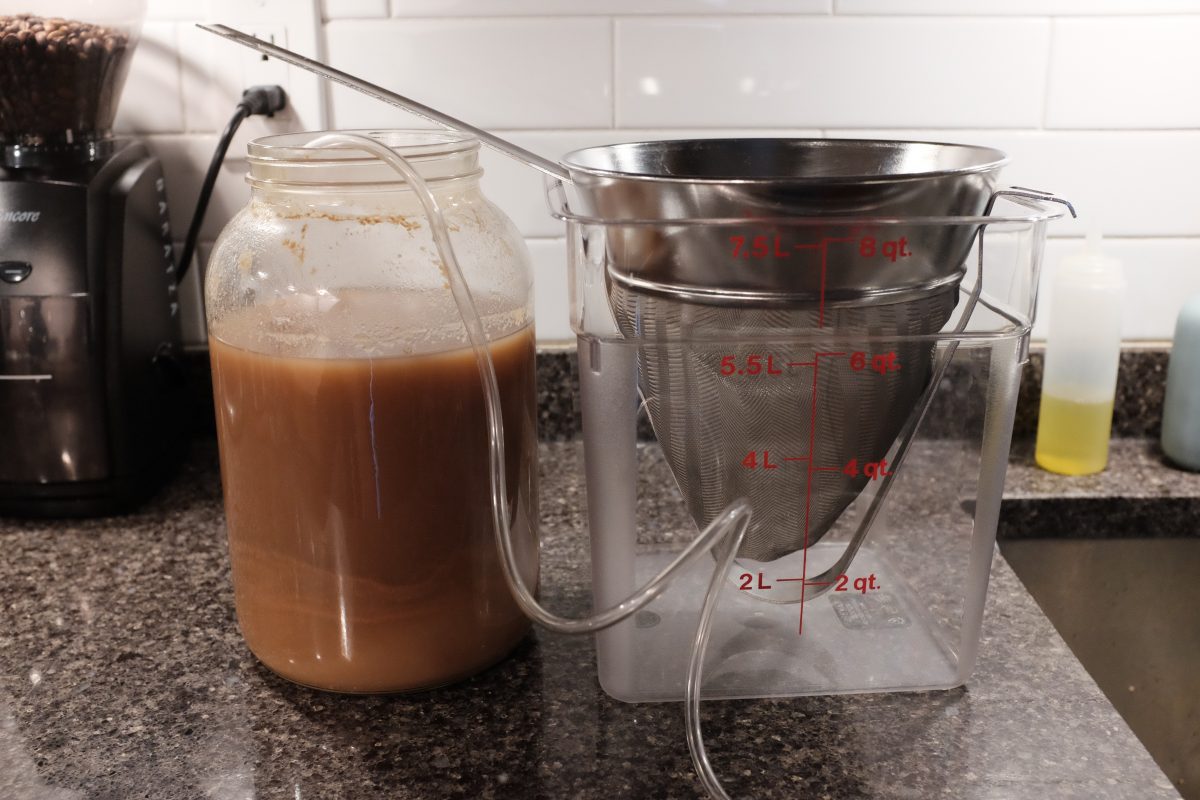
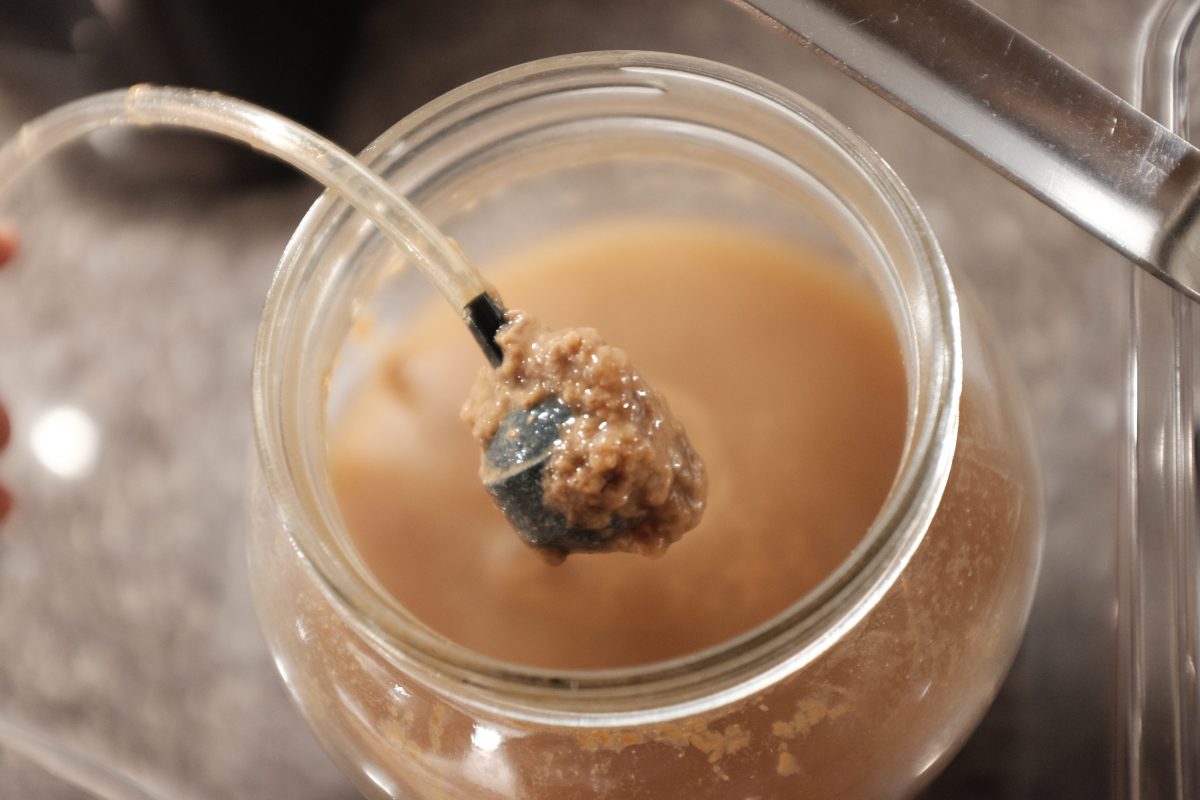
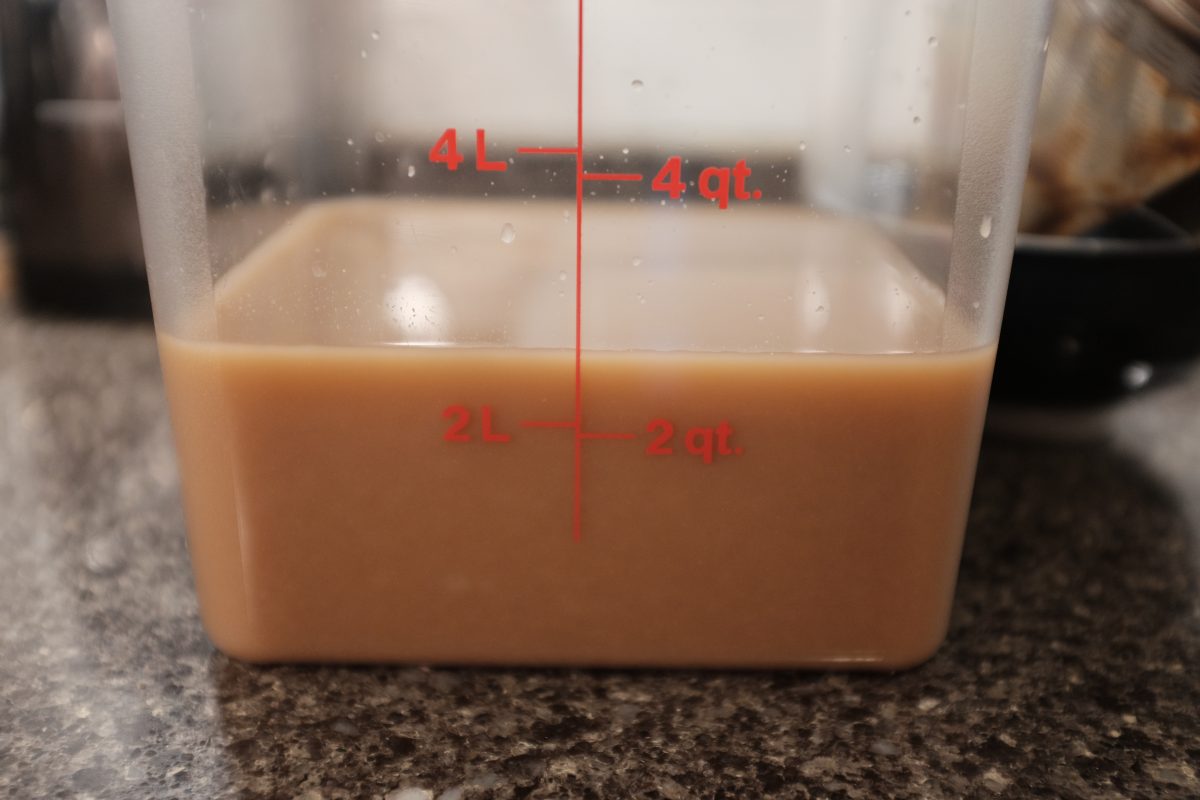
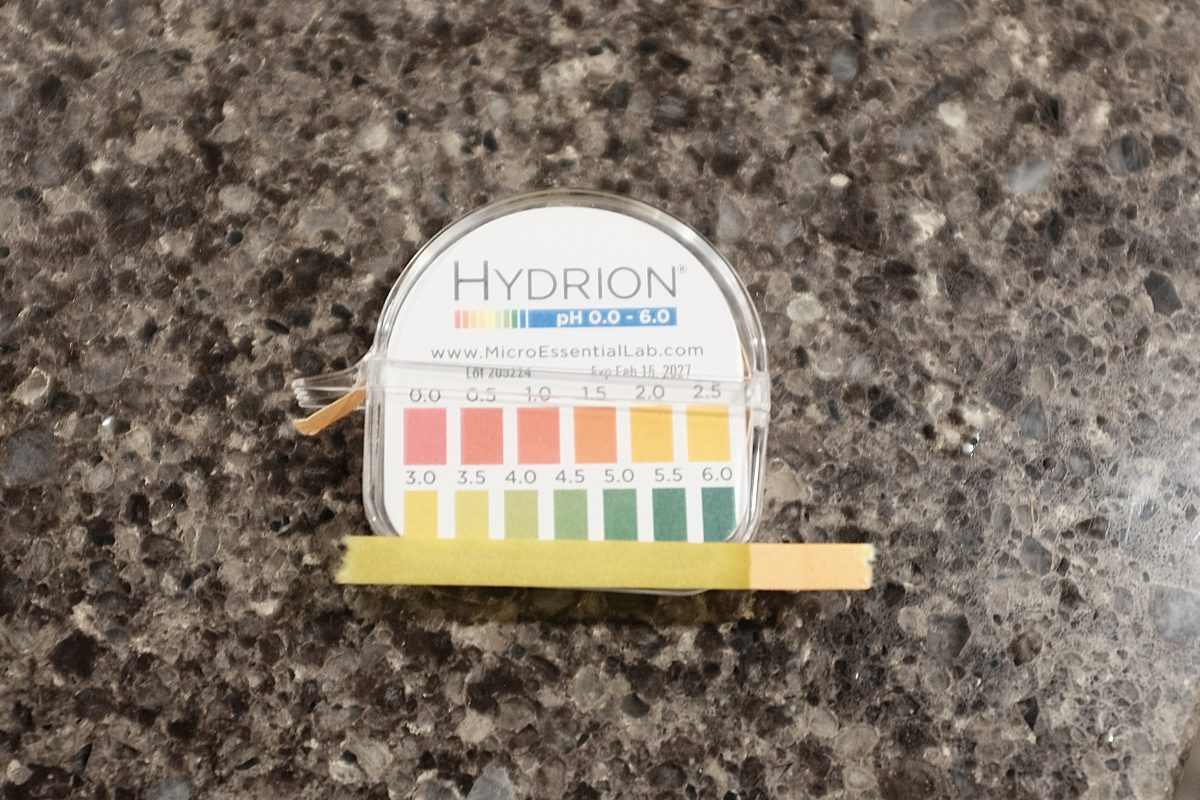
In this second part of the recipe, the pear alcohol will ferment into vinegar with the help of acetic acid bacteria (AAB). We will kick start the fermentation with some live culture vinegar and then aerate it with a pump and air stone until it reaches a pleasant level of acidity.
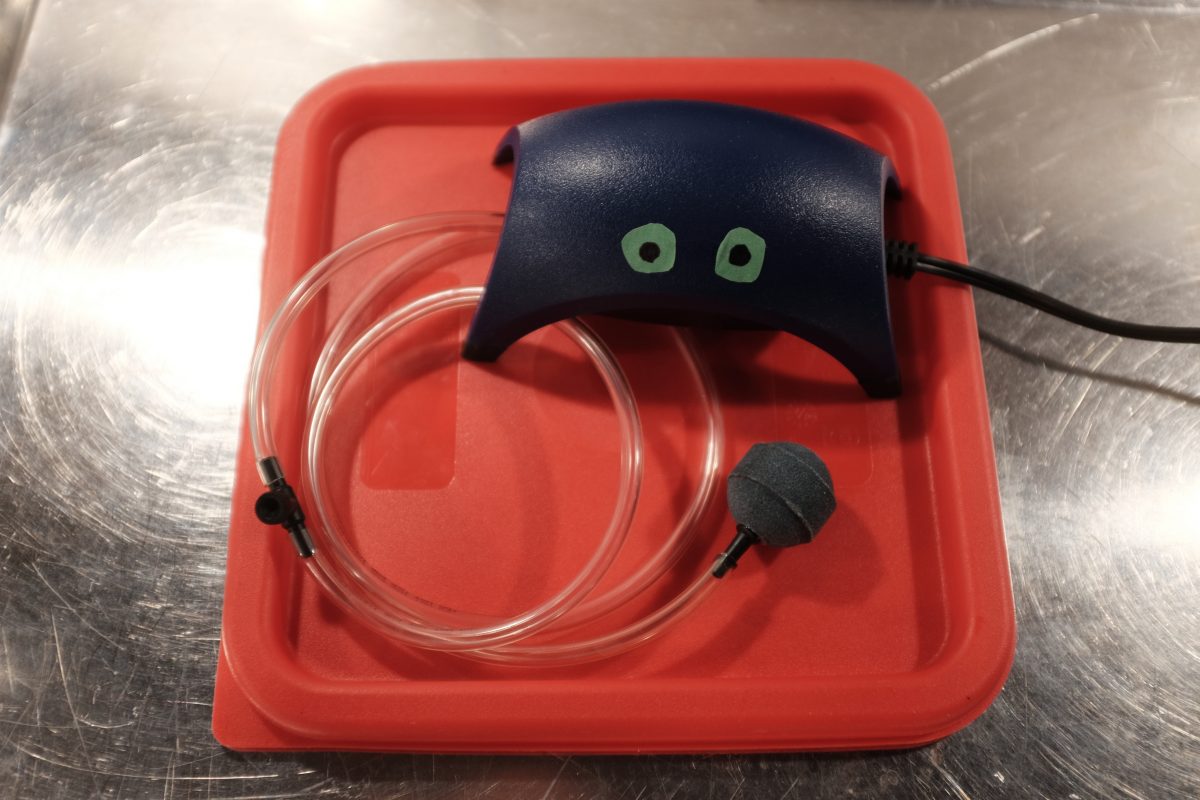
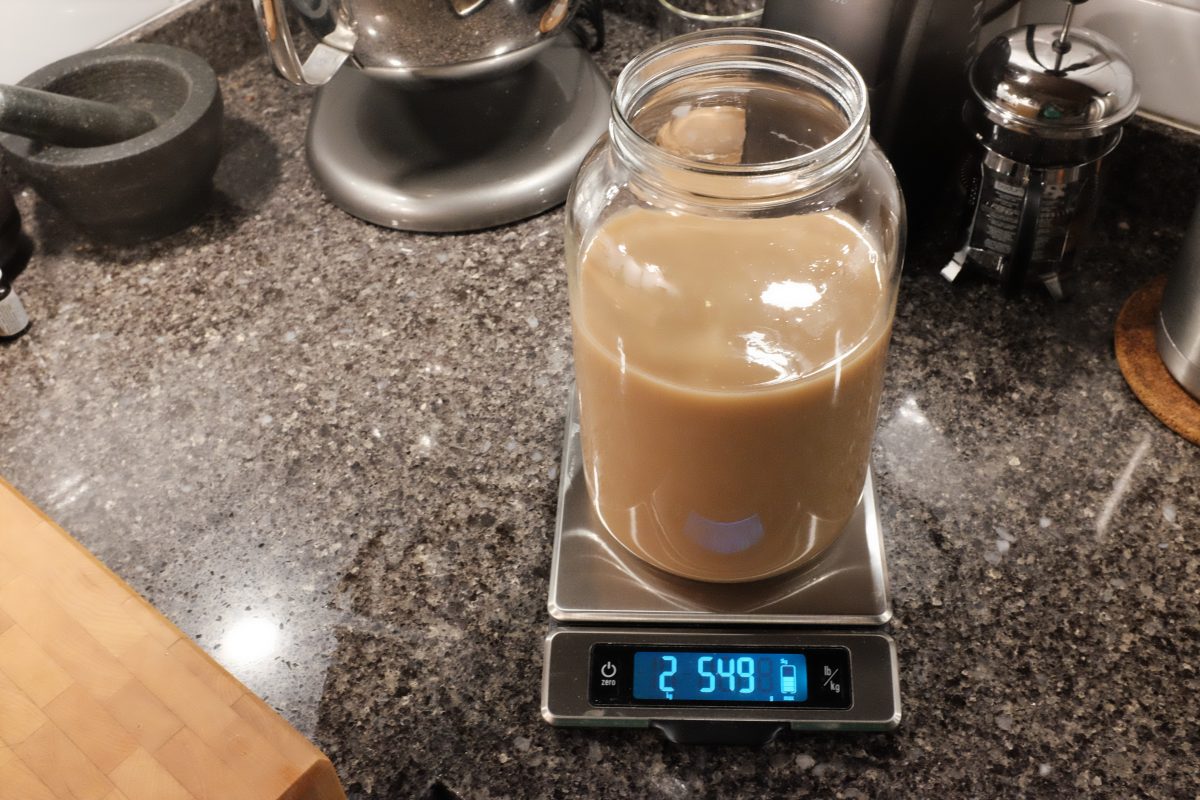
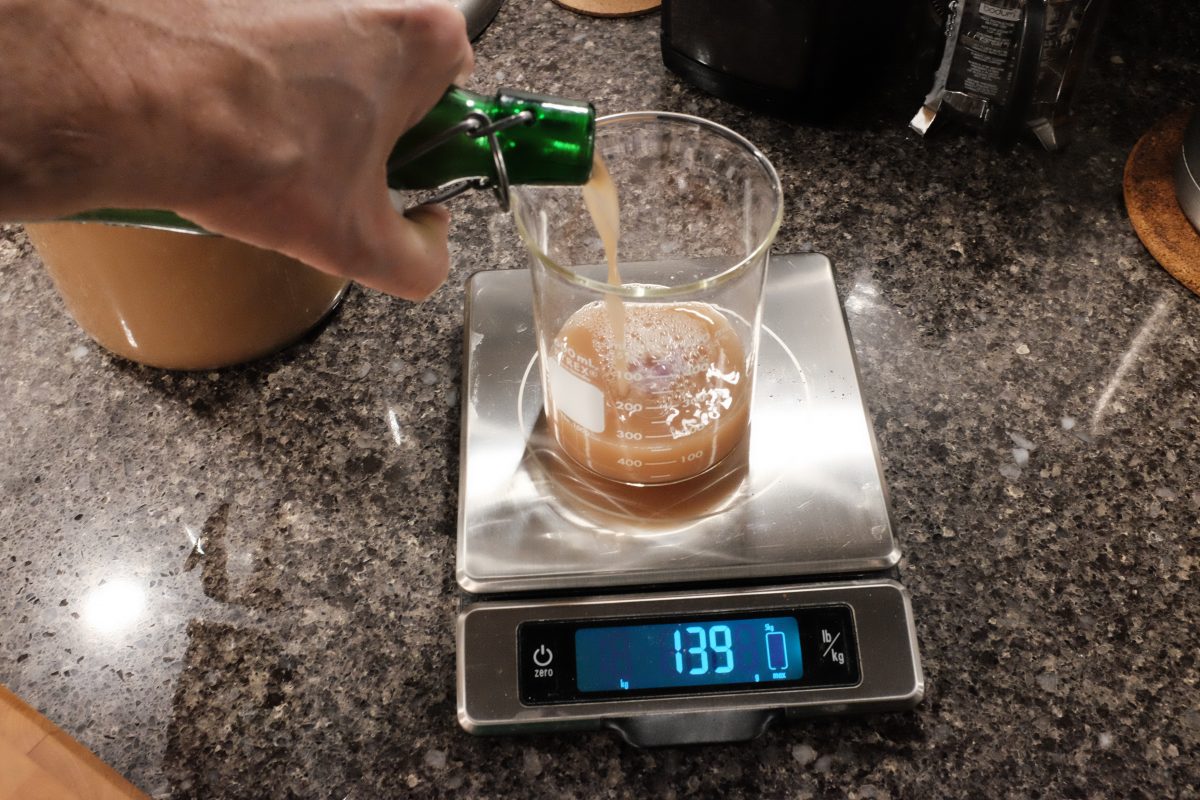
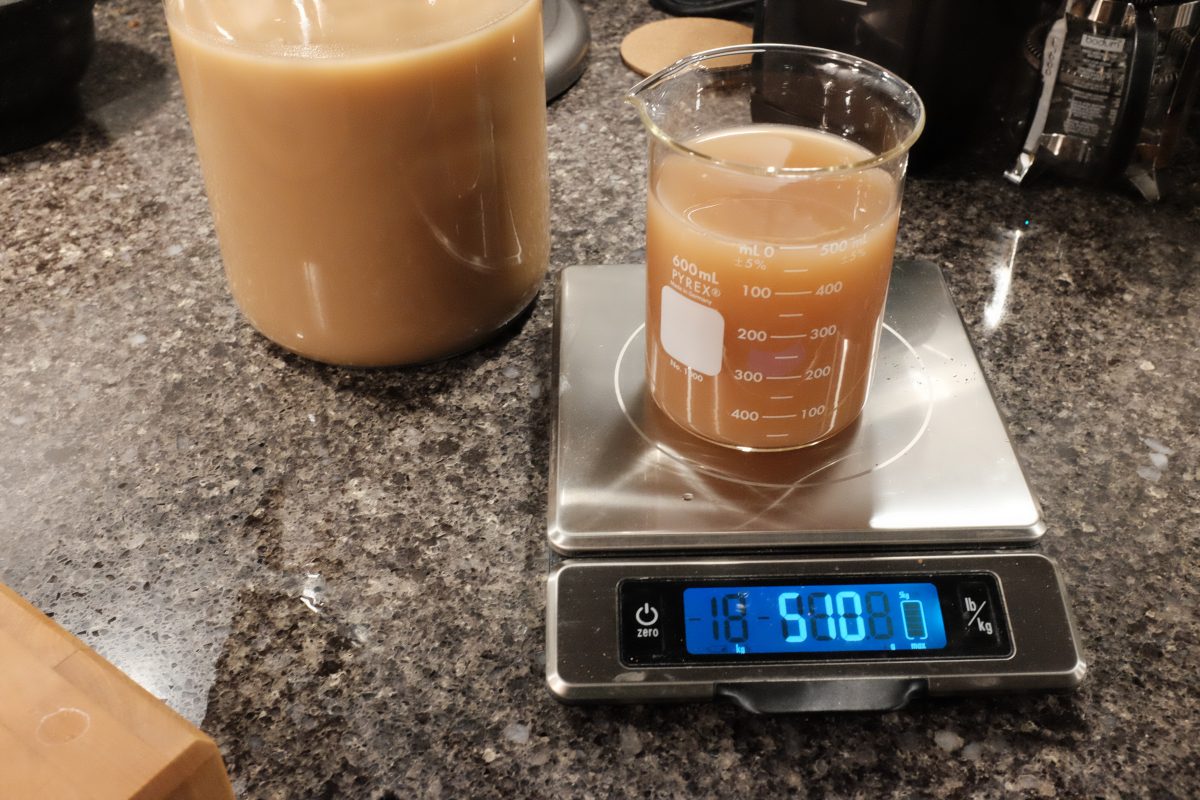
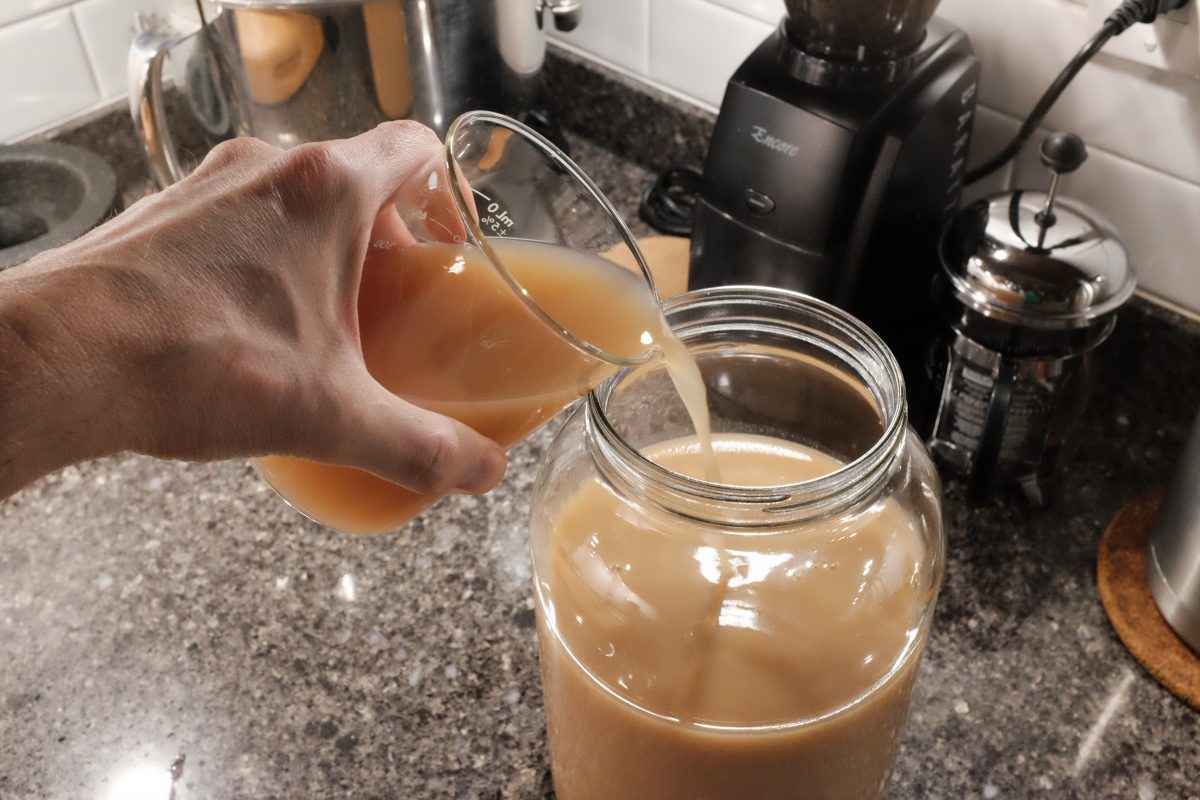
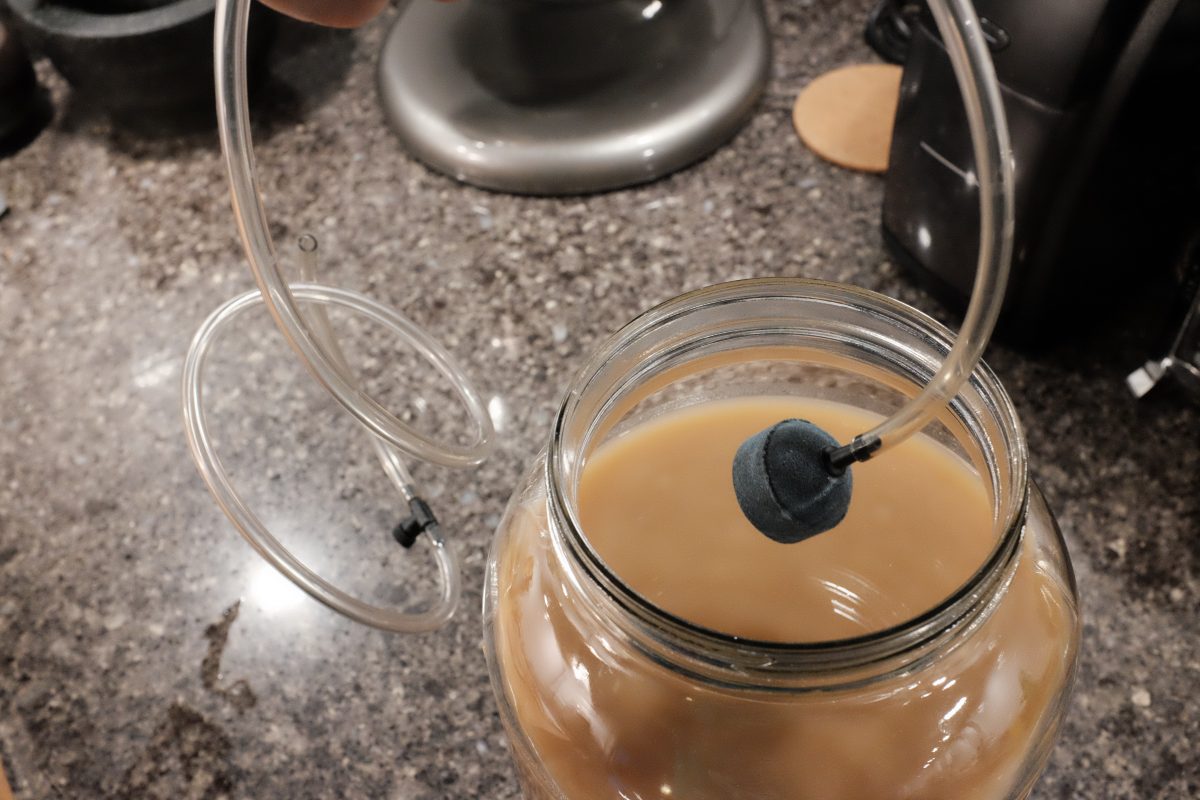
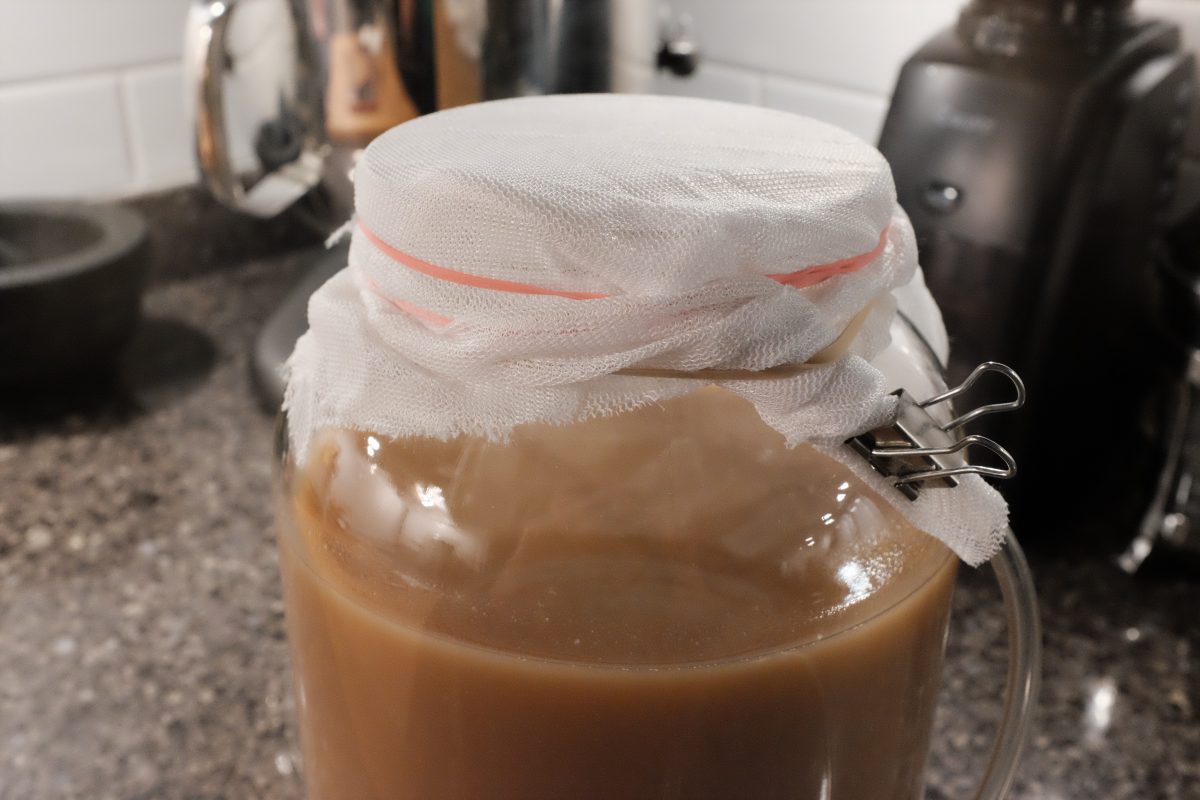
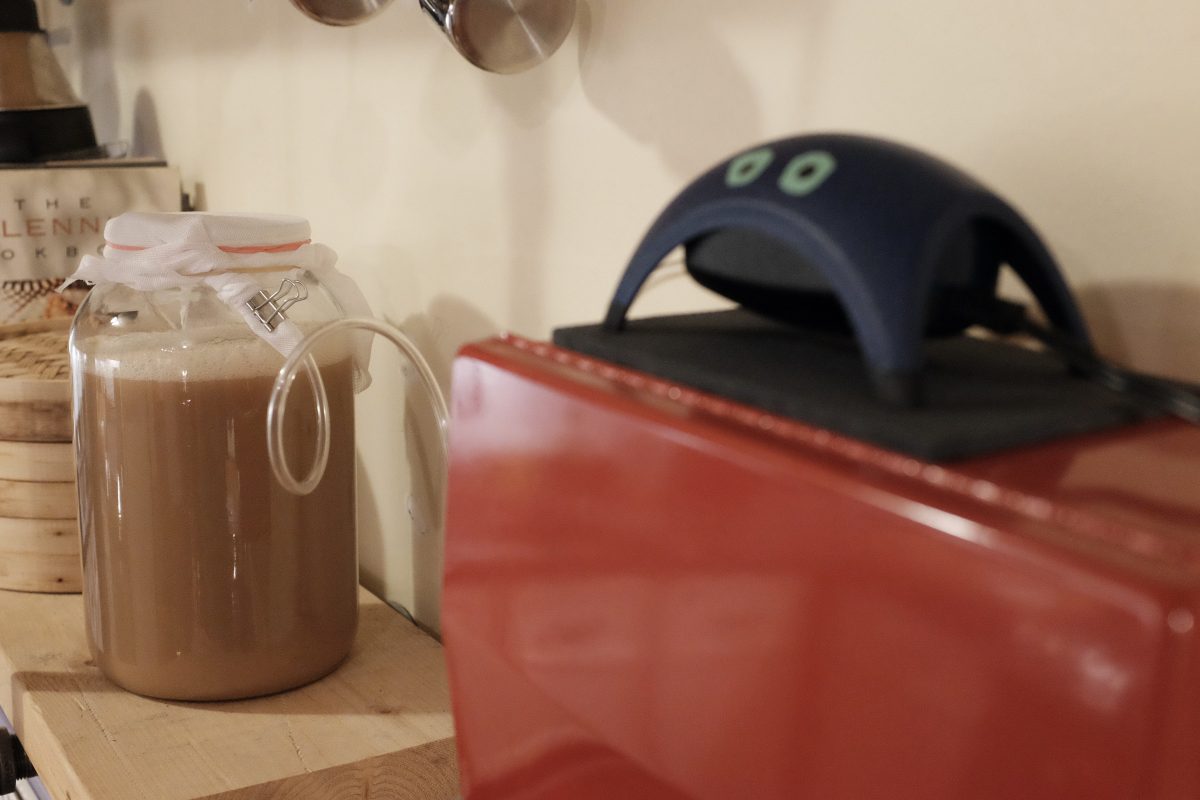
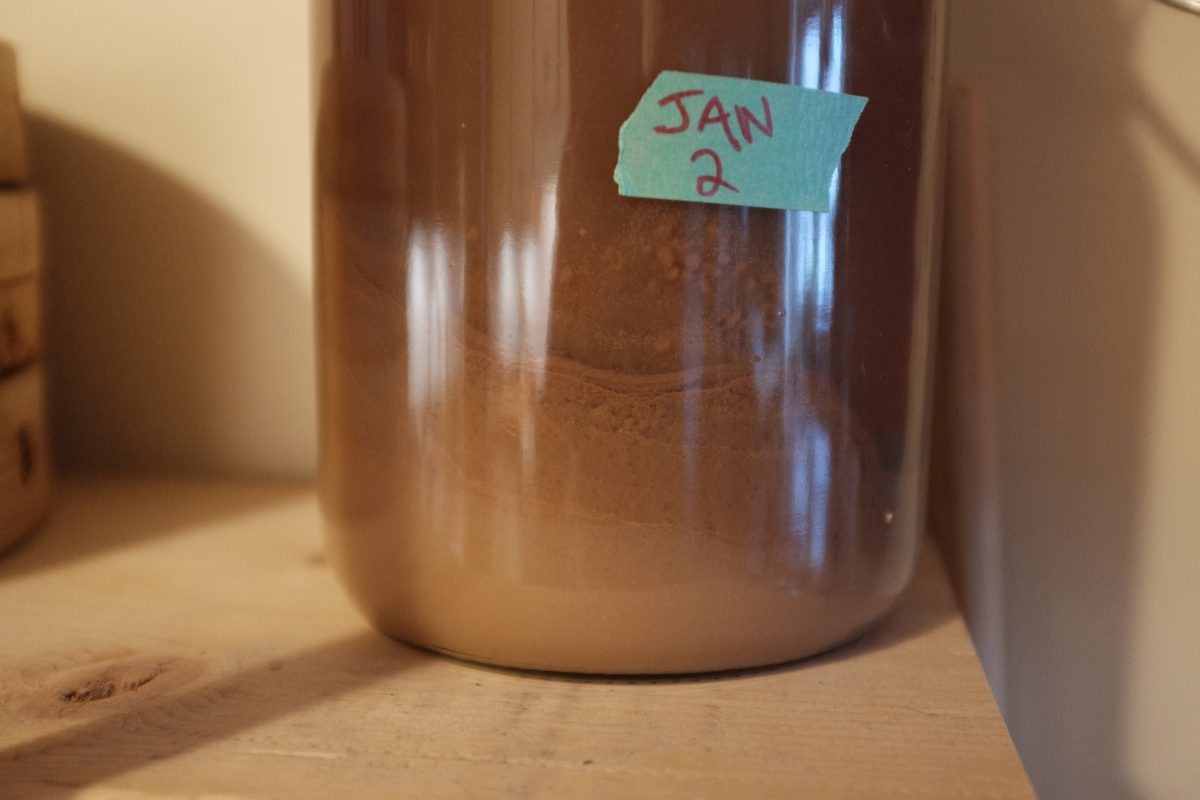
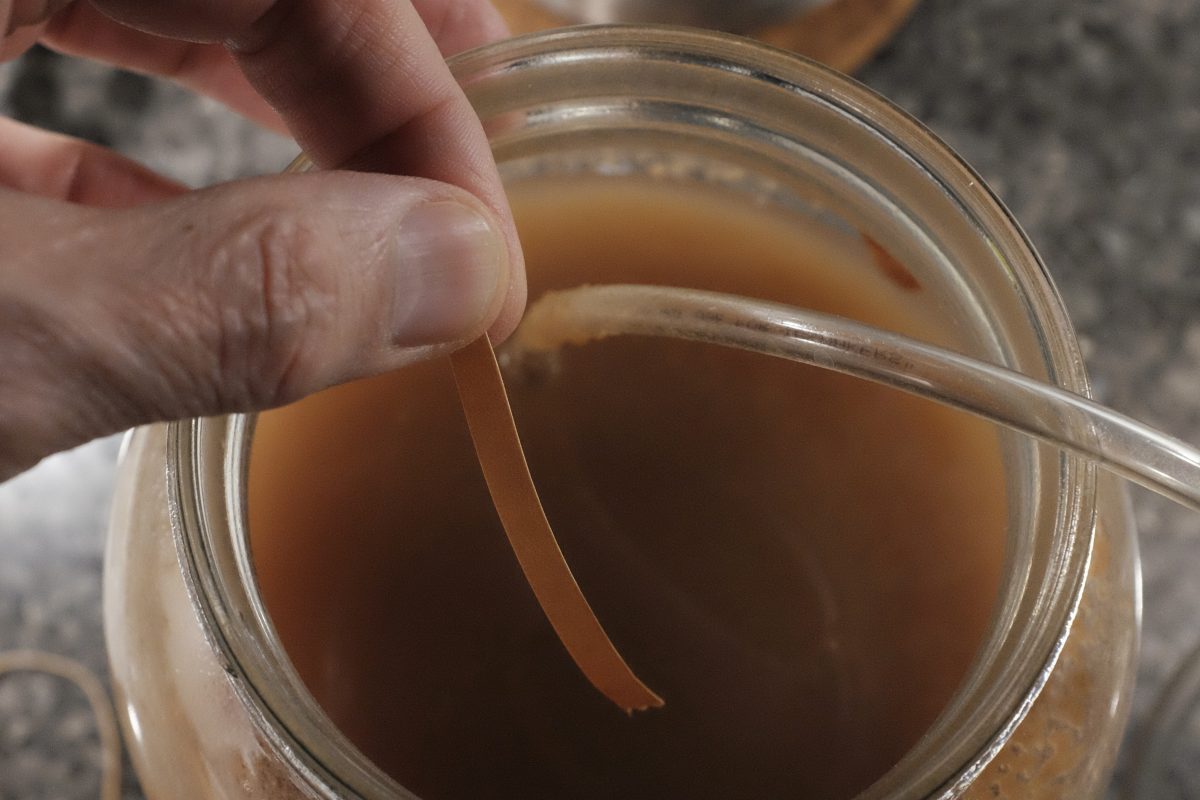
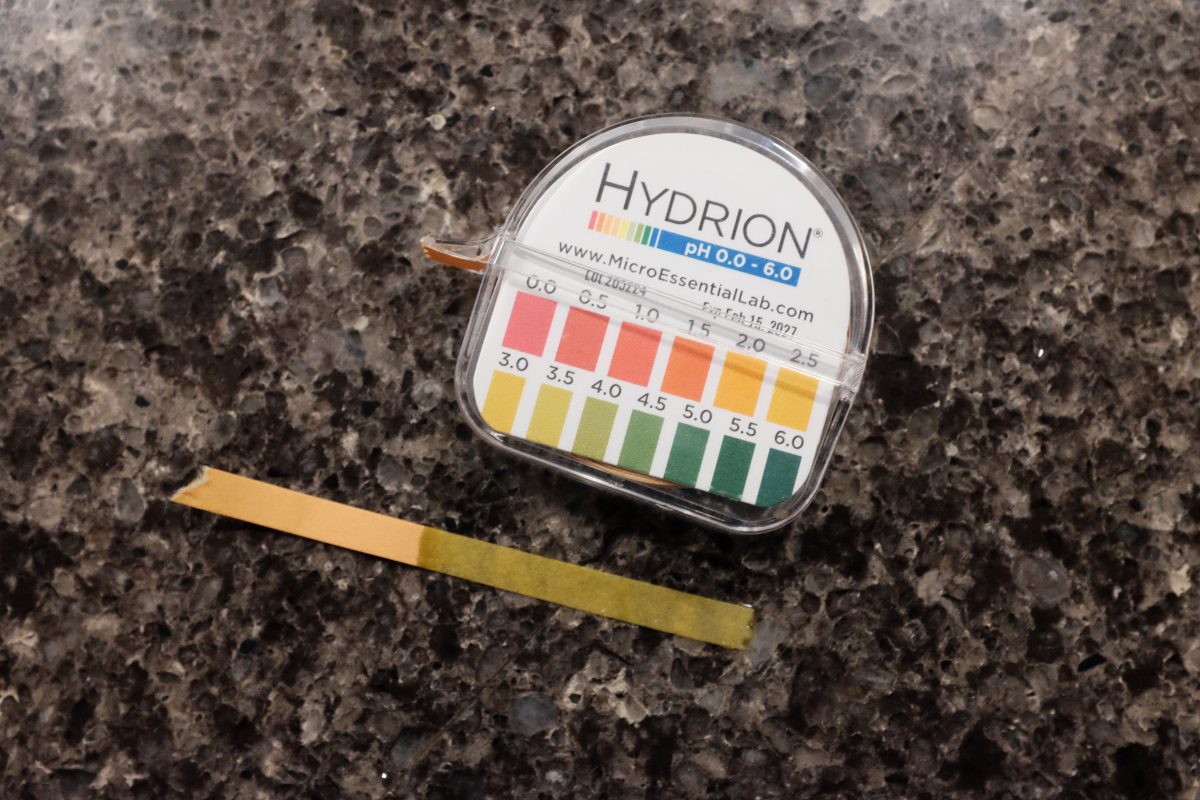
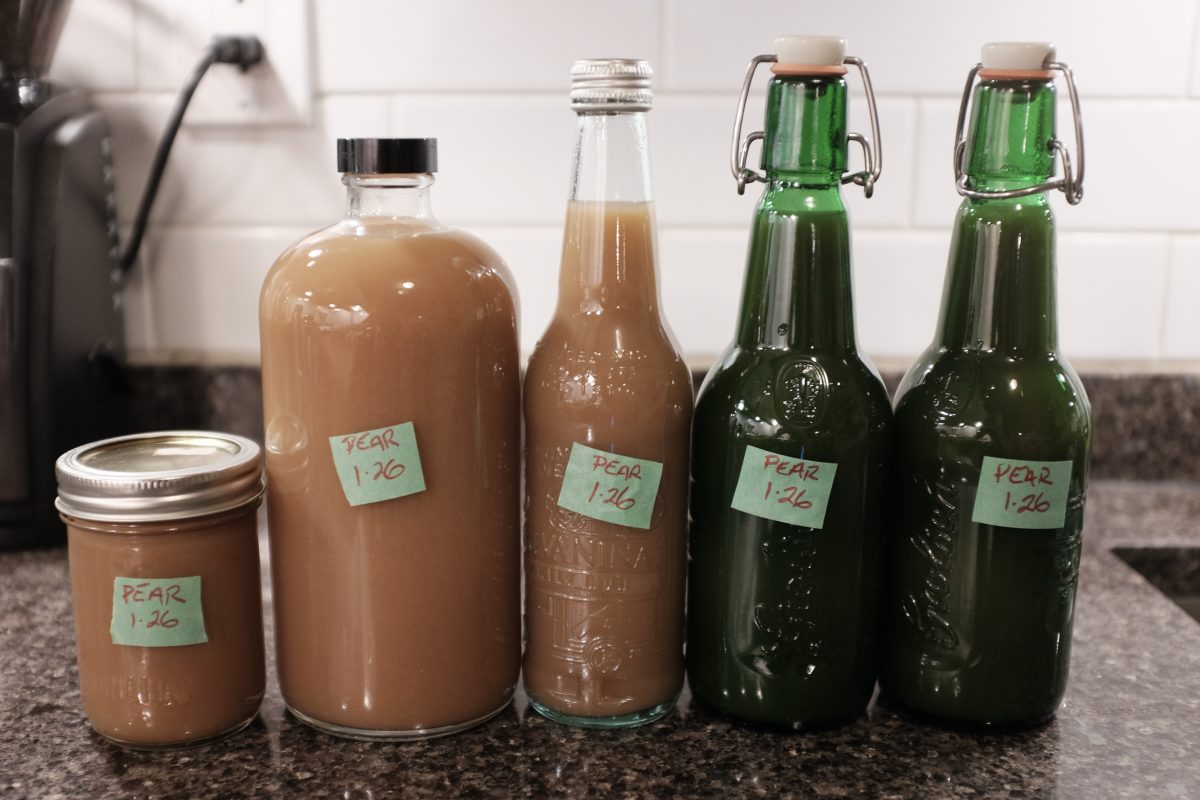
The alcohol should turn to vinegar within 2 weeks. I will leave this bubbling away for a full week before I taste it. In the meantime, I will give it a good sniff everyday to see how the acidity is developing. Once it begins to smell like mild vinegar, I will open it up once a day for a taste.
Now what?
Compared to most store bought vinegars, homemade vinegar is surprisingly delicious. Use it on salads, spritz it over cooked veggies, use it in sauces…it will brighten up almost any dish. You can even drink it straight up or put a few splashes into soda water for a refreshing and healthy drink.
This is a truly fun and fairly easy fermentation project. There is a small initial investment for a little bit of specialized gear but once you have it, it can be used over and over. Just about any sweet fruit can be made into vinegar using this process. In the past I have made vinegar out of ripe persimmons and it was also delicious. I think I will try plum vinegar next, berries in the summer.
If you have any questions, comments or suggestions please leave them below. I am always happy to hear from you. If you enjoy the content and would like to contribute towards website maintenance and development, you can make a donation here. Thanks for reading TigerSalad!
Makgeolli
What is Makgeolli / 막걸리 ?
Makgeolli is a Korean alcohol (or sool 술) made by fermenting rice with a natural starter called nuruk (누룩, sounds like noo-rook). I have heard it called “rice wine”, “rice beer” and “Korean sake” but it has very little in common with any of those. Makgeolli is its own thing. A few good ingredients and a complex, multi-layered, simultaneous fermentation by a large variety of bacteria and yeasts make this a uniquely Korean sool. It has its own distinct flavours, textures and history. It is unlike any other rice ferment.
The recipe below is not the most simple but the preparation and process are fairly straightforward. My goal was to make the recipe easy to follow so I have included lots of pictures and even some sounds.
Important considerations before you start
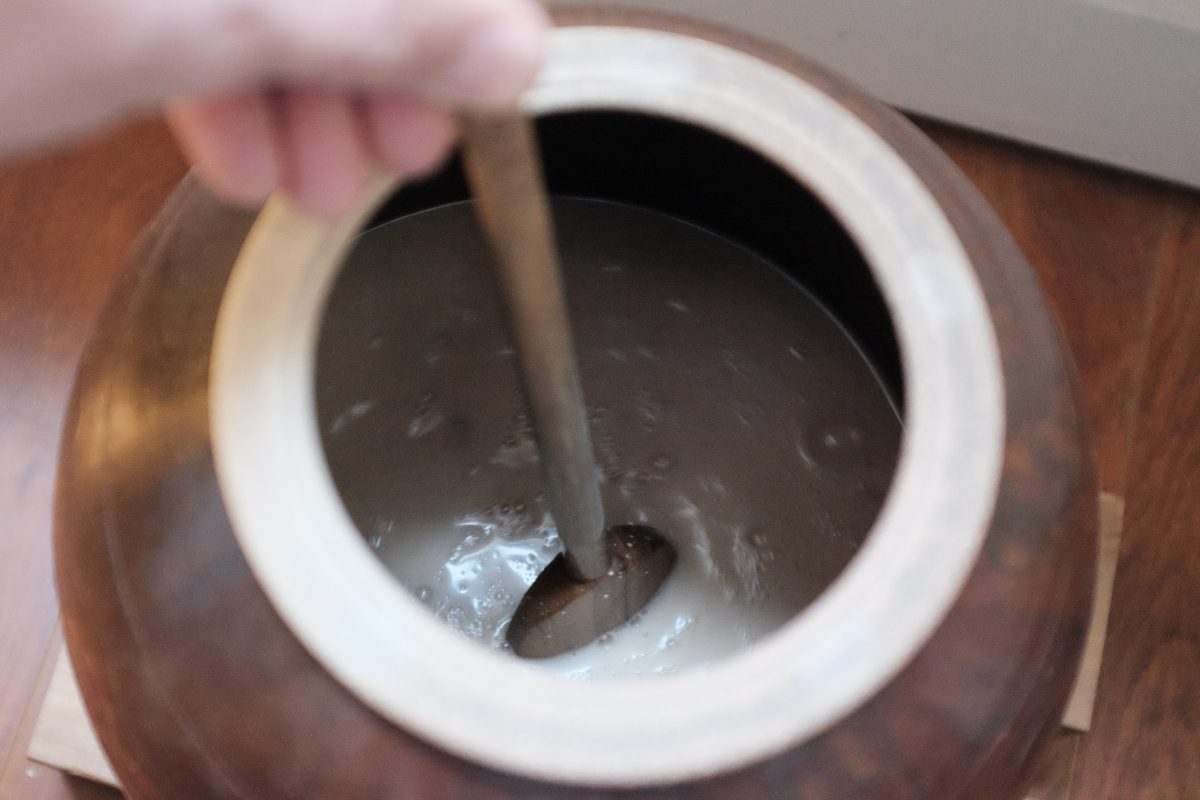
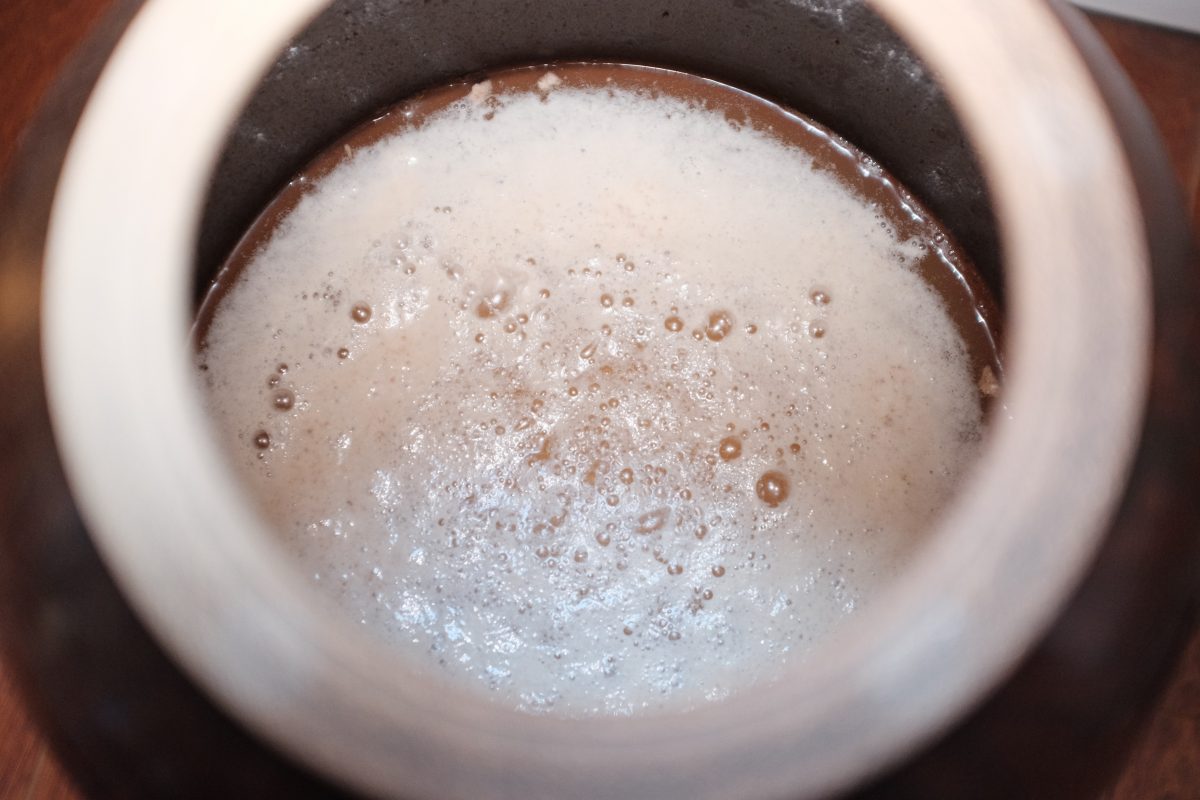
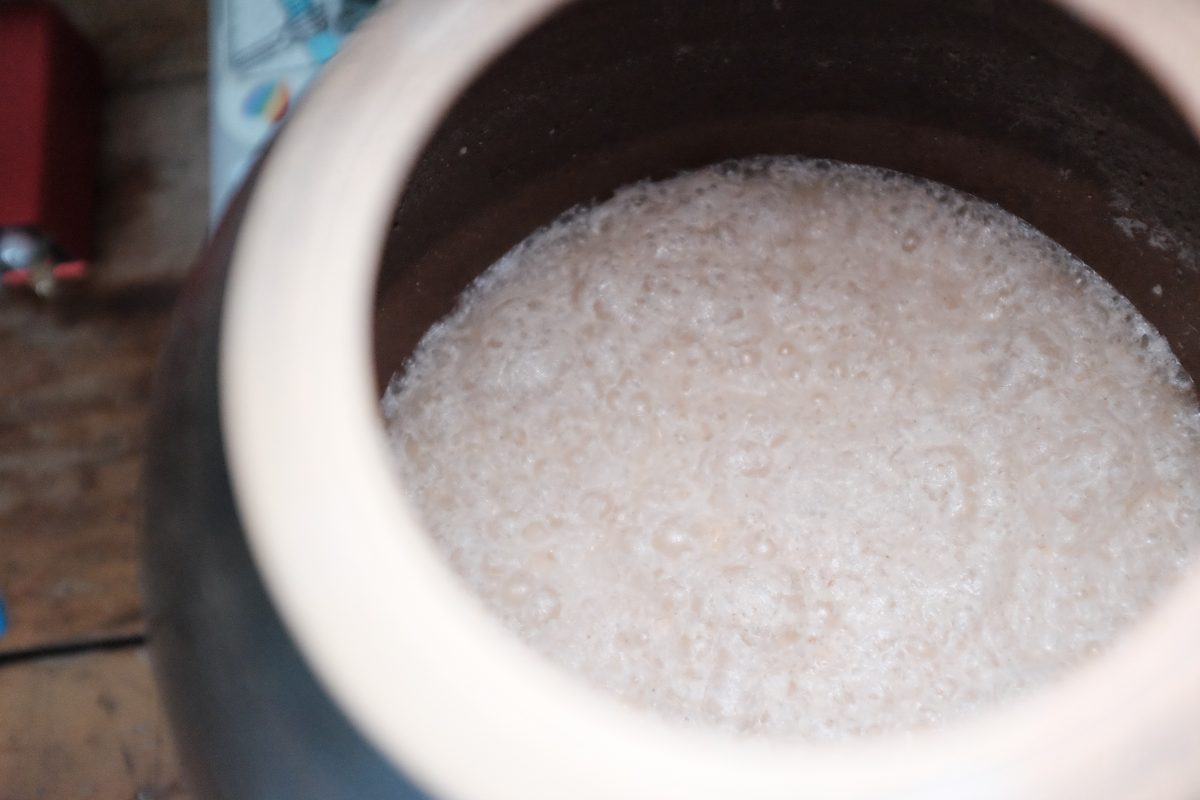
There are 2 stages to this recipe and, from start to finish, this brew can take anywhere from 3 weeks to a month. In Stage 1, during the first three days or so you will need to stir it up a few times. In Stage 2, you will need to stir it again for a few days after which it is mostly just waiting and tasting occasionally.
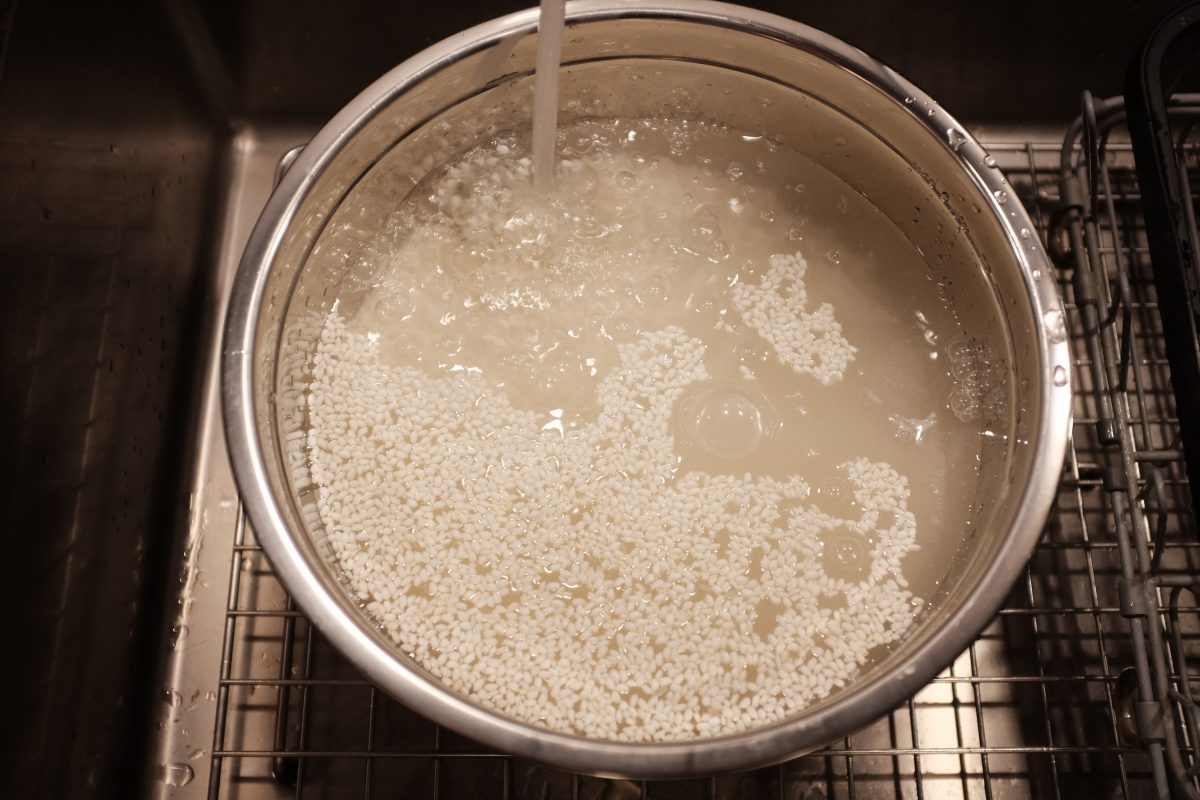
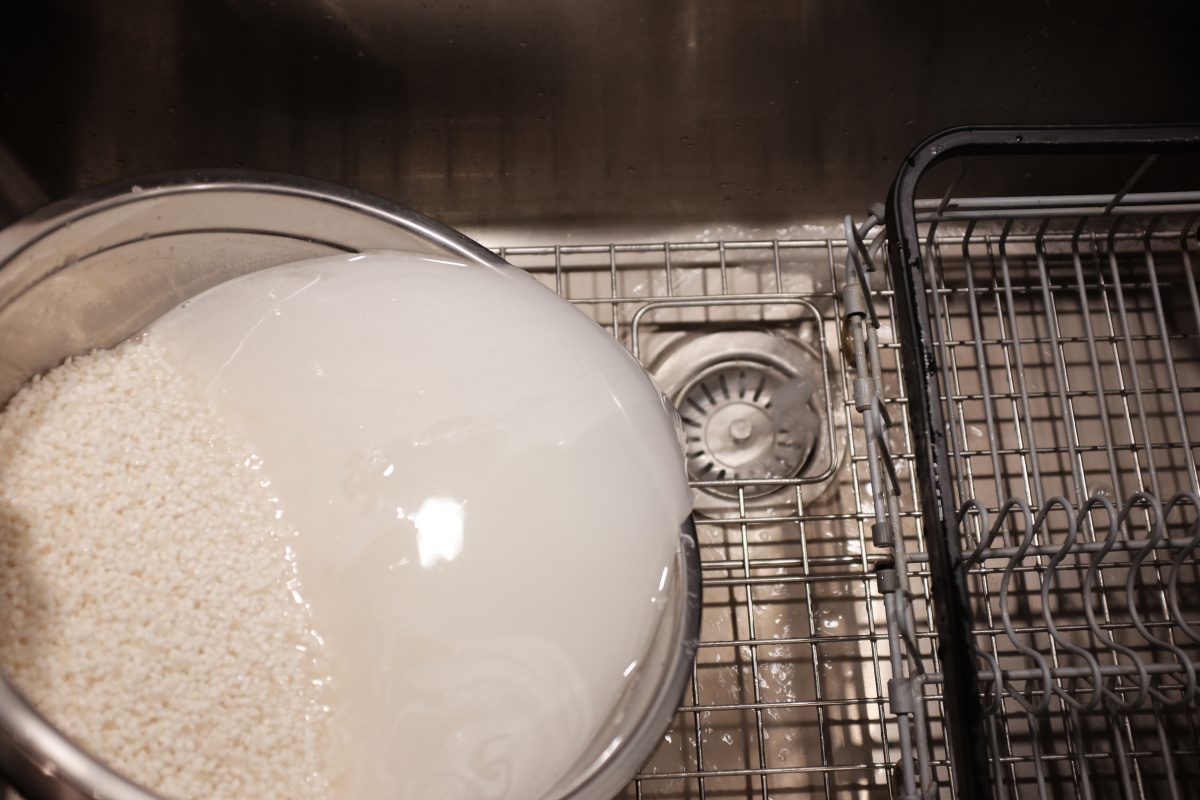
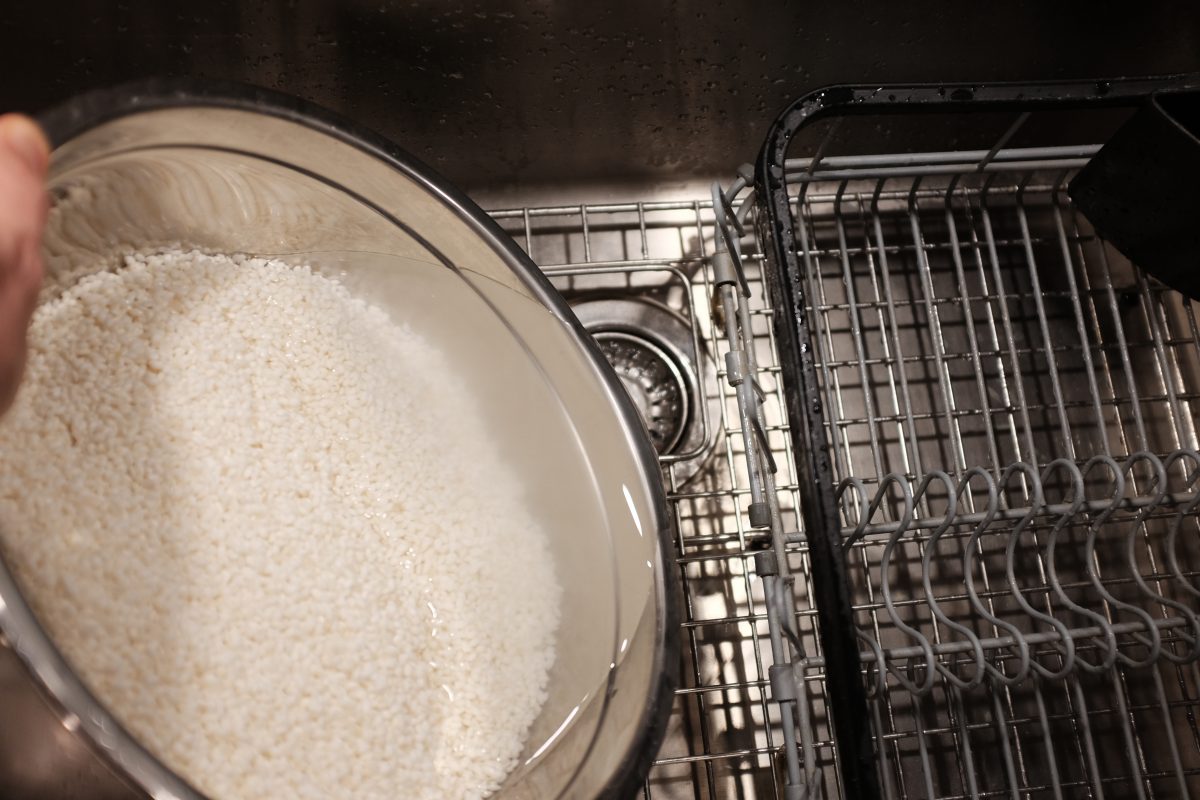
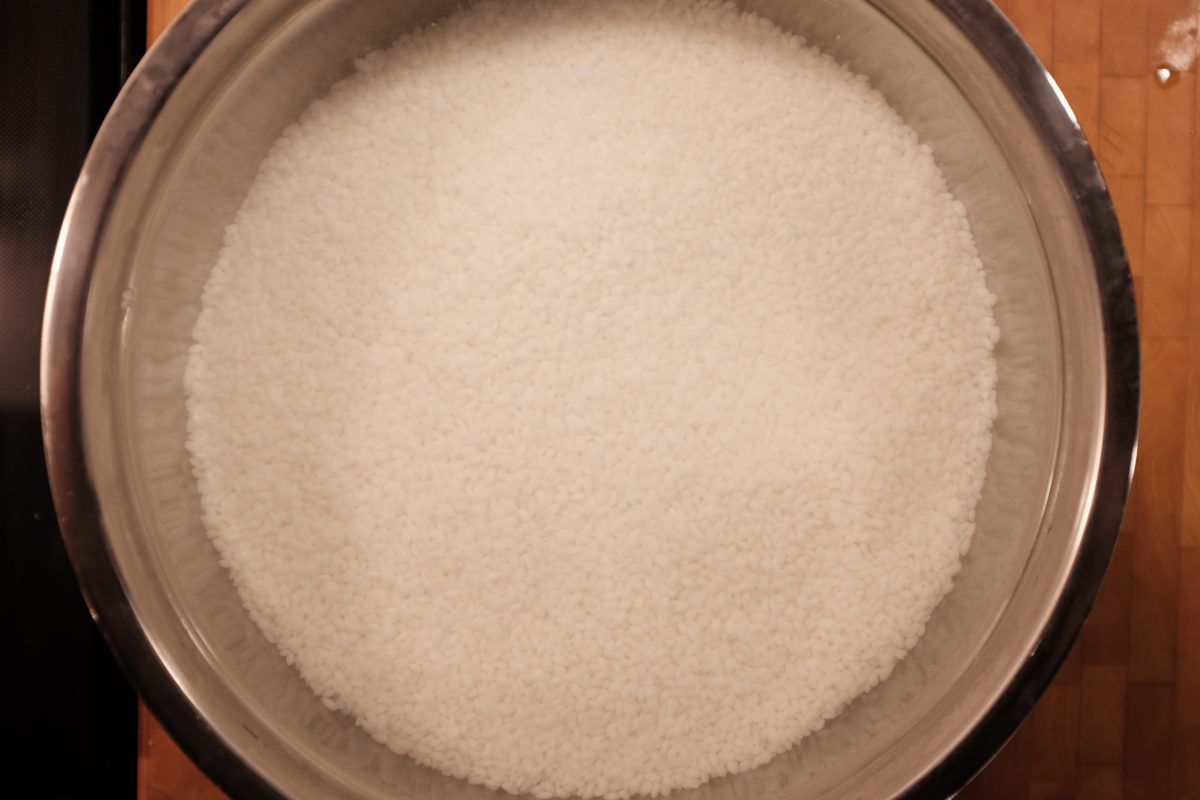
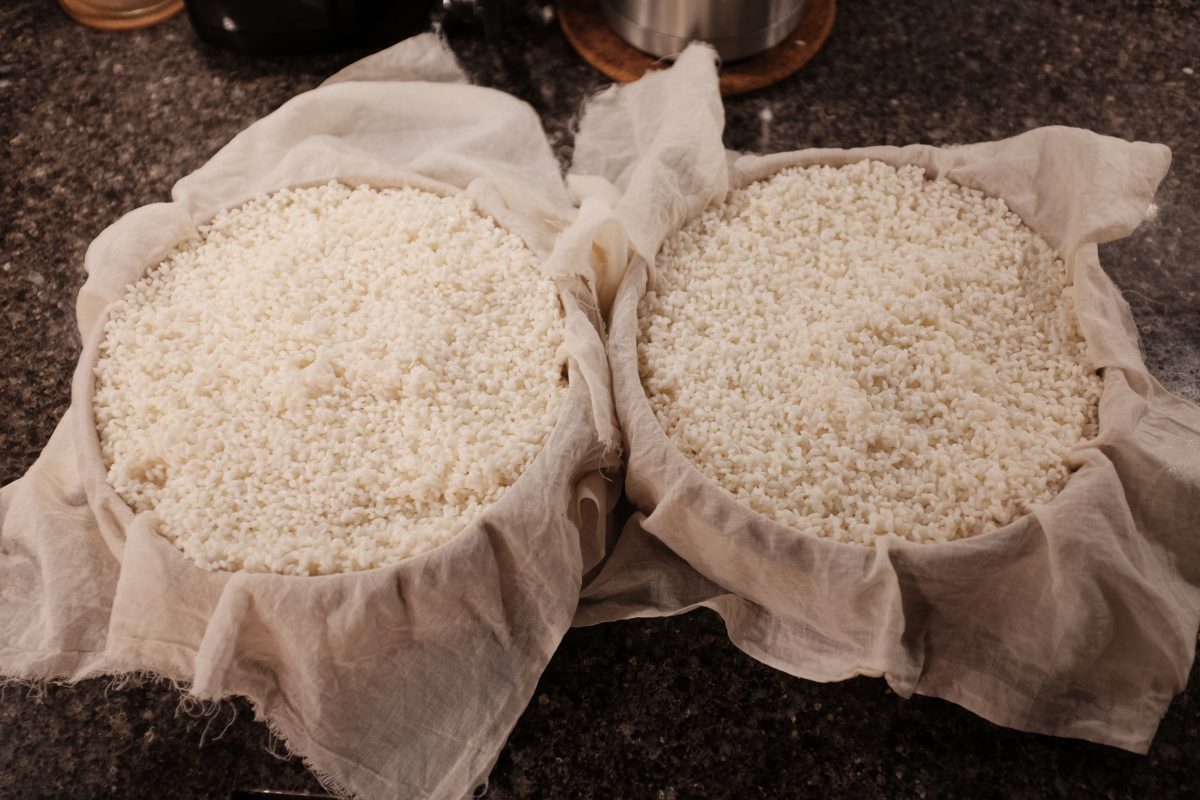
Each stage of this recipe takes several hours to prepare. In Stage 2, you will spend 5 hours just washing, soaking and steaming rice. It’s best to plan ahead so you have enough time to get through the process in one shot.
Temperature is important. You will need to find a spot that is room temperature or a bit cooler for fermenting this brew (20-25C). Higher temperatures can cause your brew to ferment too quickly and may cause some off-flavours. Cooler is always better.
Equipment
You will need a glass or pottery container to hold your brew. 8-10 litres is a good size.
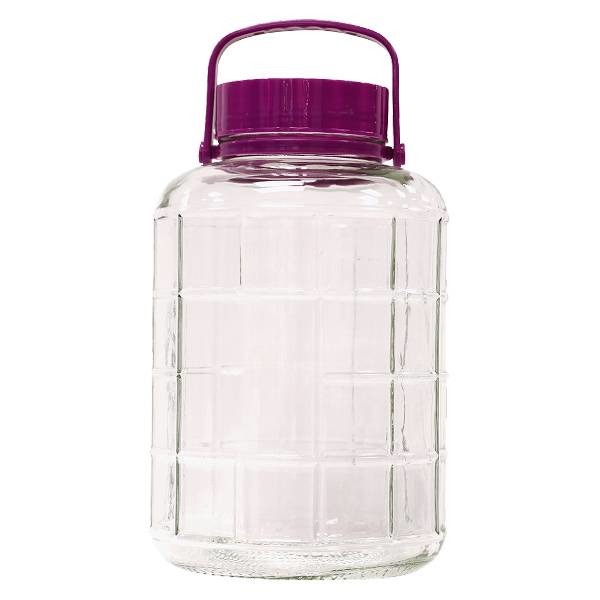

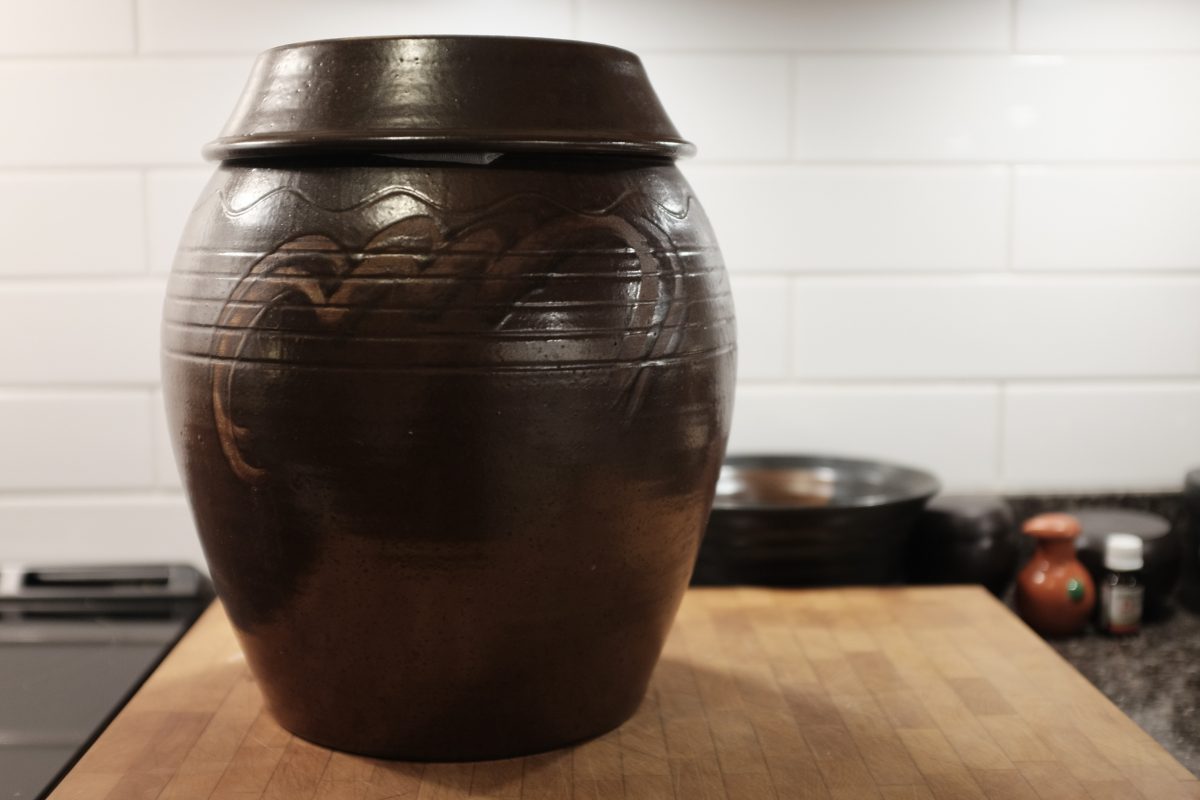
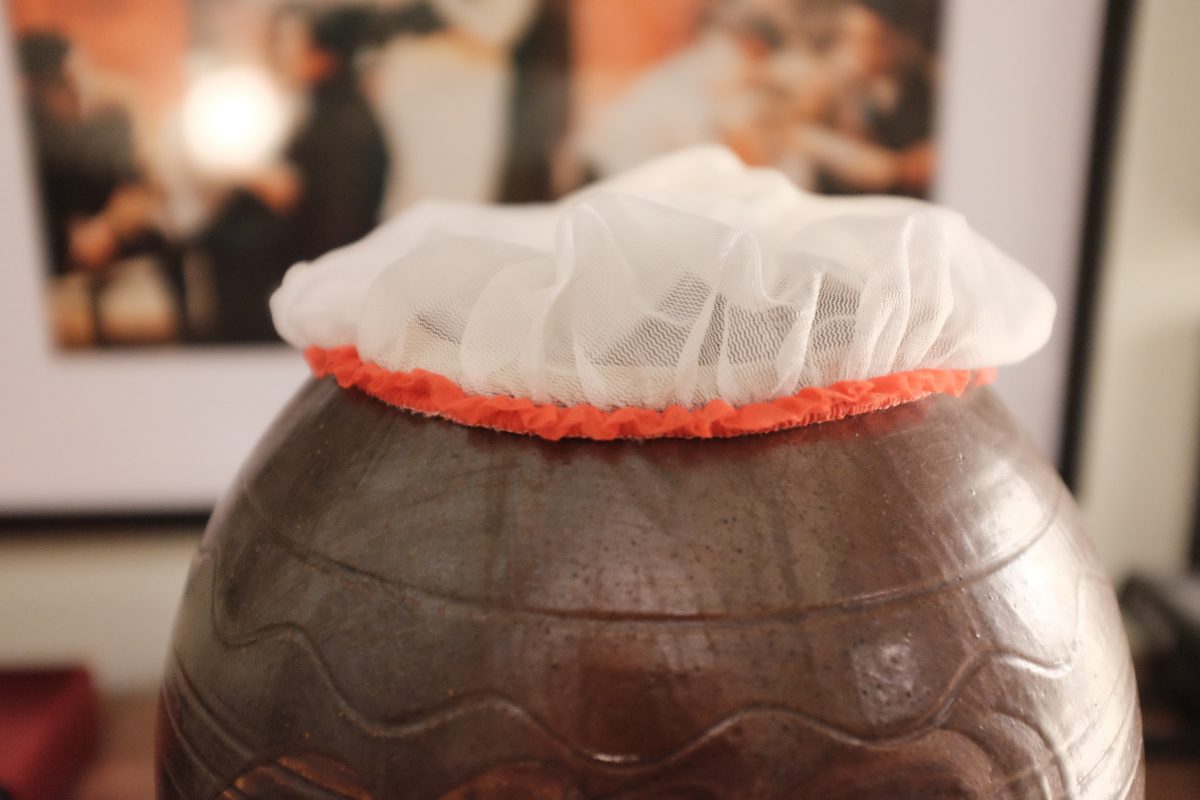
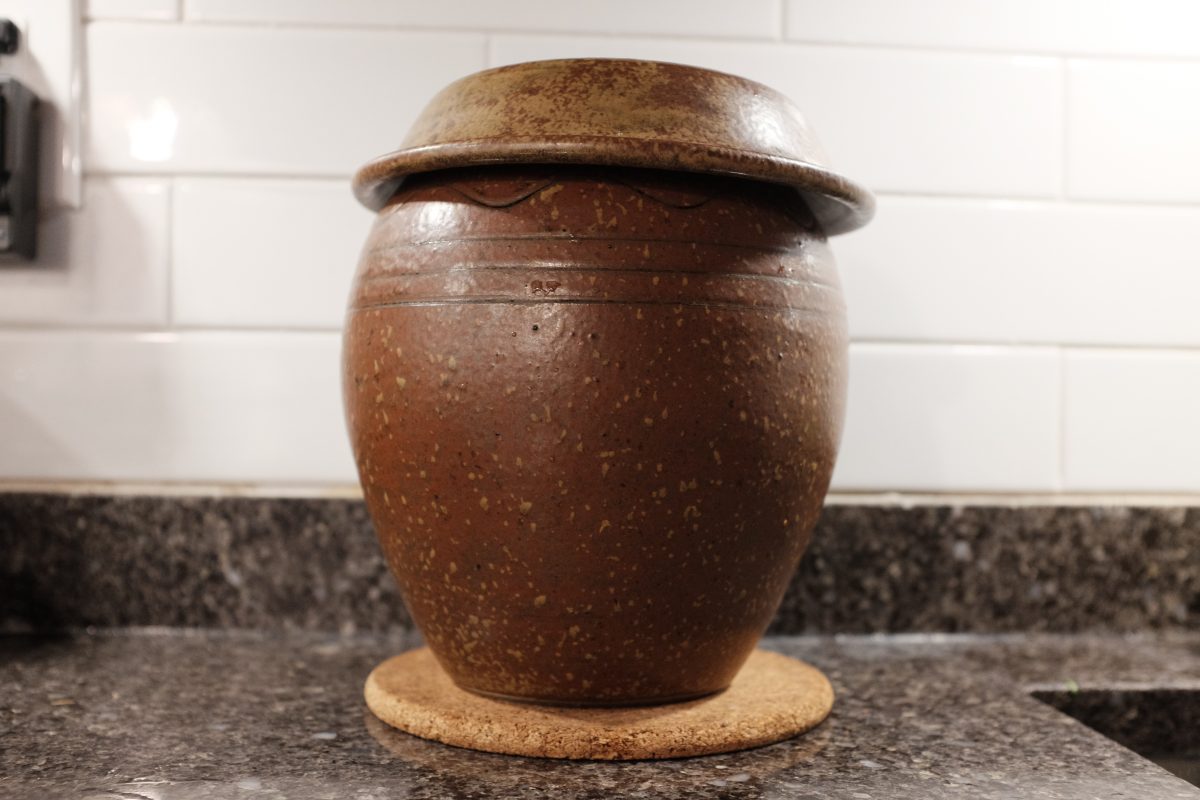
I think most people use glass. I have ceramic onggi jars around the house so that is what you will see in the pictures but either will get the job done. You will also need a piece of fabric or cheesecloth and an elastic band to cover the top of your jar. This ferment needs to breathe and will release a lot of gas. A fabric cover will let it vent and keep insects and dust out.
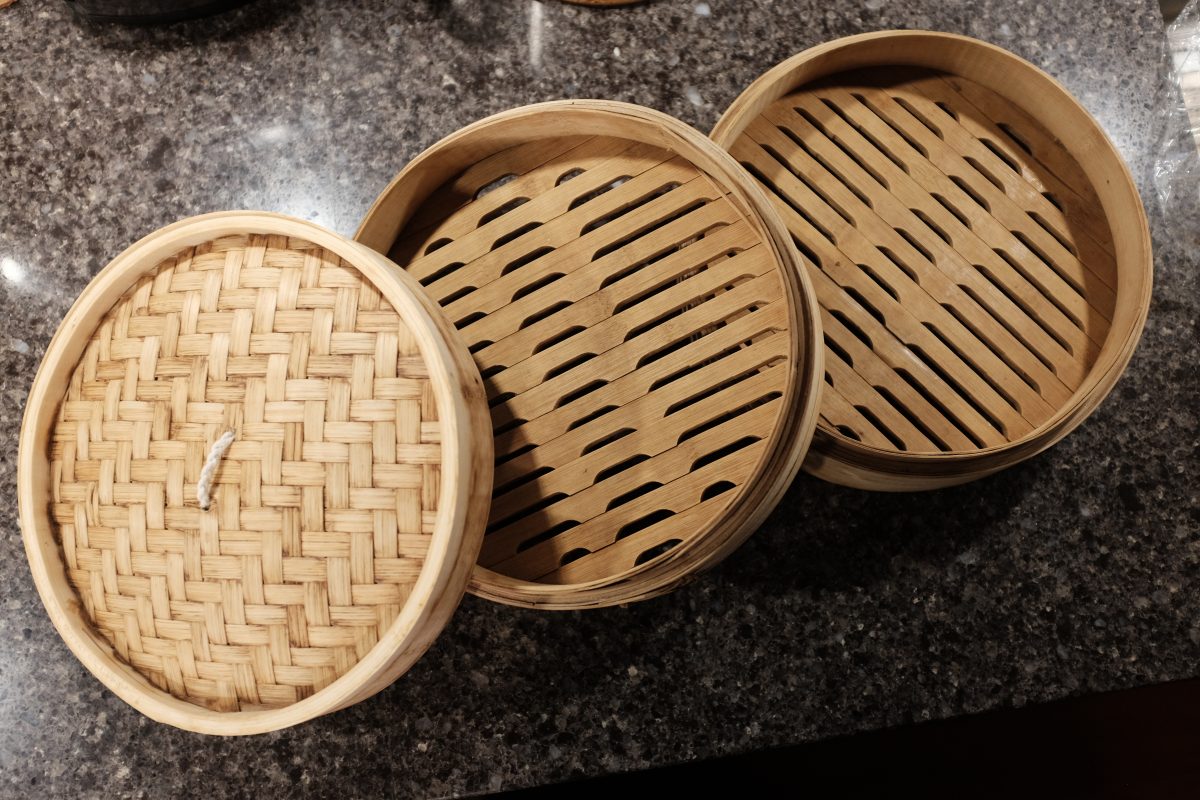
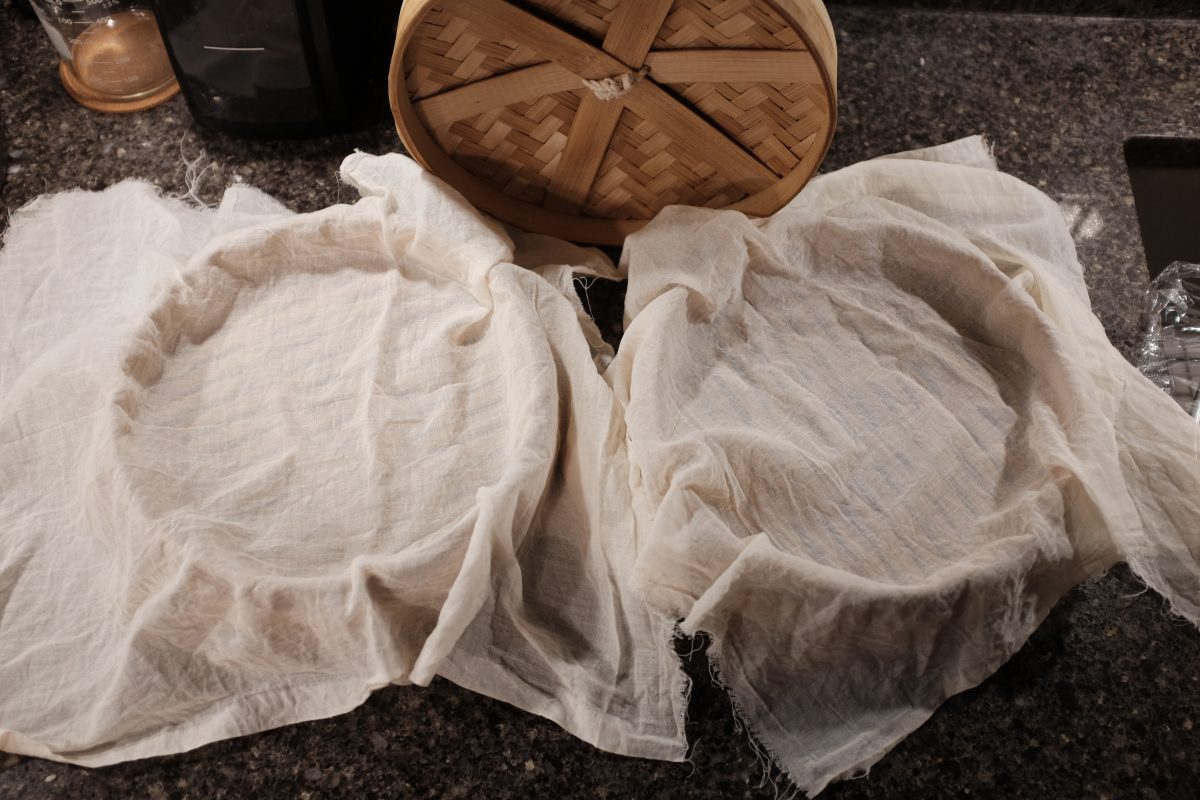
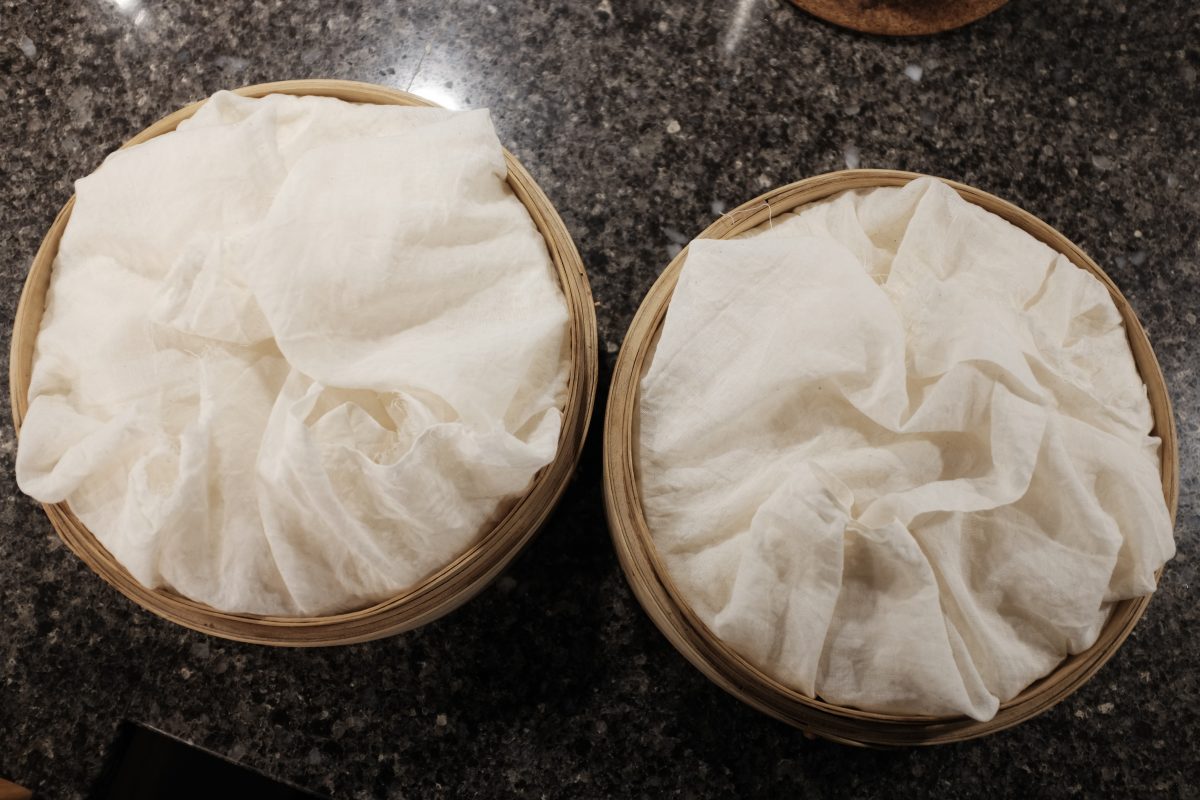
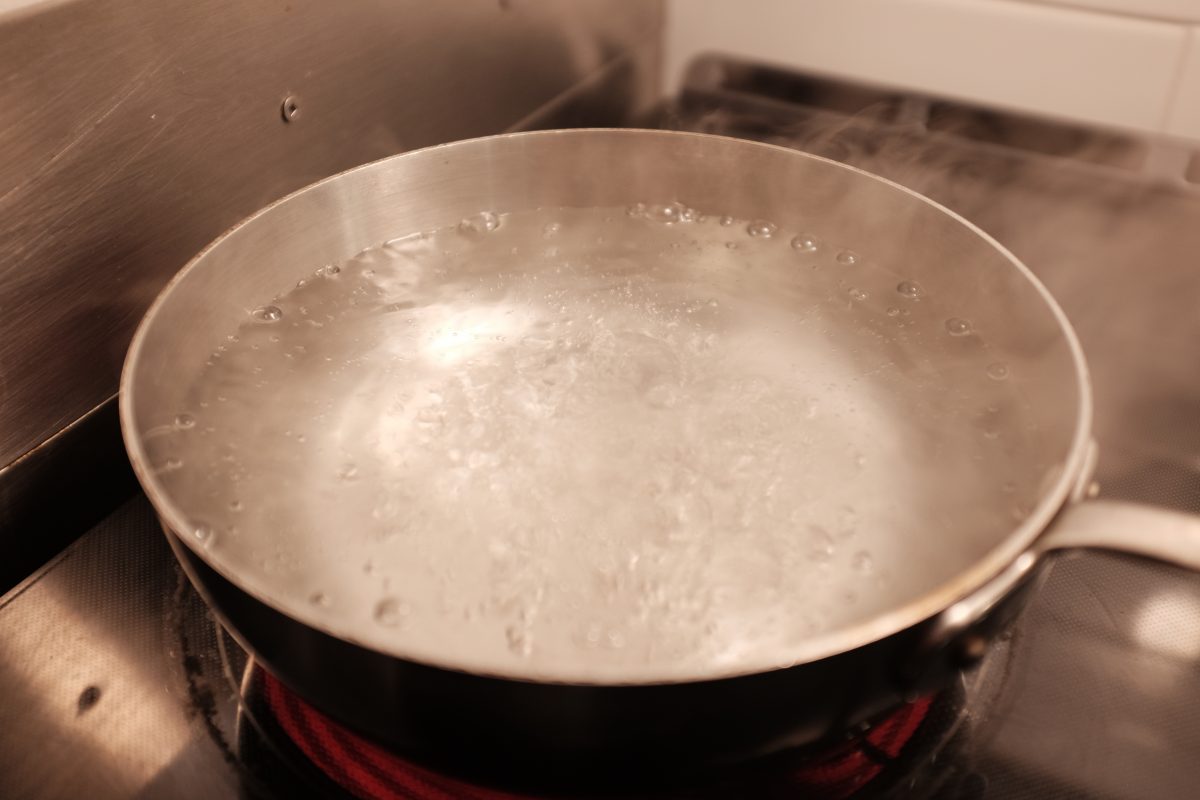
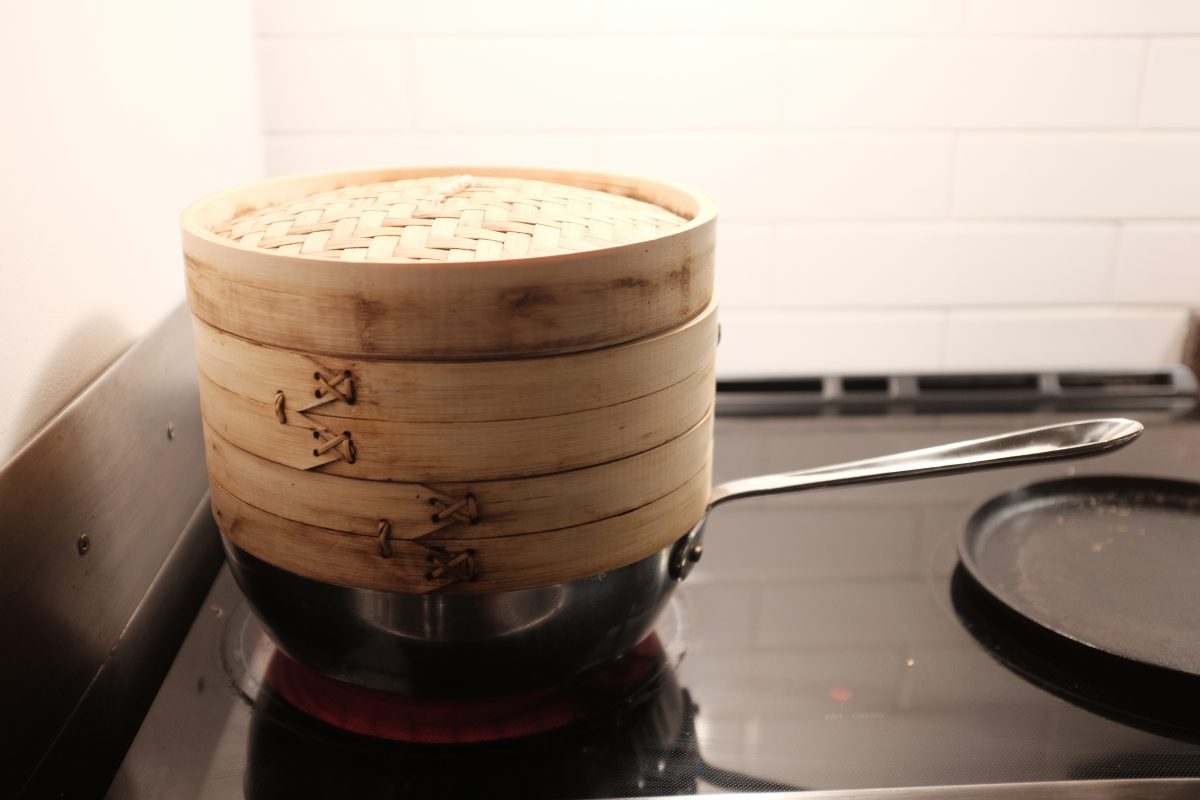
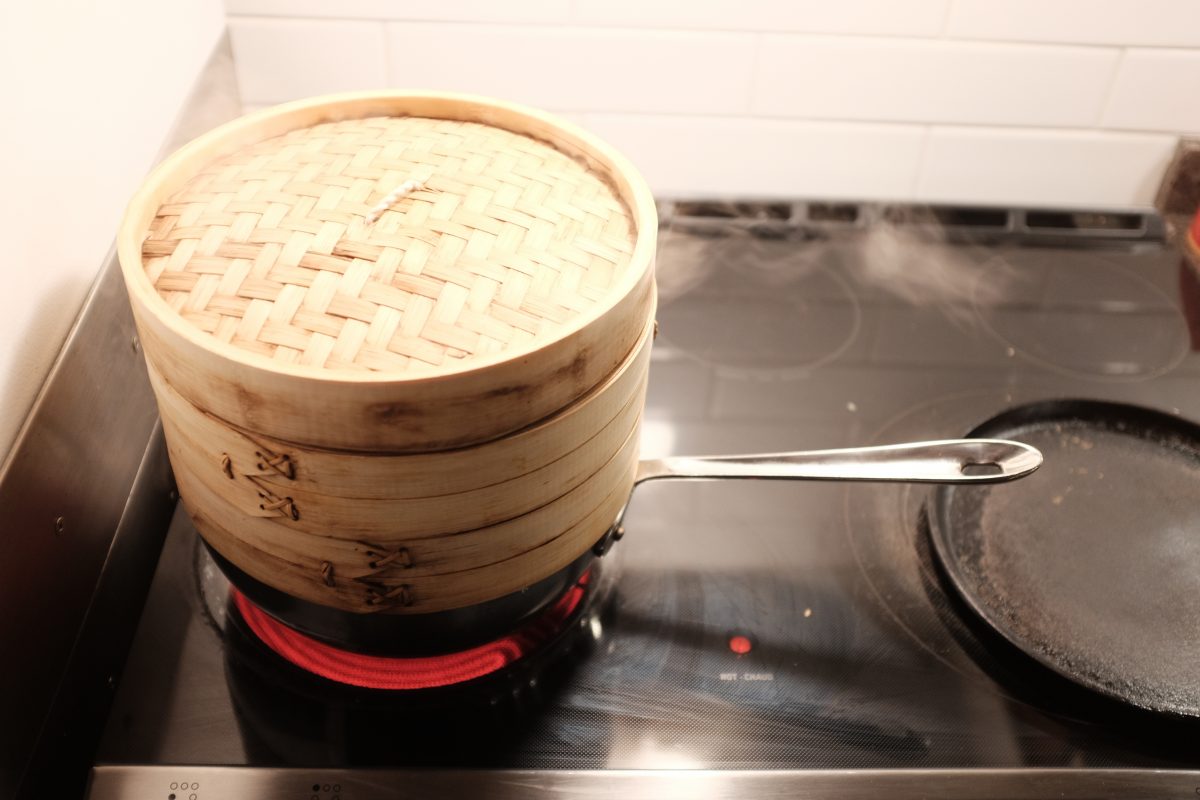
You will need a steamer of some kind. Bamboo steamers are cheap and very useful. I have a medium size one with two decks that I will use to steam rice for this recipe. If you have a pot with a stainless steel steamer insert, that will also work. Lastly, you will need a piece of cheesecloth or other fabric big enough to wrap the rice in the steamer.
Ingredients:
There are only 3 ingredients here: rice, water and nuruk.
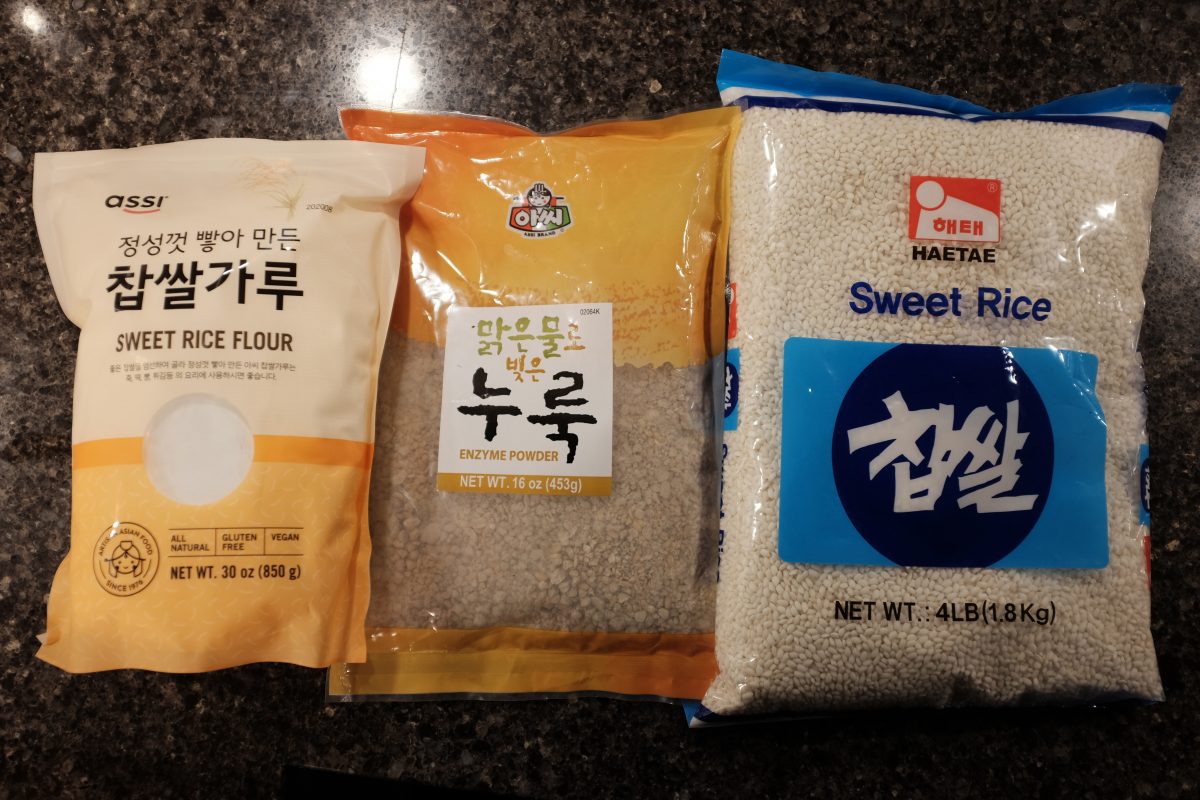
Nuruk is made by forming moist cakes of grain (usually some combination of wheat and barley and rice) and hanging them in open air to attract wild yeasts, bacteria and mold as they dry. These are then pounded into rough granules to use as a fermenting starter. Bags of this powder can be found at Korean grocers under the english name “Enzyme powder” or just look for the Korean name “누룩” on the bag. There is a picture of a bag of nuruk in the ingredients below.
You can make makgeolli with many different kinds of rice. For this recipe I am using a short grain sweet rice called chapssal (찹쌀). I think that this rice is most likely to make a successful and easy drinking first brew.
Here is what we need:
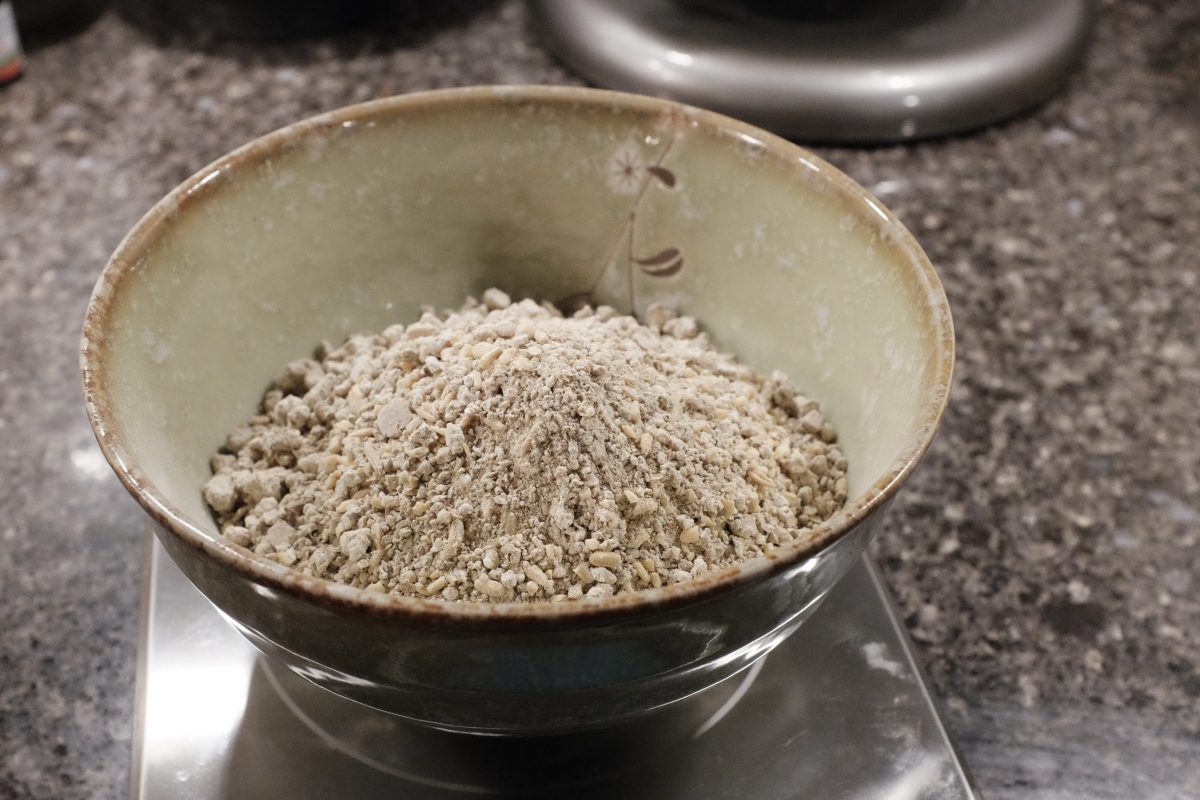
- 500 grams sweet rice flour (this is just rice milled into a fine powder)
- 2 kg sweet rice (chappsal)
- 2.5 litres filtered or spring water
- 250 grams nuruk plus another 250ml filtered or spring water to hydrate it
Process:
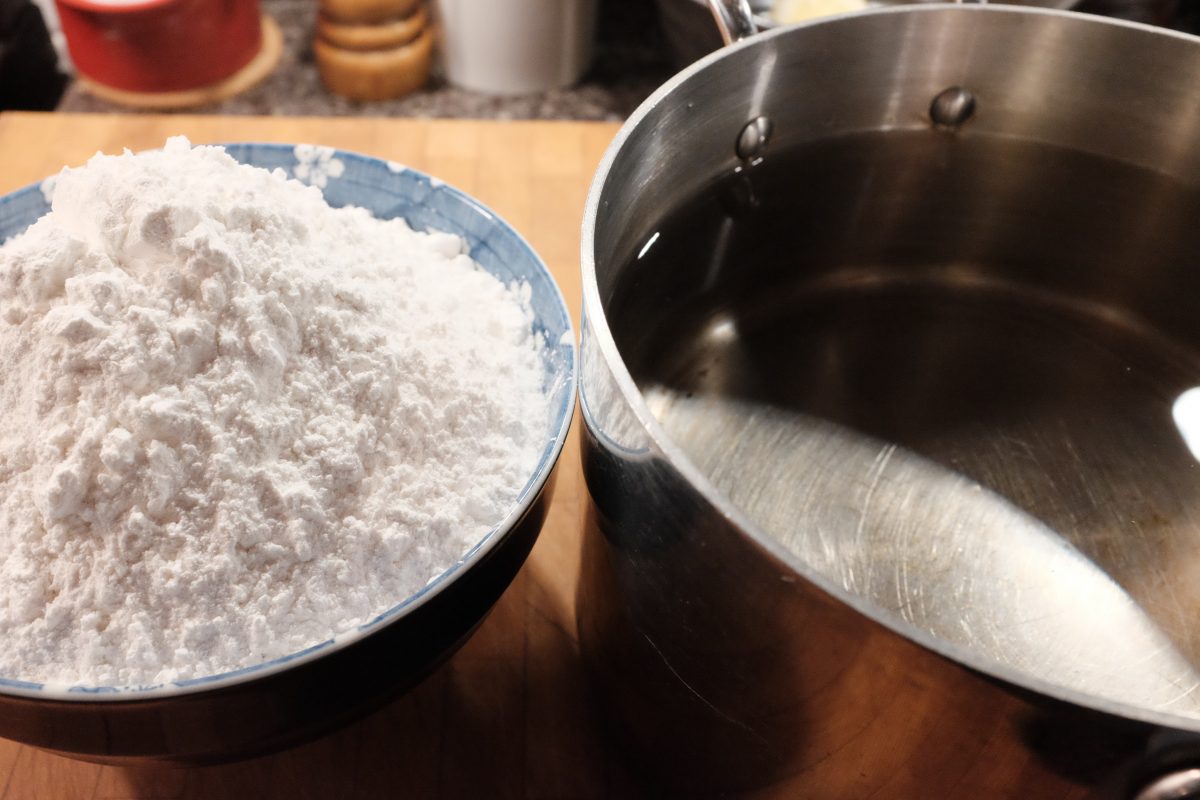
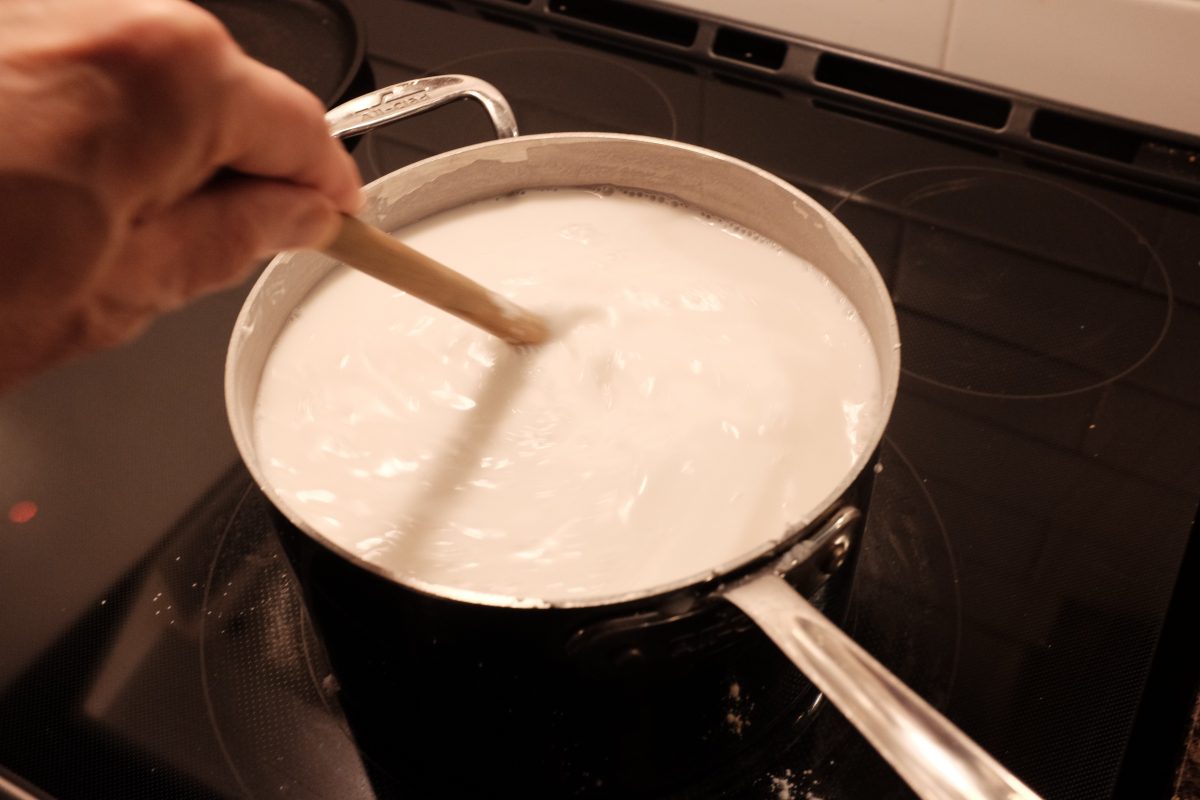
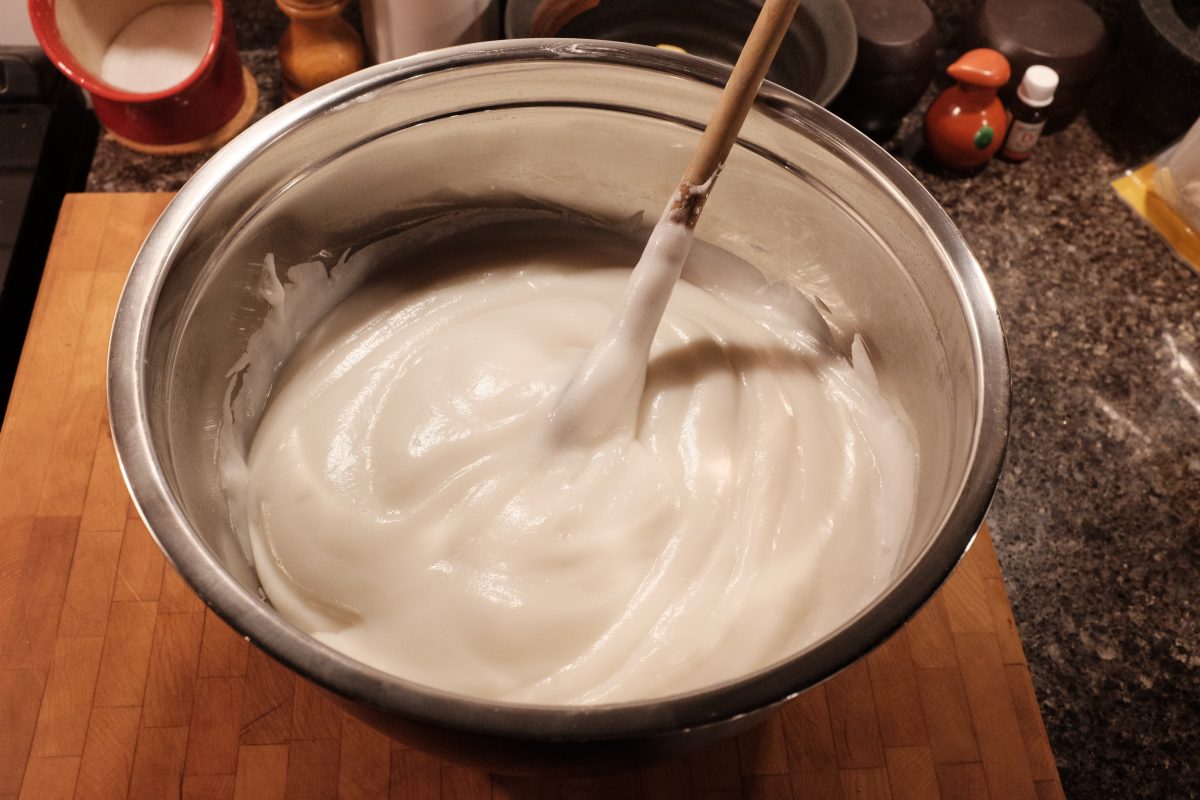
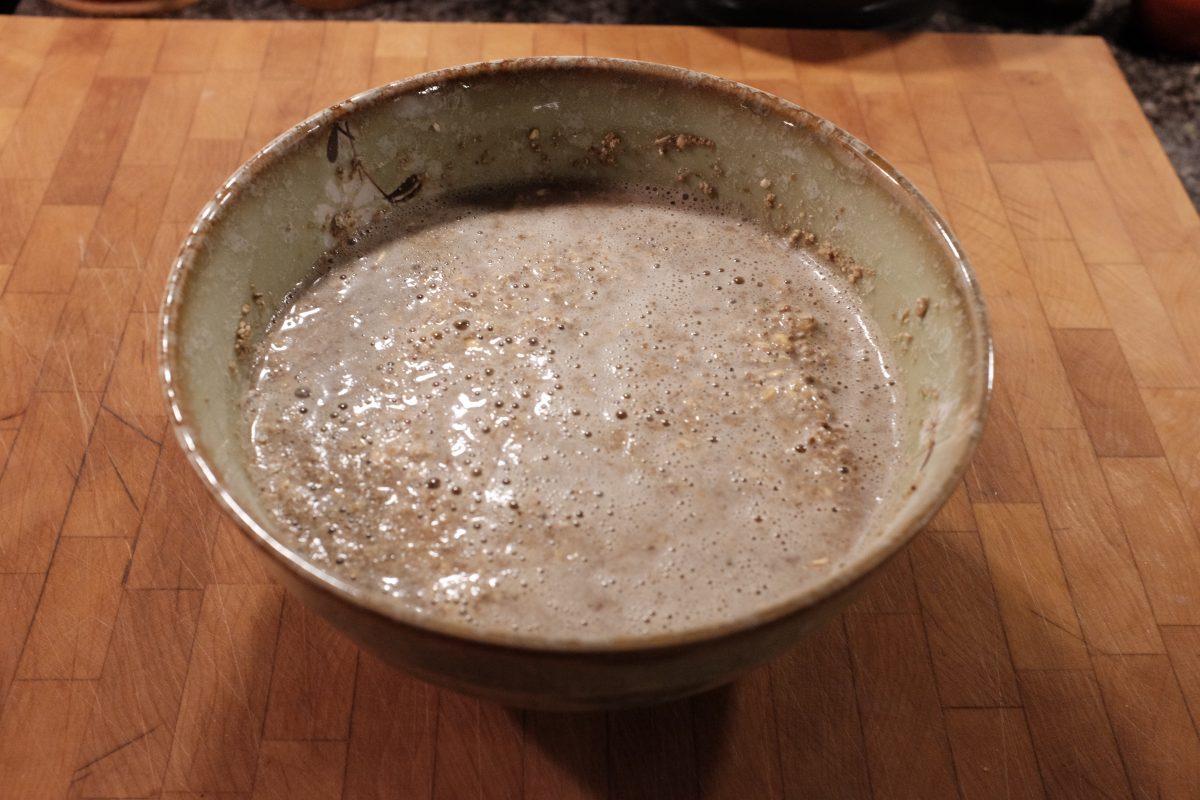
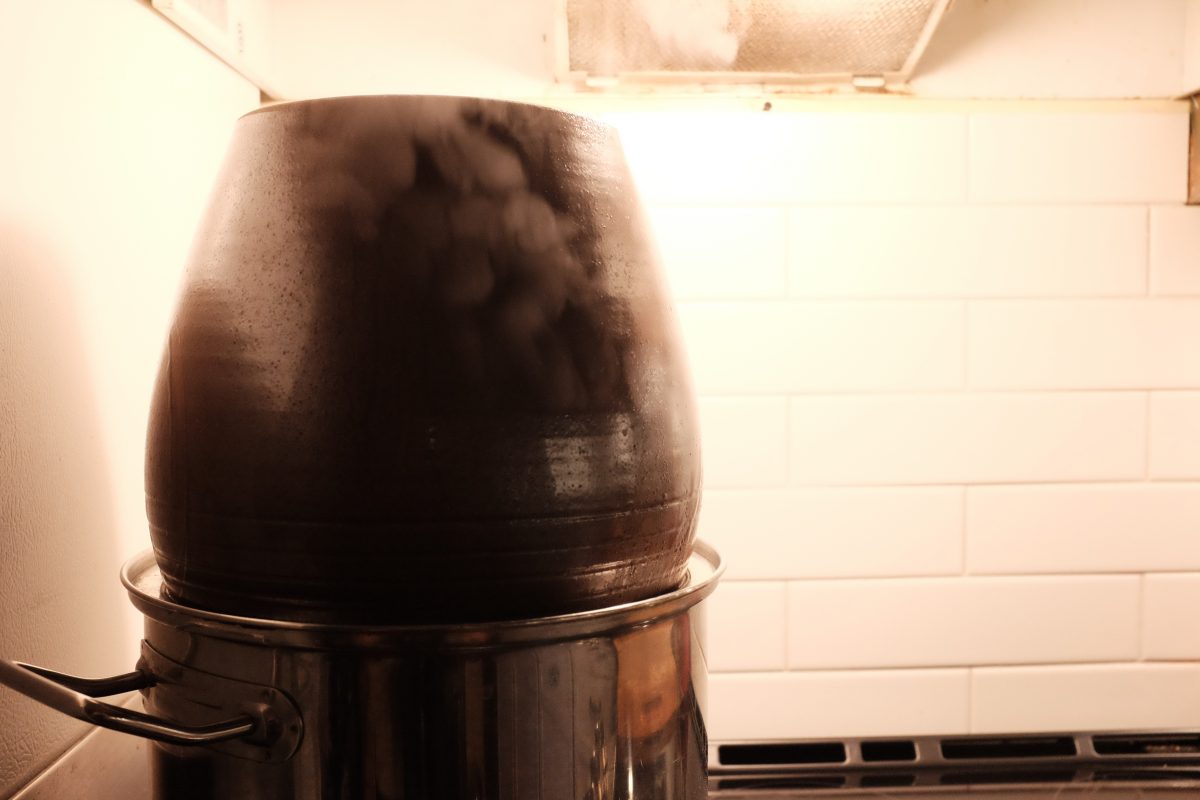
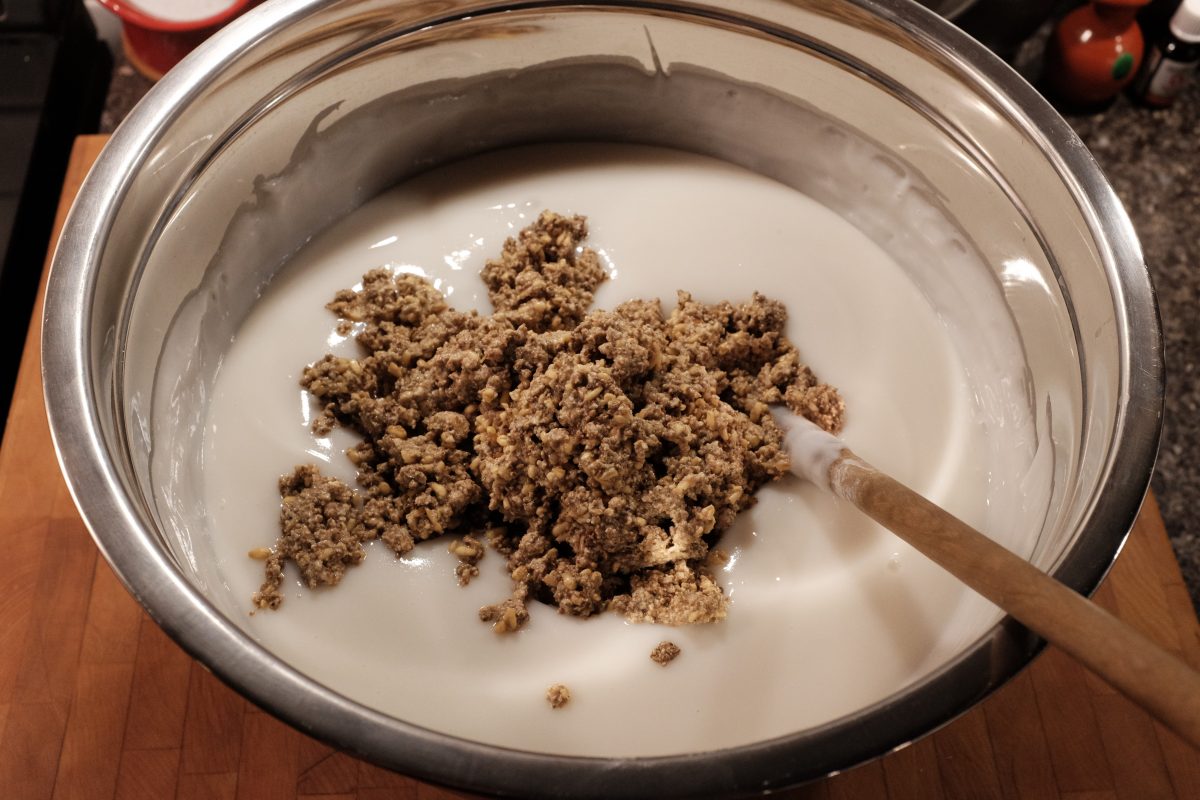
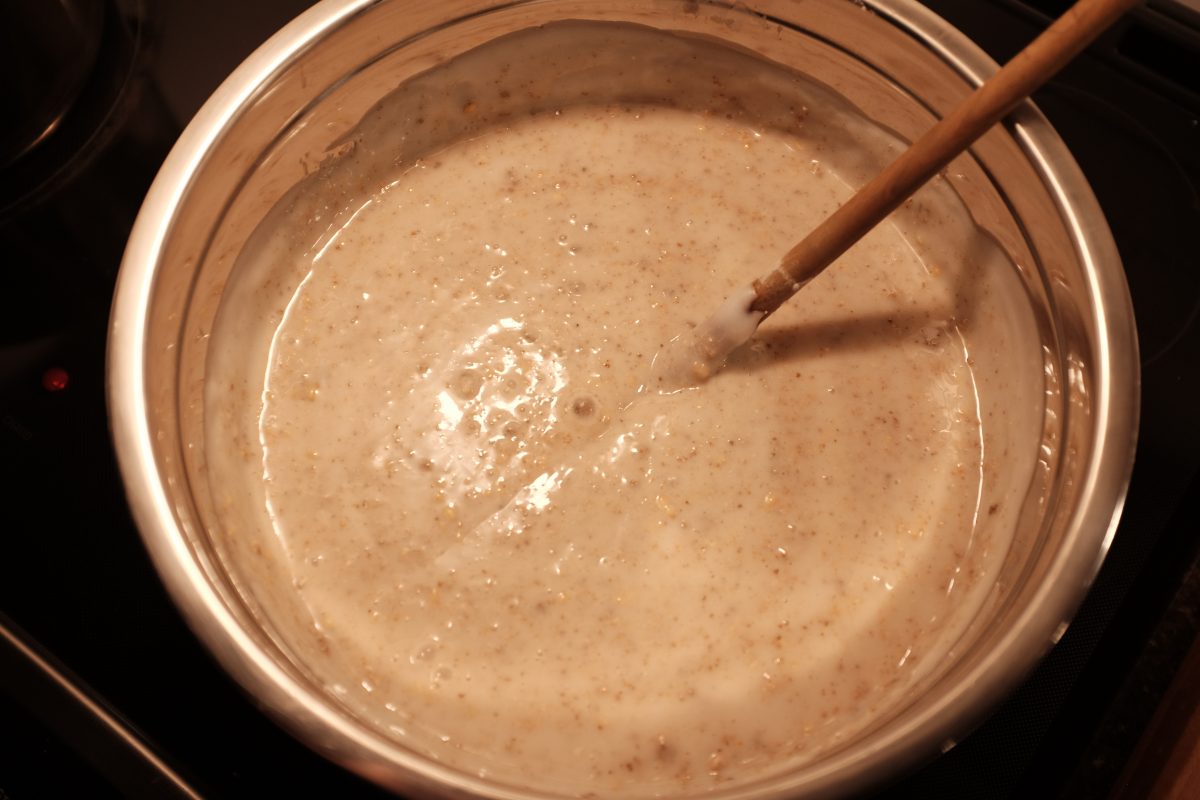
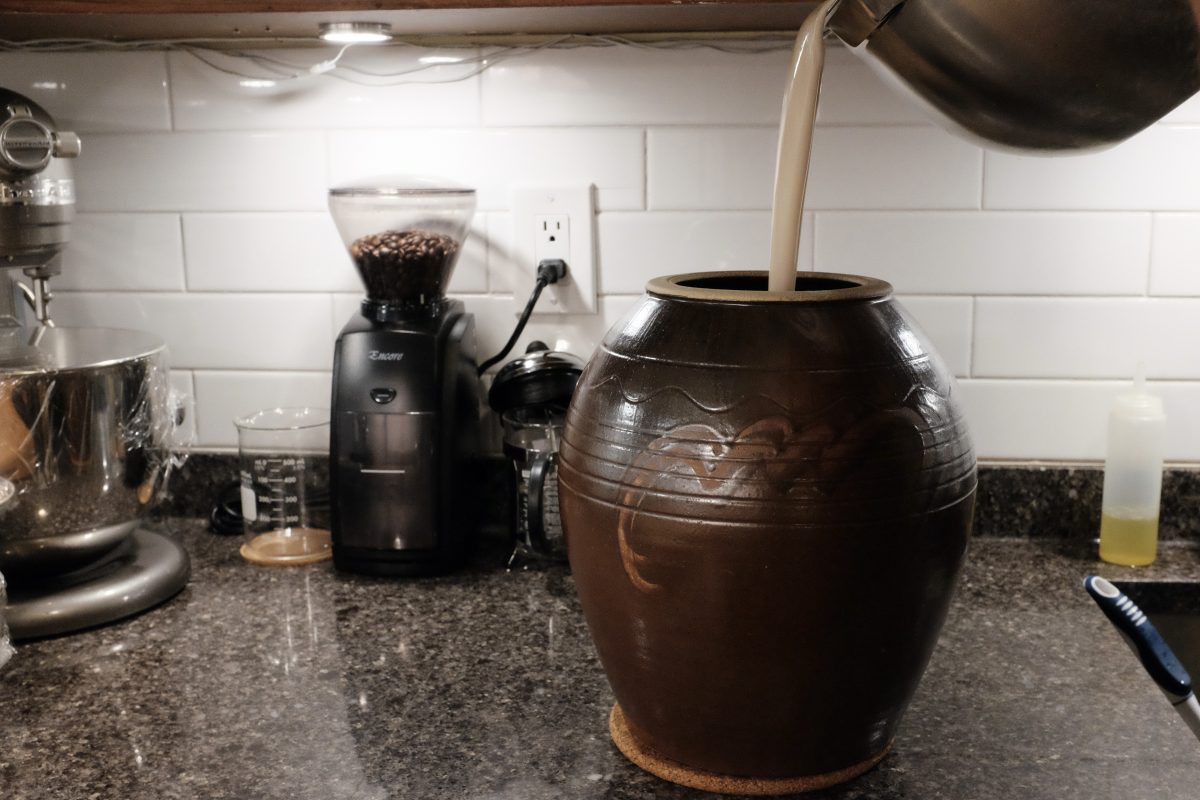
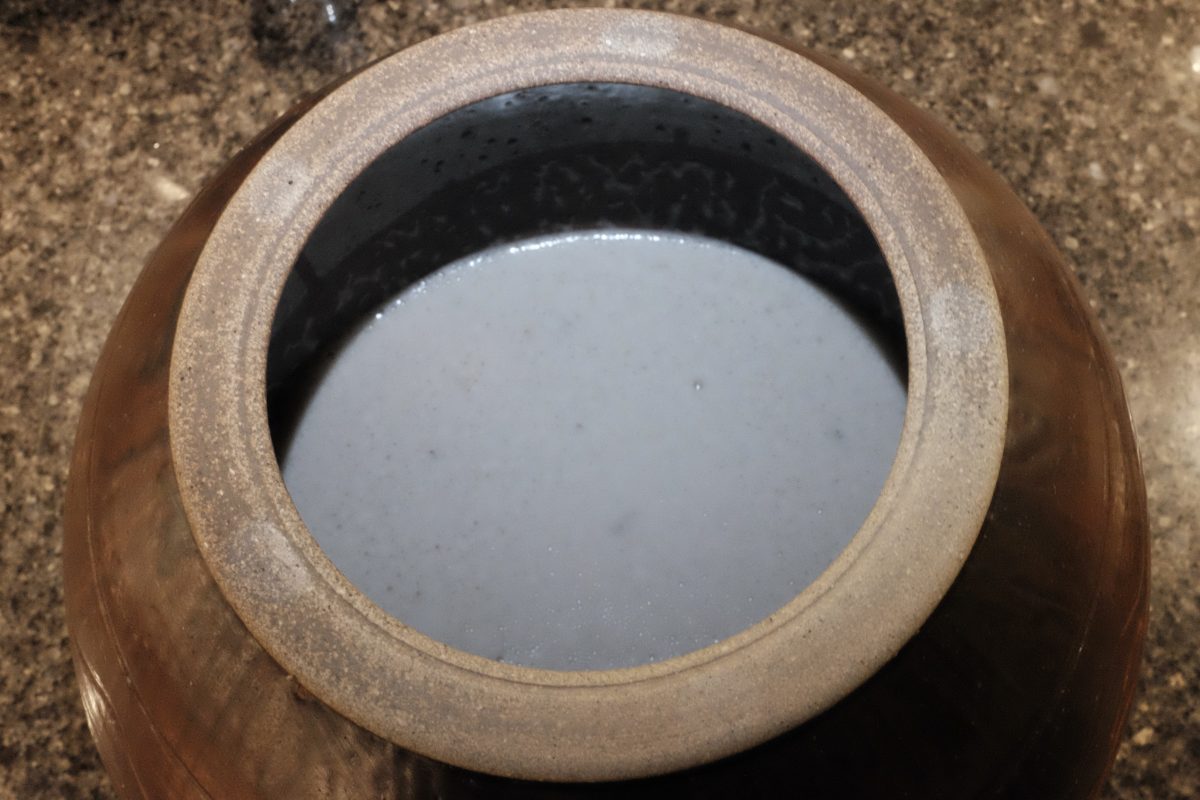
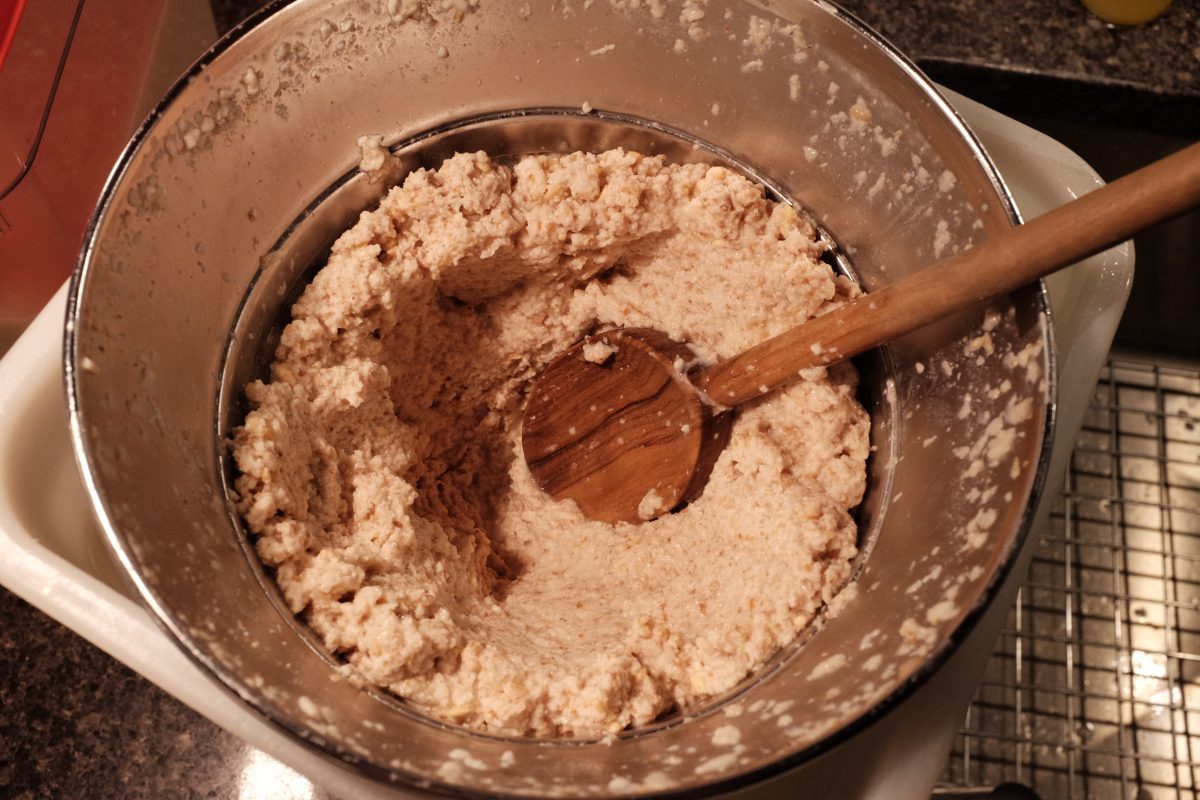
The recipe is broken into 2 parts. In Stage 1, we will ferment the rice flour for a number of days (around 3). In Stage 2, we will add steamed sweet rice and finish the ferment over the next few weeks. A two stage recipe like this is called “Iyangju”.
Stage 1
Stage 2:
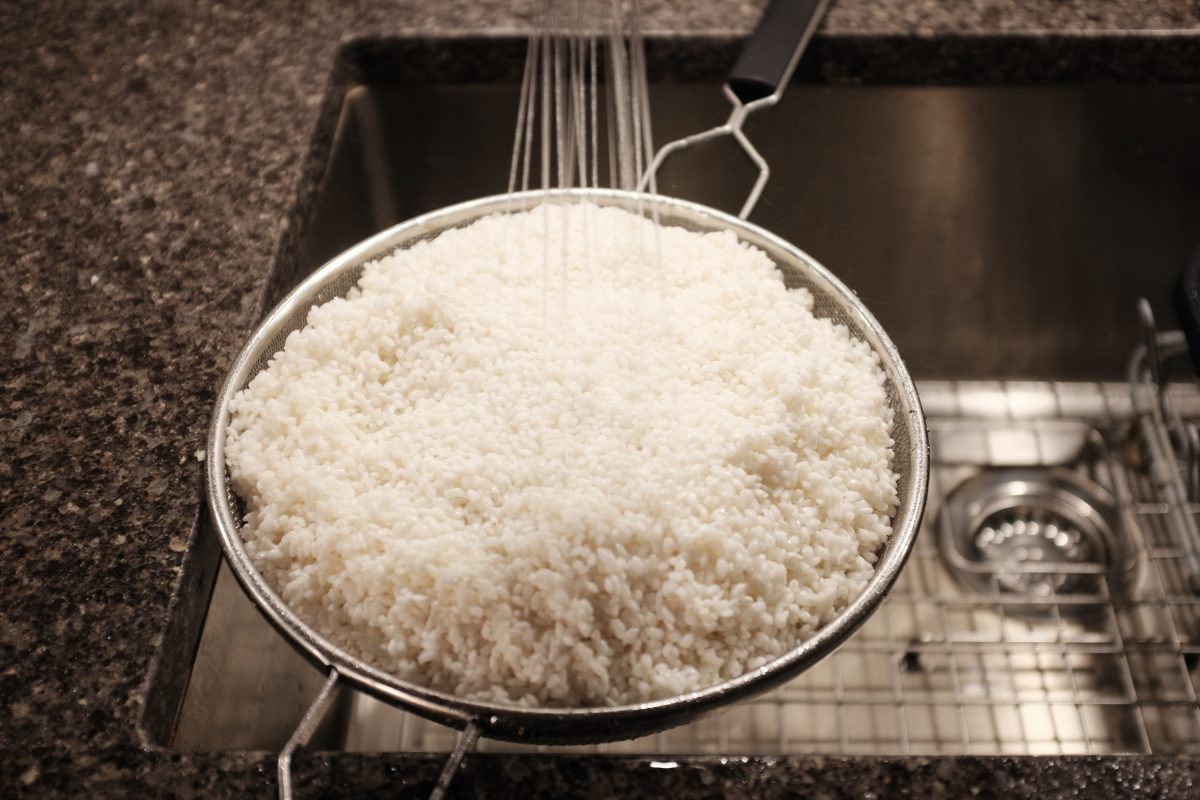
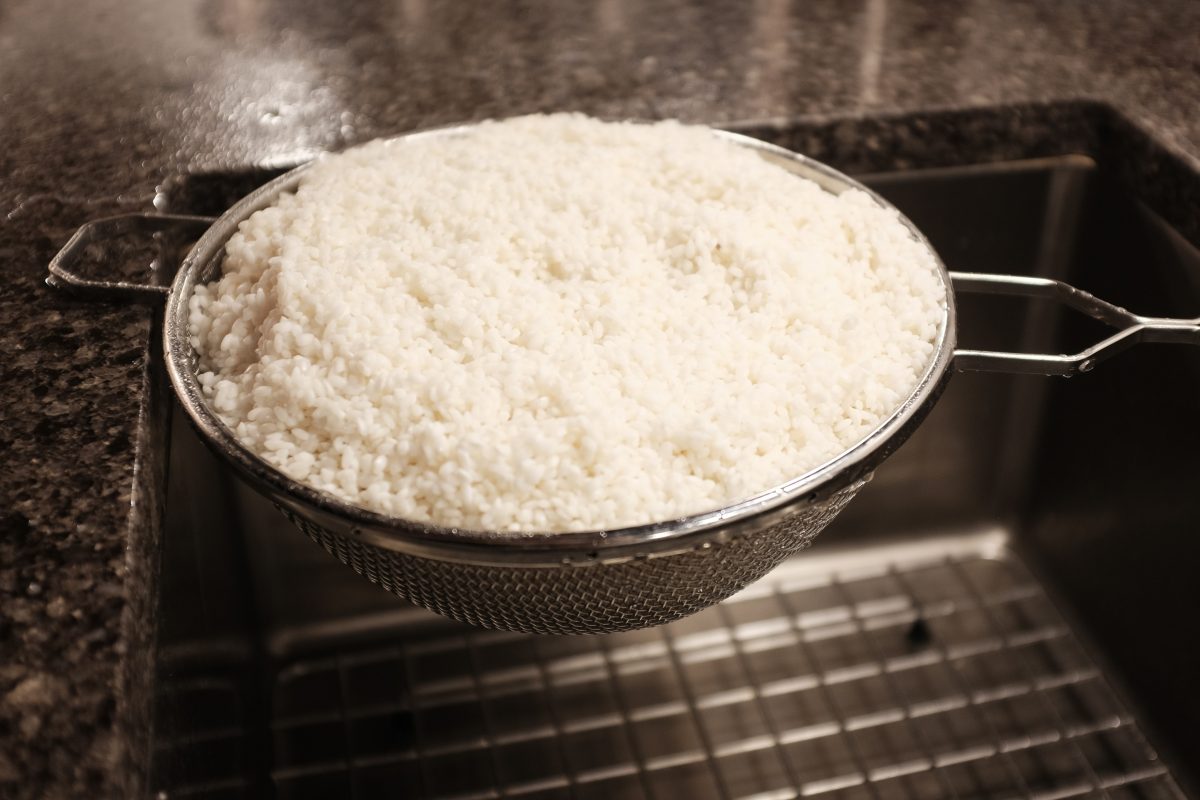
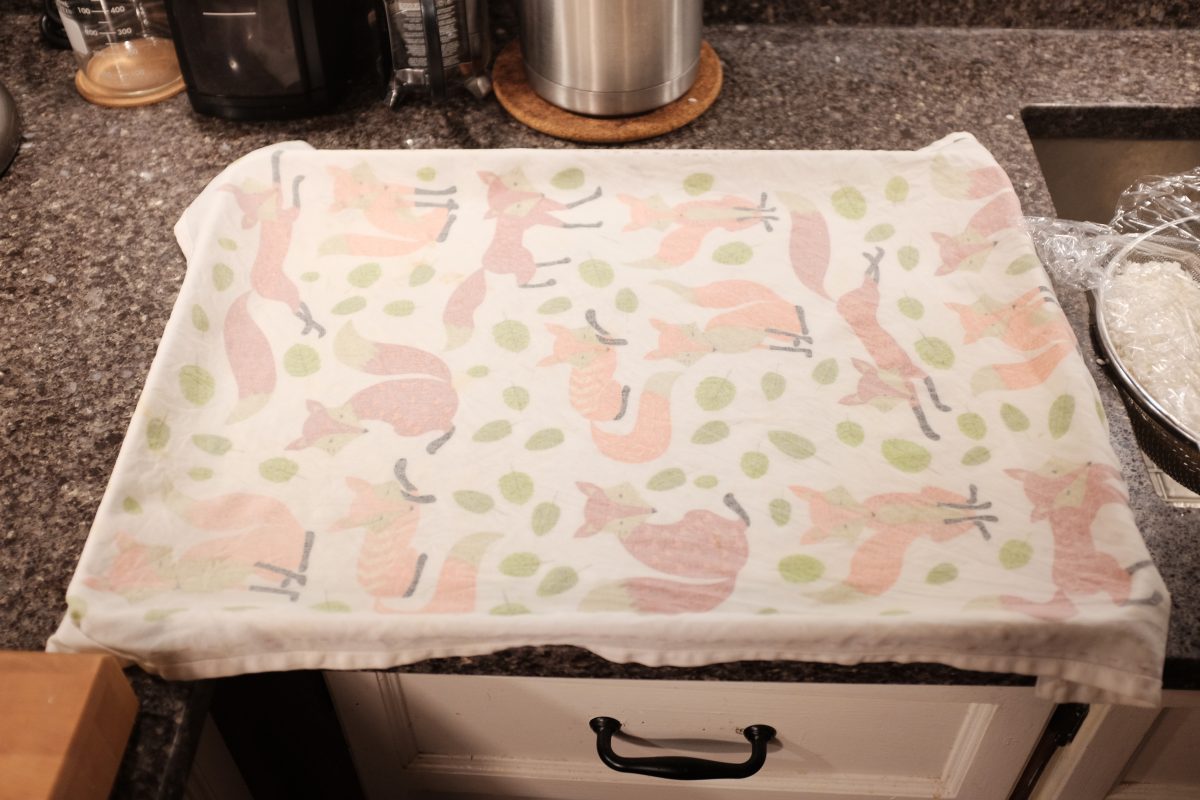
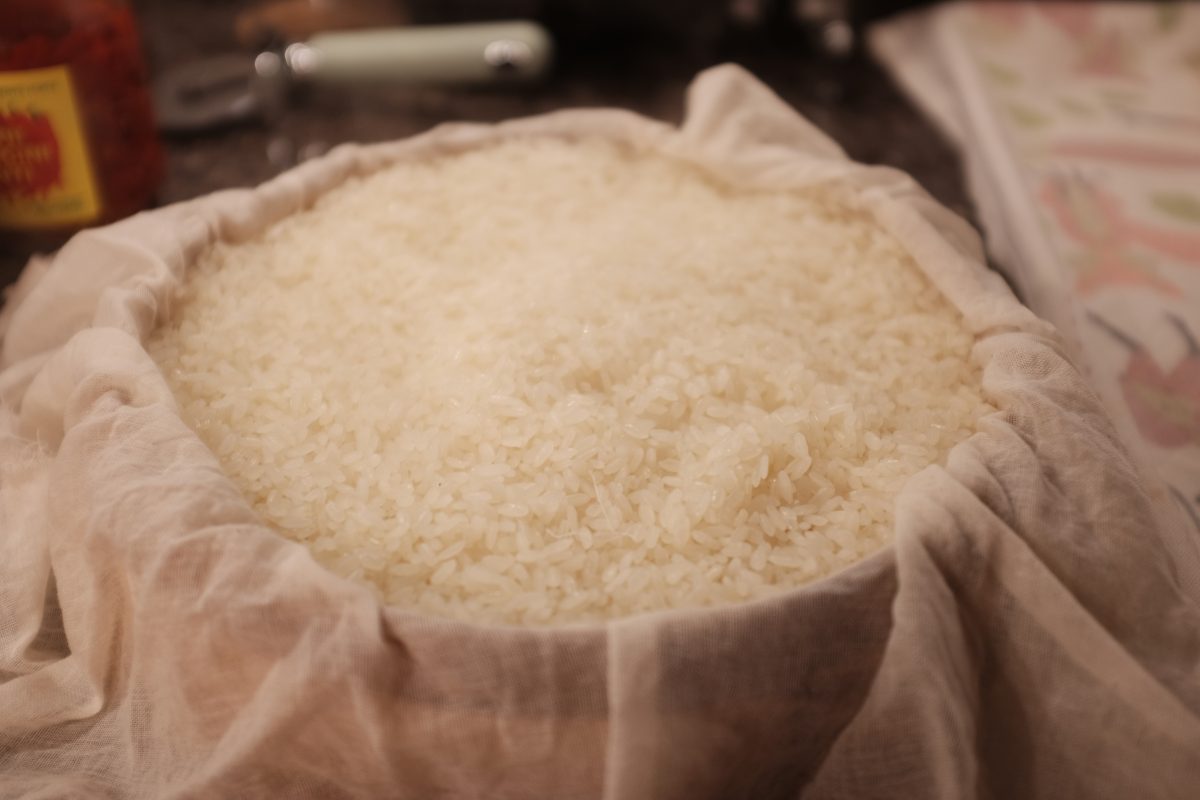
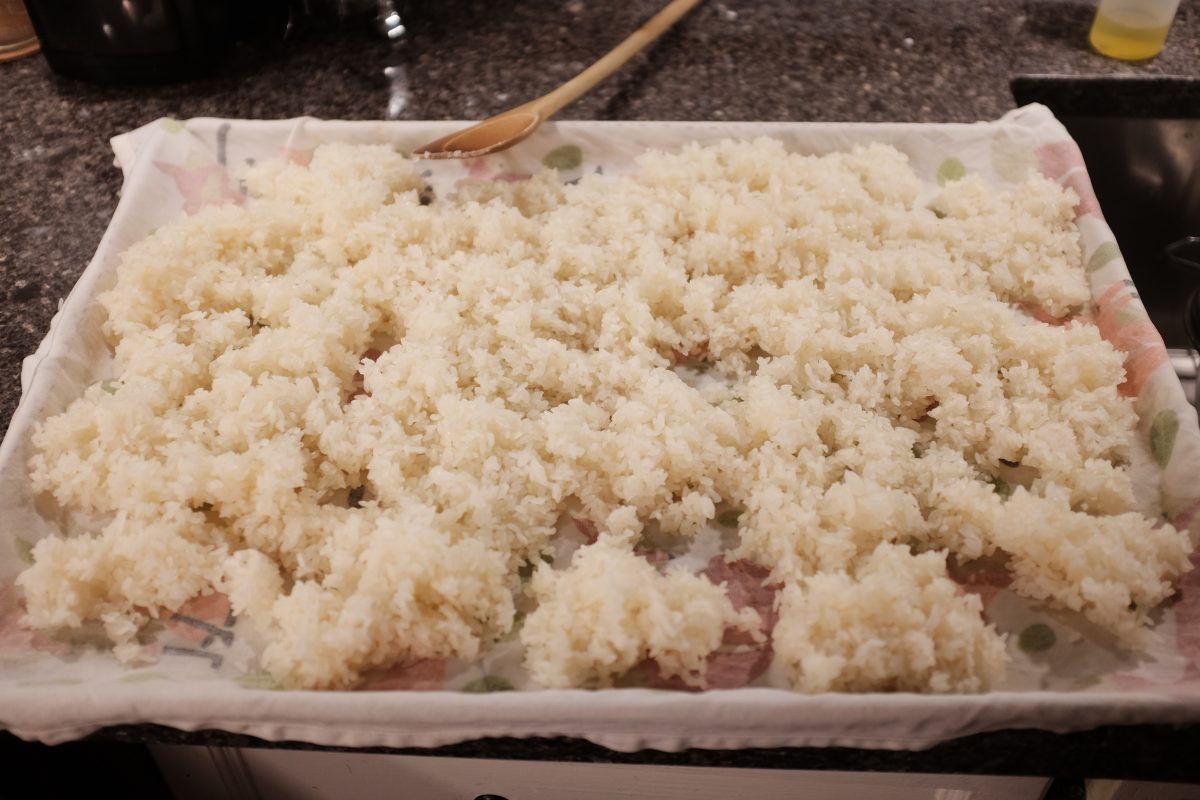
In this stage we will wash, soak, drain, steam and cool our 2kg of sweet rice. And, afterwards, we will add it to our fermenting container.
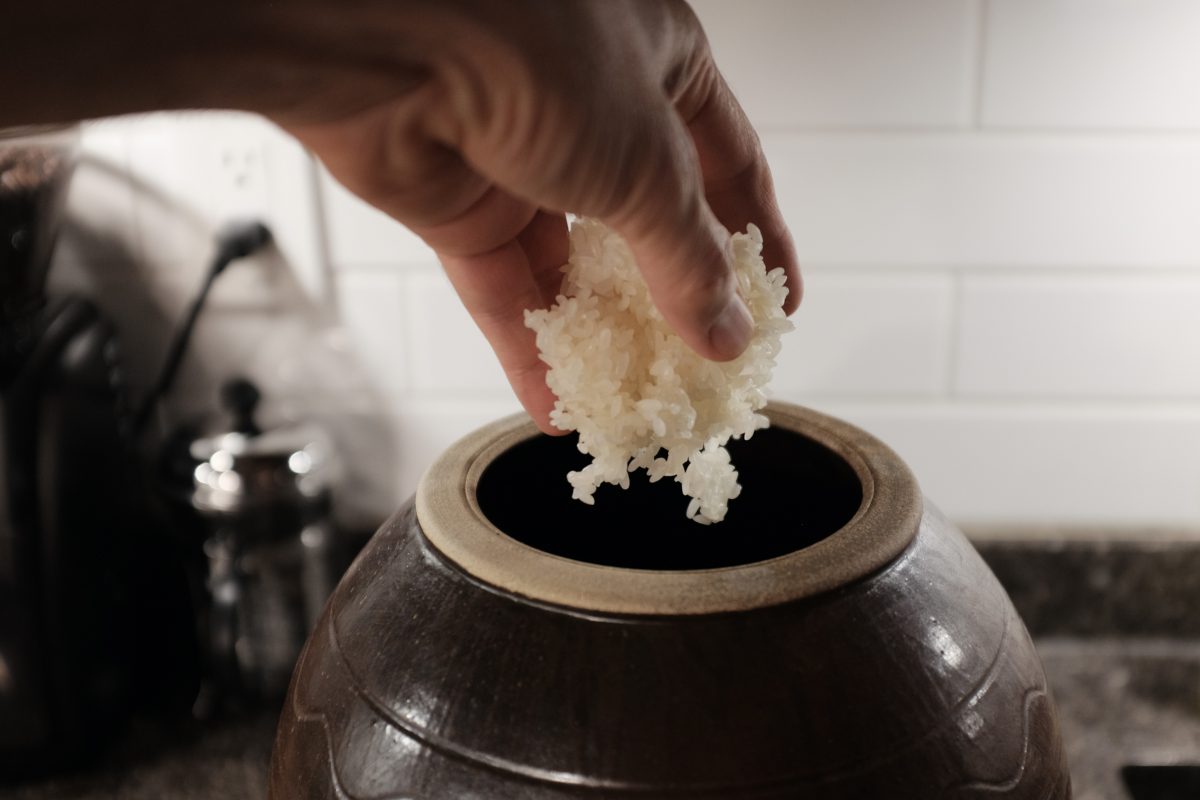
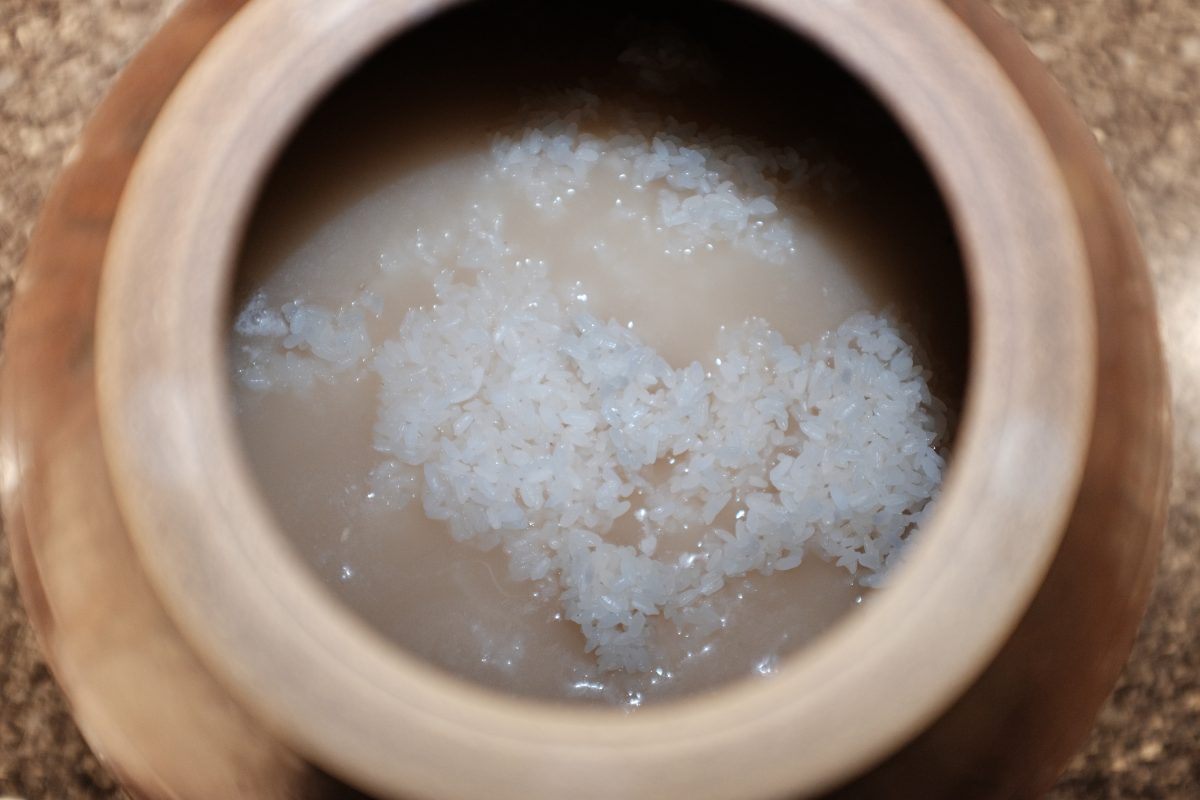
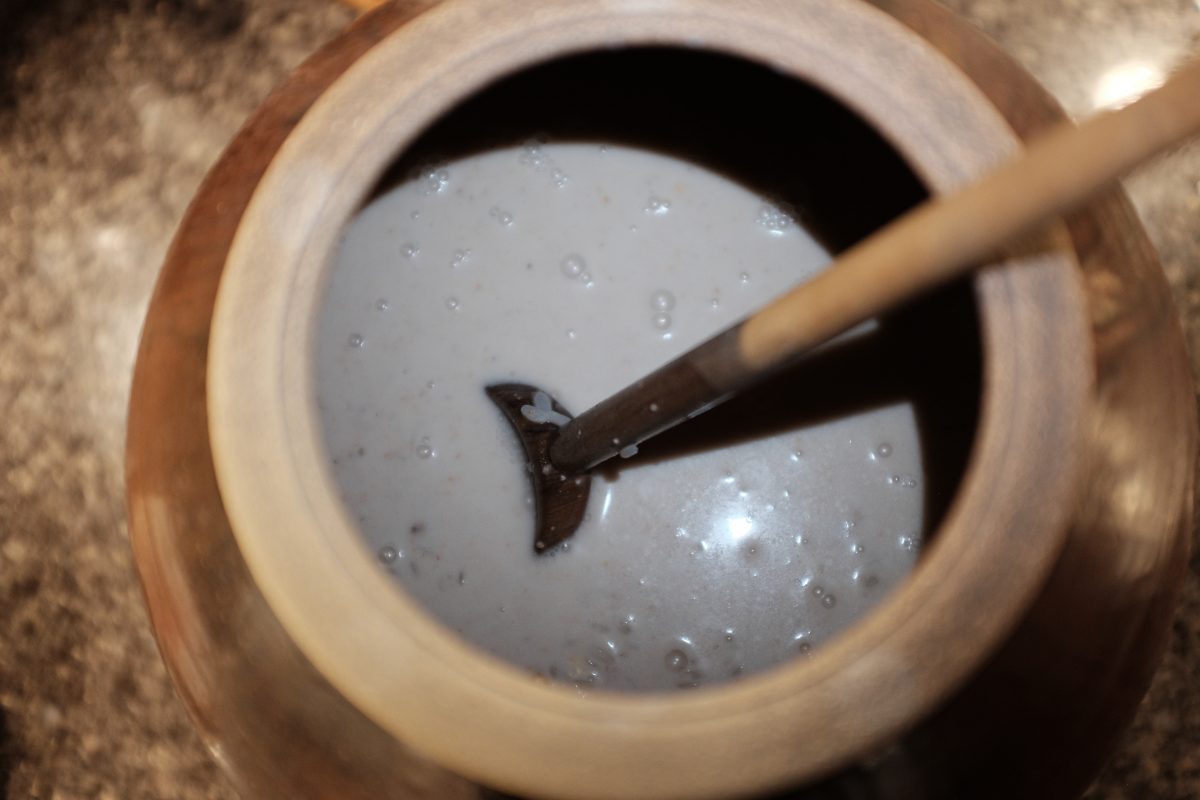
Stage 2, Day 1
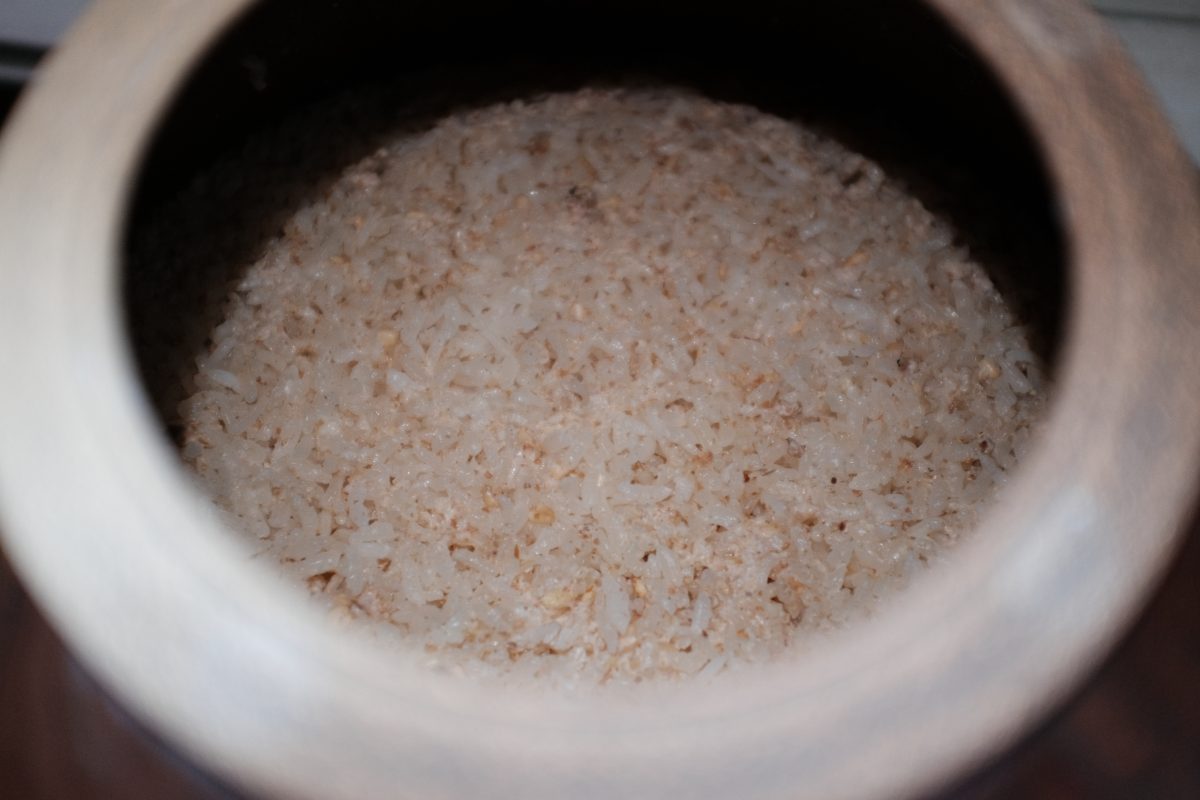
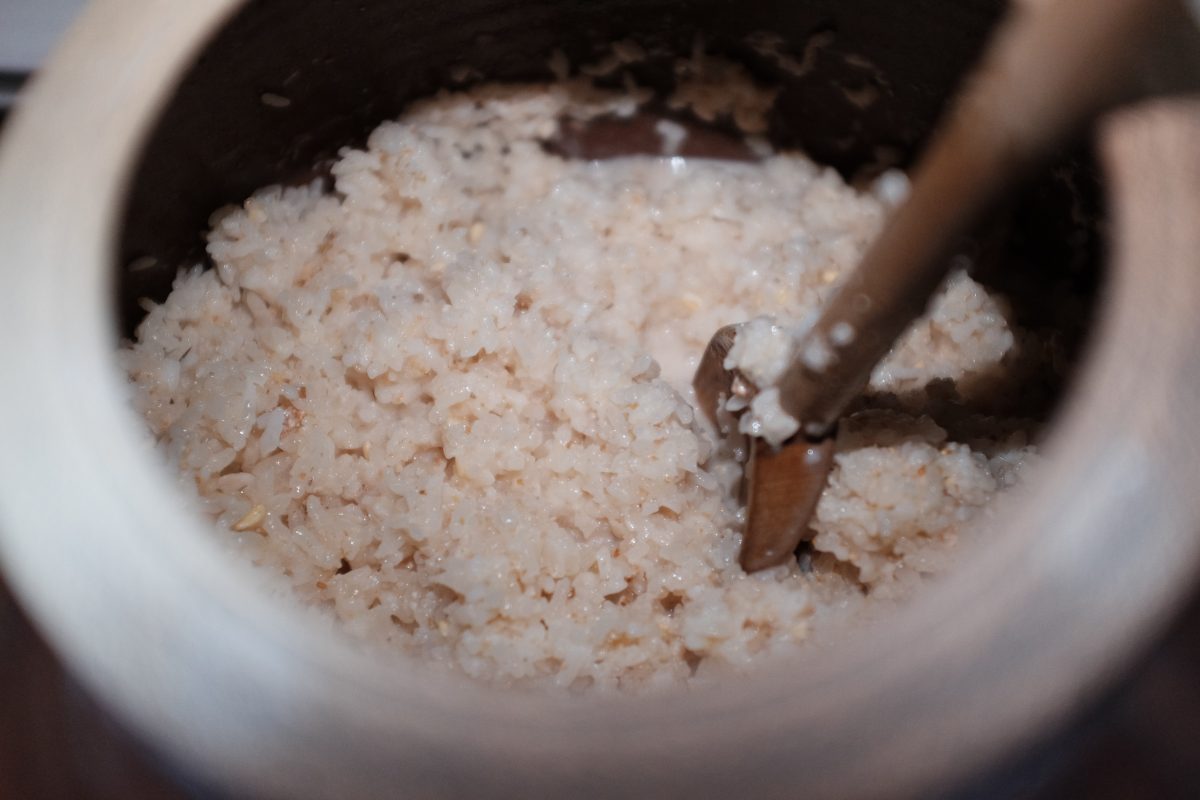
Stage 2, Day 2
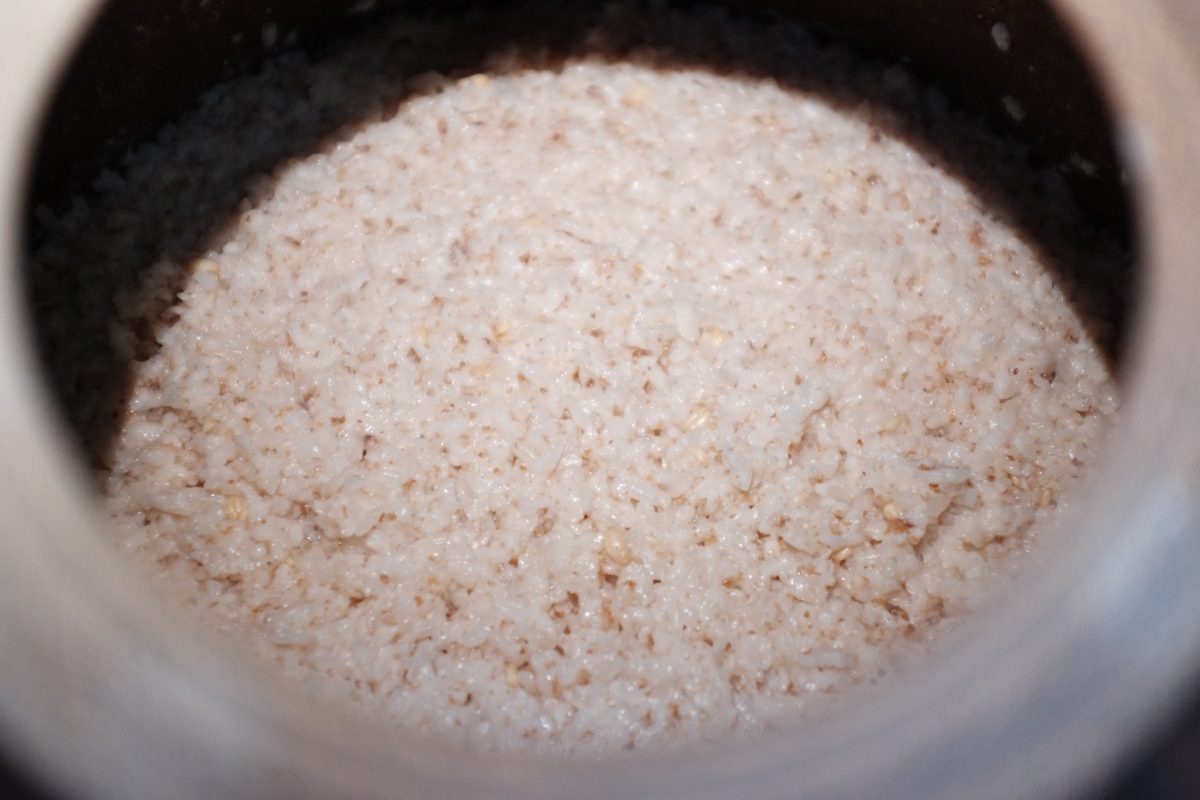
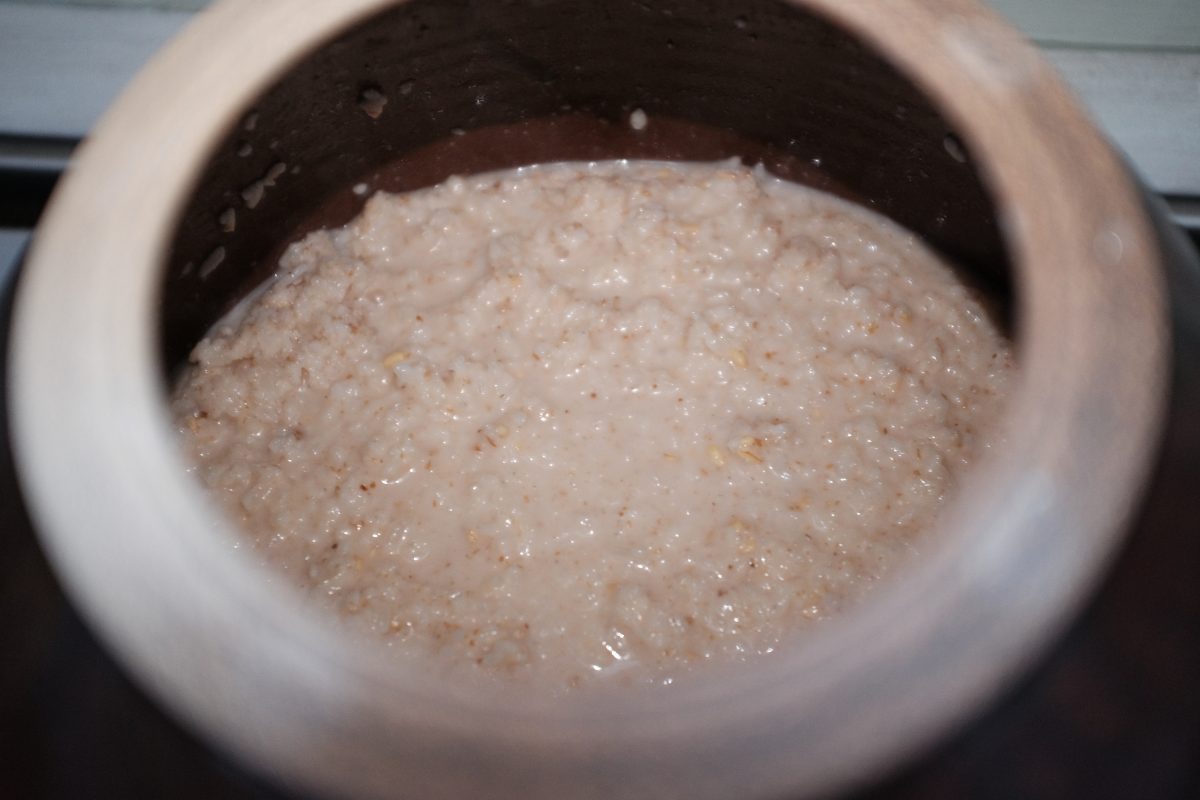
Stage 2, Day 3
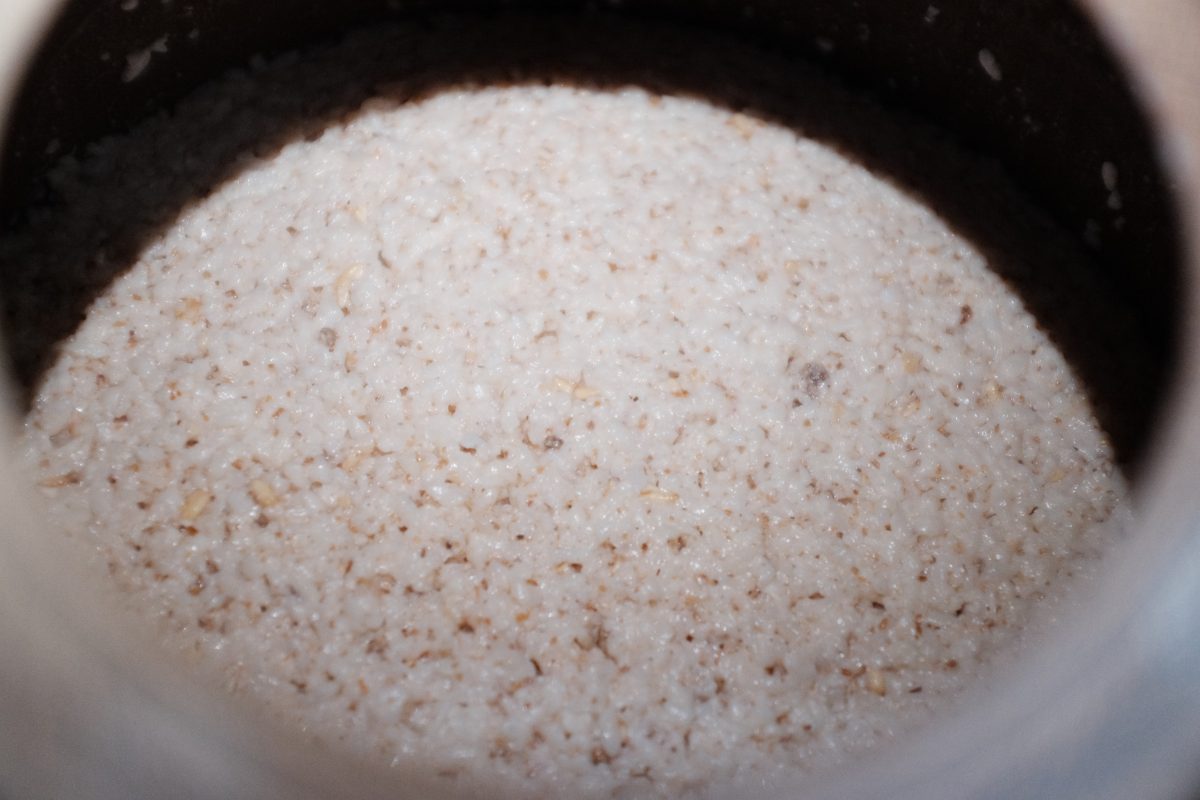
Now we wait
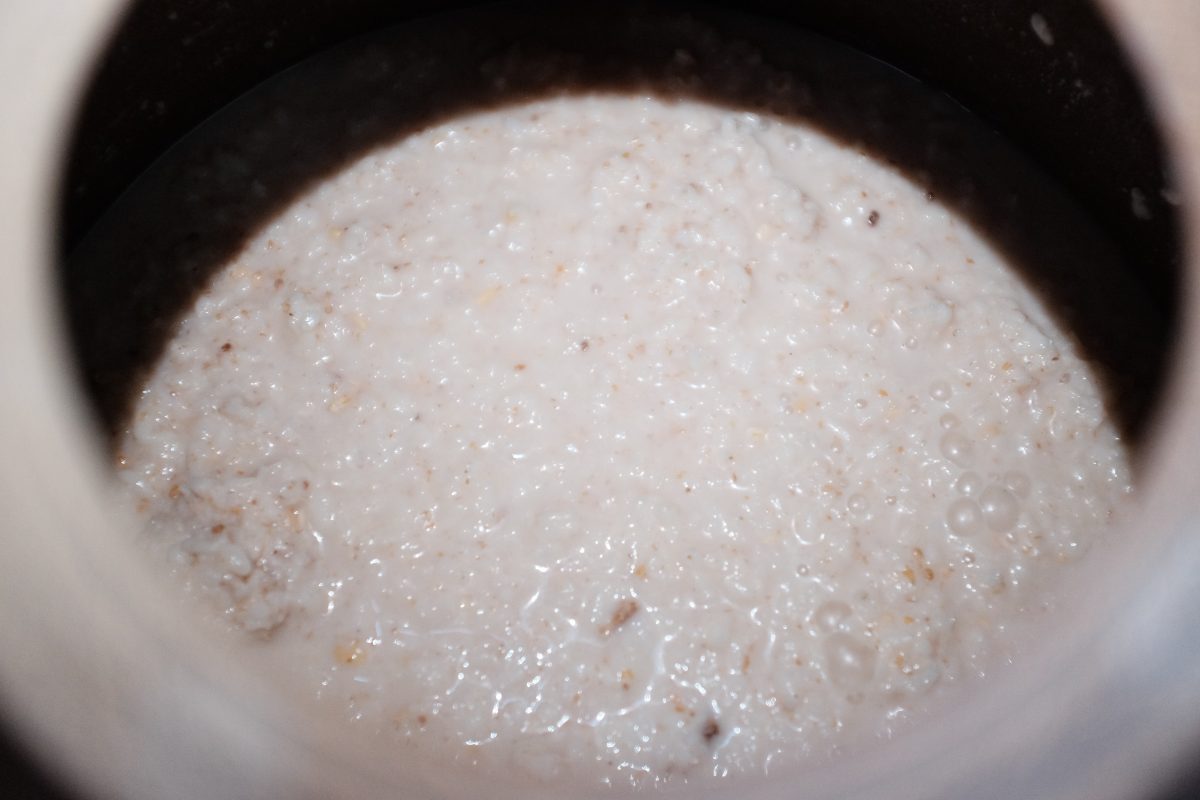
For the next 2 to 3 weeks or so, open up the jar every few days and listen for activity and monitor any changes on the surface. Smell it and taste it for alcohol strength by sticking a spoon or chopstick into the mix.
The Match Test
By lowering a lit match into your container, you can get a visual cue for how much fermentation is going on. An actively fermenting brew will give off carbon dioxide. This will snuff a match quickly. The brew below is around 10 days into Stage 2. The match test shows that it is still actively producing CO2. The match goes out as soon as it gets past the rim of the jar. Eventually, as fermentation slows, you should be able to lower a match right to the surface without it going out.
This is just a fun measure of how active the fermentation is.
Stage 2: 2 weeks after adding rice
The brew is starting to have a nice boozy sweet smell. There is a thin shiny layer of liquid forming on top of the rice mash.
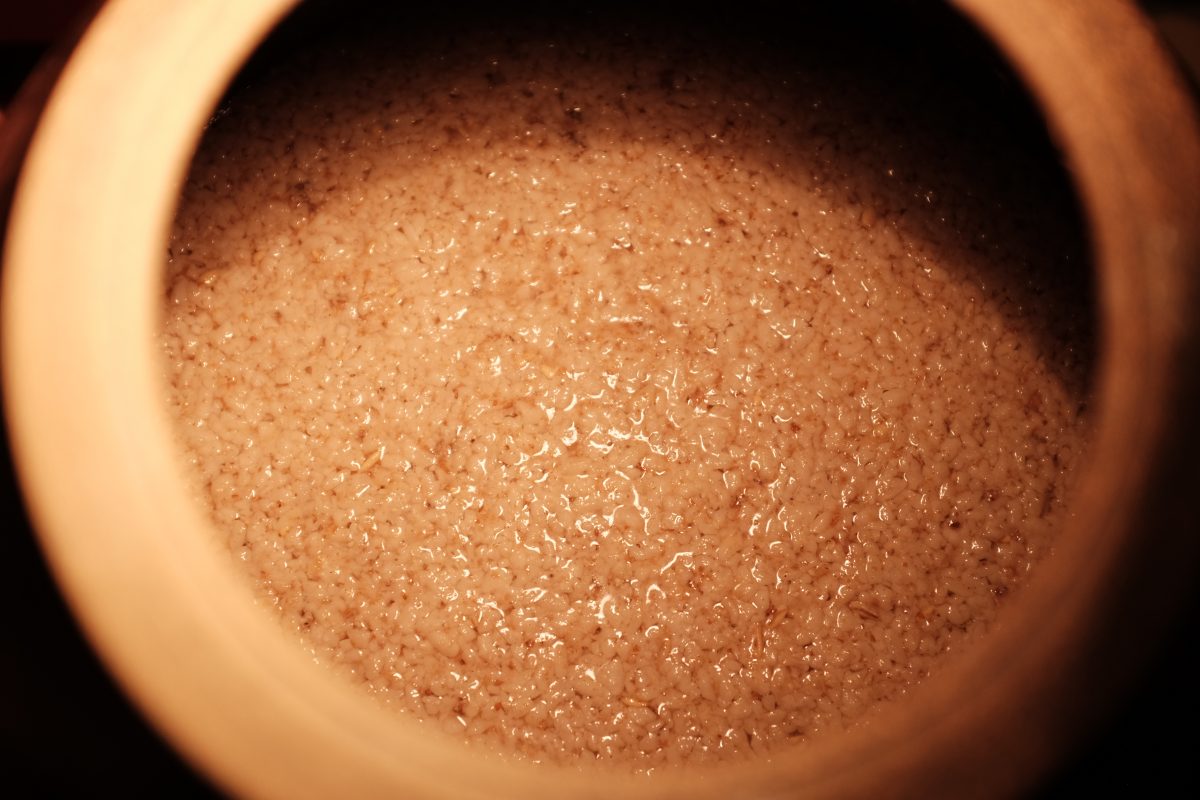
Brew is showing signs of being done
We are now 18 days into Stage 2 (3 weeks total fermentation time measured from the start of Stage 1). The bubbling has practically stopped with very little activity (not enough to even get one bubble during a 10 second sound recording). The brew smells and tastes of alcohol. Compared to a few days ago, there is now a very clear layer of liquid on top.
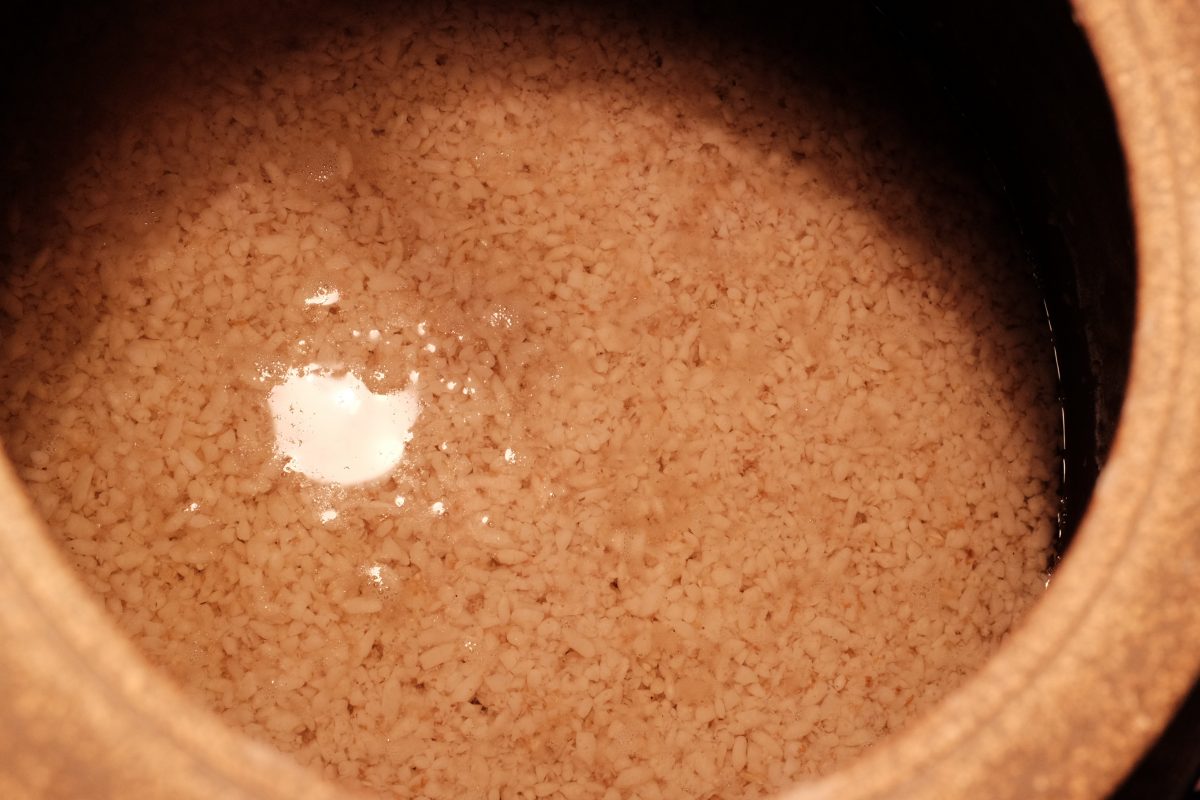
The Match Test Take 2
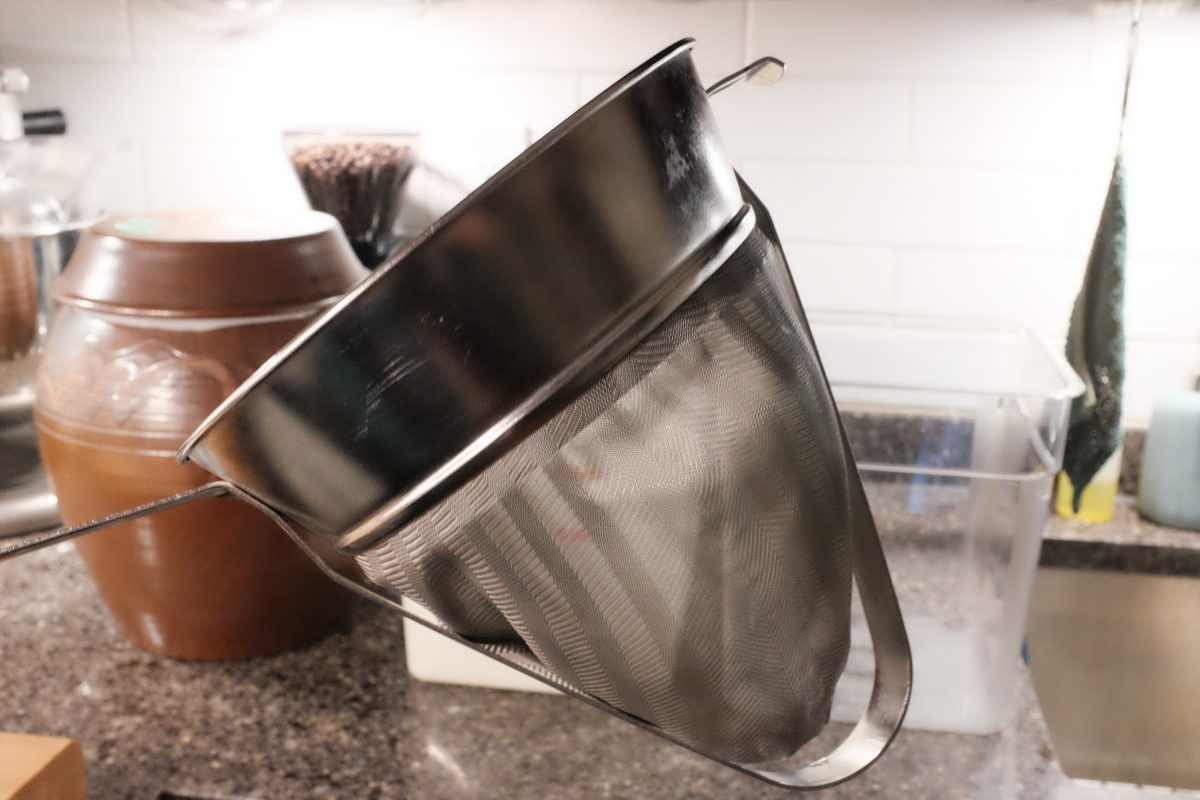
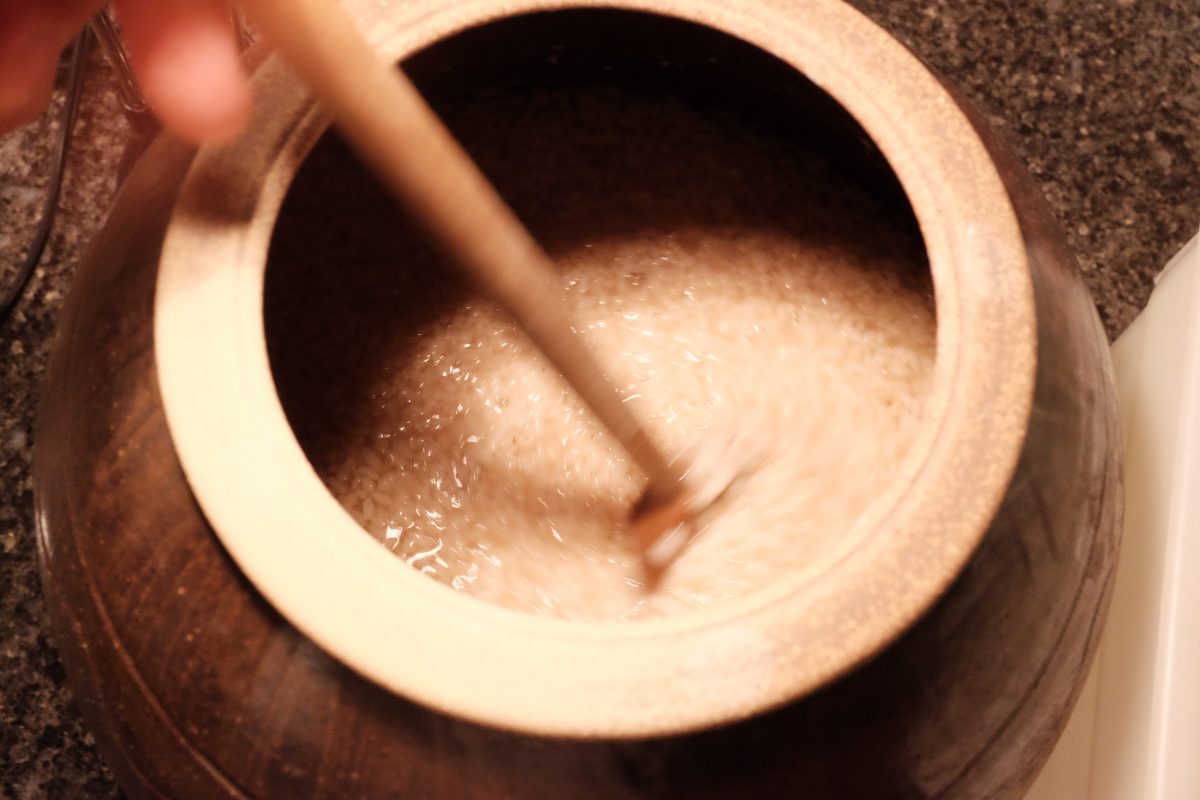
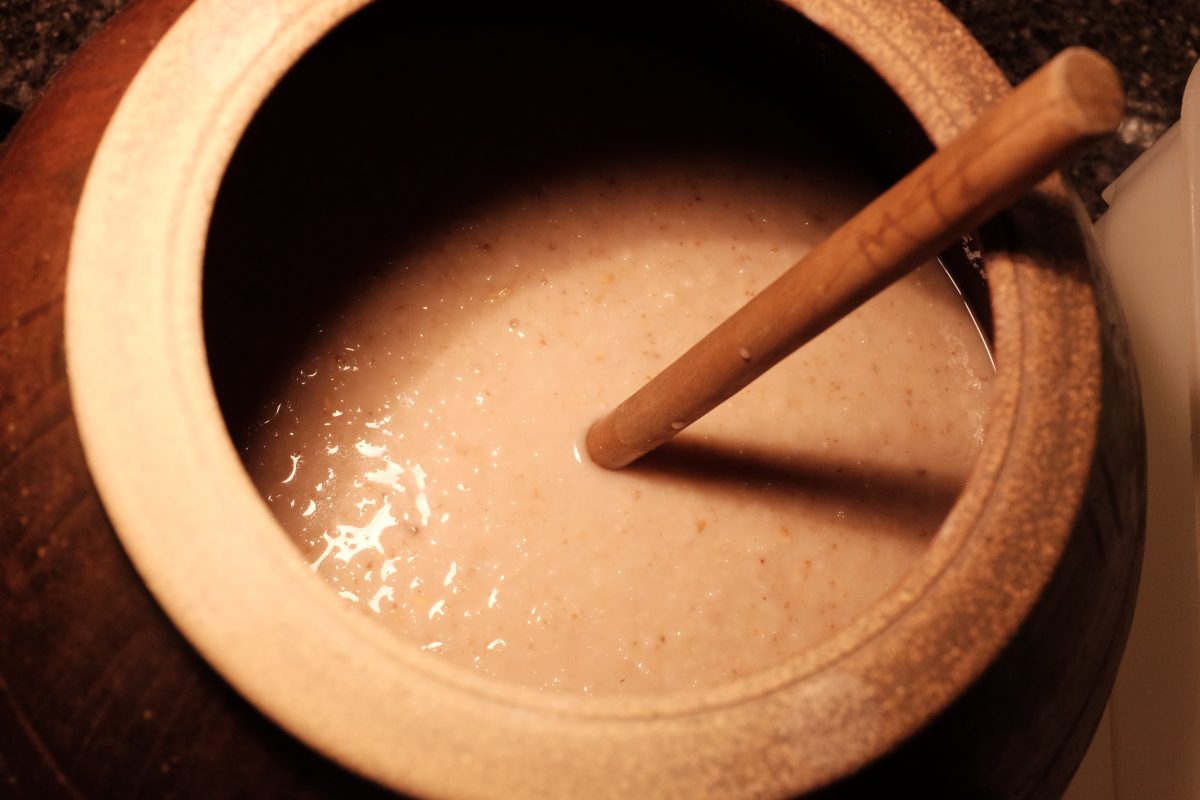
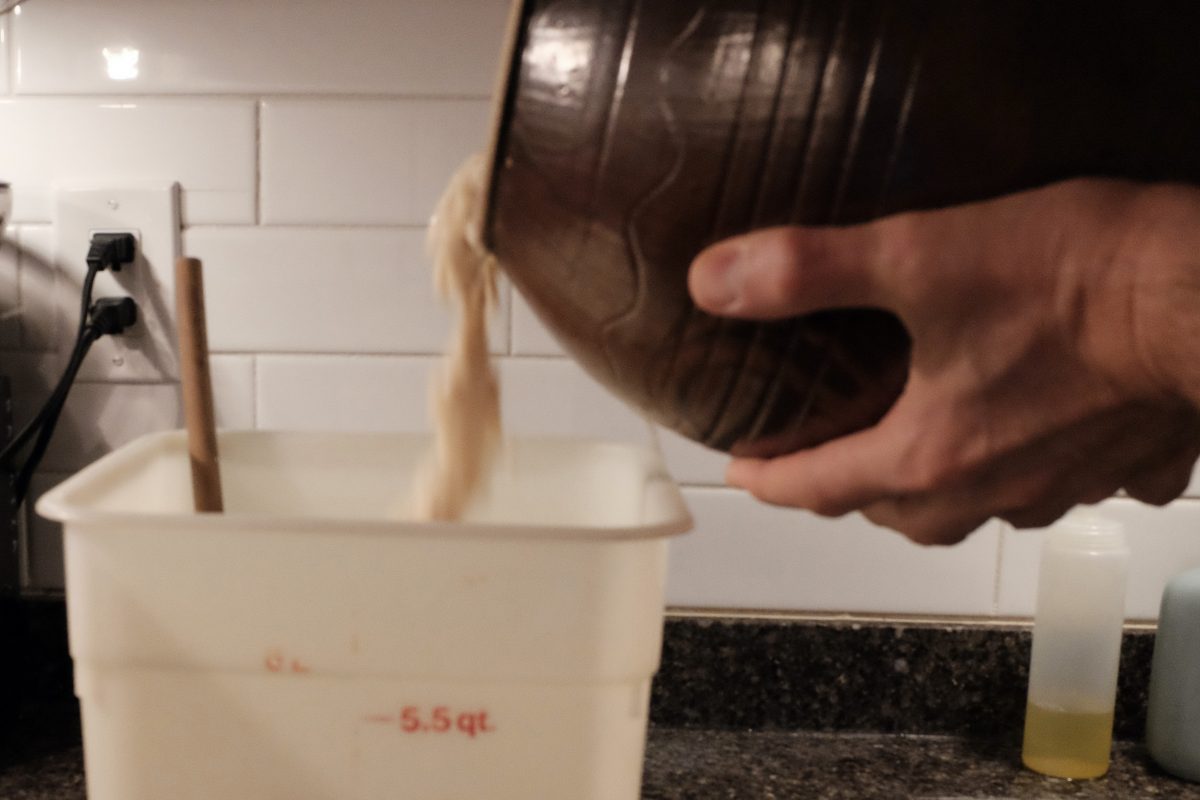
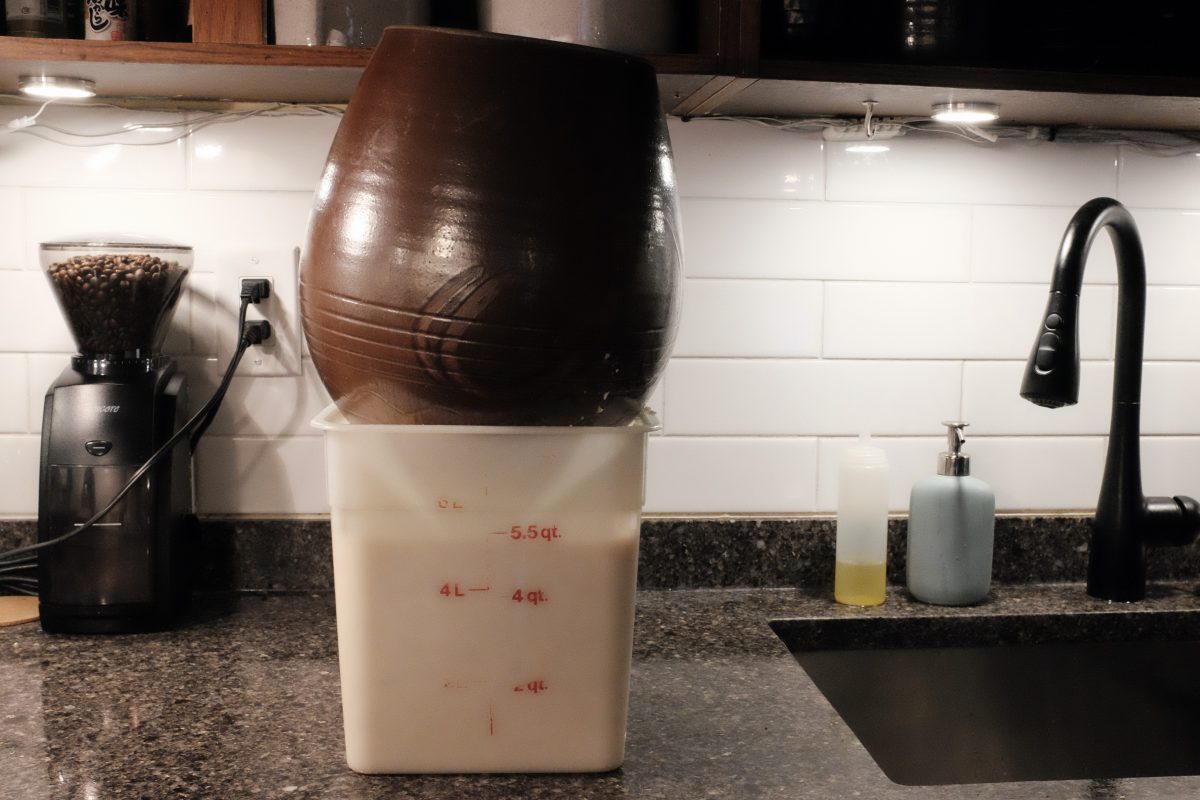
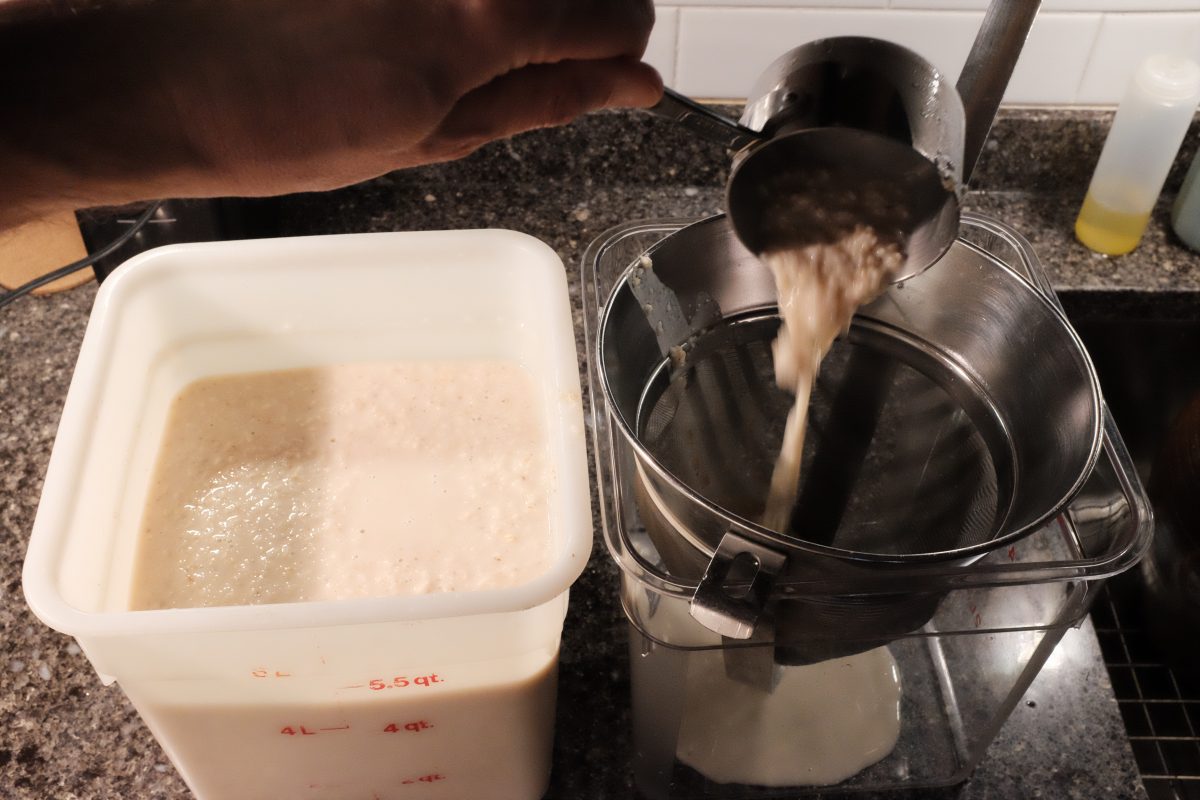
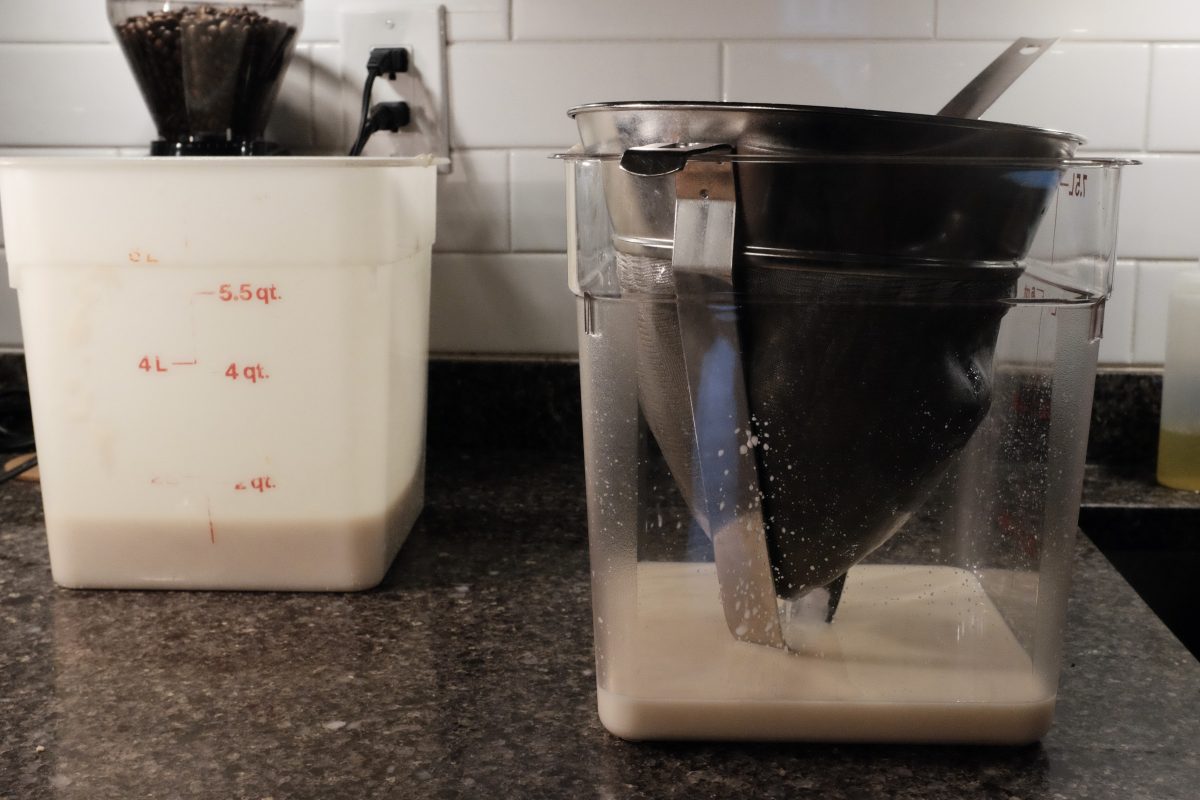
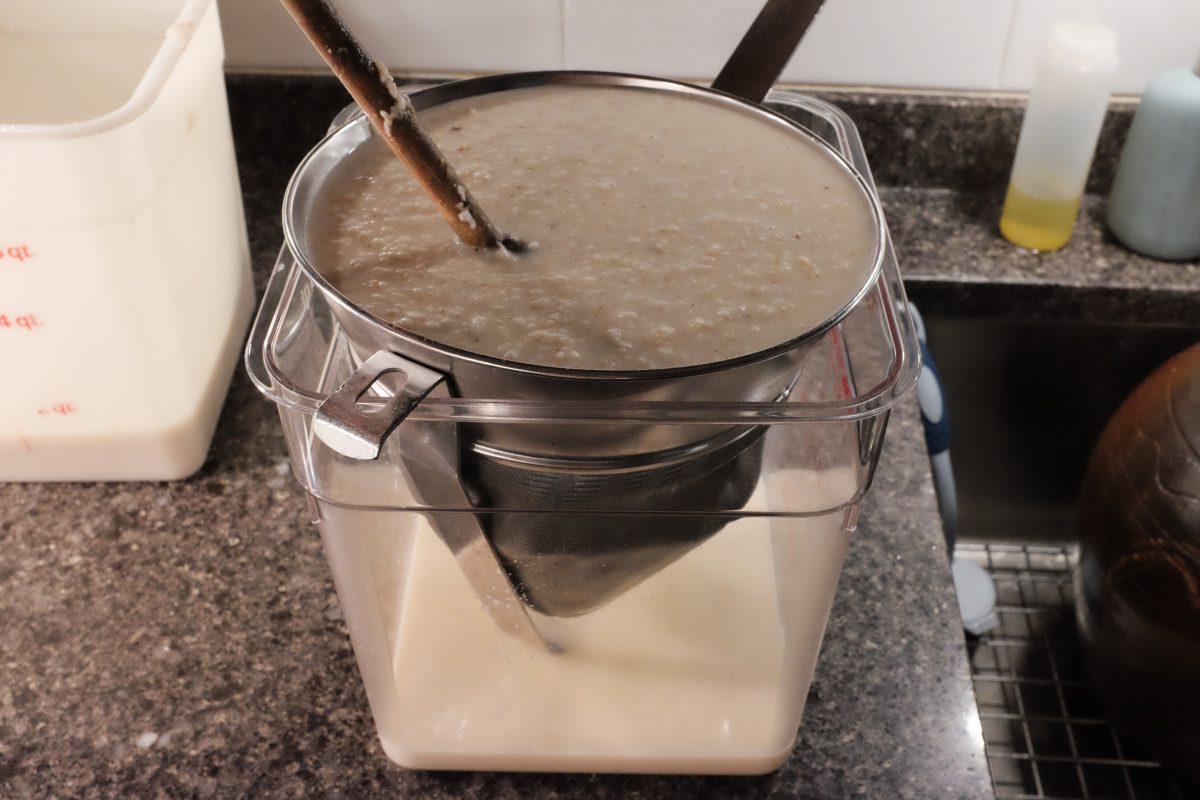
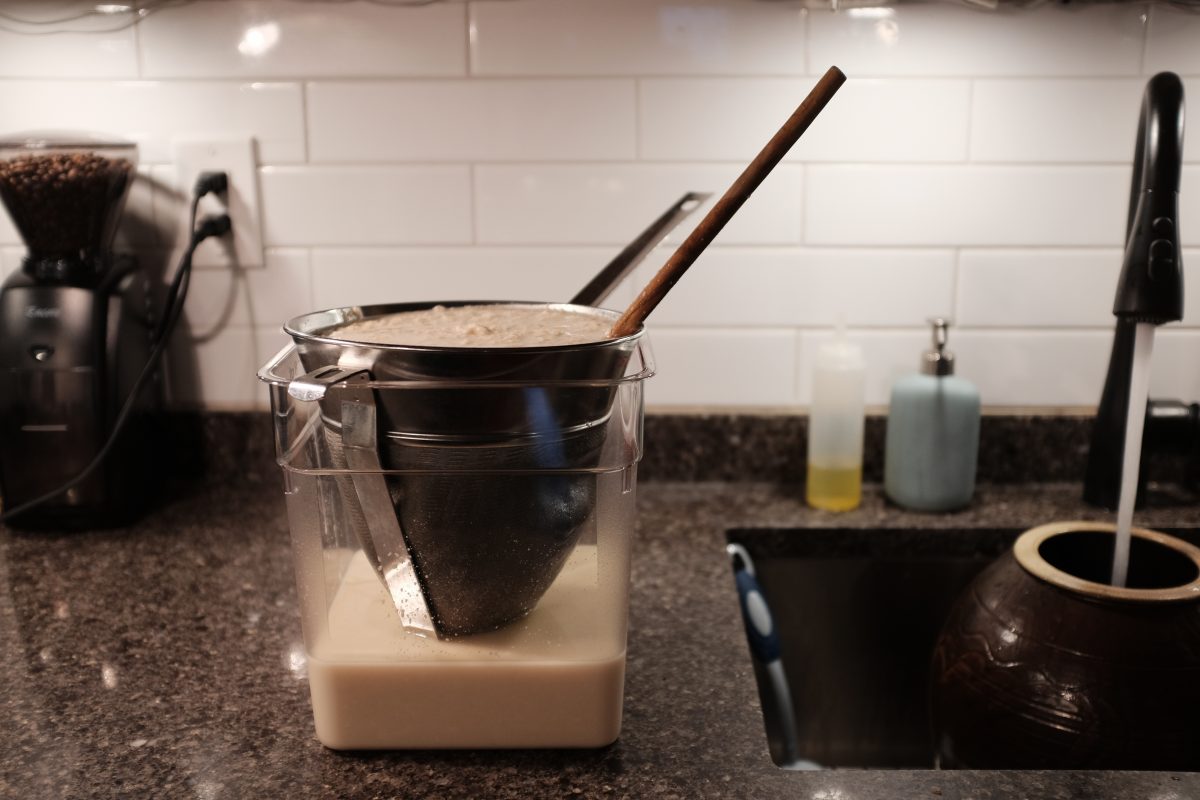
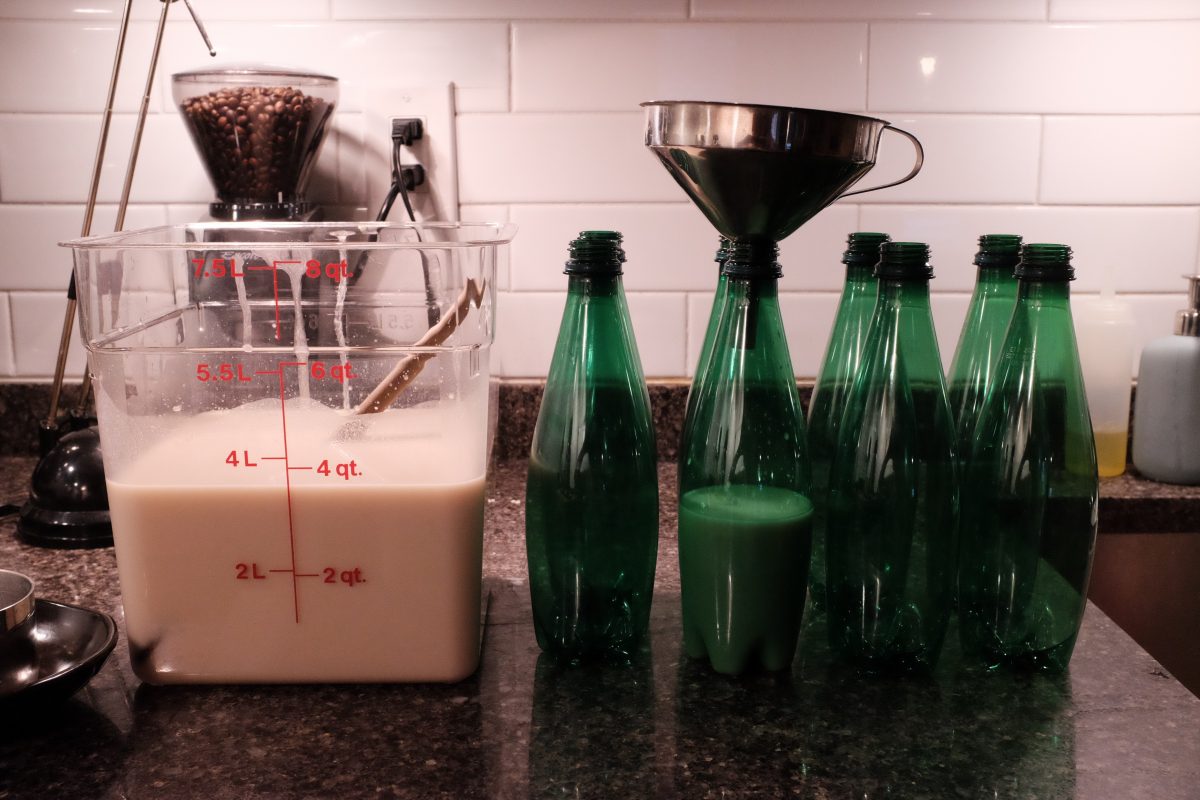
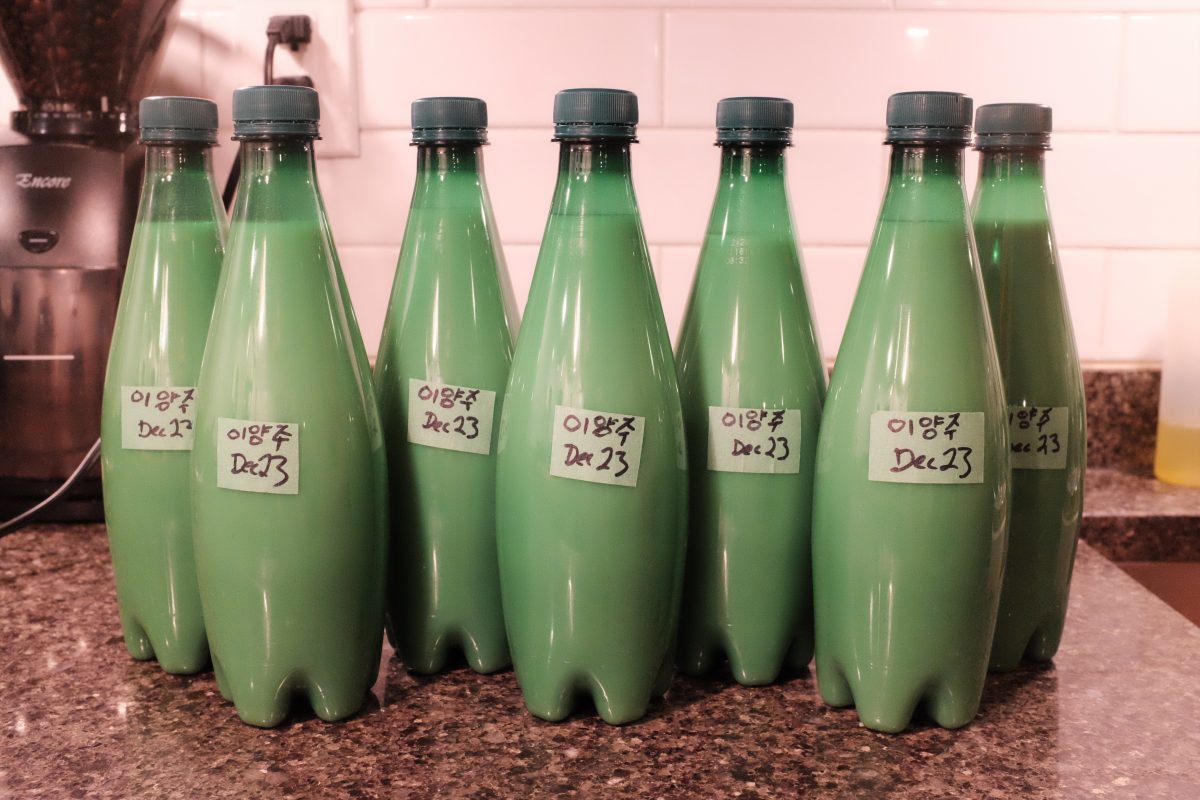
Filtering the brew
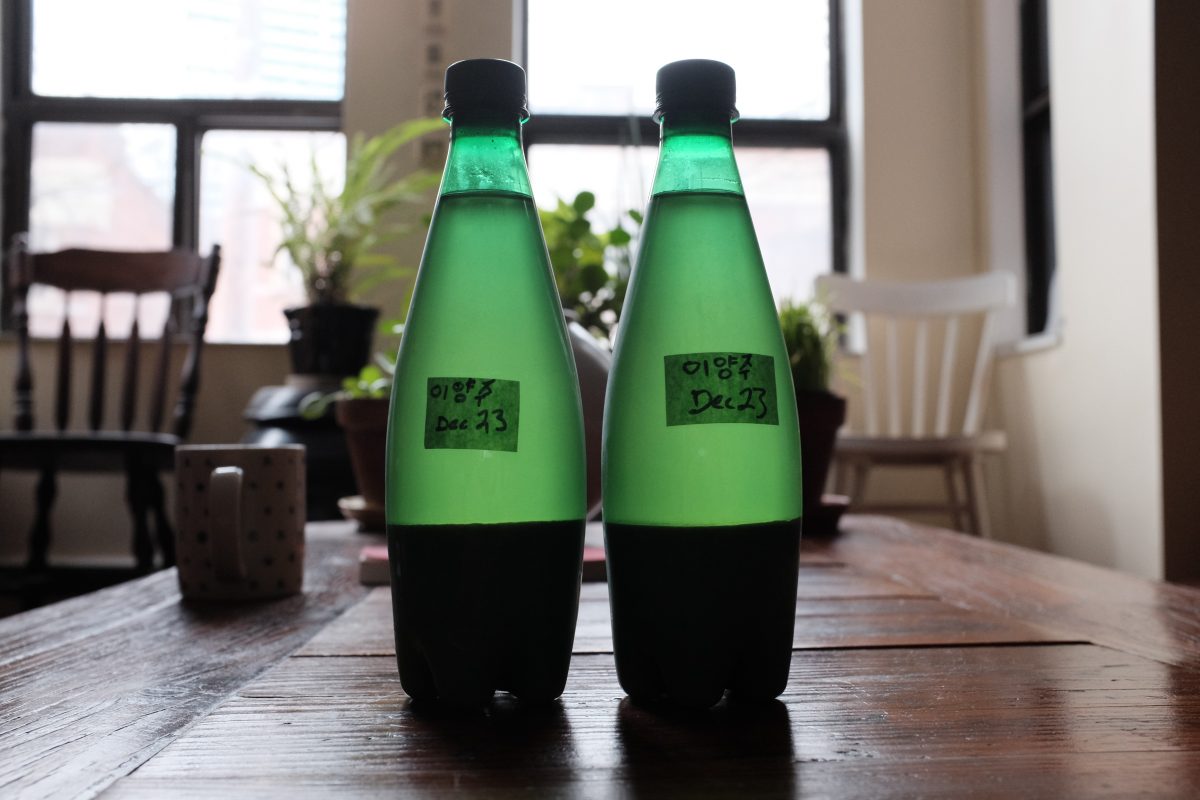
Terminology around nuruk-fermented rice alcohol and how to enjoy your brew:
Depending on a few different factors, there a few different categories of rice alcohol. Without going into a lot of detail, here is a basic list:
- Makgeolli: sedimented brew with less than 10% alcohol
- Takju: sedimented brew with more than 10% alcohol
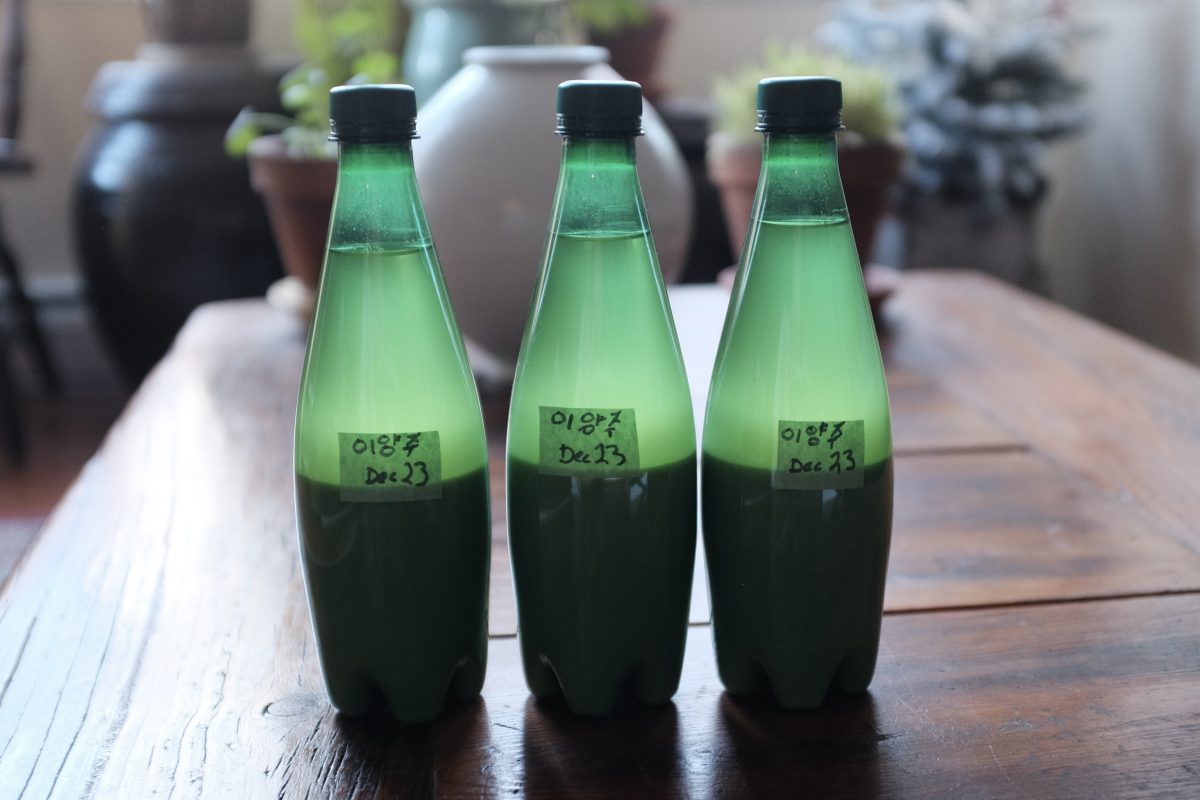
- Yakju: clarified rice brew (the clear top layer in the above picture)
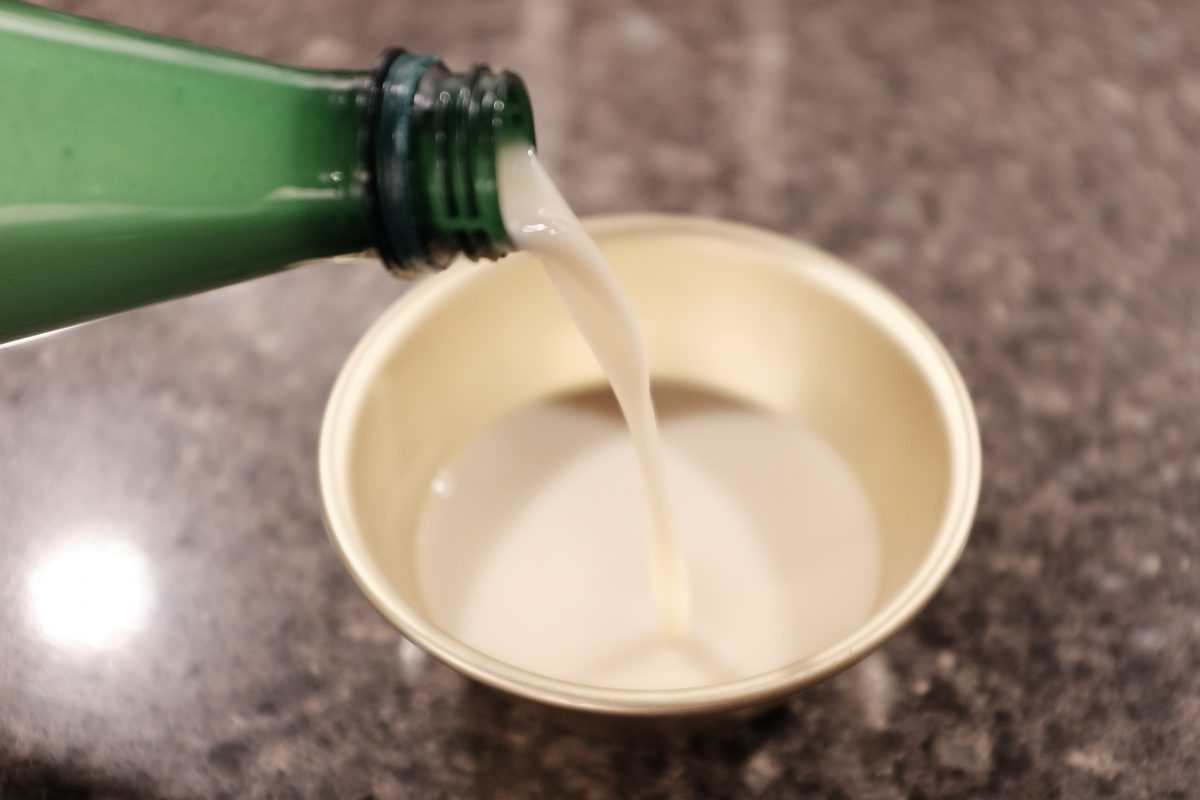
Our two-stage brew, long-fermented in a cool environment will almost certainly have more than 10% alcohol by volume. This means that it is a “Takju” and I think it is best to drink it as is. Gently turn the bottle over a few times to distribute the sediment and enjoy.
If you leave the bottles to rest, after a week or so, all of the sediment will settle to the bottom and there will be a very clear sediment-free layer on top. This is “Yakju”. You can pour it off slowly so as not to disturb the sediment and enjoy just the clear alcohol on it’s own. You can also pour it off, rebottle only the clear layer and age it indefinitely. It will change and develop new flavours over time.
If you pour off the Yakju, and dilute the sediment with fresh water, you will end up with a weaker drink in the under 10% alcohol range: this is Makgeolli. OR..you can also dilute your Takju with water to lighten it up and bring the alcohol concentration down…this would also be Makgeolli.
If I want something really refreshing and thirst quenching to drink with spicy food, I will often dilute my Takju with sparkling water. The brew is lighter and slightly fizzy and the flavours open up in a little different way…similar to the way an ice cube or a little water affects Scotch whiskey.
Commercial Makgeolli:
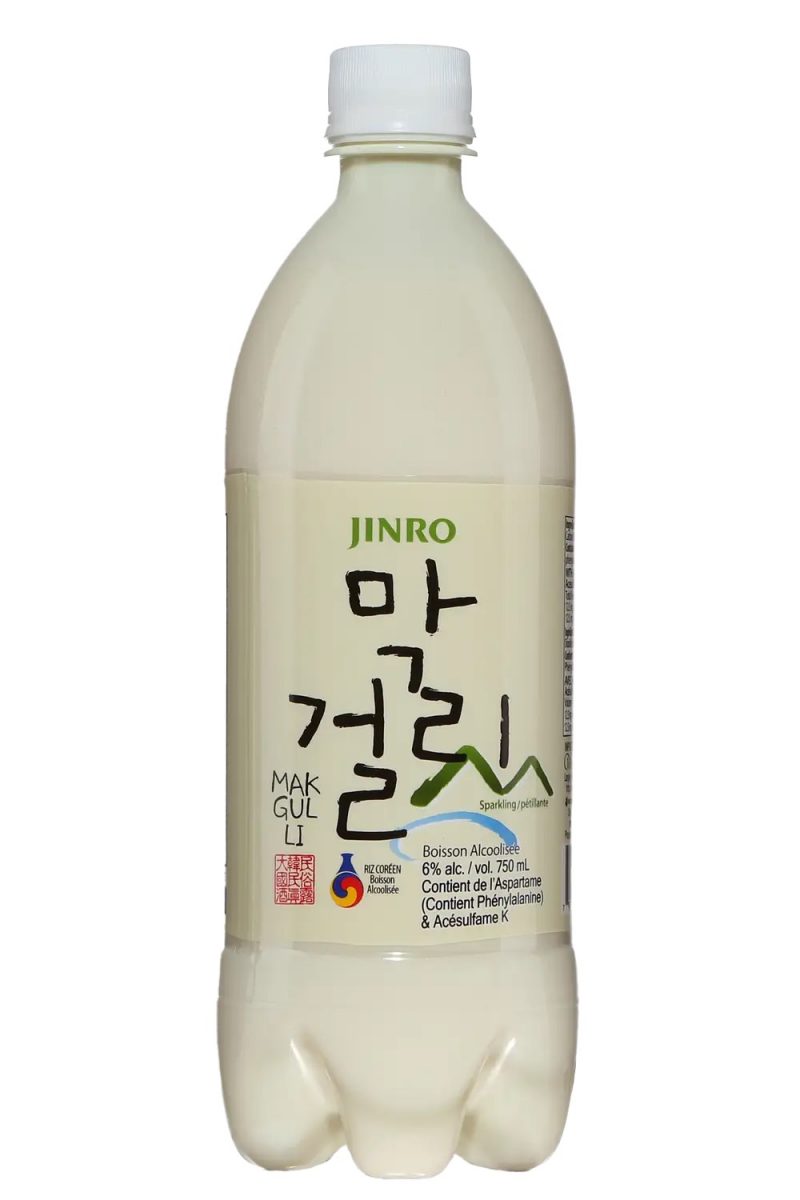
You have probably seen plastic bottles of commercial makgeolli at your local liquor store or in convenience stores in Korea. This cheap and tasty drink has it’s own charm but it does not have that much in common with a traditionally fermented brew like we have made. This commercial Makgeolli is usually fizzy, watery, has very low alcohol content and it surprisingly sweet, almost like a soda. It is sweetened with aspartame to make it more palatable and to prevent further fermentation in the bottle (and pressure related accidents while it is transported).
In contrast, our home brew has little to no fizz, a much higher alcohol content and is not especially sweet. In fact, it will lean closer to the dry and tart side with complex rice-y, boozy flavours and a thick creamy mouthfeel. You will taste and feel the alcohol very quickly. It is delicious! And, it is unlike anything else. Korean rice alcohol is entirely it’s own thing and it is next to impossible to compare it to any other brew.
Commercial brewers making traditional Korean sool
Over the last 5 years or so, some commercial brewers of traditional Korean sool have emerged. The first in the US was Hana Makgeolli, founded by Alice Jun. Alice and her team have produced a range of small-batch rice brews ranging from traditional Takju to, most recently, a potent full-strength Soju 60. I have linked a video below of Alice explaining the range of traditional Korean sools as well as Hana Makgeolli’s current offerings.
It was probably close to 10 years ago that I had the pleasure of meeting Alice in New York City when she was still developing recipes in her Brooklyn apartment. I got to sample an early brew “under the table” over Poke-bowls at a Manhattan SunriseMart. To this day, it is still one of my best New York experiences! Alice is one of the loveliest and most generous people I have met and she has a deep understanding of Korean rice alcohol, learning first-hand as a child helping her dad with traditional home brews. I highly recommend having a look at the above video for a comprehensive Sool School and if you are lucky enough to be able to try Alice’s brews in person, don’t hesitate to visit her shop and brewery.
As always, if you have any questions, comments or suggestions, please leave them below. If you try this recipe and like the results, please let me know. I hope you enjoy making your own rice brew as much as I do. Cheers! : )
If you enjoy the content and would like to contribute towards website maintenance and development, you can make a donation here.
Vegan Napa Cabbage Kimchi
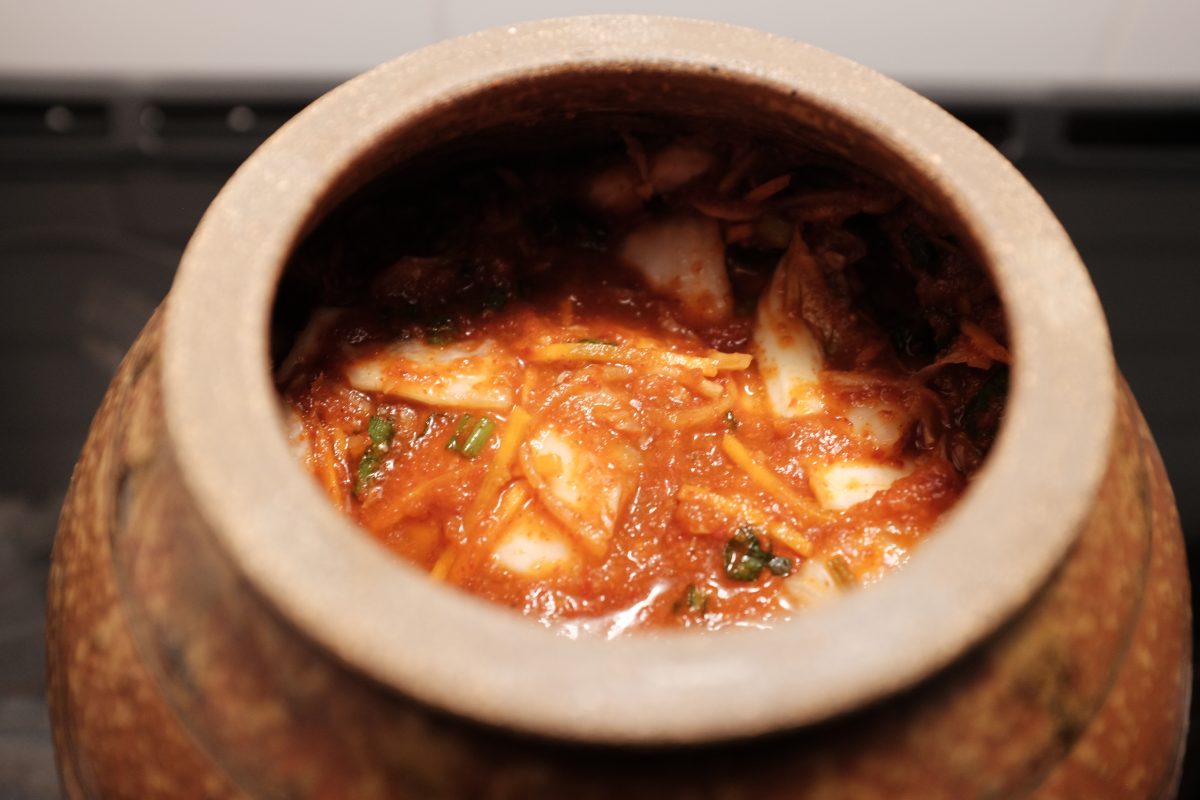
This is a tested recipe for anyone who does not eat meat, anyone with shrimp allergies or anyone who does not like the fishy taste of fish sauce. Once this recipe ferments, you will have a tasty vegan kimchi that you can use just like any other kimchi. It is a variation on a cut kimchi recipe that I posted previously. If you are interested in making a kimchi with all the seafood included or if you are interested in more information about kimchi in general, you can find that by clicking here.
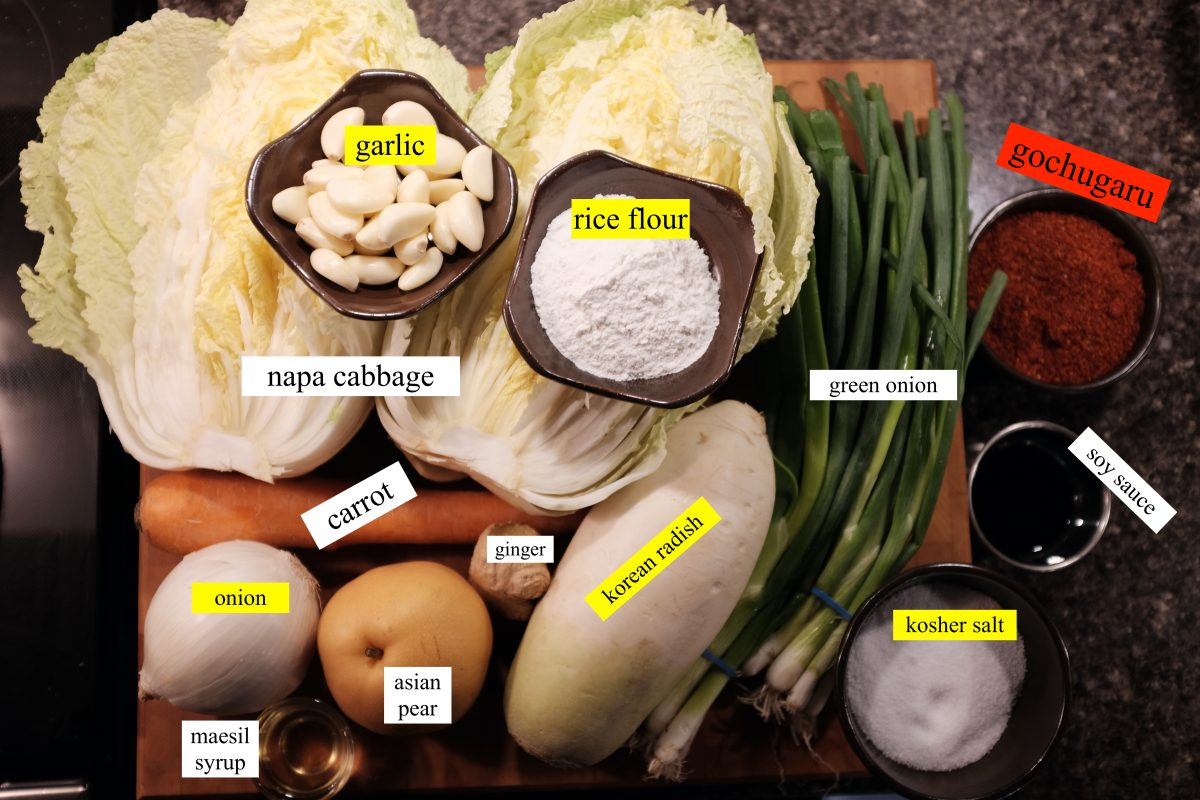
Ingredients
- 1 large (2kg) Napa Cabbage
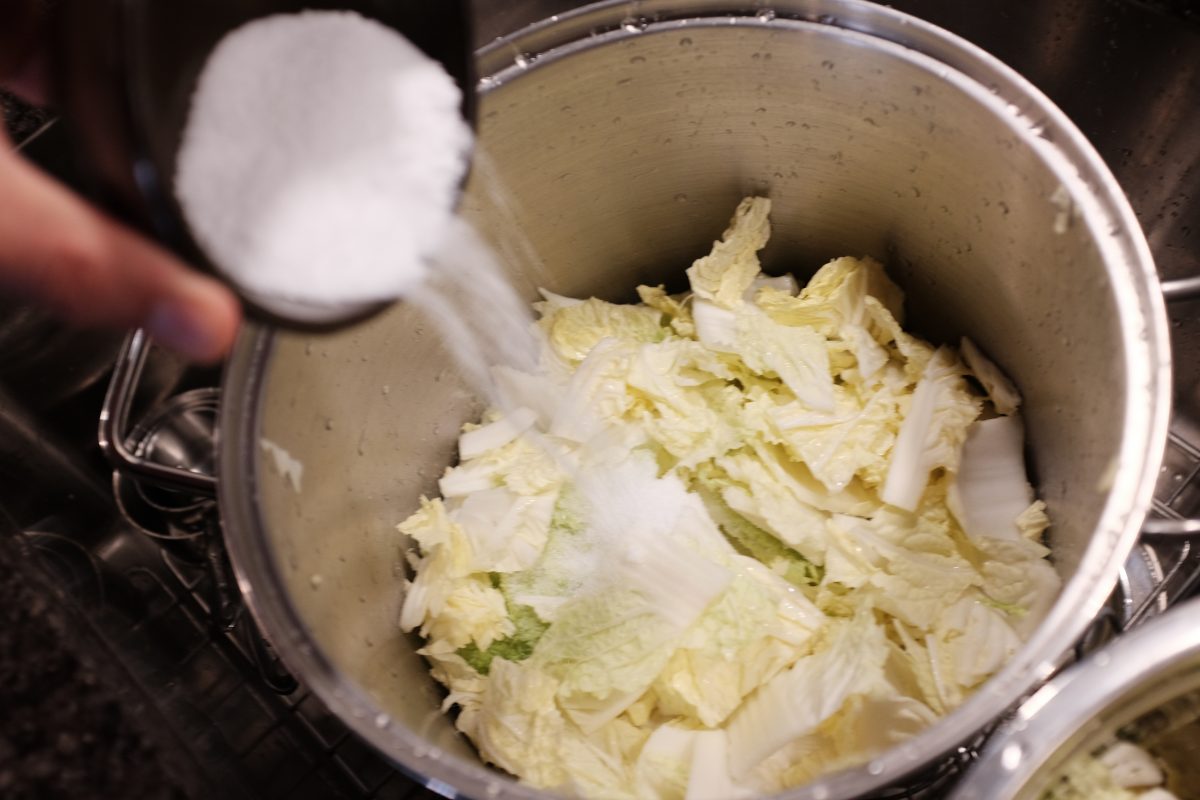
- 80 grams/3oz (around 1/2 cup) Diamond Kosher Crystal salt for brining
- up to 2 Tablespoons kosher salt for seasoning (not for brining…save this for later)
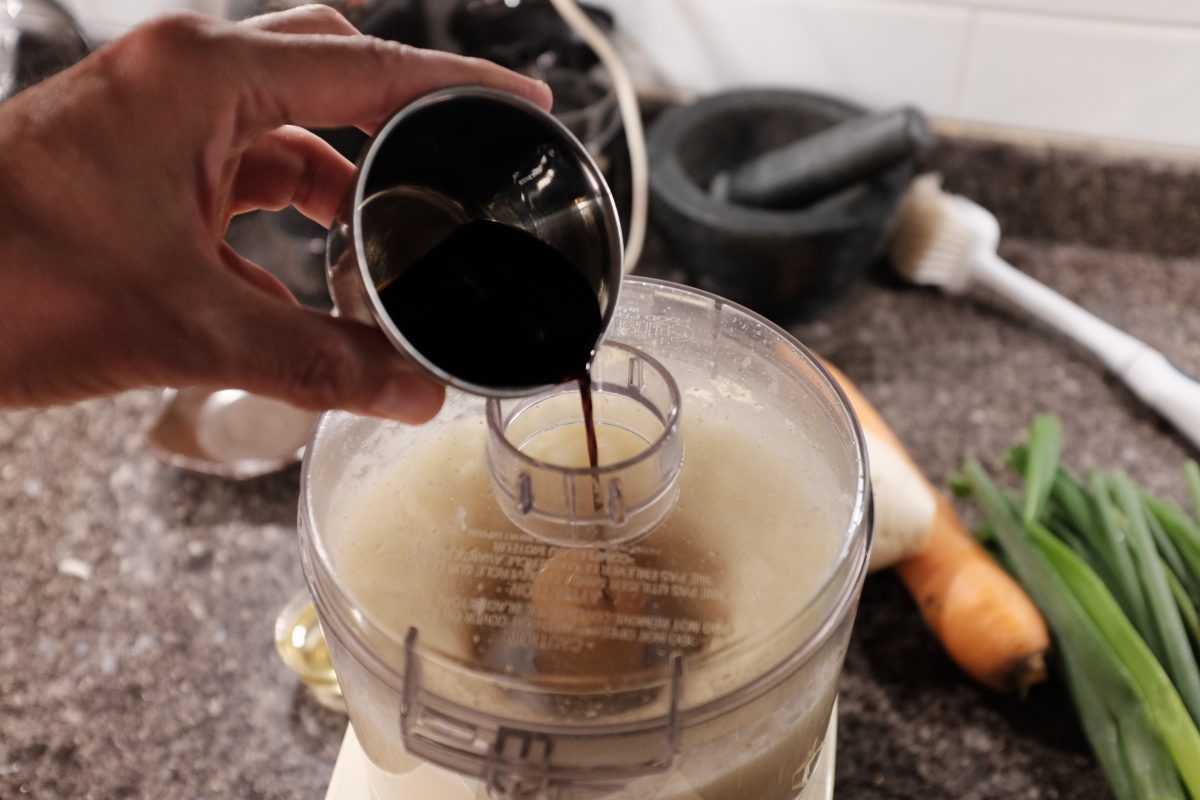
- 1 tablespoon soy sauce
- 275ml (1 1/2 cups) water
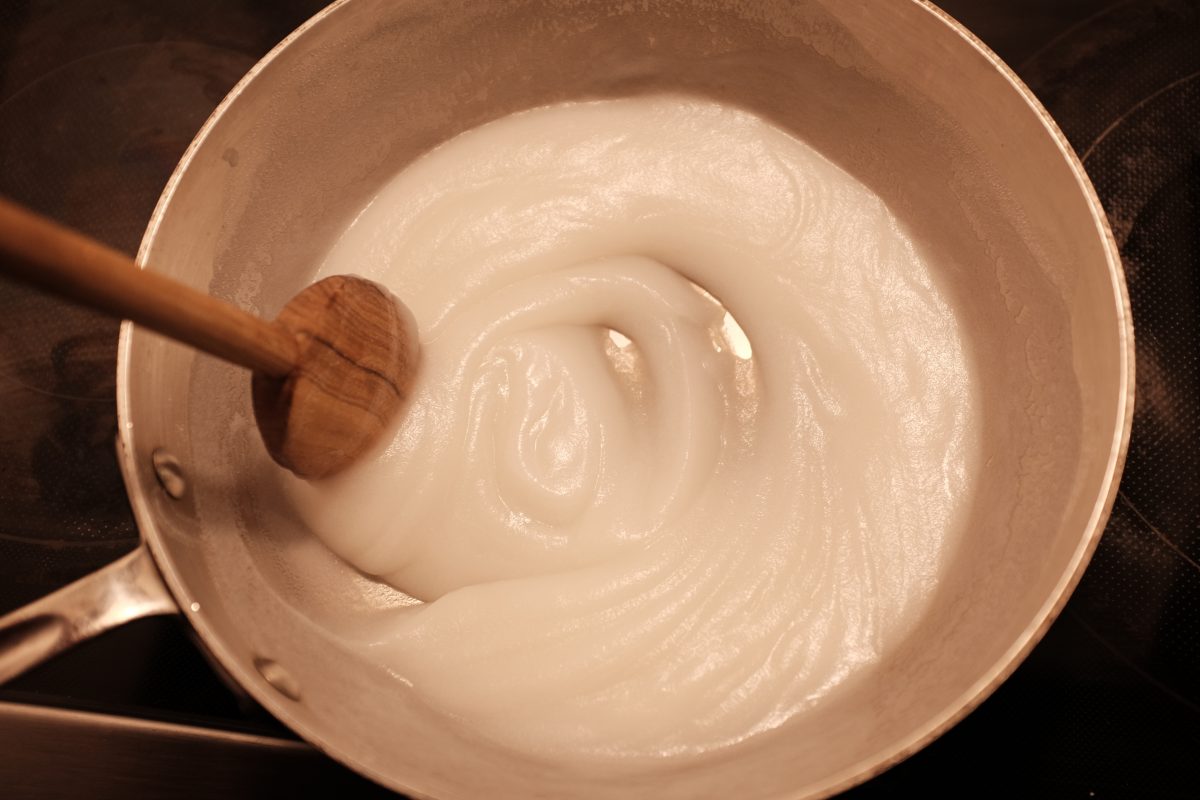
- 1/4 cup rice flour
- 1 tablespoon white sugar or maesil plum syrup
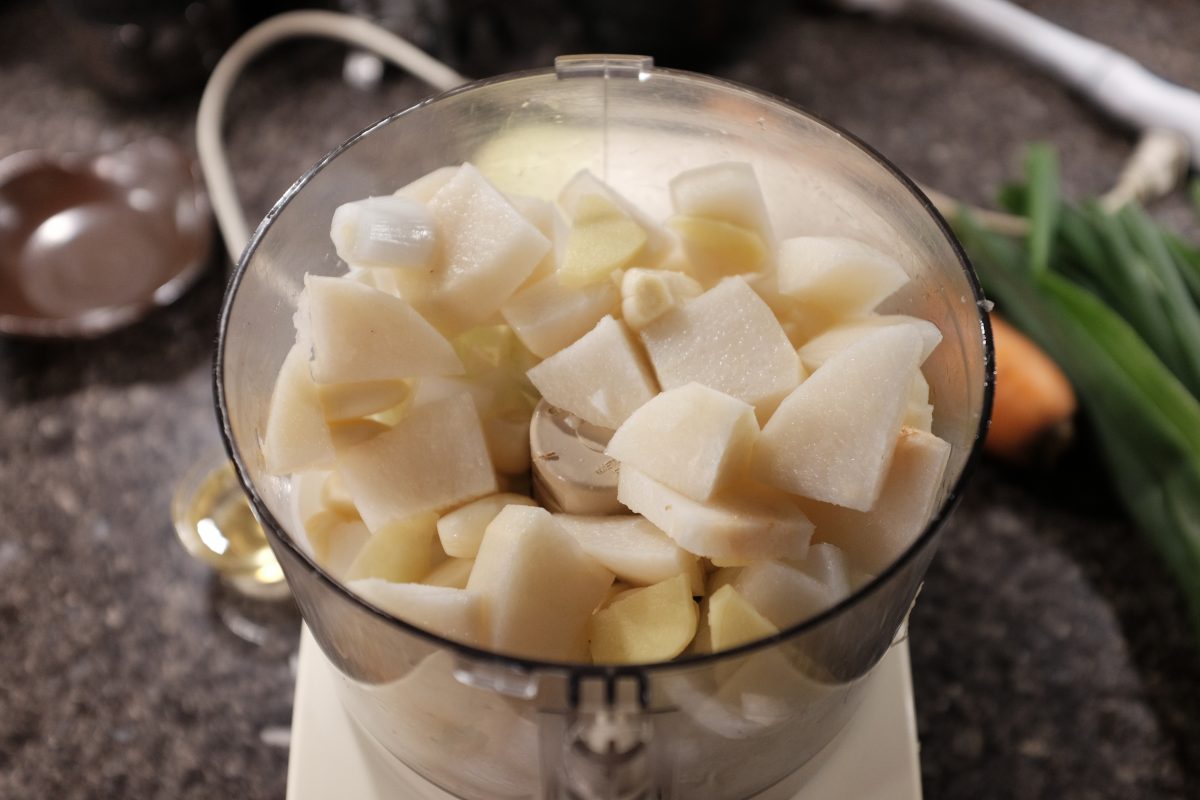
- 1/2 cup peeled garlic cloves (around 20)
- 1 tablespoon ginger peeled and sliced
- 1 white onion peeled and chopped
- 1 asian pear or apple peeled and chopped
- 1/4 up to 1 cup (30-120 grams) korean chili flakes (gochugaru)
- 2 bunches (12 or so) green onions sliced
- 1 cup carrot matchsticks
- 1 cup korean radish matchsticks
Try to weigh your salt rather than measuring by cups. Diamond Kosher is a popular salt in my area. If you live in the US, you may be using Morton’s. This salt is much saltier by the cup. Same goes for sea salt if this is what you are using. Whichever salt you use, it is better to weigh it. Avoid using table salt.
Rice flour/rice powder is just finely ground sweet rice. Mochiko is a popular brand but any brand will work.
Korean chili flakes are all very different from batch to batch. Some are mild and fruity and some are sharp and very spicy. It is better to start with less, taste, and then add more if you want it spicier.
Process
Cabbage preparation
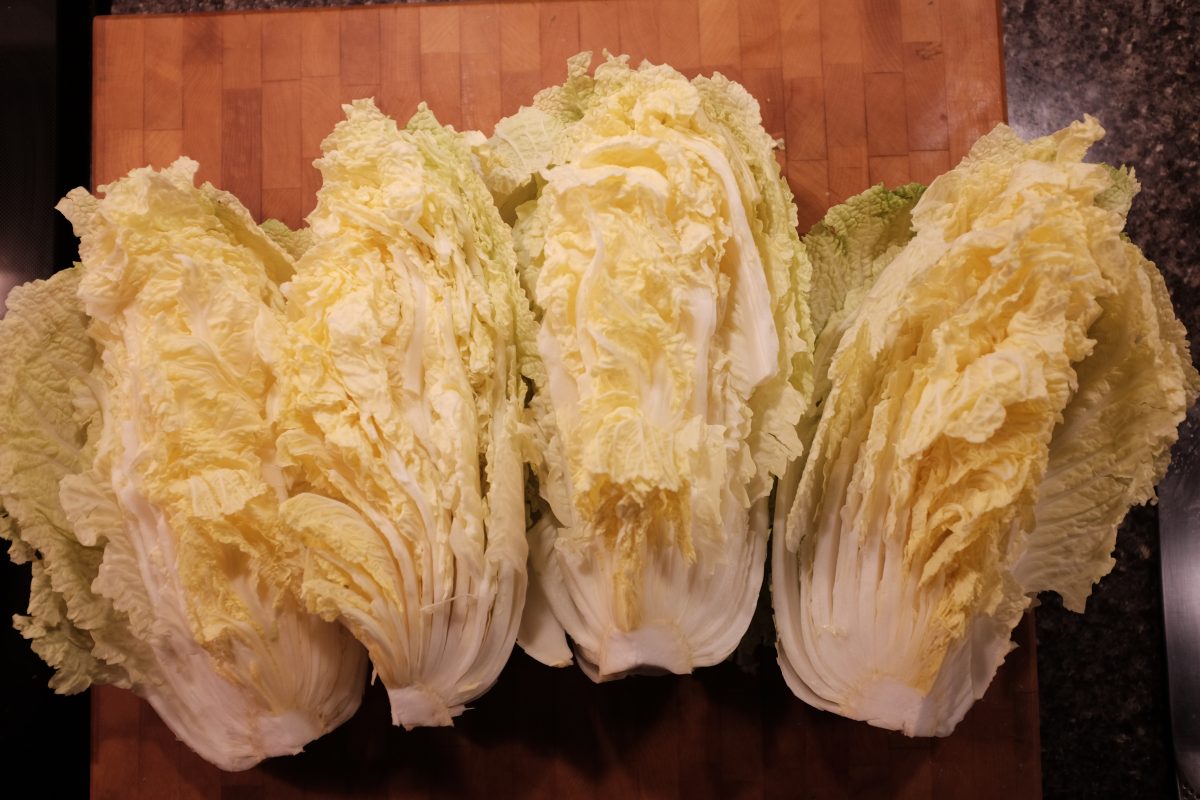
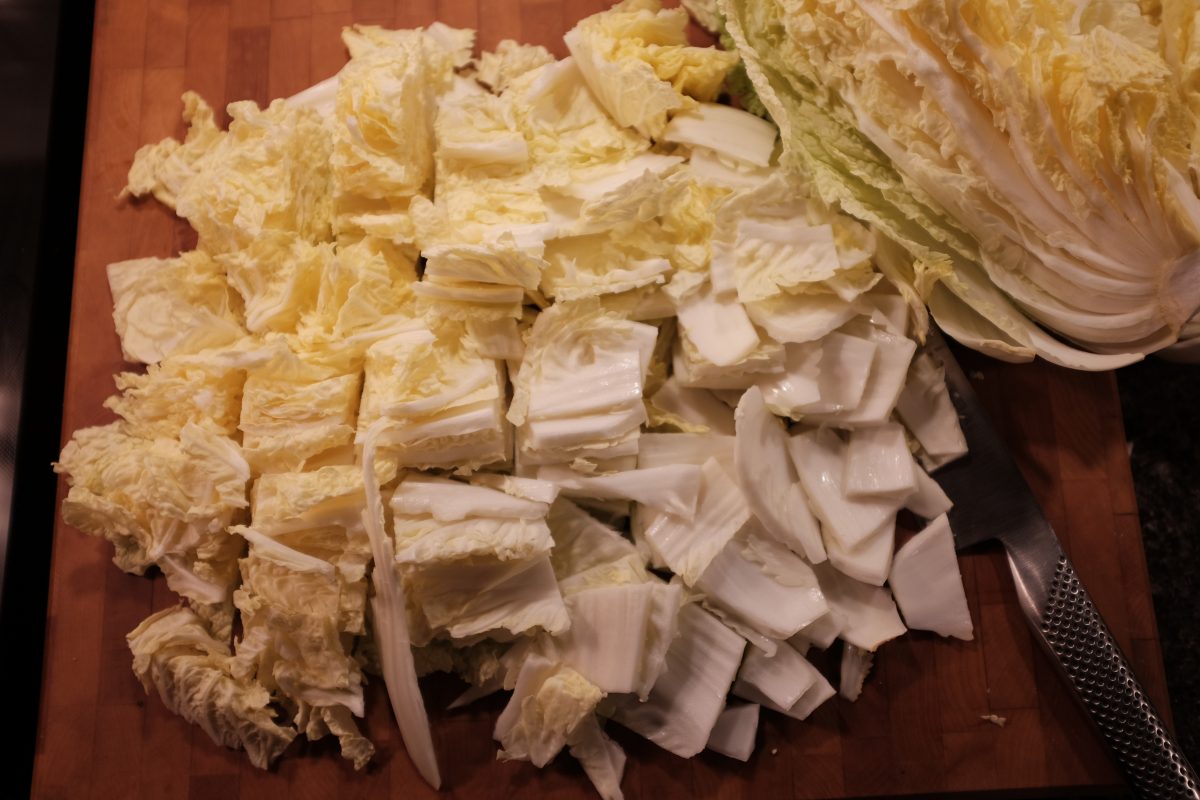
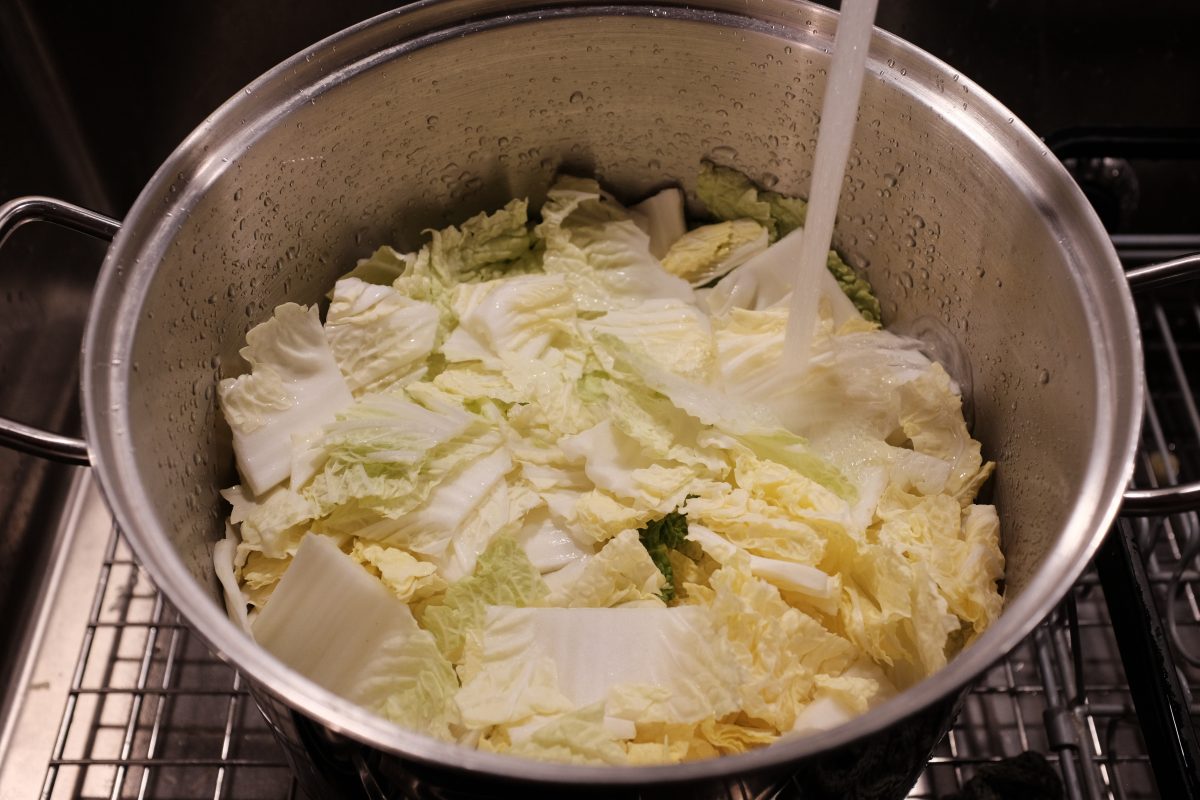
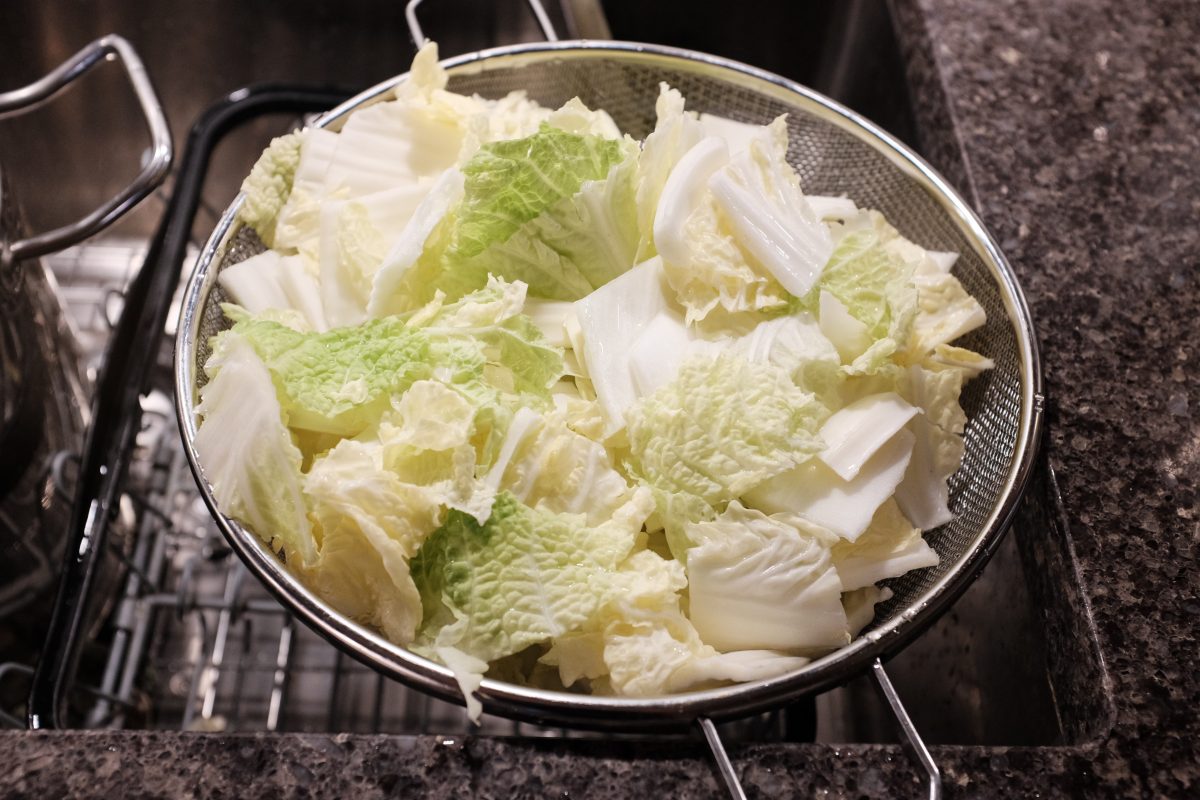
Brining
Making the kimchi paste
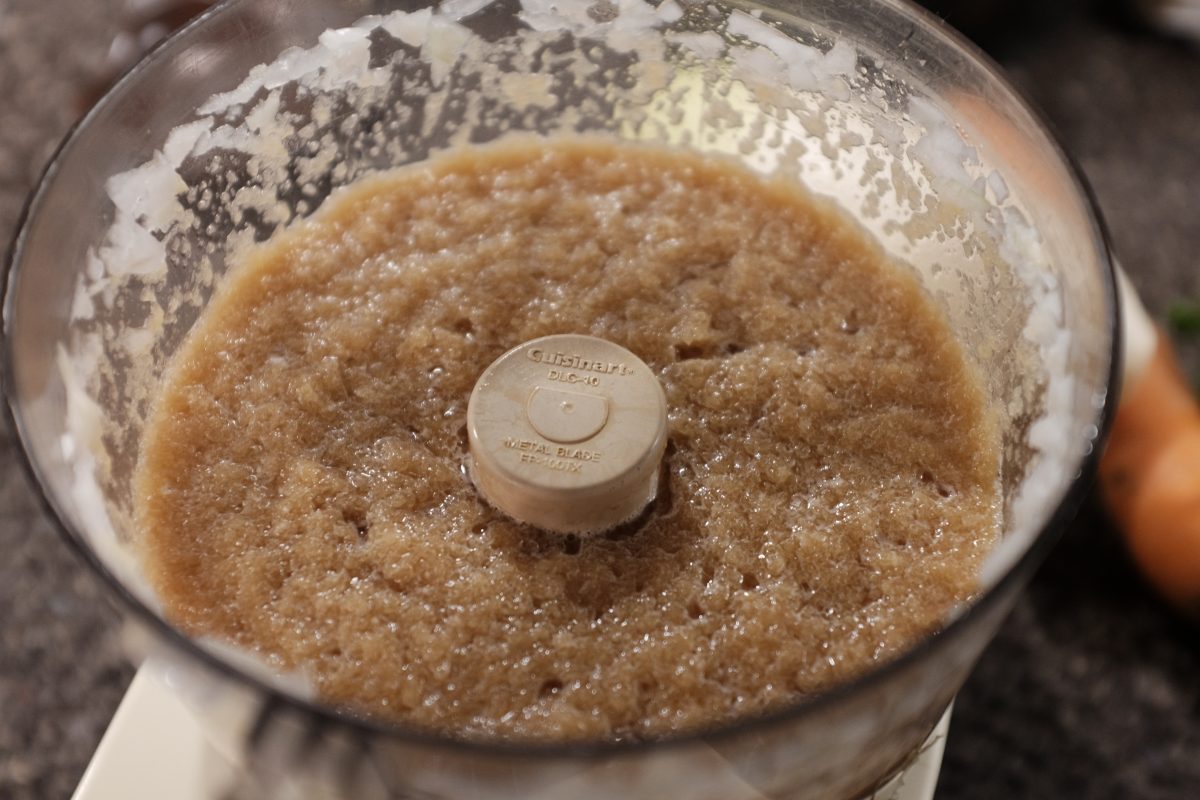
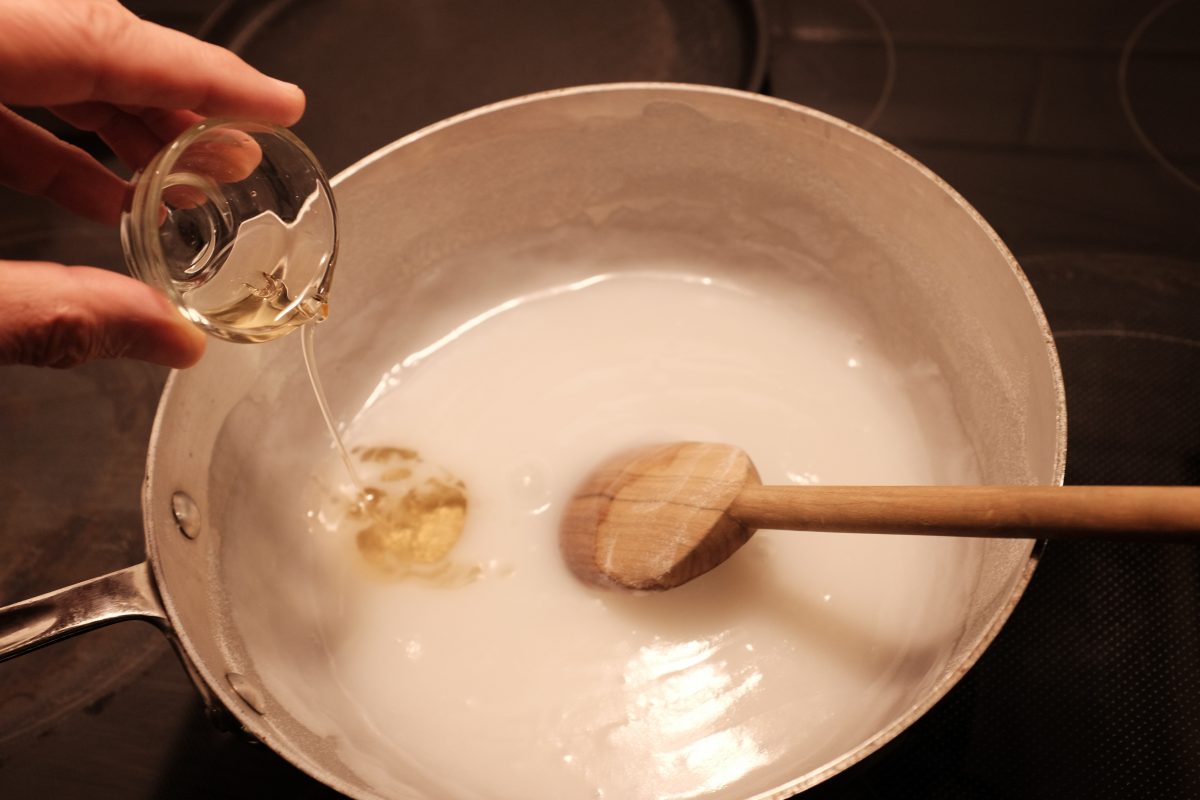
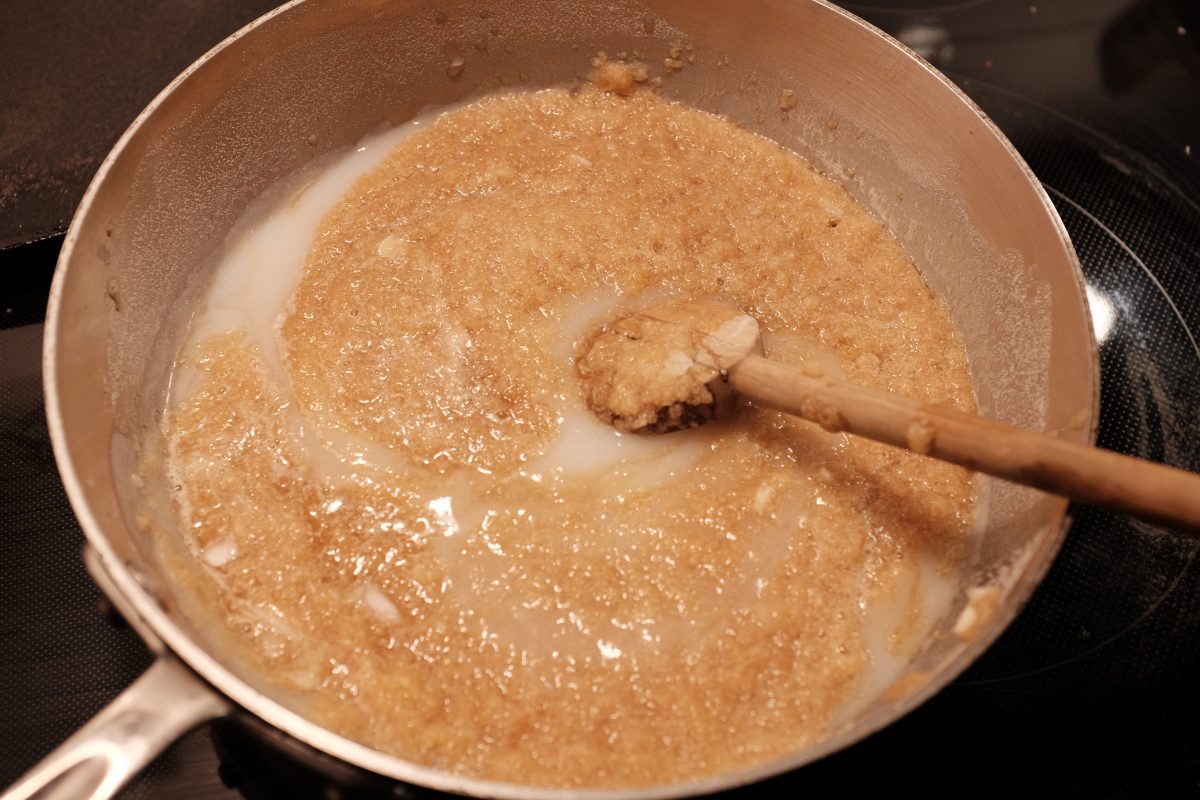
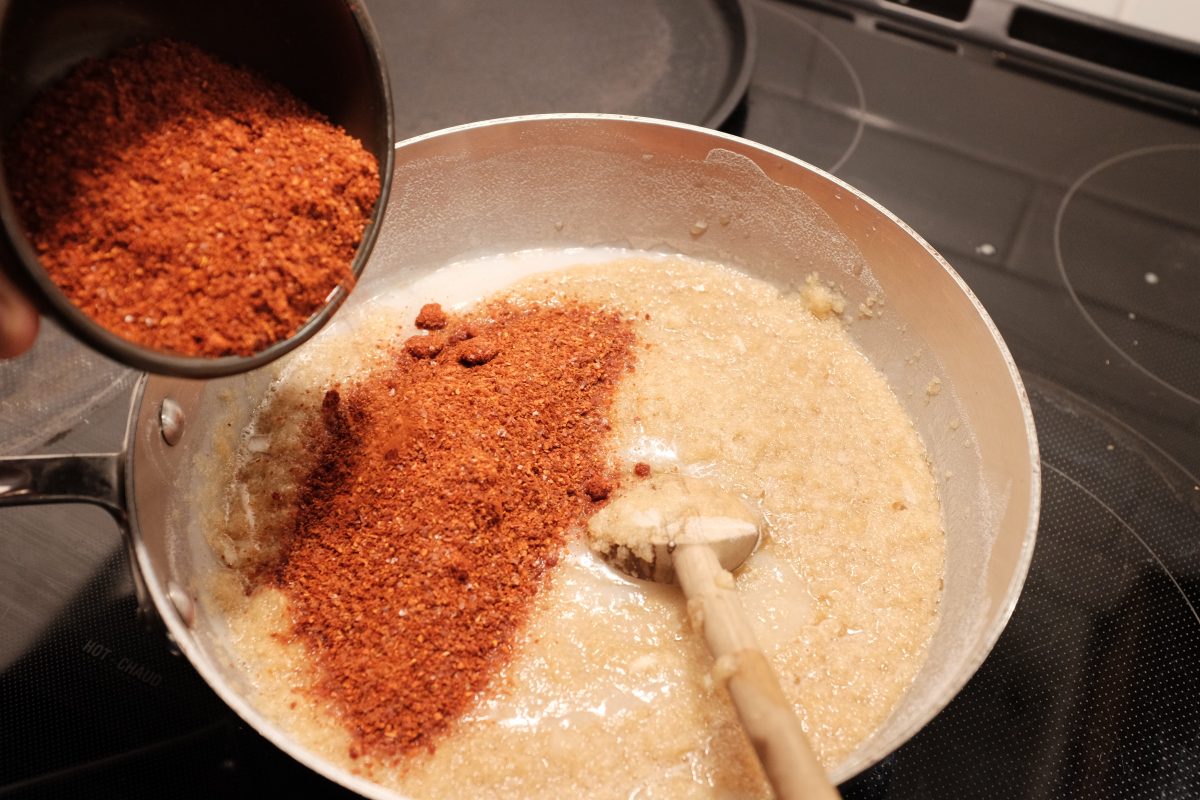
While the cabbage is brining, make the kimchi paste:
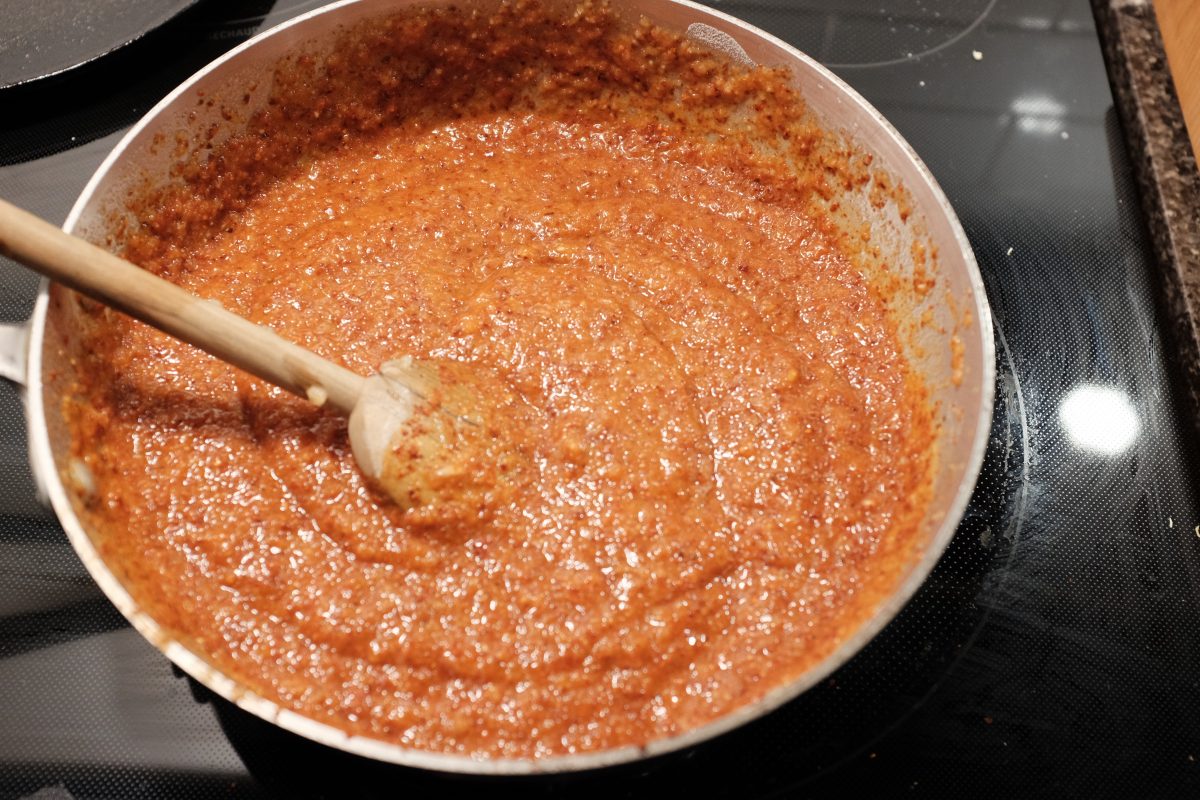
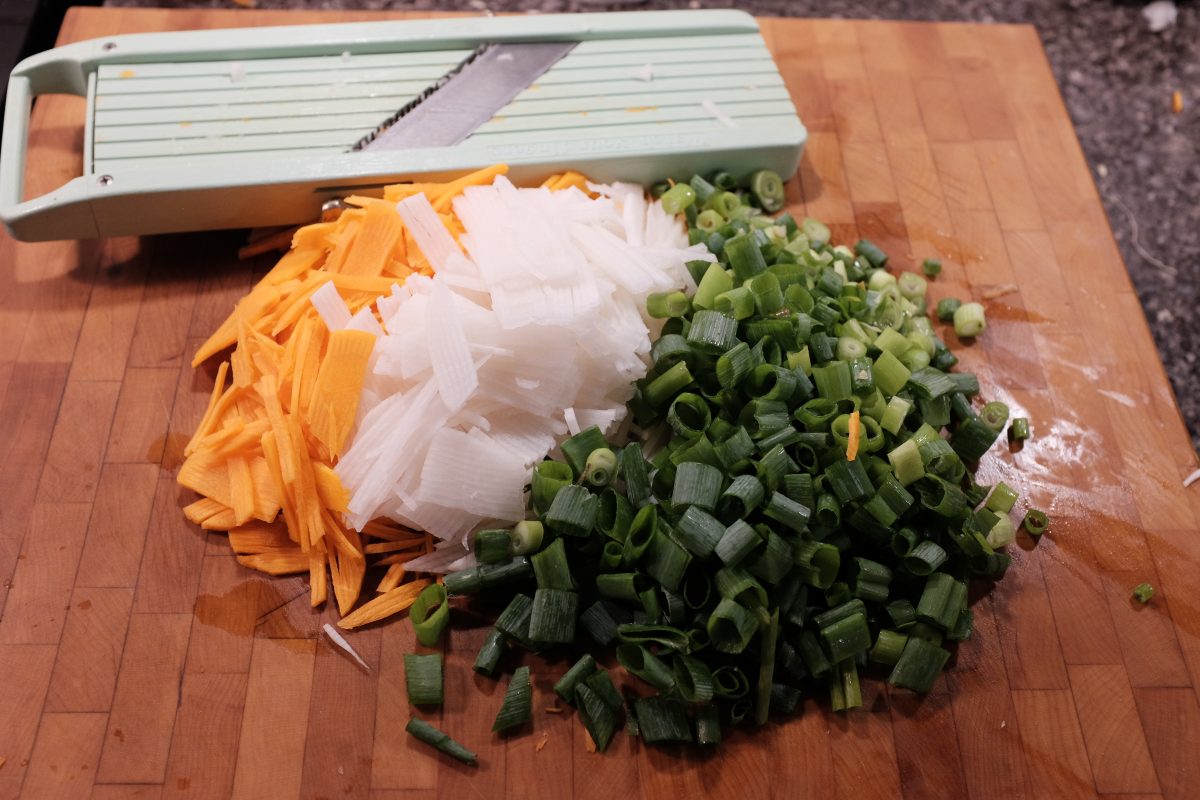
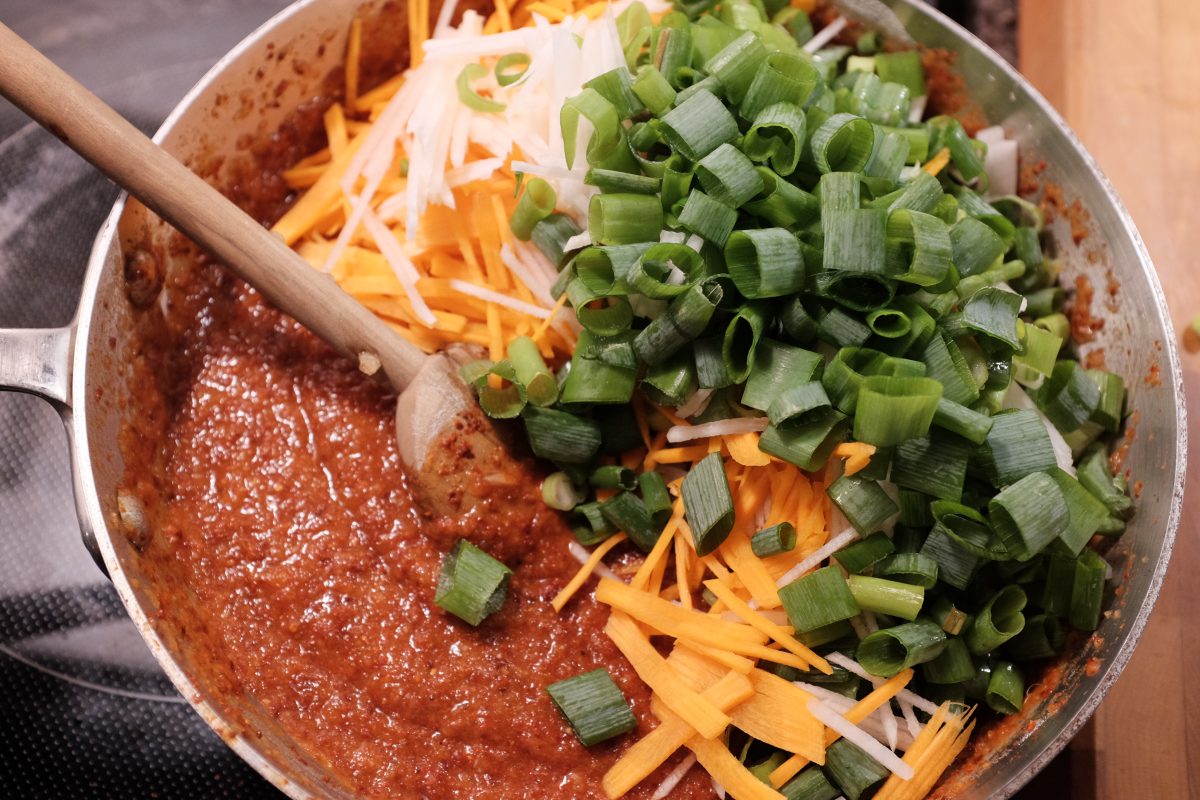

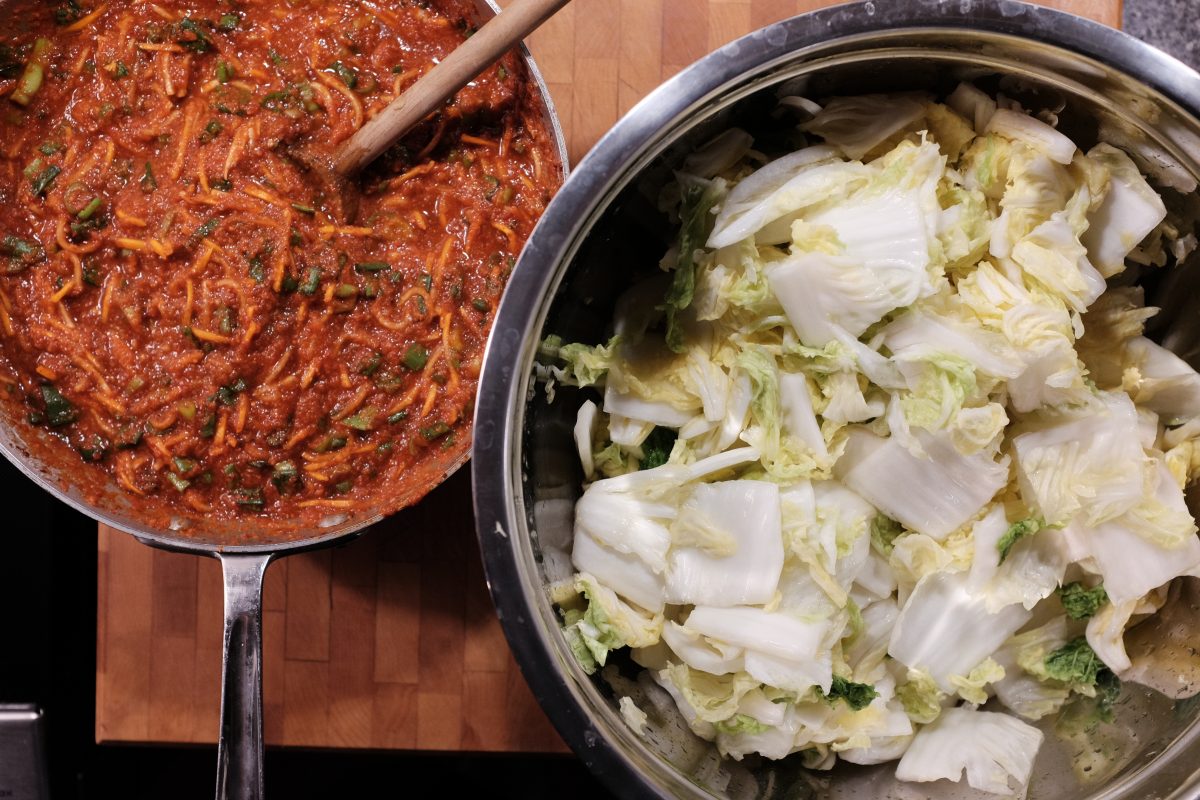
Put it all together
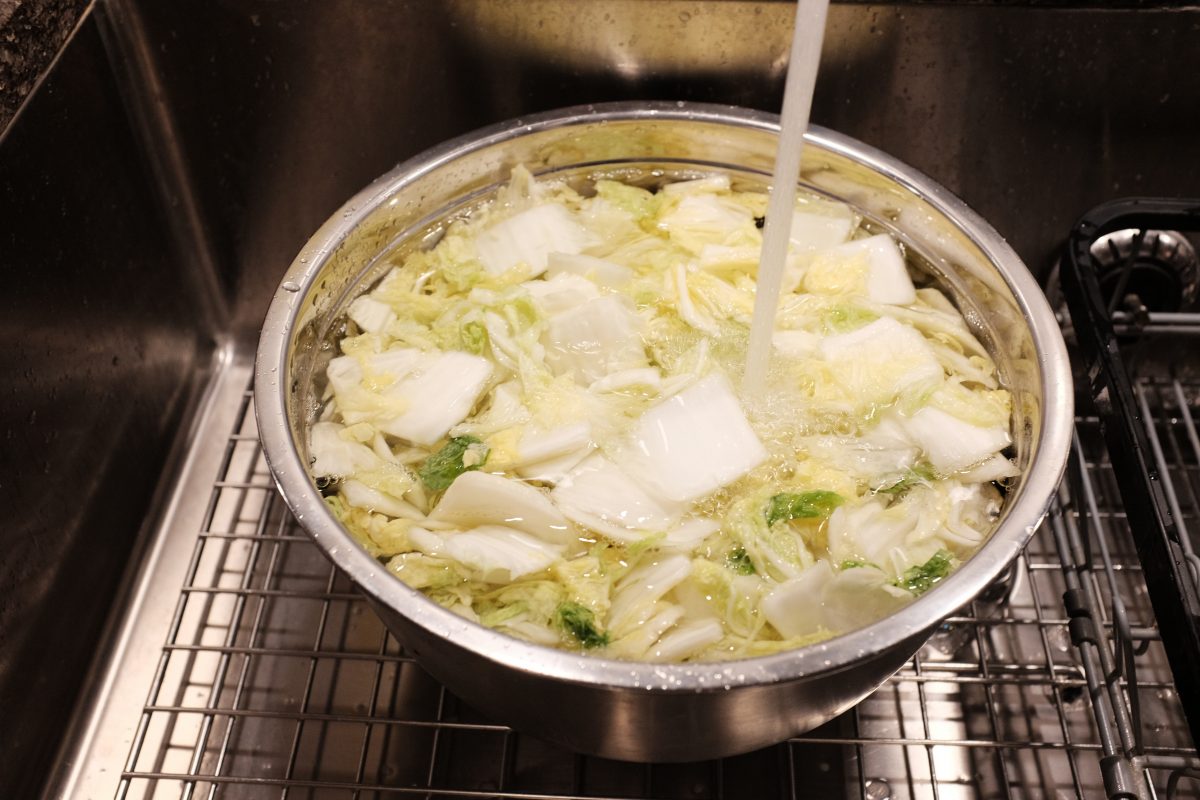
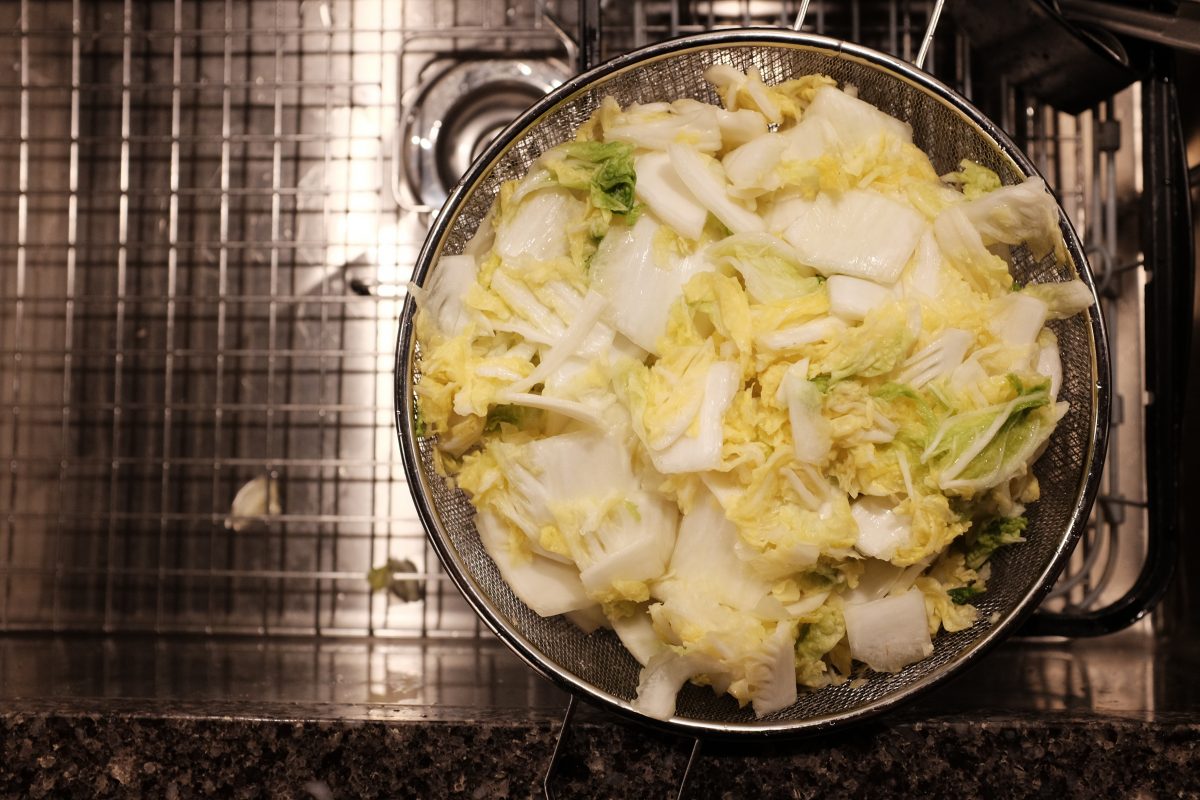
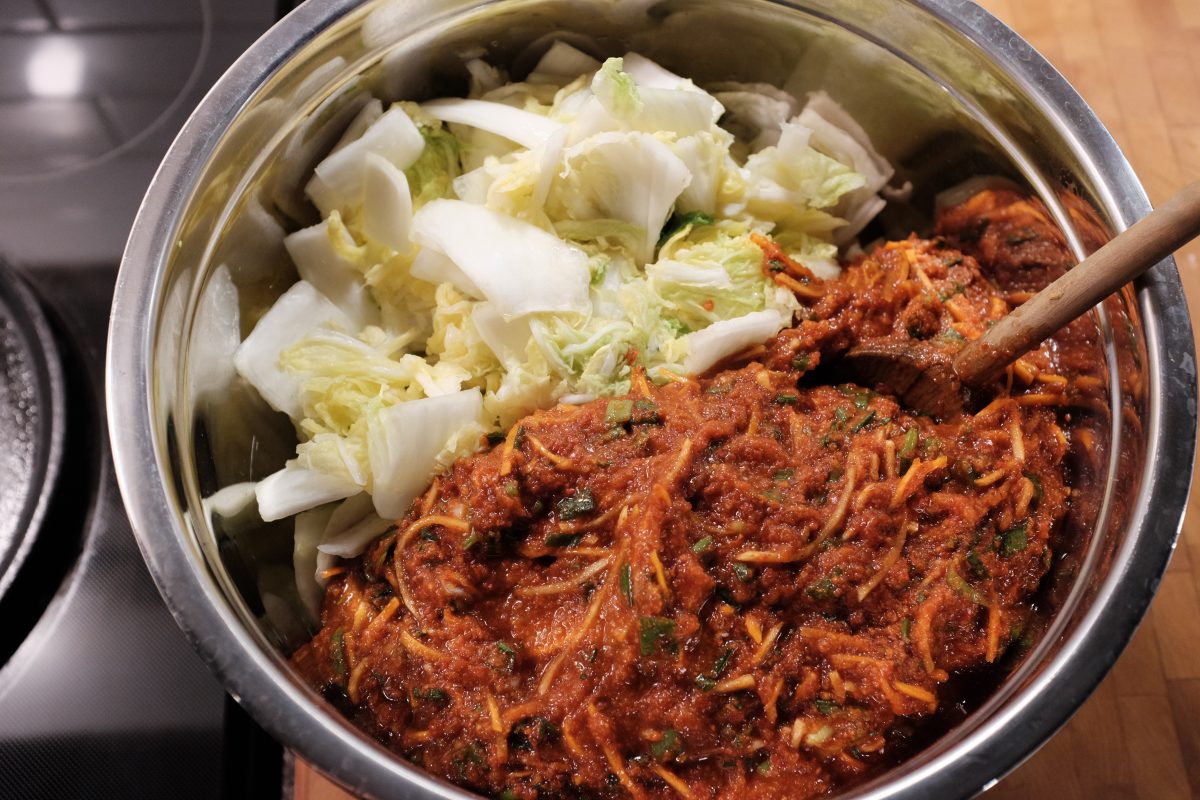
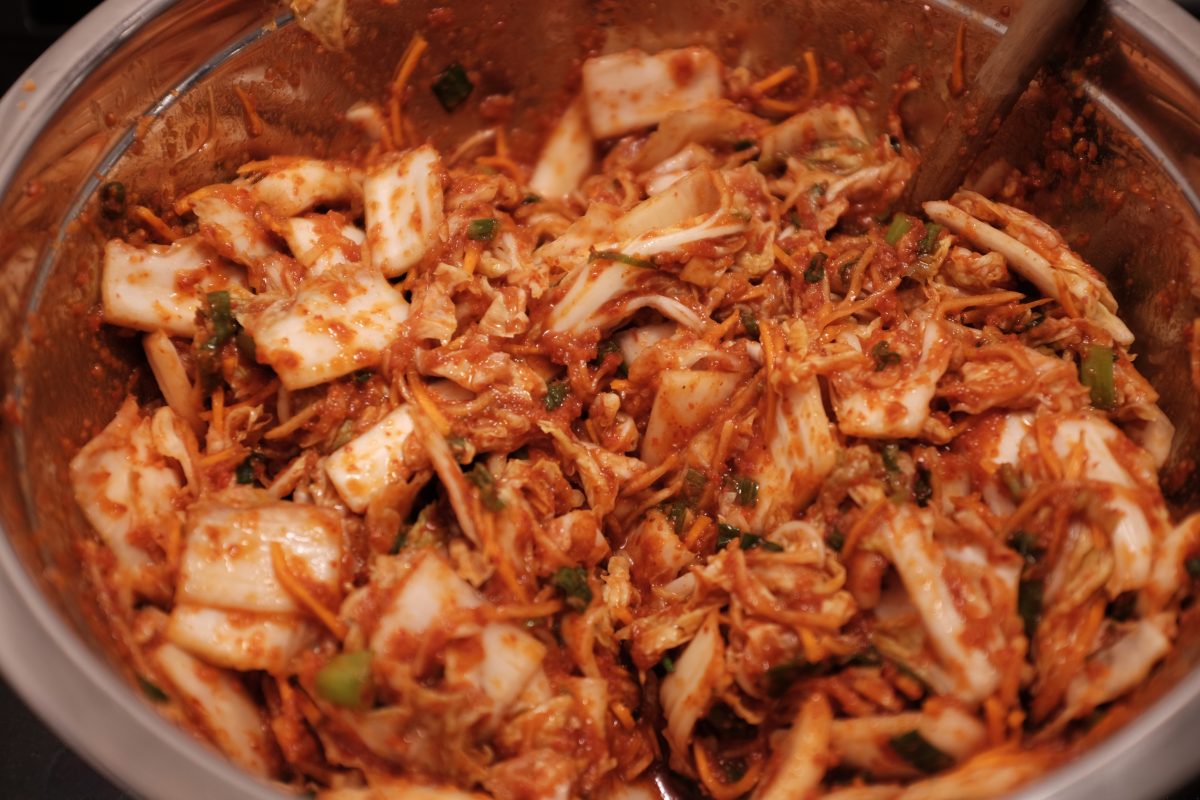
Now what?
For ideas on what to do with your kimchi take a look at this post.
If you have any questions or comments, please leave them below. I am always happy to hear from you.
Thanks for reading!
Kkakdugi or Korean Radish Kimchi
Kkakdugi, or Korean Radish Kimchi, is one of the fastest and simplest kimchis to make. There are relatively few steps and just a handful of ingredients. The recipe you will see here is a little different from others you may find.
Last time I travelled through Korea, I noticed 2 distinct kinds of kkakdugi. One was the classic little cubes served as a side in many restaurants. The other is a much larger and chunkier radish kimchi. This second one accompanies clear and mild beef broth dishes like seolleongtang or doganitang. The pieces of radish tend to be bigger and less uniform and there is much more liquid in the kimchi. The kimchi is on the table in a big container from which you can eat the radish but you can also use the kimchi-juice to season your soup. This is what I am attempting to make here. You can also just eat it as a side the same as you would any kkakdugi.
Ingredients
As a chef, I always preferred to cook by weight rather than volume. I grew up using the metric system and I like it very much. So, as much as possible from now on, I will include metric equivalents. Keep in mind that other than salt and radish, you can vary ingredients as you like to suit your tastes.
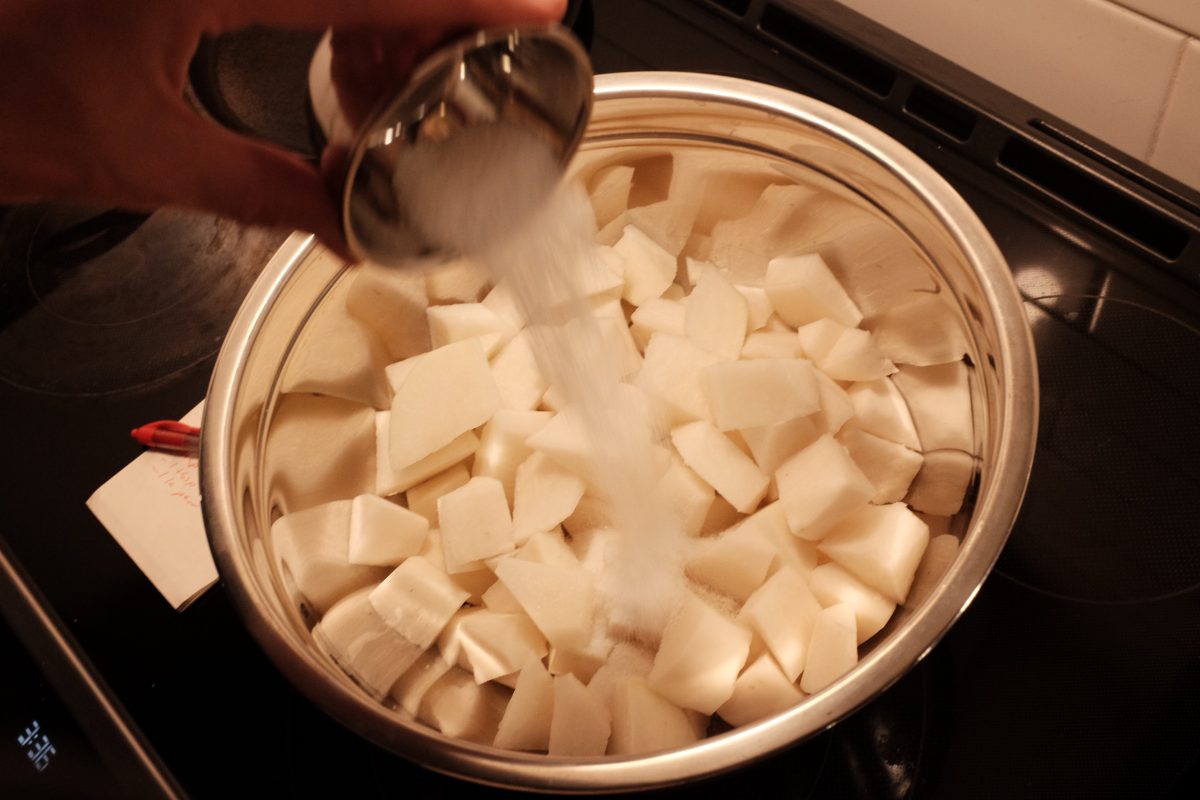
- 3.5-4lb (1.5-2kg) Korean radish (the one i am using is 1700gr)
- 2 tablespoons (25gr) Diamond Crystal Kosher Salt
- 1/4cup (30gr) korean chilli flakes / gochugaru
- 1 tablespoon (20gr) salted baby shrimp / saeujeot
- 10 cloves (35gr) garlic minced
- 1 teaspoon (10gr) ginger minced
- 1 tablespoon sugar (75gr)/syrup
- 1 asian pear peeled and chopped
- 1 cup of chopped green onion/scallion or asian chive/buchu
Korean radish is similar to white daikon in some ways but the flavour of Korean radish is usually more sweet and vegetal and less hot and bitter. But, if you really can’t find Korean radish, daikon is a reasonable substitute.
I am using Diamond Kosher salt. You can substitute 30 grams of any good salt, but avoid using table salt.
I just happen to have a homemade maesil plum syrup on hand which I am using instead of sugar. If you want to try it, you can find maesil syrup in any Korean grocer.
Feel free to vary the amount of chilli flakes to make this as spicy or as mild as you like.
Korean pears are not available at this time of year so I am using a whole regular asian pear which is roughly half the size of the Korean variety. You can also substitute an apple or regular pear or leave it out altogether.
Process




Allow the kimchi to ferment on the counter for a day or two. Taste it a couple times a day and when you are happy with the flavour, refrigerate it. You can eat the radish kimchi as is as a side to any dish or use the kimchi liquid to season mild soups.
Just like any kimchi, kkakdugi will continue to ferment and sour over time. If it gets too sour to eat as is have a look here for ideas on how to use well aged kimchi. Radish kimchi will work just as well as cabbage kimchi in hot dishes. I especially like it in kimchi fried rice.
If you are also looking for a good cabbage kimchi recipe, you can find mine here.
Lastly, if you are interested in what Seolleongtang looks like in Seoul, Korea, have a look here or here. Maybe in the future I will put up a recipe for Seolleongtang although it is a long long process that is challenging to make at home. Here is a good recipe from Korean Bapsang. This kimchi would be a perfect accompaniment!
If you have any questions or comments, please leave them below. I love to hear from you.
If you enjoy the content and would like to contribute towards website maintenance and development, you can make a donation here.
How to Fix Kimchi

What is wrong with my kimchi?
Sometimes the kimchi you imagine making is different from the kimchi you actually end up with. There are so many variables involved that it is difficult to predict the outcome even if you follow the exact recipe every time. The ingredients are powerful: garlic, ginger, chilis, fish sauce, etc. The main elements are fresh vegetables, which may be different every time you buy them. One cabbage may have more water content than another. Or a greater sugar content. One clove of garlic may be more intense than the next. One chilli powder is spicier than the other. And so on…
On top of that, the finished kimchi itself is alive, changing dramatically over time as it ferments and ages. So, if you have a very specific expectation of what your kimchi should taste like…it will probably get there eventually but it won’t stay there for long.
It is important to start with good quality ingredients and a tested recipe. But, beyond that, there will always be aspects that are difficult to control. Some flavours can be manipulated to some degree after the fact. And, of course, mistakes can happen in executing any recipe. Some are more repairable than others.
Before you do anything
Don’t worry about how to fix your kimchi until it has a little time to settle down. A freshly made batch of kimchi contains ingredients that have intense and pungent flavours. Dry ingredients need time to fully hydrate. Veggies continue to release water for some time diluting everything else. Don’t judge your kimchi until you have given it two or three days to come together.
After that time, give it a taste and then decide if there is a problem….
Let’s have a look at a few common issues and how to fix your kimchi:
My kimchi is too sour
Freshly made kimchi is not sour at all. As it ferments, lactic acid is produced, resulting in a sour flavour over time. If your kimchi is already more sour than you like, there is not much you can do to reverse it. However, sour kimchi is ideal for warm recipes like kimchi jjigae, kimchi fried rice or kimchi pancakes. In my opinion, the more sour it is, the more delicious for cooking with. So keep this sour batch for cooked meals. Ideas for how to use sour kimchi are here.
If you like fresh and crisp tasting kimchi, store it in the refrigerator immediately after making it. Cool temperatures will delay the onset of fermentation and slow the progress over time. Your kimchi will stay “fresh” much longer. Consider making smaller batches so you can finish it before it gets too sour. It is fine to cut recipes in half to always have a fresh batch on hand.
My kimchi is not sour enough
If you like your kimchi sour, once you finish making it, leave it out at room temperature. It will not go bad. Taste it once or twice a day and, when it is just about sour enough, refrigerate it to slow down the fermentation. Make sure you are pressing the veggies back down under the brine every time you taste it. If you like both fresh and sour kimchi for different uses, put half in the refrigerator right away and ferment the other half at room temperature until sufficiently sour.
My kimchi is too spicy
Once you have mixed in your chilli flakes there is no going back. The spiciness may mellow a little in the first few days as the kimchi comes together, but not that much. The solution here is to control the amount of spice you are adding right from the start.
ALL chilli flakes are different…they are from different places with different weather patterns and growing seasons. No two will be equally spicy (or sweet). The only way to judge a chilli powder is to taste it. If it is burning hot on your tongue, start with 25% of what the recipe says and add from there. You will probably find that you need much less than the recipe calls for. On the other hand, if you happen to buy a sweeter, fruitier chilli powder with less heat, add as much as you like. Taste it when your kimchi paste is finished and adjust.
My kimchi is not spicy at all
Some chilli flakes are quite mild (and will likely say so on the package). I prefer these because you can add a large amount. Your kimchi will have a deep red colour and a nice fruity chilli character. Just like above, taste the chilli and adjust as you go. If you really want sharp heat, as a last resort you can mix in a some cayenne pepper. This will ramp up the heat without affecting the overall flavour too much.
My kimchi tastes “fishy”
Fish sauces vary in saltiness and “fishiness”. Try as many as you can and choose the one you like best. In general, avoid ones with more than 2 or 3 ingredients. Many are made with anchovy but some are made with other fish, like sand lance. They will all taste “fishy” to some extent so if this is a flavour you don’t enjoy, just use less or none at all. It is not an essential ingredient for a successful kimchi but you will lose some depth of flavour without it. You can also play with the amount of salted shrimp you are using from lowering the amount to using none at all. These ingredients contribute salt to the recipe, so if you remove them you may need to replace them with some kosher or sea salt.
My kimchi is fizzy
When the lactic acid content gets very high in a long fermented batch of kimchi, you may feel fizziness on your tongue. Your kimchi has not spoiled but it may be fermented beyond the point where you like to eat it raw. It will still be excellent for cooking though and the fizz will disappear in a hot dish.
My kimchi is too salty
This is a tough one. If it is not too extreme, you may be able to dilute the salty flavour to some extent. The best way to do this, without destroying the balance of the finished kimchi, is to add more vegetables. Korean radish has a high water content and ferments nicely. Peel and chop up a korean radish and sink it into your finished kimchi. The salt in the kimchi will draw water from the radish which should dilute the mix and decrease the saltiness somewhat. Give it a few days and taste it again. Hopefully it will be improved but if not, you may need to reserve this kimchi for hot cooking, adding small amounts to dishes as both flavouring and seasoning.
The best thing is to figure out why it is so salty in the first place. Most recipes will include a step where the salted cabbage gets a rinse. This is to wash the cabbage but also to remove excess salt. Don’t forget this step. Other sources of salt in the recipe are the fish sauce and salted shrimp. If you like your kimchi less salty, you may need to use less of these ingredients.
Lastly, but maybe most importantly, do not use fine iodized table salt in your kimchi. A cup of this salt is much much saltier than a cup of kosher or coarse sea salt. No matter which salt you choose, the best thing you can do is weigh your salt. For reference, a cup of Diamond Crystal kosher salt weighs around 140 grams or 5oz. This kosher salt in the red box is the one I use for everything. If you are using a different salt, try weighing it out to control saltiness in your finished batch. This is a good post about salt varieties and substitutions.

Many recipes online give salt measurements in cups instead of weight. Try to find one that gives a weight for salt instead. Click here for my napa kimchi recipe.
My kimchi is bland
Bland tasting kimchi is probably from a lack of salt which is an easy fix. Simply add more salt or fish sauce or salted shrimp. Bland kimchi can also be improved by increasing the chilli powder, or tossing in a few more cloves of crushed garlic or ginger. Sometimes a little sugar can help as well but start with small amounts, taste and add as necessary.
My kimchi is too watery
Watery kimchi is not necessarily a bad thing thing. There are even “water kimchi” recipes where the kimchi juice is either eaten or used in other recipes. But, if you have made a regular cabbage kimchi recipe and you find it too watery or bland, there are a few things to consider.
It is possible that the cabbage was processed before it was brined long enough. Once the cabbage is salted, it needs around 2 hours to absorb salt and release water. If you combine it with the kimchi paste too soon, the cabbage will continue to release water into the salty paste and dilute the batch.
Or…
The cabbage was not drained enough. The cabbage will need to be rinsed/washed after the 2 hour brining time. After washing, the cabbage needs to be drained thoroughly. You can place it into a large colander, moving it/flipping it every few minutes until no more water is draining out the bottom. This can take some time. Maybe as long as 10-15 minutes. If you rush this process and mix still wet cabbage with your kimchi paste, it could also end up too watery.
You can drain off some water from a finished batch if you just want to eat the vegetables. Just make sure there is enough liquid left to keep the veggies submerged. It is probably a better idea to just use a slotted spoon to remove the kimchi you want to eat and keep all that juice for flavouring a soup or stew later on.
My kimchi is moldy
I have only had mold grow on kimchi once in the last 10 years and it was because I left chunks of kkakdugi above the liquid and forgot about it for some time. The radish pieces that were not submerged began to mold. That was my fault. I don’t think kimchi spoils very easily, however:
IF there is green, blue or black mold on your kimchi, the safest thing to do is discard it and make a new batch. White spots are more likely yeast. If it’s more than just a few small spots, I would be inclined to toss it as well although I have read that rinsing it and cooking with it is ok. If the kimchi is soft or slippery/slimy and smells BAD, throw it out.
To avoid these kinds of problems, make sure that the container you are storing your kimchi in is clean and sanitized (boiling water sanitizing is fine). Keep it covered in the fridge. It is also important to keep the veggies submerged in the brine. Press the kimchi vegetables back down under the brine after you use it. As an alternative you can hold back one or two whole cabbage leaves and use them as a natural lid on top of your cut vegetables. Or do the same thing with plastic wrap.
Consistency comes with practice
I have been making kimchi regularly for around 10 years and no two batches are exactly alike. There are too many variables that are difficult to control, not to mention that the finished kimchi keeps changing over time. But, with practice, I have learned how to steer things in the right direction and almost always end up with something i really enjoy eating.
As you can see above, some things can be manipulated after the kimchi is finished but it’s best to get things right at the start. Make notes of what you like or don’t like with each batch and vary your ingredients until your kimchi tastes delicious to you. There is no “best” or “correct” kimchi. There is only the one you enjoy eating. Make that your goal.
If you have any questions or if you are having issues that I haven’t thought of here, please post a comment below. I always enjoy hearing from you.
If you enjoy the content and would like to contribute towards website maintenance and development, you can make a donation here.
What to do with Kimchi

I took this picture a few years back in my restaurant kitchen. Two quarters of fermented whole Napa cabbage kimchi landed on my cutting board in a heart shape. I molded them a little and mopped up the juice and we used the photo later for a Valentine’s Day promotion.
I almost always made whole cabbage kimchi in my professional kitchen, a very time consuming and messy business. Koreans who still make it this way typically do so outside in late autumn. Or, if it has to be made indoors, the floor is covered in plastic sheeting as if the kitchen is about to get painted.
Making whole cabbage kimchi is a fun and relaxing process: to salt and stuff whole cabbages leaf by leaf is even meditative. You can do it at home. I have done it. But afterwards, my kitchen ends up looking like a murder scene. So instead of painting the kitchen red with chili paste, these days I make this cut kimchi recipe. It is relatively easy, and definitely manageable with minimal time, space and tools. And it is delicious! I eat it every day.
Once you find a recipe that you like and you make a batch of kimchi at home, you might be wondering what you can do with it.
Kimchi is alive
Just like all living things, kimchi ages. One month from now the texture and flavour will be quite different. Freshly made kimchi is crisp and bright like a spicy salad. You can taste all of the individual ingredients. Over time, this fresh kimchi will soften as it ferments. The initial sharp and distinct flavours will meld into something more deep, dark and complex. And, as fermenting bacteria produce lactic acid, it will become more and more sour. After enough time has passed, it will sour to the point that the acid levels feel “fizzy” on your tongue.
The good news is that kimchi never really goes “bad”. At every stage of fermentation, there are many ways to eat it. Nothing is wasted.
The list below is divided into things you can do with fresh kimchi vs things you can do with aged kimchi. I think, in general, fresh kimchi is best eaten cold and aged sour kimchi is best eaten hot but it is not a hard rule. You can try either in any preparation.
Freshly made kimchi
Kimchi, even freshly made, is a powerful ingredient. Start with a little bit, taste and add more little by little until you are happy with the flavour.
1-Eat it as is: fresh cold kimchi is a refreshing side dish to eat with almost anything. It is especially good to balance the flavours of fattier foods and meats and makes these things easier to digest. I can’t eat eggs without a side of kimchi anymore.
2-As a salad topping: you can use small leaves of fresh kimchi as an ingredient in any fresh salad. Creamy salads like Caesars also taste wonderful with some julienned fresh kimchi on top.
3-Burger or hotdog topping: like a pickle or relish, chopped fresh kimchi will balance the intense smokiness of sausage or the charred meaty flavours of a burger.
4-Raw oyster topping: A tiny amount of fresh chopped kimchi on top of a raw oyster is a perfect accompaniment. This is especially true for sweeter fattier Pacific oyster varieties but also works well for briny east coast oysters.
5-Avocado Toasts: these days, a lot of us are enjoying the rich flavours and health benefits of ripe avocado smeared on toast. I love it too and often include a bit of fresh chopped kimchi and green onion in the avocado mash. It is especially delicious with a fried egg on top. Addictive!
6-Shrimp Cocktail: whoever first combined ketchup and horseradish as a shrimp dip was a culinary genius. Add a little chopped kimchi into your cocktail sauce. It will tone down the sweetness of the ketchup and add a little garlic and spice for a slight variation on a classic combination.
7-Fresh rolls: if you like rice paper rolls stuffed with crisp veggies and/or shrimp and pork, a little chopped fresh kimchi can add a subtle spicy and garlicky flavour.
8-Kimbap: a little kimchi rolled up with the rice and other ingredients in your kimbap is delicious, especially if you are also making them with tuna!
9-Tuna Sandwich: if you enjoy classic canned tuna and mayo sandwiches as much as I do, try chopping some fresh kimchi into the mix. It brightens up the flavour and is a perfect match for the oily mayo and meaty tuna. If I don’t have kimchi on hand, I don’t even consider making this sandwich. It is that good.
10-Bloody Mary/Bloody Caesar Cocktail: try substituting the tobasco in your cocktail recipe with some fresh juice from your kimchi stash. You can even garnish with some small fresh kimchi leaves. Sour kimchi works great here too.
11-Kimchi Devilled Eggs: mix some finely chopped kimchi into the mayo and egg yolk mixture to brighten the colour and flavour of this classic dish. Top with chopped chives or green onion for a perfect finish. Also good with sour kimchi.
Aged Kimchi
Sour kimchi is an ingredient in many classic Korean dishes. For excellent traditional recipes to try at home, please have a look at Maangchi’s website , Korean Bapsang or My Korean Kitchen. There are countless sources for Korean cooking on the internet but these three are the ones I look to first for great food and writing.
Classic Korean dishes using sour kimchi:
1-Kimchi fried rice: an excellent way to use up leftover white rice. Top with chopped roasted seaweed, toasted sesame, sesame oil, green onion and fried egg. Here is a link to my kimchi fried rice recipe.
2-Kimchi jeon (pancake): Aged kimchi and it’s juices are made into a batter using flour and/or rice starch. Fried in oil until crispy outside and served with soy and vinegar sauce. Addictive. Good recipe here.
3-Kimchi jjigae (stew): there are a variety of thick and hearty stews made with aged kimchi. Ingredients can be fresh veggies, tofu, meats, tuna and other fish. Even spam and ramen noodles or hotdogs in the case of Buddae Jjigae (Army base stew). Click HERE for my kimchi jjigae with tuna recipe.
4-Kimchi Guk (soup): similar to kimchi jjigae but a little lighter and thinner. Look here for a good recipe to try.
5-Kimchi Mandu (dumplings): Korean dumplings, steamed, fried or in soup are delicious. If you want to try making your own have a look at this recipe from Korean Bapsang. You can also buy pretty good frozen ones at Korean grocers though they will probably never be as good as the fresh made.
6-Kimchi Jjim (braised kimchi): An incredibly deep and flavourful braise of aged kimchi and pork. You can also substitute in other meats, fish and/or mushrooms. I have also made this with really tough cuts of beef and the results are always very good. It is one of my favourite ways to eat really ripe kimchi. Here is a good recipe.
Other uses for aged kimchi
In my last 10 years as a chef I made tons of kimchi and tons of staff meals. The restaurant staff were always the test subjects for kimchi experiments but I honestly never received a lot of complaints. Most of the things listed below I have made myself at one time or another.
1. Pasta Sauces: aged kimchi, in small amounts will wake up any tomato sauce. You won’t exactly taste kimchi but you will taste something…GOOD. Kimchi will add a little punch to any tomato sauce with it’s heat, acidity and fermented funk. It is surprisingly delicious. This also works in cream sauces where you end up with a kind of spicy, garlicky rose…excellent with seafood.
2. Baked Pasta: Expanding on the above point, layers of kimchi alongside layers of tomato and meat sauce in a lasagna or any baked pasta is an outstanding flavour boost.
3. One more noodle: kimchi macaroni and cheese is next level delicious. Make it from scratch or even stir chopped kimchi into your boxed mac n cheese.
4. Burgers and Pizza: Warm aged kimchi is a fantastic topping on burgers (put it under the cheese) and pizza. You can also puree aged kimchi into any pizza sauce to brighten it up.
5. Kimchi Grilled Cheese sandwich: I see this one talked about a lot because it is a fantastic idea. Try it with a smoked cheese or layer of smokey bacon for maximum pleasure
6. Instant Ramen (or any cup noodles): another classic application because it is so good. Use only half the powder of your instant ramen packet and substitute in some well fermented kimchi and juice. Add an egg too. A little more healthy and definitely more delicious.
7. Hot sauce: many hot sauces are made from fermented chilis (heat) and vinegar (acid). Aged kimchi has both of these qualities. Put kimchi juice and leaves in a blender and puree. Add some extra chilli flakes to ramp up the heat if you like. Instant kimchi flavour that you can easily add to anything.
8. Hollandaise Sauce: add some well aged chopped or pureed kimchi into your egg yolks at the start of your hollandaise sauce. If it is sour enough, it can replace vinegar, shallots and cayenne like magic.
9. Kimchi Potato Hash: Boil and chop potatoes. Fry bacon in a pan until fat is rendered, add aged chopped kimchi, add potatoes and cook until they start to brown and crisp. Amazing starch for any meat dish or even with eggs at brunch.
10. Chili con carne: If you are a chili lover, try adding a little aged kimchi into the mix. It will do the same thing it does for pasta sauce. You won’t exactly taste kimchi but you will taste something delicious.
11. Steamed mussels: kimchi and cream together (bacon too) make an excellent broth for steaming live mussels and dipping bread later.
12. Baked oysters: Oysters on the half shell with crispy bacon bits, aged kimchi and smoked (or even blue) cheese broiled in the oven.
13. Kimchi butter: aged kimchi cooked in butter and poured over fish or meat with fresh green onion or chives makes an flavourful and easy sauce.
14. Kimchi sour cream: chop some aged kimchi into sour cream and serve it with bacon bits on potato and cheese pierogis. Thanks for this suggestion Milosz!
Maybe not?
Many years ago, I may have made kimchi gelato. I think some people liked it but…it wasn’t unanimous. I think it was pretty good. Am I dreaming?
There must be more…
Today I sat down and tried to think of every way I have cooked with kimchi in the past. This is what I came up with for now but I am sure there are a lot more good ideas. If you have anything to add, please leave a suggestion in the comments and I will add it to the post. We can work on this list together : )
If you enjoy the content and would like to contribute towards website maintenance and development, you can make a donation here.
Quick and Easy Napa Cabbage Kimchi Recipe
It takes 2 hours to brine cabbage. There is no way around this. So, if you are wondering what quick kimchi is, I would say “2 hour kimchi”. If you salt the cabbage first thing, it will take around an hour to produce the kimchi paste and then an hour of waiting for your cabbage to finish brining before you mix everything together. Relative to all the other ways of making cabbage kimchi, this would be the fastest.
I first started making Napa cabbage kimchi in my professional restaurant kitchen, 12-16 heads of whole cabbage at a time. Determined to do everything by hand, I bought fresh garlic and peeled and minced every clove with a knife (2-3 hours just for this). Carrots, onions, radish, ginger: all cut by hand. My goal was to produce the most “hand-made” perfect kimchi I possibly could. Efficiency was not so important. Between shopping for all the ingredients, hauling them to the restaurant and finishing the kimchi, it took me the better part of 2 whole days. Of course, I had prep cooks to help with all the peeling and a dishwasher to clean up after me.
Did all this hand-work make any difference? I am not sure. At the time, as a non-Korean chef, I thought I had better try my hardest to make it as traditional as possible. But after reading lots of recipes and speaking with Korean cooks and friends that I knew, it seemed that most of their moms or grandmas were using food processors to make the process more efficient. Efficiency: this is a Korean tradition as well! The kimchi I make at home these days is just as delicious and makes less of a mess. Making cut kimchi instead of whole cabbage kimchi also makes the whole process a lot faster and saves me the trouble of cutting fermented kimchi every time I want to use it.
INGREDIENTS:
- 1 whole Napa cabbage (around 2kg)
- 80grams (around 1/2 cup) of Diamond Crystal kosher salt ***if you are using another kosher or sea salt, weigh out 80gr. DO NOT use fine table salt in this recipe.***
- 1 1/2 cups water
- 1/4 cup rice flour
- 1 tablespoon sugar or maesil plum syrup
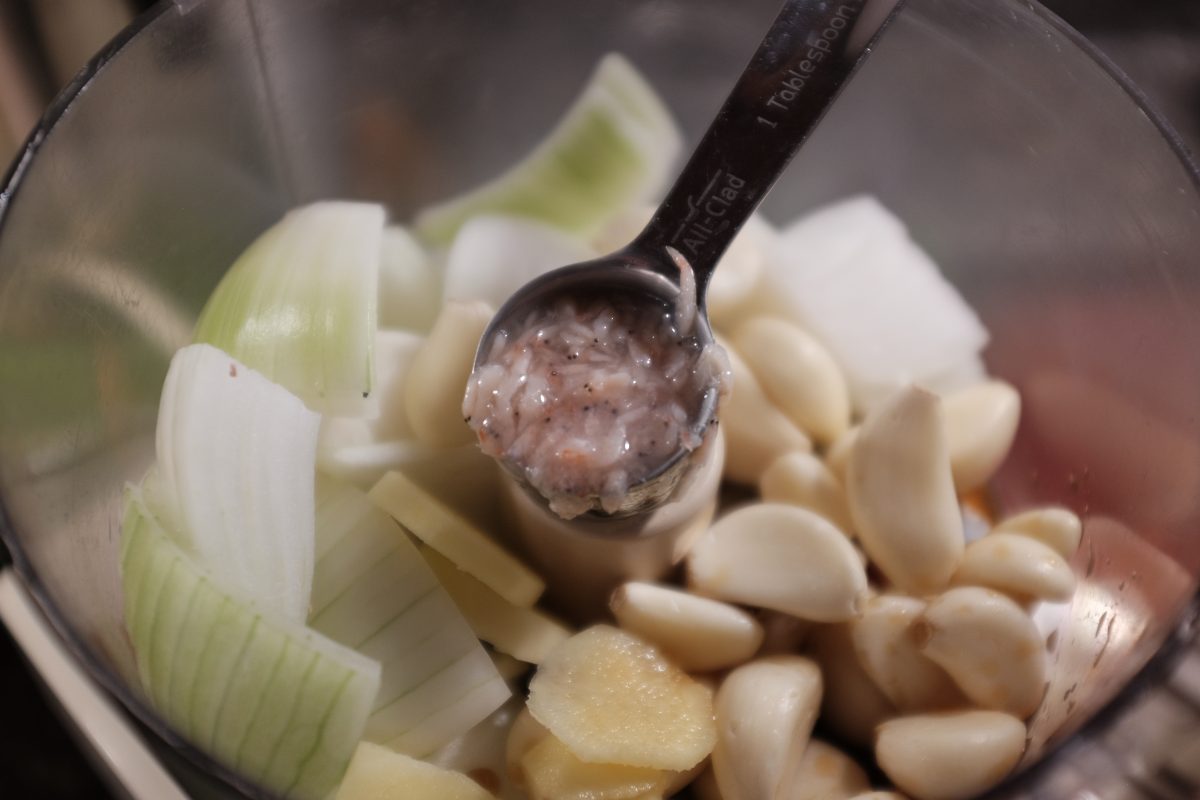
- 1/2 cup peeled garlic cloves
- 1 tablespoon fresh ginger sliced
- 1 medium onion
- 1/2 korean pear peeled (you can substitute a regular pear or apple)
- 1/4 cup fish sauce
- 1 tablespoon salted shrimp
- 1 cup mild korean chilli flakes (gochugaru) ***start with much less if your chilli flakes are very spicy. Taste first and add more as you like once the paste is done.
- 6 green onions
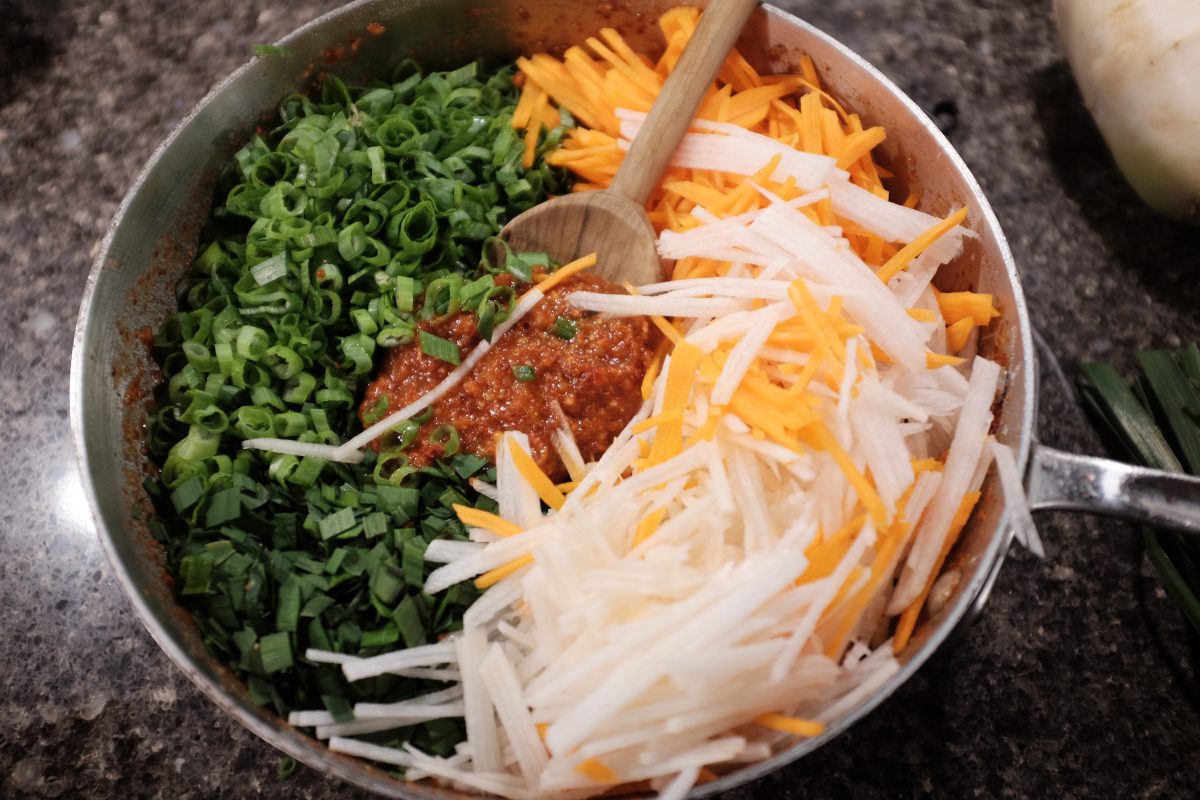
- 1 cup carrot cut matchsticks
- 1 cup korean radish matchsticks
- 1 cup chopped buchu (asian chives) or watercress (minari)

PROCESS:






VEGETARIANS/VEGANS
You can find my straightforward recipe for vegan napa cabbage kimchi here.
IF YOU DON”T LIKE SPICY FOOD…
…just leave out the chilli flakes. Your kimchi will still ferment and be delicious.
Enjoy!
That’s it! A very simple kimchi recipe. It is still pretty messy and time consuming but, it will always taste better than anything you will buy in a jar at the grocery store and you will have the satisfaction of handpicking all of the ingredients yourself and making it as spicy as you like. If you have any questions, please leave them in the comments.
Here is a link to my favourite kimchi fried rice and kimchi jjigae with tuna recipe. And for more ideas about what to do with your new batch of kimchi, have a look at this post.
If you enjoy the content and would like to contribute towards website maintenance and development, you can make a donation here.