Posts Tagged: cooking
Jeow Bong
What is it?
Jeow bong (or jaew bong) is a Lao chili paste used as a dip or seasoning. It is powerful and complex: full of strong aromatics and potent citrus and fruit flavours, all tied together with fermented fish sauce.
One summer at the restaurant we had a food runner who’s mom was from Laos. We became pretty good friends and her family ended up visiting for a meal a few times. I had fun preparing interesting veggie dishes (off menu) for her vegetarian dad and sister.
Afterwards, on more than one occasion, her mom sent me homemade Lao beef jerky and other little snacks. One time I even got a full dinner-set of larp, sticky rice, sides and, of course, jeow bong! This was my first experience with Lao food and I was hooked.
Sometime before our food runner left to go to university, she brought me my own bamboo sticky rice steamer and pot set with a couple of little rice baskets. This was such a thoughtful gift and I use them often. Thanks Tounie, Émilie and famille Desrosiers!
Jeow bong recipe:
This is a very good recipe. I am always surprised at how incredibly delicious it is every time I eat it.
First let me say that although I am a professional chef, I am no expert at Lao cooking. I have learned to make a few dishes because I like them so much but I am still learning. When I looked around the internet for recipes, I found many different recipes for jeow bong. I pulled from a few of them, combining ingredients that I can easily get in my neighbourhood. Many recipes include pig skin as an ingredient but I left it out of this recipe only because I didn’t have time to pick it up. This recipe turned out very well without it but next time I may try with pork included.
Ingredients
- 10 cloves garlic
- 4 medium shallots
- around 25 grams fresh galangal (one thumb-size chunk)
- 20 grams dried chilis
- 60ml (1/4 cup) of water
- olive oil for frying (1-2 tablespoons)
- 30ml (2 tablespoons) fish sauce
- 6 kaffir lime leaves
- 25 grams tamarind paste (a little less than 2 tablespoons)
- 1 teaspoon MSG or Aji-no-moto (same thing, different name)
- 1 tablespoon palm sugar (or use regular white sugar)
Process


Now what?
Store the paste in an air-tight container in the refrigerator.
You can use your jeow bong as a dip for meats or veggies or mix it into stir fried dishes. Or, try swiping a little onto a ball of warm sticky rice and popping it into your mouth. This is my favourite way to eat it.
Go easy with this stuff. It is surprisingly powerful!
If you have any comments or questions, please feel free to leave them below.
Thanks for reading : )
If you enjoy the content and would like to contribute towards website maintenance and development, you can make a donation here.
Cold Chickpea Salad
This is a recipe for a cold chickpea salad base. You can eat it just as it is here. It is delicious. But, you can also add just about anything you like to make the recipe suit your personal tastes. If you want to eat it over a few days, it is easy to add different ingredients to change it up. The ingredients I am including in this basic version can sit for a few days in the oil and vinegar dressing without degrading.
When I was little, especially in summer, there was always some kind of homemade cold salad in the fridge. Potato salad, pasta salad, egg salad… My new-Canadian parents refused to use air conditioning (or the dishwasher haha) so it was always nice to have something ice cold to snack on in the hot and humid weather! This recipe is the latest variation and I ate it at mom’s house recently.
Chickpeas are a great source of cheap protein, fibre, vitamins and minerals. And they taste great!
Ingredients:
- 400gr (2 cups) dry chickpeas
- 1/2 red onion small dice
- 1 red pepper small dice
- 3 green onions (scallions) sliced
- 1 carrot
- 2 cloves of garlic minced
- 2 Tablespoons hot chillies in oil (or chopped fresh chillies)
- 2 Tablespoons diced dill pickles
- 90-100ml (6 tablespoons) olive oil
- 45-50ml (3 tablespoons) vinegar
- 1-2 teaspoons salt
- 1-2 teaspoons black pepper
- 3 teaspoons ground cumin (optional)
I am using dry chickpeas because I like the flavour and texture. Soaking and cooking them is very easy but it takes a little more time. Feel free to substitute an equal amount of canned chickpeas. Just be sure to rinse them thoroughly in cold water to remove all the slippery brine.
Use a good extra virgin olive oil. I have used apple cider vinegar in this recipe but any good vinegar works. As for the chillies, I am using delicious chopped red chillies in olive oil which I recently found at a local Italian grocery. You can substitute with any fresh chopped chilli or leave them out if you don’t like the heat.
Process
Before anything else, we need to rehydrate (soak) the dry chickpeas.


Variations
As I mentioned at the start, I keep this basic recipe limited to the veggies that will be able to sit in the oil and vinegar for a few days without spoiling. Feel free to add anything you like to this starting recipe just before eating.
Some other things I have used:
- blanched or raw asparagus
- corn
- zucchini
- celery
- chopped kimchi
- diced sour apple
- parmesan cheese
- any and all fresh herbs
- crispy diced bacon
- tobasco, cholula or any other hot sauce
This kind of a salad is a good match for any picnic foods and especially grilled meats. And, although it is a cold salad, there is no reason why you couldn’t heat it up in a pan and serve it hot as well. As a warm dish, I think it would work perfectly under a piece of grilled fish.
Hope you enjoy. If you have any questions or comments or interesting variations, please leave them below. I am always happy to hear from you.
If you enjoy the content and would like to contribute towards website maintenance and development, you can make a donation here.
Bossam Leftovers: Pork and Vegetable Udon
Bossam Part 2:
Earlier I put up a recipe for a simple bossam. Towards the end, I mentioned that if you go easy on the salt in the braising liquid, you can use it to make another delicious pork dish. This is what I have done with the leftover braising liquid from that recipe: Pork and Vegetable Udon. This recipe made one huge portion but could very easily make 2 portions by adding more noodles.
Ingredients:
- Leftover braising liquid from Bossam recipe
- Leftover pork meat (if any) thin slices
- 1/2 onion sliced thin (the other half of the onion from the Bossam recipe)
- 3 cloves garlic sliced thin
- 2 green onions/scallions chopped
- 1 fresh green chilli pepper sliced into thin rounds
- 1/2 zucchini sliced thin
- 1/2 package of enoki mushrooms
- 1 cup green cabbage sliced thin
- 1 or 2 portions frozen udon noodles
I am using vegetables that I have in my refrigerator at the moment. You can substitute just about any vegetable you would normally put in a soup. You can use different mushrooms too. Different noodles could work as well. I like these Udon noodles. I usually find them at the neighbourhood Asian grocery store in the freezer section. They are convenient because they are frozen in single portions. If you don’t have leftover pork meat, don’t worry. The braising liquid has plenty of delicious pork flavour on it’s own. Sub in some extra mushrooms. I had enokis on hand but sliced king oyster mushrooms are even better!
Process


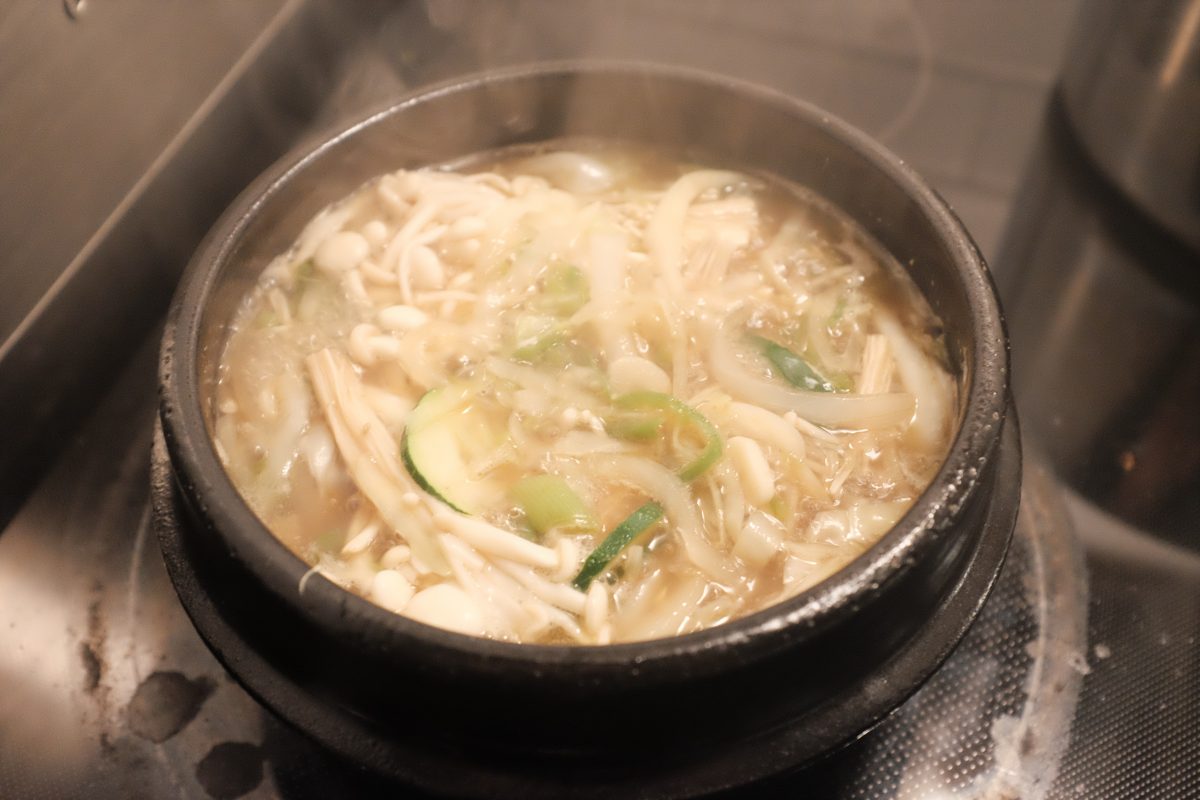


This took almost no time at all…
I think this probably took around 15 minutes to make. The leftover braising liquid from the bossam recipe is a perfect, rich and complex broth to cook vegetables and noodles in. This was a delicious meal that used up every last leftover from the previous night.
If you have any questions, comments or other ideas please leave them below. I always look forward to hearing from you.
If you enjoy the content and would like to contribute towards website maintenance and development, you can make a donation here.
Bossam Braised Pork Belly
This is a very basic version of bossam. The main event here is the meat. Fresh pork belly is braised in a liquid made with strong aromatics to flavour the meat and to soften some of the gamey aroma of the pork.
It can be served with kimchi and various sides, wrapped in a leaf of cabbage, perilla or lettuce.
There are a couple of good recipes here and here which include all the components for a more traditional Korean preparation with pickled Napa cabbage leaves and spicy shredded radish. This is a delicious way to eat it but I am going to do something a little different with things I already have in the refrigerator.
Ingredients for Braised Pork
- 1 kg (around 2.5lb) pork belly
- 1 small chunk (25gr) fresh ginger sliced
- 12 garlic cloves roughly chopped
- 1/2 onion
- 2 green onions roughly chopped
- 30ml / 2 tablespoons doenjang
- 15ml / 1 tablespoon instant coffee
- 1 tablespoon whole black peppercorns
- 1.5 litres / 6 cups water
Other Ingredients:
Once the pork is done, you will need something leafy to wrap it in. You may also want to add other fillings to your pork wraps. This can be anything from kimchi to fresh crunchy veggies. Sometimes I even like a little bit of nice mustard in them. This time around, I will use:
- red leaf lettuce, washed, dried and separated into leaves
- perilla leaf (kkaennip) washed and dried
- napa cabbage kimchi
- Korean radish kimchi or (kkakdugi)
- pan fried anchovies with peanuts (myeolchi bokkeum)
Process


Serving
Serve the pork slices with sides of your choice and leaves to wrap it with.


What about the leftover braising liquid?
Store any leftover meat in the braising liquid. Reheat it covered in the liquid as well.
The first time I made this, I noticed that the leftover braising liquid is actually very tasty. You can’t really notice the coffee as a distinct flavour. The liquid is just a warm and delicious pork and doenjang flavour. The only problem is that it is a little too salty.
The next time I made it, I decided to remove extra salt from the recipe, using doenjang only as the main seasoning. The meat is still delicious and can be salted a little after cooking if you think it needs it. But, keep in mind, you are also eating this with kimchi or maybe salted shrimp or other well seasoned add ons so very salty meat is not so necessary.
Once you reduce the salt, you are left with a delicious pork soup base. When the meal is done, I usually strain out all the solids and refrigerate it. The next day I combine it with shredded cabbage, the other half of the onion, mushrooms and frozen udon noodles, a little of the leftover pork and chopped scallions. It is surprisingly delicious! Find that recipe here.
If you have any questions or comments, please leave them below. Look forward to hearing from you.
If you enjoy the content and would like to contribute towards website maintenance and development, you can make a donation here.
Beef Bone Broth Version 1: Low and Slow
Broth vs Stock
I am calling this a “Beef Bone Broth” only because it seems to be the name that everyone is using these days. It makes a perfect base liquid for any number of soup or sauce recipes although it also has many other uses.
In professional cooking, a “broth” is a usually a lighter, thinner, and often salted liquid made by boiling vegetables and/or meat for a relatively short time. A “stock”, in contrast, is made from bones and their connective tissue, simmered for a very long time, sometimes with vegetables and aromatics, usually without salt. A broth is a thin and flavourful liquid while a stock is a thick, gelatinous and relatively flavourless liquid (until it is seasoned).
So..as you will see, what we are making here is nothing like a broth. It is a very simple beef stock.
Long, Low and Slow vs Hard and Fast
This recipe is for a long, low and slow method that cooks until the bones have nothing left to give. The end result is a mostly clear, slightly brown stock. It is thick and gelatinous, even slightly sticky. If you added mirepoix (say onions, celery, carrot) to this later in the process, you would end up with something like a Western white veal/beef stock.
The second one (click here for other version) is a hard boil and relatively fast stock (for beef bones). It will still take several hours but, it will result in a milky white broth with a nutty flavour and slightly thinner consistency. This is what you will often see in Seolleongtang or Mandu Guk (dumpling soup) in Korean restaurants.
Ingredients
You can make this as large or small as you like. I have made a recipe that fits into my biggest stock pot which holds around 12 litres / 3 gallons. Just make sure that the pot is big enough to keep bones submerged plus a little water on top.
- 4 kg / 8lb cut beef hip bones (this is usually a mix of marrow bones and knuckle bones)
- 1.5 kg / 3lb cut cow foot
- fresh cold water to cover them
My local Korean grocer keeps bags of cut beef bones in the freezer section all the time. And, there is a butcher near me that usually has frozen whole cow feet as well. Any butcher shop should be able to get you beef hip bones for stock. The cow foot is optional but it is made of of mostly connective tissue and this will add body and richness to your finished stock. If you can’t get cow foot, just omit or replace with regular hip bones.
Process
Wash and Soak


Initial Boil (blanching)


Simmering the stock


32 hours later….


Cooling and Storage

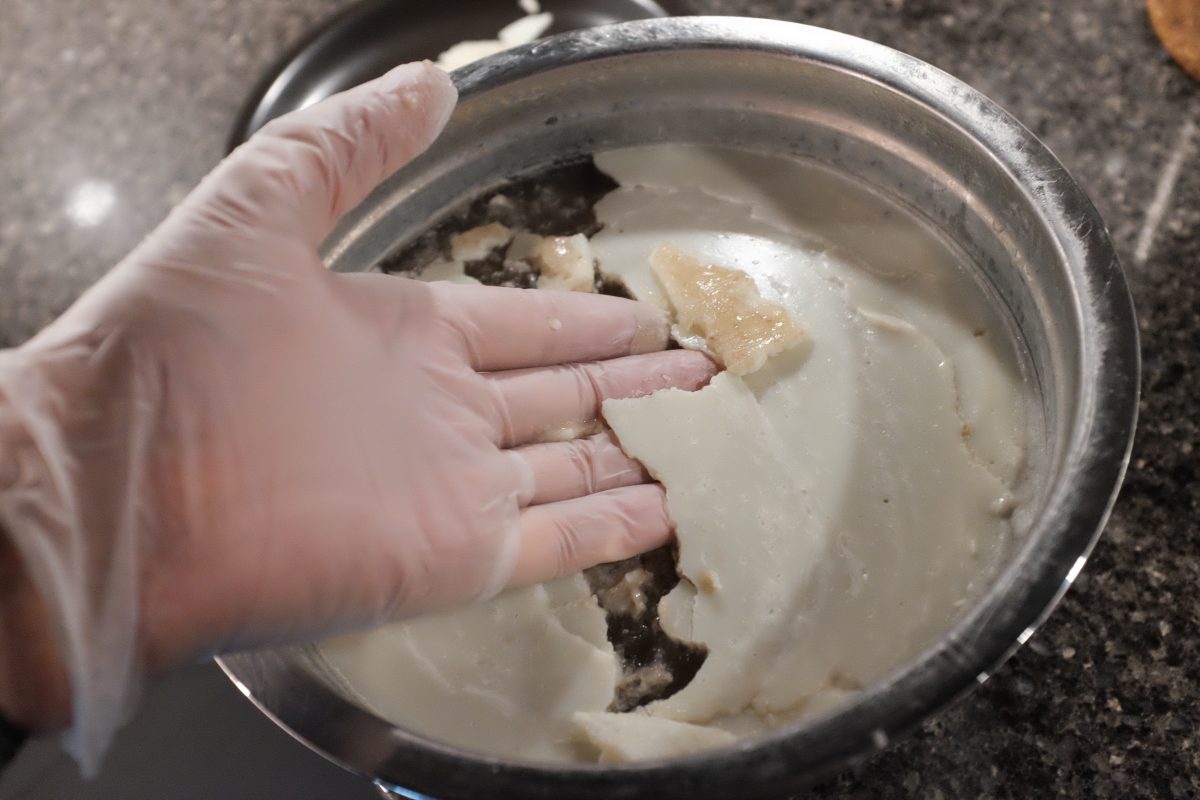


How to use your Beef Bone Broth
Simmer any combination of meat/vegetables/mushrooms in it for a delicious soup. Add your favourite noodles to it. Or, you can simply warm it up and add rice and seasoning. You can even drink it as is for a deeply nutritious and filling liquid snack.
This beef bone broth (stock) is a liquid rich in body and texture that is mostly neutral in flavour…a base for almost anything you can imagine. Soup, stew, sauce, smoothie…anything goes. If you have any recipe that has water as an ingredient, replace it with this stock to improve the flavour and the nutritional value. As I cook with this new stock, I will post up ideas as I make them.
If you enjoy the content and would like to contribute towards website maintenance and development, you can make a donation here.
Beef and Radish Soup: Muguk
Korean beef and radish soup, or sogogi muguk, is a flavourful and nutritious soup which is easy to make quickly. There are only a handful of ingredients and everything is cooked in one pot.
Ingredients
- 150gr (5-6oz) beef brisket point sliced thinly against the grain
- 250gr (8oz) Korean radish
- 15ml (1 tablespoon) sesame oil
- 5 or 6 cloves garlic sliced thin or minced
- 15ml (1 tablespoon) Korean soup soy sauce (gukgangjang)
- 2 or 3 green onions (scallions)
- 750ml (3cups) water approximately
- salt and pepper
I used beef brisket in this recipe because I can get it easily and I like that it is lean and tender at the same time. If you can’t get brisket, you can use almost any other good cut of beef. Lean cuts from the round will be a little chewier but still delicious: cut them thin. If you want to put premium steak cuts in here, go right ahead. I have even made this with ground beef in a pinch.
Don’t use regular soy sauce. Korean gukganjang or soup soy sauce can be found at any Korean grocer. Regular soy sauce is a poor substitute. If you can’t find soup soy sauce, substitute with a good quality fish sauce.
The meat to radish proportion can vary. This one I am making has a pretty generous amount of meat. Feel free to use a little less or, even more if you want to load up on protein.
Process


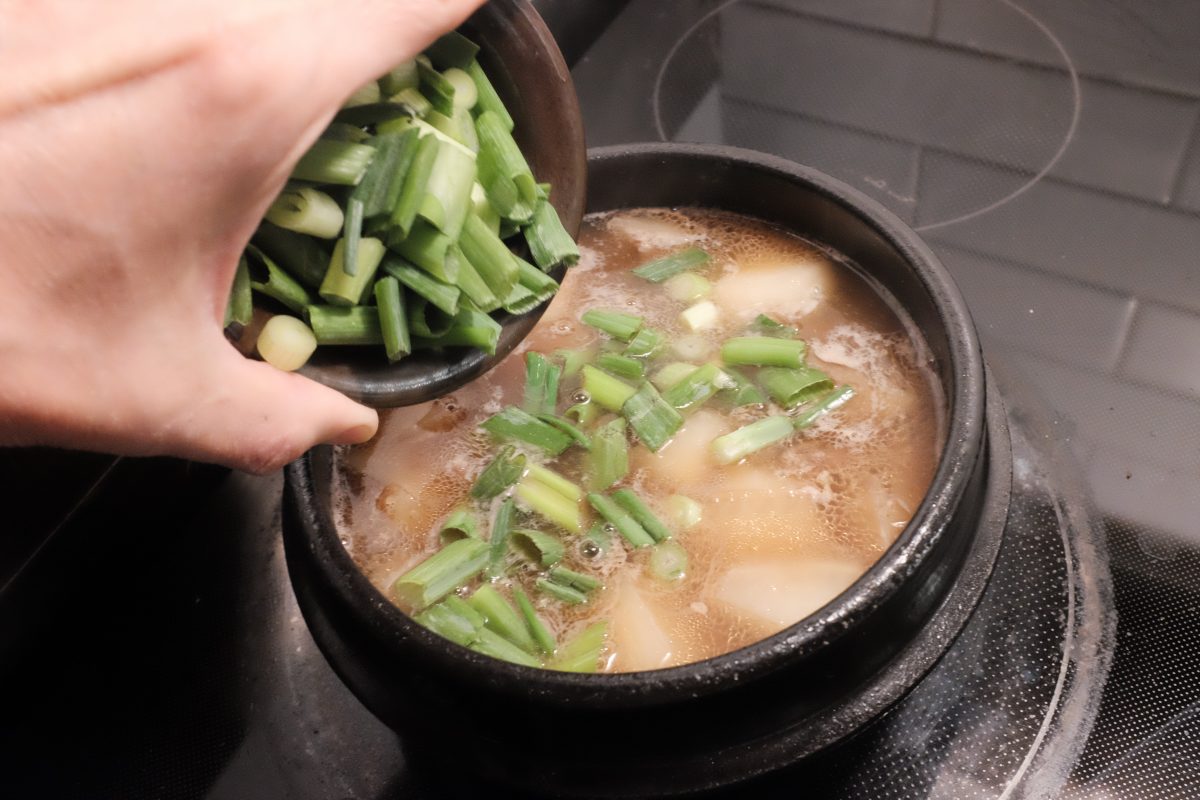

I like to eat this with a bowl of rice and a couple of sides. Today I am having home made kimchi and a cucumber salad. I made kkakdugi yesterday but it is not quite ready yet. Otherwise I would eat it with this dish : )
This recipe will make enough for two medium portions or one very large portion.
If you have any questions or comments, please leave them below. I love to hear from you.
If you enjoy the content and would like to contribute towards website maintenance and development, you can make a donation here.
Kkakdugi or Korean Radish Kimchi
Kkakdugi, or Korean Radish Kimchi, is one of the fastest and simplest kimchis to make. There are relatively few steps and just a handful of ingredients. The recipe you will see here is a little different from others you may find.
Last time I travelled through Korea, I noticed 2 distinct kinds of kkakdugi. One was the classic little cubes served as a side in many restaurants. The other is a much larger and chunkier radish kimchi. This second one accompanies clear and mild beef broth dishes like seolleongtang or doganitang. The pieces of radish tend to be bigger and less uniform and there is much more liquid in the kimchi. The kimchi is on the table in a big container from which you can eat the radish but you can also use the kimchi-juice to season your soup. This is what I am attempting to make here. You can also just eat it as a side the same as you would any kkakdugi.
Ingredients
As a chef, I always preferred to cook by weight rather than volume. I grew up using the metric system and I like it very much. So, as much as possible from now on, I will include metric equivalents. Keep in mind that other than salt and radish, you can vary ingredients as you like to suit your tastes.
- 3.5-4lb (1.5-2kg) Korean radish (the one i am using is 1700gr)
- 2 tablespoons (25gr) Diamond Crystal Kosher Salt
- 1/4cup (30gr) korean chilli flakes / gochugaru
- 1 tablespoon (20gr) salted baby shrimp / saeujeot
- 10 cloves (35gr) garlic minced
- 1 teaspoon (10gr) ginger minced
- 1 tablespoon sugar (75gr)/syrup
- 1 asian pear peeled and chopped
- 1 cup of chopped green onion/scallion or asian chive/buchu
Korean radish is similar to white daikon in some ways but the flavour of Korean radish is usually more sweet and vegetal and less hot and bitter. But, if you really can’t find Korean radish, daikon is a reasonable substitute.
I am using Diamond Kosher salt. You can substitute 30 grams of any good salt, but avoid using table salt.
I just happen to have a homemade maesil plum syrup on hand which I am using instead of sugar. If you want to try it, you can find maesil syrup in any Korean grocer.
Feel free to vary the amount of chilli flakes to make this as spicy or as mild as you like.
Korean pears are not available at this time of year so I am using a whole regular asian pear which is roughly half the size of the Korean variety. You can also substitute an apple or regular pear or leave it out altogether.
Process


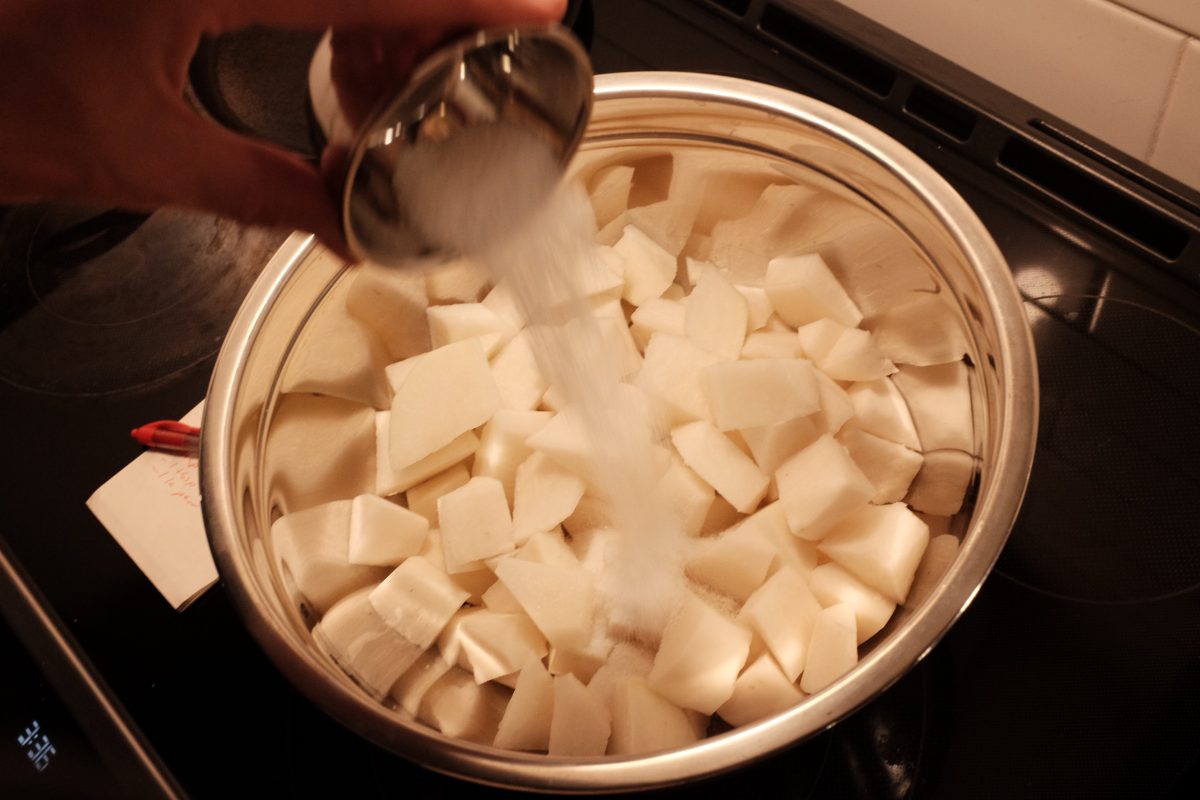


Allow the kimchi to ferment on the counter for a day or two. Taste it a couple times a day and when you are happy with the flavour, refrigerate it. You can eat the radish kimchi as is as a side to any dish or use the kimchi liquid to season mild soups.
Just like any kimchi, kkakdugi will continue to ferment and sour over time. If it gets too sour to eat as is have a look here for ideas on how to use well aged kimchi. Radish kimchi will work just as well as cabbage kimchi in hot dishes. I especially like it in kimchi fried rice.
If you are also looking for a good cabbage kimchi recipe, you can find mine here.
Lastly, if you are interested in what Seolleongtang looks like in Seoul, Korea, have a look here or here. Maybe in the future I will put up a recipe for Seolleongtang although it is a long long process that is challenging to make at home. Here is a good recipe from Korean Bapsang. This kimchi would be a perfect accompaniment!
If you have any questions or comments, please leave them below. I love to hear from you.
If you enjoy the content and would like to contribute towards website maintenance and development, you can make a donation here.
How to Fix Kimchi

What is wrong with my kimchi?
Sometimes the kimchi you imagine making is different from the kimchi you actually end up with. There are so many variables involved that it is difficult to predict the outcome even if you follow the exact recipe every time. The ingredients are powerful: garlic, ginger, chilis, fish sauce, etc. The main elements are fresh vegetables, which may be different every time you buy them. One cabbage may have more water content than another. Or a greater sugar content. One clove of garlic may be more intense than the next. One chilli powder is spicier than the other. And so on…
On top of that, the finished kimchi itself is alive, changing dramatically over time as it ferments and ages. So, if you have a very specific expectation of what your kimchi should taste like…it will probably get there eventually but it won’t stay there for long.
It is important to start with good quality ingredients and a tested recipe. But, beyond that, there will always be aspects that are difficult to control. Some flavours can be manipulated to some degree after the fact. And, of course, mistakes can happen in executing any recipe. Some are more repairable than others.
Before you do anything
Don’t worry about how to fix your kimchi until it has a little time to settle down. A freshly made batch of kimchi contains ingredients that have intense and pungent flavours. Dry ingredients need time to fully hydrate. Veggies continue to release water for some time diluting everything else. Don’t judge your kimchi until you have given it two or three days to come together.
After that time, give it a taste and then decide if there is a problem….
Let’s have a look at a few common issues and how to fix your kimchi:
My kimchi is too sour
Freshly made kimchi is not sour at all. As it ferments, lactic acid is produced, resulting in a sour flavour over time. If your kimchi is already more sour than you like, there is not much you can do to reverse it. However, sour kimchi is ideal for warm recipes like kimchi jjigae, kimchi fried rice or kimchi pancakes. In my opinion, the more sour it is, the more delicious for cooking with. So keep this sour batch for cooked meals. Ideas for how to use sour kimchi are here.
If you like fresh and crisp tasting kimchi, store it in the refrigerator immediately after making it. Cool temperatures will delay the onset of fermentation and slow the progress over time. Your kimchi will stay “fresh” much longer. Consider making smaller batches so you can finish it before it gets too sour. It is fine to cut recipes in half to always have a fresh batch on hand.
My kimchi is not sour enough
If you like your kimchi sour, once you finish making it, leave it out at room temperature. It will not go bad. Taste it once or twice a day and, when it is just about sour enough, refrigerate it to slow down the fermentation. Make sure you are pressing the veggies back down under the brine every time you taste it. If you like both fresh and sour kimchi for different uses, put half in the refrigerator right away and ferment the other half at room temperature until sufficiently sour.
My kimchi is too spicy
Once you have mixed in your chilli flakes there is no going back. The spiciness may mellow a little in the first few days as the kimchi comes together, but not that much. The solution here is to control the amount of spice you are adding right from the start.
ALL chilli flakes are different…they are from different places with different weather patterns and growing seasons. No two will be equally spicy (or sweet). The only way to judge a chilli powder is to taste it. If it is burning hot on your tongue, start with 25% of what the recipe says and add from there. You will probably find that you need much less than the recipe calls for. On the other hand, if you happen to buy a sweeter, fruitier chilli powder with less heat, add as much as you like. Taste it when your kimchi paste is finished and adjust.
My kimchi is not spicy at all
Some chilli flakes are quite mild (and will likely say so on the package). I prefer these because you can add a large amount. Your kimchi will have a deep red colour and a nice fruity chilli character. Just like above, taste the chilli and adjust as you go. If you really want sharp heat, as a last resort you can mix in a some cayenne pepper. This will ramp up the heat without affecting the overall flavour too much.
My kimchi tastes “fishy”
Fish sauces vary in saltiness and “fishiness”. Try as many as you can and choose the one you like best. In general, avoid ones with more than 2 or 3 ingredients. Many are made with anchovy but some are made with other fish, like sand lance. They will all taste “fishy” to some extent so if this is a flavour you don’t enjoy, just use less or none at all. It is not an essential ingredient for a successful kimchi but you will lose some depth of flavour without it. You can also play with the amount of salted shrimp you are using from lowering the amount to using none at all. These ingredients contribute salt to the recipe, so if you remove them you may need to replace them with some kosher or sea salt.
My kimchi is fizzy
When the lactic acid content gets very high in a long fermented batch of kimchi, you may feel fizziness on your tongue. Your kimchi has not spoiled but it may be fermented beyond the point where you like to eat it raw. It will still be excellent for cooking though and the fizz will disappear in a hot dish.
My kimchi is too salty
This is a tough one. If it is not too extreme, you may be able to dilute the salty flavour to some extent. The best way to do this, without destroying the balance of the finished kimchi, is to add more vegetables. Korean radish has a high water content and ferments nicely. Peel and chop up a korean radish and sink it into your finished kimchi. The salt in the kimchi will draw water from the radish which should dilute the mix and decrease the saltiness somewhat. Give it a few days and taste it again. Hopefully it will be improved but if not, you may need to reserve this kimchi for hot cooking, adding small amounts to dishes as both flavouring and seasoning.
The best thing is to figure out why it is so salty in the first place. Most recipes will include a step where the salted cabbage gets a rinse. This is to wash the cabbage but also to remove excess salt. Don’t forget this step. Other sources of salt in the recipe are the fish sauce and salted shrimp. If you like your kimchi less salty, you may need to use less of these ingredients.
Lastly, but maybe most importantly, do not use fine iodized table salt in your kimchi. A cup of this salt is much much saltier than a cup of kosher or coarse sea salt. No matter which salt you choose, the best thing you can do is weigh your salt. For reference, a cup of Diamond Crystal kosher salt weighs around 140 grams or 5oz. This kosher salt in the red box is the one I use for everything. If you are using a different salt, try weighing it out to control saltiness in your finished batch. This is a good post about salt varieties and substitutions.

Many recipes online give salt measurements in cups instead of weight. Try to find one that gives a weight for salt instead. Click here for my napa kimchi recipe.
My kimchi is bland
Bland tasting kimchi is probably from a lack of salt which is an easy fix. Simply add more salt or fish sauce or salted shrimp. Bland kimchi can also be improved by increasing the chilli powder, or tossing in a few more cloves of crushed garlic or ginger. Sometimes a little sugar can help as well but start with small amounts, taste and add as necessary.
My kimchi is too watery
Watery kimchi is not necessarily a bad thing thing. There are even “water kimchi” recipes where the kimchi juice is either eaten or used in other recipes. But, if you have made a regular cabbage kimchi recipe and you find it too watery or bland, there are a few things to consider.
It is possible that the cabbage was processed before it was brined long enough. Once the cabbage is salted, it needs around 2 hours to absorb salt and release water. If you combine it with the kimchi paste too soon, the cabbage will continue to release water into the salty paste and dilute the batch.
Or…
The cabbage was not drained enough. The cabbage will need to be rinsed/washed after the 2 hour brining time. After washing, the cabbage needs to be drained thoroughly. You can place it into a large colander, moving it/flipping it every few minutes until no more water is draining out the bottom. This can take some time. Maybe as long as 10-15 minutes. If you rush this process and mix still wet cabbage with your kimchi paste, it could also end up too watery.
You can drain off some water from a finished batch if you just want to eat the vegetables. Just make sure there is enough liquid left to keep the veggies submerged. It is probably a better idea to just use a slotted spoon to remove the kimchi you want to eat and keep all that juice for flavouring a soup or stew later on.
My kimchi is moldy
I have only had mold grow on kimchi once in the last 10 years and it was because I left chunks of kkakdugi above the liquid and forgot about it for some time. The radish pieces that were not submerged began to mold. That was my fault. I don’t think kimchi spoils very easily, however:
IF there is green, blue or black mold on your kimchi, the safest thing to do is discard it and make a new batch. White spots are more likely yeast. If it’s more than just a few small spots, I would be inclined to toss it as well although I have read that rinsing it and cooking with it is ok. If the kimchi is soft or slippery/slimy and smells BAD, throw it out.
To avoid these kinds of problems, make sure that the container you are storing your kimchi in is clean and sanitized (boiling water sanitizing is fine). Keep it covered in the fridge. It is also important to keep the veggies submerged in the brine. Press the kimchi vegetables back down under the brine after you use it. As an alternative you can hold back one or two whole cabbage leaves and use them as a natural lid on top of your cut vegetables. Or do the same thing with plastic wrap.
Consistency comes with practice
I have been making kimchi regularly for around 10 years and no two batches are exactly alike. There are too many variables that are difficult to control, not to mention that the finished kimchi keeps changing over time. But, with practice, I have learned how to steer things in the right direction and almost always end up with something i really enjoy eating.
As you can see above, some things can be manipulated after the kimchi is finished but it’s best to get things right at the start. Make notes of what you like or don’t like with each batch and vary your ingredients until your kimchi tastes delicious to you. There is no “best” or “correct” kimchi. There is only the one you enjoy eating. Make that your goal.
If you have any questions or if you are having issues that I haven’t thought of here, please post a comment below. I always enjoy hearing from you.
If you enjoy the content and would like to contribute towards website maintenance and development, you can make a donation here.
Myeolchi Bokkeum
Myeolchi Bokkeum is panfried dried anchovies. Sweet, salty and crunchy, it is one of my favourite Korean sides and also one of the simplest recipes. It can be made in just a few minutes but you need to move fairly quickly and take a little care to get it just right. I really like these with peanuts in the recipe but I am making these today without nuts to share with someone who has an allergy.
The recipe is easy to remember because it is just “one” of everything…
Ingredients:
- 1 cup dried very small anchovies (in freezer section at Korean grocer)
- 1 tablespoon olive or other vegetable oil
- 1 tablespoon water
- 1 tablespoon sugar (white or brown)
- 1 clove of garlic minced
- 1 teaspoon sesame oil
- 1 teaspoon sesame seeds

Process:
Before you start cooking, combine the water, sugar and minced garlic in a small container. Mix until the sugar is mostly dissolved.

Start cooking: this is an easy preparation but you have to move a little quickly so here are a couple videos to demonstrate…
Heat your pan on medium high and add dry anchovies (and nuts if you are including them). I like to stir mine with my fingers in the dry pan until they are too hot to touch. This step will ensure that any moisture in the fish will evaporate before frying them in oil. Keep them moving and just heat them until you can’t handle them with bare hands anymore.
Add the olive or vegetable oil and fry until crispy. Keep them moving. It is ok for them to brown a little bit but don’t go too far or they may taste bitter (burnt)
When they are crisply fried (you can even hear how crunchy they are), move them aside, add the sugar, water and garlic from the prepared container. Let it cook down a little on the side until you have kind of a loose caramel, then mix the fish back in for a few seconds and remove from the heat.
Move the hot fish to a new bowl or container so that it stops cooking.

Pour over the sesame oil

Add the sesame seeds

Mix well and it is done

How to eat myeolchi bokkeum
You can eat these as is, put them on rice or add them to your favourite lettuce wrap (ssam). I especially like to sprinkle them on fresh salads. They can be used anywhere something sweet, salty and crunchy would go. I had a Korean cook once who put them on her yogurt for breakfast but not sure if I would recommend it! If they are not all gone in one sitting, you can store your myeolchi bokkeum in an airtight container in the fridge.
Variations:
- you can make these spicy by adding a little gochujang to the sugar/water mixture or by sprinkling some chili flakes in at the end with the sesame seeds
- you can make these saltier or more savoury by adding sea salt or soy sauce to the mix. Careful though because the anchovies themselves are already quite salty. Experiment with small amounts.
- you can add any nut or seeds in with anchovies at the start of the recipe. Peanuts are classic and delicious but almost anything works including almonds, walnuts or pumpkin seeds.
- If you like them sweeter, add a little more sugar or even syrup (rice, corn or maple)
If you have any questions or comments, please leave them below.
If you enjoy the content and would like to contribute towards website maintenance and development, you can make a donation here.
Dried Pollock Soup Bukeoguk
The start of a long relationship with Korean food
Years ago I hired a new cook who had recently arrived from Korea on a work visa. I soon started to notice them struggling a little with physical demands and mental focus. Everyday, they worked diligently and did an excellent job, never complaining once. But they were mentally exhausted and physically depleted by the end of every day. After a few weeks, they finally admitted to me that they were having a hard time eating North American food without feeling ill. On top of homesickness, they were basically….hungry all the time. And because they were hungry, they were exhausted.
The only way I could think of to make this situation better was to feed them. I asked them what they would eat if they could choose anything. The answer was Bukeoguk.
I knew nothing about Korean cooking and I had never heard of it. But, I searched for recipes and went to a Korean grocer for the first time and bought all the ingredients I needed. The next day, I made my first Korean food. And, for the few years that this cook worked for me, I continued to feed them one new dish a day. I gradually became a pretty good Korean cook and they gradually became healthier and happier.
They eventually moved on, as all cooks do. But my love for Korean food and cooking has remained with me. And for the last 10 years I have continued to learn methods and ingredients. By now, I must have made a hundred different dishes (probably more), even making my own doenjang, ganjang and gochujang from scratch. Makgeolli too.
Since that fateful meeting, I have cooked and eaten everything I can get my hands on. I have traveled to Korea many times and I have made many friends, even learning to speak the language at a basic level (so far). This story is a long one, too long to write here….and it’s not over yet! For now, I’ll just say “Thank you: 만나서 반가워요”
Ingredients:
- 60 grams (one big handful) dried Alaskan Pollock (bukeo) 북어
- 1 cup peeled and rough chopped Korean radish
- 4 cloves of garlic minced or sliced thinly
- 2-3 green onions (scallions)
- 1 tablespoon sesame oil
- 1 tablespoon Korean Soup Soy Sauce (guk ganjang) or fish sauce
- 1 egg beaten
- salt and pepper
- water (4-6 cups)
The amounts above are guidelines. This preparation is very simple and there is no delicate balance to upset here. If you like more fish, use more fish. If you like more radish put in more radish. The important thing is that everything is underwater and that it is seasoned well with salt or soy sauce/fish sauce. If you do follow the recipe exactly it will make a good soup. 2 smaller portions with rice and sides or one big portion.
Raw ingredients:

Process:
Soak dried pollock for 15 minutes or so in warm water until it softens up enough to cut or tear apart. Keep the soaking water…we will add it in later.

Chop or tear soaked fish into bite size pieces. Sometime there are a few little bones in the meat and tearing it by hand will help you find and remove them.

Cook the fish pieces in sesame oil for a few minutes until it is hot and aromatic

Add garlic. I like to slice my garlic thin but I think minced garlic is more common. Up to you!

Add chopped radish and cook for a few minutes until warm

Pour back the soaking water, enough to cover everything plus a few centimetres.

Soup soy sauce goes in. This stuff is not the same as regular soy sauce. It is much saltier and funkier. You should be able to find it easily at a Korean grocer but, if not, you can substitute fish sauce.
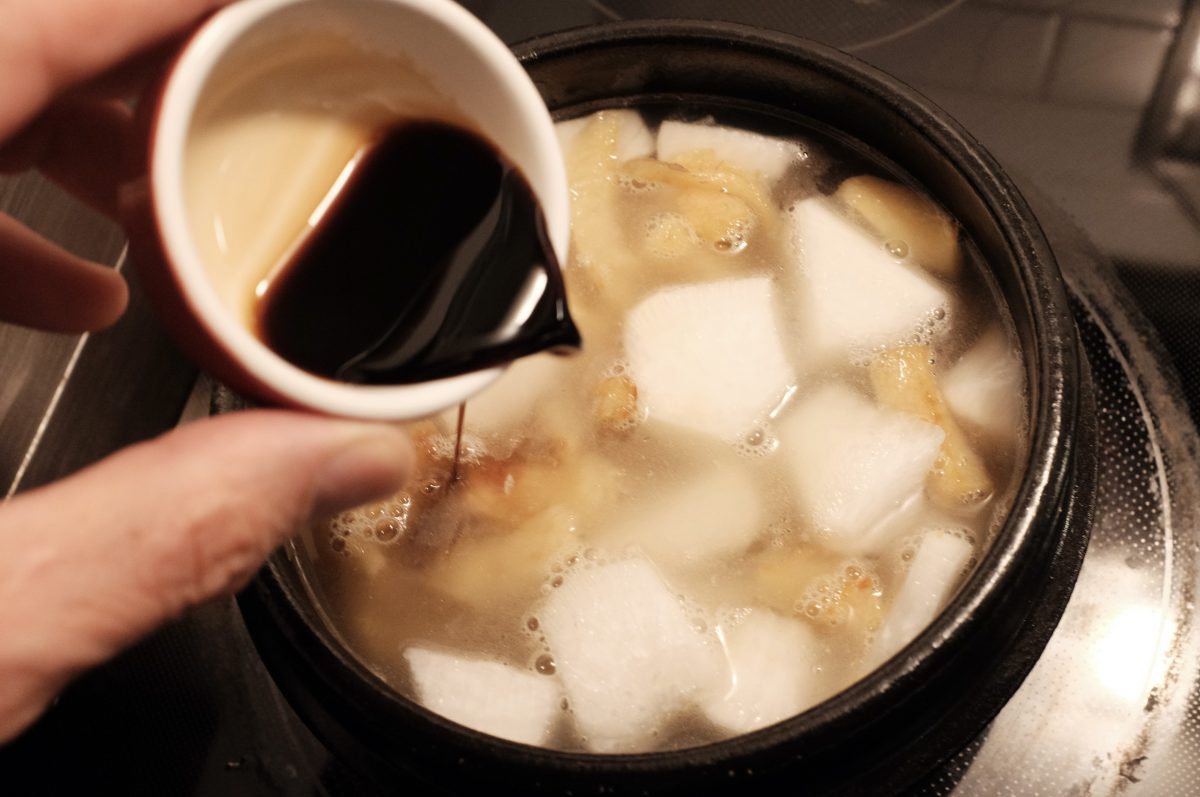
Bring to a boil and simmer for 15-20 minutes or until radish is cooked through. Now is a good time to add salt if needed. The dried fish contains salt, the soy sauce is very salty and the radish will release a lot of water. So I prefer for all these ingredients to cook completely before adding salt. Now is the perfect time to taste and adjust. Add salt if needed. Pepper too if you like.

Green onion goes in

Pour in egg and remove the pot from the heat. Wait until a raft of egg floats up before stirring it in.

Time to eat!

Bukeoguk is nutritious and easy to digest (also why it is known as a good “hangover soup”). It is simple and quick to make with only a few ingredients. I like to eat it with fresh white rice and a little homemade kimchi. Whenever I make it now, I can’t help but remember the first time I made it and the hungry person who got me started on my Korean cooking adventures.
If you have any questions or comments please leave them below. I am always happy to hear from you.
If you enjoy the content and would like to contribute towards website maintenance and development, you can make a donation here.