Samgyetang
What is samgyetang?
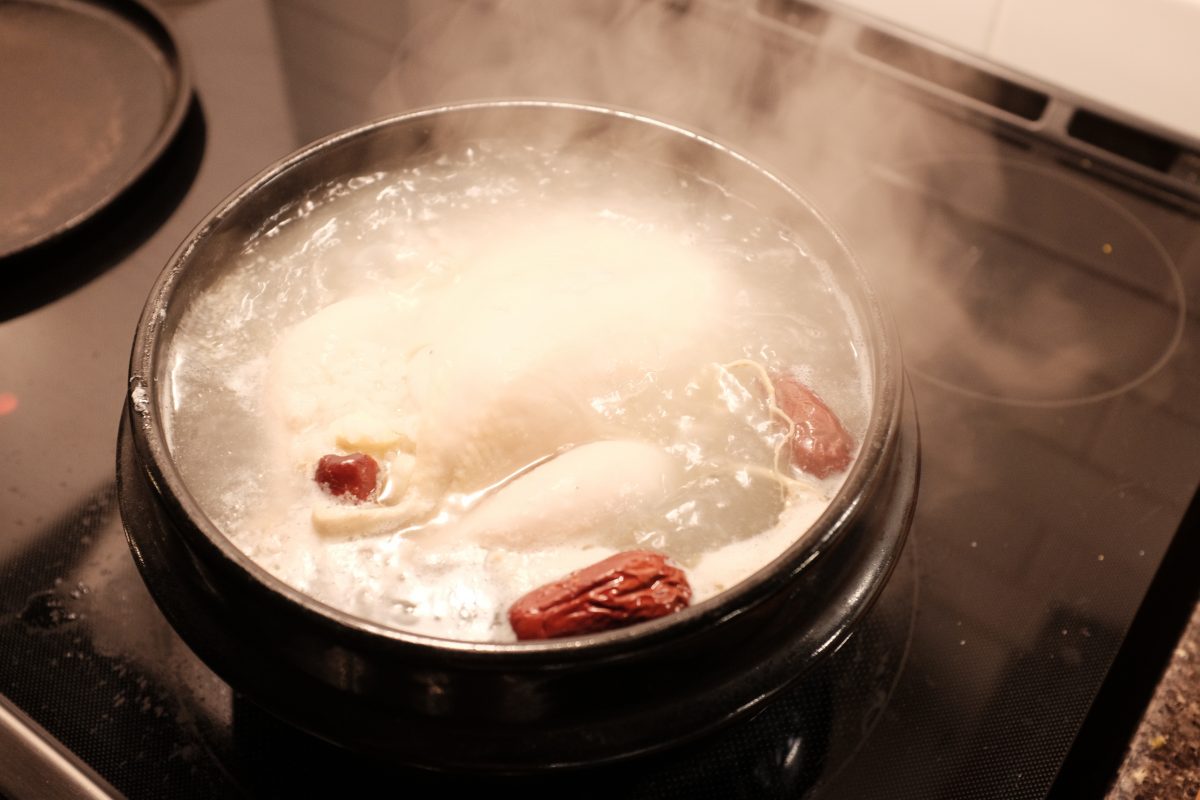
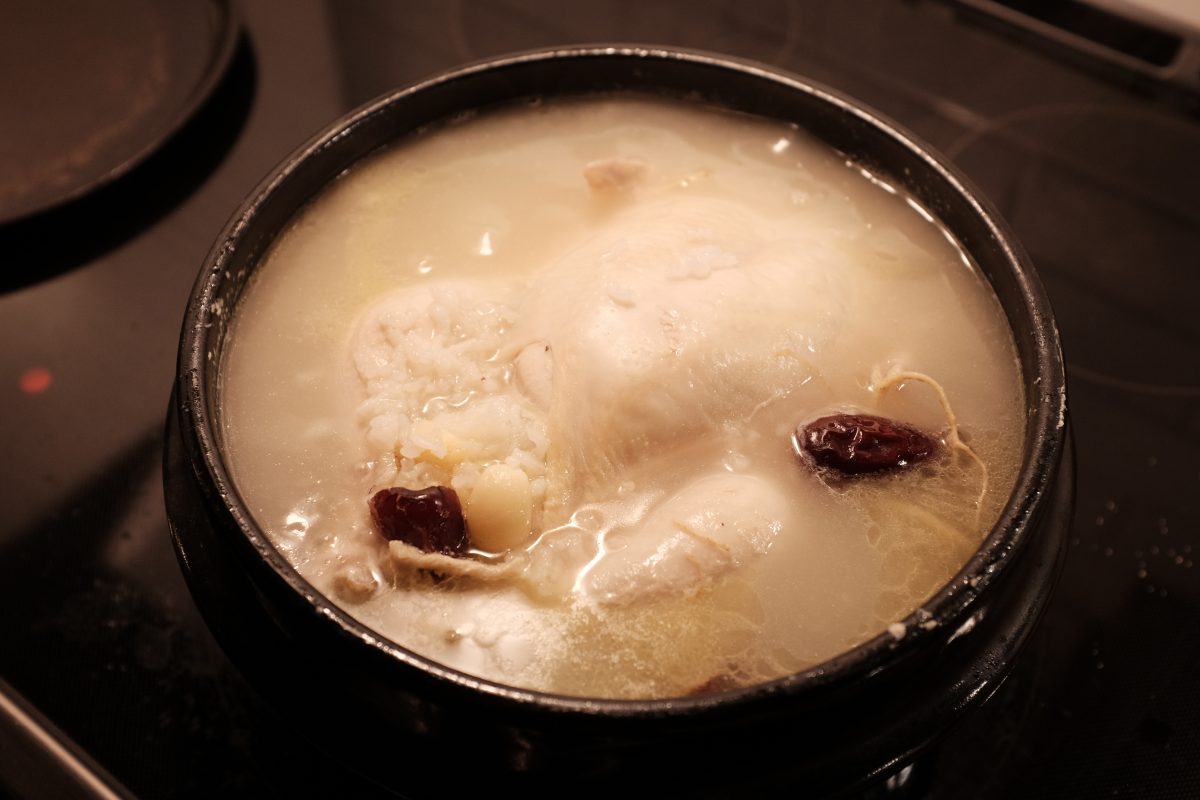
Samgyetang is ginseng chicken soup. “Sam” for insam (인삼), the Korean word for ginseng; “gye” refers to chicken; “tang”(탕) is a soup. It is a hearty and delicious soup that tastes great during chilly months. It is also surprisingly popular during the hottest days of the year in Korea where eating steaming hot food is believed to have a cooling effect on the body.
My first time…
The first time I ate this soup was on a chilly afternoon in Seogwipo City on Jeju Island. Hungry and cold, I was wandering around an area known for restaurants. It was the off-season so many restaurants were closed and most others were serving Jeju black pig samgyeopsal, something that is difficult to eat on your own. Feeling defeated, I decided to go to a nearby convenience store to at least buy some kimbap. On my way I spotted a small house with a sign that simply said “삼계탕” (samgyetang) but this little house didn’t look like a restaurant at all.
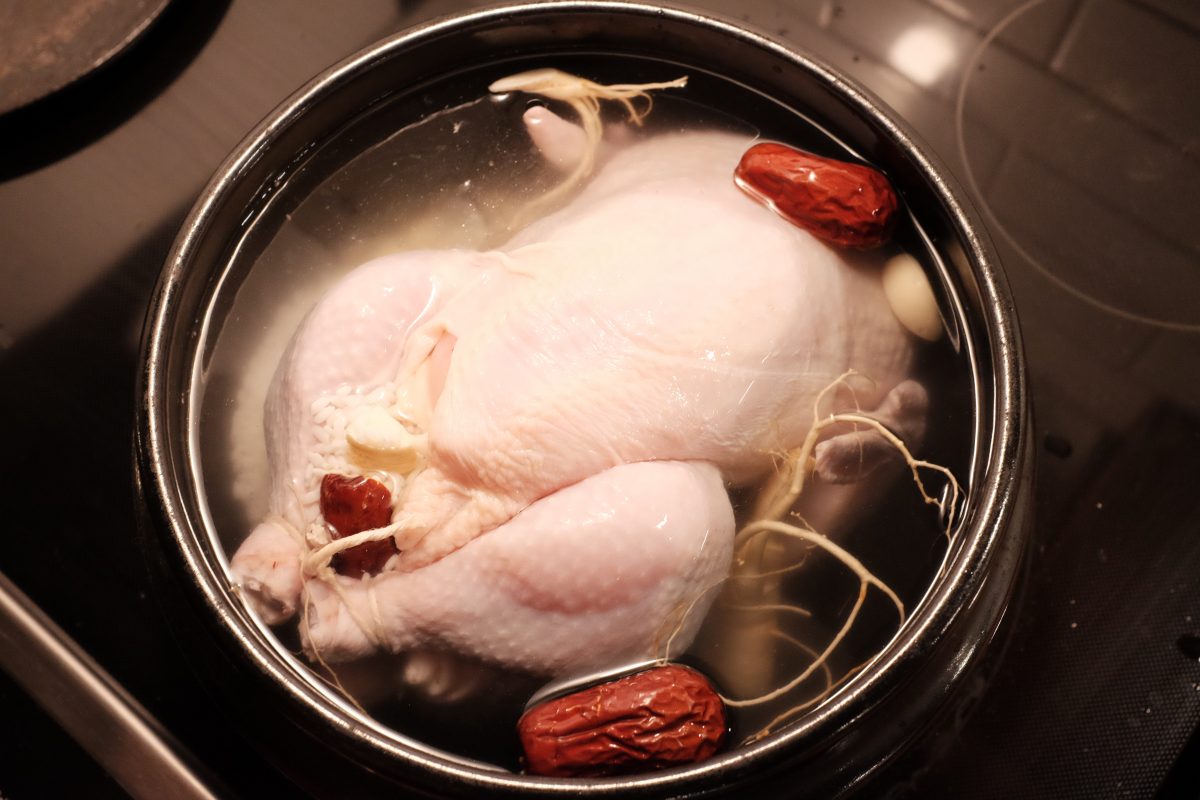
When I cracked the door open to peek inside, I was surprised to see an older woman sitting on the floor in front of her sofa, watching TV. I quickly apologized and tried to leave, but she got up and gestured for me to come inside. Hardly knowing any Korean, I simply said “samgyetang”? She nodded and gestured for me to sit on the sofa. She unfolded a small square table in front of me and then disappeared. I sat alone in this room, watching TV and silently wondering if I had made some kind of a mistake. But, a few minutes later, she came back smiling and put 2 or 3 dishes of simple banchan on the table in front of me. And, a little after that, she came back with a steaming black earthenware bowl containing a single small chicken in a bubbling broth.
I ate this delicious steaming meal as fast as I could without burning my mouth. The woman seemed pleased when she saw all the empty plates. I gestured to pay, she accepted my money with a nod and a smile and I was on my way.
That meal seems like a mystery to me to this day. Was it really a restaurant? Was it a dream? It seemed like some kind of a magical chapter in a book. Someday I will return to investigate. These are the best kinds of travel experiences. There is something deeply lonely about traveling by yourself, but I think that it also opens many doors that may not have otherwise materialized at all. Like the door to this little house where I first ate samgyetang on a chilly afternoon on Jeju Island, perched on the edge of a sofa watching TV.
Ingredients
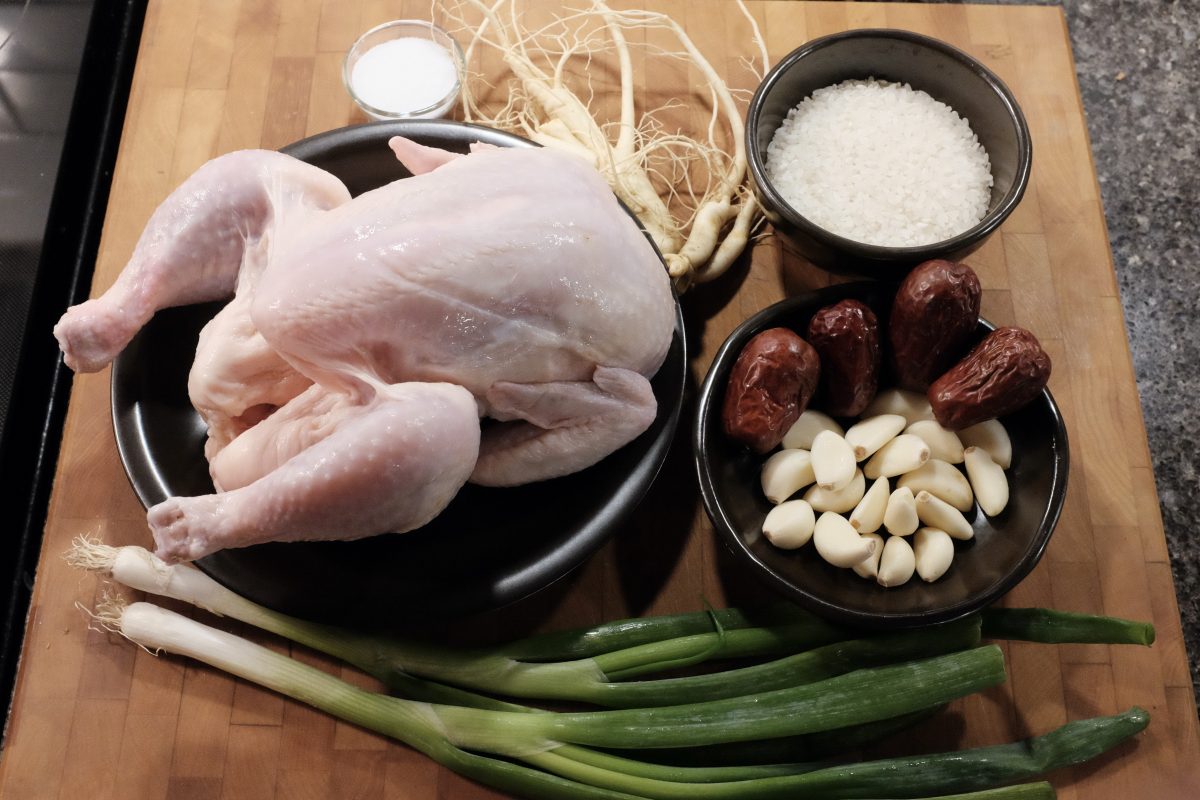
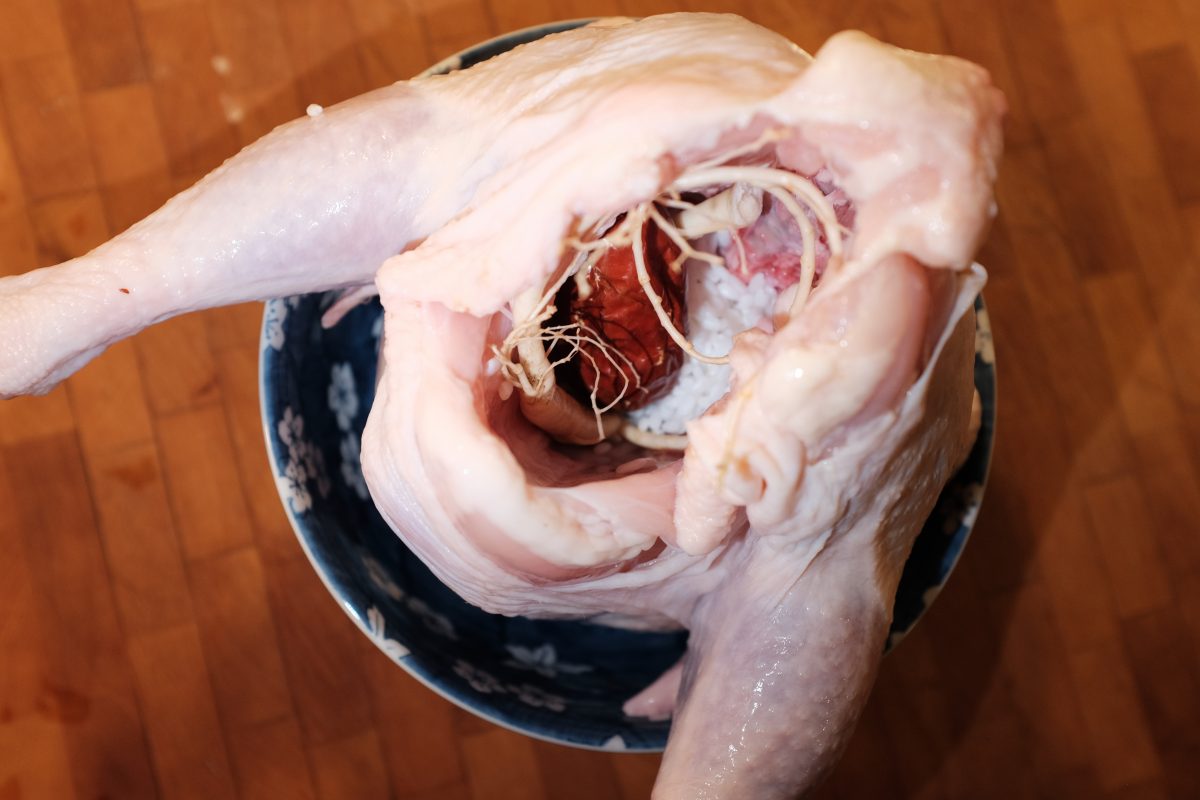
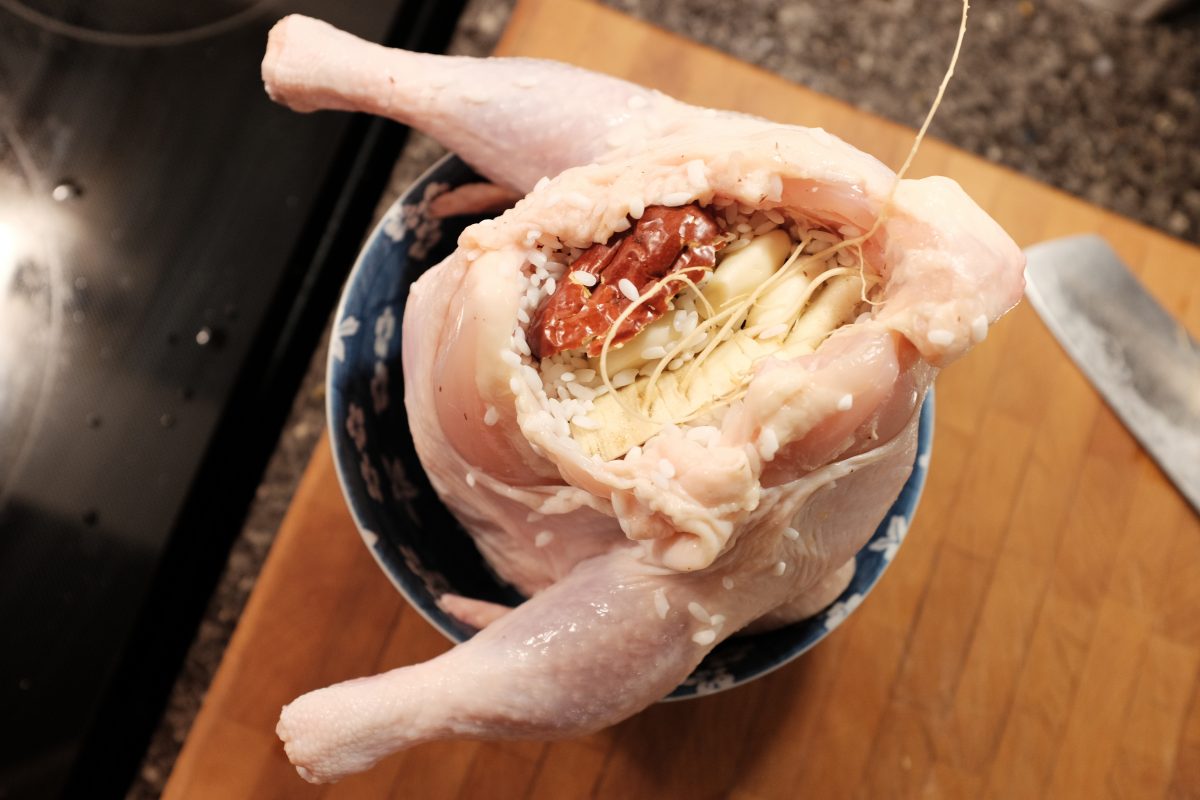
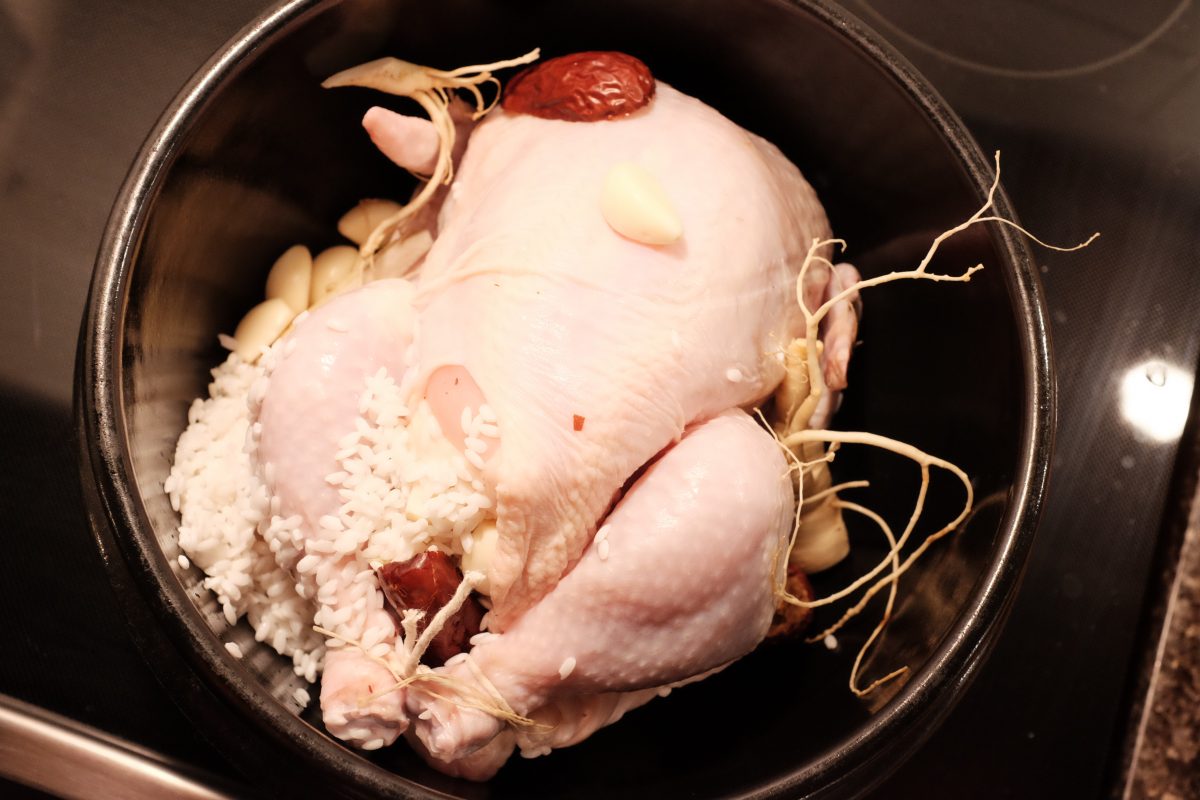
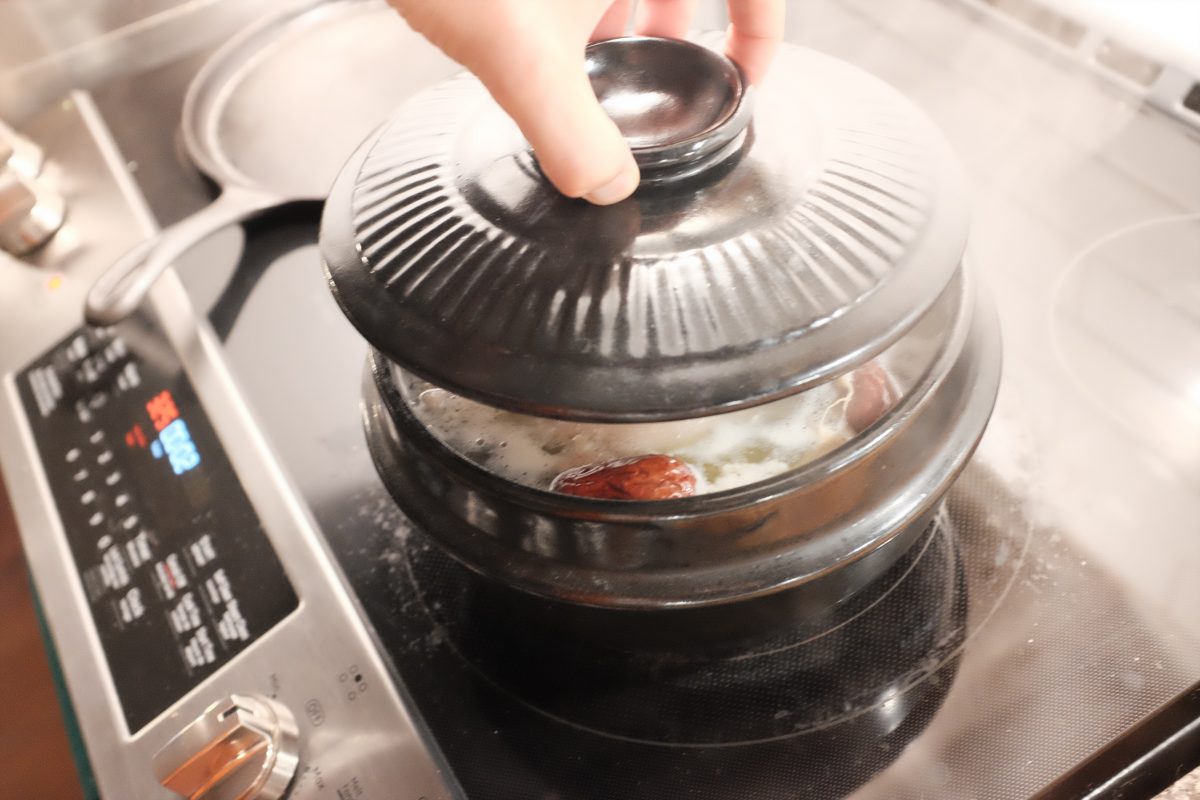
I made this recipe in a single large pot with a small whole chicken to eat family style. If you prefer, you can also make 2 separate portions out of this using the same amount of ingredients and 2 Cornish hens instead. It looks prettier when you serve each person their own whole bird and it is a lot less messy. Chickens are quite a bit less expensive and easier to find than Cornish hens so this is what I usually use.
- 1 small to medium chicken (or 2 cornish hens)
- 15-20 whole cloves of garlic
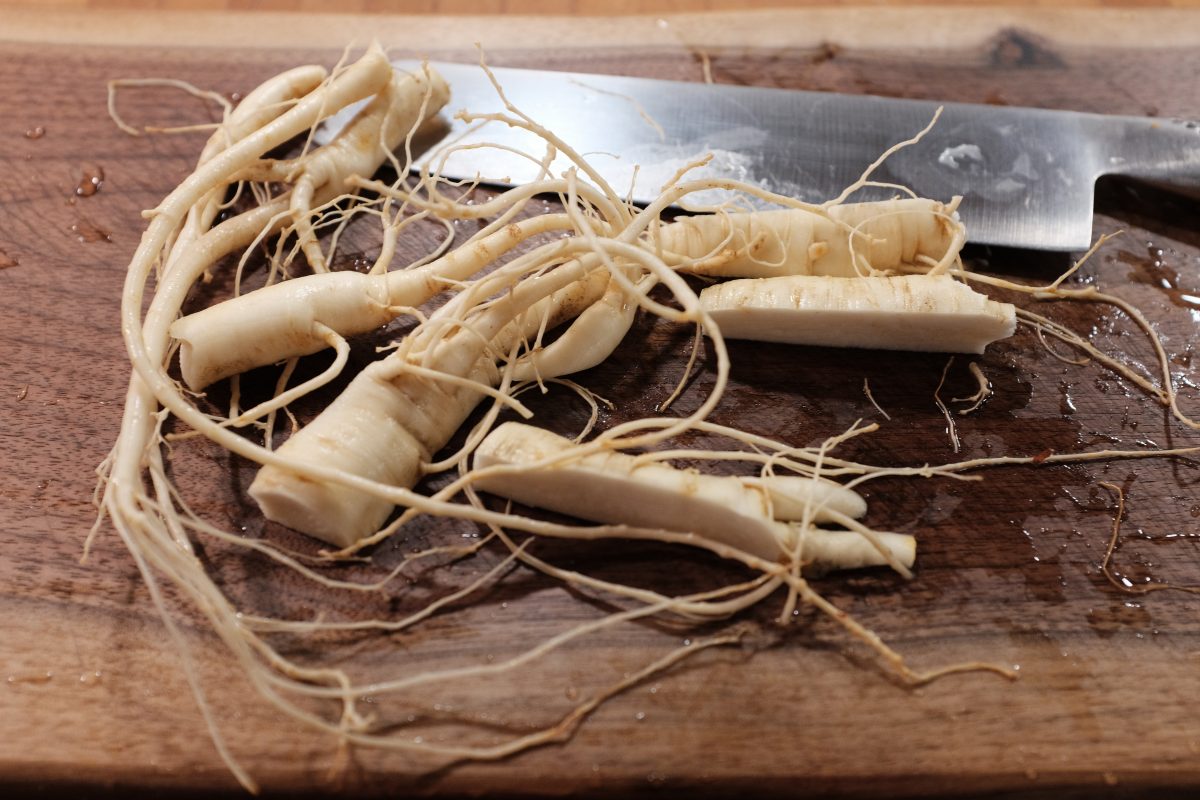
- 2 fresh ginseng roots
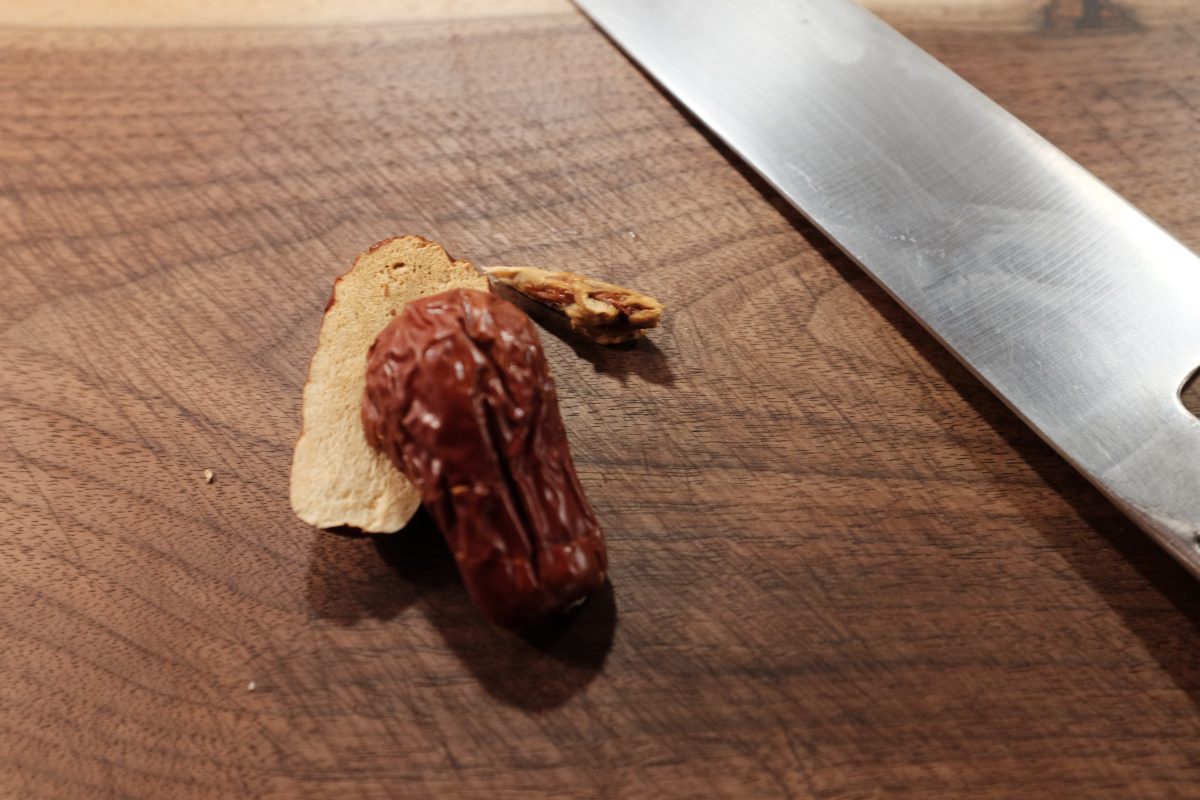
- 4 dried red dates (jujubes/daechu)
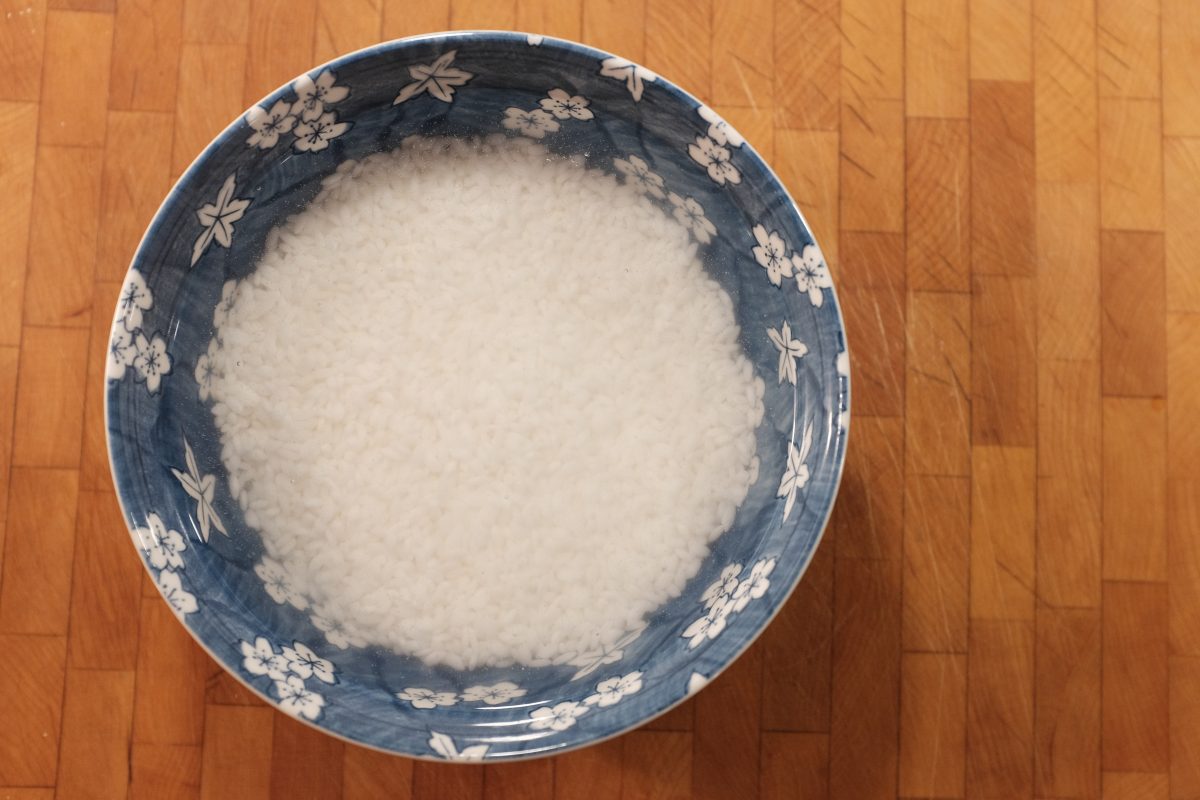
- 1 cup short grain rice (you can substitute with glutinous rice/chapssal)
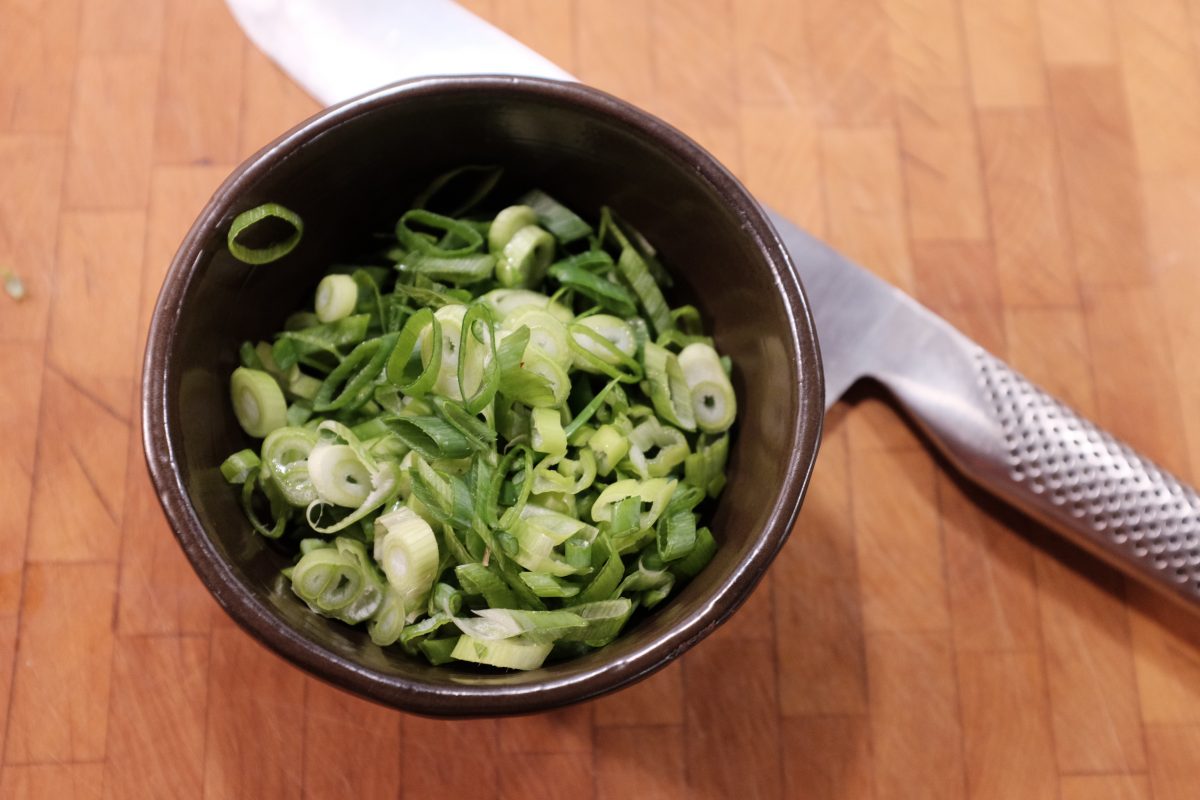
- 2 green onions
- salt and pepper
I am always able to find fresh ginseng at Asian grocers. Same goes for red dates: you may see these called Chinese red dates, jujubes or daechu (대추).
***At the end of the soup recipe there is a recipe for dipping sauce to go with it. Scroll to the bottom for that one. You can make it while your chicken is cooking.
Process

Serving
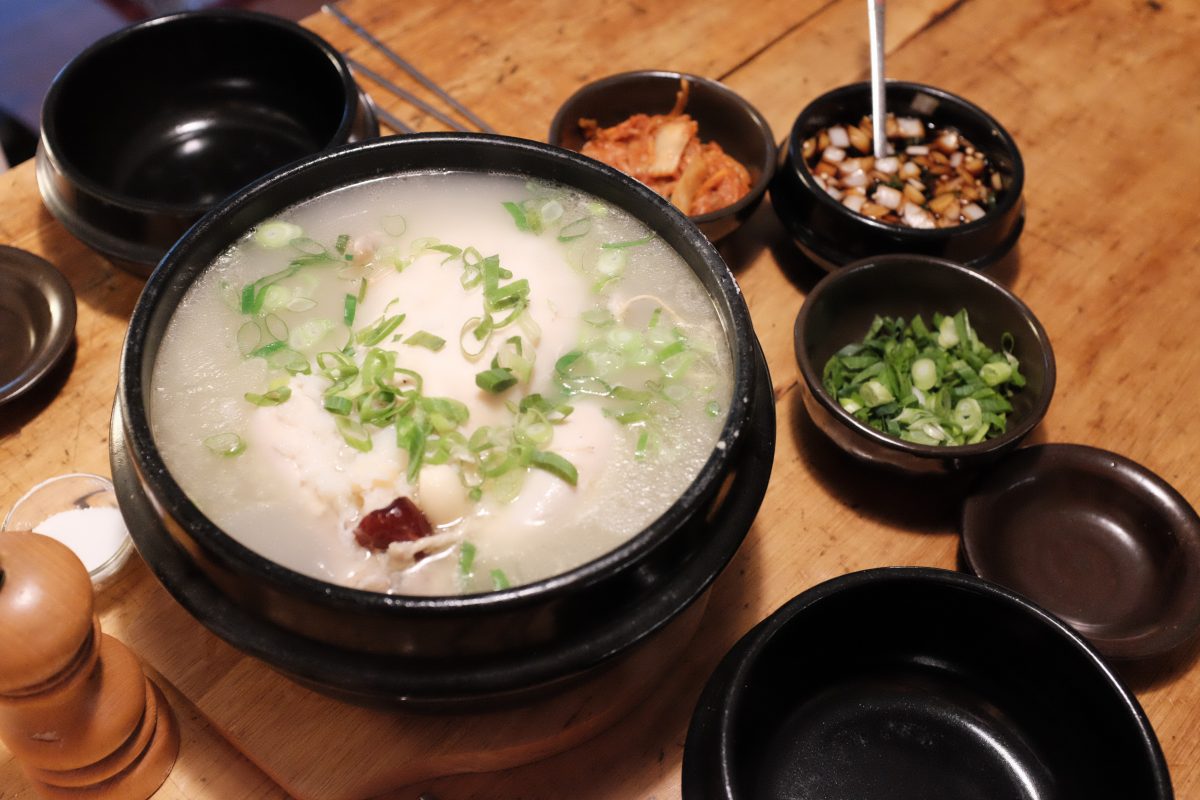
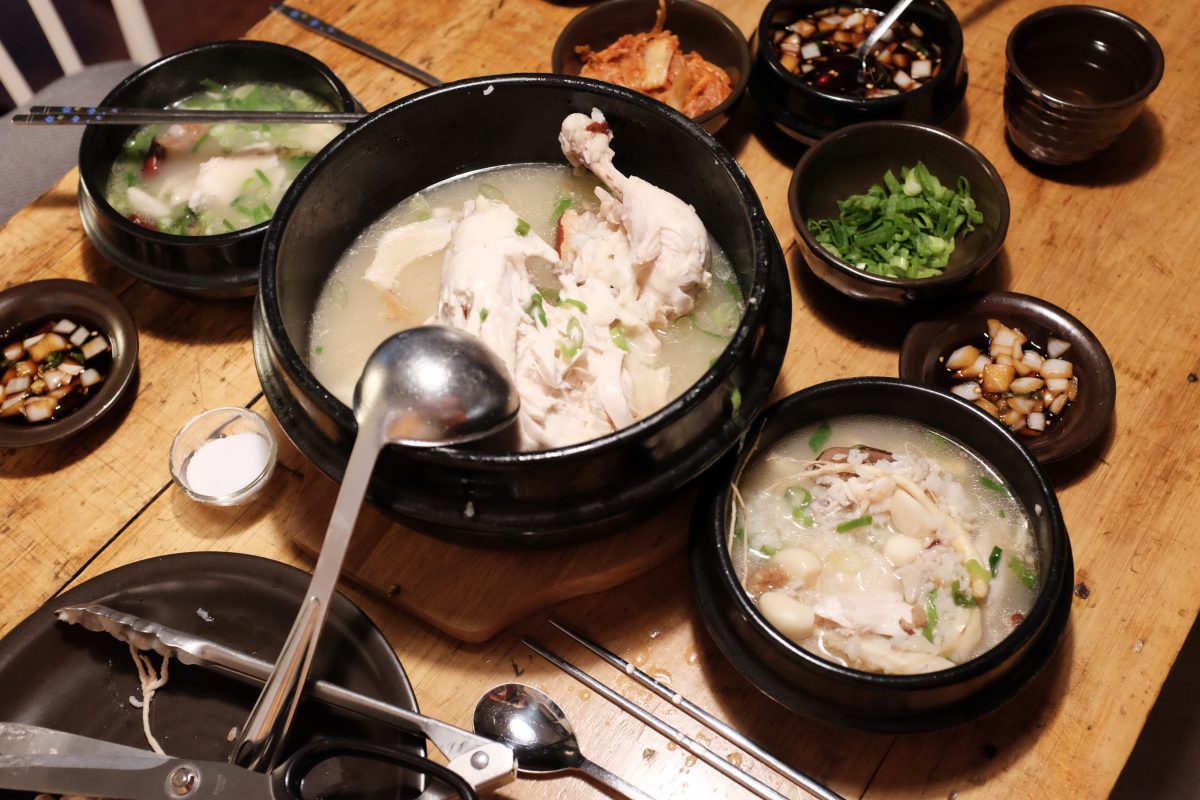
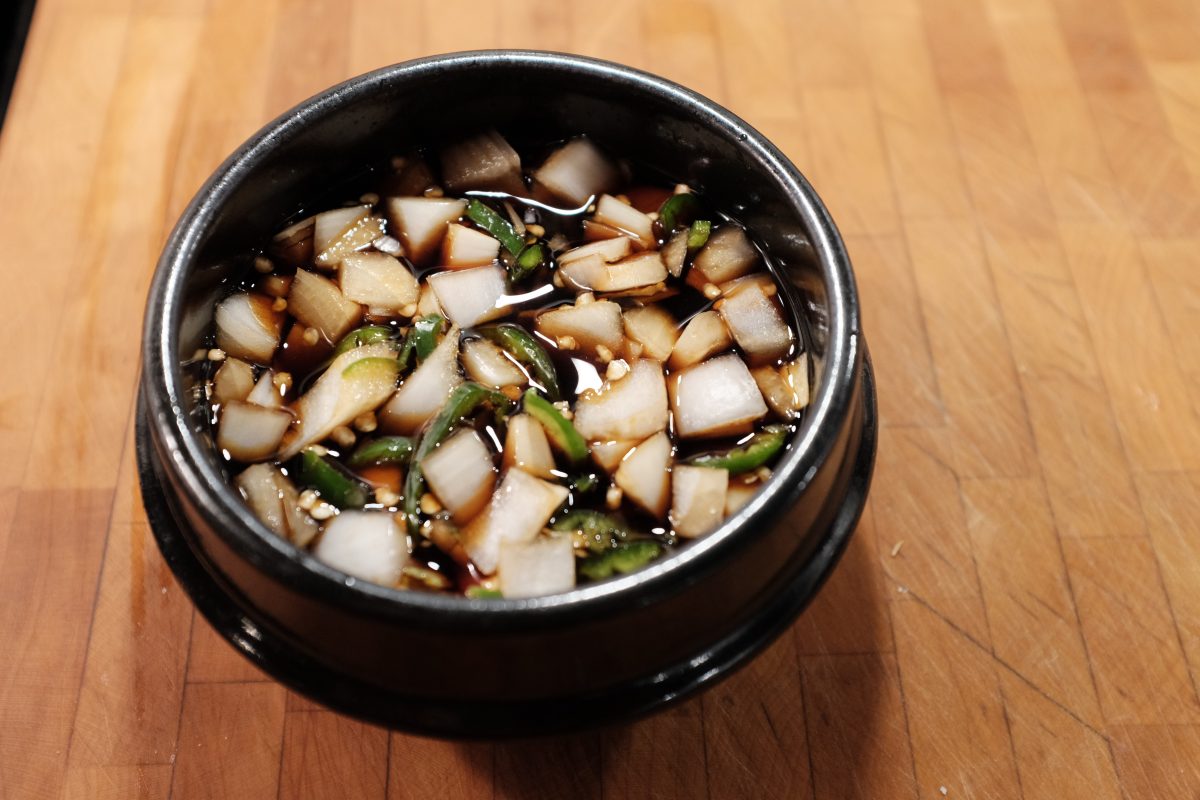
Soy and vinegar dipping sauce
Ingredients
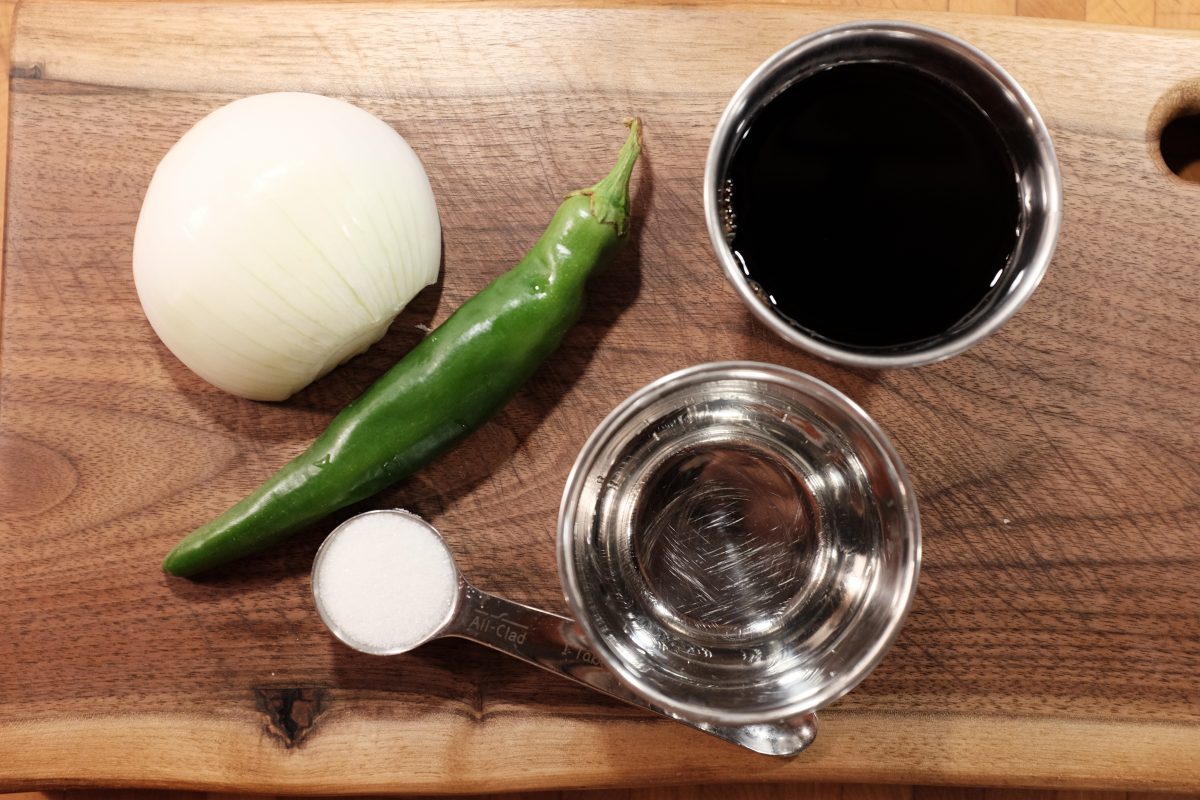
- 100ml (around 6 tablespoons) brewed soy sauce
- 50ml (around 3 tablespoons) white vinegar
- 12-13gr (1 tablespoon) white sugar
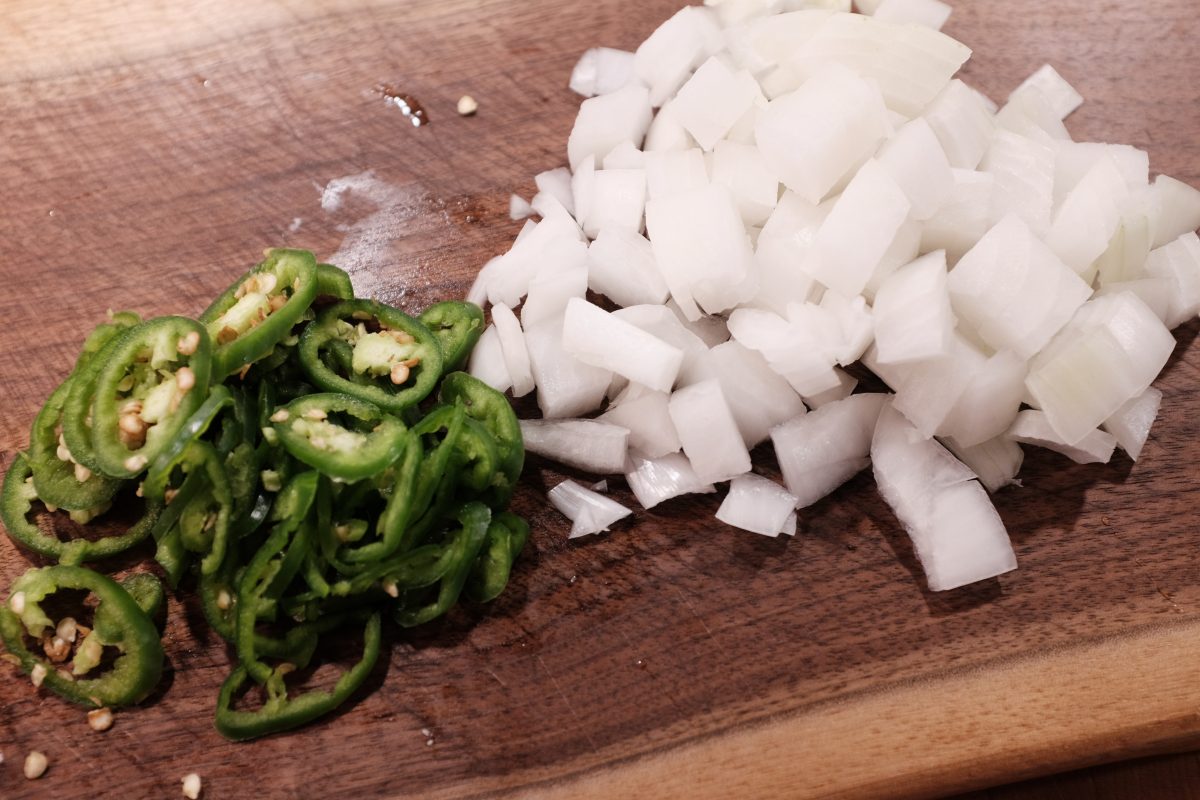
- 1/2 medium white onion
- 1 green long chile or jalapeño
I like regular harsh white vinegar for this recipe. You can substitute rice vinegar or apple cider vinegar but I would avoid using wine vinegars. Use regular brewed (Japanese style) soy sauce, not Korean soup soy sauce. Use an equal amount of honey if you prefer it over white sugar. You can leave out the chili altogether but, I would recommend just taking the seeds out if you don’t want any spice. The “greenness” of the chili adds alot of flavour here.
Process
This is one of my favourite soups. Hot and satisfying, it is especially good when you are feeling a little sick or run down. It is one of those meals that seems to instantly fortify the body much like my other favourite seolleongtang.
If you need a homemade kimchi recipe to go with any of your Korean cooking, click here.
If you have any comments or questions, please leave them below. Thanks for reading.
If you enjoy the content and would like to contribute towards website maintenance and development, you can make a donation here.
Vegan Napa Cabbage Kimchi
This is a tested recipe for anyone who does not eat meat, anyone with shrimp allergies or anyone who does not like the fishy taste of fish sauce. Once this recipe ferments, you will have a tasty vegan kimchi that you can use just like any other kimchi. It is a variation on a cut kimchi recipe that I posted previously. If you are interested in making a kimchi with all the seafood included or if you are interested in more information about kimchi in general, you can find that by clicking here.
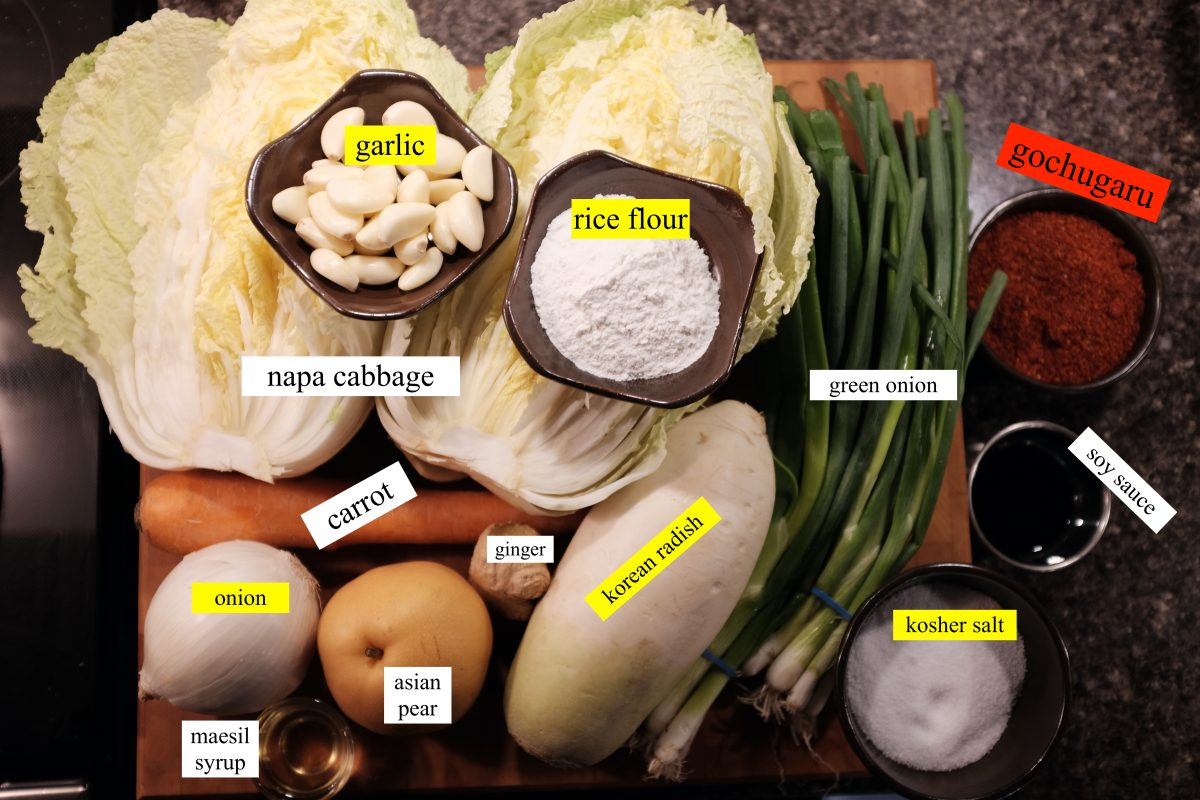
Ingredients
- 1 large (2kg) Napa Cabbage
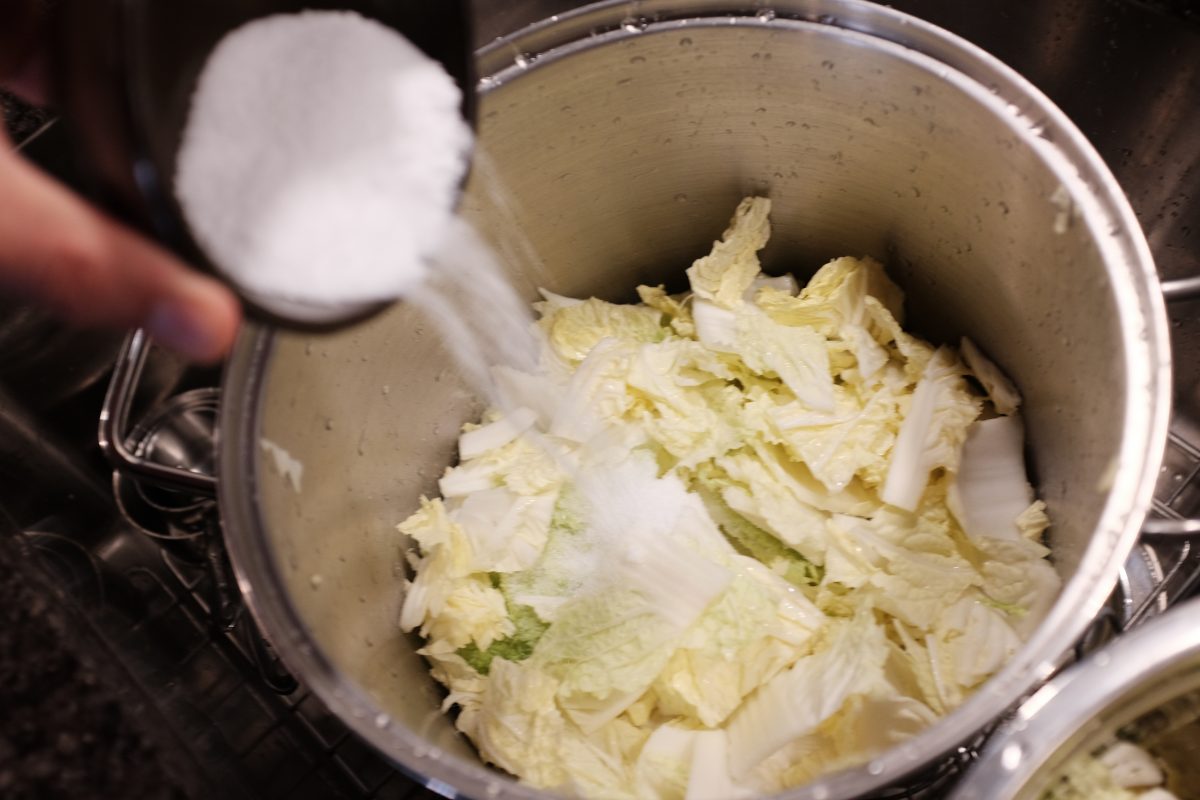
- 80 grams/3oz (around 1/2 cup) Diamond Kosher Crystal salt for brining
- up to 2 Tablespoons kosher salt for seasoning (not for brining…save this for later)
- 1 tablespoon soy sauce
- 275ml (1 1/2 cups) water
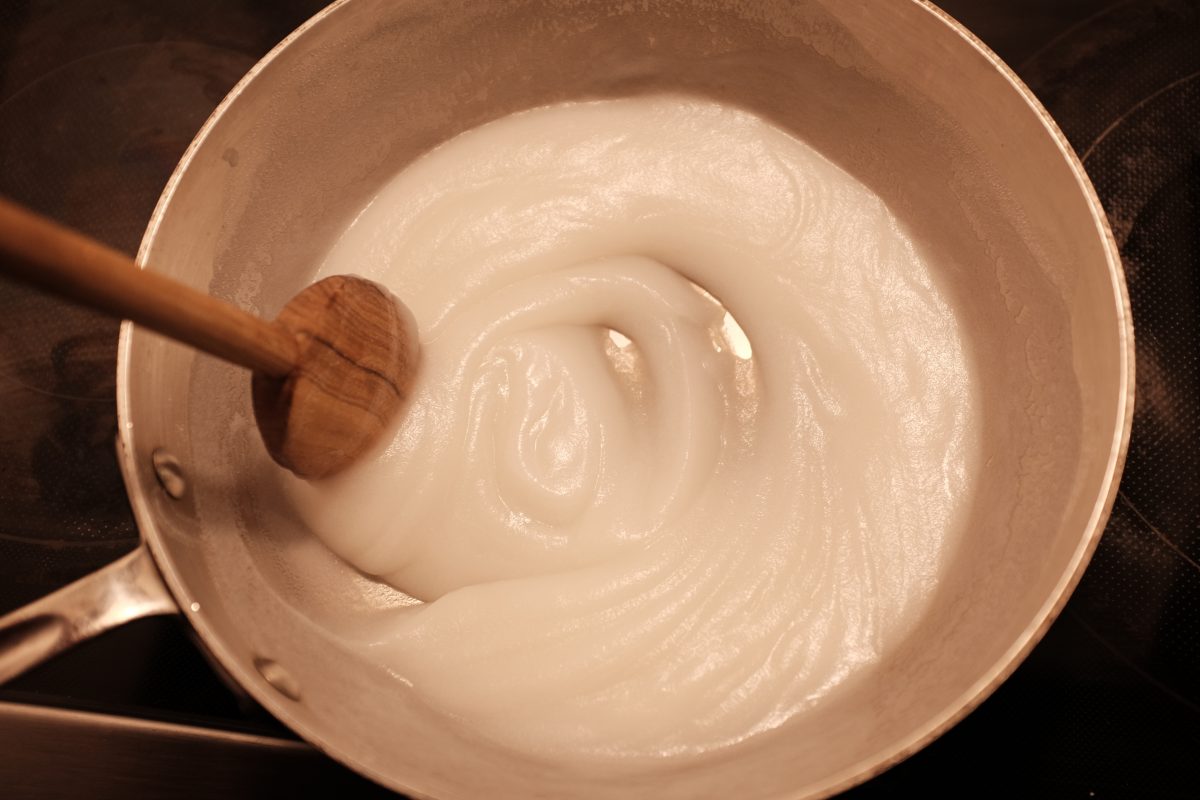
- 1/4 cup rice flour
- 1 tablespoon white sugar or maesil plum syrup
- 1/2 cup peeled garlic cloves (around 20)
- 1 tablespoon ginger peeled and sliced
- 1 white onion peeled and chopped
- 1 asian pear or apple peeled and chopped
- 1/4 up to 1 cup (30-120 grams) korean chili flakes (gochugaru)
- 2 bunches (12 or so) green onions sliced
- 1 cup carrot matchsticks
- 1 cup korean radish matchsticks
Try to weigh your salt rather than measuring by cups. Diamond Kosher is a popular salt in my area. If you live in the US, you may be using Morton’s. This salt is much saltier by the cup. Same goes for sea salt if this is what you are using. Whichever salt you use, it is better to weigh it. Avoid using table salt.
Rice flour/rice powder is just finely ground sweet rice. Mochiko is a popular brand but any brand will work.
Korean chili flakes are all very different from batch to batch. Some are mild and fruity and some are sharp and very spicy. It is better to start with less, taste, and then add more if you want it spicier.
Process
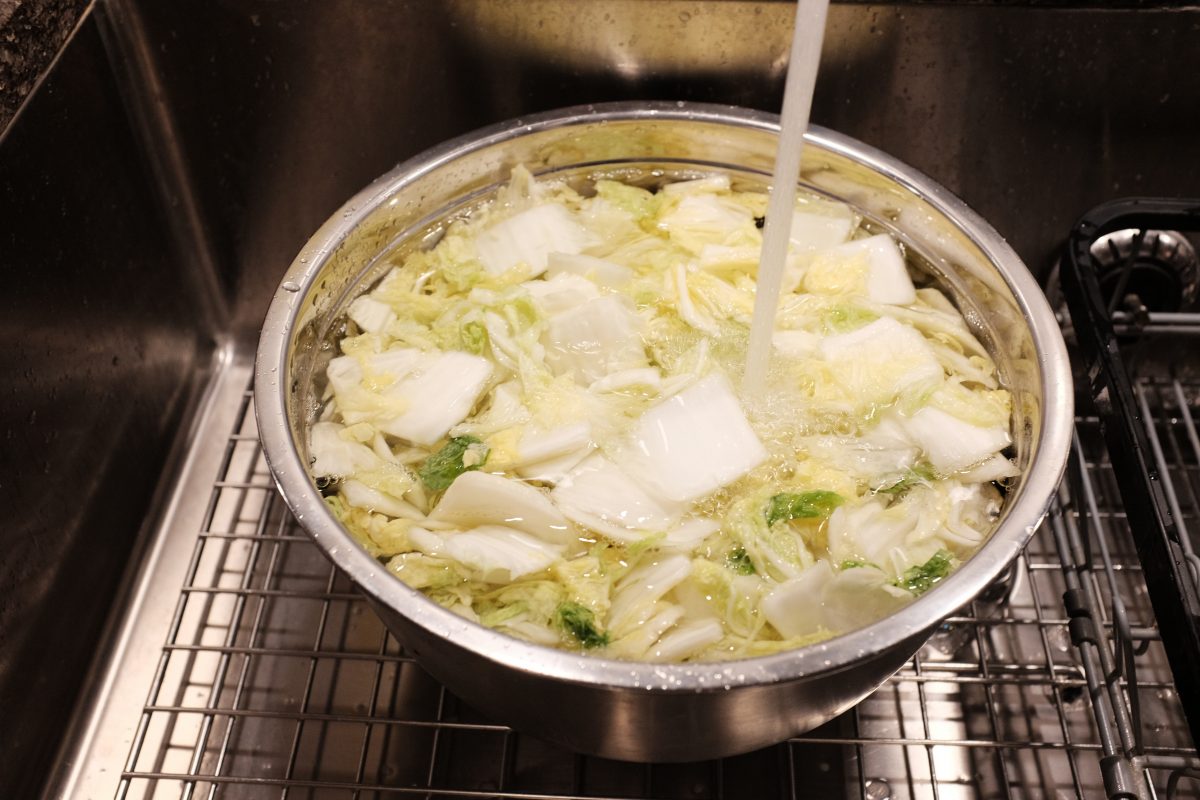
Cabbage preparation
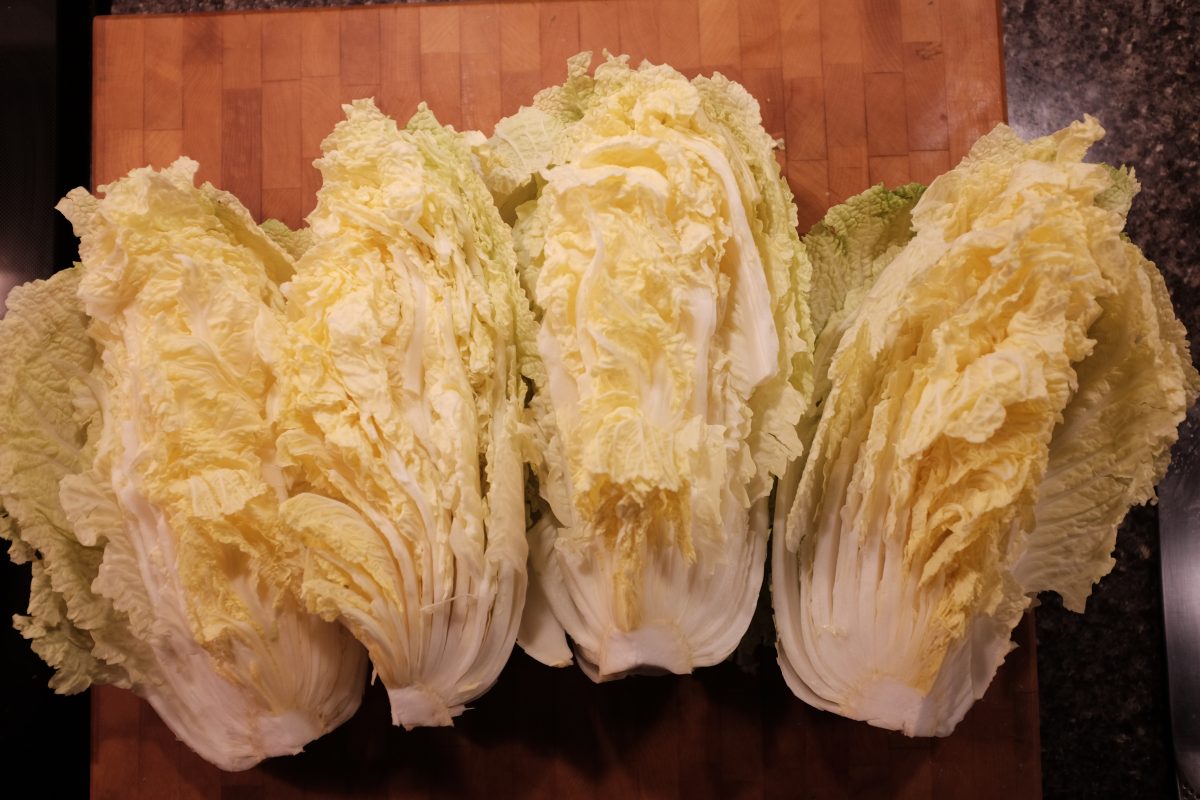
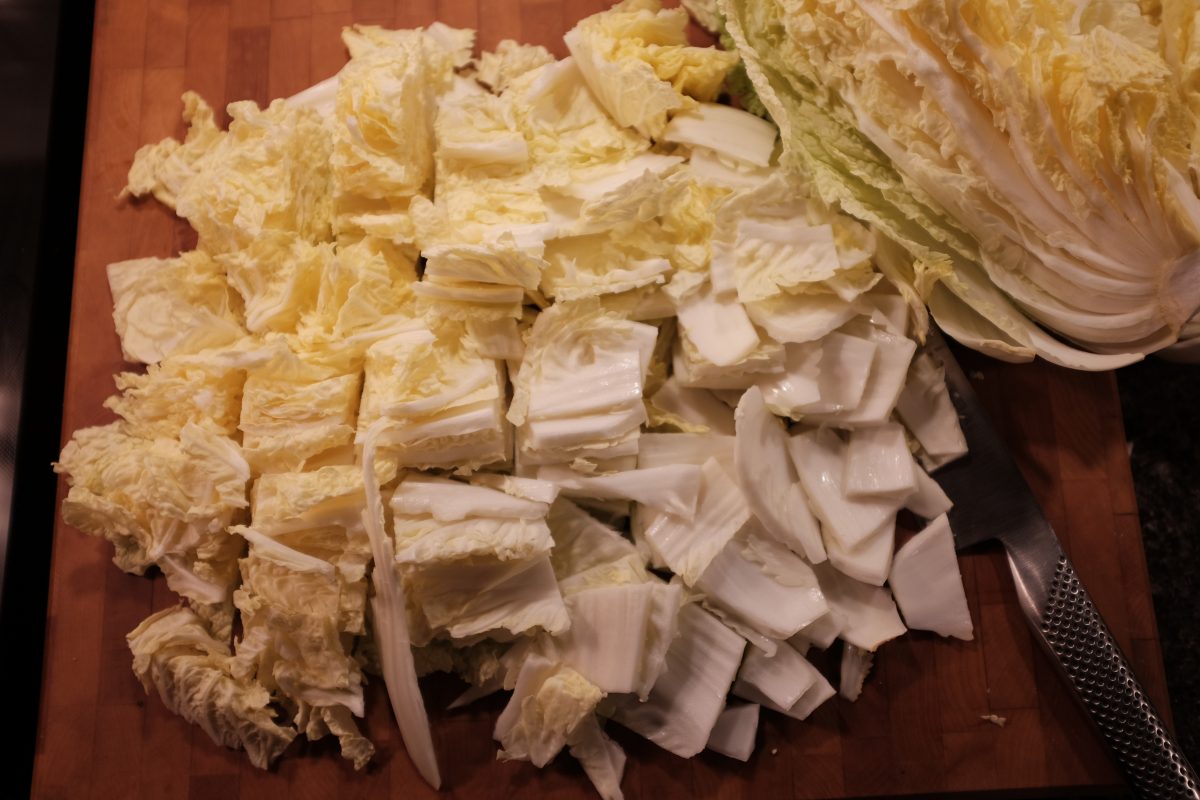
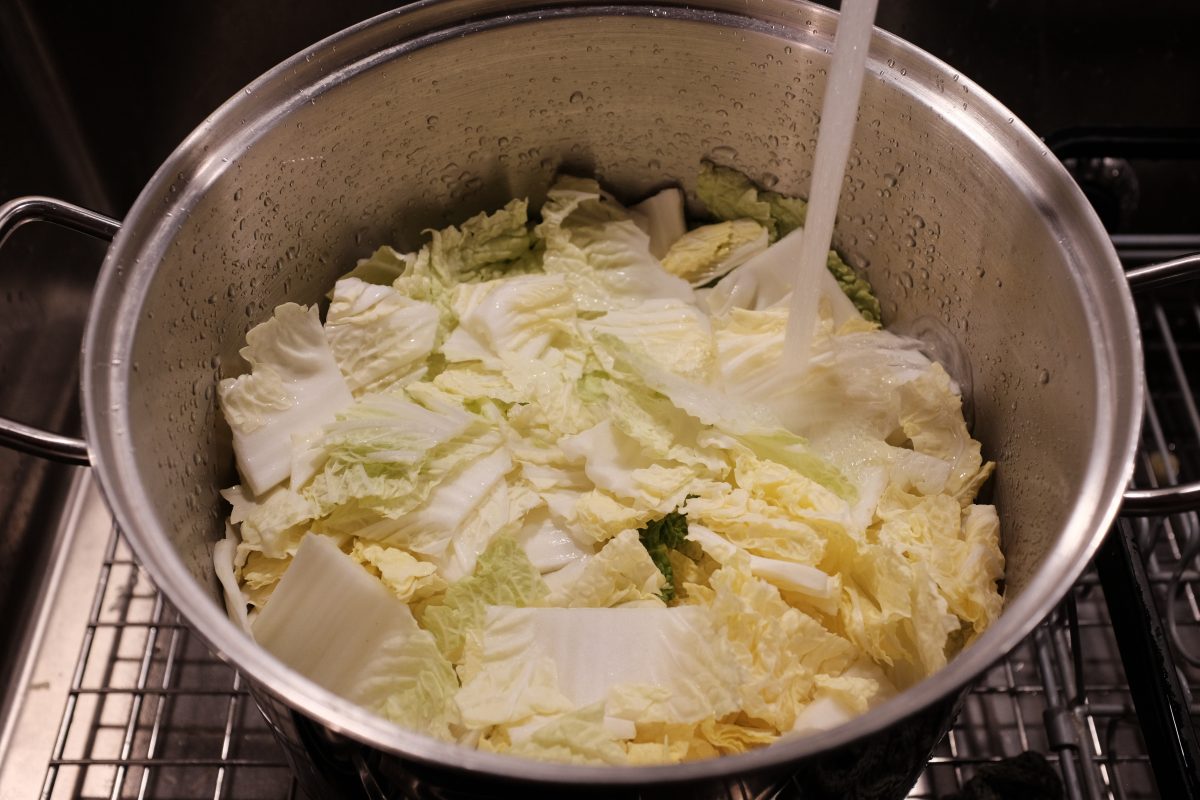
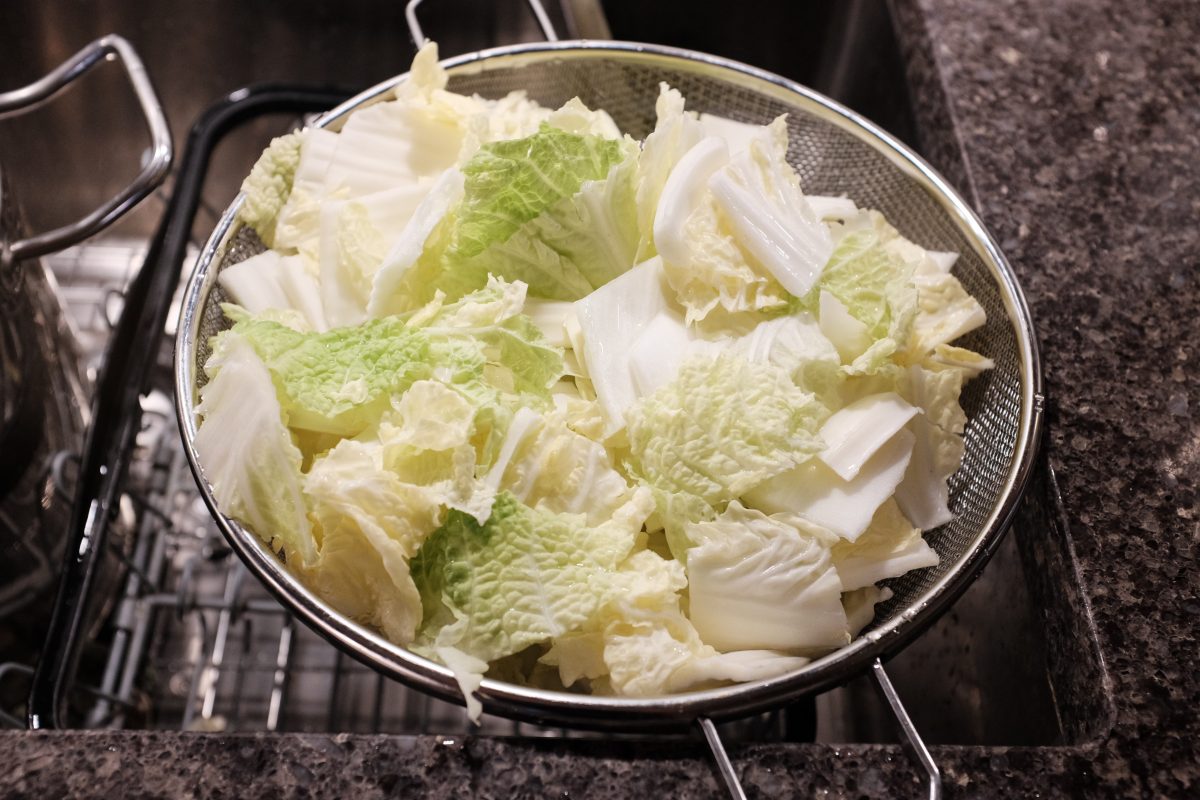
Brining
Making the kimchi paste
While the cabbage is brining, make the kimchi paste:
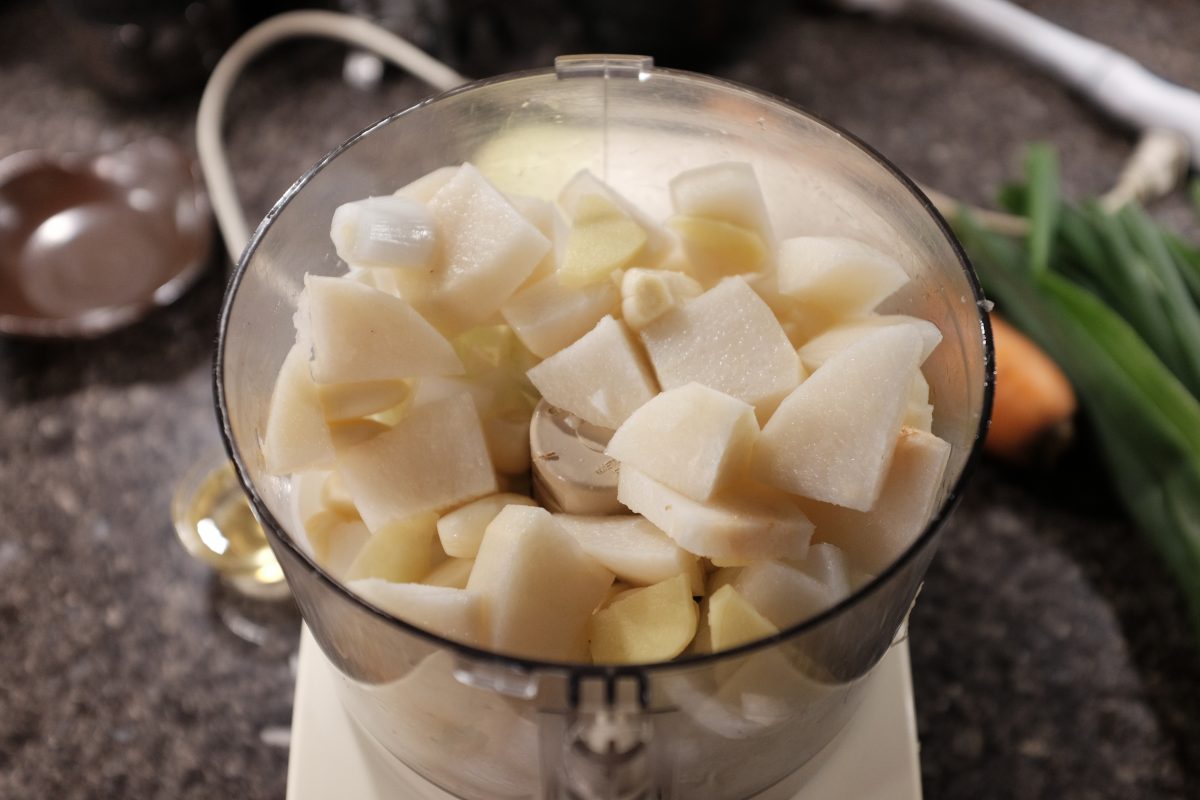
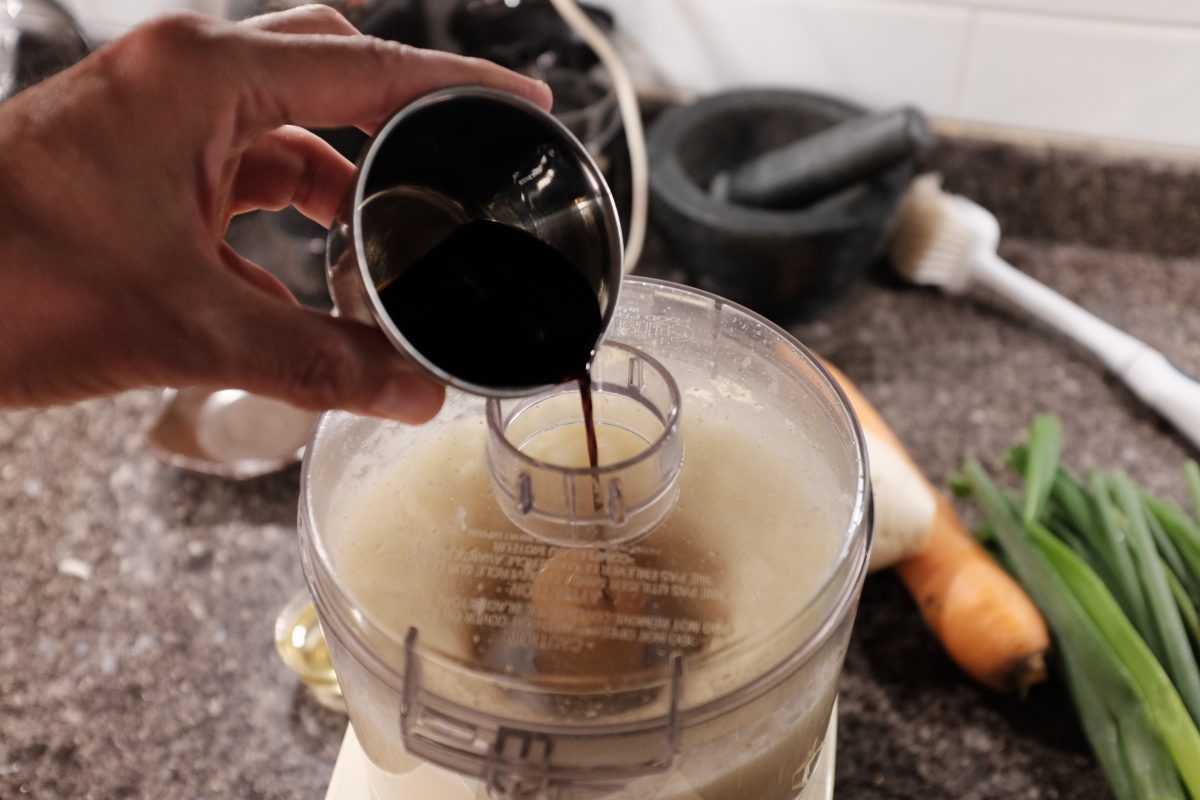
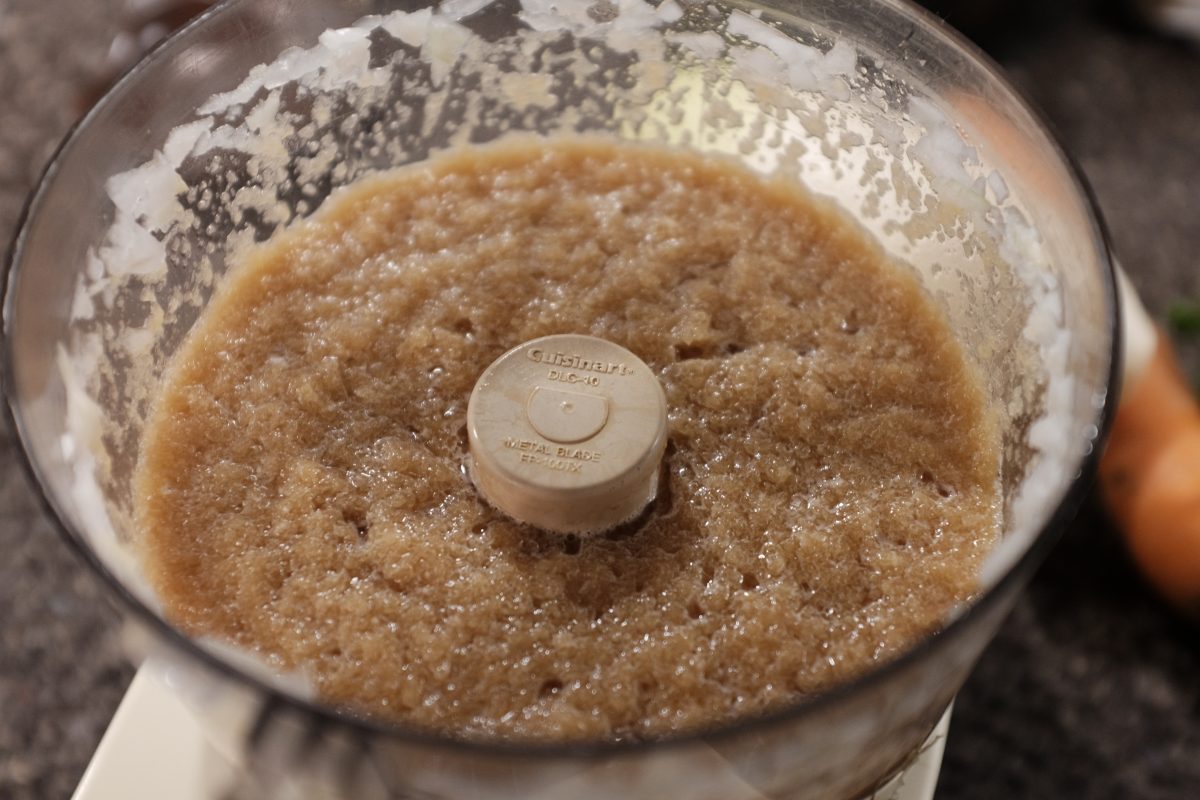
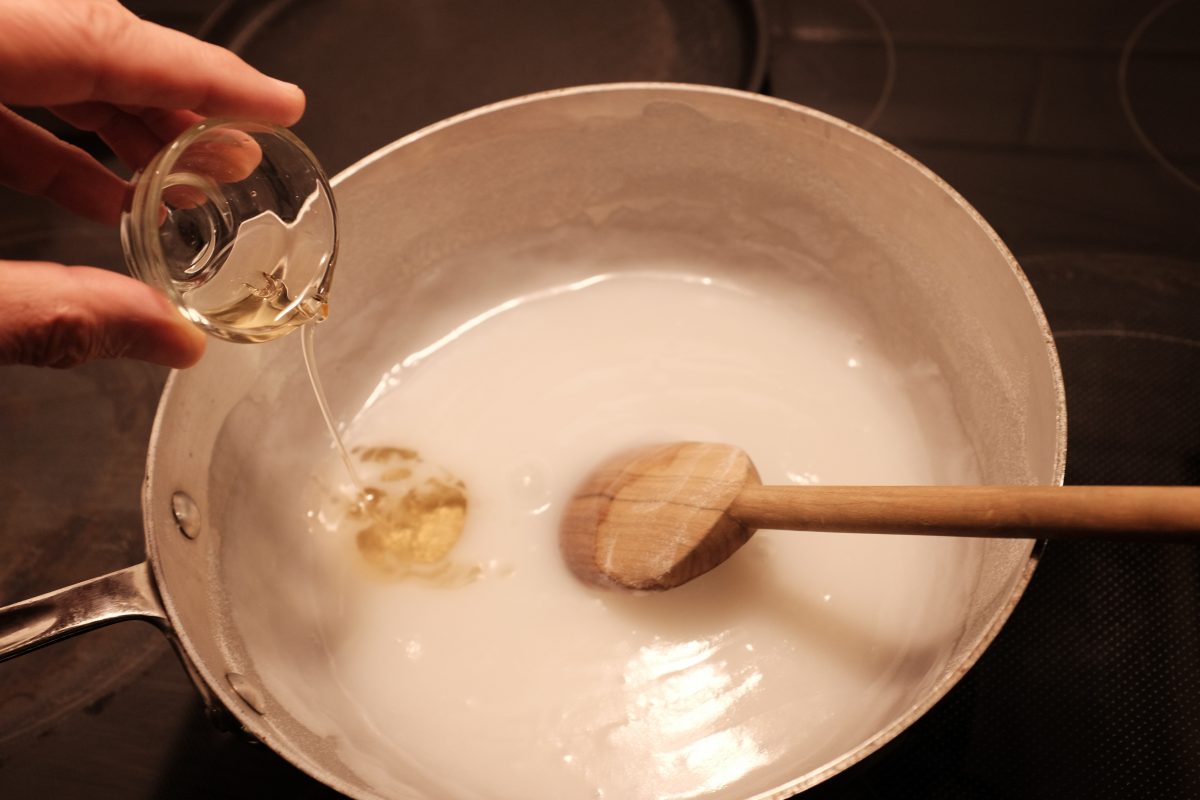
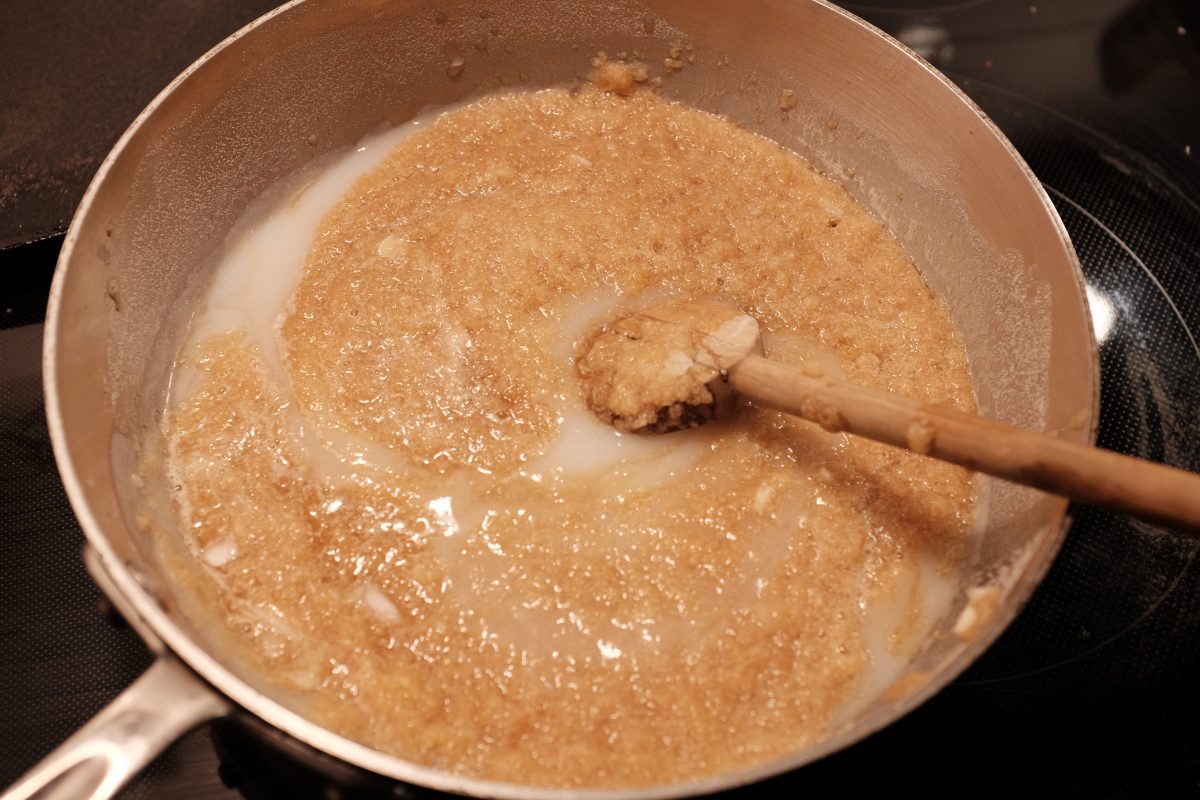
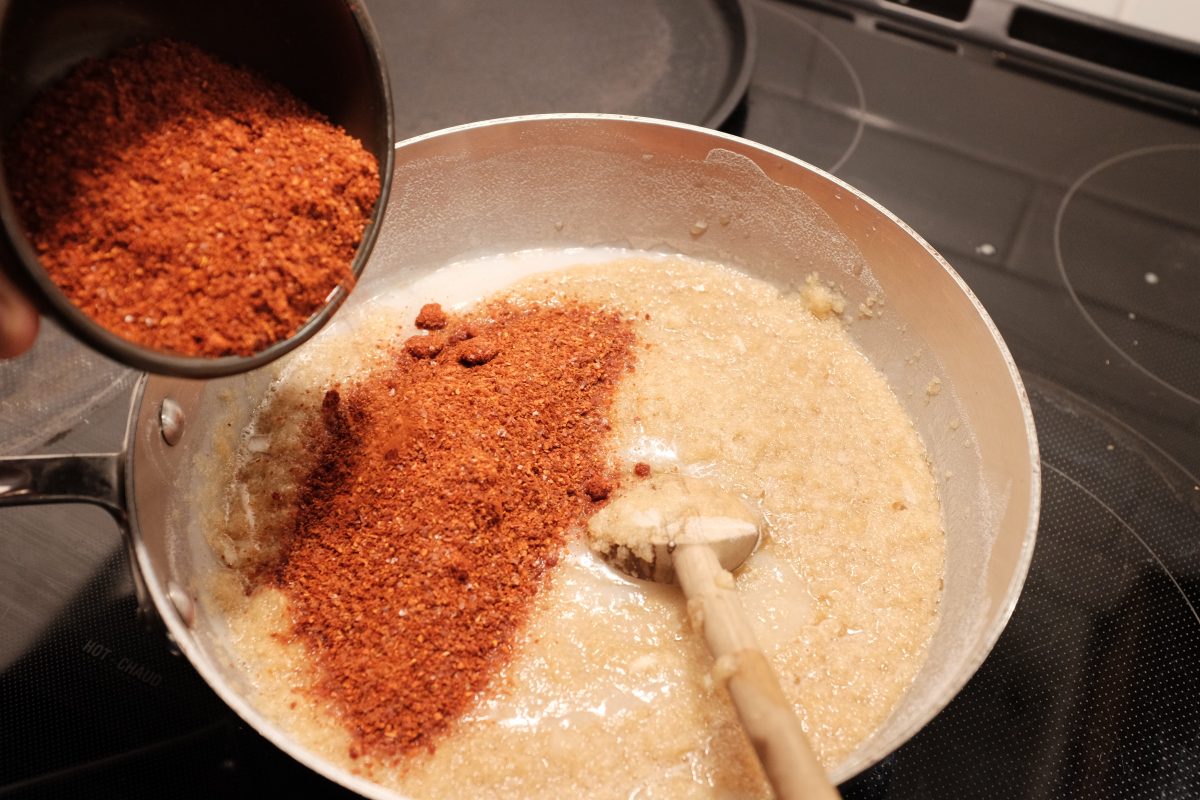
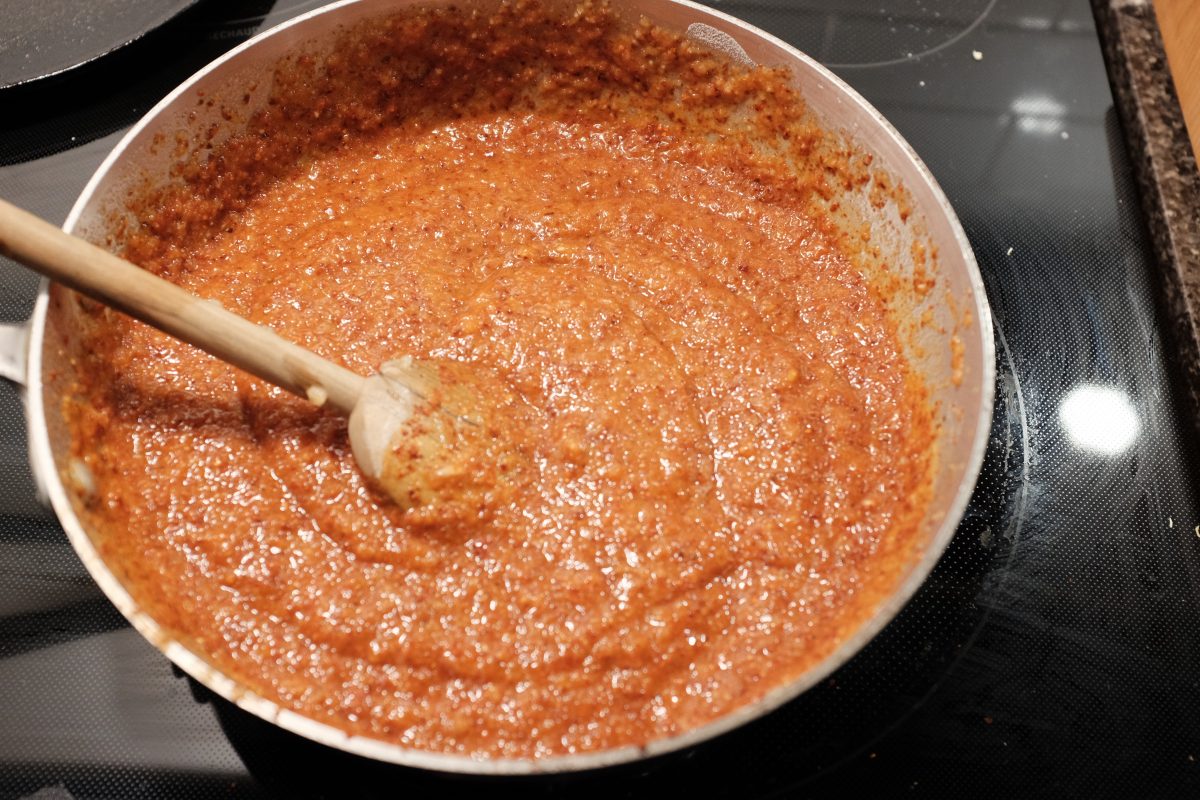
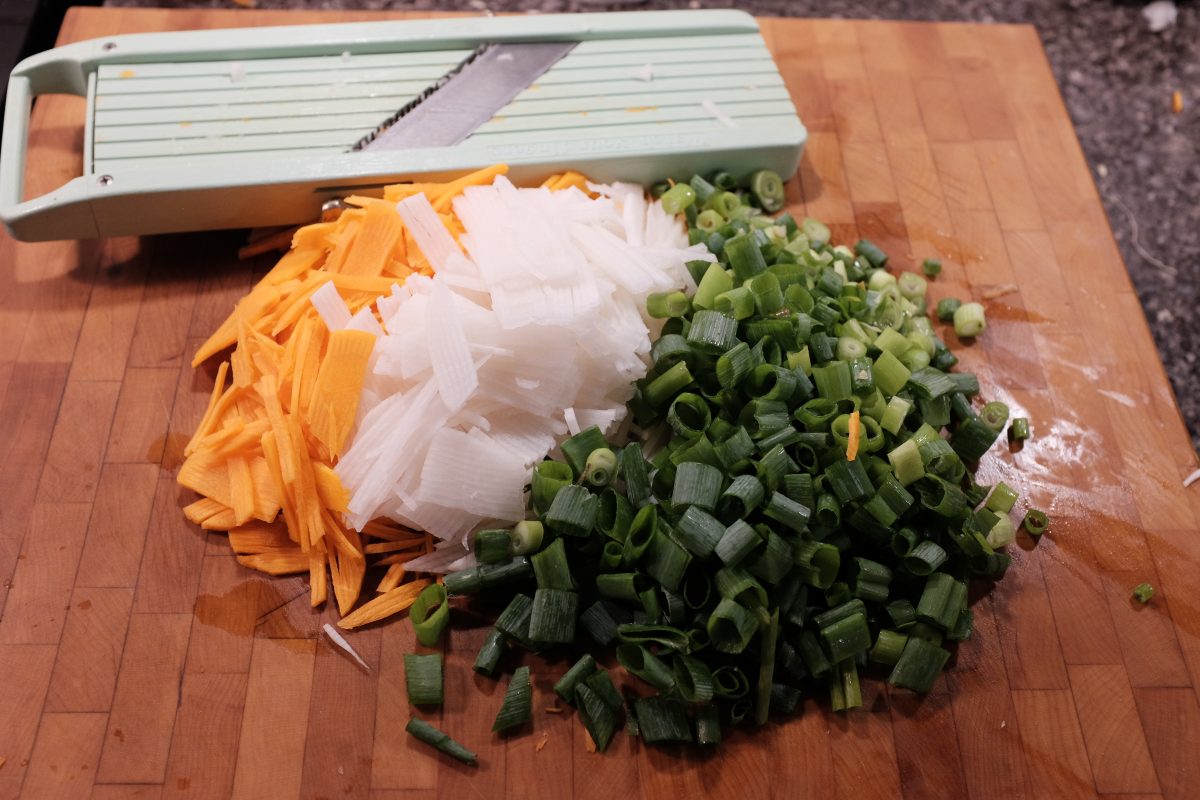
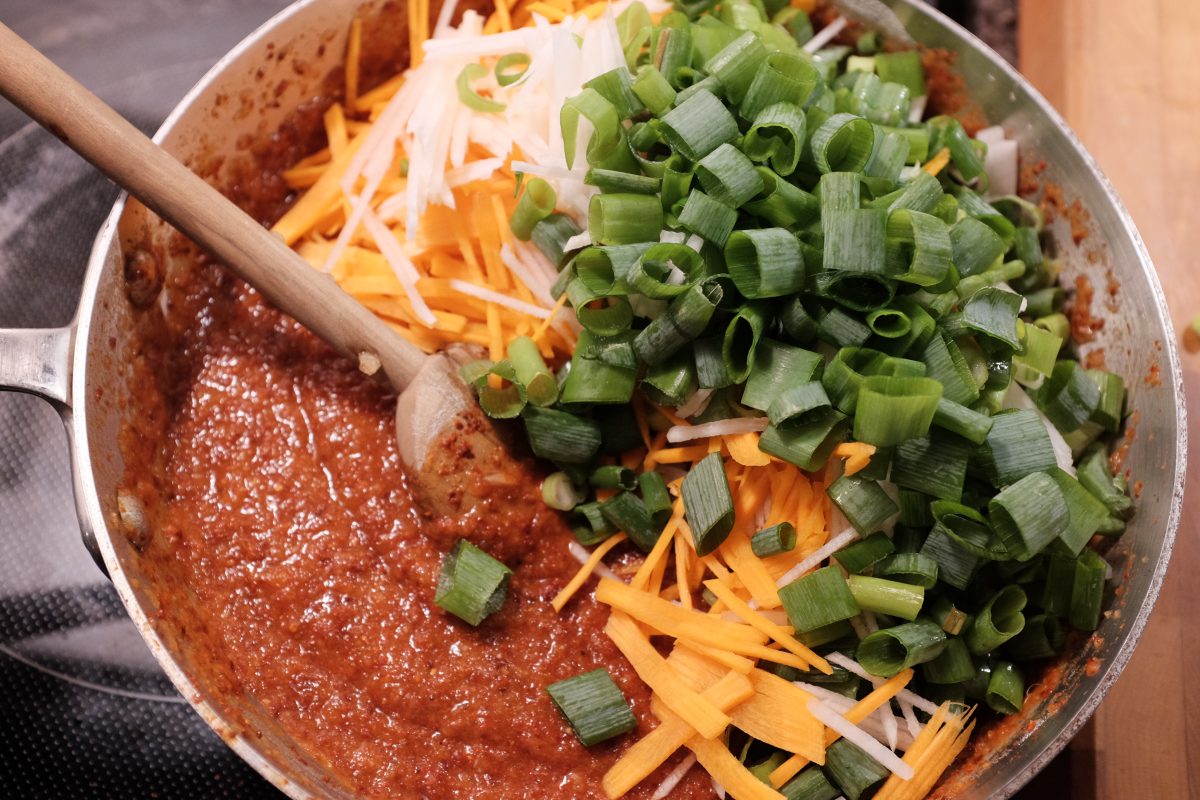
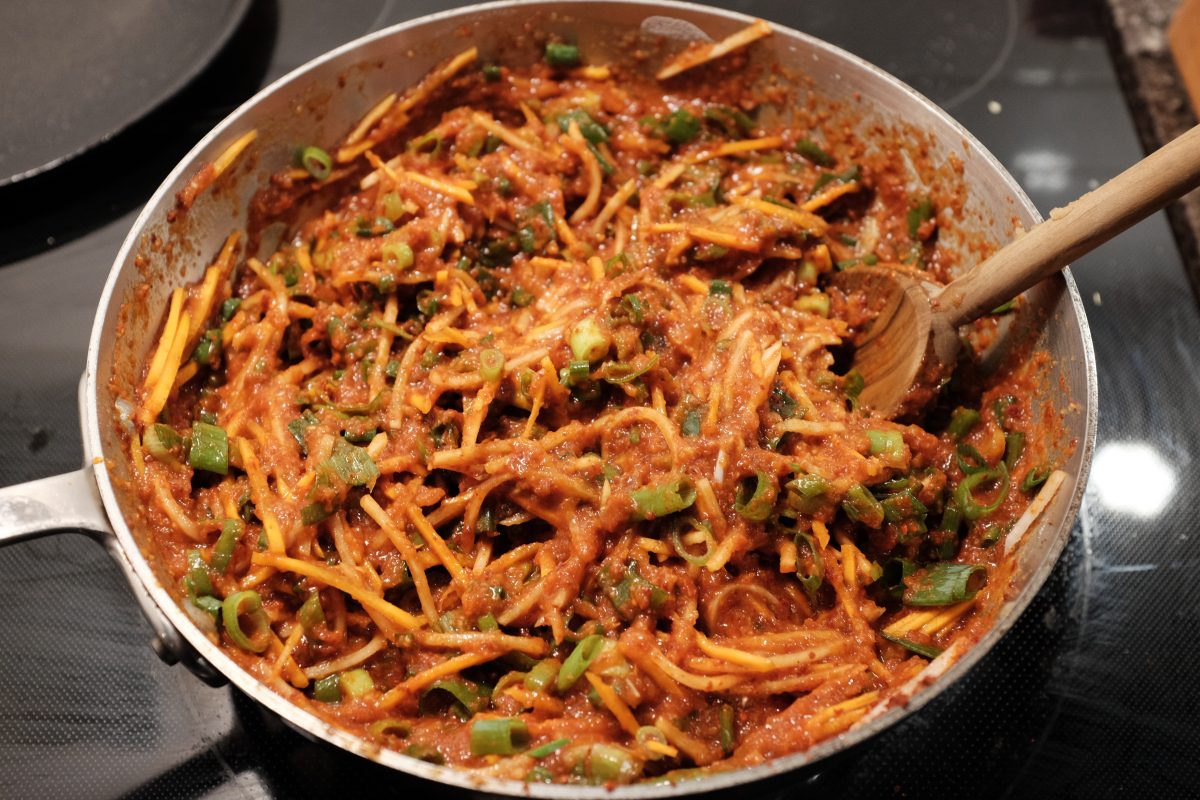
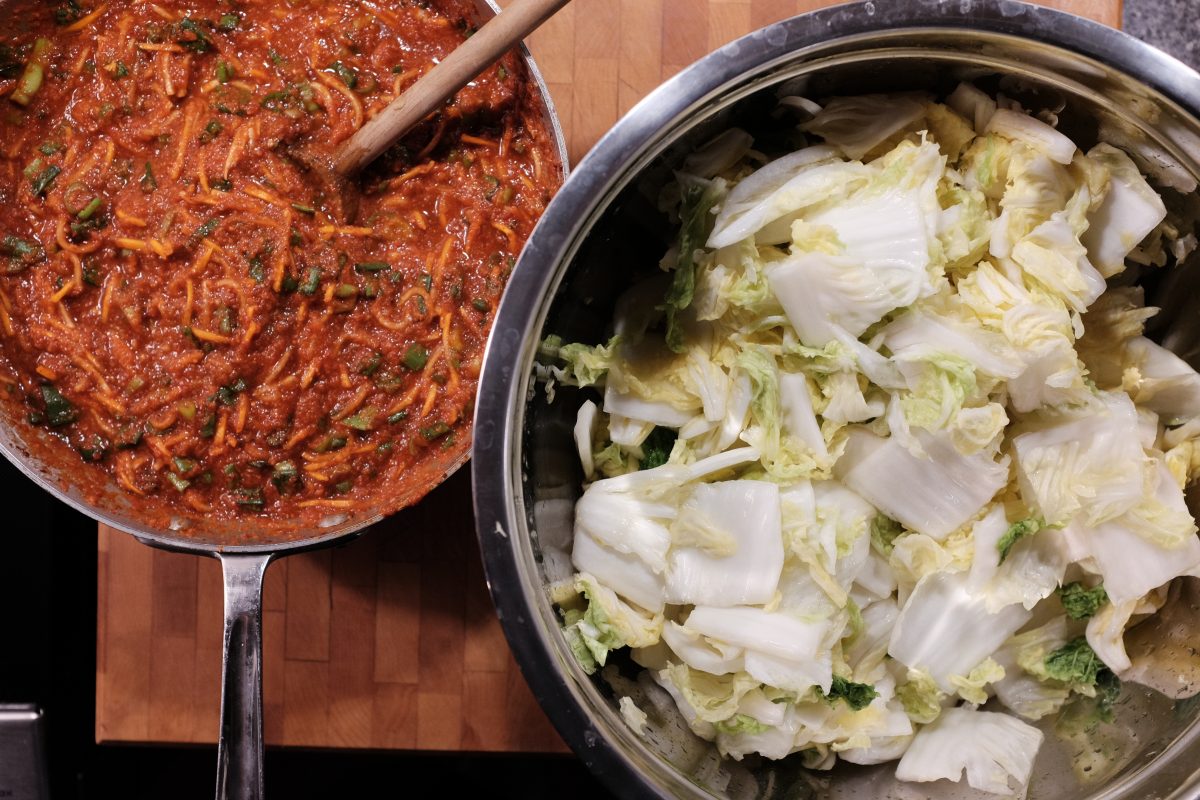
Put it all together
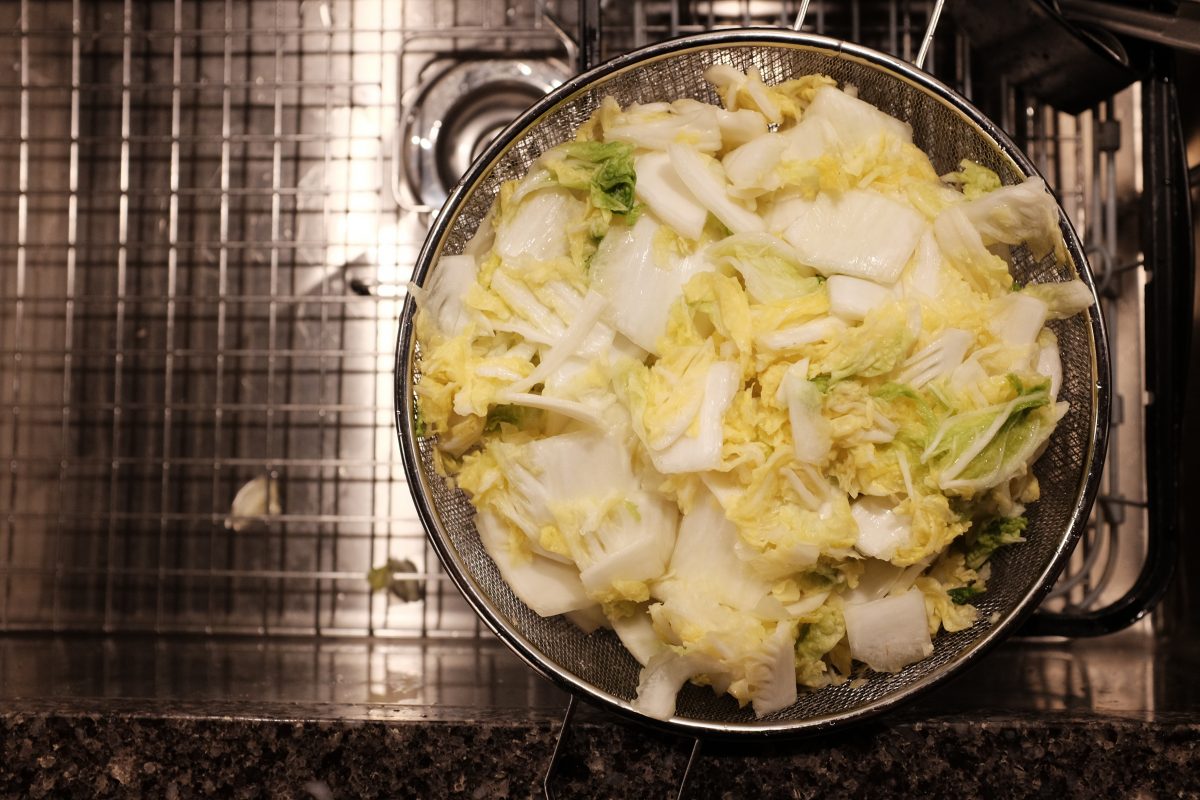
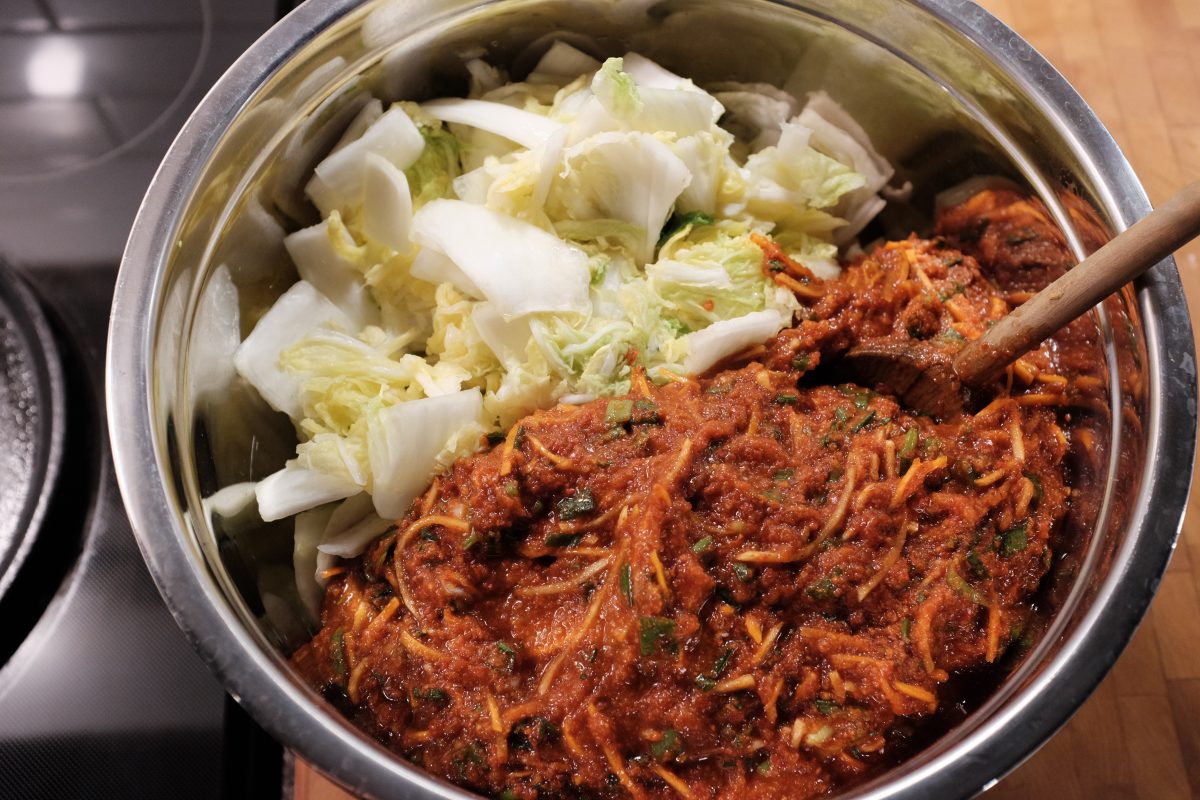
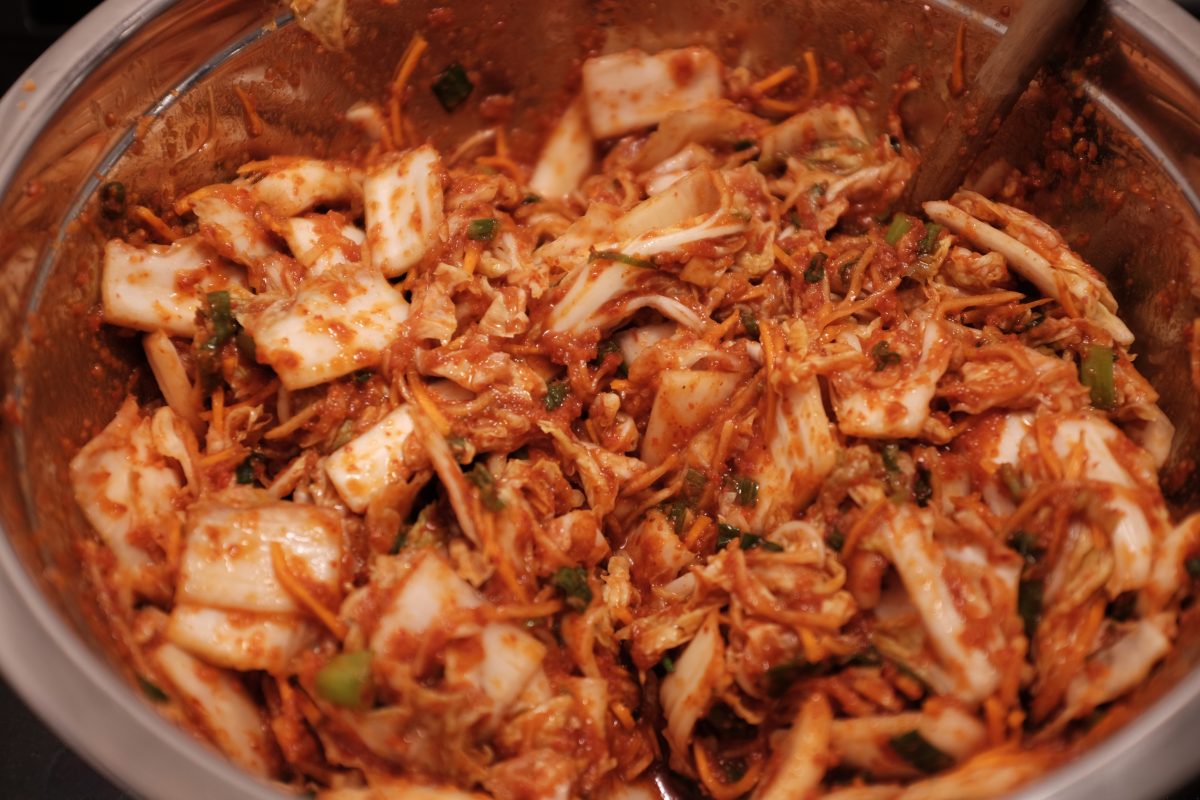
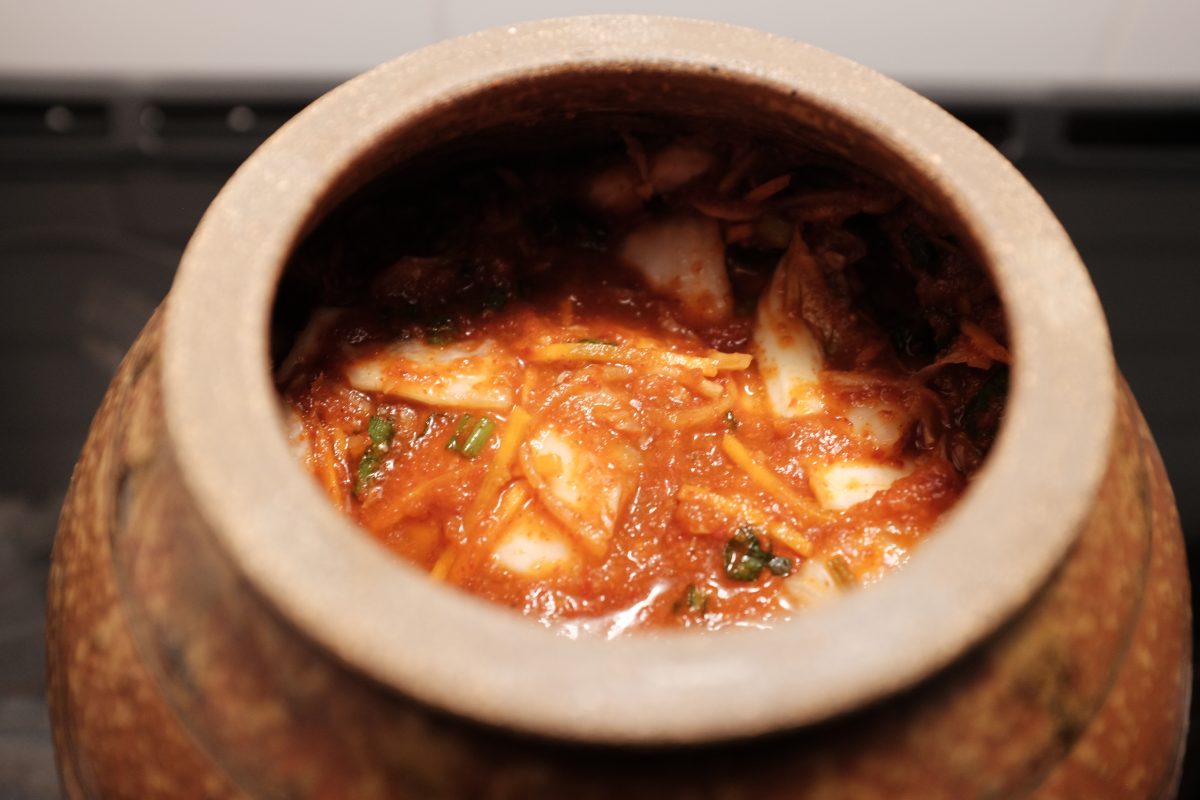
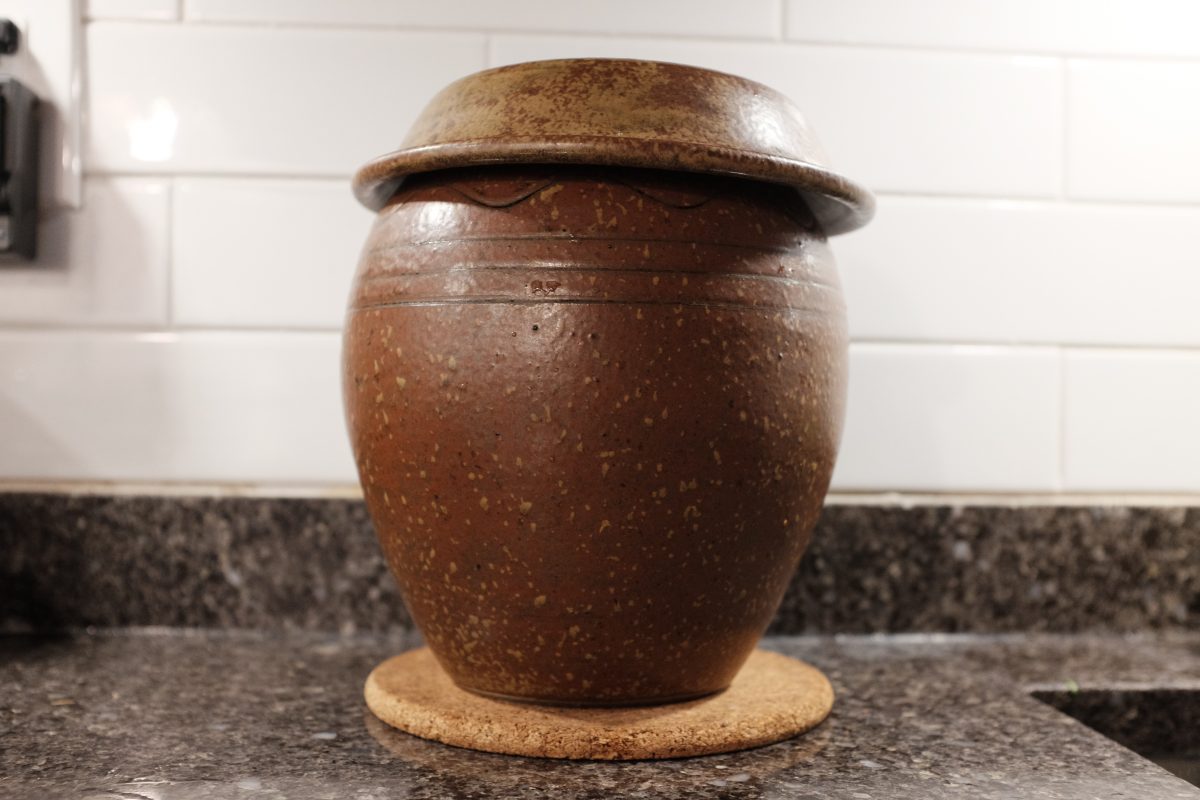
Now what?
For ideas on what to do with your kimchi take a look at this post.
If you have any questions or comments, please leave them below. I am always happy to hear from you.
Thanks for reading!
Seolleongtang
Seolleongtang is the first meal I ever ate in Korea. After a 15 hour flight and a long train ride, I finally arrived at my Insa-dong hotel sore, exhausted and hungry. The closest restaurant was directly behind the hotel, attached to the parking lot. This unassuming restaurant turned out to be one of the oldest in Seoul: Imun Seolleongtang. I had a big hot bowl of this plain milky beef soup and within an hour I felt completely refreshed. This simple soup seemed to erase my body’s memory of being crushed in an economy seat for the last 15 hours. It was like magic.
Since then, I have been back to Korea many times and I always start and finish my travels with this simple meal. Imun Seolleongtang has since received Michelin recognition and so it is busier (and more expensive) than ever with lots of tourists coming in to snap photos for instagram and tiktok. The staff seem to take it in stride, brisk and efficient, though maybe somewhat less friendly than I remember nearly 10 years ago. Also gone is the sloppy bucket of juicy and chunky kkadugi in the middle of the table and the big basket of chopped green onion. These now arrive in less bottomless portions after you order. But, even though some things have changed, the food is still as delicious as I remember and I still go to Imun as well as another smaller family run Seollongtang restaurant nearby.
Homemade seolleongtang
Seolleongtang always seemed kind of mysterious to me. Where did that milky colour come from? How was this simple soup so nutty and delicious? It arrives at the table completely bland and unseasoned but the addition of a little salt and pepper, kimchi juice and green onion turns it into something deep and complex and unforgettable.
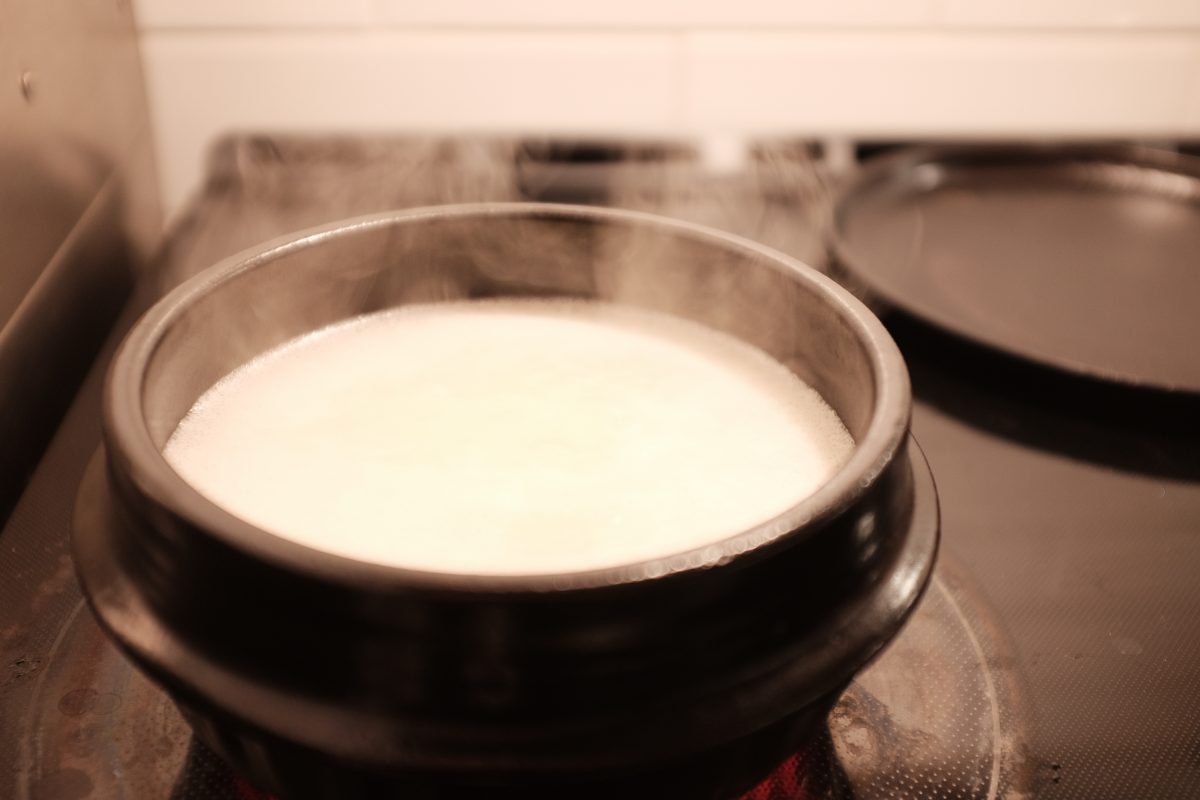
Like a good food detective, I decided to launch a full investigation. After much reading and video watching, I discovered that the secret is really in the style of beef stock, in the process rather than the ingredients. The recipe below is a two-part process. First you will need to make the milky bone broth. Once you have this broth on hand, turning it into finished seolleongtang is a very simple and quick process. You can find the complete recipe for the beef bone broth by clicking here.
Ingredients
*this is for one big portion or 2 smaller portions
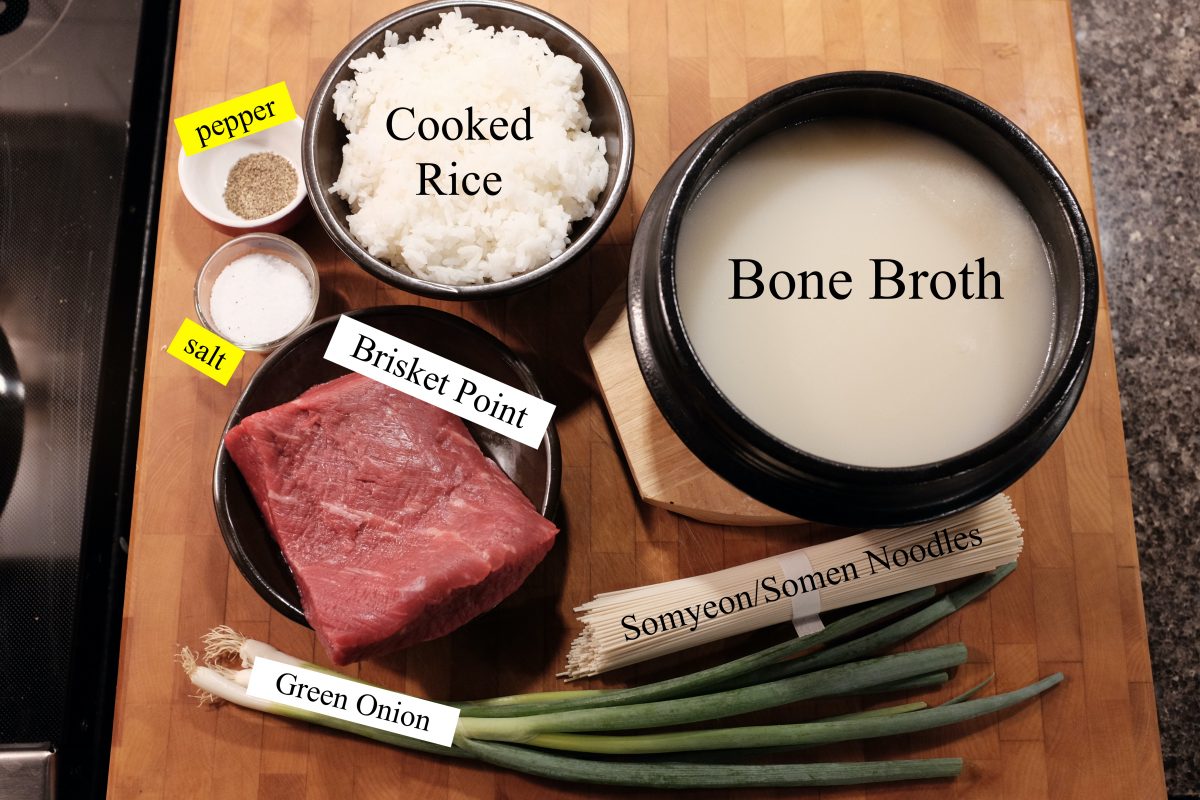
- 1 litre Korean milky beef bone broth
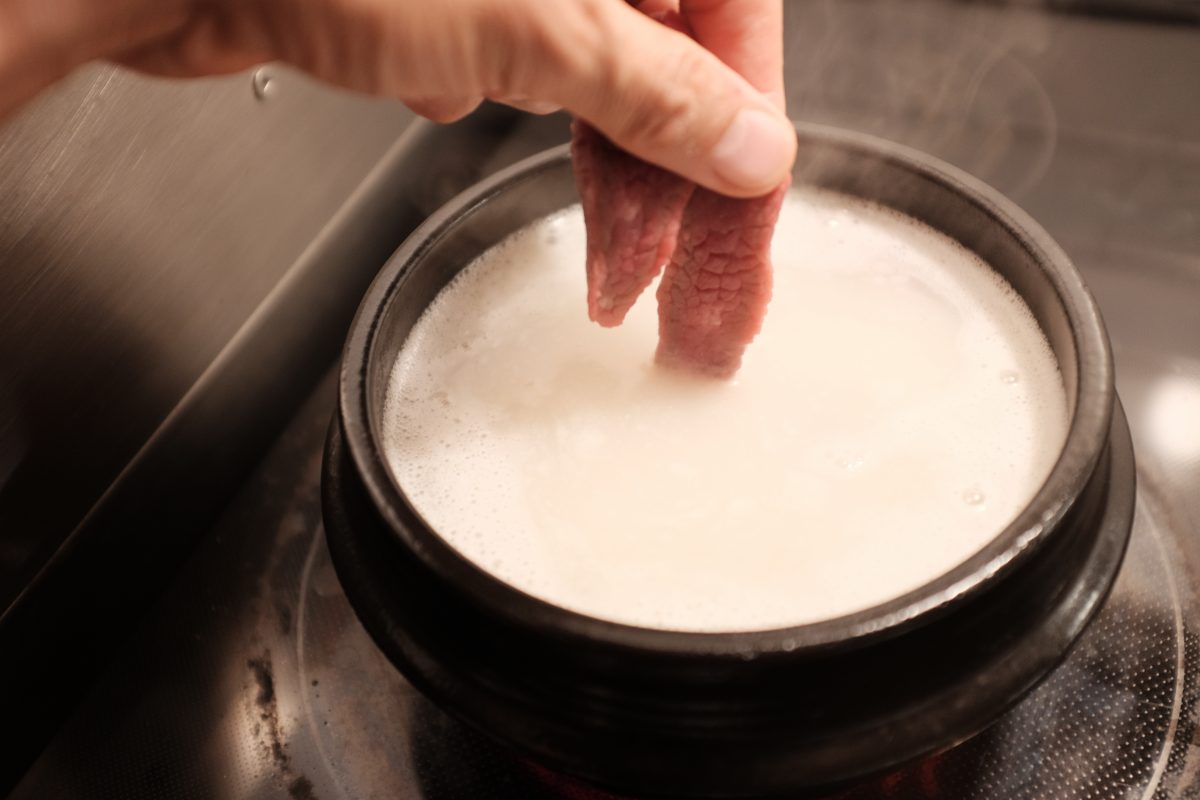
- 250gr beef brisket point
- cooked white rice
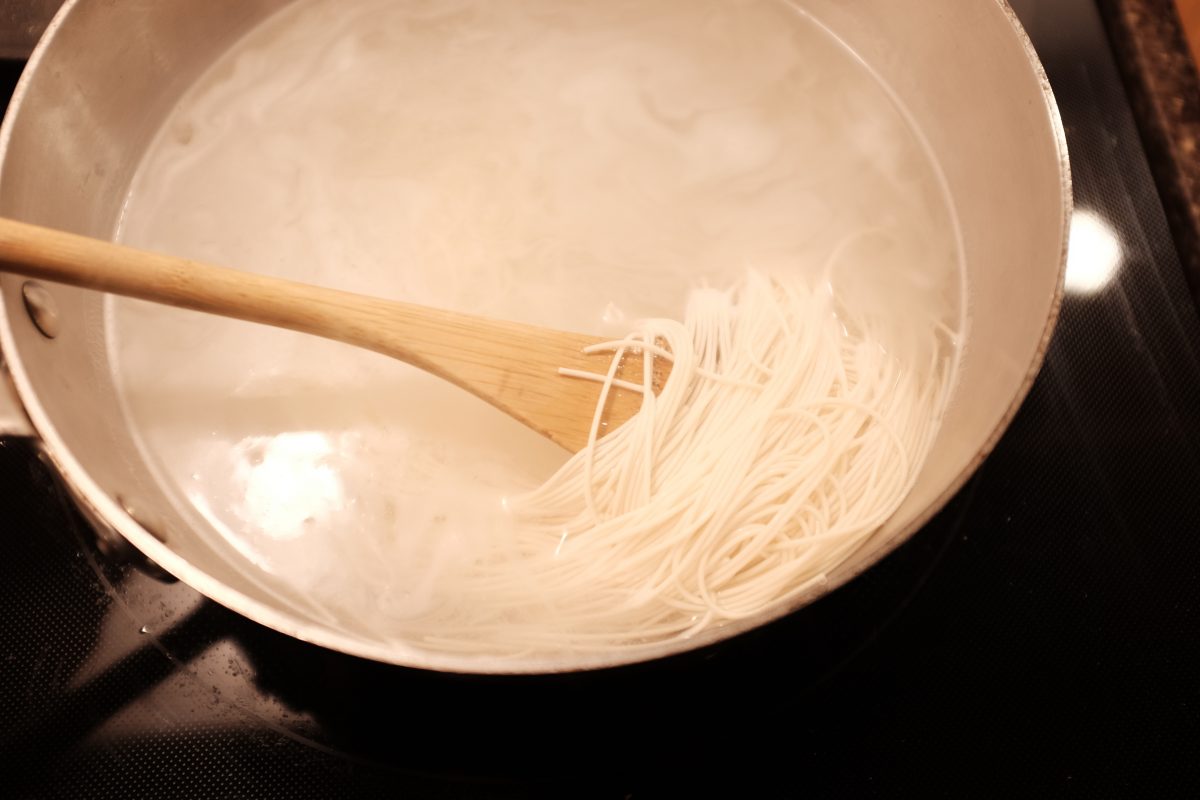
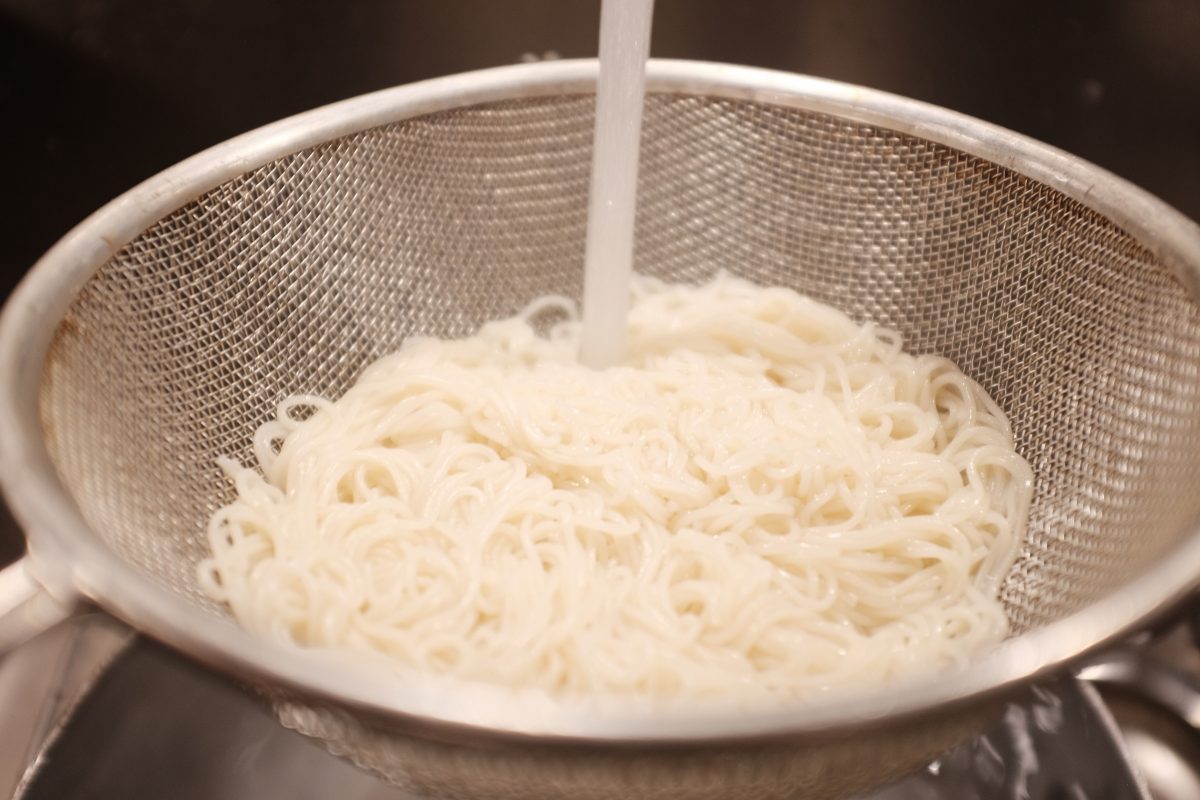
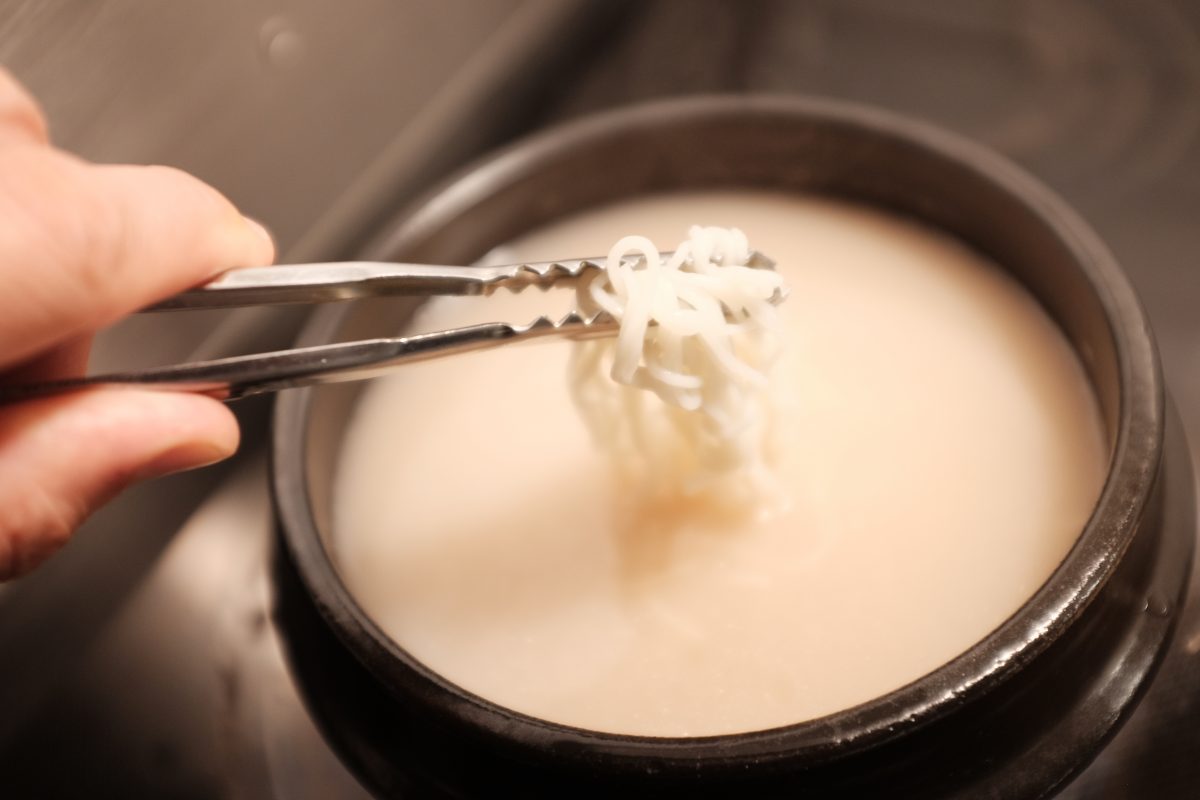
- cooked somyeon/somen noodles
- 2-3 green onions (scallions)
- salt and pepper
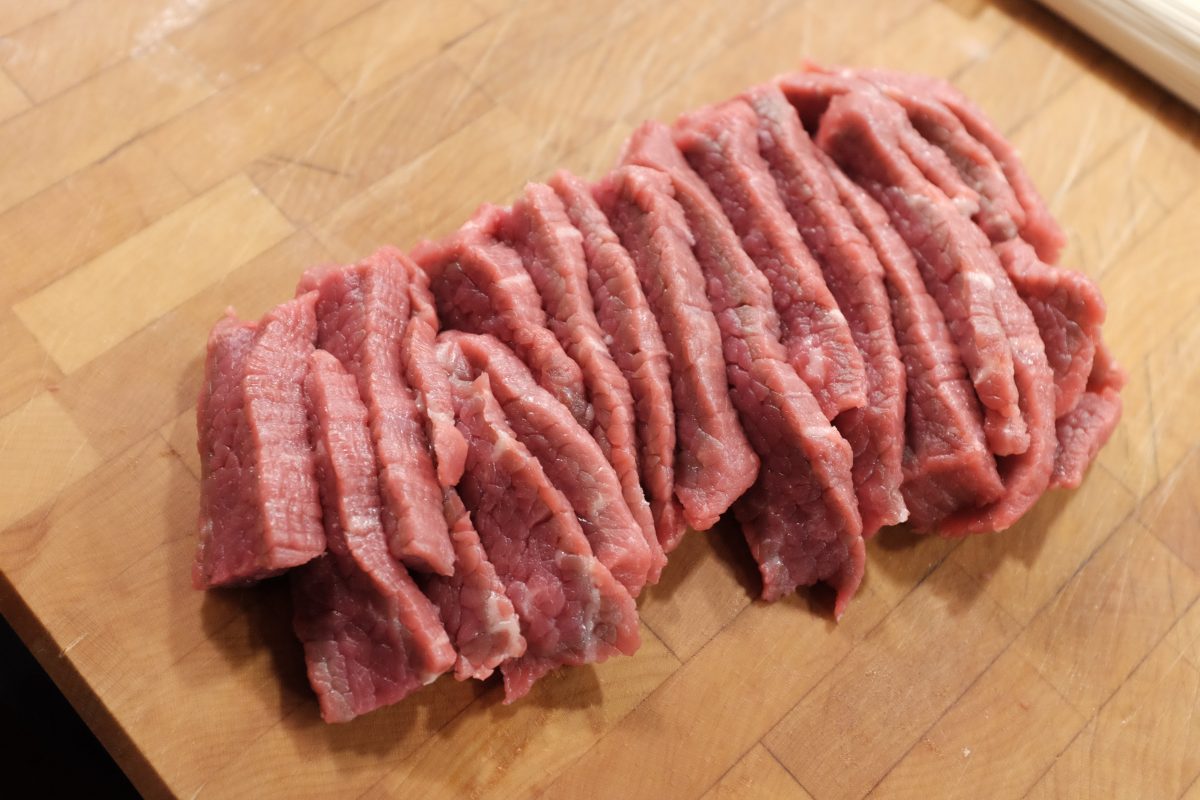
I used brisket point. You can use any beef you like. Tougher cuts will take longer to soften up and more tender cuts will take less time. I like brisket because it is somewhere in between. It has the deep beef flavour of a tougher muscle but is slightly more tender so takes a little less time to cook. If you like, you can soak the meat in water for a few hours to remove some of the blood but, this is optional.
Process
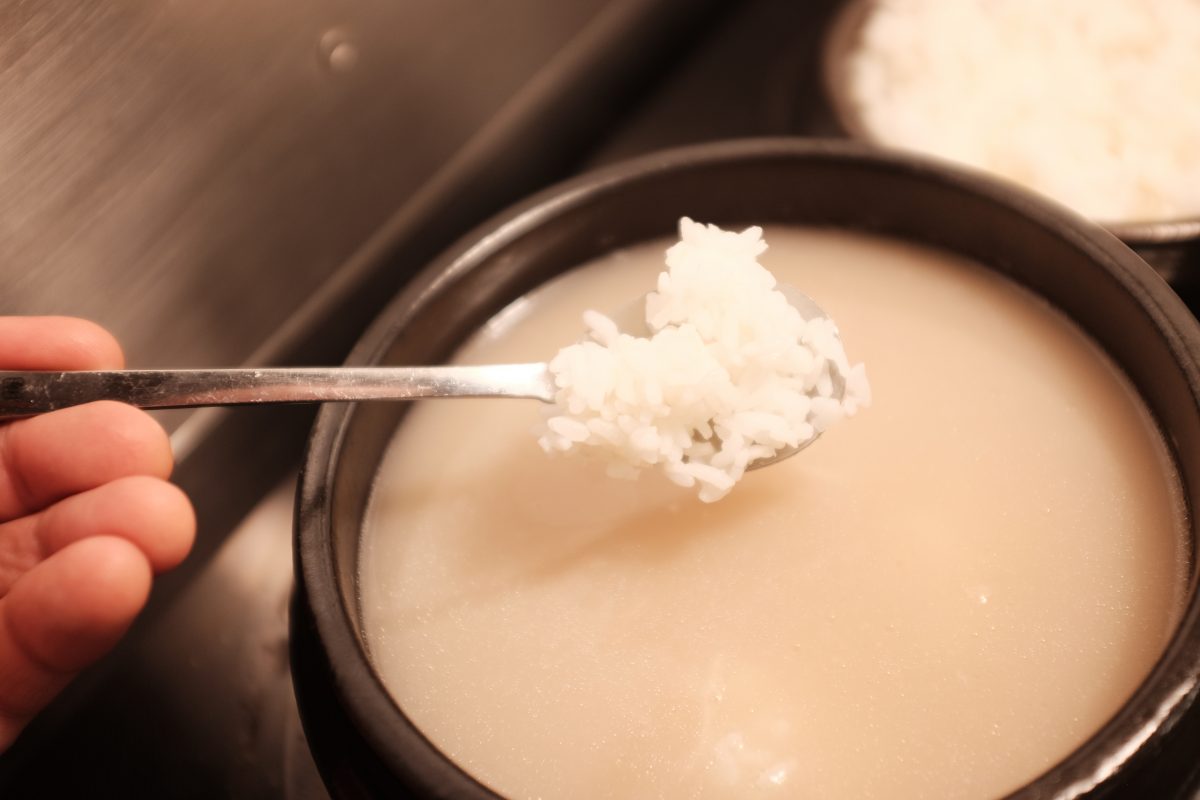
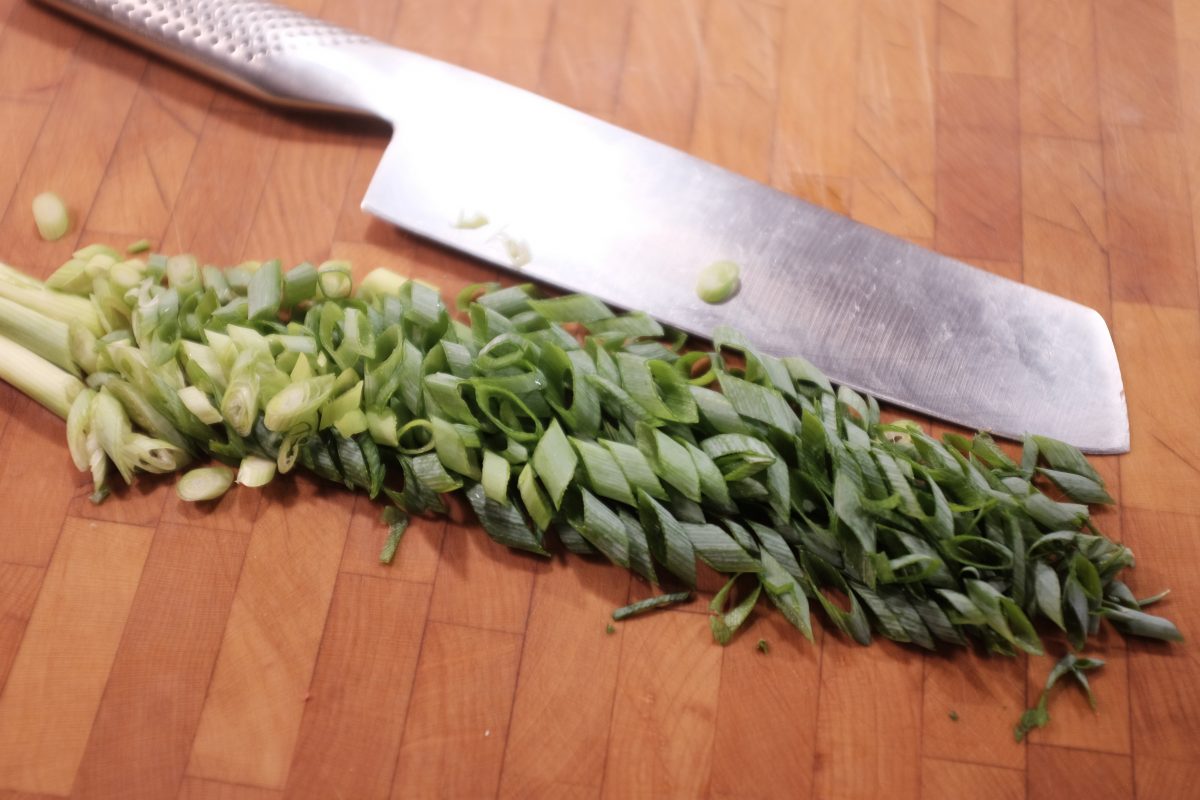
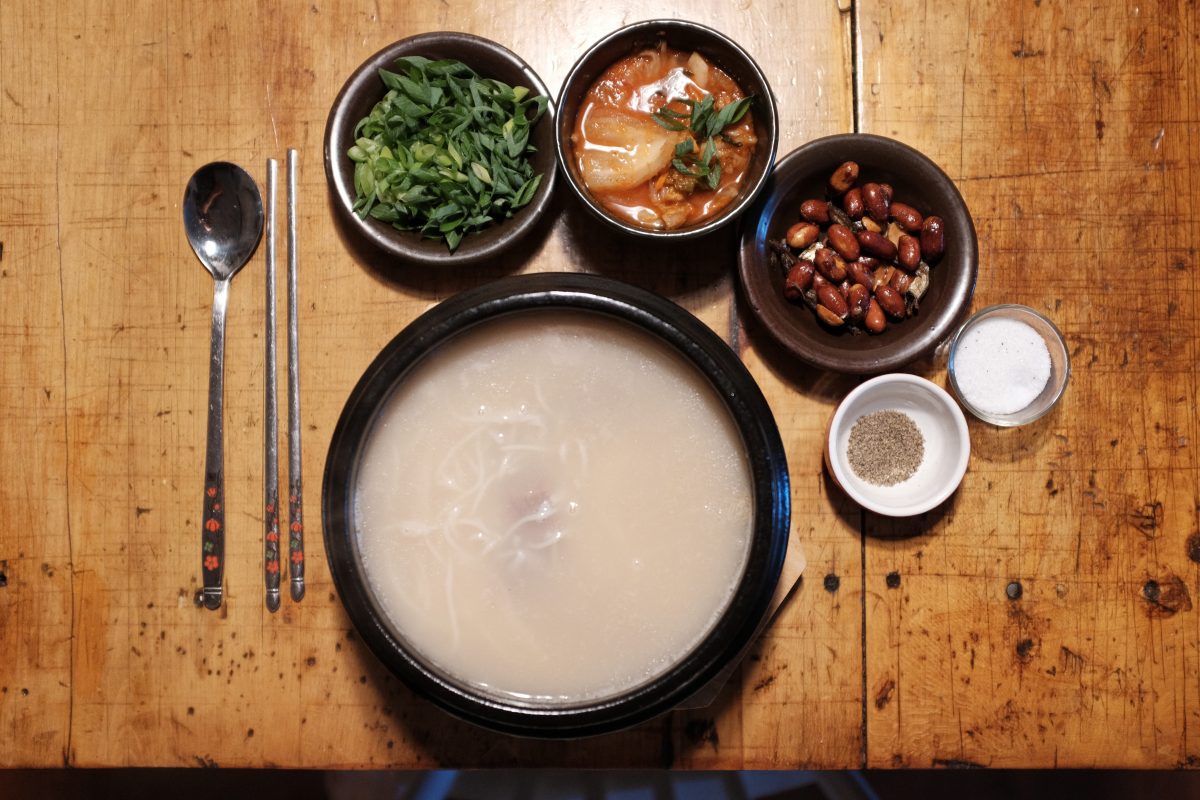
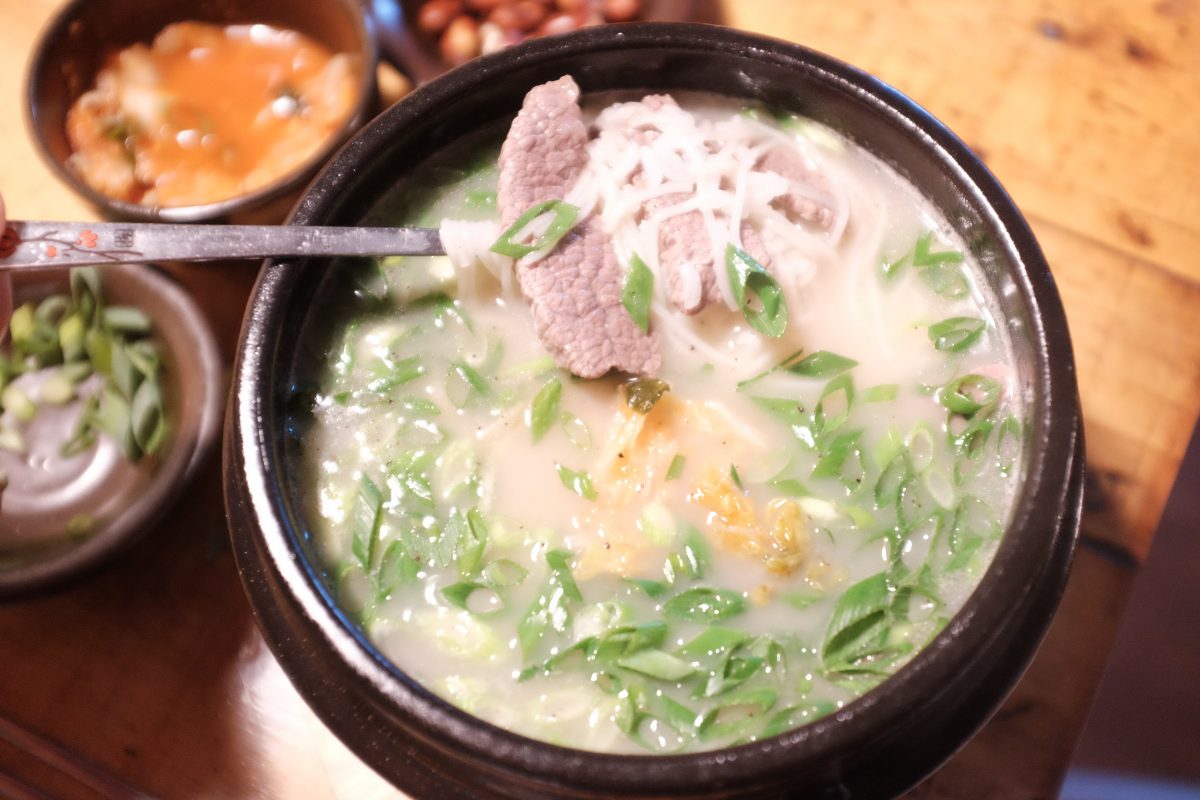
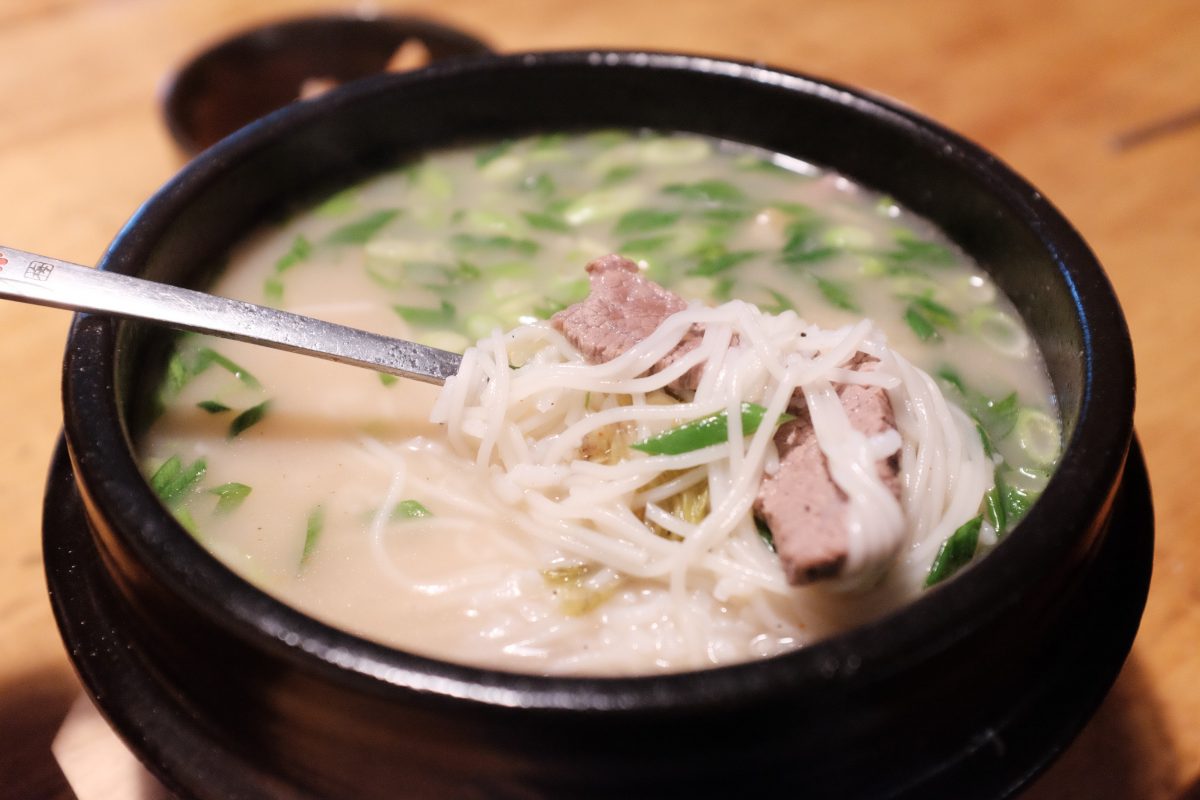
The verdict?
This turned out to be very very good. Maybe 4 out of 5 stars. One star off because, as good as it is, it doesn’t quite measure up to the flavour of Imun Seolleongtang in Seoul. But, honestly, I can say the same thing about all Korean food made outside of Korea. There is always a little something missing when you make these dishes yourself or, eat them in restaurants back home. I think a big part of this is the high quality of ingredients in Korea but, there is also generational knowledge and experience that adds flavour to these dishes and makes the magic hard to replicate. Imun Seolleongtang has been making this same dish for over 100 years and legend has it that the same stock pot has been continuously boiling fresh bones every day for the whole time!
Having said that, I am really happy with the way this turned out and I feel just as refreshed after eating a big hot bowl of this flavourful soup. 시원하다!
If you have any questions or comments please leave them in the space below. Thanks for reading!
If you enjoy the content and would like to contribute towards website maintenance and development, you can make a donation here.
Beef Bone Broth Version 2: Korean Style
Korean Beef Bone Broth vs Western Versions (hard and fast vs low and slow)
Some time ago, I posted a recipe for beef bone broth (stock) that involves a very long cooking time at a very gentle simmer (click here for this low and slow version). The result is a mostly clear, brownish, meaty and gelatinous stock. This is most often what chefs make in a western kitchen…it will typically be used as a soup or sauce base.
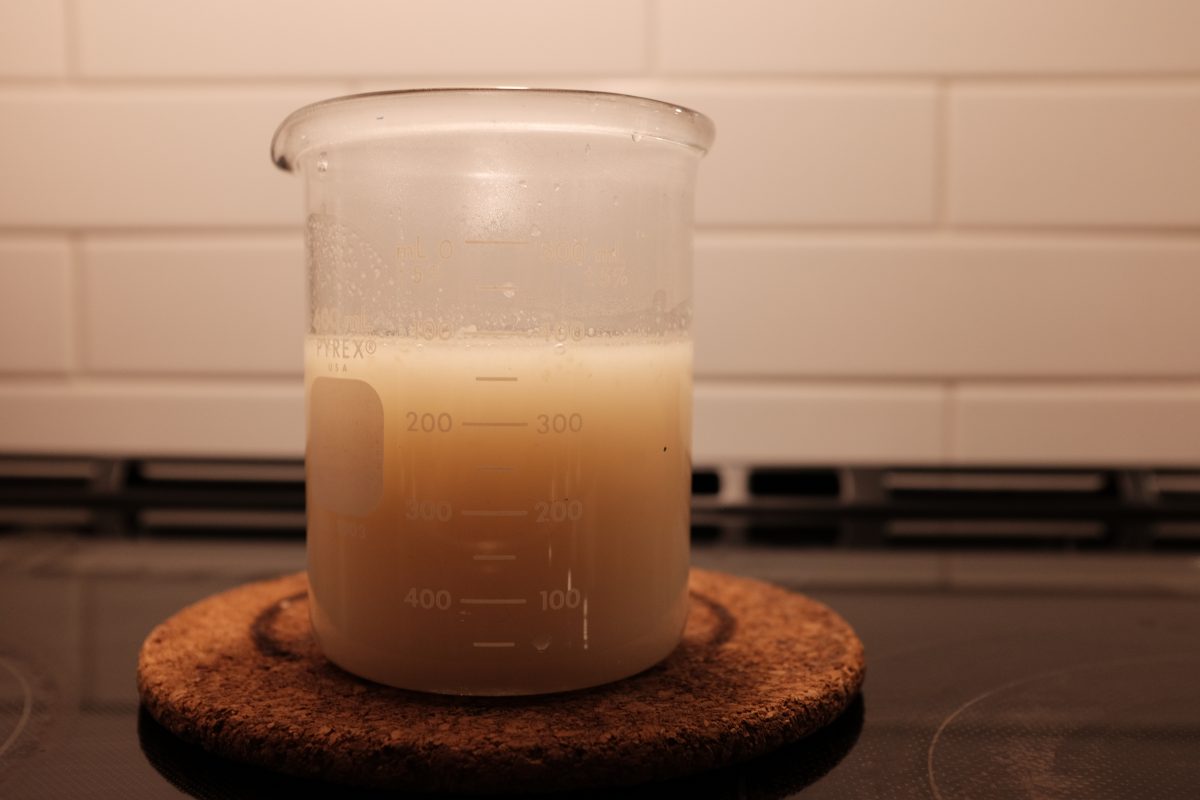
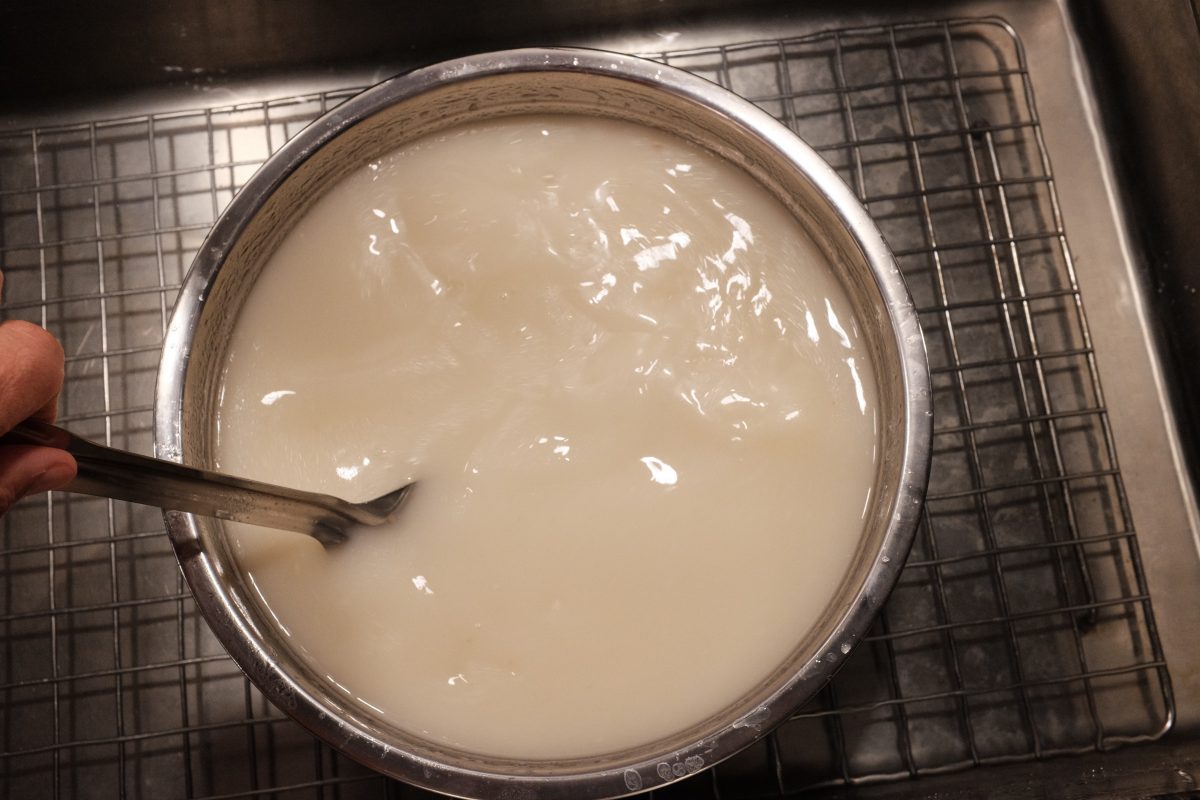
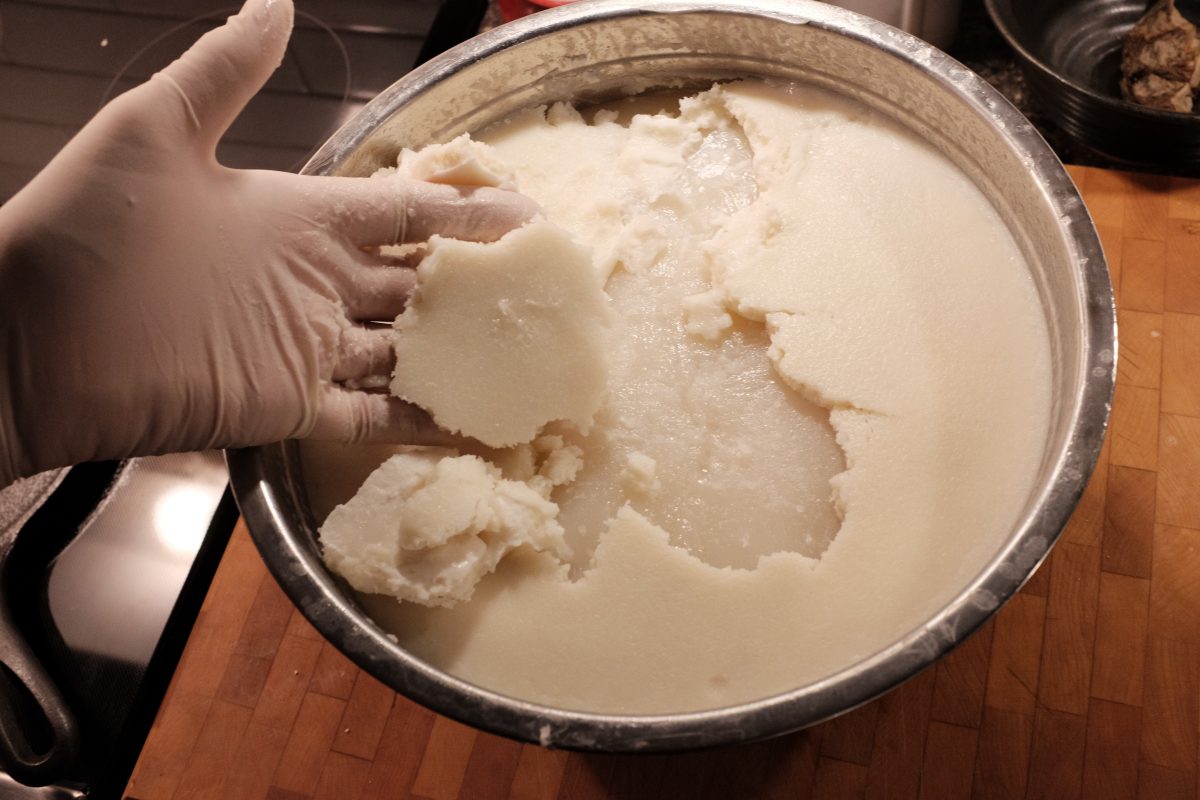
This recipe is almost identical in ingredients and process. The main difference is that this recipe cooks at a harder rolling boil for a shorter time. Even though the steps are almost identical, this small change results in a completely different stock. This one is just as gelatinous but, it is a silky opaque white colour with a nutty and delicate flavour. This stock is a base for dishes like mandu-guk (dumpling soup) or seolleongtang in a Korean kitchen. And, I think this is the version that most people think of when looking for “beef bone broth”.
Ingredients
- 4kg (almost 9lb) beef marrow and knuckle bones cut into pieces.
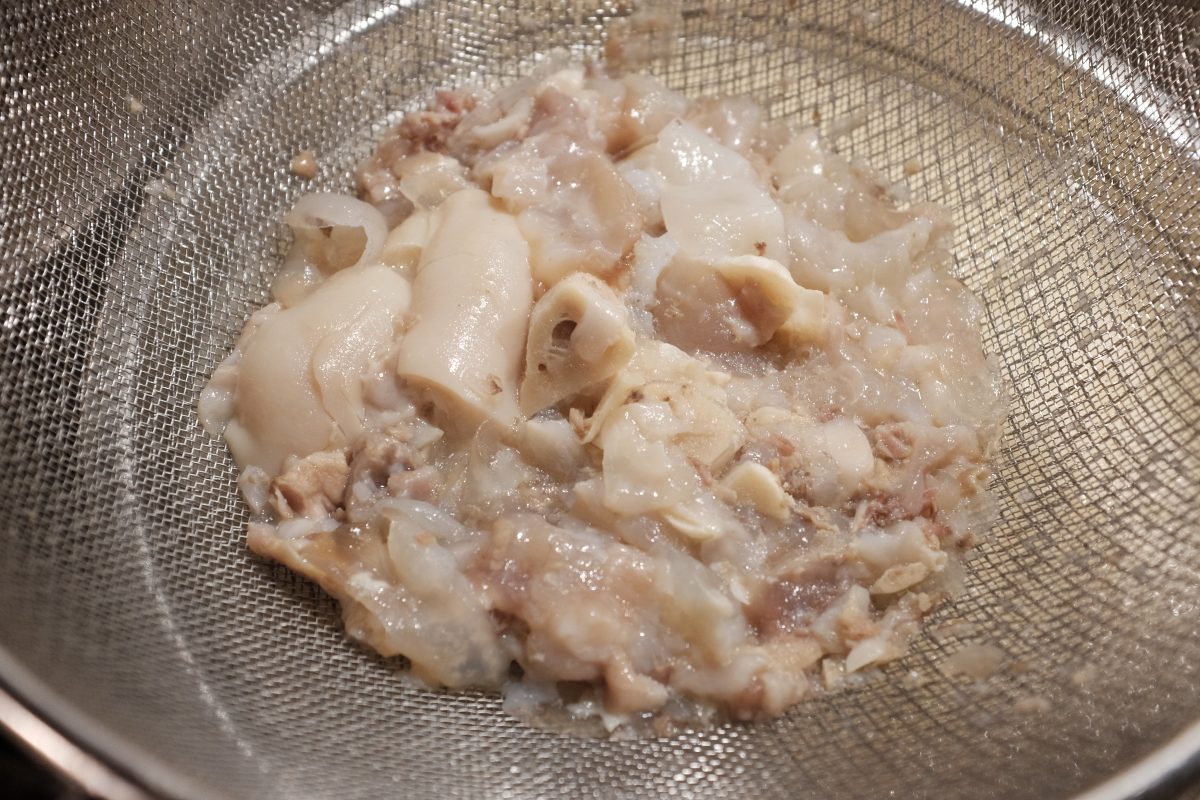
- 1.2kg (around 2.5lb) cow foot cut into pieces
- water
The Korean grocer in my neighbourhood usually has beef bones already cut up and frozen in bags ready to go. If you don’t have access to something like this, any butcher should be able to sell you beef bones for stock. A separate Halal butcher in the neighbourhood stocks frozen cow feet which he chops up for me on his meat saw. Cow foot adds gelatine to your stock which will give it a rich mouthfeel. If you can’t get cow feet, you can leave it out and substitute more bones.
The weights above are a guideline. You can make this as big as the biggest pot you have to hold the bones. I have a 12 litre stockpot and this is a good amount for me. The ratio of bone to cow foot does not have to be exact but I wouldn’t use more than 20-25% foot to bone.
There is no salt in this recipe. Season the stocks as you use it, depending on the dish you are preparing.
Process
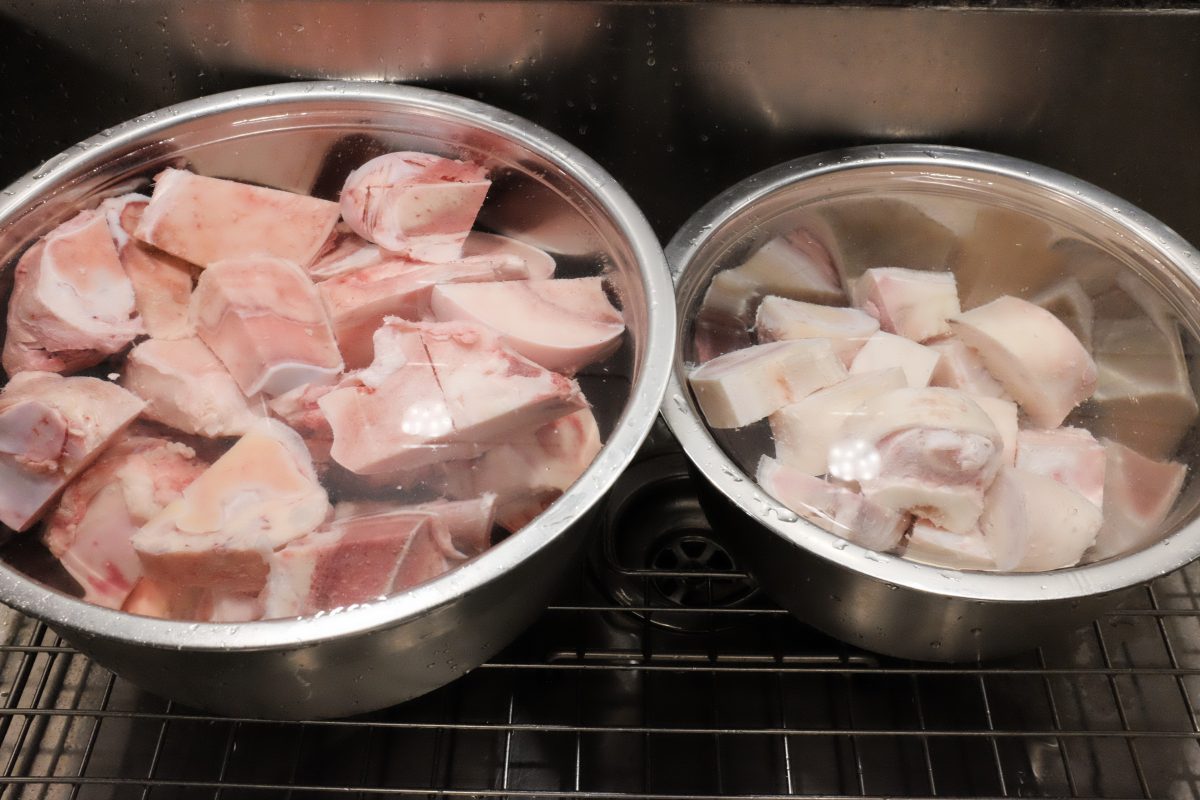
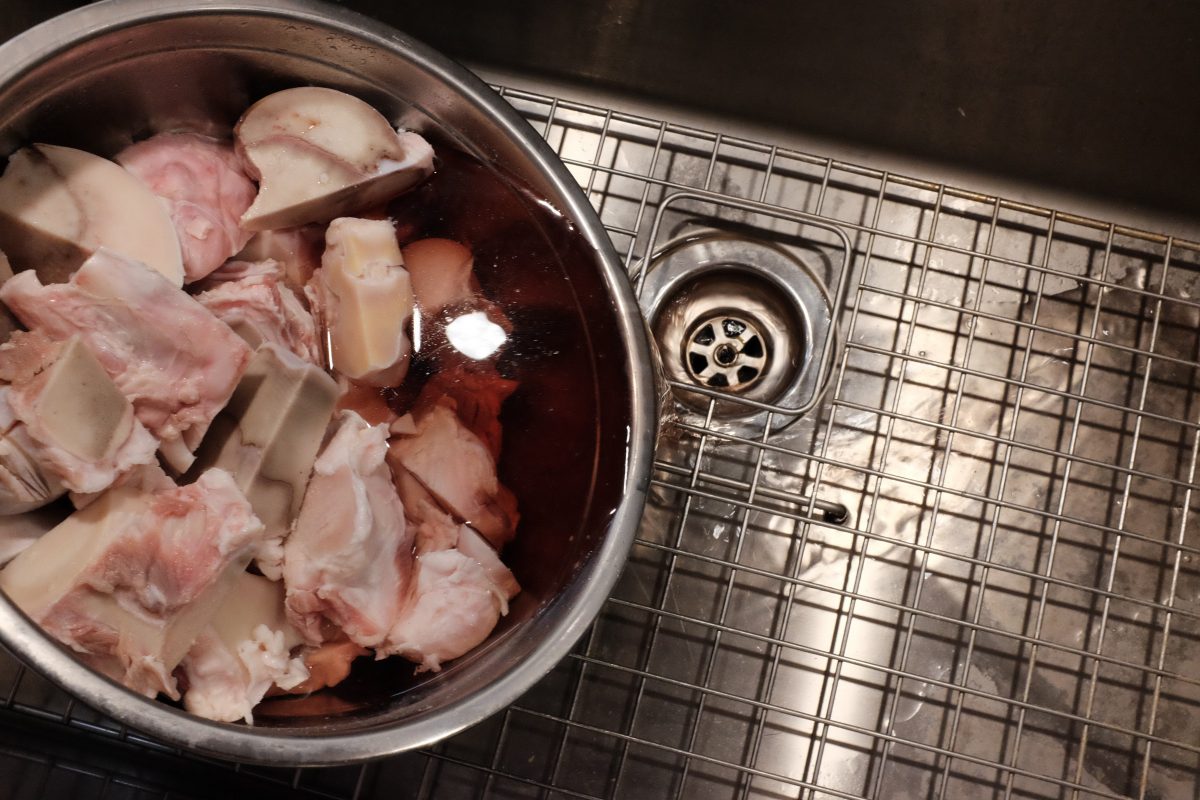
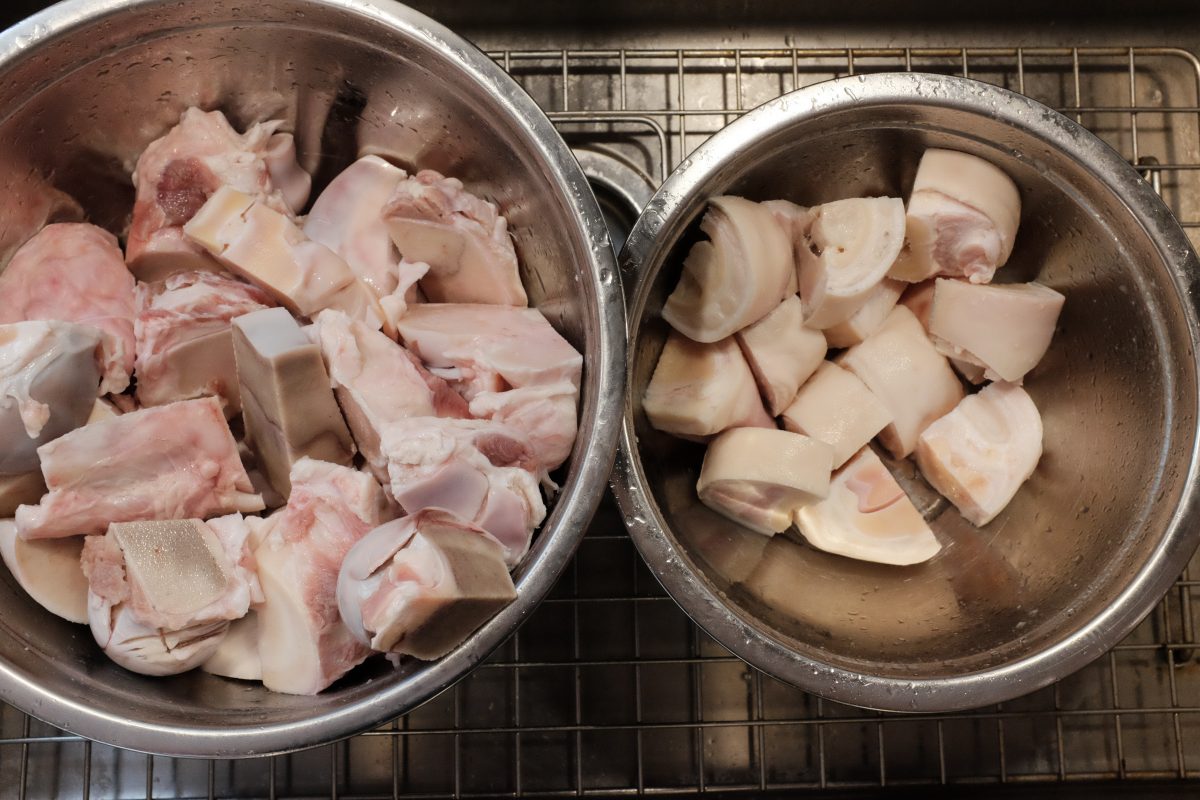
This recipe is a slightly abbreviated version of the slow-and-low stock recipe. The process and ingredients are almost exactly the same so I have left out a few of the more obvious photos. If you want more detail on any step, just reference the recipe at this link.
Wash and soak bones
Blanching the bones
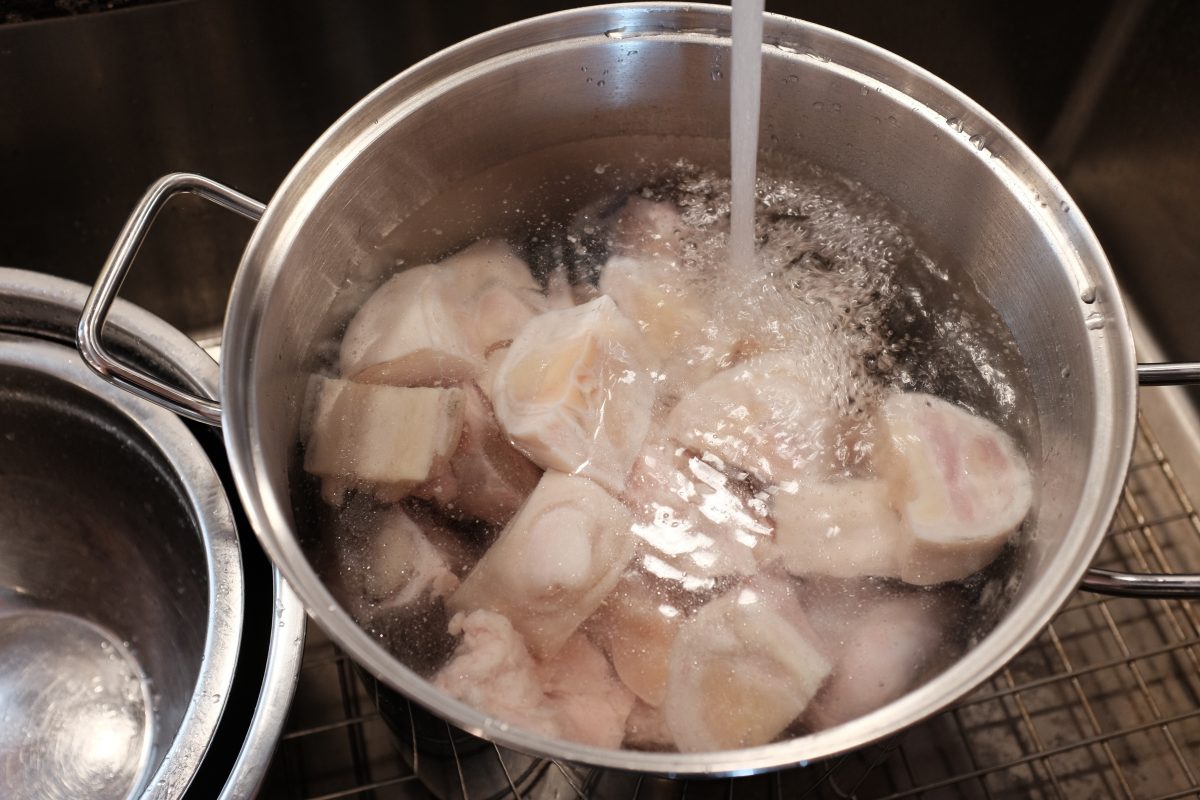
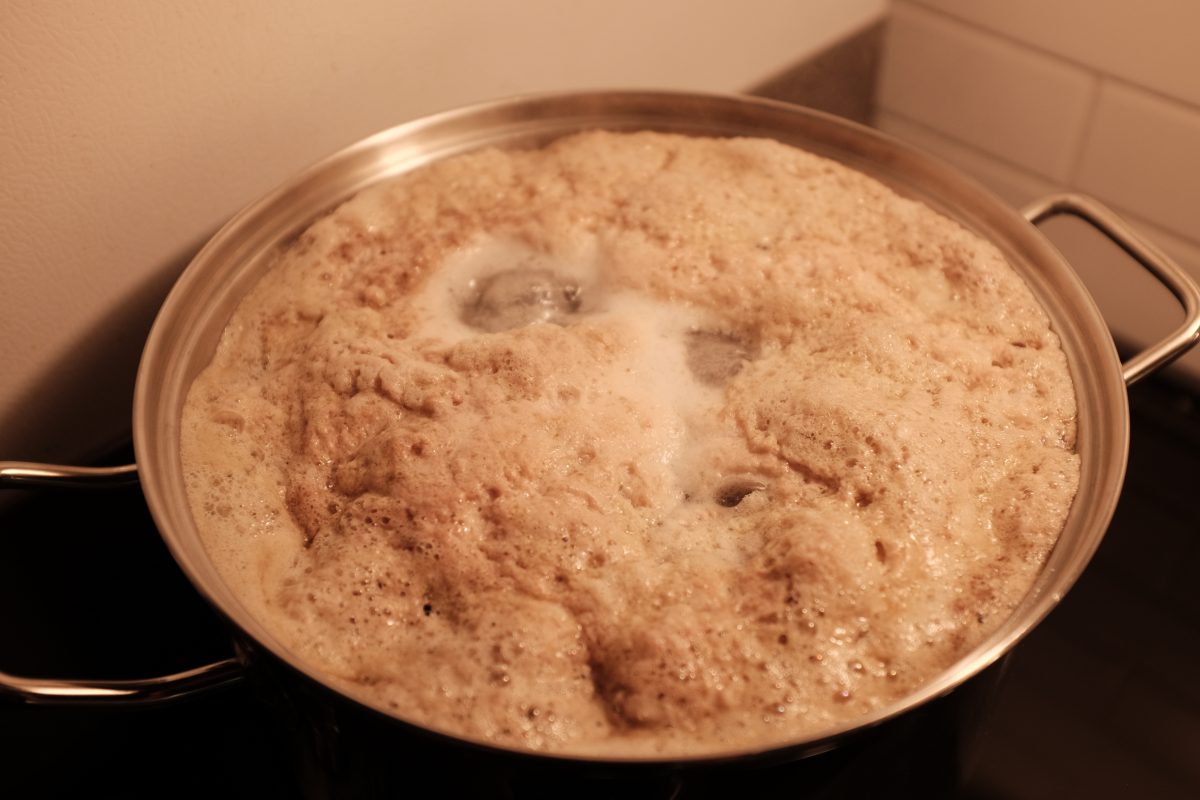
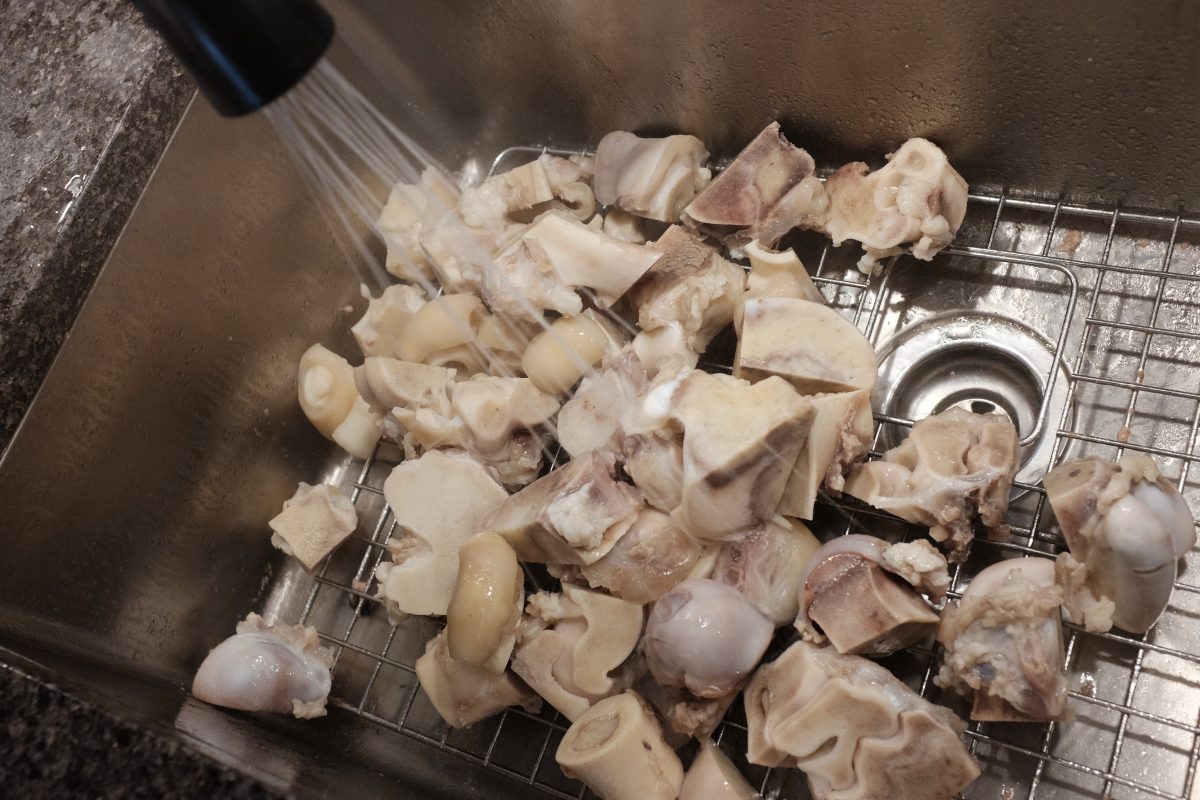
Making the stock
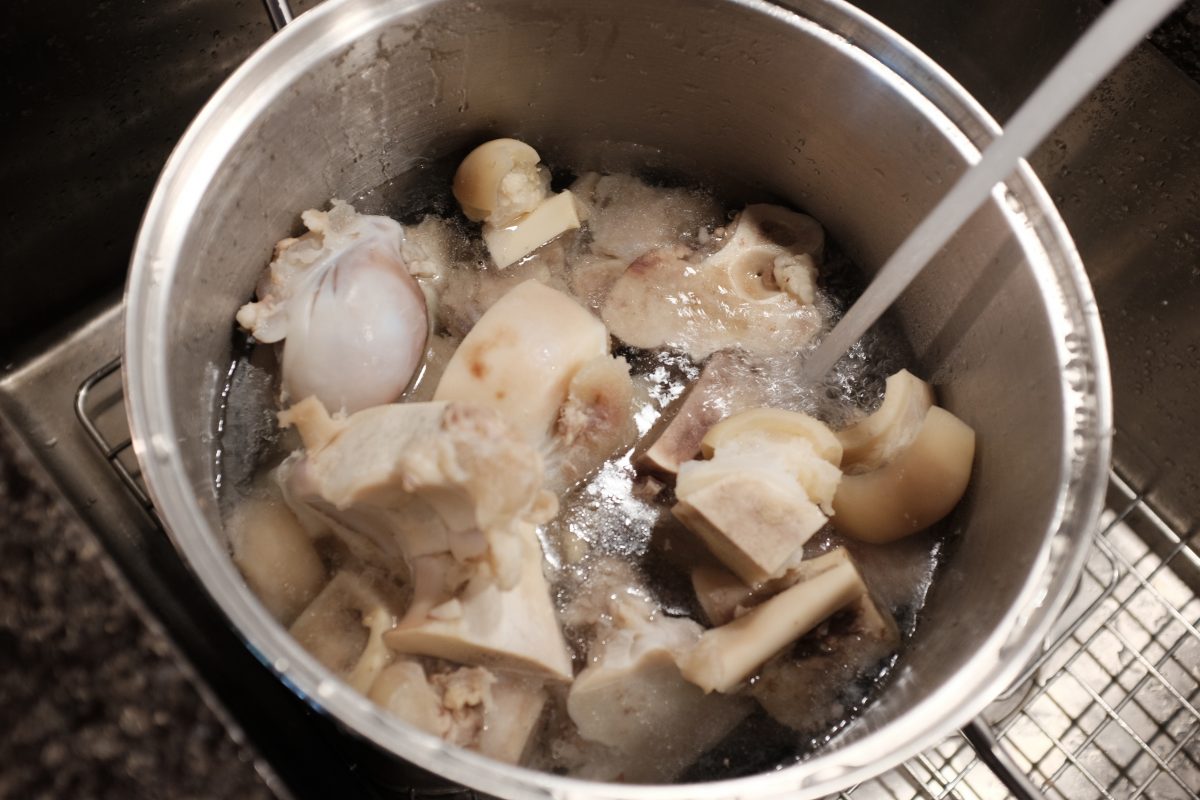
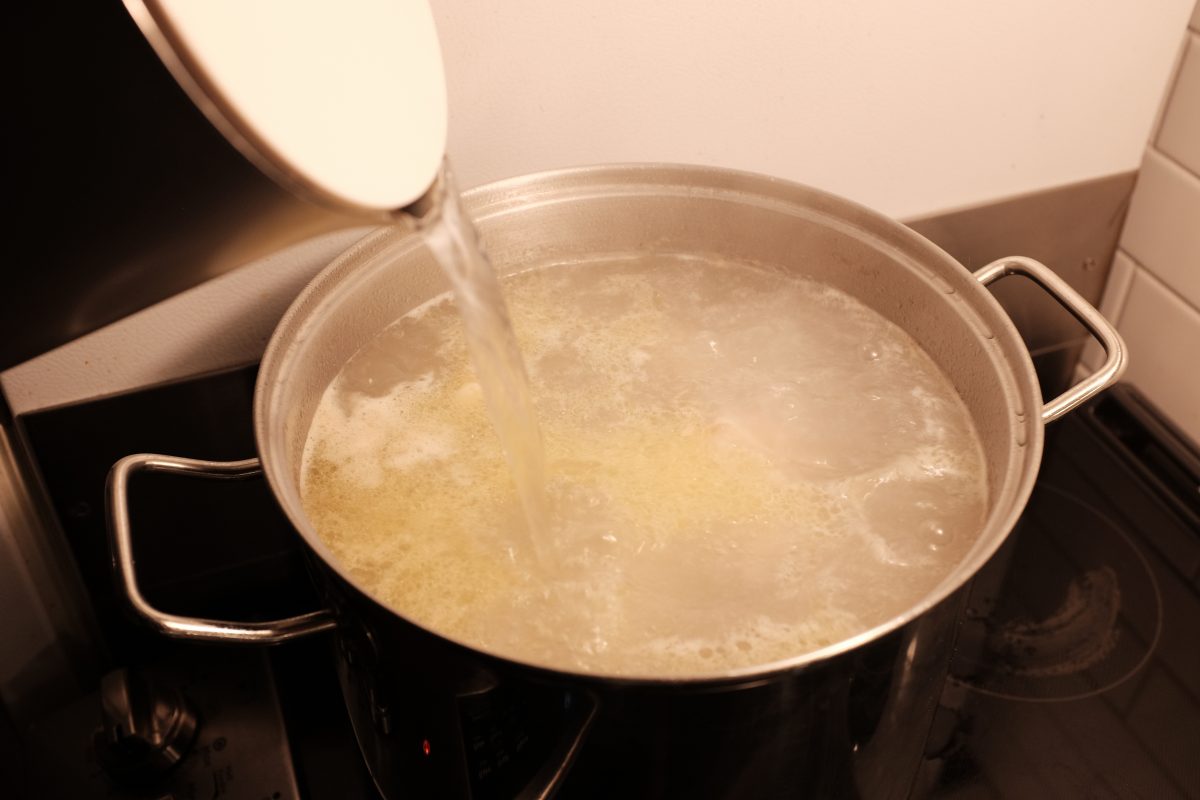
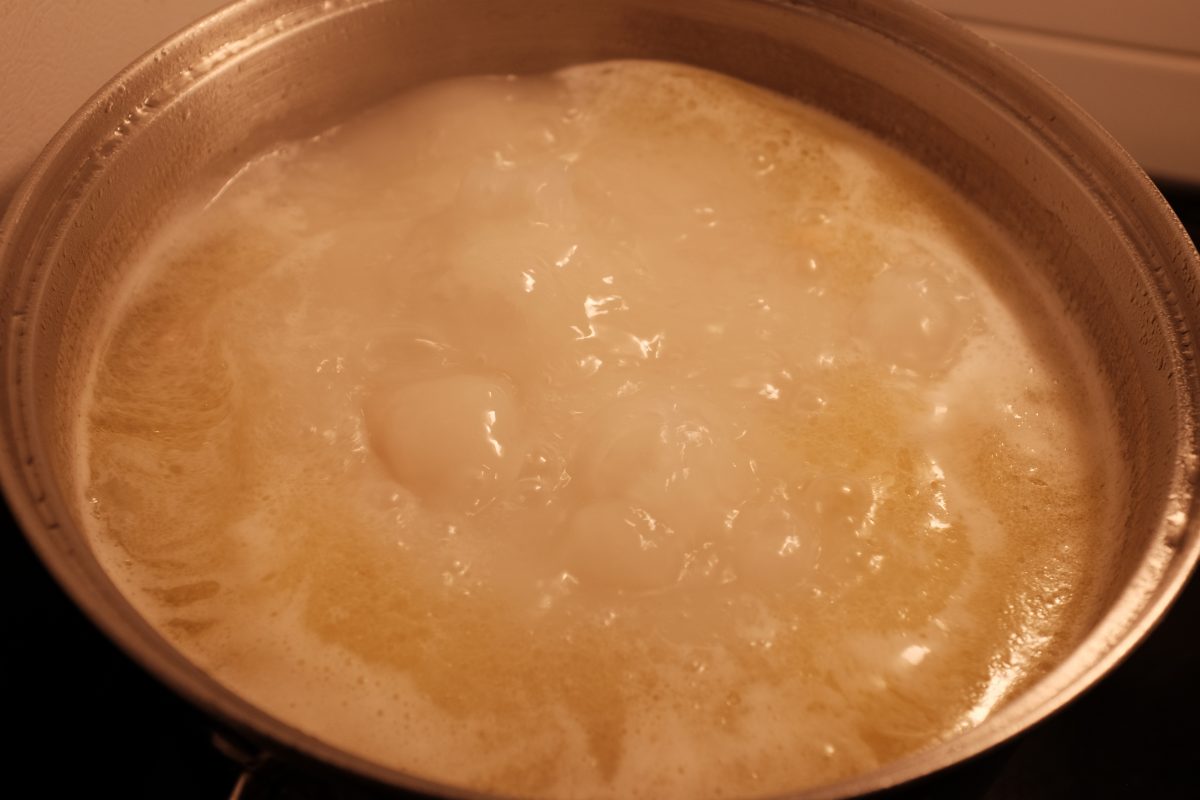
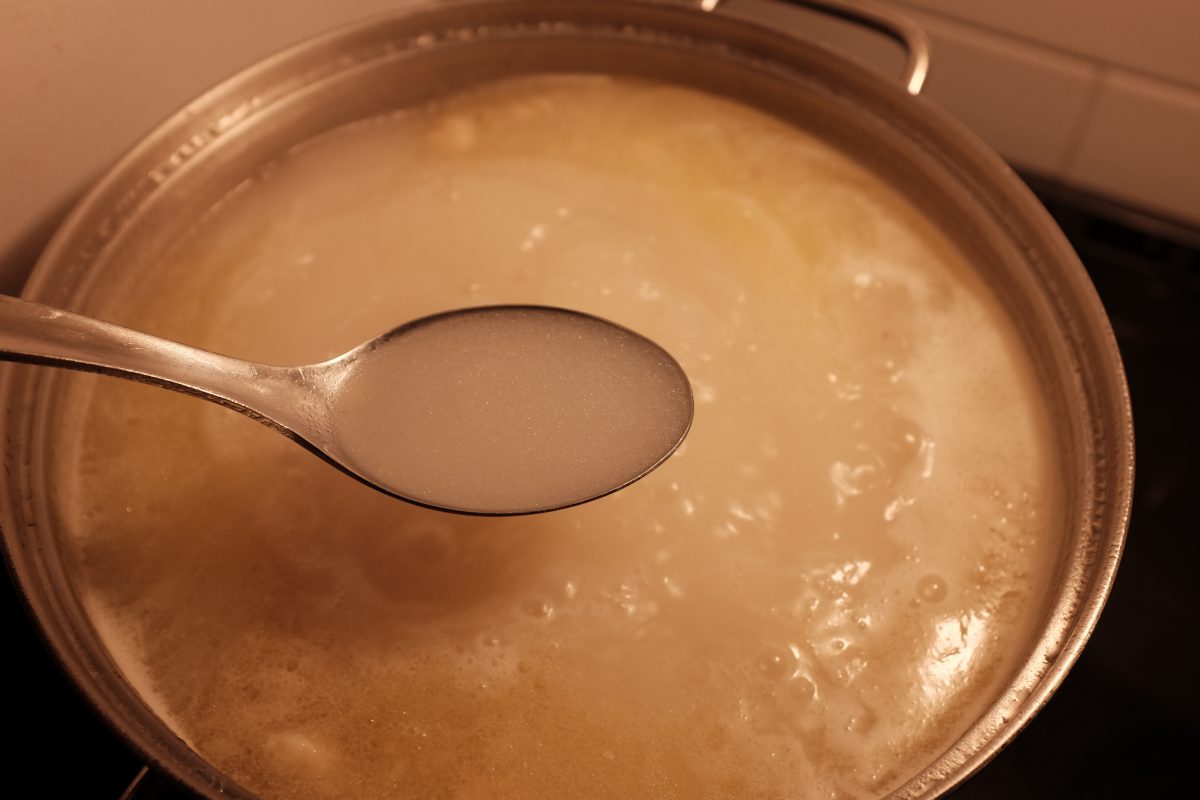
After 8 hours or so…
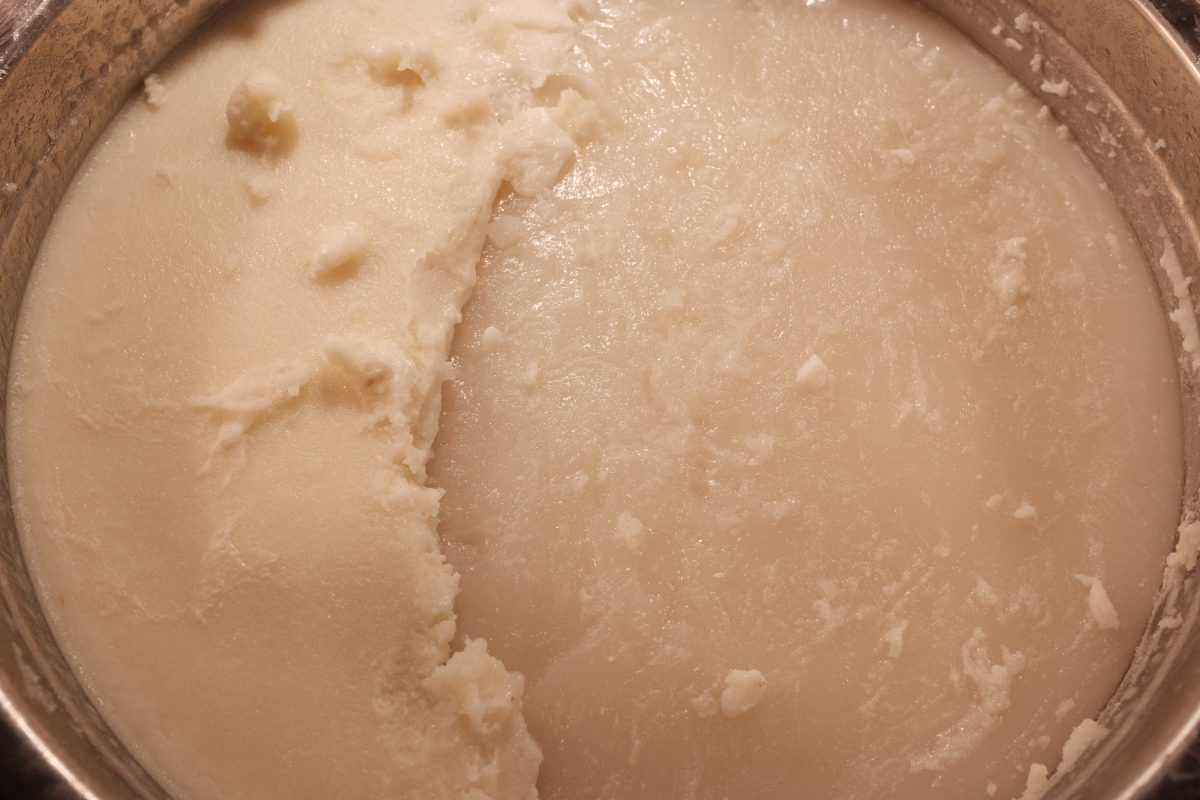
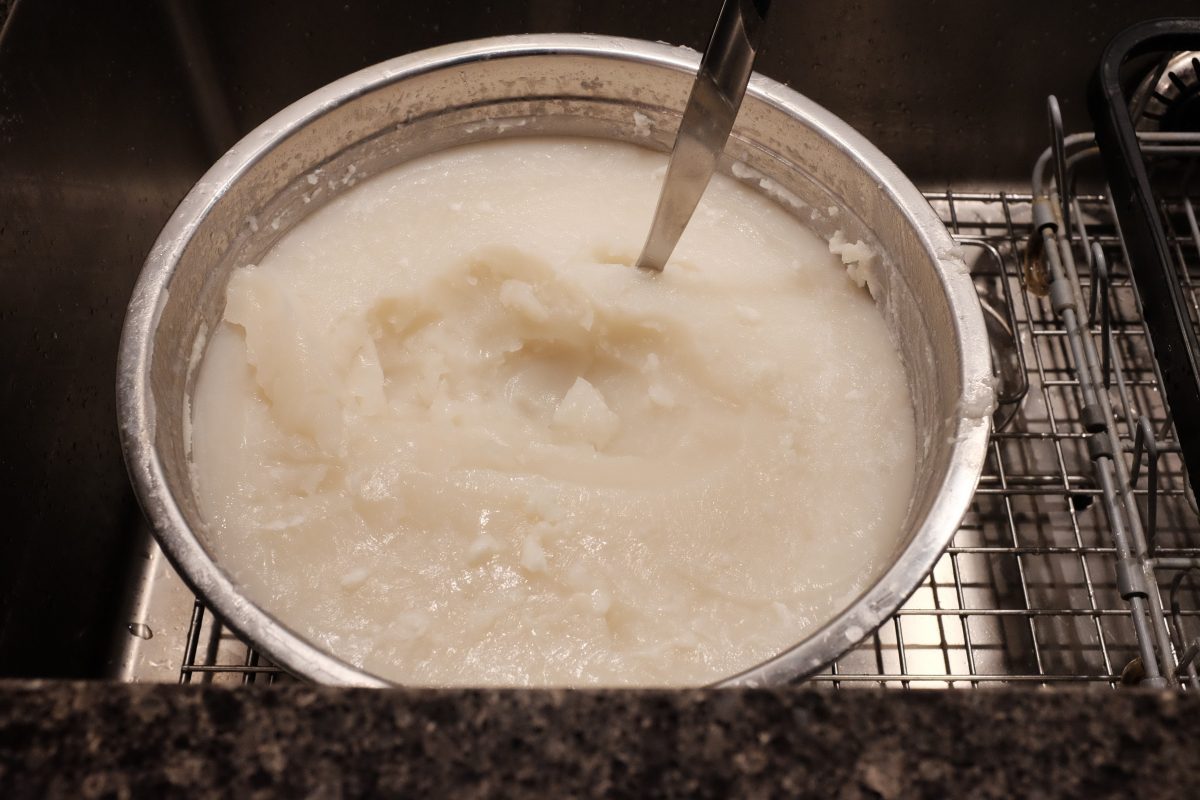
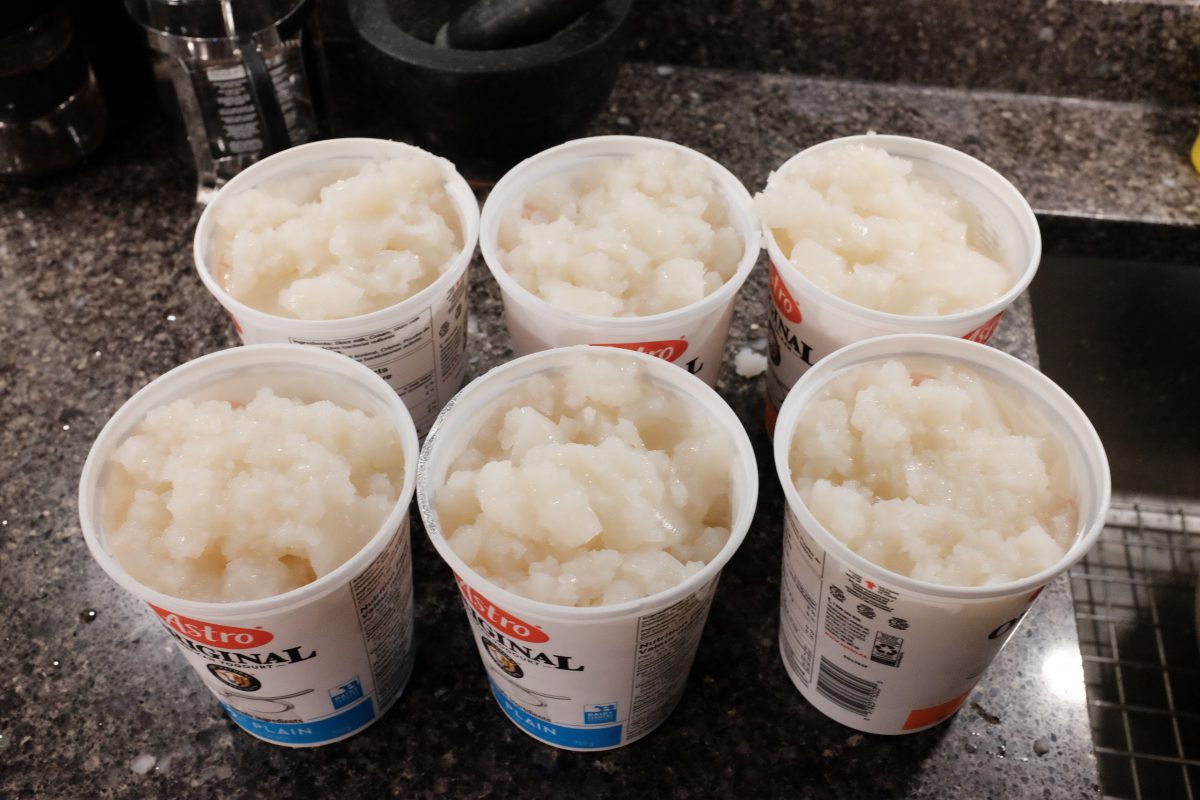
Remove the bones from the stock and strain the liquid.
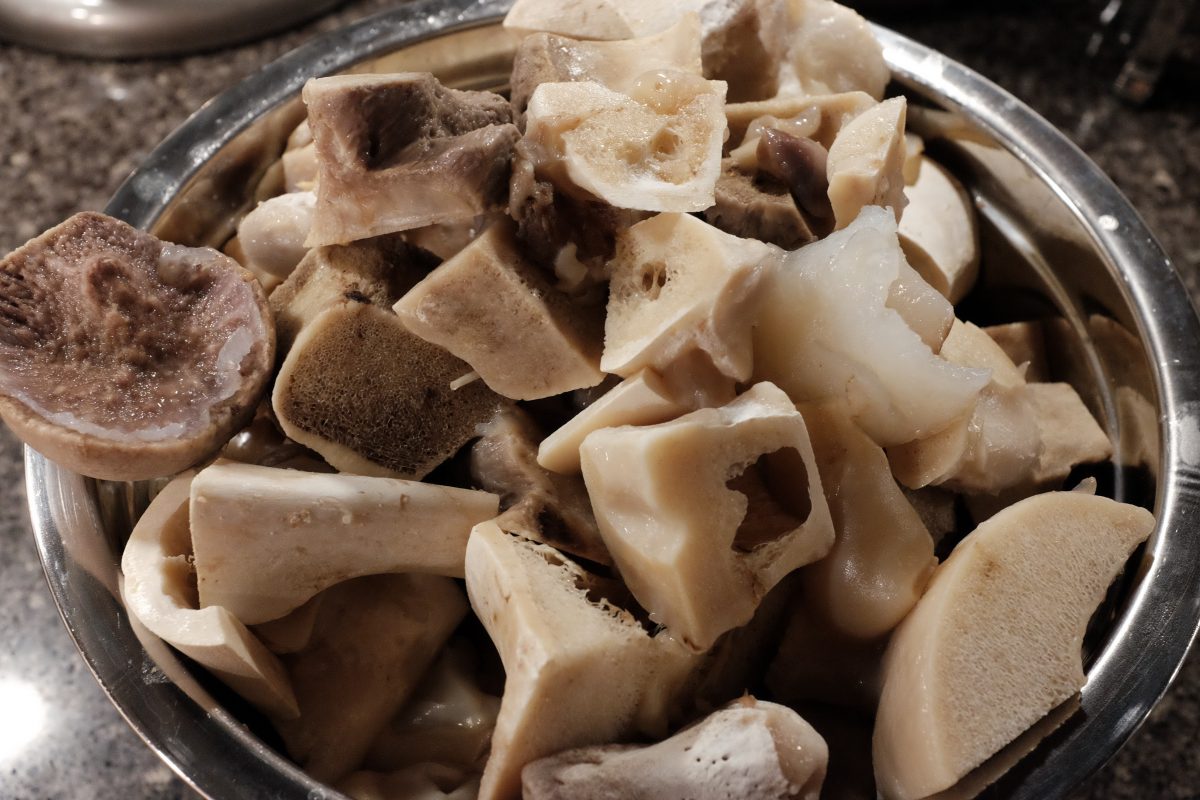
What to do with your bone broth (stock)
This is the essential milky base for Korean soups like seolleongtang (click here for recipe), doganitang or mandu guk. However, you can also use it as a base for almost any soup where you want good body and deep beef flavour. You can even drink it as is or add just a bit of cooked rice and chopped green onion for the simplest, easiest to digest, healthy and protein rich meal.
If you have any questions or comments or if I spelled Seolleongtang wrong, please let me know in the space below.
If you enjoy the content and would like to contribute towards website maintenance and development, you can make a donation here.
Chicago 48hrs
Chicago
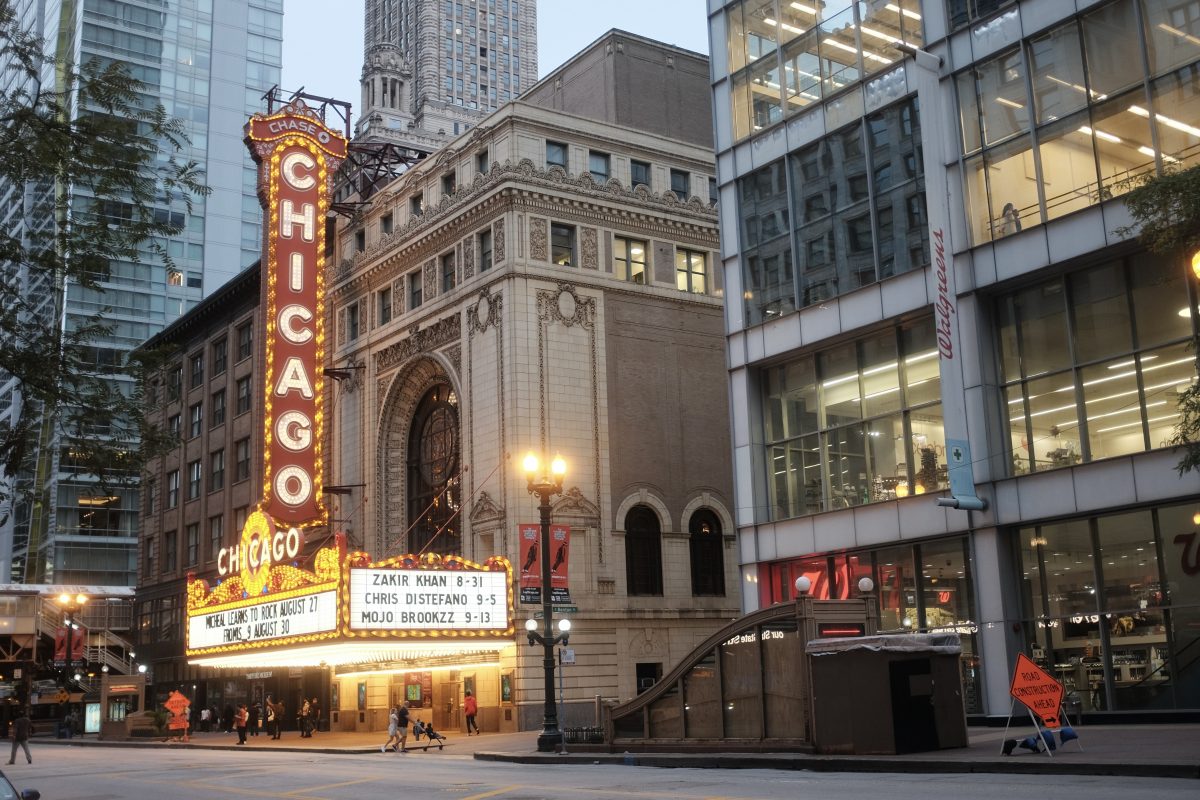
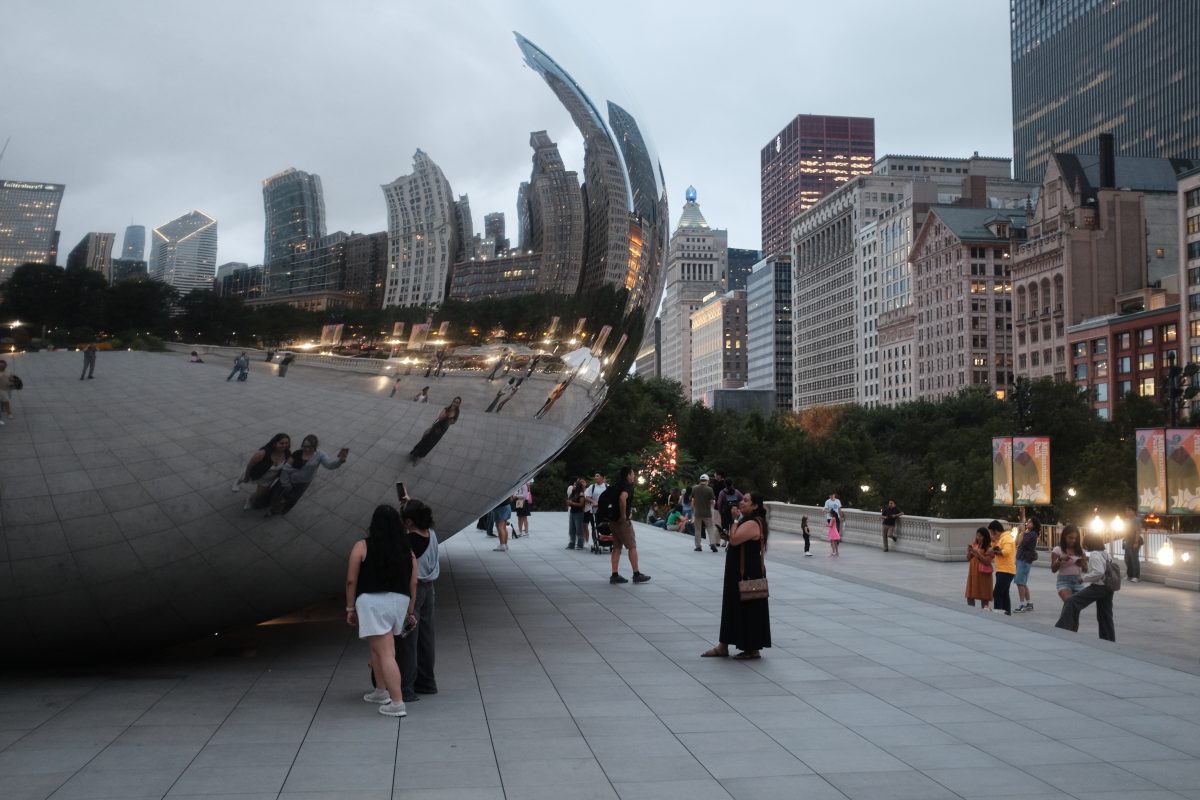
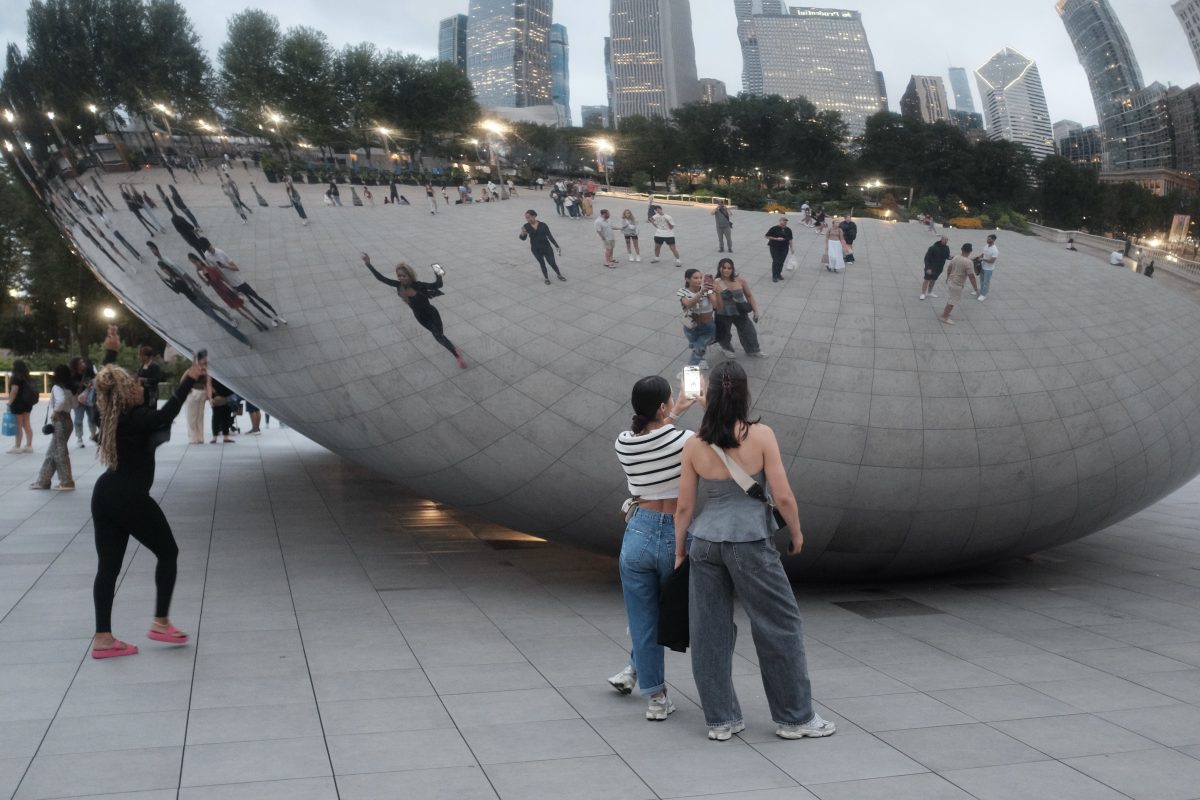
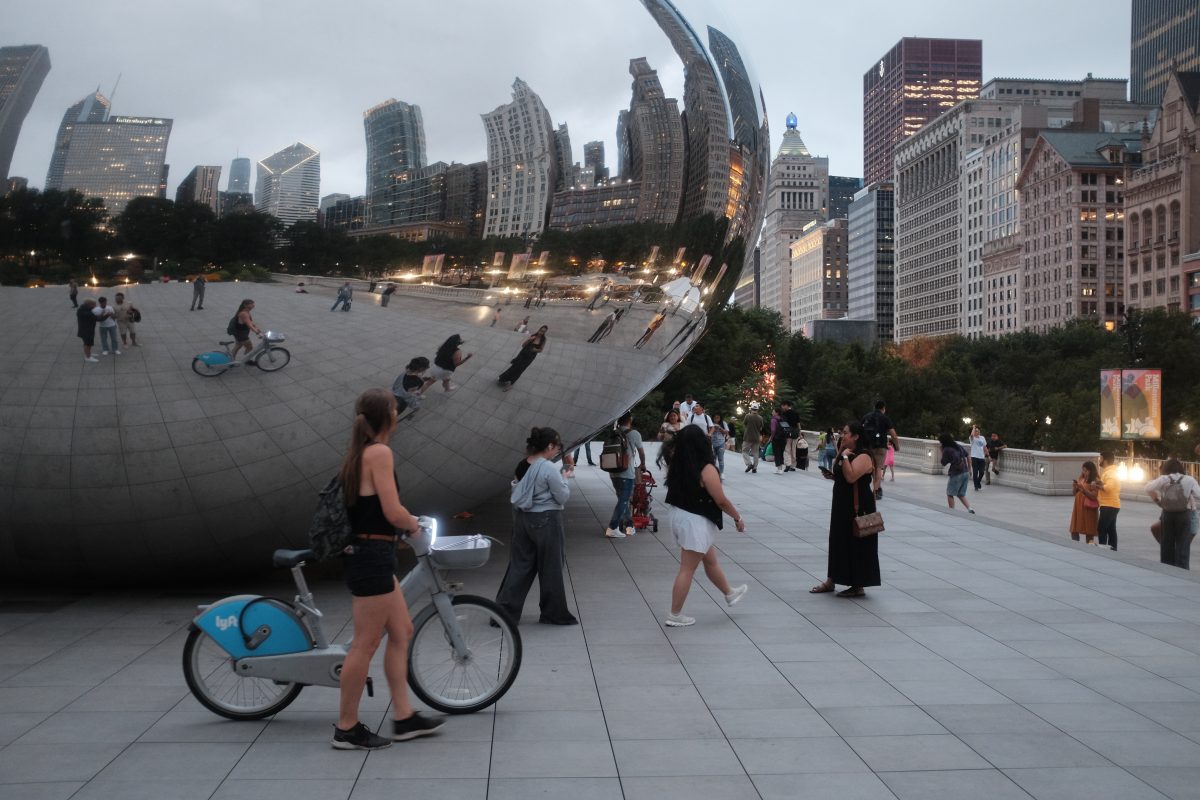
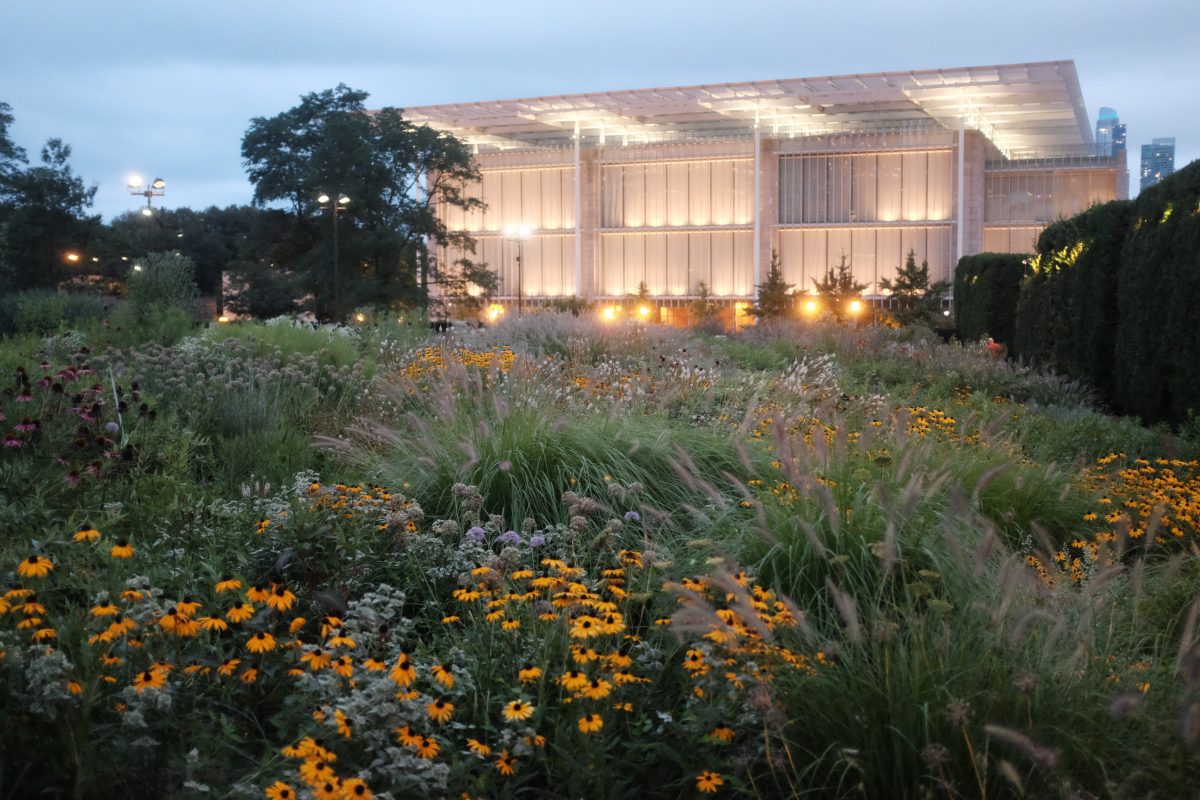
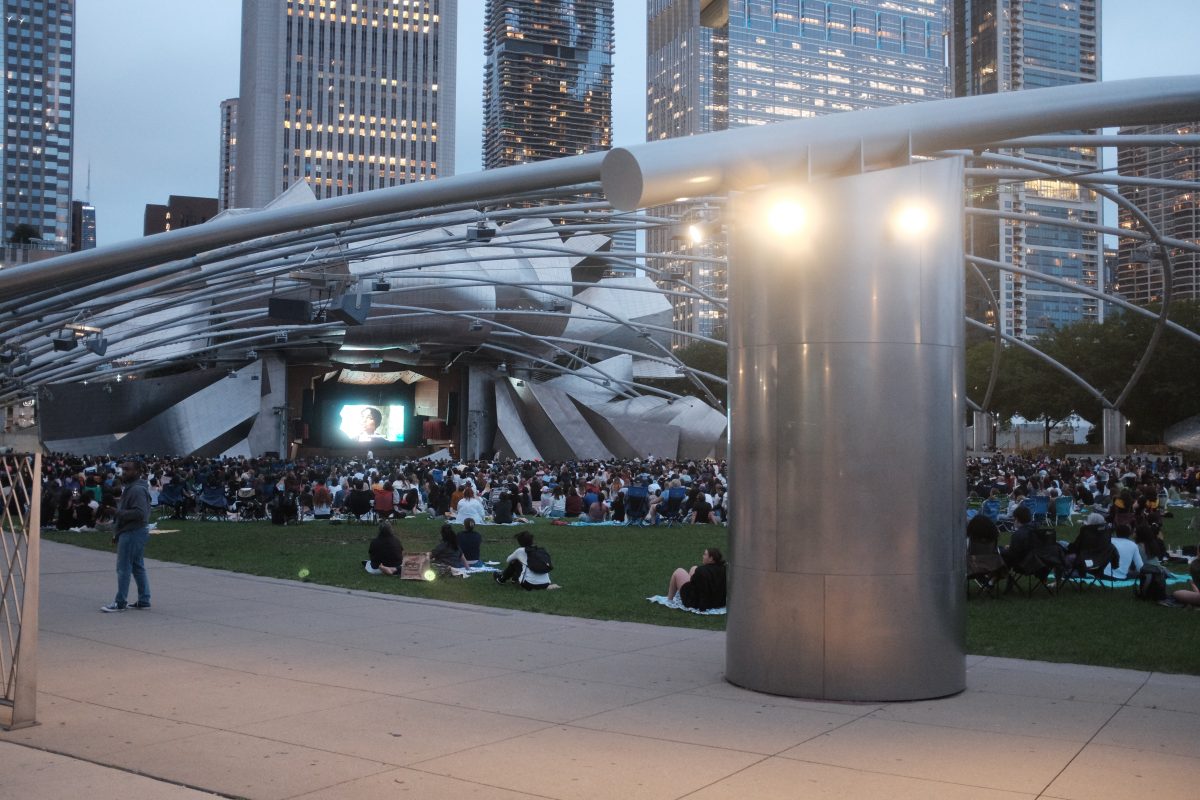
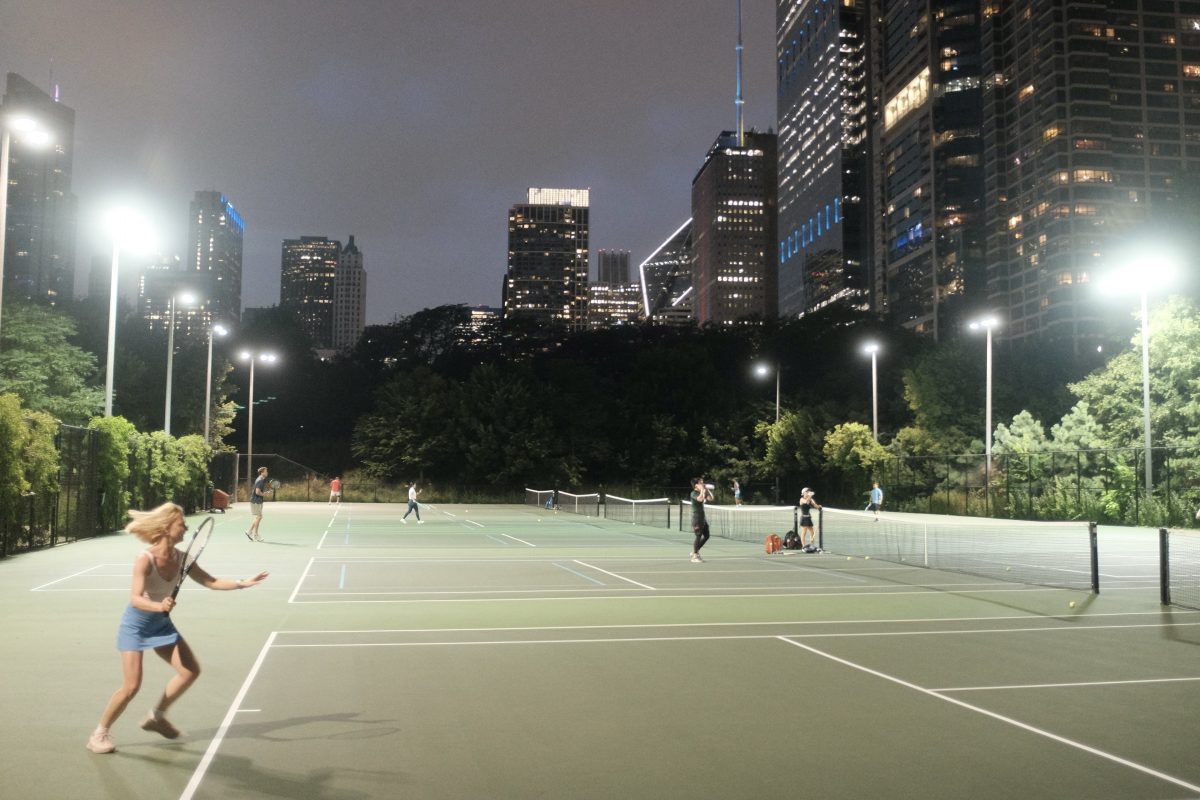
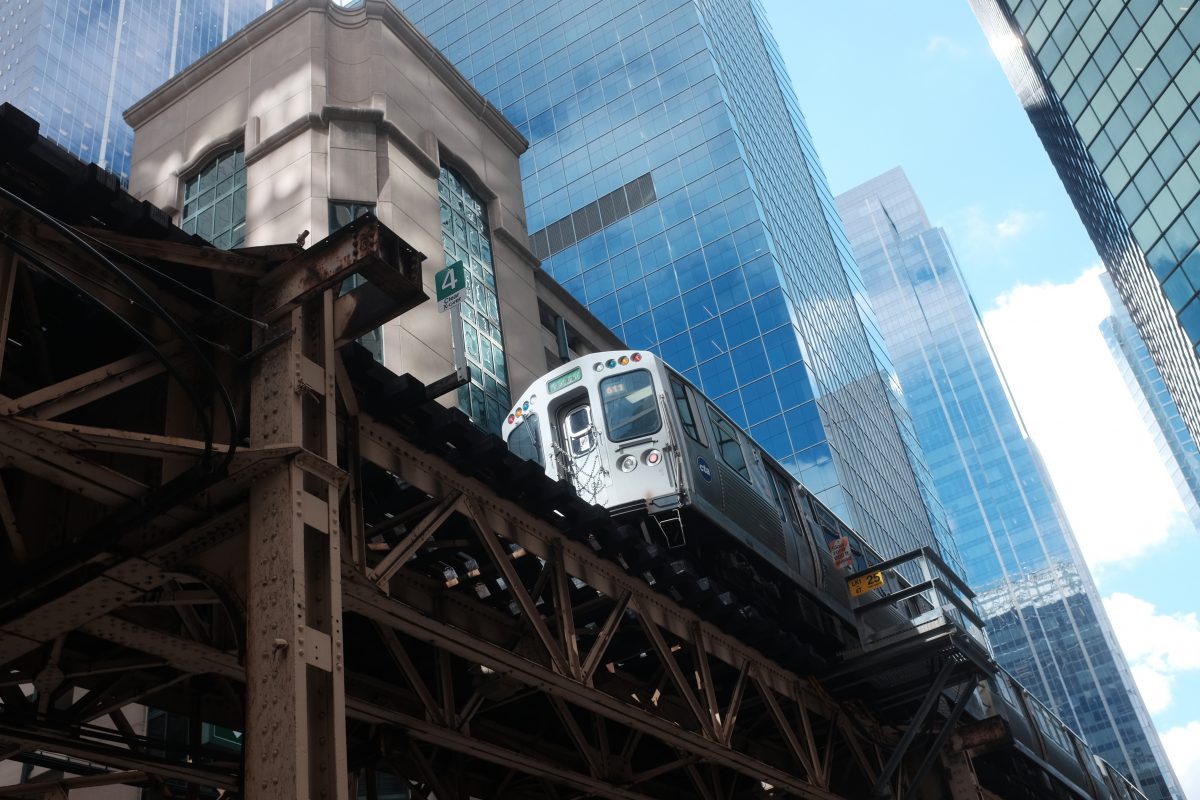
Chicago seems like a city that is doing a lot of things right. The more time I spend here, the more I like it. There are endless low rise/high density neighbourhoods with sprawling canopies of old trees giving shade from the summer sun. A healthy independent retail scene fills countless blocks with small stores catering to every niche in fashion, decor, music, etc. Restaurants seem to be thriving as well. In 48hrs, we had great meals at places from classic sandwich shop Mr Beef up to Michelin star restaurant Sepia. Special mention to Jersey Mike’s for one of the best fast-food submarine sandwiches I have ever eaten. The CTA L-trains, stations and entrances are clean and efficient with colourful tiles and architecture that fits in perfectly with their surroundings. The lake is bordered by easily accessible parks, public spaces and beaches, theatres, sculpture and botanical gardens. There is so much more. It is the first place that comes to mind when I think of great American cities.
About the photographs
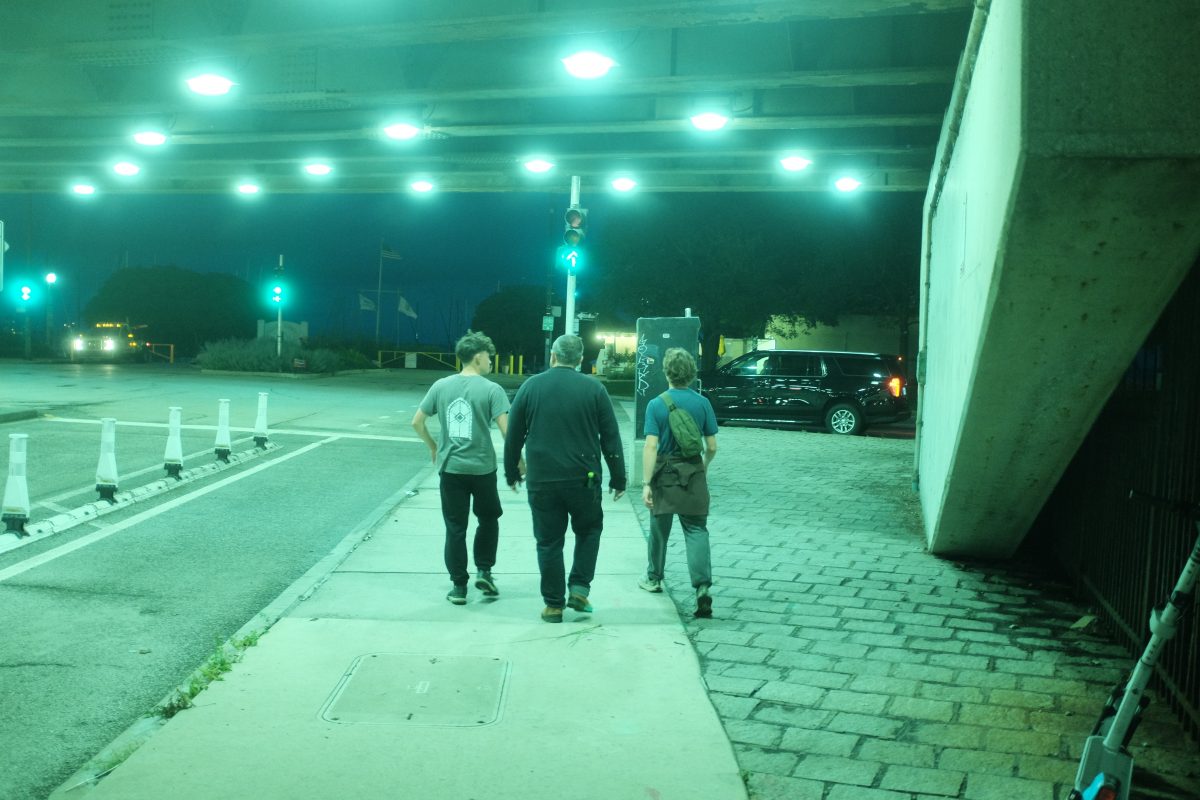
This was a short and busy road trip so I didn’t take as many photos as I would have on a slower adventure. But the tradeoff was that I got to see and do many fun things in short time with great company. As a die-hard solo traveler, I am starting to warm up to the idea of traveling with others (depends on the people though!). This time around, following the lead of my friend’s two sons as they scoped out cool spots in the city was an absolute pleasure. Hope we can do it again someday.
Just before this trip, I installed a mild diffusion filter on my camera lens (Tiffen Glimmerglass 1). It has tiny specks of reflective material sandwiched between two glass plates that serve to scatter and diffuse light. Mounted on the front of my Fujifilm X100 lens, in daytime photos it tends to smooth out transitions between between bright and dark areas. Points of light (especially at night) show some halation (they glow softly like halos). It is a mild effect but I think I like it…
A couple of Chicago landmarks

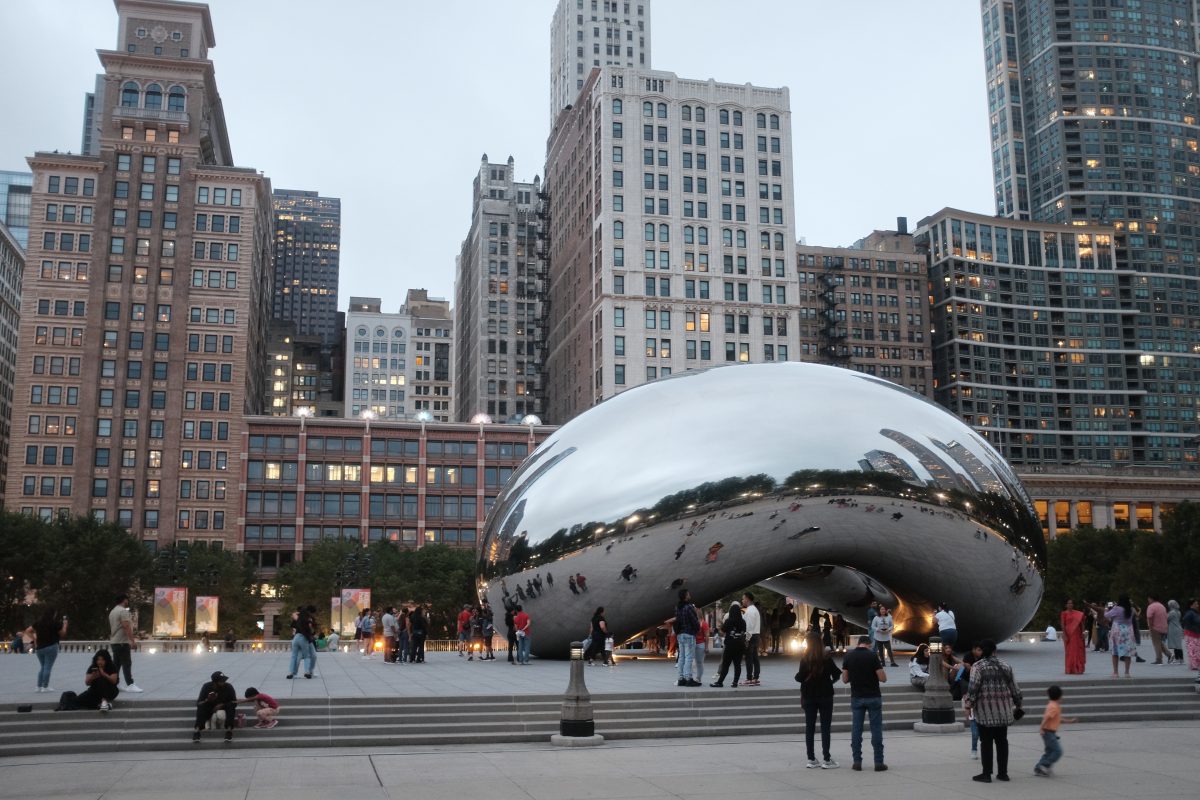
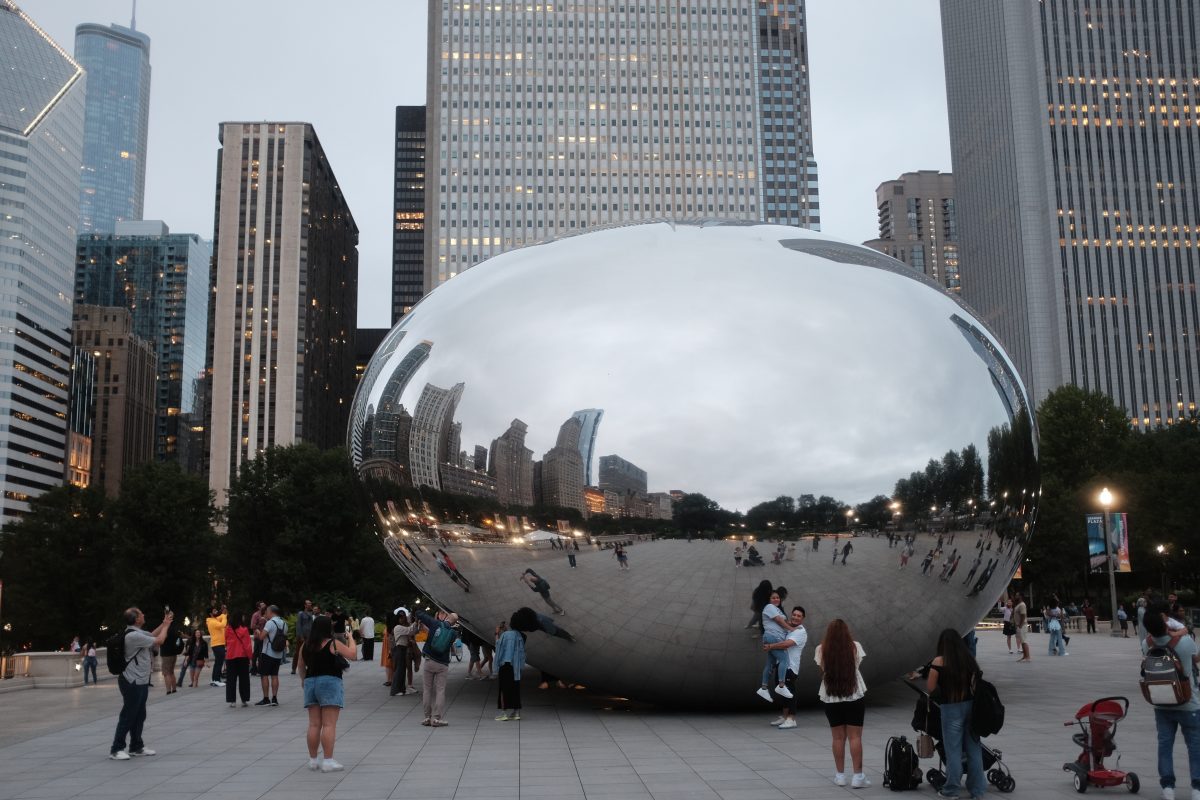
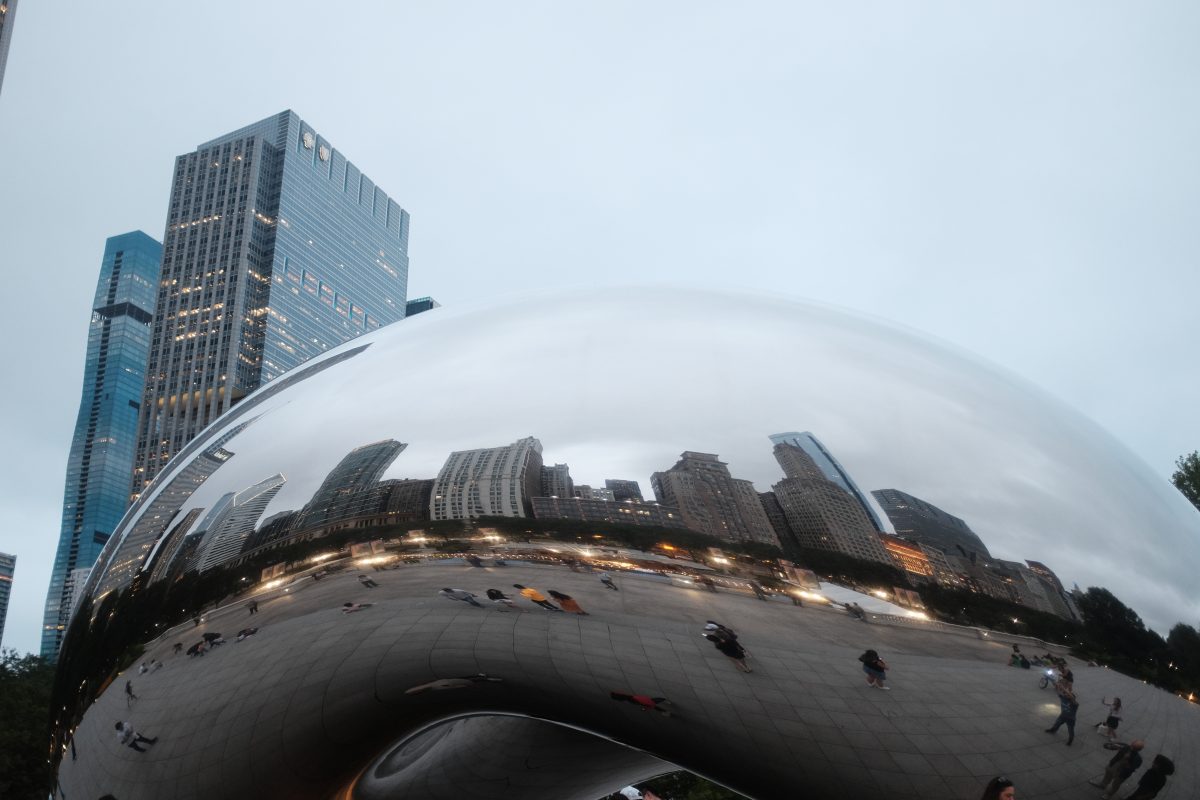
Millenium Park
Chicago Transit Authority (CTA)
This time around, we only used the L-train although I have used buses in the past. The CTA seems like a clean and functional system. The L-train stations have beautiful tile-work but I didn’t have enough time for pictures. Next time I come back, I will focus a little more on the L-train and stations including sound recordings.
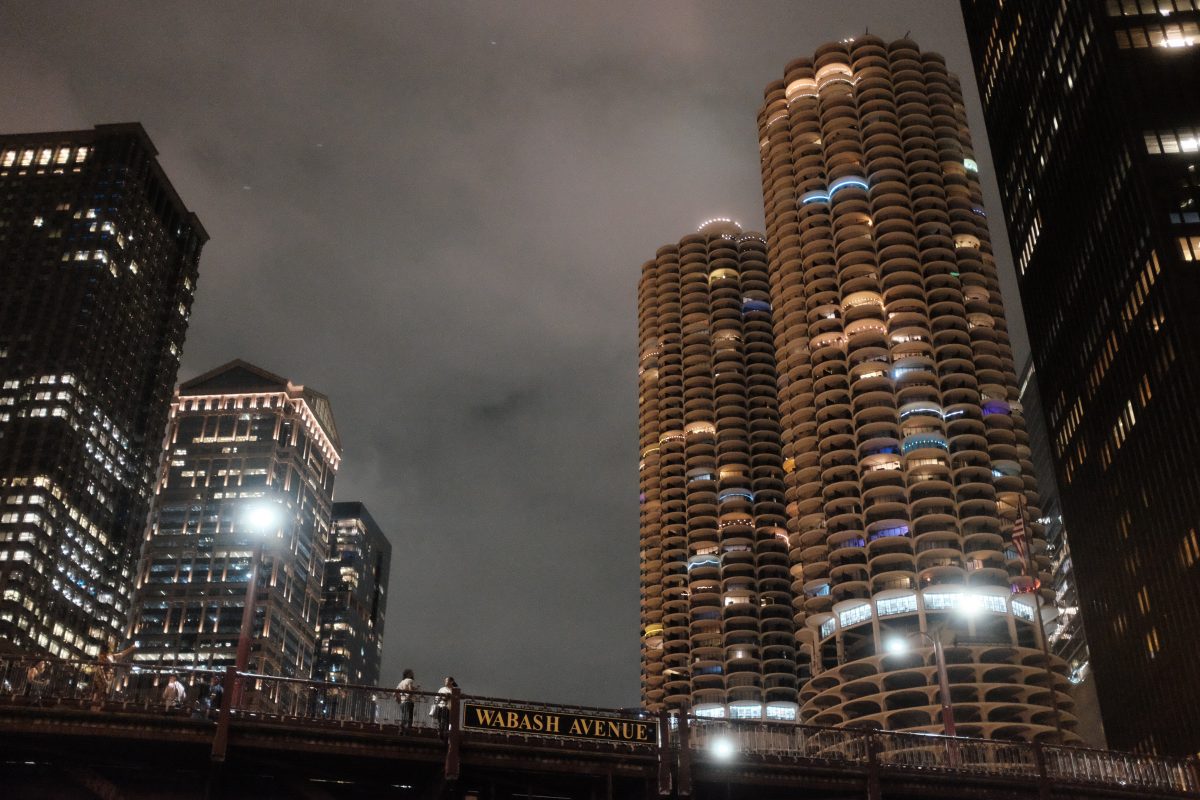
Chicago Architecture
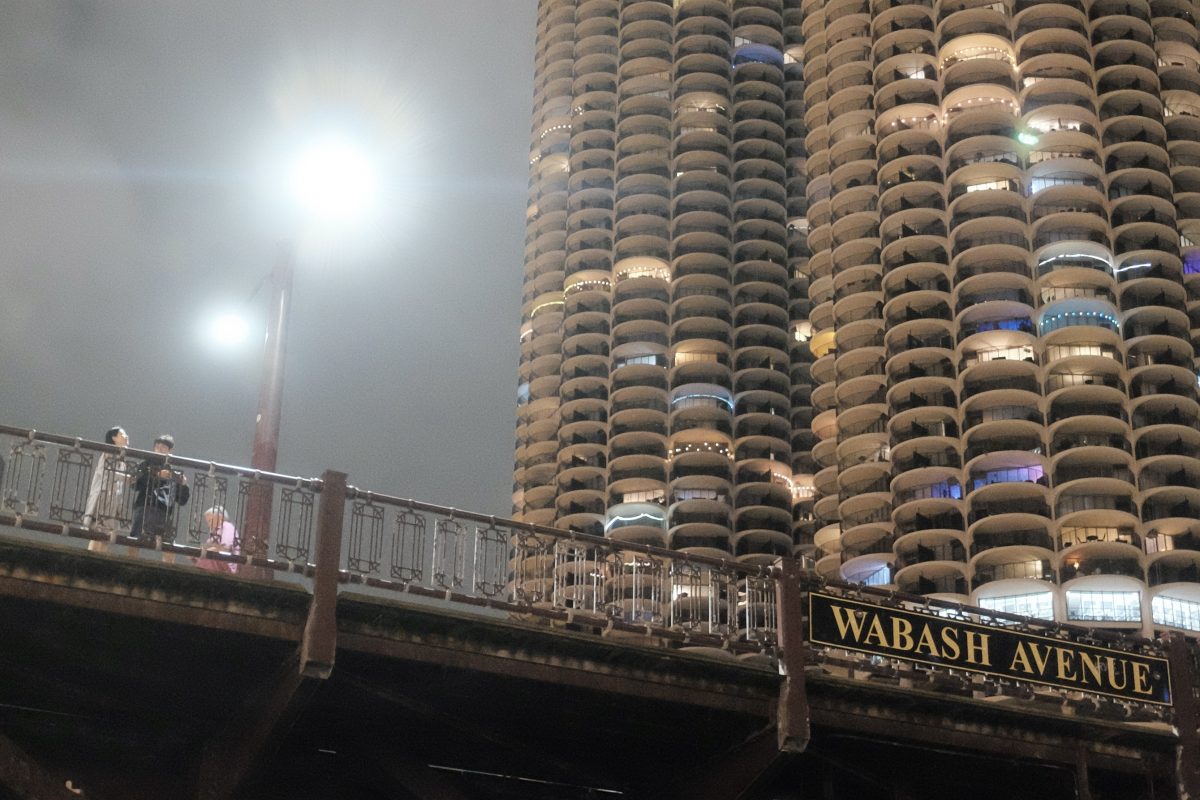
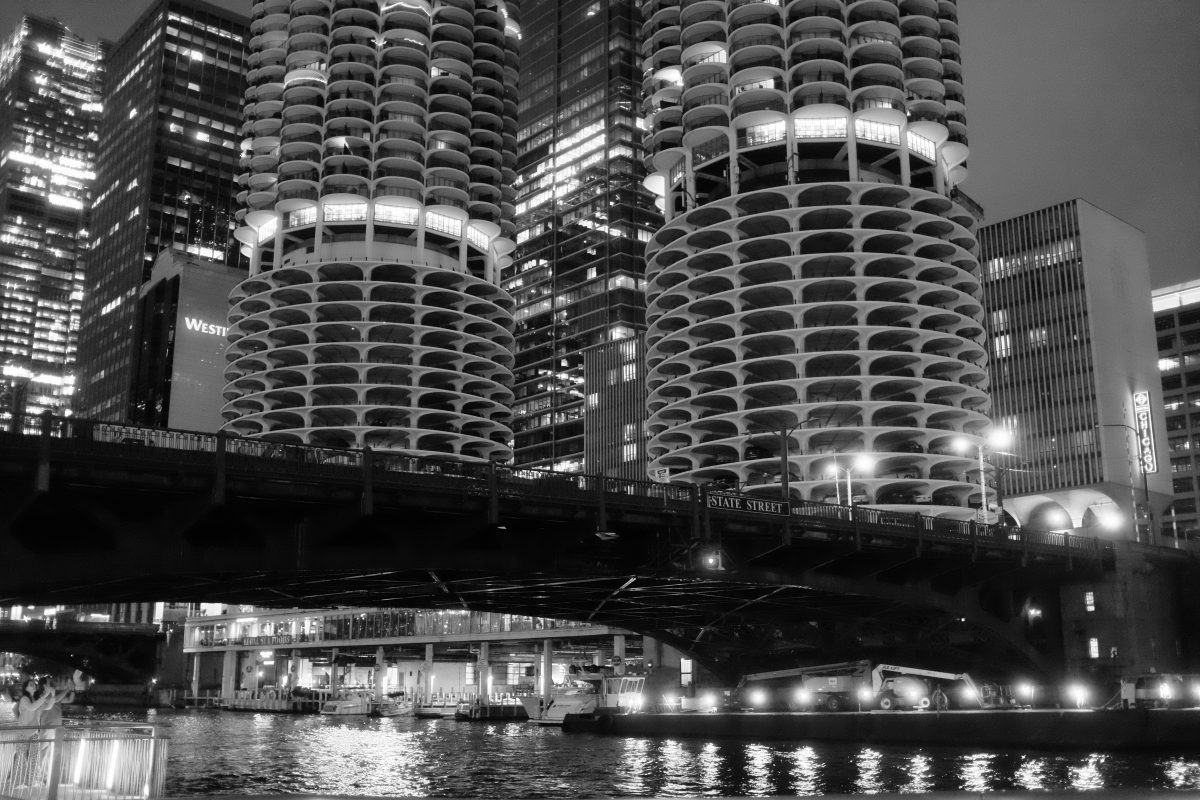
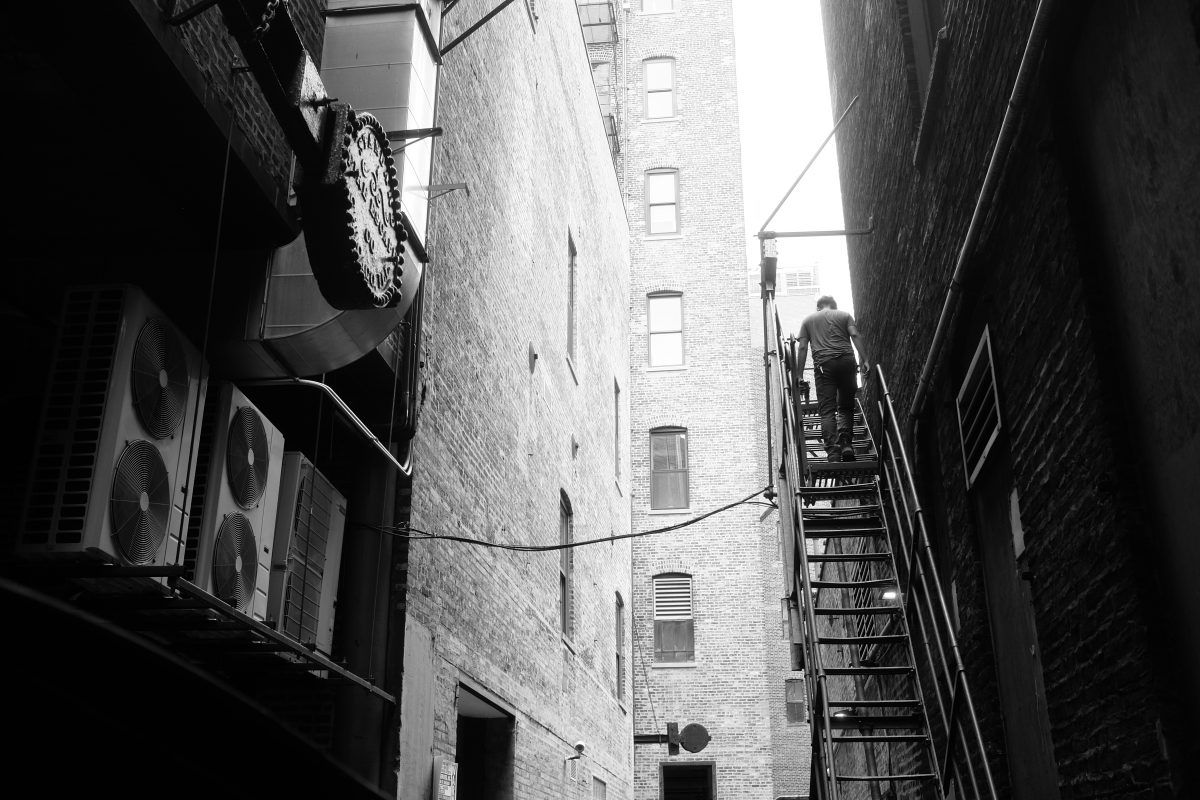
I think I could spend a week just looking at buildings in this city. Below are a few of the better known ones. But, at least for me, all the beautifully built and maintained low rise apartment buildings are just as impressive. The number and variety of perfectly preserved low-rises in residential neighbourhoods is astonishing. This city is a real knock-out.
The way home
I was amazed at how beautiful US gas stations and rest stops are. Not enough time this trip to really document them but I did get in a couple of shots on a midnight break on the way home, just back over the Canadian border. Next trip I will focus on these colourful oases in the pitch black countryside.



This was a short but fun mini-vacation. Hope we can do it again soon with more pictures and sounds. As always, if you have any comments or questions or if you don’t like the plural of oasis, please leave your thoughts below.
If you enjoy the content and would like to contribute towards website maintenance and development, you can make a donation here.
Haku ハク。
Who is Haku?
In 2019 Osaka Japan, four young women met at a vocational school club that teaches instruments to high school students. One of their advisors suggested that they join up to form a band and Haku was born. The circle punctuation mark at the end of Haku’s name in Japanese reflects these roots, symbolizing the “circle” where they first met. (these types of clubs are referred to as “circles” in Japan)
Haku released their first single in 2020 and by 2021 they had won the grand prize at a Kansai prefecture talent contest. Attention in Japan started to grow as the band released more music and played live shows. Haku hosts an annual “Haku Day” on August 9th, inviting their favourite musicians to play with them in Japan, drawing inspiration from their fellow artists.
Recently, at the request of fans outside of Japan, Haku has begun playing international shows. They played their very first overseas show in Korea. Singapore was next and, in September 2025, Haku made their North American debut in Toronto, Canada as part of the Next Music From Tokyo showcase.
Releases
In their seven year career, Haku has released a steady stream of singles, EPs and two albums.
- Blue Girl single, 2021
- 本物 / honmono, single, 2021
- ワタシ / watashi, single, 2021
- 収録曲 / hitonatsu, single, 2021
- ふたり基地 / hutari kichi, single, 2021
- 若者日記 / wakamono nikki, mini-album, 2022
- ナイーブ女の子 / naive girl, single, 2022
- 無題 / mudai, single, 2023
- 直感way, chokkan way, single, 2023
- 僕ら / bokkura, EP, 2023
- 僕らじゃなきゃだめになって / Bokurajanakyadameninatte, single, 2023
- 自由のショート / jiyuu no short, single, 2023
- 僕らじゃなきゃダメになって / Bokurajanakyadameninatte, album, 2023
- dedede, single, 2024
- 頭の中の宇宙 / The Universe of my Mind, single, 2024
- あいっ! / Ai!, single, 2024
- Catch, EP, 2025
- 南新町 / minami shinmachi, single, 2025
- それしか言えない / soreshika ienai, single, 2025 (***this marks Haku debut on major label Toy’s Factory)
- 夢中猫 / Patapata Cat, single, 2025
Just Released! :
New digital single Fuwa Rin was released this last Wednesday the 11th of February, 2026. A warm and breezy song whose title translates to something like.. “gentle, dreamy atmosphere”.
Upcoming Releases:
New EP “Sekai” will be released on March 4, 2026.
Haku lineup:
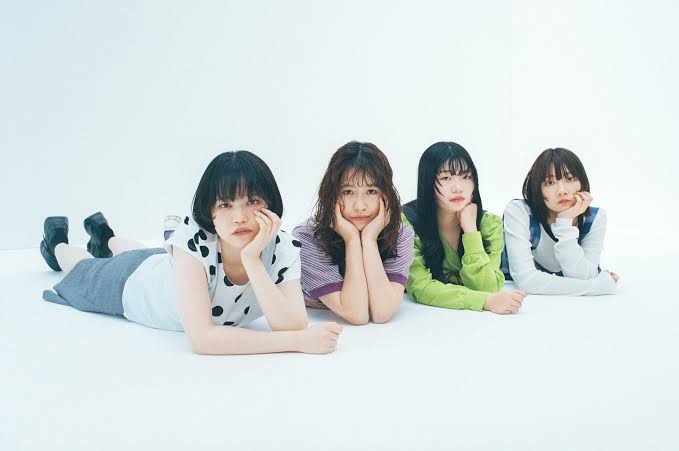
- Ai (あい) – Lead Vocals and Rhythm Guitar
- Mayu (まゆ) – Drums
- Nazuna (なずな) – Lead Guitar
- Kano (カノ) – Bass and Backing Vocals
Haku everywhere!
Largely unknown outside of Japan, Haku became famous globally with their cover of Mono No Aware’s かむかもしかもにどもかも! The catchy nonsense-lyric tongue twister was released on YouTube in Haku’s trademark vertical frame practice-session format. The popularity of the video sparked a massive social media following and requests from fans around the world for overseas live shows. Local Haku shows also began to attract foreign fans who were travelling in Japan. Fans started sending them videos of themselves mimicking Ai’s groovy dance. Below is the original video of Haku covering the Mono No Aware song. As of this writing, it has over 16 million views.
Next Music from Tokyo
Late this summer, Haku made their North American debut in Toronto, Canada at Next Music From Tokyo Volume 17.
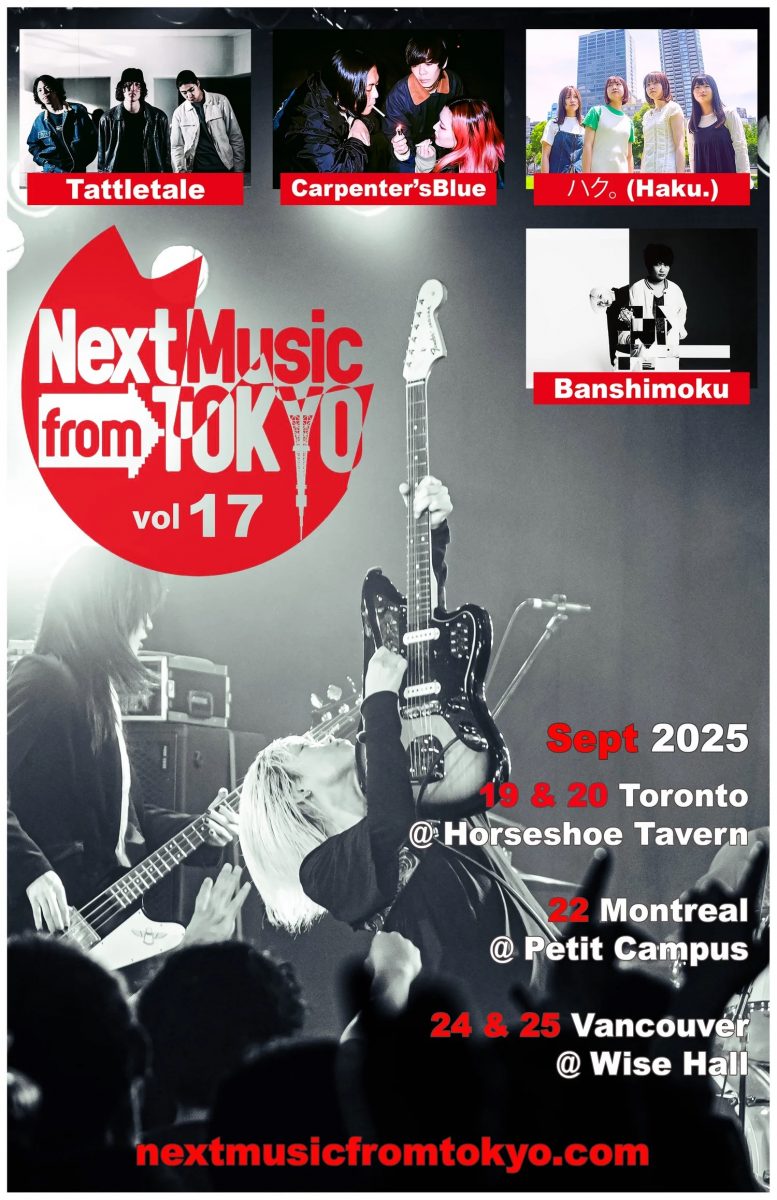
Next Music from Tokyo is an annual showcase of young Japanese indie bands put together by Toronto anesthesiologist Steven Tanaka. Each year, Tanaka handpicks a group of bands to tour three cities in Canada over 10 days and it is always a fantastic scene. The bands give everything they have and the crowds happily take it all in, dancing and crowd surfing (Steve too)!
This year when the NMFT line-up was announced, I was surprised to see that it featured Haku. The website even issued a warning that since the massively popular band is coming, tickets will sell out faster than usual. This got my attention and I started listening to their back catalog as well as newer releases. I was happy to find that, although the viral video clip is cute and obviously popular, Haku’s original music is even better.
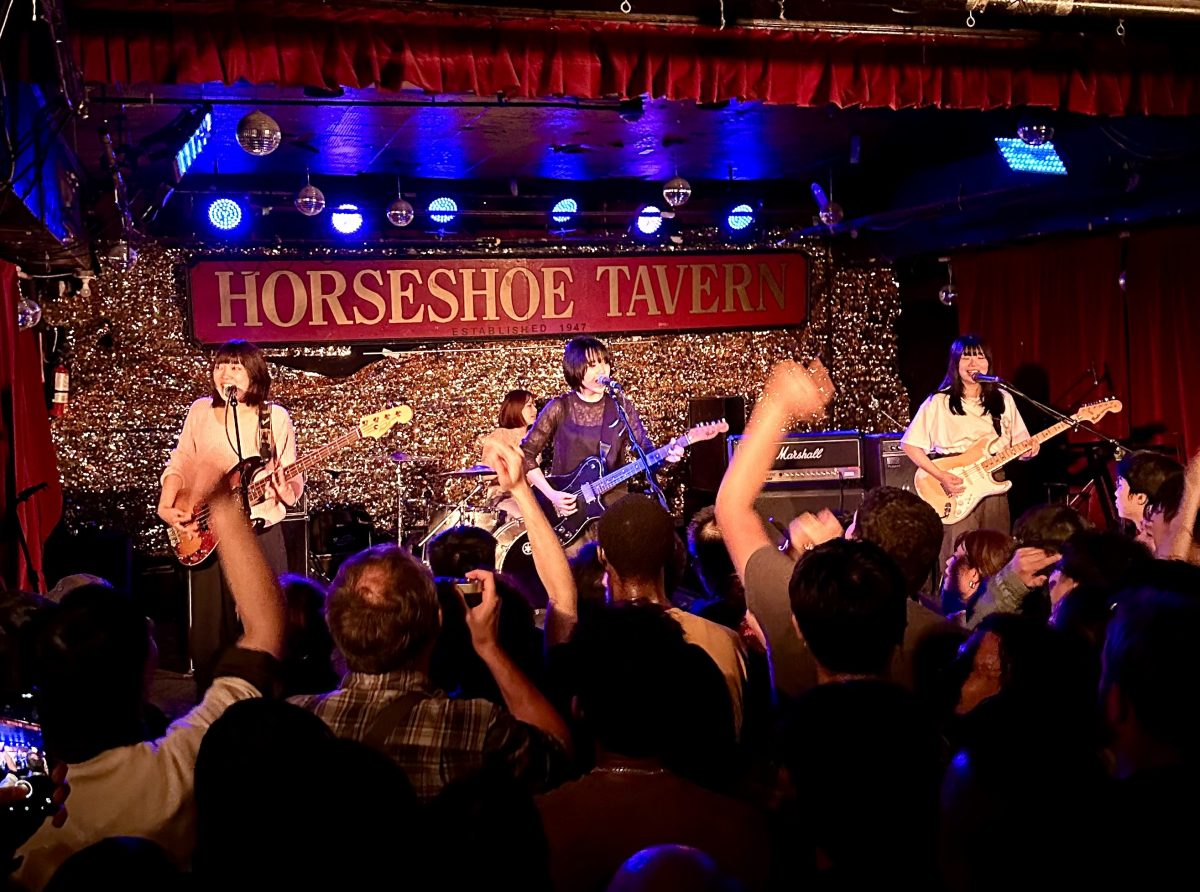
Haku live at the Horseshoe Tavern in Toronto, Canada
Around a year ago, Haku performed on NHK Japan and talked about influences and future goals. Ai expressed that although they were a band of 4 young girls, they did not want to be bound by the expectations of being a “girl band”. They hoped to show a more aggressive sound in live shows and to write songs that would have a broad appeal to fans of all genders and ages. With that statement in mind, it was fun to witness their first North American show in person.
From the very first song, the band delivered an energetic and gritty sound. The crowd, made up of men and women of all ages in equal number, responded with enthusiastic dancing and clapping. Surprisingly, many of their fans were singing along in Japanese to Haku’s originals. If their goal was to win over a broad spectrum of fans with high-intensity live versions of their original songs I think it was accomplished with great success. I loved the show and I was immediately sorry I didn’t buy tickets for both nights in Toronto.
Haku original music
For a band whose members are probably somewhere in their early 20s, Haku has released a good volume of music. The early singles and first mini album (Wakamono Nikki) sound like a young band still developing their identity and musical style but the playing is solid and the songwriting is good. The second full length album, Bokurajanakyadameninatte, is where the band really starts to shine and the most recent EP titled Catch showcases the fully developed Haku at their best.
The songs are bright and energetic with memorable vocal melodies and guitar hooks. They manage to sound fresh and original but somehow familiar at the same time. In the NHK interview, Ai talked about how many older fans have said that Haku’s music takes them back to their youth. She attributes this to the influence of 90s US and UK indie on Haku songwriting. These 90s flavours blended with modern J-pop and J-rock influences give Haku their defining sound and broad appeal.
Recipe for Success
Ai’s vocals are full of catchy melodies and fun cadence. Her lyrics (all in Japanese) touch on the universal topics of love and relationships with others, as well as her relationship with the world at large. Ai takes centre stage as the main vocalist and delivers crunchy rhythm playing on her 70s Telecaster Custom. She hopes to write songs that “stand the test of time” and from the enthusiasm of the live audience and the fact that they knew most these songs by heart, I think she is on the right track.
Nazuna’s guitar playing is mostly clean with an unmistakable Stratocaster chime. She sometimes doubles the rhythm guitar but more often wanders away on her own with melodic single-note lines. At NHK, she said that she wanted to invent guitar phrases that “linger in your ear”. I think that Nazuna’s guitar lines are just as catchy as Ai’s vocals and the two together create melodies that are hard to forget.
Kano is a creative bass player never lingering very long on a single note. Bass lines bounce along with the drums, counter guitar lines, experiment with harmonies and always add to the overall big energy of the song. Kano is also the second voice for doubling or vocal harmony and, in interviews, stands out as the most outgoing spokesperson for the band.
Mayu keeps it all together with breezy style, creative fills and lots of happy energy. She is a great drummer now but I think her ambition to learn and improve will sharpen her skills even more in the future.
Each player in the band brings their own unique style but it is definitely the combination of these four talents that gives Haku it’s appeal. The musicianship is undeniable and their obvious close friendship just adds to their charm.
Gear:
Haku uses some interesting guitars. Ai is playing a 70’s style Telecaster Custom and Nazuna’s Stratocaster is the same vintage. Both have 3 bolt neck plates used mainly on 70s Fenders. I think Fender Japan reissued these sometime in the 90’s so it is possible these 2 guitars are from that era. Either way, they are unusual instruments. Ai runs her Tele through a Marshall half-stack and Nazuna is using a Jazz Chorus 120.
As for pedals, Ai’s main sound seems to be Telecaster, JHS Morning Glory, Marshall amplifier. She switches out dirt pedals often: Ibanez Tube Screamer, Anasouds Savage (Klon Centaur clone), Animals Pedal Surfing Bear Overdrive (cute Japanese made tube screamer variant), NYC Big Muff fuzz have made the rounds.
Nazuna has a big pedal board which includes a Strymon Big Sky and Timeline, JHS Double Barrel, JHS Charlie Brown (cool and uncommon), Boss Turbo Distortion, Triangle Big Muff, Suhr Jack Rabbit Tremolo, Digitech Whammy as well as a Maxon Stereo Chorus.
Kano is running a Fender Precision Bass though a solid state head and Ampeg cabinet (at least at live shows). This deep, punchy Precision bass through a big cabinet is my favourite electric bass sound.
At least in their practice space, I have seen Mayu using a 4-piece gold sparkle Tama drum kit. Beyond that, I am not sure. Unless they are popular enough to carry their whole kit around, drummers usually just travel with their snare and cymbals so…hard to say.
Where to find Haku:
You can stream Haku in all the usual places.
Haku is also active on Instagram and YouTube. Click here for the Haku official website.
Haku is rumoured to be returning to Canada for Next Music From Tokyo Volume 18! Keep an eye on the NMFT website for details.
For a list of all upcoming live shows look here.
Here is the song Ai! from the Catch EP….it is a great record. Look it up on your favourite streaming platform.
A great song and video from Bokurajanakyadameninatte….
If you have any questions or comments or if I spelled anesthesiologist or anything else wrong… please share in the space below.
What’s your favourite Haku song? Leave it in the comments!
If you enjoy the content and would like to contribute towards website maintenance and development, you can make a donation here.
Jeow Bong
What is it?
Jeow bong (or jaew bong) is a Lao chili paste used as a dip or seasoning. It is powerful and complex: full of strong aromatics and potent citrus and fruit flavours, all tied together with fermented fish sauce.
One summer at the restaurant we had a food runner who’s mom was from Laos. We became pretty good friends and her family ended up visiting for a meal a few times. I had fun preparing interesting veggie dishes (off menu) for her vegetarian dad and sister.
Afterwards, on more than one occasion, her mom sent me homemade Lao beef jerky and other little snacks. One time I even got a full dinner-set of larp, sticky rice, sides and, of course, jeow bong! This was my first experience with Lao food and I was hooked.
Sometime before our food runner left to go to university, she brought me my own bamboo sticky rice steamer and pot set with a couple of little rice baskets. This was such a thoughtful gift and I use them often. Thanks Tounie, Émilie and famille Desrosiers!
Jeow bong recipe:
This is a very good recipe. I am always surprised at how incredibly delicious it is every time I eat it.
First let me say that although I am a professional chef, I am no expert at Lao cooking. I have learned to make a few dishes because I like them so much but I am still learning. When I looked around the internet for recipes, I found many different recipes for jeow bong. I pulled from a few of them, combining ingredients that I can easily get in my neighbourhood. Many recipes include pig skin as an ingredient but I left it out of this recipe only because I didn’t have time to pick it up. This recipe turned out very well without it but next time I may try with pork included.
Ingredients
- 10 cloves garlic
- 4 medium shallots
- around 25 grams fresh galangal (one thumb-size chunk)
- 20 grams dried chilis
- 60ml (1/4 cup) of water
- olive oil for frying (1-2 tablespoons)
- 30ml (2 tablespoons) fish sauce
- 6 kaffir lime leaves
- 25 grams tamarind paste (a little less than 2 tablespoons)
- 1 teaspoon MSG or Aji-no-moto (same thing, different name)
- 1 tablespoon palm sugar (or use regular white sugar)
Process


Now what?
Store the paste in an air-tight container in the refrigerator.
You can use your jeow bong as a dip for meats or veggies or mix it into stir fried dishes. Or, try swiping a little onto a ball of warm sticky rice and popping it into your mouth. This is my favourite way to eat it.
Go easy with this stuff. It is surprisingly powerful!
If you have any comments or questions, please feel free to leave them below.
Thanks for reading : )
If you enjoy the content and would like to contribute towards website maintenance and development, you can make a donation here.
Diagram
***this post will not work in tiny form on your phone. Have a look on a bigger screen if you can***
What’s a diagram?
In broad terms, a diagram is a visual representation of an idea or a system of related parts. It might explain how the parts function together or, it might just depict how the parts relate to each other in physical space. A diagram is usually a drawing or a flow of symbols representing and simplifying the workings of something.
Can a photograph be a diagram?
I think so. A photo can be labeled with words or over-laid with symbols that clarify what you are looking at or, how the different things in the photo relate to each other. I can remember school textbooks full of diagrams, from drawings showing the organs of a plant cell to photos labeling the parts of an airplane wing. I would pour over them for hours and I still love looking at them today.
It seems like a lot of old technical instructions came with roughly labeled black and white photos too. I had a motorcycle repair manual that was full of terrible black and white photos with what looked like taped-on labels. Things like lawn mowers, power tools, instruction manuals from small factories…these often used to come with labeled photos.
When I was a boy, some of these diagrams inspired me to take apart appliances when my parents weren’t home and draw pictures as I went so that I could put them back together again. These were my own diagrams and they worked! Usually…
IKEA
IKEA is notorious for it’s cryptic diagrams aimed at having a single instruction manual that works across all languages and cultures. This is a pretty ambitious goal and I don’t think it always works. The IKEA diagrams have become kind of a universal joke with anyone who has had to sweat over assembling a flat-packed bookcase or file cabinet. Over the years, I have gotten a little better at understanding them but….I also think I could improve them quite a bit. That would be a fun job : )
The Calypso
The Calypso was Jacques Cousteau’s ship. When I was small, all I could think about was the ocean. I read everything I could in the school library and then begged my parents for my own Jacques Cousteau Encyclopedia. Eventually they got me the books. My absolute favourite book was the last volume. In it was a 4 page foldout of all the rooms and systems on the ship. Both sides! The rest of the books are long gone now but the Calypso book is still on my bookshelf. This is a classic diagram with numbered lines that correspond to a key on the opposite page. It is one of my favourite diagrams of all time.
Here is one side of the Calypso diagram:

How we arrange all of our “things”
Something I like to do on Instagram: when someone posts a selfie or other photo taken inside their house, I like to zoom in on the backgrounds and have a look at what is on the walls, what is on a bookshelf or a table. I like to see how people arrange their “stuff”. The background is sometimes more interesting than the main subject.
With that thought in mind, I had a look at some of my old photos and also around my apartment to see how my things were arranged and how they might relate to each other. Sometimes arrangements seem random but other times there are patterns…the stuff we use more often is easier to access. Or things that get used together are grouped together. Sometimes there is a logical flow to the physical arrangement of our things. And sometimes, there is a kind of beauty to the random placement of things, how they just happen to end up in space. I often think how difficult it must be for art directors on a set to get all these kinds of details just right to make a fictional environment feel believable.
My photo-diagrams
Below are some diagrams that I made of stuff around my house or things in past pictures. I like the look of these kinds of labeled photos. They remind me of old parts manuals or science fair projects when paper and glue was the only way…

photo copyright TigerSalad 2025

photo copyright TigerSalad 2025

photo copyright TigerSalad 2025

photo copyright TigerSalad 2025

photo copyright TigerSalad 2025
Diagrams as art
I think there is something meaningful and personal about the way we arrange our “stuff”, our tools and our less functional objects. And I also think there is both art and science in good diagrams. I tried to combine both ideas here into something fun and engaging. What do you think? If you have any comments or questions, please feel free to leave them below. And subscribe if you would like a note about new posts. Thanks for reading!
If you enjoy the content and would like to contribute towards website maintenance and development, you can make a donation here.
Queen Street East
***your phone will magically turn good pictures into bad. Try looking at this post on a bigger screen if you can***
To Book City in the Beaches
This morning, I finished up the last chapter of a fat book that I have been reading for a few weeks. I had a new title in mind so I decided to take a walk from my place to the Book City in the Beaches neighbourhood. Book City is one of the last independent bookstores so, in an effort to support small business, I try to buy most of my books there. And, lucky for me, they had a single copy of the book I wanted. This long walk would take me along most of Queen Street East through Corktown, Leslieville and to the Beaches (named for the white sand beaches nearby along the shore of Lake Ontario).
Return flight
Since I had my camera with me and since I don’t get to the Beaches very often, I decided to take a few photos on the 7km walk home. Compared to the rest of Queen Street, this area has some truly old and interesting low rise architecture and businesses. Some blocks of Queen Street East are so quaint, they almost have the old-time feel of a cottage-town main street. The commercial areas are mostly undeveloped (so far). There is even a gas station right out of the 1950’s with pumps that look like refrigerators, full service attendants in uniform and a round glass reception area. I am excited to take some pictures of it at night! Coming soon!
The Photos
I had not planned on posting about this so I was just taking random pictures for fun. The photos are not really meant to be representative of anything. I just liked enough of them that I wanted to share them. They are generally in chronological order from the Beaches travelling west back towards Corktown.


The End
Hope you enjoyed some of these photos. Queen Street at the Beaches is lined with fun and unique shops and restaurants and is definitely worth a visit. I will be back soon for some night photos. As always, if you have anything to say, even if it’s just “Hi” feel free to comment below.
If you enjoy the content and would like to contribute towards website maintenance and development, you can make a donation here.


St James Town at Night
***your phone will crush and distort these pictures. If you can, try to see this on a bigger screen like a laptop***
A Very Short History of St James Town
St James Town was once a working-class Victorian neighbourhood, housing the poorest of Toronto residents in ratty decaying homes. In the 50s and 60s, city planners and developers decided to rezone and bulldoze most of the neighbourhood. Over the next decade or so, they built nineteen highrise buildings including 4 city owned public housing towers. At the time, developers assumed that fresh young middle-class office workers would quickly move in. Instead, that demographic chose to move to the suburbs of North York and Scarborough and the neighbourhood filled up again with Toronto’s lowest income families. Over the last couple of decades, the demographics have shifted more towards new immigrants to Canada and St James Town remains one of the last affordable neighbourhoods in the downtown area.
For a more detailed account of St James Town history and development have a look at this excellent article at Blog TO.
Bad Reputation?
In the late 90’s, when I first moved to Toronto, St James Town had been in steady decline for 30 years. The buildings were crumbling, the public spaces were trampled and neglected and the residents were some of the poorest in the downtown area.
One day, shortly after moving to this city, I went to visit a friend downtown and missed my subway stop. As a result, I accidentally came above ground at the tiny run-down Glen Road exit of the Sherbourne subway station. Glen Road consists of a single block of some of the last surviving Victorian homes in the area but, at the time, the houses were all boarded up and abandoned. It was like coming up into a ghost town of haunted houses. I was so surprised that I took a bunch of film photos but, unfortunately, I can’t seem to find them now. If you want to see some images from this time, this site has some good ones.
A little later I met my friend and told him about getting lost in St James Town. His advice was to stay away from the neighbourhood, even during the daytime. Apparently the area had a bad reputation for drugs, gangs, violence, prostitution. I had no idea if this was true or not but I took his advice and never came back. Not until over 20 years later when I ended up renting an apartment on this very street.
St James Town Today
With 19 highrise towers in a relatively small area, St James Town is the most densely populated neighbourhood in Canada . The “official” population of St James Town today is around 17 000 although it is probably much higher. It is still home to many low income families and is a popular landing place for new immigrants.
Sometime around 2000, the city decided to put some resources towards improving the crumbling neighbourhood. This included plans to clean up and repair the old highrises and renew the parks, playgrounds and public spaces. This is ongoing today.
Eventually, developers started to sniff around one of the last downtown neighbourhoods that had so far escaped gentrification. Condo speculators bought up and fenced off many of the old neglected houses and plots of land. They also gutted and renovated the row of abandoned houses on Glen Road in return for the city’s approval of their development plans. They squeezed in a few new glass and steel towers and tucked little townhouses into the shadows of the old highrises. Since I moved in, no less than 5 new condo buildings have gone up within a 1 minute walk. And many more are on the way.
Living in St James Town
I think that St James Town still has something of a bad reputation today. Reading online, I often see postings where people are nervously asking about safety and crime rates before moving in to the area. And still others (who probably don’t even live here) advise them to be very careful, especially at night.
I have lived here for years and have not had a single incident that would make me feel unsafe. Police, ambulances and fire trucks are a pretty regular sight. But, when you have over 17 000 people living on a few city blocks, this doesn’t seem unusual.
I like that this neighbourhood always has people moving around in it. You are rarely by yourself outside. To me, this feels safe. I used to work at a restaurant directly south of St James Town in Old Toronto. The walk home from there at night felt so unsafe to me during the covid closures that I would carry a police baton with me at all times. Walking on high alert, I wouldn’t feel relaxed until I found myself among the busy highrises of St James Town again.
Maybe the Best Neighbourhood Downtown…
I love living in this neighbourhood . Everything is in walking distance: dentist, doctor, supermarket, subway, Koreatown, Chinatown, Little India, beautiful natural spaces, museums, universities, galleries, live music venues, great restaurants, a fully operating farm, some of the country’s best hospitals…the list goes on. I think this must be one of the most connected neighbourhoods in the city. I haven’t had a car in many years and I never miss it.
The interior of St James Town itself reminds me of the highrise neighbourhood I grew up in when my parents first immigrated to Canada. People are always outside. The parks and public spaces are full even at night. Extended families get together and pass time in the shade of old trees. People who have immigrated from the same place and share language and culture find each other here, in the building hallways and the outdoor playgrounds. They naturally build communities around their shared experiences. If you walk around St James Town, English might be one of the last languages you hear. Tagalog, Hindi, Cantonese, Mandarin, Korean, Tamil, Russian, Bengali….these are much more common.
St James Town is one of the last places where low income Canadians as well as newly landed immigrants can afford to live connected to the downtown core. And because so many of the residents share a common experience, St James Town has a the feeling of a vibrant community. People know their neighbours and I believe that people look out for each other. The neighbourhood has a strong feeling of family. All kinds of family.
Night Walks Through St James Town
Some would say that the clump of old highrises is ugly but I see real beauty in them…in their multicoloured brick exteriors, angular balconies, weird glowing stairwells, old mature trees and especially in the people who call this neighbourhood home. Hopefully some of that will come through in these photos but, if not, take a walk through here on a nice summer night and you may be surprised by how much you enjoy it.


Convenience Stores
There is a small commercial strip on Howard street with a couple of Filipino restaurants, a fried chicken place, a small pharmacy, an Ethiopian grocery and a Halal butcher. These convenience stores are part of this strip:


I used to buy cigarettes here. The wife’s mom (the 7 year old’s grandma) worked there at the time and I would visit her everyday on my way to work and buy a pack of smokes. She would cheerfully sell them to me while telling me that they were bad for my health and that I should stop. One day, I quit smoking and so, I didn’t go in for a few weeks. When I finally stopped in to buy an ice cream, she asked where I had been. I told her that I quit smoking and so I didn’t need to stop by so often. I couldn’t believe how happy she was to hear that. It was as if I was her own son!

Winter in St James Town
These are a few pictures of a snowy night walk through St James Town last winter. It really is a pretty place.


The Future of St James Town
There is a tremendous amount of demolition and building going on around here. I think the original towers are safe in their big bulky numbers. Hopefully they will continue to see improvements and provide a home for people who can’t afford to move anywhere else.
As for the surviving victorian houses…I am not so sure. Just last year I found out that Concert Realty bought up the whole west side of Glen Road. This is the same developer that is building the 54 story building outside my bedroom window. This means that right now they own a continuous parcel of land that is more than enough to build a second condo tower. They have not submitted plans to the city yet but I think it is only a matter of time. Lately there has been some pull back on new condos so hopefully Glen Road will survive for a few more years…let’s see what happens.
There is so much more…
These pictures just show a little of this neighbourhood. In recent years, the city has put up a brand new community centre complete with sunlit indoor pool, library, indoor basketball courts and community services.
The Rose Avenue Public School right at the centre of St James Town is one of the last original buildings in the area. This brick building with massive old windows was built in 1924 and still operates as a busy public school and day care, surrounded by old trees and brick walkways.

St James Town represents a massive and miscalculated experiment in early city redevelopment. Originally seen as a failure and struggling for decades, I think it has grown into a unique and vital part of the Toronto downtown.
If you have any questions or comments, please leave them below. I am always happy to hear from you.
Thanks for reading! : )
If you enjoy the content and would like to contribute towards website maintenance and development, you can make a donation here.